14 Dec 2020

The pandemic, the profiteers, the people

Farooque Chowdhury


To profiteers, this pandemic is very good; it hasn’t hurt their profit-making mechanism.

Net worth of US billionaires has soared by $1 trillion – to total $4 trillion – since Pandemic began, a report released on December 8, 2020 by Americans for Tax Fairness (ATF) and the Institute for Policy Studies (IPS) said:

“The total net worth of the 651 US billionaires rose from $2.95 trillion on March 18 — the rough start of the pandemic shutdowns — to $4.01 trillion on December 7, a leap of 36%, based on Forbes billionaires. By around March 18 most federal and state economic restrictions in response to the virus were in place. Combined, just the top 10 billionaires are now worth more than $1 trillion.”

The ATF and IPS made a comparison:

“The billionaires’ wealth growth since March is more than the $908 billion in pandemic relief proposed by a bipartisan group of members of Congress, which is likely to be the package that moves forward for a vote in the next week, but has been stalled over Republican concerns that it is too costly.

“The monstrous cash-pile amounts to double the two-year budget gap of all state and local governments, a figure estimated to reach $500 billion thanks to the devastating effects of the economic shutdowns on tax revenues. It even approaches the massive sum the federal government spends on Medicare and Medicaid – $644 billion and $389 billion in 2019, respectively.”

With this report, profit, politics of the ruling classes, and the state come to view.

The report mentions the way the information was collected:

“Forbes’ annual billionaires report was published March 18, and ATF and IPS collected the real-time data on December 7 from the Forbes website. The methodology of this analysis has been favorably reviewed by PolitiFact. The ATF-IPS analysis also looks at wealth growth since February 2019 — the date of Forbes’ immediately previous annual billionaires report published well before the start of the pandemic and resulting market gyrations.”

The report presented a few facts:

“The $1 trillion wealth gain by 651 US billionaires since mid-March is:

It presented another fact:

“At $4 trillion the total wealth of all US billionaires today is nearly double the $2.1 trillion in total wealth held by the bottom half of the population, or 165 million Americans.”

Two comments on the profit-wealth-fact are striking.

Frank Clemente, executive director of ATF said:

“Never before has America seen such an accumulation of wealth in so few hands. As tens of millions of Americans suffer from the health and economic ravages of this pandemic, a few hundred billionaires add to their massive fortunes. Their pandemic profits are so immense that America’s billionaires could pay for a major COVID relief bill and still not lose a dime of their pre-virus riches. Their wealth growth is so great that they alone could provide a $3,000 stimulus payment to every man, woman and child in the country, and still be richer than they were 9 months ago. Joe Biden won a tax-fairness mandate in November. We look forward to working with him and Congress to deliver on that mandate by taxing the massive wealth of these billionaires.”

Chuck Collins of the IPS said:

“The updraft of wealth to the billionaire class is disturbing at a time when millions face eviction, destitution, and loss. Billionaires are extracting wealth at a time when essential workers are pushed into the viral line of fire.”

The report added a few more facts, which help comprehend the grim situation:

“Ordinary Americans have not fared as well as billionaires during the pandemic:

  • Nearly 14.9 million have fallen ill with the virus and 284,000 have died from it. [Johns Hopkins Coronavirus Resource Center]
  • Collective work income of rank-and-file private-sector employees—all hours worked times the hourly wages of the entire bottom 82% of the workforce—declined by 2.3% from mid-March to mid-October, according to Bureau of Labor Statistics data.
  • Nearly 67 million lost work between Mar. 21 and Oct. 7, 2020. [U.S. Department of Labor]
  • 20 million were collecting unemployment on Nov. 14, 2020. [U.S. Department of Labor]
  • 98,000 businesses have permanently closed. [Yelp/CNBC]
  • 12 million workers have lost employer-sponsored health insurance during the pandemic as of August 26, 2020. [Economic Policy Institute]
  • Nearly 26 million adults reported their household not having enough food in the past week between Nov. 11-23. From Oct. 28 to Nov. 7, between 7 and 11 million children lived in a household where kids did not eat enough because the household could not afford it. [Center on Budget & Policy Priorities (CBPP)]
  • 4 million adults — 1 in 6 renters — reported in November being behind in their rent. [CBPP]”

The EPI predicts:

“[W]ithout more federal aid 5.3 million public-sector jobs — including those of teachers, public safety employees and health care workers — will be lost by the end of 2021.”

More facts are there as it said:

“The stock market surge and lock-down economy have been a boon to tech monopolies and helped create four U.S. ‘centi-billionaires’. Jeff Bezos, Elon Musk, Bill Gates and Mark Zuckerberg are now each worth more than $100 billion. Prior to this year, Bezos had been the only US centi-billionaire, reaching that peak in 2018. Bezos and other billionaires have seen particularly astonishing increases in wealth between March 18 and Dec. 7:

  • Jeff Bezos’s wealth grew from $113 billion on March 18 to $184 billion, an increase of 63%. Adding in his ex-wife MacKenzie Scott’s wealth of $60 billion on that day, the two had a combined wealth of almost a quarter of a trillion dollars thanks to their Amazon stock. If Bezos’s $71.4 billion growth in wealth was distributed to all his 810,000 U.S. employees, each would get a windfall bonus of over $88,000 and Bezos would not be any “poorer” than he was 9 months ago.
  • Elon Musk’s wealth grew by nearly $119 billion, from $24.6 billion on March 18 to $143 billion, a nearly five-fold increase, boosted by his Tesla stock. SpaceX founder Musk has enjoyed one of the biggest boosts in net worth of any billionaire. That $119 billion growth in wealth is more than five times NASA’s $22.6 billion budget in FY2020, the federal agency Musk has credited with saving his company with a big federal contract when the firm’s rockets were failing and it faced bankruptcy.
  • Mark Zuckerberg’s wealth grew from $54.7 billion on March 18 to $105 billion, an increase of 92%, fueled by his Facebook stock.
  • Dan Gilbert, chairman of Quicken Loans, saw his wealth rocket by 543%, from $6.5 billion to $41.8 billion, the second biggest percentage increase of all the billionaires.

The facts cited are from the country considered land of honey and milk, land of liberty, and land of opportunities. There’re sky-high opportunities: “Anyone can go to any length.” However, in real terms, those opportunities are for the few; while the rest pass their whole life only with a dream of a happy life. The jingle of “Dream” is circulated widely, in a planned way. But, now, that jingle doesn’t appeal as part of the mainstream media regularly tells: “American Dream” is now a shattered piece to those millions who once kept trust on that dream.

The facts cited above are from one of the advanced capitalist economies. The question is: what happens in other lands where the rich dominate? There, in those rich-dominated lands, the scene is more or less the same: The rich gain a whole while the ordinary persons languish in a difficult life, a life full with adversities, hurdles impossible to jump over. For them, no dream, nothing to hope; just everyday’s struggle to survive, and being silent witness of the loot by the rich. In some of those lands, similar facts surface on very few occasions, and in others, similar fact almost-never surfaces. These lands are designated as “democratic”, and “with free elections” as these are in the world system that the rich own. But the information essential for ascertaining character of the relevant economy and state are difficult to access. The ordinary persons, the men and women on streets, the ordinary taxpayers are not even aware that such information is required to know the economy, the power, and condition of life of the exploiters and of the exploited although it’s the taxpayers’ money that’s used by the exploiters to loot; and a part of the taxpayers’ money is also looted. All in these loots, the exploiters’ ruling machine is used – a coverage of law and legitimacy. But, this fact isn’t exposed to the ordinary taxpayers that include beggars, blind and lame, on streets also.

In this pandemic-period, this exposure is an opportunity to know an exploitative economy, a fact of mindless money gathering. A dig in other lands can also bring out to light similar facts of loot. The more similar facts/information will come out to public view, the more ordinary taxpayers will question: How an economy makes a few “fortunate” and super-“fortunate” while “maintaining” millions in misfortune, keeping millions in a world of uncertainty-hunger-unemployment-no/inadequate health care/public education tied to the exploiting system? What’s the mechanism? Shouldn’t the mechanism, the mechanism “benefitting” a few exploiters and keeping the rest “dumb-fool”-exploited, be identified and dissected? What’s the mechanism of profiteering by a few and the rest’s being powerless to question that mechanism?

Geopolitical Machinations and Diplomatic Wish-lists: Morocco, W.Sahara, Israel, and the U.S…who benefits?

Otobong Inieke


The Trump administration just officially recognized Morocco’s sovereignty over the entire Western Sahara region and like clockwork, the relics of colonial machinations stick out like a sore thumb in, yet another region of Africa divvied up during the Berlin Conference. By 1975, in the wake of independence movements across the African continent, Spain had withdrawn from the Spanish Sahara, a region now regarded as Western Sahara. The conditions revolving around Morocco’s independence from France and regional aspirations for autonomy brought a condition where the Sahrawi -the indigenous people of the Western edge of the Sahara- still seek to establish self-determination in the form of the Sahrawi Arab Democratic Republic (SADR) as proclaimed by the Polisario Front, a liberation movement recognized by the United Nations which maintains Sahrawi self-determination as a central tenet.

Following a cease-fire between SADR and Morocco brokered by the United Nations in 1991, the Kingdom of Morocco has de-facto claimed sovereignty over Western Sahara and with uncanny consistency, the conflict, like many around Africa has an economic angle vis-a-vis the large deposits of phosphate and gas as well as access to the fishing waters of the North Atlantic. Unfortunately, the referendum on Sahrawi self-determination has been repeatedly postponed because of central disagreements as to electorate composition and the status of the region according to a report by Aljazeera.

With the SADR-Morocco situation as context, Tel Aviv has spent most of the year 2020 securing official reconnections of diplomatic relationships with mostly Arab countries of West Asia and more recently a mounting number of African countries. With the Abraham Accords as a springboard of sorts, Israel’s diplomatic reputation is essentially being laundered through assertions of diplomatic re-engagement by governments that will -in a few words- turn a blind eye to the dire conditions experienced by the Palestinian people in Gaza and the West Bank. In October 2020, Sudan had agreed to pay $335m as reparations to the United States Government for alleged involvement in the 1998 bombing of U.S embassies in Kenya and Tanzania and as a prerequisite to being taken off the list of ‘state-sponsors of terror’. Furthermore, Sudan had agreed to re-establish official diplomatic relations with Israel seeing that both countries fought wars against each other in 1948 and 1967. Aside from Sudan, Morocco is the fourth country since August 2020 to normalize relations with Israel in addition to the UAE and Bahrain according to reporting by Aljazeera while Chad and Mali have done similar with Malawi strangely vowing to be the first African country to open a diplomatic mission in Jerusalem.

It will be naïve to ignore the heavy hand of U.S. government diplomacy in actualizing what amounts to a Christmas diplomatic wish-list for Israel. Following the U.S. recognition of Moroccan sovereignty over the ‘entire’ Western Sahara region, the Polisario Front said the position is a “blatant violation of the United Nations charter and the resolution of international legitimacy” while a U.S. republican senator said the decision was “shocking and deeply disappointing” and that “the president has been poorly advised by his team”. Additionally, the reciprocal decision to recognize Moroccan sovereignty over Western Sahara is fitting because the U.S. secretary of state expressed that Morocco was the first country in 1777 to diplomatically grant recognition to the United States and if that year seems familiar its because that was right as thirteen American colonies of European immigrants initiated a revolutionary war against Great Britain.

The geopolitical repercussions of the move will keep unraveling for a long time to come because Morocco had for decades rejected inclusion in the Organization of African Unity only to be readmitted into the African Union (AU) in 2017 with powerful countries like South Africa and Algeria opposing the return largely because Morocco had not adjusted its stance on Western Sahara per AU principles. Furthermore, Morocco and Liberia had offered to host the U.S. Africa Command (AFRICOM) while Morocco also became a NATO ally as at 2004 and with both developments in contrast to African unity, the question according to Jacob Mundy in the Arab World Geographer is whether Morocco is a colonist or a regional fifth column. It should also be noted that the Polisario Front ended a 29-year ceasefire in November 2020 owing to a border confrontation, while Oubi Bchraya, the Europe representative of the Polisario Front said the U.S. decision does not change “an inch of the reality of the conflict”. On the other hand, U.S. government hegemonic designs only seek to secure a compromise that protects Moroccan interests with possible rapprochement with Algeria which aligns with the final objective of a regional trade bloc, and this is according to Y.H. Zoubir and K.B-Gambier in the journal Mediterranean Politics.

With over 165,000 refugees(2016) in the Algerian desert as a result of the conflict and more than a hundred ignored calls by the United Nations for a referendum on the right to Sahrawi self-determination, research and analysis have shown that Morocco has consistently prioritized EuroAmerican neo-colonial and Arab League relationships over actions that may be considered progressive in an African context.

Finally, the Polisario Front released a statement saying the end of the ceasefire means the beginning of a new war across the region, further stating that the United Nations and the Security Council are being held responsible for the safety and security of Sahrawi civilians. One wonders what this recognition of sovereignty will eventually mean for the troubled region. Struggles for self-determination never actually end, education surrounding such issues are becoming more accessible and individuals are becoming more informed on problems like this which are not properly explained by the mainstream, and on the other hand; it means that as ignorance is reduced, more people will refuse to support blatant acts of injustice let alone colonial machinations of exploitation.

Covid-19: Unveiling Digital Division in India

Dhruv Pachauri


Amidst the Covid-19 pandemic, while getting acquainted with new digital modes of learning, it suddenly struck me hard on listening to the plight of a 15-year-old girl, living in a semi-urban area of India and struggling to learn from Zoom classes on the single smartphone of the family being shared between her and four siblings. Plights of children belonging to marginalized sections of the society dropping out of their schools are common nowadays. Covid-19 pandemic has done something or not but has certainly unveiled the lack of preparedness for adopting digital learning across the globe.

Global Scenario of the Digital Divide

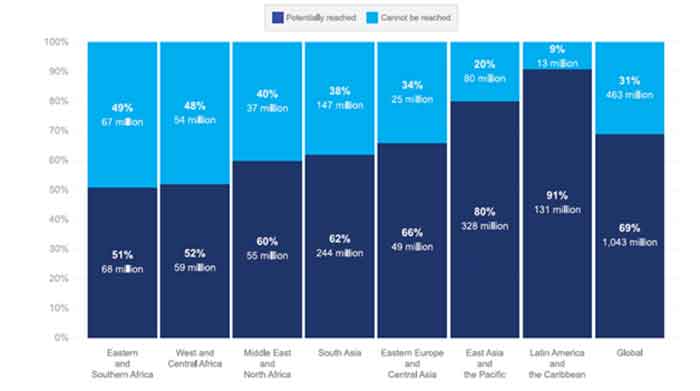
Globally, approximately 31% of students (463 Mn) from pre-primary to upper secondary levels of schooling could not be reached out either due to unavailability of infrastructure/equipment to receive the broadcasted learnings or due to lack of robust policies supporting digital learning. The digital gap intensifies according to the developmental and economical status of the region. More than 45% of students in Africa could not be reached digitally while parts of Asia had nearly a 40% gap in the accessibility of digital learning.

Region-wise inaccessibility to remote learning globally

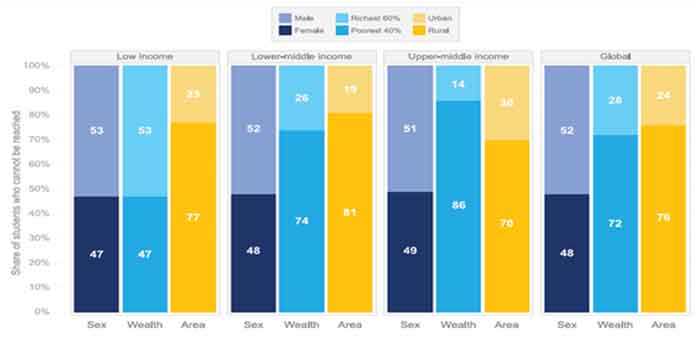
By magnifying our scope of analysis, we could easily see that the problem of inaccessibility of digital learning is much more with specific segments of the society. Globally, more than 70% of the students unable to access digital learning solutions in the Covid-19 pandemic were either from rural areas or from economically weaker sections of the society.

Students from vulnerable sections have been impacted the most globally

Disparate access to Digital facilities in India

Out of 463 Mn students unable to access remote learning globally, 147 Mn students are from South Asia. India has not been an exception too. More than 320 Mn students and 1.5 Mn schools registered in India saw a transition from offline learning to remote learning. Crores of students in India have been impacted by the inaccessibility of remote learning.

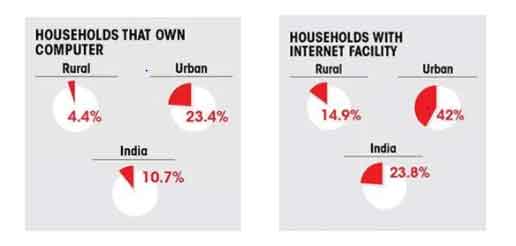
As seen globally, in India also there are few segments of the society being impacted much more than the others. While talking about the availability of the required infrastructure to access the digital instructions, stark differences could be observed between rural and urban regions of India. As per the survey conducted by the NSO just 4% of rural households had access to computers, compared with 23% of urban households. And, just 15% of rural households had internet access as compared to 42% of urban households. Such disparities are not limited to the rural and urban areas but extend to the developed and undeveloped states. Economical welfare of any household determines the access to digital equipment too, thus needless to say that these disparities are extended as per the economical sections of the society.

Lack of digital facilities across rural & urban regions of India

Lack of know-how to use digital facilities across rural India

Lack of digital infrastructure is not the only problem, lack of familiarity with the usage of digital equipment raises one more. Again, the stark differences regarding the digital solutions’ usage familiarity amongst rural and urban areas could not be ignored. Only 9.9% of the population could operate computers in rural areas while 32.4% of the population could operate computers in urban areas. Similar trends are observed in internet usage compatibility. Only 13% of the rural population knows how to use the internet while 37.1% of the urban population is comfortable with using the internet. Lack of familiarity with the usage of digital solutions ultimately leads to less digitally experienced teachers in rural areas when compared to urban areas. Also, students in rural areas are not able to receive guidance from their parents or guardians to use digital facilities.

Private Educational Institutions in India are adapting faster

In India, it has been also observed that private institutions have shown much faster adaptability to the shift in learning style from offline to remote. Apart from IITs & IIMs, Governmental institutions are struggling to adapt to the digital learning era. Also, teachers in private institutions showed faster adaptability to the digital learning system than the teachers in the Governmental institutions. This lack of adaptability shown by Governmental schools and colleges pushes the marginalized students to the new margins.

Impact of Digital Divide on young learners

The lack of accessibility to the current digital learning environment is just not a year wasted but it hints out towards the greater issue. In the world of the digital age, universal and uniform accessibility to digital facilities is of paramount importance. Lack of access to digital facilities pushes the population to the world of disparities and financial distress.

Lack of access to the learning might also push the students to the labor market as deprived students would have spare time to utilize in the cash crunch caused to the marginalized households due to the current pandemic. This increases the chances of children being pushed to the labor market

Uneven distribution of the digital facilities across the country is alarming as this is like ensuring another cycle of financial disparities for the already marginalized sections of the society. Not having access to the digital facilities means that the future generations of the deprived ones have been once again pushed one step behind the fortunate ones.

Short Term & Long-Term fixes to the issue of the Digital Divide in India

Digital learning could be of great use once there is a level playing field across the country. There could be short-term as well as long-term fixes to the issue of the digital divide in India. Short term fixes to the solutions include the increasing reliance on digital facilities such as TV, radio for learning. This would ensure greater accessibility in the deprived sections of the society due to more familiarity with these devices across the country. Such an initiative has been taken by the Ministry of Education of Peru. Other short-term fixes include the usage of digital solutions allowing offline access (Google Suite), distribution of hard copies of the learning materials.

In the long term, it is important to achieve the democratization of access to digital solutions. The Government should focus on providing the required digital facilities to every region of India. To launch BharatNet – to lay down optical fibers across India by 2022 is a welcome step but the Government must ensure last-mile accessibility within the decided timeframe. The Government should also look towards providing financial support to the vulnerable sections of society for buying smartphones, computers. Not only the Government should come forward, but private players should also play a constructive role. Few private players such as Vodafone have come forward to provide financial support to the vulnerable sections of the society for the purchase of digital equipment. With the advent of Jio in India, data/connectivity charges have dipped a lot but private players should consistently focus on providing quality services to these remote areas at affordable prices in the future. Digital learning platforms should also come up with offerings to enhance the inclusion of vulnerable students in the digital learning saga.

Since Covid-19 has already unveiled the digital divide in India, future policy focus should be to bridge the gap rather than ignoring the underlying issue, or else all the claims about India leading the digital inclusion would be big lies.

13 Dec 2020

Impact of pandemic on Child Labour

Swapnil Lohani


Introduction

Over the past nine months, the entire news and social media has been flooded with reports of rising cases of Covid-19 and the impact it has had on India’s economy. Millions of people lost their jobs or were forced to take pay cuts. Migrants were forced to walk hundreds of kilometers back home and economic activity in rural areas came to a halt.

While these visible issues were extensively covered by various news agencies, some other invisible issues remained untouched. One such issue is the effect of Covid-19 pandemic on child labour.

The Pandemic, economic instability and child labour

The last few decades have seen significant progress in the fight against child labour. However, the Covid-19 pandemic has posed a risk of backtracking. Positive trends may fade away, and the problem may even worsen in most places. Therefore, there is an urgent need to acknowledge this aspect of the pandemic’s impact and take urgent action to protect children and their families.

The pandemic has had significant negative impact on the economy. It has led to profound disruptions of supply chains, halts in manufacturing and hence an increased economic insecurity. The very high proportion of workers in the informal economy makes India especially vulnerable to the economic and labour market shocks arising as a result of the pandemic.

The experience of previous epidemics and financial crises also suggest that the coronavirus pandemic will lead to a rise in child labour. During the Ebola pandemic from 2014-2016, large number of children were left vulnerable and child labour in affected areas increased. The global HIV/AIDS epidemic in the 1980s and 1990s led to a reduced economic growth, in turn impacting children and youth. Many children experienced loss of one or both parents and in the absence of social protection, found themselves head of household and providers for siblings or sick parent. Youth were widely reported to drop out of school and start work at a young age, with no skills or experience. The global financial crisis of 2007-08 also led to a rise in child labour, notably among girls.

The current Coronavirus pandemic has had the following socio-economic impact which threaten the problem of child labor to aggravate.

  1. Falling Living Standards – There are millions of people in India living in slums who have been crippled by the pandemic due to informal settlements and inadequate housing. There is still a large population in our country that does not have any social protection. The number of people in extreme poverty has also skyrocketed in this pandemic. With poverty comes child labour as households are forced to use every available resource to survive. Studies have shown that for every 1 percentage increase in poverty there is a 0.7 percentage increase in child labour.
  2. Deteriorating employment – As the pandemic is causing an unprecedented drop off in economic activity and working time and as economic contraction reduces opportunities in the labour market, it has pushed more children into hazardous and exploitative work. With falling wages more people in the household are forced to work for sustenance, thus forcing children to work at an early age. In informal sectors like garment manufacturing, flour mills etc., financial pressures on business and employers means exploitation of children as a source of cheap labour. Further, children already working could now be forced to work longer hours and at a lower wage.
  3. Rise in informal employment – The current crisis has steered informality through different means. As capital-intensive small enterprises decline and self-employment is growing, risks of child involvement in work is growing. Disruption of domestic and international supply chain has made food supply erratic leading to further job destruction in agriculture and lower incomes for farmers, ultimately contributing to increase in child labour.
  4. Credit Crisis – Beyond the current economic crisis lies a looming credit crisis especially in poorer regions. Businesses are not being able to pay debts and hence defaulting. Uncertainty has made investors hesitant to lend. Such a credit crisis has reduced household investment in schooling which can ultimately result in more child labour.
  5. Shutting down of schools – The nationwide school closure has affected about 320 million students in primary and secondary schools. It has disproportionately hampered the education of underprivileged children in government schools, with many ending up permanently out of school and into the workforce.

When these and other factors result in losses in household income, expectations that children contribute financially can intensify. More children could be forced into exploitative and hazardous jobs. Those already working may do so for longer hours or under worsening conditions. Gender inequalities may grow more acute within families, with girls expected to perform additional household chores and agricultural work.

The way forward

There is no doubt that the current crisis is dire. At the same time, governments can make choices today that will determine the course and consequences of the pandemic. These choices must include conscious measures to prevent and eliminate child labour. Since potentially dramatic cuts in public spending can aggravate children’s vulnerability to harmful and exploitative forms of work, deliberate choices can be made to mitigate these risks, such as through extended social protection for poor families.


Additionally, the government needs to focus on the following points:

  1. Guarantee access to credit to poor households
  2. Create decent jobs for adults to make up for the job losses
  3. Ensure every child’s access to education
  4. Strengthen labour administration and enforcement
  5. Protect the health and safety of workers
  6. Fund and treat social service workers ass essential


Making the right socioeconomic and child protection policy choices will safeguard families and their children during the immediate crisis. It will also yield lasting benefits. Ensuring decent employment and safe return-to-work policies for adults, and safe reopening of schools for children are of paramount importance. So are further adapting and strengthening child protection systems and social services, and social protection measures, such as cash transfers. For low-income families, these are the fundamentals to meet basic needs without resorting to child labour or other harmful practices that put children at risk.

Cracks Appear in Peru’s Neoliberal Agriculture

Yanis Iqbal


Farm workers in various regions of Peru- such as Ica, Viru La Libertad and Piurahad – went on a strike in the first week of December, 2020, blocking the strategic Pan-American motorway to demand wage increases, basic social security benefits and the repeal of the decades-old Agrarian Promotion Law, enacted in 2000, as a mechanism to bolster the bourgeoisie’s power in the agro-export sector. The law benefits agro-export corporations in two ways. Firstly, it cuts the corporate tax rate by 30 to 15%, making the government lose out on more than $1 million in tax revenue. Agrokasa, Beta and Miranda are some of the companies benefitting from such hefty income tax cuts.

Secondly, the law authorizes the hiring of personnel for the agricultural industry through intermediary companies. These third-party contractors avoid statutory labor regulations and pay workers extremely low wages. Farm workers complain they are paid about $10 for a 12-14 hour workday. They also don’t receive benefits given to other workers, including annual bonuses and vacations.

Despite its partisan attitude towards the capitalists, the reactionary law was extended until 2031 by the government of Martín Vizcarra. Mobilizations and strikes ensued this decision, with the state deploying police violence to quell mass anger. On December 3, 2020, Peru’s National Police officers shot dead young farmer Jorge Muñoz during a peaceful protest called by farmworkers in Viru city, La Libertad Department. “The police disrupted the march with tear gas and gunshots. My son was hit in the head with a pellet,” the young man’s father said. The next day, President Francisco Sagasti sent a bill to congress to repeal the law in the face of the five days of protests, and it passed by a vote of 114 in favor, two against and seven abstentions.

The Withdrawal of the State

Peru’s current agrarian crisis is historically situated in the authoritarian neoliberal model implemented by former President Alberto Fujimori. Popularly known as “Fujishock”, these economic reforms advanced a structural agenda of ever-deepening precarity for the people. Beginning in 1991, the Fujimori administration opened all sectors of the Peruvian economy to foreign direct investment (FDI) and lifted restrictions on profit remittances. The government offered tax-stability packages for foreign investors for terms of ten to fifteen years and implemented wide-ranging privatization programs that eliminated competition from state-owned and domestic firms. If that was not enough, the government ratified bilateral and multilateral investment-guarantee treaties, such as the Multilateral Investment Guarantee Agency (MIGA) convention and the Overseas Private Investment Corporation (OPIC) accords.

In the agrarian sector, Fujimori’s neoliberal restructuring entailed the closing of the agrarian bank, the cancellation of all forms of subsidies to farmers, the shutting down of the agrarian reform office and the bureau responsible for peasant communities. The Rice Trading Company (ECASA) and the National Supply Marketing Company (ENCI) – two integral institutions of the agricultural state apparatus – were also abolished. While the former established legal monopoly over the trading of rice – a key staple in the Peruvian diet – thus, ensuring rice producers an above-market return on their crop, the latter controlled imports of food and fertilizer.

The liquidation of ENCI and ECASA heavily impacted specific sectors. ENCI, for instance, had been the only institution that was allowed to import milk and its disappearance removed a source of support to the local dairy industry; as imports surged in the early 1990s (principally from New Zealand, but also Australia, the United States and Poland) the livelihood of smaller-scale producers were ruined in areas like Cajamarca and Arequipa. The abolition of ECASA liberalized the market in rice, removing an institution which had maintained prices artificially high for the benefit of producers.

The unleashing of deregulatory market forces led to the championing of individual over collective land rights since fragmentation consolidates profit-maximizing behavior. State farms were privatized and support withdrawn from production cooperatives and other group farming activities that were favored under the earlier state-led developmental model. The 1995 Land Law abolished the upper limits on personal landholding and allowed the state to sell land currently in public ownership. Privatization included the parceling and possible renting or selling of land previously held collectively by indigenous and peasant communities.

Agro-export Industrialization

Towards the end of 1990s, the structure of agricultural production began changing, with a notable increase in the share of tradable goods (such as rice, hard maize, wheat, soya, sugar, milk etc.) and a decline in the proportion of non-tradables (such as potato, quinua and other Andean grains). Policy under Fujimori tended to benefit larger-scale producers oriented primarily towards agro-industry and foreign markets. This was done mainly through the reduction of protective tariffs and the maintenance of an overvalued exchange rate. Both of these measures created a difficult environment for producers of tradable goods who found themselves increasingly subjected to competition from cheap food imports.

The disintegration of locally produced staples was additionally advanced through the dispossession of land and the restriction of proper water supply and credit to small-scale producers. To take an example, in 1989, Supreme Decree 037-89-AG, issued by President Garcia, signaled the transfer of water management in Peru from the state to private water user boards known as Junta de Usuarios (Users Board). In 1990, Fujimori continued this process, issuing Supreme Decree 003-90-AG, which allowed Juntas to collect agricultural water for the management of irrigation systems. The most important Juntas de Usuarios are controlled by agri-businesses and agro-export companies which regulate water services for their own class interests.

As a result of an amalgam of agrarian strategies implemented by the Peruvian state, domestic production of food crops has wholly collapsed. Imports of agricultural goods averaged $488 million in the period between 1986 and 1990, rising to $687 million in 1991–1995, and reaching $1035 million in 1996– 1999. In volume terms food imports rose from 1.6 million tons (1986–1990) to 2.1 million tons (1991–1995) and 2.8 million tons (1996–1999). Peru’s average annual agricultural trade balance, which until 1980 had been consistently in surplus, registered deficits of $216 million in 1986–1990, $383 million in 1991–1995 and $346 million in 1996–1999.

The Escalation of Class Struggle

With the pandemic-induced deterioration of economic conditions in Peru, the internal ruptures of the agricultural sector are being nakedly exposed. In the years between 2008 and 2018, there were considerably more individuals employed in agriculture than in the mining, communication, and finance sectors together. In spite of being the most labor-absorbing sector, agriculture is also the one where super-exploitation, accumulation through dispossession and permanent primitive accumulation have by and large prevailed. These inhumane features of the agricultural sector have been constantly criticized by the National Agrarian Confederation (CNA) – an organization which has highlighted the government’s prioritizing of agribusiness and called for recovering ancestral practices and land security. A groundswell of opposition against the ruling elite’s brutal policies will keep increasing as the masses confront the effects of a pandemic exacerbated by a pre-existing capitalist framework.

Coding or Crayoning for Small Kids?

Anirudh Agarwal


 “It has become appallingly obvious that our technology has exceeded our humanity”

– Albert Einstein

Coding is a short reference to the use of programming languages to provide lengthy sets of instructions for a computer to perform specific tasks. The continuous lines of text written behind the fancy looking websites and apps are what constitute as code for the application. The idea of the programming language being very similar to human languages like English or French has been debated a long time. While learning English or French, a student learns to talk and recite as well as write while people communicating with them immediately understand any mistakes and make corrections. However, a computer language cannot be spoken, its only written and doesn’t talk about real world objects like apples, oranges or clouds. The ‘objects’ in code have a completely different connotation. If a single comma (,) also goes out of place, the computer is not smart enough to spell check or be able to correct you, it’ll only reply with an error. Now imagine a long set of instructions and the countless errors the computer can throw, that testing for errors is actually a full-time IT job role.

Small kids and coding

Recently, the country has seen a growing trend where parents are having their small kids as old as 6 years learn coding through online platforms. The idea of coding is painted in such bright light while the reality is far from it. Coding is not a world filled with colours, robot designs, and games. It’s rather the opposite of it, where it writes colours as 6 digit numbers, pictures as another set of defined words and is devoid of any real world creativity. The advertisements circling around how kids could become millionaire CEOs after learning to code and misleading quotes from top CEOs like Sundar Pichai, Bill Gates, etc. are taken out of context to fuel the peer pressure to learn coding.

Presently, small kids are already subjected to tuitions and coaching with parents trying their best to get their kids to learn as many things as possible, just so their kid wouldn’t be left behind in this imaginary race against others. Sumantini Dhuru, a film director, social activist and ardent promoter of the Avehi Abacus Project (which creates educational material to help students understand the link between their different subjects); says she is hardly surprised by this. With India being the largest education market and on the boom of technology, companies are going to drive the young generation to make profits especially on the shoulder of parents who are highly aspirational. She agrees that parents feel that Coding is something their kids need to learn early or they might miss the train. Many academicians believe that early education should be more open-ended and interactive, before kids can grow up to become “experts” in any field. Magaret Leary, chair and director of curriculum at the National Cyberwatch Centre is stated to say that studies have shown that every 2 years, 60% of technical skills become obsolete, which means that programming language learnt at the age of 5 or 6 will essentially be of no use by the time the child is at 20.

The Fear of missing out (FOMO)

The fear of missing out on the technological revolution by not participating in coding is completely misplaced. For kids to be successful in a technology world, they should rather think more creatively, innovatively and expansively. Saying coding jobs are the most in-demand jobs is a bit of a misleading statement. Even within IT sector there are many different kinds of jobs. One who are just involved in testing, some roles are actually maintenance crew given that software glitches and problems happen all the time with the clients using the software, while only some are actually writing a part of a new software. In India, contrary to the popular belief, sales and marketing jobs are the most in-demand and not IT jobs according to a survey conducted by ManpowerGroup India in early 2020. Recently, Pradeep Poonia, an engineer who had gone on to criticize the ed-tech startup WhiteHarJr.’s marketing tactics calling it a Ponzi scheme. Byju’s WhiteHatJr. aims to provide coaching of coding to kids aged 6-14 and Poonia claims that the much advertised Wolf Gupta, who is a 13-year old kid that learnt AI and got a job at Google for some crore rupee package is completely bogus. The ASCI has asked Byju’s owned coding startup to take down its some of its advertisements against complaints that they made fake and misleading claims. The marketing message is again intended to induce fear among parents that their kid might miss out on something revolutionary.

Experts of any field do not start that young at the age of 6-10. Take surgeons, physicists, astronauts or even lawyers as examples, none of them start out so early. No big lawyer was understanding the legal framework of the constitution being six years old so why should being a software developer be any different. The majority of the successful technological experts did not start so early, yet the few examples of who did are highlighted in the media.

Thinking skills are important, not coding skills

The kids have only a limited bandwidth after their school. In that free time, they can either learn to code or enjoy crayoning, exercising, interact with different people and expand their horizons of thought. Engaging in creative thought activity brings out ideas and shapes their understanding of the world. It builds their ability to think of the world in a different way and identify problems in everyday life that can be solved. Sundar Pichai is not known for his coding skills, he is rather appreciated for his vision of the Google Chrome web browser. Bill Gates may have started coding early, but his vision for Microsoft is what made him successful and not his ability to code windows. Similarly, today we have entrepreneurs, scientists and even software developers thinking about the next frontier because learning to code as Dhuru says is like becoming an electrician. You can fix a light bulb if it goes bad yourself or you could get someone to do it but thinking about the functioning of the bulb or the smartphone is not something enabled by learning to code.

Conclusion

Parents should take a step back and evaluate, what their child is ultimately gaining from this exercise. There are alternate activities that can keep the child engaged like learning a musical instrument or even dancing. Parents should think back to their childhood about all the times spent playing and crayoning, and that would now be deprived from their children in the name of coding. The future is about innovation, not just in technology but actually in thought as all technology we see today are tangible outcomes of ideas. Those ideas are worth millions and not the product. An Iphone today costs about 1 lakh rupees give or take, depending upon the model you choose but the ideas behind making the iphone powers the trillion dollar apple company. Investing in developing moral values in children and engaging them in creative activity will be most beneficial as well as help them have happy childhood memories for life.

More brinksmanship in Brexit talks as deadline extended again

Robert Stevens


The British government and European Union (EU) failed to reach agreement Sunday on a trade deal to follow Britain’s exit from the bloc in less than three weeks, on January 1, 2021.

As talks floundered and the deadline set on Wednesday by UK Prime Minister Boris Johnson and European Commission President Ursula von der Leyen loomed, both agreed to extend negotiations yet again.

The decision was made in an afternoon phone call yesterday between the two after hours of talks over the weekend in Brussels. Johnson and von der Leyen issued a joint statement reading, “Despite the fact that deadlines have been missed over and over we think it is responsible at this point to go the extra mile.” It concluded, “We have accordingly mandated our negotiators to continue the talks and to see whether an agreement can even at this late stage be reached.”

Prime Minister Boris Johnson briefs members of his Cabinet from his office in Downing Street, after his call with the President of the European Commission Ursula von der Leyen after further talks on Brexit (Credit: Andrew Parsons/Flickr)

Earlier Sunday, German Chancellor Angela Merkel came out in support of extending talks.

Following his call with the EC president, Johnson reiterated, “I’m afraid we’re still very far apart on some key things, but where there’s life, there’s hope. We’re going to keep talking to see what we can do… The UK certainly won’t be walking away from the talks.”

In the run up to the extension, both sides stepped up their grandstanding to exert maximum pressure. Various reports stated that progress had been made but sticking points remained on Brussels demands that the UK was unable to accept. On Friday, Johnson said it was “very, very likely” that the talks would end in failure and that the UK was continuing preparations for a “no-deal Brexit” trading on World Trade Organisation terms from next month.

While extending the talks, the EU is seeking to ensure that its 27 member states do not offer the UK any concessions that would replicate EU membership benefits. “According to a diplomatic note seen by the Financial Times ,” the newspaper reported Saturday, “EU member states were warned by Brussels not to do anything that would ease the consequences of a no-deal end to the Brexit transition period on January 1.” “One EU official familiar with the discussion said Brussels was under ‘no illusion’ that a no-deal Brexit would be highly unpredictable, reported the FT, adding that the source said, “Everyone understands there are no guarantees the British come back to the table.”

Last Thursday the EU laid out a series of proposals to the UK that would allow, in the event of a no-deal, airlines to continue flying normal routes between the EU and UK and hauliers to continue to cross the English Channel. The FT reported that the “decision not to include the so-called ‘fifth freedom’—allowing intra-EU airfreight movements”—in the proposals offered to Britain, “and to deny ‘cabotage’ rights that would allow British trucks to make drop-offs around Europe were explicitly designed to keep up the pressures, diplomats were told.”

On Saturday, the FT reported, “Although both sides have sounded increasingly pessimistic over the prospects for a deal ahead of the end of Britain’s Brexit transition period on January 1, the talks have narrowed to one main outstanding issue.” Saturday’s negotiations had “centred on trying to accommodate the EU’s demands for a mechanism that would make tariff-free trade dependent on the two sides maintaining a regulatory ‘level playing field.’”

On Sunday, UK Foreign Secretary Dominic Raab attacked the demand saying, “I don’t think we want a nuclear style reaction where tariffs go up, where we’re back in the same soap opera or drama every couple of years just because there’s a particular issue in a particular sector.”

In a move underscoring the heightening of tensions between Europe’s major powers, the UK’s Ministry of Defence said that in preparation for no agreement on fishing rights in the ongoing talks, four 80-metre machine gun-armed Royal Navy vessels had been placed on standby to guard British waters from EU trawlers, mainly from France, from January 1. The Daily Express front page headlined, "Gunships to guard our fish”. The Daily Mail’s read, “We’ll Send In Gunboats,” with the accompanying article reading, “In a dramatic ratcheting-up of No Deal contingency planning, Wildcat and Merlin helicopters are also being placed on standby to help with coastal surveillance. And military personnel have been seconded to the Joint Maritime Security Centre to help deal with any clashes in fishing grounds.”

On Sunday Raab continued the offensive over the fishing issue, telling Sky’s Ridge on Sunday show, “The bottom line is actually if we do leave on WTO terms we'll be an independent coastal state. Of course we're going to enforce our waters around fisheries and whatever else. And of course for the French and others, that will mean—you know, forget those outlandish terms that they were asking of us—their fishing industries would have zero access guaranteed.”

He added, “I think the EU is concerned that actually Britain might do rather well once we leave the EU and is worried about the competitive advantage, even on the normal global rules that apply.”

The hardline pose struck by Johnson led to consternation among senior figures in his Conservative government. Conservative chair of the Commons defence committee, Tobias Ellwood, a former captain in the Royal Green Jackets infantry regiment, declared, “I think these headlines are absolutely irresponsible. We need to be focusing on what is already in the bag—98 percent of the deal is there, there are three or four outstanding issues.”

While Johnson leads a party with a substantial pro-Brexit majority, with many having no qualms about exiting without a deal, those such as Ellwood are supportive of securing a deal with the EU, echoing majority opinion in business and financial circles that this is vital for their strategic interests.

The opposition Labour Party are pledged that if a deal is struck, they will not oppose it in parliament. On Sunday, a party spokesman said, “The Conservatives promised the British people that they had an oven-ready deal and that they would get Brexit done. The government needs to deliver on that promise, get us the deal and allow us to move on as a country.”

The EU’s fears of the dire implications of a hard-Brexit were outlined Sunday by Spain's foreign minister, Arancha Gonzalez, in an interview with Sky News. Failure to reach a trade deal should be avoided “at all costs,” she warned. “No-deal in the current circumstances would be extremely negative for our economies. And if you go by what economists are saying, and there is plenty of literature on that, the UK would suffer even more than the European Union. We both will suffer, more on the UK side, which I think is something we should try to avoid at all costs.”

Later Sunday, both sides let it be known that talks could go right down to the wire. The FT quoted a “senior British official” stating, “We have time on our side to ratify—we can go up until Christmas.”

US recognizes Morocco’s annexation of Western Sahara

Jean Shaoul


President Donald Trump has hailed Morocco’s agreement to begin normalizing relations with Israel in return for US recognition of Morocco’s illegal annexation of the Western Sahara, which Morocco has long demanded.

Ending years of official US support for a UN-brokered resolution of the long-running conflict, Trump tweeted December 10, “Today, I signed a proclamation recognizing Moroccan sovereignty over the Western Sahara. Morocco's serious, credible, and realistic autonomy proposal is the ONLY basis for a just and lasting solution for enduring peace and prosperity!”

Separately, he added, “Our two GREAT friends Israel and the Kingdom of Morocco have agreed to full diplomatic relations—a massive breakthrough for peace in the Middle East!”

A Polisario tank division, 2012 (Credit: Wikimedia Commons)

The US became the first country to formally recognize Morocco’s sovereignty over Western Sahara, the former Spanish colony with considerable mineral and phosphate deposits, as well as rich Atlantic fisheries and potentially significant offshore oil reserves.

Trump’s tweet follows his recognition of Israeli sovereignty over Syria’s Golan Heights, seized during the 1967 Arab-Israeli war, and his decision to move the US embassy from Tel Aviv to Jerusalem. This time he has recognized the annexation of an entire country in defiance of several UN Security Council resolutions.

All three instances constitute flagrant violations of international law, which outlaws the acquisition of territory by force. Such annexations were declared illegal under the Geneva Conventions enacted in the wake of the Second World War to prevent the repetition of actions like those carried out by Germany’s Nazi regime. Trump has thumbed his nose at the entire post-World War II international order and the international rule of law, and signaled that militarism, territorial expansion, and colonialism are the order of the day.

In 1975, Morocco forcibly annexed the vast but sparsely populated territory of Western Sahara in contravention of an International Court of Justice ruling and without consulting the local Sahrawi people. This followed secret talks between Madrid, the occupying power, Rabat and Washington in which Spain agreed to cede control to Morocco. The Polisario Front, the military wing of the self-proclaimed national-bourgeois Sahrawi Arab Democratic Republic (SADR), declared independence for Western Sahara and fought a 16-year war with support from Libya and Algeria against Morocco and Mauritania.

Mauritania also laid claim to part of the territory but withdrew its claims in 1979. The war ended with a 1991 ceasefire, dividing the country, with Morocco holding 80 percent of the territory.

In 1991, the UN mission to Western Sahara was established to resolve the dispute via negotiations and organize a referendum on the territory’s future—to remain a part of Morocco, become an autonomous province or become independent. It dragged on for decades without ever holding a referendum, leaving the territory under the de facto control of Morocco.

Since then, there have been several UN Security Council resolutions supporting Western Sahara’s self-determination. In 2007, Morocco announced its Autonomy Plan for Western Sahara that proposed making Western Sahara a semi-autonomous region under Morocco’s sovereignty, which the Polisario rejected in favor of a referendum for an “independent Sahrawi state” in Western Sahara. The UN mission’s mandate was renewed by the Security Council less than six weeks ago on October 30, with US support.

Last month, fighting broke out between Moroccan military forces and the Polisario after Rabat sent troops to reopen a highway linking Morocco, the Western Sahara and Mauritania that was occupied by protesters. This brought an end to the 1991 ceasefire—a move that had the potential to lead to a renewed outbreak of hostilities with Algeria, which has supported the Polisario and is home to 175,000 Sahrawi refugees.

While Algeria adopted a relatively muted stance over the outbreak of hostilities, Prime Minister Abdulaziz Djerad has denounced Trump’s decision, saying it was designed to destabilize his country, which borders the Sahel that has become a powder keg after the US and European-led wars in Libya and Mali.

The African Union—which 30 years ago recognized Sahrawi independence, prompting Morocco to leave the organization until rejoining recently—adopted a notably disinterested stance on Rabat’s military operation, merely calling for restraint. Several Gulf Arab states publicly backed Morocco.

Hours after Trump’s tweeting of US recognition of Moroccan sovereignty over Western Sahara, including the Polisario-controlled areas of the territory, Washington announced a $1 billion arms sale to Morocco including the sale of at least four large aerial drones and precision guided weapons.

The announcement of the normalization of relations between Israel and Morocco, reportedly brokered by the United Arab Emirates, comes after over six decades of backroom talks between the two countries on issues ranging from trade and security to intelligence-sharing. In the 1950s, King Hassan II permitted the mass emigration of Jews to Israel—Moroccan Jews now form one of the largest Jewish communities in Israel—and bought weaponry and surveillance technology from Israel. Morocco also shared intelligence with Israel, to the extent that in 1965 the king sought Mossad’s help in locating and disposing of the anti-monarchist, nationalist leader Mehdi Ben Barka, whose tortured body was never found.

Israeli Prime Minister Benjamin Netanyahu celebrated Trump’s announcement as “another great light of peace,” predicting “a very warm peace” given Israel’s longstanding relations with Morocco. At pains to keep his Blue and White coalition partners out of the discussions, who only heard the news from US officials, he is seeking to bolster his position in the face of criminal proceedings, a disintegrating coalition, and potentially fresh elections.

King Mohammed VI, who controls much of Morocco’s economy and its wealth through a complex web of companies, speaks for the Moroccan elite at the expense of the broad mass of its largely youthful population, with social discontent over unemployment and poverty rising. It is this that determines his orientation towards US imperialism and the Gulf petro-monarchies.

Trump’s recognition of Morocco’s sovereignty over Western Sahara was the quid pro quo for Morocco’s formal recognition of Israel, following the path laid by the UAE, Bahrain—a de facto colony of Saudi Arabia—and Sudan. Like Bahrain, Morocco, which has had close relations with Saudi Arabia and sent troops to support its war against the Houthi rebels in Yemen, will have received a green light from Riyadh.

Notwithstanding King Mohammed VI’s call to Palestinian Authority President Mahmoud Abbas professing the contrary, another Arab regime has very publicly signaled that the Palestinian issue is no longer of any consequence. Saudi Arabia’s Arab Initiative, endorsed by the Arab League in 2002, that made normalization of relations with Israel dependent upon its full withdrawal from the Occupied Territories, a “just settlement” of the Palestinian refugee problem based on UN Resolution 194, and the establishment of a Palestinian state with East Jerusalem as its capital, the so-called “two state solution,” is a dead letter.

The fate of the Palestinians, which for decades defined the Arab states’ attitude towards the Zionist state, has been unceremoniously dumped.

The agreements have nothing to do with peace—none of the four states that have agreed to normalize relations with Israel have ever been at war with the country. They are bound up with the Trump administration’s broad anti-Iranian axis, being formed in preparation for a potentially catastrophic war aimed at regime-change in Tehran, rolling back Chinese and Russian influence in the region and reinforcing US hegemony over the resource-rich Middle East and North Africa. Morocco severed diplomatic relations with Tehran in 2018, accusing it of backing the Polisario.

To this end, Trump has offered the necessary bribes and sweeteners: F35 fighter jets for the UAE, US protection for Bahrain, and the removal of Sudan from the US list of state sponsors of terrorism that will enable the country’s rulers to access international finance.

Open schools and businesses in Germany are leading to record infections and mass death

Marianne Arens


The coronavirus pandemic has long run out of control in Germany. New record numbers are being reported daily. On Friday, the Robert Koch Institute (RKI) reported the second consecutive daily record, with almost 30,000 new infections registered in 24 hours. Also, almost 600 COVID-19 patients died again in one day. This brings the total number of deaths to 21,000, and another 10,000 could be added by the end of the year. About 4,400 coronavirus patients are fighting for their lives in intensive care units.

A pupil drives by a subway train in Frankfurt, Germany, Wednesday, Nov. 25, 2020. (AP Photo/Michael Probst)

With these explosive figures, Germany has catapulted to the top of the European infection rankings. In terms of daily infection figures, it now ranks ahead of France, Britain and Italy. In Europe, 446,000 people have died of COVID-19 so far, which is more than a quarter of the almost 1.6 million coronavirus deaths globally. Twenty million people worldwide are currently fighting the SARS-CoV-2 lung disease, and 70 million have been infected since the beginning of the pandemic.

The scale of this “winter of death” confirms all warnings of the International Committee of the Fourth International (ICFI) and the World Socialist Web Site. Already in the spring, we called on workers to form rank-and-file safety committees to take protection from the pandemic into their own hands independently of the trade unions. Long before the beginning of the autumn semester, the Sozialistische Gleichheitspartei (Socialist Equality Party, SGP), the WSWS and the IYSSE youth and student organization called on students, teachers, educators and parents to take action for their own protection and that of their children.

“By returning to face-to-face teaching amidst rising infection rates, governments of all stripes are putting the health and lives of countless teachers, students and parents at risk,” we wrote in our August 14 statement titled “Stop school openings! Prepare for a general strike!” We predicted: “The mass deaths of teachers, parents and even students will be condoned in order to force workers back to work and secure the profits of the rich.”

This warning has been tragically confirmed.

On Thursday, Lothar H. Wieler, the head of the Robert Koch Institute called the spread of the coronavirus infection throughout the population “alarming.” There are now about twice as many outbreaks in nursing homes and homes for the elderly as in the spring. The measures officially ordered so far are wholly insufficient, he said. The number of deaths would continue to rise in the coming weeks, Wieler confirmed, and more and more intensive care units will reach their limits.

This was confirmed two days ago when the University Hospital of Augsburg halted all admissions for non-urgent treatment. The hospital was at full capacity with 163 COVID-19 patients, 33 of them in intensive care, the medical director of the hospital, Michael Beyer, told the Bavarian Broadcasting Corporation (BR). A doctor from the University Hospital pointed out that now, considerably more young patients were having to fight for their lives. “They are around 30, around 40, have no pre-existing conditions whatsoever and sometimes conduct this fight unsuccessfully.”

The unsafe opening of schools after the summer vacations has played a decisive role in the spread of the pandemic. Numerous serious scientific studies now prove this. Most recently, a large-scale study commissioned by the Austrian Ministry of Education clearly showed that schoolchildren are infected practically as frequently as adults. Since the autumn of 2020, the study has observed around 14,800 school children aged between 6 and 15 years and compared them with 1,200 teachers in terms of SARS-CoV-2. The only difference, the study found, was that children show fewer symptoms. As a result, coronavirus infection was less frequently detected in them. Nevertheless, children could pass on the virus to other social layers with devastating consequences.

This was also confirmed by a research group at the Karlsruhe University KIT. The group investigated the effectiveness of various measures to contain the pandemic in the spring. Like other researchers in Vienna and Oxford, this group concluded that “a significant effect” could be observed following school closures. The sooner schools were closed in the spring, the more the effect of falling case numbers became apparent, as Dr. Niklas Kühl, head of the research institute in Karlsruhe, explained. “If we had waited one day longer in the spring in Germany before closing schools, this would have meant 125,000 additional infections, according to our analyses, and closure seven days later, even 400,000 additional cases.”

These findings have been known for a long time. However, the positions of the scientists are being suppressed and they are put under pressure, so they do not speak about their results too loudly. Christian Drosten, head of virology at the Charité hospital in Berlin, pointed this out on December 8 in his coronavirus update on broadcaster NDR. There was a “basic climate” among scientists, he said, which consisted of the following: “You simply cannot say what it is like anymore because otherwise you will be burned, put in a corner, attacked in the media and, unfortunately, also by some voices within the scientific community ... This basic mood has already spread among many people. And I know from many of my colleagues that in the last few weeks they have had the feeling: better not say anything, there will only be trouble.”

The pressure placed on scientists is part of the campaign to keep schools and businesses open, which has been accompanied from the outset by countless unscientific studies, open lies in statements by corrupt experts. The refrain is: the economy must continue to run and make profits under all circumstances.

Given the catastrophic effects, resistance to this policy is growing. At dozens of schools, students have gone on strike or joined protests. According to broadcaster ZDF’s political barometer, on Thursday, 73 percent of all respondents were in favour of a lockdown as in the spring, during which schools, day-care centres and businesses would also be closed. A clear majority is also of the opinion that the measures taken by the German government “did not go far enough.”

When the same politicians who have sacrificed human lives for months on the altar of profit now announce “tough measures,” they are only trying to bring this overwhelming opposition under control. The measures adopted so far are not even remotely capable of preventing the catastrophe.

Instead of the immediate closure of schools, day-care centres, and non-essential businesses, they are merely discussing an extension of school vacations and placing further restrictions on private contacts, which most people have reduced to a minimum anyway. Even the closure of shopping centres is only being considered in a few German states before the holidays in order not to jeopardize the profitable Christmas trade.

“This winter of death in Europe shows the bankruptcy of capitalism. If hundreds of thousands of lives are to be saved, the working class must intervene independently into political life in opposition to the social system that has led to this horrific disaster by blocking a rational, scientific policy,” the WSWS wrote yesterday in a perspective, calling for building “a network of independent action committees to prepare a Europe-wide general strike to enforce the closure of schools and non-essential industries.”