21 Dec 2020

Right-wing extremist sentenced to life imprisonment for attack on synagogue in Halle, Germany

Peter Schwarz


The Naumburg Regional High Court sentenced the Halle assailant to lifelong imprisonment with additional preventive detention on two convictions of murder, multiple attempted murders, sedition, and other crimes. The court followed recommendations made by the state prosecutor and co-plaintiff.

Stephan Balliet, who was 27 years old at the time, attempted to kill more than 50 people in a synagogue in Halle, Germany, on October 9, 2019, the Jewish holiday of Yom Kippur. After failing to break down the reinforced door, he shot and killed a random passerby and a man in a nearby kebab shop, and injured several others.

The synagogue in Halle [Credit: Allexkoch/CC BY-SA 4.0]

Balliet must now serve at least 20 years in prison. Subsequently, his custody can be reviewed every two years. This is the strongest punishment available under German law. However, the ruling can still be appealed to the Federal High Court.

There was never any doubt about Balliet’s responsibility for the crime. He filmed his attack, which was modelled on the Christchurch terrorist attack on two mosques, and livestreamed it online. During the five-month trial, he openly confessed his guilt and sought to use the courtroom as a stage for the propagation of his anti-Semitic, racist, and genocidal ideas. Although a forensic psychiatrist diagnosed him with a complex personality disorder, they deemed him mentally fit to stand trial.

Due to reasons of space and security, the trial was not held at the regional high court, but in the city of Magdeburg. Together with 45 survivors and relatives of the dead, who joined the co-plaintiff’s case and were represented by 21 lawyers, 280 journalists from all over the world followed the trial. The court questioned 86 witnesses and six experts.

Presiding judge Ursula Mertens granted considerable time to the co-plaintiffs, who experienced the attack on the synagogue in fear of their lives, to detail their personal experiences and the psychological impact of the events–a rarity in a German court. As a result, she received substantial praise from those affected, the media, and politicians.

For example, Jewish victims reported on cases of post-traumatic stress disorder and how they are considering leaving Germany as quickly as possible. A woman recalled the fate of her grandfather, who survived the Holocaust as the only one in his family, but lost over 100 relatives. Now, she said, she has “joined the ranks of the survivors.”

The political background to the attack and Balliet’s ties to right-wing extremist terrorist groups went largely unmentioned in the trial. The former chemistry student was presented as a loner who lived alone with his mother, had no job and no girlfriend, and quenched his thirst for far-right ideology online.

However, when the court heard testimony from officers from the Federal Bureau of Criminal Police (BKA) who evaluated Balliet’s computer and data storage devices, it quickly became clear that the police never seriously attempted to link Balliet to right-wing extremist groups.

The BKA found over 3,000 racist and anti-Semitic videos downloaded by Balliet from imageboards and chatrooms. For his part, he uploaded a “manifesto” and instructions on how to build weapons, and made contact with the right-wing extremist milieu on imageboards and gaming platforms like Steam.

But although the BKA was able in part to identify the platforms on which Balliet was active, and received data from his accounts on Steam, it undertook no further research and failed to secure important communication protocols. A BKA expert who wrote the note on Steam was forced to admit following a question from one of the co-plaintiff’s lawyers that she had no idea what the game was about. As a result, important details about potential accomplices were lost.

Co-plaintiff lawyer Kristin Pietrzyk complained that the substandard investigation denied “us the opportunity to learn how these structures work and how these attacks develop.” Her colleague, Onur Özata, commented, “Here we were able to confirm a major gap in knowledge.” The lawyer David Benjamin Herrmann described the BKA as “a hobbling patient far behind the times.”

The BKA’s lack of interest in the investigation fits into a definite pattern. Right-wing extremist terrorist networks, like “Hannibal,” “NSU 2.0,” “Northern Cross,” and others, have close ties to the military and police, and are systematically trivialised and covered up. The numerous links between the National Socialist Underground (NSU), which carried out at least 10 racist murders, and the intelligence agencies remain concealed to this day.

Moreover, Halle is not an isolated event. In the state of Saxony-Anhalt alone, there were 133 incidents of right-wing violence during 2019, as co-plaintiff lawyer Sebastian Scharmer noted in his concluding arguments. The investigating authorities simply failed to learn anything about those who had knowledge of the attack or were even co-conspirators, which is why the judiciary embraced the narrative of a “lone wolf,” he said.

Then just four months after the Halle attack, another right-wing extremist, Tobias Rathjen, murdered 10 people in Hanau, Hesse, for racist reasons. He was also allegedly a “lone wolf” who was radicalised online.

The regularity of such attacks is possible only within a political climate in which right-wing extremist ideology and tendencies are systematically supported and encouraged from the highest positions.

This was shown by the fact that in Saxony-Anhalt, the synagogue targeted by Balliet had no security in place on the most important Jewish holiday, even though concrete threats had been made. And when the police were forced to guard Jewish institutions after the attack, then-Interior Minister Holger Stahlknecht complained to police that they could no longer cope with their more important tasks.

At the national level, right-wing extremist tendencies are being deliberately promoted and supported. In spite of its trivialisation of the Nazis, the Alternative for Germany (AfD) is celebrated and elected into leading parliamentary committee positions. Numerous police officers, military officers, professors, and even judges are themselves active in the right-wing extremist party. The intelligence service advises and protects them.

As far as the ruling class is concerned, the threat is always on the left. Anti-fascist organisations, like the Association of the Persecuted by the Nazi Regime (VVN-BdA), had its charitable status withdrawn in order to drive it into financial bankruptcy. The Sozialistische Gleichheitspartei (Socialist Equality Party, SGP) is under surveillance by the intelligence service because it, according to the official justification, “advocates for a democratic, egalitarian and socialist society,” and agitates “against alleged ‘imperialism’ and ‘militarism.’”

The SGP was added to the official intelligence agency’s report, the Verfassungsschutz Report, after it criticised the right-wing extremist historian Jörg Baberowski and won widespread support among students and workers as a result. The academic and political establishment closed ranks in defence of Baberowski against the SGP, even though he had said of Hitler that he was “not vicious” and supported the line of the Nazi apologist Ernst Nolte.

The return of the ruling elite to its fascist traditions, which were only covered over by an emergency band-aid after 1945, is the product of the intensification of the class struggle. The growing gulf between rich and poor, the destruction of hundreds of thousands of jobs in industry and air travel, the criminal coronavirus policy, which puts profits before lives, and the revival of militarism are triggering mass resistance. As in the early 1930s, the ruling class is responding by supporting fascist tendencies.

Stephan Balliet deserves his sentence. But his conviction will not stop the shift to the right and the strengthening of anti-Semitic forces bound up with this. That can only be done by an independent political movement of the working class fighting for a socialist society.

Newly released wage data documents 40-year wealth redistribution to top 0.1 percent

George Kirby & Shannon Jones


Earlier this month the Economic Policy Institute (EPI) published newly available wage data documenting the continued rise in wage inequality. Social Security Administration data collected by the EPI presents the cumulative change in wages and the upward shift of wage income in favor of the wealthiest social layers since 1979.

The results, adjusted for inflation, demonstrate the relentless shift in income over the last four decades from the bottom 90 percent of wage earners to the advantage of the top 10 percent and in particular the top 1 percent and top 0.1 percent, whose total wage income has risen 2.6 times and 4.5 times respectively.

These figures, striking as they are, do not capture nearly the full extent of the rise in social inequality. While they include such things as realized stock options and vested stock awards, they do not include the value of the vast stock portfolios held, for the most part exclusively by wealthy upper income social layers. Due to the pumping of trillions of dollars into the stock market by the federal government, including the infusion of vast amounts under the CARES Act, the net worth of billionaires such as Amazon’s Jeff Bezos and Tesla’s Elon Musk has soared to astronomical levels.

Excluding the rise in value of stock holdings, the income of the top 0.1 percent of wage earners has increased a staggering 345.2 percent since 1979 and the next 1 percent saw an increase of 160.3 percent. Meanwhile the bottom 90 percent saw a 26 percent increase in real wages. Even though the next 10 percent, the more privileged layers of the middle class saw pay increases of 51–75 percent.

Even the 26 percent rise in wage income for the bottom 90 percent is probably overstated, since this figure is based on total hours worked, including overtime, and not average base pay. Much of the rise without a doubt reflects the fact that workers are laboring for longer hours, often at multiple jobs, to keep their heads above water.

A manufacturing worker [Source: pixabay.com]

The numbers also do not reflect the impact of the destruction of benefits, hitting lower-wage workers the hardest. Over this time period, many have lost their employer-paid health benefits or have faced rising co-payments. Employer paid pensions are also a thing of the past, as well as paid sick leave. The younger generation is being crushed by massive student loan debt.

Taking all this into account in real dollar terms, those in the bottom 90 percent, the majority of whom are working class and less privileged layers of the middle class, have seen an average increase in wage income of less than $9,000 since 1979.

Meanwhile, annual wages between 1979 and 2019 more than doubled for the upper 1 percent, on average from $251,600 to $522,000 and for the top 0.1 percent $648,700 to $2.89 million. By contrast, if income growth had been distributed equally across the population, the average wage earner would have enjoyed a $57,535 annual pay increase since 1979. Based on a standard 40-hour workweek, this would mean an average wage increase of well over $25 an hour.

These figures shed light on the pathetic promotion by the unions and sections of the Democratic Party of a $15 per hour “living wage.” Based on a 40-hour workweek, $15 an hour would leave the typical worker at the level of 1979, without so much as an extra dollar in his pocket. What happens then to the other $57,535? It stays in the bank accounts of the rich.

Illuminating further the unions’ phony “Fight For $15” campaign, a recent report in Bloomberg News notes that, according to government statistics, in communities where logistic giant Amazon opens a warehouse paying its much hyped $15 an hour wage, overall pay for warehouse workers suffers a decline. According to Bloomberg, due to the company’s economic power, “In 68 counties where Amazon has opened one of its largest facilities, average industry compensation slips by more than 6% during the facility’s first two years, according to data from the Bureau of Labor Statistics.”

The EPI report shows that during the 2008 recession and the recovery that followed, the upward redistribution of income continued. While the bottom 90 percent saw a miniscule wage growth of 8.7 percent, reflecting both longer hours worked as well as wage increases, this was dwarfed by the rise in the top income categories. The wages of the top 1.0 percent and top 0.1 percent grew 20.4 percent and 30.3 percent respectively over the same 10 years.

The report also looks at the percentage share in national wage income by segment of the population from 1979 to 2019. The top 1 percent increased its share by 6.7 percent during that period, while the bottom 90 percent saw a decrease of 8 percent in its share of total wage income.

In another related study the EPI reported that in 2019 alone executive pay rose a hefty 14 percent at the top 315 US companies, reaching $21.3 million on average. The same report documented that from 1978 to 2019, CEO compensation grew by a staggering 1,167 percent.

The rise in income inequality has been a relentless trend over the past four decades and has continued under Democratic and Republican administrations alike. Indeed, the administration of Barack Obama (2009–17) saw the greatest upward redistribution of wealth from the working class to the wealthy in history until now.

The choice of 1979 by the EPI to begin its wage study is not arbitrary. It coincides with the launching of an assault by the American ruling class on the gains won by workers during the post-WWII economic boom under conditions where US capitalism’s global hegemony was coming under increasing threat from its rivals in Europe and Asia.

This assault began under the Democratic administration of Jimmy Carter, who appointed Paul Volcker as Federal Reserve Chairman in August 1979 to drive up interest rates in order to increase unemployment, forcing companies like Chrysler into near bankruptcy.

The assault accelerated under the Reagan administration, which fired and blacklisted 12,000 striking air traffic controllers in 1981. The AFL-CIO supported the attacks on the workers, blocking any solidarity action and isolating the air traffic controllers and other sections of workers. In the following years unionbusting, wage cutting and plant closures spread to auto, steel, mining, transportation and telecommunication.

In looking at the EPI figures on wages, it is important to understand that the undermining of the social position of the working class was not simply the result of abstract economic processes or government policies alone. At every step, the procapitalist and nationalist trade unions assisted the attack on workers’ living standards in the name of promoting global competitiveness of US big business, accepting multitier wages, the growth of casual and part-time work, elimination of pensions and other benefits. At the same time the unions forged ever-closer ties with management and the state.

The rise in social inequality coincided with the growth of financialization in the 1980s, the reaping of fortunes based speculation and parasitism, not the expansion of production. This is reflected in the EPI tables, which shows an actual decline in real wages in the early 1980s while wages for the top income group began to rise precipitously. Overall, between 1980 and 1990, the real wages of the top 0.1 percent rose a staggering $789,685, while the wages of the bottom 90 percent remained virtually unchanged.

The EPI report does not include data from 2020, which saw a further massive transfer of wealth to the rich through the passage of the CARES Act in response to the COVID-19 pandemic. America’s 650 billionaires, including the pandemic profiteers, Bezos, Musk and Tyson, have increased their wealth by $1 trillion. At the same time the broad masses of workers have seen a devastating drop in income and face levels of hunger, mass evictions and economic distress not seen since the Great Depression of the 1930s.

The pandemic has intensified the already existing class tensions to unprecedented levels. The growth of inequality and the maniacal focus of the ruling class on protecting its wealth at all costs has made any rational solution to the spread of the pandemic impossible. Instead, the ruling class has adopted the homicidal policy of “herd immunity,” seeking to continue the process of profit accumulation no matter the cost in human lives.

This will provoke revolutionary struggles in the United States and across the world. The socialist reorganization of society, including the expropriation of the vast private fortunes of the corporate and financial oligarchy and a radical redistribution of wealth, has become a life-and-death necessity for billions of people across the plant.

As the oligarchs make trillions, Congress offers a pittance for the jobless

Patrick Martin


The most important fact about the $900 billion coronavirus relief bill that was adopted by the US House of Representative Monday night is that it is grossly inadequate to meet the vast social needs exposed by the pandemic. Once again, the corporate-controlled two-party political system has revealed its indifference to mass suffering.

Millions of workers thrown out of their jobs by the coronavirus pandemic last spring were cut off federal supplemental unemployment benefits of $600 a week on July 31, under provisions of the CARES Act adopted near-unanimously by Democrats and Republicans in Congress. This cutoff was carried out to enforce the “back-to-work” drive by big business, which demanded that workers return to their jobs producing profits for the capitalists, regardless of the COVID-19 threat to their health and lives.

People line up during a food distribution event by Food Rescue US, Monday, Nov. 30, 2020, at Rosie’s at Copper Door B&B in the Overtown neighborhood of Miami [Credit: AP Photo/Wilfredo Lee]

While millions were forced back to work, there are 10 million fewer jobs now than at the start of the year. Now, after nearly five months of no benefits, which have wiped out their savings, driven them into poverty and put many in danger of homelessness, long-term unemployed workers will receive $300 a week, limited to 11 weeks, expiring by the middle of March. This pitiful sum will barely keep food on the table, let alone pay the bills that have accumulated since the summer.

Added to that is the $600-per-person one-time check to be sent out to most working people, as well as their children—half the $1,200 checks that were issued by the Treasury last spring and less than the average rent in most American cities. The sum total of these checks, $166 billion, is less than the $190 billion that Amazon CEO Jeff Bezos and Tesla CEO Elon Musk have gained between them since March.

Two billionaires have added more to their personal wealth than the US government sees fit to pay out to all working people in the country, combined, in the midst of the greatest economic crisis since the Great Depression. What a demonstration of the fact that America is a dictatorship of, by and for the billionaires! And to this class reality must be added the fact that Bezos and Musk have enriched themselves from a social catastrophe, a pandemic that has killed 320,000 Americans and 1.7 million people around the world.

The Democrats and Republicans agreed on a $900 billion limit to the “relief” bill. This figure is less than the $1 trillion accumulated by America’s billionaires since March. And it is less than the nearly $1 trillion the federal government is spending on the military and nuclear weaponry, including a record $741 billion budget for the Pentagon alone, passed through Congress by huge margins in both parties.

Compare the colossal sums available to the superrich and the military to the penny-pinching treatment of jobless workers. Two pandemic-related unemployment benefits programs, scheduled to expire next Monday, will now be extended for a mere 11 weeks. The moratorium on evictions, established as a public health measure by the Centers for Disease Control and Prevention, will be extended for a month. A pitiful $25 billion is assigned to the relief of renters and homeowners facing foreclosure—another drop in the bucket.

The Democrats and Republicans in Congress have aimed not to save the lives or livelihoods of American working people but to safeguard the vast fortunes of the financial aristocracy. The coronavirus relief bill seeks to stave off, for a month or so, an economic collapse that would trigger a massive social upheaval and threaten the existence of the capitalist system as a whole.

It is notable that in her remarks Monday introducing the legislation, House Speaker Nancy Pelosi cited the deadline of December 26 for the expiration of pandemic-related unemployment assistance, calling that “vital.” Politicians of both capitalist parties were concerned that such a cutoff for 12 million people the day after Christmas would trigger widespread outrage in the working class.

The Republicans took their stand on blocking any financial aid for city and state governments that have been devastated by the economic slump accompanying the pandemic and have already eliminated 1.3 million jobs for public employees. Caught in the vise between legal requirements that they balance their budgets and plunging revenues, virtually every major city and most states project even more massive job cuts unless there is emergency federal aid. Democrats abandoned a proposed $1 trillion for the cities and states in favor of minimal aid for schools and public health services.

However sharp their tactical and short-term differences—large numbers of congressional Republican still refuse to acknowledge the election victory of President-elect Joe Biden—both parties share a common class loyalty. They uphold the interests of the financial oligarchy, for which the coronavirus pandemic has been a money-making opportunity, not a historic calamity.

This was demonstrated in one critical incident in the weekend drive to put together a final version of the relief bill. When Republican Senator Pat Toomey proposed an amendment that would bar the Federal Reserve from reviving lending operations to companies and government agencies authorized under the CARES Act but phased out by the Trump administration, the Democrats rose up in rebellion.

They would not fight for the unemployed, the destitute, or those facing eviction and foreclosure. They could care less about the 300,000 dead from COVID-19, or the 400,000 more facing death before widespread vaccinations can be accomplished. But when it came to a threat to slow the flow of credit and subsidies to big business, every Senate Democrat rushed to the barricades. Toomey’s proposal was sidetracked, and the Fed’s lending powers remain unimpaired.

Even in the “relief” bill itself, more money goes to business interests than to workers, including $284 billion in loans for the misnamed Paycheck Protection Program (a slush fund for corporations masquerading as “small businesses”), $20 billion in emergency grants to businesses, $15 billion for the airline industry and $15 billion for the movie theater chains. There is even a provision restoring the tax deduction for the “three-martini lunches” enjoyed by corporate executives.

The New York Times, the main media voice of the Democratic Party, praised the bipartisan congressional bill, headlining its editorial, “This Deal Is Good Enough.” The Democrats and their media mouthpieces portray the bill as a temporary stopgap until the Biden administration takes office January 20, 2021. But Biden has no plans to alleviate the social conditions for the masses of workers facing hunger, poverty, homelessness, disease and death in a winter that is likely to be the worst in living memory. And he has flatly rejected a lockdown of nonessential businesses and the closure of schools, the only measures that can prevent a tidal wave of death before vaccinations are widely available to the American population.

Working people should not place their hopes in any section of the corporate elite, including the Democratic Party and the Biden administration. The only force which will defend workers’ interests is the working class itself, organized as an independent political movement, fighting to enforce the closure of nonessential workplaces until the pandemic is under control and prepare a nationwide political general strike, on the basis of a revolutionary socialist program.

Imperial Intent: Destroying India’s Farm Sector

Colin Todhunter


Agriculture in India is at a crossroads. Indeed, given that over 60 per cent of the country’s 1.3-billion-plus population still make a living from agriculture (directly or indirectly), what is at stake is the future of India. Unscrupulous interests are intent on destroying India’s indigenous agri-food sector and recasting it in their own image. Farmers are rising up in protest.

To appreciate what is happening to agriculture and farmers in India, we must first understand how the development paradigm has been subverted. Development used to be about breaking with colonial exploitation and radically redefining power structures. Today, neoliberal dogma masquerades as economic theory and the subsequent deregulation of international capital ensures giant transnational conglomerates are able to ride roughshod over national sovereignty.

The deregulation of international capital flows has turned the planet into a free-for-all bonanza for the world’s richest capitalists. Under the post-World-War Two Bretton Woods monetary regime, governments could to a large extent run their own macroeconomic policy without having to constantly seek market confidence or worry about capital flight. However, the deregulation of global capital movement has increased levels of dependency of nation states on capital markets and the elite interests who control them.

Globalisation

The dominant narrative calls this ‘globalisation’, a euphemism for a predatory neoliberal capitalism based on endless profit growth, crises of overproduction, overaccumulation and market saturation and a need to constantly seek out and exploit new, untapped (foreign) markets to maintain profitability.

In India, we can see the implications very clearly. Instead of pursuing a path of democratic development, India has chosen (or has been coerced) to submit to the regime of foreign finance, awaiting signals on how much it can spend, giving up any pretence of economic sovereignty and leaving the space open for private capital to move in on and capture markets.

India’s agri-food sector has indeed been flung open, making it ripe for takeover. The country has borrowed more money from the World Bank than any other country in that institution’s history. Back in the 1990s, the World Bank directed India to implement market reforms that would result in the displacement of 400 million people from the countryside. Moreover, the World Bank’s ‘Enabling the Business of Agriculture’ directives entail opening up markets to Western agribusiness and their fertilisers, pesticides, weedicides and patented seeds and compel farmers to work to supply transnational corporate global supply chains.

The aim is to let powerful corporations take control under the guise of ‘market reforms’. The very transnational corporations that receive massive taxpayer subsidies, manipulate markets, write trade agreements and institute a regime of intellectual property rights, thereby indicating that the ‘free’ market only exists in the warped delusions of those who churn out clichés about ‘price discovery’ and the sanctity of ‘the market’.

What could this mean for India? We only have to look at the business model that keeps these companies in profit in the US: an industrialised system that relies on massive taxpayer subsidies and has destroyed many small-scale farmers’ livelihoods.

The fact that US agriculture now employs a tiny fraction of the population serves as a stark reminder for what is in store for Indian farmers. Agribusiness companies’ taxpayer-subsidised business models are based on overproduction and dumping on the world market to depress prices and rob farmers elsewhere of the ability to cover the costs of production. The result is huge returns and depressed farmer incomes.

Indian agriculture is to be wholly commercialised with large-scale, mechanised (monocrop) enterprises replacing family-run farms that help sustain hundreds of millions of rural livelihoods while feeding the masses.

India’s agrarian base is being uprooted, the very foundation of the country, its (food and non-food) cultural traditions, communities and rural economy. When agri-food corporations like Bayer (and previously Monsanto) or Reliance say they need to expand the use of GMOs under the guise of feeding a burgeoning population or to ‘modernise’ the sector, they are trying to justify their real objective: displacing independent cultivators, food processors and ‘mom and pop’ retailers and capturing the entire sector to boost their bottom line.

Indian agriculture has witnessed gross underinvestment over the years, whereby it is now wrongly depicted as a basket case and underperforming and ripe for a sell off to those very interests who had a stake in its underinvestment.

Today, we hear much talk of ‘foreign direct investment’ and making India ‘business friendly’, but behind the benign-sounding jargon lies the hard-nosed approach of modern-day capitalism that is no less brutal for Indian farmers than early industrial capitalism was for English peasants whose access to their productive means was stolen and who were then compelled to work in factories.

The intention is for India’s displaced cultivators to be retrained to work as cheap labour in the West’s offshored plants, even though nowhere near the numbers of jobs necessary are being created and that under the World Economic Forum’s ‘great reset’ human labour is to be largely replaced by artificial intelligence-driven technology under the guise of a ‘4th Industrial Revolution’.

As independent cultivators are bankrupted, the aim is that land will eventually be amalgamated to facilitate large-scale industrial cultivation. Those who remain in farming will be absorbed into corporate supply chains and squeezed as they work on contracts dictated by large agribusiness and chain retailers.

Cocktail of deception

A 2016 UN report said that by 2030, Delhi’s population will be 37 million.

One of the report’s principal authors, Felix Creutzig, said:

“The emerging mega-cities will rely increasingly on industrial-scale agricultural and supermarket chains, crowding out local food chains.”

The drive is to entrench industrial agriculture, commercialise the countryside and to replace small-scale farming, the backbone of food production in India. It could mean hundreds of millions of former rural dwellers without any work. And given the trajectory the country seems to be on, it does not take much to imagine a countryside with vast swathes of chemically-drenched monocrop fields containing genetically modified plants and soils rapidly degrading to become a mere repository for a chemical cocktail of proprietary biocides.

Transnational corporate-backed front groups are also hard at work behind the scenes. According to a September 2019 report in the New York Times, ‘A Shadowy Industry Group Shapes Food Policy Around the World’, the International Life Sciences Institute (ILSI) has been quietly infiltrating government health and nutrition bodies. The article lays bare ILSI’s influence on the shaping of high-level food policy globally, not least in India.

ILSI helps to shape narratives and policies that sanction the roll out of processed foods containing high levels of fat, sugar and salt. In India, ILSI’s expanding influence coincides with mounting rates of obesity, cardiovascular disease and diabetes.

Accused of being little more than a front group for its 400 corporate members that provide its $17 million budget, ILSI’s members include Coca-Cola, DuPont, PepsiCo, General Mills and Danone. The report says ILSI has received more than $2 million from chemical companies, among them Monsanto. In 2016, a UN committee issued a ruling that glyphosate, the key ingredient in Monsanto’s weed killer Roundup, was “probably not carcinogenic,” contradicting an earlier report by the WHO’s cancer agency. The committee was led by two ILSI officials.

From India to China, whether it has involved warning labels on unhealthy packaged food or shaping anti-obesity education campaigns that stress physical activity and divert attention from the role of food corporations, prominent figures with close ties to the corridors of power have been co-opted to influence policy in order to boost the interests of agri-food corporations.

Whether through IMF-World Bank structural adjustment programmes, as occurred in Africa, trade agreements like NAFTA and its impact on Mexico, the co-option of policy bodies at national and international levels or deregulated global trade rules, the outcome has been similar across the world: poor and less diverse diets and illnesses, resulting from the displacement of traditional, indigenous agriculture by a corporatised model centred on unregulated global markets and transnational monopolies.

For all the discussion in India about loan waivers for farmers and raising their income levels – as valid as this is – the core problems affecting agriculture remain.

Financialisation

Recent developments will merely serve to accelerate what is happening. For example, the Karnataka Land Reform Act will make it easier for business to purchase agricultural land, resulting in increased landlessness and urban migration.

Eventually, as a fully incorporated ‘asset’ of global capitalism, India could see private equity funds – pools of money that use pension funds, sovereign wealth funds, endowment funds and investments from governments, banks, insurance companies and high net worth individuals – being injected into the agriculture sector. A recent article on the grain.org website notes how across the world this money is being used to lease or buy up farms on the cheap and aggregate them into large-scale, US-style grain and soybean concerns.

This process of ‘financialisation’ is shifting power to remote board rooms occupied by people with no connection to farming and who are merely in it to make money. These funds tend to invest for a 10-15 year period, resulting in handsome returns for investors but can leave a trail of long-term environmental and social devastation and serve to undermine local and regional food insecurity.

This financialisation of agriculture perpetuates a model of commercialised, globalised farming that serves the interests of the agrochemical and seed giants, including one of the world’s biggest companies, Cargill, which is involved in almost every aspect of global agribusiness.

Cargill trades in purchasing and distributing various agricultural commodities, raises livestock and produces animal feed as well as food ingredients for application in processed foods and industrial use. Cargill also has a large financial services arm, which manages financial risks in the commodity markets for the company. This includes Black River Asset Management, a hedge fund with about $10 billion of assets and liabilities.

A recent article on the Unearthed website accused Cargill and its 14 billionaire owners of profiting from the use of child labour, rain forest destruction, the devastation of ancestral lands, the spread of pesticide use and pollution, contaminated food, antibiotic resistance and general health and environmental degradation.

While this model of corporate agriculture is highly financially lucrative for rich investors and billionaire owners, is this the type of ‘development’ – are these the types of companies –  that will benefit hundreds of millions involved in India’s agri-food sector or the country’s 1.3-billion-plus consumers and their health?

Farm bills and post-COVID

As we witness the undermining of the Agricultural Produce Market Committees or mandis, part of an ongoing process to dismantle India’s public distribution system and price support mechanisms for farmers, it is little wonder that massive protests by farmers have been taking place in the country.

Recent legislation based on three important farm bills are aimed at imposing the shock therapy of neoliberalism on the sector, finally clearing the way to restructure the agri-food sector for the benefit of large commodity traders and other (international) corporations: smallholder farmers will go to the wall in a landscape of ‘get big or get out’, mirroring the US model of food cultivation and retail.

This represents a final death knell for indigenous agriculture in India. The legislation will mean that mandis – state-run market locations for farmers to sell their agricultural produce via auction to traders – can be bypassed, allowing farmers to sell to private players elsewhere (physically and online), thereby undermining the regulatory role of the public sector. In trade areas open to the private sector, no fees will be levied (fees levied in mandis go to the states and, in principle, are used to enhance market infrastructure to help farmers).

This could incentivise the corporate sector operating outside of the mandis to (initially at least) offer better prices to farmers; however, as the mandi system is run down completely, these corporations will monopolise trade, capture the sector and dictate prices to farmers.

Another outcome could see the largely unregulated storage of produce and speculation, opening the farming sector to a free-for-all profiteering payday for the big players and jeopardising food security. The government will no longer regulate and make key produce available to consumers at fair prices. This policy ground has been ceded to market players – again under the pretence of ‘letting the market decide’ through ‘price discovery’.

The legislation will enable transnational agri-food corporations like Cargill and Walmart and India’s billionaire capitalists Gautam Adani (agribusiness conglomerate) and Mukesh Ambini (Reliance retail chain) to decide on what is to be cultivated at what price, how much of it is to be cultivated within India and how it is to be produced and processed.  Industrial agriculture will be the norm with all the devastating health, social and environmental costs that the model brings with it.

Of course, many millions have already been displaced from the Indian countryside and have had to seek work in the cities. And if the coronavirus-related lockdown has indicated anything, it is that many of these ‘migrant workers’ have failed to gain a secure foothold and were compelled to return ‘home’ to their villages. Their lives are defined by low pay and insecurity after 30 years of neoliberal ‘reforms’.

Today, there is talk of farmerless farms being manned by driverless machines and monitored by drones with lab-based food becoming the norm.  One may speculate what this could mean: commodity crops from patented GM seeds doused with chemicals and cultivated for industrial ‘biomatter’ to be processed by biotech companies and constituted into something resembling food.

Post-COVID, the World Bank talks about helping countries get back on track in return for structural reforms. Are even more smallholder Indian farmers to be displaced from their land in return for individual debt relief and universal basic income? The displacement of these farmers and the subsequent destruction of rural communities and their cultures was something the Bill and Melinda Gates Foundation once called for and cynically termed “land mobility”.

It raises the question: what does the future hold for the hundreds of millions of others who will be victims of the dispossessive policies of an elite group of powerful interests?

The various lockdowns around the globe have already exposed the fragility of the global food system, dominated by long-line supply chains and global conglomerates. What we have seen underscores the need for a radical transformation of the prevailing globalised food regime which must be founded on localisation and food sovereignty and challenges dependency on global conglomerates and distant volatile commodity markets.

Indo–Pak Tension: can it be mitigated?

Amir Mohammad Sayem


In recent years, tensions mounted between India and Pakistan, two nuclear powers in South Asia. The 2016 Uri attack, the 2019 Pulwama attack on a convoy of vehicles carrying Indian security personnel on the Jammu Srinagar National Highway by a vehicle-borne suicide bomber that led to deaths of 46, and the retaliatory Balakot airstrikes by the Indian air force can be specially noted here. In February 2019, both countries augmented military strengths and exchanged mortar fires along the Line of Control and air patrol for days, and threatened to go to war against each other. Many in India, Pakistan and elsewhere raised a serious concern straight away on whether there could be a large-scale military war.

In actual fact, such a possibility cannot be discarded altogether because India and Pakistan which have around 140 and 160 nuclear warheads respectively — or, less than two percent of global nuclear arsenal in total — are in troublesome relations since the partition of the then Indian sub-continent in 1947. The first ever conflict happened at the time of the partition. Tensions later increased between the two South Asian neigbhouring countries that led to loss of countless lives and brought many other negative impacts. Up until now, several major wars such as the 1947-48 war, the 1965 war and the 1999 Kargil war occurred between the two nuclear armed rivals. In addition to the mentioned recent conflicts, many small–scale conflicts almost frequently take place in the bordering areas.

Diverse unresolved problems such as border dispute, religious tensions and/or terror controversy, Kashmir problem, water-sharing dispute and rising geo-political rivalry of both countries in Afghanistan as well as influence of other countries may also increase such a possibility — at least somewhat. But religious and the Kashmir issues are historically rendered as two main problems. The 1947-1948 communal riots emerged between Hindus and Muslims just prior to the religion based controversial partition of the sub-continent. Since then, religion has been playing pivotal roles to heightened tensions in different forms, even if large scale communal riots are absent at this moment; as is criticized, non-state actors have brought the two countries to the verge of war in 2001-02 and 2008. Also, dispute over the Jammu and Kashmir always puts significant threats to peace between the countries.

But it is, on the contrary, undeniable that any large scale war, considered to be devastating, is not desired between two nuclear powers by any means. As it is predicted by a group of researchers led by Toon, any Indo-Pak nuclear war, if somehow occurs, could directly lead to deaths of 125 million people of the two countries and would launch some 5 million tons of soot toward the stratosphere; also, firestorms following the bombings would take more than a decade for temperatures and precipitation to come back to normal level. Even a limited nuclear war can cause unprecedented planet-wide food shortages and probable starvation lasting more than a decade. Devastation of war can presumably reach to other countries of the region and beyond, even if others remain uninvolved with the conflicts.

A crucial question may relevantly be raised: is it really possible to reduce tensions between the two nuclear armed rivals in South Asia? It may be, in my opinion, difficult, even if possibility remains too. In reality, India and Pakistan have been unable to resolve tensions and develop a good neighbourly relationship in the last 65 years of independence. Of course, there are many bilateral and multi-lateral treaties and agreements aiming at reduction of tensions and improvement of relations, but a lack of trust and confidence to each other — caused by wars, clashes and geo-political rivalry — often makes it hard to reduce tensions and improve relations. Rising nationalism of India and influence of military in Pakistan are also significant barriers to making any successful attempt for mitigation of disputes.

Of different bilateral efforts made by the neighbouring India and Pakistan, the 1972 Shimla Treaty, the 1988 Non-Nuclear Aggression Agreement, and the 1999 Lahore Memorandum of Understanding (MoU) are obviously promising. But the Shimla Treaty, which had potential to establish peaceful relations and resolve bilateral disputes by peaceful dialogue and mutual co-operation, has not resulted in any desired outcomes. In spite of the fact that the proposed confidence-building measures within the 1999 Lahore MoU, rendered as a crucial Indo-Pakistani attempt to deal with bilateral problems and to explore steps to reduce tensions, were taken into account when the composite dialogue restarted in 2004, there is, in effect, no discernible forward movement in the bilateral talks at present.

Yet, the positive side is that two states are strengthening relations in recent years, although slowly. Indeed, India and Pakistan are moving toward a more cooperative rivalry — usually rendered as a state in which the enemy countries develop a level of mutual cooperation that makes them able to resolve disputes ahead of spiraling into war — from traditional rivalry, despite the fact that such a position is yet to come to a matured and effectual stage. But, in my opinion, both countries need to continue mutual efforts based on earlier treaties including the Lahore MoU — or, based on dispute resolution oriented more effective new treaties or agreements — to avoid significant disputes that can escalate into conflict in the future, even if the possibility of a war is very low at this time.

As it seems, leaders of India and Pakistan are unwilling to wage a nuclear war but development of a system to effectively manage rivalry and prevention of the rivalry from devolving into war requires further roles. Despite some recent events such as India’s initiative for regional cooperation during the pandemic and Pakistan’s sending back of an Indian pilot after the 2020 air strikes are politically optimistic, there is no alternative to institutionalized mechanism and continued dialogues between the countries at least at the government level — instead of crisis-based efforts — for any desired outcomes, given the extent of dispute and its dimensions. I believe that it is possible to mitigate bilateral disputes without affecting geopolitical interests, if leaders are earnest and have commitment.

Of course, the SAARC, which aims at promoting welfare of the peoples of South Asia and strengthening regional cooperation on diverse fronts including economic and socio-cultural, may help reduce tensions and improve relations between India and Pakistan. But this promising forum is almost inactive mainly because of political differences among member states; more relevantly, the SAARC charter excludes bilateral and contentious issues from discussion. Consequently, it becomes difficult for the regional forum to help mitigate disputes, even if it has high potential. To make it more effective for its contribution to the reduction of disputes, discussion on some contentious issues, especially which have regional impacts, may be, in my opinion, allowed at least to a certain extent.

Covid Response Marred Badly by Corruption in Health Systems

Bharat Dogra


There are increasing apprehensions worldwide that the ability to minimize pandemic related distress and damage is being compromised seriously by widespread corrupt practices at various levels. Several warnings have being voiced already that this is leading to very heavy costs and even loss of precious human lives.

In order to appreciate how heavy  such costs can be, some key information about the tainting of health systems by corruption even before the advent of Covid-19 can be useful. It is shocking to know that even in pre-Covid times corruption was responsible at least partially for about 140000 child deaths in the age-group up to 5 years. Infant and child mortality in countries having high levels of corruption has been found to be at least twice as high in countries with high levels of corruption compared to infant and child mortality in countries with low levels of corruption. The financial costs of health fraud and corruption have been estimated at a whopping $  455 billion  in the most widely cited study on this issue. Even this may be an underestimate as another study of fraud costs in the health system of just one country the USA estimated this to be $100 billion and $170 billion. ( All these are estimates based on various well-regarded studies quoted in a book of the National Science Academy of the USA titled Crossing the Global Quality Chasm : Improving Health Care Worldwide).

It was in this pre-existing situation of high and widespread prevalence of corruption in the world health systems that the Covid pandemic struck in 2020. Predictably, when the corrupt elements were already so strongly entrenched they also had a strong tendency to use  the new situation to their further advantage by using their old tricks (and learning a few new ones as well). As a report of Transparency International, ( U.K, branch) titled ‘Corruption and Covid-19’ ( hereafter referred to as the TI report ) has so aptly observed, “ Supply chain shortages, the need for a rapid response and the general disruption caused by the pandemic have made governments, public sector procurement  and business easy targets for those who would exploit the crisis for personal gain.”

In these conditions, the TI report notes, in many countries normal oversight in the health procurement process was bypassed in the name of expediency and decisions were made without ensuring transparency . The first antibody tests the UK government bought in bulk were found to be so unreliable   that they were unusable.  Other equipment also proved to be substandard. Brazil, the USA, Slovenia, Bosnia and Romania  were among those several countries where lucrative contracts were awarded to the well-connected, potentially to the detriment of those with more expertise. In the UK, the TI Report notes, in some cases even businesses with no expertise at all were given million pound orders.

In fact the influence of corruption goes beyond such contracts. As the TI report tells us, some businesses have seized on  the crisis to attempt to aggressively influence decisions governments are taking on wider issues. “ The  disruption caused by COVID-19 combined with the need for swift decision has created the perfect conditions for these irresponsible lobbying practices to thrive.”

The TI Report notes with concern that now involved in the race for vaccines and treatments for Covid too many pharmaceutical companies  and public research bodies are already notorious for failure to publish full results and lack of transparency in their data, creating opportunities for data manipulation which in turn can put the public at risk.

A German organization NEMEXIS conducted a study of Covid related corruption in 58 countries, covering 76 per cent of world population, based mainly on responses from anti-fraud activists. This study found corruption in purchase of Personal Protective Equipment ( PPE) to be most prevalent—this was reported from 81 per cent of the countries covered in this survey. Apart from the loss to scarce budgets, any compromise of quality of PPE caused by corruption is of course of even greater concern compared to the direct budget loss. This can also be stated in the context of purchase of other equipment regarding which too corrupt practices were reported in the majority of countries covered by the NEMEXIS survey,

Perhaps the most disturbing finding of this survey is that respondents linked fraud and corruption to suspected deaths in one-third of the countries covered by the survey. In one fourth of the countries early warning whistleblowers ( who tried to expose corruption) had suffered. What is no less disturbing is the expressed  view of as many as 80 per cent of the respondents of this study that they consider the impact of fraud and corruption on their health system to be very important or  important—in fact 59 per cent said this is very important while 21 per cent said that this is important.

In another study the Lawyers’ Council for Civil and Economic Rights ( New York City Bar and Cyrus K. Vance Centre for International Justice) has stated that government contracts for the corona-virus response have been riddled with irregularities in dozens of countries.

Clearly corruption in Covid related matters can prove very costly in various ways, including loss of precious human lives. In the case of the health systems of a developed country like the U.K. this corruption has been found to be very extensive by various studies and investigations already, and one shudders to think  what is the real situation in those  regions ( such as South Asia) where levels of corruption in health systems in normal times had been found to be much, much higher. There has been a lot of sporadic evidence based on real horror stories but this needs to be brought together by better organized investigations. Certainly there is a very strong case, as a pointed out in the studies quoted above, for strengthening anti-corruption measures and protection of whistleblowers.

Reforms Which Can Help to Improve Crop Procurement Significantly

Bharat Dogra


Procurement of various crops from farmers at a fair price by the government is an integral part of the farm and food system of India. This can be reformed in various ways—reducing costs while improving income of farmers and overall food security.

When various crops are being harvested in a village, the government should procure a part of the staple food crops right there in the village at a fair and just price. This procurement should be enough to meet the needs of various staple foods by the public distribution system and nutrition schemes ( ICDS or anganwadi, mid-day meals, sabla scheme for adolescent girls etc. ) of the village community.  The purchase should be somewhat in excess of exact need to provide for an  emergency stock right within the village.

Small farmers should  get priority. A higher premium payment should be made for healthy food grown using organic/natural methods and avoiding dangerous chemicals etc. The payment to farmers at a fair price should be made immediately. As a wide diversity of staple food crops will be purchased this will lead to the farmers being encouraged to grow diversity of food crops in mixed farming systems.

Nutrition schemes need not just one or two time purchase but also continuing year round purchase of milk, milk products, vegetables, fruits, eggs etc. Hence at the time of two main harvests there will be heavy procurement, but much smaller procurement will continue throughout the year, through the agency of a government procurement representative in the village, which can be a self-help group of women working at a low margin for the benefit of the entire village.

This will help to ensure good quality , high nutrition food for nutrition schemes and public distribution system as farmers are likely to be more conscious of food safety and quality while meeting the needs of their own village.  Farmers, particularly small farmers will be saved the bother to rush to mandis immediately after harvesting. Some cash they receive right in the village will enable farmers to sell their remaining crop in a more relaxed way.

Storages will be created in the village with government help and there will be storage also for any sudden need or emergency. This arrangement is also much in accordance with the concept of lowering food miles , or the concept that food consumption should be close to food production whenever possible, avoiding unnecessary transport costs and the use of fossil fuels associated with this. Higher costs of centralized storage will also be avoided in this scheme.

This scheme inevitably leads to several food processing activities starting right within the village. This also is very good and can lead the wider shift to village-level processing of food and other crops ( such as cotton) much along Gandhian lines.

This will be very good for the village, but in addition this will be good from the point of view of reducing costs of the government as well. They will not have to arrange for transport of food to the village.

As far as the remaining crop is concerned, some of this can be purchased later by the government for meeting urban needs and buffer stock needs, and some can be sold elsewhere. In case of bumper surplus crop, the government can also purchase some food for sending food free to famine affected parts of the world.

The concepts of regional balance in farm development, prioritization of mixed farming systems for meeting local staple food needs, avoiding monocultures, self-reliance of rural  communities, eco-friendly low cost farming are all integral to this thinking of reforms in the procurement sector.

Let Millions of Kitchen-Gardens Bloom

Bharat Dogra


While issues relating to farmers are being discussed widely these days, we need to also discuss issues concerning landless farmer households. The fact that the landless also need to be provided at least small plots of cultivation land had a lot of acceptance till the not-too-distant past. Around this acceptance policies were framed, legislations were enacted and special drives for providing land to the landless were launched from time-to-time. It is a measure of the changes that have taken place in recent times that hardly anyone  in the union government and most state governments even talks about all this these days.

Even in these adverse conditions, it is very important to keep alive the idea of land reforms and land for the landless. Hence a beginning can perhaps be made by promoting the idea of kitchen gardens for landless households. Briefly this means that all landless households should  have secure homestead rights of course in the village and attached to this should be the right to cultivate a little land near their homes and hamlets in their village, with mutual co-operation and also making use of the waste kitchen water and compostable wastes. These kitchen gardens can be used to grow a diversity of foods with emphasis on highly nutritious ones like green leafy vegetables. Organic methods should be used for this and purchase of external industrial inputs should be avoided as much as possible, keeping costs at lowest levels. The government can help by giving a small grant per kitchen garden and also giving prizes for the most creative such efforts in a panchayat. Poultry and animal husbandry can also be encouraged alongside.

Of course the detailed form this concept takes will depend on  housing, location of hamlet of landless households and other very local factors and a highly decentralized, local-specific approach is needed. Many creative possibilities will emerge in the process of consultations and implementation.

Needless to add,  this is envisaged as only one very limited aspect of land rights and possibilities of wider land reforms , including the concept of a minimum land holding, remain open.

Similarly the concept of kitchen gardens is relevant for other rural poor households also, not just those who are entirely landless. In fact this concept  is very relevant even for urban poor households who can meet their need for very nutritious and fresh, organic vegetables from even small kitchen gardens to some extent. Space is a more limiting constraint in an urban   settlement compared to a rural settlement but, as they say, where there is a will there is a way. Sometimes very productive and creative use can be made even of very small patches of land or terrace. This keeps the urban migrant in touch with plants and greenery, and this itself is a contribution in addition to some availability of nutritious vegetables, a flower or two also peeping from here and there.

The entire work of creating kitchen gardens in small vacant places is so creative and can bring so much cheerfulness and happiness that this itself may be a good enough reason for promoting this all over the country, but in addition, let us re-emphasize, the contribution to nutrition and health of the poorest households can also be at an important level.

Can Critical Pedagogy be a sustainable solution for sexual violence?

G Sumedha Syam


In 2012, the spirit of India was violently shaken by the heinous Delhi gang rape. People took to the streets demanding justice for the girl we named Nirbhaya – “the fearless”. The Government amended the rape law bringing in a stricter, more formidable Criminal Law (Amendment) Act, 2013 (Nirbhaya Act) on laws related to sexual offences. In 2019, according to the National Crime Bureau, India recorded 88 rape cases per day, an increase from the 68 cases in 2012. And these are just the rapes that are on record. The only thing that has changed from then to now is the increasing brutality of the crime and the sheer brazenness of the perpetrator.

Currently, there has been a disturbingly increasing trend of sexual violence against women and children. And the reaction to these crimes by the media, Government and even common public has become a repetition. Media covers the entire incident in a way that serves their best interests. The Government pushes forth a tougher law, or not. We rage, protest, demand, debate and then forget. We are happy with the quick-action solutions – Public execution of the perpetrator, better implementation of existing laws, women calling out their harassers, women learning self-defence etc. These measures are more visible and pacify the mobs baying for blood, but they are short term.

The problem is deeply rooted in our social fabric, in our patriarchal psyche.

To date, a victim is blamed and shamed; there are doubts cast on her character. If she is someone who has behaved outside the accepted society approved gender roles, we say, she was asking for it. Women are not meant to stay out late. Better yet, they should stay at home. Be seen, not heard. Never raise their voice. Dress appropriately. Marry when told, to whomsoever told. All this can only change with an attitude transformation, a cultural and social shift. What we require is a change of the mindset. Which is why we the current education system should be different.

Role of Education:

Having a higher skill set pays more is an accepted, proven norm. So, we acquire academic degrees, move to better-paying jobs, toil day and night to advance to even higher-paying positions, and ensure our next generation follows the same path for a better life. The cycle continues. In all this time, do we ever wonder if this is what life has to offer?

The current system of education is sterile; it does not answer any of the existential questions we have. It does not go beyond marks, percentages, acquiring skills and competencies. It does not teach us how to live or navigate life or develop social and political consciousness.

Sarvepalli Radhakrishnan, after whom Teacher’s Day is observed once said:

“The aim of education is not the acquisition of information although important, or acquisition of technical skills, though essential in modern society, but the development of that bent of mind, that attitude of reason, that spirit of democracy which will make us responsible citizens”

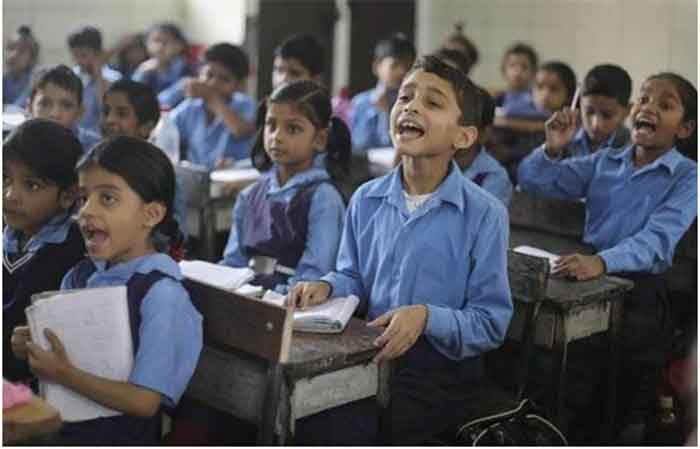
The existing educational system needs to undergo a massive change. Critical pedagogy is the need of the hour. School curriculum cannot stay away from subjects that address topics of patriarchy, discrimination, gender, feudalism, intolerance and liberty. Children should be taught to critically examine the existing socio-economic differences, their reasons, culture and gender conformations and their end goals.

Education is a very powerful, personal, social and transformative tool, provided we transform education itself. Meaning, literacy or education is useless if it does not help us read and define our world and reality, and do something about it. It should teach us to become good citizens. Boys must learn to treat women as equal people, share housework, be respectful, and share public spaces. Patriarchy is a villain and has no place in a democracy. This country needs a paradigm shift, and education is the route to it.

Coming back to the actual topic, sexual violence against women cannot be resolved by short term solutions. The existing legal and security measures even if tightened would not be enough. About one-third of our total population is in schooling stage and spend a significant time in their lives getting educated. Education, therefore, should be looked at as comprehensive long-lasting way forward for social and cultural transformation. As a citizen, our duty should be to demand the Government through mass mobilisation and political discourse the need to change the current quality of education.

Mahatma Gandhi said, “Be the change, you want to see”.

So, we try. One step at a time. One day at a time.