25 Dec 2020

An End to Stability

Kollibri terre Sonnenblume


2020, with its pandemic and its protests, was many things to many people: a hardship for those who lost homes, livelihoods and people they loved to COVID and insufficient government support; an inspiration for activists who have been working for years to call attention to police brutality; and an imposition to those who resent anything that makes them take other people into account (like demands for racial justice or requests to follow public health protocol).

What 2020 should have been for everyone was a wake-up call that the system is not as solid as it might have seemed, and further, that that isn’t all bad.

A brief history of the prosperity myth

Our culture has been operating under an outdated assumption of economic dependability and social consistency for decades now. It’s true that the ’50s, ’60s and early ’70s were a period of economic growth that brought material gain to a larger percentage of (mostly white) people than before. During this time, one could succeed in the system by following particular, prescribed paths.

There’s much to criticize about this system: besides the fact that its benefits weren’t extended to everyone, it was exploitative of the planet. Factories belched pollution into the atmosphere, waterways were tainted with toxic effluent, mines tore open the earth, cars swarmed over the landscape on ribbons of asphalt, wetlands were drained for farms where DDT was sprayed, forests were razed, dams blocked fish, and hundreds of atomic bombs were “tested” sending radiation around the world. Humans who tried to stand in the way of any of this were ridiculed, threatened, imprisoned, driven off their ancestral land or killed.

However, within the narrow scope of what constituted economic well-being in the US, more people were admitted into the “middle class” if they were willing to submit themselves.

It was never as nice as it was made out to be, and this period (known colloquially as “the ’50s”) was also marked by the breakdown of the extended family and place-based community, the rapid rise and dominance of television, and the degradation of the typical diet with junk food. That picture-perfect happy housewife was popping pills for her depression (see the Rolling Stones: “Mother’s Little Helper”).

But yeah, this was the era when, if you were a white guy, you could get a job just by walking up to a boss man, looking him right in the eye, giving him a firm handshake and asking him for one. Or so it was claimed by the purveyors of this mythology, right up through the Reagan era.

Then, in the ’70s, hourly wages began to slip in terms of inflation, and in the ’80s, “trickle down economics” was instituted. The ’90s were marked by austerity and diminishing opportunities. In the 2000s, inequality hit obscene levels, debts skyrocketed, and gentrification stole the cities for the rich. So in truth, the US has been in decline for over forty years. Forty years! And we’re still subjected to the same old pablum about “the rewards of hard work.”

Social subterfuge

So even as the whole game became increasingly unfair and oppressive, we were sold a picture of “America” in which everyone had equal opportunity, anyone could go from rags to riches, and the only people who didn’t succeed were ones who deserved to fail.

We were pressured into choices and lifestyles we were told were unavoidable because “that’s just how things are.” An air not merely of reliability, but inevitability, characterized the pronouncements of this supposedly prudent class, as they dispensed their wisdom on “success.”

Sacrifice played big in their admonitions, as did obedience. “Here are the rules,” they’ve insisted. “Follow them or end up broke, alone and unhappy.”

Their advice—or more often, arm-twisting—led millions into debt peonage, unhappy commitments and delayed gratification. Questioning any of it was unpatriotic and shaking things up was criminal. Throw in a heavy dose of American exceptionalism so nobody looked elsewhere else for alternatives, and you have the general outlines of our collective delusion.

I always resented these people: the know-it-alls with their dreary prescriptions and arrogant demeanors, pompously professing a gospel of so-called “responsibility” which in actuality was nothing more than a stultifying conformity. They turned a blind eye to the historically demonstrated fact that nothing lasts forever, and that cracks were already appearing in their grand facade.

2020 showed that these folks are wrong. Of course, playing by the book never offered all the rewards they claimed anyway, but their bubble has been burst in full view now. The biggest thing they had going for them—an illusory sense of dependability—is no longer believable for a big swath of the population.

There’s no “going back to normal.” The economy will never fully recover from the blows it took this year; for one thing, too many businesses shut down that will never reopen; for another, too many people are deeper in debt; and most of all, because the momentum was already downhill. On the other hand, a lot more people are now aware of the fact that the police are a racist institution that needs to be brought under control. That’s a welcome strike against Establishment power and propaganda. When the weather warms up in 2021, hopefully we will see another flowering of dissent.

So, as this period of stability crumbles in the US, we have prospects of both continuing economic deterioration and livelier forms of resistance.

But the US domestic scene is not the only thing that’s transitioning out of a period of stability: there’s also the climate.

Climate & civilization

For the last 11,500 years, the earth’s climate has been in a Goldilocks zone for humans: not too hot and not too cold. This allowed agriculture to flourish, which birthed civilization. Civilization has been a mixed bag to say the least, what with patriarchy, slavery, monotheism, ecocide, property, and a distinct decline in human health. Civilization has not mellowed with age, either; more recently, it invented industrialism, colonialism and capitalism. People like to extol the “wonders of modern medicine” but much of what it treats—coronary disease, cancer, diabetes, zoonotic epidemics—are themselves ailments of civilization. That’s a lot like the guy who stabs you taking credit for sewing up the wound.

Regardless, the last 115 centuries have indeed been remarkably consistent, even with anomalies like the Little Ice Age and the Medieval Warm Period. As this reliability dissolves, we’ll experience many ills, including elevated seas that flood settlements; the spread of disease as the ranges of tropical insects expand; animal die-offs on land in the sea, including ones that humans eat; failure of climate-control infrastructure such as air conditioning in urban areas; more wildfires; more floods; and more pandemics.

But farming is the one that worries me most. Whole areas that are currently used for food growing will become unsuitable for that purpose. What is now raised in Nebraska will need to be in North Dakota and eventually Saskatchewan, and there’s only so far north you can go. Political considerations are all too likely to intervene into what should be common sense “all in this together” decisions; at some point the current idea of nation states will need to be set aside for the purpose of collective survival. That might seem impossible right now, but modern notions of nationalism only date from the late 19th Century. Before that happens, I fear that more wars will erupt.

“Normal” isn’t working anyway

Whether we like it or not, the stability of both the US and the planet’s climate is ending. But before we shed too many tears, we must ask ourselves a very honest question: Was either the United States or civilization working that well anyway?

The US has been a brutal experiment in settler-colonialism, founded on genocide, theft and slavery. To this day, its wealth is produced from horrific human rights abuses and outright ecocide. Its citizens are depressed and debilitated. Who is it actually working for? It will be a blessing to many when it no longer has muscle to flex.

As for civilization, it’s a killing machine. Forests precede it and deserts follow, as has been observed (though of course a healthy desert ecosystem is as worthwhile as any other). Like the US, the agricultural-urban complex is founded on domination. It serves a small number while harming multitudes, with non-humans bearing the brunt of the brutality. The sooner it is gone, the sooner the healing can begin.

I know these transitions will bring much human suffering, and I do not wish for that. I am not a misanthrope, as too many collapse-aware individuals are these days; I do not wish for anything that will hurt anyone. However, I recognize that the status quo itself is inherently hurtful, and its end—though messy in the middle—will result in relieving a tremendous amount of suffering that’s just “normal” now.

I also have no idea if I will make it through these transitions without experiencing intense suffering myself. I realize that to some degree—maybe small, maybe large—it’s not up to me. I could make sensible plans, hone practical skills, and gather vital resources and still be taken out by some random event beyond my control.

What’s “beyond our control”? More than we’d like to think, I would guess, or more than we’ve been led to believe by the defenders of the system anyway. Our notion of individual agency might amount to nothing more than the kind of hubris that can only be sustained by the artificiality we’ve manufactured for ourselves. Nature is now delivering us a lesson in humility.

What now?

We don’t need a magic eight-ball to know that 2020 is just the beginning; more crises and more opportunities are on the way. The ride’s only going to get more intense. Time to strap in. Or jump out.

Is there anything we can do about the new territory of uncertainty we are entering?

No, in that the inertia of these forces is unstoppable. The US will just fall, the climate will just change. It’s as simple as what goes up must come down.

But also yes, in that we can always try to be decent human beings, living from compassion. We are not only malicious. Those who would have you believe that are not trustworthy; they’ve just told you what they think about themselves.

Ultimately, even though the big picture of downfall is clear, the little steps along the way are not and they won’t all be painful. Some beauty awaits us too.

24 Dec 2020

Facebook AI Research (FAIR) Residency Program 2021

Application Deadline: 31st January 2021 at 5:00 pm PST.

Eligible Countries: International

To Be Taken At (Country): USA

About the Award: The Facebook AI Research (FAIR) Residency Program is a one-year research training program with Facebook’s AI Research group, designed to give you hands-on experience of machine learning research. The program will pair you with a senior researcher or engineer in FAIR, who will act as your mentor. Together, you will pick a research problem of mutual interest and then devise new deep learning techniques to solve it. We also encourage collaborations beyond the assigned mentor. The research will be communicated to the academic community by submitting papers to top academic venues (NIPS, ICML, ICLR, CVPR, ICCV, ACL, EMNLP etc.), as well as open-source code releases. Visit the FAIR research page for examples of research performed in FAIR .

The AI research residency experience is designed to prepare you for graduate programs in machine learning, or to kickstart a research career in the field. This is a full-time program that cannot be undertaken in conjunction with university study or a full-time job.

Type: Internships/Jobs

Eligibility: Prior experience in machine learning is certainly a strength but we seek people from a diverse range of backgrounds, including areas ostensibly unrelated to machine learning such as (but not limited to) math, physics, finance, economics, linguistics, computational social science, and bioinformatics.

  • Bachelors degree in a STEM field such as Mathematics, Statistics, Physics, Electrical Engineering, Computer Science, or equivalent practical experience.
  • Completed coursework in: Linear Algebra, Probability, Calculus, or equivalent.
  • Coding experience in a general-purpose programming language, such as Python or C/C++.
  • Familiarity with a deep learning platform such as PyTorch, Caffe, Theano, or TensorFlow.
  • Ability to communicate complex research in a clear, precise, and actionable manner.

Preferred Qualifications

  • Research experience in machine learning or AI (as established for instance via publications and/or code releases).
  • Significant contributions to open-source projects, demonstrating strong math, engineering, statistics, or machine learning skills.
  • A strong track record of scholastic excellence.

Number of Awards: Not specified

Value of Award: Residents will be paid a competitive salary. Residents will also:

  • Learn how to perform research in deep learning and AI.
  • Understand prior work and existing literature.
  • Work with research mentor(s) to identify problem(s) of interest and develop novel AI techniques.
  • Translate ideas into practical code (in frameworks such as PyTorch, Caffe 2).
  • Write up research results in the form of an academic paper and submit to a top conference in the relevant area.

Duration of Program: 

  • Residency Program start: August 2021
  • Residency Program end: August 2022

How to Apply: To apply, complete the application in the Program Webpage (Link below) and include the three required documents in PDF format. Any applications or late materials after this date will not be considered.

If your application passes an initial screening, we will contact you to request a letter of recommendation. Following this, we may want to interview you in person over video conference.

Visit the Program Webpage for Details

Award Providers: Facebook

UK Commonwealth Scholarships 2021

Application Deadline: 18th January 2021 16:00 (GMT)

Offered annually? Yes

Eligible Countries: Developing commonwealth countries

Subject Areas: All subject areas are eligible, although the CSC’s selection criteria gives priority to applications that demonstrate strong relevance to development.

commonwealth scholarship

About Scholarship: Each year, Commonwealth Scholarships for Master’s and PhD study in the UK are offered for citizens of developing Commonwealth countries. These scholarships are funded by the UK Department for International Development (DFID), with the aim of contributing to the UK’s international development aims and wider overseas interests, supporting excellence in UK higher education, and sustaining the principles of the Commonwealth.

Offered Since: 1959

Type: Masters, PhD

Who is qualified to apply? To apply for these scholarships, you must:

PhD

To apply for these scholarships, you must:

  • Be a citizen of or have been granted refugee status by an eligible Commonwealth country, or be a British Protected Person
  • Be permanently resident in an eligible Commonwealth country
  • Be available to start your academic studies in the UK by the start of the UK academic year in September/October 2021
  • By September 2021, hold a first degree of at least upper second class (2:1) honours standard, or a second-class degree (2:2) and a relevant postgraduate qualification (a Master’s degree)
  • NOT be registered for a PhD, or an MPhil leading to a PhD, at a UK university before September 2021
  • NOT have commenced and be currently registered for a PhD, or an MPhil leading to a PhD, in your home country or elsewhere
  • Have the support of a potential supervisor from at least one UK university listed in your application form
  • Have provided all supporting documentation in the required format
  • Be unable to afford to study in the UK without this scholarship

Masters

To apply for these scholarships, you must:

  • Be a citizen of or have been granted refugee status by an eligible Commonwealth country, or be a British Protected Person
  • Be permanently resident in an eligible Commonwealth country
  • Be available to start your academic studies in the UK by the start of the UK academic year in September 2021
  • By September 2021, hold a first degree of at least upper second class (2:1) honours standard, or a second class degree (2:2) and a relevant postgraduate qualification (usually a Master’s degree). The CSC would not normally fund a second UK Master’s degree. If you are applying for a second UK Master’s degree, you will need to provide justification as to why you wish to undertake this study
  • NOT be registered for a PhD, or an MPhil leading to a PhD, at a UK university or in your home country before September/October 2021
  • Be unable to afford to study in the UK without this scholarship
  • Have provided all supporting documentation in the required format

The CSC promotes equal opportunity, gender equity, and cultural exchange. Applications are encouraged from a diverse range of candidates.

Selection Criteria: Applications are considered according to the following selection criteria:

  • Academic merit of the candidate
  • Quality of the proposal
  • Potential impact of the work on the development of the candidate’s home country

Selection process

Each year, the CSC invites selected nominating bodies to submit a specific number of nominations.

The CSC invites around three times more nominations than scholarships available – therefore, nominated candidates are not guaranteed to be awarded a scholarship. There are no quotas for scholarships for any individual country. Candidates nominated by national nominating agencies are in competition with those nominated by other nominating bodies, and the same standards will be applied to applications made through either channel.

Number of Scholarships: Approximately 300 scholarships are awarded each year. The CSC invites around three times more nominations than scholarships available – therefore, nominated candidates are not guaranteed to get a scholarship. There are no quotas for scholarships for any individual country. Candidates nominated by national nominating agencies are in competition with those nominated by universities/university bodies, and the same standards will be applied to applications made through either channel.

Duration of Scholarships: 12 months for Masters and up to 36 months for PhD

Value of Scholarships: Each scholarship provides:

  • Approved airfare from your home country to the UK and return at the end of your award (the CSC will not reimburse the cost of fares for dependants, nor usually the cost of journeys made before your award is finally confirmed)
  • Approved tuition and examination fees
  • Stipend (living allowance)
  • Thesis grant towards the cost of preparing a thesis or dissertation, where applicable
  • Warm clothing allowance, where applicable
  • Study travel grant towards the costs of study-related travel within the UK or overseas
  • For PhD Scholars, fieldwork grant towards the cost of fieldwork undertaken overseas (usually the cost of one economy class return airfare to your fieldwork location), where approved
  • For PhD Scholars, paid mid-term visit (airfare) to your home country (unless you have claimed (or intend to claim) spouse and/or child allowances during your scholarship, or have received a return airfare to your home country for fieldwork)
  • Family allowances, as follows (rates quoted at 2019-2020 levels):
    • If you are accompanied by your spouse but no children: spouse allowance of £233 per month
      for a maximum period of nine months, if you and your spouse are living together at the same
      address in the UK (unless your spouse is also in receipt of a scholarship; other conditions
      also apply)
    • If you are accompanied by your spouse and children: spouse allowance of £233 per month
      and child allowance of £233 per month for the first child, and £114 per month for the second
      and third child under the age of 16, if your spouse and children are living with you at the same
      address in the UK (unless your spouse is also in receipt of a scholarship; other conditions
      also apply)
    • If you are accompanied by your children but no spouse: child allowance of £465 per month for
      the first child, and £114 per month for the second and third child under the age of 16, if your
      children are living with you at the same address in the UK

To be taken at: UK Universities

How to Apply: You must apply to one of the following nominating bodies in the first instance – the CSC does not accept direct applications for these scholarships:

  • National nominating agencies – this is the main route of application
  • Selected universities/university bodies, which can nominate their own academic staff
  • Selected non-governmental organisations and charitable bodies

All applications must be made through one of these nominating bodies. Each nominating body is responsible for its own selection process and may have additional eligibility criteria. You must check with your nominating body for their specific advice and rules for applying, their own eligibility criteria, and their own closing date for applications.

You must make your application using the CSC’s online application system, in addition to any other application that you are required to complete by your nominating body. The CSC will not accept any applications that are not submitted via the online application system.

You are advised to complete and submit your application as soon as possible, as the online application system will be very busy in the days leading up to the application deadline.

The CSC will not accept supporting documentation submitted by nominating agencies or outside the online application system.

Visit PhD Scholarship webpage for details. Read carefully for guidance.

Visit Masters Scholarship webpage for details. Read carefully for guidance.

Indian Communalism – A Deep Dive

Hemanty Tudu & Vidhyam


Introduction

Communal harmony has barely been upheld in recent Indian history. It is always one issue or the other that gets attached to religion and then the communal terrorism commences. Kashmir, Ayodhya, mob lynching, elections, these all had their fair share in creating tensions in the name of religion. It is high time we realize the manipulations the common people are being subjected to by those in power and those in opposition too. The real problems that are plaguing this country like poverty, increasing income inequalities, natural disasters, this pandemic, corruption; all get overshadowed by the trivial matters and the corrupt media chasing their ratings never sheds light on the real issues.

Ever since Prime Minister Narendra Modi’s government passed amendments to India’s citizenship law in December 2019, there has been fear and panic around the country about its potential effects. Quickly, the panic instilled by the law led to protests from hundreds of thousands of people all over the nation demanding the laws to be rolled back.

As the elections were soon going to be held in Delhi, these protests and the law became a major political rhetoric. Later as some protesters decided to occupy the roads was when the Bhim Army called for a national strike. BJP politician Kapil Mishra led a rally of supporters against the former protesters. With rising tensions between the both groups, few hours later violence galloped over the nation’s capital. Muslim houses, commercial shops and masjids were singled out and torched. This violence lasted for more than 3 days and stray incidents continues to happen till date.

This violence was clearly communal in nature. Victims from both the sides suffered property loss, personal loss and were a subject of mental trauma. If the reports are to be believed, the protesters included outsiders from other states who were called up by the perpetrators to disrupt communal harmony. There were many cases of communal riots in recent Indian history, most of them directly or indirectly affected the electoral outcomes.

In this article, we try and explore the major incidences of communal violence in Indian history, the reasons behind them, the consequences and effective steps that can be taken to curb the same.

The History

Let us take a glance at some major communal riots that damaged the fibre of unity, spread hate, violence and disrupted the communal harmony in the country.

Anti-Sikh riots (1984): The Anti-Sikh riots of 1984 refers to the series of violent acts against the Sikh community in Delhi and other parts of the country which resulted in more than 10,000 deaths across the country. Operation Bluestar, a military operation against the militants occupying the Golden temple was at the core of these riots. This military action was criticised by Sikhs all over the country as they believed it was against their religion. The riots started after the then PM of India, Indira Gandhi was assassinated by her bodyguards who were from the Sikh community. Riots spread across the country and Delhi was at the core of the violent acts. People watched with terrors as their houses were burnt and several thousands were displaced during the riots. Many leaders from Congress were believed to be behind the riots and several were booked by CBI. Later the case was closed against several due to lack of evidence.

Demolition of Babri masjid (1992): It has been 28 years since the nation was engulfed by the hate rage following violence against many innocent people. Babri masjid demolition remains as the direct or indirect cause of many communal clashes that occurred in the past 3 decades. On the ill-fated day of December 6, 1992, a huge group of protesters named “Kar Sevaks” engulfed the town, climbed on top of the masjid and demolished it to the ground. The Hindu majority group believed that the masjid was built on the sacred ground where Lord Shri Ram was born and the Mughals had destroyed the temple that stood on the ground and built a masjid afterwards. The events that followed resulted in the deaths of thousands of people, mostly Muslims. Hindu and Muslim communities across the country clashed, and innocent people who were caught amidst the rage of protesters had suffered huge losses. Whatever the history behind the temple and masjid was, future of many was destroyed in these riots. In the end it was a result of political parties using religion to gather mass support.

Bombay riots (1992): After the demolition of Babri masjid, communal riots occurred all over the country. Hindus organized rallies in celebration. These events aggravated the sentiments of Muslims and what followed is an absolute tragedy which will permanently stain the Indian communal harmony forever. Bombay became the epicentre of the riots. Nearly 900 people were killed, and several thousands were displaced in the weeks following. Several children and women were among the victims. The riots were considered to be orchestrated by Shiv Sena.

Apart from these, several communal clashes had occurred all over the country in the past decade including Muzaffarnagar riots, Saharanpur riots, Coimbatore riots and the latest Bangalore riots of 2020.

Causes of Communal Divide

Communal unrest in India is often attributed to religious differences between the two major religious groups namely the Hindus and the Muslims. However, this line of thought severely underplays the involvement of communal violence by and against other groups based on caste, religion, region etc.  Some academicians ascribe the origin of communal violence in India to be the divide-and-rule policy of the British. Others blame it on the economic deprivation caused by the government’s policies post-independence. The selective capitalistic development approach has benefitted certain sections of the society creating a divide between the flourished and the impoverished ultimately giving rise to social anxieties and social tensions. Communal riots can be viewed as a path to vent out the frustration between the two social strata. Scholars have thus attributed the cause of communal violence in India to different factors including social, religious, political, historical, geographical, economic, historical etc. Few major reasons have been explored below:

The Past: The Divide and Rule policy of the Britishers ultimately led to Jinnah’s Two Nation Theory. The Britishers were successful in sowing the seed of communalism by creating a feeling of mistrust between the various communities, ultimately leading to the formation of India as a Hindu and Pakistan as a Muslim Nation. Even though the Indian government has been strongly promoting the idea of secularism, the fear still keeps trickling down from the remains of history.

Communal Politics: Religion is expressed in the ideology of a number of so called secular political parties. The Islamic League, Jamaat, Hindu Mahasabha, Akali Dal and Vishwa Hindu Parishad are directly or indirectly responsible for the rise of communalism. Electoral benefits linked to candidacy based on the communal composition of the constituency have further fuelled this thought in the society. Vote bank politics by instigating communal riots is what we have been recently witnessing in the country.

Clash of the Ideologies: After Pakistan was carved out of India, Indian Muslims have considered themselves as being a separate entity. This tendency of isolation has led to Islamic extremism creating a psychological separation promoting communal tensions in the society.  On the other hand, the idea of Hindutva promoting Hindu communalism and opposing minority protection policies have also been instrumental in worsening the communal ties. Ghar Wapsi, Hindu-Muslim riots in Muzzafarnagar, Dadri lynching, ethnic clashes over disputed Nagaland-Assam borders, burning down of churches in Delhi etc. are few other examples of clashes of the religious ideologies. These ideologies being encouraged by religious leaders have further created a turf war between these communities.

Resource Crunch: As the availability of natural resources is declining due to a rapidly increasing population, there is also a growing demand for control of the available resources at the hands of different populations.

Poverty: As explained earlier, the economic deprivation has led to poverty, backwardness, illiteracy, ignorance and unemployment. Communal forces have been instigating and exploiting the unemployed youth, making them the breeding ground for communalism by feeding on their vulnerabilities.

Growing Intolerance: The social insecurities arising out of poverty and mistrust between communities have led to growing intolerance in the society. Cow vigilantism against Muslims and attacks on religious or marginalised minorities especially Dalits have created an atmosphere of fear and insecurity. Lack of credible investigation done by the government on groups claiming to support the government has compounded the fear.

Foreign Influences: India’s two biggest neighbours China and Pakistan have been relying on the communal forces to make the nation weak internally. Pakistan, backed by Chinese funding, has been actively supporting Muslim terrorists in Jammu & Kashmir and communal provocation in Punjab. Foreign funding especially from the Gulf to promote Muslim ideologies in the country have also aggravated the ill-feeling between the two major communities.

The Media: Irresponsible reporting by the Indian media for TRPs is not surprising either. Presenting hearsays, rumours, biased and sensitive reports on national television increases animosity between the communities where one feels threatened while the other feels victimised.

Inclination of the Government: The tendency of the government of siding with their own has raised questions on their intent. The silence of the ruling party on communal issues involving its own people and on irresponsible statements promoting Hindu supremacy by their representatives is alarming. The Modi government for example has been criticised for taking decisions appeasing the RSS. The neutral stance of the government on issues such as these questions their take on secularism.

Failure of the Government: Both the state and central governments have been taking ineffective measures in curbing communalism. The approach has always been reactive rather than being proactive. The post-Godhra riots in Gujarat reflects the inefficiency and inability of the government in controlling communal riots. The perpetuation of communalism has been triggered by the lack of rapid, preventive and successful actions.

The Consequences

The common man is the greatest sufferer of all being inevitably caught in the loop of communal violence. There is an unavoidable loss of life and public property. There are economic repercussions to communal violence as well. An atmosphere of animosity dissuades foreign investors to set up businesses in the country. Lawlessness exploited by divisive forces increases the risk to internal security. Large scale deployment of security forces to handle anti-social elements not only diverts the government funds from achieving development goals but can also lead to human rights violations, something which we are witnessing in the state of Jammu & Kashmir.

Handling Communal Violence

India proudly calls itself a democracy and a secular state but the tendency of the past and current governments in downplaying the rise in incidences of communal violence calls in to question whether all of it is simply vote bank politics.

  1. Efforts should be made to enlighten the citizens to identify and discourage participation in the activities promoted by the communal forces
  2. Security forces should be physically and emotionally trained to handle sensitive situations
  3. Accountability in the administration handling incidences of communal violence should be reinforced
  4. Violations of the press without breaching the freedom of speech and expressions should be strictly dealt with
  5. Use of licensed weapons should be effectively regulated and ceased as a preventive measure prior to increasing communal tension
  6. Fair investigation of any communal incident should be carried out
  7. Proactive stock of required items likes medicines, soaps, blankets, food, water etc. should be maintained. Emergency funds should be maintained to ensure supply post riots.
  8. The state should ensure protection of the identities of informers, victims and witnesses
  9. Election Commission should be watchful of hate and provocative speeches by parliamentary leaders
  10. Cyber police should be vigilant of spread of communal tensions via provocative content over the internet especially on social media

Ethical dilemma surrounding stray animals

Sucharita Saha


The genesis of the issue

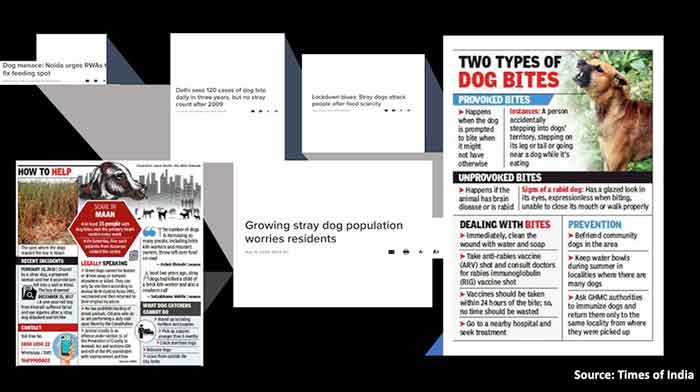
I was privy to the public outcry regarding the menace of stray dogs when I saw a flurry of newspaper articles published by a leading daily regarding how dog bites were becoming more frequent, especially during the lockdown and people were forced to live in terror. This event triggered a chain reaction from other dailies and publications. Incidents of stray dog menace are not unheard of. Residents are frequently heard recounting their harrowing experiences of having been bitten by stray dogs, or being chased by them when carrying food or being snarled at while taking a walk.

While the agony of the people being harassed by dogs was understandable, what did not sit well with me was how requests started pouring in to make colonies ‘dog-free’ by killing the dogs, or asking dog lovers to take ownership of any untoward incident of animal menace. Animal lovers were also asked to adopt street dogs and restrict them to within the household. What struck me in particular was: while humans had civil rights to roam freely, do we possess the authority to curb such rights of other animals? Do human lives matter more than animal rights?

Private solution to a public problem

Trust a capitalistic society to suggest a private “solution” to the public menace of repeated instances of dog bites, which is to let a third (sufficiently-distanced) party do whatever it can to remove dogs – including putting them away quietly, or dumping them in garbage dumpsters to get rid of them. But this raises further questions:

>> Is this a sustainable solution to an ongoing issue? Will merely replacing the source of the problem solve the matter?

>> What happens when humans start fearing other animals, or even fellow humans? Do we start dumping all anti-social elements in garbage dumpsters?

>> Why do different categories of dogs get differential treatment? Why do some well-bred animals are seen as status symbols, and treated like family members, while others living on the streets are seen as social outcasts?

Law against killing of strays

Killing of stray dogs is punishable under the Prevention of Cruelty to Animals Act, 1960, which classifies torture and transporting them in a manner which causes them suffering, as cruelty. However, it only attracts a meagre fine of Rs. 100-500 or imprisonment upto three months.

Ethical dilemma surrounding the issue

Utilitarianism proposes maximum collective utility, even if it means ignoring the individual rights of a few. Utilitarian views of greater benefit to society might hold ground as it would lead to a ‘safer’ and pro-human society. However, looking at it from a Kantian standpoint, discrimination against stray dogs is morally wrong because it implies that we allow human race to matter more than the strays. Libertarian view states that acts of coercion on individuals by other individuals or government is unjust. Thus, according to libertarians, removal of dogs from our surroundings and dumping them in garbage mounds violates their fundamental right to life and dignity.

Since animals cannot bear duties, therefore, should they be allowed any rights?

The argument can be made that dogs have only a private space unless humans chose to create reserves for them. While it seems fair to ask animal lovers to bear the responsibility of adoption, the institutionalized hypocrisy comes from the law where we are asinine enough to believe that rights can be given without worrying about the concomitant duties.

To counter that, one can argue that dogs form an important link in the ecosystem. Without the dogs on constant vigil, there might be increased cases of theft or robbery in the neighbourhood. Moreover, the growing population of rats, snakes and monkeys would be difficult to control if we remove the dogs altogether from the ecosystem.

Furthermore, who are we to assign dogs any duties? Do they have the same capabilities as humans to expect of them to fulfill duties? Did we consult them before imposing duties upon them? Stray dogs are smarter, have better immunity and are known for their survival instincts. Can we expect a dolphin to run, a monkey to swim or a fish to crawl?

Are some learnings more ‘important’ than others?

Having grown up and think for myself, I’m now able to think about the injustices in society, despite being a part of a capitalist society. Should I surrender to the capitalist explanation of the problem? But then, what about the social principles being thrust upon us by the same society?

We domesticated dogs to benefit from their companionship, and have been responsible for increasing their population to this extent that we see strays as a menace to society now. While we also allowed the human population to grow and looked down upon policies that forcefully sterilized them (recall the imposition of the 1975 emergency and the outcry over forced sterilization), why do we have double standards for the rising population of dogs? While we destroyed their natural habitat and forced them to move to cities, how can we shoo them away like they are traded commodities?

Even from a capitalist point of view, how is it a solution to keep someone hungry and expect them to be friendly and calm? Even amongst humans, we see instances of violence or theft of food when they do not have means to buy food.

2020: The year of learnings

Having been forced to live inside our homes for months, we now have a hint as to how it feels to be trapped, to be devoid of one’s civil rights. In the same spirit, is it too much to expect of people to show empathy towards strays? Is there a way out other than capture them in municipality cages?

Possible solutions

The issue boils down to one of man vs. animal rights, and needs to be addressed by policy measures including proper vaccination and sterilization drives, dedicated feeding spots and a team of animal caregivers who could contact a nearby NGO in case a dog is seen to be ferocious and report the matter immediately. Notably, many NGOs and dog lover groups were feeding the strays at the start of the lockdown but eventually stopped because their resources dried up. Local government authorities should come forward to help in this regard, by enforcing stricter guidelines and offering financial support to feed the strays. We should look beyond seemingly easy fixes like mass killing or simple displacement of dogs from our society and treat the matter with humaneness.

The fight against Manual Scavenging

Ashish Joshi


Manual scavenging is the age-old unfortunate practice of cleaning, carrying, and disposing human excreta from dry latrines or sewers into the disposal sites. Despite prohibitive legislations in place, a government survey from 2019, carried out across 170 districts, found that over 54000 people actively engage in the practice. In 2019 alone, 110 people died while cleaning septic tanks and sewers. For a job that has been outlawed for years, the manual practice continues without providing even the essential safety equipment that must be provided to the people engaging in this dangerous job. It is regrettable for a country that has been to Mars and back that we still have not eradicated this sordid practice from our societal fabric.

Caste and Gender: Cobwebs of a discriminatory trap

Manual scavenging is a socio-economic problem deep-rooted in the country’s caste system and plagues India’s dream of creating a modern, liberal, and equitable society for all its citizens. Most of the scavengers are Dalits primarily from the Valmiki caste and are often unregistered workers, hence forced to work on meager wages and other forms of in-kind compensation. These communities are forced to live in unsanitary residences, usually close to dumping grounds on the city’s outskirts. Moreover, the little resources that they have at their disposal keep them trapped in this practice for generations.

Another divide is created by gender. Usually, wherever the entire family is engaged in scavenging. Men work at places where the wages are slightly higher, like cleaning the railway tracks or large public sewers, while women tend to clean clogged latrines in houses that need to be cleaned daily. Around 85% of the female scavengers are married who were all forced to either take up the job as a replacement or as a companion for their mothers-in-law.

Scavenging has become a part of the communal identity for the people involved in this practice. Society knows who they are and what they do and hence prey on them at every step possible. The children from these communities often don’t get to go to school, but even if they do, they are forced to sit in corners with negligible attention and interaction with other students and teachers. The community members are also denied rights to use public goods and entrance to community gatherings. It is nearly impossible for someone who wants to move away from the practice to get another job as people are extremely reluctant to offer them any other job.

The challenges associated with rehabilitation.

With a few batchmates of mine, I had an opportunity to have a conversation with Activist Mr. Bezwada Wilson (Safai Karmachari Andolan). He helped us identify some critical challenges associated with rehabilitating the people associated with the practice. Post the 1993 Legislation that prohibited manual scavenging; the government has taken several steps to rehabilitate the workers. Unfortunately, all the actions that have been taken have been severely misaligned. In 2007, The Ministry of Social Justice and Empowerment started the Self Employment Scheme for Rehabilitation of Manual Scavengers (SRMS). Over INR 231 Crore was spent to be given away in the form of loans to the workers. However, a 2011 survey found the following severe shortcomings in the eventual impact of the initiative:

  1. More than 95% of the workforce comprises women, yet 51% of the beneficiaries were male.
  2. Three beneficiaries out of every four were not even associated with the practice in the first place.
  3. The INR 40,000 loan, which can be given per family to the safai karmchari to start a new small-scale venture, was majorly eaten up by middlemen. The beneficiaries eventually did not even receive even INR 5000, which they defaulted, having no idea why they were given the amount or any repayment condition.

Policymakers seek solutions from the beneficiaries themselves:

Mr. Bezwada, over the years, has had several opportunities to interact with public servants and administrators over the issue after he filed his petition to the supreme court on the issue. The common feature of all these conversations was that the state machinery, rather than seeking potential solutions themselves, revert by asking for solutions from the activists and petitioners. Eventually, It is the state’s responsibility to create an equitable society for all its citizens, and the fact that they respond by asking follow up questions indicates the priority given by them to the issue. This is possibly why the government has, on several occasions, has extended the time frame to implement the alternatives necessary to eradicate the practice after it was outlawed for the first time in 1993.

Hopefully, the central government’s recent promise on the world toilet day by mechanizing man-holes into machine holes isn’t just another one in a long list of promises made to the people.

What Mr. Wilson further stressed was that an even bigger problem exists at the end of beneficiaries, which is often ignored to jack up any policy initiative’s impact. There is no monitoring mechanism in place. As a result, a beneficiary who would receive the proposed loan amount would instead use up the money to meet personal expenses and go back to work the very next day. People who attempt to start a small-scale venture of their own are highly likely to fail as they do not have the necessary skills to succeed in other ventures.

Awareness is where the real fight lies.

The caste hierarchy is deeply ingrained in the minds of people. Someone from the privileged sections of society will never even imagine working as a manual scavenger. On the other hand, a kid from the Valmiki community is extremely likely to think that scavenging is the only job he or she can get. Even when an NGO or even the government tries to help a safai karmachari by creating a sustainable life outside of scavenging, scavenging forms for a convenient fallback option as it is a socially acceptable lifestyle in the community despite the traumatizing nature of the job. According to Mr. Bezwada Wilson, this is where the real battle is. The community’s awareness of the nature of the job, potential options outside scavenging, and realization of their self-worth are areas where the maximum work needs to be done. The long-term goal must be to strike a balance between tangible mitigative options and raising sensitivity and awareness.

Time to End Patent Monopolies

Dean Baker


For several years the opioid crisis has been recognized as a major national catastrophe. Millions of people have become addicted to the new generation of opioid drugs. In many cases, this addiction has led to the destruction of families, job loss, crime, and suicide. At the peak of the crisis in West Virginia, the hardest hit state, the death rate from overdoses alone, was more than 41 people per 100,000. This is more than 70 percent of its fatality rate from the pandemic, as of mid-December. And this doesn’t count deaths due to crime or opioid-related health conditions. Opioids are a big part of the story of the state’s drop in life expectancy over the last quarter century.

The crisis did not just happen by chance. As we now know, drug manufacturers and distributors made large amounts of money pushing their drugs. The actual process of pushing opioids by Purdue Pharma, Johnson & Johnson, and their distributors has been well-documented. While the patent monopoly meant the price of Oxycontin, the most widely marketed drug among the new generation of opioids, was far higher than generic versions, this big profit margin gave Purdue Pharma and others an enormous incentive to push their drugs.

In particular, they misled doctors and the public about their addictiveness. They hired hundreds of salespeople to promote their drugs as widely as possible, with no concern whatsoever about abuse of their drugs. As a result of a series of recent legal actions, leading manufacturers and distributors have now paid or agreed to pay tens of billions of dollars to compensate individuals and communities for the harm done by their drugs.

While the devastation caused by the opioid crisis and the ensuing legal actions have received considerable attention, this important part of the picture has been completely missing. There has been essentially zero discussion of the incentive that government-granted patent monopolies gave these companies to push their drugs.

The basic point is a simple one: Patent monopolies allow companies to sell drugs at prices far above the free-market level. This is intentional. In order to give drug companies the “incentive” to invest in the development of new drugs, we give them a 20-year patent monopoly, which allows them to sell their drugs at prices far above what they would sell for if they faced generic competition.

These monopolies are the reason that many drugs are so expensive. It is rare that it actually costs much money to manufacture and distribute a given drug. When a drug is selling for thousands or even tens of thousands of dollars, it is almost always because its manufacturer holds a patent monopoly. When these drugs are subject to generic competition, they can often sell for less than 1 percent of the patent protected price.

Furthermore, if a company can sell a drug at a markup of several thousand percent thanks to a monopoly, it has enormous incentive to market it as widely as possible. This will often mean concealing evidence suggesting that a drug may not be as effective as claimed, or is actually harmful, as was the case with the opioid crisis.

The opioid crisis was an extreme case, but instances where drug companies have paid large settlements in response to claims they misled doctors and the general public about the safety or effectiveness of their drugs are not rare. To take another famous example, the drug giant Merck paid billions of dollars in a settlement over allegations that it concealed evidence that its arthritis drug, Vioxx, was dangerous for people with heart conditions.

We could see the problem of drug companies lying to push drugs as an unfortunate, but unavoidable, aspect of the drug development process if there was no alternative to relying on patent monopolies to finance the development of new drugs. But in fact there are alternative mechanisms, as we in fact just witnessed with Moderna’s rapid development of an effective vaccine against the coronavirus.

As part of Operation Warp Speed, the federal government paid Moderna more than $900 million, fully covering the cost of its pre-clinical research and clinical trials. While the government also gave Moderna patent rights to its vaccine, it effectively paid for the full research and development costs upfront.

This is an important precedent, since it shows that direct public funding can be an effective way to support the development of new drugs. This should really not be a surprising story. The government already spends over $40 billion a year financing biomedical research through the National Institutes of Health (NIH). This money is almost universally regarded as a smart investment, as it has led to many great breakthroughs in medicine. In fact, the discovery of the coronavirus spike protein in 2016, which is the main building block for both the Moderna and Pfizer vaccines, was achieved thanks to NIH funding.

But most NIH funding is directed toward more basic research than was the case with the Moderna vaccine. The pharmaceutical industry has long pushed the view that, although the government could very effectively support basic biomedical research, if it turned to actually developing drugs or vaccines itself,  we would effectively be throwing money in the toilet because the government cannot effectively direct funding for later stages of drug development.

This was in spite of the fact that there have actually been many important drugs developed largely on NIH grants. Still, the Moderna vaccine gives us a new and very prominent example of how the government can effectively finance the direct development of a drug or a vaccine. Of course, if we are directly funding drug development there is no point in also granting patent monopolies, and PhRMA’s main argument falls apart. The logic of direct funding is that all findings would be fully open so that any manufacturer could make them. There are better and worse ways to construct financing mechanisms, but obviously direct funding can provide an alternative to patent monopolies. (I discuss this issue in chapter five of Riggedit’s free.)

In additional to allowing drugs to be available as cheap generics from the day they are approved, direct funding can also allow for open-source research. This would mean that results from pre-clinical research, as well as clinical trials, would be posted on the web as soon as practical. This would allow researchers to build on one  another’s successes and learn from their failures. This sort of open research was touted by scientists in the early days of the pandemic as a factor allowing much greater understanding of COVID-19 than otherwise would have been the case.

It would be great if the Moderna example allowed the country to engage in a serious debate on the best way to finance the development of new drugs and explicitly consider alternatives to patent monopolies. But if we are to have this debate, we have to be able to talk honestly about the problems with patent financing. This means acknowledging the perverse incentives provided by patent monopolies, and that has included the incentive to push opioids onto patients even when the drug companies knew they were so highly addictive.

Unfortunately, this obvious link between the opioid crisis and the pharmaceutical patent system has never featured in discussions of the crisis to date. Maybe the developments we’ve witnessed as a result of the pandemic will finally open our eyes and allow for a real discussion of the role that patent monopolies played in worsening this crisis in the context of a much broader debate about their merits more generally as a mechanism for financing the development of drugs.

Covid Relief: Need for Big Increase To Prevent Hunger and Distress

Bharat Dogra


As  Covid and lockdowns increased distress and deprivation in many countries, governments in most countries including India responded with relief packages aimed at directly helping the poor and vulnerable sections as well as reviving the  economy. However there are several indicators that the actual relief which reached needy people in India was much less than what was suggested by official announcements.

The lockdown in India were described as among the most stringent and sudden in world. Poverty and hunger are known to be high here even in normal times and the extent of mass distress suffered by migrant workers and other vulnerable sections during  the  lockdown could be seen by all. So relief on a really big scale was needed and if this has not reached people then this needs to be stepped up substantially without further delay.

The Accountability Initiative  located in the Centre for Policy Research has monitored government spending during the year. Its director Avani Kapur and Research Associate Sharad Pandey have written in a recent article titled ‘Decoding the dip in published Expenditure’ ( The Hindustan times, December 21, 2020), “ Despite announcements of over  Rs. 20 lakh crore in fiscal packages, total expenditure till October this year increased by only Rs. 6550 crore when compared to the same period last year. In fact, as a proportion of its  initial Budget Estimate (BE), actual expenditure is lower by five percentage points than the same period last year. A deep-dive into the ministry-wise expenditure data shows that, in terms of the total quantum of funds spent, a staggering 41 out of a total  55 ministries spent less this year till October, compared to last year.”

This review points to the recent Hunger Watch Survey, covering 11 states and 400 respondents, which revealed that more than half the surveyed households had no income source since April and 62% households reported reduced income, and recommends the universalisation of the Public Distribution  System to deal with the hunger crisis. As against this need, this review says, we have the distressing situation that “ the department of consumer affairs, which is responsible for subsidizing food grains, till October, spent 9 per cent less this year than in the same period last year.”

What is more, the review states, “Lower tax devolution to state governments has hampered their own ability to increase expenditures. Till October, states had received 19 per cent lower funds than they did for the same period last year.”

These are very disturbing finding emanating from a leading institution and published in a leading newspaper. In addition we will like to draw attention to some other aspects. A widely appreciated aspect of the relief package has been that of some free grain and pulses provided to needy households up to November. The further extension of this scheme is still awaited eagerly.

Meanwhile we need to consider not just the free food transferred by this scheme already, but also the free food transferred normally every year but withheld this year because of the non-functioning, more or less, for the greater period and the greater part of the country,  of the mid-day meal scheme and of the ICDS ( anganwadi ) scheme, not to mention the less known ones like sable ( for adolescent girls).

After the free food transfer is adjusted for this withdrawal, what is the net addition left, or is there an overall reduction?

Hence there is a clear need to bring out to what extent badly needed relief has reached needy and vulnerable sections , and to take urgent steps for ensuring that this relief is stepped up in a big way without further delay.

Minority Rights Central To India’s Democracy Fiber

Shiv Dutt Barhat


Every country, has its share of minorities, whether linguistic, cultural or ethnic. For nearly all the countries, maintaining and securing their interests is a problem. And, for the biggest democracy in the world with largest spectrum of diversity it becomes a far more complex. In India we established a National Commission for Minorities under the National Commission for Minorities act, 1992.  We even created a    Ministry of Minority Affairs in 2006 and a as nation we also celebrate. Minority Rights Day every year on 18th December with an aim to raise awareness of their rights.  Despite all these efforts for years, the condition of minorities in the country have further degraded. The three prominent reasons for this are lack of representation, fear alienation and lack of societal and cultural intermingling.

Lack of Representation

Of the 1.21 billion Indians, 172.24 million are Muslim citizens, about 14.23 percent of the total population. Thus, at least 14 percent Muslim members should serve in the decision-making body of the country to serve Muslims properly. Yet the fact is far from it. In the lower house of the Indian Parliament, the number of Muslim MPs declined by around two-thirds between 1980 and 2014, even though Muslims’ proportion of the population increased over the same period. In 1980, the Muslim members in Lok Sabha were 49 (approx 10% of total) which declined to 30 (approx 6% of total) in 2009. In the 16th Lok Sabha, Muslim MPs occupy only 20 seats out of 545 seats (approx 3.5% of total). In 2014 for the very first time, no single Muslim MP was elected in Uttar Pradesh, where there is 18% population of minorities. Also, for the first time in the history the winning party had zero MPs from minority background in Lok Sabha in 2019. With such a high under-representation how can we expect that the policies aimed for the minorities in India are designed and implemented with their points taken into consideration. This also builds the narrative of the majority of the nation, in the sense that what seems to be ok to rest of the population is opposed by a small segment again and again, giving rise to the second main cause that is feeling of alienation.

Fear of Alienation

What is considered by many in the country as “the myth of alienation terror of minorities” is definitely not a myth any more, but something that happens and hopes the government to respond. However, why do minorities sound as they do (especially in last few years)? The political mechanism over the last five years has much to do with the problem. The causes for this may be expressive and aggressive incidents. In the past five years, the media have played a major role in establishing anti-Muslim Hindu discourse. Every mechanism was attempted to make the people of India know that Muslims are the country’s biggest challenge. For starters, Muslims’ wedding lives are anti-social, Muslims’ death is anti-national, even in the initial phase of Covid spread a single community was targeted again and again, etc. In the minds of the Hindus, this anti-Muslim idea does have effect affect in numerous ways. Some examples of this phenomenon include topics such as love jihad, Ram temple, Ghar Wapasi, and banning the triple talaq system. This leading to the third reason which lack of cultural interaction and exchange.

Lack of Societal and Cultural harmony and intermingling

When the thought of difference is deep rooted in to the society and ingrained in the minds of children since a very young age, the truth becomes weak. The lack of understanding of each other’s culture along with the years old biases make us believe that our interpretation of the situation is correct. And the real evils of society take advantage of this high information asymmetry between both the sides to spark communal disharmony and gain their own political agenda.

Solution: Social Activism & Cultural Interaction

Democratic advocacy is one form to fight tyranny. There is a lack of influential progressive leaders who work vigorously against the oppressive actions of the state. On the other hand, the state itself is involved in avoiding any behavior that it does not believe is in line with their vision and narrative. Nevertheless, many people are also committed for the well-being of immigrant groups.

Mr Dev Desai, a social worker for minority rights, is the social activist I had the pleasure of interacting with. He’s working with an ANHAD (Act Now for Harmony and Democracy). (Act Now for Harmony and Democracy). For him, personal experiences are biggest justification for working for an agency like ANHAD. He has a inspiring story which lead to some unique personal experiences and motivated him to work for minority communities in the country. The year 2002 was when Dev was a 10th-grade student, used to live and study in a location where Muslims mostly lived. The horrors of the Hindu-Muslim riots of 2002 in Gujarat are known to all of us, but the gruesome scenes and memories are very fresh and traumatizing for of both victims and other witnesses During such protests, most people worry on material harm such as loss of life or damage to property, but almost no one thinks about the cultural and emotional impact. Mr. Dev shared a related tale about how the bulk of his school’s Hindu students began to leave because of its location. Parents became overly careful about the safety issues that their Hindu children might have in an area of the Muslim majority on the presumptions that the other side is wrong. This shows the kind of divide created between the two faith groups, where an institute like school which meant for imparting education, sharing knowledge and bringing children together building a sense of community and oneness in them also was severely impacted. A huge issue for school was the dropout of many Hindu pupils, and so the administration and the teachers started to recommend that students not leave, except that most people did not agree with the school administration. Mr. Dev was the only one who opted not to leave the school and continue his study. He was thus the only Hindu child in school for around two years. During this time, he noticed that certain individuals with special interests in mind propagated the ideology of animosity entirely unexpected and false.  Tales about how communal conflict has a systemic effect on people’s lives are exaggerated and hence how societal friction contributes to a deterioration of the country’s social structure needs to be stressed more strongly. He saw the difference in what was communicate din the society and what he personally experienced with his friends. Thus, realized the value of cultural exchange and the only way to educate people about and abridge the difference between reality and what seems to be real was social activism. Reach out to people around you, share your thoughts and experiences, incorporate theirs and be respectful.

Many tales of corporate control over agriculture

Bhabani Shankar Nayak


In 1991, when I was 12 years old and in 8th class in my village high school, the Government of India led by the Congress Party launched new economic reform programmes. I vividly remember reading local newspapers, which carried news on the reduction of agricultural subsidies on seeds, fertilisers, electricity and irrigation. It also started dismantling the universal approach to food security and public distribution system in India. My father who was an active farmer then and used to be the district leader of BJP (Secretary of Kishan Morcha) but supported liberalisation, privatisation and globalisation policies of the Congress Government in New Delhi. He argued that these policies will bring economic boom and there will be trickle-down effect on all sectors of Indian economy. The agriculture sector and famers will benefit from such policies. This was also the silent understanding of BJP and RSS but made piecemeal opposition to the reforms led by the Congress Party. The national and mainstream media heralded the new economic reforms as the best policy option for a powerful and developed India. The theological promise of neoliberalism is like deceptive salvation in Hindu religion.

After three decades, my village is witnessing the declining of agriculture. The new economic reforms were slow poison for the agrarian economy. The new economic policies ruined agriculture in my village. The fertiliser corporations get subsidies. The industries get water and electricity subsidies but the farmers in my village nearly abandoned agriculture as a source of their livelihood. There are a very few farmers left in my village due to lack of availability of alternative livelihoods for them. As Modi government follows the footprints of the Congress Party in implementing more ruthless agricultural policy reforms, my father (my best friend) opposes these polices and he argues that corporatisation of agriculture will destroy agricultural economy and take away farmer’s livelihood in short run and farmer’s land in long run. Such a transformation of my father gives me hope and shows greater transformation waiting for India in political and economic terms. The democratic debate between the father and son continues as famers protest against an authoritarian regime led by Mr Narendra Modi.

Mr Narendra Modi led BJP government and his Hindutva henchmen are claiming that agricultural reforms are necessary to expand trade and investment in agriculture. The goal of the reform is to increase wholesale agricultural market for the growth of agricultural exports. The Modi government claims that farmers will get greater freedom within liberalised agricultural market and maximise their profit. It would result in higher standard of living and higher quality of life for Indian farmers. It is important to burst these myths propagated by Modi and his ignorant Hindutva capitalist cronies. These claims are blatant lies and agricultural reform policies are unsustainable. The Modi led agricultural reform policies would make farmers vulnerable to market forces. The deepening of capitalist market forces have ruined agriculture, agricultural communities, farmer’s lives and livelihoods. The market led industrial approach to agriculture drives farmers out of business and reinforces agrarian crisis which forces farmers to commit suicide.

The American farmers have become vulnerable to corporate exploitation and abuse because of similar reform policies. The liberalised agricultural policies have helped in the growth of very few corporations that controls American agriculture today. The deepening of market forces and growth of industrial agriculture led to the growth of four corporations that controls forty percent of agricultural market in USA.  It destroyed the livelihood of small and medium farmers, rural communities and swallowed family farms in America. The corporations suppressed the price of the farm produce and increased its selling price. Both American producers and consumers suffer heavily due to such agricultural transitions. It also destroyed small businesses affiliated with agriculture in US. The American farmers are fighting back and defeat corporate control over American agriculture.

The European Union (EU)’s Common Agricultural Policy (CAP) has created a system in which the large farmers and landowners in UK, France and Germany are the beneficiaries of its subsidies whereas the small farmers are marginalised. It has created a wholesale agricultural market where prices of agricultural products are different in different parts of EU member countries. The price fluctuation within agricultural market is created by the market forces within EU and the small farmers face the crisis. The EU led CAP has huge negative impacts of developing countries in Africa. The subsidise overproduction of food, milk and poultry is destroying local production and local markets in Africa. The big farmers and agricultural corporations in Europe are the net beneficiaries of such agricultural policies driven by market forces. These policies ruined the rural communities and destroyed the livelihoods of small and medium farmers in Europe. Therefore, Land Workers’ Alliance is not only opposing the CAP but also demanding subsidies to small farmers and family farms in UK. It is also strongly demanding the British government to exempt agriculture from all free trade agreements. Many European countries have also realised that industrial agriculture led by corporations destroy the environment. So, there are many social and political movements against corporate takeover of agriculture in Europe today.

Many developed countries have witnessed to the landgrab by the big corporations and big farmers with the growth of corporatisation of agriculture. The Congress Party governments have started the policies of corporate land grab in the name of Special Economic Zones (SEZs).  After agricultural policy reforms, the Modi led BJP government is planning to liberalise land laws further by which the corporates can take over land ownership from the small and medium farmers in India. The BJP government is preparing itself to provide vast stretches of land to the capitalist cronies and friends of Mr Narendra Modi. The corporate led industrial agriculture in India will create conditions of industrial feudalism and corporate landlordism in one hand and consumerist individualism on the other.

The corporatisation of agriculture destroys social fabric in agricultural and rural communities. The cooperative culture is converted into competitive culture that ruins rural communities with the growth of individualist consumerism. The market forces do not believe in diversification. The market forces promote economies of standardisation which is dangerous for the diversity within Indian agriculture. Therefore, the market led industrial agriculture dominated by corporations can never be an alternative for India and Indian farmers. The Government of India need to find ways to invest in agricultural cooperatives to empower farmers and generate employment in agriculture by diversifying it. India and Indian farmers need socially responsible, environmentally sustainable and economically rewarding agricultural policies and egalitarian land reforms to increase farmer’s income and expand market led agricultural economy, where agricultural producers can directly interact with their consumers. Such an agricultural market economy would be really open, free and fair.