20 Jan 2021

Trump pardons Bannon, grants clemency to reactionaries and criminals

Jacob Crosse


President Donald Trump ended his presidency by granting clemency to 144 individuals, including one of his top fascist advisers, Stephen Bannon. On his way out of the White House, Trump issued 74 pardons and commuted the sentences of 70 others.

While there were a number of pardons and commutations for those convicted of low-level drug and weapons offenses, the vast bulk were reserved for convicted felons who had ties to Trump and were previously found guilty of evading or falsifying taxes, money laundering, insider trading or defrauding the US government.

Despite much speculation, Trump did not preemptively pardon himself, members of his family or those in the Trump organization. His lawyers advised against pardoning himself in light of the upcoming impeachment trial in the Senate, arguing that a self-pardon could give the appearance of guilt. Now that he is a private citizen, Trump is also expected to face numerous lawsuits, civil and possibly criminal, in state courts, which will not be covered by a federal pardon. His legal advisers argued that a self-pardon could negatively impact his defense. Topping the list of notable criminals to receive a pardon is former chief strategist and senior White House counselor Stephen Bannon. Prior to becoming CEO of Trump’s 2016 election campaign, Bannon served as the executive chairman of Breitbart News, which, under his leadership, became the leading hate rag for the “alt-right.”

Steve Bannon in 2010 (Flickr/Don Irvine)

Bannon’s fascistic politics were welcomed on the campaign trail and in the White House. Through the slogan “America First,” Trump and Bannon articulated an ultranationalist, anti-immigrant, anti-Chinese, pseudo-populist message claiming to defend the interests of American workers by pitting them against their class brothers and sisters in Mexico, China and elsewhere around the world.

Bannon was forced out of his White House post after seven months during the fallout from the fascist “Unite the Right” rally in Charlottesville, Virginia in August 2017. There is speculation that it was Bannon who suggested that Trump say “there were fine people on both sides,” following the murder of antiracist activist Heather Heyer.

According to anonymous insiders cited by CNN and the Washington Post, there was considerable debate within the White House over the pardoning of Bannon, particularly in light of his role in the January 6 storming of the US Capitol. While legal advisers advised against a pardon, Trump, with an eye toward his continuing goal of building an American fascist movement, overrode their recommendations and granted the pardon.

That Trump’s decision to pardon Bannon was motivated above all by political considerations is underscored by his final public statements. Trump ended a video address aired Tuesday night by declaring, “The movement we started is only just beginning.” This was followed by remarks at Joint Base Andrews on Wednesday morning, where he closed out his speech with a menacing, “We will see you soon.”

Despite leaving the White House formally in 2017, Bannon has remained in contact with Trump throughout his presidency, including in the months following the 2020 election, when he, along with fascist White House advisor Stephen Miller, worked with Trump in the effort to overturn the election results.

It was reported on January 19 that an agency connected to Bannon sent 400,000 messages to Trump supporters urging them to attend the rally outside the White House on January 6 at which Trump urged his supporters to march on the Capitol and “take our country back.” The day before, during his January 5 “War Room” podcast, Bannon urged his listeners to descend on Washington D.C. promising, “All hell is going to break loose.”

Bannon used his pro-Trump and far-right credentials to fraudulently make money off of Trump’s supporters, according to federal prosecutors. He was indicted in August 2020 on two counts of conspiracy for defrauding donors of a private fundraising scheme he helped engineer, ostensibly to help finance the construction of Trump’s border wall against Mexico.

Bannon, along with associates Brian Kolfage, Andrew Badolato and Timothy Shea, set up an online crowdfunding site in 2018, claiming they would use “100 percent” of donated funds to help finance the border wall project. The campaign raised some $25 million from donors to pay for about five miles worth of border fencing in Texas and New Mexico. Prosecutors allege over $1 million was laundered by Bannon, Kolfage, Badolato and Shea to pay for credit card debts, home renovations, jewelry, cosmetic surgery and various other personal expenses.

Other notable Republican and Democratic politicians and operatives pardoned by Trump include:

Elliott Broidy helped raise millions for Trump’s 2016 election campaign and afterwards served as the Republican National Committee’s national deputy finance chairman. Broidy pleaded guilty in 2020 to conspiring to violate the Foreign Agents Registration Act. He was attempting to lobby Trump on behalf of Malaysian billionaire Jho Low, the alleged fugitive mastermind behind the 1 MDB scandal. As part of a previous plea deal, Broidy admitted to accepting $9 million from Low in order to persuade the Trump administration to drop the Justice Department investigation into the massive corruption case.

Kwame Kilpatrick is a former Democratic State House Representative (1997-2002) and mayor of Detroit (2002-2008). In March 2013, he was convicted of 24 federal charges of racketeering, mail fraud, extortion and filing false tax returns. In October 2013, he was sentenced to 28 years in federal prison. Federal prosecutors wrote that Kilpatrick used his political office as “a private profit machine.”

George Gilmore is the former chairman of the Ocean County Republican Party and is regarded as a powerful Republican power broker in New Jersey. He was convicted in April 2019 on two counts of failing to hand over payroll taxes withheld from employees to the Internal Revenue Service and of making false statements on a bank loan application. Gilmore’s pardon was supported by former New Jersey governors Chris Christie, James McGreevey, James Florio and Donald DiFrancesco.

Salomon Melgen is an eye doctor from West Palm Beach, Florida whose sentence was commuted by Trump. He was sentenced in 2018 to 17 years in prison for stealing some $73 million from Medicare by persuading elderly patients to undergo unnecessary procedures. Melgen had also been accused of bribing Democratic New Jersey Senator Robert Menendez to intercede on his behalf in the Medicare case. Menendez was indicted on corruption charges in 2017, but the trial resulted in a hung jury, and the Justice Department subsequently dropped the case. According to the White House, Menendez supported Melgen’s clemency.

Last month, Trump issued a series of pardons for those connected with his 2016 campaign who were indicted and convicted as part of the anti-Russia Mueller investigation. Trump pardoned his former campaign chairman Paul Manafort, foreign policy adviser George Papadopoulous, political crony Roger Stone and former general and short-lived national security adviser, Michael Flynn.

In December, Trump also pardoned Charles Kushner, the father of his son-in-law Jared Kushner, as well as three former Republican congressmen: Chris Collins (New York), Steve Stockman (Texas) and Duncan Hunter (California). Hunter and Stockman had both pleaded guilty to misusing campaign funds for personal expenses, while Collins had pled guilty to an insider-trading scheme and for lying to the FBI.

In addition to the above, previous pardons issued by Trump during his presidency include the former fascistic sheriff of Maricopa County, Arizona, Joe Arpaio, who was the beneficiary of Trump’s first pardon in 2017. Arpaio was facing criminal contempt charges for defying a federal judge’s 2011 order to stop racially profiling Latinos, detaining them on suspicion of being undocumented and turning them over to federal immigration agencies.

Building up his fascistic base of support in the police and military, Trump followed his pardon of Arpaio with the 2019 pardoning of four war criminals, most notably US Special Operations Chief Edward Gallagher. Gallagher was accused by his squad mates of multiple murders and was photographed holding up the recently severed head of a teenager being held by US troops, whom Gallagher had gutted moments before.

This was followed last month by Trump’s pardon of four Blackwater mercenaries, Nicholas Slatten, Dustin Heard, Evan Liberty and Paul Slough. The four had been tried and convicted for their roles in the mass murder of civilians in Nisour Square, Baghdad during the Iraq War. At least 14 Iraqis between the ages of 9 and 77 were killed, and another 17 were injured.

While fascist coup plotters, war criminals, murderers , swindlers, cheats and convicted felons were granted clemency by Trump, there was no pardon for WikiLeaks founder Julian Assange or NSA whistleblower Edward Snowden. Assange remains a political prisoner in London’s Belmarsh Prison, and Snowden lives in forced exile in Russia. Their only “crimes” were revealing the crimes of the US government. Trump ignored the misdirected efforts of a section of those involved in the campaign for Assange’s freedom, who focused their activities on pleading for a pardon from fascistic president.

World Bank exposes economic and social impact of coronavirus in South Asia

Saman Gunadasa


Governments in South Asia, one of the poorest areas in the world, are ruthlessly imposing the burden of economic devastation created by the coronavirus pandemic onto the working masses.

COVID-19 infections continue to wreak havoc, with the number of infections in the region climbing yesterday to a total of 12 million with 176,000 deaths in the region. Globally, the number of cases has hit 95 million with over two million deaths.

Bombay Stock Exchange (Source: Wikipedia)

Published early this month, the World Bank’s 2021 Global Economic Prospects, notes that the pandemic “has had a devastating impact on South Asia, leading to an estimated 6.7 percent output contraction in 2020.”

Regional growth will be 3.3 and 3.8 percent in 2021 and 2022, respectively, the report states. It predicts a 16 percent drop in South Asia’s pre-pandemic output levels until 2022 and “weaker-than-expected” growth.

Referring to the social impact on working people, the report blandly states, “Human capital will be eroded by higher long-term unemployment, disruptions in education, and deteriorating health outcomes.”

Global Economic Prospects points out that the most vulnerable social layers in South Asia are in the “informal sector,” where 80 percent of the region’s working population is engaged and who suffered severe income losses last year. This includes temporary workers, the self-employed, day-labourers and those in restaurants, transportation or domestic service work. They have no job security, pensions or health facilities.

Referring to increases in unemployment and poverty, the report notes that “close to a hundred million new poor —those below the $US1.90 per day poverty line—will be living in the region by the end of this year” (emphasis added).

According to the International Monetary Fund’s (IMF) estimates, the number of people living in extreme poverty in India has already risen from 80 million in 2018 to 120 million in 2020.

It estimates that “livelihood losses” during the pandemic in Pakistan is over 20 million while in Dhaka and Chattogram where 26 million of Bangladeshis live, 68 percent of jobs were lost. In Sri Lanka millions of workers lost jobs across the informal sector as well as in the tourism and apparel industries.

South Asian governments have responded to the pandemic by pumping money into big businesses via so-called stimulus packages. This includes 30 trillion rupees ($405 billion) in India, 1.3 trillion rupees ($8 billion) in Pakistan, 1.2 trillion takas ($14 billion) in Bangladesh and 230 billion rupees ($1.2 billion) in Sri Lanka.

Cheap government loans with “policy rate cuts of about 250 basis points (2.5 percentage points) on average in 2020, and 625 basis points in Pakistan,” have also been provided, the report notes. A blog by World Bank economists entitled “End of Poverty in South Asia” points out that, “relief programs for firms usually rely on formal channels, such as big banks, which may not reach most small and micro firms.”

The rate cuts and government stimulus packages during the pandemic have boosted stock markets values and the wealth of big businesses and billionaires throughout South Asia. India’s two richest individuals, Mukesh Ambani and Gautam Adani, for example, increased their wealth by at least by 25 and 100 percent respectively last year. According to Oxfam, India’s wealthiest 10 percent hold 77 percent of the county’s total wealth.

While South Asia is a tax haven for big investors this has not satisfied big business. The Confederation of Indian Industry (CII) and Federation of Indian Chambers of Commerce and Industry (FICCI), the country’s biggest lobby groups, are demanding more tax reductions in Modi government’s forthcoming February budget to “encourage domestic manufacturing.”

In Sri Lanka, the Rajapakse government’s 2021 budget reduced most corporate and income taxes to between 14 and 18 percent, the lowest in South Asia. These reductions were provided while taxes were increased on essential food items and other basic goods purchased by working people. Official food inflation rates have increased to 10 percent by the end of last year.

The pre-pandemic economic stagnation in South Asia has been exacerbated by the extensive concessions and fund transfers to big businesses, low demand in the US, Europe, and China for South Asia’s labour-intensive exports, and abrupt halt to the tourism with the onset of the coronavirus pandemic.

South Asian governments have responded to falling exports to US, Europe and China and an abrupt drop in tourist income by seeking International Monetary Fund loans, along with bilateral arrangements, commercial borrowings and money printing. This has drastically increased overall debt in the region.

As the World Bank report notes, “The risk of debt distress is elevated in several economies, especially Maldives, Pakistan, and Sri Lanka, with decisive action required to maintain macroeconomic stability.”

Sri Lanka’s debt situation has significantly worsened over the past year, with all the major global rating agencies degrading the country’s rating to the “substantial risk” level. Sri Lanka’s rating is the worst in South Asia, with the country’s debt at almost 100 percent of its gross domestic product (GDP).

Colombo is depending on China and other countries, such as India, the US, Japan, and France, to obtain bilateral loans to cover its repayments. Up until October, an additional 730 billion rupees were printed in order to provide extra credit for the government. Sri Lanka is also attempting to increase foreign direct investment by selling off state-owned assets such as parts of Colombo port, along with hotels, and land.

Pakistan is resuming talks with the IMF on more austerity measures in order to obtain a $6 billion loan because its foreign reserves are dwindling. Bangladesh also obtained a $732 million IMF emergency loan during the pandemic.

A key source of foreign income for South Asia governments and a major component of the regional working class are migrant workers who have faced severe exploitation and hardships during the pandemic. This includes the danger of infection, job cuts, evictions from workplaces and even starvation.

According to some reports, 1,423 Bangladeshi and 89 Sri Lankan migrant workers have died from the coronavirus in foreign countries. Most of these tragedies occurred in the Persian Gulf where almost 50 percent of the South Asian migrant workforce is employed.

Around 17.5, 8, 7, and 1.5 million Indian, Bangladeshi, Pakistani, and Sri Lankan workers respectively are working abroad. India, the world’s largest recipient of foreign remittances, expects $76 billion, representing a 9 percent annual decline in 2020. Other South Asian countries expect an annual increase of workers’ remittances in 2020.

The ruling classes throughout South Asia are imposing the economic cost of the pandemic onto the working class and the oppressed masses and they all know that they are sitting on top of a social volcano. This is why there is a rapid shift to authoritarian forms of rule in every country and a turn to provoking communalism in a desperate attempt to divide the working class.

Treaty Banning the Ultimate Weapon of Mass Destruction Enters into Force

John LaForge


The Treaty on the Prohibition of Nuclear Weapons (TPNW) takes effect Friday, January 22, 2021.

After decades of campaigns of every kind to “ban the bomb,” to prevent the nuclear arms race, to freeze the arms race, humankind finally has a global treaty.

The nuclear weapons prohibition outlaws not just their development, testing and possession, but forbids any threatened use — commonly known as “nuclear deterrence.” Like with other multi-generational struggles against slavery, torture, the death penalty, child labor, TPNW campaigners justly call it “the beginning of the end of nuclear weapons.”

The new international law — which for the first time in weapons treaty law requires reparations and compensation to victims of H-bomb testing and production — is similar to earlier global prohibitions such as the Geneva Protocol (outlawing gas warfare), the Hague Conventions (forbidding poisoned weapons), the Chemical Weapons Convention, the Biological Weapons Ban the Convention on Cluster Munitions and the (land) Mine Ban.

The difference here is that the world community has finally added to the list of despicable, loathsome, appalling and shunned weapons of war those devices whose effects contain and exceed beyond comprehension the accumulated evil of the all the rest—nuclear and thermonuclear weapons.

Nuclear weapons have been earnestly condemned for 75 years by legal scholars, religious leaders, peace groups, military commanders, prime ministers, presidents and corporate CEOs. They’ve been called “the ultimate evil” by the International Court of Justice in 1996 and any use of them was declared by the UN General Assembly as early as 1961 “a crime against [hu]mankind and civilization.” The TPNW’s language makes clear why: “Cognizant that the catastrophic consequences of nuclear weapons cannot be adequately addressed, transcend national borders, pose grave implications for human survival, the environment, socioeconomic development, the global economy, food security and the health of current and future generations, and have a disproportionate impact on women and girls, including as a result of ionizing radiation…”

Yet nuclear-armed countries all hold that their plans and threats to commit atomic violence are legal. For example, the US Navy Field Manual says, “There is at present no rule of international law expressly prohibiting States from the use of nuclear weapons in warfare. In the absence of express prohibition, the use of such weapons … is permitted.”

No more. The TPNW rebukes and nullifies this artful dodge, which is partly why its establishment is a monumental accomplishment. Forbidding nuclear weapons by name is also a triumph of harrowing urgency, considering the number of doddering heads of state with access to nuclear launch codes and especially in view of the atomic scientists’ “Doomsday Clock” being set at 100 seconds to midnight.

Countries with nuclear arsenals rejected the UN negotiations in 2017 that produced the TPNW, and they dismiss its obligations because the law applies only to states that ratify it. The duplicity of the nuclear-armed governments was displayed by then US UN Ambassador Nikki Haley who led 35 countries in a boycott of the talks. Haley said the treaty would end up disarming the nations “trying to keep peace and safety.” At the time, the United States was militarily occupying and/or at war in Afghanistan, Iraq, Syria, Yemen, Somalia, Libya, and Niger. Haley’s speech must have reminded the more than two-thirds of the UN Ambassadors that “hypocrisy is the respect that vice pays to virtue.”

The power of the new Treaty is worth celebrating for now, but then it must be employed by us all to end the public’s ignorance, denial, forgetfulness, and habituation regarding plans for nuclear war, and to bring the nuclear weapons states into compliance.

Budhan Theatre: Art As An Expression Against Oppression

Ganesh V


Founded in 1998 by Prof. Ganesh Devy, a well-known critic and linguist and Smt. Mahasweta Devi, a Magsaysay awardee and noted Bangla Author, Budhan Theatre is an Indian Theatre Group that is composed of members of the Chhara tribe. The name of the theatre is taken from Budhan Sabar, a tribal man who was labelled a criminal and murdered by West Bengal police. The Chhara tribe belongs to the group of Denotified or decriminalized tribes, and resides in Ahmedabad, Gujarat. The Theatre performs street plays, theatre and other experimental forms of art to create awareness about the discrimination faced by the Chhara Tribe, and other denotified tribes across India. The Theatre has performed about 1500 shows of 52 plays in different parts of the country, and has even been appreciated by Dr Manmohan Singh, the former Prime Minister of India.

The Chhara tribe has chosen this artform to protest against the discrimination they faced in numerous areas and avenues as a result of the stigma that their tribe faces, owing to the tag of ‘criminal’ that had fallen on them since the time of British rule. The members believe that art has the power to sensitize the individuals regarding the problems that the community faces, and to alter the mindset of the community regarding how Chharas are perceived. The art targets stakeholders from diverse strata of society including policy makers, police, judiciary, media, and ultimately the common public and attempts to showcase the need of upliftment of the Chhara tribe.

THE CHHARA TRIBE- HOW THE SITUATION CAME TO BE WHAT IT IS

Nomadic Tribes and Denotified Tribes

Nomad is a term used for a person or a community who does not have a fixed place of residence and moves constantly and settles in different places for short periods of time. Nomadic tribes used to be quite abundant in medieval India. The community formed entertainers, merchants and transportation in terms of their occupation throughout history. The current Denotified tribes formed a part of this nomadic community. They were listed under the Criminal Tribes Act of 1871. There exist 315 nomadic tribes and 198 Denotified tribes in India, at present. They constitute 60 million of India’s population.

The Criminal Tribes Act, 1871

The Ramoshi community, a part of the nomadic tribes, were known as the security guards in the Maratha empire. They stood guard and performed surveillance of the forts and other areas within Maharashtra. In the pre-British era, the community earned their living through the permission given by the Maratha kingdom to collect taxes from specific villages they worked in. However, post the collapse of the Maratha empire and the British rising to power, the Ramoshi tribe lost their means of livelihood as the British now retained the power to collect tax.

The community protested against the English East India Company. A major leader during the protest was Umaji Naik. He rose to power as the leader of the Ramoshis in the protest and declared himself as their king in 1826. He led a violent rebellion, looting the British and even offering rewards for their assassination and beheading. Considerable Britishers were assassinated as a result, which led to the community being branded as ‘thugs’, (a term used by a British officer named Sleeman). The actions of the tribes can be classified under social determinism.

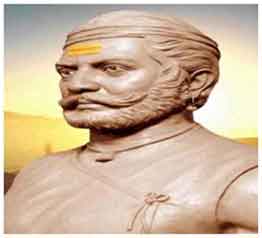
Umaji Naik

The British retaliated and this led to the execution of quite a lot of ‘thuggee’ nomadic tribes during the 1840’s. These incidents caused the British authorities of law to consider the tribes as unlawful and criminals. This belief cemented the cause for the creation of the Criminal Tribes act in 1871. The act was further cemented by a belief by the Britishers in a theory which advocated the non-conformity of the nomads to heredity. The actions of the nomads too augmented the same, as they refused to acknowledge what came to be called civilized living in the form of settlements, settled agriculture, employment for wage etc. The assumption by the British centring around biological determinism, resulted in the creation of the act, which classified the community as habitual offenders.

Severe restrictions were imposed on the communities, such as those on movement. The adult male members were to mandatorily report to the police stations in their areas and forbidden from travelling outside certain prescribed areas. The act classified the tribes as those under the systemic commission of non-bailable offenders.  By 1947, the act affected 13 million people, having spread from North India, where it was introduced, to Bengal and Madras presidencies as well. The people faced arrest and search warrants if found outside their prescribed area.

Present Scenario

In January 1947, the government of Bombay set up a committee to investigate the matter of these criminal tribes, and by 1949 August, the act was repealed. The tribes were officially ‘Denotified’, leading to the decriminalization of over 2.3 million individuals. Madras presidency repealed the act first, followed by other states. A committee appointed by the central government of India, classified the act as not aligned to the spirit of the constitution. However, the decision was faced with huge public resistance. There still existed considerable crime, and therefore people say decriminalization as tantamount to ignorance. Therefore, to pacify the opposers, a Habitual Offenders Act, 1952, was created in its place. The law states that the person who is criminalized is one of subjective and objective influences, and as a result, presents a danger to society, because he has manifested tendencies and practices in crime.

The Act affected the communities even further, with the stigmatization affecting an already marginalized community. A lot of government and private bodies have investigated the Habitual Offenders Act and have concluded that it has been derived quite a lot from the Criminal Tribes Act. Therefore, it does not showcase an intent by the Government to de-notify the tribes in completion.

  • In February 2000, the National Human Rights Commission recommended repeal of the Habitual Offenders Act.
  • The UN Anti-discriminatory body, Committee on the Elimination of Racial Discrimination, (CERD) saw that the alleged criminal tendencies that were seem in the Criminal Tribes Act, 1871, continue to be stigmatized in the Habitual Offender Act, 1952.

How are the tribes affected in the present?

The group had a conversation with Mr. Dakshin Bajrange, a popular director and a part of the Budhan Theatre, who provided the context of the present situation of the Chhara tribe. The issues that still plague the community are: –

  1. Exploitation by the Police: As the community is still considered criminal by a large part of the population, and even the authorities, police continue to target the tribes. The members of the tribe allegedly continue to be arrested for petty crimes, without proper evidence and severe punishment is doled out. The community members are said to be still asked to report to police regularly, and according to Mr. Bajrange have become their scapegoat.
  2. Admission to schools and colleges: Severe discrimination is faced by members of the Chhara community and other communities here. Most colleges and schools ask for the caste of the student. The declaration by a student that he/she is a member of a Denotified tribe causes severe discrimination, as admission has been found to be denied to members of these communities.
  3. Private Employment: Discrimination is not absent in the private sector as well, as the job applications or its verification includes the present address of the employee as well. The tribes stay in colonies that are either named after, or historically associated with their caste, e.g., Chharanagar. The identification of the address further stigmatizes and discriminates the community, and rejection ensues.
  4. Lack of Financial Support:  Hardly any budget is allocated to the upliftment of DNTs. Though a separate Commission for Nomadic and Denotified Tribes was formed in 2006, governments over the years have shown little intent in the development of the communities. The previous state budget allocated INR 40 Crore for a community that has a population of 6 lakh in the state, amounting to a negligible amount per person.
  5. Illiteracy: Poverty is compounded due to the fact that only 2-3% of the community is literate. The low education level makes it extremely difficult for the community to achieve upliftment.
  6. Political support: The community members are dispersed across the nation and lack unity as a result. Only small pockets of the communities live in a common area. This makes it very difficult to organize political movements, and small protests in localized pockets are often ignored by political bodies as a result. This causes the community to fail to invoke national attention and create a movement for justice.
  7. Continued stigmatization: Despite denotification, the existing social norms do not dispel the community from any kind of criminal association. The members of such tribal communities are still considered to be ‘criminals’, and suffer from lack of trust, credibility, and non-inclusivity, and thus face discrimination.

Impact of the Budhan Theatre

The theatre is run on a belief that an intimate relationship is created between the performer and the audience in a drama. The theatre has been going strong for over 22 years, and Mr. Bajrange takes pride in the fact that the third generation of actors are now introduced into the program, to talk about critical issues that affect their community. The performances have been successful in creating awareness and have received considerable positive response from diverse parts of the communities. The theatre has also been instrumental in correcting wrong perspectives on the Denotified tribes. The Theatre has been successful in becoming a bridge between the ignorant section of the society and the affected communities, in the words of Mr. Bajrange.

“Actors of Budhan theatre are the cultural leaders. We speak and perform for and on behalf of the community. Therefore, it is our moral duty of everyone in the Budhan theatre to protect the community when it is in danger”- Mr. Bajrange.

Why Azerbaijan is Unfit to Rule over the Armenians of Artsakh

David Boyajian


Corrupt, sadistic, and run by a hereditary dictatorship, Azerbaijan is unfit to rule over others, least of all Armenian Christians.

Yet that iniquity could materialize due to the recent 44-day war by Azerbaijan, Turkey, and terrorist jihadis against the Artsakh Republic (Nagorno-Karabagh) and Armenia.

The November 9, 2020 armistice could force democratic, Armenian-governed Artsakh (pop. 150,000) into Azerbaijan’s (pop. 10 million) despotic grip.

Since the war began, though, mainstream media have rarely pointed out Azerbaijan’s depravity and long-standing abuse of Armenians.

In the 1920s, Stalin transferred the ancient Armenian provinces of Artsakh — 96% Armenian — and Nakhichevan to Turkey’s friend, Azerbaijan.  The delusional tyrant mistakenly believed that this would lure Turkey into the USSR’s web.  That injustice has brought Artsakh nothing but agony.  Even before the transfer, Azerbaijan had been massacring Armenians in Artsakh and Baku.

Unlike 3000-year-old Armenia, no country named Azerbaijan existed before 1918.  Its inhabitants didn’t even call themselves Azeris until the 1930s.

Artsakh’s Long Nightmare

Artsakh was officially autonomous within Soviet Azerbaijan, but the latter held the real power.   Artsakh’s Armenians were persecuted due to raw Azeri fanaticism, not the Soviet system.

  • Armenians sank from 96% to 76% of Artsakh’s population by 1988, the result of repression, deportations, economic warfare, and murder by Azerbaijan.
  • Then-KGB Major General Heydar Aliyev (Azeri dictator Ilham Aliyev’s father) acknowledged importing Azeris into Artsakh to replace Armenians that he’d exiled.
  • Azerbaijan maliciously closed many Armenian schools, orphanages, and libraries.
  • Armenian language inscriptions on ancient monuments were depicted as Azeri.
  • Museums were looted of artifacts that proved Artsakh to be an ancient Armenian province.
  • Even the name Artsakh was banned.
  • Large quantities of meat, dairy products, and wool were directed to Azerbaijan instead of to needy local Armenians.
  • Baku frequently imprisoned local Armenian leaders who protested, but gave Azeri gangs free rein.

Breaking Free

Artsakh voted to exit Azerbaijan in accordance with Soviet law in 1988 and international law in 1991 as the USSR dissolved.  In response, Azerbaijan massacred Armenian civilians in Artsakh, Baku, Ganja, and Sumgait.

The ensuing war ended in 1994 in victory for Artsakh’s Armenians.  Armenians fled the rest of Azerbaijan, and Azeris fled Armenia.

Artsakh became self-governing, reformist, and widely respected.  It maintained representative offices in Washington, D.C., Europe, and elsewhere.

Azerbaijan proceeded to gorge on revenue from its gas and oil fields.  Yet it still mirrored its Soviet self: repressive, corrupt, violent, and anti-Armenian.

Artsakh became doubly determined to never again submit to Azerbaijan.

Azerbaijan’s Post-Independence Horrors

  • The U.S. State Department says Azerbaijan has “significant human rights” problems, including: unlawful/arbitrary killing; torture; arbitrary detention; political prisoners; heavy restrictions on the press; incarceration of/violence against journalists; severe restrictions on political participation; systemic government corruption; torture of [LGBTQ] individuals; and the worst forms of child labor.  Azerbaijan “did not prosecute or punish most officials who committed human rights abuses.”
  • The U.S. Commission on International Religious Freedom cites Azerbaijan for “engaging in or tolerating severe violations of religious freedom.”
  • Europe’s Organized Crime and Corruption Reporting Project (OCCRP) named President Ilham Aliyev its 2012 “Organized Crime and Corruption Person of the Year.”
  • Azerbaijan is guilty of “arbitrary arrest and detention of opposition politicians, civil society activists, human rights defenders and critical journalists,” says the European Court of Human Rights.
  • Freedom House ranks Azerbaijan as “Not Free” — worse than the Congo and Cuba.
  • Reporters Without Borders rates Azerbaijan’s press freedom as 168th out of 180 countries, — worse than Pakistan and Somalia.
  • International human rights organizations have rebuked Azerbaijan for repressing and forcibly assimilating its Lezgin and Talysh
  • Azeri Lieutenant Ramil Safarov was prosecuted and imprisoned for beheading Armenian Lieutenant Gurgen Margaryan at a 2004 NATO program in Hungary. Under questionable circumstances, Hungary later dispatched Safarov to Azerbaijan.  He was hailed as a national hero, awarded a medal, and promoted.
  • Azerbaijan has perpetrated the utmost brutality since the earliest days of Artsakh’s struggle and during the recent war. Azeri troops have abusedmutilated, and beheaded Armenian civilians and soldiers.  Armenian POWs have been summarily executed.   Amnesty International and Human Rights Watch have decried these war crimes.  Azerbaijan has still not released all POWs despite pledging to do so and continues its attacks in violation of the armistice.
  • In the 1990s, Azerbaijan imported Afghan MujahedinChechens, Pakistanis, and terrorist Turkish Grey Wolves to fight Armenians. The recent war saw Azerbaijan and Turkey bring in thousands of jihadis and ISIS terrorists from Syria, Libya, and elsewhere.  In so doing, Azerbaijan has violated the UN convention against using mercenaries.  Draw the appropriate conclusion about a political culture that deploys terrorists and thugs.
  • Like Turkey, Azerbaijan has long desecrated and destroyed multitudes of Armenian churches and monuments. YouTube’s “The New Tears of Araxes” shows Azeri soldiers obliterating a large 9th century Armenian cemetery in Nakhichevan. UNESCO is being prevented from inspecting Armenian monuments Azerbaijan has just taken control of.
  • The Azerbaijani Laundromat was — and may still be — a multi-billion dollar money laundering racket run by Azeri kleptocrats and the Aliyev clan.  German, Italian, Slovenian, and other European officials were bribed to whitewash Azerbaijan’s human rights record.
  • Azerbaijan covertly bankrolled a PR junket to Baku in 2013 for several Congresspersons and 32 staff from IL, NJ, NM, NY, OK, and TX. They were lavished with rugs and other gifts which the Office of Congressional Ethics ultimately made them surrender.  Azerbaijan funded the junket through a Dallas-based organization affiliated with renegade Turkish imam Fethullah Gülen.
  • ‘‘Within the next 25 years, there will be no state of Armenia in the South Caucasus. These people … have no right to live in this region,” declared Azerbaijan’s Defense Ministry spokesperson in 2004. A year later, Baku’s mayor told a German delegation, “Our goal is the complete elimination of Armenians. You Nazis already eliminated the Jews in the 1930s and 40s, right?”

“We [Azerbaijanis] must kill all Armenians — children, women, the elderly.  [We] need to kill [them] without [making a] distinction.”  After Azeri soccer manager Nurlan Ibrahimov posted that in October, the Union of European Football Associations banned him.

These kinds of venom have resulted in the horrors we see above.

  • Some Azeris have threatened to bomb Armenia’s nuclear power plant. Last year Azerbaijan’s Defense Ministry formalized the threat.
  • In sheets of newly released Azerbaijani postage stamps, an Azeri in a hazmat suit is spraying Artsakh with chemicals, suggesting Armenians are vermin to be exterminated.
  • Azerbaijan’s territorial ambitions have included not just Artsakh but also Armenia. In December, Pres. Aliyev once again claimed parts of Armenia while beside him Turkish President Erdogan glorified Turkey’s 1915-23 genocide against millions of Armenians and Assyrian and Hellenic Christians.  Azerbaijan and Turkey’s intentions are obvious.


Now You Know

Now you know why Artsakh’s Armenians have fought and died to live free from Azeri rule.  In their place, you’d do the same.

Artsakh is at least as deserving as other states that since the 1990s have achieved self-determination through international support, such as East Timor, Montenegro, and South Sudan.

Regardless of the recent war’s outcome, if the international community cannot see the justice of Artsakh’s case and effectuate a remedy consistent with self-determination, then there is no justice.

Ugandan President Museveni arrests opposition rival Bobbi Wine

Jean Shaoul


After declaring victory and a sixth, five-year term in office with a much-reduced majority, President Yoweri Museveni put his main opposition rival, the 38-year-old musician Bobbi Wine of the newly formed National Unity Platform party (NUP), under house arrest.

When protests erupted after the announcement of the election results widely seen as rigged, amid rising social and economic hardship in the wake of the pandemic, the security forces dispersed the crowds, killing at least two people, and cordoned off the party’s offices in the capital Kampala.

Speaking to the media surrounded by soldiers and police, Wine said he was “worried about my life and the life of my wife.”

Yoweri Museveni (U.S. Department of State/Wikipedia)

Mathias Mpuuga of Wine’s NUP announced the party would challenge the election results, saying, “We have evidence of ballot stuffing and other forms of election malpractice and after putting it together we are going to take all measures that the law permits to challenge this fraud.”

Museveni’s victory follows a bitterly contested election campaign, marked by a lethal crackdown on the opposition that included nine other challengers as well as Wine, and an internet blackout. His election was only possible because parliament lifted the 75-year age limit for the presidency, enabling him to stand again.

Barely half of the registered 18 million voters cast their vote, reflecting the dangerously tense political atmosphere. The security forces killed at least 55 people during protests in Kampala and other cities in November after Wine was arrested and detained for a second time during the campaign. Hundreds of opposition supporters, human rights activists and journalists were detained and some were kidnapped.

Following his election to the National Assembly in 2017, Wine became the most significant challenger to the longtime president, who seized power in 1986 after overthrowing the dictatorial regime of President Milton Obote. Wine, who grew up in Kamwokya, one of Kampala’s most deprived neighbourhoods, appealed to Uganda’s youth who face chronic unemployment and dreadful social conditions on an anti-corruption, pro-human rights, reformist platform that is incapable of resolving their entirely legitimate demands. His widespread support, particularly from the youth and poorer layers, has shaken Museveni’s corrupt regime and his imperialist backers.

Several other opposition politicians faced arrest, beatings and torture at the hands of the police in a blatant attempt at intimidation by Museveni’s ruling National Resistance Movement (NRM) Party. Wine said he had lost count of how many times he was arrested and prevented from campaigning. He told the Financial Times he had been shot at four times, forcing him to campaign in a bullet-proof vest. One of his bodyguards was run over by the military police. Earlier this month, Wine filed a case at the International Criminal Court, accusing Museveni and nine top security officials of attempted murder and human rights violations in the run-up to the vote.

Sarah Bireete, director of the Center for Constitutional Governance in Kampala, said, “This has been the most violent election in Uganda’s history because Museveni’s grip on power has been greatly challenged—especially by the young voters.”

While Museveni emerged the winner with 59 percent of the votes, his vice-president, a dozen of his cabinet ministers and a further 21 NRM members lost their seats. Wine won 34 percent of the votes, mainly in Kampala and other urban centres. He accused Museveni of “fabricating” the results, a claim supported by observers from the United Nations, US and European Union who were prevented from monitoring the election. The Africa Elections Watch coalition reported late openings in most polling stations, illegally opened ballot boxes and the arrests of 26 election monitors from civil society groups. Both the US and Britain, the former colonial power, have called for investigations into allegations of fraud and other irregularities.

Museveni, once lauded as one of a new generation of African “renaissance leaders,” spent his years in office giving away Ugandaʼs assets to international financiers and carrying out a punishing series of privatisations. This wholesale robbery and looting of resources on behalf of international capital and its local agents has had a catastrophic effect on the working class and poor farmers.

This last year has seen the number living in poverty rise from by a further 3 million to 11.4 million. Social protection programs are totally inadequate, reaching just 3 percent of the population. Some of the hardest hit have been Uganda’s 1.4 million refugees—Africa’s largest refugee population—from war-torn neighbours the Democratic Republic of Congo (DRC) and South Sudan, following the 67 percent loss in funding for the UN’s World Food Programme for East and Central Africa.

In 2017, the country ranked 162 out of 189 on the UN’s Human Development Index. Three-quarters of the population lives on less than $3.10 per day. Life expectancy is just 62 years, only two years more than war-torn DRC; 51 percent of Ugandans lack access to safe water; 82 percent do not have access to improved sanitation facilities; and acute malnutrition among children between six months of age and five years is four percent, but 10 percent in the West Nile sub-region of Uganda.

According to the World Bank, 700,000 young people reach working age every year in Uganda, but there are only 75,000 new jobs, leaving more than 70 percent of Ugandans employed in subsistence agriculture. With half the 46 million population less than 15 years old, an average of one million young people a year are expected to reach working age between 2030-2040.

Uganda’s economy has contracted sharply in the wake of the pandemic, a locust invasion and flooding, with GDP for 2020 projected to be between 0.4 and 1.7 percent compared to 5.6 percent in 2019, as export, tourism, remittances and foreign direct investment plummeted.

Museveni’s regime depends on extensive backing from the US, which provides over $970 million a year in development and security assistance, including military training for the army. Last June, the World Bank released $300 million in relief funds to combat COVID-19 that vanished into the military budget.

Such “aid” is for services rendered. Uganda, a key regional ally of US imperialism, has deployed its Uganda People’s Defence Force in support of Washington’s puppet governments in South Sudan and Somalia, participated in MONUSCO, the UN-led military operation in the resource-rich DRC and provided military training for Equatorial Guinea’s armed forces.

According to a 2012 report by USARAF, Uganda’s Entebbe airport provides a space for Washington’s AFRICOM forces’ vast spying operation conducted with turboprop planes. It has been reported that there are “black sites” in Kampala operated on behalf of the US for the interrogation and torture of suspected terrorists. According to the New York Times, Ugandan recruits also served as private security guards and worked closely with American troops in Iraq and Afghanistan.

In a move indicating that Washington is assessing the possibility of shifting its support away from Museveni, US ambassador Natalie E Brown sought to visit Wine, only to be stopped by security forces. Government spokesman Ofwono Opondo told Washington to keep out of Uganda’s domestic affairs, saying, “What she has been trying to do blatantly is to meddle in Uganda’s internal politics, particularly elections, to subvert our elections and the will of the people. She shouldn’t do anything outside the diplomatic norms.”

Uganda’s is only one of several recent elections in Africa that demonstrate the explosive anger building up among the working class. It follows allegations of election rigging in last year’s “landslide” re-election of neighbouring Tanzanian President John Magufuli, notorious for his crackdown on the opposition and authoritarianism.

In Ghana, President Nana Akufo-Addo won re-election in December with a contested 51.59 percent of the vote that led to angry protests in which at least five people were killed.

In the mineral-rich but desperately poor Central African Republic, President Faustin-Archange Touadéra won five more years in power after an election characterised by violence, with fighting continuing in towns across the country as opposition parties demanded a re-run of the election.

The January 6, 2021 fascist coup attempted by US President Donald Trump to forestall the transfer of power to President-elect Joe Biden demonstrated that such measures are not restricted to African governments. The working class in the former colonial countries must turn to its class brothers and sisters around the world, including in the metropolitan countries, whose regimes are no more committed to equality and democracy, in an international struggle for social equality and justice through the socialist reorganisation of society.

19 Jan 2021

Record UK COVID-19 deaths as government plots ending “the last” lockdown

Robert Stevens


COVID-19 deaths in the UK hit a record of 1,610 Monday and 33,355 new cases. With a seven-day average of 16.7 daily deaths per million people, the UK currently has the worst COVID-19 death rate in the world.

The deaths took the official tally past 90,000—measured as all who have perished within 28 days of a positive test. The true total is substantially higher, with more than 105,000 death certificates mentioning COVID-19.

Since January 1, there have been 17,914 deaths from the virus and nearly 1 million new cases (978,069).

The programme of “herd immunity” has driven the response of the Conservative government to the pandemic, based on the demands of big business that the economy be kept open and profit making not impacted. Over the last year the government was forced to implement three lockdowns under pressure from the working class.

Top 20 countries by Covid-19 death rate (WSWS media)

November’s lockdown barely impacted the number of coronavirus patients in hospital. The current lockdown, begun on January 5, is significantly less restrictive than the first in March, despite a new more contagious strain of the virus and worse hospitalisation rates than before. It is due to be reviewed on March 31, with all indications being that the Tories are moving to end what is being described as the “last lockdown”.

This is being justified by citing a vaccination programme with only just over four million people having received the first dose of a required two doses. The population of the UK is over 66 million.

From this week, those aged over 70 are being offered the vaccine, under conditions in which just over half of those aged 80 and half of those in care homes—among the most vulnerable people—have been vaccinated. There are people in their 90s who have not yet received their first dose. The Daily Mirror reported Tuesday that “residents in Folkestone and Hythe in Kent are furious with no-one over 80 in the district having yet received a vaccine, despite having the UK's worst Covid death rate. The south-eastern seaside area had a fatality toll of 265.5 per 100,000 people last week, Government figures show.”

The Sunday Times reported that the government will end lockdown before the population is vaccinated. A government source told the newspaper, “For the first time there are no significant divisions between hawks and doves in the cabinet. Everyone accepted that we need to lock down hard and everyone accepts that we need to open up before everyone is vaccinated.”

On Sunday, Foreign Minister Dominic Raab told Sky News, “What we want to do is get out of this national lockdown as soon as possible.” He added, “By early spring, hopefully by March, we’ll be in a position to make those decisions. I think it’s right to say we won’t do it all in one big bang. As we phase out the national lockdown, I think we’ll end up phasing through a (regional) tiered approach.”

The decision has in reality already been made amid dire warnings the pandemic will significantly worsen over the coming weeks. Last Friday, the government’s Chief Scientific Adviser, Sir Patrick Vallance, said that a premature ending of the lockdown would result in more deaths. “This is not the natural peak that's going to come down on its own, it's coming down because of the measures that are in place. Take the lid off now and it's going to boil over for sure and we're going to end up with a big problem.”

This homicidal policy is to be carried out only weeks after the government calculates that all over-70s will have had the first dose of the vaccine—a pledge that no-one can take at face value—and not the second dose that strengthens immunity.

In the last days, the right-wing media have stepped up their propaganda to insist that the government fully reopen the economy, including schools, colleges and universities. In an editorial Monday, the Daily Telegraph, commented, “Right now we are in the eye of the storm, with shocking numbers being admitted to hospital, but one has to plan for the future, to think of a point at which the effects of the lockdown might begin to rival the threat of the disease itself.”

The National Health Service (NHS) is already unable to cope with a never-ending stream of new patients. On Sunday, NHS England chief executive Sir Simon Stevens told the BBC’s Andrew Marr Show , “The facts are very clear and I’m not going to sugar-coat them, hospitals are under extreme pressure and staff are under extreme pressure. Since Christmas Day we’ve seen another 15,000 increase in the inpatients in hospitals across England, that’s the equivalent of filling 30 hospitals full of coronavirus patients. Staggeringly, every thirty seconds across England another patient is being admitted to hospital with coronavirus.” He added, “We have got three-quarters more Covid inpatients now then we had in the April peak.”

On Monday, it was revealed that the number of people in hospital with COVID-19 in London was approaching 8,000, with the Evening Standard reporting that “hospitals in other parts of the country on standby to take patients if there are no beds left in the capital.”

Stevens revealed that 53,000 National Health Service staff are off work, either because they have the disease or because they are self-isolating.

The “herd immunity” policy of the government was spelled out by Dr Mary Ramsay, the Head of Immunisation at Public Health England, who said last week, “We may need to accept, if the vaccine doesn’t prevent transmission, that we’re going to protect the people who are really vulnerable and going to die and have serious disease, but we allow the disease to circulate in younger people where it’s not causing much harm.”

There is no scientific justification for the government abandoning the lockdown. Ramsay’s comments were opposed by Dr Deepti Gurdasani of Queen Mary University in comments to the Byline Times. She described Public Health England’s strategy as “frankly ridiculous,” and “no different from the focused protection strategy outlined in the Great Barrington Declaration, which has been thoroughly debunked as an ideology not grounded in any scientific evidence.”

Dr Adam Kucharski, a mathematician at the London School of Hygiene and Tropical Medicine told the Times on Saturday, “We’re talking a lot to colleagues in Brazil, Colombia, Peru”. This was because the pandemic is surging “in areas of high seroprevalence”, i.e, the level of a pathogen in a population, that should have a higher degree of immunity according to the “herd immunity” paradigm, “Which doesn’t really square.”

The Times noted, “The new data from South America suggests that modifications are needed. If new variants mean people can get reinfected, even if they show few symptoms the second time, then they can infect those who have so far avoided the pandemic.” Kucharski said, “That means this idea that we have this fixed value of infections and then the epidemic goes away won’t necessarily apply in the same way.” He warned, “A lot of countries in Europe are building immunity through vaccination and, unfortunately, at great cost through natural infection. And if there are variants that could threaten that accumulated immunity, it’s an enormous problem which needs to be taken seriously.”

The working class must oppose all moves to prematurely reopen the economy, which will lead to even greater loss of life. The issue is posed: Who will control society: the capitalist class based on profit, or the working class based on saving lives and fulfilling social need? The public health catastrophe requires the formation of action committees to enforce emergency measures, including the shutdown of nonessential production and the full closure of schools, colleges and universities, to be made possible by providing full income support to workers and small businesses.