22 Jan 2021

After earth, is human body a dumping ground to microplastics?

Eva Badola


Researchers finding microplastic in the placenta of pregnant women buzzes precursor alarms to life on earth.
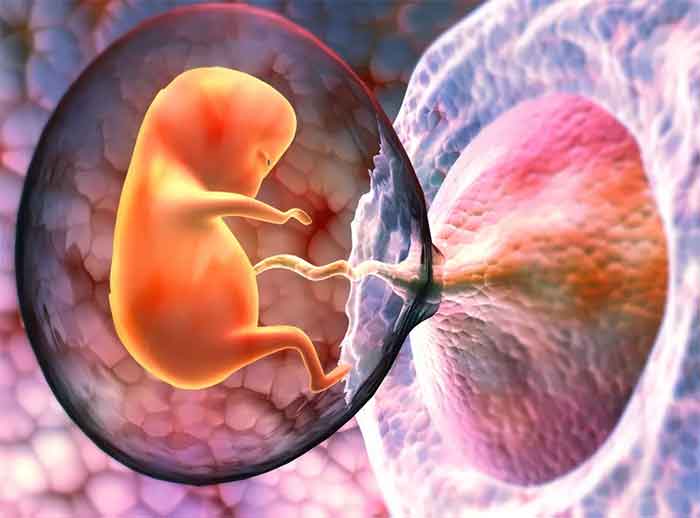
Plastic has prevailed in every sphere of the planet earth, from deepest trenches in the ocean to the highest mountains; even the mother’s womb could not escape plastic. By 2040, scientists estimated that earth would be dumped with 1.3 billion tonnes of plastic, in the land and oceans.

The outbreak of COVID-19 pandemic made us mask our nose and mouth, to prevent breathing in the virus. But which human mechanism will filter microplastic mixed in water, food and air? Wearing a mask to prevent inhaling in the plastic may turn into a reality beyond imagination in the nearest time.

When Dr Antonio Ragusa and his team sat examining the detached placentas of six pregnant women, what they found was startling. Placenta, the organ developed during pregnancy, acts as a lifeline between the baby and mother’s blood supply. Attached to the mother’s womb, it processes baby’s nutrients, waste and oxygen. So, what you expect in the placenta is pretty much-organic matter. But the team of doctors saw more than that, they found a dozen micro-plastics in the placenta of four healthy pregnant women, out of the six investigated.

“It is highly worrisome to find artificial material-microplastic- in the placenta. Especially, considering the important role placenta plays in foetus development”, says Dr Ragusa, the lead author of the study and the director of Obstetrics and Gynaecology at the San Giovanni hospital in Rome, Italy.

But from where and how do these tiny pieces ended in a human body?

The answer is around us. Each year earth is loaded with about 30 million tonnes of plastic-waste; further, burning 50 million tonnes in open and flowing 11 million tonnes to ocean causing massive environmental perturbation.

We only see the large single-use plastic like straws, packages etc. swirling in the oceans or clogging our drains. But the invisible culprits are the tiny particles called microplastics. These degraded plastics smaller than five millimetres can come from practically anything; broken off from large items like plastic shards, car tyres, etc. or microbeads developed for cosmetic products. Ragusa’s study published in the Journal Environment Internationalsays that the plastic particles in the placenta having five-to-ten-micron size came from paints, adhesive, plastic and personal care products.

Outside-inside, engulfed in plastic particles

Back in the 1940s, companies introduced synthetic fabrics like acrylic, nylon and rayon made out of plastic. These synthetic materials earned so much popularity that by 2019, 60 per cent of our clothing was coming from plastic. Meanwhile, cities got engulfed in microplastic pollution. Microplastics was detected in our salt, bottled water, food, and even in milk formula from infant feeding bottles.

We are consuming nerves damaging toxic substances from wild fishes ingested with microplastic in their muscles. Finding microplastics in fishes and prawns’ organs indicates how oceans are enormously dumped with the plastic.

Now, one may prevent ingesting micro-plastic by avoiding bottled water or consuming fish from a polluted sea. However, it turned out, a majority of microplastics in our bodies comes from inhaled air. A study in 2019 estimated that a city-dweller on average is inhaling up to 0.121 million micro-plastics annually. Moreover, children playing outside can consume 3,200 plastic bits a year from street dust and debris.


However, a large share of these microplastics are microfibers; tiny strands of plastics coming from our home. These fine synthetic plastic fibres having a one-to-five-micron size are used by textile industries such as in sportswear, mattresses, synthetic carpets, textile in furniture etc. With wearing, washing or even brushing, microplastic laden dust from these clothes spreads over the surfaces in our house, which we breathe in.


To reveal the enormity of human exposure to indoor microplastic pollution, scientists build a manikin with mechanical artificial lungs that could suck up the air in a typical apartment; imitating the breathing of a human living in a home. They were horrified to found the manikin was inhaling up to 272 microplastics within 24 hours. When inhaled, these micro-pieces have higher chances of getting absorbed in the body than being sneezed or coughed out. Once inside our body, they can travel through the blood into our organs.

In an experiment, when pregnant rats inhaled nanoparticles of polystyrene, the particles travelled to their placenta, lungs, heart, kidney and brain. Such tiny plastic particles and fibres are also found in human poop.

Ragusa explains how microplastics penetrate human cells through breathing, “The aerodynamic shape of micro-particles helps them to reach the lower part of our respiratory tract without constraints. Since the mucus layer is relatively thin in the lower respiratory tract, micro-particles can easily pass through into our bloodstream and reach the cells of any part of our body.”

Could the inhaled plastic by mother reach its unborn baby?

Cities are teeming with air pollutants like black carbon as a result of aggravating air pollution. When breathed in by pregnant women, these black carbon particles are suggested to transfer across the placenta towards their unborn babies.

Similar is the case with micro-sized plastic. In an experiment, when pregnant mice were exposed to microplastics, a fatty acid metabolic disorder was visible in their offspring. Indicating the sort of health implications microplastic can impose even on the next generation.

“The presence of micro-plastics can tamper with the metabolic activity, a mechanism with which the human body uses its fat”, Ragusa explains. His research team found that micro-plastics could perturb the immune system, lowering body defences against pathogens during pregnancy. Fibrous microplastics are known to deposit deeply in the lungs causing respiratory irritation, damage genetic information within cells and increase cancer risk.

However, scientists still await more vital evidences to show that microplastics can travel from a mother to the baby, passing the placenta’s natural barrier.

Evidences after evidences of severe harmful impacts of microplastics on environment and life on earth are eye-opening to call for global leaderships to take drastic actions, beyond boundaries and beyond developmental priorities.

UK strikes challenge company cost-cutting and trade union collusion

Thomas Scripps


Strikes are ongoing at British Gas, British Airways, logistics company DHL and haulier Eddie Stobart. Another is imminent at bus company Go North West. They signal that the suppression of industrial action enforced by the trade union bureaucracy throughout the pandemic is beginning to break down.

When the COVID-19 virus reached Europe, a series of wildcat actions for worker safety in Britain and across the continent raised the spectre of a social explosion. Prime Minister Boris Johnson’s government and its counterparts were forced to implement lockdowns and furlough schemes. These were combined with a relentless campaign by the trade unions, working hand-in-glove with the Conservative government in the UK, to head off strike action in the name of “national unity”.

A British Gas van (credit: Wikimedia Commons)

Given their head, the corporations declared open season on their workers’ jobs and conditions. In the aftermath of the first lockdown in particular, multiple employers launched savage “fire and rehire” plans, forcing workers to accept inferior contracts under threat of redundancy. These assaults took place against a background of rising unemployment, as hundreds of thousands were laid off nationally, and were aided once again by the trade union bureaucracy, who pulled their usual tricks in delaying, interrupting, isolating and exhausting action, before foisting a deal agreed with the company on their members.

Sections of workers, however, have battled through the innumerable “consultative ballots” and rounds of ACAS (the national arbitration scheme) talks and forced their unions to finally organise strikes.

The largest action is at British Gas. More than 7,000 engineers in the GMB union struck for five days earlier this month against fire and rehire plans which threaten a lengthened working week and pay cuts of thousands of pounds. The company is carrying out a massive restructuring programme involving attacks on conditions and an expected 5,000 job losses. Workers struck this Wednesday and will do so again today and on January 25 and 29 and February 1.

Parent company Centrica is under severe pressure from its shareholders having lost out in recent years in a fiercely competitive energy market—shares in British Gas have fallen 75 percent in the last five years. The Times reported last week, “Cost-cutting set to pay off with British Gas profits”.

The GMB have made every effort to impose a rotten deal on their members. Close to five months passed between them receiving a consultative ballot for a strike in August and the first actual strike day in January. In that time, unions representing thousands of other Centrica workers signed off on an agreement with the company.

The same is happening at Heathrow Airport, where around 850 British Airways cargo staff face a fire and rehire threat set to undermine their conditions and cost them thousands of pounds a year. Unite has organised nine days of “discontinuous strike action” from today until February 7.

Thousands of job losses and significant pay cuts have already been suffered by BA’s workforce over the last year, through deals negotiated with Unite.

In Manchester, close to 500 bus drivers employed by Go North West, part of the Go-Ahead Group, are also threatened with fire and rehire. The company intends to reduce the number of drivers employed by 10 percent, tear up a sick pay agreement and increase unpaid working hours, amounting to a £2,500 pay cut.

Unite received an overwhelming yes vote in a consultative ballot for strike action in September but organised nothing. They have pleaded with the company to accept their plan for “cost reductions of around £1 million and a pay freeze worth around £200,000.” Go North West refused and is now speaking with each driver individually to force them to sign the new contract. The union said it will ballot workers for actual strike action but has not set a date.

Like Centrica, International Airline Group (the owners of British Airways) and Go-Ahead Group are multi-billion-pound corporations with struggling share prices. They are trying to claw additional profits out of the backs of their workers to satisfy investors.

Other essential workers, required to work throughout the pandemic, are being forced to remain on poverty-level wages while their employers rake in record profits. The pandemic has been characterised by the vast enrichment of a tiny oligarchy on one side and the impoverishment of the working class on the other.

These issues are brought out sharply in the strike at DHL Supply Chain in Croxteth, Liverpool. The 120 workers represented by Unite fulfil a delivery contract with Burton Biscuits and AB World Foods. They took several days of strike action over the Christmas period, held another 48-hour strike this Wednesday-Thursday, and have action planned for February 2, 3, 4, 5, 8 and 9.

Strikers are demanding a pay increase and an end to victimisations of union members. They are paid £8.94 an hour, which will be just two-and-a-half pence above the minimum wage when it is lifted this April. According to the Unite regional officer Kenny Rowe, several members have been “suspended or sacked on spurious charges, due to management victimisation”. During the strikes in December, management called the police to the picket lines on at least 10 occasions, involving up to three police vehicles at a time.

DHL is owned by Deutsche Post, one of the 30 largest companies in Germany and the world’s largest courier company. It posted record annual earnings in 2020 after they increased by 17 percent to €4.84 billion, mainly thanks to its DHL business booming in the pandemic. The company expects profits to rise again in 2021 and 2022.

The value of the company’s shares has increased 27 percent in the last 12 months and the company has paid out dividends totaling more than €1.4 billion for the last four years.

Unite first dragged the DHL dispute into fruitless negotiations with ACAS. When the company refused to budge, the union called a strike demanding a pay agreement just 50 pence above the minimum wage. The union then called off five days of strike action in late December and early January as an act of “good faith” to re-enter talks with DHL. This charade quickly fell apart, with Rowe admitting that the company had made “an entirely unacceptable offer that in no way meets workers’ needs.”

Drivers for Eddie Stobart Logistics are in a similar position. The company has implemented a pay freeze for its lorry drivers in Warrington, contracted to Walkers Crisps, and refuses to negotiate with Unite. The drivers carried out a three-week overtime ban from December 26. They will begin another overtime ban tomorrow, through to February 16, and then strike for four days. Another overtime ban is scheduled for February 20-27, and another strike for February 28-March 2.

Unite were first given a mandate for strike action by these workers in May 2019 and scheduled a series of strikes and overtime bans. These were suspended as another “act of goodwill” when the company promised to engage with the union.

Increased demand due to the pandemic has helped Eddie Stobart Logistics swing from a £6 million loss in the six months to May 2019 to a £16 million profit a year later.

These actions point to the growing demands in the working class for living standards and working conditions to be defended. But they also make clear that this sentiment cannot find expression through the trade unions, which are engaged in corporatist relations with the employers. They will continue as they have done for decades, organising partial actions which can be suspended at the first possible opportunity, and called off with a sellout deal drawn up by the employers.

UK records over 21,000 deaths and a million new COVID infections in first three weeks of 2021

Robert Stevens


Death, infections and hospitalisations due to COVID-19 are surging in Britain. This week the daily death rate record was topped twice in successive days, with 1,610 fatalities on Tuesday and, in a sharp rise, 1,820 on Wednesday. A further 1,290 deaths were announced Thursday, with an eight-year-old child among the latest victims.

A staggering 21,024 people have died in the first three weeks of 2021, with the UK recording the highest death rate on the planet. This week another 283,388 new infections were recorded, bringing the total this year to more than 1 million (1,054,866).

A patient is pushed on a trolley outside the Royal London Hospital in east London, Tuesday, Jan. 12, 2021, during England’s third national lockdown since the coronavirus outbreak began. Britain, with over 81,000 dead, has the deadliest virus toll in Europe and the number of hospital beds filled by COVID-19 patients has risen steadily for more than a month. (AP Photo/Matt Dunham)

Hospitalisations reached 39,068 by Monday this week, almost double that at the height of the first wave last year. The number of patients on ventilation stood at 3,947.

Data from National Health Service England published Thursday revealed that one in 10 major hospital trusts had no spare adult critical care beds last week.

The governments daily count of infections does not give an accurate measure of the number of people infected. Imperial College’s REACT-1 infection survey is more accurate. In its latest interim findings based on testing 142,900 people between January 6-15, Imperial estimates that 1.58 percent of the population had the virus during early January—up from 0.91 percent in December. This equates to one in 63 or about 900,000 people infected nationally.

The highest level of infections was recorded in London, with 2.8 percent of the population with the disease, up from 1.21 percent in early December. Other estimates suggest up to 5 percent of the capital’s nearly 10 million population may have the virus. This week, the London Ambulance Service was fielding 8,500 calls a day—prior to the pandemic it dealt with 5,000 to 6,000 daily. Yesterday, the Guardian revealed that “NHS staff are preparing to transport patients using two London buses that have been converted into makeshift ambulances, in another sign of the strain Covid is putting on the capital’s health services.”

Infections continue to surge despite the lockdown imposed by the Tory government on January 5. The lockdown is significantly less restrictive than the first in March, despite a new more contagious strain of the virus and worse hospitalisation rates. The REACT-1 survey found that COVID-19 cases rose by 50 percent between early December and January 15.

The study concludes, “During the initial 10 days of the third COVID-19 lockdown in England in January 2021, prevalence of SARS-CoV-2 was very high with no evidence of decline. Until prevalence in the community is reduced substantially, health services will remain under extreme pressure and the cumulative number of lives lost during this pandemic will continue to increase rapidly.”

During the first wave of the pandemic the government’s brutal herd immunity policy led to the deaths of nearly 20,000 of the most vulnerable people living in care homes. COVID-19 deaths in care homes are surging again, doubling in a fortnight in England. The Office for National Statistics recorded 1,260 COVID-19 care home deaths in the two weeks to January 15—almost twice the 661 fatalities two weeks ago. The virus is taking lives in care homes at a staggering rate, accounting for 40 percent of all deaths in care homes in England—up from just over a quarter at the end of December. Only around 50 percent of the UK’s 400,000 residents have so far been vaccinated against the virus.

So severe is the rate of infection, that only hours after mooting that a phased reopening of schools in March was being prepared, with schools to be given just two weeks-notice of commencement, the government is being forced to row back. Thursday’s Financial Times cited a senior figure close to Prime Minister Boris Johnson who said, “Boris wants this to be the last lockdown, even if it has to go on longer. There has to be a sense of finality to these measures so he appears to be on side with the scientists. He is being cautious.”

Johnson is aware that an escalating number of deaths could ignite a social explosion. Later Thursday, a Downing Street spokesman stated that it couldn’t be ruled out that a lockdown could last until the summer: “It remains our position that we want to ease restrictions as soon as it is safe to do so, but in order for us to do that we need to see the transmission rates of the virus come down and we need to see the pressure on the NHS reduce.”

Johnson is having to adapt to a public mood strongly opposed to ending lockdown, with many demanding it is made more restrictive. An opinion poll for the Observer newspaper saw 61 percent in favour of closing nurseries and 51 percent supporting the closure of takeaway coffee shops and cafes. 75 percent of those questioned said that government ministers had responded too slowly to the pandemic.

All of this was entirely foreseeable. On December 17, the Socialist Equality Party (UK) issued a statement, “Stop the UK’s winter of death! For emergency action to save lives!”

The article warned, “The coronavirus pandemic in the UK is being allowed to run out of control. Prime Minister Boris Johnson’s Conservative government is pursuing a murderous policy which poses an imminent risk to tens of thousands of lives.”

Although the government had to scale back its plans to allow the population to travel and mingle without hindrance for five days over Christmas, it encouraged a 24-hour a day shopping spree to “save Christmas”, i.e, to save the profits of the corporations.

At that point, 66,000 people had died according to the official government measures, with a more accurate count based on fatalities with COVID-19 recorded on the death certificate nearer 80,000. In the just over four weeks since the SEP statement was published, tens of thousands more have died. 94,580 deaths have been recorded according to the governments measure, while the true figure recorded by the UK’s statistics agencies—including those where COVID was mentioned on the death certificate, together with additional data on fatalities that have occurred in recent days—shows that deaths from the virus have passed 111,000.

The SEP statement cited Dr Claudia Paoloni, president of the Hospital Consultants and Specialists Association, who warned that the Christmas plans will see “patients dying needlessly and thousands of critical cases going untreated.” Leading public health specialist Professor Gabriel Scally also warned, “There is no point having a very merry Christmas and then burying friends and relations in January and February.”

The SEP explained that the fight against the pandemic is not only, or even primarily, a medical issue. It is, above all, a matter of social and political struggle.

The arch criminal and his cabal of herd immunity enthusiasts in Downing Street are responsible for social murder on a vast scale. But this widely hated government could only have sacrificed the lives of over 111,000 people on the altar of profit and on behalf of the oligarchy that rules Britain with the collusion of the opposition Labour Party and their partners in the trade unions.

Under the banner of “national unity”, Labour leader Sir Keir Starmer continued the mantra of his predecessor Jeremy Corbyn in offering his “constructive opposition” in a time of crisis. The trade unions’ response to the pandemic was to enter talks with the government during the spring lockdown to assist in what the Trades Union Congress described as a “mass return to work”. With the union’s collusion, schools, colleges and universities were reopened from September becoming major vectors of the virus. This was bound up with the union’s suppression of any and all action by workers against the danger of COVID-19.

Corporatization of Canada’s virtual health services part of broader privatization drive

Penny Smith


Under conditions of the ravaging of Canada’s public health care system—produced by decades of austerity and laid bare by the pandemic—a mad scramble among corporate giants is under way to seize control of potentially profitable parts. A prime example of this process is Telus, the Canadian-based telecommunications giant, which is seeking to dominate Canada’s emerging health tech sector.

In 2018, Telus Health, a recently-formed subsidiary of Telus Corp., partnered with Babylon, a UK-based virtual health care start-up, to create a downloadable app that lets patients meet with physicians in private video consultations, and check symptoms and access clinical records virtually. The app is currently available in four Canadian provinces: British Columbia, Alberta, Ontario and Saskatchewan.

A nurse holds a phone while a patient affected with COVID-19 speaks with his family from the intensive care unit. (Image Credit: AP/Daniel Cole)

Since the app was introduced, concerns have grown over patient safety. Alberta doctor Ruoh-Yeng Chang commented that Babylon sees the new app as the equivalent of a walk-in clinic, where patients are attended by staff who do not know a patient’s history. “This is an undermining of existing family practices and the relationship between family doctors and their patients,” she said.

Community pediatrician Dr. Natalie Forbes told the media, “Babylon is substandard private health care, funded by our government, putting money into the pockets of Telus.”

Toye Oyelese, a family doctor practicing in Kelowna, British Columbia, believes that Babylon will mean more patients will get worse care. “It’s going to be fast food, because that’s what corporations do,” he said.

A group of British Columbian family doctors released a statement stressing that although “the COVID-19 pandemic has accelerated the opportunity for family physicians to use telemedicine within their primary care practice ... it is best used within a longitudinal patient-physician relationship.”

But the aim of Telus is not to improve public health care by offering a complement to existing in-person health care services. Instead, it intends to liquidate them entirely and replace them with remote, impersonal for-profit health care call centers with as few doctors as possible. Its business model plans for many health inquiries to be dealt with through artificial intelligence “chatbots.” For example, in Rwanda, where the Babylon app was introduced in 2016, the company announced its aim was to “take the power of a doctor’s brain and put it on a mobile phone for medical advice and triage.”

Predictably, authoritative examinations of the app’s performance have led to stark warnings. An article published in November in the British medical journal The Lancet found that the Babylon app, currently contracted with the National Health Service (NHS) in the UK, did not offer convincing evidence that its symptoms checker performed better than doctors in any realistic situation. The article pointedly noted that it sometimes performs significantly worse.

Similar conclusions were drawn by a report published by Pennsylvania State University. It warned that existing symptoms-checker chatbot apps cannot provide a final diagnosis or analyze test results, let alone supervise proper physical examinations.

Without any regulatory mechanisms in place, medical professionals are also worried about the impact on patient privacy. In Alberta, the app was launched before a privacy review—which could take more than a year—was completed. Doctors have pointed out that Babylon’s terms and conditions include the sharing of patient information with “corporate partners and other entities.” It is worth noting in this regard that in 2014 Telus Health’s parent company, Telus, willingly handed over private details of thousands of its subscribers to federal government police agencies.

In addition to partnering with Babylon, Telus has recently acquired an array of virtual health services. These include electronic medical records software company Nightingale, web-based prescription technology ZRx Prescriber, B2B virtual medical consultations service Akira Health, and virtual care company EQ Care.

Telus Health has also developed a series of its own “virtual care initiatives,” including EMR Virtual Visits, technology that enables doctors to conduct video consultations with their patients, and Espri, a mobile app that provides mental health resources to front-line workers. Telus Health also owns a series of brick-and-mortar clinics that charge patients annual fees in the thousands of dollars while still billing provincial health plans.

In Saskatchewan, Telus Health has set up its Home Health Monitoring “solution” to digitally monitor the recovery of lung transplant patients, and plans to expand the use of HHM to include individuals with heart conditions and chronic obstructive pulmonary disease (COPD).

The HHM solution has been used in British Columbia since 2013 to remotely monitor thousands of patients living with chronic conditions such as diabetes, heart failure and respiratory diseases. Discussions with other provincial health authorities about using HHM in other provinces are underway.

Telus is shamelessly exploiting desperate patients who lack timely access to basic healthcare services, the need for social distancing restrictions during the COVID-19 pandemic, and rising chronic illness to significantly expand its presence in the health care sector. However, the fact that Telus is on its way to securing an effective monopoly over the primary e-health care “market” with substandard and dangerous virtual services whose main purpose is to turn a profit is not simply the result of corporate greed. The growth of private for-profit health care is bound up with the decades of social spending cuts, imposed by governments at all levels and all political stripes, from the nominally “left” New Democrats, to the Liberals, Parti Quebecois, and Conservatives. Long waiting lists for diagnostic tests and medical procedures have created a “demand” for alternatives.

Telus is not the first private company to profit from the dismantling of public health care. With the complicity of the political establishment, the development of new medical technologies, from diagnostics to pharmaceuticals, has been used to expand for-profit health care.

In British Columbia, 760,000 residents do not have a family doctor—about one in seven—a figure that nearly doubled between 2005 and 2013. In Alberta, the United Conservative Party government enacted Bill 30, legislation that facilitates the sell-off of sections of public health care, and is outsourcing up to 11,000 public health care jobs to the private sector.

Following decades of social spending cuts, the hard-right Doug Ford-led government of Ontario has slashed thousands of healthcare jobs and forced layoffs at public hospitals. Ford’s privatization drive includes plans to open up COVID-19 testing sites in for-profit pharmacies such as Shoppers Drug Mart, where private companies are charging up to $400 per COVID-19 test.

The federal Trudeau government picked up from where the Tories under Stephen Harper left off by only “increasing” health transfers to the provinces by 3 percent annually. When population growth, population aging, and inflation are taken into account, this amounts to a major real-terms funding cut. Even during the pandemic, Trudeau has refused to commit to increase the transfers. This deliberate starvation of the health care sector has created a situation where a staggering 4.8 million Canadians, well over 10 percent of the population, do not have access to a regular doctor.

In addition to denying broad sections of the population adequate health care, government policies have created the conditions for an orgy of self-enrichment among health care executives and shareholders. For Telus, the critical life-saving services they are monopolizing are seen as nothing but a huge business opportunity separating it from its competitors. As Telus Executive Vice-President François Gratton told the Globe and Mail, “We decided that a big differentiator for Telus would be the health-care sector...that health would be our ‘content strategy,’ if you will, as others were focusing on content, sports and entertainment.”

The financial services firm Motley Fool advised investors, “Telus stock will continue to benefit from Telus Health. It is transforming healthcare into an increasingly efficient, digital experience. With a generous yield of 4.86 percent, this is the telecom stock to buy today.”

To counter this image of profit gouging, Telus has sought to promote itself as a “good corporate citizen” by donating a miserly $150 million to fighting COVID-19, while its annual revenues were upwards of $14.4 billion. Long-time CEO Darren Entwhistle made a big hoopla about donating his second quarter salary, about $343,000. This is a fraction of his annual compensation package, which was almost $13 million in 2019.

In December, Telus was one of the companies identified in an investigation by the Financial Post that continued to pay out large sums in dividends to their shareholders while receiving government assistance in the form of the Canada Emergency Wage Subsidy. In the midst of the worsening second wave of the pandemic, the company announced it intends to increase its shareholder dividends by 7 percent.

Suicide attempt by food delivery worker in China exposes exploitative working conditions

Lily Zhao


On January 11, a 47-year-old food delivery worker, Liu, attempted to commit suicide by setting himself on fire with gasoline on the curb side after he was denied the bulk of his wages from November last year. Nearby shop owners quickly saved him with fire extinguishers and sent him to the hospital.

Liu had burns over 80 percent of his body, and went through 20 operations that would cost more than 200,000 RMB ($US28,570). Even if he survives the burns, he is likely to need assistance in many daily activities and thus have very limited employment choices in the future.

The tragic attempt by this food delivery worker to take his own life has not only revealed his desperate plight, but also exposed the broader exploitation of workers in China.

A food delivery worker and office workers wearing face masks to protect themselves from the coronavirus wait to cross a street in Beijing on Thursday, Jan. 14, 2021. (AP Photo/Andy Wong)

Liu was hired by a local service and distribution station in Taizhou, a city in the southeastern province of Jiangsu. The distribution station belongs to Fengniao, a company that hires delivery workers and serves Ele.me, one of the two largest food delivery platforms in China. The parent company of Ele.me is Alibaba, whose owner Jack Ma holds a wealth of $65.6 billion and is the second richest person in China.

The wage disputes that eventually led to Liu’s suicide attempt originated from an adjustment made to payments for food delivery workers at a number of distribution stations in Taizhou last November.

Previously, a delivery worker was paid 6 RMB or 86 US cents per order. Under the new plan, payment is based on the numbers of orders delivered on a monthly basis starting with a low figure: just 4.5 RMB per order once a worker has reached 600 orders, and 5.2 RMB after 800 orders. A worker has to reach 1,200 orders before being paid 6 RMB per order, and 1,400 orders to receive 6.2 RMB. A large number of workers never reach 1,200 orders a month and so effectively receive a pay cut.

The new policy has caused widespread discontent among food delivery workers hired by these distribution stations. According to a news report by NetEase Inc., a leading IT company in China, just in November, five delivery workers resigned from one distribution station after it implemented the wage cut.

Liu was unhappy with the new policy as well, and was considering working for a different platform. At the beginning of December, he asked for a month’s leave, claiming that he needed to return to his hometown for personal business. In fact, he went to work for another service station in the same city run by a different company, Meituan, the rival to Ele.me.

Later, when he collected his wages for November, Liu was expecting about 6,000 RMB, but only received around 1,000. The other 5,000 RMB, according to Liu, was deducted because the owner of the original station he worked for most likely has seen him working for the other company, rather than going back to his hometown, and was deemed to have resigned.

According to the same report from NetEase Inc., Liu has worked as a food delivery driver for three years, almost always working for 12 hours every day and delivering around 1200 orders a month. His family, including his wife who has a liver disease and two daughters, was completely reliant on his income.

Liu’s co-workers said that he had had a car accident during work last year, and had no savings left after he recovered. Without the full amount of his wages from November, his family would starve. For 18 days after he received his reduced November wages, Liu had been demanding the deducted amount back. Finally in an act of desperation and hopelessness, he attempted to take his own life.

In an effort to deflect public attention from the harsh conditions imposed on its drivers, Ele.me has promised to pay for Liu’s medical costs in the initial stage.

His is not the only case, however. On December 21, 2020, another food delivery worker of Ele.me in Beijing died from a sudden heart attack during work. He was only 43-years-old and, according to his wife, had no underlying health conditions. As the news of his death broke out, it was also revealed that every food delivery worker at Ele.me had been required to pay 3 RMB daily for insurance. However, only 1.06 RMB out of the 3 actually went towards insurance.

The company initially responded with 2,000 RMB ($US285) in compensation to the family of the dead delivery worker. It claimed that under their contract delivery workers had no employment relations with the company, so even the 2,000 RMB was offered out of “humanitarian considerations,” not legal obligations.

These comments triggered widespread anger among workers and young people on social media, who were outraged at the company’s arrogance and contempt for workers’ lives.

Facing widespread condemnation, Ele.me finally issued a new statement on January 8, promising compensation of 600,000 RMB for any delivery worker who die from a heart attack on the job. It is a pitiful amount for a life. The company made no concrete proposals to improve the gruelling working conditions and low wages of its food delivery workers.

How Ele.me treats its workers is not the exception, but the rule across the whole industry. A news journal in China, Figures, published a detailed exposure last summer of the extremely exploitative working conditions for delivery workers operating for Meituan, another leading food delivery service platform.

The company keeps reducing the time limit for each order. Its GPS system absurdly uses straight-line distances to destinations, not the actual roads workers need to follow. Sometimes, the GPS tells workers to ride in oncoming traffic lanes to save time, or directs them to walk through a brick wall. To avoid heavy fines for exceeding the time limits, the workers who ride on electric bikes are forced to speed, run red lights, and ride between cars. In Shanghai, there is the injury or death of a food delivery worker in a traffic accident every 2.5 days.

The workload and work intensity is unimaginable. The manager of a local distribution station explained that 30 workers were forced to complete 1,000 orders within 3 hours. Even during a tsunami, workers were required to show up and take orders, or face a fine of double a day’s absence.

Food delivery workers risk their lives every day to eke out a living, while the company owners are millionaires and billionaires. Wang Xing, the CEO of Meituan, has assets of 52.65 billion RMB and is among the 500 richest people in China. Zhang Xuhao, the founder of Ele.me also, has a wealth of 5.5 billion RMB and is among the richest 1,000. Jack Ma, China’s second wealthiest individual, now owns Ele.me.

These astronomical sums have all been extracted through the super-exploitation and criminal endangerment of delivery workers.

Independent Panel for Pandemic Preparedness exposes stark global inequalities in COVID-19 reponse

Benjamin Mateus


As the world was told to breathe a sigh of relief with the inauguration of Joe Biden as US president, 17,350 people perished from COVID-19 infections across the globe. This was the single highest death toll ever recorded in one day. In the United States, COVID-19 claimed 4,385 more lives, and less than one month from now the death toll is expected to surpass half a million people.

The World Health Organization (WHO) executive board convenes this week at its 148th session to review the second report on the progress of the pandemic drafted January 6 by the Independent Panel for Pandemic Preparedness and Response. The report, which functions as a framework for the week-long meeting, sets out to evaluate the lessons learned from the global response to the pandemic and formulate resolutions for critical steps that must be taken to address the deficiencies the pandemic has exposed.

Logo of the World Health Organization

The entire report is a devastating indictment of the world’s response to a pandemic that was both foreseen and foretold. And despite ample warnings, high-income nations and their leaders chose to place the preservation of their financial institutions and national interest above those of their population and the well-being of the planet. What is lacking in the report is a much-needed Marxist analysis that could provide a scientific context for these failings, which have seen nearly 100 million cases of COVID-19 infections and more than 2 million deaths.

One of the early critical points made in the report is the continual failure to apply comprehensive public health measures—including early case detection, contact tracing and isolation, physical distancing, hygiene and limits on travel and gathering—to stem the continuing and unacceptable transmission, illness and death that continues to take a terrible toll even as vaccination rollout has commenced.

The pandemic has only further exposed and deepened the inequalities that exist within and between nations. The panel found that “vulnerable and marginalized people” in several countries were deprived of health care and essential services. Access to diagnostics, therapeutics like oxygen and necessary supplies favored high-income countries. They cited vaccine nationalism as a threat of further fallout from the pandemic.

“We cannot allow a principle to be established that it is acceptable for high-income countries to be able to vaccinate 100 percent of their populations while poorer countries must make do with only 20 percent coverage,” the panel wrote. “COVID-19 did not start in the poorest countries, but they are suffering the greatest collateral damage, and they need enhanced solidarity and support from the international community.”

The global pandemic alert system is unusable and harmful in its present form. The panel calls for creating “a system of distributed information” where people in local clinics and laboratories working with real-time data and decision-making tools can provide the critical inputs to “enable reaction” in the order of days and not weeks to pathogens of epidemic risk. However, this requires political initiative on the part of nations “to hold themselves accountable for taking all necessary actions as soon as an alert is issued.”

The authors raise concern that experiences with previous pandemics, and evaluations and recommendations thereof, have not been acted upon. “There has been a wholesale failure to take seriously the existential risk posed by a pandemic threat to humanity and its place in the future of the planet,” they wrote. Additionally, they note that the WHO “has been underpowered to do the job expected of it.” Underfunding and lack of material support has impacted its ability to deploy personnel or containment resources to local areas. Due to rising geopolitical tensions that are straining social cohesion, the inability to engage in an internationally coordinated and cooperative fashion weakens the world’s “pandemic alert and outbreak containment functions.”

However, rather than addressing the extensive critique offered in the report on the inept global response to the pandemic, the bourgeois press has preferred to latch onto relatively minor elements of the lengthy 34-page statement, which found fault with delays during the early response to the outbreak in Wuhan, China, by both the Chinese government and the WHO. Behind these glaring omissions in the mainstream press are nationalist interests that attempt to deflect responsibility for the toll the pandemic has taken on nations’ populations.

CNN’s opening paragraph on the report leads with, “China and the WHO could have acted quicker and more forcefully to contain the start of the COVID-19 outbreak.” Although highlighting some of the major points from the report, the New York Times ultimately turns to scapegoat the WHO, China and the Trump administration, ignoring the newspaper’s complicity in instigating the policy of herd immunity and back-to-school initiatives.

The report attributes faults with the WHO’s response to fundamental failures of high-income countries and their leaders. It states that lack of confidence in the WHO by some “member states” stems from deep divisions that have emerged over several years in global relations.

It is precisely the concrete principle of internationalism based on social need and not individual profit that could provide a global institution such as the WHO the political stability needed to declare a global emergency and enact an appropriate international response. The pandemic has demonstrated concretely, in the negative, the dangers the globe faces when not organized under international socialist principles.

However, the reality is that the WHO remains a bourgeois institution that can play only an advisory role. When the WHO declared a public health emergency of international concern just one year ago, only a limited number of nations heeded the warning and escalated public health measures appropriate to the danger.

“The panel notes with deep concern that the failure to enact fundamental change despite the warnings issued has left the world dangerously exposed, as the COVID-19 pandemic proves. The Independent Panel does not want to preserve yet another report to sit on the shelves, leaving historians to ask what if its recommendations had been heeded.”

The panel highly commends the nurses and health care workers who stepped up to the herculean task in the pandemic, risking their livelihoods and lives “to innovate to help reorganize hospitals and health care services, manage COVID-19 patients, provide health messaging and, increasingly, establish and staff vaccine delivery systems.” This took place despite a 6-million-person deficit in the global health care workforce.

Yet little has been reported in the press on this vital work by health care workers. The panel notes that more than 1,500 nurses, likely a serious undercount, have perished since October, and 70 percent of national nursing associations are reporting “high levels of mental health distress amongst nurses, together with physical exhaustion, verbal and physical attacks and discrimination.”

The toll the pandemic has had on non-COVID health issues has been astronomical. Of 105 countries surveyed, 90 percent have reported some disruption in health services. Low- and lower-middle-income countries have borne the brunt of this. The World Bank calculated that there had been a loss of 7 percent in global GDP, which amounts to US$6 trillion. Not surprisingly, countries that applied strict public health measures have seen better economic outcomes while also seeing less morbidity and death from COVID infections.

The authors write, “While the panel is cognizant that the pandemic is ongoing, and so the long-term trends in relation to economic impact are yet to be definitively established, we nevertheless believe that sufficient evidence exists to be confident that decision to implement strict public health control measures will leave economies at least no worse off than those that do not implement these measures while averting significantly more deaths and illness.”

One of President Biden’s first acts was to sign an executive order that halted the US’s withdrawal from the WHO. Another was a federal mask mandate. Dr. Anthony Fauci spoke on Thursday to the WHO Executive Board, stating his appreciation to the WHO’s global public health response and concluding, “The United States stands ready to work in partnership and solidarity to support the international COVID-19 response, mitigate its impact on the world, strengthen our institutions, advance epidemic preparedness for the future, and improve the health and well-being of all people throughout the world.”

Rhetoric aside, the United States faces an unmanageable economic crisis, temporarily somewhat disguised by the infusion of a massive supply of money from the Federal Reserve and international banks. The massive accumulation of debt will accelerate harsher austerity measures and authoritarian methods of rule. The pandemic did not spring onto the world stage by chance. It was well known that such a pandemic would materialize and that it was only a question of when. The response to it was a byproduct of the outdated nation-state system organized under capitalism. The findings of the Panel for Pandemic Preparedness and Response’s second report highlight the critical need for the socialist reorganization of the globe’s resources.

Another 900,000 file for unemployment, record jobless claims continue amid mass death from pandemic

Jacob Crosse


Weekly adjusted unemployment claims topped 900,000, according to the latest weekly jobs report from the Department of Labor, the last such report of Donald Trump’s presidency. This was a slight reduction from the previous week’s revised total of 926,000, but still nearly four times the pre-pandemic average of 225,000. The actual number of unadjusted claims, not based on seasonal fluctuations, totaled 960,668 for the week ending January 16.

In addition to state claims, 47 states reported 423,734 unemployment claims made under the federal Pandemic Unemployment Assistance (PUA) program, which was created as part of the CARES Act for so-called “gig workers,” contractors, the self-employed and others not typically covered under traditional unemployment. Overall, the total number of jobless claims was 1.4 million, one of the highest totals recorded since August. Overall, nearly 16 million Americans are on some form of unemployment.

Pedestrians wear face coverings while passing by a sign on an empty restaurant/retail space Thursday, Jan. 21, 2021, in downtown Denver. (AP Photo/David Zalubowski)

More job losses are likely in the coming weeks. The Department of Labor report revealed that combined PUA and initial claims increased by 113,000 compared to the week prior, signifying that no “recovery” has begun for the estimated 26.8 million workers (of 15.8 percent of the workforce) that have lost work, dropped out of the labor force or had their hours reduced since the pandemic, according to figures from the Economic Policy Institute.

The ongoing record unemployment claims point to the fact that large companies and small businesses alike are continuing with layoffs amidst the uncontrolled spread of COVID-19. The day of President Joe Biden’s inauguration, which saw the Dow Jones Industrial Average rise to over 31,000, some 4,200 people died from the coronavirus. Overall, the death toll in the US is fast approaching 420,000 total deaths.

Due to the delay in the passage and signing of the $900 billion December “relief” bill, which extended federal supplemental jobless benefits for only 11 additional weeks until March 14, 2021, several states’ unemployment programs had to be reconfigured, causing further delays for the millions of workers attempting to file for unemployment.

This delay meant that only 47 states reported PUA claims in the last DOL report, with states such as Florida and Arkansas not reporting any claims filed. As has been common throughout the pandemic, jobless workers attempting to file for unemployment have been met with website errors, circular phone trees, unanswered questions and contradictory solutions, leaving desperate workers frustrated and without the money they are owed.

In Arkansas, jobless workers have been trying since the beginning of the year to access the website in order to file their claims but have yet to get through. Thousands of workers have reported that no PUA claims have been paid out since the signing of the last relief bill on December 27. The official Arkansas Division of Workforce Services Twitter account informed jobless workers on January 19 that they are “currently updating the PUA system” and that it should be back up by “mid-February.”

Summing up the state of affairs millions of jobless find themselves in, one worker replied, “Now mid-February? People won’t survive until then, running on fumes now.”

A similar situation is unfolding in Virginia. The Virginia Employment Commission (VEC) announced on January 13 that workers will not be able to file PUA and PEUC claims until January 29. In an online petition demanding VEC be held accountable, one unemployed worker wrote that they were still waiting for their benefits since filing in July 2020. However, even after reaching out to multiple state representatives who told her that “someone” would contact them within three businesses days, they still “haven’t called or emailed.”

Speaking to Vox, Elizabeth Pancotti, a policy adviser at Employ America, remarked that “there are probably millions of families waiting on two, three, four weeks of unemployment checks that aren’t getting them.”

The delays, disruptions and errors that are common to state unemployment systems are the result of deliberate policy decisions enacted by Democratic and Republican governors alike as part of the drive by the ruling class to extract as much surplus value from the working class as possible. The archaic and outdated systems, which vary from state to state, are specifically designed to frustrate jobless workers from trying to file for unemployment in the first place.

A recent article in the New York Times revealed that in 2019 on average, only 27 percent of unemployed workers received any benefits after applying. For those who managed to receive what is owed to them, the amount itself has been whittled down over the years as well. The Times notes that in 2019, on average, state unemployment systems only paid about 33 percent of prior wages, which represents about eight percentage points less than what unemployment paid in the 1940s.

The Times’ analysis also showed that the nation’s highest rate at which applicants received benefits was only 58 percent, in New Jersey. On the other end of the spectrum, only nine percent of North Carolinians received payments. This was followed closely by Florida at 11 percent, while South Dakota, Mississippi and Louisiana only accepted about 12 percent of applicants.

Despite the winnowing of benefits and uptick in states denying applicants, the unending drive by the ruling class to maximize their wealth above all other considerations has plunged several states’ unemployment systems into debt. The Times notes that currently 19 states owe the Treasury Department a total of $47 billion, or about a quarter of the wealth currently hoarded by the world’s richest man, Tesla CEO Elon Musk.

The release of the DOL report prompted Biden’s National Economic Council Director Brian Deese to release a statement on Wednesday that the sky-high jobless claims were “another stark reminder” that more help for the economy is needed. “We must act now to get this virus under control, stabilize the economy, and reduce the long-term scarring that will only worsen if bold action isn’t taken,” he added.

Despite Deese’s claims of urgent action being needed, Punchbowl News reported yesterday that the Democrats do not expect to have a relief bill on Biden’s desk until early March, despite controlling both chambers of Congress and the presidency.

Biden had previously unveiled a $1.9 trillion stimulus plan that raised unemployment benefits to a meager $400 per week from the present $300, included $1,400 stimulus checks, which is $600 less than the $2,000 than what many workers had been expecting based on campaign rhetoric in this month’s Senate election run-offs in Georgia by winning Democratic candidates Raphael Warnock and Jon Ossoff.

On Thursday, two of Biden’s “Republican colleagues,” Maine senator Susan Collins and Louisiana senator Bill Cassidy, came out in opposition to Biden’s proposal. Collins told Business Insider reporter Joseph Zeballos-Roig, “It’s hard for me to see when we just passed $900 billion of assistance why we would have a package that big.” Cassidy likewise said he would support more “targeted” aid and would need to hear the “justification” for additional spending. Right-wing Democratic Senator Joe Manchin of West Virginia has also stated that he is opposed to any new stimulus measures.

21 Jan 2021

What Happened When the UK Privatized COVID Food Aid? Children Got Scraps

Imogen Richmond-Bishop


A storm of indignation has greeted the UK government’s “meager” emergency food provision to low-income families, with Marcus Rashford, the Manchester United football (soccer) star and anti-child-poverty campaigner, branding it “woefully inadequate.”

As Covid-19 infection rates and deaths hit unprecedented highs in the UK, schools are closed to the majority of pupils. For children in low-income families who would normally receive means-tested free school meals, support is being provided to their parents or caregivers via cash payments, supermarket vouchers, or food parcels. In England, the Department for Education has “strongly encouraged” schools to adopt a “food parcel first approach,” with provision outsourced to private providers in most cases.

This week, social media has been flooded with photos of food parcels provided by private catering firms, with distressed recipients and right-to-food campaigners branding them inadequate and insulting.

What was particularly shocking was not just the frequently tiny amount of food provided to families in financial crisis, but the way “scraps” of food were unhygienically packaged in makeshift containers, including, in some cases, plastic coin bags used by banks. These parcels sharply contrasted with examples of more generous food parcels provided by in-house school catering staff for the same amount of money, if not less.

The supposed logic behind providing food parcels instead of cash transfers is the pernicious myth — recently restated by Conservative minister Vicky Ford and Member of Parliament Ben Bradley — that emergency financial support provided to low-income families in lieu of free school meals will be “misspent,” despite a mountain of evidence to the contrary.

The UK government appears to be less concerned, however, with the hundreds of millions of pounds that it is spending on contracts to private companies such as Chartwells that have drawn criticism for sub-par service. This week, one mother estimated that the food box she received in lieu of a £30 voucher was worth £5.22. So where, she asked, did the other £24.78 go?

This is not the first time that there has been an uproar over the atrocious quality of food provided through UK government contracts awarded to private companies. Last year’s food box scheme for people “shielding” at home because of underlying health conditions was found to be decidedly sub-par. Bidfood and Brakes, the two contractors that were awarded the £208 million contract without a tender process, delivered boxes that did not meet minimum nutritional standards, and did so at a 69 percent mark-up on what could have been procured through similar food boxes provided by supermarkets.

Food insecurity is not a new issue for the UK. Although it is one of the wealthiest countries in the world, millions of its people go hungry every year, and the Covid-19 pandemic is making it significantly worse. Every single metric from both official statistics and civil society show that food insecurity is skyrocketing. The Independent Food Aid Network found that food banks across the UK provided 110 percent more food aid parcels in 2020 than in 2019.

It was an issue long before the coronavirus pandemic. The UK has seen a steady increase in food insecurity over the past decade, due to a combination of an increasingly harsh and punitive welfare system, the cost of living outstripping wages, and immigration policies that have created a “hostile environment” for migrants.

Surely there has to be a point where enough is enough, and where things have gone too far. If it is not the point where children are being given tiny amounts of tuna in a plastic bag alongside half a bell pepper and a small chunk of carrot, with parents being told it is meant to last a week or two in a time of national crisis, then it is hard to see what is.

What is clear is that public outrage is, belatedly, having some impact.

Following a phone call with anti-child poverty campaigner and Premier League football player Marcus Rashford, himself a childhood recipient of free school meals, Prime Minister Boris Johnson has now promised a full review into the food parcels.

As of next week, schools in England will be able to use a national voucher scheme instead of food hampers. It is clear, however, that more than reviews and tinkering around the edges are needed, not least because there were well-documented and still unresolved issues with the voucher scheme last time it was used.

So, going forward, what really needs to happen?

First, what is urgently required is a cash-first policy in place of vouchers or food hampers to provide families with the means to feed their children: not only because this is the most dignified approach and one preferred by the majority of families, but also because it is the most efficient option, especially in light of multiple problems with the private contractors providing food parcels.

Next, a full overhaul of the country’s work, welfare, and immigration system is essential. The UK government, working in concert with the devolved administrations of Scotland, Wales and Northern Ireland, also needs to make the right to food a reality for all people in the UK by incorporating this right into domestic legislation. Ian Byrne, a Member of Parliament from Liverpool and an anti-poverty campaigner, has put a motion before the Westminster Parliament that calls for exactly that, and a public Right to Food petition has now gathered nearly twice as many signatures needed to force the government to respond.

Children in the UK should not have to rely on a star athlete and viral tweets to ensure that they don’t go to bed hungry. They should be able to rely on their basic human right to food — a right that successive UK governments have pledged to uphold on an international stage, but as yet have made no serious domestic commitments to. We must never forget that there is no lack of food in the UK; there is also no lack of money. What there is, unfortunately, is a lack of political will and accountability.