28 Apr 2021

COVID-19 catastrophe overshadows Peru election

Bill Van Auken


With Peru heading toward a second-round election pitting former teachers strike leader Pedro Castillo against Keiko Fujimori, leader of the Peruvian right and daughter of a jailed former autocrat, the country is reeling under the impact of the latest deadly surge of the COVID-19 pandemic.

New and more contagious variants of the coronavirus have fueled a record rise in both infections and fatalities. In addition to the P.1 variant from Brazil, a newly identified C.37 variant is spreading rapidly in both Peru and Chile.

Pedro Castillo and Keiko Fujimori (Credit: Andina)

The average daily death toll has risen to 378, with one Peruvian dying every four minutes. Peru trails only Brazil in terms of Latin American per-capita death rates.

The surge has brought the health care system to a state of collapse. Many hospitals are reportedly operating at 150 percent capacity, with patients filling cafeterias, hallways, waiting rooms and tent facilities set up in parking lots. Last week it was reported that there were only 64 open intensive care (ICU) beds across the country. The national Health Ministry (MINSA) reported that 2,524 Peruvians were on mechanical ventilators, a 63 percent increase over the height of the pandemic’s first surge last year.

Along with mass death and illness, the pandemic has also sharply accelerated Peru’s descent into economic crisis. Previously touted for the fastest economic growth in Latin America, last year Peru saw its economy plummet by more than 11 percent. Unemployment and poverty have dramatically increased, with the loss of 2.2 million jobs and, according to the International Monetary Fund (IMF), 1.8 million Peruvians falling below the poverty line, a growth in poverty that the IMF described as “without precedent.” Fully 27.5 percent of the population is now classified as poor.

Seven-day moving average of COVID-19 deaths from April 2020 to April 2021

The working class has been the hardest hit by the pandemic, with the government classifying mining and other profit-making enterprises as “essential.” The devastating effect of the virus in crowded mining camps has led to a wave of protests and strikes, including an indefinite strike by miners at the Shougang Hierro Perú mine, where 24 workers have died of COVID-19.

This social and economic catastrophe wrought by the profits-over-lives policy of the Peruvian government has intersected with a protracted crisis of bourgeois rule in Peru, which has had four presidents in little more than four years. Every living ex-president—and one, Alan Garcia, who committed suicide rather than going to jail—has been implicated in a vast web of corruption, most of it involving bribes and kickbacks from Brazilian construction giant Odebrecht and its local contractors.

Popular anger against the ruling establishment erupted last November after Congress—more than half of whose members are facing similar charges—impeached then-President Martín Vizcarra on the basis of unproven corruption allegations in what many saw as a right-wing coup. The move provoked the largest protests seen in Peru in decades, with tens of thousands of Peruvians, most of them students and youth, taking to the streets of Lima and other major cities. While the mass protests forced out the regime installed by the congressional coup, a new government was consolidated under Francisco Sagasti, a former World Bank official.

Workers on strike at Shougang Hierro Perú demanding safe conditions after the COVID-19 deaths of 24 miners (Credit: IDL)

This was the context in which national elections were held on April 11, with all of the traditional parties of the national bourgeoisie dissolved or discredited, and polls showing barely 10 percent support for any of the 18 presidential candidates participating.

The surprise first-place winner, with 18.92 percent of the vote, was Pedro Castillo, candidate of the Perú Libre party, who now faces Keiko Fujimori of the right-wing Fuerza Popular (13.4 percent) in a second round to be held in six weeks. The latest poll shows Castillo with a nearly two-to-one lead—41.5 to 21.5 percent—over Fujimori in the run-up to June’s second round.

The election’s first round saw a relatively high abstention rate—roughly 30 percent—in a country where voting is mandatory by law. In addition, the vote that put Castillo in first place trailed the number of ballots that were spoiled or cast blank in opposition to the entire political setup.

This has not stopped elements of the pseudo-left internationally from immediately hailing Castillo as the latest incarnation of the “Pink Tide” in Latin America. The Pabloite International Marxist Tendency, for example, declared that “it is obvious that wide layers of workers and peasants have expressed and will express their rejection of the established order and their search for solutions that favour the interests of the majority through Castillo’s candidacy.” It added that “Revolutionary Marxists are duty-bound to accompany the masses in this experience.”

Similarly, Jacobin magazine, associated with the Democratic Socialists of America (DSA) in the US, declared that “The odds were stacked against Evo Morales but he managed to change Bolivia for the better. In Peru the same is also possible,” offering electoral support for Castillo by insisting that the “first task” is “defeating Keiko Fujimori.”

Castillo first gained national prominence as the leader of a 50-day teachers strike in 2017. He subsequently joined Perú Libre, a party led by the ex-governor of the central highlands department of Junín, Vladimir Cerrón. Perú Libre combines pseudo-socialist rhetoric with provincial corruption and extreme right-wing social policies, including virulent nationalism and anti-immigrant xenophobia, as well as the denunciation of “gender ideology,” same-sex marriage and abortion.

It is noteworthy that the words coronavirus and COVD-19 do not appear in Perú Libre’s platform. To the extent that Castillo has dealt at all with the pandemic in his campaign, it has been to compete with his right-wing opponent Fujimori in demagogic denunciations of lockdowns.

Fujimori has made it clear that she will run a far-right campaign against socialism, while appealing directly to the armed forces and the police for support.

No sooner had Castillo’s victory in the first round triggered a fall on the Peruvian financial markets and in the value of the sol against the dollar, than the supposed “leftist” candidate began executing a sharp shift to the right.

Castillo declared that his government would “give juridical security to our businessmen,” while repudiating sections of his party’s program that call for nationalization of mining and other “strategic sectors” of the economy. “I completely reject those who say Pedro Castillo is going to nationalize,” he said on April 22 in an interview with Radio Existoso.

He will doubtless make this same case in a debut appearance at a virtual gathering of Perumin, the annual meeting of Peru’s mining executives this week.

In the same radio interview, Castillo delivered a gratuitous insult to Venezuela’s President Nicolás Maduro, who is demonized by the right wing in Peru as throughout Latin America. “I want to openly say to Mr. Maduro that, please, if there is something you have to say concerning Peru, that first you should solve your internal problems, that you should come and take back your compatriots who have come here to commit crimes.”

Maduro had issued no statement on Castillo’s victory or any other aspect of Peruvian politics. The vilification of Venezuelan immigrants, roughly 1 million of whom are in Peru, was of a piece with Castilllo’s viciously anti-immigrant rhetoric during the campaign, which has included a promise that once he is elected, he will give all of the foreigners who “have come to commit crimes” 72 hours to get out of the country.

Castillo’s evolution is entirely predictable, following a well-worn path. In 2011, the ex-army officer Ollanta Humala was elected as the candidate of the Peruvian Nationalist Party (PNP) after campaigning as an opponent of “neo-liberalism” and a sympathizer of the “Bolivarian Socialism” of Venezuela’s Hugo Chávez. Like Castillo, he ran against Keiko Fujimori in the second round.

Within a year of taking office, he was being hailed by Wall Street for presiding over the most profitable “emerging market” in Latin America. At the same time, Humala exposed the real class character of his government by imposing martial law and killing scores of protesters demonstrating against environmental damage inflicted by giant mining multinationals in the region of Cajamarca and the province of Espinar in Cuzco.

Humala was put in a position to carry out these crimes and to establish his right-wing, anti-working class government thanks to the complicity of virtually all the significant forces of Peru’s pseudo-left, the major unions, the Stalinists and the so-called defense fronts in the provinces.

These same forces are now rallying behind Castillo. Already the CGTP, Peru’s main union federation, has issued a radical-sounding endorsement of Castillo, as has the Nuevo Perú party of pseudo-left standard bearer Verónika Mendoza, which claimed his election would create “the possibility of a profound change.”

Such pseudo-left organizations, whose politics reflect the interests of more privileged layers of the middle class, are attracted to elements like Humala and Castillo precisely because they represent not an independent movement of the working class from below, but rather bourgeois movements, whose policies are directed at suppressing the class struggle and subordinating the working class to the interests of Peruvian and international capital.

These political tendencies, which promoted similar illusions in Brazil’s Workers Party, Chavismo in Venezuela and Morales in Bolivia, bear responsibility for politically disarming the Latin American working class in the face of the attacks by the so-called “left” governments as well as the serious threats of dictatorship posed from the right.

US Supreme Court makes it easier to sentence minors to life in prison

Aaron Murch


In a 6-3 decision on Thursday, the US Supreme Court ruled that sentencing judges no longer have to make a special determination that convicted minors are beyond rehabilitation in order to sentence them to life in prison.

According to previous court cases limiting judges’ ability to sentence juvenile offenders to life without possibility of parole, a judge would have to demonstrate that the convicted youth would not be rehabilitated in prison, and therefore should spend the rest of their lives locked up with no chance of release.

United States Supreme Court Building at Dusk (Credit: Wikimedia Commons/Joe Ravi)

The ruling in this case, Jones v. Mississippi, concerning Brett Jones, a 15-year-old boy who killed his grandfather, handed judges more discretion in sentencing minors, reversing several years of precedent limiting the ability of judges to hand down harsh sentences to underage offenders.

Conservative Associate Justice Brett Kavanaugh, a Trump appointee, wrote the majority decision ruling that sentencing can be brought down without making a separate finding of “permanent incorrigibility” before issuing life without possibility of parole sentences.

Courts have ruled over the last several decades that harsh sentences for juvenile offenders, such as the death penalty, constitute a violation of the US Constitution’s prohibition of “cruel and unusual punishment,” with numerous scientific studies concluding that the brains of youth are not fully developed and as such lack certain adult qualities such as impulse control, effective reasoning and understanding of consequences.

These studies have historically informed sentencing decisions in handing out punishment to those young people convicted of crimes. Being less capable of understanding their decision and actions, juveniles are less culpable for crimes and therefore should not receive the harshest of punishments for them, according to recent judicial precedent.

The Supreme Court’s latest barbaric decision, however, reverses years of limitations on punishment for juveniles, essentially making it easier for them to be sentenced to die in prison for crimes committed while under legal age.

A 2012 Supreme Court ruling which stated that mandatory life without parole sentences for juvenile offenders were unconstitutional has been used as precedent in limiting judges’ abilities to hand down such sentences.

In response to that 2012 ruling, lower courts found that in order to hand down such sentences the judge must make a case for the offender’s incorrigibility. The latest high court ruling strikes down the need for this assessment.

Jones was given an automatic life without parole sentence in 2004, and needed to be resentenced after it was determined that such sentences violate constitutional bans on cruel and unusual punishments in the 2012 ruling. By that time, Jones had been in prison for a decade. He was considered a “model prisoner,” having graduated high school in prison and exemplified good behavior throughout.

At his resentencing the judge upheld Jones’s life sentence without parole and did not make a special case for his incorrigibility in doing so despite, as his lawyers argued, evidence that Jones was indeed capable of rehabilitation. The case was ultimately appealed to the Supreme Court.

“The argument that the sentencer must make a finding of permanent incorrigibility is inconsistent with the court’s precedents,” Kavanaugh’s majority opinion argues. “In a case involving an individual who was under 18 when he or she committed a homicide, a State’s discretionary sentencing system is both constitutionally necessary and constitutionally sufficient.”

In other words, harsh sentences are constitutional as long as they are at the discretion of the judge and not mandated by law. The ultimate legality in such sentencing policies is up to individual states. Currently there are 25 states which ban in their entirety the sentencing of juveniles to life in prison without parole.

For the 19 states that do currently allow such sentences to be imposed, Thursday’s decision makes such sentences easier, and according to associate justice Sonia Sotomayor, an Obama appointee, this will lead to increasing number of minor offenders dying in prison.

“Time and again, this court has recognized that children are constitutionally different from adults for the purposes of sentencing,” Sotomayor wrote in her dissent. “If a sentencing discretion is all that is required, far too many juvenile offenders will be sentenced to die in prison and that the sentences will not fall equally.”

Kathryn Miller, a clinical professor of law at Cardozo Law School, argues that the latest decision will undermine the relevance of the idea of rehabilitation entirely. “A lot of times these judges really want to still focus on the facts of the crime” even though it is years or decades later, Miller told National Public Radio. “They’re not interested in the rehabilitation narrative.”

The high court’s decision will undoubtedly lead to harsher, more severe punishments across the board for juvenile offenders, giving judges discretionary power to hand down the most severe of punishments for crimes committed while offenders are incapable of understanding the consequences. The ramifications of this will be felt most by the working class and poor, who make up the majority of those incarcerated in the sprawling US network of overcrowded and poorly maintained prisons.

Trade unions, Podemos and CaixaBank collaborate to cut 8,000 jobs

Alejandro López


CaixaBank, Spain’s largest domestic retail bank, is working closely with the trade unions and the Socialist Party (PSOE)-Podemos government to axe 8,291 jobs. Yesterday, it reduced the cuts to 7,791 jobs. This is still the biggest ever staff reduction in the Spanish banking sector, however.

Last week, management informed the trade unions Stalinist Workers Commissions (CCOO) and social-democratic General Union of Labor (UGT) of plans to slash staff from 44,000 to 36,109. Over 1,500 branches will be closed.

Caixabank headquarters in Madrid, Spain, 2013 (Photo: Luis García)

This is the result of the merger last September between La Caixa and bailed-out Bankia, backed by the PSOE-Podemos government, the Bank of Spain and the European Central Bank. The merged bank holds around €650 billion in assets.

In 2012, Bankia was bailed out with €22.5 billion. Nine years later, barely €3.3 billion has been recovered. It is not expected that the new merger will mean that this money will ever be returned.

The savage attack on workers was widely anticipated, with reports of 6,000 to 10,000 redundancies. CCOO and UGT did not mobilise the workforce but, instead, made clear from the start their willingness to accept job losses.

Last September, Unai Sordo, general secretary of the CCOO, said the merger “has a fairly strong business logic and, if confirmed, has an important strategic scope because we are talking about a financial entity with significant stakes in other energy, communication and infrastructure companies.” He continued, “Whenever there is a merger this has some kind of effect on labour relations and on the number of staff,” pledging to ensure there are no “traumatic” redundancies.

UGT representative Daniel Esteban said the UGT’s aim was “to minimize the destruction of employment.”

In the next six months, the trade unions did nothing publicly, but behind the scenes made clear its support for job cuts. El Español wrote, “A trade union source present at the CaixaBank redundancy scheme negotiating table explained to this newspaper that its calculations estimated a 5,000 surplus of the workforce after the integration of Bankia.”

Now, the unions are cynically stating they were surprised about the announcement. UGT general secretary Pepe Álvarez, said that the redundancies are “evident proof of lack of sensitivity.” He added, “we indebted the country as a whole so that today the financial sector can be alive.”

The truth is, the ruling class, in collaboration with the trade unions, bailed itself out with billions from tax payers’ money to be paid for by social attacks on the working class.

The CCOO’s Sordo called the Caixa-Bank redundancy measures “an obscenity,” especially “after the austerity policies were imposed in Spain in exchange for the bailout of the bank.” Calling it “a shame,” Sordo continued: “We demand co-responsibility from the financial sector and it is not having a co-responsible attitude when it comes to approaching its modernization process.”

Just two days later, another bank, BBVA, announced plans to lay off 3,800 workers, or 16 percent of the workforce, and shut 530 branches. Once again, CCOO pretended to be surprised, calling the plan “indefensible and scandalous.”

Overall, the Spanish banking sector could slash as many as 15,000 jobs this year. Since 2008, it has lost nearly 120,000 workers (35 percent of the total) and closed 20,000 branches, according to the Bank of Spain. Over the same period, it reaped €200 billion in profits.

The union bureaucracies have no intention to wage a struggle. Closely to the capitalist state and the corporations, they barely attempt to pose as defenders of the workers they supposedly represent. Instead, they act as the labour police, suppressing struggles, imposing job cuts and social retrogression on the workers in the interests of privileged bureaucracies. They cannot be pressured to pursue policies favourable to workers’ interests, any more than one can pressure the Spanish Federation of Employers Organisations for a pro-workers policy.

CCOO and UGT act as co-implementers of CaixaBank’s redundancy plans. The same can be said of the other dozens of redundancy schemes being implemented throughout Spain, affecting nearly 30,000 workers in all major industrial sectors. In the past six years, over 250,000 workers have lost their jobs under these schemes.

The trade unions play a despicable role in these redundancy schemes. Part of the redundancy money goes straight into union coffers as commissions per worker made redundant, in most cases without the worker’s knowledge. Trade unions can gain up to 10 percent for each worker dismissed. In addition, workers in redundancy schemes pay a fixed amount, ranging from €100 to €400, for the union’s legal advisory services. This helps to explain these schemes’ popularity with the union bureaucracies and big business over the past decade.

During the pandemic, the trade unions have also co-implemented the ruling class policy of “herd immunity” and massive handouts to the rich. They supported back-to-work and back-to-school policies responsible for millions of COVID-19 infections and tens of thousands of deaths. Spain has now an excess death rate of over 100,000 and 3.4 million infections.

As to the bailout expected to distribute €140 billion of EU funds to the corporations and banks, CCOO and UGT sit in the funds advisory committee overseeing how the money is handed out. When this package was announced, both unions claimed they were not tied to austerity. In the past weeks, the PSOE-Podemos government has announced major pension reforms to raise the retirement age, while at the same time implementing another labour reform, the fourth in a decade, aimed at attacking workers’ rights and conditions.

As for Podemos, like the unions, they were aware of CaixaBank’s job destruction in advance. They issued toothless criticisms, while making clear they will not mobilise workers against this.

Podemos fraudulently claims the PSOE did this without consulting them. Its regional branch in Andalusia claimed the bank merger was done “thanks to PSOE support in the Government, without asking for the opinion of Podemos.”

On Twitter, Podemos’ economic chief, Nacho Alvarez, impotently appealed to the PSOE to use its 16 percent minority holding in CaixaBank shares to stop the redundancies, writing: “Podemos said that the merger of Bankia and CaixaBank was worrying news and, unfortunately, time has confirmed us. The state must use its participation in the entity to defend employment and the public interest.” Álverez did not call workers to protest, let alone strike.

The treachery of the unions and the “Left Populist” Podemos party reflect the fact that both these forces speak, not for the working class, but for affluent sections of the middle class, indifferent and hostile to the interests of workers.

Capitalism prepares to fight wars, not the pandemic

Andre Damon


Last year, as the COVID-19 pandemic spread from country to country, working people responded to each new outbreak of the disease, first in China, then Italy, then America, with sympathy and expressions of solidarity.

Workers around the world cheered the doctors of Wuhan and the nurses of Bergamo. Doctors corresponded with their international colleagues, sharing the latest knowledge and tips to save the lives of patients entrusted to them. And scientists closely collaborated across national borders to ascertain the origins of the disease, sequence its genome, and aid the development of vaccines.

U.S. Air Force F-35 stealth fighter jets drop bombs over the Korean Peninsula, South Korea. (South Korea Defense Ministry via AP)

But the world’s governments had other ideas. Last year, as more than three million people lost their lives amid a raging pandemic, governments around the world spent a record sum, nearly $2 trillion, on weapons and preparations for war.

Even though global economic output declined by 4.4 percent—the greatest economic collapse since World War II—military spending around the world surged by 2.6 percent.

The United States, the global leader in deaths from the COVID-19 pandemic, with 587,000 and counting, is also by far the world’s greatest military spender. The US increased its arms spending by 4.4 percent last year, to $870 billion, more than the next 10 countries combined.

The US military is throwing around money with reckless abandon. Every branch of Washington’s bloated nuclear weapons program, from intercontinental ballistic missiles, to supersonic stealth bombers and nuclear missile submarines, is being rebuilt and expanded from the ground up. Perhaps most dangerously of all, the United States intends to double military spending in the Asia-Pacific region, using the money to ring the Chinese coastline with land-based ballistic missiles stationed in Japan, Taiwan and the Philippines.

The US government’s spending on the military massively dwarfed all emergency federal spending on healthcare and vaccinations since the start of the pandemic. The CARES Act, passed in March of 2020, included only a few tens of billions of dollars in emergency health care spending, while the American Rescue Plan passed under current President Joe Biden was just one eighth the annual US military budget for spending on emergency health care measures.

All the world’s imperialist countries are massively expanding their military spending. Leading the pack is Germany, whose aggressive quest for world domination helped trigger two world wars. Germany’s military spending increased by five percent last year and is up by nearly a third over the past decade.

France and Britain each increased their spending by 2.9 percent, significantly more than the global average.

The governments of the United States, France, Germany, and the UK have all rejected the closure of non-essential businesses to contain the COVID-19 pandemic, arguing that society cannot afford these critical life-saving measures.

French President Emmanuel Macron declared that the population would have to “learn to live with” the virus. UK Prime Minister Boris Johnson, in rejecting lockdowns, insisted that the alternative was better: to “let the bodies pile up in their thousands.” In the United States, claiming that mass infection would lead to a faster economic recovery, Trump administration officials declared, “We want them infected.”

But while claiming that containing the pandemic is too expensive, capitalist governments all over the world found $2 trillion for their armed forces and arms manufacturers.

The fight against the pandemic is by its very nature a global struggle. In its statement for the International Online May Day Rally, the International Committee of the Fourth International (ICFI) explained:

The emergence of new variants where the pandemic is spreading, potentially resistant to vaccines, demonstrates that the pandemic cannot be eradicated in any single country unless it is eradicated globally. National competition between the capitalist powers has blocked a globally coordinated response to the pandemic. Now the life-saving vaccine is being hoarded by the dominant capitalist countries and used as an instrument in their geopolitical intrigues.

The COVID-19 pandemic has triggered a ferocious eruption of nationalism, xenophobia, and militarism by capitalist governments and ruling elites around the world.

Former US President Donald Trump called the COVID-19 pandemic the “Chinese virus” and “Kung flu.” The Biden administration is continuing Trump’s efforts to demonize China, falsely claiming that Beijing is responsible for a cover-up and implying that the disease was a biological weapon created in a laboratory. As a result of these efforts to demonize China, racially motivated violent attacks against Asian Americans have surged over the past year.

The massive and record financing of the means of destruction and death, when what is necessary is a globally coordinated emergency program to save lives, exemplifies the historically outmoded and bankrupt character of the entire capitalist order.

In its criminal indifference to human life, in its efforts to desensitize the population to mass death from the pandemic, the ruling elites are at the same time seeking to prepare the population for the horrific consequences of world war.

All over the world, however, a different axis for politics and social organization is emerging. Workers are engaged in a wave of strikes and struggles in opposition to the subordination of all social and economic life to the enrichment of the capitalist oligarchy.

Political upheaval in Samoa produces electoral stalemate

John Braddock


Nearly three weeks after Samoa’s elections, the country’s leader of 22 years, Tuilaepa Sailele Malielegaoi, of the Human Rights Protection Party (HRPP), is on the verge of being ousted by former deputy and Samoa’s first female MP Fiame Naomi Mata’afa, leader of the new FAST (Faith in the One True God) party.

The HRPP has ruled the small Pacific island country for 39 years, with Malielegaoi one of the world’s longest serving prime ministers. Despite having only been formed last June, and running 50 candidates against HRPP’s 100, FAST held the HRPP to a dead heat in the April 9 poll. Each party won 25 seats in the 51-seat parliament, with one going to independent Tuala Iosefo Ponifasio.

Tuilaepa with then Australian Foreign Minister Julie Bishop in 2014 [Credit: Department of Foreign Affairs and Trade]

The government-appointed head of state, Afioga Tuimalealiifano Vaaletoa Sualauvi II, immediately declared the creation of an extra seat, on the pretext of meeting a requirement that women make up at least 10 percent of MPs. The allocation of the new seat to HRPP candidate Aliimalemanu Alofa Tuuau put the party in the lead. But Tuala then announced that he would support FAST, leaving the two parties tied on 26 seats each.

The creation of the extra seat was attacked by the opposition as a manoeuvre to win the election, but Malielegaoi defended it, saying it was “to make sure we have enough women in parliament.” FAST filed a lawsuit challenging the move as unconstitutional and launched a further Supreme Court case over an opposing MP who has a criminal conviction.

Which party becomes the government is likely to be decided in the courts. But the election result is already a major defeat for the ruling HRPP, which had expected to be returned with at least 42 members. Journalist Keni Lesa told Radio NZ that people “wanted change, and have been very vocal about it… It is something I haven’t heard for a very long time, since I’ve been covering elections in this country.”

Damon Salesa from Auckland University described the election as the country’s first truly “competitive poll,” involving campaigning, billboards, endorsements, social media and party manifestos. He noted that the total number of votes favoured the HRPP by up to 20 percent, but in some electorates there were as many as four candidates for the HRPP, resulting in vote splitting. A total of 128,848 people had registered to vote.

Traditionally, elections have seen people voting on the basis of personal and family alliances, church connections and individual favours. This has allowed the current prime minister to sway local elections and act as “king maker.” Malielegaoi has been the dominant political figure since independence from New Zealand in 1962. Previously a public servant, he entered politics in 1981 after completing a commerce degree, becoming finance minister and then prime minister in 1998.

The country’s political structure is highly undemocratic. Matais, the country’s clan chiefs, wield immense power over family welfare, land, property, religion and politics. Until 1990, only matais could vote and stand as electoral candidates. Candidates for the Legislative Assembly must still hold a matai title.

FAST undoubtedly benefited from opposition to growing inequality, poverty and authoritarian measures by the ruling hierarchy, which has produced growing social tensions. Moreover, the coronavirus crisis has exacerbated Samoa’s plight. While border closures and geographic isolation have so far kept COVID-19 case numbers down to three, the tourism industry is in a state of collapse. With the country in recession and a foreign debt of $US 1.2 billion, the government is in no position to borrow to prop up the business sector.

GDP is just $US4,324 per capita and one quarter of this comes from remittances from expatriate families, many of whom have been hit hard by job and income losses. Before the pandemic, an estimated 20.3 percent of the population lived below the national poverty line, and unemployment was about 14.5 percent, according to the World Bank. The Asian Development Bank expects Samoa’s economy to shrink by 5 percent in 2020, and 9.7 percent this year.

The electoral districts in Savai’i, the bigger and less developed of the two main islands, voted overwhelmingly in favour of the new party. A major factor was the government’s disastrous handling of the deadly 2019 measles epidemic. Public anger erupted after it was revealed that the government had ignored advice in 2018-19 to launch a mass vaccination campaign. Officially 83 people, mainly children and infants, died unnecessarily, and no commission of inquiry has been held.

The HRPP also suffered controversy over legislation changing the way land disputes are resolved. About 80 percent of all land in Samoa is in customary ownership, and the constitution places an absolute bar on the sale of customary land.

Three bills, passed into law in December last year, grant the Land and Titles Courts sole power to determine matters of land ownership, according to Samoan customary law, and give the court its own appellate structure, beyond the jurisdiction of the Supreme Court. Opponents claimed the removal of the Supreme Court’s jurisdiction and oversight would grant fono (village councils) power to make decisions without any possible redress for human rights breaches, and increased corruption. FAST harnessed this dissatisfaction, saying it would seek to repeal the three controversial bills, although a two-thirds majority of the house is needed.

FAST’s rise was generally welcomed in the international media, with numerous references to its female leadership. The party, however, represents a dissatisfied faction of the ruling elite, and in no way represents a progressive alternative to the HRPP.

FAST was set up amid escalating tensions inside the ruling HRPP. Fiame was a member of HRPP, and became Samoa’s first female cabinet minister, and from 2016-2020, deputy prime minister. She is the daughter of Samoa’s first prime minister following independence and is highly connected internationally, particularly in New Zealand, where she was educated.

Neither party contested the election with a program that would in any way address the deepening social, economic and health emergency. The HRPP campaigned on promises of more infrastructure development and vague pledges to improve educational outcomes and hospital services.

FAST’s manifesto contained equally vague references to “equitable development” and “having a sustainable economy to benefit all people,” while promising more support for businesses. FAST declared its aim was to “ensure our people live in social harmony,” which means, primarily, the promotion of “culture and Christian practices.”

Significantly, FAST has signaled it wants to shift Samoa’s foreign policy into line with the US and its regional imperialist allies, Australia and New Zealand, as Washington’s aggressive confrontation with Beijing intensifies. Tuala said he was supporting FAST because it had called for a “review” of Chinese investment and immigration.

According to the Samoa Observer, “Canceling the construction of the Chinese-funded $250 million Vaiusu Wharf project was a key part of the party’s policy manifesto.” MP-elect Leatinuu Wayne So’oialo had campaigned on the issue, claiming that China would turn the wharf into a military base—an unsubstantiated claim that was denied by the Chinese Embassy. China’s loans and economic influence throughout the Pacific have been a source of alarm for Washington and its allies.

Whichever party of the Samoan ruling elites eventually assumes office will confront not only a sharp economic and social crisis, but the escalating dangers posed by climate change and the US-led war drive against China.

Secret US court approved surveillance program despite continuing FBI constitutional violations

Kevin Reed


The FBI has repeatedly violated the law in conducting warrantless searches of e-mail messages and other electronic communications of US citizens, according to a November 2020 certification report from the court established to oversee the surveillance program.

The Office of the Director of National Intelligence (ODNI), Avril Haynes, who was appointed by President Joe Biden and sworn in on January 21, released the redacted certification report from the Foreign Intelligence Surveillance Court (FISC) to the public on Monday. Significantly, while pointing to “widespread violations” by the FBI, FISC presiding judge James E. Boasberg approved the continuation of the program for the second year in a row.

FBI Director Christopher Wray testifies during a House Intelligence Committee hearing on Capitol Hill in Washington, Thursday, April 15, 2021. (Al Drago/Pool via AP)

In his 67-page ruling, Judge Boasberg recounts instances when FBI agents searched the electronic information of US citizens without getting the appropriate FISA court authorizations. However, he wrote, “While the court is concerned about the apparent widespread violations of the querying standard, it lacks sufficient information at this time to assess the adequacy of the FBI system changes and training, post-implementation.”

For example, the judge’s report found that the FBI made 40 secret queries and collected data not about foreigners—the purported purpose of the FISA law—but about American citizens for investigations of “healthcare fraud, transnational organized crime, violent gangs, domestic terrorism involving racially motivated violent extremists, as well as investigations connected to public corruption and bribery.”

In another instance, Judge Boasberg reports that an FBI specialist conducting “background investigations” made 124 queries of raw NSA data using the names of individuals who were participating in an FBI “Citizens Academy,” a program to increase awareness of the bureau’s role in the community; those who needed to enter a field office to perform a service such as repairs; and others who were seeking to report tips or crimes.

If these are the violations being admitted by the court, the public has a right to know how many others of a more serious, criminal and deadly character have taken place. Clearly, the FISA court report—released nearly six months after it was submitted—is just the tip of the FBI warrantless surveillance iceberg.

The previous reports from 2017–2019 showed similar violations by the FBI, with tens of thousands of US citizens having their e-mail and phone call data searched without warrants or approval by a FISA court. As NSA whistleblower Edward Snowden tweeted following the revelations last year, “The worst part? The government argues the existence of a warrantless, internet-scale mass surveillance program isn’t the problem, merely the lawless way the FBI uses it against Americans, [because] ‘of course’ the other 93–97% of the human population have no rights.”

One of the factors cited by the judge for approving the program again was the fact that the coronavirus pandemic limited the government’s ability to adequately monitor compliance with rules set up in a 2018 renewal of the FISA law. Therefore, the court concluded that “the FBI’s querying and minimization procedures meet statutory and Fourth Amendment requirements.”

Meanwhile, the report summarizes and “clarifies” a convoluted set of procedures for the National Security Agency (NSA), Central Intelligence Agency (CIA) and National Counterterrorism Center (NCTC) to work with the FBI in conducting domestic investigations such that “terrorists” and “terrorism networks” are adequately “targeted” and the monitoring of their electronic communications is sufficiently “minimized” and “segregated” from that of US citizens.

Behind the façade of rules and procedures that have been repeatedly ignored by the FBI is the language of Section 702 of the FISA Act of 1978. Originally passed in response to the Nixon administration’s use of federal resources and law enforcement agencies to illegally spy on political organizations and individuals within the US, the purpose of FISA was to permit warrantless surveillance of foreigners that may include the communications of US citizens under very narrow circumstances that were specifically approved by a secret FISA court.

After the attacks of September 11, 2001, the administration of George W. Bush asserted that the executive powers of the president could override the FISA warrant requirement. At that time, the NSA began gathering the electronic communications of everyone on the planet—as revealed in 2013 by the former intelligence analyst and whistleblower Edward Snowden—in complete violation of the US Constitution. In 2008, Congress legalized the practice, enacting Section 702 of the FISA Amendments Act.

In 2018, Section 702 was amended to require an annual review by the FISA court of the procedures limiting how and when analysts may query the repository for information about Americans and how well the FBI is following these rules.

As explained by the New York Times, Section 702 “authorizes the government to gather, without warrants, the phone calls and internet messages of noncitizens abroad with assistance from American companies, like Google and AT&T—even when the foreign target is communicating with an American, raising the question of what the rules should be for Americans’ messages that get swept in.

“The surveillance is carried out by the National Security Agency, but three other entities—the CIA, the National Counterterrorism Center and the FBI—also receive access to streams of ‘raw’ messages intercepted without a warrant for their analysts to use. Of those, the FBI is the only one that also has a law enforcement mission, heightening the stakes.

“The FBI receives only a small portion of the messages that the National Security Agency vacuums up: The bureau gets copies of intercepts to and from targets who are deemed relevant to a full and active FBI national security investigation. Presently, that amounts to about 3.6 percent of the National Security Agency’s targets, a senior FBI official told reporters in a news briefing on Monday.”

In other words, the US government has never stopped gathering all of the electronic communications of the entire world and it is continuing to do so, even in the aftermath of the Snowden revelations and the enactment of supposed reforms and restrictions by Congress.

The only thing that has changed is the Section 702 requirement that the FBI must get FISA court approval to query the data of US citizens, something that has been established for years now that the FBI does not do. Meanwhile, all of the data gathering and monitoring activity by the NSA exposed by Snowden continues and is expanding, and none of it is “minimized” or “segregated” in the slightest.

Speaking to the Washington Post, Julian Sanchez, a senior fellow at the Cato Institute, said, “We can continue playing compliance whack-a-mole, but at this point, it’s reasonable to ask whether this sort of large-scale collection on a ‘general warrant’ model is inherently prone to these problems in a way that resists robust and timely oversight.”

With the latest court document released by the ODNI, it is clear that the “general warrant” model—regardless of which party controls the White House or the Congress—is nothing but a cover for the ongoing violation of the basic rights guaranteed by the Fourth Amendment to the US Constitution against unreasonable searches and seizures.

27 Apr 2021

The Main Obstacle in the Fight Against COVID: Inequality

Ariela Ruiz Caro


A year and a month after that ill-fated March day when the World Health Organization (WHO) declared Covid-19 to be a pandemic, humanity now has available thirteen vaccines approved for emergency use. The pandemic, which has infected 133 million people and left 2.9 million dead, as well as inflicting unprecedented economic and social damage, sparked a race to develop treatments and/or vaccines to combat it. Never before had so many vaccines of such high efficacy been developed in so short a time to prevent a virus-caused disease.

Along with that success, however, 2020 brought a global economic fall of 3.4%, the deepest plunge after World War II. Latin America and the Caribbean suffered the harshest punishment, with negative growth reading 7.4%, leading to a 12% increase in poverty.

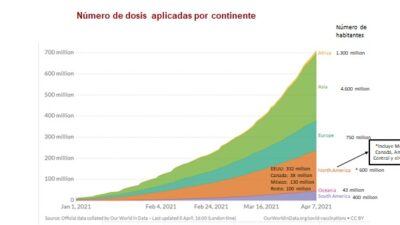
Still, as the vaccination process started up at the end of 2020, the new year brought hope for eradicating the pandemic. But that hope quickly gave way to the harsh reality of inequality and the resulting lack of access to the vaccine. Only five countries have had success with their vaccination programs: the United Arab Emirates (with 88% of the population vaccinated), Israel (61%), the United Kingdom (46.5%), Chile (36.7%) and the United States (32.1%).

Many nations, especially in Africa, have yet to start the vaccination process. And for most of those that have started, the process has been slow. That includes the European Union, even though the European Commission, representing 27 member countries, acquired its vaccine supply with a joint purchase, made well in advance to ensure better prices. The AstraZeneca, Pfizer/BioNTech and Johnson & Johnson laboratories, however, could not comply with the agreed-upon delivery dates, even as some of those countries found themselves threatened with a third wave of infections.

The situation in Latin America is even more serious. Only enough doses are available to vaccinate 5% of the population during a period of high infection rates and a rising death toll that have forced many countries in the region to reimpose confinement orders in the face of a collapse of its hospital services capabilities.

Global vaccine production is insufficient, and even that has been hoarded by developed countries that have bought up from two to three times more supply than is needed by their populations, an action that has come to be known as “vaccine nationalism.” What’s more, vaccine purchase does not necessarily equal vaccine availability, as has been the case in Europe and the cause of growing conflict there. These worrisome realities have not motivated developed countries to find a real solution to the need for increased supply. The proposals advanced to confront Covid-19, all of a voluntary character, have either encountered difficulties or failed outfight.

Proposals to Guarantee Equality in the Fight Against Covid-19

  1. The Covid-19 Vaccine Global Access Facility

On April 24, 2020, a new initiative was announced with the name of Access to Covid-19 Tools Accelerator(ACT-A) that calls for international cooperation to speed up the development and production of tests, treatments and vaccines against Covid-19 and to guarantee equitable access to them. The objective is for all nations, especially the poorest among them, to have the same access to testing for the coronavirus and to any treatment that may be discovered.
The most important pillar of this initiative is the Covid-19 Vaccine Global Access Facility (Covax), which seeks global financing with a view to equitable distribution. Co-led by the Vaccine Alliance (usually called Gavi for its previous name of Global Alliance for Vaccine and Immunization), with participation from the Bill and Melinda Gates Foundation, by the Coalition for Epidemic Preparedness Innovations (CEPI), and by the WHO, Covax was created to coordinate purchases at the international level in order to guarantee that the poorest countries are not left behind in the race to immunize 20% of the population in low- and medium-income nations. Its success would obviously depend on the delivery of vaccine doses and on financing to acquire them in the first place.

Currently, 190 countries make up Covax, of which some 90 have financed the development of a set of vaccines that once appeared to be quite promising. At first, the United States, China and Russia declined to participate in the initiative. The U.S. position under the Trump administration, as communicated by White House spokesperson Judd Deere in September 2020, was that “we will not be constrained by multilateral organizations influenced by the corrupt World Health Organization and China.”

On October 8, however, China chose to join the initiative at a time when it had three potential vaccines in Phase 3 clinical tests. The terms of its participation are not clear, but Hua Chunying, a spokesperson for China’s Foreign Relations Ministry, called it an important step toward assuring equitable distribution of vaccines, especially to developing nations.

Then, on January 21, one day after Joe Biden assumed the presidency, the U.S. government joined the mechanism. That about-face was followed on March 23 by a request from the Russian Direct Investment Fund to participate in Covax, with the understanding that it would give priority to supplying directly its own vaccine whose development it finances, Sputnik V, the most approved vaccine worldwide.

Despite good intentions, the mechanism has failed to live  up to expectations. The problem is not in the financing but rather in the scarcity of the vaccines themselves, and their hoarding by rich nations, according to Mexican Foreign Relations Secretary Marcelo Ebrard. Speaking before the U.N. Security Council on February 17 for all Latin American and Caribbean nations, Ebrard urged developed nations to avoid hoarding vaccines and instead speed up their delivery to the Covax mechanism. “Covax has been insufficient so far,” he said. “The scenario we wanted to avoid has unfortunately been confirmed. To date, vaccines have not been distributed through this international mechanism.”

  1. A Covid-19 Repository of Rights

On May 29, 2020, WHO Director General Tedros Adhanom Ghebreyesus and Costa Rican President Carlos Alvarado together launched a project that would create a sort of open-access databank of all technology relevant to Covid-19. Known as C-TAP (for Covid-19 Technology Access Pool), the mechanism allows for the centralization and constant updating of the aggregate of knowledge available for the prevention, diagnosis and treatment of the disease.

The project implies a temporary and voluntary suspension of intellectual property rights for material related to Covid-19 prevention and treatment. It is based on the concept that “vaccines, tests, diagnoses, and other key tools in the response to the coronavirus should be universally available as global public goods.”

The two leaders issued a joint “Call to Solidarity” in which they asked the WHO member states, individual governments, researchers, research and development funds, and civil society organizations to unite behind the initiative. Ignoring that call was the International Federation of Pharmaceutical Manufacturers & Associations (IFPMA), which vehemently opposed the project even though many of them receive public funding or advance payments for their research from the governments of rich countries.

Just hours after Tedros and Alvarado called for international solidarity, U.S. President Donald Trump pulled his country out of the WHO, a move that was harshly criticized by the international community, especially by the U.S.    allies in the European Union. In or out of the WHO, Trump opposed the C-TAP project, calling it a disincentive to innovation.

The rejection of the proposal and the difficulties looming over the Covax mechanism led Mustaqeem da Gama, South Africa’s representative before the World Trade Organization (WTO), to doubt whether poor countries can reach their full capacity while depending on the good will of the rich. “Philanthropy is fine up to a certain point,” he said, “but if we want to build capacity that goes beyond this particular pandemic . . . we need to invest resources locally, in technology transfer, in the ability to build.” Brajendra Navnit, India´s ambassador to the WTO, expressed in similar terms his belief that such initiatives as ACT-A and Covax are simply inadequate for the challenges we face.

  1. Temporary suspension of intellectual property rights at the WTO

A bolder scenario, proposed by India and South Africa in October 2020, to the  WTO’s Council on the Agreement on Trade-Related Aspects of Intellectual Property Rights (TRIPS in English, or ADPIC in Spanish), called for temporarily suspending all intellectual property rights related to the treatment and prevention of Covid-19 until there is an arrangement that will deliver the vaccine to the entire world population. Even though the TRIPS already includes some foreseeable exceptions, such as the fact that for reasons of public interest, a nation can ask a patent holder to authorize a third party to produce a medication or vaccine, the process is complex and cumbersome. The initiative considers that the only way to satisfy global demand for vaccine doses is to facilitate knowledge acquisition by those countries that have the capacity to produce medications both for internal consumptions and exportation, without being sanctioned by the WTO for violating intellectual property norms. The proposal also prioritizes a fast-track process not only in order to prevent unnecessary deaths and more quarantines, but also to stop new mutations of the coronavirus.

This intellectual property rights suspension proposal was last debated on March 10 and 11. More than 100 of the 164 WTO member nations support it, as do at least 350 non-governmental organizations, among them Doctors Without Borders and Amnesty International, as well as individual members of the European Parliament and the U.S. Congress. Opposing it, however, are the home countries of the powerful pharmaceutical industry, such as the United States, Japan, the European Union, the United Kingdom, Switzerland and Canada. Augmenting vaccine production, as the initiative seeks to do, would lower prices and reduce the ability of the pharmaceutical labs to impose conditions on governments, as they do now. They sign agreements with confidentiality clauses that omit the prices of doses, the delivery schedules and the guarantees that the sellers demand and the governments are forced to accept, given their collapsing health systems and profound economic crises.

This proposal has the backing of the African Union, an  intergovernmental policy and cooperation organization that brings together 56 countries on that continent. The union   sent out a communication last February 22 supporting the temporary suspension promoted by India and South Africa before the WTO, calling it the most effective way to tackle the “artificial scarcity” resulting from “vaccine nationalism and market-driven mechanisms.” It also endorsed WHO Director General Tedros’s declaration that “allowing the majority of the world’s population to not be vaccinated not only perpetuates unnecessary illness and death, as well as well as prolonging existing quarantines, but will also generate new mutations of the virus as it continues to spread among unprotected populations.” As Dr. Tedros points out, those variants may not be able to be controlled by the vaccines available. Renewing his call for developed countries to support India and South Africa’s proposal, he said, “If not now, when?”

China and Russia’s Vaccine Diplomacy

No other Latin American country has come close to the advancements made by Chile’s vaccination program. As of April 5, 36% of that country’s population has received at least one dose and 20.1% have completed the vaccination regimen. About 90% of its vaccination program has been carried out with a vaccine from China’s Sinovac laboratory, with the clinical testing of the vaccine having taken place in Chile itself, in coordination with the Catholic University of Chile. Also, at the end of March, that country’s president unveiled an agreement reached to obtain 2 million doses from the Chinese lab CanSino Biologics, which only requires one dose to reach immunization.

Sinovac has also signed a vaccine technology transfer  agreement with Brazil and is participating with the Butantan Institute of Sao Paulo in its manufacture. The supply of Chinese vaccines has led the Brazilian government to allow the Huawei company to participate in the bidding for the installation of 5G technology in Brazil, that had previously been vetoed because of pressure from the U.S. government.

As for the Russian vaccines, it became known in mid-March through a report by the Office of Governmental Affairs of the U.S. Department of Health and Human Services (HHS) that the Trump administration had in 2020 dissuaded Brazil from accepting the Russian Sputnik V vaccine and offered Panama technical assistance in exchange for refusing Cuban medications, those actions being intended to minimize threats from “ill-intentioned states.” Just days after the revelation, Brazil’s health ministry said it had gone ahead and signed an agreement to buy 10 million doses of the vaccination in question, though its authorization for emergency use is still being evaluated.

Argentina and Peru carried out clinical tests on vaccines from the Sinopharm laboratory, and both countries have received an initial delivery of a million doses, as part of an agreement for an eventual 30 million and 38 million doses, respectively. Argentina has also received Sputnik V vaccines manufactured by the Gamaleya lab, as well as Covishield vaccines from India’s Serum Institute, Oxford/AstraZeneca and CanSino Biologics. Peru’s vaccines have come from Pfizer and Sinopharm.

Mexico has claimed non-compliance by U.S. laboratories in the delivery of doses. Based on that problem, Mexican President Andrés Manuel López Obrador planned to ask Joe Biden, his U.S. counterpart, during a March 1 virtual meeting to share with Mexico part of the surplus vaccine supply stored in the United States. However, before the meeting even began, any possibility of the United States sharing its supply with its southern neighbor or any other country was ruled out, at least at this stage.

Days later, the Mexican government announced the purchase of 10 million doses of Sinovac and 12 million of Sinopharm. It has also signed an agreement with CanSino Biologics laboratory to package vaccines produced by that company, making Mexico the first country in the region to approve the CanSino Biologics vaccine, and the second overall, after China, to package it in the Drugmex plant in Querétaro. The Querétaro facility has the capacity to produce up to 85 million doses per year and during the current emergency will focus exclusively on packaging the vaccine in question, which requires only one dose. In should be noted as well that given the problematic conditions along the Mexico-U.S. border, the U.S. government has sent 2.5 million doses of the AstraZeneca vaccine to Mexico.

Save for Costa Rica, El Salvador, Panama and Cuba – none of which have approved any – all Latin American nations have approved the use of Russia’s Sputnik V vaccine, manufactured by the Gamaleya lab, or one of the four Chinese vaccines produced by CanSino, Sinopharm and Sinovac. The Cuban government chose to avoid falling into a war of vaccine purchases and instead decided to stake its fortunes on developing a home-grown product. It is the only Latin American country that has three vaccine projects going, two with the Finlay Vaccines Institute, and a third with the Centro de Ingeniería Genética y Biotecnología (CIGB) that is already in Phase 3 trials.

The Chinese and Russian vaccines are also being offered in Africa, Asia and even Europe, where some countries have distanced themselves from the joint purchasing strategy of the European Commission in favor of acquiring them on their own from those two nations.

This growing presence of China and Russia in the European vaccine market can be seen in the decision by some nations (Hungary, Serbia and Belarus) to opt for the vaccine produced by Sinopharm, or to approve the use of the Sputnik V vaccine (as is the case with Macedonia, Slovakia, the Czech Republic, Bosnia Herzegovina and Hungary). Recently, the Italian-Swiss  pharmaceutical Adienne Pharma & Biotech the Russian Direct Investment Fund, which holds the patent, signed an agreement to produce the Sputnik V vaccine in Italy.

Unlike the United States, which has been vaccinating its own population at a dizzying pace, China and Russia, and India as well, have been working on selling its vaccines, as well as donating them, around the world. A side effect of that approach is a low vaccination rate among their own populations. China may be able to afford that luxury, since it has the pandemic under control locally, but Russia, with only 5% of its population vaccinated, hasn’t been able to reduce its Covid-19 death rate to under 400 a day. And the drastic increase of infections and deaths in India during March has led to delays in the delivery of its vaccines to the Covax mechanism.

As the WHO’s Dr. Tedros points out, “If a country could be named that has contributed more than any other on Earth in terms of sharing vaccines, it would be India.” But it’s understandable, he says, that at a time of raising cases, the Asian nation would need to use more vaccine doses locally. A similar situation can be seen with the supply of active pharmaceuticals to be sent from the Chinese Sinovac lab to Brazil’s Butantan Institute for production of the CoronaVac vaccine in Brazil. The Chinese government made the decision to vaccinate massively the Chinese population living near the border with India because of the rising case rates in the latter nation. That has of course temporarily reduced its capacity to send the pharmaceutical inputs to Brazil.

Brazil, for its part, with 4,000 Covid-19 deaths per day, has lost control over the pandemic, which its denialist president, Jair Bolsonaro, has long underestimated. As a result, Brazil represents a growing threat for the entire continent of South America. The WHO issued a statement concluding that the sudden spike in demand has created a scarcity of supplies such as glass vials, plastic filters, and essential raw materials that is limiting vaccine production  and could pose a risk to the availability of routine non-Covid-related vaccinations of children. The WHO’s communiqué repeated its insistence that any solution to the pandemic must be global.

United Nations Secretary-General Antonio Gutierres, has used similar language in criticizing the excessive “stockpiling” of vaccine doses by developed countries. Gutierres has joined the chorus of global leaders calling for the sharing of the vaccines. His message is that humankind has the capacity to produce the weapons needed to defeat the pandemic if it will only act cooperatively with a common purpose.

However, the Western nations’ propensity to protect Big Pharma’s exorbitant profits impedes any cooperative global solution to this pandemic. Other vaccine-producing nations, such as China, Russia and India, consider their products to be “global public goods” and facilitate access to them as much as possible and use them to exercise their influence on the chessboard of geopolitics. That approach does not apply to the United States. Perhaps ironically, the strategic framework for the Western Hemisphere approved by the U.S. National Security Council under the Trump administration last August and aimed at limiting China and Russia’s influence in the region, has not been served by the “everyone in it for themselves” (as opposed to equitable) U.S. vaccine policy. On the contrary, it has sent Latin America into the arms of those supposedly “malignant” nations.