23 Aug 2021

Scientists identify new hominid species Homo longi, or “Dragon man”

Frank Gaglioti


The announcement of a new hominid species Homo longi, possibly a parallel and contemporaneous species of Homo sapiens, has made the story of human evolution even more complex.

The lead scientists were from the Center for Excellence in Life and Paleoenvironment, Chinese Academy of Sciences Professor Xijun Ni, Hebei GEO University in Shijiazhuang Professor Qiang Ji in China, along with an international team of scientists in the United Kingdom and Australia.

They published their findings on June 25 in the open access journal The Innovation , under the headline “Massive cranium from Harbin in northeastern China establishes a new Middle Pleistocene human lineage,” along with two other articles, “Late Middle Pleistocene Harbin cranium represents a new Homo species” and “Geochemical provenancing and direct dating of the Harbin archaic human cranium.”

The designation of a new species was made from a rare near-complete hominid skull in China with a remarkable history of discovery. The skull was originally found on a riverbank approximately 90 years ago by a Chinese man building a bridge across the Songhua River in Harbin near the North Korean border, when the area was under Japanese occupation. The Chinese man, an indentured labourer, hid the skull in a well and only revealed its location on his deathbed to his grandchildren. Unfortunately, he did not disclose the exact location of his find. This meant that the scientists were not able to find supplementary evidence from the skull’s geological surrounds. It is remarkable that the skull was rediscovered at all so a scientific analysis could take place.

Map shows the location where the skull of Homo Longi was found (Credit: The Innovation)

“We found our long-lost sister lineage. I said, ‘oh, my gosh!’ I could not believe that it was so well preserved. You can see all the details. It is a really amazing find!” Professor Ni told the British Broadcasting Corporation (BBC).

The skull is rather large, 23 centimetres long and more than 15 centimetres wide and with a braincase capacity of 1,420 millilitres, a volume comparable to modern humans. H. longi has almost square eye sockets, thick brow ridges, a wide mouth and oversized teeth. Only one molar was found intact. The individual is considered to have been fairly large and was about 50 years old.

“Homo longi is heavily built, very robust. It is hard to estimate the height, but the massive head should match a height higher than the average of modern humans,” said Ni.

The Harbin cranium in standard views (Credit: The Innovation)

Dating using strontium isotopes found in sediment deposits in the nasal cavity came up with an age between 138,000 and 309,000 years. Radioactive uranium dating established a minimum age of 146,000 years.

“Because of a long, difficult and confused history since the discovery, the information about the exact geographic origin and stratigraphical context of the cranium has been lost, impeding its accurate dating,” stated Key Laboratory of Virtual Geographic Environment Qingfeng Shao, a fellow researcher.

The skull has features that are a mixture of modern and more archaic humans. The large brain case resembles that of Homo sapiens, while its more archaic features, such as square eye sockets, thick brow ridges and large molar, ruled it out as a modern human.

Ni used a complex algorithm comparing 55 traits with 95 fossil human skulls. The analysis placed the “Dragon man” with other Chinese hominid fossil skulls from the Middle Pleistocene (130,000 to 789,000 years ago), including Dali, Jinniushan, Hualongdong and Xiahe fossils, as a sister species of Homo sapiens. These are fossils that have not been designated to any species.

A life-reconstruction of the Harbin cranium (Credit: The Innovation)

During the Middle Pleistocene, a number of human species coexisted, including Homo erectus, H. neanderthalensis (Neanderthals), H. heidelbergensis, Denisovans and H. sapiens.

Ni and his team consider that H. longi along with the other hominid species evolved as a result of a “founder event” as humans dispersed out of Africa.

According to Ni, “Founder event dispersal usually involves a small number of individuals that dispersed to a new locality through a long dispersal distance and established a new isolated founder population. ... These Homo lineages probably had a strong capability of dispersing for long distances but remained in relatively small and isolated populations.”

Such founder events enabled the evolution of numerous human species due to isolation in the Middle Pleistocene contemporaneous with H. sapiens.

“The beautifully preserved Chinese Harbin archaic human skull adds even more evidence that human evolution was not a simple evolutionary tree but a dense intertwined bush. We now know that there were as many as 10 different species of hominins at the same time as our own species emerged,” Mark Maslin, professor of earth system science at University College London, told the Guardian .

London’s Natural History Museum Professor Chris Stringer, who worked on the discovery, elaborated the skull’s significance in a comment to the BBC. “In terms of fossils in the last million years, this is one of the most important yet discovered. What you have here is a separate branch of humanity that is not on its way to becoming Homo sapiens (our species) but represents a long-separate lineage which evolved in the region for several hundred thousand years and eventually went extinct.”

The scientists’ analysis has proved to be fairly controversial, with some researchers asserting that the Dragon Man should be designated as a Denisovan.

Denisovans were identified from DNA extracted from a tiny fossilised finger bone found in the Denisova cave in Siberia in 2008. DNA analysis showed that Denisovans had interbred with modern humans, contributing five percent of the genome of modern Melanesians. They are considered a close relative of Neanderthals. Scientists estimate they lived 280,000 to 55,000 years ago. Because the Denisovan fossil evidence is so fragmentary, it has been designated a “genome in search of a fossil record.”

University of Cambridge Professor Marta Mirazon Lahr, a paleoanthropologist, pointed to the similarities between a fossil Tibetan jawbone and Dragon Man.

“The Denisovans are this fascinating mystery population from the past. There is a suggestion (from DNA evidence) that the jawbone found in the Tibetan Plateau might be a Denisovan. And now because the jawbone from Tibet and Dragon Man look like each other—now we might actually have the first face of the Denisovan,” Mirazon said.

The H. longi skull is considered to be very close to the Xiahe mandible that was discovered in 1980 in the Baishiya Karst cave located on the northeastern edge of the Tibetan Plateau in Xiahe County. An analysis of protein from the jawbone showed marked similarities with Denisovans. Researchers were not able to obtain DNA from the bone.

“I think it (Dragon Man) probably is a Denisovan,” Chris Stringer told Science magazine.

Other researchers think Ni and his team have acted prematurely and do not have enough evidence to designate Dragon Man as a new hominid species. They do not agree with the analysis that the Dragon Man was closely related to the Xiahe jawbone because there are no overlapping traits, as the Dragon Man skull lacks a mandible.

DNA studies show that modern humans are more closely related to Neanderthals than Denisovans. If the Xiahe jawbone is from a Denisovan, then Dragon Man’s closest relative is likely the Neanderthals, not H. sapiens.

Paleoanthropologist María Martinón-Torres at CENIEH, the national center for research on human evolution in Spain, speaking to the Science magazine, said: “It’s premature to name a new species, especially a fossil with no context, with contradictions in the data set.”

Ni and his team have not yet tried to extract DNA or protein from the skull or tooth but this is obviously important future work in order to resolve some of the controversy surrounding the Dragon Man.

A new tool for analysing and dating fossils is an examination of protein, especially collagen. This is a protein that is found in bones and other tissues and is able to endure over time more readily than DNA. In the Xiahe jawbone, all its DNA was degraded, but scientists were able to extract collagen, demonstrating the jaw was probably from a Denisovan.

Ni commented on the controversy surrounding their discovery. “The results will spark a lot of debate, and I am quite sure that a lot of people will disagree with us. But that is science, and it is because we disagree that science progresses.”

Surge in COVID deaths adds to pressure on Iran’s clerical regime

Jean Shaoul


Saturday saw Iran’s highest single-day COVID-19 death toll of the pandemic, as 684 people succumbed to the disease and more than 36,400 new cases were confirmed.

This latest surge in infections, driven by the highly contagious delta variant, is Iran's fifth, bringing the total number of cases to more than 4.5 million and deaths to 102,000, numbers even Iran’s health officials admit is an underestimate of the real toll. Worse is yet to come, with deputy health minister Iraj Harirchi acknowledging, “Infections and hospitalization numbers have stabilized in 14 provinces... but fatalities are expected to be on a relatively rising trajectory in coming days.”

One of the top doctors in Mashhad, Iran’s second largest city, declared that such is the gravity of the situation that no families in the city are without a patient or someone who has died in the pandemic. Without citing statistics, he said infections and deaths “are very high” and younger people are dying. Video clips of hospitals full of patients lying on the ground or in courtyards and long lines at pharmacies are circulating widely.

People wait for their turn to receive Covid-19 vaccine at a vaccination center in Iran Mall shopping center in Tehran, Iran, Monday, Aug. 9, 2021. So far only 3 million people out of Iran's population of 80 million have had both vaccine doses. (AP Photo/Vahid Salemi)

By far the worst affected country in the Middle East, Iran has suffered decades of US sanctions that have had a devastating impact on its health care system, preventing access to medicines and supplies to treat coronavirus cases, cancer patients, and other deadly diseases. But fraud, mismanagement and profiteering by Iran’s pharmaceutical companies are widespread, with multiple reports of the hoarding and stockpiling of vital medical supplies.

Like its counterparts internationally, the Iranian government has put profits before lives and shunned comprehensive measures that would ensure the closure of all non-essential work, schools and universities. Instead, it has imposed short-term, piecemeal measures that most recently have included a ban on private travel between provinces until August 27 and a five-day closure of government buildings, banks and non-essential shops that ended Saturday.

Only 5.4 million of Iran’s 85 million population have been fully vaccinated, with more than 16.3 million people awaiting their second jab. Vaccination centres are swamped with kilometre-long lines of people queuing for their jabs, largely imported from China, Russia, India, Cuba, Japan and via the global COVAX initiative. Some of these vaccines may be less effective against the delta variant. A study by the Statistics and Information Technology Management Center found that 2,072 Iranians out of the 2.85 million fully vaccinated at the time of the study had died, a far higher rate than elsewhere.

In the run-up to last June’s presidential elections, amid growing popular anger over the Rouhani government’s mismanagement of the economy, the pandemic and the lack of vaccines, the vaccination issue became deeply politicised. The so-called hardline or principalist faction around Iran’s Supreme Leader Ayatollah Ali Khamenei and the Islamic Revolutionary Guard Corps (IRGC), which answers directly to Khamenei, used it as an opportunity to attack the faction around President Hassan Rouhani who negotiated the nuclear accord with the Obama administration that was suspended by Trump, and to engineer the shoe-in of its favoured candidate, the conservative chief justice Ebrahim Raisi.

Strangled by US sanctions that made it impossible to import vaccines, Khamenei banned the import of vaccines from the US, Britain and France, denouncing them as untrustworthy and forcing the Iranian Red Crescent Society to refuse 150,000 vaccines donated by Pfizer. One of those who signed an open letter in January warning against importing western vaccines was Bahram Eynollahi, chosen by Raisi as his health minister.

While various state bodies vowed to produce domestic vaccines, the attempt has generally failed as only one million doses of COVIran Barekat have been administered after several unexplained delays to large-scale production. This has forced the authorities to partially reverse the ban on Western vaccines, manufactured outside the US and UK, with Raisi announcing that the import of 30 million doses has been finalised. A further 60 million doses are needed.

The pandemic has exacerbated Iran’s economic problems. The international Financial Action Task Force has blacklisted the country for failing to adopt financial transparency measures. Nearly a quarter of Iran’s young population are out of work, annual inflation is heading towards 50 percent and the currency has fallen from 40,000 rials to the dollar in 2017 to nearly 250,000 in Tehran’s unofficial exchange markets today. Around 40 percent of the population, more than 32 million people, live below the poverty line.

Workers and their families face frequent electricity shutoffs, while water supplies are erratic at best, forcing nearly 10 million people in several provinces, including Khuzestan, Markazi and Baluchestan, to abandon their homes and farms in the last eight years and move to the big cities in search of work, as well as leading to last month’s protests in the oil-rich province of Khuzestan.

Iran has also been hit by the forest fires that devastated the eastern Mediterranean region. Large swathes of the forest in the Zagros Mountains that stretch from southern Turkey to southwestern Iran have been destroyed, with the government making no serious efforts to battle the fire. The IRGC sent firefighting planes and helicopters to combat fires in forests near Antalya and Mersin in Turkey, causing outrage in Iran’s fire-devastated regions.

Contract workers in Iran’s state-owned oil industry have gone on strike in support of higher wages and an end to subcontracting that enables employers to evade paying the minimum wage and other benefits. Iran’s ruling elite is acutely conscious that the 1978 oil workers’ strike, amid a wave of mass protests by workers, students, and the urban poor, was key in toppling the blood-soaked US-backed regime of Shah Reza Pahlavi.

Iran has also seen a spate of attacks on its nuclear facilities and basic infrastructure, attributed to Israeli attacks and sabotage.

It is these conditions that brought Raisi to the presidency with the votes of just 30 percent of Iranians after the Guardian Council, at the behest of the Supreme Leader, disqualified all but seven of the 592 candidates. As well as his close links to the IRGC, whose supporters now control all branches of the state, Raisi has a track record of repression, most notably in 1988 when as Tehran’s deputy prosecutor he ordered the mass execution of thousands of political prisoners.

But all factions of the Iranian bourgeoisie view the resumption of the 2015 nuclear accord, known as the Joint Comprehensive Plan of Action (JCPOA), and the lifting of more than 1,600 sanctions that have targeted Iran’s oil exports as the way out of the economic, social and political crisis confronting the country. Tehran paused talks in Vienna, pending Raisi’s inauguration earlier this month. Raisi has expressed his support for the JCPOA, but the two sides remain far apart.

In addition to pressing Tehran to curtail its nuclear programme, Washington is reportedly seeking to wring further concessions on its conventional missile programme as well as demanding it surrenders its influence in the Middle East, bowing to the US quest for hegemony.

It is for this reason Tehran has largely refrained from inflammatory comments on the US debacle in neighbouring Afghanistan, hoping to take advantage of the collapse of Washington’s puppet regime at the bargaining table. While Raisi said the US withdrawal amounted to a “military defeat,” he pledged that Iran, which hosts around three million refugees, would seek to ensure stability in the country.

Tehran would encourage “all groups in Afghanistan to reach a national agreement.” He added, “While consciously monitoring developments in the country, Iran is committed to neighbourly relations,” implying Tehran would recognize a Taliban-led government in the country.

Similarly, Iran had sought to avoid escalating Israel’s covert maritime war on the country, aimed in part at least at torpedoing the resumption of the JCPOA. However, once the Wall Street Journal and the New York Times revealed Israel’s long-running attacks on Iranian vessels earlier this year, Iran had no option but to mount a naval offensive targeting merchant ships linked to Israel. This culminated in the drone “suicide” attack on MV Mercer Street that killed the Romanian captain and the British security officer three weeks ago.

In a bid to further boost his bargaining position, Raisi said, “Our foreign policy will not be limited to the nuclear deal… We will have interaction with the world. We will not tie the Iranian people’s interests to the nuclear deal,” indicating that he wants to further strengthen ties with Russia and China, in line with Tehran’s “look to the east” policy.

Chilean Morenoites promote illusions in Constitutional Convention

Mauricio Saavedra


Maria Rivera, leader of a group known as the International Workers Movement (MIT), the Chilean section of the Morenoite International Workers League-Fourth International (LIT-CI), is being promoted by the mainstream media under conditions of a volatile political and social situation.

Rivera, who won a seat in the Constitutional Convention running as an independent in the motley anti-party People’s List, has been given an extraordinary amount of airtime over the last two months, appearing in several debates and on talk shows, something that would have been unheard of prior to the anti-capitalist demonstrations in 2019 and the political chasm that it has laid bare.

Screenshot of Maria Rivera on “Mentiras Verdaderas” broadcast on La Red

She has appeared in a debate with right-wing and Social Party constituents on CHV Noticias, and she appeared in “Mentiras Verdaderas” of the television platform La Red. Rivera appeared on “Aquí se Debate” transmitted by CNN Chile. She gave a three-quarter-page interview to the arch-conservative El Mercurio, spoken to La Nación, the “left” El Ciudadano and several other periodicals.

Behind this media attention are the calculations of the Chilean bourgeoisie as it tries to rebuild legitimacy for the thoroughly discredited capitalist state through the establishment of the Constitutional Convention. New political forces are being created and others strengthened to deal with the electoral annihilation suffered by the old and deeply hated political caste that emerged in the transition from military to civilian rule three decades ago. All of the state institutions and the traditional political parties remain deeply unpopular.

This crisis of rule has only sharpened since the COVID-19 pandemic, as the coalition of right-wing parties of Sebastián Piñera’s administration have done next to nothing to alleviate the pandemic’s impact upon the working-class sectors amid the worst health, social and economic crisis in decades.

With the old center-left coalition—which included the Socialist Party, the Christian Democrats, the Radicals and the Party for Democracy—also in tatters, the bourgeoisie is actively promoting a gamut of so-called independents and non-party-aligned forces that emerged to hold a strong position in the constituent assembly. Many have become involved in politics for the first time as a result of the historic protests and the horrific crackdown that followed. Untested and relatively unknown, these elements are being sized up by the ruling class to determine which will be useful in ensnaring the working class back into parliamentary politics.

This is especially urgent because the working class has to date abstained in large numbers from the electoral process. There was an average turnout of only 22 percent in primaries held in July in the runup to this year’s presidential elections.

The Frente Amplio (FA), or Broad Front, formed an electoral alliance with the Stalinist Communist Party (PCCh) and advanced two candidates in the pseudo-left primaries. FA ran Gabriel Borić, former student leader and a deputy in the lower house, who received one million votes to the 692,862 obtained by Daniel Jadue, PCCh member and mayor of Recoleta, a community in Santiago.

Within the right wing, the Chile Vamos coalition held primaries on the same weekend in mid-July. Not one of the four candidates matched either Borić’s or Jadue’s votes. Sebastián Sichel, a relatively unknown who served as Piñera’s Minister for Social Development, came the closest winning 659,570 ballots.

The FA coalition is itself an unstable and ever-changing amalgam of middle-class radical, feminist, ecological and libertarian parties that emerged from the student rebellions of the last decade. Many of its student leaders have since integrated themselves into posts in academia, the union bureaucracy, the civil service and the legislature. Hence their significant vote among a more well-off constituency, predominantly made up of the young, professional middle class.

The primaries also demonstrated the Frente Amplio’s flagging support in poor and marginalized working-class sectors of Santiago. While the upper middle class eastern communities of Las Condes, Vitacura, Lo Barnechea registered between 40 and 55 percent participation in the July primaries, in the working-class Santiago communities with multidimensional poverty of up to 25 percent, less than a quarter voted. This class divide is repeated across the country.

This was also revealed in a publicity stunt that could have ended much worse than it did. At the end of July, Borić visited anti-government protesters languishing in the Santiago 1 penitentiary for up to 22 months either awaiting trial or serving hefty sentences. The pseudo-left presidential candidate intended to take advantage of growing demands for an amnesty for thousands of predominantly working-class prisoners detained on trumped up charges for participating in the 2019 protests.

Rather than being treated the hero, Borić was heckled and jeered by the relatives of the framed-up protesters. Undaunted, he proceeded inside the jail—without being invited—and was accosted before guards interceded and got him out. The following day a group calling themselves “Political Prisoners of the Revolt” leaked a communiqué rebuking the candidate.

“We prisoners were not informed of his visit. It seems to us a profound lack of respect that a person, who played an active part in the enactment of repressive laws and the hardening of penalties associated with the social outbreak, visited,” the prisoners declared.

“The aggression (Borić suffered) is a consequence of his actions and his political dilettantism that has led him to make pacts… that have led to the terrible living conditions that forced the people to rise up against so much injustice, among them: the Agreement for Peace, the anti-barricade law, anti-sabotage law.”

The student protests initiated in October 2019 over public transport fees became a mass anti-capitalist movement involving millions of students, youth, workers and the middle class against decades of extreme social inequality, police violence and, in particular, as a reaction to President Piñera’s authoritarian crackdown. A state of emergency was called for the first time since the military dictatorship, with armed forces patrolling the streets.

The protests became increasingly confrontational as the entire repressive apparatus was unleashed against workers and youth, with dozens killed or disappeared, hundreds suffering severe traumas, injuries and mutilations. Cases of beatings, sexual violence, rape and torture began to be committed with impunity—34 cases of which are today based on charges of “crimes against humanity” presented at the International Criminal Court by the crusading Judge Baltasar Garzón against Piñera and civilian and military authorities.

It was under these conditions that Borić and a number of other FA congressmen joined with the parliamentary extreme right, centre and left parties in an “Agreement for Social Peace and a New Constitution,” as a cynical means of diffusing the situation and sidetracking anti-capitalist sentiment into calls to reform the authoritarian charter. In the same breath, these pseudo-left forces also lent their support to a series of authoritarian bills criminalizing social protest.

The MIT lends its support to the capitalist state

Maria Rivera of the Morenoite MIT is a lawyer and founder of the defense group “Defensoría Popular” involved in providing legal defense to framed up prisoners from Maoist guerrilla outfits, such as the Movement of the Revolutionary Left (MIR) and the Manuel Rodríguez Patriotic Front (FPMR), as well as several anarchists. Previously a member of the MIR herself, Rivera was captured and tortured by the secret police before being exiled to Argentina in 1983. There she joined the Morenoite Movement for Socialism (MAS), then part of a popular front coalition with the Stalinist Communist Party of Argentina, before returning back to Chile in 1990 with the transition to civilian rule. She has remained in the LIT-CI ever since, forming the MIT as its Chilean section.

In other words, this is a person with a long track record in Latin American centrist and national opportunist politics that masquerades as socialism. Politicians of her stripe use revolutionary sounding phraseology and claim to belong to the Trotskyist Fourth International, but their historic function has been to tie the working class to various forms of petty-bourgeois and bourgeois nationalism.

In its 70 years of existence, the political tendency identified as Pabloism, along with its Latin American variant Morenoism, has sown illusions in bourgeois nationalist caudillos such as Juan Domingo Perón or bourgeois reformists of the Salvador Allende type. It has swung from backing petty-bourgeois Castroite guerrillaism to entering Popular Front-style coalitions with Stalinists, both with disastrous results. Its principal function is to keep the working class subordinated to bourgeois nationalism and the capitalist state in Latin America, which has led to bloody defeats time and again.

By participating in the Constitutional Convention, Rivera’s actions demonstrate that the Morenoites will once again attempt to tie the working class to the capitalist state. That is why her services are in demand.

In November 2019, the MIT claimed it was opposed to the Peace Accord, called for the downfall of the Piñera administration, made appeals to expropriate Chile’s wealthiest families and filed a suit against Piñera for crimes against humanity in the Chilean courts.

“We will not be in any constituent process while the prisons are filled with young people from the front line (of the social protests),” Rivera claimed. She called for the immediate release of all political prisoners, adding that the mission was “to defeat the Piñera government.”

A year later in a statement in the MIT press, Rivera was saying that “it is important to participate in the Constituent Process. … It is crucial to have candidates who represent the revolution and who refuse to sell false promises, but rather are clear in saying that the only way we can change our lives is through struggle.”

Six months later, in May of this year, the MIT was writing: “We are going to the Constituent Assembly to use this front more to fight, not to negotiate agreements with the same old (parties)…”

Yet to Resumen she said: “There is no possibility of negotiating with the traditional parties, as long as they do not adopt these demands; it makes no sense, at least I am not willing to negotiate the freedom of political prisoners…”

And to El Mercurio: “If we achieve that a popular majority makes a mobilization, a general strike, we can demand the Convention decree the release of political prisoners by the means discussed. For us this is a relentless fight. With this political prison I assure you that Chile’s problems will not begin to be solved.”

By the second day of the Constitutional Convention in July, Rivera’s incendiary proclamations vanished like a puff of smoke.

“I regret that in the speech (of president of the convention, Mapuche leader) Elisa Loncón did not remember to reject or repudiate the repression and to demand the freedom of political prisoners. … Otherwise it is a progressive speech; besides it talks about deepening democracy. The truth is that this state of things must be changed and not deepen the miserable democracy we have.”

For all the revolutionary bravura, the fact is that Rivera, the MIT and rest of the pseudo-left are as terrified as the entire capitalist state is to the unchartered waters they are entering. The call for the release of the prisoners of the social revolt is an attempt to dissipate a volatile situation that can easily erupt and that they may not be able to control.

Malaysian government implodes with COVID-19 epidemic out of control

Peter Symonds


Amid an accelerating COVID-19 epidemic and deteriorating economy, Malaysia’s Prime Minister Muhyiddin Yassin resigned last Monday. He was replaced on Friday by Ismail Sabri Yaakob, a member of the right-wing United Malays National Organisation and deputy prime minister in the previous government.

Malaysia's incoming Prime Minister Ismail Sabri Yaakob, left, receives documents from King Sultan Abdullah Sultan Ahmad Shah before taking the oath as the country's new leader at the National Palace in Kuala Lumpur. (Khirul Nizam Zanil/Malaysia's Department of Information via AP)

Ismail is the country’s third prime minister in less than four years. His installation will do nothing to end the political turmoil and instability that followed the defeat of the UMNO-led coalition at the 2018 national election. UMNO had been in power continuously since formal independence from Britain in 1957, through a gerrymander, autocratic methods of rule and domination of the media and state apparatus.

UMNO was defeated in 2018 by an electoral alliance between an opposition coalition led by Anwar Ibrahim and the United Malaysian Indigenous Party (Bersatu), a UMNO breakaway led by former Prime Minister Mahathir Mohamad. In 1998, amid the Asian financial crisis and bitter disagreements over economic policy, Mahathir sacked Anwar as finance minister, expelled him from UMNO then jailed him on trumped-up charges.

As part of the opportunist electoral arrangement between the two political enemies, Mahathir was installed as prime minister with Anwar due to take over in 2020. The political tensions within the ruling coalition, which were evident from the start, led to its collapse as the time for Anwar’s installation as prime minister approached.

In March 2020, Muhyiddin Yassin, who had served as interior minister, split from the coalition with most Bersatu members, and cobbled together a government with the support of UMNO and the Islamist Parti Islam se-Malaysia (PAS).

UMNO’s defeat in 2018 had been the result of widespread popular discontent over social inequality, entrenched corruption, and autocratic methods of rule. That opposition has only intensified as a result of the Muhyiddin government’s gross mishandling of the COVID-19 pandemic.

Malaysia now has one of the highest infection rates and deaths per capita in the world. Daily new infections have more than doubled since June when a partial lockdown was imposed and hit a record 23,564 last Friday, bringing the country’s total to over 1.5 million cases. The death toll stands at more than 13,000.

The pandemic was initially contained after the Muhyiddin government imposed a strict lockdown shortly after coming to power and by July 2020 announced that the country had zero cases. However, as restrictions were eased, the number of infections and deaths rapidly escalated out of control.

In January, Muhyiddin secured the support of the king for the declaration of a state of emergency. That was driven more by his government’s growing political crisis than the need to contain the spread of the virus. The measures that contained the pandemic between March and July last year had not required emergency powers.

By June, the daily number of cases hit 7,000, when Muhyiddin declared a “total lockdown” which was described by critics as “half-baked.” The government permitted 18 manufacturing centres to continue to operate, mainly at 60 percent capacity, transforming factories and workers’ crowded dormitories into major transmission sites for the virus. This dangerous situation was compounded by the lack of financial support, forcing workers to go to work just to survive, and an inadequate testing and contact tracing regime.

The failure of the government to contain the virus, together with the worsening economic and social crisis, has fueled opposition, including protests by young people and a strike last month by grossly overworked junior doctors. The hospital system has been overwhelmed by COVID cases and lacks beds, staff and equipment.

Al Jazeera reported last month: “Social media has been awash with harrowing photos and videos… One video showed bodies kept in what appeared to be a hospital storeroom while the neighbouring ward was so full, patients were sitting in wheelchairs or on benches dragged in from corridors outside. Others have shown people queueing for hours at COVID-19 assessment centres following positive tests and crowded and unsanitary conditions at government-run quarantine facilities.”

An Australian National University survey of South East Asian countries found that 49 percent of respondents in Malaysia were “very worried” they might fall ill or die. Some 41 percent were “very worried” the pandemic would affect their financial situation and their children’s education.

With the economy stagnating and expected to grow by only 3-4 percent this year, UMNO seized on the mounting political crisis to pull the plug on the coalition government. Muhyiddin was forced to step down after key UMNO figures left the ruling coalition. The installation of Ismail Sabri Yaakob, a longstanding UMNO member and defence minister in the previous government, effectively puts UMNO back in power.

Bridget Welsh, a South East Asia expert with Malaysia’s Nottingham University, told the Australian Broadcasting Corporation (ABC): “Malaysia has a new PM, with essentially the old politics and players. It’s back to the past: UMNO is now in PM seat, returning to power through elite bargains despite being booted out for corruption in 2018.”

Ismail is a particularly zealous proponent of UMNO’s racialist politics of favouring ethnic Malays, who constitute about 60 percent of the country’s population, over its large ethnic Chinese and Indian minorities. In 2019, while UMNO was in opposition, he reportedly called on the Muslim Malays to wage a “jihad” against the ruling coalition and accused it of being anti-Islam.

Ismail’s record of ethnic Malay chauvinism is a warning that the new government will resort to the stock-in-trade of UMNO politicians—divisive racialism and police-state methods—to deal with the widespread popular opposition that will inevitably develop.

His government is reliant on a disparate coalition for its slim parliamentary majority and will be seen by much of the population as simply a continuation of the previous Muhyiddin administration that failed to control the pandemic.

Sri Lankan president reshuffles cabinet amid sharpening political crisis

Pradeep Ramanayake


Last Monday, Sri Lankan President Gotabhaya Rajapakse announced six changes to his cabinet, appointing new heads to the foreign affairs, health, education, transport, mass media and power ministries. A new “development coordination and supervision” ministry was also created.

Sri Lankan President Gotabaya Rajapaksa, attends an event to mark the anniversary of country’s independence from British colonial rule [Credit: AP Photo/Eranga Jayawardena]

Rajapakse’s sudden cabinet reshuffle came amid an escalating economic and political crisis, exacerbated by the COVID-19 pandemic, and intensifying pressure from the US and India that Colombo distance itself from China.

The most significant change was the appointment of Professor G.L. Peiris, who previously headed the education ministry and is now Sri Lanka’s external affairs minister. Peiris replaced Dinesh Gunawardena who becomes the education minister.

Peiris, who is chairperson of the ruling Sri Lanka Podujana Peramuna, has held key ministerial portfolios in successive regimes since 1994, including as foreign minister in the government of former President Mahinda Rajapakse. His latest appointment is in line with backroom moves by senior government leaders to appease Washington.

According to an August 15 Sunday Times column, Peiris attended a dinner hosted by the US ambassador Alaina B. Teplitz at her Colombo official residence five days ahead of his new appointment. Finance minister Basil Rajapakse, one of the president’s brothers, reportedly “encouraged” Peiris’s attendance at the dinner. The only other individual invited was parliamentarian M. A. Sumanthiran, a spokesman for the pro-US Tamil National Alliance (TNA).

While no details have been revealed about the dinner discussions, the Times said it focused on a “political solution to the ethnic conflict.” This is diplomatic language for “the devolution of power” to the Tamil elite in the North and East in Sri Lanka and is used by the US to enlist the support of the Tamil parties for Washington’s buildup against China.

In early May, the Times reported that Basil Rajapakse had held “informal” meetings with the State Department officials during a US visit for medical treatment. The newspaper noted that he met with Ambassador Teplitz before leaving for the US. Citing government sources, the Times said that he met with Lalith Chandradasa, Sri Lanka’s consul general in Los Angeles, and travelled with him to Washington for the State Department talks.

The visit, according to the Times, was “to explore opportunities to improve relations with the US and to convey the government’s stated position that it takes a neutral stand on international issues.” The perception in Washington is that Colombo “has tilted very heavily in favour of China,” the newspaper noted.

President Rajapakse has also reportedly met with two senior US embassy officials on separate occasions. No details, however, have been revealed about their discussions.

The US and India, Washington’s main regional partner in its military preparations against China, are hostile to the Rajapakse regime’s relations with Beijing. The COVID-19 pandemic has battered the Sri Lankan economy and seen the cash-strapped Colombo government turn to China for increased investments and loans.

In April, Colombo opened the China-funded Colombo Port City (CPC), which is a significant component of its Belt and Road Initiative (BRI). The BRI is part of Beijing’s geo-strategic plan to ensure the free movement of its imports and exports via the Indian Ocean and Central Asia. It is in response to the US-led efforts to militarily encircle China.

Washington’s attempts to pressure the Rajapakse regime to distance itself from Beijing are also being pursued in the UN Human Rights Council (UNHRC). In March, the US, UK and other major powers passed a UNHRC resolution for an investigation into war crimes and human rights violations committed during the final years of Colombo’s war against the separatist Liberation Tigers of Tamil Eelam (LTTE). The war, which ended with LTTE’s defeat in May 2009, saw the killing of tens of thousands of Tamil civilians and hundreds of others, including LTTE leaders, who surrendered to the military.

The resolution empowered the Office of the High Commissioner for Human Rights to “consolidate, analyze and preserve information and evidence” for “relevant judicial proceedings.” The resolution also called for the involvement of Tamil parties in the “reconciliation process.”

In her report to the UNHRC, High Commissioner Michel Bachelet called for a war crimes investigation by UNHRC member states and the imposition of targeted sanctions on those guilty of war crimes.

Washington has no interest in defending the rights of Sri Lankan Tamils. The US supported Colombo’s war and former President Mahinda Rajapakse’s authoritarian regime and only began raising human rights issues when Beijing emerged as the main provider of financial assistance and military hardware for Colombo.

The US sponsored various UNHRC resolutions to force Mahinda Rajapakse to break relations with China. When these failed to produce a shift, Washington, backed by New Delhi, orchestrated a regime-change operation replacing Mahinda Rajapakse with pro-US Maithripala Sirisena as president in January 2015. The TNA fully endorsed the political shift.

President Gotabhaya Rajapakse’s appointment of Gunawardena as education minister is highly significant and occurs as almost 250,000 teachers and principals continue their now seven-week online learning strike. Sri Lankan media outlets claim that the new minister will be able to deal with the striking teachers. President Rajapakse has repeatedly declared that his administration confronts a major economic crisis and cannot grant the teachers’ demands.

The removal of Pavithra Wanniarachchi as health minister and his replacement with Keheliya Rambukwella is an attempt to find a scapegoat for the government’s catastrophic response to COVID-19. While the opposition parties and the media have denounced Wanniarachchi, the escalating infections, deaths and collapsing health system are the direct responsibility of the Rajapakse regime and the entire ruling class.

Last week’s cabinet reshuffle was also occasion for the Rajapakse clan to further expand and consolidate its rule. Namal Rajapakse—President Rajapakse’s nephew and Prime Minister Mahinda Rajapakse’s son—was made the minister for coordination and supervision, a newly created position. The appointment is in addition to him being the sports minister and holding other state ministerial portfolios.

These cabinet changes will not resolve the deepening crisis of the Rajapakse regime or satisfy Washington, which is demanding Colombo break its ties with Beijing and fully embraces its war plans against China.

Australian governments proclaim need to “live with the virus” amid record infections

Oscar Grenfell


The more Australia’s COVID crisis spirals out of control, with increasing infections, hospitalisations and deaths, the more vehemently are state and federal government leaders insisting that the population must “live with the virus” and its continuing spread.

Long lines of cars at inner-west Sydney COVID-19 testing station [Photo: WSWS Media]

This policy, identical to that being advanced by governments in Britain, the US and elsewhere, is a declaration that working people must accept death and illness on a mass scale in the interests of corporate profit.

Over the past three days, as daily Australian infections have approached 1,000 for the first time since the pandemic began, Australian Prime Minister Scott Morrison and New South Wales (NSW) Premier Gladys Berejiklian have stepped up a campaign for the imminent lifting of safety restrictions and an end to lockdowns for all time.

Both have described a “roadmap” to “reopening” the country as an unbreakable “pact with the Australian people.” In reality, it was worked out behind closed doors, without any public discussion, and was adopted in July by the national cabinet, composed of the state and territory leaders, most of them from Labor, and the federal Liberal-National Coalition government, in meetings whose content remains secret.

According to the “roadmap,” lockdowns will become “highly unlikely” once 70 percent of the adult population is fully vaccinated. In phase three, triggered by an 80 percent rate, COVID will be treated like the flu in preparation for a “return to normal.” The modelling upon which the plan is based acknowledges that it will result in mass infections, as high as the hundreds of thousands, along with thousands of hospitalisations and deaths.

This was all known when the state and territory leaders signed off on the program.

As the current outbreak has worsened, however, some Labor premiers and chief ministers have made mealy-mouthed criticisms of the Berejiklian government, which has allowed the unchecked spread of Delta in Sydney, the country’s most populous city. They have warned that a full reopening, with case numbers rapidly increasing, could result in a health catastrophe.

The comments are motivated, above all, by fear of the growing opposition among working people to the subordination of their health to corporate profit interests.

In response, Morrison has given his most explicit statements outlining the federal government's homicidal “herd immunity” policy. In a press conference this morning, he declared that “our goal is to live with the virus, not to live in fear of it.” It was necessary for the population to “adjust its mindset,” and to recognise that infection numbers would “not be the issue once we get above 70 percent” vaccination.

Morrison warned against those who would “seek to undermine the national plan,” as well as those who “may fear it and have concerns.’ “Our goal must be to help people overcome these fears and not give in to them,” he said. They could not be allowed to obstruct the immediate lifting of lockdowns once the 70 percent target was reached.

These comments are nothing short of a declaration of war on all workers and youth seeking to protect their health and lives, from nurses and doctors, to factory workers, postal staff, teachers and students. Already, there is mass opposition to the criminally-negligent response to the Sydney outbreak, widely-reflected on social media.

Morrison and the other government leaders know that this will grow. The prime minister today said that infections would increase substantially, once the “roadmap” began to be implemented. He and federal Health Minister Greg Hunt chillingly stated that they had ensured intensive care capacity would be sufficient to cope with the surge in hospitalisations that would result.

Virtually identical statements have been made each day by Berejiklian and other representatives of the NSW state government. When NSW cases exceeded 800 on Saturday, the first time that benchmark had been reached by any Australian jurisdiction, Berejiklian said that of greater significance was the uptick in the rate of vaccination, because this was the path to “freedom.”

The government is predicting that vaccination targets for the lifting of the lockdown will be met in early October. It has dispensed with any pretence of seeking to curb transmission, much less end the present outbreak, which Berejiklian and other ministers now state is impossible.

In the space of the past three days, almost 2,500 infections have been reported, the vast majority in the working-class areas of western and south-west Sydney. The bulk of the cases are being reported each day as unlinked, meaning the authorities do not know the source of transmission, while most of the COVID-infected individuals have been in the community for all or part of their contagious period.

Outbreaks are also occurring in regional and rural areas, including in the western NSW town of Wilcannia, one of the poorest in the state, with a population that is primarily indigenous and at high-risk of succumbing to the disease.

The state is on track to exceed one thousand daily infections by the end of the month, while some epidemiologists have warned of cases reaching three to four thousand in September. On July 31, there had been 3,190 infections since the beginning of the outbreak on June 16. Less than a month later, the figure now stands at 13,022.

Under these conditions, the state government is foreshadowing the lifting of some of the inadequate restrictions next month, based on the arbitrary figure of six million vaccine doses having been administered. This would be followed by the beginning of stage two of the “roadmap” in October, including a possible full resumption of face-to-face teaching when term four begins.

Year 12 students outside of 12 local government areas in the west and south-west of Sydney are already permitted to attend school for two hours per day, four days a week, in preparation for a broader reopening.

As has been the case internationally, a complete resumption of in-person teaching threatens a health catastrophe. Over the weekend alone, 204 children under the age of nine contracted the virus in NSW, along with 276 aged between ten and nineteen. Throughout the outbreak, children and teenagers have accounted for at least a third of all cases. There is not yet an approved vaccination for children, meaning they would be completely unprotected in the event of a return to classroom learning.

Berejikian has blithely dismissed the dangers. This morning, she was asked by a journalist if her government had factored the situation in Israel into its reopening plans. There, almost 80 percent of the population is inoculated, but a reopening has resulted in a surge of infections, which stand above 6,000 per day in a country whose population size is comparable to NSW. Hospitalisations are also rising. The premier brushed the question aside, and later insisted that there was no ceiling of infection numbers that would overwhelm the state’s health system.

Hospitalisations are already increasing rapidly. At the end of July, there were 203 COVID patients in NSW hospitals, 53 in intensive care. The number has grown to 586 COVID-19 cases admitted to hospital, with 100 people in intensive care, 32 of them requiring ventilation. All of Sydney’s major hospitals are reporting intense strains on capacity, with over a thousand staff in the city isolating at any given time due to potential COVID exposure.

A health worker at Westmead Hospital, one of the largest in the country, informed the WSWS that as of today, the facility has 166 COVID patients, accounting for 17 percent of available bed space. The hospital is treating 41 pregnant women, eight of them as inpatients, who are COVID-positive.

As case numbers continue to rise, this is what the ruling elite has in store for millions of workers and young people. That is why the police and the military are being brought to the centre stage. A major state mobilisation is underway against residents of the working-class suburbs of western and south-western Sydney where conditions increasingly resemble martial law.

Anti-lockdown rallies were met with a massive show of police force over the weekend, including a complete shutdown of the central business district. The target of this operation was not the handful of right-wing agitators spouting similar talking points to Berejiklian and Morrison. Rather, the events were seized upon as a dry-run for a police confrontation with a movement of the working-class.

21 Aug 2021

The Crimes of the West in Afghanistan and the Suffering That Remains

Fabian Scheidler


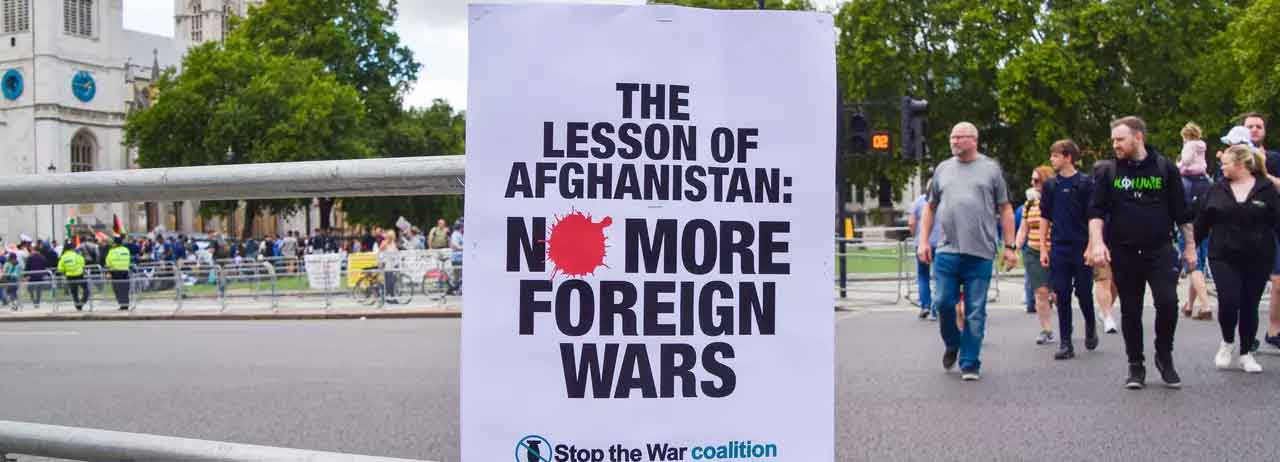
As in Iraq, as in Libya, as in Mali. It is time to finally bury the doctrine of the so-called “responsibility to protect”, which was coined at the time of the beginning of the Afghan war, and to brand it as what it was from the beginning: a neocolonial project.

war afghanistan

The headless flight of NATO troops from Afghanistan and the havoc they leave behind are only the last chapter in a devastating story that began in October 2001. At that time, the US government, supported by allies including the German administration, announced that the terror attacks of September 11 should be answered by a war in Afghanistan. None of the assassins were Afghan. And the Taliban government at the time even offered the US to extradite Osama bin Laden—an offer the US did not even respond to. Virtually no word was said about the country of origin of 15 of the 19 terrorists—Saudi Arabia. On the contrary: members of the Bin Laden family were flown out of the USA in a night-and-fog operation so that they could not be interrogated. After classified parts of the 9/11 commission report were released in 2016, it emerged that high-ranking members of the Saudi embassy in Washington had been in contact with the terrorists before the attacks. Consequences? None. They are our allies.

So Afghanistan was attacked. Already during the Cold War, the US and Saudi Arabia had supported Islamists there on a large scale against the Soviet Union. Now the Islamist warlords of the “Northern Alliance” were the new allies. The German Armed Forces flanked the US troops. While their deployment was shrouded in the narrative of a “humanitarian intervention”, the Bundeswehr in fact worked hand in hand with the warlords, as investigative journalist Marc Thörner reported. (He was the only German reporter on site who was not embedded in the military.) Thörner predicted that the complicity of the NATO troops in the war crimes and the “counterinsurgency methods from the colonial era” would turn the population more and more against the West and strengthen fundamentalism. We see the result today: the triumph of the Taliban across the country.

The US troops as well as the Bundeswehr and other allies not only supported war criminals on the ground, they also committed serious crimes themselves. None of the perpetrators was ever convicted in court for this. Take Kunduz, for example: in September 2009 the Bundeswehr bombed a mainly civilian trek here, with over one hundred dead or seriously injured, including children. The proceedings against those primarily responsible, Colonel Georg Klein and Defense Minister Jung (CDU), ended with acquittals. In 2010, WikiLeaks published 76,000 previously classified documents about the war, containing references to hundreds of other war crimes. But instead of investigating these cases and bringing the guilty to justice, the messenger, Julian Assange, was pursued. Today he is sitting, critically ill, in a British high-security prison and has to fear being extradited to the USA, where he is threatened with life imprisonment under inhumane conditions. The UN Special Rapporteur on Torture, Nils Melzer, came to the conclusion, after an in-depth investigation of the case, that Assange had been and is systematically tortured by Western authorities. Most of the big media, which got a lot of attention and made money with the leaks of their journalist colleague, have now largely dropped him. And with it the defense of the freedom of the press, which is especially crucial when it comes to questions of war and peace. So Assange is on trial—and not the war criminals.

All those who warned against the Afghanistan war were ridiculed from the start as naïve pacifists or even accused of evading humanitarian responsibility and thus playing into the hands of the Islamists. But today it is finally clear: the alleged humanitarian operation only plunged the country further into misery and strengthened the Islamists. As in Iraq, as in Libya, as in Mali. It is time to finally bury the doctrine of the so-called “responsibility to protect”, which was coined at the time of the beginning of the Afghan war, and to brand it as what it was from the beginning: a neocolonial project.

Instead of military interventions, one could, for example, begin to drain the terror sponsor Saudi Arabia financially and stop all arms exports there. It would also be worthwhile to advance the project of a Conference for Security and Cooperation in the Middle East, which—based on the model of the détente policy of the OSCE in Cold War Europe—could be working on a new civil security architecture for the region.

The Afghanistan debacle should also be an occasion to question the enormous expansion of Western military budgets in recent years, which was justified not least of all by deployments abroad. German military spending went up from € 40 billion to € 52 billion from 2015 to 2020, an increase of a whopping 30 percent. The US military budget is at $ 778 billion, about twelve times of what Russia spends for its army. This money is urgently needed for tasks that really move the world forward, especially for countering the climate urgency and for a socio-ecological transition. The US military not only has a gloomy balance sheet in terms of peace policy, but is also THE largest greenhouse gas emitter on Earth. It is time for a slimming cure.