24 Aug 2021

Delta cases mount in New Zealand

Tom Peters


Since New Zealand entered a “level four” lockdown, the strictest level, on August 18 after the discovery of one case of the Delta variant of COVID-19, testing has identified a total of 148 active cases in the community, as of today. Of those, 137 cases are in Auckland, NZ’s largest city, and 11 in the capital, Wellington.

A COVID-19 testing centre in Wellington, May 2020. (Image credit: Wikimedia Commons)

On Monday, Labour Party Prime Minister Jacinda Ardern extended the lockdown in Auckland until September 1 and the rest of the country until August 28. It could be extended further.

The outbreak shows the extraordinary speed with which the highly infectious variant can spread. Officials believe that the outbreak stems from a single person who returned to New Zealand from Sydney, Australia, on August 7. Auckland’s Crowne Plaza Hotel, one of several hotels serving as managed isolation and quarantine (MIQ) facilities for returned travelers, is being treated as a possible source for the outbreak.

The outbreak highlights the danger of using hotels in central locations, rather than properly-equipped facilities outside of the cities.

There will undoubtedly be more cases. The Ministry of Health has identified 421 locations where positive cases visited while infectious, including cafes, nightclubs, schools, universities, churches, retail outlets and the SkyCity Casino. More than 15,700 people have been identified as being potentially exposed to the virus.

Although New Zealand has pursued stricter lockdowns than many other countries and has not experienced mass deaths, the country remains highly vulnerable. The government’s vaccination campaign has only begun to ramp up in recent weeks. Just over 23 percent of the population is fully vaccinated and 59 percent have not had their first dose. At present, only people aged over 40 and those aged 12 to 15 are eligible for vaccination. The 30 to 40 age bracket will become eligible tomorrow and those aged 15 to 30 on September 1.

The majority of the positive cases are from Auckland’s Samoan community, who are disproportionately poor and more likely to suffer from health conditions such as diabetes, and to live in overcrowded conditions. Pacific Islanders also have lower rates of vaccination.

Significant numbers of essential workers, who are working during the lockdown, are unvaccinated, including in supermarkets, at the ports and in food processing. Newshub reported on August 20 that 3,000 hospital workers in Auckland had not received a single dose, despite being designated as high risk and a priority.

About 150 staff at the North Shore Hospital were told to self-isolate, after possible exposure to the virus. However, the New Zealand Nurses Organisation told Radio NZ that some nurses in some areas of Auckland have been called to work to fill staffing shortages, despite being identified as close contacts of positive cases and thus potentially placing hospital workers and patients at risk.

An uncontrolled outbreak would quickly overwhelm the public healthcare system due to decades of underfunding. According to the New Zealand Herald, there are just 284 fully staffed ICU beds across public hospitals. Dr Craig Carr, from the Australia New Zealand Intensive Care Society, told the newspaper on August 18 that although more medical equipment had been procured over the past 18 months, “we actually have very few extra staff, and in some instances, we’ve got fewer staff.”

More than 30,000 healthcare workers held a nationwide strike in 2018 and another strike in June 2021 to demand better pay and safe staffing levels. The Labour government, while refusing to address the staffing issue, is relying on the trade unions to enforce austerity, including a pay freeze across the entire public sector.

On Monday, Ardern told the media that “for now” the government remains committed to an “elimination strategy,” which means using lockdowns to stamp out the virus wherever cases are detected. She rejected the approach of Australian Prime Minister Scott Morrison, who is insisting that the population must “live with this virus,” i.e., tolerate its continuing spread. This policy has led to an ever-expanding outbreak, along with hospitalisations and deaths, in New South Wales.

Governments in many parts of the world have adopted the policy of “living with” COVID-19, which means ordering schools to open so that people can return to work and corporations resume making profits, while the virus continues to run rampant, killing hundreds of thousands more people.

New Zealand epidemiologist Michael Baker stated during the panel discussion hosted by the World Socialist Web Site yesterday that he expected New Zealand to “squash” the Delta outbreak “in the next week or two.” He described the UK government’s complete abandonment of restrictions, by contrast, as an “almost barbaric experiment on the British people.”

Baker and other experts stressed that vaccination alone is not enough to stop the pandemic. They outlined the public health measures that are necessary to eliminate the coronavirus nationally, and to eradicate it worldwide.

The Ardern government, however, has begun talking about modifying its elimination approach. Speaking on TVNZ on Sunday, COVID-19 Response Minister Chris Hipkins said “At some point we will have to start to be more open in the future… some of the measures that we are using, like lockdowns, like a very, very constrained border, you can’t sustain those forever… we can’t sustain doing level four lockdowns every time there’s a community [outbreak].”

Without going into detail, Hipkins said “different settings at the border” would bring a “different risk profile.” The government has already said it plans to ease isolation requirements for international travelers from some countries next year.

The government is facing pressure from big business, reflected in the corporate media. Right-wing radio host Mike Hosking declared that the lockdown was costing “billions” and declared: “is elimination real? And how long before they put the white flag up on that?”

Columnist Matthew Hooton wrote in the New Zealand Herald that almost every country “has accepted that Covid is here to stay,” and basically implied that New Zealand could do the same if the country had more ICU capacity and vaccinations.

Stuff columnist Andrea Vance similarly complained: “The rest of the world is embracing its post-pandemic future while New Zealand enters a March 2020 time warp.” She blamed the lockdown on the government’s slow rollout of the Pfizer vaccine and rundown hospitals.

None of these commentators mentioned the horrific consequences for countries like the UK and the US, whose governments have “embraced” living with the virus, in order to fully resume the extraction of profits from the working class. The reopening of schools and workplaces has produced a resurgence in hospitalisations and deaths, including among children. The working class internationally must oppose these murderous policies.

Sri Lankan president reluctantly imposes pandemic lockdown

K. Ratnayake


In a sudden “special address” on Friday evening, Sri Lankan President Gotabhaya Rajapakse declared a 10-day limited national lockdown in response to rising coronavirus infections and deaths.

Rajapakse’s speech came after he had consistently rejected repeated appeals by independent medical experts for the imposition of stringent restrictions to save the population from rising numbers of Delta variant infections.

Gotabaya Rajapaksa (AP Photo/Eranga Jayawardena)

Rajapakse made clear that he was reluctantly imposing the lockdown because the national economy was in tatters. He warned that the population had to be “prepared to make more sacrifices” if longer lockdowns were required.

Between August 1 and 23, Sri Lanka’s official number of coronavirus infections increased by 85,516 and the death toll climbed by 2,838. These numbers are relentlessly rising in line with climbing infections and deaths globally from the Delta variant.

Colombo fueled the spread of the virus by removing remaining travel restrictions on July 5 and on August 2 ordering all state employees working from home to return to their usual workplaces. Sri Lanka’s rundown health system is now unable to cope with the overflowing numbers of coronavirus patients.

Rajapakse’s decision on Friday to announce a limited national lockdown is not out of sympathy for people but in response to developing working-class unrest which is escalating towards a showdown with the government. Opposition to the government has increased in line with reports of rising infections and deaths in various workplaces. Last Wednesday, thousands of health workers protested demanding an immediate lockdown.

Fearing that the situation would escalate out of control, several trade unions in the health, railways, banks, education, postal, electricity and private sectors issued a joint “ultimatum” demanding the president implement a “scientific lockdown.” If the government failed to heed this demand, the unions said they would direct their members to stay at home.

These unions, however, had previously endorsed “reopening” of the economy in mid-April last year and supported the continued operations of big business. They only began calling for the imposition of increased restrictions and COVID-19 health and safety measures two weeks ago.

By their silence, they also in effect backed the Rajapakse government’s draconian Essential Public Services Act that has banned strikes in almost all state institutions. Their lockdown call is aimed at deflecting the mounting anger among workers and saving big business and the Rajapakse regime.

Rajapakse did not utter a word of concern about the rising death toll or health catastrophe, offer condolences to bereaved families who have lost loved ones, or sympathise with those undergoing immense hardships. Instead, he arrogantly posed as a saviour of those impacted by COVID-19 claiming to be doing everything to protect them.

In line with the daily mantras uttered by governments around the world, Rajapakse declared that the people “have to understand the reality,” that all countries “are adapting to the method of ‘New Normal’” and people have to “live with the virus.” In other words, workers must keep toiling and ensure that big business continues boosting their profits.

“The only solution is vaccination,” he said, while falsely claiming that this was “the accepted opinion of the World Health Organisation, the majority of medical experts and… the global standardized methodology.”

Rajapakse said that the government was importing enough vaccines to ensure 100 percent of those over 30 years would be vaccinated by 10 September. After that health authorities would begin giving doses to all those between 30 and 18 years of age.

With this development, the number of patients and the number of deaths will decrease,” he declared. Rajapakse has since admitted that so far only 43 percent of those vaccinated have received both doses.

While vaccination is an important tool to combat the COVID-19 it cannot by itself eradicate the pandemic anywhere in the world. The working class everywhere needs a program to eradicate this deadly virus.

Much of Rajapakse’s 16-minute speech consisted of explaining the economic crisis facing the regime and the capitalist class and why lockdowns and restrictions were anathema.

Sri Lanka, he said, last year faced its lowest economic growth since independence in 1948—$US5 billion in foreign revenue generated by the apparel sector was “gravely affected;” tourism, worth $4.5 billion annually had collapsed; and local and foreign investment had been lost.

Medium and small business, which contributes 50 percent to the gross domestic product, were also affected, he added. Around 4.5 million people in tourism, daily wage earners and self-employed had lost their sources of income.

Rajapakse then cynically declared that the government had not “abdicated its responsibility,” but provided relief payments of 5,000 rupees ($25) and spent a total of 30 billion rupees. These sums, which were paid three times last year to a limited number of families, can only be described starvation payments. Desperate families were forced to pawn whatever valuables they had.

He then shamelessly insisted that families forced into quarantine had been paid 10,000 rupees for two weeks supplies of essentials, an utterly inadequate amount for families attempting to deal with the health crisis.

Revealingly, Rajapakse said the government has “not taken any action to reduce the salaries or curtail the allowances of more than 1.4 million public servants.” The fact the president mentioned wage and allowance cuts indicates that was—and is—under consideration.

In line with placing the burden of the crisis on the masses, the government is increasing the price of essentials, such as rice, flour, lentils, potatoes, dry fish, and fuel, including gas. Shortages of essentials have been reported.

The president carefully avoided any reference to the government’s lavish concessions to big business and investors. The providing cheap credit, tax concessions, and allowing them to cut wages and jobs, generated huge profits. Last year, Sri Lanka’s nine largest companies earned 80 billion rupees in profit with the prospect of higher profits this year.

Rajapakse said that the government had continued paying an average of $4 billion a year in foreign debt repayments, maintaining its commitments to international financial institutions.

Revealing why his government was reluctant to impose strict lockdown measures, Rajapakse said: “A large number of orders have been received by the apparel industry in the export sector. If we are not able to deliver these orders on time, we may lose a large amount of foreign exchange.”

Rajapakse is desperately attempting to defend the profit interests of not only the apparel industry but the ruling elite and capitalist system as a whole by placing profits ahead of human lives.

Ending his speech, Rajapakse made an appeal for national unity and issued a veiled threat. “This situation is not a rivalry or conflict between different ideologists, trade unions, doctors, other health officials and the government… This [is] not a time for strike actions and protests. Do not attempt to destabilize the country… The health sector looks at this issue from one angle, we as a government will have to manage the small economy in our country.”

Protesting Gampola Hospital health workers demanding lockdowns and PCR testing on August 11 (WSWS Media)

Health workers have been at the forefront of escalating protests across the country in recent months, demanding health protections and other improvements in order to deal with the unprecedented health emergency.

The president’s threat, however, is not just against health employees but the entire working class. “Everyone in the country has to be prepared to make more sacrifices,” he said, if the country is to be placed in lockdown for a longer period.

Rajapakse did not elaborate on these “sacrifices.” Government ministers, however, have begun campaigning for wage cuts in the state and private sectors and the media is running editorials on the need for such measures.

An editorial in yesterday’s Island declared that “such drastic action [wage cuts] will become inevitable… If the state revenue continues to decrease at the present rate, there will be no funds left for salaries or even life-saving medicines. The people must be told this bitter truth.”

Unsafe school reopenings in US fuel surge of COVID-19 among children

Andre Damon


The reopening of schools throughout the United States is fueling a massive surge of COVID-19 cases among children.

Analyn Tapia, left, and Dezirae Espinoza hold their supplies as they wait to enter the building for the first day of in-class learning since the start of the pandemic at Garden Place Elementary School Monday, Aug. 23, 2021, in north Denver. (AP Photo/David Zalubowski)

The US reported 180,000 child COVID-19 cases in the week ending August 19, a 50 percent increase in just one week, according to the latest report from the American Academy of Pediatrics. There were 120,000 child cases the prior week, and less than 10,000 just two months ago.

Even worse, 24 children died of COVID-19 in the same period, twice the previous record set in the week ending August 5.

The reopening of schools, more than 60 percent of which have already resumed classes, has led to outbreaks in K-12 institutions throughout the country.

Metro Atlanta school districts have reported thousands of cases of COVID-19 among students and staff just weeks into the school year. Gwinnett County, Georgia’s largest school district, reported over 800 active cases of the virus Friday. That is up from 470 active cases in the district last week.

COVID-19 cases have exploded in Mississippi schools. Nearly 6,000 students have tested positive for the disease, 30 times more than in the previous semester. There have been 1,496 infections among teachers and staff, a six-fold increase over last semester.

Within less than a week after the August 11 reopening in New Mexico, schools in Albuquerque, Belen, Carlsbad, Los Lunas and Roswell have had major outbreaks. According to the state Environment Department, 109 schools around the state recorded at least two COVID-19 cases, including students, staff and faculty.

In the four days since the Los Angeles Unified School District (LAUSD), the second largest district in the US with over 600,000 students, reopened last Monday, outbreaks have taken place throughout the city. According to data released Thursday by the Los Angeles County Department of Public Health, 118 students and staff tested positive in the 24 hours from Tuesday to Wednesday morning. Of these, 107 were K-12 students, who were on campuses during that time.

The growth of COVID-19 cases among children is only the most visible expression of the spread of the pandemic throughout the country.

Daily new cases have reached 150,000, a 10-fold increase over the past two months. In states throughout the country, hospitals are filled to capacity as the number of hospitalized COVID-19 patients hit 85,000 last week, a six-fold increase since June. And most troubling of all, over 1,000 people died on Friday, a quadrupling of the daily deaths compared to two months ago.

Last week, Florida set an all-time record for COVID-19 deaths, reporting an astounding 1,486 new deaths. One person in the state is dying of COVID-19 every 7 minutes.

Kansas Governor Laura Kelly said more people in the state were admitted to the hospital on Wednesday than any other single day on record. She added that six of the state’s largest hospitals are at 100 percent capacity for ICU beds.

Louisiana Governor John Bel Edwards said the state has seen an “astronomical” number of COVID-19 cases during the latest surge. The governor said Friday, “28 percent of all the new cases that we’re reporting are in children zero to 17.”

Katie O’Neal, chief medical officer of Our Lady of the Lake Children’s Hospital in Baton Rouge, Louisiana, summed up the disaster facing young people. “We never saw that amount of young death before,” she told MSNBC. “What we’re seeing today is a much younger population. … We have teenagers coming into the ICU to tell their parents goodbye. We have teenagers FaceTiming with their parents to tell them goodbye.

“We have people stacking up for care which we never had to do,” O’Neal added, warning that hospitals are running out of beds and staff. “People don’t get the care they need, and people are dying.”

In the face of this disaster, the Biden administration has demanded the full return to in-person instruction. Education Secretary Miguel Cardona said last week that “our priority must be” to “return to school in person.” Replying to parents opposing the reopening of schools under unsafe conditions, Cardona said, “But the reality is, if we follow the mitigation strategies, we can keep our children safe.”

The Biden administration speaks for the entire US political establishment. All factions of the ruling class—from Republicans, who are demanding an end to every mitigation measure, to Democrats, who claim that reopening can be carried out safely—are opposed to the measures that are necessary to eradicate the virus, including the shutdown of schools.

The Democrats are working closely with the trade unions and in particular the American Federation of Teachers, which is bankrolling a campaign to promote school reopenings. AFT President Randi Weingarten has declared that “the number one priority is to get kids to be back in school.”

This has been accompanied by a massive campaign in the corporate media. The New York Times published an editorial on Sunday (“The School Kids Are Not Alright”) condemning local governments for being too slow in reopening schools to in-person learning.

The Times cynically framed its demand that all schools reopen as necessary for children. “The resulting learning setbacks [from school closures] range from grave for all groups of students to catastrophic for poor children,” it claims. But what about the consequences for children who get sick and die? This is of no concern to the Times. While denouncing “those who have minimized the impact of school shutdowns,” the Times does not even mention in its long editorial the surge in cases among children. Nor does it note the studies documenting the long-term impact on children of COVID-19, including on mental health and cognitive development.

These same arguments are being used by capitalist governments throughout the world to reject the necessary measures to stop the deadly spread of the pandemic. The all-out campaign to reopen schools defies the recommendations of scientists, who have warned that it is entirely unsafe while the disease is spreading uncontrolled.

“If we have transmission in the community, it’s not safe to reopen schools, full stop,” said Dr. Malgorzata Gasperowicz, a developmental biologist and a researcher at the University of Calgary. “Unless we have no transmission, we shouldn’t reopen in-person schools.”

Gasperowicz made these remarks at the online event, “For a global strategy to stop the pandemic and save lives!” sponsored by the World Socialist Web Site on Sunday . Together with Dr. Michael Baker, a public health physician and professor at the University of Otago Wellington Department of Public Health, and Dr. Yaneer Bar-Yam, founding president of the New England Complex Systems Institute, Gasperowicz outlined an eradication strategy for ending the pandemic through aggressive public health measures.

“If we combine both vaccines and public health measures ... we can stomp it out,” Gasperowicz said.

If these measures are not taken, Baker warned, “you’re going to have essentially several million children and young people infected over the next few months. ... Just the sheer number of children, young people being infected means that we’re going to have a huge burden of preventable illness in young people, and some of this may be permanent.”

The current surge of the “Delta” variant of COVID-19—together with every other variant that has yet to emerge—must be stopped through an emergency program to eradicate COVID-19. This means the shutdown schools and nonessential production, with full compensation for workers, and a multi-trillion-dollar emergency public health program, including mass testing, contact tracing and quarantining.

23 Aug 2021

The Poison of Nationalism

Graham Peebles


Once upon a time Nationalism was an ideology reserved for extremists. But in recent years it has moved from the irrelevant fractious fringes to become a central movement in western politics. Rooted in fear, it feeds on tribal instincts and has become mainstream by offering oversimplified explanations to complex problems, such as poverty and immigration.

The ideal of a post-cold war tolerant world where resources (including food and water), are shared equitably, governments cooperate and borders soften has been usurped by rabid intolerance and racism, wall building, flag waving, cruel unjust immigration policies and violent policing of migrants and migrant routes. Rather than addressing issues and tackling underlying causes the ardent nationalist blames some group or other, ethnic, religious or national.

Love, distorted but potent, and hate sustain the monster: Love and corrupted pride of nation and ‘our way of life’, seen among the flag wavers as somehow superior; hatred of ‘strangers’, and hatred of change to that which is familiar. It is an insular reactionary movement of introspection and division based on false and petty notions of difference: skin color, religion, language, culture, even food.

Such prejudices lead to an agitation of suspicion and hatred of ‘foreigners’. National interests are favored over international responsibilities; minorities and refugees insulted, abused or worse. Covid has intensified such vile human tendencies, and highlighted what were already strained relations with ‘outsiders’ – those that are different — with ‘the other’.

People of Asian appearance have been victimized in various countries, most notably the US, Australia and Britain; trapped in refugee camps, asylum seekers/migrants have been forgotten, and vaccine nationalism, the “me first approach”, with wealthy western countries buying up vaccines, has been widespread. As a result of this injustice, while the rich will have their populations vaccinated by late 2021, developing countries (relying on the inadequate COVAX scheme) are looking at mass vaccination by the end of 2023, if ever. It is a moral outrage that flows from and strengthens ideas of global separation, enflames resentment and will prolong the virus.

Central to the fear inducing nationalist program is reductive national identities and cultural images tightly packaged in ‘the flag’. Described as “primordial rag[s] dipped in the blood of a conquered enemy and lifted high on a stick” (in Flags Through the Ages and Across the World by Whitney Smith), national flags evolved from battle standards and means of group identification held aloft during the Middle Ages. They are loved by nationalists who always believe their country to be ‘the greatest on Earth’, their people the strongest and the ‘best’, their way of life superior.

Such ignorant, meaningless and completely false ideas have become common elements of political rhetoric. Politicians (of all colors) in many, if not all western democracies, believe they must reinforce such crass sentiments, or face losing populist support, being attacked as ‘enemies of the people’ – as High Court Judges were in Britain during the Brexit fiasco, or labelled ‘traitors’.

Torrents of abuse

There are various interconnected threads to and expressions of Nationalism, from the political realm to mainstream and social media, popular culture to education. This suffocating network strengthens discrimination and prejudice of all kinds, including racism. During the recent Euro ’21 tournament black England players who had missed penalties in the final were subject to a torrent of abuse online. The same England ‘fans’ booed opposition teams singing national anthems and their own team, when they ‘took the knee’ before matches; a universal non-political act of solidarity that UK Home Secretary, Priti Patel disparagingly described as “gesture politics”.

She was later (rightly) accused of “stoking the fires of racism”, by refusing to endorse the players’ actions. Her new widely condemned immigration policy, has also given license to nationalist bigots and racists. Some of them have recently been recorded hurling abuse from the beaches of southern England at refugees in boats crossing the English Channel.

Irresponsible nationalist politicians like Patel (and the world is full of them), thick with ideology and ambition, are dogmatic in their beliefs and concerned solely with getting and retaining power. To this narcissistic end they employ the inflammatory rhetoric of nationalism – ‘our country’, ‘this great nation of ours’, ‘controlling immigration’, and ‘the flag’. Predictable and crude methods used to cajole the slumbering masses and agitate their tribal tendencies.

In order to strengthen their nationalist credentials presidents, politicians and military men and women, adorn themselves with the national emblem: embossed badges, a trend led by the US, who are flag-waving world leaders, and at press briefings/interviews they are rarely seen without a flag at their side – two, where there were none pre-Covid, in the case of the totally inept UK Government, desperate one suspects to shift the focus away from their homicidal management of the pandemic, and the calamity that is Brexit Britain. The flag is not in itself the problem, but its growing use is a powerful sign of the unabated rise of nationalism, a trend that with the fall of Trump, many had hoped was in decline.

Unifying acts of kindness

Nationalism grows out of fear, it feeds hate, leads to violence, and creates a climate of ‘us’ and ‘them’, indeed it thrives and is dependent upon such divisions. The stranger, the foreigner, refugee, asylum seeker or migrant is targeted. Blamed for the country’s ills, slandered as criminals, rapists, murderers. Accused of stealing jobs, draining health care services, degrading housing, corrupting the pristine national culture with their vile, primitive habits and beliefs.

In this way the ‘stranger’ becomes dehumanized, making it possible to abuse and mistreat him or her in varying degrees: From verbal insults on the street, the workplace or in the classroom to violent assault; detained in offshore prisons (Australia), imprisoned for years without charge (Guantanamo e.g.), housed in inhumane conditions in refugee camps, detention centers and/or temporary housing, or allowed to drown in the Mediterranean, North Sea and elsewhere.

Such atrocities are all fine, because the men women and children who are being mistreated constitute the ‘them’. ‘They’ are the enemy, the destroyer of civilisation and decency, less than humaneven the children, and as such they deserve it. And the further away such ‘strangers’ are kept the easier it is to perpetuate the demonisation myth, maintain suspicion and strengthen hate. Conversely as Joe Keohane makes clear in The power of strangers: the benefits of connecting in a suspicious world, “connecting with strangers helps to dispel partisanship and categorical judgements, increase social solidarity and make us more hopeful about our lives.” Mistrust of ‘strangers’ is strengthened by division and dispelled by contact; by sharing a moment, by acts of kindness – given and received, in which our common humanity is acknowledged.

Nationalism poisons the mind and the society and must be rooted out. Despite the apparent signs to the contrary, it is completely at odds with the tone of the times, which is towards unity – greater cooperation, tolerance and understanding. It is in reaction to this unifying movement that the demon of nationalism has risen; it is cruel, ugly and extremely dangerous and must be countered by unifying acts of kindness and compassion wherever it is seen.

If the unprecedented crises confronting humanity – environmental emergency, displacement of people, poverty and armed conflict – are to be faced, mitigated and overcome, individuals, communities, businesses and governments must increasingly come together, agree methods and global policies and build united integrated societies founded on compassion. Given the unprecedented scale and range of the issues, particularly climate change and the broader environmental calamity, there is no alternative.

A Viable Human Future Depends on Living With Less

David Korten


We cannot eat money and there are no winners on a dead Earth.

Earth2 1

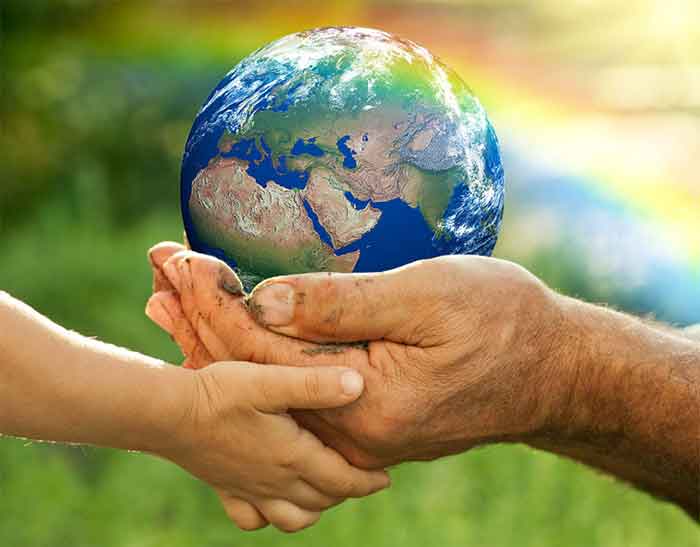
Science tells us that we now have fewer than 10 years to reduce the human burden on Earth or trigger tipping points in Earth’s natural systems from which there is no return. Most discussion centers on the climate emergency, but we also have crises related to air, water, soil, species extinction, and more.

The primary cause of our crises is well known. According to the Global Footprint Network, humans currently consume at a rate 1.7 times what Earth can sustain. Yet, we have only one Earth and no hope of finding another soon—if ever. The most recent report from the Intergovernmental Panel on Climate Change confirmed what we already know: we’ve run out of time and must now take drastic action to avert an even worse catastrophe.

A viable human future depends on living with less. Does that mean sacrifice? Leaving more people behind? Or is this challenge an unprecedented opportunity to achieve a better future for all? The question of how much is enough, the theme of the fall 2021 issue of YES! Magazine, poses a foundational question for our time.

Daily reports on economic indicators such as GDP celebrate increases in consumption and sound alarm bells when consumption declines. Meanwhile, daily news reports tell of one climate-related disaster after another. Rarely, if ever, do we hear serious discussion of the connection between growing GDP and growing environmental disasters.

The question of how much is enough begins an essential conversation. It is one that usually involves exploring what we as individuals can do to limit our consumption. Asking “when is less more?” invites us to look at societal choices over which we have little individual control. In examining these societal level choices, we can see areas on which we can potentially join in common cause. Let us look at several key areas where less could be more.

Deadly Weapons. Humans have long dreamed of peace, yet we consume enormous amounts of resources for war. A recent study found that the U.S. Department of Defense accounts for an estimated 80% of the federal government’s energy consumption. The defense department is also the world’s single largest institutional consumer of petroleum, which supports the world’s largest collection of guns, tanks, military aircraft, and warships. Though the U.S. military imposed the largest environmental burden of any nation’s military, the U.S. is only one nation among many with large militaries.

The statistic on the defense department energy use tells us nothing about the social and environmental costs of producing deadly weapons or the impacts of their use not just by the military, but also by local police, terrorist groups, criminal syndicates, gangs, and armed individuals. It is far past time we learned to live in peace with one another. The production and use of weapons of war is an obvious example of where less would be more.

Mis-/Disinformation. A healthy society needs responsible media to inform us and connect us with each other. Our expanded communications capabilities create an unprecedented potential for us to join in creating an ecological civilization that works for all of life. Tragically, our ever more extraordinary communications capabilities are most often used to manipulate our minds for purposes contrary to our well-being. This includes advertising that promotes wasteful, even harmful consumption, and propaganda to promote socially and environmentally destructive political agendas. These activities provide lucrative employment to support lavish lifestyles for those who serve them. Less would be more.

Financial Speculation. Money is nothing but a number that has no existence outside the human mind. It can be useful as a tool but becomes a threat to life when its only purpose is to accumulate more money. The structures of modern society make it virtually impossible to live without money, which gives enormous power to those who create it and decide how it is used. Honest money is created transparently by public institutions to serve public purposes. But we now allow private bankers and financial gamers to make claims against society’s real wealth without the burden of creating anything of value in return. The Gross World Product (a global GDP) for 2021 is projected to be around $94 trillion. Analysts project that the value of global financial services will reach $26.5 trillion by 2022. Only a small portion of that amount represents essential financial services. The rest should be considered a form of theft, and a primary driver of income inequality and environmentally burdensome, ego-driven displays of extravagance. Less financial manipulation would give us radically increased equality with far less waste.

The Bitcoin Con. Private cybercurrencies are a form of counterfeiting. Bitcoin, a cybercurrency favored by global cybercriminals and tax evaders, is an especially costly example. The energy consumed in “mining” Bitcoins equals the energy use of a small country or major city. The related computer facilities contribute to electronic waste and the current global shortage of semiconductor chips. Bitcoin and other cybercurrencies have value only because buyers expect the market to bid up the price further, or else they need it to prevent tracking of an illicit transaction.

Global Supply Chains. Until very recently in our history, we organized our economies around the labor and needs of local communities. This facilitated repair, reuse, recycling, and resilience, and allowed communities to work within the capabilities of the Earth’s regenerative systems. But global trade rules first introduced in the 1990s stripped place-based living communities of control of their markets, labor, and other resources, and allowed transnational corporations to consolidate their power without concern for the well-being of workers, customers, and nature. China has become the epicenter of a highly fragile interdependent system of global supply chains involving the massive, environmentally destructive long-distance movement of material goods by sea, land, and air. Less reliance on global supply chains would reduce this burden while helping restore the social and environmental health of local communities.

Short Stay Air Travel. Air travel has helped to bring us together as a global species, but it consumes enormous amounts of time, energy, and other resources for purposes that can often be better served in less socially and environmentally costly ways. The purposes of a great many international business meetings and professional conferences could be better served by sharing information electronically, including with video conferencing. In terms of vacation travel, a stay in a nearby resort often better serves the need for restful time off in a beautiful relaxing environment. Visits to destinations on your bucket list for purposes of bragging rights commonly overwhelm the destination to give you little more than a selfie in a crowd. When it comes to travel, less can be much more.

Auto-Dependent Cities. Yet another example relates to our dependence on cars. My wife, Fran, and I lived in New York City from 1992 to 1998. It was the only time in our adult lives that we had no car. Everything we needed or wanted was in walking distance or reachable by rapid public transit. We loved this healthy and friendly way of getting around. Designing every city to make it easier to walk, bike, or take public transit for daily trips could remove a significant human burden on Earth while improving life for everyone. A growing number of major cities are taking steps to become less car-dependent. Regarding car travel, less can be more.

Why do we have so many wasteful sources of consumption? Culturally, it stems from excessive individualism, and societally it stems from using money rather than healthy living as our standard of economic performance. These two forces spur the wasteful consumption that manifests in nearly every aspect of our lives.

Disruptions in our lives caused by the COVID pandemic gave us a wake-up call that both highlighted our human vulnerability and interdependence, and an economy that rewards harmful behavior and inadequately compensates those doing the most important work.

As we learn to think and act as an interdependent global species, we must look critically at all the forms of consumption that could be eliminated to the ultimate benefit of all. Such an examination is needed if we are to transition to an ecological civilization. I elaborate on the concept in my white paper, Ecological Civilization: From Emergency to Emergence, prepared for the Club of Rome’s discussions on a new economics for a new civilization.

We face a defining choice. We can hold to course with an economy that grows GDP to provide a few with the opportunity to make a killing as they prepare to escape to outer space. Or we can embrace the current opportunity to transition to an ecological civilization, with a living economy dedicated to supporting us all in making a secure and fulfilling living on a thriving living Earth.

Awakening to the reality that we cannot eat money and there are no winners on a dead Earth points us to the latter as the clearly better choice.

Reluctant Acceptance: Responding to Afghanistan’s Refugees

Binoy Kampmark


Do not for a minute think that this is a kind, heart-felt thing in the aftermath of Kabul’s fall. True, a number of Afghans will find their way to Germany, to Canada, to the UK, US and a much smaller number to Australia.  But this will be part of the curtain act that, in time, will pass into memory and enable countries to return to their harsh refugee policies.

Britain’s Home Secretary, Priti Patel, is none too enthused about welcoming high numbers of Afghan refugees.  “We have to be realistic in terms of those that we can bring to the country and resettle in a safe and secure way while giving them the right opportunities going forward in resettlement.”

This waffly formulation has yielded the following formula: the UK will accept a mere 20,000 staggered over five years.  Only 5,000 will be admitted in the next year, after which, presumably, the situation will resolve itself.  “What are the 15,000 meant to do,” asked Labour’s Chris Bryant, “hang around and wait to be executed?”

However inadequate Britain’s response has proven, Australia’s approach remains without peer. Every excuse has been made to delay, to obstruct, to prevent an orderly transfer of Afghan interpreters and former security personnel out of the country.  The Morrison government has become a specialist prevaricator, waiting for the horse to bolt before even finding the barn.  Instead of bothering to use strategic common sense and see the writing on the wall for the Afghan government based in Kabul, it waited months before deciding, abruptly, to close the embassy at the end of May only to then suggest it would need to put in Australian personnel to assist in the evacuation.

The number of humanitarian visas currently being offered is a paltry 3,000.  This is sharply lower than the number of Vietnamese accepted by the Fraser government after the fall of Saigon in 1975, which one estimate puts at 60,000.  In 2015, 12,000 places were offered for Syrians fleeing their country.  The Morrison government, in contrast, finds expanding Australia’s resettlement program beyond the current 13,750 places something of a heresy.

Behind the compassion argument, one constipated at best, is a marked reluctance to actually open the doors to the Afghans.  A good deal of this can be put down to the fact that Afghans have made up a sizeable complement of those maritime arrivals Australian politicians so detest as “illegals” deserving of indefinite detention in its system of Pacific concentration camps.  Many actually fled the Taliban to begin with, but that did not make immigration authorities any softer.

As the Saturday Newspaper appropriately described it, Australia’s antipathetic refugee policy has induced “a kind of moral numbness that puts decisions outside the reach of logic or decency.”  Prime Minister Scott Morrison could never be said to have been taken by surprise: “he was already in the grip of indifference”, one “necessary to live with the refugee policy he has spent years shaping.”

Despite the fall of the coalition-backed Afghan national government, Australian government officials did little to reassure the 4,200 Afghans already in Australia on precarious temporary protection visas that they would not be sent back when the time came.  Australian foreign minister Marise Payne offered an assessment on national radio that was far from reassuring. “All the Afghan citizens who currently are in Australia on a temporary visa will be supported by the Australian government and no Afghan visa holders will be asked to return to Afghanistan at this stage.”

One dark reminder of the brutal, and distinctly non-honeyed approach of Australia’s authorities to Afghan refugees comes in the form of a refugee and former member of an Afghan government security agency who aided coalition forces. For doing so, he was attacked by the Taliban.  He arrived in Australia by boat in 2013 after having suffered a grenade attack on his home and being the recipient of various warning letters from the militants. For his efforts, he was sent to Manus Island, where he was formally found to be a refugee in 2015.  In 2019, he was moved to Australia for treatment during that brief window of opportunity under the now repealed medevac legislation.

In total, he has spent eight years in detention, desperate to help his family out of the country.  He had previously asked no fewer than three times to be returned to Papua New Guinea.  “Every day Afghanistan is getting worse,” he writes in an email to his case manager from the behemoth that is the Department of Home Affairs.  “My family is in a dangerous place and I need help now please.  If you wait I will lose my family.  Why do you wait?  The Taliban want to kill my family.”

The email, read in open court, forms part of a case the plaintiff, given the pseudonym F, has taken against the Australian government, seeking his release.  He argues that his detention prevents him from “moving my family out of Afghanistan to a safe country to save them from the Taliban.” The nature of his detention prevented him “from doing anything to help” his family.

On August 3, 2021, the Federal Court judge Rolf Driver dismissed F’s claims that his detention was unlawful and refused an order “in the nature of the writ of habeas corpus requiring his release from detention forthwith”.  Judge Driver did find that the man was “a refugee and requires resettlement”, ordering mediation between him and the home affairs minister.  While Australia was not an option for resettlement, the applicant should have his request to return to PNG “acted upon”.

Morrison’s ministers are full of excuses about Australia’s unimpressive effort.  Defence minister, Peter Dutton, has constantly reiterated the idea that processing the paperwork is a difficult thing indeed, because some of the visa applicants cannot be trusted.  Having aided Australian and other coalition forces in the past, they had proved flexible with shifting allegiances.  “I’m not bringing people to Australia that pose a threat to us or that have done us harm in Afghanistan.”  With such an attitude, shutting the door to the suffering, even to those who were part of the coalition’s absurd state building project in Afghanistan, will do little to trouble an unformed, unimaginative conscience.

UK’s North-South divide and Boris Johnson’s “levelling up” fraud

Thomas Scripps


Centre for Cities research shared with the Guardian shows the scale of the economic north-south divide in the UK and the fraud of Prime Minister Boris Johnson’s claimed “levelling up” agenda.

England’s largest cities outside of London have the lowest life expectancy and productivity in western Europe, according to the think tank. People in Manchester, Newcastle and Birmingham live two years less than the European average. In Liverpool, life expectancy is four years lower.

All major British cities outside of London come bottom of the table in western Europe for productivity. Newcastle, Sheffield and Nottingham have just over half the productivity—measured by Gross Value Added (GVA) per worker—of Brussels and Amsterdam.

Britain's Prime Minister Boris Johnson, left, and Chancellor of the Exchequer Rishi Sunak, second right, walk during a visit to Teesport in Middlesbrough, England, Thursday, March 4, 2021. Britain's Chancellor Rishi Sunak and Prime Minister Boris Johnson visited the north east following the Budget announcement that the Treasury and other government departments will be sited on an economic campus in Darlington and that Teeside and The Humber would be among eight new freeports in England. (AP Photo/Scott Heppell, pool)

Data from the Office for National Statistics (ONS) puts these finding in the context of a clear economic divide between the north and south of the country. Its latest figures show that the North East, North West, Yorkshire and the Humber, East Midlands and West Midlands all have lower life expectancies than regions in the South. The biggest gap is between the North East and London, at 2.9 years for men.

The North East, Yorkshire and Humber, East and West Midlands also have lower GVA per head than the southern regions, with the North West broadly on par with the South West. The biggest gap is again between the North East (£20,129) and London (£48,857). London is a massive outlier, reflecting its overbearing status in the UK economy, but the next biggest gap, between the North East and the South East (£29,415), is still a 32 percent deficit.

Paul Swinney, director of policy and research at the Centre for Cities, said of Johnson’s promises to “level up” the north in light of these figures, “As an indication of the scale of the challenge faced, when a similar challenge was embarked upon in the former East Germany in the 1990s, the cost was estimated to have reached £1.7 trillion—a far larger amount of money than that being offered here in the UK currently.”

Swinney’s statement puts a sharp point on what is already widely known. The Economist made a similar comparison last year, writing, “North of a line from the Severn estuary to the Wash, and south of Hadrian’s wall, lies an area that (measured by purchasing-power parity) is as poor as the American state of Alabama or the former East Germany.”

It noted that, unlike the area of former East Germany which is home to just 20 percent of the German population, the northern regions of the UK are home to 47 percent of Britain’s population.

The magazine cited research carried out by Professor Philip McCann of the University of Sheffield, published in 2019, comparing the UK’s internal geographic inequality to similar countries on 28 different measures. Inter-regional inequality was above average on all measures and top on six.

As statistics on life expectancy demonstrate, regional economic disadvantage translates into serious social deprivation. Workers in the northern regions have fewer qualifications and less gross disposable income than the UK average, although income differences narrow substantially after housing costs are taken into account.

Unemployment rates in the northern regions in February 2020 were higher than all southern regions except London. The same was true of poverty rates in 2019/20. Of the worst ten local authority regions for child poverty in 2018/19, seven were in the North West and the other three in the North East, West Midlands, and Yorkshire and the Humber.

The pandemic has graphically demonstrated the consequences of these conditions. All the northern regions suffered higher age-adjusted levels of COVID-19 mortality than all the southern regions, except London, which had the highest.

The damage to the north of the country has been wrought over the last four decades. Prime Minister Margaret Thatcher came to power in 1979 as the representative of a ruling class determined to solve a mounting social and economic crisis through a crushing defeat of the working class. Her government jettisoned the old policy of maintaining national industry through subsidies, protectionism and nationalisation, seeking new profits in the unfolding process of economic globalisation by smashing up globally uncompetitive industries, building up the finance sector and encouraging an explosion of social inequality.

This programme required all-out class war, especially in the industrial heartlands in the north of the country. A wave of closures and unemployment, enforced with brutal state violence, shattered communities, which have been starved of resources ever since. Their fate was a particularly sharp expression of an offensive waged against the entire working class.

The decade of austerity after the financial crisis of 2008-9 compounded the damage. Centre for Cities note that day-to-day spending in deprived urban authorities in the north of England has seen the largest spending cuts of any area of government since 2010. Seven of the cities with the largest cuts were in the North East, North West or Yorkshire. On average, northern cities suffered cuts of 20 percent, versus 9 percent for cities in the East, South East and South West (excluding London).

Labour’s role in this process was filthy, adopting the Thatcherite policies of the Tories in government and blocking any struggle against them in opposition. Their betrayal was so complete that Johnson was able to win a slew of formerly safe Labour seats in the north in the 2019 general election.

But the Tories can only pour salt on these new political pastures. Johnson’s pledge to “level up” the North is risible. The small sums allocated to a “towns fund” (£3.6 billion), a “levelling up fund” (£4.8 billion) and a “city region sustainable transport fund” (£4.2 billion) are a “drop in the ocean”, to quote Swinney.

Even this pittance has been allocated in a transparent attempt to boost Tory electoral fortunes, focused on areas represented by parliamentary seats held narrowly by either the Tories or Labour.

The regionalist politics of figures like Labour Mayor of Greater Manchester Andy Burnham, who makes great play of the north-south divide and London-centric government, offers no alternative. They do not speak for the common interest of “the north”, or even of their local cities, because no such common interest exists. The whole of the UK is fundamentally divided by class, which produces far sharper disparities than any geographic divisions.

A closed down Sure Start children's centre and adjoining play area in Ardwick, Manchester. The Bushmore Sure Start site was one of two children's centres closed in Ardwick in 2013 by Labour-run Manchester City Council (credit: WSWS media)

In Yorkshire and The Humber, the top ten percent of earners receive 4.8 times more income than the bottom ten percent after housing costs, according to the Institute for Fiscal Studies. The figure is 4.6 times for the North West and the East Midlands, 4.5 for the West Midlands and 4.3 for the North East. The ratio for the top one percent would be many orders of magnitude higher.

By far the largest disparities are in London (8.7), the South East (5.9) and the East (5.2), reflecting the fact that most of the South’s advantages are enjoyed by a small sliver of the population. The working-class majority are engaged in the same daily struggle to get by as in the rest of the country. In fact, after housing costs, median income in London is just 1 percent higher than the national average.

The likes of Burnham are the advocates of a small affluent layer of the Northern population who want a larger share of the profits clawed out of all workers by British capitalism. They want investment in the North not to improve the lot of the local working class, but to create more opportunities for their exploitation. This is summed up by the planned setting up of freeports in the East Midlands, Humber region, Liverpool City Region (including Port Salford, in Greater Manchester, as a customs site) and Teeside, as part of the Tories’ post-Brexit economic agenda.

Freeports are special economic zones in which certain taxes and regulations are suspended. They have become synonymous the world over with corporate parasitism and super-exploitation. Burnham acknowledged these “risks”, which “had to be watched”, but described the Port Salford plans as “an exciting proposal” and a “boost” to the region’s ambitions.

“Levelling” the UK is not a geographic, but a class question. As Swinney’s figure of £1.7 trillion indicates, regional inequalities and imbalances can only be solved through a frontal assault by the working class on the super-rich and the major corporations and banks, expropriating their fortunes and using the resources to meet social needs.