27 May 2022

North Korea: Missiles Over Human Security

Mel Gurtov


Omicron Catches Up with North Korea

After having proclaimed for more than two years that the country was untouched by the coronavirus, North Korea now faces a potential health catastrophe. Its unvaccinated population is succumbing to an Omicron variant, and the leadership is struggling to contain it. Figures on infections and deaths are very unreliable, but what is clear is that the Kim Jong-un regime is caught between unpalatable choices: either a complete national lockdown and acceptance of foreign help or tentative measures that run a high risk of failure.

The central problem for the North Koreans is that they failed to take preventive steps when they had the time to do so. They could have accepted help from China, the UN, and Western sources to begin nationwide vaccinations. They could have begun a nationwide testing program along with hospital preparedness and stockpiling of equipment.

Instead, the regime closed its borders, thinking that being the “hermit kingdom” would ward off the disease. As a Korea-born Harvard doctor with extensive experience in the North has written for CNN, North Korea’s medical establishment was totally unprepared for the Omicron variant. Even now the regime is still calling COVID a fever. But it needs an estimated 60 million doses for its population of around 25 million. Unfortunately, those doses have been distributed elsewhere, and as Omicron variants crop up again, North Korea’s people may have no recourse.

Now Kim seems prepared to follow China’s example with a strict lockdown to achieve zero-COVID. But that idea faces several obstacles.

One is that the lockdown won’t be strict enough; in order to keep the flagging economy running, factory workers will still go to work, though confined in groups within production facilities. That will make social distancing difficult to enforce.

Second, North Korea doesn’t have China’s capacity for ensuring that quarantined people are fed and tested regularly. Informal markets will remain open, as the food system cannot deliver a basic diet for all—another potential source of spreading disease.

Moreover, the North Korean authorities are surely aware that zero-COVID is failing in China despite all China’s advantages in delivery of food and medical supplies. In Shanghai and a number of other large cities, local Chinese officials are unable to get food to people under lockdown in a timely way. Entire apartment buildings and even neighborhoods have been forced to quarantine when only a single person is infected. These harsh measures have led to protests and some violent incidents.

Weapons Over Medicine

Also relevant is that the pharmaceutical distribution system is far from orderly or reliable. Kim called the system “irresponsible,” and ordered the army’s medical corps to “stabilise the supply of medicines in Pyongyang City,” according to the North Korean press. That order suggests it will be a long time before people outside the capital have access to COVID-19 remedies when and if they become available.

This potential human disaster has not kept Kim Jong-un from investing in the country’s missile and nuclear weapons programs. This year alone, the regime has conducted 16 missile tests so far, including an ICBM. US intelligence is reporting that another ICBM test can be expected shortly. An underground nuclear test may also be in the cards, the first since 2017.

Some of these tests may be attributed to the election of a new president in South Korea, Yoon Seok Youl, a conservative who promises to take a harder line on North Korea than his predecessor followed. President Biden has just ended his first meeting with Yoon as part of his initial Asia tour. The North Koreans have a penchant for conducting missile tests to “greet” leaders of adversaries.

Hello, North Korea

In a rational world, North Korea would be putting its military agenda on hold, reaching out for vaccines, medical equipment, and food, and engaging in a crash program in public health prevention and treatment. Likewise, South Korea, the US, China, and the UN would take the lead in responding to Kim’s plea for help.

South Korea’s president has in fact offered unconditional vaccine aid to North Korea; so has Joe Biden. Neither has received a response, but the offer should be repeated with the intent of turning a page in US and South Korea relations with the North. There may be an opportunity here to address North Korea’s nuclear and missile capabilities through the back door of pandemic assistance.

Biden undermined that opportunity when he said, during his Asia tour, that his message to Kim Jong-un is “Hello. Period.” Excuse me, Mr. President, but ignoring North Korea is not a policy, and offering aid, while all to the good, is not strategic diplomacy.

Human security, not weapons, should be the central issue on the Korean peninsula, and advancing human security is the surest path to real security. But North Korean leaders, hypersensitive to foreign interference and no doubt anxious not to expose their prison gulag to the outside world, may be quite prepared to sacrifice thousands of lives.

The U.S.’s Unilateral Sanctions Against Russia Will Produce a Global Food Disaster

John Ross


“There is really no true solution to the problem of global food security without bringing back the agriculture production of Ukraine and the food and fertilizer production of Russia and Belarus into world markets despite the war.” These blunt words by UN Secretary-General António Guterres accurately describe the present global food crisis.

As the U.S. and the G7 (comprising Canada, France, Germany, Italy, Japan, the United Kingdom, and the United States) insist that cutting off food exports from Ukraine poses the biggest threat to world food security, rather than admitting the far more powerful negative effect of Western sanctions against Russia, their propaganda does immense damage to the world’s understanding and capability of avoiding a looming global food disaster.

The G7 and the Approaching Food Disaster

Looking at the world food supply situation, many experts see an imminent threat of “human catastrophe,” as World Bank President David Malpass put it. Andrew Bailey, the governor of the Bank of England, characterized his outlook on global food supply problems as “apocalyptic” when discussing increasing food prices. This rise has led to the unfolding of two issues simultaneously: creating the threat of hunger and famine in parts of the Global South, and hitting living standards in every country across the globe.

Even before rapid price rises surrounding the Ukraine war, more than 800 million people were suffering from chronic food insecurity—around 10 percent of the world’s population. U.S. Treasury Secretary Janet Yellen cited this fact while speaking to the participants of an April 2022 event, “Tackling Food Insecurity: The Challenge and Call to Action,” whose participants included the heads of international financial institutions such as the World Bank’s Malpass. Yellen also noted, “Early estimates suggest that at least 10 million more people could be pushed into poverty in Sub-Saharan Africa due to higher food prices alone.” The World Food Program (WFP) plans “to feed a record 140 million people this year,” and it reports that “at least 44 million people in 38 countries are teetering on the edge of famine,” an increase from 27 million in 2019.

In countries facing other problems, like climate change, food price increases have been catastrophic. For example, in Lebanon, “the cost of a basic food basket—the minimum food needs per family per month—[rose]… by 351 percent” in 2021 compared to 2020, according to the WFP.

In the Global North, famine is not a threat, but the populations of these countries face a sharp squeeze on their living standards as the global food crisis also raises the prices people in wealthy countries have to pay and budget for. In the United States, for example, the combination of high inflation and economic slowdown led to a 3.4 percent reduction in real average weekly earnings in the last year, as per data provided by the U.S. Bureau of Labor Statistics.

Fake Analysis by the G7 About the Reasons for the Food Crisis

Faced with this rapidly rising threat of the deepening food crisis, the G7 foreign ministers met from May 12 to May 14 to finally focus their attention on this pressing matter. They issued a statement on May 13 expressing “deep concern” about the growing food insecurity, while pointing out the next day that “the world is now facing a worsening state of food insecurity and malnutrition… at a time when 43 million people were already one step away from famine.”

But the G7 falsely claimed that the reason for this food crisis was primarily due to “Russia blocking the exit routes for Ukraine’s grain.” According to Canada’s foreign minister, Mélanie Joly: “We need to make sure that these cereals are sent to the world. If not, millions of people will be facing famine.”

Sanctions and the Global Food Crisis

This G7 statement deliberately misrepresented the present global food crisis. Instead of attempting to solve this crisis, the U.S. and the rest of the G7 used this opportunity to further their propaganda on the Ukraine war.

Certainly, Ukraine’s export restrictions make the global food problem worse. But it is not the main cause of the deteriorating situation. A much more powerful cause is Western sanctions imposed on Russia’s exports.

The first reason for this is that Russia is a far bigger exporter of essential food items and other products in comparison to Ukraine. Russia is the world’s largest wheat exporter, accounting for almost three times as much of world exports as Ukraine, 18 percent compared to 7 percent.

Second, and even more important, is the situation with fertilizers. Russia is the world’s largest fertilizer exporter, and Belarus, which is also facing Western sanctions, is also a major supplier—together they account for more than 20 percent of the global supply. Fertilizer prices were already rising before the Ukraine war due to high fuel prices—fertilizer production relies heavily on natural gas—but sanctions by the West, which prevent Russia from exporting fertilizers, have made the situation worse.

David Laborde, a senior research fellow at the International Food Policy Research Institute, pointed out that “the biggest threat the food system is facing is the disruption of the fertilizer trade.” This is because, he said: “Wheat will impact a few countries. The fertilizer issue can impact every farmer everywhere in the world, and cause declines in the production of all food, not just wheat.”

The threat to global fertilizer supply illustrates how energy products are an essential input into virtually all economic sectors. As Russia is one of the world’s largest exporters not only of food but also of energy, sanctions against the country have a knock-on inflationary effect across the entire world economy.

Response in the Global South

This world food supply situation worsened further after the G7 meeting when on May 14, India, the world’s second-largest wheat producer, announced that it was halting wheat exports due to crop losses caused by an intense heat wave. Already in April Indonesia had announced that it was ending palm oil exports—Indonesia accounts for 60 percent of the world supply.

India’s halt of wheat exports will be a further severe blow to countries in the Global South, where its exports are mostly focused. In 2021-2022, India exported 7 million metric tons of wheat, primarily to Asian Global South countries such as Sri Lanka, Indonesia, Yemen, Nepal, Malaysia, the Philippines, and Bangladesh. But India had earlier set a target of expanding wheat exports to 10 million tons in 2022-2023, including supplying 3 million tons of wheat to Egypt for the first time.

Ending Sanctions to Prevent Worsening of the Food Crisis

The unfolding situation makes clear that António Guterres’ words were indeed accurate—the world food crisis cannot be solved without both Ukraine’s exports and Russia’s exports of food and fertilizer. Without the latter, humanity does indeed face a “catastrophe”—billions of people will have to lower their living standards, and hundreds of millions of people in the Global South will face great hardship like hunger or worse. Almost every Global South country rightly refused to support the unilateral U.S. sanctions against Russia. This refusal needs to be extended to the whole world to prevent further devastation.

African Union at 20: Challenges ahead

Bulbul Prakash


African UnionAfrican Union

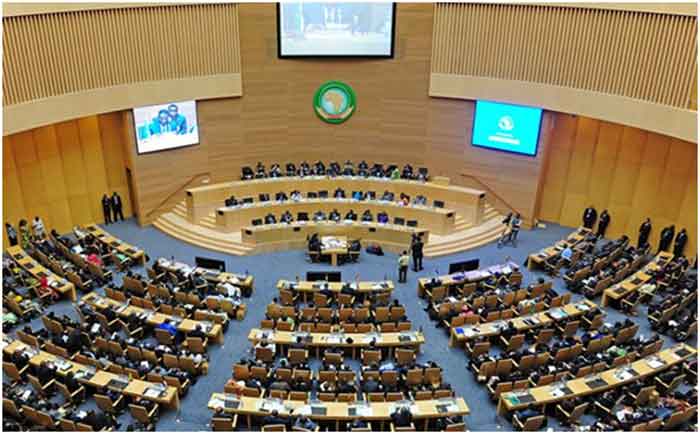
The African Union was founded in 2002 as a successor to the Organization of African Unity (OAU), an intergovernmental organisation that functions as a link between the African countries. With the union commemorating its 20th anniversary this year, the continent has faced several challenges in recent years, including civil wars, stalling transitions, Islamic militancy, food insecurity, and climate change-related threats. The twentieth anniversary as well as the upcoming Africa Day to reflect on the progress made by the African Union provides an opportunity for member states to evaluate the organization’s accomplishments so far and to consider the AU’s involvement in Africa’s emerging peace and security concerns.

With 115 million Africans still under the control of forces that have illegally ceased power, peace and security continue to be the major challenge for the union. A poor and dictatorial government fosters extremism and transnational crime, resulting in bloodshed and impeding democratic initiatives. The continued undemocratic political developments in West Africa and Sudan are particularly disturbing. In the last two years, at least five such coups have occurred in Burkina Faso, Chad, Guinea, Mali, and Sudan. The AU’s response to many of these crises has been mixed. The African Union’s Peace and Security Council has declined to ban Chad, stating it was not a coup when the son of the country’s late dictator seized control. It has had trouble making decisions during the wars in Ethiopia and Mozambique, with the countries insisting on those as domestic crises. Democracy is failing the people, and the military is stepping in to fill the void. Many countries have also failed to have an effective plan to cope with jihadist situations. The regional coordination in managing the jihadist flow from Libya to Mali, from Mali to the borders with Burkina Faso and Niger has been very poor. The jihadist groups continued to occupy ungoverned spaces within these countries. This has directly affected the economic situation of these countries.

The rising coups has made the countries in the West African region lose faith in democratic processes. The success of the coups instigate their continuation. Hence this is a huge challenge for the union in the coming years. The inflow of international connections and links between these coups has become a serious concern indeed. The Mali government has claimed that French government is responsible for aiding and abetting the jihadist groups in the region. The union plays a key role here in forming a united front against these coup d’états.

At the latest summit concluded in Addis Ababa, the rising COVID-19 cases sparked widespread discussions on the grave consequences for the African continent. Having only 11 per cent of the population fully vaccinated, increasing COVID-19 vaccination rates is a top priority for the union. Several food security challenges are already affecting the continent, ranging from one of the worst droughts in 40 years in the Horn of Africa to war-related food insecurity in Ethiopia, where droughts have already affected over 4 million people. Malnutrition rates continued to increase all throughout the conflict-torn regions. In addition, around 400 million people do not have regular access to nutritious and adequate food. Climate change has also struck the region the hardest, with temperatures rising faster than the worldwide average (1.2 degrees).

The Union is still relatively young and working to improve its institutional and human capacities, but is falling behind in staffing, financing, and other areas, and thus failing to meet its ambitious goals. The legitimacy of the organisation remains debatable, with the purpose and key stakeholders remaining unclear, particularly with civil society. The organisation itself is caught between the national government and their interests, and as a result, fails in its larger roles. The union is highly fragmented with too many focus areas and less coordination with its regional economic communities. The union’s attempt to function similar to the European Union’s executive body has failed as the former lacks the authority to enforce treaties or adopt norms.

Let us now look into how far the organisation has come forward despite the rising challenges and its plans for future. Recent political changes in countries such as the Democratic Republic of the Congo and Gambia offer hope for the continent’s progressing peace. The African Continental Free Trade Area, which entered into effect last year to improve intra-African trade and the continent’s prominence in the global market, is in fact a true accomplishment. The African Union’s Green Recovery Plan is noteworthy for identifying the need for green and resilient recovery as a method of responding to concerns connected to climate change, public health, and the economy. The African Union’s Strategy on Gender Equality and Women’s Empowerment (GEWE), which emphasises the importance of economic empowerment for women in order for Africa to accomplish its inclusive and sustainable development goals, is likewise laudable.

Despite its success stories, many citizens feel the organization is functioning to cater the needs of the commissioners and ministers rather than a functional agency working for the people. The local approaches that incorporate tactic to prevent violent extremism shall be promoted and the union shall try to become a people centered and Pan Africanist institution. Re-approaching nations who has an interest in sustaining stability in the region, such as the Gulf monarchies, will fill the budget shortfall. The union shall also ensure that development and security shall be made according to each country’s individual situation. The African Union’s legitimacy, and hence its future, will be defined by how proactive, consistent, and principled it is in avoiding or criticizing instances of heinous misrule by current leaders. Women and youth must also be included in discussion processes to boost their chances of success and the longevity of their successes. The Union shall also be able to effectively utilize the increasing international community’s efforts to manage, stabilize and resolve ongoing wars and armed conflicts, though with varying degrees of success.

Long COVID affects nearly 2 million in the UK

Stephen Alexander


The massive growth of Long COVID in the UK, now rapidly approaching 2 million cases, has exposed the devastating scale of the public health disaster produced by the government’s profit-driven “living with COVID” strategy.

At the beginning of April, the number of people suffering Long COVID reached 1.8 million, 2.8 percent of the UK population, according to data published by the Office for National Statistics. Of these self-reported cases, 1.3 million have suffered one or more COVID symptoms for more than 12 weeks, 791,000 for more than one year, and 235,000 for more than two years.

A rendering of the SARS-CoV-2 virus (National Institute of Allergy and Infectious Diseases)

The World Health Organisation has described the condition as a “pandemic within the pandemic”. The number of cases worldwide has grown to an estimated 100 million as the wealthiest capitalist governments have allowed the virus to spread and mutate without restriction in the name of saving “the economy”—i.e., the profit interests of big business.

The most common symptoms reported are fatigue (51 percent), shortness of breath (33 percent), loss of smell (26 percent), and problems concentrating or brain fog (23 percent). Two-thirds of all cases, 1.2 million people, report being unable to perform some or all their regular daily actives. There are currently 1 million missing from the workforce compared to pre-pandemic employment in the UK, including 400,000 no longer working because of poor health, including Long COVID.

Long COVID is defined as suffering symptoms for 12 weeks or more after a COVID-19 diagnosis, in conditions where no other cause is identified. Half of all people hospitalised with COVID still exhibit at least one symptom two years after infection, according to a study published in the Lancet medical journal.

As with risk of serious illness and death from infection with COVID-19—which kills working-age people in the most deprived areas at nearly four times the rate than among people in the wealthiest areas—Long COVID is primarily a disease of the poor and socially vulnerable. The Imperial College London’s REACT study of 500,000 UK adults found a higher risk of persistent COVID symptoms among women, people who smoke or who are overweight, people who live in deprived areas, and those who have been admitted to hospital with COVID-19.

While some COVID survivors experience persistent symptoms for only a few weeks or months, there is a growing body of scientific research linking Long COVID to a plethora of life-changing and deadly chronic diseases, including brain damage, kidney disease, diabetes, chronic fatigue, nerve damage and heart disease. While these illnesses are more common in those who developed severe illness upon initial infection, Long COVID can also devastate the health of those who experienced only mild symptoms.

Research published earlier this month by scientists at the University of Cambridge and Imperial College London found that “cognitive impairment from severe COVID-19 is similar to that sustained between 50 and 70 years of age and is the equivalent to losing 10 IQ points”. It described the recovery process after six months as “at best gradual”. The study found that survivors of severe infection suffered heightened risk of cognitive disfunction affecting memory, attention and reasoning, alongside mental health disorders including depression, anxiety, post-traumatic stress, low motivation, fatigue, low mood, and disturbed sleep. The risk is particularly pronounced among survivors who required mechanical ventilation.

Professor Adam Hampshire from the Department of Brain Sciences at Imperial College London, the study’s lead author, said: “Around 40,000 people have been through intensive care with COVID-19 in England alone and many more will have been very sick, but not admitted to hospital. This means there is a large number of people out there still experiencing problems with cognition many months later. We urgently need to look at what can be done to help these people.”

Researchers at the University of Oxford have also found considerable brain damage in people who suffered only mildly symptomatic infections, based on an analysis of 800 brain scans taken before and after infection. As well as a reduction of grey matter in the orbitofrontal cortex (including the smell and taste centres of the brain) and the parahippocampal gyrus (part of the limbic system involved in memory), the study observed a reduction in overall brain size and higher levels of cognitive decline than in the general population.

Findings from the King’s College London’s ZOE COVID survey showed an increasing number of people infected with COVID are reporting tinnitus—a prolonged noise or ringing in the ears without an outside source. A survey of 14,500 people found about 5,000 reported ear-ringing after a positive test for COVID. Over half of these cases reported tinnitus lasting weeks or months following infection.

Professor Tim Spector, the co-founder of the study, said the findings show for “the first time that ear ringing, as with long term loss of smell… is something to take seriously because it does suggest that a different part of the body is being affected, more internal and close to the brain”.

Responding to a growing body of scientific evidence for prolonged and potentially permanent neurological damage, Alzheimer’s Disease International has warned that COVID-19 may cause a “pandemic of dementia” like the higher risk observed in people infected with HIV (human immunodeficiency virus).

New research conducted by University College London has also linked Long COVID to increased risk of blood clotting. The study found a widespread imbalance in two blood proteins, the von Willebrand Factor (VWF) and ADAMTS13, which allow the blood to clot and seal off broken blood vessels. Overall, 28 percent of 330 study participants with Long COVID had heightened markers for blood clotting. The risk was even higher in those who showed reduced capacity for exercise, with 55 percent testing positive for blood clotting abnormalities.

The UK is already witnessing a surge in demand for Long COVID treatment and support. Demand for occupational health treatment has soared by 80 percent in the past six months, according to a survey by the Royal College of Occupational Therapists (RCOT). The charity Asthma and Lung UK reports the number of people seeking help for Long COVID doubled between September 2021 and March 2022, including enquiries from those suffering breathing difficulties about how to secure long-term oxygen treatment at home.

In the face of this avalanche of chronic illness and the prospect of long-term sickness and disability for hundreds of thousands more people in repeated waves of coronavirus, neither the Conservative government nor any of the major parties have deviated in the slightest from their profits-before-lives policy of allowing mass infection to rip through the population.

Just £220 million has been made available to support 90 specialist clinics in England. And this is under conditions where the NHS, GP practices and social care services are already facing historic staffing shortages and treatment backlogs from the pandemic, on the back of decades of austerity and privatisation. The average waiting time to be seen by a Long COVID clinic stood at more than 15 weeks in March-April, according to Nationa Health Servive (NHS) data. Many patients waited a year or more for an initial referral.

Those who can afford it are turning to private healthcare in desperation. In one widely reported case, Dr. Binita Kane, a respiratory consultant, sought private medical care for her 11-year-old daughter in Germany, at the cost of £6,000. Severe fatigue, body pain, tinnitus, sore throat, and acute abdominal pain had reduced her to using a wheelchair, and the NHS was only able to offer fatigue management therapy. The additional tests available in Germany flagged dangerous blood abnormalities including hyperactivated sticky platelets, micro clots, and mild endothelial damage (a type of non-obstructive coronary artery disease). Her case has since improved dramatically following a detailed diagnosis and specific medical treatment.

The Johnson government, which is committed to strangling the NHS and widening the market for private health corporations, has no intention of providing the public health resources necessary to humanely address the public health disaster it has inflicted on the population.

The Equalities and Human Rights Commission (EHRC)—a nominally independent regulator with a board handpicked by the Tory government—has stated, “EHRC does not recommend that ‘Long COVID’ be treated as a disability” citing a supposed lack of “scientific consensus” and “case law”.

Dr. Jenny Ceolta-Smith, an employment advocate for Long COVID Support and co-founder of Occupational Therapy for Long COVID, said: “There is already disbelief of workers’ Long COVID symptoms within the workplace, and this harmful announcement by the EHRC may make it much harder for workers to gain the support that they need from colleagues and line managers. It may even mean more jobs are lost.”

Johnson UK government announces cost of living support package fearing social explosion

Robert Stevens


UK Chancellor Rishi Sunak announced in Parliament today a £15 billion “Cost of Living Support package” in response to the desperate situation facing tens of millions of people.

Sunak effectively tore up his Spring Budget statement, laid out just two months ago, which refused any respite for those thrust into abject poverty.

UK Chancellor Rishi Sunak explains in a video on his Twitter page his cost of living support package (Credit: screenshot-Rishi Sunak/Twitter)

In what was billed as an “Economy Update”, Sunak announced £15 billion in financial support, citing an inflationary surge that is “causing acute distress for the people of this country.” He declared, “We need to make sure that for those whom the struggle is too hard… and for whom the risks are too great… are supported.”

The  multi-hundred millionaire Sunak was forced to acknowledge the deeply entrenched hardship in a country in which 14.5 million live in poverty, with another 250,000 households set to “slide into destitution” in 2023, according to the National Institute for Economic & Social Research.

Eight million households who “already have incomes low enough for the state to be supporting their cost of living through the welfare system” will receive a £650 one-off Cost of Living Payment. Over eight million pensioner households who receive the Winter Fuel Payment as they cannot pay their bills will receive a £350 one-off ‘Pensioner Cost of Living Payment’”. Six million people who receive non-means tested disability benefits will receive a “one-off Disability Cost of Living Payment, worth £150.”

Just two months ago, Sunak announced an energy bill rebate scheme in which every household would be eligible for a loan of just £200, to be clawed back over four years. Today he was forced to scrap this and make available to every household a non-repayable £400 grant for help with energy bills.

A further £500 million was announced by the chancellor for household support fund delivered by local councils, increasing it to £1.5 billion.

The support package will be partially paid for by a temporary 25 percent tax on the profits of the giant oil and gas firms who are raking in what Sunak described as “extraordinary profits”. Just few weeks ago, Tory MPs were whipped to vote down a similar Labour Party motion for a windfall tax. Such is the scale of the crisis confronting British capitalism that Sunak’s tax on windfall profits is double that which Labour was proposing.

Even so the Johnson government’s tax will barely touch the profits of the oil and gas giants. Just in the first three months of 2022, Shell made £7.2 billion in profits and BP raked in £4.9 billion. Sunak reassured them, “when oil and gas prices return to historically more normal levels, the Levy will be phased out and with a sunset clause written into the legislation.”

In the 24-hour lead-up to Sunak’s announcement, the media trailed reports of a £10 billion support package. In the end, the government felt it necessary to put down a further £5 billion. Such is the scale of the social hardship gripping tens of millions that Sunak’s measures will provide only momentary relief, with the one-off payments dwarfed by rising fuel, food and energy costs.

There are several factors underlying the calculations of the Tories and the government’s sharp policy reversal.

Since Sunak delivered his March economic statement, inflation has reached the highest level in Britain in 40 years. In March, the CPI inflation rate stood at 7 percent—reaching 9 percent this month. The more accurate RPI inflation measure, including housing costs, has risen from 9 percent to 11.1 percent, much of it fueled by April’s lifting of the cap on household energy costs that saw many bills rise by £693 from £1,277 to £1,971. Prepayment bill payers, mainly the poorest in society, saw their bills surge by £708, from £1,309 to £2,017.

An analysis of 21,000 food and drink items by Which? consumer magazine between December 2021 and February 2022 found that inflation on these was up 3.14 percent on average compared with two years ago. At least 265 products had seen price increases of more than 20 percent over that period.

According to the Zoopla property website, rents across Britain rose by 11 percent over the past year to nearly £1,000 per month—forcing the average worker to spend more than one third of their household income on rent.

Sunak’s statement was doubtless timed to coincide with senior civil servant Sue Gray’s official report, published Wednesday, into the “partygate” scandal surrounding Prime Minister Boris Johnson. Both Johnson and Sunak have been the target of public fury over illegal drinks parties at Downing Street during the pandemic. Johnson declared this week that it was time to “move on”. They calculated that ignoring the cost-of-living surge would be political suicide.

The urgency of such a response was emphasised this week by Jonathan Brearley, CEO of Ofgem, who told Parliament’s Business, Energy and Industrial Strategy Committee that the price cap hike in October will likely see household fuel bills shoot up to a record £2,800. He warned MPs that the number of people in fuel poverty could double to 12 million. E.ON energy UK chief Michael Lewis declared, “Frankly, some people are at the edge. They simply cannot pay, and that will get worse once prices go up again in October… We need more intervention.”

Facing the greatest crisis of capitalism since World War II, Johnson and Sunak have adopted measures they previously denounced as “tax and spend socialism”. Today’s announcement provoked outrage among sections of the ruling Conservatives, with Richard Drax declaring, “throwing red meat to socialists, by raising taxes on businesses and telling them where to invest their money is not the conservative way.” The pro-Tory Spectator denounced, “Rishi Sunak, the tax snatcher”.

By far the main consideration in Sunak’s announcement was fear of an uncontrollable social explosion under conditions of an escalating class struggle. The eruption of mass protests and strikes in Sri Lanka, Pakistan and other countries in recent weeks, driven by inflation, is being read as a warning sign.

Media headlines have reflected nervousness over the economy being ground to a halt after 40,000 rail workers voted for strike action. As Sunak prepared his speech, the Daily Mail raised the spectre of “A YEAR of discontent?”, warning of a “wave of rail strikes this summer going into 2023—as British Airways staff, hospital cleaners, refuse collectors and lorry drivers also set to walk out in coming months”. Even as Sunak announced his cost-of-living package, BT telecoms workers are preparing to launch their first national strike in 35 years. They are being balloted for industrial action next month after rejecting a below inflation pay offer from a company making £1.3 billion annual profits.

The main concern of the ruling class is that the class struggle is threatening to break through the shackles imposed on it for years by the corporatist trade unions.

Protesters in Dover march in protest at the job losses at P&O (WSWS Media)

Throughout the pandemic, the unions have deepened their collaboration with the employers and government, imposing ever worsening attacks on the working class. Among those betrayed by the unions were tens of thousands employed at British Airways, British Gas, Weetabix, Go North West, Tesco, Jacobs Douwe Egberts, P&O Ferries and at universities and colleges and schools nationally.

There are growing signs that workers will no longer accept the unions’ sabotage of their struggles. Last week oil rig workers walked out in wildcat action across 16 platforms in the North Sea. The strikers called for a “wage revolution”, with its organisers declaring they were targeting not simply one company but the “industry world-wide as a whole.”

Germany’s IG Metall union rejects seeking compensation for inflation through higher wages

Ulrich Rippert


Since the beginning of the Ukraine war and the draconian economic sanctions imposed by the German government, energy and food prices have shot up. The constant spread of short-time working has already led to heavy financial losses for working people. Many workers are faced with the question of how they will pay for fuel, rent, heating, loans, and the wellbeing of their families in the future.

Protest against job cuts at the Daimler plant in Berlin-Marienfelde in November 2020 (WSWS photo).

Despite the assault on workers living conditions, the IG Metall union has said that current and upcoming collective bargaining negotiations will not address compensation for inflation. “Exorbitant inflation rates are not to be compensated through collective bargaining,” according to Roman Zitzelsberger, district leader of IG Metall in Baden-Württemberg and the union’s negotiator for pilot agreements.

To the question, “Why not?”, Zitzelsberger answered that the high inflation rates were the result of political decisions and therefore had to be corrected by “politics.”

Until now, the trade unions had always said that setting wages was the exclusive responsibility of the collective bargaining partners and that the government had no role to play. Inflation plus productivity growth served as a rule of thumb for calculating wage demands.

Now, Zitzelsberger has turned this upside down and claims that massive income losses caused by price increases are not a yardstick for wage demands and collective agreements. In other words, IG Metall is entering the bargaining round with the declared aim of lowering real wages.

Zitzelsberger thinks he can pull the wool over workers’ eyes by claiming that the government is responsible for compensating for inflation. But everyone knows that the question of price increases has been an important issue in all collective previous bargaining. And now, when price rises threaten an existential crisis for many, this is no longer supposed to be the case!

The truth is that IG Metall is supporting the government and the corporations in carrying out the biggest wage robbery in decades. A few weeks ago, Zitzelsberger signed a joint statement on behalf of IG Metall with the Südwestmetall employers’ association welcoming the “united and determined” response of Germany, Europe, and its allies to Russia’s invasion of Ukraine.

“We support the measures that have been decided,” both federations stressed. Zitzelsberger and employers’ president Porth left no doubt that this also meant the dramatic increase in military spending. They expressly welcomed the sanctions against Russia, despite their dire effects on the population in Russia and at home. “These measures will demand sacrifices from all of us,” the statement said.

Now, IG Metall is forcing workers to make these “sacrifices” by refusing to seek compensation for rampant inflation and agreeing to real wage cuts through the collective bargaining process. As a stooge of the government, it is thus forcing the working class to finance the arms deliveries to Ukraine, the NATO war against Russia and the gigantic military build-up of the Bundeswehr (Armed Forces).

The struggle against war and rearmament has thus become a struggle against the trade unions, which serve as an extension of government and the corporate employers’ organisations.

The same Zitzelsberger who now preaches wage reductions also declares at every opportunity that it is impossible to defend jobs in the auto and supplier industries. He repeats the arguments of the company bosses who have declared war on workers. Not a week goes by without them announcing new mass layoffs. Ford, Daimler, BMW, and Volkswagen, Mahle, Bosch, Continental and ZF, each want to destroy thousands of jobs.

A study by the Friedrich Ebert Foundation, which is close to the Social Democratic Party and the trade unions, predicted as early as three years ago that 500,000 jobs would be lost in the automotive sector. A more recent study by the Ifo Institute predicts the destruction of 178,000 jobs in the production sector in the next four years alone. In other sectors, too—at Siemens, ThyssenKrupp, BASF, and the shipyards—massive numbers of jobs will be destroyed.

This jobs massacre is being justified by citing technological changes and the conversion to electromobility. But this is a lie. Technological progress and climate protection are not the reason for the destruction of the livelihoods of millions of people. Technological advances, planned and democratically controlled under a rational social order, could significantly raise the standard of living of all humanity.

What is really at stake is profit. The global car companies and their billionaire shareholders are waging a brutal international competitive battle on the backs of the workers, which is increasingly turning into open trade and military war. They are using the Ukraine war and the pandemic to further increase the exploitation of the working class. They are cutting jobs, intensifying levels of exploitation, lowering wages and closing and relocating entire factories.

The greed of the financial oligarchy knows no bounds. Despite the pandemic and the war in Ukraine, the 40 largest Dax-listed companies in Germany were able to record massive growth and record profits in the first quarter of 2022 alone. Both turnover and profits were higher than ever before, according to audit and consulting firm Ernst Young.

Overall, the turnover of DAX companies rose by 14 percent to €4,44.7 billion compared to the same period last year. Operating profits also improved by 21 percent and totalled €52.4 billion—the highest profits ever measured in the first quarter of a year.

But the unions are preaching sacrifice, demanding wage reductions, negotiating social cuts and agreeing to plant closures and layoffs. The signs point to an approaching storm. More and more workers are realising that a struggle is inevitable. Around the world, resistance is growing. In the US, the biggest strike wave in decades is building. In Sri Lanka, a general strike against inflation turned into an uprising against the government. In Turkey, workers have occupied a car parts factory.

Major class struggles are inevitable. But to win, workers must break with the corporatist trade unions like IG Metall, which is responding to the growing willingness to fight in the factories by clinging even closer to the corporate bosses and the government.

26 May 2022

As Russia war rages on, US secretary of state declares China the “most serious long-term challenge”

Andre Damon


Despite the eruption of military conflict between the United States and Russia over Ukraine, the central aim of US foreign policy is to cripple, isolate and contain China, US Secretary of State Antony Blinken said in a major policy speech Thursday.

Blinken’s remarks, which have been delayed for months following the eruption of the war in Ukraine, represent a public presentation of the Biden administration’s internal strategy document on China, which declares that Beijing is the central target of the US military.

“Even as President Putin’s war continues, we will remain focused on the most serious long-term challenge to the international order—and that’s posed by the People’s Republic of China,” Blinken said.

He continued, “China is the only country with both the intent to reshape the international order and, increasingly, the economic, diplomatic, military, and technological power to do it.”

“We will defend our interests against any threat,” Blinken said.

Although he did not use the term, Blinken’s statement embraces the framework of economic “decoupling” developed under Trump. Blinken explicitly repudiated the efforts by the Nixon administration to engage with Beijing. The “China of today is very different from the China of 50 years ago, when President Nixon broke decades of strained relations to become the first US president to visit the country,” he declared.

Blinken continued, “Now, China is a global power with extraordinary reach, influence, and ambition. It’s the second largest economy… it seeks to dominate the technologies and industries of the future. It’s rapidly modernized its military and intends to become a top tier fighting force with global reach. And it has announced its ambition to create a sphere of influence in the Indo-Pacific and to become the world’s leading power.”

Blinken’s statement constitutes yet another embrace of the central foreign policy aim of the Trump administration: preparations for conflict with China. Notably, Blinken invoked the racist conspiracy theory developed by the Trump administration, that COVID-19 was a man-made virus, condemning China’s alleged efforts to block an “independent inquiry into COVID’s origin.”

Modeling his tone and delivery on the rhetoric of former President Obama, Blinken repeatedly made completely contradictory assertions with a straight face. Blinken delivered blood-curdling threats, followed immediately by a declaration that the United States is not threatening anyone.

“We are not looking for conflict or a new Cold War,” Blinken said, after making clear that Washington views the economic development of China as a threat to its “interests,” and is prepared to “defend our interests against any threat.”

The unstated premise of Blinken’s remarks was the so-called “Wolfowitz doctrine,” the policy conception, first expressed in the 1992 US defense planning guidance, which pledged, “to preclude any hostile power from dominating a region critical to our interests, and also thereby to strengthen the barriers against the reemergence of a global threat to the interests of the U.S. and our allies.”

The ultimate guarantor of US primacy, in Blinken’s view, is the US military. Blinken declared, “Our country is endowed with many strengths. “We have … abundant resources, the world’s reserve currency, the most powerful military on Earth.”

Blinken doubled down on the “whole of society” approach to military competition pioneered under the Trump administration, declaring, “The Biden administration is making far-reaching investments in our core sources of national strength—starting with a modern industrial strategy to sustain and expand our economic and technological influence, make our economy and supply chains more resilient, sharpen our competitive edge.”

Blinken’s saber rattling comments are accompanied by equally belligerent actions. The US is funneling weapons to Taiwan, seeking to turn the island into a front-line war zone against China, similarly to the way Ukraine is being used in the war against Russia.

Blinken’s warmongering against China comes as the United States is intensifying its own involvement in the Ukraine war.

The United States is actively discussing supplying Ukraine with the M142 High Mobility Artillery Rocket System (HIMARS), a missile system that would enable Ukrainian forces to strike hundreds of kilometers into Russian territory, Reuters reported Thursday.

Critically, US officials have put no restrictions on the use of this weapons system. “We have concerns about escalation and yet still do not want to put geographic limits or tie their hands too much with the stuff we’re giving them,” a US official told Reuters.

Earlier this week, US Defense Secretary Lloyd Austin announced that the US would provide Ukraine with Harpoon anti-ship missiles via an intermediary, Denmark. The Harpoon is the standard anti-ship armament of the US Navy, capable of sinking large warships.

The Washington Post, for its part, is demanding further escalation, condemning all of those seeking a peaceful settlement of the conflict.

The Post approvingly quotes Boris Bondarev, a former Russian official now campaigning for an escalation of the US war, who declares, “You just can’t make peace now… If you do, it will be seen as a Russian victory… Only a total and clear defeat that is obvious to everyone will teach them.”

Commenting on these remarks, the Post declared, “It would be a disaster—both moral and strategic—if Mr. Putin were invited to talks before his major war objectives had been thwarted… the best way for Ukraine’s friends to help is to accelerate shipments of vital weaponry—and stop negotiating with themselves.”

These comments make clear that the United States is absolutely hostile to any peaceful settlement of the war. The aims of the conflict are to retake the Donbas and Crimea—Russia views the latter as its own territory.

The United States is set on a course of military escalation threatening to rapidly escalate into a direct shooting war involving US forces, whether in Ukraine, over the Taiwan Strait, or both. The path being plotted by the Biden administration threatens the lives not only of the tens of thousands already killed in the Ukraine war, but hundreds of thousands, or even millions more.

There is no limit to the number of Ukrainians, Taiwanese, Australians or even Americans that US imperialism is willing to sacrifice in pursuit of its “interests.”

Persecution continues of UK mum Sarah Paxman for stand against COVID-infested schools

Julie Hyland


The persecution of single mum Sarah Paxman for defending her vulnerable 8-year-old son Stanley from COVID-19 infested schools is relentless.

At the start of this month Sarah was committed for trial at Staines Magistrate Court on charges instigated by Surrey County Council of “failing to ensure regular school attendance” of Stanley under Section 444 (1) of the Education Act.

Sarah and Stanley (Credit: Sarah Paxman)

The charge, to which Sarah has pleaded not guilty, carries a fine of up to £2,500 and a possible three-month prison sentence. It is thought to be the first prosecution of its kind in England.

She has subsequently received a further notice from Surrey County Council and the NE Inclusion Service, informing her of another visit to her home “to determine any support your child may need to return to school.” Sarah fears this could be the basis for further action.

Stanley, who has not attended his specialist school since the start of the pandemic, has vulnerabilities that are well-known to the education and local authorities. He is autistic and suffers from several underlying health conditions including Cold Urticaria, which can cause anaphylaxis and is potentially life threatening. Sarah herself suffers from Long COVID, the debilitating effects of which have been exacerbated by the threatened prosecution.

Stanley’s Educational Health Care Plan hasn’t been updated for almost three years. But the government has abandoned all mitigation measures and has even ended daily updates on COVID infections. In the seven days to May 23, 44,143 people tested positive and 469 people died within 28 days of a positive test in England. Some 3,664 people were admitted to hospital with COVID over the same timeframe.

The real purpose of Sarah’s persecution is to bully her into deregistering Stanley from school, which means he would lose his school place. If Sarah was prepared to submit to this any “concerns” over Stanley’s wellbeing and education would vanish immediately.

Sarah is being represented pro bono by distinguished barrister Mark McDonald. Based at Furnival Chambers, London, he has worked on prominent criminal defence and human rights cases and is a founder of the London Innocence Project, a non-profit legal resource clinic working on miscarriages of justice. He was also involved in setting up the UK-based Amicus, a charity working on the death penalty in the US.

Mark says he has clients across the country coming forward with similar cases and their numbers are growing. In a tweet he wrote, “The biggest COVID risk to our country is from children going to school, spreading the virus & bringing it home. A complete failure by [Prime Minister] Boris Johnson to recognise this & fully ventilate schools & urgently vaccinate our kids will once again lead to thousands of deaths.”

Sarah prepared a statement to be read in court on May 4, but as the hearing was only called to set a trial date never got to make it. She recorded the statement and played it to the exclusion officer on the last visit as she is “sick and tired of repeatedly having to explain the same concerns without them being taken on board.”

After explaining Stanley’s vulnerabilities, Sarah’s statement sets out the situation in schools: “It was all one big rush to get the children back to school. ‘It’s all over now.’ And it never sat right with me. After how badly I suffered experiencing symptoms I can barely begin to describe, I know first-hand how bad the effects of this virus can be for someone. I am certainly not sending Stanley into school willingly knowing that he could have long term brain issues. Especially on his little developing autistic brain which is confused enough due to Autism.

“Brain fog? It’s more like brain damage. Schools are the main drivers of transmission. They have been since day dot. Yet we have been led to believe otherwise. The virus has been minimised at every given opportunity through the pandemic, especially as far as schools are concerned. We have had Jenny Harries saying children are more likely to be hit by a bus than contract coronavirus as ministers were insisting parents would be fined!

“This was at a time when Boris Johnson was returning from holiday in August 2020 begging parents to send their kids back. He has said repeatedly schools are safe, which is a lie. It’s disgusting. Well, yes, schools are as safe as can be if your child attends private ones or the likes of Eton. They’re ok aren’t they, with their adequate ventilation systems and air filters installed.

“We all know it is airborne. And we have since very early on. Everybody had been misled to believe that this is just a respiratory virus when it is so, so much more. The main three symptoms list wasn’t even updated until recently. The narrative that has been pushed to make it ‘mild’ and ‘just like a cold’ is quite frankly unbelievable. It may be just like a cold to many. I’m happy for them. But it’s not for everyone.

“The whole school situation is an absolute, utter scandal. Who in their right mind can argue about ventilators in schools for our children? It’s a proven benefit. Not just to help break the chain of transmission from COVID but all other airborne viruses flying around. And even if there wasn’t, it would benefit children’s cognition and brain function while learning. And it will even reduce common allergy triggers.

“There has been a complete and utter lack of care and compassion. Complete incompetence and total failure of our government to protect our children. They are our future. It’s made out that education is so important, that mental health is so important. So, I struggle to understand just how easy it is to deregister or, at worst, be given a choice between that or court!

“Where is the extra help for the forgotten ones? Where were the laptops for the vulnerable that never materialised? Everyone dealing with children has a duty of care, yet I am the only one that is providing him with it. Yet I’m the one being punished!

“Their despicable crimes always go unpunished yet here I am standing up in court facing a fine of up to £2,500 or up to three months in prison - or both - for protecting my boy the way I see fit and doing what I believe is in his best interests because I know him better than anyone.

“I will not be sending him back until the whole school is safe and every room in it is ventilated with the right HEPA filters installed as advised by the experts.

“If I’m going to be threatened, then follow up with those threats because I will categorically not be changing my mind on this. Fine me as many thousands as you want. Put me in prison as often as you want. Open as many new cases as you like. Make an example of me if you must. Because enough is enough.”

Sarah’s case is of enormous importance. It takes place after a Health and Safety Executive investigation into the death of Burnley teacher Donna Coleman from COVID on January 6, 2021. No one is to be seriously held accountable for her death, aged just 42. Despite the Health and Safety Executive (HSE) finding the college was in breach of multiple COVID safety regulations, the government body perversely concluded that Donna was “more likely to have contracted COVID through community transmission rather than work.”

Daniella Modos-Cutter has campaigned throughout the pandemic to highlight the dangers of herd immunity, taking responsibility for painstakingly collating the weekly cases of COVID-19 in schools over more than two years. This work was already difficult, due especially to the unions who have failed to collate any information on the rates of infection in schools as they railroaded their members into unsafe classrooms.

Daniella told the World Socialist Web Site, “I have paused my work on collecting COVID cases in schools due to the information being even harder to obtain. Schools are now acting like COVID is over. Children can go back to school after isolating with symptoms for three days if they don’t have a fever. Children are allowed to attend schools now with COVID symptoms, i.e., cold symptoms. This is to further the government plan with their herd immunity strategy. This will further endanger vulnerable children, staff and their families, while making sure people who cannot afford tests have no record of their infection so they will not be able to get access to Long COVID clinics. The government are washing their hands completely of any accountability for their dangerous actions.”