28 May 2022

The US baby formula crisis and capitalism’s indifference to the lives of children

Kevin Reed


The baby formula crisis that is threatening the lives of infants across the US deepened this week as the out-of-stock rate for baby formula on store shelves surged to 70 percent for the week ending May 22. The shortage rate during the previous week was 45 percent, according to the retail tracking firm Datasembly.

The supply shortage is so severe that there are now reports in some areas of the country of mothers attempting to purchase breast milk online from anonymous and independent sources such as Facebook and Craigslist. Pediatric nutritionists are warning that such measures are potentially very harmful to children.

The crisis of powdered formula supplies, 90 percent of which are produced by four monopolies that dominate the US pediatric nutrition industry, is not a mistake or a product of unforeseen circumstances. It is the outcome of a society run by a ruling elite that, in its singular preoccupation with increasing its wealth, is totally indifferent to the lives and well-being of children.

There has been a combination of criminal negligence, corporate profiteering, stock market manipulation and government complicity that have resulted in the shortage of the essential food needed by infants and toddlers, especially those from poor and working-class families.

The supply shortage began almost immediately following the onset of the coronavirus pandemic in February 2020 when supply chains and transportation were disrupted internationally. During the initial days of the pandemic, families stockpiled the formula and emptied shelves. This was followed by a sharp fall in sales, and manufacturers cut back on production.

Now, with an uptick in births and a dramatic decline in breastfeeding rates among new mothers, demand has shot up again. The inability of the producers to adapt to fluctuations in demand is itself an expression of the anarchistic and unplanned nature of capitalist economics.

The primary cause of the recent surge in the shortage stems from the shutdown in February of the baby formula factory operated by Abbott Labs in Sturgis, Michigan, the largest in the US. The plant is responsible for 25 percent of the US supply and produces the popular brand names Similac, Alimentum and EleCare.

In February, the US Food and Drug Administration (FDA) forced Abbott Labs to recall products and shut down the Sturgis facility. This action was taken only after it became clear that the conditions in the plant were so unsanitary that the federal government agency, which has a long history of collaboration with the corporations in the food and drug industries, could no longer look the other way.

During congressional testimony Wednesday, FDA Commissioner Dr. Robert Califf said the agency’s inspection of the Sturgis operations that began on January 31 revealed conditions that were “shocking” and “egregiously unsanitary.”

Dr. Califf told the Subcommittee on Oversight and Investigations of the House Energy and Commerce Committee that the “totality of evidence” obtained during the inspection caused the FDA to conclude that infant formulas manufactured at this plant “were produced under insanitary conditions.” He added that the formula “may be contaminated” with bacteria that is known to be fatal in infants.

Among the unsanitary conditions uncovered at the Sturgis factory were that multiple swab samples “later tested positive for the bacteria Cronobacter sakazakii,” cracks in the spray dryers used in the manufacturing process are “an issue related to previous foodborne illness outbreak in powdered infant formula” and water leaks and condensation that are known risk factors for deadly bacteria were found “in areas where dry powdered formula was produced.”

Califf also reported leaks in the roof, standing water in the factory and two instances in the past, based on internal company documents, when finished baby formula was known to have “environmental contamination with Cronobacter sakazakii.” The FDA commissioner claimed that these poisoned batches, which were produced by Abbott Labs in 2019 and 2020, had been destroyed by the company.

The FDA inspection was motivated in part by the fact that four infants, who had been fed nutrition products from the Sturgis factory, had been hospitalized between September and December 2021 with Cronobacter infection. Cronobacter sakazakii is a serious foodborne pathogen that can cause “severe, life-threatening infections,” including sepsis and meningitis as well as bowel damage. Two of the children died from their infections.

The agency was also belatedly responding to a report by a whistleblower who disclosed in October 2021 details about the dilapidated conditions at the Michigan factory. The whistleblower also highlighted the retaliatory policy of company management and its firing of employees who objected to the failure to follow FDA requirements, falsification of records, releasing untested products onto retail shelves and failure of antiquated equipment at the Sturgis facility.

Abbott Laboratories is a $200 billion global corporation that produces medical devices and health care products and was founded in 1888. The multinational has profited enormously over the past two years from its pandemic-related COVID testing products while its less profitable pediatric nutritionals operations have been starved of resources.

Meanwhile, the company—whose Executive Chairman Miles D. White earned $27 million and CEO and President Robert Ford earned $25 million in 2021—has rewarded its investors with billions of dollars in quarterly stock buybacks while the bacterial contamination of its baby formula products were well-known. In December 2021, after the FDA had notified Abbott Labs of a planned inspection of its Sturgis facility, the company announced a $5 billion stock repurchase authorization.

Throughout the bacterial contamination crisis, Abbott Labs has claimed there is no proof that its products have caused infants to become sick and die from life-threatening infections. The company has also maintained that the allegations in the 34-page whistleblower report are untrue.

The belligerence of Abbott Labs in the face of facts that it has acted in a criminally negligent manner has been bolstered by the FDA and the US Justice Department which signed a consent decree with the corporation on May 16. This agreement guarantees that Abbott Labs will not be prosecuted or held responsible for the bacterial contamination of its baby formula products, in exchange for restarting its manufacturing operations at the Sturgis plant.

The fact that millions of families are now desperately searching for baby formula on empty store shelves and forced to make life and death decisions to feed their infants is proof that the corporations and the government do not care about what happens to the lives of millions of children. This fact was confirmed in the recent comment by President Biden’s Transportation Secretary Pete Buttigieg who washed his hands of the crisis, saying, “The government does not make baby formula, nor should it. Companies make formula.”

“Let’s be very clear,” Buttigieg said, “this is a capitalist country.” Precisely. While Buttigieg made this statement to justify a position that the government should do nothing, the entire crisis condemns the social and economic system that the Biden administration and the entire state apparatus defends.

The formula shortage—coming in the midst of a massive surge in prices throughout the world and an ongoing pandemic that has already killed more than one million people in the United States—is another demonstration of the urgent necessity for the socialist reorganization of society.

New South Korean government plans onslaught on working class

Ben McGrath


South Korean President Yoon Suk-yeol took office May 10 amid a growing economic crisis, exacerbated by the COVID-19 pandemic and the outbreak of the US/NATO-instigated proxy war against Russia in Ukraine. The new right-wing administration and the ruling People Power Party intend to exploit this crisis to deepen the attacks on workers and further remove any restrictions on the ability of big business to maximize profits.

South Korea's president-elect Yoon Suk Yeol speaks during a news conference at the National Assembly in Seoul, South Korea on March 10, 2022. (Kim Hong-ji/Pool Photo via AP)

In line with the demands of the ruling class, the new administration’s agenda includes “boldly lifting,” in the words of Prime Minister Han Deok-su, corporate regulations and providing tax cuts for both local conglomerates and foreign firms.

The lobbying group Korea Enterprises Federation (KEF) stated earlier this month, “The incoming government needs to take a lead in drastic regulatory reform in line with global standards and improvement laws and systems to advance labor-management relations to create a 'friendly business environment' that can enhance the dynamism of our economy and create a virtuous cycle of revitalization of corporate investment, job creation, and economic growth.”

Big business has criticized South Korea’s maximum corporate tax rate of 27.5 percent as too high compared to cities like Singapore and Hong Kong where the rates stand at 17 percent and 16.5 percent respectively. Yoon has also pledged to increase the work week from the current 52 hours and create “labor flexibility,” a euphemism for further casualization, a worsening of working conditions and mass layoffs.

This agenda is to be implemented in conditions where the International Monetary Fund predicts that South Korea’s economy will grow by only 2.5 percent this year, down from earlier projections of 3 percent. It will be the working class that will be forced to bear the brunt of the economic downturn.

In particular, the Yoon administration plans to focus on developing businesses in areas such as semiconductors and artificial intelligence, calling them national priorities. As discussed at the recent summit between Yoon and President Joe Biden, Seoul also plans on working with the United States to establish stable supply chains as part of the US war drive against China.

Yoon has made clear he is at the beck and call of big business. During a meeting in March with representatives of six corporate lobbying groups, he told them, “If public officials try to regulate nonsense and abuse their power, call me right away. I will answer the phone immediately.”

Yoon is also preparing for a confrontation with the working class. He has denounced workers who strike for better conditions, in comments that open the door for violent suppression of workers’ struggles. In March, Yoon’s transition committee stated that worker demonstrations were “a source of public distrust of the law enforcement authorities.”

During his inauguration speech, Yoon claimed that “truth is oftentimes bent out of shape and grossly distorted… because of animosity between different groups within society.” He continued: “When the masses”—i.e., the working class taking strike action—“bludgeon and silence those who do not agree with them and do this through brute force—this is how anti-intellectualism gravely weakens our democracy and puts us in peril.”

Han Sang-jin, a spokesman for the Korean Confederation of Trade Unions (KCTU), criticized Yoon’s speech, saying, “Labor strikes are guaranteed by the Constitution, yet he gave a lopsided description of a powerful union from the perspective of management.”

This does not mean the KCTU will wage a genuine struggle against Yoon’s administration, despite radical-sounding noises to the contrary. The KCTU promotes illusions in the main opposition Democratic Party of Korea (DP) and is looking to prop up a future DP government just as it did under previous President Moon Jae-in, under whom inequality rose sharply.

According to a report released by Shinhan Bank in April, the income gap last year between the wealthiest 20 percent of society and the poorest 20 percent grew by 5.23 times. The top 20 percent saw a 5.9 percent increase from 2020 to an average 9.48 million won ($US7,453) a month while the bottom 20 percent earned 1.81 million ($US1,423), down 1.1 percent, which often includes meager government aid. However, Yoon’s administration already plans to cut 57 trillion won ($US44.8 billion) in welfare spending over the next five years.

In February, Statistics Korea reported that as of 2020, South Korea’s monthly median wage was only 2.42 million won ($US1,902). Workers paid between 1.5 million won ($US1,179) and 2.5 million won ($US1,965) made up the largest percentage of income earners at 27.9 percent. 24.1 percent of workers earned less than 1.5 million won. 17.1 percent made between 2.5 million won and 3.5 million won ($US2,751), all totaling 69.1 percent.

Furthermore, 3.2 million hourly workers last year were paid less than the legal minimum wage, then set at 8,720 won ($US6.90). Big business organizations have seized on this to demand the cutting of the already paltry amount. The KEF declared in April, “The figure is an indication that the rising minimum wage is not being accepted in the labor market.”

Conditions are now being compounded by the impact of the US/NATO proxy war in Ukraine. Inflation has grown sharply, reaching 4.8 percent in April, the highest in 13 years, driven by surges in the cost of petroleum products. Truck drivers, for example, are experiencing a huge increase in costs, which are passed on to them by their companies.

One truck driver told the media, “Before, when I’d fill up, it’d cost me 250 to 260,000 won ($US197-$US204). But now it costs me 350,000 won ($US275).” Drivers belonging to Cargo Truckers Solidarity, affiliated with the KCTU, are threatening to strike next month if they do not receive support measures.

While the official unemployment rate is at a record-low 2.7 percent, it hides the reality facing workers, particularly young workers. According to Statistics Korea, at the end of 2021, the real unemployment rate stood at 11 percent, which includes the underemployed and those who have given up looking for work. The Korea Employment Information Service reported in December that nearly 1.59 million people between the ages of 15 and 29, or one-fifth, were classified as not in employment, education, or training (NEET).

Many young people now find themselves employed in the highly unstable gig economy, lacking job protections or other benefits. The Chosun Ilbo reported that during the course of the COVID-19 pandemic, the number of workers in the gig economy, which includes jobs like food delivery, nearly tripled to approximately 660,000. These conditions will only continue to deteriorate under Yoon.

27 May 2022

North Korea: Missiles Over Human Security

Mel Gurtov


Omicron Catches Up with North Korea

After having proclaimed for more than two years that the country was untouched by the coronavirus, North Korea now faces a potential health catastrophe. Its unvaccinated population is succumbing to an Omicron variant, and the leadership is struggling to contain it. Figures on infections and deaths are very unreliable, but what is clear is that the Kim Jong-un regime is caught between unpalatable choices: either a complete national lockdown and acceptance of foreign help or tentative measures that run a high risk of failure.

The central problem for the North Koreans is that they failed to take preventive steps when they had the time to do so. They could have accepted help from China, the UN, and Western sources to begin nationwide vaccinations. They could have begun a nationwide testing program along with hospital preparedness and stockpiling of equipment.

Instead, the regime closed its borders, thinking that being the “hermit kingdom” would ward off the disease. As a Korea-born Harvard doctor with extensive experience in the North has written for CNN, North Korea’s medical establishment was totally unprepared for the Omicron variant. Even now the regime is still calling COVID a fever. But it needs an estimated 60 million doses for its population of around 25 million. Unfortunately, those doses have been distributed elsewhere, and as Omicron variants crop up again, North Korea’s people may have no recourse.

Now Kim seems prepared to follow China’s example with a strict lockdown to achieve zero-COVID. But that idea faces several obstacles.

One is that the lockdown won’t be strict enough; in order to keep the flagging economy running, factory workers will still go to work, though confined in groups within production facilities. That will make social distancing difficult to enforce.

Second, North Korea doesn’t have China’s capacity for ensuring that quarantined people are fed and tested regularly. Informal markets will remain open, as the food system cannot deliver a basic diet for all—another potential source of spreading disease.

Moreover, the North Korean authorities are surely aware that zero-COVID is failing in China despite all China’s advantages in delivery of food and medical supplies. In Shanghai and a number of other large cities, local Chinese officials are unable to get food to people under lockdown in a timely way. Entire apartment buildings and even neighborhoods have been forced to quarantine when only a single person is infected. These harsh measures have led to protests and some violent incidents.

Weapons Over Medicine

Also relevant is that the pharmaceutical distribution system is far from orderly or reliable. Kim called the system “irresponsible,” and ordered the army’s medical corps to “stabilise the supply of medicines in Pyongyang City,” according to the North Korean press. That order suggests it will be a long time before people outside the capital have access to COVID-19 remedies when and if they become available.

This potential human disaster has not kept Kim Jong-un from investing in the country’s missile and nuclear weapons programs. This year alone, the regime has conducted 16 missile tests so far, including an ICBM. US intelligence is reporting that another ICBM test can be expected shortly. An underground nuclear test may also be in the cards, the first since 2017.

Some of these tests may be attributed to the election of a new president in South Korea, Yoon Seok Youl, a conservative who promises to take a harder line on North Korea than his predecessor followed. President Biden has just ended his first meeting with Yoon as part of his initial Asia tour. The North Koreans have a penchant for conducting missile tests to “greet” leaders of adversaries.

Hello, North Korea

In a rational world, North Korea would be putting its military agenda on hold, reaching out for vaccines, medical equipment, and food, and engaging in a crash program in public health prevention and treatment. Likewise, South Korea, the US, China, and the UN would take the lead in responding to Kim’s plea for help.

South Korea’s president has in fact offered unconditional vaccine aid to North Korea; so has Joe Biden. Neither has received a response, but the offer should be repeated with the intent of turning a page in US and South Korea relations with the North. There may be an opportunity here to address North Korea’s nuclear and missile capabilities through the back door of pandemic assistance.

Biden undermined that opportunity when he said, during his Asia tour, that his message to Kim Jong-un is “Hello. Period.” Excuse me, Mr. President, but ignoring North Korea is not a policy, and offering aid, while all to the good, is not strategic diplomacy.

Human security, not weapons, should be the central issue on the Korean peninsula, and advancing human security is the surest path to real security. But North Korean leaders, hypersensitive to foreign interference and no doubt anxious not to expose their prison gulag to the outside world, may be quite prepared to sacrifice thousands of lives.

The U.S.’s Unilateral Sanctions Against Russia Will Produce a Global Food Disaster

John Ross


“There is really no true solution to the problem of global food security without bringing back the agriculture production of Ukraine and the food and fertilizer production of Russia and Belarus into world markets despite the war.” These blunt words by UN Secretary-General António Guterres accurately describe the present global food crisis.

As the U.S. and the G7 (comprising Canada, France, Germany, Italy, Japan, the United Kingdom, and the United States) insist that cutting off food exports from Ukraine poses the biggest threat to world food security, rather than admitting the far more powerful negative effect of Western sanctions against Russia, their propaganda does immense damage to the world’s understanding and capability of avoiding a looming global food disaster.

The G7 and the Approaching Food Disaster

Looking at the world food supply situation, many experts see an imminent threat of “human catastrophe,” as World Bank President David Malpass put it. Andrew Bailey, the governor of the Bank of England, characterized his outlook on global food supply problems as “apocalyptic” when discussing increasing food prices. This rise has led to the unfolding of two issues simultaneously: creating the threat of hunger and famine in parts of the Global South, and hitting living standards in every country across the globe.

Even before rapid price rises surrounding the Ukraine war, more than 800 million people were suffering from chronic food insecurity—around 10 percent of the world’s population. U.S. Treasury Secretary Janet Yellen cited this fact while speaking to the participants of an April 2022 event, “Tackling Food Insecurity: The Challenge and Call to Action,” whose participants included the heads of international financial institutions such as the World Bank’s Malpass. Yellen also noted, “Early estimates suggest that at least 10 million more people could be pushed into poverty in Sub-Saharan Africa due to higher food prices alone.” The World Food Program (WFP) plans “to feed a record 140 million people this year,” and it reports that “at least 44 million people in 38 countries are teetering on the edge of famine,” an increase from 27 million in 2019.

In countries facing other problems, like climate change, food price increases have been catastrophic. For example, in Lebanon, “the cost of a basic food basket—the minimum food needs per family per month—[rose]… by 351 percent” in 2021 compared to 2020, according to the WFP.

In the Global North, famine is not a threat, but the populations of these countries face a sharp squeeze on their living standards as the global food crisis also raises the prices people in wealthy countries have to pay and budget for. In the United States, for example, the combination of high inflation and economic slowdown led to a 3.4 percent reduction in real average weekly earnings in the last year, as per data provided by the U.S. Bureau of Labor Statistics.

Fake Analysis by the G7 About the Reasons for the Food Crisis

Faced with this rapidly rising threat of the deepening food crisis, the G7 foreign ministers met from May 12 to May 14 to finally focus their attention on this pressing matter. They issued a statement on May 13 expressing “deep concern” about the growing food insecurity, while pointing out the next day that “the world is now facing a worsening state of food insecurity and malnutrition… at a time when 43 million people were already one step away from famine.”

But the G7 falsely claimed that the reason for this food crisis was primarily due to “Russia blocking the exit routes for Ukraine’s grain.” According to Canada’s foreign minister, Mélanie Joly: “We need to make sure that these cereals are sent to the world. If not, millions of people will be facing famine.”

Sanctions and the Global Food Crisis

This G7 statement deliberately misrepresented the present global food crisis. Instead of attempting to solve this crisis, the U.S. and the rest of the G7 used this opportunity to further their propaganda on the Ukraine war.

Certainly, Ukraine’s export restrictions make the global food problem worse. But it is not the main cause of the deteriorating situation. A much more powerful cause is Western sanctions imposed on Russia’s exports.

The first reason for this is that Russia is a far bigger exporter of essential food items and other products in comparison to Ukraine. Russia is the world’s largest wheat exporter, accounting for almost three times as much of world exports as Ukraine, 18 percent compared to 7 percent.

Second, and even more important, is the situation with fertilizers. Russia is the world’s largest fertilizer exporter, and Belarus, which is also facing Western sanctions, is also a major supplier—together they account for more than 20 percent of the global supply. Fertilizer prices were already rising before the Ukraine war due to high fuel prices—fertilizer production relies heavily on natural gas—but sanctions by the West, which prevent Russia from exporting fertilizers, have made the situation worse.

David Laborde, a senior research fellow at the International Food Policy Research Institute, pointed out that “the biggest threat the food system is facing is the disruption of the fertilizer trade.” This is because, he said: “Wheat will impact a few countries. The fertilizer issue can impact every farmer everywhere in the world, and cause declines in the production of all food, not just wheat.”

The threat to global fertilizer supply illustrates how energy products are an essential input into virtually all economic sectors. As Russia is one of the world’s largest exporters not only of food but also of energy, sanctions against the country have a knock-on inflationary effect across the entire world economy.

Response in the Global South

This world food supply situation worsened further after the G7 meeting when on May 14, India, the world’s second-largest wheat producer, announced that it was halting wheat exports due to crop losses caused by an intense heat wave. Already in April Indonesia had announced that it was ending palm oil exports—Indonesia accounts for 60 percent of the world supply.

India’s halt of wheat exports will be a further severe blow to countries in the Global South, where its exports are mostly focused. In 2021-2022, India exported 7 million metric tons of wheat, primarily to Asian Global South countries such as Sri Lanka, Indonesia, Yemen, Nepal, Malaysia, the Philippines, and Bangladesh. But India had earlier set a target of expanding wheat exports to 10 million tons in 2022-2023, including supplying 3 million tons of wheat to Egypt for the first time.

Ending Sanctions to Prevent Worsening of the Food Crisis

The unfolding situation makes clear that António Guterres’ words were indeed accurate—the world food crisis cannot be solved without both Ukraine’s exports and Russia’s exports of food and fertilizer. Without the latter, humanity does indeed face a “catastrophe”—billions of people will have to lower their living standards, and hundreds of millions of people in the Global South will face great hardship like hunger or worse. Almost every Global South country rightly refused to support the unilateral U.S. sanctions against Russia. This refusal needs to be extended to the whole world to prevent further devastation.

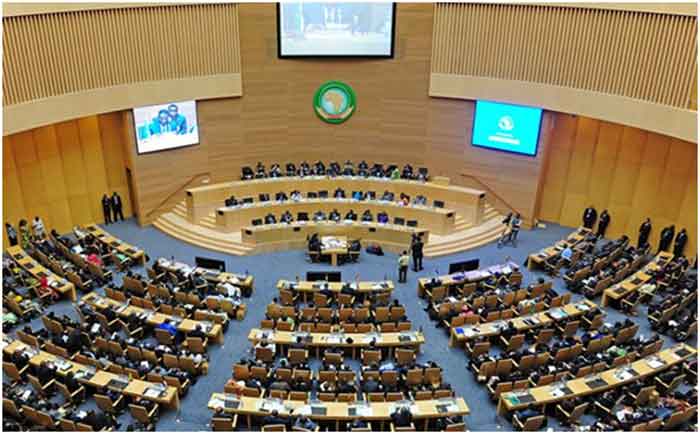
African Union at 20: Challenges ahead

Bulbul Prakash


African UnionAfrican Union

The African Union was founded in 2002 as a successor to the Organization of African Unity (OAU), an intergovernmental organisation that functions as a link between the African countries. With the union commemorating its 20th anniversary this year, the continent has faced several challenges in recent years, including civil wars, stalling transitions, Islamic militancy, food insecurity, and climate change-related threats. The twentieth anniversary as well as the upcoming Africa Day to reflect on the progress made by the African Union provides an opportunity for member states to evaluate the organization’s accomplishments so far and to consider the AU’s involvement in Africa’s emerging peace and security concerns.

With 115 million Africans still under the control of forces that have illegally ceased power, peace and security continue to be the major challenge for the union. A poor and dictatorial government fosters extremism and transnational crime, resulting in bloodshed and impeding democratic initiatives. The continued undemocratic political developments in West Africa and Sudan are particularly disturbing. In the last two years, at least five such coups have occurred in Burkina Faso, Chad, Guinea, Mali, and Sudan. The AU’s response to many of these crises has been mixed. The African Union’s Peace and Security Council has declined to ban Chad, stating it was not a coup when the son of the country’s late dictator seized control. It has had trouble making decisions during the wars in Ethiopia and Mozambique, with the countries insisting on those as domestic crises. Democracy is failing the people, and the military is stepping in to fill the void. Many countries have also failed to have an effective plan to cope with jihadist situations. The regional coordination in managing the jihadist flow from Libya to Mali, from Mali to the borders with Burkina Faso and Niger has been very poor. The jihadist groups continued to occupy ungoverned spaces within these countries. This has directly affected the economic situation of these countries.

The rising coups has made the countries in the West African region lose faith in democratic processes. The success of the coups instigate their continuation. Hence this is a huge challenge for the union in the coming years. The inflow of international connections and links between these coups has become a serious concern indeed. The Mali government has claimed that French government is responsible for aiding and abetting the jihadist groups in the region. The union plays a key role here in forming a united front against these coup d’états.

At the latest summit concluded in Addis Ababa, the rising COVID-19 cases sparked widespread discussions on the grave consequences for the African continent. Having only 11 per cent of the population fully vaccinated, increasing COVID-19 vaccination rates is a top priority for the union. Several food security challenges are already affecting the continent, ranging from one of the worst droughts in 40 years in the Horn of Africa to war-related food insecurity in Ethiopia, where droughts have already affected over 4 million people. Malnutrition rates continued to increase all throughout the conflict-torn regions. In addition, around 400 million people do not have regular access to nutritious and adequate food. Climate change has also struck the region the hardest, with temperatures rising faster than the worldwide average (1.2 degrees).

The Union is still relatively young and working to improve its institutional and human capacities, but is falling behind in staffing, financing, and other areas, and thus failing to meet its ambitious goals. The legitimacy of the organisation remains debatable, with the purpose and key stakeholders remaining unclear, particularly with civil society. The organisation itself is caught between the national government and their interests, and as a result, fails in its larger roles. The union is highly fragmented with too many focus areas and less coordination with its regional economic communities. The union’s attempt to function similar to the European Union’s executive body has failed as the former lacks the authority to enforce treaties or adopt norms.

Let us now look into how far the organisation has come forward despite the rising challenges and its plans for future. Recent political changes in countries such as the Democratic Republic of the Congo and Gambia offer hope for the continent’s progressing peace. The African Continental Free Trade Area, which entered into effect last year to improve intra-African trade and the continent’s prominence in the global market, is in fact a true accomplishment. The African Union’s Green Recovery Plan is noteworthy for identifying the need for green and resilient recovery as a method of responding to concerns connected to climate change, public health, and the economy. The African Union’s Strategy on Gender Equality and Women’s Empowerment (GEWE), which emphasises the importance of economic empowerment for women in order for Africa to accomplish its inclusive and sustainable development goals, is likewise laudable.

Despite its success stories, many citizens feel the organization is functioning to cater the needs of the commissioners and ministers rather than a functional agency working for the people. The local approaches that incorporate tactic to prevent violent extremism shall be promoted and the union shall try to become a people centered and Pan Africanist institution. Re-approaching nations who has an interest in sustaining stability in the region, such as the Gulf monarchies, will fill the budget shortfall. The union shall also ensure that development and security shall be made according to each country’s individual situation. The African Union’s legitimacy, and hence its future, will be defined by how proactive, consistent, and principled it is in avoiding or criticizing instances of heinous misrule by current leaders. Women and youth must also be included in discussion processes to boost their chances of success and the longevity of their successes. The Union shall also be able to effectively utilize the increasing international community’s efforts to manage, stabilize and resolve ongoing wars and armed conflicts, though with varying degrees of success.

Long COVID affects nearly 2 million in the UK

Stephen Alexander


The massive growth of Long COVID in the UK, now rapidly approaching 2 million cases, has exposed the devastating scale of the public health disaster produced by the government’s profit-driven “living with COVID” strategy.

At the beginning of April, the number of people suffering Long COVID reached 1.8 million, 2.8 percent of the UK population, according to data published by the Office for National Statistics. Of these self-reported cases, 1.3 million have suffered one or more COVID symptoms for more than 12 weeks, 791,000 for more than one year, and 235,000 for more than two years.

A rendering of the SARS-CoV-2 virus (National Institute of Allergy and Infectious Diseases)

The World Health Organisation has described the condition as a “pandemic within the pandemic”. The number of cases worldwide has grown to an estimated 100 million as the wealthiest capitalist governments have allowed the virus to spread and mutate without restriction in the name of saving “the economy”—i.e., the profit interests of big business.

The most common symptoms reported are fatigue (51 percent), shortness of breath (33 percent), loss of smell (26 percent), and problems concentrating or brain fog (23 percent). Two-thirds of all cases, 1.2 million people, report being unable to perform some or all their regular daily actives. There are currently 1 million missing from the workforce compared to pre-pandemic employment in the UK, including 400,000 no longer working because of poor health, including Long COVID.

Long COVID is defined as suffering symptoms for 12 weeks or more after a COVID-19 diagnosis, in conditions where no other cause is identified. Half of all people hospitalised with COVID still exhibit at least one symptom two years after infection, according to a study published in the Lancet medical journal.

As with risk of serious illness and death from infection with COVID-19—which kills working-age people in the most deprived areas at nearly four times the rate than among people in the wealthiest areas—Long COVID is primarily a disease of the poor and socially vulnerable. The Imperial College London’s REACT study of 500,000 UK adults found a higher risk of persistent COVID symptoms among women, people who smoke or who are overweight, people who live in deprived areas, and those who have been admitted to hospital with COVID-19.

While some COVID survivors experience persistent symptoms for only a few weeks or months, there is a growing body of scientific research linking Long COVID to a plethora of life-changing and deadly chronic diseases, including brain damage, kidney disease, diabetes, chronic fatigue, nerve damage and heart disease. While these illnesses are more common in those who developed severe illness upon initial infection, Long COVID can also devastate the health of those who experienced only mild symptoms.

Research published earlier this month by scientists at the University of Cambridge and Imperial College London found that “cognitive impairment from severe COVID-19 is similar to that sustained between 50 and 70 years of age and is the equivalent to losing 10 IQ points”. It described the recovery process after six months as “at best gradual”. The study found that survivors of severe infection suffered heightened risk of cognitive disfunction affecting memory, attention and reasoning, alongside mental health disorders including depression, anxiety, post-traumatic stress, low motivation, fatigue, low mood, and disturbed sleep. The risk is particularly pronounced among survivors who required mechanical ventilation.

Professor Adam Hampshire from the Department of Brain Sciences at Imperial College London, the study’s lead author, said: “Around 40,000 people have been through intensive care with COVID-19 in England alone and many more will have been very sick, but not admitted to hospital. This means there is a large number of people out there still experiencing problems with cognition many months later. We urgently need to look at what can be done to help these people.”

Researchers at the University of Oxford have also found considerable brain damage in people who suffered only mildly symptomatic infections, based on an analysis of 800 brain scans taken before and after infection. As well as a reduction of grey matter in the orbitofrontal cortex (including the smell and taste centres of the brain) and the parahippocampal gyrus (part of the limbic system involved in memory), the study observed a reduction in overall brain size and higher levels of cognitive decline than in the general population.

Findings from the King’s College London’s ZOE COVID survey showed an increasing number of people infected with COVID are reporting tinnitus—a prolonged noise or ringing in the ears without an outside source. A survey of 14,500 people found about 5,000 reported ear-ringing after a positive test for COVID. Over half of these cases reported tinnitus lasting weeks or months following infection.

Professor Tim Spector, the co-founder of the study, said the findings show for “the first time that ear ringing, as with long term loss of smell… is something to take seriously because it does suggest that a different part of the body is being affected, more internal and close to the brain”.

Responding to a growing body of scientific evidence for prolonged and potentially permanent neurological damage, Alzheimer’s Disease International has warned that COVID-19 may cause a “pandemic of dementia” like the higher risk observed in people infected with HIV (human immunodeficiency virus).

New research conducted by University College London has also linked Long COVID to increased risk of blood clotting. The study found a widespread imbalance in two blood proteins, the von Willebrand Factor (VWF) and ADAMTS13, which allow the blood to clot and seal off broken blood vessels. Overall, 28 percent of 330 study participants with Long COVID had heightened markers for blood clotting. The risk was even higher in those who showed reduced capacity for exercise, with 55 percent testing positive for blood clotting abnormalities.

The UK is already witnessing a surge in demand for Long COVID treatment and support. Demand for occupational health treatment has soared by 80 percent in the past six months, according to a survey by the Royal College of Occupational Therapists (RCOT). The charity Asthma and Lung UK reports the number of people seeking help for Long COVID doubled between September 2021 and March 2022, including enquiries from those suffering breathing difficulties about how to secure long-term oxygen treatment at home.

In the face of this avalanche of chronic illness and the prospect of long-term sickness and disability for hundreds of thousands more people in repeated waves of coronavirus, neither the Conservative government nor any of the major parties have deviated in the slightest from their profits-before-lives policy of allowing mass infection to rip through the population.

Just £220 million has been made available to support 90 specialist clinics in England. And this is under conditions where the NHS, GP practices and social care services are already facing historic staffing shortages and treatment backlogs from the pandemic, on the back of decades of austerity and privatisation. The average waiting time to be seen by a Long COVID clinic stood at more than 15 weeks in March-April, according to Nationa Health Servive (NHS) data. Many patients waited a year or more for an initial referral.

Those who can afford it are turning to private healthcare in desperation. In one widely reported case, Dr. Binita Kane, a respiratory consultant, sought private medical care for her 11-year-old daughter in Germany, at the cost of £6,000. Severe fatigue, body pain, tinnitus, sore throat, and acute abdominal pain had reduced her to using a wheelchair, and the NHS was only able to offer fatigue management therapy. The additional tests available in Germany flagged dangerous blood abnormalities including hyperactivated sticky platelets, micro clots, and mild endothelial damage (a type of non-obstructive coronary artery disease). Her case has since improved dramatically following a detailed diagnosis and specific medical treatment.

The Johnson government, which is committed to strangling the NHS and widening the market for private health corporations, has no intention of providing the public health resources necessary to humanely address the public health disaster it has inflicted on the population.

The Equalities and Human Rights Commission (EHRC)—a nominally independent regulator with a board handpicked by the Tory government—has stated, “EHRC does not recommend that ‘Long COVID’ be treated as a disability” citing a supposed lack of “scientific consensus” and “case law”.

Dr. Jenny Ceolta-Smith, an employment advocate for Long COVID Support and co-founder of Occupational Therapy for Long COVID, said: “There is already disbelief of workers’ Long COVID symptoms within the workplace, and this harmful announcement by the EHRC may make it much harder for workers to gain the support that they need from colleagues and line managers. It may even mean more jobs are lost.”

Johnson UK government announces cost of living support package fearing social explosion

Robert Stevens


UK Chancellor Rishi Sunak announced in Parliament today a £15 billion “Cost of Living Support package” in response to the desperate situation facing tens of millions of people.

Sunak effectively tore up his Spring Budget statement, laid out just two months ago, which refused any respite for those thrust into abject poverty.

UK Chancellor Rishi Sunak explains in a video on his Twitter page his cost of living support package (Credit: screenshot-Rishi Sunak/Twitter)

In what was billed as an “Economy Update”, Sunak announced £15 billion in financial support, citing an inflationary surge that is “causing acute distress for the people of this country.” He declared, “We need to make sure that for those whom the struggle is too hard… and for whom the risks are too great… are supported.”

The  multi-hundred millionaire Sunak was forced to acknowledge the deeply entrenched hardship in a country in which 14.5 million live in poverty, with another 250,000 households set to “slide into destitution” in 2023, according to the National Institute for Economic & Social Research.

Eight million households who “already have incomes low enough for the state to be supporting their cost of living through the welfare system” will receive a £650 one-off Cost of Living Payment. Over eight million pensioner households who receive the Winter Fuel Payment as they cannot pay their bills will receive a £350 one-off ‘Pensioner Cost of Living Payment’”. Six million people who receive non-means tested disability benefits will receive a “one-off Disability Cost of Living Payment, worth £150.”

Just two months ago, Sunak announced an energy bill rebate scheme in which every household would be eligible for a loan of just £200, to be clawed back over four years. Today he was forced to scrap this and make available to every household a non-repayable £400 grant for help with energy bills.

A further £500 million was announced by the chancellor for household support fund delivered by local councils, increasing it to £1.5 billion.

The support package will be partially paid for by a temporary 25 percent tax on the profits of the giant oil and gas firms who are raking in what Sunak described as “extraordinary profits”. Just few weeks ago, Tory MPs were whipped to vote down a similar Labour Party motion for a windfall tax. Such is the scale of the crisis confronting British capitalism that Sunak’s tax on windfall profits is double that which Labour was proposing.

Even so the Johnson government’s tax will barely touch the profits of the oil and gas giants. Just in the first three months of 2022, Shell made £7.2 billion in profits and BP raked in £4.9 billion. Sunak reassured them, “when oil and gas prices return to historically more normal levels, the Levy will be phased out and with a sunset clause written into the legislation.”

In the 24-hour lead-up to Sunak’s announcement, the media trailed reports of a £10 billion support package. In the end, the government felt it necessary to put down a further £5 billion. Such is the scale of the social hardship gripping tens of millions that Sunak’s measures will provide only momentary relief, with the one-off payments dwarfed by rising fuel, food and energy costs.

There are several factors underlying the calculations of the Tories and the government’s sharp policy reversal.

Since Sunak delivered his March economic statement, inflation has reached the highest level in Britain in 40 years. In March, the CPI inflation rate stood at 7 percent—reaching 9 percent this month. The more accurate RPI inflation measure, including housing costs, has risen from 9 percent to 11.1 percent, much of it fueled by April’s lifting of the cap on household energy costs that saw many bills rise by £693 from £1,277 to £1,971. Prepayment bill payers, mainly the poorest in society, saw their bills surge by £708, from £1,309 to £2,017.

An analysis of 21,000 food and drink items by Which? consumer magazine between December 2021 and February 2022 found that inflation on these was up 3.14 percent on average compared with two years ago. At least 265 products had seen price increases of more than 20 percent over that period.

According to the Zoopla property website, rents across Britain rose by 11 percent over the past year to nearly £1,000 per month—forcing the average worker to spend more than one third of their household income on rent.

Sunak’s statement was doubtless timed to coincide with senior civil servant Sue Gray’s official report, published Wednesday, into the “partygate” scandal surrounding Prime Minister Boris Johnson. Both Johnson and Sunak have been the target of public fury over illegal drinks parties at Downing Street during the pandemic. Johnson declared this week that it was time to “move on”. They calculated that ignoring the cost-of-living surge would be political suicide.

The urgency of such a response was emphasised this week by Jonathan Brearley, CEO of Ofgem, who told Parliament’s Business, Energy and Industrial Strategy Committee that the price cap hike in October will likely see household fuel bills shoot up to a record £2,800. He warned MPs that the number of people in fuel poverty could double to 12 million. E.ON energy UK chief Michael Lewis declared, “Frankly, some people are at the edge. They simply cannot pay, and that will get worse once prices go up again in October… We need more intervention.”

Facing the greatest crisis of capitalism since World War II, Johnson and Sunak have adopted measures they previously denounced as “tax and spend socialism”. Today’s announcement provoked outrage among sections of the ruling Conservatives, with Richard Drax declaring, “throwing red meat to socialists, by raising taxes on businesses and telling them where to invest their money is not the conservative way.” The pro-Tory Spectator denounced, “Rishi Sunak, the tax snatcher”.

By far the main consideration in Sunak’s announcement was fear of an uncontrollable social explosion under conditions of an escalating class struggle. The eruption of mass protests and strikes in Sri Lanka, Pakistan and other countries in recent weeks, driven by inflation, is being read as a warning sign.

Media headlines have reflected nervousness over the economy being ground to a halt after 40,000 rail workers voted for strike action. As Sunak prepared his speech, the Daily Mail raised the spectre of “A YEAR of discontent?”, warning of a “wave of rail strikes this summer going into 2023—as British Airways staff, hospital cleaners, refuse collectors and lorry drivers also set to walk out in coming months”. Even as Sunak announced his cost-of-living package, BT telecoms workers are preparing to launch their first national strike in 35 years. They are being balloted for industrial action next month after rejecting a below inflation pay offer from a company making £1.3 billion annual profits.

The main concern of the ruling class is that the class struggle is threatening to break through the shackles imposed on it for years by the corporatist trade unions.

Protesters in Dover march in protest at the job losses at P&O (WSWS Media)

Throughout the pandemic, the unions have deepened their collaboration with the employers and government, imposing ever worsening attacks on the working class. Among those betrayed by the unions were tens of thousands employed at British Airways, British Gas, Weetabix, Go North West, Tesco, Jacobs Douwe Egberts, P&O Ferries and at universities and colleges and schools nationally.

There are growing signs that workers will no longer accept the unions’ sabotage of their struggles. Last week oil rig workers walked out in wildcat action across 16 platforms in the North Sea. The strikers called for a “wage revolution”, with its organisers declaring they were targeting not simply one company but the “industry world-wide as a whole.”

Germany’s IG Metall union rejects seeking compensation for inflation through higher wages

Ulrich Rippert


Since the beginning of the Ukraine war and the draconian economic sanctions imposed by the German government, energy and food prices have shot up. The constant spread of short-time working has already led to heavy financial losses for working people. Many workers are faced with the question of how they will pay for fuel, rent, heating, loans, and the wellbeing of their families in the future.

Protest against job cuts at the Daimler plant in Berlin-Marienfelde in November 2020 (WSWS photo).

Despite the assault on workers living conditions, the IG Metall union has said that current and upcoming collective bargaining negotiations will not address compensation for inflation. “Exorbitant inflation rates are not to be compensated through collective bargaining,” according to Roman Zitzelsberger, district leader of IG Metall in Baden-Württemberg and the union’s negotiator for pilot agreements.

To the question, “Why not?”, Zitzelsberger answered that the high inflation rates were the result of political decisions and therefore had to be corrected by “politics.”

Until now, the trade unions had always said that setting wages was the exclusive responsibility of the collective bargaining partners and that the government had no role to play. Inflation plus productivity growth served as a rule of thumb for calculating wage demands.

Now, Zitzelsberger has turned this upside down and claims that massive income losses caused by price increases are not a yardstick for wage demands and collective agreements. In other words, IG Metall is entering the bargaining round with the declared aim of lowering real wages.

Zitzelsberger thinks he can pull the wool over workers’ eyes by claiming that the government is responsible for compensating for inflation. But everyone knows that the question of price increases has been an important issue in all collective previous bargaining. And now, when price rises threaten an existential crisis for many, this is no longer supposed to be the case!

The truth is that IG Metall is supporting the government and the corporations in carrying out the biggest wage robbery in decades. A few weeks ago, Zitzelsberger signed a joint statement on behalf of IG Metall with the Südwestmetall employers’ association welcoming the “united and determined” response of Germany, Europe, and its allies to Russia’s invasion of Ukraine.

“We support the measures that have been decided,” both federations stressed. Zitzelsberger and employers’ president Porth left no doubt that this also meant the dramatic increase in military spending. They expressly welcomed the sanctions against Russia, despite their dire effects on the population in Russia and at home. “These measures will demand sacrifices from all of us,” the statement said.

Now, IG Metall is forcing workers to make these “sacrifices” by refusing to seek compensation for rampant inflation and agreeing to real wage cuts through the collective bargaining process. As a stooge of the government, it is thus forcing the working class to finance the arms deliveries to Ukraine, the NATO war against Russia and the gigantic military build-up of the Bundeswehr (Armed Forces).

The struggle against war and rearmament has thus become a struggle against the trade unions, which serve as an extension of government and the corporate employers’ organisations.

The same Zitzelsberger who now preaches wage reductions also declares at every opportunity that it is impossible to defend jobs in the auto and supplier industries. He repeats the arguments of the company bosses who have declared war on workers. Not a week goes by without them announcing new mass layoffs. Ford, Daimler, BMW, and Volkswagen, Mahle, Bosch, Continental and ZF, each want to destroy thousands of jobs.

A study by the Friedrich Ebert Foundation, which is close to the Social Democratic Party and the trade unions, predicted as early as three years ago that 500,000 jobs would be lost in the automotive sector. A more recent study by the Ifo Institute predicts the destruction of 178,000 jobs in the production sector in the next four years alone. In other sectors, too—at Siemens, ThyssenKrupp, BASF, and the shipyards—massive numbers of jobs will be destroyed.

This jobs massacre is being justified by citing technological changes and the conversion to electromobility. But this is a lie. Technological progress and climate protection are not the reason for the destruction of the livelihoods of millions of people. Technological advances, planned and democratically controlled under a rational social order, could significantly raise the standard of living of all humanity.

What is really at stake is profit. The global car companies and their billionaire shareholders are waging a brutal international competitive battle on the backs of the workers, which is increasingly turning into open trade and military war. They are using the Ukraine war and the pandemic to further increase the exploitation of the working class. They are cutting jobs, intensifying levels of exploitation, lowering wages and closing and relocating entire factories.

The greed of the financial oligarchy knows no bounds. Despite the pandemic and the war in Ukraine, the 40 largest Dax-listed companies in Germany were able to record massive growth and record profits in the first quarter of 2022 alone. Both turnover and profits were higher than ever before, according to audit and consulting firm Ernst Young.

Overall, the turnover of DAX companies rose by 14 percent to €4,44.7 billion compared to the same period last year. Operating profits also improved by 21 percent and totalled €52.4 billion—the highest profits ever measured in the first quarter of a year.

But the unions are preaching sacrifice, demanding wage reductions, negotiating social cuts and agreeing to plant closures and layoffs. The signs point to an approaching storm. More and more workers are realising that a struggle is inevitable. Around the world, resistance is growing. In the US, the biggest strike wave in decades is building. In Sri Lanka, a general strike against inflation turned into an uprising against the government. In Turkey, workers have occupied a car parts factory.

Major class struggles are inevitable. But to win, workers must break with the corporatist trade unions like IG Metall, which is responding to the growing willingness to fight in the factories by clinging even closer to the corporate bosses and the government.