22 Jun 2022

COVID-19 driven staff shortages fuel crisis in Australian schools

Carolyn Kennett


COVID is continuing to cause havoc in Australian schools, belying state and federal government claims that the pandemic is over.

Schools across the country are reporting chronic daily teacher shortages due to illness. This is seeing classes being combined or cancelled, executive staff covering classes, and year groups being returned to remote learning for all or part of the school week.

Students sitting the HSC in 2019 (Credit: ABC News)

Mitigation measures such as mask mandates, contact tracing and isolation periods for close contacts have been junked across the country. Masks are no longer mandated at schools for either staff or students, and close contacts of confirmed cases no longer need to isolate. 

Under education department directives, schools have also resumed camps, assemblies and other forms of mass congregations. Around the country, hundreds, and in some cases, more than a thousand young people and staff are regularly packed into poorly ventilated halls. Parents are reporting on social media that numerous school camps have ended up as super spreader events.

Infection rates and deaths were relatively low in Australia before late 2021 and early 2022. Under pressure from teachers, school workers and parents, state governments responded to earlier surges in the pandemic by having schools function via remote learning as an important mitigation measure. 

The emergence of the Omicron variant was falsely presented as a “mild” variety of COVID, and over the December-January summer school holiday state and federal governments, Labor and Liberal alike, worked with the teacher unions to enforce the reopening of schools regardless of infection rates. 

On January 13, then Prime Minister Scott Morrison explained the pro-business calculations behind the reopening drive: “If schools don’t open, then that can add an additional five percent to the absenteeism in the workforce,” he declared. “So it is absolutely essential for schools to go back safely and to remain safely open if we are not to see any further exacerbation of the workforce challenges we’re currently facing. So schools open means shops open… That’s what schools open means, and it’s very important they go back.”

In the subsequent six months, the outcome has been mass infection, illness, and death. Out of Australia’s population of nearly 26 million people, 7.7 million cases have been officially confirmed. Of the 9,200 confirmed deaths due to COVID, the vast majority, around 7,000, occurred in 2022. Daily per capita COVID deaths in Australia are now the third highest in the world for countries with populations greater than 10 million.

An Australian Bureau of Statistics (ABS) report released in May provided a snapshot into the effect of COVID on families. One-third of Australian households with children under 18 reported their child’s attendance at school was affected by COVID. A significant proportion of households, 12 percent, reported that they were unwilling to send their children to school or preschool due to COVID.

The extent of the crisis is being covered over both by the government and the unions. One teacher reported to the World Socialist Web Site that primary school principals in New South Wales (NSW) schools have been threatened by the education department with disciplinary action if they talk to the media about cohorts of students required to study from home, or the number of classes collapsed due to staff shortages. Schools are reporting staff absences of up to 40 percent on any one day, many due to COVID infections. 

One teacher, on condition of anonymity, reported to the Committee for Public Education (CFPE) that “COVID is rampant in our school … we are now finally getting SOME of the COVID numbers, but these are not the real numbers of the COVID spread, especially as sibling groups are not actively testing—‘so never get covid.’ The reality is, a lot of the VCE (final year) students are reluctant to report their results (even when positive) to the school as it means that they are unable to attend school.”

One principal from a regional school in NSW revealed the difficulties that he and his staff were facing. He wrote a letter to the parents at his school outlining what it would be doing to mitigate against the teacher shortage, including collapsing classes, having students under minimal supervision in the playground and getting unqualified staff to supervise some classes. 

The Department of Education rewrote his letter, deleting almost all of his temporary arrangements. In an interview with the ABC’s “Background Briefing,” he said that he had refused to send the redrafted letter to parents, as it was “just outright lying to parents.” He added, 'People need to know that there is a real issue, and this is not something just to be swept under the carpet.'

The principal expressed his frustration: “I love my job. Absolutely love it… But work is really, really hard. And I don't mind working hard when you get outcomes, but when you work your backside off and the people around you are doing the same and the kids are still missing out…”

Teacher shortages were a huge problem before COVID, but the pandemic has led the system to a breaking point. An article recently published by Monash academics found that 59 percent of teachers surveyed were planning to leave the profession. The reasons given by teachers included “heavy workloads, health and wellbeing concerns for teachers and the status of the profession.”

Epidemiologists are warning that the BA.4 and BA.5 are set to become the dominant variants in Australia, which will lead to another surge in infections. Of serious concern is a recent study from Japan, which found that the BA.4 and BA.5 subvariants are not only more pathogenic but also have the ability to evade existing immune responses from both prior infection and vaccination. 

In May this year, Ozsage, a multi-disciplinary network of Australian experts, warned that COVID was now the leading cause of death in Australia. Professor Nancy Baxter explained, “On average some 50 people a day are dying from COVID. That’s one person every 30 minutes. We will see tens of thousands more suffering from long COVID. Our health systems, schools and businesses are already struggling and the situation will get a lot worse if we do not act.”

The diagnosis of Long Covid covers a raft of symptoms that last well occur after even mild infection from the virus. It includes significant damage to many of the body’s major organs including the brain. Several studies have found that 10 percent or more of people who are infected with the virus will suffer from some form of Long Covid. This includes countless children now contracting the virus in their classrooms.

Sri Lankan government shuts down government offices and schools

K. Ratnayake


Unable to provide adequate fuel, the Colombo government this week announced desperate measures to halt many public and economic activities, provoking deeper anger among workers, the poor and youth. The government has virtually no foreign exchange to import essentials, including fuel, food items and medicines.

People queue for gas in the rain in Ragama [Photo: WSWS]

On Monday the government of President Gotabhaya Rajapakse and Prime Minister Ranil Wickremesinghe began a new round of talks with the International Monetary Fund (IMF) about the further harsh austerity measures they must impose in order to obtain a bailout loan.

The measures already implemented from this week include a two-week “work from home” rule for all public sector employees from Monday. But no proper facilities, such as internet access and computers, are available to work from home. Public institutions have begun calling workers back into workplaces for two days a week.

Two weeks ago, the government introduced a Friday holiday for all government employees, citing the food and fuel crisis. These workers were cynically told to cultivate their home gardens because of severe food shortages.

State employees previously did overtime in an effort to earn enough income to cope with the rising cost of living, but paid overtime has been stopped. Casual employees’ pay has also been cut because the number of working days has been reduced.

Though the “work from home” regime was scheduled for two weeks, several employees told the WSWS it is uncertain when it will end. They noted that the fuel crisis is not lessening in Sri Lanka and other countries.

On Sunday, Energy Minister Kanchana Wijesekera urged private companies to also introduce “work from home”, as some of them did during earlier periods of the COVID-19 pandemic. Because of inadequate fuel supplies and the lack of international orders, some companies have already reduced employment to two or three days a week. Workers have expressed fears for their jobs as companies may shut down.

People waited all day and night in the rain in Ragama, where gas was not delivered. [Photo: WSWS]

The education ministry has ordered all public and private schools in major cities to close from Monday for one week and conduct online teaching. However, these shutdowns may also last longer. School principals have told students not to attend schools until they are informed.

Across the entire country, a major disruption of education is taking place as teachers and students are unable to attend schools due to drastic reductions in transport services.

The country’s largest university, the University of Peradeniya, was closed from Monday until further notice. The authorities said they took this step due to “current difficulties.”

The public hospital system is also crumbling because of the lack of medicines, the food crisis and the fuel shortages. The Daily Mirror reported that cardiac surgeons and cardiac anesthesiologists at national hospitals have written to authorities saying that they have decided to curtail several operations from Monday because of shortages of drugs and the fuel crisis.

Colombo South Teaching Hospital director Dr. Sagari Kiriwandeniya told the media that doctors were facing problems reporting to work because of the difficulty in obtaining fuel. She told The Morning: “The doctors who report for duty stop their vehicles at fuel queues and come to the hospital by three-wheeler or on foot. They complete their shift and return to the queue.”

During the past two weeks, kilometres-long queues have emerged near about 600 distribution stations around the country. Hundreds of thousands of motorists have waited for up to three days for fuel.

The fuel stations are like battlefields, with police and armed military personnel deployed. Without fuel, clashes have erupted near many petrol sheds. Angry people have chanted slogans and cursed the government for lacking concern for the masses. At some places soldiers have fired into the air to “control” unrest and at other places police have attacked and arrested people.

The fuel crisis has disrupted internal supply chains, further intensifying shortages of essentials and pushing up prices. Many lorries are waiting in queues for days to obtain fuel. Even the produce in one area cannot be transported to other areas in time. This disruption has particularly affected vegetables and fish, increasing prices by up to 300 percent.

Part of a long queue of three-wheelers waiting for petrol in Padukka [Photo: WSWS]

This extreme economic turmoil has been produced by the COVID-19 pandemic and the US-NATO proxy war against Russia in Ukraine, which drove up commodity and fuel prices. The country’s foreign exchange reserves dried up with declining exports, the collapse of income from tourism and falling remittances from those working overseas. The situation has compounded by the massive repayments required on foreign loans.

Sri Lanka has only $US1.9 billion foreign reserves, according to the latest figures cited in Bloomberg. Of this, $1.5 billion is a swap loan from China.

An IMF team has begun ten days of talks with Prime Minister Wickremesinghe and Central Bank and treasury officials. Its statement said: “We reaffirm our commitment to support Sri Lanka at this difficult time, in line with the IMF’s policies.”

That means the government has to conduct “debt restructuring” with its creditors and cut government expenditure to satisfy the IMF. International creditors, who are always demanding pounds of flesh, will provide the least “debt relief.”

The government will intensify its austerity program by slashing government expenditure, particularly by downsizing the public sector, privatising state-owned enterprises and cutting social programs such as education and health. Already the government has begun slashing about 800,000 public sector jobs and increasing taxes, including the VAT (value added tax).

The World Bank last week estimated Sri Lanka will face a 7.8 percent economic contraction this year and 3.7 percent in 2023. This is the result of the combined impact of IMF austerity policies and the global economic crisis.

In its Economic Prospect Report, the World Bank warned the government not to delay in implementing IMF measures, saying: “The contraction can be greater in case of protracted delays in actions by the authorities to restore macroeconomic stability and in debt restructuring.”

The working class will not tolerate this developing horrific situation and the government’s austerity measures.

Since early April, workers, the poor and youth have launched massive protests, demonstrations and strikes against the government. Millions of workers joined one-day general strikes on April 8 and May 6.

They demanded the resignation of President Rajapakse and his government and an end to austerity policies, soaring prices and long hours of power cuts. These struggles shook the entire political establishment to the core. 

The trade unions reluctantly called the strikes to deflect the massive opposition among workers into the demand for an interim regime and general elections. These were the demands that the opposition Samagi Jana Balawegaya (SJB) and Janatha Vimukthi Peramuna (JVP) presented to divert the mass anger into parliamentary channels.

After unions betrayed these struggles, the SJB and JVP rallied to support the newly-appointed Prime Minister Wickremesinghe, who promised to intensify the IMF policies to “solve the economic crisis.” 

However, sensing the growing anger among workers and the poor, these opposition parties have begun to play a new tune. Yesterday the leaders of SJB and JVP accused the new government of failing to solve the problems of the people. They declared a one-week boycott of parliament from yesterday. 

The SJB is calling for an all-party government and the resignation of President Rajapakse. The JVP has demanded an all-party interim regime for eight months for “political stability” as a supposed first step to solve the economic crisis.

These are sinister moves to once again derail the developing mass opposition. The SJB and JVP may have small tactical differences but they offer no alternative other than implementing the IMF program. Both parties voted for Wickremesinghe’s tax increase bill earlier this month.

The trade unions, which are associated with these opposition parties, will join their bandwagon. Not a single union opposed the austerity measures announced by the government, demonstrating their support for the IMF policies. 

German Air Force chief calls for the use of nuclear weapons against Russia

Johannes Stern


While the NATO powers are escalating the proxy war in Ukraine against Russia, the German Armed Forces (Bundeswehr) is threatening Moscow with the use of nuclear weapons. According to a report in the Bild newspaper, the Air Force head Ingo Gerhartz stated at the Kiel International Seapower Symposium on Friday:

“For credible deterrence, we need both the means and the political will to implement nuclear deterrence if necessary.” According to the newspaper, he added threateningly, “Putin, don’t mess with us! By 2030, Europeans will have 600 modern fighter jets in the Baltic Sea region. Then there are the Americans’ planes.”

The fact that a German general is openly threatening to use nuclear weapons against Russia must be taken as a serious warning. Seventy-seven years after the fall of the Third Reich, a fascist mentality is once again spreading in the ruling class. It is ready to commit the worst crimes once again in order to assert its imperialist interests.

The Wehrmacht’s war of annihilation against the Soviet Union which began 81 years ago today and in which the Luftwaffe under its then leader Hermann Göhring played a central role, resulted in the death of about 30 million Soviet citizens. A comprehensive nuclear war with Russia would not only turn Europe into a nuclear desert, but it would also call into question the survival of all humanity.

Figures like Gerhartz are apparently totally unmoved by such a scenario. In a recent interview on the official YouTube channel of the German Armed Forces, he defended the proxy war being waged by Germany and the other leading NATO powers against Russia, which increasingly directly raises the threat of a nuclear war.

The general began by celebrating the “successes” of the Ukrainian Air Force against Russia. He “admired the courage and bravery with which it acts there.” The country has “repeatedly succeeded in occasionally shooting down Russian planes and helicopters.” German “help” played a central role in this. For example, Ukraine was supplied with Stinger missiles “to combat enemy aircraft,” and these have “even shot down one or the other combat aircraft and also helicopters.”

Now the support has to go “even further.” “The Luftwaffe will supply the Iris-T SLM system and thus a rocket that we have developed for the Eurofighter to shoot down enemy aircraft and helicopters,” he continued. 

Gerhartz leaves no doubt that the German military is de facto already at war with Russia. In an interview, he praised the rapid advance of the German Air Force in Eastern Europe. “After the Russian forces invaded Ukraine, the Air Force was the first to move its Eurofighters to Romania,” he said. They have “shown what the Air Force has to show, that we are fast.” The Patriot missile defense systems already “rolled into Slovakia one week after the invasion.”

The general made clear that the Bundeswehr is preparing for a comprehensive military confrontation behind the backs of the population. Among other things, he called for the rapid procurement of a national missile defense system. This is “now urgently also a gap that we must close.” In order to be able to intercept and destroy ballistic missiles in space, he proposed to politicians the acquisition of the US-Israeli “Arrow 3” system, he explained. 

Gerhartz is particularly proud of the prompt acquisition of the US F-35 fighter jets, which were funded from the €100 billion “Bundeswehr Special Fund.” He said he was “glad that we were able to achieve this in this government” and that “we will now move forward very, very quickly.” The F-35 were the “most modern system at present” and enabled the Air Force to “act strongly against the Russian armed forces, against Putin … in the alliance.”

What this “acting in an alliance” precisely means in an emergency is regulated by the NATO concept of so-called “nuclear participation.” In the event of a nuclear war against Russia, German combat aircraft would be armed with US nuclear bombs stored in Germany and would also use them. According to an article on the official website of the Ministry of Defence, “the possible arming” of the F-35 includes “free-falling nuclear weapons.”

Gerhartz’s nuclear threats against Russia are not simply the testimony of a mad general but are consistent with the logic of war. With the systematic military encirclement of Russia by NATO, the imperialist powers, especially Germany and the US, provoked Putin’s reactionary attack on Ukraine. Above all, they are now responding to the deep economic crisis and the growing opposition of the working class with a further escalation of war, which literally provokes the use of nuclear weapons.

Above all, the ruling class in Germany is striking out more and more recklessly and sees war as an opportunity to return to an aggressive foreign and great power policy after their monstrous crimes in two world wars.

In a keynote speech at a conference of the Friedrich-Ebert-Stiftung yesterday, Lars Klingbeil, Secretary General of the SPD, stated that “after almost 80 years of restraint ... Germany now has a new role in the global coordinate system.” Germany is “increasingly at the centre” and must “have the ambition to be a leadership power.”

Klingbeil explicitly understands this to mean the use of military weapons. “For me, a peace policy also means seeing military force as a legitimate means of politics,” he stated.

He praised the special assets of the Bundeswehr, the decision of Federal Chancellor Olaf Scholz (SPD) to “deploy more German troops on NATO’s eastern flank” and demanded that Europe “be given more weight as a geopolitical actor.” This is the only way to survive “in the coming years” in the international “competition for relationships, dependencies, connections, cooperation and projection”—that is, the imperialist redivision of the world.

The costs of this megalomaniac policy are to be passed on to the working class. “This new role as a leading power will demand tough decisions from Germany, including financial and political decisions,” he threatened. One must “change structures, also renegotiate budgets.”

The ruling class knows that the policy of war abroad, as in the past, requires the militarisation of society and the establishment of a dictatorship at home. He wants “we as a society to develop a new normality with the Bundeswehr. That we develop a self-evident way of paying respect and recognition to those who do their service for our country, who are willing to go to extremes if Parliament so decides.”

The warmongers in the media underscored that there are no more moral boundaries for these “extremes.” Earlier this week, Der Spiegel Editor Dirk Kurbjuweit published an article directly calling for “German nuclear weapons.”

Kurbjuweit cynically explains that “only a functioning nuclear deterrent can prevent great wars.” This would include “a debate that is not yet underway: If Europe cannot rely one hundred percent on the United States, if Germany cannot rely one hundred percent on France and Britain, does Germany not also need nuclear weapons?” He said that when he wrote these words, it sent “chills down his spine.” “But if you think through all that is currently happening,” he continued, “you have to ask yourself this question.”

The fact that the call for German nuclear weapons is raised by Kurbjuweit of all people sheds light on the “new era” of foreign policy that has been proclaimed. In reality, the “new era” was prepared over a lengthy period of time. It was Kurbjuweit who, just a few days after representatives of the Federal Government announced the end of military restraint at the 2014 Munich Security Conference, published the notorious article “The Transformation of the Past” in Der Spiegel.

Kurbjuweit attacked the historian Fritz Fischer, who had proved in his 1961 book Griff nach der Weltmacht (Grab for World Power) that the German Empire had a large share of responsibility in the outbreak of the First World War. Fischer’s theses are “basically scandalous,” he quoted the now emeritus Humboldt Professor Herfried Münkler.

With regard to the German crimes in the Second World War, Kurbjuweit gave the Nazi apologist Ernst Nolte, who died in 2016, a platform. Nolte had already claimed in the historians’ dispute in the 1980s that the Holocaust was a justified reaction against the Soviet Union. Kurbjuweit quoted the Berlin “historian” Jörg Baberowski, a declared follower of Nolte, as saying: “Hitler was not a psychopath, and he wasn’t vicious. He did not want to talk about the extermination of the Jews at his table.” 

Airlines’ mass infection policies wreak havoc in global airline industry

Jerry White


With the peak summer travel season beginning, the global airline industry is being stretched to the point of a complete breakdown. Understaffed flight crews and airport employees are exhausted; airlines face a shortage of manpower, planes and equipment; and stranded passengers and lost luggage are piling up at airports.   

More than 4,500 US-related flights were canceled over the Father’s Day and Juneteenth holiday weekend, and analysts expect the July 4 weekend, one of the busiest air travel dates, to be worse. The chaos could persist for months, they say, if not years.

Understandably, pilots and flight crew are reluctant to return to jobs where they are crammed into aircraft and airports with hundreds of other passengers with no measures to stop the spread of COVID-19 in place, with passengers not even required to mask, and in which workers are routinely forced to work inhumanly long hours with deadly consequences if they make errors due to fatigue.

On Tuesday, over 1,300 Southwest Airlines pilots marched in Dallas, Texas, to protest fatigue, stress, staff shortages and bad scheduling. Delta pilots say they have flown more overtime in 2022 than in the entirety of 2018 and 2019 combined, their busiest years to date.

Pilot fatigue is a deadly danger in air travel. Knowing they hold the safety of their passengers in their hands, the number of pilots calling off work due to fatigue has reached record numbers.

French pilots said efforts by the low-cost UK carrier EasyJet to deliver a full schedule of summer flights “with less flight crew, cabin crew, or flight planning officers” had “left hundreds of employees in distress.”  

The crisis is due to the criminal and profit-driven response by the airlines and world governments to the COVID-19 pandemic. Tens of thousands of airline workers have been sickened and debilitated by COVID-19, and an unknown number of have died. Before vaccine mandates for airline workers started in the summer of 2021, one United Airlines employee was dying every week.

During a meeting in Doha, Qatar on Monday, airline executives denounced workers for refusing to risk their lives. “People got into a bad habit of working from home” during the pandemic, Akbar Al Baker, the head of host airline Qatar Airways, told reporters. “They feel they don’t need to go to an industry that really needs hands-on people,” adding that shortages in airport staff could “hurt growth,” according to Reuters.   

With large numbers of pilots in the US set to retire in the next coming years, industry lobbyists are now pushing to increase the retirement age from 65 to 67. Incredibly, they are calling for the rollback of federal requirements that new pilots have 1,500 hours of flight time before they qualify as air transport pilots and fly as first officers. There has been a 99.8 percent reduction in airline fatalities since the requirement was increased from 250 hours in 2013.

These conditions are provoking a movement of pilots, cabin crew and other airline employees across Europe, the US and the world.

  • The pilots union at Air France-KLM has called a one-day strike for Saturday, June 25.
  • Ryanair cabin crews in Belgium, France, Italy, Portugal and Spain have called for strikes this coming weekend, while EasyJet’s operations in Spain face a nine-day strike, starting July 1, to demand a 40 percent raise. 
  • Workers at Paris’ Charles de Gaulle and Orly airports are set to strike July 2 to demand wage increases, after a one-day walkout by groundcrew and firemen last week. 
  • More than 50 departures were canceled at Norway’s airports on Tuesday and Wednesday due to an aircraft technician strike.
  • In the US, 6,100 customer service workers at Southwest just rejected a second contract proposal backed by the International Association of Machinists because it included below-inflation rate raises. Alaska Airline pilots have voted to strike, and pilots and other workers at Southwest, Delta, United, American and other US carriers are engaged in contract fights.

When the pandemic first hit, US airline executives lobbied for and received some $63 billion in federal stimulus money to ostensibly prevent layoffs when air travel collapsed. Instead, they promptly forced out 80,000 workers through “voluntary buyouts” and early retirements. After receiving their own government bailouts, Lufthansa, KLM and other European and international carriers did the same.  

According to research by consultancy Oxford Economics, compared with pre-COVID levels, cited by the Financial Times last week, there were 2.3 million fewer jobs in the aviation industry by September 2021. “These figures include a 29 percent fall in contracted staff at airports, such as ground-handlers, where 1.7 million jobs were lost,” the Times wrote.

With the government bailout money in hand, airline executives aggressively pushed to lift travel restrictions and any measures to protect workers and passengers, which they saw as cutting across their profit interests.

On December 21, 2021, Delta Airlines CEO Ed Bastian wrote the Centers of Disease Control and Prevention saying a reduction in the quarantine period for infected workers would “significantly impact our workforce and operations.” Less than a week later, Biden’s CDC Director Rochelle Walensky cut the quarantine period from 10 days to 5, compelling sick workers to return to their jobs. 

In April 2022, Nicholas Calio, president of Airlines for America, the largest lobbying association for America’s airlines, wrote a letter to federal officials urging the government to lift mask mandates for all air travelers and COVID-19 testing for international travels, declaring, “Neither restriction is currently supported by data and science in today’s public health environment.”

In May, the Biden administration allowed mask mandates on trains and planes to end. Then, on June 10, the CDC dropped testing requirements for air travelers entering the US.

The Biden administration has adopted a “let it rip” policy even as new subvariants of the deadly and debilitating virus spread across the country.

Airline workers as UK rail workers and other sections of the working class are saying enough is enough. This growing opposition, however, needs organization and a political strategy.

The crisis in the airline industry is the product of decades-long promotion of the “free market” by capitalist governments around the world. The deregulation of the airline industry in the US and Reagan’s 1981 smashing of the air traffic controllers strike were the first shots in a war against airline workers. This was followed by the privatization of state-owned airlines in country after country, a wave of bankruptcies, mergers and mass layoffs, the emergence of “budget airlines” that spurred cutthroat competition and the undermining of safety and working conditions. 

21 Jun 2022

Earth Journalism Network 2022 Reporting Fellowships to the UNCCD COP27

Application Deadline: 4th July 2022 at 11:59 PM, (UTC -11)

Eligible Countries: African Countries and India

To Be Taken At (Country): Egypt

About the Award: The Climate Change Media Partnership (CCMP), led by Internews’ Earth Journalism Network (EJN) and the Stanley Center for Peace and Security, is pleased to announce the 2022 CCMP Reporting Fellowship Program for journalists interested in covering the 27th United Nations Climate Change Conference of the Parties (COP27). Hosted this year by the government of Egypt, the conference is scheduled to take place in the city of Sharm el-Sheikh from 7-18 November 2022.

Now in its 15th iteration since its launch in 2007, the CCMP has brought more than 400 journalists from low- and middle-income countries to attend and report on the annual UN climate talks. This has enabled journalists from around the world to cover the climate negotiations for their home audiences, while benefiting from working alongside knowledgeable climate journalists and gaining a multifaceted understanding of the actions countries are taking—or not taking—to address climate change’s global impact.

This year, the CCMP Reporting Fellowship aims to bring up to 22 journalists from low- and middle-income countries to report in-person at COP27.

CCMP organizers may also offer a limited number of virtual fellowships with mentoring and other support from CCMP staff and journalist trainers. Applicants will be asked to indicate if they are interested in a virtual fellowship, through which they would cover the COP remotely with mentoring support, if not selected for in-person participation.

Applications for the 2022 CCMP Reporting Fellowship will be accepted from June 6 to July 4. Decisions will be communicated by early August. Applications submitted after the deadline will not be accepted, please consider submitting at least one day in advance of the deadline to avoid any issues.

Type: Conference, Fellowship

Eligibility: To be eligible for the Fellowship, applicants must:

  • Be a professional journalist from or representing an established media house and reporting from a developing country;
  • Fill out the application form using the link below, including answering essay questions that illustrate his/her experience reporting on desertification and degradation issues. We also ask you to describe the kinds of stories you might pursue at the conference;
  • Be available to arrive in India on Friday, 6th September and stay until departure on Saturday, 14th
  • Commit to participate in all Fellowship activities;
  • Provide a letter of support from an editor, producer or supervisor who can confirm your ability to publish or broadcast your material in an established media outlet. Freelancers are welcome to apply but must provide a letter of support.

Selection Criteria: Criteria for evaluating applicants will include the prospective Fellow’s demonstrated experience covering desertification, climate change and other environmental topics, their interest in continued coverage of these issues and their audience and outlet’s reach.

Number of Awards: 15-20

Value of Award: Amongst costs covered will be

  • nonrefundable economy-class airfare, hotel, meals, and transportation both in-location and in transit.
  • We will also assist with the press accreditation process and provide other support services relating to travel.
  • Please note that the process of obtaining any necessary visas is a Fellow’s responsibility; however, visa costs can be reimbursed.

The Earth Journalism Network fully respects the editorial independence of all journalists. Throughout the conference, Fellows are free to report as they see fit. As well as the requirements above, we ask that journalists agree to cross-post all stories they file during the UNCCD COP27 on the Earth Journalism Network website and local and regional partner sites (we expect the stories will first be published or broadcast by a Fellow’s home media outlet).

Duration of Program: 7-18 November 2022.

How to Apply:

  • Click the ‘Apply Now’ button at the top of the page.
  • If you have an existing account, you’ll need to log in. Since we recently updated our website, you might have to reset your password by clicking the “Forgot password?” link in the log in page. If you don’t have an account, you must register by clicking “Log in” on the top right of the page and click the “Sign up” link at the bottom of the page that opens. Click here for detailed instructions on how to create an account, and here for detailed instructions on how to reset your password.
  • If you start the application and want to come back and complete it later, you can click ‘Save Draft.’ To return to the draft, you’ll need to go back to the opportunity and click ‘Apply now’ again to finalize the application.

Visit the Program Webpage for Details

Electoral Victory of Colombians Petro and Marquez is Unprecedented

W.T. Whitney Jr.


Photograph Source: National Police of Colombia – CC BY-SA 2.0

A comment on the Historical Pact coalition’s million-vote plurality overflowed with enthusiasm:  “June 19 will be remembered [in Colombia] as a day of the people and will be a moment of celebration for democracy … Today was a day for changing history.”

In second-round voting, the team of Gustavo Petro for president and Francia Márquez for vice president took 50.5 percent of the votes. The loose-lipped, right-wing construction and real estate mogul Rodolfo Hernández, candidate of the ad hoc League of Anti-Corruption Governors Party gained 47.2 percent.

This was the third presidential campaign for Petro, a senator and former urban guerrilla and mayor of Bogota, who took 40.3 percent of the votes in first-round voting on May 29. He and Vice President-elect Francia Marquez take office on August 7.

The historical significance of this electoral victory in Colombia cannot be overstated. No real people’s government has ever ruled in Colombia. In the twentieth century, high-profile presidential aspirants on the people’s side were murdered. At long last, the corrupt and deadly hold on power of former President Alvaro Uribe and his protégée Iván Duque, now leaving office, is over. And not least, the Historical Pact victory vindicates the country-wide mobilizations and demonstrations that, with mounting intensity from 2018 on, were carried out by young people and social movements.

Relishing their victory, candidates and voters alike by all accounts have taken on a new hopefulness. They are counting on an end to deadly violence and dispossession marking decades of history, and an end too of marginalization and rampant poverty diminishing the lives of multitudes of Colombians.

The ascent to Colombia’s vice-presidency of African-descended lawyer and award-winning environmental activist Francia Marquez, of humble origins, provides hope potentially for Colombia’s oppressed subsistence farmers, Afro-Colombians, and indigenous peoples.

The Historical Pact victors represent hope for a watching world of solidarity activists. In that regard, they now join presidents López Obrador of Mexico, Fernández of Argentina, Ortega of Nicaragua, Castillo of Perú, Xiomara Castro of Honduras, Arce and Morales of Bolivia, and Boric of Chile. To this constellation of left-leaning Latin American presidents is added the stubborn persistence of Venezuela’s progressive government and of Cuban socialism.  The overall message is that real change is possible, despite U.S. interventions and all-but-open war.

Speaking to Colombians after his victory, Petro declared his intention “to build Colombia as a world power for life [which would consist] first of peace, secondly of social justice, and thirdly of environmental justice.”

Highlighting key passages in Petro’s remarks, observer Ollantay Itzamná identifies hopeful signs. He cites the president-elect’s references to war: “clandestine cemeteries,” U.S. airbases, Colombia’s association with NATO, paramilitaries and narcotrafficking. Reflecting on Petro’s call for social justice, Itzamná qualifies Colombia’s inequalities as the region’s most pronounced, except for Honduras and Brazil. He mentions that 2 percent of landowners control 90 percent of Colombia’s useful agricultural land.

Petro would have “the polluter to pay for or remedy damages to “nature.” He called for a “transition to sources of clean energy.”

The news is not all good, however.  As regards, social justice, Petro announced that, “we are going to develop capitalism in order to take Colombia out of postmodern feudalism.”  Petro’s purpose, says Itzamná, is to “generate and redistribute wealth …[But] this aspect is not at all clear, because in essence, capitalism is accumulation and is destructive of life.”

Petro as president with have to deal with a Colombian Congress made up of the representatives of multiple parties. The Historical Pact’s senate delegation is the largest in that chamber, but not by very much and will have to strike compromises with other well-represented party groupings. Petro’s coalition is only the second leading force in the House of Representatives.

Confronting the Petro administration will be the still-thriving power structures within Colombia represented by wealthy financial and business interests, big landowners, and narcotraffickers. Nor will U.S. interventionists and dark influences soon disappear, among them weapons manufacturers, banks that process narco-trafficking gains, the U.S. Southern Command, U.S. habits of regional domination, and U.S. and Colombian capitalists’ dread of people-centered political alternatives.

Deadly Games: The Labour Casualties of Qatar’s World Cup

Binoy Kampmark


qatar world cup labour death
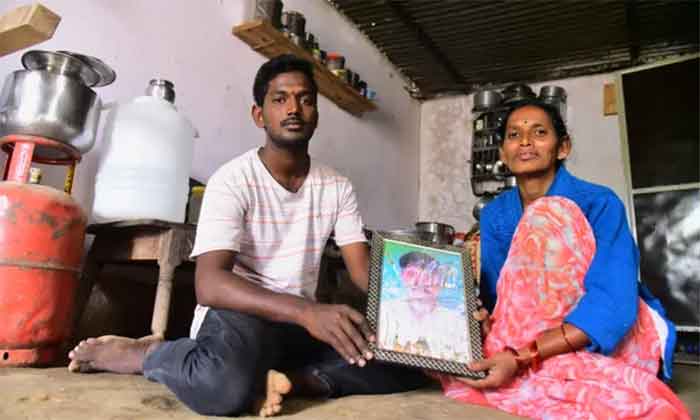
Latha Bollapally, with her son Rajesh Goud, holds a picture of her husband, Madhu Bollapally, 43, a migrant worker who died in Qatar. Photograph: Kailash Nirmal

A sordid enterprise, nasty, crude and needless.  But the World Cup 2022 will be, should anyone bother watching it, stained by one of the highest casualty rates amongst workers in its history, marked by corruption and stained by a pharisee quality.  The sportswashers, cleaning agent at the ready, will be out in force, and the hypocrites dressed to the nines.

From the start, the link between the world’s premier football (or soccer) competition and the gulf state was an odd one.  Qatar and the World Cup are as connected in kinship as gigantic icebergs and parched desert sands.  But money was the glue, prestige the aim, and there was much glue to go around when it came to securing the rights to host the competition.  What was lacking was a football tradition, an absence of sporting infrastructure, and the presence of scorching weather.

The central figure in this effort of bald graft over distinguished merit was Mohamed Bin Hammam, Qatar’s football grandee and construction magnate.  From his position as a member of the executive committee of the Fédération Internationale de Football Association (FIFA), he is said to have acted, on occasion, more like “the head of a crime organisation” than a mere board official.  All the time, he risibly claimed that he was a fan of reform, calling for “more transparency in FIFA.”

There was little evidence of transparency when it came to Doha’s bid.  With manoeuvring and cash incentives, the votes fell Qatar’s way in December 2010.  FIFA’s own comically named ethics committee cleared the country’s officials of any misdemeanour (it was “verified internally” that no secret plots had been made leading up to the award), while also having harsh words for other bidders, notably England.

The body also commissioned a 430-page report from lawyer and ethics investigator Michael Garcia that put the officialdom of both Russia and Qatar at ease.  For one thing, Garcia seemed mild in noting that, “A number of executive committee members sought to obtain personal favours or benefits that would enhance their stature within their home countries or considerations.”  With specific reference to Qatar, Garcia mentioned the country’s Aspire sports academy, alerted to it being used to “curry favour with executive committee members”.  This gave “the appearance of impropriety.  Those actions served to undermine the integrity of the bidding process.”  But not enough, it would seem, to invalidate the choice.

In all the scrounging, haggling and dealing, the fate of tens of thousands of migrant workers have fallen into the void, showing that sporting choices, even if nourished by a grossly unethical base, will still be tolerated.  Despite this, the reports about the appalling treatment Qatar affords its imported labour have not stopped coming.  For one thing, 2 million workers retained to build the various stadia, a new airport, roads, the metro system, not to mention providing a range of other services (restaurants, transport, in some cases, even security), would generally count as indispensable.  The problem with modern trafficking and slave practices lies in the fact that they will, when the time comes, be dispensable.  The pool is large and constantly replenished.

The years since Qatar was awarded the right to host the World Cup have seen a degree of ugliness that would make the hair stand on the back of any labour and human rights activist.  Much of this predates the commencement of work upon the facilities needed for the sporting event, a legacy shaped by the Kafala system.  The system of sponsor-based employment effectively indentures the worker to the employer, or kafeel, trapping the employee by restricting mobility, choice of employment and visa status.

In 2017, Qatar reluctantly signed an agreement with the International Labour Organisation (ILO) giving an undertaking to combat labour exploitation and “align its laws and practices with international labour standards”.

Despite such undertakings, The Guardian revealed in February 2021 that 6,750 migrant workers hailing from India, Pakistan, Nepal, Bangladesh and Sri Lanka had perished in Qatar since December 2010.  Such a total would be further inflated were it to account for other source countries of migrant labour, including Kenya and the Philippines.

The circumstances behind each death vary from suicide to being killed in shoddy worker accommodation.  But the authorities have done their best to relay the causes in murky terms, often aided by a reluctance to conduct autopsies.  “Natural deaths” tops the list as a favourite, with respiratory and acute heart failure featuring strongly.

In May this year, Human Rights Watch, Amnesty International, FairSquare, and a number of international migrant rights groups, labour unions, business and rights groups, along with football fans and abuse survivors, made a plea to FIFA.  In a letter addressed to its President Gianni Infantino, the collective writes of “hundreds of thousands of migrant workers” who had yet to receive “adequate remedy, including financial compensation, for serious labour abuses they suffered while building and servicing the infrastructure essential for the preparation and delivery of the World Cup in Qatar.”

In urging Infantino to work with the Qatar government, trade unions, the ILO and other relevant bodies to address labour abuses, the collective acknowledges various modest improvements.  But minor labour reforms and the Supreme Committee for Delivery and Legacy Initiatives came “too late”.  The various reforms have also been unevenly enforced.  Many workers essential to the World Cup enterprise also fall outside the remit of the Supreme Committee’s initiatives.

This whole endeavour, in short, remains plagued and blotted by institutional callousness.  But a good deal of this will be forgotten come the opening ceremony and lost among the hordes of politically illiterate fans.  The sporting show will go on, and anyone wishing to protest its merits will risk five-year prison sentences and a fine of 100,000 Qatari riyals (US$27,000) for “stirring up public opinion”.  That’s mightily sporting of the authorities.

Increase in violent attacks on mosques and Muslims in Germany

Ela Maartens


There was a total of 768 violent attacks on mosques and Muslims in Germany between January 2014 and June 2021. In particular, the years 2020 and 2021 stand out, with over 140 attacks, although the unreported number of such hostile actions—including vandalism, incitement, arson attacks and bodily harm—is likely to be significantly higher.

There have already been numerous attacks on mosques this year. In January, the WSWS reported that the Islamic Cultural Centre Halle Saale e.V. was shot at with an air rifle.

The mosque attacked in Halle (Photo: Islamisches Kulturcenter Halle Saale e.V. via Facebook)

The figures were published by Brandeilig.org, the first nationwide reporting centre for anti-Muslim racism. The independent anti-discrimination organisation Federation against Injustice and Racism e.V. (FAIR), based in Cologne, had launched the initiative to raise awareness of anti-Muslim racism in society.

According to the Interior Ministry, between 4.4 and 4.7 million Muslims live in Germany, which is slightly more than 5 percent of the total population. Most originate from Turkey, although one in two Muslims now comes from another country. There are also about 2,350 mosques nationwide. Germany thus has the second largest Muslim population in Western Europe after France.

Through annual reports, Brandeilig.org now wants to close existing information gaps regarding mosque attacks and violence against Muslims. Last May, the initiative published the inaugural Brandeilig report, for 2018, as this was the first year in which a reliable amount of information was available; further reports are to follow.

Information was collected on the numerical extent of the attacks, in which federal states they occurred, the motivation for the crime as well as the sequence of events and types of attacks.

For 2018, Brandeilig.org registered a total of 120 violent attacks. Overall, violence of varying degrees was used in 84 percent of cases, in addition to considerable damage to property and personal injury. In 4 percent of cases, the perpetrators left pig limbs in the vicinity of the mosques—a particularly disgusting action, as many Muslims do not eat pork for religious reasons.

Bavaria had the highest incidence of violence against Muslims or mosques, with 25 attacks, or 21 percent of the total. North Rhine-Westphalia follows close behind with 23 attacks (19 percent). There were 14 attacks in Lower Saxony and 12 in Baden-Württemberg, each corresponding to about one tenth of the total number.

Violence against Muslims also occurred in 10 other federal states, with some people fearing for their lives. Only in Brandenburg and Saarland were there no attacks against Muslims or mosques recorded by Brandeilig.org in 2018.

A total of 54 attacks—almost half of all incidents—can be attributed to the right-wing extremist spectrum. In seven cases, the offence was characterised by the use of racist vocabulary or racist symbolism (e.g., daubing buildings with swastikas).

The most frequent type of attack (44 percent) was vandalism of various kinds. This included graffiti, leaving an animal carcass or broken windows, whereby the overall crime patterns are subject to a broad spectrum. There have also been nine attacks in the form of arson, e.g., the use of homemade Molotov cocktails against mosques, in which two people were injured.

Other types of attacks recorded were incitement (21), insults (7) or threatening behaviour (7). Two people were injured through the use of air rifles. Premises associated with a mosque—such as libraries, function rooms or residential units—were also attacked.

A particularly repulsive act, which according to the report cannot be assigned to any category but apparently has a right-wing extremist background, occurred in Bavaria. On the building site for a mosque in Regensburg, crosses were erected bearing the names of victims of the 2016 terrorist attacks in Brussels. At the time, the right-wing Identitarian Movement of Bavaria had claimed responsibility for the Regensburg incident. This was an attempt to tar all members of the Muslim religious community as terrorists and stigmatise them, even if this is not stated in the report.

By conducting an additional survey of 68 of the 120 affected communities, the Brandeilig initiative was also able to paint a more detailed picture of the vast extent of violence against Muslims.

In the process, 77 percent of those surveyed stated they had repaired the damage themselves because the insurance company would not cover the costs. About €211,230 were raised through donations to pay for such repairs. While the report does not give any information on the financial scale of the property damage, the money raised for repairs gives at least a rough idea of its extent. In one case, the insurance company cancelled the contract with the affected municipality after the costs were covered.

It is also alarming that about half of respondents answered “yes” to the question whether there had been previous attacks. Moreover, in some cases, the police were only notified when the attacks had become more frequent. This underlines the assumption that there was far more hostility than documented by Brandeilig.org.

While the Brandeilig report presents the attacks on mosques and Muslims in Germany in detail, making an important contribution to publicising such crimes, the causes of this wave of violence are only superficially hinted at and largely obscured.

The report’s authors state that the “right-wing populist wing in Germany’s party-political landscape is gaining strength and that extra-parliamentary right-wing extremist and Islamophobic groups” are also a cause for concern. However, the report also states that there is hardly any “awareness in society as a whole of the seriousness of the situation.”

The main responsibility for the increasing violence against Muslims lies with the ruling class, which has moved further and further to the right in recent years. It has created the ideological climate and political structures in which violence against Muslims and other minorities is now taking place.

Leaders of all the establishment parties and the media have joined in the agitation against Muslims. At the same time, the federal and state governments have de facto adopted the far-right Alternative for Germany (AfD) anti-refugee policy. Since its entry into the Bundestag in 2017, the AfD has been included in all parliamentary work, even functioning as the official opposition under the last government.

Right-wing extremist forces and terrorist structures—often with close ties to the state apparatus—are emboldened by this and are increasingly willing to resort to deadly violence. In recent years, the Hanau massacre (11 killed), the attack on the synagogue in Halle (2 killed) and the murder of leading Christian Democratic Union politician Walter Lübcke were three of the worst right-wing extremist terrorist attacks in Germany since the end of the Second World War. Right-wing violence can only be stopped by the independent intervention of the working class, which vehemently opposes right-wing extremism, militarism, and war.