29 Jun 2022

Government of Mexico Scholarships of Excellence 2022

Application Deadline: 24th July 2022

Eligible Countries: See list below

To be taken at (country): Mexico

About Scholarship: For decades, the Mexican cultural diplomacy has worked in different successful programs, such as the human capital training through scholarships for academic degrees awarding and research work performing in different areas of knowledge.

The Directorate-General for Educational and Cultural Cooperation, through the Academic Exchange Department, designs and manages the Ministry of Foreign Affairs´ Scholarship Program for Foreigners. The scholarships of the Mexican Government present two programs: the scholarship for academic studies and the scholarship for special programs.

The scholarships for academic studies are offered to take complete programs for Specialization, Master´s or PhD Degrees, and Postgraduate Researches. Likewise, the offer includes academic mobility for Bachelor´s and Postgraduate Degree. On the other hand, the scholarships for special programs are offered to take short-term fellowships addressed to Visiting Professors, Researchers in Mexico´s issues, Media Contributors, Art Production Fellowships, etc.

Type: Specialization, Bachelor’s, Master’s or PhD Degrees, and Postgraduate Researches including short-term fellowships

Selection Criteria and Eligibility: The scholarships will be awarded on academic excellence.

  • Applicants must hold a Bachelor’s, Master’s or Ph.D. Degree, as required by the program for which the scholarship is requested. Technical and / or commercial degree titles are not accepted. For the cases of mobility at the Bachelor’s level, it will not be necessary to submit a diploma, only proof of studies of the last academic period completed, issued by the institution of origin.
  • Candidates cannot be living in Mexico at the time of application.
  • Applicants must have achieved a minimum grade point average of
    eighty (80), on a scale of 0 to 100, or the equivalent, for the last academic degree received. Applications with a lower grade point average will not be considered
  • The scholarships are not transferable and cannot be deferred to future years.

Number of Scholarships: Several

Value of Scholarship:

-Enrollment fees  and tuition
-Health Insurance
-Transportation from Mexico city to the Host Institution
-Monthly Stipend

Duration of Scholarship:

  • -Undergraduate and graduate academic mobility programs- one academic term (quarter, trimester or semester)
  • Undergraduate: 4 years
  • -Graduate research and postdoctoral fellowships-12 months (1 month minimum)
  • -Specialization – 1 year
  • -Master’s degree – 2 Years
  • -Doctorate- 3 or 4 years
  • -Medical specialties and subspecialties- 3 Years

Eligible Countries

  • Africa: Algeria ,Angola, Benin, Botswana, Burkina Faso, Burundi, Cameroon, Cape Verde, Chad, Comoros, Djibouti, Equatorial Guinea, Eritrea, Ethiopia, Gabon, Gambia, Ghana, Guinea, Ivory Coast, Kenya, Lesotho, Liberia, Libya, Malawi, Mauritania, Mauritius, Morocco, Mozambique, Nambia, Niger, Nigeria, Republic of Congo, Rwanda, Saharawi, Arab Rep., Sao Tome and Principe, Senegal, Seychelles, Sierra Leone, Somalia, South Africa, Swaziland, Tanzania, Togo, Tunisia, Uganda, Zambia and Zimbabwe
  • North America: United States, Canada and Canada / Province of Quebec
  • Latin America: Argentina, Belize, Bolivia, Brazil, Chile, Colombia, Costa Rica, Ecuador, El Salvador, Guatemala, Honduras, Nicaragua, Panama, Paraguay, Peru, Uruguay and Venezuela)
  • Caribbean: Antigua and Barbuda, Bahamas, Barbados, Cuba, Dominica, Dominican Republic, Grenada, Guyana, Haiti, Jamaica, Puerto Rico (Commonwealth), Saint Kitts and Nevis, Saint Lucia, Saint Vincent and the Grenadines, Suriname and Trinidad and Tobago
  • Europe: Austria, Belgium, Bulgaria, Cyprus, Czech Republic, Finland, France, Germany, Great Britain, Greece, Hungary, Ireland, Italy, Latvia, Lithuania, Netherlands, Norway, Poland, Portugal, Romania, Russian Federation, Serbia, Slovak Republic, Slovenia, Spain, Sweden, Switzerland, Turkey and Ukraine)
  • Asia: Afghanistan, Azerbaijan, Bangladesh, Bhutan, Brunei, Cambodia, Kingdom of China, People’s Rep., India, Indonesia, Japan, Kazakhstan, Korea, Kyrgyzstan, Laos, Democratic Rep., Malaysia, Mongolia, Myanmar, Nepal, North Korea, Pakistan, Islamic Rep. of Philippines, Singapore, Sri Lanka, Tajikistan, Thailand, Kingdom of Timor – Leste, Turkmenistan, Uzbekistan, Vietnam and Socialist Rep. of
  • Pacific: Australia, Cook Islands, Fiji Islands, Kiribati, Marshall Islands, Micronesia, Nauru, New Zealand, Niue, Palau, Papua New Guinea, Independent State, Samoa, Solomon Islands, Tonga, Tuvalu and Vanuatu
  • Middle East: Bahrain, Egypt, Iran, Iraq, Israel, Jordan, Kuwait, Lebanon, Oman, Palestinian National Authority, Qatar, Saudi Arabia, United Arab Emirates and Yemen, and
  • Non-self Governing Territories: American Samoa, Anguilla, Bermuda, British Virgin Islands, Cayman Islands, Gibraltar, Guam, Montserrat, New Caledonia, Pitcairn, Saint Helena, Tokelau, Turks and Caicos Islands and United States Virgin Islands

How to Apply: Only applicants from Cuba, Saint Lucia, the Dominican Republic, Antigua and Barbuda, Trinidad and Tobago, Dominica, Barbados, Suriname, Guyana, Jamaica, Haiti, Nicaragua, Slovakia, Slovenia, Lithuania, Latvia, Turkey, Venezuela, New Zealand, the Palestine and the countries of the African continent may submit paper or online applications.

    • ELIGIBLE PROGRAMS ANNEX 1 )
    • ELIGIBLE INSTITUTIONS ANNEX 2 )
    • INTERNATIONAL AIR TRANSPORTATION  ANNEX 3 )
    • ELIGIBLE COUNTRIES ANNEX 4 )
    • FORM ANNEX 5 )
    • LETTER OF RETURN TO THE COUNTRY ANNEX 6 )
    • LETTER OF ACCEPTANCE OF THE TERMS OF THE CALL  ANNEX 7 )
    • TRUTH LETTER ANNEX 8 )
    • HEALTH INSURANCE COVERAGE ANNEX 9 ) 
    • APPLICANT’S MANUAL (ANNEX 10)

    ⓘ  LIST OF PARTICIPATING HOSPITALS 

  1. Applications must be submitted online through the Academic Cooperation Management System (SIGCA (https://sigca.sre.gob.mx), during the duration of the Call.
  • It is important to go through ALL application requirements in the Award Webpages (see Links below) before applying.

Visit Award Webpage for details

Sponsors: Mexican Government

Important Notes: Candidates will be informed of the results by the corresponding Mexican embassy or designated Mexican institution.

G7 and the Desperation Stage of Russian Sanctions

Jack Rasmus


Biden and the other G7 leaders are meeting in the Bavarian Alps this week. Apart from proclaiming they’ll never give up supporting Zelensky and Ukraine, G7 leaders announced they were planning two new sanctions on Russia.

Like most of the previous six phases of sanctions the purpose of the latest is to deprive Russia of revenues from exports. So far sanctions haven’t been all that successful in that regard, at least in the shorter term. While the USA has banned Russian oil and gas imports to the USA, those amounts and their respective revenue impact on total Russian export revenue is insignificant. Moreover, the ban on Russian oil exports to Europe do not begin until December 2022, while there’s no ban on Russian natural gas imports whatsoever. So little net impact on Russian energy export revenues from Europe either.

The sanctions on oil & gas Russian exports to Europe have been quite minimal to date. Meanwhile, Russia’s exports to China, India and rest of the world have been rising. As have global energy prices in general.  With accelerating global prices for oil and gas, and an increase in Russian energy exports to India, China and elsewhere, Russia’s revenues have been actually rising.

This rising revenue despite sanctions has presented something of a conundrum for Biden and the G7. The whole idea of sanctions is to dramatically reduce Russian revenues, not simply volume of exports! Sanctions thus far have had the opposite effect of what was intended—Russian energy revenues have risen not fallen.

So the G7 in Bavaria have come up with two more schemes to try to reduce Russian export revenues. But the thin mountain air must be affecting their thinking. The two new schemes are among the most desperate and economically absurd sanction ideas spawned thus far.

  1. Ban Russian Gold Exports to Europe

The first absurd proposal being bandied about in Bavaria is to get Europe to agree to ban Russian gold exports to Europe.

The thinking is Russian revenues from gold constitute Russia’s second largest export revenue source, but at $20 billion a year gold sales revenue is still well below Russia’s oil export revenue of around $90 billion (before sanctions). Most of the Russian gold exports goes to the gold exchange in London where it’s ‘sold’ by Russia in exchange for other currencies. The G7 thinks denying Russia access to the London gold exchange will result in a big dent in its total export revenues and ability to obtain other currencies with which to purchase other needed imports for its economy. But there are problems with the G7’s proposed ban on Russia gold exports.

First, Russia could just as well sell its gold elsewhere in the world. It doesn’t have to sell it to the Europeans at the London exchange. Other major global buyers of Russian gold are Turkey, Qatar, India and other middle eastern markets. Gold prices have been rising globally, as inflation has driven up oil, gas, and other industrial and agricultural commodities. Gold is an asset that tends to rise in price with rising general price levels, which are now accelerating worldwide. With inflation, other countries will more than gladly buy up the Europeans’ share of Russian gold. Some may even then sell the gold back to the Europeans—at a marked up higher price of course.

The Demand for Russian gold will simply shift, from Europe to elsewhere. Russian gold export revenues will thus not fall on net; in fact, may possibly even rise as gold prices continue to rise with inflation–ironically in large part due to other sanctions in general.

Second, gold is an asset that provides a hedge against inflation. It may be that Biden can get the G7 leaders and their governments (and central banks) to boycott buying Russian gold. But what’s to stop individual investors in Europe from buying Russian gold in offshore markets, when it’s presently such an attractive asset? Will Biden extend sanctions on all the individual Europeans who simply shift their purchases of Russian gold from the London Gold Exchange to the gold exchanges in Turkey, Qatar and elsewhere?

  1. Price Cap Russian Oil Exports to Europe

This is an even sillier proposal. Here’s the logic of how the price cap is supposed to work. Theoretically, Europe would all agree to buy Russian oil exports over the next six months but only at a deeply discounted price that all of Europe would agree on. In other words, set a ‘price cap’ at a level well below world market prices that are currently determined by supply in global oil spot markets. The lower price is supposed to cut Russian revenues from the oil exports to Europe—i.e. reduce revenues, the prime goal of all sanctions. The idea was first suggested by Janet Yellen, the US Secretary of the Treasury. That’s the Janet Yellen who told the world in February 2022 that inflation was temporary, remember!

Getting all of the G7 to agree to a price cap still requires getting the rest of Europe as well as Japan, So. Korea and others to agree to that price cap as well.   But isn’t Europe supposed to stop buying all Russian oil imports by end of 2022 per previous sanctions they’ve agreed to? Who believes the Europeans can agree to a price cap on Russian oil and implement that cap in three months (July-September)–and then for just three months more (October-December)? Europe can’t do anything in three months, or even six. Maybe the US and EU aren’t all that confident they can implement a full ban on Russian oil exports by December?

But even this isn’t the most absurd aspect of the ‘price cap’ proposal.

Assuming Biden could get all the G7 to convince all of Europe’s 27 nations on a super discounted price, there’s still the ‘small problem’ of what Russia’s response might be to all that. The G7’s faulty logic is the deep discounted price Europe is only willing to pay for the oil would be at a price much lower than even the 30% discount that Russia is now selling oil to India, China and elsewhere. The G7 presumably would offer to buy Russian oil only at a 50% discount off current world prices maybe? That would put pressure, as the G7 argument goes, on Russian oil sales to India etc. The Indians would then demand Russia oil prices at the G7 lower 50% discount price. Russia would realize further reduced revenues from oil lower prices to India, China, the rest of the world as well as to G7 and Europe.

This is a proposal so ridiculous it’s almost embarrassing. The problem with the G7 ‘price cap’ idea is there’s no reason why Russia would want to sell any oil whatsoever to Europe at the G7’s deeply discounted price cap level.

First, why should it when Europe says it plans to phase out all Russian oil by December anyway? Second, Russia has shown it is not concerned with reducing natural gas export revenues to Europe. It’s already cut cubic gas exports to Europe by one-third as part of its own economic response to Europe’s agreement with US sanctions on Russia and it’s warned Europe of another third soon.  Economic warfare cuts both ways. So what’s to stop Russia from just cutting off all oil exports to Europe—and well before December? Third, Russia would have to be pretty dumb to agree to sell oil to Europe at the latter’s ‘price cap’ level which would be well below Russia’s already 30% discount oil price sales to India? It knows the likely knock on effect that would follow. India as a long term oil customer is far more important to Russia than Europe which says it’s ending as a customer in just six months.  Finally, Russia knows if it cuts off all oil exports to Europe, it would just change the market flow of global oil, not reduce it. Russia would sell more to other countries, which might then just re-export it back to Europe in turn.

In short, the error with the G7 price cap idea is it assumes that buyers (Europe) can set the price for oil in what is a global sellers market! G7 may think they can stand market fundamentals on their head and make it work, but they are wrong.  No amount of G7 wishful thinking can make Demand determine Supply in today’s global energy markets, where broken and restructuring supply chains, sanctions, and war are the main determinants of price.

Both the proposal to ban Russian gold exports to Europe and the proposal to manipulate oil demand to reduce its global market price—and thereby deprive Russia of revenues—are ideas that reflect more the desperation of the US and G7 to find some way to make sanctions on Russia work in the short run when thus far they aren’t working very well, if at all.

The short run objective of sanctions–i.e. to reduce Russian export revenues–has not been working but the two latest desperate ideas won’t work any better.

Historians will wonder years from now why the US and its most dependent allies in tow—the G7 countries—embarked upon a scope of sanctions on Russia so soon after Covid’s deep negative impacts on global supply chains and domestic product and labor markets. Global markets, trade and financial flows were seriously disrupted by the Covid experience of 2020-21. And they had not recovered by January 2022 when US sanctions on Russia were escalated. Before global supply chains could heal, the US and its G7 allies embarked on sanctions that further disrupted and restructured those same supply chains while simultaneously setting off chronic global inflation that ravaged their domestic economies as well. History will show, it was all not well thought out.

Even less thought out, however, are the more recent G7 proposals to ban Russian gold and engineer a price cap on global oil—the latter in effect a fantasy that by somehow manipulating a region’s (Europe) oil Demand it could set global oil prices in general and thus over-ride Supply as the driver of oil price and revenues.

It makes one wonder about the qualifications of the current generation of world leaders (led by Biden and the US) playing with the geopolitical world order. And wonder even more about their even less understanding of the consequences of their economic actions on the world economy.

US, Israel and Gulf States discuss anti-Iran alliance as nuclear talks set to restart in Qatar

Jean Shaoul


Top military leaders from the US, Israel, Saudi Arabia, Qatar, the United Arab Emirates (UAE), Bahrain, Jordan and Egypt met in the Egyptian resort of Sharm el-Sheikh last March to discuss defence coordination against Iran.

The Wall Street Journal reported the meeting. It was the first time Israel, which has no formal relations with either Saudi Arabia or Qatar, took part in such a meeting and signifies the ever-closer relations between Washington’s two key regional allies: Tel Aviv and Riyadh.

The hitherto secret summit is part of Washington’s efforts to bolster its reactionary allies in the region, all of whom sit atop social and political power kegs. While Egypt and Jordan face threats from Sunni extremist groups linked to Al-Qaeda and Islamic State, the Gulf States with sizeable Shia minorities fear Iran’s growing political influence at home and in the region, including in Lebanon, Syria, Iraq, Yemen and Gaza.

At the same time, the Biden administration is determined to counter China’s economic presence and political influence in the energy-rich Middle East as part of its broader preparations for war with Russia and China, with whom Tehran has forged increasingly close relations.

The WSJ wrote “At the high-level Sharm El Sheikh talks, the participants reached agreement in principle on procedures for rapid notification when aerial threats are detected… Officials also discussed how decisions might be made on which nation’s forces would intercept aerial threats.”

This would involve sharing intelligence, anti-aircraft and anti-drone capabilities, advanced radar deployment and both offensive and defensive cyberwarfare technology to be supplied by Washington, and to a minor degree Tel Aviv. Saudi Arabia has already bought 22 US Patriot antimissile batteries and is about to acquire the THAAD antimissile system, which the UAE has already purchased and used to shoot down a missile fired at Abu Dhabi by Yemen’s Houthi rebels last January.

Blinken (third right) at the Negev Summit (Source: Secretary Antony Blinken Twitter)

The talks in Sharm el-Sheikh were preceded by a hastily arranged meeting of Arab foreign ministers from Bahrain, UAE, Morocco and Egypt March 28 at Sde Boker in Israel’s Negev desert, billed by Israeli officials as a “get to know you better” meeting. Israel’s Foreign Minister and Prime Minister designate Yair Lapid had arranged the meeting after US Secretary of State Antony Blinken confirmed his visit to Israel as part of a wider tour of the Middle East and North Africa at the end of March.

The meeting focused on Iran, with discussions on “a regional security architecture” against aerial and naval threats, a reference to Israel’s covert war on Iran, centering on aerial attacks on the facilities of Iran and its allies in Syria and the covert maritime war mostly in the Red Sea and eastern Mediterranean that has seen Israel carry out at least a dozen attacks on Iranian vessels between 2019 and 2021. It followed the visit by Israel’s Prime Minister Naftali Bennett to Sharm el-Sheikh where he met the leaders of Egypt and the UAE.

Israel’s Defence Minister Benny Gantz described the emerging arrangements as the “Middle East Air Defence Alliance.” He claimed the air defence initiative had already enabled “the successful interception of Iranian attempts to attack Israel and other countries” in the region. Israeli officials declined to provide details, saying, “It’s still a work in progress.”

These talks took place in the run up to the announcement that US President Joe Biden will visit the Middle East July 13-16, where he will meet Lapid and President Isaac Herzog in Israel and the Palestinian Authority President Mahmoud Abbas in Ramallah before going on to Jeddah for talks with Saudi Arabia, Kuwait, Oman, UAE, Bahrain, Qatar, Jordan, Egypt and Iraq.

Biden’s visit is aimed at patching up relations with Saudi Crown Prince Mohammed bin Salman, who was initially treated as a persona non grata because of his role in the murder of dissident journalist Jamal Ahmad Khashoggi and other gross violations of human rights. He will discuss “national security” issues with Bin Salman, along with climate change, increasing Saudi energy exports to ease global oil prices, Iran’s nuclear program and the war in Yemen.

The timing of the WSJ’s report of a meeting held three months ago suggests that factions in the US opposed to any deal with Iran are trying to scupper the talks, or at least bully Iran into making further concessions that will curb its influence in the region.

Negotiations will restart this week, beginning with indirect talks between Tehran and Washington, on a US return to the Joint Comprehensive Plan of Action (JCPOA), unilaterally abandoned in 2018 by President Donald Trump. The Trump administration reimposed the sanctions lifted under the 2015 agreement and introduced even more draconian sanctions targeting Iran’s economy, including its key oil and gas exports and banking system.

Biden hopes to use a revived agreement to bring about a thaw in US-Iranian relations and prise Iran away from Russia and China’s orbit. But this has not stopped his administration from carrying out numerous provocations against Iran, directly or indirectly via its regional attack dog Israel, including the imposition just two weeks ago of new sanctions aimed at hurting a network of Iranian petrochemical producers.

On June 25, European Union foreign policy chief Josep Borell flew to Tehran to meet Iran’s foreign minister Hossein Amirabdollahian. The EU is anxious to restore the deal to access Iran’s oil. The two ministers announced their agreement to resume nuclear negotiations in “the coming days” in Qatar, which maintains ties with both Washington and Tehran. Qatar’s foreign minister had made several visits to Tehran since the talks in Vienna stalled in March, mainly over Iran’s demand that the US remove the Islamic Revolutionary Guard Corps (IRGC) from its list of Foreign Terrorist Organizations—a demand Tehran now says is not central to the talks. If successful, all sides would go back to Vienna for a ministerial meeting and final discussions.

Borell’s visit follows that of Russia’s foreign minister Sergei Lavrov, who said that Moscow supported the revival of the deal. According to a report on Israeli website Ynet, several Israeli generals, including the chief of Military Intelligence, as well as Defence Minister Gantz, support a return to the JCPOA, believing a bad deal preferable to no deal as it gives Israel time to prepare militarily.

Iran’s clergy-led bourgeois nationalist regime is desperate to escape the strictures of Washington’s ever tighter economic blockade that has limited oil exports, decimated the value of its currency against the dollar—now worth one tenth of its value at the time of the 2015 nuclear deal—and deepened the poverty of the Iranian masses.

In the last months, there have been almost weekly anti-government protests over poverty, rents that have risen by more than a third, low and unpaid wages, the soaring cost of living as inflation reaches 40 per cent, with food prices jumping by more than 82 percent, and high unemployment—nearly 21 percent of all 15–24-year-olds were out of work in March according to official figures.

As revenues collapsed—the budget deficit is believed to be about 50 percent amid widespread corruption and mismanagement—the government cut subsidies and ended the subsidised lower exchange rate used for the import of basic food staples in May, fueling sharp rises in the price of vegetable oil, eggs, chicken and dairy products. While the government also announced higher monthly cash payments to most Iranians, this will not take effect till the autumn. Further stoking mass outrage was the May 23 collapse of a high-rise building in Abadan that killed more than 30 people.

Teachers have held protests demanding the release of 18 educators arrested during protests in recent months, while public sector workers have rallied to demand unpaid wages. They have been joined by truckers and bus drivers in Tehran and bazaar merchants in several cities. Bazaar strikes played a major role in the 1979 revolution against the monarchy.

Pensioners have taken to the streets in more than a dozen cities over now worthless pensions, chanting “Death to Raisi” (the president) and “Death to the inefficient government.”

The government has responded to the recent demonstrations with tightened security, the deployment of riot police to attack and teargas protesters, mass arrests and intimidation and accommodation with imperialist foes abroad.

German government abolishes free coronavirus testing

Tamino Dreisam


While both the number of infections and hospitalizations in Germany are rising rapidly again, the government is giving the virus free rein and dismantling the last remaining coronavirus measures.

On Friday, Health Minister Karl Lauterbach (Social Democratic Party, SPD) announced the end of free public testing. A few days earlier, he had presented a vague 7-point plan to combat the impending autumn wave, focusing on vaccinations and testing. Now, it is clear that even these areas will not be expanded, but cut back further.

Coronavirus testing centre in Frankfurt (AP Photo/Michael Probst)

Starting July 1, a test at a public testing station will cost three euros. Only vulnerable groups, such as children up to five years old, women in early pregnancy and visitors to hospitals and nursing homes, will still be tested free of charge.

The consequences of the decision are broad. For many who must test regularly, it means a considerable financial burden that workers and the socially disadvantaged in particular can hardly afford.

With the abolition of free testing, the already inadequate data on the actual level of infections will be even less robust. Lauterbach himself revealed that only about half of coronavirus infections were being recorded. Without free testing, the number of unreported cases will rise even further.

'I will make no secret of it, I would have liked to continue the free tests for all,' Lauterbach explained cynically. The decision is in line with the policies the “traffic light” coalition of the SPD, Liberal Democrats (FDP) and Greens has followed since taking office. It has ended all remaining protections, essentially putting into practice the demands of the far-right Alternative for Germany (AfD).

Lauterbach justifies the abolition of free tests with “the tight budget situation that awaits us in the autumn.” The “truth” is that the tests “unfortunately cannot be afforded,” he said.

Who is Lauterbach trying to fool? The federal government has just launched a “special fund for the Bundeswehr” of €100 billion to spend on rearmament. It is simply not willing to spend the money on coronavirus tests and other health and protection measures. Instead, these costs will be passed on to the working class, which is already struggling with rising heating, rent and food costs.

The decision makes clear the government will take no further action, even under conditions of a massive new wave of infections. Ending free testing not only eliminates the basis for reintroducing limited measures such as requiring a negative test result for entry into some public venues, the entire “Autumn Coronavirus Strategy” does not include a single mandatory protective measure.

Its seven points focus largely on a vaccination campaign and the procurement of vaccines adapted to the Omicron variant. However, Lauterbach has already ruled out a renewed push for mandatory vaccination, even though the majority of the population would support it. One looks in vain for terms such as “lockdown” or even “mandatory masking.” Instead, the document explicitly states, “Nurseries and schools must remain open.”

The seventh point refers to an “amendment to the Infection Protection Act,” which expires on September 23. New measures would thus not come into force until the end of September at the earliest, if at all. Lauterbach said he was in talks about this with Federal Justice Minister Marco Buschmann (FDP). Buschmann is notorious for regularly campaigning in AfD style against the least protective measures.

As recently as June 15, he stated on the Maischberger talk show, “We must not underestimate what excessive, misapplied measures do to society. Our goal must be to combine health protection with our identity as a free society.” By “freedom,” the FDP representative means the unrestricted accumulation of profits, even if it costs millions of lives.

In essence, Lauterbach stands for the same “profits before lives” policy that has been followed since the start of the pandemic. A few days ago, in an interview with Deutschlandfunk radio, he said, “I believe that we all have the same goal here: to be able to react quickly with as few restrictions on freedom as possible—adapted to the situation.”

At the same time, the government is aware that its policies are conjuring up another autumn with very high death rates. At the press conference following the state health ministers' conference, Lauterbach declared, “Unfortunately, we must reckon with a severe coronavirus wave. The summer wave has already started now, but it will be more difficult in the autumn.”

The federal government’s strategy paper lists three possible scenarios elaborated by its Coronavirus Expert Council. The second scenario is considered the most likely: “The disease burden caused by SARS-CoV-2 remains similar to the recent increases in Omicron variants BA.4, BA.5, and BA.2.12.1, with a clustered occurrence of infections and work absences throughout the colder season.” In fact, this scenario has already become a reality.

According to the Robert Koch Institute, the more infectious BA.4 and BA.5 variants already account for 56 percent of infections, with a massive increase in those affected—despite the present warm temperatures. At 618 infections per 100,000 inhabitants, the 7-day incidence rate is about 23 percent higher than a week ago. The virus is spreading particularly rapidly among the elderly. Last week, there were 119 outbreaks in nursing homes and homes for the elderly—25 more than a week ago. A total of 50 people have died.

The number of severe outcomes is also increasing in the general population. The adjusted incidence of hospitalizations rose to seven (per 100,000) last week, or about 5,500 hospitalizations per week. The number of patients receiving intensive care rose to 780 from 670 the previous week.

To date, more than 140,000 people have died from COVID-19 in Germany due to the government’s refusal to eliminate the virus through implementing the necessary scientific and public health measures. Many more deaths will follow if the ruling class has its way. According to the government’s strategy paper, the “most likely autumn coronavirus scenario” could “extend over a long period of time.” Thus, “without taking further measures, about 1,500 coronavirus deaths per week are to be assumed.”

Jeffrey Epstein’s sex abuse collaborator Ghislaine Maxwell sentenced to 20 years in prison

Kevin Reed


Ghislaine Maxwell, the confidante of deceased sex trafficker Jeffrey Epstein, was sentenced to 20 years in prison in a Manhattan court on Tuesday.

Ghislaine Maxwell with Jeffrey Epstein in 2005 (Photo: US Justice Department)

In handing down the sentence, which was far less than the 30 to 55 years requested by prosecutors, New York Federal District Judge Alison J. Nathan said that Maxwell had “direct and repeated participation in a horrific scheme” with Epstein to sexually abuse and traffic underage girls. “The damage done to these young girls was incalculable,” Judge Nathan said.

Maxwell, 60, spoke in the courtroom for the first time since she was arrested and charged in July 2020 with six offenses, including sex trafficking a minor, and then convicted in December 2021 after a monthlong jury trial. She refused to accept responsibility for her crimes or apologize for the abuse endured by her victims over decades.

She merely acknowledged “the pain and anguish” suffered by the women who were as young as 14 years old when they were groomed for sex acts with the billionaire financier Epstein and his wealthy entourage of associates in various locations around the world. Maxwell deflected blame for the abuse of dozens of working class teenage girls, many of whom were from West Palm Beach, Florida.

Appearing in court in blue prison scrubs and shackled at the ankles, Maxwell said, “It is the greatest regret of my life that I ever met Jeffrey Epstein.” She continued, “Jeffrey Epstein should have been here before all of you.”

Judge Nathan calculated the sentence at 15½ to 19½ years in prison based on guidelines and said that her decision was above the upper limit because of the victims’ disturbing testimony and the fact that Maxwell failed to show any remorse. “Miss Maxwell is not punished in place of Epstein. Miss Maxwell is being punished for the role that she played,” Judge Nathan said.

In addition to the 20-year prison term, Maxwell was also sentenced to five years of supervised release and a $750,000 fine. Judge Nathan said Maxwell will be sent to the Federal Corrections Institution in Danbury, Connecticut. Speaking to the media after the sentencing, Maxwell’s attorney Bobbi Sternheim said the verdict would be appealed and that her client had been “vilified” and “pilloried” and left “holding the whole bag” for Epstein. She also said that Maxwell could not afford to pay the fine.

Epstein, who was known to have been engaged in sex trafficking going back to the 1990s, avoided prosecution for his sex crimes due to relationships he had with people in powerful places. Among those who are known to have traveled with Epstein in his private Boeing 727 called the “Lolita Express” were Bill Clinton, Donald Trump, Prince Andrew, Bill Gates and former Senate majority leader George Mitchell.

In 2008, Epstein avoided federal sex abuse charges by agreeing to a plea deal—negotiated by his attorney Alan Dershowitz and then U.S. Attorney for the Southern District of Florida Alex Acosta—that granted him immunity along with four named and any unnamed “potential co-conspirators.”

In July 2019 Epstein was arrested on sex trafficking charges when he stepped off his private airliner at Teterboro Airport in New Jersey. He was jailed awaiting trial at the Metropolitan Correctional Center in New York City. On August 10, Epstein was found dead in his prison cell. His death was declared a suicide by hanging by the New York City medical examiner despite evidence indicating he was murdered.

While the corporate media has been quick to characterize the sentencing of Maxwell as a “pivotal moment” and a “measure of resolution” to the criminal enterprise of Epstein and his ultra-wealthy and elite friends, the trial produced very little new information about who was involved in the sexual abuse of underage girls or why and how Epstein was protected from prosecution for so many years.

There is no doubt that stopping this information from finding its way into the public has been a primary concern of powerful individuals and organizations within ruling circles since the suspicious death of Epstein and throughout the arrest, trial and sentencing of Maxwell.

Detailed revelations about leading individuals within the American and international bourgeois establishment that were participating in Epstein’s degenerate social gatherings and then helping with a cover up of the criminality would severely undermine the authority of the ruling class.

As pointed out by Michelle Licata, one of Epstein’s victims who made statements to the Miami Herald, further details on the participants in the sex trafficking scheme need to be brought out. “By Maxwell not giving up the names of the people that participated in these crimes against underage girls she is telling the world that she doesn’t think she did anything wrong,” Licata said.

Licata also said that Epstein’s victims, who were betrayed by federal prosecutors in South Florida during Epstein’s 2008 plea deal, are still owed an explanation from the government. “There has never been a ‘real apology’ and ‘true justice’ for any of us,” she said. “It would be nice to hear from our own government that they failed to protect us and didn’t punish the people that did it when we needed them the most.”

Crypto turmoil intensifies as major fund defaults

Nick Beams


The turmoil in the crypto currency market has intensified with the announcement on Monday that the prominent crypto hedge fund, Three Arrows Capital, had defaulted on loans worth a total of $670 million.

The money is owed to the digital asset brokerage firm, Voyager Capital, which issued a notice saying Three Arrows had failed to repay a $350 million loan in the stablecoin USDC as well as about $323 million worth of bitcoin.

An advertisement for Bitcoin cryptocurrency is displayed on a street in Hong Kong, Thursday, Feb. 17, 2022. [AP Photo/Kin Cheung]

Three Arrows’ troubles flow from the crisis in the crypto market that erupted last month when the so-called stablecoins TerraUSD and its sister stablecoin Luna collapsed leading to losses of billions of dollars.

Stablecoins were touted as providing stability for the crypto market because they were supposedly pegged to the US dollar and functioned in a way analogous to chips in a gambling casino that could be cashed in at full value. In May, however, they fell below dollar parity.

Three Arrows had invested heavily in Luna which fell to virtually zero.

As warnings of the impending Three Arrows default spread last week, attention was directed to Voyager Capital with its shares falling by more than 60 percent last Wednesday.

Following the confirmation of the default, Voyager issued a statement aimed at trying to contain fears of contagion throughout the crypto market. Overall market capitalisation has plummeted from $3 trillion last November to around $900 billion—a loss of almost 70 percent.

Voyager CEO Stephen Ehrlich said the company was “working diligently and expeditiously to strengthen our balance sheet and pursuing options so we can meet customer liquidity demands.”

The contagion fear results from widespread borrowings by Three Arrows, one of the largest crypto asset hedge funds, from a range of companies to finance its investments across a number of digital assets. There are fears that Voyager may not be the only company facing large losses.

“What’s to be seen is whether there are any large, remaining players that had exposure to them, which could cause further contagion,” Vijay Ayyar, a vice president at the crypto exchange Luno, told the business channel CNBC.

A recent article in the Financial Times noted: “The deflating bubble in digital assets has exposed a fragile system of credit and leverage in crypto akin to the credit crisis that enveloped the traditional sector in 2008.”

The crypto market has been “sold” on the basis that it provided an alternative to the official financial system which afforded protection against inflation and currency movements. It was even touted as a form of “digital gold.” But its rise over the past decade has proven to be completely dependent on the flow of cheap money from the Fed and other central banks.

Valuations were inflated by a series of complex arrangements and deals—what the FT called “financial gymnastics”—which left “huge towers of borrowing and theoretical value teetering on top of the same underlying assets.”

This inverted pyramid could be sustained so long as crypto prices kept rising, but inflation and the aggressive lifting of interest rates by the Fed has led to a fall in asset prices across the board, prompting investors to withdraw their money.

Some companies are unable to pay up. Earlier this month Celsius Network, which operates as a kind of bank for crypto currencies, announced that “due to extreme market conditions” it was pausing all withdrawals and transfers between trading accounts to place it in a “better position to honour, over time, its withdrawal obligations.”

Since that announcement its position appears to have worsened. The Wall Street Journal reported on Monday that Celsius had hired restructuring consultants from a major firm “to advise on a possible bankruptcy filing.”

The WSJ has also reported that short sellers are “ramping up bets against Tether, the world’s largest stablecoin.” Shorting involves borrowing an asset which is then sold in the expectation that its price will go down. It is then bought and returned to the lender with a profit realised on the price difference.

According to the article, the shorting has been undertaken by “traditional hedge funds” and involves trades worth “hundreds of millions” of dollars.

Tether is the most widely traded stable coin in the world and is supposedly backed by cash, commercial paper, precious metals and government bonds as well as digital tokens.

However, its foundations were shaken in the TerraUSD collapse in May when it broke dollar parity and briefly traded as low as 95 cents.

Since then, according to the WSJ, short sellers have claimed that most of tether’s commercial paper holdings are backed by debt-ridden Chinese property developers.

The company has said “these rumours are completely false” and indicated that hedge funds were “looking to generate returns by creating arbitrage opportunities on the basis of these rumours.”

Be that as it may, the hedge funds may well be operating according to the maxim of the 19th century German chancellor Otto von Bismarck, who said he never believed the truth of any assertion until it was officially denied.

Whatever the position of individual operators in the crypto world, the plunge in market valuations is being driven by the shifts in the financial system as a whole.

While the value of the main crypto currency, bitcoin, has stabilised at around $20,000, down from near $70,000 last November, this may only be a temporary pause.

“The risk of contagion in the crypto markets remains elevated,” Marion Laboure, a senior strategist at Deutsche Bank told the FT.

“A tightening Fed will expose more crypto firms with excess credit risks by withdrawing liquidity and raising rates, which will depress the value of the coins on which many of these levered schemes depend,” she said.

It is not only the crypto market that is being impacted by the sea change in financial conditions. The tech-heavy and interest sensitive NASDAQ index is down more than 30 percent from its record highs, with the fall in the price of significant stocks down by much larger amounts.

Shares in the television streaming service Netflix are down 75 percent from their 2021 highs. Shares in the crypto currency exchange operator Coinbase, whose public listing in April last year was accompanied by great fanfare with a market valuation of $47 billion, have plunged by 86 percent. Share in the cinema chain AMC, once touted as a so-called meme stock in early 2021, have dropped by 80 percent.

Medical contrast dye shortage forces delays in diagnostic and surgical procedures

David Rye


Disruptions to the global supply chain, greatly intensified since the start of the pandemic, have affected multiple industries including the health care sector, which is currently suffering from severe shortages of Omnipaque.

Omnipaque, the brand name of Iohexol, is an iodine-based dye that is used to create contrast in soft tissue scans. It is a critical tool in CT scans and diagnostic procedures, as well as in preparation for surgeries. Iohexol is crucial to diagnosing and treating strokes, aneurysms and cardiac conditions, and is an essential resource for hospitals.

Initial reports anticipated an 80 percent reduction of the supply of Omnipaque for approximately two months. Within the last month, hospitals in North America were sent scrambling for this critical resource and carefully rationing it, delaying diagnosis and treatment for medical conditions. While the shortage was originally expected to abate within the next couple of weeks as production has resumed, hospitals are preparing for sustained shortages through the summer.

A patient has a CT scan at the Ajusco Medio General Hospital in Mexico City, Tuesday, Aug. 31, 2021. (AP Photo/Marco Ugarte)

The shortages of Omnipaque are a devastating exposure of the irrationality of capitalist production, and a testament to the brutality of a profit-driven health care system. Furthermore, this shortage revealed the weakness of a nationally based Zero-COVID policy, as it was used to intensify international pressure against the Shanghai lockdown.

On May 16, the American Hospital Association (AHA) wrote a letter to General Electric (GE), which manufactures half of the global supply of Omnipaque, requesting that hospitals that specialize in strokes and cardiac conditions be prioritized in distribution. In the same letter, the AHA places blame for the shortages on China and the Zero-COVID policy.

“The recent shutdown of the GE production plant in Shanghai due to COVID-19 raises significant concerns about Omnipaque product availability. Those concerns were exacerbated by the fact that the vast majority of Omnipaque products are produced only at GE’s Shanghai plant.”

The shortage is not the fault of China or the Zero-COVID policy. Unstable supply chains have occurred throughout the pandemic, but at no point were preparations made on an international scale for potential shortages of critical medical resources.

Under pressure from GE and hospitals, the GE plant that manufactures Omnipaque was partially reopened during the lockdowns, operating with only a third of the workforce in a closed loop system. At that point, Omnipaque was being produced at 25 percent capacity. GE indicated that the plant was further reopened to operate at 50 percent capacity two days after the AHA’s May 16 letter. Production increased to 60 percent capacity on May 21.

GE also indicated that they have moved production of Omnipaque to Cork, Ireland, where that plant is operating at expanded capacity. However, the Ireland plant is only capable of producing a fraction of the supply of dye that the Shanghai plant produces.

In GE’s reply to the AHA, they wrote, “All of our customers, irrespective of contract, are able to source supply from alternative vendors if available.” Irrespective of the shortage, the health care system is so beholden to pharmaceutical monopolies that they can be bound by contracts limiting where they can acquire critical resources.

As if the shortage were not already dire, Vizient, a distributor in the hospital supply chain, wrote in their Omnipaque shortage mitigation strategy document, “Iopamidol (Isovue) [an alternative to Omnipaque], manufactured by Bracco Diagnostics, accounts for the second largest market share, but is not currently accepting new clients.”

With the reopening of Shanghai, after successfully beating back the outbreak of Omicron BA.2, production of Omnipaque has resumed at full capacity. Ultimately it was the Zero-COVID policy’s effectiveness in defeating the COVID-19 outbreak that allowed production of Omnipaque to resume. However, demand continues to severely outpace supply. According to Alberta Health Services (AHS), on a weekly basis the AHS system conducts roughly 5,000 scans that require Omnipaque.

GE’s June 16 update indicated that they have been operating at full capacity in Shanghai since June 8, several weeks of shortage are still anticipated and countless procedures have already been delayed and are continuing to be. Alberta Health Services estimated that roughly 2,400 procedures have been delayed as of June 18.

Regarding procedure delays, Dr. Janice Johnston of Redirect Health in Arizona told ABC, “For someone who’s been undiagnosed, we want to get at the problem quickly; making sure we get these tests done as soon as possible is always the best scenario.”

The medical supply chain has demonstrated its weaknesses, but the pharmaceutical industry will do nothing to prepare for the next medical supply shortage. As the WSWS wrote on the baby formula shortage, it is “not a mistake or a product of unforeseen circumstances” but the result of a society controlled by a profit-driven ruling elite.

The supply chain disruptions that have impacted critical medical resources are a testament to the necessity of an international strategy to eliminate COVID-19 and end the pandemic, and a rationally planned economy based on human need, not profit.

It also demonstrates the limits of a nationally based Zero-COVID strategy, as international pressure was brought to expand production of Omnipaque during lockdowns. What is necessary to prevent further medical supply shortages, and for the elimination of COVID-19, is a scientifically, democratically planned economy.

28 Jun 2022

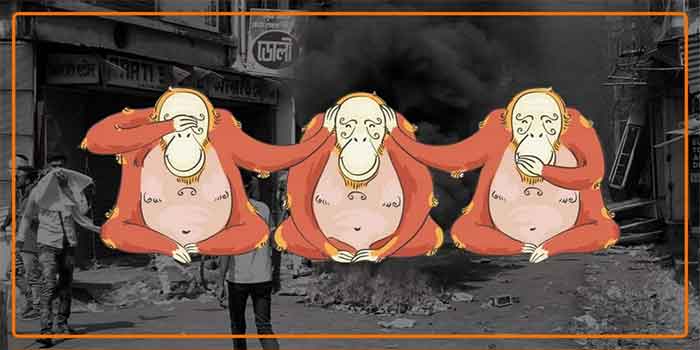
Dear Silent Indians

Bhabani Shankar Nayak


MonkeysMonkeys

The majority of Indian citizens are witnessing the persecution and everyday violence against their fellow citizens who are Muslims and religious minorities. The growing assaults on reason, science, secularism, Indian democracy and constitution are going to be landmarks in Indian history of diminishing democracy and citizenship rights. It is clear that Hindutva ideology is directly promoting sectarian politics of hate which is dangerous for the unity and integrity of India, peace and prosperity of Indians. The majoritarian silence helps in empowering Hindutva and their electoral dividends. From witnessing the persecution in the sidelines to the active participation and cheering loud or silence accelerates violence against our neighbours and our fellow citizens. How and why do majority of Indians stay silent and contribute to the persecution of their fellow citizens who are Muslims and religious minorities? The question baffles me as an Indian because I have grown up in a truly beautiful secular India where intercultural and religious harmony was its hallmark. In spite of all forms of existing inequality and exploitation, hate was not celebrated in Indian mainstream society.  Majority of people used to oppose and condemn public violence in all forms.

The propaganda, media manipulation, anti-lower caste and class, anti-Muslim and anti-Christian prejudice and Hindutva symbolism in the name of Indian nationalism and Hindu religion socialises the masses and normalises violent persecution of innocent citizens of India. The conformation with power, prejudice, innocence, ignorance, and fear of power and caste-class opportunism are reasons behind this silence acceptance of injustice. Perhaps, more than one century of Hindutva propaganda has managed to achieve its objective of normalisation of violence against religious minorities in India. The Hindutva government patronises its own ideology and moving India in a direction of visible destruction. Amoral Hindutva despotism is a product of century long initiatives in different spheres of social, cultural, religious, political and economic life of the country and its citizens. The common, innocent and gullible Indians assisted the expansion of Hindutva forces and their organisations without knowing their toxic ideology of hate.

Many Indians still share the belief that Hindutva is a nationalist force and working for a developed India. In reality. Hindutva is a fascist force and working for the growth of crony capitalism in India where few corporations will control the economic and political life of India.  The Hindutva forces have entered into every sphere of Indian national life to control the society, culture and religion in India within the narrow vision of Hindutva. The Hindutva ideology and its organisations are powerful enough today to follow the intimidation tactics to enforce the politics of persecution through electoral means. The next stage is going to be open and mass violence against religious minorities and anyone who opposes such a medieval force called Hindutva. The European fascism in the form of Hindutva awaits India and Indians if there is no mass movement against it.

Majoritarian silence does not help the cause of India and Indians. The peace, prosperity, economic growth and development depends on social harmony. The silence does not protect citizenship rights, dignity, jobs and career. The majoritarian silence surrenders all achievements of Indians to a reactionary Hindutva force that is working to handover all national resources to capitalist corporations. Muslims, Christians, indigenous communities, human rights activists, journalists and intellectuals are persecuted today, and majority of Indian will be persecuted tomorrow. It is a matter of time before Hindutva hell fire engulfs us all. Our survival, rights and dignity depends on our collective resistance against a small group of Hindutva fascists who are on streets today to destroy the India we love. Hindutva is still a small minority of individuals, organisations and networks if we compare India’s total population. Our silence is their strength. It is time to free ourselves from the prison of fear and silence for the sake of Indian Muslim and for ourselves. Any persecution of Muslim population by Hindutva is a persecution of all Indians. Hindutva can be defeated for the survival of India and Indians. Hindutva is now looking for ways to further expand its base and ideology. Our peace, prosperity and dignity as a nation depends on the defeat of Hindutva from every sphere of life in India.

UK COVID-19 cases rising again, as monkeypox spreads and Polio re-emerges

Steve James


A third wave of infection from strains of the Omicron variant of SARS-CoV-2—Britain’s fifth COVID wave—is pushing infection, hospitalisation and death rates up again.

Last week, according to Office of National Statistics (ONS) figures, 334 people were killed, nearly 6,000 people were admitted to hospital and an estimated 1.7 million people were suffering from some level of infection. This is around 1 in 35 of the population, although there are regional variations with Scotland reporting 1 in 20 infected and Northern Ireland 1 in 30. Rates of infection were on average up by 23 percent on the previous week.

Nearly two and half years after the World Health Organisation issued a public health emergency warning about a novel coronavirus, the WHO estimates 15 million people have been killed by COVID-19. Most of these deaths were avoidable and can be directly attributed to the refusal of governments worldwide to pursue the necessary policy of COVID elimination. Nearly 200,000 deaths have occurred in the UK. Despite relatively high levels of vaccination, over 53 million have received at least one dose and over 50 million have had at least three jabs, COVID-19 remains a potentially deadly and debilitating disease.

The current wave is largely due to the BA.4 and BA.5 subvariants of Omicron, now reported to make up more than half of new cases. Transmission of the new variants is likely to have been accelerated by the British monarch’s platinum jubilee. Millions of people attended mass events between June 2 and 5 and COVID prevalence increased by 43 percent in the following week.

Professor Tim Spector of the ZOE Covid symptom study app told the Independent, “We’re heading towards a quarter of a million cases a day. The question is whether it stops and comes back again, everyone is predicting an autumn wave but I don’t think anyone predicted this summer wave—that’s the difference.

“None of the modelling allowed for this, it didn’t take into account the effect of BA.5 variant which is dominant now.”

Mathematics lecturer Kit Yates told the Independent SAGE scientific advisory group June 17, “It is pretty much official from the latest ONS data that the UK has entered the next wave of COVID. It is most concerning to see that there has been an increase in COVID infections in older age groups and in the 50-59 age group who have not been offered another booster yet.”

Even for the over-75s offered a fourth shot, one fifth have not received it. Professor Rowland Kao, an epidemiologist at the University of Edinburgh, commented, “Certainly, in my view, the message about ‘getting back to normal’ does have the impact of reducing the urgency of getting those fourth doses out.”

While hospitalisation rates are still lower than in April, at the peak of the BA.2 surge when over 16,000 people were admitted, the British Medical Journal (BMJ) reported that the rate of increase is greater than during the previous surge.

Doctor Deepti Gurdasani, senior lecturer and clinical epidemiologist at the William Harvey Research Institute, Queen Mary University of London, told the journal June 20, “Given where we are in terms of NHS pressure and long covid impact, any increase at this point from a high baseline will put further pressure on an NHS that’s already struggling to provide safe and urgent patient care, and will likely continue to lead to even higher levels of long covid.”

Both subvariants are thought to spread more easily than their predecessors, Omicron BA.1 and BA.2. Writing in the same edition of the BMJ, Christina Pagel, director of the Clinical Operational Research Unit, warned that so far in 2022 there had already been two waves of Omicron infection peaking in January at 7 percent of the population infected and in late March at 8 percent.

Pagel predicted a new peak late June and into early July, although because such huge numbers had been infected in the previous Omicron waves, some residual immunity might offer additional protection. Nevertheless, Pagel wrote, “While omicron might be somewhat less severe than delta, and people have higher immunity through vaccination and previous infection, it is not mild. At a population level, its sheer transmissibility more than compensates for any reduction in experienced disease severity or symptoms for the individual.”

Pagel warned of more workplace disruption because of high sickness rates, additional pressures on the NHS, longer waiting times for ambulances and in Accident & Emergency and record numbers of people awaiting routine treatment.

More people will also get Long COVID. Pagel noted the ONS had recorded as many as 600,000 people reporting persistent symptoms from infection with the Omicron variant alone. Overall, there are 2 million people with Long COVID, over 800,000 for more than a year and 376,000 for over two years. Five percent of workers in healthcare report ongoing symptoms, while 10,000 NHS workers have been laid low for more than three months with long COVID.

In the face of this ongoing public health danger, from the disease itself and the consequential collapse in health provision, the response of the British ruling class has been to press on with ending whatever minimal mitigation measures have remained in place.

Professor Jill Pell, director of Glasgow University’s Institute of Health & Wellbeing, warned the Scottish parliament's COVID-19 Recovery Committee that three of four “prongs” to curb infection have been removed.

“We have taken away the non-pharmaceutical interventions, such as the requirement for social distancing and mandatory facial coverings. We have also removed access to mass testing—that needs to be acknowledged—and we have removed the idea of having a supported shielding list. Therefore, we are left solely with vaccination.”

The Scottish National Party government responded with criminal complacency, with First Minister Nicola Sturgeon telling people to “be sensible and take precautions”, suggesting they wear a face covering in crowded indoor places while stressing it was no longer “a requirement”.

All COVID restrictions were removed in Wales in May. Labour First Minister Mark Drakeford claimed at the time, “we can move beyond the emergency response while still living safely with this virus.”

Professor Sir Jonathan Van-Tam, until recently deputy chief medical officer, summarised the Westminster government’s response. He told the BBC, “We just accept in the winter that, if you’ve got seasonal flu and you're poorly for a few days, it disrupts your life. And so I think we’ve got start to frame COVID in a little bit more of those terms,” adding, “people have got to learn to frame those risks for themselves.”

Even as the COVID pandemic enters a new surge, Britain is seeing a rise in monkeypox cases and the re-emergence of Polio. There are 910 recorded cases of monkeypox—the bulk in London—with those affected reporting delays in the testing, tracing and vaccination response. Paul Hunter, professor of medicine at the University of East Anglia, commented, “At the moment there is no clear evidence that the current epidemic is coming under control.”

Last Wednesday, the UK Health and Security Agency announced evidence of polio transmission in London, declaring a national incident. Britain was declared polio-free in 2003. But the UKHSA is not planning on testing sewage nationally to establish its prevalence. Professor David Salisbury, from the WHO Global Commission for Certification of Polio Eradication, warned, “Without extensive national environmental poliovirus surveillance, it is not possible to know if this problem is more widespread.”

Bird flu, Lassa fever and Crimean-Congo haemorrhagic fever have all been detected in the UK this year. Professor Mark Woolhouse, University of Edinburgh professor of infectious disease epidemiology, told the Daily Telegraph Sunday, “The early 21st century has been a perfect storm for emerging infectious diseases, and everything is pointing towards the likelihood of more and more outbreaks. All the drivers of outbreaks are getting worse, not better, over time.”