16 Jul 2022

100 million in the US weighed down by medical debt

Fred Mazelis


One hundred million people in the United States, including 41 percent of the adult population, are burdened by medical debt. These totals, in what remains the wealthiest capitalist nation, and one moreover which spends almost $1 trillion annually on its military machine, translate into severe sacrifice and suffering for families. They are forced to choose between food and paying medical and dental bills or driven into bankruptcy or out of their homes.

Orlando Regional Medical Center, in Orlando, Florida [Photo by Orlando Regional Medical Center]

The figures come from a major investigative project that is being carried out by Kaiser Health News (KHN), affiliated with the Kaiser Family Foundation, in association with National Public Radio (NPR). A report was posted on the KHN website last month. The investigation utilized a poll that looked into various means by which patients scrambled to meet medical bills. It studied credit bureau reports, credit card data and hospital billing data to get a more accurate picture of the crisis. Although the serious student loan crisis has received more recent media attention, the medical debt crisis affects a greater percentage of the population.

Under conditions where, according to a recent figure, half of the population does not have $500 to cover a sudden medical bill, 50 million people are paying medical bills in installments, 10 percent of those who owe have taken loans from friends of family, and 15 percent have put bills, often totaling thousands or even tens of thousands of dollars, on credit cards. One-quarter of those in debt owe more than $5,000. Twenty percent of the total do not ever expect to pay off these debts.

The medical debt emergency affects almost every section of the working class, and sections of the middle class as well. The KHN study finds that while 68 percent of households with an annual income of less than $40,000 have medical debt, the comparable figure for those with annual incomes above $90,000 also remains high, at 45 percent.

Millions have already lost their homes or declared bankruptcy, or both. According to the survey, 63 percent have cut back on food, clothing and other basic expenses, 48 percent have used up all or most of their savings, and 40 percent of the total have taken on second or third jobs. Equally revealing, one in seven of those surveyed have been denied access to medical care because of unpaid bills, and two-thirds have put off medical care because they are already dealing with bills they cannot pay.

Thus, the consequences of this mountain of debt must be measured, not just in financial hardship and the growth of poverty, but also in increased illness and death stemming from the lack of timely treatment—a situation which has certainly contributed to the US having the highest COVID-19 death toll in the world, well over 1 million dead and rising.

The KHN study provides some vivid examples of how this crisis has affected the working class.

Sherrie and Michael Foy retired to southwestern Virginia after Michael retired from the Con Edison utility company in New York. When Sherrie had to undergo complex colon surgery followed by complications, they wound up owing $775,000, and were sued by the University of Virginia Health System. The Foys, who continued to be insured through Michael’s employer, were forced to declare bankruptcy and lost everything, including savings accounts they had set up for their grandchildren.

Sam and Ariane Buck, from Arizona, were turned away from a doctor’s office because they owed medical bills and were forced to go to a hospital emergency room. The couple owes about $50,000 in medical bills. Buck himself sells health care plans. That has given him additional insight, even if no protection from his own medical debt. “I’ve had old people crying on the phone with me,” he told KHN. “It’s horrifying.”

Allyson Ward, a nurse practitioner, was forced to take on extra shifts, working nights as well as days, after the premature birth of her twins left her with unpaid medical bills of $80,000. And Elizabeth and Nick Woodruff, of Binghamton, New York, were sued for $10,000 after they were unable to pay large bills following the amputation of Nick’s infected leg.

Those desperate patients, workers who already have serious health and family issues to contend with, have in many cases been forced to pay off medical bills totaling thousands or tens of thousands of dollars by using credit cards, with punishingly high interest rates. Those who have not paid have faced sometimes daily harassment from collection agencies who have bought the debt from the hospitals and turned the medical debt into a new source of profit.

The Affordable Care Act (ACA) enacted in 2010, also known as Obamacare, is often lauded as a great success for having reduced the number of uninsured in the backward American medical system by about 40 percent, from 48 million to 28 million adults, as of 2016. The KHN study reports that newly-formed insurers, as well as older, more established companies, enjoyed years of “robust profits” after Obamacare. This, however, was no surprise. A main aim of the legislation was to create a new revenue stream for the insurance companies and the entire health care industry. As far as Obamacare’s supposed beneficiaries, most of them face huge deductibles, the amount that must be paid before coverage begins, and out-of-pocket maximums of up to $8,700 a year.

While 100 million face this mountain of health care debt, the nation’s hospitals reported their most profitable year in 2019, just before the COVID-19 pandemic, with a margin of 7.6 percent, and these figures have continued in the last two years. Hospital CEOs are often paid millions of dollars in annual salaries. Some sample figures, from three or four years ago, are $2.77 million at the Mayo Clinic, $2.58 million at the Cleveland Clinic, and $2.4 million at Massachusetts General Hospital. In New York City, with its proximity to Wall Street, these CEOs command even more stratospheric compensation: $13 million for the head of Montefiore Medical Center in the Bronx, and $10.4 million for New York Presbyterian in Manhattan.

It must be stressed that most medical insurance, including Medicare, is no protection from massive bills. The crisis is one of “underinsurance.” Deductibles have quadrupled for a single adult since 2006, to an average figure of $1,400 annually. For those on Medicare, only seniors who are prepared and able to spend several thousand dollars annually, and sometimes significantly more, to purchase supplemental insurance, are protected from huge bills if they become seriously ill. The monthly Medicare premiums, nearly $150 deducted from Social Security, do not provide comprehensive medical care and protection from these bills. Nor do the thousands of dollars that have been paid in Medicare taxes in the course of decades of work.

The US is virtually the only country whose population faces the issue of medical debt. In Britain, the National Health Service (NHS), underfunded as it is and facing enormous and growing crisis, still provides free medical care. In most of western Europe, universal health insurance of one kind or another, even where it imposes other costs, does not saddle its users with debt. In most of the rest of the world, especially in the poorer countries, medical care must be paid for in advance. This creates huge suffering of a different kind, resulting in untreated illness or dangerous medical care.

The medical debt crisis is bound up with the financialization of the US economy, and with the particularly savage anti-communism of the American ruling class, and the bipartisan onslaught on public services of all kinds in the past 40 years. As workers throughout the world can attest, these attacks are by no means unique to the US, but they take a particular form in the arena of US health care and public health.

Ruling class hysteria against any hint of “socialized medicine” continues today. No sooner was Medicare enacted in the 1960s than plotting began to undermine it from within, and privatization has accelerated in recent decades, in the form of the so-called Medicare Advantage Plans. Virtually all public services, even those run as non-profits, have been transformed along for-profit lines.

The health care system has been organized to provide new profit centers, to enrich the wealthy stockholders of the pharmaceutical firms as well as the credit card companies, a key part of the financial system, for whom the mushrooming debt is a bonanza. The KHN report quotes one physician as stating that, “Debt is no longer just a bug in our system. It is one of the main products.”

Medical debt is one of the countless ways in which the capitalist elite has engineered the gigantic transfer of wealth from the working class, which produces all profits, to the parasites who sit on top. This transfer of wealth, however, is now becoming a major ingredient in a revolutionary explosion, as millions of workers and their families become conscious of the fact that their lives are literally threatened by the continued existence of the profit system.

Significant economic slowdown as China battles COVID

Nick Beams


The world economy took another step towards recession with the announcement yesterday that China, the world’s second largest economy, had grown by only 0.4 percent year-on-year in the second quarter. This was below the 1.2 percent predicted by economists and well down from the 4.8 percent year-on-year growth recorded in the first quarter.

The main reason for the slowdown was the effect of the two-month lockdown of Shanghai as the government sought to implement its policy of Zero-COVID.

Workers labor near a construction site with cranes near the central business district skyline in Beijing, China, October 11, 2021. (AP Photo/Ng Han Guan)

Shanghai has re-opened but China is now facing the effects of the BA.5 variant of the virus which is rapidly spreading around the world because of the abandonment by all governments of even limited mitigation measures, let alone pursuing the necessary policy of global elimination.

According to an analysis made by the Japanese financial firm Nomura, 31 Chinese cities are under full or partial lockdown, affecting almost 248 million people and accounting for 17.5 percent of the country’s economic output.

The Chinese experience demonstrates two things: public health safety measures can bring the pandemic under control, but elimination is impossible solely on a national basis.

Besides the devastating health impact as millions are condemned to an unnecessary death, the refusal to adopt such an international strategy is not only fueling inflation, it is pushing the world economy into a slump.

On a quarter-by-quarter basis, the economy contracted by 2.6 percent in the three months to the end of June, compared with 1.4 percent growth in the first quarter. The June quarter contraction was well above predictions of a 1.5 percent shrinkage.

Unemployment is starting to rise with the level of youth joblessness rising to a record 19.3 percent.

Releasing the figures, a spokesperson for the National Bureau of Statistics, Fu Linghui, tried to put the best face on the situation at a press briefing yesterday morning.

“Generally speaking, with a series of policies to solidly stabilise the economy achieving notable results, the national economy has overcome the adverse impact of unexpected factors, demonstrating the momentum of stable recovery,” he said.

During a visit to Wuhan last month, Chinese president Xi Pinhg indicated that Zero-COVID would continue. While he acknowledged there were economic problems, he said it was better to “temporarily affect a little economic development rather than risk people’s health and safety.”

Chinese authorities have estimated that hundreds of thousands, if not millions, could die if the “let it rip” policy in the rest of the world were adopted.

But there are signs of cracks in the regime. In its report on the COVID-induced economic downturn, the Washington Post, one of the many media outlets around the world calling for the abandonment of Zero-COVID, eagerly seized on such indications.

It reported that when Chinese premier Li Keqiang visited the coastal city of Fuzhou to hold discussions with officials in the south-eastern industrial area about how to bring stability, he urged they steer the economy back on track.

Photographs in state media have shown Li in meetings where no one was wearing a mask, and these appearances “have been interpreted by some as a show of support… for a faster return to normalcy.”

It described the Zero-COVID policy as “increasingly controversial and economically damaging.” But apart from sections of the upper middle class, whose objections are eagerly seized on by the western media, the official policy enjoys wide public support, and the government fears it would face massive opposition were it abandoned.

The Chinese government is seeking to alleviate the COVID economic damage by loosening financial conditions and allowing local government authorities to issue additional bonds to finance new projects. But financial stimulus measures are restricted by the shift by major central banks to a higher interest rate regime. Authorities fear there will be a fall in the value of the renminbi and a capital outflow if monetary policy is relaxed too much.

The economic slowdown in China means that the three major economic regions of the world—the US, Europe and China—are moving closer to recession.

The escalation of inflation in the US—it jumped to 9.1 percent in June, up from 8.6 percent the previous month—means that the Fed is certain to again lift interest rates by 0.75 percentage points at the end of the month, and possibly by a full 1 percent.

This has fueled predictions of a recession under conditions where the US economy contracted by 1.6 percent on an annualised basis in the first quarter and a similar result appears likely for the second.

The present Fed rate is between 1.5 and 1.75 percent. But according to Jeffrey Lacker, a former president of the Richmond Fed, it would have to go to 6 percent to influence inflation. Such an escalation would virtually guarantee a recession under conditions where the financial system, as well as consumer and business spending, have become dependent on a low interest rate regime.

Former treasury secretary Lawrence Summers has said that an unemployment rate of 10 percent, lasting for a year, is necessary to bring inflation down.

The economic outlook in the euro zone is going from bad to worse. This week the value of the euro has fallen to parity with the US dollar—at one point it went below parity—amid fears that a cut-off of Russian gas supplies as a result of the US-NATO war in the Ukraine could induce a deep recession.

The European Central Bank (ECB) is committed to start lifting its interest rate when it meets later this month, but only by 0.25 percentage points, well below the rate rises in the US and this is driving down the value of the euro.

The falling euro adds to the cost of imports driving up inflation from its present level of 8.6 percent and adding to pressure on the ECB to move faster with rate hikes. But such moves threaten to lead to “fragmentation” in financial markets as the interest rates on the bonds of the more indebted countries of the south rise above those on the bonds of countries of the north.

In 2012, this divergence threatened the continuation of the single currency. The ECB has said it will develop measures to counter this threat when it meets next week.

Under what were once regarded as “normal” conditions, a fall in the currency would be regarded as having some benefits by making exports cheaper in world markets. But not in the present situation where currency falls drive up inflation.

“The extreme price increases in import and producer prices overshadow any profit that exporters can book for themselves due to a weaker currency,” Sonja Marten, head of foreign exchange and monetary policy at DZ Bank in Frankfurt told the Wall Street Journal.

Summing up the implications of the euro’s plunge, James Athey, investment director at Abrn, a major UK investment company told the Journal: “What it is indicative of is that this is a horrific situation for the eurozone.”

In the past, during periods of major currency misalignments, international agreements were reached—one recalls the Plaza and Louvre accords of the 1980s—to stabilise the situation. No longer.

Speaking after a meeting this week with the Japanese finance minister Shunichi Suzuki, where the rapid fall of the yen against the dollar was discussed, US treasury secretary Janet Yellen made it clear there would be no intervention to bring down the dollar and G7 countries should have market-determined exchange rates.

The position of the Biden administration is that a strong dollar is of assistance in bringing down inflation. Yellen did not use the words of Nixon’s treasury secretary John Connally in 1971, after the president closed the gold window, “the dollar is our currency but it’s your problem,” but she could well have.

In a world of growing recessionary trends, escalating inflation, financial turbulence, and currency storms, it is very much every man for himself and the devil take the hindmost.

Wickremesinghe threatens state repression following his formal installation as acting Sri Lankan president

Saman Gunadasa


Prime Minister Ranil Wickremesinghe was officially sworn in yesterday as Sri Lanka’s acting president by the chief justice, following the formal resignation of Gotabhaya Rajapakse, who fled the country on Wednesday amid the largest demonstrations and mass strikes in the country’s history.

Ranil Wickremesinghe [Source: United National Party Facebook]

Wickremesinghe, the sole parliamentarian from the right-wing United National Party, was initially appointed prime minister by President Gotabhaya Rajapakse on May 12 after his elder brother Mahinda Rajapakse was forced to resign from the premiership on May 9. Rajapakse then appointed Wickremesinghe acting president three days ago, on July 13, as he flew out of Sri Lanka early Wednesday morning.

Having been Sri Lankan prime minister six times since 1993, Wickremesinghe is a long-standing pro-US defender of bourgeois rule and committed supporter of International Monetary Fund austerity measures.

Soon after being sworn in, Wickremesinghe issued a media release threatening the ongoing protests centred around Galle Face Green in Colombo.

“I will take immediate steps to establish law and order in the country,” he declared, while claiming he was “not against the peaceful struggle.” It was, however, necessary, he added, “to identify the difference between the insurgents and protesters.”

Wickremesinghe then referred to recent clashes between army personal and anti-government protesters, during which 24 soldiers were injured and weapons of two soldiers were allegedly stolen. “These insurgents are trying to create unrest next week. We cannot allow it,” he said.

Referring to his earlier move to assign the military and police powers to crack down on protesters if they challenge bourgeois rule, Wickremesinghe said: “I have appointed a committee comprising service commanders and the IGP [Inspector General of Police]. They are in charge of maintaining law and order.” 

Wickremesinghe then cynically linked the “law and order” situation with the catastrophic economic crisis and the desperate situation facing millions of Sri Lankans. “A breakdown in law and order will impact the economy. Fuel, power and water supply and food supply can crumble,” he declared.

In other words, the ongoing protests by workers, youth and the rural masses over the skyrocketing price of food, fuel, cooking gas and other scarce essentials is worsening the crisis and state repression is required to supply essentials and “restore order.”

Later that day, Wickremesinghe, accompanied by journalists, photographers and television crews, visited the injured 24 soldiers in hospital. He made no reference to the 84 protesters assaulted by police and army officers this week and now in hospital, or the young demonstrator killed during these clashes.

The corporate sector, civil society organisations and the religious establishment, along with the US and other embassies, have said the Constitution and the constitutional framework must be maintained—code words for capitalist rule.

The Sri Lankan Constitution includes the executive presidency, which allows Wickremesinghe to impose a range of repressive measures, including the Essential Services Act, Prevention of Terrorism Act, Public Security Ordinance and other anti-democratic actions, measures already used by former President Rajapakse.

On Thursday, US ambassador Julie Chung tweeted that “A peaceful transfer of power within SL’s democratic and constitutional framework is essential.”

While voicing these “concerns”—a reflection of her nervousness about the extreme political instability in Sri Lanka, Chung and various “quiet Americans” are maneouvring behind the scenes with the political opposition, the military and the police, offering advice about how to deal with the ongoing mass anti-government movement.

Defying threats to use the military and police in a broader crackdown, workers, youth and the rural masses are continuing their protests. Low flying helicopters threatened the protesters on Wednesday, while the media showed huge contingents of police and military being brought near the Galle Face Green protest site on Thursday.

US ambassador Julie Chung with Sri Lanka graduates of the US-funded International Military Education & Training program on July 6. The tweet says: "We discussed today’s many challenges and how our robust defense partnership bolsters efforts to ensure the military remains accountable to the people & upholds the country’s democratic ideals." (Image: Ambassador Julie Chan)

An article yesterday in the English-language Island headlined, “Nod given for use of lethal force,” reported that the Armed Forces had been ordered to “use lethal force if it is necessary to protect public property, key installations, vulnerable points and human lives.”

The intensifying political turmoil is driven by the worsening socio-economic crisis, exacerbated by the coronavirus pandemic and the US-led NATO proxy war against Russia in Ukraine.

Hundreds of thousands of distressed people are continuing to wait in fuel queues for several days at time. The number of deaths that have occurred on these lines rose to a total of 19 on Thursday.

Health services and public hospitals are breaking down due to shortages of medicines, equipment and staff, with health workers, including doctors, forced to wait in fuel queues. School closures continue and public transport is crippled due fuel shortages. Almost 75 percent of the population is skipping meals and starving due to skyrocketing food prices. Last month, the official annualized food inflation rate hit 80 percent.

Yesterday, Parliamentary Speaker Mahinda Yapa Abeywardena said a new president would be elected by parliament on July 20, but would hold that position only until the end of 2024.

A flurry of backroom wheeling and dealing between the political establishment and leading contenders for the presidency and premiership is underway.

Sagara Kariyawasam, general secretary of Rajapakse’s fractured Sri Lanka Podujana Peramuna (SLPP), which holds the largest number of parliamentary seats, announced that the SLPP would back Wickremesinghe for the presidency. However, SLPP Chairman G.L. Peiris declared that the party had to support its own candidate. SLPP parliamentarian Dullas Alahapperuma has announced his candidacy for the presidency.

Other presidential contenders include Sajith Premadasa, leader of the opposition Samagi Jana Balawegaya, a breakaway group from Wickremesinghe’s rump UNP. The suggestion has also been made to share the presidency and premiership between Premadasa and Alahapperuma. Other parliamentary parties, such as the Janatha Vimukthi Peramuna (JVP) and the Tamil National Alliance, have yet to issue a statement on the presidential elections.

The establishment of an interim all-party government, following the election of the prime minister and president, is crucial for Sri Lanka’s ruling elite to begin imposing the still under negotiation IMF austerity agenda. Its measures will only impose new burdens on the working masses, including through subsidy cuts, privatisations and increased and more broadly based taxes.

Giving voice to the nervousness within the ruling class, Central Bank Governor Nandalal Weerasinghe told the international media that unless a stable government is soon established in Sri Lanka, the country will come to a standstill.

The trade unions continue to play an utterly reactionary role. The response of the unions to the largest island-wide anti-government protest in Sri Lankan history on July 9, and the subsequent mass storming of the homes of the president and the prime minister, was to block all independent action by the working class.

The Trade Unions Coordination Centre and the Trade Unions and Mass Organisation Collective declared they would launch a general strike, along with a hartal (closure of businesses), on July 14 if Rajapakse and Wickremesinghe did not quit by July 13. When this did not happen, they declared they would organise action for July 18.

Even if this occurs, the walkout, like all the other one-day general strikes they were forced to call—on April 28, May 6 and May 10—will be used to let off steam and divert workers behind calls for an interim all-party government.

Australian government forced to reinstate “pandemic leave” as COVID-19 infections and deaths soar

Martin Scott


Amid a rapidly worsening pandemic disaster, Prime Minister Anthony Albanese announced today that the Labor government will temporarily reinstate meagre pandemic leave payments for those infected with, or exposed to, COVID-19.

Anthony Albanese addresses media after the National Cabinet meeting on July 16, 2021 (Screenshot: ABC)

At a meeting of the “National Cabinet” this morning, the same federal, state and territory leaders who have axed virtually all pandemic safety measures, allowing the virus to mutate, agreed to a 50-50 split for the reintroduced payments, which will be terminated again on September 30.

The payments, established by the former Liberal-National government, expired on June 30, provoking criticism of the federal Labor government by big business as well as anger among workers because of a massive surge in infections, hospitalisation and death, fuelled by the official profit-driven refusal to take any action to eliminate COVID-19.

Throughout the week, the Labor government had adamantly defended the scrapping of the payments, along with another of the few remaining scraps of pandemic policy, the provision of free rapid antigen tests (RATs) to pensioners and welfare recipients, over the objections of health authorities and medical experts.

Australian Medical Association president Omar Khorsid said: “The last thing you need when you have such huge numbers of cases around is for the government to pull its supports for people to do the right thing.”

Today’s decision by the “National Cabinet” has nothing to do with criticism from health experts, however. It is primarily a response to the demands of business groups, which complained that the rapid growth of infections was exacerbating staff shortages throughout the supply chain.

Having ruthlessly demanded the axing of public health measures, the corporate elite now hopes that publicly-funded pandemic leave payments will limit the decimation of workforces through COVID-19 infection, while allowing employers to continue to refuse paid sick leave for workers.

Australian Chamber of Commerce and Industry chief Andrew McKellar said: “The last thing we need is an uncontrollable spread of illness that would put even more pressure on businesses already struggling with labour shortages.”

The real effect of the payment is to subsidise the dangerous operations of the same corporate interests that bear chief responsibility for the crisis itself. Increasingly throughout the pandemic, health policy has been dictated by big business, which has opposed mask mandates, lockdowns and other essential measures, allowing COVID-19 to run rampant.

The trade unions have been entirely complicit, ensuring workers remained on the job throughout the pandemic, whatever the danger, and opposing calls to shut down production.

Fully-paid pandemic leave, not just the $750 weekly allowances, is essential to keep infected workers out of financial straits and reduce the pressure on them to keep working, inevitably spreading the virus to their colleagues.

Under conditions where access to accurate polymerase chain reaction (PCR) testing has been slashed, infected people also have to resort to unreliable RATs to access potentially life-saving anti-viral treatments, and avoid spreading the virus to others. What remains of the free RAT program will now be left up to the states and territories, however.

The escalating COVID crisis is a direct result of the “let it rip” policies embraced by all Australian governments. While these homicidal policies are commonly associated with former Liberal-National Prime Minister Scott Morrison, Labor governments at state and federal level are now leading the charge.

Federal Health Minister Mark Butler declared on Wednesday: “There are going to be millions of people infected by COVID in this coming few weeks.” Butler has not called for a single measure to end the wave of infection. Throughout the week he refused to even extend pandemic leave payments and the free RAT program, insisting on the need for “fiscal responsibility.”

On Tuesday, Labor’s Victorian Health Minister Mary-Anne Thomas announced she had defied the recommendation of the state’s Chief Health Officer to implement a mask mandate, because it conflicted with the demands of big business.

Victoria has seen a 91 percent increase in hospitalisation over the past three weeks, with more than 800 people currently being treated for COVID-19, for the first time since February 2. Numerous hospitals across the state have been forced to cancel elective surgeries as a result of the influx of COVID-19 patients and growing staff shortages due to infection.

Labor Premier of Western Australia (WA), Mark McGowan, said on Thursday he would not set “hard and fast rules,” but “continue to monitor the situation.” The “situation” is that there are more than 35,000 active cases in the state and 333 people are hospitalised for COVID-19, the highest number during the pandemic.

McGowan was previously associated with maintaining a “hard border” that helped suppress COVID-19 in the state for almost two years. There was not a single COVID-19 death in the state between May 4, 2020 and February 2, 2022.

State governments are still slashing the few remaining restrictions. In Tasmania, mandated mask-wearing in health facilities was dropped on June 30. Since then, COVID-19 hospitalisations in the state have more than tripled to 138, far in excess of previous highs.

Governments are increasingly adopting the program of the extreme right: No lockdowns, no masks and no vaccine requirements.

In NSW, unvaccinated teachers will be allowed to return to work from Monday, while aged care facilities in the state will remove limits on visitor numbers and the requirement for visitors to be vaccinated.

Since December 16, 2021, despite 90 percent of people over the age of 16 having had two vaccine doses, 8.5 million infections have been reported in Australia and 8,533 people have died from COVID-19.

In NSW, in the week ending July 10, 59.4 percent of people hospitalised for COVID-19 had received at least three shots, close to state’s the three-dose vaccination rate of 64.8 percent. This reflects the minimal protection the vaccines afford against the now dominant Omicron BA.4 and BA.5 variants.

The refusal of capitalist governments throughout the world, with the exception of China, to suppress transmission of the virus continues to create the conditions for the development of new, more contagious and vaccine-evading variants.

More than 40,000 new infections are being reported each day across Australia, and the real figure is likely twice as high, according to health experts. There are 4,719 COVID-19 patients in hospitals, the highest number since February 2.

In the past week, 358 people have died from the virus, an average of more than 51 per day. Based on 2019 figures from the Australian Bureau of Statistics, this would make COVID-19 the leading cause of death in Australia, ahead of ischaemic heart diseases.

There have been at least 3,104 COVID-19 deaths in aged care since the start of the pandemic, including more than 2,187 this year and 132 in the past week.

Since the beginning of the pandemic, almost 67,000 aged care residents and 49,000 staff have been infected. Yesterday, there were 7,947 active COVID-19 cases in 857 ongoing outbreaks in residential aged care facilities.

Far from pouring in the necessary resources, Federal Aged Care Minister Anika Wells confirmed this week that a six-month deployment of 1,700 Australian Defence Force personnel to cover staff shortages in sector will end on August 12.

The refusal of all Australian governments, spearheaded by Albanese, to follow the advice of health experts guarantees that this horrific situation will worsen.

The working class cannot leave their health and lives in the hands of a ruling elite that is utterly unconcerned by the loss of more than 50 lives each day, as long as nothing stands in the way of corporate profits.

Workers must oppose this policy of mass infection and take up a fight for the elimination of COVID-19. This will require a break with Labor and the trade unions and the formation of rank-and-file committees in workplaces, schools and neighbourhoods, so that workers can take matters into their own hands.

15 Jul 2022

Drought in the Horn of Africa: Worst in 40 Years

Graham Peebles


Image by Ninno JackJr.

The Horn of Africa (HoA) is once again being battered by climate change induced drought, with the UN report, over “20 million people, and at least 10 million children facing severe drought conditions.”

Desperately needed support from UN agencies (World Food Programme (WFP), UNHCR and UNICEF) is limited due to lack of donations from member states. WFP have been forced to halve food rations due to the “lowest levels of funding on record”. Leading to what UNICEF describe as a “humanitarian catastrophe……. Urgent aid is needed to prevent parts of the region sliding into famine.” The disruption caused to supply chains and food production by the war in Ukraine is adding to the crisis, dramatically increasing food prices and limiting availability.

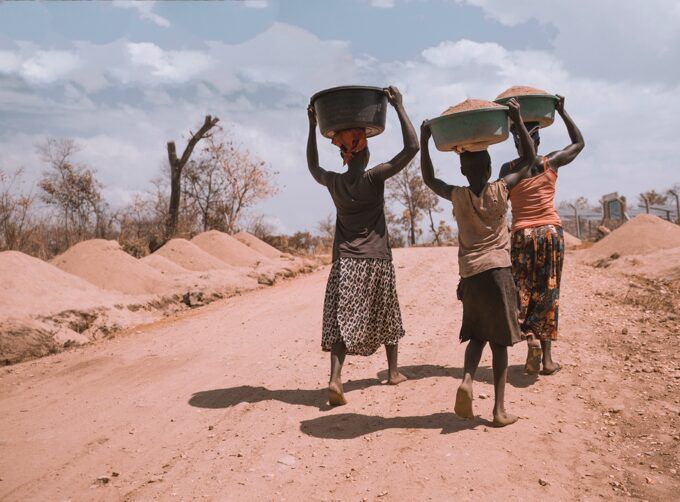
The region’s agriculture has been decimated by year on year rising temperatures and decreasing rainfall. Food insecurity, in a region with some of the poorest people in the world, is intensifying with the threat of famine looming, and food prices have sky rocketed. Livestock has perished – in Ethiopia alone 2.1 million livestock have died and 22 million are at risk, emancipated with little or no milk production – the primary source of nutrition for young children.

Child malnutrition is increasing and huge numbers of people are being displaced. Ethiopia, Kenya, Somalia, Djibouti and Eritrea are all impacted by the most severe drought in forty years.

The effect on rural communities, and children specifically, is devastating. UNICEF estimate 2 million children are in need of treatment for “severe acute malnutrition,” particularly in Ethiopia and in the arid lands of Northern Kenya and Somalia, where the drought is most severe.

As well as decimating food production, drought is intensifying the water crisis in the area – with, the UN say, 8.5 million people (including 4.2 million children) facing water shortages. In Ethiopia, where around 60 per cent of the population (roughly 70 million) do not have access to clean drinking water with or without a drought, the situation is dire. Streams, wells and ponds, that people living in remote areas rely on, are either drying up or are completely parched. Such sterile water sources become contaminated by animal and human waste, increasing the risk of water borne diseases, cholera and diarrhea, which are the leading causes of death among children under five in the country; cases of measles have also been increasing at alarming rates in Ethiopia and Somalia, resulting in some case in deaths.

Desperate families are being driven to extreme measures to try to survive, with hundreds of thousands leaving their homes in search of food, water, fresh pasture for animals and assistance. This is creating and intensifying numerous issues: Access to health care, education and protection/reproductive services is made difficult, or impossible. Children are forced out of school – approximately 1.1 million; schools close (in a region overflowing with children where 15 million children are already not in school); girls and women are made more vulnerable to physical coercion, sexual/child labor and forced marriage; displacement of persons explodes. Already a massive problem throughout the region, specifically in Ethiopia, where, according to UNHCR (as of March 2022) “an estimated 5,582,000 persons” were internally displaced due to armed conflict and natural disasters.

“Natural” disaster no longer natural

As the world heats up due to greenhouse gas emissions (GHG) pouring into the lower atmosphere, the inevitability of extreme weather patterns including drought increases.

Like forest fires, heat waves and monsoon rains, drought was historically regarded as a “natural disaster”, but the frequency and intensity of such events is no longer “natural” and must now be understood to be man-made. Far from being freak happenings, such catastrophic climate explosions are becoming commonplace, and despite producing virtually none of the poisons that are driving climate change, those most affected are the poorest people in the poorest countries or regions.

The seed of the deadly drought in the HoA was planted and fed by the behavior of people in the US, in Europe, Japan and other rich countries. It is the materialistic lifestyles of wealthy developed nations (and disproportionately the richest people within such countries), rooted in irresponsible consumerism (including diets centered around animal food produce), that has caused and is perpetuating the environmental crisis. But to their utter shame the governments of such nations refuse to honor their debt, their responsibility to clean up the mess. On the contrary, because economic health is dependent on rapacious consumption, they continue to promote modes of living that are deepening the crisis.

Commitments made 12 years ago in 2009 by rich nations to give 100 billion USD a year to developing countries are yet to be fulfilled. In 2019 a high of 79.6 billion USD was reached, 71% of which was in the form of loans. Loans – for some of the poorest nations in the world, to mitigate the impact of climate change that they haven’t caused; loans that enable donor nations political and economic influence, perpetuating post-colonial exploitation and control, and ensuring Sub-Saharan Africa remains impoverished, and, more or less enslaved.

Imperial powers have outsourced the most severe effects of climate change; they either refuse to act at all or offer limited support with strings to countries and regions most at risk. At the V20 Climate Vulnerable Finance Summit in July 2021, heads of state demanded that higher income nations do more to meet their promises and called for grants not loans. UN Secretary General, António Guterres said that in order to “rebuild trust, developed countries must clarify now how they will effectively deliver $100 billion in climate finance annually to the developing world, as was promised over a decade ago.” But four months later at COP 26 in Glasgow, where climate finance was a primary issue under consideration, once again the rich nations failed. Failed to honor their word, failed to act responsibly in the interests of poorer nations, failed to stand for the collective good and the health of the planet. Shameful, but predictable. Politicians cannot be and in fact are not trusted; national and international climate pledges should be legally binding and enforceable.

Climate change and the environmental emergency more broadly is a global crisis; as such, it requires a global approach. This has been said many times, and yet national self-interest and political weakness continue to dominate the policies and priorities of western governments/politicians. If this crisis, which is the greatest issue humanity has ever faced, is to be met, and healing is to begin in earnest, this narrow nationalistic approach must change. As with other major areas of concern – armed conflict, inequality, displacement of persons, poverty – united, coordinated global policies and a powerful United Nations (UN) are urgently needed, but the single most significant change that is required is a fundamental shift in attitudes; a move away from tribalism, competition and division to cooperation and unity. A recognition, not intellectually or theoretically, but actually, that humanity is one, that we form part of a collective life that is the planet.

As the UN has said the men women and children in the Horn of Africa whose lives are being ravaged by drought need “the world’s attention and action, now.” Sustained action rooted in the realization of our individual and collective environmental responsibility. This requires governments to honor commitments: the $100m billion mitigation fund (as grants not loans), and making up the cumulative shortfall; it means funding the UN properly so emergency humanitarian aid can be supplied to those currently affected by drought in the HoA, it means supporting countries most at risk of man-made climate change in drawing up plans and initiating short and long term projects to minimize where possible the social and economic impact of extreme weather events; and individually, it means living thoughtful, conscious lives, in which the effect on the natural world is at the forefront of daily decisions, including diet, shopping and travel. It is our world, the people displaced by drought in Ethiopia and Somalia are our brethren, and we are all responsible for them.

Water, Water, No Longer Everywhere

Mel Gurtov


Drought and Scarcity

“Water, water everywhere, nor any drop to drink.” Coleridge’s “Rime of the Ancient Mariner” is only halfway descriptive of the planet’s current water situation. Water is drying up everywhere; oceans and rivers are becoming more polluted and poisoned; watersheds are being drained at a phenomenal rate to meet the needs of industry, sports, and agriculture. Quality drinking water, especially in developing countries, is becoming a major challenge. And everywhere, good water, access to which should be a human right, is becoming expensive and privately owned.

First, the basic facts on the global water crisis, as provided by UNICEF:

* Four billion people — almost two thirds of the world’s population —  experience severe water scarcity for at least one month each year.

* Over two billion people live in countries where water supply is inadequate.

* Half of the world’s population could be living in areas facing water scarcity by as early as 2025.

* Some 700 million people could be displaced by intense water scarcity by 2030.

* By 2040, roughly 1 in 4 children worldwide will be living in areas of extremely high water stress.

Reports from around the world bring home these trends.

Italy is experiencing an intense, protracted heatwave. A water emergency is about to be declared in the Lombardy region. The drought has hit northern regions particularly hard, where a parched Po River, Italy’s longest waterway, is 80 percent lower than usual, wreaking havoc on everything from farming and hydroelectric power to supplies of drinking water.

In Australia, a report by the Australian Security Leaders Climate Group describes Australia and the Asia-Pacific as a “disaster alley” for climate change, but says governments in Canberra have not properly planned for the impact of “cascading and compound events.” The report cites predictions that 2℃ of warming may see southeast Asia’s crop production decline by one-third per capita by 2040. It says small island developing states in the Pacific are especially vulnerable to the effects of drought and flooding on food production.”

China faces a water crisis in which as many as half the population does not have access to clean water. Nearly all groundwater is contaminated. Agricultural runoff and industrial toxic waste dumping are among the major causes of the crisis. Weak enforcement of environmental regulations, and sheer disregard of sound environmental practices by domestic and multinational corporations alike, contribute to the crisis.

The South African city of Gqeberha (formerly Port Elizabeth), home to nearly a million people, is on the verge of “Day Zero,” when water runs out. Climate change—long-term drought—is certainly a factor, though a corrupt city government has failed to fix thousands of leaks in water pipes. Black working-class people suffer most from intermittent water supplies.

Here at home, a Utah newspaper reports:

“The Colorado River Basin is experiencing a 22-year drought and low runoff conditions, and reservoirs within the basin are at historic low levels. There are extensive impacts throughout the Colorado River Basin, including water for homes and crops to the generation of electricity in the seven basin states, 30 tribes and Mexico.”

Lake Powell and Lake Mead are below one-third of normal levels. Water for seven states will probably have to be restricted. Meantime, California’s two largest reservoirs—Shasta Lake and Lake Oroville—are at critically low levels, and the Great Salt Lake in Utah set a new record low level on July 4.

Threats from Ocean Dumping

The world’s oceans have been especially hard hit, leading the UN secretary-general to declare an “ocean emergency.” As reported by the Guardian: “Sea level rise, ocean heating, ocean acidification and greenhouse gas concentrations all reached record levels last year, according to the World Meteorological Organization’s state of the global climate report in 2021. . . . pollution is creating vast coastal dead zones.” Fish stocks are being rapidly depleted by overfishing. “Nearly 80% of the world’s wastewater is discharged into the sea without treatment.”

Among the many toxic substances that are regularly dumped into national and international waterways, plastics and oil rank among the most constant and dangerous. China, India, and the US are the top producers of disposable plastics which, according to a UN estimate, by 2050 will account for about 12 billion tons of plastic waste worldwide. As we’re all aware, plastic bottle and other items choke waterways, clog drainpipes, and, if burned, pollute the air. Banning plastics is catching on, but very slowly and with plenty of pushback from manufacturers. Policing plastics use is difficult, though in India—which now bans certain plastic packaging but not plastic bags—some states have found that fining people is effective. China is supposed to phase out plastic bags nationwide by the end of this year, while Canada will ban all single-use plastics in December. Only a few US states, including Oregon, have limited the use of plastic items.

I cannot leave that last topic without noting the companies and investors that stand behind the major plastics producing countries. The top plastics manufacturers are ExxonMobil, Dow, Sinopec (China’s state oil company), Indorama Ventures (a global petrochemical company based in Singapore and Bangkok), and Saudi Aramco. The leading investors, aside from governments themselves, are Vanguard and BlackRock, outfits that crow about their commitment to sustainability.

Oil rig accidents are always large-scale threats to the ocean environment, the fishing industry, and public health. Recall the Deepwater Horizon spill: 134 million gallons dumped into the Gulf of Mexico in 2010. Now, a liberal president is caught between oil industry and Republican pressure to open more leases to drilling, supposedly to help reduce gas prices, and pressure from environmental organizations and some state governments to dramatically reduce if not reject any more drilling. Fact is, the industry has millions of acres already approved for drilling. Biden will be forced to act soon, and if the past is any guide, he’ll take the middle road, approving some new leases—Alaska’s Tongas looks most likely to be chosen—but not all, making for unhappy lobbyists all around.

Politicians Hold (Nearly) All the Cards

As numerous scientific reports have made plain, we’re headed toward environmental catastrophe, and in the US it’s equally plain why: the political power of right-wing politicians, the fossil fuel companies that fund them, and a malicious Supreme Court majority that takes its cue from them. Paul Krugman puts the issue succinctly:

“What’s important right now is that the United States is the only major nation in which an authoritarian right-wing party—which lost the popular vote in seven of the past eight presidential elections yet controls the Supreme Court—has the ability to block actions that might prevent climate catastrophe.”

The ballot box therefore might not be the most effective path to changing national environmental policy. But at the local level, people are fighting in a novel way: demanding that water be accorded legal standing, in the same way corporations, estates, and universities are represented in court. In Florida, for example, a constitutional ballot initiative is before voters that would grant a “Right to Clean and Healthy Waters.” Legislators can be held accountable in court for failing to protect water supplies. Elizabeth Kolbert reports in The New Yorker on the history of efforts to give nature “rights.” In Oregon, my home state, protecting wetlands, which are a major carbon sink, is now undergoing review to strengthen regulations. In the Olympic Peninsula of Washington state, protection of rivers, forests, and fisheries is expanding.

We’ll need a lot more action like that, right now, to save waterways.

Graduate Unemployment and Skill Mismatch in Bangladesh: A Broader Context

Omar Raad Chowdhury


unemploymentunemployment

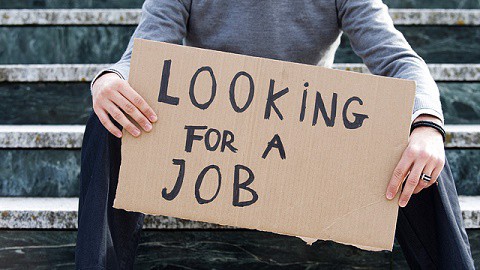
The staggering rate of unemployment among university graduates in Bangladesh, and the difficulty faced by employers in securing a skilled workforce, pose a conundrum for the country’s development journey, with implications regarding productivity, growth, social welfare and integration in the global value chain. A World Bank study found that, more than a third of university graduates remain unemployed for one or two years after graduation. The unemployment situation is all the more dire for graduates of National University (colleges offering degrees in tertiary education), as 66% of these graduates are unemployed, according to a BIDS study. On the other hand, higher education can be the key to a “decent” job, as found in a SANEM study on labour and employment, which may be a key reason behind youth’s pursuit of higher education.

Notably, the skill level of the graduates seeking employment has been found to be unsatisfactory by employers. According to a study conducted by CPD in 2021, a shortage of skilled applicants for professional positions had been reported by 46% of employers. The study also identified lack of work experience and required qualifications as two other major issues. In 2019, the World Bank found 69% of employers reporting a shortage of applicants for highly-skilled positions such as professionals, technicians and managers.

While it can be argued that there is ample evidence to ascribe skill mismatch to unemployment among graduates, the issue, however, demands to be examined in the broader context of institutional deficiency, private sector’s engagement with public initiatives, and inter-generational inequality. The agency of the young students enrolled in universities and colleges also becomes an issue of interest in this regard, as they themselves are the primary and perhaps the most prominent stakeholders in this matter.

The graduates’ skill level is but a reflection of the educational training they received from the academic establishments they were enrolled in. The quality of the training therefore becomes a major, if not the prime, determinant of the graduates’ employability. If the employers do not find candidates to be skilled enough, then the responsibility, to a large extent, lies with the academic status-quo, which is more or less configured by state institutions, in terms of resource distribution and policy design. Since, without a reconfiguration of the academia, which may involve large scale shift in curriculum and insistence on best practices on the part of administration, it would not be possible to upskill the graduates, the logical deduction is that the capacity and political will of the state institutions have to be reoriented as well.

However, it would be unreasonable to acknowledge the role of state institutions without recognizing the obligation of the private sector in ensuring a skilled workforce. Much discussion have been dedicated to the issue of industry-academia collaboration, a lacking that can be argued to be one of the driving forces behind skill mismatch. So far, the record of industry-academia collaboration is poor. A tracer study in 2018, found “serious” lack of collaboration between university and industry, with only 40% of the surveyed employers and 65% of the surveyed departments maintaining some kind of collaboration. The areas of collaboration were found to be reviewing and updating curriculum, arrangement of internships, opportunity to visit the workplace, professional network with teachers and recruitment of new employees. Thus, the scope of these collaborations is quite limited, as there is little to no investment in capacity building or academic research on the part of the private sector. The private sector, being the other primary stakeholder in the matter, needs to engage with the academia on its own initiative, for its own sake. Notably, private sector led initiatives to upskill young employees are also lacking. Rather, there is a tendency to recruit candidates with experience, which indicates a tendency of free-riding and ultimately lead to market failure in terms of skill gap.

The extent to which inter-generational inequality influence the skill level of an individual, might be a matter of further research. However, the tracer study mentioned above, found strong correlation between parents’ education and graduate employability: more than 40% of the graduates, whose parents have at least a master’s degree, got a job after graduation, whereas in the case of the graduates whose parents have no formal education, employment rate is only 21.9%. Moreover, the study found, in case of graduates whose father have no formal education, unemployment rate is 56%. There is thus room for argument that parents’ level of education is a significant factor behind skill level. Graduates whose parents did not have access to tertiary education are therefore, more likely to be unemployed. In this connection, inter-generational inequality needs to be taken into account as a possible factor behind graduate unemployment.

The demands and targets of the young graduates need to be weighted in any policy action as well. The youth have their own perceptions of job opportunities in private sectors, which in many way shape their interests and aspirations. The “Youth Survey 2018”, conducted by BIGD, had found that around 57% females and 42% males preferred government jobs, for better salaries, facilities and job security. The survey also found a significant portion of the youth, about 20%, aspire to go abroad in search for better living and career opportunity. In the 2020-21 academic year, 8,598 Bangladeshis were granted study permit by the United States alone, according to the 2021 Open Doors Report on International Educational Exchange. According to the Foreign Admission and Career Development Consultations Association of Bangladesh (FACD-CAB), US scholarships for Bangladeshi students may double in number in 2022. Other top destinations include Canada, UK, Australia, and Japan. Many of these students may not return and participate in the domestic labour force.

Evidently, perceptions of scope for better salary, job security, and better living are shaping the career preference of the graduates. It might be so that, just as employers do not find enough skilled candidates, many of the new graduates, and especially skilled ones, also do not find job opportunities in the private sector to be good enough, and opt for government jobs or, study or work opportunities abroad. Policymakers, as well as private sector stakeholders therefore need to come to terms with the agency of young graduates, otherwise, the domestic industry will not be able to accommodate even a skilled workforce.