Application Deadline: 22nd September 2022 12:00 GMT
Eligible Countries: sub-Sahara African countries
To be taken at (country): Europe or Africa
Eligible Field of Study: Not specified
About the Award: AREF Research Fellowship is designed to enable talented, early-career African researchers to develop their own research ideas and specialist skills, to grow their research relationships through collaboration and mentorship, and to work towards a major funding proposal. This year, funding will be made available for a “planned follow-through” in the awardee’s home institution.
The RDF Programme aims to develop emerging African scientists who are working on important challenges for human health in Africa, growing their skills, experience, confidence and research outputs.
The scope of the Programme includes both infectious and non-communicable diseases that are significant and/or identified as “neglected” in Africa.
The RDF Programme enables talented early-career researchers to:
acquire advanced research skills
develop and test their own compelling research questions
develop highly effective mentoring relationships
grow their potential collaborations
raise their profile through international networking
Offered Since: 2015
Type: Research Fellowship
Eligibility: Research active post-doctoral scientists and clinicians who are nationals of and employed in Sub-Saharan Africa who were awarded their doctorate after May 2014; and clinicians without a doctorate but who have a research-relevant Master’s degree and at least two and up to seven years active research experience.
Selection Criteria:
Applicants will need to demonstrate a credible, ambitious vision for their research career in an area of human-health challenge for Africa; and a transformational, well-supported development plan that would be significantly enhanced by the RDF Programme. Potential applicants are strongly encouraged to discuss their plans at an early stage with their employing and potential host organisations.
Equality and diversity are core values of AREF and we encourage applications by scientists irrespective of gender, colour, race, or creed. We strongly welcome eligible applicants from francophone and lusophone countries as well as from anglophone countries.
Number of Awardees: Not specified
Value of Fellowship: A three to nine-month placement at a leading research institution in Europe or Africa, with additional support at your home institution before and after the placement, up to a maximum of £40,000.
Duration of Fellowship: Three(3) to nine (9) months
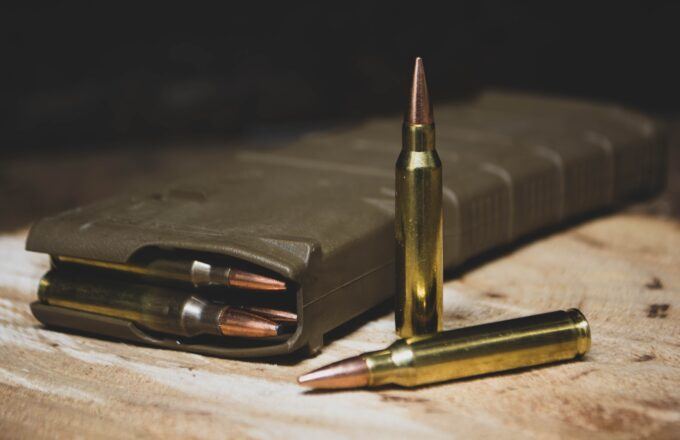
It has been a particularly sad 4th of July. In Highland Park, Illinois, a young gunman opened fire on a parade with a high-caliber rifle, killing 7, wounding at least 47 others and traumatizing many more. In the same weekend, more than 50 people were shot in New York City. It is conceivable that those shootings were made possible because of a loose interpretation of the Second Amendment to the Constitution.
The Second Amendment to the United States Constitution, ratified on December 15, 1791, reads: A well regulated militia, being necessary to the security of a free State, the right of the people to keep and bear arms, shall not be infringed. This amendment was inspired by the right to keep and bear arms recognized in the English common law, and by the English Bill of Rights of 1689 that prevailed in the American colonies. The scope and prerogatives arising under the Second Amendment have been the subject of considerable controversy, and its vague interpretation has had serious legal consequences.
Opponents of gun control emphasize the last part of the sentence, “…the right of the people to keep and bear arms, shall not be infringed,” neglecting that this constitutional entitlement is centered on a “well regulated militia,” which at the time was deemed “necessary to the security of a free state.” As noted by Alexander Hamilton in the Federalist Papers, a well regulated militia is “the most natural defense of a free country.”
The intimate connection between the right to bear arms and the natural rights of self-defense and resistance to oppression noted by Sir William Blackstone (1723-1780,) an English jurist known for writing the Commentaries on the Laws of England, is critical to understand the meaning and purpose of the Second Amendment. The civic duty to act in concert with fellow citizens to defend the state is also at the core of the right to bear arms under the Pennsylvania Constitution of 1776: “the people have the right to bear arms for the defence of themselves and the state.”
Obviously, the exacting circumstances to defend the state during the American Revolution were totally different from those existing now. On September 17, 2013, during an interview with John Hockenberry in WNYC radio, former Associate Supreme Court Justice Ruth Bader Ginsburg, discussed her dissent in District of Columbia v. Heller (2008), where the Supreme Court held that the Second Amendment protects an individual right to possess a firearm unconnected with service in a militia, and to use that arm for traditionally lawful purposes, such as self-defense within a home.
Justice Ginsburg said, “The Second Amendment has a preamble about the need for a militia…Historically, the new government had no money to pay for an army, so they relied on the state militias. And the state required men to have certain weapons and they specified in the law what weapons these people had to keep in their home so that when they were called to do service as militiamen, they would have them. That was the entire purpose of the Second Amendment… So, the Second Amendment is outdated in the sense that its function has become obsolete.”
Also in a dissenting opinion, Justice John Paul Stevens stated that the court’s judgement was a “strained and unpersuasive reading” which overturned longstanding precedent. He stated that the court had “bestowed a dramatic upheaval in the law”.
Thus, a fair textual and contextual reading of the Second Amendment clearly indicates that those entitled to claim a constitutional right to bear arms are not average citizens, but rather those belonging to a group of civilians trained as soldiers who, in case of an emergency –such as a threat to the state—must become available to supplement the regular army.
At the time the second amendment was enacted, the Founding Fathers couldn’t have predicted the tremendous technological advances in modern weaponry. There are considerable differences between the muskets used during revolutionary times and assault weapons readily available today, capable of killing scores of people, including children, in a matter of seconds.
The erroneous identification of the “right to bear arms” with an individual right finds unfortunate support in a misguided, but culturally entrenched, understanding of virility. Far too many individuals equate gun possession with manhood. But, as New York journalist Michael Hart observes, “The adults who promote gun culture need to be understood and I’m not sure that as a society we’ve come close to doing that yet. I don’t understand at all why men – and it’s overwhelmingly men – feel that owning a gun is something they need to do. It’s somehow a part of their identity – but what does that mean? Is that identity so hollowed out, so fearful, so worshipful of absolute deadly power that guns supply a missing link? Do these men feel bigger, stronger, more themselves by owning a gun? Does the prospect of killing another human being draw them?”
The loose interpretation of the Second Amendment is responsible, to a great extent, for thousands of lives lost every year. The absence of effective legal restraints to the marketing of arms in this country, resulting from this misguided understanding, will continue to cast a shadow over our survival as a truly civilized society.
Palestinian universities are under attack once again.
Later this month, the Israeli authorities are expected to put into effect a 97-page ordinance, called Procedure for Entry and Residence for Foreigners in Judea and Samaria Area (PDF), which would grant the Israeli Ministry of Defence and thus, the military, absolute power to determine how many and which foreign academics and students can visit, study or work at all 15 Palestinian universities and colleges in the West Bank.
The “procedure” limits the number of staff allowed to work for any of these 15 universities and colleges to no more than 100 “distinguished lecturers and researchers,” noting that “applications for a permit under this section will be approved if it is demonstrated, to the satisfaction of the authorised [military] official, that the lecturer contributes significantly to academic learning, to the area’s economy, or to advancing regional cooperation and peace”.
Moreover, under the new ordinance, the Israeli authorities will not only determine who can or cannot teach in Palestinian universities but will also restrict the time foreign academics can reside in the West Bank to one semester, which ensures that foreign professors will no longer be able to become permanent members of the academic staff at any of West Bank’s institutions of higher education.
Finally, the procedure will only allow up to 150 foreign students to study in the West Bank at any given moment, while restricting their stay to one semester as well.
Universities as sites of resistance
Israel’s attempt to exert total control over Palestinian universities is, of course, nothing new. But its approach to Palestinian higher education was once significantly different.
Back in the early 1970s, when Israel’s occupation of the West Bank was in its early years, the Israeli authorities provided Palestinians with permits to establish universities in the occupied territories. Security officials were under the impression that the establishment of universities could help Israel normalise the occupation and thus foster Palestinian support for Israeli rule.
This policy backfired. The universities established under occupation rapidly became sites for political organising and mobilisation for Palestinian liberation.
Furthermore, within a relatively short period, these universities produced a fairly large Palestinian professional class. The labour market in the occupied territories did not have much to offer these young graduates – Israel was almost exclusively hiring unskilled manual labourers for its construction and agricultural industries, and military authorities were blocking almost all attempts by Palestinians to establish independent industries or develop the service sector.
Not surprisingly, the lack of jobs created bitterness among unemployed and underemployed graduates. Alongside thousands of university students – who were equally concerned about their future prospects – these graduates eventually served as a primary force in bringing about the first wave of mass resistance to Israeli rule: the Intifada of 1987.
Seeing the prominent role students and graduates took on during the first Intifada, Israel swiftly learned its lesson and began imposing severe restrictions on Palestinian universities. Birzeit University, for instance, was practically closed year round from 1988 to 1992. All of the other universities also faced long-term closures.
In the decades that followed, numerous procedures have been introduced to restrict Palestinian higher education. The primary aim of these policies, ranging from limiting the movement of lecturers and students to putting restrictions on subjects that can be taught, was to undermine Palestinian economic development and the circulation of knowledge that can be used to mobilise younger generations against colonial rule.
Protecting academic freedom
Given this half-century-long history of academic restrictions, obstructions and repression, it is difficult to find anything new in the restrictions to academic freedom that Israel is due to introduce in the West Bank later this month. The “procedure” is, after all, just one more draconian policy in a long line of draconian policies targeting Palestinian higher education. And yet, there has been an interesting development since the announcement of the procedure in February.
In addition to Palestinian universities themselves, international human rights organisations, and professional associations such as the Middle East Studies Association and the British Society for Middle Eastern Studies (in which I serve as chair of the Committee on Academic Freedom), an Israeli university publicly voiced concern in an official capacity over an Israeli policy that would undermine the academic freedom of Palestinians.
In an arguably unprecedented move, the General Assembly of the Hebrew University sent an official letter to the Israeli military commander of the West Bank, emphasising the problematic restrictions set out in the procedure.
At first glance, the penning of this letter appears to be a step in the right direction – until now, the only support Palestinian higher education institutions received from Israeli academia came from Israeli academics organising, protesting and at times, issuing open letters criticising the state’s attacks on Palestinian academic freedom in their personal capacity.
Nevertheless, a careful reading of the letter quickly shows that this is hardly the important gesture of solidarity it first appears to be.
The general assembly insists that the military should not intervene in decisions regarding a person’s academic qualifications, but still accepts that the occupying military has the right to determine whether a lecturer, researcher or student poses a security threat and deny them access to Palestinian universities.
“There are,” it argues, “no security considerations that justify this kind of intervention because it is clear that in any case all lecturers, researchers and students need to receive an individual entry permit from security officials.”
In other words, the Hebrew University accepts the basic assumptions informing Israeli rule over Palestinians: the legitimacy of one ethnic group dominating another ethnic group, and the use of laws and official policies to sustain and enhance that domination.
The letter is tepid, at best. But it does raise an important question: why, after nearly half a century did an Israeli university suddenly decide to voice concern about repressive policies directed at Palestinian universities?
Undoubtedly, some professors from Hebrew University are sincerely alarmed about the ongoing efforts to clamp down on Palestinian higher education. However, others are probably more concerned about their own academic standing among their international peers. They are aware of the Palestinian Boycott, Divestment, Sanctions (BDS) movement, and particularly the threat of an international boycott of Israeli academic institutions due to their complicity with Israeli apartheid. It is likely that in their eyes this letter distances Hebrew University from the government’s policies, and absolves them of any blame.
Indeed, reading the letter carefully, Hebrew University’s complaint sounds more like an effort to protect its own reputation than support Palestinian universities. While criticising a particular policy proposal, the university implies there is a possibility that academic freedom can exist under an apartheid regime. Thus, the letter does not challenge the structures of domination. Rather, it serves as a shield against those calling for an academic boycott on Israeli universities.
Today, Palestinian universities are facing yet another attack. As they work to try and preserve something that at least resembles academic life under a brutal apartheid regime, they deserve real solidarity – not attempts by privileged academic institutions to save their own reputations.
The labor union for Hyundai Motors autoworkers announced last Tuesday that it had reached a tentative agreement with the company on a new contract. The deal falls far short of what workers are demanding, amounting to another sellout by the union. Workers should reject the contract when they vote on the deal on July 19 and organize independently of the union to fight for decent wages and conditions.
South Korean Hyundai autoworkers (Hyundai)
The agreement, which was negotiated by the Hyundai branch of the Korean Metal Workers’ Union (KMWU), fails to address surging inflation in South Korea. Furthermore, despite union claims to the contrary, the deal paves the way for future job cuts as Hyundai switches to the production of electric vehicles.
The deal includes a nominal 98,000 won ($US75) raise in basic monthly pay, a 4.3 percent increase. This is despite the fact that workers were demanding 165,200 won ($US126) and that consumer prices rose 6 percent in June, the highest rise since 1998 amid the Asian financial crisis. In real terms, Hyundai workers would take a pay cut under this deal.
In addition, the tentative agreement includes a 200 percent bonus equal to workers’ monthly salaries; an additional 4 million won ($US3,052); and 20 Hyundai Motors shares per worker. Missing from the agreement were the demands to extend the retirement age from 60 to 64 and the reinstatement of fired workers.
Hyundai workers should not only reject the union’s sellout agreement, but reach out to autoworkers at Kia, GM Korea, and Renault Korea where workers face similar wage-cutting agreements.
Workers needs to form rank-and-file committees independent of the unions and the capitalist political parties. The KMWU, which is affiliated with the so-called “militant” Korean Confederation of Trade Unions (KCTU), regularly sells out its membership. This has been on display the past four years when the union has refused to call strikes and even enforced a wage freeze in 2020.
By concluding talks at Hyundai, the largest auto maker in South Korea, the KMWU is setting the benchmark for agreements to be forced on other sections of workers. Hyundai workers should reach out to other sections of workers in South Korea and internationally. Hyundai operates plants around the world, including in the US, China, India, and Brazil.
South Korean workers in general are facing declining real wages while the wealthy enjoy huge increases to their fortunes, driven by the profiteering during the COVID-19 pandemic. In the first quarter of this year, real wages fell for most of the population, excluding the top 20 percent, who saw their income grow by 8.6 percent. For the second, third, and fourth quintiles, wages fell by 2.8 percent, 1 percent, and 1.6 percent respectively. For the bottom 20 percent, those making less than 1.79 million won ($US1,366) per month, income grew by a meagre 0.9 percent.
For years, the media has derided autoworkers as “labor aristocrats,” making upwards of 96 million won ($US73,258) annually—a figure regularly cited to justify attacks on wages. In reality, the average employee’s annual base salary at Hyundai Motors is 32.7 million won ($US24,951) according to Job Korea, an online recruiting company.
Hyundai Motors, however, recorded its highest-ever sales last year, bringing in 117.61 trillion won ($US89.8 billion), a 13.1 percent increase from the previous year. Operating profit tripled over the same period to 6.679 trillion won ($US5.1 billion). This trend continued in the first quarter of this year, with a record 1.93 trillion won in operating profits and 30.3 trillion won in revenue. This is being driven by increased sales of Hyundai’s luxury brand Genesis model, another indication that, for the wealthy, times are good.
Workers should reject Hyundai’s declaration that the company is facing financial difficulty due to the global semiconductor chip shortage and cannot afford to pay higher wages. Likewise, they should dismiss the union’s claims that the deal is the best workers can get.
To justify the deal, the KMWU hails Hyundai’s supposed agreement to open a new factory line in South Korea to produce electric vehicles (EV). The company is due to break ground next year, with completion of the new plant scheduled for 2025. The company has also pledged to upgrade existing lines to enhance “competitiveness” and “efficiency,” but these are euphemisms for speed-ups and cost-cutting.
However, the Hankyoreh newspaper reported in February last year that, as auto manufacturers move towards production of electric vehicles, as many as 60 percent of existing auto manufacturing positions could be cut by 2030. These vehicles require fewer parts and therefore fewer workers to assemble them. The union is claiming that if the plant is built—and there is still no guarantee that Hyundai may change its mind—the company will have to provide more jobs to run the factory.
Hyundai is already slashing jobs. Its refusal to extend the retirement age is not only designed to cut costs by reducing the number of older, higher paid workers, but also to utterly eliminate those positions. By accepting Hyundai’s refusal to extend the retirement age, the KMWU is agreeing to these job cuts as well.
The KMWU has also accepted Hyundai’s claims that it will form a council with the union, meeting quarterly, to discuss future automation, job cuts and changes in the global business environment. In other words, the union will work hand in hand with management to restructure the enterprise to ensure the company’s profits at the expense of workers, while at the same time suppressing their opposition.
Polling in the Papua New Guinea (PNG) elections began on July 4 after a six-week campaign. The elections run until 22 July, with areas voting on different days and results due by 29 July. A total of 3,499 candidates, many motivated by potential access to money or favours, and 25 political parties are contesting 118 seats and the governorships of 22 provinces.
As the polls opened, the Post Courier declared that the 2022 election will be “a game changer for a country that has seen and experienced more upheavals in the past five years than any other time in its 47 years of independence.”
Within days, however, chaotic scenes were reported in the Highlands region where angry voters in East Sepik and Hela destroyed ballot boxes and set fire to hundreds of ballot papers after discovering their names were not on the Common Roll.
Despite assurance by Electoral Commissioner Simon Sinai that more than five million voters could cast ballots, thousands have been turned away because their names were missing. By one estimate as many as 1 million people are not on the roll. In some locations there are not enough ballot papers and voting in the capital, Port Moresby, has been delayed several times.
Prime Minister of Papua New Guinea James Marape addresses the 76th session of the United Nations General Assembly, on Sept. 24, 2021, at the UN headquarters. (Peter Foley/Pool Photo via AP, File)
Prime Minister James Marape has repeatedly appealed for “peace and calm.” The last election in 2017 was widely discredited, mired in bribery and corruption, ballot rigging and the wholesale omission of names from the roll. Protests erupted over accusations that vote counting was hijacked. More than 200 people were killed in violent clashes.
Some 8,000 security personnel, plus 140 Australian Defence Force (ADF) troops, have been despatched across the country. Police Commissioner David Manning said the security forces and police will be “heavily engaged” in election operations. In a revealing comment, he also warned them not to allow themselves to be “coerced, bribed, forced or threatened to act in the manner that brings the whole security operation into disrepute.”
Institute of National Affairs director Paul Barker told the National that electoral rolls had not been updated in the five years since 2017, when they were also not rigorously updated. Barker also alleged that police had intercepted containers with tampered papers, highlighting the immense “temptation and readiness” to defraud the election.
The past week has seen an escalation of the violence and mayhem. The Post Courier reported on July 11; “People are being killed, properties are being destroyed and the guns are coming out in huge numbers to intimidate voters. There have been killings, fighting, deferral of polling, resignations and detainment of high-profile persons for been [sic] in possession of huge amount[s] of cash.” It concluded that the election was already the “worst ever experienced.”
In the latest eruption of violence last Thursday, the Yumbilyam High School in Enga province was set on fire when frustrations boiled over after all the local ballot boxes were hijacked.
The explosive political tensions highlight the vast gulf that separates the poverty-stricken PNG masses from the country’s corrupt and venal political elite. Trust in the ruling elite has disintegrated following decades of social deprivation and growing inequality, buttressed by authoritarian military-police measures.
The crisis has been exacerbated by the ongoing COVID-19 pandemic. Tens of thousands of workers, as high as 25 percent of the workforce, have lost their jobs. Meagre government relief measures such as tax deferrals and loan repayment holidays were woefully insufficient. According to UN figures, 39 percent of the people live below the poverty line of $US1.90 a day.
To date, PNG has officially recorded 44,752 COVID cases and 662 deaths, but with testing all but abandoned the figures are meaningless. Less than 4 percent of the population has been vaccinated. The fragile health system is facing collapse, its inadequate conditions and low pay leading to repeated protests and strikes by nurses.
One young mother from Port Moresby told the Australian Broadcasting Commission about the election: “We want services, the main one is water in our homes, we live in a settlement and there is no water,” she said. “The other issue is our youths, there are a lot of young people in the settlement, they don’t have jobs or good schools.”
Despite having significant natural resources, PNG is among the poorest countries in the world. All the parties blame each other for the economic crisis. The debt to GDP ratio increased from 19 percent of GDP in 2012 to 40 percent in 2019 under Marape’s predecessor Peter O’Neill, then to 52 percent of GDP in 2021 under Marape. Marape has sought concessional loans, including from Australia, Japan and China, to help the government repay its debts and finance infrastructure.
In November 2020, the Marape-led coalition almost collapsed when dozens of MPs, including cabinet ministers, defected to the opposition. Marape passed his 2021 budget in an emergency parliamentary session with the opposition absent—a move the Supreme Court ruled unconstitutional. He then adjourned parliament for four months to avoid a vote of no confidence, ensuring that he could not, under the rules, be removed before the current election.
O’Neill, who was himself deposed in 2019 amid corruption allegations, is Marape’s main challenger. Marape’s Pangu Party is contesting more than 80 seats, while O’Neill’s People’s National Congress (PNC) more than 90. Either party will only form government by cobbling together a coalition with several minor parties and independents, which produces intense factionalising, horse-trading and near permanent instability.
The burning issues facing the working class and rural poor were totally ignored during the campaign. Marape ran on his record, saying that O’Neill left the economy “bleeding and struggling.” On taking office, he had resorted to nationalist demagogy proclaiming he would “take back PNG” through “regime shifts” in the resource industry, which he falsely claimed would “bring more wealth to the people” and reduce dependence on Australian aid.
O’Neill in turn defended his own economic record, while making a suite of empty promises policies, running the gamut from political stability to public services reform, job creation to law and order, and investing in infrastructure.
As prime minister O’Neill was responsible for brutal authoritarian measures aimed at suppressing social discontent. In 2016, police opened fire on student protesters demanding he step down and face fraud charges. Opposition intensified following the 2017 election, which O’Neill only narrowly won. Police and military units were dispatched to the Highlands to crack down on subsequent violence. In 2020, after leaving office, O’Neill was charged with misappropriation, abuse of office and official corruption.
The election is being closely watched by the US, Australia and China, after China’s foreign minister, Wang Yi, visited early in June and signed several deals covering investment in Green Development, COVID-19 aid and an anti-narcotics centre. O’Neill has promised to cancel the agreements should he win office.
Marape took part in the just completed Pacific Islands Forum which was addressed remotely by US Vice President Kamala Harris. She announced a major escalation of US involvement in the Pacific, aimed at ramping up the strategic, economic and military encirclement against China.
China is a significant trading partner and the biggest destination for PNG’s exports. Australia, however, the country’s colonial ruler until 1975, is PNG’s immediate geo-strategic “security” overseer, with members of the Australian Federal Police and the ADF based in the country full-time.
Australian Prime Minister Anthony Albanese is expected to visit PNG immediately after the new government is formed. While Albanese was at the Madrid NATO summit, further committing to the US-led confrontations with Russia and China, his Foreign Minister Penny Wong toured the Asia-Pacific region enforcing Washington’s anti-China agenda.
Canberra is determined to maintain its dominant geo-strategic position in PNG and, whatever the election outcome, significant pressure will be applied to the incoming administration in the Pacific’s largest country.
The purchasing power of American workers’ wages suffered another sharp drop last month, as the official inflation rate reached 9.1 percent while pay rises remained suppressed far below that level.
According to the US Bureau of Labor Statistics, real wages fell 3.1 percent between June 2021 and June 2022. In the month of June alone, real average weekly earnings declined by 1 percent. More up-to-date figures from the Wall Street Journal put the decline in real wages at 4.4 percent.
The devastating impact of inflation on the working class is demonstrated by the collapse in purchasing power of the federal minimum wage. Frozen at $7.25 an hour since 2009, it stands at its lowest value in 66 years. The 13-year freeze on the minimum wage, enforced by Democratic and Republican administrations alike, is the longest period without a raise since it was established in 1938 during the Roosevelt administration.
By comparison, the real value of the minimum wage in current dollars was $12.12 in 1968.
The surge of inflation is part of a class policy aimed at making workers pay for the criminal and incompetent response of the ruling class to the pandemic, including the vast bailout of the banks and financial institutions to the tune of trillions of dollars. At the same time, while health care and vital public services are being starved for funds the government has lavished vast amounts on the war machine. Military spending under the Democratic Biden administration now stands at record levels.
The result has been that while workers are paying more, consumption is falling. For example, while gas prices have risen 60 percent, the total dollar amount spend on gas has only risen 50 percent, meaning workers are being forced to cut back on travel and commuting.
While the living standards of workers are being devastated, the world’s billionaires have seen a vast increase in their fortunes. The world’s 10 richest billionaires more than doubled their fortunes, from $700 billion to $1.5 trillion. Meanwhile, another 160 million have been forced into poverty, a figure that is sure to increase.
The Biden administration has turned to the unions to help suppress the mounting wave of strikes launched by workers to fight back against the devastating assault on wages. Biden, who calls his administration the most “pro union” in history, sees the labor bureaucracy as a vital instrument for disorganizing and betraying the struggles of workers.
Despite the claims by the US federal Reserve of a “wage price spiral,” pay increases are averaging far less than the rate of inflation. Through March, pay increases for union members increased by 3.5 percent year over year, less than half the official inflation rate. That compares to 4.9 percent for nonunion workers, demonstrating the role of the unions in slashing the living standards of workers.
During that timeframe, the unions betrayed a series of important strikes, including Volvo Trucks, John Deere, Kellogg’s and Nabisco, to name just a few. Wage increases averaged in the 2-4 percent range.
The role of the unions was starkly exposed again by their support last week of the intervention of the Biden administration to block a strike by railroad workers by convening a Presidential Emergency Board. The workers, facing conditions some describe as “hell on earth,” earlier voted by a 99.5 percent margin for strike authorization.
In recent days, the United Auto Workers has blocked struggles at Ventra, an auto parts maker in Evart, Michigan, as well as imposing a sellout deal on low-wage contract workers at GM Subsystems.
Rampaging prices and shortages of fuel, food and other necessities have led to the outbreak of struggles around the world. Mass protests and strikes by workers in Sri Lanka forced the resignation of President Gotabaya Rajapakse, who fled the country. In Britain, railroad workers conducted a series of national strikes last month. However, in each case the unions have sought to limit these struggles to protest actions aimed at merely dissipating the anger of workers.
The suppression of wages by the unions has gone hand in hand with the offloading of increased costs onto the shoulders of workers. A report in the New York Times details how over the past decade families have been “bled dry” by the rise in rent, health insurance premiums, drug costs, student loans, and child care. According to the Times, “Family premiums for employer-based health insurance jumped by 47 percent between 2011 and 2021, and deductibles and out-of-pocket costs shot up by almost 70 percent. The average price for brand-name drugs on Medicare Part D rose by 236 percent between 2009 and 2018. Between 1980 and 2018, the average cost of an undergraduate education rose by 169 percent.”
To further undermine the class struggle, the US Federal Reserve is sharply increasing interest rates to drive up unemployment. Another 0.75 to 1 percent increase in the key federal interest rate is expected when the Fed governors meet later this month, following a 0.75 percent rise in June.
While the inflationary crisis was triggered by years of bank bailouts and money printing aimed at enriching the financial oligarchy, the ruling class seeks to resolve the crisis it has produced by throwing millions of workers into unemployment as a means to force workers to accept even lower wages.
Higher interest rates will mean higher mortgage costs as well as higher interest payments on credit cards, student debt and car loans. As a result of the rate increases, the sharpest in more than 30 years, a recession is seen as very likely, with millions of workers facing the loss of jobs, their only lifeline.
To counter the policy of the financial oligarchy, the working class must mount a no less determined struggle to defend its social interests. The fundamental principle should be that the working class is not responsible for the present crisis and must not pay for it.
US President Joe Biden rounded off his visit to the Middle East with a series of meetings with Arab leaders on Friday and Saturday. While the meetings repaired relations between Riyadh and Washington, no major breakthroughs were announced, with Biden widely seen as having paid a high price for little return.
The White House purpose was to reassert Washington’s standing with the region’s bloodthirsty dictators and line them up behind Washington’s proxy war against Russia in Ukraine. The war that Biden has sought to justify as a war for democracy and human rights against autocracy has met a decidedly cool response from leaders throughout the region, with neither the Saudis nor the United Arab Emirates (UAE) signing on to the US/NATO sanctions on Russia.
Biden is also seeking to cement an anti-Iran alliance that would connect air defence systems throughout the region, building on CENTCOM, the US combat command whose base is in Qatar and which covers the Middle East, parts of central Asia, Egypt and the Horn of Africa and has, since early 2021, included Israel.
In this photo released by the Saudi Royal Palace, Saudi Crown Prince Mohammed bin Salman, right, welcomes President Joe Biden upon his arrival at Al-Salam palace in Jeddah, Saudi Arabia, Friday, July 15, 2022. (Bandar Aljaloud/Saudi Royal Palace via AP)
This line-up is not only directed against Russia. It is part of US imperialism’s broader efforts to limit China’s expanding economic and political influence in the energy-rich Middle East.
Beijing has become the region’s largest trading and investment partner, outstripping both the US and Europe some years ago. According to the American Enterprise Institute, the last 16 years has seen total Chinese investments and construction projects reached $43.47 billion in Saudi Arabia, $36.16 billion in the United Arab Emirates (UAE), $30.05 billion in Iraq, $11.75 billion in Kuwait, $7.8 billion in Qatar, $6.62 billion in Oman, and $1.42 billion in Bahrain.
Saudi Arabia has agreed wide-ranging trade and investment deals with both China and Russia. In the context of oil, China already is the Kingdom’s largest customer, with the Saudis recently agreeing to import Russian oil in order to free up its own production, some of which is consumed domestically, particularly in its desalination plants, to increase exports.
Egypt, likewise, has extensive agreements with Russia which has started constructing a $25 billion nuclear reactor, while China is playing a major role in the construction of Egypt’s new administrative capital 35 km outside Cairo and has occupied much of the new industrial zone being built along the Suez Canal.
Qatar, which has close economic relations with Iran, is negotiating with China over the development of what will be the world’s largest gas field and the multi-year export of its gas to China, while Iran’s deal with China includes major investment in infrastructure in exchange for cheaper oil and naval outposts in the Persian Gulf. Iraq has signed a deal with China to build 1,000 schools in the country over the next two years.
At the NATO summit meeting a few weeks ago, Biden’s new “strategic concept” for the Western alliance recognized China as a systemic “challenge” and described its policies as coercive and its cyberoperations around the world as malicious. He said that along with Moscow, Beijing was trying to “subvert the rules-based international order.” In other words, they were opposed to Washington’s political and economic domination.
It was this that led Biden to junk his election pledge to treat Saudi Arabia as a “pariah state” due to its crushing of all internal dissent with mass executions and Crown Prince Mohamed bin Salman’s signing off on the gruesome assassination of Saudi insider turned dissident Jamal Khashoggi in 2018 and grovel before the Saudi ruler. That the visit took place at all was seen as an achievement for the Saudis and above all for bin Salman.
When the US president brought up Khashoggi’s murder with bin Salman on Friday afternoon, the prince accused Washington of hypocrisy for allowing the shocking abuse of inmates by their US guards at Iraq’s Abu Ghraib prison in 2004 and doing nothing about the killing of Palestinian-American journalist Shireen Abu Akleh, who was killed by Israel soldiers while covering an Israeli raid on the West Bank city of Jenin last May. Bin Salman could of course have itemized a far longer list of human rights crimes committed by US imperialism in the Middle East and beyond that more than match those of the barbaric House of Saud.
On Saturday, at a summit meeting with the leaders of the six Gulf sheikdoms and Egypt, Jordan and Iraq in Saudi Arabia’s western port city of Jeddah, Biden said, “We will not walk away and leave a vacuum to be filled by China, Russia or Iran,” adding “And we’ll seek to build on this moment with active, principled American leadership.” Such principles evidently include support for the ruthless suppression of all dissent as exemplified by bin Salman and Egypt’s military ruler General Abdel Fattah el-Sisi.
In effect, Biden gave the region’s tyrants, all of whom sit atop social volcanoes, a blank check guaranteeing Washington’s support against domestic opposition. It was the Obama administration’s failure to defend Egyptian dictator Hosni Mubarak against the mass opposition that brought about his ouster in 2011 that precipitated a sharp deterioration in relations between Washington and its Arab allies.
In his first talks on the second leg of his trip on Friday afternoon, Biden met with bin Salman and Saudi leaders in Jeddah. Despite giving the nod to their client Bahrain to join the US-backed Abraham Accords with Israel, and years of back-channel talks between Riyadh and Jerusalem on security issues, intelligence sharing and trade deals, the Saudis refused to deal openly with Israel unless it agrees to the formation of a Palestinian mini-state as outlined in a 2002 Saudi initiative.
However, the Biden administration did announce the finalization of the agreement to transfer the tiny islands of Tiran and Sanafir from Egypt to Saudi Arabia. The two islands control the maritime entrance to the Gulf of Aqaba and thus all shipping to Eilat, Israel’s only port with access to the Red Sea. Long claimed by Saudi Arabia, but controlled by Egypt, the islands were subject to the 1978-9 Camp David agreements between US, Egypt and Israel that called for stationing a small “peacekeeping” force there, including US soldiers. The US will pull out its forces by the end of the year.
In return, the Saudis have agreed to allow international flights to and from Israel to fly over Saudi airspace, including the Israeli airline El Al, as well as allowing Israel’s Arab Muslim citizens to fly direct to Saudi Arabia for religious visits to Mecca, thereby shortening journey times between Israel and the Middle East and Asia.
Bin Salman gave a vague undertaking to increase oil production by up to 1.5 million barrels a day. This is expected to be a short-term increase that will have little impact on global oil prices. As in 1973, the House of Saud is determined to take advantage of the oil price increases to refill its coffers after several lean years, fund development projects for the next decade, and assert its own political and economic agenda throughout the region.
The US for its part signed a number of economic deals, including an agreement on cooperation on the development of next generation 5G and 6G mobile technology networks and on cybersecurity, in a bid to limit the economic reach of China’s giant Huawei telecoms corporation, which has developed a significant presence in the region.
On Saturday morning, Biden held one-on-one meetings with the leaders assembled for the summit of the Gulf Cooperation Council, including el-Sisi of Egypt, whom he thanked for “the incredible assistance” in Gaza, which Egypt has promised to help rebuild after Israel’s murderous assault on the besieged enclave in May last year. He did not mention el-Sisi’s atrocious human rights record that includes the imprisonment of 65,000 of his critics, many of whom have died in custody due to medical negligence, including the democratically elected President Mohamed Mursi.
The summit itself made no substantive announcement on establishing a regional defence alliance nor did it set a schedule for further talks. There was no rush to cement an anti-Iran bloc with Israel by normalizing relations with Tel Aviv, in part because several Gulf States, along with Egypt and Jordan, already trade with Israel, buying its military, intelligence and agricultural technology, and have held joint military exercises via Centcom. Riyadh has already stated it doesn’t want to start a war with Iran and is engaged in talks, brokered by Iraq, which is hugely reliant on Iran for electricity and gas, to restore diplomatic relations with Tehran, as is the UAE.
While the participants are in the final analysis dependent upon Washington for their security, they view Russia and China as useful counterweights and bargaining chips in their relations with the US.
On Friday, the Frankfurt Higher Regional Court sentenced German Army officer and neo-Nazi Franco Albrecht to five years and six months in prison for planning attacks on high-ranking politicians and public figures. The verdict is not yet final.
Franco Albrecht at the start of the trial in an interview with the television station RT deutsch
It is the first time that a German court has convicted a Bundeswehr officer of right-wing terrorism. But as in previous trials of far-right terrorists—such as Beate Zschäpe of the neo-Nazi National Socialist Underground (NSU) or Stefan Ernst, who murdered leading Christian Democrat Walter Lübcke—the court was primarily concerned with damage control.
Although Albrecht is a key figure in a wide-ranging right-wing extremist network that reaches deep into the German armed forces and security agencies, the trial focused exclusively on him as an individual. Leading members of the network remained unchallenged. They were not charged or received only a trivial sentence in other trials and remain free.
As recently as June 2018, the Frankfurt Higher Regional Court had refused to open the trial against Albrecht at all. Although all the essential findings that have now led to his conviction were already present at that time, it was justified by claiming there was insufficient suspicion of the preparation of a serious act of violence endangering the state.
It was not until the Kassel district President Walter Lübcke was assassinated by a neo-Nazi a year later and public outrage over the right-wing conspiracy in the state apparatus grew that the Federal Supreme Court ordered the Higher Regional Court to conduct the trial against Albrecht.
The trial began on May 20, 2021 and spanned 40 days. Albrecht, who had been temporarily detained in 2017, remained free for most of the time. Only in February of this year was he taken into custody again because he sought to dispose of evidence. When he was arrested, he was found to have numerous swastika insignia, cutting and stabbing weapons, machetes, and 21 mobile phones with 50 prepaid SIM cards.
Albrecht’s original arrest in February 2017 had focused public attention on the extent of right-wing extremist activity within the Bundeswehr. Significantly, the arrest was not made by German authorities but by the Austrian police. The latter arrested Albrecht when he picked up a pistol at Vienna International Airport which he had previously hidden there.
A fingerprint check revealed that he led a dual existence. He was a first lieutenant in the 291 Jäger Battalion of the Franco-German Brigade in Alsace and, although he did not speak a word of Arabic, had registered as a supposed Syrian asylum seeker “David Benjamin.” Apparently, he wanted to use the false identity to blame refugees for a terrorist attack.
Journalists now have begun to investigate, and it quickly became clear that Albrecht was part of an extensive right-wing conspiracy. He had hoarded several weapons and ammunition, supported by accomplices, and had drawn up lists of possible attack targets, including Green Party politician Claudia Roth, the then Justice Minister Heiko Maas (Social Democratic Party, SPD) and the founder of the anti-racist Amadeu Antonio Foundation, Anetta Kahane.
The attack plans on Kahane were the most advanced. Albrecht had visited the foundation’s premises in Berlin and produced photos of the underground parking garage, location sketches of the premises, plans for a weapons transfer and a suspected escape route.
Albrecht had confidantes and helpers in his unit, the 291 Jägerbataillon, where right-wing extremism was apparently tolerated. Hitler salutes and swastikas were observed again and again. His superiors knew about Albrecht’s right-wing extremist sentiments. As early as 2013, he had written a racist and anti-Semitic master’s thesis at the French Saint-Cyr Military Academy, which was covered up by the responsible Bundeswehr officers so that Albrecht could continue his career as an officer.
He was also a member of a network of elite soldiers, operational police and state officials that were preparing for an armed coup on “Day X,” hoarding weapons, and planning the detention and murder of politicians, civil rights activists and refugee workers. The head of this network is André S. (alias “Hannibal”), a former member of the Bundeswehr’s elite KSK military unit, with whom Franco Albrecht was in personal contact.
The discovery of the Hannibal network after Albrecht’s unmasking triggered hectic activity in state and political circles. In 2020, then Defence Minister Annegret Kramp-Karrenbauer (CDU) was forced to dissolve one of four companies of the KSK after more and more details about right-wing extremist activities became public. The KSK had “taken on a life of its own in parts,” there had been “a toxic leadership culture” and large quantities of weapons and ammunition had gone missing, she said, explaining the move.
Raids against the “Nordkreuz” group, the northern offshoot of the Hannibal network with close ties to the far-right Alternative for Germany (AfD), brought to light large quantities of weapons, ammunition, explosives and death lists. The interior minister of Mecklenburg-Western Pomerania, Lorenz Caffier (CDU) had to resign because of his connections to “Nordkreuz.” But nothing happened to those responsible.
In 2019, the Böblingen District Court fined André S. (“Hannibal”) for violations of the Weapons and Explosives Act, against which he has appealed. He was transferred out of the KSK but not discharged from the Bundeswehr.
In the “Nordkreuz” case, the Federal Prosecutor General dropped the investigation against two leading members, lawyer Jan-Hendrik H. and criminal investigator Haik J., an AfD member. Marko G.—a former paratrooper, SEK (Special Tactical Unit) police officer and AfD member—was the only member of the group to receive a suspended sentence.
Bundeswehr Officer Maximilian T., who was arrested in 2017 along with Albrecht for helping him disguise his dual identity, hide weapons and maintain a hit list, was soon released. He was even given free access to the Bundestag (federal parliament), frequented by many of the targeted victims, as an employee of AfD Member of Parliament Jan Nolte. Maximilian T. is the brother of Franco Albrecht’s fiancée Sophia T., with whom he has three children.
In the five and a half years since Albrecht’s initial arrest, numerous articles and books have revealed the extent of the far-right networks inside the military and state apparatus. The Frankfurt Higher Regional Court felt compelled to convict Albrecht because of the overwhelming burden of proof. But there is no effort to dry up the right-wing swamp. On the contrary, if those in ruling circles have their way, the verdict is supposed to draw a line under the criticism of militarism and right-wing extremism.
Hundreds of billions of euros are being spent rearming the Bundeswehr, which is supposed to move back into the centre of society. Any criticism of militarism is declared a crime. Pacifism does not lead to good but cements “the dominance of the bad, the criminal and the inhuman,” ex-Federal President Joachim Gauck recently declared on the Markus Lanz talk show. The veneration of Nazi collaborators, such as Ukrainian fascist Stepan Bandera, is considered “understandable” and welcome.