22 Jul 2022

Iraqi, Kurdish governments blame Turkey for bombardment killing 9 civilians

Ulaş Ateşçi


At least nine civilians, including two children, were killed and more than 20 others wounded on Wednesday in a bombardment on the tourist village of Perex, in the Zaxo district of Dohuk province in the Kurdistan Regional Government (KRG) territory of Iraq. One of the children was reportedly a one-year-old baby.

Both the Iraqi central government and the KRG blamed Turkey for the artillery attack, though Ankara denied the allegation. Since April, the Turkish Armed Forces (TSK) have been conducting a military operation against Kurdistan Workers Party (PKK) forces in the vicinity of this tourist area near the Turkish border. After Iraq made its public charges against Ankara, protests against Turkey erupted in Baghdad and other cities.

Hassan Tahsin Ali, a man injured in the attack, called the attacks “indiscriminate.” Speaking to AFP in front of a hospital, he said: “Our young people are dead, our children are dead, who should we turn to?”

Iraqi Prime Minister Mustafa al-Kadhimi blamed Turkey, calling the attack a “blatant and flagrant violation of Iraqi sovereignty and the lives and security of Iraqi citizens.” He added that Baghdad reserves the “full right” to respond to such attacks. Iraq declared a period of national mourning for this horrific massacre.

The Iraqi Foreign Ministry is reportedly set to “prepare a file on the continuous Turkish attacks on Iraqi sovereignty and submit an urgent complaint to the UN Security Council.”

Iraq summoned Turkey’s ambassador to Baghdad to the foreign ministry and demanded that the Turkish army immediately withdraw all armed forces from the country. It also recalled the Iraqi chargé d’affaires from Ankara. However, President Recep Tayyip Erdoğan’s government has long ignored demands to end its illegal occupation of Iraqi territory.

Iraqi President Barham Salih also condemned the attack, saying, “the Turkish bombing of Duhok … is condemned and denounced, and represents a violation of the country’s sovereignty and a threat to Iraqi national security.”

The Kurdistan Regional Government also accused Turkey, stating that it “strongly condemns the shelling of the Parakhe resort near the Darkar border of the Zakho Autonomous Administration by Turkish forces.” It added, “Clashes between Turkish forces and PKK fighters in the border areas of the Kurdistan Region have become a constant threat to the lives and well-being of our citizens.”

According to Rudaw in Iraqi Kurdistan, top Shiite cleric Muqtada al-Sadr denounced alleged Turkish bombardment, “suggesting Iraq to take measures against the repeated violation of its sovereignty by reducing diplomatic ties with Turkey, closing off air and land crossings, filing an official complaint to the UN, and annulling all security agreements with Ankara.”

It reported, “All victims of the deadly bombardment were tourists from central and southern Iraq and were part of a 200-person tourist group, according to Zakho mayor Muhsin Bashir.”

Ankara has flatly denied responsibility for civilian deaths, however. In a statement, the Turkish Foreign Ministry claimed: “Turkey is against all kinds of attacks targeting civilians. Turkey carries out its fight against terrorism in accordance with international law, with utmost sensitivity to the protection of civilians, civilian infrastructure, historical and cultural property and the environment.”

Implicitly blaming the attack on the PKK, it continued: “such attacks which aim at innocent civilians and are assessed to be organized by the terrorist organization, target our country’s just and determined stance in the fight against terrorism.”

Ankara concluded the statement by pledging “to take all steps to reveal the truth,” inviting “Iraqi government officials not to make statements under the influence of the rhetoric and propaganda of the treacherous terrorist organization and to cooperate in bringing the real perpetrators of this tragic incident into light.”

Speaking to state-owned TRT Haber media, Turkish Foreign Minister Mevlüt Çavuşoğlu repeated this statement, claiming: “The whole world knows that Turkey has never carried out an attack on civilians.”

Ankara’s claim that it “never carried out an attack on civilians” is not true. In one of the most infamous incidents, the Roboski massacre, 34 people were killed when the Turkish Air Force bombed Kurdish civilian smugglers walking into Turkey from Iraq on December 28, 2011.

According to Rudaw, the PKK blamed “Turkey for the deadly Zakho bombardment and den[ied] the presence of any PKK-affiliated forces at the attack site.”

US State Department spokesperson Ned Price also hypocritically condemned the attack, saying: “The killing of civilians is unacceptable, and all states must respect their obligations under international law, including the protection of civilians.” He added, “We maintain our strong support for Iraq’s sovereignty and its security, stability, and prosperity, including that of the Iraqi Kurdistan Region.”

This statement comes from a country that illegally invaded and occupied Iraq in 2003, a criminal act backed by other imperialist countries or regional powers such as Turkey. This imperialist onslaught, based on lies about “weapons of mass destruction,” devastated an entire society, killing at least 1 million people, and wounding millions more. Millions of survivors had to flee their homes, facing devastating conditions in foreign countries or in Iraq itself, which was once one of the Arab world’s most developed countries.

Moreover, Washington continues to trample upon Iraqi sovereignty. After Washington assassinated Iranian General Qassem Soleimani in Baghdad in January 2020, the Iraqi parliament voted to demand US forces leave the country, but Washington rejected this out of hand.

While the armed conflict between Turkey and the PKK dates back to 1984, its expansion into northern Iraq is a consequence of US imperialist aggression against Iraq since 1991 and the Stalinist bureaucracy’s dissolution of the Soviet Union. Though it threatened to invade when the KRG held an independence referendum in 2017, Ankara now is allied with the KRG. It seeks to thereby prevent the emergence of a PKK-controlled enclave in Iraq.

The Turkish bourgeoisie, fearing the emergence of an independent Kurdish state on its borders, which might encourage millions of Kurds inside Turkey to move in the same direction, is pursuing a similar policy in Syria—trying to crush the US-backed and PKK-linked People’s Protection Units (YPG).

Erdoğan, who announced in May that his government was preparing a new military operation against the YPG in Syria, met with Iranian President Ebrahim Raisi and Russian President Vladimir Putin in Tehran on Tuesday. After the talks, he declared: “America has to leave east of the Euphrates now. ... Turkey expects this as well because it is America that feeds the terrorist groups there.”

Though Iran and Russia also want US forces to withdraw from Syria, Tehran and Moscow are also in serious conflict with Ankara, which supports NATO’s decade-long war for regime change against Syrian President Bashar al-Assad and occupies parts of northern Syria. Due to this broader conflict, from Libya to the Caucasus to the war in Ukraine, Erdoğan did not get the support he wanted from Raisi and Putin at the Tehran summit.

According to recent reports, Syrian government troops and heavy weapons have been deployed in YPG-held areas with Russian and Iranian support. This underscores the danger of NATO member Turkey coming into direct conflict with not only Syrian, but also Iranian and Russian forces.

Newly-installed Sri Lankan President Wickremesinghe oversees brutal police-military assault on protesters

Saman Gunadasa


In the early hours of this morning, hundreds of Sri Lankan soldiers and police officers attacked the main protest encampment in Colombo’s Galle Face Green. Their faces covered with balaclavas and carrying heavy weaponry, the state forces indiscriminately assaulted demonstrators, leaving dozens hospitalised.

In this photo provided by Sri Lankan President's Office, Sri Lanka's newly elected president Ranil Wickremesinghe, signs after taking oath during his swearing in ceremony in Colombo, Sri Lanka, Thursday, July 21, 2022. (Sri Lankan President's Office via AP)

The 2 a.m. raid is the first act of Ranil Wickremesinghe, since he was installed as president by Sri Lanka’s parliament on Wednesday. It is a stark warning of what the right-wing, imperialist-backed leader of the United National Party is preparing.

Since his predecessor, former President Rajapakse, fled the country like a criminal last week, Wickremesinghe has pledged to crack down on the massive protest movement that has rocked the island for the past three months.

This morning’s attack was directly instigated by Wickremesinghe, who declared on Wednesday night, shortly after his installation: “We will deal with them firmly according to the law. We will not allow a minority of protesters to suppress the aspirations of the silent majority clamoring for a change in the political system.”

The claims that the protesters are a “minority,” suppressing a “silent majority,” are pathetic lies that no one will believe. The demonstrations and strikes have been the largest in Sri Lankan history. What Wickremesinghe was really foreshadowing, was the deployment of massive military force to try to crush this immense movement.

The raid this morning proceeded, despite the fact that protesters said they would end an occupation of the Presidential Secretariat in front of Galle Face Green. Their assurance was in response to warnings by Wickremesinghe that any occupation of government buildings were illegal and those involved would be dealt according to the law. It was timed in the dead of the night, to catch the demonstrators while most were sleeping and to ensure that the attack was not met by a broader mobilisation.

The state brutality included a police assault on a British Broadcasting Corporation journalist. An untold number of those attacked required hospital treatment, with some sustaining serious injuries.

The assault is one prong of a feverish campaign by the political elite to restabilise capitalist rule. This is occurring, under conditions of mass hostility to the entire political establishment. Protesters, having demanded the ouster of Rajapakse, are calling on Wickremesinghe to resign. He has no popular backing and was elected president, not by ordinary people but by the parliament.

“Down with all 225 parliamentarians” has been a long-standing popular demand of the working class and the protest movement.

Riot police block students at Sri Jayawardanapura University, during previous protest on 3 April 2022 [WSWS Media]

While overseeing the onslaught on protesters, Wickremesinghe reiterated his appeal for all parliamentary parties to back him. Referring to Wednesday’s bogus election process, he declared: “We were divided for the last 48 hours. That period is over. We now have to work together.”

Dallas Alahapperuma, a Sri Lanka Podujana Peramuna (SLPP) parliamentarian and candidate in the presidential election, and Samagi Jana Balawegaya (SJB) leader Sajith Premadasa, who backed the former in the election, have already indicated their readiness to work with Wickremesinghe.

Premadasa met with Wickremesinghe at a party leaders’ meeting in parliament yesterday, declaring that he had “a cordial and frank exchange of ideas and reiterated the opposition’s determination to provide constructive support to avert misery and disaster.” All of the parliamentary parties have previously stated their willingness to implement the austerity measures being demanded by the International Monetary Fund (IMF).

The response of big business to Wickremesinghe’s installation was summed up by a five-week high on the Colombo stock market after his election on Wednesday, indicating confidence that his ruthless implementation of austerity measures will boost their profits.

The US and Indian ambassadors in Colombo have welcomed Wickremesinghe’s election. Two days before Wednesday's election, the parliamentary speaker Abeywardena had a high-level joint meeting with the US, UK, Canadian, Australian and New Zealand ambassadors.

US Ambassador Julie Chung later tweeted that she looked forward to working with Wickremesinghe and echoed his appeal for all parliamentary parties to collaborate. “In these challenging times, it will be essential for all parties to redouble efforts to work together to tackle the economic crisis, uphold democracy & accountability, and build a stable & secure future for all Sri Lankans,” she said.

Given Wickremesinghe’s record as a reliable agent of US imperialism, Washington will work to more closely integrate Colombo into its military-strategic offensive against China.

Sensitive to the deep-seated hatred of the Sri Lankan masses against Colombo’s ruling establishment and the worsening economic crisis, the Indian High Commission in Colombo issued a carefully worded statement acknowledging the new president.

“As a close friend and neighbour of Sri Lanka and a fellow democracy we will continue to be supportive of the quest of the people of Sri Lanka for stability and economic recovery, through democratic means and values, established democratic institutions and constitutional framework,” it said.

An anonymous senior Indian official quoted in the Indian Express declared: “He faces very tough challenges… winning the election is one thing, getting the job done [in time], this is his real test.”

These statements point to the Indian ruling elite’s concerns about the ability of the new regime to suppress the inevitable eruption of opposition by the already starving working masses to the planned IMF measures. The escalating socio-economic and political crisis in Sri Lanka is the sharpest expression of global economic turmoil, exacerbated by the persisting coronavirus pandemic and the US-NATO proxy war against Russia using Ukraine.

In recent comments to the international media, Central Bank governor Nandalal Weerasinghe said that the Sri Lankan population would face serious difficulties over the next five months. He previously predicted that Sri Lanka’s current inflation rate of about 50 percent would quickly climb to 70 percent, and emphasised that “stable” government was required in order to finalise a deal with the IMF.

A few hours before Wickremesinghe officially became president, IMF managing director Kristalina Georgieva declared that she hoped its so-called rescue talks would be concluded “as quickly as possible.” She also warned that, “[T]here is an understanding that protracted negotiations are simply not viable, that there has to be decisive action as early as three weeks after a [new] government is in place.”

In other words, the IMF is reinforcing its message to Wickremesinghe, who has demonstrated time and time again that he will do whatever it takes, including the ruthless use of police-military force to crush all political opposition and impose the IMF’s austerity attacks on the working class and oppressed masses.

The measures that are planned include the privatisation of essential services that remain in state hands, hundreds of thousands of job cuts across the public sector, the dismantling of public health and education and the withdrawal of limited subsidies upon which hundreds of thousands are depending just to survive.

This onslaught will inevitably intensify social opposition from the working class.

As executive president, Wickremesinghe has wide-ranging autocratic powers to unleash police military repression against all opponents of the austerity agenda. Friday’s attack is a warning of what he is planning more broadly.

Wickremesinghe’s elevation to the presidency and his attempts to implement this program depend entirely on the opposition parties and their hangers on.

As the SLPP, SJB and other parliamentary parties work with Wickremesinghe to establish an interim, all-party government, various pseudo-left organisations and the trade unions are tirelessly working to divert workers, young people and the rural poor behind these reactionary maneouvres.

21 Jul 2022

Snapchat 523 Program 2022

Application Deadline:

12th August 2022

Tell Me About Award:

Applications are open for the Snapchat 523 Program 2022. The Black Creator Accelerator will provide 25 aspiring Black creators with a $10k/month stipend to pursue creative endeavours and get connected with opportunities to launch sustainable, full-fledged careers.

The goal is to provide them with industry knowledge, resources, mentorship, and opportunities to jumpstart their careers. Selected applicants will receive hands-on training and educational workshops from industry experts that work on a variety of products at Snapchat — from Discover, to Stories, to Spotlight, and Maps. Creators will learn how to use these different offerings to create great content, surface their profiles, grow their audiences, and more.

What Type of Scholarship is this:

Contest

Who can apply:

  • Applicant should be at least 18 years old 
  • Self-identify as Black
  • Emerging creator 
    • Someone at the beginning of their content journey who is creating, iterating, and improving over time with little outside guidance
  • Seeking to become a professional creator 
  • History of abiding by community guidelines (on Snapchat) 
  • Creates positive content that aligns with Snapchat’s values (empathy, kindness, creativity)

How are Applicants Selected?

To establish an equitable selection process, applicants will be evaluated holistically by a cross-functional group of Snapchat team members based on the following criteria:

  • Having a unique and consistent voice
  • Alignment with Snapchat’s values
  • Clear vision for future career goals

How Many Scholarships will be Given?

25

What is the Benefit of Scholarship?

  • The Black Creator Accelerator will provide 25 aspiring Black creators with a $10k/month stipend to pursue creative endeavors and get connected with opportunities to launch sustainable, full-fledged careers.
  • In addition, Google Pixel, Westbrook Media, and UNCMMN will work with Snapchat to enrich the educational curriculum and create tailored workshops for participants. 

How to Apply for Scholarship?

You’ve already got the content creation chops, so don’t wait — apply to the 523 program now! Applications will close on August 12, 2022.

Visit Award Webpage for Details

Welsh Government Wales & Africa Grant Scheme 2022

Application Deadline: 24th July 2022

Eligibility: Grant aims for the immediate covid-19 response round of the Wales Africa grant scheme:

  • Assist African partners in combatting the immediate effects of covid-19
  • Encourage stringent health & safety practices
  • Make contributions to the following themes of the Wales Africa grants scheme:
    • Health
    • Sustainable livelihoods
    • Lifelong learning
    • Climate Change

It must be emphasised that this is a grant funding round in response to a global crisis, requests for funding will need to strongly demonstrate the impact they will make for their African Partner in response to the COVID-19 pandemic.

For further information about grant aims, eligibility, and timeframes please read the full guidance document.

Type: Grants

Number of Awards: Not specified

Value of Award: Grant are available from £3,000 up to £15,000. If you have a request which falls outside of this grant range, please speak to a team member before completing your request for funding. You can contact WCVA at walesafricagrants@wcva.cymru.

How to Apply: The process for funding requests is live on the WCVA website. All requests to be made on the downloadable application form and returned to walesafricagrants@wcva.cymru

  • It is important to go through all application requirements in the Award Webpage (see Link below) before applying.

Visit Award Webpage for Details

The Kremlin seeks to exploit growing wariness over refugees in Europe

John P. Ruehl


Instability and rising living costs have caused significant growth in refugee and other migrant numbers globally. The opportunity to exploit the crisis will not be missed by other countries, most notably Russia.

ukraine refugees3

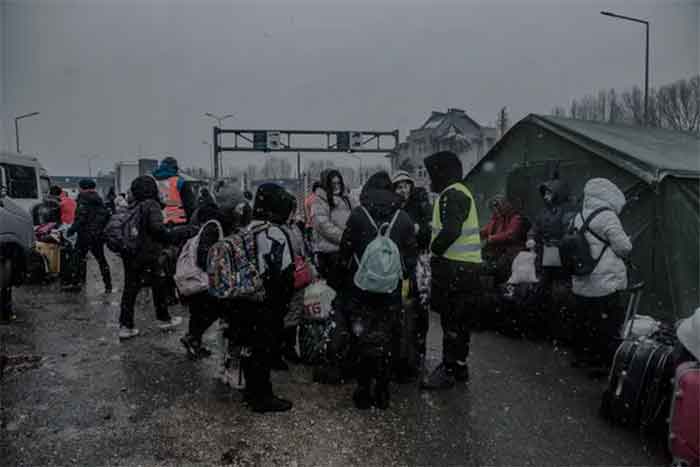
Since the start of Russia’s invasion of Ukraine, more than 7 million Ukrainian refugees have left the country till mid-June. While some 1.5 million ended up in Russia, the rest have mostly entered the European Union, where they have been granted the right to live and work for up to three years, in addition to receiving welfare, education, housing, food, and medical assistance.

The EU has spent more than €6 billion in aid to Ukraine since the start of the conflict, and its support for Ukrainian refugees could cost tens of billions of euros this year. Brussels and various EU countries will spend billions more before the war is over, and to help with reconstruction efforts in the country afterward.

However, with rising living costs since the pandemic that have accelerated since the launch of Russia’s invasion, European governments are sensitive to perceptions that they are not doing enough to secure the well-being of their own citizens. And even with the substantial aid so far, the millions of Ukrainian refugees have begun to strain European social services, particularly in Poland, where almost 5 million Ukrainian refugees have traveled to or passed through.

Resentment toward refugees can build quickly, even in countries with seemingly similar cultures. In Turkey, for example, 72 percent of the population showed support for refugees from neighboring Syria in 2016, while by 2019, 80 percent indicated that they preferred for Syrian refugees to be repatriated.

The tension between Turkish citizens and refugees from Syria, as well as those from Afghanistan and other countries, has been documented for years in Turkey. The presence of these refugees continues to be a major source of political and social agitation in the country.

Poland and Ukraine, meanwhile, have their own historical disputes, and political criticism has risen against Ukrainian refugees in Poland and in other European countries. Russian media outlets have also spread disinformation to fan the flames of anti-Ukrainian sentiment across the continent.

Roughly 1.5 million Ukrainian refugees have returned to their native country since the outbreak of the conflict. But more than 7 million Ukrainians remain internally displaced, and vulnerable to another military escalation in the war. The Biden administration’s offer to take 100,000 Ukrainian refugees will do little to help solve this concern, and Ukrainians are unlikely to find many other places outside Europe where they can travel to in large numbers.

The Ukrainian refugee crisis has also coincided with a growing number of displaced people worldwide over the last decade. From 2011-2021, their numbers ballooned from 38.5 million to 89 million. Weeks into Russia’s invasion of Ukraine, the United Nations refugee agency, UNHCR, announced that the number of people forcibly displaced had exceeded 100 million for the first time.

The 2015 European migrant crisis revealed how instability in surrounding regions could rapidly increase people’s flows to the continent. That year, 1.3 million people applied for asylum in the EU, roughly half of them fleeing violence in Syria, Afghanistan, and Iraq. Additionally, other refugees, asylum seekers, and migrants came from Kosovo, Albania, Pakistan, Eritrea, Nigeria, Iran, and dozens of other countries.

Across the EU, there was significant disapproval toward the institution’s handling of the refugee crisis. It resulted in a rise of reactionary right-wing political sentiment and strengthened policies against refugee and migrant intake. Frontex, the EU’s border and coastal guard protection agency, also massively increased its powers, budget, and personnel numbers.

But the crisis was also exacerbated by countries seeking to more openly test the EU’s vulnerability to migration. As a primary route for migrants to Europe, Turkey leveraged refugee and migrant flows to gain monetary and political concessions from the EU. In 2017, migration to Spain from Morocco, another important transit country to Europe, spiked as the Moroccan government was locked in a dispute with the EU over a free trade deal.

Having seen the effects of violence and Libyan wars on migration, the Kremlin also understood its intervention in the Syrian civil war would cause another surge of people to Europe. Supporting the political and social instability across the continent as a result of the refugee crisis fits neatly into Russia’s attempts to challenge the West.

But despite being far off the beaten path of usual immigration to Europe, the Kremlin has also had a hand in directly assisting migrant and refugee flows.

In 2015, Finnish and Norwegian border authorities accused the Kremlin of involvement in the arrival of hundreds of migrants from the Middle East who crossed their borders from Russia. Both Finland and Norway are bound by stricter refugee and migrant acceptance laws than Russia and could do little as Russian border guards refused to take them back.

Russia’s attempts to bring refugees into Europe have continued for years. But in 2021, the Kremlin expanded its efforts considerably with the help of Belarus. Having faced increasing tensions over sanctions from the EU, Belarus also began sending migrants into the Schengen Area through its borders with Poland, Latvia, and Lithuania, with Russian assistance.

Renatas Požela, former commander of the Lithuanian border guards, declared in 2017 that Russia plays a major role in moving migrants from Russia and Belarus into Lithuania. However, their numbers were relatively small, with 104 people detained in 2018, 46 in 2019, and 81 in 2020. But in 2021, Lithuania alone detained more than 4,100 “illegal migrants, mostly from Syria and Iraq.”

The ongoing crises have eroded the EU’s commitment to upholding laws on refugee and migrant rights, and Brussels has faced growing criticism over its policies from human rights organizations in recent years.

But the Kremlin’s tactics have expanded from simply attempting to undermine European social and political stability. As with energy and food, refugee and migrant flows will be utilized by Russia to weaken Western support for Ukraine and its war effort.

Around the world, conflict and rising living costs have caused great instability. In Europe’s periphery, the people from Central African Republic, Democratic Republic of Congo, Afghanistan, Eritrea, Somalia, Sudan, South Sudan, Syria, and Yemen are noted as being particularly vulnerable to forcible displacement due to the circumstances in these countries.

Meanwhile, across the Middle East, which receives a substantial part of its grain from Russia and Ukraine, the effects of the war have also worsened food insecurity and could further increase refugee and migrant flows.

The leader of Italy’s League party and former Deputy Prime Minister Matteo Salvini said on June 6 that food insecurity and economic instability, as a result of the war in Ukraine, could lead to half a billion refugees and migrants heading to Europe. While it is difficult to put an exact number on how many people will travel to Europe, growing instability will clearly increase migrant flows from nearby regions.

European countries, and the EU itself, have hastily turned to offshore processing centers to resettle migrants, asylum seekers, and refugees outside the continent in the last few years. But the underdevelopment of these systems, as well as the limitations of Frontex, means Europe will again be incapable of stemming a significant increase in flows of migrants, refugees, and asylum seekers.

Additionally, Turkey already hosts the world’s largest population of refugees and asylum seekers, and Ankara is unexpected to take many more. The world has also seen how Europe was able to absorb millions of Ukrainians relatively quickly, and there will be pressure on the EU to also accept non-European migrants and refugees.

Western sanctions and other measures to punish Russia for invading Ukraine have in turn exacerbated the situation being felt in global energy and food markets, while much of the ongoing violence across the Middle East has partly stemmed from the foreign policies of Western countries since the turn of the century.

Since the beginning of Russia’s invasion of Ukraine, Europe has endured rising inflation, growing food and energy costs, and an influx of refugees. But the effects of the war are amplifying these forces globally, and the Kremlin will do all it can to add to the refugee crisis in Europe and pressure the EU to end its support for Ukraine.

Rent Seeking Hindutva Government in India

Bhabani Shankar Nayak


Essential CommoditiesEssential Commodities

High inflation, growing unemployment and depreciating rupee are three fundamental issues faced by Indian economy today. The educational and health infrastructure is falling apart. Human development is in the bottom of the nadir. Modi government has no plans to take responsibility to navigate Indian economy away from these crises.  It is passing its responsibility on Indian people by reckless hiking of the Goods and Services Tax (GST) on food and other essential items. This nationwide rent seeking activities in terms of high taxation on goods and services that are part of the rent-seeking process. It will have devastating impact on poor and malnourished population, small businesses and rural poor. Such a policy will help corporates and it is going to push poor people into a regime of inescapable hunger, malnutrition and food insecurity. Hindutva is transforming India into a rent seeking market society, where welfare and social loss is immanent. The GST hike will have negative impact on all Indians and on all sectors of Indian economy. Taxing small producers, businesses and poor consumers are opposed to the idea of economic growth and development as it creates conditions for declining productivity, economic stagnation and inefficiency.

“One Nation, One Tax, One Market” policy slogan by the Prime Minister Narendra Modi has failed to understand the economic diversities in India in terms of its culture of local production and consumption. “One Nation, One Tax, One Market” policy helps to create conditions, where India becomes increasing dominated by few crony capitalists affiliated with Hindutva. The international experience of mass rent seeking economics in developed countries show that big corporates grab larger share of the wealth without producing any socially meaningful goods and services. The income inequality is a result of rent seeking market society, where wealthy taxpayers gain. It marginalises the poor masses. The centralised project of Hindutva dominance over politics and corporate dominance over Indian economy will squeeze all creative potentials and labour power of the people in terms of their livelihoods, productive powers, innovation, and other income generation abilities. Hindutva is a primarily a cultural project to uphold the economic interests of the higher class and higher caste population in India.

The Hindutva government led by Mr Narendra Modi and his party, BJP cares only for electoral victory to uphold its crony capitalist classes. The BJP government does not care for people and the country. The religious mobilisation of people in the name of cultural nationalism is a political strategy that serves the corporates at the cost of lives and livelihoods of Indians. The market-oriented Hindutva economics creates a tax regime on the masses and a pervasive rent seeking government and a corporatized security state that destroys welfare state in India. It is a well-known fact that mass rent seeking society promotes regimes of bribery, corruption, smuggling and black-market. These are foundations for major revenue loss for a developing country like India.  A mass rent seeking state and government led by Hindutva shows that it has failed to create new wealth by generating mass employment or expanding innovation and economic growth.  The sent seeking Hindutva economics is fundamentally inefficient and short-sighted because it reduces productive power of the economy causes revenue loss and increases economic inequalities.

Hindutva alibi Hindu nationalism, economic growth and development, and India first projects are steps towards cultural, economic and political genocide of constitutional democracy and citizenship rights in India. The centralisation economic project of Hindutva is the politics of dominance over production and consumption; the hike of GST and other forms of taxation is just a means in this direction. It seeks to transform India into a rent seeking market society, where strongman economics and vigilante politics is normalised as an integral part of everyday lives.  Such a strategy helps both Hindutva and their crony capitalist friends.

Hindutva obsession with market dominated economy for economic growth and its politics of dominance must end for any form of security and sustainability of livelihoods of the marginalised masses in India. The ideas of progress, peace and prosperity are alien to Hindutva politics. Therefore, GST hike on food and other essential commodities and services are neither hurting their human sentiments nor their ideological politics. Their economic policies are directly linked with the immediate gain of their corporate friends, who fund their electoral juggernauts and support the activities of the hate factory called RSS.

The rent seeking market society dominated by corporate oligarchy in alliance with reactionary Hindutva politics put India and Indians into an indefinite darkness. The securitised corporate states and governments have never worked for the welfare of their citizens. It will not do so in India under Hindutva government. The defeat of Hindutva is central to the peace, prosperity and progress of India and Indians.

War against Russia plunging Germany into a massive energy crisis

Ela Maartens & Peter Schwarz


Government officials, business representatives and the media are preparing the German public for a massive energy crisis this winter. If gas imports from Russia were to dry up completely, German gas storage facilities would be empty by next February, according to a calculation by the Brussels-based think tank Bruegel.

Gas storage facility "Bierwang" of the energy company "Uniper" in Unterreit near Munich (AP Photo/Matthias Schrader)

Numerous plans are already circulating to force lower temperatures in private homes and public buildings and to shut down large parts of the public infrastructure—including swimming pools, libraries and sports facilities. Even the shutdown of air purifiers in schools that work to reduce the risk of coronavirus infection is under discussion.

Business representatives warn of the collapse of large operations in energy-intensive industries such as chemicals. Many small businesses, such as bakeries, fear for their existence. Employers’ President Rainer Dulger told the Süddeutsche Zeitung: “We are facing the biggest crisis the country has ever had... We will lose the prosperity we had for years.”

Under German and European law, private households and critical infrastructure such as hospitals, nursing homes and care facilities are given priority protection. But that is already being called into question. Economics Minister Robert Habeck (Greens) suggested reconsidering their prioritization in allocating gas in favour of industry.

The relevant regulation was intended for short-term disruptions, he said during a visit to Vienna. It made no sense in the case of months-long gas supply disruptions. Industry could not automatically be put at the back of the queue, and this would have to be “thought about,” the minister said.

Siegfried Russwurm, president of the Federation of German Industries (BDI), said the current prioritization rules for a gas shortage were “only created for short-term interruption of individual pipelines.” For the tough new energy reality, he declared, “politicians in Berlin and Brussels must create a new set of rules.”

But even if critical facilities and private households retain their priority in energy allocation, many will no longer be able to afford the expensive prices for gas and electricity. According to the Federal Statistical Office, prices for energy products already rose by a whopping 38 percent in June compared to the same month last year. Natural gas registered a 60.7 percent hike and electricity now costs 22 percent more.

Last week, Klaus Müller, president of the Federal Network Agency—the regulatory office for electricity, gas, telecommunications, postal and railway markets—and a former Green Party politician, spoke to the news agency RND and clarified the extent of the additional financial burden: “For those who are now receiving their heating bill, the costs are already doubling—and that’s not even taking into account the consequences of the Ukraine war.”

He went on to explain, “From 2023, gas customers will have to be prepared for a tripling of their bills, at the very least.” It was “absolutely realistic,” he said, that customers who currently pay €1,500 a year for gas will be asked to pay €4,500 and more in the future.

In addition to record energy prices, the continuing high rate of inflation is also a massive burden. According to the Federal Statistical Office, the average price level in June was 7.6 percent higher than a year ago. Foodstuffs were 12.7 percent more expensive, and fuels recorded an increase of 33.2 percent—despite the “fuel rebate” in the form of reduced mineral oil taxes, most of which flows into the pockets of the mineral oil companies.

The energy crisis is largely homemade. It is the price that the population must pay for the war NATO is waging against Russia in Ukraine. The attempt to bring Russia to its knees by imposing economic sanctions and supplying billions worth of weapons to Ukraine has triggered the energy crisis.

In a guest article for the Frankfurter Allgemeine Zeitung on Monday, Chancellor Olaf Scholz (Social Democrats) made it clear that the government was not prepared to back down under any circumstances and seek a negotiated solution. With the historic decisions of recent months, the European Union had taken a big step toward becoming “a geopolitical player,” he boasted.

The German government does not want to give up its world power plans, which are linked to the largest rearmament campaign since Hitler. The road was “not easy, even for a country as strong and prosperous as ours,” Scholz wrote. “We will need staying power.” Many citizens were already suffering from the effects of the war and were looking anxiously at their next electricity, oil or gas bills, he acknowledged. But he was convinced that “we will come out of this crisis stronger and more independent than we went in.”

Since the early 1970s, Germany has bought gas reliably and cheaply first from the Soviet Union and then from Russia. Even immediately before Russia’s reactionary attack on Ukraine, which NATO deliberately provoked by its constant advances eastward, Germany was buying more than 50 percent of its gas from Russia.

Since then, because of sanctions and the war, gas supplies cover only 30 percent of demand. The completed Nord Stream 2 pipeline has not been put into operation. The Yamal pipeline, which runs through Belarus and Poland, has ceased operations. Nord Stream 1 ended up delivering only 40 percent of its potential capacity because a gas turbine repaired in Canada fell victim to the sanctions.

Moreover, Nord Stream 1 is currently undergoing annual maintenance, which is expected to be completed by Thursday. However, it is unclear whether Russian gas will flow to Germany again. It would be impossible to compensate for a complete outage.

The EU Commission has calculated that if supplies were completely halted this month, only just under 15 percent of the gas that Russia has supplied to Europe so far this year could be offset by other suppliers. It said the EU would miss its target of filling gas storage facilities to 80 percent by early November, with a maximum of 65 to 71 percent possible.

In the first half of this year, the EU did import more natural gas than in the first half of 2021, although imports from Russia fell by 30 billion cubic meters. But alternative import options are now largely exhausted. Norway and the Netherlands, which supply pipeline gas to Germany, have reached maximum capacity.

The global supply of liquefied natural gas (LNG) is also unlikely to increase now. Demand from China, the world’s largest LNG importer, is expected to rise significantly in the coming months. In addition, there is a fire at Freeport, the second largest export terminal in the US, which will not return to full operation until the end of the year.

Germany has no LNG terminals of its own. The two floating terminals currently under construction could unload at most one billion cubic meters of natural gas per month, about 10 percent of consumption in a winter month.

LNG is also extremely expensive. On the exchanges, the price has increased seven-fold in some cases. This is causing difficulties for intermediaries such as Germany’s largest gas trader Uniper, which had agreed long-term supply contracts at fixed prices. The German government is supporting these firms with billions of euros and in May rewrote the Energy Security Act to allow them to pass on higher prices to end customers.

Government officials are mocking the victims of their policies with cynical advice. Klaus Müller, the Green Party head of the Federal Network Agency, urged people to take technical measures in view of the massive price increases: “Talk to your landlord or a tradesman, if he is still available. What can be done to optimize heating?”

He also suggested: “Voluntarily increase your budget or set aside some money each month, for example in a special account.” Who is he trying to fool with this?

According to a parliamentary question tabled by the Left Party in September 2021, 12 percent of full-time employees paying health and social insurance draw a monthly gross wage under €2,000. And what about the unemployed, pensioners and students? It is simply impossible for such people to reequip their homes or build up reserves. They can barely pay for the bare necessities with the money that is available to them each month.

To compensate for the massive price hikes, there is currently a one-off energy price allowance of €300, which is being paid out in September and which will be taxed—just a drop in the bucket. Unemployment benefit recipients receive even less. Pensioners who do not pay income tax will go away empty-handed.

While a special fund of €100 billion is being made rapidly available for the Bundeswehr (Armed Forces), the government coalition is letting workers fall off the edge of a cliff. There are already discussions about warming centres and rent moratoriums, because it is clear that many people will no longer be able to afford the rising energy costs.

Freezing and starving for war—that is the price the government is imposing on the population in order to once again become Europe’s leading military power.

US Homeland Security purchased “staggering” volumes of location data to illegally track citizens and immigrants

Kevin Reed


The American Civil Liberties Union (ACLU) released on Monday previously unpublished records of bulk smartphone location data purchased by the Department of Homeland Security (DHS) from private contractors that it used illegally to track the movement of individuals across North America.

Homeland Security Secretary Alejandro Mayorkas in Washington, D.C., February 3, 2021 (Photo: U.S. Department of Homeland Security)

The documents were obtained by the ACLU through a Freedom of Information Act (FOIA) lawsuit filed in 2020. The records show that, during both the Trump and Biden administrations, the DHS was procuring huge volumes of people’s cell phone location tracking information from two data brokers—Venntel and Babel Street—in violation of the Fourth Amendment right against unreasonable searches and seizures.

The trove of records shows how the DHS departments, Customs and Border Protection (CBP) and Immigration and Customs Enforcement (ICE) and, also likely the US Secret Service and US Coast Guard, spent millions in government funds to make bulk location data purchases. An ACLU press release says, “the volume of people’s sensitive location information obtained by the agency is staggering.”

The ACLU has published a set of seven redacted spreadsheets provided by CBP that contain “a small subset of the raw location data purchased by the agency from Venntel.” The press release goes on to provide details, “For one three-day span in 2018, the records contain around 113,654 location points—more than 26 location points per minute. And that data appears to come from just one area in the Southwestern United States …”

Among the documents obtained are email communications between DHS staff and representatives of the data companies in which attempts are made to rationalize the “unfettered sale of massive quantities of data in the face of the US Supreme Court precedent protecting similar cell phone location data against warrantless government access,” the ACLU release says.

Shreya Tewari, the Brennan Fellow for ACLU’s Speech, Privacy, and Technology Project, said, “These records provide critical insight into the government’s attempts to wash its hands of any accountability in purchasing people’s sensitive location data when it would otherwise need a warrant.”

The ACLU shared the documents with Politico, which published its own analysis. Politico said that the records obtained in the FOIA lawsuit included location information which was “harvested from apps on hundreds of millions of phones” and enabled the DHS to pinpoint “more than 336,000 location data points across North America,” and that this data “may reference only a small portion of the information that CBP has obtained.”

Politico also revealed that the data points included locations in major cities like Los Angeles, New York, Chicago, Denver, Toronto and Mexico City. Politico also reported that the location data has been used by CBP during the Biden administration which “renewed a contract for $20,000 that ended in September 2021.”

Most of the data obtained by the ACLU comes from Venntel, a data broker located in the Washington DC area that is a subsidiary of Gravy Analytics. These companies specialize in gathering data which tracks the movement of individuals from one destination to another for the stated purposes of targeted marketing.

In making a sales pitch to the DHS departments, Venntel boasted that it had collected location data from more than 250 million mobile devices and processed more than 15 billion location data points per day. On its website, Venntel promotes its services as “Innovative big data analytics for the world’s most challenging problems.”

According to an industry study, location data businesses include collectors, aggregators, marketplaces and location intelligence firms, and generate a combined $12 billion in annual revenue.

Location data is gathered by apps on smartphones and other mobile devices when they are given permission to do so by users. Permission-based location data gathering was implemented on Apple’s iOS in April 2021 and on Android devices in June 2022. Prior to these dates, app gathering of location data could be stopped, but users would need to either turn off location services entirely or for each app individually.

Apps have many reasons for needing to know a user’s location, such as how to provide directions to a retail location or serving up local weather conditions. However, when users enable location services for apps, either while using the app or as it is running in the background, they are not aware that this information is being bought and sold by powerful “big data” companies.

The ACLU revelations show that this information is being purchased from the data firms by the institutions of the national security state for the purposes of developing its police operations in violation of basic constitutional rights.

As reported in February 2020, the Wall Street Journal revealed at that time that the DHS under the Trump administration began purchasing phone location data from Venntel in 2017. It has taken more than two years since that time for Congress to launch an investigation into these practices, and the ACLU revelations are part of this legislative initiative. On Tuesday, the House Judiciary Committee held a hearing entitled “Digital Dragnets: Examining the Government's Access to Your Personal Data.” In April 2021, Senator Ron Wyden (Democrat-Oregon) introduced the “Fourth Amendment is Not For Sale Act” which states that government agencies cannot purchase the location data of Americans without a warrant.

The use of location data by police agencies is the tip of the iceberg of mass electronic surveillance of the public that has been ongoing and intensifying, beginning with the undemocratic provisions spelled out in the USA Patriot Act passed in the aftermath of the terror attacks of September 11, 2001.

Even after former NSA and CIA contractor and whistleblower Edward Snowden exposed details of the sophisticated techniques being used by the intelligence state to monitor the locations, activities and communications of everyone on the planet, all the assurances by Democrats and Republicans that these programs have been halted have turned out to be lies. The ongoing assault on privacy rights by state agencies, against both citizens and non-citizens alike, is a necessary part of the drive by US imperialism for war abroad and the destruction of democratic rights at home.