22 Jul 2022

Italy’s Draghi government comes to an end

Peter Schwarz


Italian Prime Minister Mario Draghi resigned for the second time in a week on Thursday. This time President Sergio Mattarella has accepted the resignation. The third largest economy in the European Union is therefore without a functioning government.

Draghi speaks ahead of Senate vote of confidence (Photo by governo.it / CC-BY-NC-SA 3.0 IT) [Photo by governo.it / CC-BY-NC-SA 3.0 IT]

In a vote of confidence in the Senate on Wednesday evening, only 95 of 321 members of the Second Chamber of Parliament voted in favour of Draghi and 39 against him. The Lega, Forza Italia and the Five Star Movement, which belong to Draghi’s government of “national unity,” denied him confidence by abstaining from the vote. A planned vote of confidence in the Chamber of Deputies did not take place.

Eighty-year-old President Mattarella dissolved the parliament on the same day. This means that there will be early elections on September 25. Draghi will remain in office until then. The election was scheduled to take place in April next year.

Draghi’s fate is a consequence of the sharp class tensions and social contradictions in Italy. Mattarella appointed the former head of the European Central Bank as head of government in February 2021, when the first wave of the coronavirus pandemic in Italy claimed tens of thousands of lives and the economy was in free fall with a decline of 8.9 percent.

All parties—from the right-wing Lega, Berlusconi’s Forza Italia, the Five Star protest movement to the Democrats and their various split-offs—took refuge behind Draghi, who, as the trusted representative of international finance capital, was to ensure that Italy received the €206 billion it was entitled to from the European Union’s Coronavirus Fund.

The European Commission tied the allocation of these funds to the implementation of a total of 42 “reforms” that would “free the Italian economy from obstacles to growth” and make it more “competitive,” make the state “leaner” and make social systems “more effective”—all slogans for massive attacks on the working class and the lower middle classes.

Draghi lived up to their expectations. He filled central economic posts with external experts, such as the former investment banker and Vodafone boss Vittorio Colao, and advocates of austerity and privatization, such as Giancarlo Giorgetti of the Lega, whom he made Minister for Economic Development.

Draghi “solved” the coronavirus crisis with a massive vaccination campaign led by a high-ranking general. Although it did not stop the spread of the pandemic—with 170,000 deaths in Europe, Italy is second only to the United Kingdom—the high vaccination rate provided the pretext for lifting all lockdown measures and maintaining industrial production and the tourism industry.

With a restructuring of social spending, Draghi relieved the corporations at the expense of the workers. He revoked the pension reform of the previous government, which had lowered the retirement age under certain conditions. He declared the “citizen’s money,” which the Five Stars had introduced instead of social assistance, to be a “flop” and restricted it with strict conditions and control measures.

Draghi’s tax reforms and liberalization measures bailed out large corporations, while the livelihoods of apartment owners and small self-employed, an important clientele of the Lega and the Five Stars, were threatened. Earlier this month, all over Italy, taxi drivers who have paid high fees and are now being driven to ruin by Draghi’s liberalisation measures went on strike.

The “Competition Decree,” which Draghi wanted to use to enforce the so-called Bolkestein Directive of the EU, also had an impact. This stipulates that publicly owned operations run by private individuals are to be put up for tender every few years. This means that, among other things, 14,000 lidos, beach resorts which are mostly run by families, could now be taken over by major investors.

In terms of foreign policy, Draghi pledged Italy’s support for NATO’s war against Russia, although the Lega and Forza Italia reject arms deliveries to Ukraine.

Draghi’s politics met with enthusiasm in the international finance world. The Süddeutsche Zeitung cheered in November of last year, “So far, we must say, things are going splendidly. … The enthusiasm for the unusual dynamics puts Italy in high spirits.” According to Laurence Boone, the OECD chief economist, Italy is “for the first time in many decades in a position to completely rebalance its economy. It’s now or never.”

The Italian working class does not share in these high spirits. Under Draghi, the polarization of the country has intensified further. The official unemployment rate is 8.4 percent, while youth unemployment is 24 percent; 3.4 million workers are precariously employed. The number of poor has risen to 5.6 million during the coronavirus pandemic, with official inflation at 8 percent. Strikes against job losses, low wages and unsustainable working conditions continue.

It is significant that under these conditions Draghi’s government of “national unity” was overthrown by the Five Stars and the right-wing parties, and not by the supposedly left-wing parties.

The Five Stars, which emerged as a protest movement against the political establishment, first governed with the far-right Lega and then with the Democrats and finally supported Draghi, are in free fall and have split. In the polls, they fell from 33 percent in the 2018 parliamentary election to 11 percent.

Foreign Minister Luigi di Maio has left the movement and founded his own party, “Together for the Future,” which Draghi supports. Giuseppe Conte, Draghi’s predecessor as prime minister and chairman of the Five Star Movement, has opposed him.

The Lega and Forza Italia have also lost support in the polls, but not by as much as the Five Stars. They hope to form a right-wing government with the fascist Fratelli d’Italia after the elections. Fratelli never joined Draghi’s government and has become the strongest party in the polls with 23 percent. In the last parliamentary election, they received only 4.4 percent.

Fratelli leader Giorgia Meloni, who worships Mussolini and works closely with the Spanish Vox Party, could become the next Italian prime minister. Together, the right-wing parties of Meloni, Salvini and Berlusconi reached 46 percent in the polls.

The Democrats, their pseudo-left supporters and their allies are responsible for the rise of the right. They are concerned about the stability of the bourgeois order, not the fate of the working class. They suppress workers’ struggles and support Draghi all the more resolutely, the more obvious the anti-worker character of his policies becomes.

After Draghi announced his resignation for the first time last Thursday, they organized a campaign to keep him in office. Two thousand mayors published an appeal; trade unions, entrepreneurs and the Church also called on Draghi to stay.

According to Italian media reports, Emmanuel Macron, Olaf Scholz and Ursula von der Leyen also telephoned Draghi to persuade him to stay. They fear that their war front against Russia will fall apart and that inflation and the looming recession in Europe will be compounded by a renewed euro crisis if the trusted representative of finance capital leaves the Italian seat of government.

The slavish subordination of the trade unions, the Democrats and the pseudo-left under Draghi and his anti-worker policies have created the conditions under which the ultra-right and fascists can exploit the anger and frustration of petty-bourgeois strata and, in some cases, of workers.

Elon Musk sued for reneging on agreement to buy Twitter for $44 billion

Kevin Reed


A Delaware judge ruled on Tuesday that the lawsuit by Twitter aimed at compelling Elon Musk to complete his commitment to buy the social media company will be fast-tracked, denying the billionaire’s request to delay the start of the trial into early 2023.

Chancellor Kathaleen St. Jude McCormick of the Delaware Chancery Court ordered that a five-day trial would begin in October and vowed that it would be settled rapidly. She said that Musk’s legal team was underestimating ”the ability of this court...to quickly process complex litigation.”

Elon Musk (AP Photo/Jae C. Hong)

The chancellor agreed with Twitter’s argument that the company would be harmed by a delay in the proceedings because of the market impact of uncertainty about the future of the company as a publicly traded entity.

McCormick said, “Those concerns are on full display in the present case. Typically, the longer the merger transaction remains in limbo, the larger the cloud of uncertainty cast over the company and the greater the risk of irreparable harm to the sellers.” She added that, if the trial warranted more than five days, she would entertain a request from either side to extend it.

The legal dispute between the social media and microblogging site Twitter and the world’s wealthiest individual Musk is the latest episode in the smarmy dealings of financial elites over the manipulation of stock values under conditions where the S&P 500 has fallen by more than 25 percent this year, wiping out a record $7 trillion.

According to the Bloomberg Billionaires index, the top 500 richest people have lost a combined $1.4 trillion since January. At the beginning of the year, Elon Musk had a personal net worth of $300 billion. As of this writing, Forbes Real Time Billionaire index says that Musk’s wealth stands at $229 billion, or a decline of $71 billion over the last six months.

As for Twitter, its stock was trading at around $48 per share when Elon Musk offered to buy the company for $54.20 per share in April. On Tuesday, Twitter shares were trading at just over $34 each, which is 37 percent less than Musk’s offer and a market cap of $30 billion.

While Twitter plays an important role globally today as a real-time high-tech newswire service for individuals and organizations to issue announcements and comment on contemporary events—and there are also 7,500 people who work there—its fate is now being determined by a handful of super-rich individuals who are preoccupied with one thing: halting the collapse of their personal wealth portfolios.

Chancellor McCormick made it clear that the primary concern of the Delaware Chancery Court in this case is not the ability of Twitter to continue to function or even the jobs of its employees but to bolster the ongoing viability of Wall Street mergers and acquisitions.  

Musk signed a definitive acquisition agreement on April 25 to purchase Twitter for $44 billion, make it his own personal property and remove it from the stock market. As Twitter’s stock value fell dramatically through May and June, Musk announced on July 8 that he was backing out of the deal.

Knowing that his about-face would be contentious, Musk wrote in a letter to the Securities and Exchange Commission that his withdrawal was justified because Twitter was guilty of making “false and misleading representations” about the number of inauthentic accounts on its platform.

In response, Twitter sued on July 12 to compel Musk to go through with the purchase by using a provision of the agreement that is known in corporate law as “specific performance.” Rarely used in merger-and-acquisition disputes, Twitter is pursuing this remedy instead of seeking monetary damages because it expects the resulting deal with Musk, even if contentious, will lead to a substantial increase in the value of the company.

In most lawsuits of this type, specific performance is considered damaging for both parties and not a viable option. However, due to the scale of the Twitter deal—if it goes through, it will be the third-largest tech purchase of all time—the extreme measure is considered prudent in Wall Street circles.

According to the New York Times, the terms of Musk’s commitment are clear: “So long as Twitter fulfills its obligations and the banks fund their commitments, Twitter ‘shall be entitled to specific performance’ of Mr. Musk’s promise to buy the company for the price agreed upon.”

During the hearing before Chancellor McCormick, Musk’s attorneys argued that the start of the trial should be pushed back because of the time needed to investigate the issue of spam and fake Twitter accounts. Musk lawyer Andrew Rossman maintains that the real number of daily active users is critical for determining the true value of the company. He said that the investigation would be “extremely fact and expert intensive, requiring substantial time for discovery.”

Twitter’s lawyers responded that their lawsuit has nothing to do with the number of fake or real accounts on the platform, since the terms of the agreement did not make any commitment on this question. Twitter’s lead attorney William Savitt said, “This issue that Musk says will require such complex discovery is an invented issue. It isn’t what the merger agreement is about. So, it won’t be what the case is about.”

Savitt went on, “Musk has been and remains contractually obligated to use his best efforts to close this deal. What he’s doing is the exact opposite; it’s sabotage.”

Some estimates put the negative financial impact on Musk’s personal fortune at $100 billion by being forced to go through with the Twitter acquisition. His obvious buyer’s remorse puts paid to the cynical and self-serving statements Musk made in April about how “Twitter has extraordinary potential. I will unlock it,” and how important Twitter is as a “platform for freedom of speech around the globe, and…for a functioning democracy.”

Poverty in Germany: Food banks count 2 million people seeking help

Elisabeth Zimmermann


Social inequality in Germany continues to rise at an alarming rate. As a result of the pandemic, war and high inflation, the official poverty rate climbed to 16.6 percent last year, which corresponds to 13.8 million people living in poverty. This means that for ever more people—the unemployed, single parents, low-wage workers, poor pensioners—they no longer have the resources to live on.

This is further expressed in the record numbers of people lining up at the food banks for donations.

Food bank in Munich

Last Thursday, July 14, the chairman of the federal food bank umbrella organization Tafel Deutschland, Jochen Brühl, warned that the food banks would soon no longer be able to cope with the onslaught. As a result of inflation, the pandemic and, since the beginning of the year, the effects of war, demand from people in need has skyrocketed. The number of customers has increased by half and reached a new record high, he said. According to Brühl, well over 2 million people affected by poverty are now taking advantage of free food services, more than ever before.

“The food banks are at their limit and report to us that many people are coming to them who have previously managed to make ends meet and need help for the first time,” Brühl said. Since the food banks can barely, or no longer can, meet the demand, every third food bank has had to stop accepting entrants, according to his data. There is a shortage of food and volunteers to help everyone who asks for support.

Tafel Deutschland surveyed 962 of its member food banks in June and July, 603 of which responded. According to the results, 60 percent of the food banks have seen their customer load increase by up to 50 percent since the beginning of the year. Just under a quarter (22.6 percent) of respondents said they were now supporting 50 to 100 percent more people than before. At 16 percent of the food banks, the number of people seeking help had doubled or more than doubled.

Food banks are a voluntary service and Tafel Deutschland is a non-profit association. The food banks originally came into being with the aim of countering food waste and supporting people affected by poverty by distributing food free, or almost free, of charge. The money thus saved was intended to enable them to afford other urgently needed items. In order to receive support from a food bank, one must register and prove one’s need, for example by a receipt of social assistance (Hartz IV).

As poverty in Germany has increased over the past 15 to 20 years, the number of food banks has also risen. The Hartz reforms of the 1998–2005 coalition government—Social Democrats (SPD) and Greens—provided a particularly strong impetus for this development. They ensured the introduction and expansion of a huge low-wage sector with the introduction of Hartz IV as a subsistence minimum, which in reality was never sufficient and came with a sanctions scheme to put unemployed people under pressure. Both Hartz IV recipients and low-wage workers often have to resort to the food banks to get by.

The dramatic rise in inflation has exacerbated this development and plunged countless working households into poverty and hardship. The “profits before lives” policy of all governments in the coronavirus pandemic, which has already caused millions of deaths worldwide, has accelerated this misery. Inflation is the result of trillion-dollar government giveaways to banks and corporations and the NATO offensive against Russia. At the same time, the vast sums spent on armaments and war are being recouped through cuts in education, health and social services.

Since the beginning of the US/NATO proxy war against Russia, Ukrainian refugees are also increasingly approaching food banks. In this context, the food bank association criticizes the state authorities for passing off their own tasks to the food banks. “It is irresponsible when authorities send people to a food bank without even inquiring whether the food bank can accept new customers,” Brühl said. “That all people in Germany have enough to eat and drink must be guaranteed by the state, not by volunteers.”

But the principle that the state should care for people in need has not applied in Germany for a long time. This fall, millions of people will not be able to afford the doubling and tripling of heating and electricity bills. This will result in many people having their electricity and heating cut and being threatened with the loss of their homes because they can no longer afford to pay rent and utilities.

The Federal Statistical Office recently presented data for the first time for a subset of homeless people in Germany who live in emergency and shared shelters or temporary quarters. The office counted 178,000 of them. Tagesschau.de reported on July 14 that more than one-third of these people are “younger than 25, just under 5 percent 65 or older.” “Families or single parents with children make up 46 percent of the cases.”

Not included in these statistics are “homeless people staying with friends, families or acquaintances, and homeless people living on the streets. Cases of refugees were only included if they had been granted asylum and were accommodated through the emergency housing assistance system.”

The German National Association for Homeless Assistance estimates the number of homeless people in Germany at about 233,000, a figure that in reality could be many times higher.

The Berliner Zeitung reported on June 21 the enormous rush on food banks of those in need. Just in Berlin there are 47 distribution points of Laib und Seele, a partner association of the Berlin Food Bank. One of their distribution points is located in front of the fan club of the Union Berlin soccer team. People lining up for food arrive in the mornings, some even in the early morning hours.

The report quotes a customer who has the number 90 and has been standing in the parking lot since around 10 a.m. “If I’m lucky, I’ll be home by 4 p.m.,” he says. Another with health problems brought a stool because he can’t stand that long. An image shows people lining up in multiple rows to receive food for a contribution of €1.50 and proof of poverty.

Iraqi, Kurdish governments blame Turkey for bombardment killing 9 civilians

Ulaş Ateşçi


At least nine civilians, including two children, were killed and more than 20 others wounded on Wednesday in a bombardment on the tourist village of Perex, in the Zaxo district of Dohuk province in the Kurdistan Regional Government (KRG) territory of Iraq. One of the children was reportedly a one-year-old baby.

Both the Iraqi central government and the KRG blamed Turkey for the artillery attack, though Ankara denied the allegation. Since April, the Turkish Armed Forces (TSK) have been conducting a military operation against Kurdistan Workers Party (PKK) forces in the vicinity of this tourist area near the Turkish border. After Iraq made its public charges against Ankara, protests against Turkey erupted in Baghdad and other cities.

Hassan Tahsin Ali, a man injured in the attack, called the attacks “indiscriminate.” Speaking to AFP in front of a hospital, he said: “Our young people are dead, our children are dead, who should we turn to?”

Iraqi Prime Minister Mustafa al-Kadhimi blamed Turkey, calling the attack a “blatant and flagrant violation of Iraqi sovereignty and the lives and security of Iraqi citizens.” He added that Baghdad reserves the “full right” to respond to such attacks. Iraq declared a period of national mourning for this horrific massacre.

The Iraqi Foreign Ministry is reportedly set to “prepare a file on the continuous Turkish attacks on Iraqi sovereignty and submit an urgent complaint to the UN Security Council.”

Iraq summoned Turkey’s ambassador to Baghdad to the foreign ministry and demanded that the Turkish army immediately withdraw all armed forces from the country. It also recalled the Iraqi chargé d’affaires from Ankara. However, President Recep Tayyip Erdoğan’s government has long ignored demands to end its illegal occupation of Iraqi territory.

Iraqi President Barham Salih also condemned the attack, saying, “the Turkish bombing of Duhok … is condemned and denounced, and represents a violation of the country’s sovereignty and a threat to Iraqi national security.”

The Kurdistan Regional Government also accused Turkey, stating that it “strongly condemns the shelling of the Parakhe resort near the Darkar border of the Zakho Autonomous Administration by Turkish forces.” It added, “Clashes between Turkish forces and PKK fighters in the border areas of the Kurdistan Region have become a constant threat to the lives and well-being of our citizens.”

According to Rudaw in Iraqi Kurdistan, top Shiite cleric Muqtada al-Sadr denounced alleged Turkish bombardment, “suggesting Iraq to take measures against the repeated violation of its sovereignty by reducing diplomatic ties with Turkey, closing off air and land crossings, filing an official complaint to the UN, and annulling all security agreements with Ankara.”

It reported, “All victims of the deadly bombardment were tourists from central and southern Iraq and were part of a 200-person tourist group, according to Zakho mayor Muhsin Bashir.”

Ankara has flatly denied responsibility for civilian deaths, however. In a statement, the Turkish Foreign Ministry claimed: “Turkey is against all kinds of attacks targeting civilians. Turkey carries out its fight against terrorism in accordance with international law, with utmost sensitivity to the protection of civilians, civilian infrastructure, historical and cultural property and the environment.”

Implicitly blaming the attack on the PKK, it continued: “such attacks which aim at innocent civilians and are assessed to be organized by the terrorist organization, target our country’s just and determined stance in the fight against terrorism.”

Ankara concluded the statement by pledging “to take all steps to reveal the truth,” inviting “Iraqi government officials not to make statements under the influence of the rhetoric and propaganda of the treacherous terrorist organization and to cooperate in bringing the real perpetrators of this tragic incident into light.”

Speaking to state-owned TRT Haber media, Turkish Foreign Minister Mevlüt Çavuşoğlu repeated this statement, claiming: “The whole world knows that Turkey has never carried out an attack on civilians.”

Ankara’s claim that it “never carried out an attack on civilians” is not true. In one of the most infamous incidents, the Roboski massacre, 34 people were killed when the Turkish Air Force bombed Kurdish civilian smugglers walking into Turkey from Iraq on December 28, 2011.

According to Rudaw, the PKK blamed “Turkey for the deadly Zakho bombardment and den[ied] the presence of any PKK-affiliated forces at the attack site.”

US State Department spokesperson Ned Price also hypocritically condemned the attack, saying: “The killing of civilians is unacceptable, and all states must respect their obligations under international law, including the protection of civilians.” He added, “We maintain our strong support for Iraq’s sovereignty and its security, stability, and prosperity, including that of the Iraqi Kurdistan Region.”

This statement comes from a country that illegally invaded and occupied Iraq in 2003, a criminal act backed by other imperialist countries or regional powers such as Turkey. This imperialist onslaught, based on lies about “weapons of mass destruction,” devastated an entire society, killing at least 1 million people, and wounding millions more. Millions of survivors had to flee their homes, facing devastating conditions in foreign countries or in Iraq itself, which was once one of the Arab world’s most developed countries.

Moreover, Washington continues to trample upon Iraqi sovereignty. After Washington assassinated Iranian General Qassem Soleimani in Baghdad in January 2020, the Iraqi parliament voted to demand US forces leave the country, but Washington rejected this out of hand.

While the armed conflict between Turkey and the PKK dates back to 1984, its expansion into northern Iraq is a consequence of US imperialist aggression against Iraq since 1991 and the Stalinist bureaucracy’s dissolution of the Soviet Union. Though it threatened to invade when the KRG held an independence referendum in 2017, Ankara now is allied with the KRG. It seeks to thereby prevent the emergence of a PKK-controlled enclave in Iraq.

The Turkish bourgeoisie, fearing the emergence of an independent Kurdish state on its borders, which might encourage millions of Kurds inside Turkey to move in the same direction, is pursuing a similar policy in Syria—trying to crush the US-backed and PKK-linked People’s Protection Units (YPG).

Erdoğan, who announced in May that his government was preparing a new military operation against the YPG in Syria, met with Iranian President Ebrahim Raisi and Russian President Vladimir Putin in Tehran on Tuesday. After the talks, he declared: “America has to leave east of the Euphrates now. ... Turkey expects this as well because it is America that feeds the terrorist groups there.”

Though Iran and Russia also want US forces to withdraw from Syria, Tehran and Moscow are also in serious conflict with Ankara, which supports NATO’s decade-long war for regime change against Syrian President Bashar al-Assad and occupies parts of northern Syria. Due to this broader conflict, from Libya to the Caucasus to the war in Ukraine, Erdoğan did not get the support he wanted from Raisi and Putin at the Tehran summit.

According to recent reports, Syrian government troops and heavy weapons have been deployed in YPG-held areas with Russian and Iranian support. This underscores the danger of NATO member Turkey coming into direct conflict with not only Syrian, but also Iranian and Russian forces.

Newly-installed Sri Lankan President Wickremesinghe oversees brutal police-military assault on protesters

Saman Gunadasa


In the early hours of this morning, hundreds of Sri Lankan soldiers and police officers attacked the main protest encampment in Colombo’s Galle Face Green. Their faces covered with balaclavas and carrying heavy weaponry, the state forces indiscriminately assaulted demonstrators, leaving dozens hospitalised.

In this photo provided by Sri Lankan President's Office, Sri Lanka's newly elected president Ranil Wickremesinghe, signs after taking oath during his swearing in ceremony in Colombo, Sri Lanka, Thursday, July 21, 2022. (Sri Lankan President's Office via AP)

The 2 a.m. raid is the first act of Ranil Wickremesinghe, since he was installed as president by Sri Lanka’s parliament on Wednesday. It is a stark warning of what the right-wing, imperialist-backed leader of the United National Party is preparing.

Since his predecessor, former President Rajapakse, fled the country like a criminal last week, Wickremesinghe has pledged to crack down on the massive protest movement that has rocked the island for the past three months.

This morning’s attack was directly instigated by Wickremesinghe, who declared on Wednesday night, shortly after his installation: “We will deal with them firmly according to the law. We will not allow a minority of protesters to suppress the aspirations of the silent majority clamoring for a change in the political system.”

The claims that the protesters are a “minority,” suppressing a “silent majority,” are pathetic lies that no one will believe. The demonstrations and strikes have been the largest in Sri Lankan history. What Wickremesinghe was really foreshadowing, was the deployment of massive military force to try to crush this immense movement.

The raid this morning proceeded, despite the fact that protesters said they would end an occupation of the Presidential Secretariat in front of Galle Face Green. Their assurance was in response to warnings by Wickremesinghe that any occupation of government buildings were illegal and those involved would be dealt according to the law. It was timed in the dead of the night, to catch the demonstrators while most were sleeping and to ensure that the attack was not met by a broader mobilisation.

The state brutality included a police assault on a British Broadcasting Corporation journalist. An untold number of those attacked required hospital treatment, with some sustaining serious injuries.

The assault is one prong of a feverish campaign by the political elite to restabilise capitalist rule. This is occurring, under conditions of mass hostility to the entire political establishment. Protesters, having demanded the ouster of Rajapakse, are calling on Wickremesinghe to resign. He has no popular backing and was elected president, not by ordinary people but by the parliament.

“Down with all 225 parliamentarians” has been a long-standing popular demand of the working class and the protest movement.

Riot police block students at Sri Jayawardanapura University, during previous protest on 3 April 2022 [WSWS Media]

While overseeing the onslaught on protesters, Wickremesinghe reiterated his appeal for all parliamentary parties to back him. Referring to Wednesday’s bogus election process, he declared: “We were divided for the last 48 hours. That period is over. We now have to work together.”

Dallas Alahapperuma, a Sri Lanka Podujana Peramuna (SLPP) parliamentarian and candidate in the presidential election, and Samagi Jana Balawegaya (SJB) leader Sajith Premadasa, who backed the former in the election, have already indicated their readiness to work with Wickremesinghe.

Premadasa met with Wickremesinghe at a party leaders’ meeting in parliament yesterday, declaring that he had “a cordial and frank exchange of ideas and reiterated the opposition’s determination to provide constructive support to avert misery and disaster.” All of the parliamentary parties have previously stated their willingness to implement the austerity measures being demanded by the International Monetary Fund (IMF).

The response of big business to Wickremesinghe’s installation was summed up by a five-week high on the Colombo stock market after his election on Wednesday, indicating confidence that his ruthless implementation of austerity measures will boost their profits.

The US and Indian ambassadors in Colombo have welcomed Wickremesinghe’s election. Two days before Wednesday's election, the parliamentary speaker Abeywardena had a high-level joint meeting with the US, UK, Canadian, Australian and New Zealand ambassadors.

US Ambassador Julie Chung later tweeted that she looked forward to working with Wickremesinghe and echoed his appeal for all parliamentary parties to collaborate. “In these challenging times, it will be essential for all parties to redouble efforts to work together to tackle the economic crisis, uphold democracy & accountability, and build a stable & secure future for all Sri Lankans,” she said.

Given Wickremesinghe’s record as a reliable agent of US imperialism, Washington will work to more closely integrate Colombo into its military-strategic offensive against China.

Sensitive to the deep-seated hatred of the Sri Lankan masses against Colombo’s ruling establishment and the worsening economic crisis, the Indian High Commission in Colombo issued a carefully worded statement acknowledging the new president.

“As a close friend and neighbour of Sri Lanka and a fellow democracy we will continue to be supportive of the quest of the people of Sri Lanka for stability and economic recovery, through democratic means and values, established democratic institutions and constitutional framework,” it said.

An anonymous senior Indian official quoted in the Indian Express declared: “He faces very tough challenges… winning the election is one thing, getting the job done [in time], this is his real test.”

These statements point to the Indian ruling elite’s concerns about the ability of the new regime to suppress the inevitable eruption of opposition by the already starving working masses to the planned IMF measures. The escalating socio-economic and political crisis in Sri Lanka is the sharpest expression of global economic turmoil, exacerbated by the persisting coronavirus pandemic and the US-NATO proxy war against Russia using Ukraine.

In recent comments to the international media, Central Bank governor Nandalal Weerasinghe said that the Sri Lankan population would face serious difficulties over the next five months. He previously predicted that Sri Lanka’s current inflation rate of about 50 percent would quickly climb to 70 percent, and emphasised that “stable” government was required in order to finalise a deal with the IMF.

A few hours before Wickremesinghe officially became president, IMF managing director Kristalina Georgieva declared that she hoped its so-called rescue talks would be concluded “as quickly as possible.” She also warned that, “[T]here is an understanding that protracted negotiations are simply not viable, that there has to be decisive action as early as three weeks after a [new] government is in place.”

In other words, the IMF is reinforcing its message to Wickremesinghe, who has demonstrated time and time again that he will do whatever it takes, including the ruthless use of police-military force to crush all political opposition and impose the IMF’s austerity attacks on the working class and oppressed masses.

The measures that are planned include the privatisation of essential services that remain in state hands, hundreds of thousands of job cuts across the public sector, the dismantling of public health and education and the withdrawal of limited subsidies upon which hundreds of thousands are depending just to survive.

This onslaught will inevitably intensify social opposition from the working class.

As executive president, Wickremesinghe has wide-ranging autocratic powers to unleash police military repression against all opponents of the austerity agenda. Friday’s attack is a warning of what he is planning more broadly.

Wickremesinghe’s elevation to the presidency and his attempts to implement this program depend entirely on the opposition parties and their hangers on.

As the SLPP, SJB and other parliamentary parties work with Wickremesinghe to establish an interim, all-party government, various pseudo-left organisations and the trade unions are tirelessly working to divert workers, young people and the rural poor behind these reactionary maneouvres.

21 Jul 2022

Snapchat 523 Program 2022

Application Deadline:

12th August 2022

Tell Me About Award:

Applications are open for the Snapchat 523 Program 2022. The Black Creator Accelerator will provide 25 aspiring Black creators with a $10k/month stipend to pursue creative endeavours and get connected with opportunities to launch sustainable, full-fledged careers.

The goal is to provide them with industry knowledge, resources, mentorship, and opportunities to jumpstart their careers. Selected applicants will receive hands-on training and educational workshops from industry experts that work on a variety of products at Snapchat — from Discover, to Stories, to Spotlight, and Maps. Creators will learn how to use these different offerings to create great content, surface their profiles, grow their audiences, and more.

What Type of Scholarship is this:

Contest

Who can apply:

  • Applicant should be at least 18 years old 
  • Self-identify as Black
  • Emerging creator 
    • Someone at the beginning of their content journey who is creating, iterating, and improving over time with little outside guidance
  • Seeking to become a professional creator 
  • History of abiding by community guidelines (on Snapchat) 
  • Creates positive content that aligns with Snapchat’s values (empathy, kindness, creativity)

How are Applicants Selected?

To establish an equitable selection process, applicants will be evaluated holistically by a cross-functional group of Snapchat team members based on the following criteria:

  • Having a unique and consistent voice
  • Alignment with Snapchat’s values
  • Clear vision for future career goals

How Many Scholarships will be Given?

25

What is the Benefit of Scholarship?

  • The Black Creator Accelerator will provide 25 aspiring Black creators with a $10k/month stipend to pursue creative endeavors and get connected with opportunities to launch sustainable, full-fledged careers.
  • In addition, Google Pixel, Westbrook Media, and UNCMMN will work with Snapchat to enrich the educational curriculum and create tailored workshops for participants. 

How to Apply for Scholarship?

You’ve already got the content creation chops, so don’t wait — apply to the 523 program now! Applications will close on August 12, 2022.

Visit Award Webpage for Details

Welsh Government Wales & Africa Grant Scheme 2022

Application Deadline: 24th July 2022

Eligibility: Grant aims for the immediate covid-19 response round of the Wales Africa grant scheme:

  • Assist African partners in combatting the immediate effects of covid-19
  • Encourage stringent health & safety practices
  • Make contributions to the following themes of the Wales Africa grants scheme:
    • Health
    • Sustainable livelihoods
    • Lifelong learning
    • Climate Change

It must be emphasised that this is a grant funding round in response to a global crisis, requests for funding will need to strongly demonstrate the impact they will make for their African Partner in response to the COVID-19 pandemic.

For further information about grant aims, eligibility, and timeframes please read the full guidance document.

Type: Grants

Number of Awards: Not specified

Value of Award: Grant are available from £3,000 up to £15,000. If you have a request which falls outside of this grant range, please speak to a team member before completing your request for funding. You can contact WCVA at walesafricagrants@wcva.cymru.

How to Apply: The process for funding requests is live on the WCVA website. All requests to be made on the downloadable application form and returned to walesafricagrants@wcva.cymru

  • It is important to go through all application requirements in the Award Webpage (see Link below) before applying.

Visit Award Webpage for Details

The Kremlin seeks to exploit growing wariness over refugees in Europe

John P. Ruehl


Instability and rising living costs have caused significant growth in refugee and other migrant numbers globally. The opportunity to exploit the crisis will not be missed by other countries, most notably Russia.

ukraine refugees3

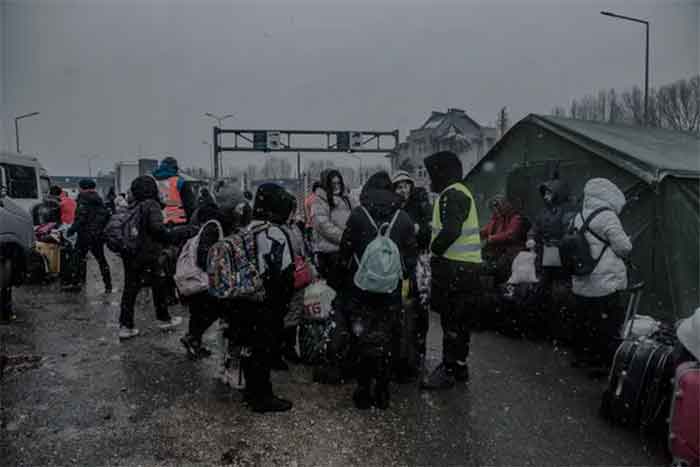
Since the start of Russia’s invasion of Ukraine, more than 7 million Ukrainian refugees have left the country till mid-June. While some 1.5 million ended up in Russia, the rest have mostly entered the European Union, where they have been granted the right to live and work for up to three years, in addition to receiving welfare, education, housing, food, and medical assistance.

The EU has spent more than €6 billion in aid to Ukraine since the start of the conflict, and its support for Ukrainian refugees could cost tens of billions of euros this year. Brussels and various EU countries will spend billions more before the war is over, and to help with reconstruction efforts in the country afterward.

However, with rising living costs since the pandemic that have accelerated since the launch of Russia’s invasion, European governments are sensitive to perceptions that they are not doing enough to secure the well-being of their own citizens. And even with the substantial aid so far, the millions of Ukrainian refugees have begun to strain European social services, particularly in Poland, where almost 5 million Ukrainian refugees have traveled to or passed through.

Resentment toward refugees can build quickly, even in countries with seemingly similar cultures. In Turkey, for example, 72 percent of the population showed support for refugees from neighboring Syria in 2016, while by 2019, 80 percent indicated that they preferred for Syrian refugees to be repatriated.

The tension between Turkish citizens and refugees from Syria, as well as those from Afghanistan and other countries, has been documented for years in Turkey. The presence of these refugees continues to be a major source of political and social agitation in the country.

Poland and Ukraine, meanwhile, have their own historical disputes, and political criticism has risen against Ukrainian refugees in Poland and in other European countries. Russian media outlets have also spread disinformation to fan the flames of anti-Ukrainian sentiment across the continent.

Roughly 1.5 million Ukrainian refugees have returned to their native country since the outbreak of the conflict. But more than 7 million Ukrainians remain internally displaced, and vulnerable to another military escalation in the war. The Biden administration’s offer to take 100,000 Ukrainian refugees will do little to help solve this concern, and Ukrainians are unlikely to find many other places outside Europe where they can travel to in large numbers.

The Ukrainian refugee crisis has also coincided with a growing number of displaced people worldwide over the last decade. From 2011-2021, their numbers ballooned from 38.5 million to 89 million. Weeks into Russia’s invasion of Ukraine, the United Nations refugee agency, UNHCR, announced that the number of people forcibly displaced had exceeded 100 million for the first time.

The 2015 European migrant crisis revealed how instability in surrounding regions could rapidly increase people’s flows to the continent. That year, 1.3 million people applied for asylum in the EU, roughly half of them fleeing violence in Syria, Afghanistan, and Iraq. Additionally, other refugees, asylum seekers, and migrants came from Kosovo, Albania, Pakistan, Eritrea, Nigeria, Iran, and dozens of other countries.

Across the EU, there was significant disapproval toward the institution’s handling of the refugee crisis. It resulted in a rise of reactionary right-wing political sentiment and strengthened policies against refugee and migrant intake. Frontex, the EU’s border and coastal guard protection agency, also massively increased its powers, budget, and personnel numbers.

But the crisis was also exacerbated by countries seeking to more openly test the EU’s vulnerability to migration. As a primary route for migrants to Europe, Turkey leveraged refugee and migrant flows to gain monetary and political concessions from the EU. In 2017, migration to Spain from Morocco, another important transit country to Europe, spiked as the Moroccan government was locked in a dispute with the EU over a free trade deal.

Having seen the effects of violence and Libyan wars on migration, the Kremlin also understood its intervention in the Syrian civil war would cause another surge of people to Europe. Supporting the political and social instability across the continent as a result of the refugee crisis fits neatly into Russia’s attempts to challenge the West.

But despite being far off the beaten path of usual immigration to Europe, the Kremlin has also had a hand in directly assisting migrant and refugee flows.

In 2015, Finnish and Norwegian border authorities accused the Kremlin of involvement in the arrival of hundreds of migrants from the Middle East who crossed their borders from Russia. Both Finland and Norway are bound by stricter refugee and migrant acceptance laws than Russia and could do little as Russian border guards refused to take them back.

Russia’s attempts to bring refugees into Europe have continued for years. But in 2021, the Kremlin expanded its efforts considerably with the help of Belarus. Having faced increasing tensions over sanctions from the EU, Belarus also began sending migrants into the Schengen Area through its borders with Poland, Latvia, and Lithuania, with Russian assistance.

Renatas Požela, former commander of the Lithuanian border guards, declared in 2017 that Russia plays a major role in moving migrants from Russia and Belarus into Lithuania. However, their numbers were relatively small, with 104 people detained in 2018, 46 in 2019, and 81 in 2020. But in 2021, Lithuania alone detained more than 4,100 “illegal migrants, mostly from Syria and Iraq.”

The ongoing crises have eroded the EU’s commitment to upholding laws on refugee and migrant rights, and Brussels has faced growing criticism over its policies from human rights organizations in recent years.

But the Kremlin’s tactics have expanded from simply attempting to undermine European social and political stability. As with energy and food, refugee and migrant flows will be utilized by Russia to weaken Western support for Ukraine and its war effort.

Around the world, conflict and rising living costs have caused great instability. In Europe’s periphery, the people from Central African Republic, Democratic Republic of Congo, Afghanistan, Eritrea, Somalia, Sudan, South Sudan, Syria, and Yemen are noted as being particularly vulnerable to forcible displacement due to the circumstances in these countries.

Meanwhile, across the Middle East, which receives a substantial part of its grain from Russia and Ukraine, the effects of the war have also worsened food insecurity and could further increase refugee and migrant flows.

The leader of Italy’s League party and former Deputy Prime Minister Matteo Salvini said on June 6 that food insecurity and economic instability, as a result of the war in Ukraine, could lead to half a billion refugees and migrants heading to Europe. While it is difficult to put an exact number on how many people will travel to Europe, growing instability will clearly increase migrant flows from nearby regions.

European countries, and the EU itself, have hastily turned to offshore processing centers to resettle migrants, asylum seekers, and refugees outside the continent in the last few years. But the underdevelopment of these systems, as well as the limitations of Frontex, means Europe will again be incapable of stemming a significant increase in flows of migrants, refugees, and asylum seekers.

Additionally, Turkey already hosts the world’s largest population of refugees and asylum seekers, and Ankara is unexpected to take many more. The world has also seen how Europe was able to absorb millions of Ukrainians relatively quickly, and there will be pressure on the EU to also accept non-European migrants and refugees.

Western sanctions and other measures to punish Russia for invading Ukraine have in turn exacerbated the situation being felt in global energy and food markets, while much of the ongoing violence across the Middle East has partly stemmed from the foreign policies of Western countries since the turn of the century.

Since the beginning of Russia’s invasion of Ukraine, Europe has endured rising inflation, growing food and energy costs, and an influx of refugees. But the effects of the war are amplifying these forces globally, and the Kremlin will do all it can to add to the refugee crisis in Europe and pressure the EU to end its support for Ukraine.