12 Aug 2022

CDC drops quarantine guidelines for those exposed to COVID-19

Bryan Dyne


The US Centers for Disease Control and Prevention (CDC) announced Thursday that it is no longer recommending that those exposed to COVID-19 quarantine in order to prevent the spread of the deadly disease. It is instead calling on those exposed to “wear a high-quality mask for 10 days and get tested on day 5.”

The CDC’s press release also reiterates its earlier reduction of isolation for those who test positive for COVID-19, stating that an infected person should only isolate for five days. It also explicitly notes that as long as “symptoms are improving” after day five, “you may end your isolation.” It only recommends isolation for 10 days for “moderate” or “severe” illness, while ignoring the fact that those with a “mild” case of the pathogen can spread it to others and that even those cases can be extremely debilitating and can lead to Long COVID.

Signs on the wall remind students to keep 6 feet apart during a media tour of the Norris Middle School in Omaha, Neb., Wednesday, July 29, 2020. The CDC has again revised its COVID guidelines, further relaxing quarantine recommendations. (AP Photo/Nati Harnik, File)

The CDC also issued no change to its definition of “fully vaccinated” as two shots of the mRNA vaccines, despite the mass of data showing that the Omicron variant and its many subvariants have severely eroded the ability of two doses to prevent hospitalization. The agency also reaffirmed that it will continue to use hospitalization rates, a lagging indicator of the spread of the virus, as the chief measure of the level of danger from the pandemic in each county.

At a press conference Thursday, CDC spokesperson Greta Massetti attempted to justify the changes by claiming that, “We’re in a stronger place today … with more tools—like vaccination, boosters, and treatments.” She continued that the pandemic is at a point where it, “no longer severely disrupts our daily lives” and added ominously, “We know that COVID-19 is here to stay.”

In other words, according to the CDC, tens or hundreds of thousands of infections and hundreds or thousands of deaths each day from COVID-19 is to be the baseline going forward, with public health measures increasingly non-existent and mass death a daily occurrence. New variants and whole new pandemics, whether from monkeypox, polio or some other disease, are to be accepted by the population.

The agency also explicitly noted that the new regulations mean that the “test to stay” policy to check children for COVID-19 infection after exposure at schools is being dropped. There will be no attempt to stem the spread of the deadly disease in schools, despite the fact that COVID-19 has killed at least 1,736 children in the US alone, a number which is likely a significant undercount, and inflicted Long COVID on an untold number of young people.

Ignoring the mortal threat to children is, however, more or less state policy. The same day the CDC guidelines were released, Democratic Senator Bernie Sanders interviewed the Biden administration’s COVID-19 Response Coordinator Dr. Ashish Jha. One of the topics was the impact of the virus on children. During the interview, Sanders made the extraordinary claim that, “children … are not dying” from COVID-19.

More remarkably, Dr. Jha made no effort to correct Sanders! He instead built off Sanders’ falsehood and justified the new CDC guidelines for schools, asserting, “we should look forward to a school year in which every child is in school, is in person, full-time, for the whole year. I think we have all the ability to do that, and that should be the only acceptable standard.” Dr. Jha’s enforcers will be the “teachers unions,” from whom he received “positive reviews” about the new CDC guidelines.

There is a clear aligning of forces among the capitalist state, from its nominal public health officials, leading politicians, and corporatist trade unions, to ensure that students are forced into schools so their parents can be more easily forced into factories and offices for the enrichment of the capitalist elite and their media and union toadies.

The new CDC guidelines provoked a flood of opposition among principled scientists and anti-COVID advocates on social media Thursday, with many commenting directly to the World Socialist Web Site.

Dr. Ellie Murray, an Assistant Professor of Epidemiology at Boston University School of Public Health, told the WSWS, “I am disappointed that they are advising fewer protections, despite the continued high case and death rates. I am even more disappointed to see them recommending less testing at the same time they roll back other precautions. With less testing we will not be able to properly assess the impact of this guidance.”

Dana Parish, a leading anti-COVID advocate, responded sharply to the CDC’s announcement, telling the WSWS, “The new CDC guidance is the figurative nail in their coffin, and will be the literal nail in the coffin for countless children and adults who counted on CDC to protect them. That they’re downright encouraging further spread of a deadly airborne virus that has a propensity to disseminate and persist in organs all over the body, cause strokes, heart attacks, multiple organ damage, dementia, and lead to an increased risk of sudden death, goes against the most basic principle of public health: to do no harm.

“They are again misleading the public by insinuating that vaccines and/or a less severe acute illness will protect them. But neither prevents long term damage, and that is a crucial message the public deserves to know. To be clear, an asymptomatic or mildly symptomatic infection still puts you at an unacceptably high risk for Long COVID. The initial infection is NOT the problem for most people now; the long term damage is.”

Several other epidemiologists and airborne transmission experts weighed in on the reckless and anti-social character of the new guidance. Nicolas Smit, an expert on masks and respirators, commented to the WSWS, “As COVID-19 continues to spread along with monkeypox, the decision to lift guidelines is another sign that the goal of the government is no longer stopping the damage both viruses have on Americans’ health or the already fragile economy—and instead to focus on winning votes for the midterms at all costs.

“During the 2020 election, President Biden said that anyone who was responsible for allowing 220,000 people to die should not be President of the United States and that it was important to role model mask wearing. Unfortunately, President Biden is now responsible for well over 600,000 deaths, yet still discourages mask use. The continued refusal to protect workers or the public from two preventable deadly and debilitating viruses means that the death toll will continue to grow.”

Yaneer Bar-Yam, co-founder of the World Health Network, warned that, “The CDC continues to abandon protections that prevent disease, death and disability through Long COVID. Everyone should recognize that we have to share responsibility to take care of and protect ourselves under these conditions. Prevention continues to be the best response to both the COVID-19 and monkeypox pandemics.”

Anti-COVID advocate Lazarus Long wrote, “It is ironic that it comes just as school starts. More teachers will be out sick, and children will lose even more quality education. Even if substitutes are brought in, it is likely they will be not qualified, such as college students or military personnel. These changes are not for Americans’ health, but for Biden’s political health.”

It is not merely, however, that the CDC has abdicated its role as the chief public health agency in the country. It is actively pursuing policies designed to generate private profits for a tiny minority of the American and world population as the rest are forced to live and work on an increasingly plague-ridden planet. Anti-COVID activist Theo Allen made this clear, noting that the CDC’s press release “is making explicit that the CDC implemented the Great Barrington Declaration of herd immunity.”

Scotland and Northern Ireland council and National Health Service workers in growing pay battle

Steve James


Tens of thousands of local authority workers in Scotland and Northern Ireland are striking, planning to strike or balloting against sub-inflation pay offers. The disputes are driven by soaring living costs.

Local authority workers are entering the fray simultaneously with the wildcat walkouts at the huge Grangemouth oil refinery in Scotland and elsewhere, and at Amazon depots across the UK as disputes involving hundreds of thousands of communication, health, education and transport workers break out.

In all some 250,000 workers are employed by Scottish councils. The pay claim submitted by the three trade unions in the Scottish Joint Council (SJC) Unite, Unison and the GMB, in January called for a flat rate £3,000 pay increase, a minimum of £12 an hour, based on the then RPI rate of inflation of 7.1 percent. This claim amounts to real terms pay cut, as RPI is now 11.8 percent with predictions of its reaching 17 percent by the end of 2022.

The employers, the Councils of Scottish Local Authorities (CoSLA) and the Scottish government, are offering a mere £9.98 an hour minimum, no flat rate increase and allowances to be increased by 2 percent. CoSLA said this was in line with a reduction of £251 million in core funding to local government from the Scottish National Party (SNP) government.

Striking cleansing workers at Dawsholm, Glasgow in November 2021 [Photo: WSWS]

The SJC unions are doing everything in their power to prevent a united struggle emerging among council workers, at a time when millions throughout the UK face similar attacks. The union apparatus, deeply integrated into local authority management, seeks to limit workers to fragmented and delayed actions.

The SJC eventually balloted school, nursery and cleansing workers over strike action in June, months after initial negotiations.

On July 27, Unite finally announced that cleansing workers at 26 of 32 Scottish local authorities had voted for strike action. Workers at Tayside Contracts, which contracts work for Angus, Dundee City and Perth and Kinross, also voted to strike.

Unison reported that its members across Scotland had “overwhelmingly” rejected the employers' offer and that workers at nine authorities had voted in sufficient numbers to overcome the 50 percent turnout threshold imposed by the anti-strike laws. The GMB reported thousands of members supporting strikes, surpassing the 50 percent threshold in Aberdeen, Dundee, Edinburgh, and Glasgow cleansing departments, while schools in Aberdeen, Dundee, Glasgow and Renfrewshire.

Immediately after these ballot results, the SJC wrote in July 27 to CoSLA noting that they now had legal mandates to disrupt the operation of 1,200 schools across 16 local authorities and waste collection across 25 authorities.

Rather than act on votes expressing the determination of council workers to put up a fight, the unions have authorised only two strikes. The first, in Edinburgh, is due to commence August 18 and run for 12 days, to coincide with the latter half of the Edinburgh International and Fringe Festivals, and only 250 workers will be involved. Thereafter, some 1,500 bin workers at a further 15 councils are scheduled currently to strike for a week commencing August 24. According to Unite, “Action specifically impacting schools is expected to begin in early September”.

By dragging everything out, the SJC will seize the any shift in position from CoSLA to justify attempting to call off any further action.

Simultaneous with the council workers ballots, 150,000 National Health Service (NHS) workers in Scotland were balloting until August 8 on an NHS Scotland pay offer of 5 percent and a minimum wage of £10.50. Although the “offer” is vastly below inflation, the unions, well aware that that the offer would be thrown out ensured the ballot was merely “consultative”, meaning that another vote would be required before any action took place. On Friday the votes were published showing significant majorities for industrial action by Royal College of Nursing, GMB and Unison members. Unite members in Scotland had already backed action is a consultative ballot.

The role of the unions in frustrating their members and delaying any fightback was clear in their response. Unison will finally hold a strike ballot of their 50,000 members in Scotland but only beginning in two months’ time, on October 3! The RCN’s ballot will be held beginning September 15 to October 13. The GMB, despite its members voting by 97 percent to reject the deal has announced nothing. GMB Scotland organiser Karen Leonard instead appealed to the SNP government saying it “must do more to help them [workers] confront the cost-of-living crisis and avoid the prospect of more NHS staff slipping into working poverty this winter.”

Referring to SNP Health Secretary Humza Yousaf, she pleaded, “If the minister wants to recruit and retain the people desperately needed to help our NHS recover from the peril it is in, then he must value these key workers better, and particularly those in the lowest pay grades who do not receive the biggest cash increases under this offer.” Despite the huge strike mandate any action is to be delayed as long as possible, with Leonard adding, “However, if these hard truths are not recognised and confronted then industrial action affecting NHS services looks inevitable in the months ahead.”

Conditions in Northern Ireland are similar in all fundamentals, with the trade unions working systematically to fragment and suppress determined efforts by workers opposing pay cuts.

Council workers across Northern Ireland held a week-long strike in March, which produced no movement from district councils, the suspended Northern Ireland Executive or the British government. Rather than escalate and intensify industrial action and seek a broader base of support among other public and private sector workers, the trade unions are seeking local agreements to assist in breaking up opposition to the miserable 1.75 percent pay offer made for 2021/22 and still not settled.

Of the eleven district councils in Northern Ireland, only workers in Mid Ulster District Council are on strike. Since July 25 Unite members have been striking against an offer the authority claims is an additional 4 percent over 2 years and a one-off payment of £500. The add-ons still bring the combined total to less than inflation.

The Mid Ulster strike involves cleansing and leisure centre workers, who have maintained pickets at depots in Dungannon and Magherafelt. Bin collection has been curtailed across the authority and two leisure centres, at Cookstown and Greenvale are partly closed. The strike is scheduled to end August 21.

Workers at Derry City and Strabane District Council were set to strike for four weeks, starting July 18. Unite members working in cleansing and council venues were demanding a 10 percent increase. But Unite regional official, Gareth Scott conceded that even this sub inflation demand was “up for negotiation”. Then, on July 15 the strike was called off “as a matter of good faith” after the district council announced “positive and constructive negotiations” with both NIPSA union members and Unite. Days later, Unite advised its intention to ballot members recommending acceptance of a deal reported in the media as including an offer of as little as a 2.5 percent wage increase, although a one off £1,000 payment had previously been floated.

One thousand workers at Armagh, Banbridge and Craigavon District Council have announced they intend to strike from August 15 and “strike action and action short of strike would take place over four weeks.” The members of GMB, NIPSA and Unite, who represent 80 percent of the council workforce, are opposing unequal pay rates and seeking redress for the cost-of-living crisis. Strike action has already been called off once.

Belfast City Council is the largest council, employing 2,500 workers. One thousand of these are members of Unite, SIPTU, NIPSA and the GMB and are opposed to the 1.7 percent offer. Yet again the unions are doing everything to demobilise this sentiment. A “union source” told the Belfast Telegraph that negotiations were continuing, and that strike action was merely “being considered”.

11 Aug 2022

Why Should War Criminals Operate with Impunity?

Lawrence Wittner


The issue of alleged Russian war crimes in Ukraine highlights the decades-long reluctance of today’s major military powers to support the International Criminal Court.

In 1998, the International Criminal Court (ICC) was established by an international treaty, the Rome Statute. Coming into force in 2002 and with 123 nations now parties to it, the treaty provides that the ICC, headquartered at the Hague, may investigate and prosecute individuals for war crimes, genocide, crimes against humanity, and the crime of aggression. As a court of last resort, the ICC may only initiate proceedings when a country is unwilling or unable to take such action against its nationals or anyone else on its territory. In addition, although the ICC is authorized to initiate investigations anywhere, it may only try nationals or residents of nations that are parties to the treaty, unless it is authorized to investigate by the nation where the crimes occurred.

The development of a permanent international court dealing with severe violations of human rights has already produced some important results. Thirty-one criminal cases have been brought before the ICC, resulting, thus far, in 10 convictions and four acquittals. The first ICC conviction occurred in 2012, when a Congolese warlord was found guilty of using conscripted child soldiers in his nation. In 2020, the ICC began trying a former Islamist militant alleged to have forced hundreds of women into sexual slavery in Mali. This April, the ICC opened the trial of a militia leader charged with 31 counts of war crimes and crimes against humanity committed in Darfur, Sudan. Parliamentarians from around the world have lauded “the ICC’s pivotal role in the prevention of atrocities, the fight against impunity, the support for victims’ rights, and the guarantee of long-lasting justice.”

Despite these advances, the ICC faces some serious problems. Often years after criminal transgressions, it must locate the criminals and people willing to testify in their cases. Furthermore, lacking a police force, it is forced to rely upon national governments, some with a minimal commitment to justice, to capture and deport suspected criminals for trial. Governments also occasionally withdrew from the ICC, when angered, as the Philippines did after its president, Rodrigo Duterte, came under investigation.

The ICC’s most serious problem, however, is that 70 nations, including the world’s major military powers, have refused to become parties to the treaty. The governments of China, India, and Saudi Arabia never signed the Rome Statute. Although the governments of the United States, Russia, and Israel did sign it, they never ratified it. Subsequently, in fact, they withdrew their signatures.

The motive for these holdouts is clear enough. In 2014, Russian President Vladimir Putin ordered the withdrawal of his nation from the process of joining the ICC. This action occurred in response to the ICC ruling that Russia’s seizure of Crimea amounted to an “ongoing occupation.” Such a position, said Kremlin spokesman Dmitry Peskov, “contradicts reality” and the Russian foreign ministry dismissed the court as “one-sided and inefficient.” Understandably, governments harboring current and future war criminals would rather not face investigations and possible prosecutions.

The skittishness of the U.S. government toward the ICC is illustrative. Even as he signed the treaty, President Bill Clinton cited “concerns about significant flaws” in it, notably the inability to “protect US officials from unfounded charges.” Thus, he did not submit the treaty to the Senate for ratification and recommended that his successor, George W. Bush, continue this policy “until our fundamental concerns are satisfied.” Bush, in turn, “unsigned” the treaty in 2002, pressured other governments into bilateral agreements that required them to refuse surrender of U.S. nationals to the ICC, and signed the American Servicemembers Protection Act (sometimes called the “Hague Invasion Act”) which authorized the use of military force to liberate any American being held by the ICC.

Although, subsequently, the Bush and Obama administrations grew more cooperative with the court, aiding it in the prosecution of African warlords, the Trump administration adopted the most hostile stance toward it yet. In September 2018, Donald Trump told the UN General Assembly that the United States would provide “no support” to the ICC, which had “no jurisdiction, no legitimacy, and no authority.” In 2020, the Trump administration imposed economic sanctions and visa restrictions on top ICC officials for any efforts to investigate the actions of U.S. personnel in Afghanistan.

Under the Biden administration, however, U.S. policy swung back toward support. Soon after taking office, Biden—in line with his more welcoming approach to international institutions― dropped the Trump sanctions against ICC officials. Then, in March 2022, when the Russian invasion of Ukraine produced widely-reported atrocities in the Ukrainian town of Bucha, the U.S. president labeled Putin a “war criminal” and called for a “war crimes trial.”

The ICC was the obvious institution for action. That March, the U.S. Senate unanimously passed a resolution backing an investigation into Russian war crimes in Ukraine and praising the ICC. Weeks before this, in fact, the ICC did open an investigation.

Even so, it is unclear what the U.S. government can or is willing to do to aid the ICC in Ukraine. After all, U.S. legislation, still on the books, bars substantial U.S. assistance to the ICC. Also, Pentagon officials are reportedly opposed to action, based on the U.S. government’s long-time fear that U.S. troops might someday be prosecuted for war crimes.

For their part, Russian officials have claimed that the widely-recognized atrocities were a complete “fake” a “fabrication,” and a “provocation.” In Bucha, stated the Russian defense ministry, “not a single local resident has suffered from any violent action.” Not surprisingly, Russian authorities have refused to cooperate with the ICC investigation.

Isn’t it time for the major military powers to give up the notion that their war criminals should be allowed to operate with impunity? Isn’t it time these countries joined the ICC?

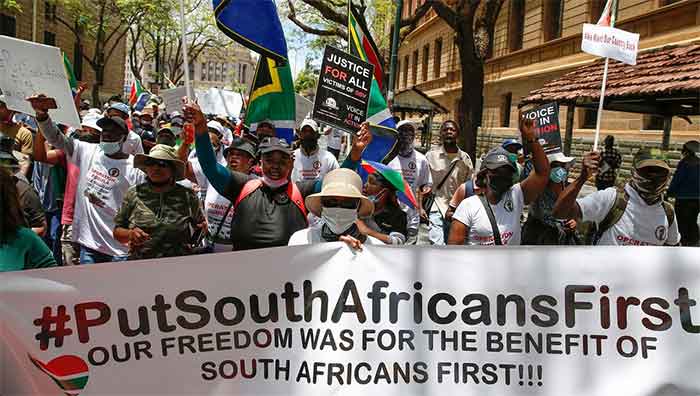
South Africa Is on a Knife Edge as Xenophobia Escalates

Richard Pithouse


South AfricaSouth Africa

Xenophobia is a global crisis, but in South Africa, it takes a particularly violent form. The day-to-day accumulation of insult and harassment from within the state and society periodically mutates into open-street violence in which people are beaten, hacked and burned to death. If there is a useful point of global comparison, it may be with the communal riots that rip Indian cities apart from time to time.

The state has tended to stand down while a neighborhood is roiled with xenophobic violence. When it does move in, after the destruction, removal of people from their homes and killing have stopped, it usually arrives to arrest migrants rather than the perpetrators of the attacks. It is overwhelmingly impoverished and working-class African and Asian migrants who must face this pincer movement from the mob and the police.

The severity of the situation in South Africa first came to global attention in May 2008 when xenophobic violence, sometimes intersecting with ethnic sentiment, took 62 lives. At the time, the country was ruled by Thabo Mbeki, a man with deep and genuine Pan-African commitments. But by the end of 2007, Jacob Zuma’s path to the presidency was clear, and the ethnic chauvinism he had introduced into the public sphere was rampant. The limited social support offered by the state was increasingly understood to be tied to identities such as ethnicity, nationality and claims to be part of long-established communities.

By the time that Zuma took the presidency in May 2009, it was common for party officials in his home province of KwaZulu-Natal to tell impoverished people that they had not received houses, or other entitlements, because of an “influx” of “foreigners” or people from other provinces—a euphemism for ethnic identity. There were cases where people, seeking the approval of political authority, began to “clean” their communities themselves.

Now, almost 15 years since the 2008 attacks, the situation is much worse. Most South Africans have lived in a state of permanent crisis since the colonial capture of land, cattle, and autonomy. But for most young people, that permanent crisis no longer takes the form of the ruthless exploitation of labor under racial capitalism. Last year, youth unemployment hit 77.4 percent, the highest out of all G20 countries. As Achille Mbembe, the Cameroonian philosopher who writes from Johannesburg, argued in 2011, the intersection of race and capitalism has rendered people as “waste.”

The pain of young lives lived in permanent suspension is often turned inward. There is a massive heroin epidemic, depression and anxiety are pervasive, and rates of violence, much of it gendered, are terrifying.

In this crisis of sustained social abandonment, there are attempts, sometimes extraordinarily courageous, to build forms of politics around the affirmation of human dignity. They have often met serious repression, including assassination. But unsurprisingly, there are also attempts to build forms of popular politics around xenophobia, some of them with fascistic elements. Young people, mostly men, are summoned to the authority of a demagogic leader, given a rudimentary uniform in the form of a T-shirt and the opportunity to exercise some power in the name of “cleaning” society. Perversity is dressed up as virtue.

At the same time, all the major political parties, including the ruling African National Congress (ANC), have moved sharply to the right and have become increasingly xenophobic. In government, the ANC has always run a highly exclusionary migration regime and is now moving to end the permits, established more than 10 years ago, that gave around 178,000 Zimbabweans the right to live, work and study in South Africa.

Its rhetoric has also moved sharply to the right. The party’s spokesperson, Pule Mabe, recently declared “open season on all illegal foreign nationals,” adding, “we can no longer guarantee their safety.” The party’s policy conference in early August proposed “a well-coordinated strategy for tracking down illegal foreigners.” That strategy explicitly included the recommendation that “ANC branches must take the lead in this regard.”

Many analysts take the view that the ANC, which has already lost control of many of South Africa’s major cities, will not be able to win the next national election in 2024. As the party faces the prospect of losing power for the first time since the end of apartheid, the temptation to scapegoat migrants for its failures is escalating. Alarmingly, the new parties taking the political space opened by the rapid decline in support for the ANC are more or less uniformly forms of authoritarian populism centrally organized around xenophobia.

Former business mogul turned politician Herman Mashaba’s ActionSA party, which is making rapid electoral advances, mixes hardcore neoliberalism with xenophobia. In 2018, Mashaba staged a “citizen’s arrest” of a migrant and then tweeted, “We are [not] going to sit back and allow people like you to bring us Ebolas in the name of small business. Health of our people first. Our health facilities are already stretched to the limit.” This conflation of a vulnerable minority with disease evokes the horrors of historical forms of fascist mobilization.

Public speech from the state, government and most political parties routinely conflates documented and undocumented migrants as “illegal foreigners,” “illegal foreigners” with criminals, and, in recent days, following a horrific gang rape on the outskirts of a decaying mining town, rapists. When the police come under pressure to respond to concern about criminality, they frequently arrest migrants, often including people with papers rather than perpetrators of actual crimes.

The mass-based organizations of the left, with political identities rooted, to a significant extent, in the factory, the mine or the land occupation have often opposed the turn to xenophobia, and it is common for migrants to hold positions of leadership in these kinds of organizations. But while they can provide nodes of refuge, they lack the power to effectively oppose the rapidly worsening situation at the national level.

With no national force with the vision and power to offer an emancipatory alternative to the poisonous politics, sometimes with fascist elements, that turns neighbors against each other, the country is on a knife edge.

The devastating impact of the COVID-19 pandemic on Canada’s young people

Dylan Lubao


Never in the modern history of Canada have the country’s children and youth been sacrificed on such a scale as the past two and a half years of the COVID-19 pandemic. Through seven waves and multiple variants of the virus, at least half of Canada’s roughly 13 million young people aged 29 and under have been afflicted with COVID-19.

Students walking out of Winnipeg's Kelvin High School on Monday, Jan. 17 to protest the lack of COVID-19 safety measures. (Striking Students/Reddit)

The pandemic’s deadly trajectory has been orchestrated by the capitalist ruling class, its government representatives at the federal, provincial and territorial levels, and the leadership of the trade unions. Declaring that the population had to learn to “live with the virus,” capitalist governments have forced public schools to remain open with virtually no protections in place for one simple reason: to ensure parents could go to work and generate profits for the country’s banks and corporations.

With schools set to return from summer break in the coming weeks, the political establishment is once again preparing to subject children and their families to a policy of mass infection and death. Ontario’s Progressive Conservative government announced earlier this week that there will not even be a mask mandate in the province’s schools, let alone any more substantial measures to curb COVID’s spread.

These mass infection policies were opposed by young people and workers over the past year, both in Canada and around the world. It is high time for workers and young people to draw the political lessons of these struggles in order to launch a political fight to put an end to wave after wave of infection by eliminating COVID-19 globally.

Lisa Diaz, a parent in the United Kingdom, organized a school strike on October 1, 2021, urging parents to keep their children home from school to protest governments’ forced infection of children around the world. Many parents in Canada took up her call and the hashtag #SchoolStrike2021 became one of the highest-trending on Twitter.

In Ontario, biostatistician and educator Ryan Imgrund called for a protest on October 14, 2021 against the education unions’ refusal to permit education workers to wear N95 respirators in COVID-infested schools. Illustrating the union leadership’s hostility to the rank-and-file membership, Imgrund was publicly censured by his union, the Ontario English Catholic Teachers’ Association. Other unions, like the Elementary Teachers’ Federation of Ontario, warned their members that participating in the protest would be grounds for dismissal. 

The emergence of the highly transmissible Omicron variant in November and its rapid spread throughout the world prompted governments, including in Canada, to declare it “mild.” No additional measures were taken to protect the population and families were encouraged to gather over the holiday break. Except for brief delays, schools were reopened after the holidays in the midst of record infection rates.

Across the world, both students and education workers fought back. Throughout Europe, thousands of students marched at the beginning of January in France, Germany, Austria, Italy, and Greece, demanding that schools remain remote and that governments do more to protect the population from the disease. Teachers in France went on a nationwide strike to protest the mass infection policies of the widely-reviled government of President Emmanuel Macron.

Thousands of students and education workers protested across the United States. High school students in Chicago demanded that the Democratic Party-led city administration step down for its role in spreading the virus. Chicago teachers went on strike to resist the reopening of schools. Here too, the pro-capitalist orientation of the Chicago Teachers Union bureaucracy revealed itself, as it colluded with Democratic Mayor Lori Lightfoot to reopen schools in defiance of the wishes of rank-and-file teachers and students.

Chicago Public Schools students protest outside of CPS headquarters [Credit: WSWS Media]

Hundreds of students across Canada protested as well. At Simon Fraser University in British Columbia, dozens of students walked out in January, backed by over 4,600 who signed a petition urging the university administration to reverse its reopening plan. At McGill University in Montreal, hundreds of students went on strike to demand that the administration provide remote learning options, which the administration relented to after a public backlash. Hundreds of high school students from 90 schools in Manitoba also walked out of class to demand safer classrooms.

Despite the militancy and courage of the students and education workers, government pandemic policy only worsened. The dismissal and sabotage of these protests by the union bureaucracies politically disarmed young people and the broader working class, enabling provincial governments to dismantle mass testing capacity in January.

At its height, the fifth wave put almost 11,000 Canadians in hospital simultaneously, which is still the highest number on record. Between mid-December, when the fifth wave began, and its end in mid-March, over 7,600 people were killed, making it the third-deadliest wave even though the majority of the population had received at least two doses of the vaccine.

The far-right Freedom Convoy, incited and built up by the official Conservative Party opposition, occupied Ottawa’s Parliament Hill in February and demanded the end of all COVID-19 public health measures. Provincial governments of all political stripes promptly complied, while the federal liberal government green-lighted the elimination of virtually all remaining public health measures.

A sixth wave of the pandemic, driven by the BA.2 Omicron subvariant, subsequently ripped its way through completely defenceless schools. The sixth wave established a startling new baseline for infections and hospitalizations even during the warmer spring and summer months. At the low point of the sixth wave in mid-June of this year, over 3,000 Canadians were hospitalized with COVID-19, triple the number during the same periods in 2021 and 2020. Deaths, peaking at a seven-day rolling average of 82 on May 21, eclipsed the third and fourth waves.

The BC Centres for Disease Control found in March that 60 percent of children had tested positive for COVID-19 antibodies. Quebec’s Coalition Avenir Quebec government nonchalantly announced that at least one-third of the province’s 1.5 million children contracted COVID-19 during last winter’s fifth wave. Children’s hospitals have been pushed to the breaking point as COVID-19 and other infectious diseases have come roaring back, courtesy of governments dismantling of public health measures that previously kept them at bay.

Perhaps the most accurate and damning figures come from researcher Dr. Tara Moriarty at the University of Toronto, because she has regularly exposed vast government undercounts of COVID-19 infections, hospitalizations, and deaths. Dr. Moriarty estimates that 57 percent of the Canadian population had been infected with the Omicron variant by April 5, 2022. Because schools are major drivers of viral transmission, it can be reasonably inferred that at least half of all children have been infected with Omicron, in addition to those infected with earlier variants.

According to official figures, 52 youth under the age of 20 have died of COVID-19 and 133 young adults between 20 and 29 have succumbed to the disease. Millions have been infected and an unknown number have been hospitalized with mild to severe symptoms. Tens of thousands of young people have lost parents, grandparents, siblings, uncles, aunts and friends—many of whom would be alive today had they not been forced to “live with COVID-19.”

Demonstrating the immense toll the pandemic has taken on the mental health of young people, a University of Calgary study of 80,000 youth across the globe discovered that rates of anxiety and depression among young people have doubled since the pandemic began in 2020.

A growing body of evidence shows that potentially hundreds of thousands of young people across Canada are suffering from the effects of Post-Acute COVID-19 Syndrome, also known as Long Covid. Given that an estimated 10 to 30 percent of all those infected go on to develop this life-altering chronic illness, an entire generation of young people has been deprived of their childhood and health.

Australian COVID-19 death toll passes 12,500 as monkeypox concerns grow

Clare Bruderlin


As COVID-19 infections and hospitalisations continue to mount, the official death toll has now surpassed 12,500. Hundreds more people are dying every single week.

Patient in an intensive care unit (Photo: Wikimedia Commons)

Australian hospitals remain under enormous strain, with over 4,350 COVID-19 hospitalisations across the country and thousands of healthcare workers furloughed. This includes up to 2,000 hospital staff furloughed each day in Victoria, close to 1,000 WA health staff and more than 2,600 health workers in NSW. In addition, there are over 2,000 active COVID-19 cases among staff in residential aged care facilities.

The spread of the BA.4 and BA.5 variants, nearly as contagious as measles and extremely immune-evasive, and the continued infection and reinfection of the population, is the direct result of official policies. Governments, state and federal, Labor and Liberal-National alike, have allowed the virus to circulate endlessly since the removal of public health measures from December last year.

The rolling 7-day average for new infections continues to be above 30,000, under conditions where testing and contact tracing has been dismantled. More than 9.6 million total infections have been recorded, including tens of thousands of reinfections. Recent analysis of reinfection data from NSW Health showed that more than 20,000 people in NSW who had COVID-19 in January were reinfected within five months.

Despite claims by the media and some government health officials that the Omicron winter wave is approaching its “peak,” in reality, every week since January 8 this year the death toll has been above the highest “peaks” seen throughout 2020 and 2021.

A recent analysis by the Actuaries Institute has found that COVID-19 was the third-leading cause of death in Australia based on deaths from January to July, killing more than cardiovascular disease or lung cancer.

Since January 1 this year, the number of patients hospitalised each day with COVID-19 has been above 1,600. Even the lowest number of hospitalisations this year, recorded in March, was still above the highest number of hospitalisations recorded over the past two years of the pandemic.

The virus is being allowed to spread throughout the country at a time in which vaccination rates are falling, as a result of the persistent campaign by governments and the media to downplay the severity of COVID-19. The immunity gained from previous vaccinations is also fading.

Just 71.4 percent of the population aged over 16 has received a third dose of a COVID-19 vaccine, and 37.1 percent of the eligible population aged 30 and over have had a fourth booster shot. Until July, the fourth booster was limited to those over 65 years of age and those with underlying health conditions.

The pandemic has hit hardest among the most disadvantaged sections of the working class. A recent Australian Bureau of Statistics report on the demographics of those who have died of COVID show the people living in the least disadvantaged areas (quintile 5) had the lowest numbers of deaths due to COVID-19. The number of people who died due to COVID was around 3 times higher among those in the most disadvantaged quintile than those in the least disadvantaged.

Immigrants to Australia have died from COVID-19 at more than two times the rate of people born in the country (15.6 deaths per 100,000 people versus 7.6 deaths). Those born in the Middle East had the highest age-standardised death rate at 46.9 deaths per 100,000 people.

The same report found that at least 60 deaths in Australia were due to Long COVID, raising the long-term consequences of COVID-19 infections. It is estimated that some 10-30 percent of COVID-19 infections will develop Long COVID, which can affect nearly every organ in the body.

These figures are a reflection of the conscious and bipartisan policy, enforced by both Labor and Liberal-National governments, to impose the burden of the pandemic on the working class for the benefit of the financial elite. Workers have been forced back into unsafe workplaces, including schools, to be exposed to COVID without adequate PPE or other measures to prevent the transmission of the virus.

In Victoria, state Labor Premier Daniel Andrews announced Tuesday that 3.5 million N95 and KN95 masks would be handed out at railway stations, and that boxes of 10 masks would be handed out over the next four to six weeks to anyone visiting a state-run COVID-19 testing site.

Whilst N95 masks or better are necessary to deal with COVID, an airborne pathogen, the number of masks is barely enough for one mask each for half the state’s population and N95s, like surgical masks, are not normally meant to be reused.

Moreover, the government has refused to reinstate mask mandates in indoor settings, despite health advice to do so. Instead it has adopted the demands of business, which oppose such mandates because of their impact on profit-making activity, including retail shopping. The mask distribution is thus a cosmetic attempt to cover-up the refusal of the government to take the scientifically-grounded measures required to end transmission.

While the use of well-fitted N95 or better masks or elastomeric respirators is among the most important tools to fight the pandemic, official government websites still recommend the use of surgical masks and even cloth masks as PPE, despite the fact that they are not appropriate for preventing airborne transmission.

At the same time, the few remaining measures against COVID continue to be wound back. In Western Australia, the state Labor government announced Tuesday that hospitals will scale back their COVID-19 screening protocols.

Testing requirements are being removed for patients presenting at emergency departments who are asymptomatic and for most asymptomatic visitors. Healthcare workers, who had been required to wear N95-style masks across all clinical areas, now only need to do so when “caring for vulnerable patients or working in high-risk areas.” Inadequate surgical masks are instead going to be required, exposing health workers to infection.

The rollback of these basic infection control measures is being accompanied by a barrage of propaganda, claiming that the winter surge has reached a “peak.” Given the dismantling of the testing system, these assertions are based on no evidence whatsoever.

The abandonment of all efforts to stop the COVID-19 pandemic and the demand that society must “live with the virus,” has set the stage for the disastrous response to all infectious diseases. Amid the deepening COVID-19 crisis, cases of monkeypox are surging around the globe, and there are now 58 confirmed cases in Australia, including more than 30 cases in NSW, with some of these occurring through community spread.

Despite global outbreaks of monkeypox detected as early as May and the now more than 26,000 cases recorded around the world, it was only last week that federal Labor Health Minister Mark Butler announced the arrival of just 22,000 doses of a third-generation monkeypox vaccine.

Initial doses are being rolled out to high-risk groups, in particular men who have sex with men, however, this has been accompanied by the portrayal of monkeypox by the corporate media and government as affecting only this demographic, implying that it is a sexually transmitted infection (STI).

NSW Health director of health protection, Jeremy McAnulty, said on the roll-out of the vaccines that, “Most people are not at risk from monkeypox,” and that “to be infected you typically need close skin-to-skin contact.”

McAnulty’s false claims, which amount to medical misinformation, were refuted by Royal Australian College of General Practitioners rural chair Michael Clements. In comments to the media, he stated: “Please remember that anyone can contract monkeypox and it is not a sexually transmitted disease. This is just a virus, and we need to deal with monkeypox without stigma or unhelpful commentary.”

As Clements indicated, monkeypox is an infectious disease which threatens all of society. The virus can spread through aerosols, droplets and fomites, with the dominant mode of transmission believed to be skin-to-skin contact and respiratory droplets. The infection period can last over a month, including before the onset of lesions, and requires isolation throughout this time period after confirmed exposure.

Whilst most cases remain among men who have sex with men, there are a growing number of infections among women around the world, as well as children and young people. At least 8 infections among children have been recorded in the US. Moreover, so far testing has predominantly been among men sexually active with other men within nearly every non-endemic country, and there has not been a program of contact tracing and testing to determine the extent of the spread of the virus.

It is clear that the approach by the federal Labor government to the threat posed by monkeypox and the vaccine roll-out will be no different to the slow, inadequate roll-out of the COVID-19 vaccine under the Liberal-National government.

“People can hardly afford to eat”: US inflation continues to hammer workers

Marcus Day


A shopper looks over meat products at a grocery store in Dallas, April 29, 2020. (AP Photo/LM Otero, File)

Annual price increases for US consumer goods remain at their highest level in nearly 40 years, according to the latest inflation data released Wednesday by the Bureau of Labor Statistics (BLS). Prices for items in the Consumer Price Index rose 8.5 percent in the 12 months ending in July, down slightly from the 9.1 percent rate reported in June, but still the second-largest yearly increase since December 1981.

Food prices in particular have surged in recent months. The BLS’ overall food index rose 10.9 percent year-over-year in July, while the cost of food at home increased 13.1 percent, the biggest increases since May 1979.

Amid a heat wave which has blanketed much of the US this summer and broken records in a number of regions, electricity costs rose 15.2 percent compared to last year, increasing by 1.9 percent over the last month alone.

The cost of shelter also pushed higher, with rent rising 6.3 percent nationally since 2021, with increases far greater in many major metropolitan areas, forcing large numbers of young people to live with their parents, and threatening others with eviction and homelessness. In California, 1.5 million households are behind on their rent, according to Census Bureau data released in late July.

Although the cost of gasoline, which is more volatile, fell somewhat from June, down 7.7 percent, it remained 44 percent higher than a year ago. The national average price for a gallon of gas is hovering near $4, compared to $3.18 in 2021.

The Biden administration and sections of the corporate media nevertheless seized on the latest data to claim that inflation is easing and that a corner being turned, with Biden misleadingly asserting that the BLS report showed “zero percent inflation in the month of July—zero percent.”

In a two-minute appearance, Biden painted a fantastical picture of a booming economy, but the reality facing masses of workers is one of increasing desperate struggle for daily existence. According to a separate BLS release Wednesday, real average hourly earnings for production and non-supervisory employees fell 2.7 percent year-over-year in July.

10 Aug 2022

Incumbent PM declares victory in turbulent Papua New Guinea election

John Braddock


On Tuesday, the James Marape-led Pangu Pati was invited by the Papua New Guinea (PNG) Governor-General Sir Bob Dadae to form the country’s next government. Marape was unanimously re-elected unopposed as Prime Minister by MPs present in the first sitting of the new parliament.

Prime Minister of Papua New Guinea James Marape addresses the 76th session of the United Nations General Assembly, on Sept. 24, 2021, at the UN headquarters. [AP Photo/Peter Foley/Pool]

The announcement came in the wake of an election plagued by violence, fraud allegations and large numbers of voters missing from the electoral roll. As parliament met there were still 14 seats to be declared in the 118-seat house. Voting began on July 4 and ended on July 22, but counting was extended until August 5 by Dadae because of writs still outstanding. The deadline was extended again for a third time until August 12.

Former Prime Minister and Peoples National Congress (PNC) leader Peter O’Neill unsuccessfully applied to the Supreme Court to delay parliament’s return until all electorates had finished counting.

Marape claimed victory last week, saying the Pangu Pati had the numbers to form a coalition giving it an “overwhelming mandate.” The Pangu Pati, along with a string of coalition parties and independents, controls a total of about 80 seats.

The Pangu Pati has the most seats with 36, the main opposition PNC 14, United Resources Party (URP) 10, People First Party (PFP) 2, People’s Progress Party (PPP) 1, United Labour Party (ULP) 3, Peoples Party 4, National Alliance Party 5. There are also several single-member parties and eight independents.

Marape told the National that the Pangu Pati had entered the election with “clear coalition partners” such as the URP and PPP and had not contested certain seats against them. “Hence, it is very easy for us now to stitch a coalition,” he declared. Belden Namah, leader of the opposition Papua New Guinea Party and a former deputy prime minister, was one prominent recruit.

Solicitor General Tauvasa Tanuvasa initially stated that the Electoral Commissioner had no power to extend the receipt of writs beyond August 5 and any not handed in by then would be declared as “failed.” However, his comments have been ignored in the haste to install the new government. A series of court battles is expected. 

The election will be widely viewed by the population as illegitimate. In a desperate bid to stem popular distrust, Marape was forced at one point to issue a statement that the Pangu Pati was “not rigging” the process. He said if Pangu was doing that it would have made a “clean sweep” of all 118 seats, including those lost by prominent party leaders such as John Simon in East Sepik.

His chief rival, O’Neill, told the media that “the rights of at least 3.8 million citizens and hundreds of candidates have been denied by the willful actions of a few power-hungry men.” Electoral roll problems meant “millions of our people have not voted,” he said.

The three-week polling period saw widespread illegal ballots, accusations of bribery, weapons brandished to intimidate voters and even killings. The media have reported at least 50 election-related deaths, down from 204 documented in the 2017 election, but including several days of violence in the capital Port Moresby during which troops were deployed onto the streets.

In one area alone, Madang, 211 men were charged for fighting and disrupting the count. Police Commissioner David Manning described “ongoing investigations into some candidates who are believed to have been inciting their supporters to fight with opponents, and arrests will be made.” He added there was potential for more confrontation as parliament sits and the court hears disputes over the vote.

International election observers reported problems ranging from interference in counting by scrutineers and double voting, to incomplete electoral rolls, which had not been renewed since 2017. In some cases, up to half of the names of eligible voters were not on electoral rolls, a Commonwealth Observer Group said.

The Melanesian Spearhead Group, in another observer report, said the election’s “many challenges” included unexplained delays of up to three days before counting started in some electorates, scrutineer interference and failure to check voter identity documents.

The new government is likely to be highly unstable. In 2019 Marape, who was then finance minister, took over the prime ministership after O’Neill resigned amid corruption charges. Marape has presided over an economic and social disaster, including the ongoing closure of the Porgera goldmine and alleged misuse of international funds for PNG’s COVID response. Budget shortfalls resulted in government debt rising to 52 percent of GDP.

Marape’s coalition almost collapsed in late 2020 when dozens of MPs, including cabinet ministers, defected to the opposition. Marape passed his 2021 budget in an emergency parliamentary session with the opposition absent—a move the Supreme Court ruled unconstitutional. He then adjourned parliament for four months to avoid a vote of no confidence, ensuring that he could not, under the rules, be removed before the current election.

O’Neill, Marape’s main opponent, declined in the end to challenge for the prime ministership. “I encourage leaders who have been elected properly and who are genuinely interested in rescuing PNG from the economic and social chaos Marape has plunged the country into over the past three years, to consider putting their hand up for the top job,” O’Neill declared.

The Guardian asked in one commentary whether “PNG’s institutions have been so eroded that people feel they have no option but to take matters into their own hands.” In fact, trust in the entire ruling elite has disintegrated following decades of social deprivation and growing inequality, buttressed by authoritarian military-police measures.

The crisis has been exacerbated by the ongoing COVID-19 pandemic. Tens of thousands of workers, as high as 25 percent of the workforce, lost their jobs. PNG remains one of the least vaccinated countries in the world, with just 3.4 percent of the eligible population partially vaccinated. Authorities have ceased vaccination operations in the capital Port Moresby due to lack of funding. The fragile health system is facing collapse, its inadequate conditions and low pay leading to repeated protests and strikes by nurses.

The political and business elite in Australia, PNG’s colonial ruler until 1975, is increasingly concerned about the unstable situation in its northern neighbour. The Lowy Institute’s Interpreter commented on August 4 that while Canberra had helped with planning, transport and ballots for the PNG election, its electoral support “was clearly inadequate to the task.”

Canberra’s primary concern is not the plight of the impoverished PNG peoples, but its own geo-strategic and business interests.

Pointing to the Solomon Islands’ recent security pact with Beijing, the Interpreter declared that “PNG should be the centre-piece of Australia’s renewed Pacific foreign policy.” It highlighted “strategic infrastructure investments” such as the government-backed purchase of telecommunications company Digicel by Telstra, a ports upgrade program and the Coral Sea Cable as projects that will “enhance connectivity with PNG and contribute to regional security.”

Amid the United States-led drive to war, Australia’s chief aim is to maintain its hegemony over the country, and to push back against China’s growing economic and diplomatic influence in the Pacific. This will undoubtedly be at the centre of Australian Prime Minister Anthony Albanese’s visit in September.