30 Sept 2022

After the Bank of England intervention financial turmoil continues

Nick Beams


Turbulence in global financial markets is continuing in the wake of the Bank of England’s intervention in the UK bond market crisis, which threatened the solvency of pension funds and a crisis in the financial system on a scale of, or possibly even greater than, the meltdown of 2008.

People wait to enter the Bank of England in London, Tuesday, September 27, 2022. [AP Photo/Frank Augstein]

Bond yields in the UK market have come down somewhat as bond prices have risen (they move in opposite directions) and sterling has clawed back some of its losses against the US dollar, after it threatened to fall to parity with the US currency.

Yesterday, a leading article in the Wall Street Journal warned: “Mounting volatility in government bond markets is intensifying fears on Wall Street that this year’s wild swings in the world’s safest assets could destabilize already rocky financial markets.”

It noted that before the BoE intervention, the yield on the 10-year US Treasury note, which is regarded as benchmark for the US and global financial system, had risen to above 4 percent for the first time in more than a decade.

The upward movement “marked the latest explosion in normally placid debt markets, raising investor concerns that the year-long selloff in bonds has entered a new and more dangerous phase.”

The rise in bond yields is already having an impact on the economy with the report yesterday that the average interest rate on a 30-year home mortgage is now 6.7 percent, more than double the level of 3.01 percent just a year ago. One of the fears is that rising mortgage rates will precipitate a sharp fall in the housing industry.

So far this year, major bond indexes in the US have had their biggest ever losses and the stock market continues to gyrate as it moves down, with the key S&P 500 index losing 22 percent so far this year.

After a surge on Wall Street following the BoE intervention on Wednesday, there was a selloff yesterday with the S&P 500 closing at its lowest point for 2022 as the yields on Treasury bonds reached some of their highest levels for the year. As one portfolio manager commented to the WSJ: “This volatility is quite breathtaking.”

Chris Turner, global head of markets at the financial giant ING, told the newspaper that central banks remained “wholly focused” on taking rates higher “even if that means causing a recession.”

He said the “massive intervention” from the BoE, in which it has committed to spend £65 billion buying up UK government debt, “stabilized things for 12 hours, but obviously they haven’t addressed the fundamental challenges.”

Some of those “fundamental challenges” emerge from an examination of the way the crisis erupted in response to the Tory government’s “smash and grab” mini-budget last Friday, which gave a £45 billion handout to the corporations and the super-rich. 

The adverse reaction of the financial markets was not to the handout, but because the additional money flow, which they always welcome, was not accompanied by further deep attacks on social spending, but was to be financed by increasing government debt to the tune of £72 billion.

The prospect of a further rise in debt, increasing the supply of bonds, produced a rapid drop in their prices, sending their yield skyrocketing. The immediate impact was on pension funds, which are among the largest purchasers of government debt.

Pension funds pursue what is known as liquidity-driven investment (LDI). That is, they generally do not engage in speculative measures aimed at securing higher returns that “beat” the market.

They seek to ensure that their income flows and the value of their assets will cover their liabilities to retirees. But to do this they need to undertake derivative trades, financed by borrowing, to hedge against market movements to ensure this is the case.

This borrowing is backed by the collateral they hold in the form of government bonds and cash. But when the price of the underlying asset, government bonds, falls precipitously, as it did at the start of the week, the lender demands more cash.

To meet these demands, the pension funds must sell bonds, sending their price down even further, thereby precipitating a “doom-loop.” It reached a point where one analyst warned that had the BoE not intervened, 90 percent of pensions funds could have been rendered insolvent.

In a comment on the crisis, Financial Times columnist Robin Wigglesworth made some important observations about what had been revealed.

He noted it had hammered home a truism derived from past experiences: that “the greatest damage is often caused by supposedly stolid investments that turned out to be anything but,” and “truly cataclysmic financial debacles tend to involve investment strategies [such as LDI] and financial securities that everyone thought were boring.”

“What else like this may be lurking out there?” he continued. “What is the next debacle within some unlikely corner of the global financial system. We are likely going to find out soon.”

Throughout the present crisis the word “confidence” has been used repeatedly. The capacity of the financial system to continue to siphon wealth to the upper echelons of society depends on confidence that its operations will not be impeded either by maladministration on the part of governments or the struggles of the working class.

Over the past decades of growing financial turbulence, going back to the stock market crash of October 1987, confidence has been restored by the intervention of the Fed and other central banks as they pumped more money into the system. But these operations—each one bigger than the last—were able to be carried out in conditions vastly different from those of today.

Inflation was at historic lows and the movement of the working class was suppressed by the trade unions—strike activity, the most basic indicator of the class struggle, was at historic lows—and real wages were on a continuous downward trajectory.

Today inflation is at a four-decade high, and the working class is striving to break out of the grip of the trade union bureaucracy, most notably in the UK and the US as other sections also start to move into action in support of wage demands and an end to increasingly intolerable conditions of exploitation.

This means the restoration of confidence cannot take place through the methods employed by central banks in the past.

It requires a massive assault on the social position of the working class, to suppress wages and drive up exploitation to new levels to increase the flow of surplus value into the financial system and sustain the mountain of debt and fictitious capital built up over decades.

The outlines of this class war are already clear. The central banks are raising interest rates, not to bring down inflation, but to induce a recession and suppress wage demands. At the same time, the knives are being sharpened for major attacks on social services, health and education spending, which represent a deduction from the pool of surplus value available for appropriation by finance capital.

The UK Tory government of Prime Minister Liz Truss, responding to the criticism of its mini-budget, has issued statements that “iron discipline” must be imposed on public spending.

The unions know very well what is ahead. A letter signed by 18 unions said austerity would be an “act of national vandalism.” But at the time, while writing letters to the Tories, they are working night and day to suppress the struggle by workers to bring down the Truss government.

The same class mechanics are on display in the US where the unions are trying might and main to sell out every strike.

In financial circles, the response to the latest data on initial jobless claims, which showed they had fallen to their lowest levels since April, was that the Fed would have to be even more aggressive on rate hikes.

As one investment strategist told the WSJ; “The Fed is trying very hard to inflict pain on the jobs markets and it’s not working. That maintains the narrative that the Fed is going to have to be tighter for longer.”

The ruling classes in the US, the UK and around the world have a counter-revolutionary strategy which they intend to impose as the only solution to the deepening crisis of the profit system over which they preside.

29 Sept 2022

Margaret McNamara Educational Grants (MMEG) Scholarships 2023

Application Deadline: 15th January 2023

Offered annually? Yes

Accepted Fields of Study: Any field of study

To be taken at (country): United States (US) & Canada

About the Award: The Margaret McNamara Educational Grants (MMEG) provides grants to women from developing countries to help further their education and strengthen their leadership skills to improve the lives of women and children in developing countries. About $15,000 Education grants are awarded to women from developing and middle-income countries who, upon obtainment of their degree, intend to return to or remain in their countries, or other developing countries, and work to improve the lives of women and/or children.

Offered Since: 1981

Type: Masters

Who is qualified to apply for Margaret McNamara Educational Grants? Applicants must meet the following eligibility criteria:

  • Be at least 25 years old at time of application deadline (see specific regional program application below);
  • Be a national of a country listed on the MMEG Country Eligibility List (listed below);
  • Be enrolled at an accredited academic institution when submitting application; and plan to be enrolled for a full academic term after award of the grant by the Board;
  • Not be related to a World Bank Group, International Monetary Fund or Inter-American Development Bank staff member or spouse;

Number of Scholarships: Not Specified

Margaret McNamara Educational Grants benefits: Approximately $15,000 per scholarship recipient

Duration: The grant is a onetime award to last for the duration of study

Eligible African Countries: Algeria, Angola, Benin, Botswana, Burkina Faso, Burundi, Cameroon, Central African Rep., Chad, Congo, Dem. Rep., Congo, Rep, Côte d’Ivoire, Djibouti, Egypt , Ethiopia, Equatorial Guinea, Gabon, Gambia, Ghana, Guinea, Guinea-Bissau, Kenya, Lesotho, Liberia, Libya, Mali, Mauritania, Mauritius, Morocco, Madagascar, Malawi, Mozambique, Namibia, Niger, Nigeria, Rwanda, Somalia, South Africa, Senegal, Sierra Leone, Sudan, Swaziland, Tanzania, Togo, Tunisia, Uganda, Zambia, Zimbabwe

Other Countries:

Afghanistan, Ecuador , Macedonia, FYR of , Albania, Arab Rep., Serbia, El Salvador, Seychelles, Malaysia, Antigua and Barbuda, Eritrea, Maldives, Solomon Islands, Argentina, Armenia, Fiji, Marshall Islands, Azerbaijan, Sri Lanka, Bangladesh , St. Kitts and Nevis, Belarus, Georgia, Mexico, St. Lucia, Belize, Micronesia, Fed. Sts , St. Vincent & the Grenadines, Grenada, Bhutan, Guatemala, Moldova, Suriname, Bolivia, Mongolia, Bosnia & Herzegovina, Montenegro, Syrian Arab Rep., Guyana, Tajikistan, Brazil, Haiti, Bulgaria, Honduras, Myanmar, Thailand, India, Timor-Leste, Indonesia, Nepal, Cambodia, Iran, Islamic Rep. of, Nicaragua,Tonga, Iraq, Trinidad and Tobago, Cape Verde, Jamaica, Jordan, Pakistan, Turkey, Kazakhstan, Palau, Turkmenistan, Chile, China, Kiribatii, Panama, Colombia, Korea, Republic of, Papua New Guinea, Ukraine, Comoros, Kosovo, Paraguay, Uruguay, Kyrgyz Rep, Peru, Uzbekistan, Lao PDR, Philippines, Vanuatu, Costa Rica, Latvia, Poland, Venezuela, RB, Lebanon, Romania, Vietnam, Croatia, Russian Federation, West Bank & Gaza, Yemen, Rep, Dominica, Samoa, Dominican Republic, São Tomé and Principe

How to Apply: Apply via Scholarship Webpage link below.

Remember to read the Application Checklist & FAQs before applying, and when applying (after signing up), select “US-Canada program” in the first question of the application. If the programme name does not appear, the programme may be closed to new applications.

Visit Scholarship webpage for details

Important Notes: Please make sure to submit ALL documents as listed. Only complete applications will be accepted. Decisions will be announced by April.

The Electricity Crisis in South Africa Continues to Brew

Vashna Jagarnath


ElectricityElectricity

At the end of apartheid in 1994, only 36 percent of households in South Africa were electrified, with almost all white households having electric power and most Black households having no access to electricity. Ten years later, more than 80 percent of households were electrified. This was an important achievement, albeit one that mostly left out the residents of the rapidly growing shantytowns across the country.

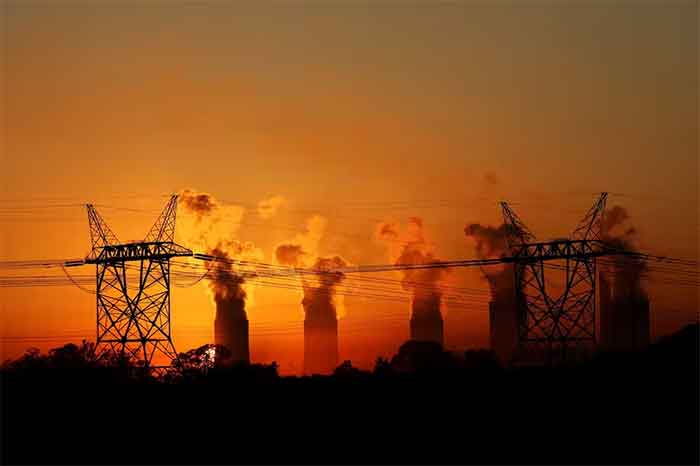
But this progress came to a halt in 2007 when South Africa first began to endure “load shedding,” which is the cutting of power supply to different areas on a rotational basis. Load shedding, implemented when the state-owned electricity company Eskom is unable to provide power to the whole country and the electricity grid needs to be kept stable, seems to have reached a new nadir in recent days with most areas going without power for up to 12 hours a day. There have been warnings that total blackouts may be necessary.

Eskom has been unable to provide a stable supply of electricity for 15 years due to a lack of investment in keeping infrastructure up to date and its poor maintenance, a period of plunder under the kleptocratic regime of former President Jacob Zuma, and a longstanding state austerity program that has resulted in general disinvestment from state-owned companies.

The energy crisis has been very damaging to an economy already reeling from socially devastating deindustrialization, state austerity, and the increasing hold of political mafias over economic life. It has been estimated that load shedding has led to the economy losing R500 billion (just over $28 billion) since 2018, working out to about R1 billion per stage, per day.

South Africa has much higher rates of electricity connections compared to the rest of sub-Saharan Africa, where about 90 percent of the children who are able to afford a primary school education attend schools that do not have electricity. But with load shedding causing power to be off for much of the day many people in South Africa can often face similar conditions to those living in the rest of sub-Saharan Africa. Given that South Africa is currently the most unequal country in the world, the deepening energy crisis further widens the gulf between the rich and the poor, with the latter being overwhelmingly Black and comprising a largely female population.

According to the latest reports, more than 30.4 million people in South Africa live below the poverty line, out of a current population of 60.6 million. About 50 percent of the population lives on R1,335 a month, or approximately $75 a month. The basic cost of electricity for a low-income household is approximately between R1,100 and R1,500, which is already higher than what half the population subsists on. Along with widespread food insecurity, it is likely that the same population of more than 30 million South Africans also concurrently experience “energy poverty,” a term used to describe a situation in which electricity, gas, and other sources of energy bills make up a larger percentage of the household expenditure, making it difficult for South Africans to cover other costs such as food, rent, and clothing. Also, the reduced use of energy in households and workplaces has a negative impact on their physical and mental health. In shack settlements, the lack of electricity has long meant that people cook using candles and gas to light up their homes while living in cramped conditions resulting in regular fires, which are often devastating. With frequent load shedding, fires are now likely to become more common in other types of housing also.

Moreover, South Africa had the eighth highest murder rate in the world in 2020, and the fourth highest rate of gender-based violence in the world, according to 2016 figures. The increased hours of load shedding and the radical decrease of access to electrification will make this pervasive violence worse. A 2017 study carried out in Brazil on the socioeconomic impact of electrification found that it results in a significant decrease in gender-based violence due to better lighting in public spaces.

The burden of social reproduction has always largely fallen on the shoulders of women. Access to electricity can reduce this. An important 2021 study titled “Powering Households and Empowering Women” found that by freeing up women’s time poverty is reduced by creating opportunities for women and girls to develop livelihoods, enter the labor force, or focus on school. It can also reduce exposure to harmful indoor air pollutants, improve maternal health, and reduce gender-based violence.

Demand for the resolution of the electricity crisis has been one of the few issues that have helped bring the poor, the working class, and the middle class together. But, so far, the demands for the resolution of the crisis are not well organized and have been met with little more than platitudes by the ruling elites, including South African President Cyril Ramaphosa.

The African National Congress’s (ANC) commitment to neoliberal austerity has meant that there is insufficient investment in the state electricity company. Their only proposal is to move from state-owned coal-fired power stations, which are highly polluting, to privately owned renewable forms of energy. Currently, one of the best-placed people to benefit from this is the president’s billionaire brother-in-law, Patrice Motsepe, given his investments in renewable energy.

Trade unions in South Africa have insisted that while a move to renewables is welcomed, undertaking it via privatization will raise the costs of electric power for the poor and the working class and result in a bias toward serving the needs of the capitalists and the rich. They have proposed that renewables should be socially owned and managed.

The proposals from the unions have been ignored, austerity continues, and there has been minimal movement toward private electricity production. The situation is one of stasis.

Experts believe that very high rates of economically and socially damaging load shedding are likely to continue for at least the next three to four years. Many analysts have argued that this is likely to hit the ruling ANC very hard in the next presidential election, scheduled for 2024. A crisis in terms of electric power could lead to a loss of political power. With right-wing and xenophobic parties rapidly advancing, this is not cause for easy optimism.

South Africa will not move into the light until the social value of access to electricity is affirmed. The proposal by the trade unions for a shift to socially owned and managed renewable energy is the best option on the table. We need a solution that is for the majority and not the few.

After weeks of silence from union, Mercedes-Benz begins mass firings in Brazil

Eduardo Parati


Reports from Mercedes-Benz workers at the São Bernardo do Campo plant in the ABC industrial region have exposed the results of what have been weeks of meetings between the ABC’s Metalworkers Union (SMABC) and the auto company. Hundreds of contract workers arrived at the plant on Monday to discover that they are being summarily fired as part of the company's announcement earlier this month that it would cut 3,600 jobs.

Mercedes-Benz workers in assembly in São Bernardo do Campo, September 8, 2022 (Adonis Guerra/SMABC/FotosPublicas)

In addition to the workers who have been targeted for cuts, including 2,200 company employees and 1,400 contract workers, Mercedes had announced on September 6 that it would outsource several sectors within the plant, including logistics, maintenance, tooling, laboratory, front axle and mid-transmission manufacturing and assembly.

Union bureaucrats are responding with efforts to divide the different sectors within the plant and prevent a strike by its approximately 9,000 workers. Under conditions of enormous anger among workers, and with only a few days left before the presidential election on Sunday, the bureaucracy of the SMABC, affiliated to the Workers Party (PT)-controlled trade union federation, the CUT, is assisting the company in the job cuts while trying to divert opposition into the reactionary channels of economic nationalism.

On Monday afternoon, after the firings, the union called a meeting for only the 361 contract workers whose contracts are set to expire on October 3, a fraction of the thousand targeted for termination in the next weeks.

On Tuesday, at the SMABC headquarters, the union bureaucrats tried to deflect anger by blaming the job cuts on Chinese workers. While stating that they were occurring because the current president, Jair Bolsonaro, wanted to import buses from China, they advanced the absurd claim that the only way to stop the cuts would be to elect the PT candidate, Luis Inácio Lula da Silva.

Critically, the bureaucrats felt obliged to cite the World Socialist Web Site article denouncing the union’s sabotage of the workers’ struggle in the plant. While the bureaucrats derided the article, they limited themselves to declaring it fake news. They felt the need to discredit the WSWS because it is the only publication speaking the truth to the workers at Mercedes, and the article clearly resonated broadly within the rank-and-file.

Meanwhile, almost at the same time that the SMABC bureaucrats were gathering the fired workers at the union's headquarters, its executive director, Aroaldo da Silva, was working to contain an eruption at the Mercedes plant.

After the logistics workers saw that the company was already bringing suppliers into the factory to plan the outsourcing of their sector, showing that there isn’t actually any “negotiation” going on with the union, the workers themselves downed tools on Tuesday morning. Fearing that the rebellion would spread, Silva gathered the logistics workers in the courtyard to contain the job action to the logistics sector and to only the morning shift. He declared that they would hold work stoppages on separate shifts and separate days “so as not to stop production”.

Silva told the logistics workers that any amount of job cuts demanded by Mercedes must be accepted so as not to harm the company's profits. “We have to do all the probing possible to try to lessen the impact on the sector,” Silva said.

Tuesday’s events show that the union works to keep autoworkers divided even within the same plant. No trust can be placed in the union bureaucrats defending even workers most immediate rights to a decent job and working conditions. The fact that the union bureaucrats are not responding to the mass firings by denouncing them, but by covering them up, exposes its dirty maneuver in collaboration with the company.

In the last three weeks since Mercedes announced the cuts, the SMABC leaders have made every effort to keep workers divided, failing to make any call for the 1,400 contract workers to be hired as full-contract employees. The union called a three-day strike in the plant to keep it isolated, without calling for any joint job action with other workers in the auto industry. In the three weeks since Mercedes' announcement, the bureaucrats have made a systematic effort to impose an information blackout among the workers.

One contract worker who contacted the World Socialist Web Site denounced the union’s maneuvers the day before the firings began on Monday.

He said that “The union doesn’t have any information [about the layoffs], they just talk about how hard it is and that the company won’t back down. When the union talks about contract workers, it says that the company “doesn’t know, that they haven’t said anything, they don’t touch on the subject. That means that the union itself doesn’t touch on the subject in the meetings, which they say have been going on since September 6. But they won’t say anything about the meetings, and just say that ‘they are negotiating’, and that ‘the company doesn’t want to back down’.”

The worker pointed out that the union gave unofficial statements a few days before to sectors inside the plant, saying that “nothing is certain yet”.

There is no reason to believe that the union bureaucrats were unaware of Mercedes’ plans to move forward the termination of the contract workers. They have been meeting with the company since the September 6 as these workers approached their contracts’ expiration dates.

As SMABC president Aroaldo da Silva himself admitted, the bureaucrats had known for a long period of time about the company’s plans to implement various “restructuring” measures, including job cuts. Silva had stated to the crowd at the assembly three weeks ago, “We have been dialoguing about these issues. The management of Mercedes began to present a scenario in which the company has not been making the expected profit. ... According to them, it was necessary to start discussing the São Bernardo plant so that the worst wouldn’t happen.”

The worker pointed to the general role of the union in suppressing workers’ struggles. He declared: “I've worked at Volkswagen, at GM, and the union always carries out the same maneuvers: they say they are doing something. But in the end they serve the bourgeoisie, the businessmen, and we are left with the crumbs”.

After years of acting as an auxiliary of the auto companies in cutting wages and jobs, and blaming workers of other countries for factory closures, the PT-linked union wants workers to support the election campaign of former president Lula da Silva, who has campaigned on the same nationalist program advocated by the union and Bolsonaro himself.

This program is a critical component in the attempt to suppress working class opposition in Brazil in the name of “national development”. The SMABC bureaucracy is promoting this nationalist program as a component of the PT campaign through the “10+ Industry Plan.”

The plan, promoted in a meeting of Aroaldo da Silva and the central unions with Lula’s vice-presidential candidate Geraldo Alckmin, calls for the construction of “multipartite” organizations, which would in practice subordinate the working class to the dictates of the transnational corporations as they demand ever more cuts in labor costs. This would mean more cuts in wages and jobs and intensifying exploitation of the workers to maximize profits and attract investments.

German secret service operates hundreds of far-right social media profiles

Christoph Vandreier


Germany’s Federal Office for the Protection of the Constitution (Verfassungsschutz) employs at least 100 agents, each with up to five or six identities, who engage in right-wing extremist hate speech on the Internet and commit “crime typical of the milieu,” such as sedition. This information came to light in an interview with an agent of the German domestic intelligence service in the daily Süddeutsche Zeitung which was published last week.

The entrance of the headquarters of the German domestic intelligence service, Bundesamt für Verfassungsschutz. [AP Photo/Martin Meissner]

According to the agent, the task of the agents is not only to “swim along” but also to spread right-wing extremist positions and commit crimes. “Of course, I empower people in their world view,” she explains. “In principle, I spread an ideology that others find better.” Crimes are also committed for this purpose, she added. “The many people who are victims of far-right online hate speech would probably be amazed if they knew what is being posted and liked in the meantime on the orders of the state,” commented the Süddeutsche Zeitung (SZ).

Given that there are 500 right-wing extremist online identities and many more in the environs of the Reichsbürger movement and among COVID-19 deniers, which are no longer called right-wing extremists by the secret service, one must assume that a considerable part of the fascistic swamp online and the far-right terrorist milieu is state-organized.

The fact that the commission of crimes is the state’s focus, and not their uncovering, is made clear by the examples cited by the SZ as the agents’ investigation successes. When ZDF television’s magazine Frontal uncovered a right-wing terrorist group called “Dresden Offline Networking,” which was planning the assassination of Saxony’s Minister President Michael Kretschmer, the authorities only subsequently made it public that they themselves were represented in the group.

The police “did not have to first confiscate the material from ZDF,” said a high-ranking secret service agent proudly, according to SZ. They already had evidential screenshots, including time stamps. The question inevitably arises as to why investigation proceedings had not already been initiated before publication by ZDF reporters. The reason given was that the group needed to be protected.

The case is similar with the right-wing terrorist chat group “United Patriots,” which planned the kidnapping of health minister Karl Lauterbach (Social Democrats). In this case, the authorities initiated investigations before the publication, but the ARD magazine Report Mainz had been observing the group based on the work of an anti-fascist activist for a long time. The secret service could have simply dealt with the issue prior to publication.

Regardless of whether the pending investigations can demonstrate that the agents gave the impetus to the planned terrorist attacks, a picture emerges of a right-wing extremist milieu organized and controlled by the state.

Numerous studies have shown that, for example, the far-right Alternative for Germany (AfD) is massively over-represented in reach and dissemination on social media compared to the other parties. Although the AfD only receives about 10 percent in parliamentary elections, the party’s contributions are shared more than twice as often as those from any other party. The activities of the secret service likely play a significant role in this.

The central role of the German domestic intelligence service in the building up of the fascist swamp is well documented. Already in 2003, judges of the Federal Constitutional Court rejected a ban of the neo-Nazi NPD when it became known that at least one in seven functionaries of the fascist party was on the payroll of the secret service. The judges stated that the NPD should “be referred to as a state affair.”

The secret service also played a central role in the establishment of the largest right-wing terrorist group to date, the National Socialist Underground (NSU). In Thuringia, the right-wing extremist Helmut Roewer set up the State Office for the Protection of the Constitution in the 1990s and employed, among others, Tino Brandt, the head of the “Thuringian Homeland Security,” as a covert investigator.

Brandt received a total of €200,000 in taxpayers’ money to build his neo-fascist organization, which included the three subsequent NSU assassins. When they went into hiding to plan their assassination attempts, Brandt kept in touch with them. The secret service even supplied the NSU trio with €2,000 so that they could get new passports. An employee of the secret service, Andreas Temme, was even present at one of the murders carried out by the NSU. His influence also led to the murder of CDU politician Walter Lübcke.

The list could go on indefinitely—from the production and dispatch of inhuman, fascist CDs in Brandenburg, which was organized by the secret service, to the founding of the German branch of the Ku Klux Klan by an employee of the secret service.

This policy has been systematically pursued in recent years. After the close ties of the secret service with the NSU became known, the federal government appointed the openly right-wing extremist Hans-Georg Maassen to head the authority. Maassen not only covered up the NSU affair but also expanded support for the far right. For example, he met regularly with the AfD representatives and discussed the secret service’s Verfassungsschutz Report with them.

The budget of the Federal Office for the Protection of the Constitution alone has almost doubled in the last five years from €253 million to €423 million. There were similar increases for the secret services of Germany’s 16 states. The federal government is deliberately expanding the secret service into a control centre for the far-right movement.

Through this fascistic agency and its far-right networks, the government is taking action against anyone who opposes its war policy, the social crisis and the fabulous enrichment of the wealthy. In 2018, the Verfassungsschutz under Maassen designated the Sozialistische Gleichheitspartei (SGP, Socialist Equality Party) for the first time as a “left-wing extremist association,” thus preparing the party’s banning. The secret service’s action was accompanied by far-right attacks on SGP events, for example, at the Humboldt University or at the University of Dresden.

After the SGP filed a lawsuit against its inclusion in the Verfassungsschutz Report, the German government backed the agency’s actions and declared that even “arguing for an egalitarian, democratic and socialist society” was unconstitutional. In particular, it accused the SGP of agitating “against imperialism and supposed nationalism.” This outrageous attack on democratic rights has since been scandalously supported by two courts.

While the secret service covers up terrorist structures and builds up the far right, it clamps down on anyone who criticizes capitalism and opposes war. This has been intensified by the US-NATO proxy war against Russia on the backs of the Ukrainian people. The largest rearmament since Hitler, unbearable inflation and mass layoffs in industry are meeting growing resistance in the working class. Under these conditions, the government is mobilizing far-right groups and the state apparatus to suppress this opposition.

At the beginning of the year, the wording used in the court decision against the SGP was utilised in part in a ruling against the left-leaning daily newspaper junge Welt, which had filed a lawsuit protesting its surveillance by the secret service. In August, Interior Minister Nancy Faeser (SPD) announced that she would “fight” alleged “left-wing extremists” in the climate change movement “with all her might.”

Two weeks ago, the Hamburg secret service attacked the initiative for a referendum on the expropriation of the large housing corporations. The presence of “left-wing extremists” was deemed “a determining factor.” According to the police, they advocated a “democratic, decentralized communism” that was “incompatible with the liberal democratic order.”

Widespread opposition in Japan to Shinzo Abe’s state funeral

Ben McGrath


The Japanese government held a state funeral for Shinzo Abe on September 27, the country’s former and longest-serving prime minister who was assassinated in July. The event generated widespread opposition in the public, which knows Abe as a warmonger whose tenure in office was marked by a sharp push for remilitarization and attacks on democratic rights.

Protesters gather against the state funeral of former Prime Minister Shinzo Abe in Tokyo, Tuesday, Sept. 27, 2022. [AP Photo/Christopher Jue]

The funeral took place at the Nippon Budokan, an indoor arena in central Tokyo near the Imperial Palace. The event came with an estimated price tag of 1.66 billion yen ($US11.5 million), which included 250 million yen ($US1.73 million) for the funeral itself as well as costs for security and other expenses.

In total, more than 6,400 people from over 190 countries attended the funeral. Visiting foreign officials include top representatives of the Quadrilateral Security Dialogue, a US-led, quasi-military alliance against China, that includes Japan as well as Australia and India. US Vice President Kamala Harris, Australian Prime Minister Anthony Albanese, and Indian Prime Minister Narendra Modi were in attendance.

In addition, Taiwan also sent a delegation in a decision calculated to deepen Taipei’s connections to Tokyo, the US, and other allies.

Abe was killed on July 8 in Nara while campaigning for the Upper House election on July 10. He was allegedly shot by Tetsuya Yamagami, a 41-year-old unemployed worker, angered over Abe’s connections to the Unification Church, a far-right cult to which Yamagami’s mother had donated some 100 million yen ($US700,000) since the 1990s.

Abe served as prime minister from 2006 to 2007 and again from 2012 to 2020, playing a key role in sharply shifting Japanese politics to the right.

Abe oversaw an agenda of remilitarization while preparing constitutional revisions that would make it easier to wage war overseas and to restrict democratic rights at home. This included record-high spending on the military; constitutional “reinterpretations” to justify going to war abroad alongside an ally (namely US imperialism); and railroading military legislation through the National Diet in 2015 to codify the reinterpretations despite widespread public opposition and protests.

His government, furthermore, engaged in a whitewashing of history in the media and in schools, denying or downplaying the crimes of Japanese imperialism prior to and during World War II. This was done to try to dull anti-war sentiment, particularly among youth, who face being dragooned into new wars in the future.

Abe did not settle into retirement after stepping down as prime minister, but continued to serve as a lawmaker, making belligerent comments on China, particularly over Taiwan—a Japanese colony for 50 years, from 1895 to 1945. He was fully committed to Washington’s attempts to goad Beijing into war over Taiwan and even suggested in February that Japan should consider hosting US nuclear weapons.

The glorification of Abe by the present government of Prime Minister Fumio Kishida is meant to continue this agenda. State funerals are rare in Japan. Prior to World War II, the event was used by the ruling class to honor political and military figures in addition to members of the imperial family. Public mourning was compelled by law, which was scrapped after the war. Since then, the only non-royal family member to receive a state funeral was in 1967 for former Prime Minister Shigeru Yoshida, who led Japan during the immediate post-war period.

Opponents of the state funeral denounced it as undemocratic and unconstitutional, amounting to a return to the pre-war period with the forced public mourning of Abe, paid for with tax payers’ money. An online petition calling for the cancellation of the funeral gained more than 400,000 signatures. A Yomiuri Shimbun poll conducted at the beginning of September found that 56 percent of people opposed holding the event.

Numerous demonstrations were held against the funeral, attracting thousands of participants. Approximately 10,000 demonstrators marched in Tokyo on September 26, a day before the funeral. Machiko Takumi, one of the demonstrators, stated to the BBC, “Abe passed the collective self-defense bill (in 2015). It means Japan will fight with the Americans, which means he made Japan able to go to war again. That’s why I oppose a state funeral.”

Another protester in his 70s set himself on fire near the prime minister’s office on September 21. The man, who survived and was taken to a hospital, left a note stating he was “strongly opposed” to the state funeral.

A 17-year-old high school student at a 4,000-strong rally outside the National Diet on August 31 told the Asahi Shimbun, “I’m not convinced that as much as 250 million yen has to be spent on the state funeral when students are having a hard time amid the COVID-19 pandemic. Hashtags to show opposition to the state funeral are being shared on social media. I want Kishida to reconsider and not ignore the [people’s voices].”

Japan continues to lead the world in new COVID-19 cases. Without any discussion or input from the population, Tokyo has removed nearly all virus mitigation measures and allowed the deadly virus to run rampant throughout the country. As of September 27, there were 368,077 new official cases for the preceding week while thousands have died during the latest virus surge that began in July.

Kishida, therefore, is making clear that his government will not only continue preparations for war, but will run roughshod over the opposition of the working class and youth to attacks on democratic rights and mass infection with COVID-19. This is a process taking place around the world, as ruling classes legitimize far-right and fascist parties and politicians. This includes Donald Trump in the United States, and in Europe, Alternative for Germany (AfD) and the Brothers of Italy (FdI).

Parties like the main opposition Constitutional Democratic Party of Japan (CDP) offer no genuine opposition to the rise of the far-right. In regards to Abe’s state funeral, CDP leader Kenta Izumi stated there is a “need” to “provide an opportunity for public mourning” while adding, “I too would like to express my appreciation for former Prime Minister Abe’s achievements and efforts.” He offered only mild criticism of the funeral, asking, “Where was the discussion [over the funeral’s planning] between the three branches of power?”

In other words, what bothers Izumi is not Abe’s right-wing record, but that the Democrats did not have more of a say in planning the funeral. Undoubtedly, the CDP hoped to offer its services in containing the protests that were emerging.

Bank of England launches emergency operation to stave off financial collapse

Nick Beams


The Bank of England (BoE) has launched an emergency operation to prevent a collapse of the UK bond market. This threatened to make pension funds insolvent and spark a meltdown of the financial system akin to the “Lehman moment” that set off the global financial crisis of 2008.

The BoE intervention came on Wednesday morning when its Monetary Policy Committee (MPC) said it was reversing its previously announced policy of selling off long-term bonds, or gilts, scheduled to begin next month, and would resume purchases.

People wait to enter the Bank of England in London, Tuesday, September 27, 2022. [AP Photo/Frank Augstein]

The bond market selloff started following the Tory government’s smash and grab mini-budget last Friday which handed out £45 billion worth of tax cuts to the corporations and super-rich to be financed by an increase of £72 billion in government debt.

It said the central bank would carry out “temporary purchases” of long-dated government bonds to “restore orderly market conditions,” on “whatever scale is necessary to effect this outcome” and the operation would be “fully indemnified” by the Treasury.

The BoE later confirmed it expected the bond-buying program would total £65 billion at the rate of £5 billion a day for the next 13 days.

The move came after it became clear pension funds, which form a base of the long-term bond market, were faced with insolvency. As part of their operations, these funds use derivatives to hedge their financial positions.

With the fall in the price of bonds they were facing increased margin calls from investment funds that finance their operations for which they did not have the cash on hand. They started to sell off some of their holdings to meet these demands, threatening to set off a vicious circle in which these sales drove bond prices even lower and yields higher.

Comments from senior figures in the banking and financial system indicate the extent of the crisis. An unnamed senior London-based banker told the Financial Times (FT) that at one stage on Wednesday morning there were no buyers for long-dated UK government bonds.

“At some point this morning I was worried this was the beginning of the end. It was not quite a Lehman moment. But it got close,” the banker said.

Kevin Rosenberg, the chief executive for Cardano Investment, which manages strategies for about 30 UK pension schemes, with a total of around £50 billion, told the FT the organisation had written to the BoE warning of the developing crisis.

“If there was no intervention today, gilt yields could have gone up to 7-8 percent from 4.5 percent this morning and in that situation around 90 percent of UK pension funds would have run out of collateral. They would have been wiped out,” he said.

The BoE seems to believe that the immediate crisis can be resolved through its bond market intervention over the next two weeks.

But there is no guarantee of that. Its policy is shot through with contradictions and is being made up on the run. As recently as last Thursday it confirmed that sales of gilts would start on October 3.

The selloff of long-dated government bonds, now flipped, was part of the BoE’s monetary policy tightening program which has seen hikes in interest rates.

It says this part of its agenda will remain. The bank stated in yesterday’s announcement that the “MPC will not hesitate to change interest rates by as much as needed to return inflation to the 2 percent target sustainably in the medium term.”

But its intervention in the bond market, through which it is effectively financing the Tory government’s handout to the wealthy and the corporations, is inherently inflationary.

The BoE and the government have said they will co-ordinate their policies. But as PNB economist Paul Hollingsworth remarked: “It is hard to appear co-ordinated when fiscal policy has its foot on the accelerator and monetary policy on the brake.”

Even before the crisis engulfed pension funds, there was evidence of mounting problems in the financial system. A significant number of banks, including HSBC and Santander, suspended the issuing of new mortgages, along with a series of other lenders, including Virgin Money and Halifax, because they did not know what the cost of funding would be.

Whatever the immediate outcome of the present crisis, the cost of mortgages will rise significantly with warnings that the worst-case scenario of a housing market crash is now becoming the “main assumption,” according to one industry analyst cited in the FT.

Following the BoE intervention, bond prices started to rise and there was some marginal increase in the value of the pound against the US dollar.

The most significant reaction came in the US where, after an initial fall in the futures market, Wall Street surged when the market opened. The Dow finished up by 550 points for the day, 1.9 percent, the S&P 500 was up by 2 percent, with the NASDAQ rising by 2.1 percent.

The surge in the market, coming after a “near death” experience in the UK financial system, appears to have been motivated by the belief it will add pressure on the Fed to ease up on its restrictive monetary measures. But there are growing concerns about the state of the US economy as sentiment on Wall Street swings wildly between fear and greed.

 “There’s fear that the whole system collapses and demand is not able to withstand this amount of rate hikes,” Agnes Belaisch, a strategist at Barings Investment Institute told the Wall Street Journal, noting that there was evidence of a recession.

The immediate origins of the UK crisis lie in the unrestrained greed of the financial elites, represented by the grotesque figure of Prime Minister Liz Truss and her Treasurer Kwasi Kwarteng. But the underlying driving forces lie in the explosion of parasitism in the global financial system over decades, accelerating after the crisis of 2008.

The guiding philosophy of Fed chief Jerome Powell and other central bankers is that inflation can be brought under control in the same way it was achieved under Fed chairman Paul Volcker in the 1980s.

They aim to drive up interest rates and induce a recession to crush the wage demands of the working class confronted with daily cuts in living standards flowing from the highest inflation rate in four decades.

But much has changed since the 1980s, above all in the level of debt and the mechanisms of the global financial system. And the central bankers confront a resurgent working class.

In 1982, at the height of Volcker’s class war under the Reagan administration, gross public debt was 34.3 percent of gross domestic product. It had risen to 127 percent by 2021.

Globally, as a result of corporate bailouts during the pandemic, the total of public plus non-financial debt rose by 28 percentage points to 256 percent of global GDP in 2020, according to the International Monetary Fund.

The government debt market has undergone a vast transformation. According to the Bank for International Settlements, as much as 30-50 percent of marketable government debt is now held overnight. This means that the bond market, in which this debt is traded, is highly vulnerable to shifts in financial conditions which can precipitate a far-reaching crisis, as seen in the UK.

This situation has vast implications for the working class all over the world.

It lives under conditions where a sword of Damocles hangs over its head as the insatiable drive for enrichment by the financial elites and their political representatives threatens, virtually overnight, to bring about mass unemployment, the wiping out of pension funds and a crisis for home buyers, on top of the blows already being inflicted by rampant inflation and cuts in social services spending.

The bombing of the Nord Stream pipeline: Who benefits?

Alex Lantier & Johannes Stern


On Monday, powerful underwater explosions blew gaping holes in the Nord Stream 1 and 2 pipelines, which carry Russian natural gas under the Baltic Sea to Germany. Gushers of gas a kilometer in diameter are rising to the surface from the blasts, which occurred in Danish waters. Tens of billions of dollars in infrastructure vital to financing Russia’s economy, and powering and heating the German and European economy, lie in ruins.

As the US and NATO wage war against Russia in Ukraine, this event points to the reckless military escalation underway in Europe. Danish Prime Minister Mette Frederiksen said the blasts were the results of “deliberate action” by unknown parties, while Swedish seismologist Bjorn Lund said, “There’s no doubt, this is not an earthquake.”

Though European media instantly accused Russia of having bombed the Nord Stream pipelines, such charges are rapidly falling apart.

Even the New York Times, normally a source of aggressive anti-Russian propaganda, refrained from blaming the bombing on Moscow. “At first glance, it seems counterintuitive that the Kremlin would damage its own multibillion-dollar assets,” it acknowledged. “While some European officials were quick to speculate about Russian involvement, American officials were more cautious, noting the lack of available evidence,” it continued, noting that Washington “and most of its European allies stopped short of naming any suspects.”

Former Polish Foreign Minister Radek Sikorski, a member of several NATO think tanks who is married to prominent US foreign policy commentator Anne Applebaum, suggested openly that Washington was behind the bombing. He tweeted a picture of the gusher of natural gas with the label: “Thank you, USA.” He added, “Now $20 billion of scrap metal lies at the bottom of the sea, another cost to Russia of its criminal decision to invade Ukraine.”

Accusations of Russian involvement in the bombings lack all credibility and detract from the far more likely perpetrator: the United States. The first question that has to be asked about the Nord Stream bombing is: Cui bono? Who benefits, and who had the motive to carry it out?

Russia had no motive to destroy the Nord Stream pipeline. Russia’s Gazprom conglomerate owned half of the pipeline, alongside German, French and Dutch shareholders, and the pipeline was at the heart of Moscow’s plans to rebuild economic ties with Europe, if and when the war with NATO in Ukraine ended. It had no reason to blow up its own pipeline.

For Washington, the bombing presented two benefits. Firstly, coming amid the NATO military escalation against Russia in Ukraine, it would help fuel more anti-Russian war propaganda. Secondly, by making Europe more dependent on US natural gas imports to replace Russian gas, it corresponded to a major US aim in the Ukraine war from the outset: to bring Europe more firmly under US control. These aims have increasingly come into the open in recent years.

In 2018, bitter conflicts erupted between the Trump administration and Berlin, as Trump slapped sanctions on German car exports to America and demanded Berlin shut down Nord Stream 2.

On February 7, 2022, as he stepped up economic and military threats against the Kremlin before the Russia invasion of Ukraine, US President Joe Biden invited German Chancellor Olaf Scholz to Washington for talks. During a joint press conference with Scholz, Biden pledged to destroy the Nord Stream 2 pipeline. “If Russia invades,” Biden said, “then there will be no longer a Nord Stream 2. We will bring an end to it.”

Asked how he would do this—as the Nord Stream pipeline is jointly owned by Russia and ostensible NATO allies of the United States such as Germany, France and the Netherlands—Biden refused to answer, simply saying: “I promise you, we will be able to do that.”

The Stalinist bureaucracy’s dissolution of the Soviet Union in 1991 not only paved the way for NATO to wage bloody imperialist wars from Iraq and Yugoslavia to Afghanistan, Libya and Syria. It deprived NATO of its main enemy, which had helped unify the alliance, and threw Eurasia open to major US and European corporations. Tensions between the NATO imperialist powers, as they competed for the division of the spoils of the world economy, exploded.

Trump demanded that Berlin end Nord Stream 2 after it called for an EU military buildup and a defense policy independent from NATO. While then-German Chancellor Angela Merkel called for Germany to “fight for our own future ourselves,” French President Emmanuel Macron called for the EU to prepare to confront Russia, China or America.

EU officials rejected Trump’s calls to end Nord Stream 2. Such demands, said German lawmaker Rolf Mützenich, “affect German and European companies and represent interference in our internal affairs. The EU and Germany are apparently not allied partners for Trump, but tributary vassals...”

The US policy towards Europe recalls Leon Trotsky’s warning, nearly a century ago, that in a period of crisis “the hegemony of the United States will operate more completely, more openly, and more ruthlessly than in the period of boom.” Trotsky described US imperialism’s plans for Europe after World War I as follows:

It will slice up the markets; it will regulate the activity of the European financiers and industrialists. If we wish to give a clear and precise answer to the question of what American imperialism wants, we must say: It wants to put capitalist Europe on rations.

This concisely describes Washington’s policy today. This year, it seized upon Russia’s invasion of Ukraine to escalate the war with Russia and impose the cutoff of EU energy trade with Russia that it had long sought. The impact on Europe is devastating.

Millions of workers in Europe face the prospect of freezing this winter, with gas prices surging tenfold as Europe replaces cheap Russian gas transported by pipeline with US liquefied natural gas. The price hikes are further magnified as European currencies fall against the US dollar, which is rising as the US Federal Reserve increases its interest rates. European steel, chemical and other companies, the Wall Street Journal noted, “are shifting operations to the U.S., attracted by more stable energy prices and muscular government support.”

The EU imperialists have agreed to this, insofar as the war is a pretext to keep diverting billions of euros to rearmament. The German bourgeoisie in particular aims, after losing two world wars, to re-emerge as Europe’s leading military power. This month Scholz called for Germany to “become the cornerstone of conventional defence in Europe, the best-equipped force in Europe” and demanded a German seat on the UN Security Council.

While Berlin officially ended its support for Nord Stream 2 after the Russian invasion, it is raising the issue of renewed energy ties with Russia. This week, Merkel said one should never lose sight of “the day after.” She called to think about what is “sheerly unimaginable at the moment—namely, how something like relations towards and with Russia can be developed again.”

It is more credible to explain the Nord Stream attack, not as an act of economic and political suicide by Russia, but as a signal sent by Washington to its EU “allies”: “Yes, you can re-militarize, but your energy and military policy will be set on our terms.”

These conflicts make all the more clear the enormous dangers facing masses of workers and youth as NATO and Russia teeter on the edge of an all-out global conflagration.