4 Nov 2022

Crisis Or Catastrophe: Nothing Changes

Graham Peebles


Nobody, well nobody in their ‘right mind’ can anymore deny, ignore or escape the burning fact that the natural world is being battered and vandalized by humanity; not all of humanity, just a certain subset. Air, water and soil polluted, forests levelled, ecosystems disrupted, animals species killed off, climate patterns altered.

And yet, and yet, nothing, or very little, certainly nowhere near enough, is being done to mitigate the effects and address the underlying causes of the crisis – a word we hear used a great deal these days. And when does a crisis become a catastrophe – how bad does it have to get before everything changes to meet the challenge? The house, our house is literally on fire, and we are standing around sprinkling cups of water on the flames, whilst complaining about the heat.

So, what can be said, written or done to engender substantive change, to shake up complacent corporate-orientated governments, profit obsessed businesses and weary anxious individuals?

As the concerned, the indifferent and the angry pack bags and head to Egypt for COP27, a new United Nations (UN) report, the most recent of many, finds, unsurprisingly, given the level of indifference, that: “There is no credible pathway to 1.5°C (of global warming) in place today.” It’s a stark statement, which, like previous warnings by climate scientists, environmental groups and school children will no doubt be completely ignored.

The 1.5°C figure, is the level of post-industrial warming that, according to climate scientists, is the limit of what is acceptable – i.e., yes, it will be life changing, but manageable, and would not, may not, result in coastal cities and low lying islands being reduced to water parks, millions of people being displaced, and a wholesale increase in the extinction of species. It is the target agreed at COP21, held in Paris in 2015; legally binding promises were made, jubilation expressed, optimism engendered. But as yet, seven years on, the positive words and back patting are yet to be translated into substantive action, or in some cases, any action at all.

As result of this collective failure, another UN report, aptly named The Heat is On finds that current “national climate pledges combined with other mitigation measures put the world on track for a global temperature rise of [not 1.5°C, but a sizzling] 2.7°C by the end of the century”. The text goes on to relate that, shockingly, “the world’s planned fossil fuel production by the year 2030 will be more than twice the amount that would be consistent with keeping to the 1.5°C target.”

One would imagine that, governments and corporate bosses reading such findings, and let’s hope they do actually read them, would be shocked, and take drastic action, but not a bit of it. Apathy and complacency rule within the corridors of power, where short-term gains determine government policy and drive business decisions.

Another depressing fact

In order to reduce global warming, we need, how many times must it be said, to stop pouring poisonous greenhouse gases (GHG), carbon (CO2) and methane (CH4) and nitrous dioxide (N20), into the atmosphere while simultaneously set about capturing the stuff that’s already there. As Greta Thunberg puts it, “For us to have even a small chance of avoiding setting off irreversible chain reactions far beyond human control, we need drastic, immediate, far-reaching emission cuts at the source.”

Sounds simple, and few would disagree, but as the UN projections of global temperature rises indicate, far from reducing, greenhouse gas (GHG) emissions are in fact, yes, another depressing fact, rising, year on year, month on month, week on week. Because the causes are not being addressed.

All three dominant GHGs hit record levels in 2021, with global CO2 emissions “from energy combustion and industrial processes [reaching] their highest ever annual level,” according to the International Energy Association (IAE). And despite the essential need to consign fossil fuel use, exploration and funding to the murky past, countries including the US, UK and some EU member states are increasing fossil fuel production. Justified under the dubious reason that, due to gas supplies being threatened as a result of the Ukraine/Russia war, which was caused in large measure (we can argue of the actual percentage) by the US, and perpetuated by them and the UK, nations need to become energy independent.

Indeed, but energy needs must be met by renewable sources, and not from yet more fossil fuel use. But fossil fuel companies do not want to give up even a smidgen of their mammoth profits; they have huge political influence, governments are weak and wedded to an economic model obsessed with perpetual growth. The Ideology of Money, Greed and Selfishness is the common doctrine of choice; Market Fundamentalism is a perverted form of capitalism in which everything is seen as a commodity, including the natural world – rain forests, oceans, rivers, the soil – to be bought, sold, raped, utilized, profited from and discarded. And as long as this system persists it is hard, if not impossible to imagine how the urgently required steps, and changes in behaviour, will be taken to save the environment and prevent global temperatures soaring to 3°C or 4°C.

Climate change and the broader environmental emergency is the result of human activity; of destructive self-centered behavior, not of all of humanity, but of the relatively small percentage of some within wealthy nations; it is the consequence of a particular way of life; a mode of living rooted in consumption. The largely unnecessary and irresponsible devouring of stuff, and of diets based predominantly around animal food produce, the majority of which is derived from industrial agriculture; and it is this way of life that needs to change.

It is not possible to save our planet and continue living this way; a way incidentally that, in addition to fueling climate change and the extinction of species, destroying ecosystems and poisoning the air, water and soil, has also created societies full of sick people, mentally and physically.

The basic premise that growth should be continuous is anathema to environmental salvation and social well-being. De-growth, sustainability and simplicity of living need to become the aims; development re-imagined and democracy, so-called, expanded, or rather resuscitated. Common-sense suggestions, which probably many would agree with, but, with few exceptions, the current crop of political ‘leaders’ don’t appear to possess this much under-rated quality. Neither do they have a great deal of integrity; duplicity, yes, but honoring their word, being consistent, responsible and showing compassion, well, very little. They sign agreements, make pledges to cut emissions (National Determined Contributions NDCs) and invest in renewables, then fail to enact policies to meet such laudable, but largely empty promises.

Radical change is needed, change in attitudes and behaviour. But who is up for that? It is the lifestyles of millions within developed countries that is responsible for the mess the whole world is in. But, as has been said many times, and ignored just as often, it’s the poorest nations that are being most heavily battered by the consequences. They need support from the wealthy to adapt to extreme weather and help with the devastating impacts of climate change. But, in a powerful signal of indifference, governments of rich nations, don’t even honor commitments to fund mitigation programs; schemes that are only needed because of the collective way of life their socio-economic model encourages and in fact demands.

These governments, and CEOs, shareholders of big business cannot be trusted; they care not for the poor in their own countries, let alone in Sub-Saharan Africa, or it seems for their own grandchildren; they are driven by one thing, and one thing only, profit and power – so two things actually, which are tied at the hip.

So, as delegates prepare for COP27 and fossil fuel companies report record profits, the environmental emergency couldn’t be more pressing; the need for action by governments, corporations and populations more urgent, and the stench of complacency more pungent.

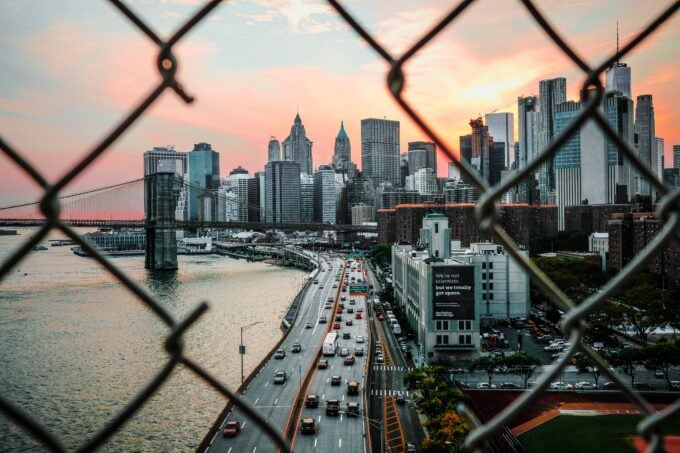
The Challenges of Urbanization

Cesar Chelala


Image by Matteo Catanese.

When observing the chaotic, burgeoning growth of the modern city, the more erudite of urban planners will reminisce wistfully on how different it is from its ancient Greek counterpart, the polis, which Italian architect and historian Leonardo Benevolo once described as “dynamic but stable, in balance with nature, and growing manageably even after reaching large dimensions.” The challenge facing modern society is to strike a balance between human needs and those of the physical surroundings.

The rapid and uncontrolled sprawl of today’s cities breeds anxiety not only among urban planners and architects. Experts in the field of public health are alarmed as well, for the apparent randomness of the urban dynamic is robbing the population of its basic health and well-being through unregulated environmental pollution, shrinking green areas, inadequate housing, overburdened public services, a mushrooming of makeshift settlements on the outskirts lacking in both infrastructure and services, mounting anomie and the sheer numbers of neighbors who do not know their neighbors.

The Lesson of Beijing

Beijing, a city of 21,330,000 million inhabitants, exemplifies this social alienation. Until the early 1980s, the Chinese capital was constructed as a multitude of siheyuans, or one-story complexes built around a common courtyard that were inhabited by three or four families who shared a single kitchen and water spigot. These courtyards were connected by narrow streets called hutongs that formed a grid from north to south and east to west.

This open structure greatly facilitated contact between neighbors, encouraged the sharing of resources, fostered relations between contiguous families, and enabled the elderly to care for children and share with them their passion for songbirds. Because of these characteristics, these almost idyllic structures were described as “collections of small rural villages.”

Until the mid-1980s, only a few skyscrapers disrupted the harmony of the landscape. Today that panorama has the look and feel of the ultimate modern city, where, with few exceptions, these “small rural villages” have been supplanted by sterile, towering skyscrapers. This striking change is not limited to external structure; it has dramatically altered the fabric of human relations as well.

Physical isolation has led to an increase in crime, destroyed the local sense of solidarity, and contributed to the fragmentation of what were once cohesive family groups. As the distance between home and the workplace has also increased considerably, workers now find themselves devoting what was once valuable family time to exhausting commutes in overcrowded buses or subways. According to Chen Xitong, former mayor of Beijing, “the capital is growing increasingly ugly and it is steadily losing its Chinese character. Most of the modern high-rise buildings, with their boring concrete facades, look like dominoes set down in the landscape without plan and without imagination.”

Population Growth

Rapid urbanization is related in part to population growth and rural migration to large cities. In mid-1994, the global population was 5,660 million; estimates from the United Nations place it at almost 8 billion by 2022. According to the United Nations Conference on Trade and Development (UNCTAD), world population has increased by 2.5 billion people in the last 30 years. The bulk of this growth has occurred in the parts of the world least able to cope: Asia, Africa, and Latin America. This growth is particularly noticeable in Africa, where the rate of annual growth is 2.5 percent, more than double the rate of the world growth.

By 2050, an additional 2 billion people will live on earth. At the global level, a growing proportion of the population lives in cities. The increase is generally higher in the developed (7.9 percent in 2020) than in the developing world (51.6 per cent). Even the term “urban sprawl” may soon require redefinition. Today, Rio de Janeiro and São Paulo have blended to form a continuous 350-mile-long megalopolis called Brazilian Megalopolis, of over 40 million people.

Migration

The unchecked growth of the cities is also due to migration–both domestic and external–that many countries are experiencing. The common denominators here are rural poverty, the search for better social and employment opportunities, and flight from political persecution and violence.

Colombia has a long history of rural violence dating back to the 1930s. Between 1948 and 1957, more than 250,000 murders were committed during an undeclared civil war between members of the liberal and conservative political parties. Caught in the middle were thousands of landless peasants who took flight for the relative safety of the larger cities.

Colombia’s case is certainly not unique. More recently, the rural poor in many other countries of this Hemisphere have been uprooted by violence and forced to flee en masse toward the large urban centers, where they all too often are forced into marginal areas.

These marginal areas, known as bidonvilles in French-speaking West Africa, ishish in some Arab countries, kampungs in Indonesia, villas miseria in Argentina, favelas in Brazil, pueblos jóvenes in Peru, and ranchitos in Venezuela, may contain from 30% to 60% of the population of many Third World cities, according to Worldwatch Institute.

Since the 1950s, many governments have attempted to discourage migration from rural areas to the cities, but these measures are by and large unsuccessful. Since large cities enjoy preferential treatment in terms of infrastructure and industrial development, they serve as magnets for the poor.

Regardless of the big city’s allure, many observers now feel that living conditions for the ever-growing numbers of urban poor are most likely worse than for their rural counterparts. The true dimensions of this phenomenon remain elusive, says World Health Organization expert Dr. I. Tabibzadeh, because the poor are either omitted from official statistics or are not considered separately.

Migrations between countries also continue unabated, usually stimulated by the same factors responsible for internal migration. Today, millions of people worldwide are living in a country not their own, in search of better economic and professional opportunities or to escape political violence.

The Latin American country that has produced the greatest number of migrants is Mexico. Out of a total of nearly 11.2 million Mexican emigrants around the world in 2020, almost 10.9 million relocated to the United States, where income opportunities are greater. In the Southern Cone, Argentina is the main destination for migrants from Paraguay, Uruguay, and Bolivia. In Central America and the Caribbean, the U.S. is the most frequent destination, although there are also significant migratory flows from the Dominican Republic to Venezuela and Puerto Rico, and from Haiti to the Dominican Republic.

The Impact of Rapid Urbanization on Health

Movements, whether from rural to urban areas or from one country to another, often alter the characteristic epidemiological disease profile at the same time that new diseases appear, and old ones reemerge. For example, large-scale migrations to Costa Rica in the 1980s stemming from conflicts in other Central American countries produced a palpable increase–especially along border areas–in the prevalence of malaria and other infectious and parasitic diseases.

While it is true that the more obvious ill effects of urban life–emotional stress, loss of family structure, congested traffic, noise, environmental pollution–are democratic in their distribution pattern, many city dwellers take for granted access to basic public services, such as drinking water supply, housing, solid waste disposal, transportation, and health care. For the poor, however, these are either deficient or nonexistent. Instead, those in poverty zones usually receive an extra dose of environmental pollution, since industries tend to cluster in outlying areas where regulations are laxer.

Horror stories abound concerning the effects on humans of environmental degradation. For example, studies show that exposing pregnant women to carbon monoxide can damage the health of the fetus. Scientists also agree that the lead particles released as a result of gasoline combustion pose a significant potential threat to children, whose behavior and psychosocial development can be seriously affected. In Mexico City, a city notorious for its air pollution, children are exposed to an average of 4.5 million tons of contaminants.

Yet Mexico City’s pollution problem is hardly unique; virtually every major city in the Hemisphere is fighting the same battle. Residents of Santiago, Chile, are afflicted with a host of chronic respiratory infections caused by large concentrations of particulate pollutants in the atmosphere, whose persistence is, in turn, facilitated by the area’s unique topographical and climatic circumstances. Buenos Aires is not exempt from this problem either, and its toxic gas and noise pollution levels make the Argentine capital one the most polluted cities in the world.

Air pollution is running a neck-and-neck race with other forms of pollution stemming from solid waste, pesticides, and toxic industrial waste. In Santiago, an estimated 300 million cubic meters of untreated waste are discharged annually into the metropolitan area’s two rivers and the principal irrigation canal, while in Nicaragua, DDT levels in breast milk are 45 times higher than the World Health Organization limit. This toxic waste affects wildlife as well. At the Silva Dam near Guanajuato, Mexico, more than 40,000 birds in a seasonal migration from Canada and the U.S. died as a result of pollution by chromium and other substances used in the processing of hides and skins.

In addition, many houses in developing countries’ disaster-prone areas are built with fragile materials and construction, which makes them more vulnerable to natural disasters such as earthquakes, floods and hurricanes, which leads to the loss of many lives. Even people in developed countries are now suffering the effect of these natural disasters which are becoming more frequent and its consequences more serious.

Benefits of Urbanization

Not all are disadvantages in the rapid urbanization process of modern cities, however. What determines if urbanization is beneficial or not are the particular conditions in which it occurs.

While planned urbanization can be very beneficial, unplanned or poorly planned urbanization can lead to unwelcome results. Cities offer governments cost advantages in the delivery of goods and services, such as easier access to health facilities which are a hindrance in many rural areas. In addition, cities play an important role in reducing fertility levels, thus slowing population growth. Urban women more frequently use modern reproductive health methods than their rural counterparts. Social and cultural norms make it more acceptable for couples to have smaller families in urban than in rural areas. Women in urban areas also take advantage of better educational opportunities. When properly planned, immigration to cities of people from different cultural backgrounds increases opportunities for cultural integration and brings exciting new habits, such as new foods and beliefs, that enrich people’s cultural and social perspectives.

Outlook

The chaotic growth of today’s cities can no longer be ignored. The great challenge is how to improve the quality of urban life while ensuring harmonious growth. Cities’ government officials should learn from the experiences of other cities with similar characteristics. This effort requires not only the participation of urban planners but public health and environmental experts, politicians, and fundamentally, the communities themselves. Only when these actions become a reality will it be possible to reach that almost ideal situation heralded by Hippocrates some 2,600 years ago: a balance between the human organism and its environment.

Alliance with fascistic party returns Benjamin Netanyahu to power in Israel

Jean Shaoul


With 95 percent of the votes counted, former Prime Minister and Likud Party leader Benjamin Netanyahu is on track to form a government with the help of his far-right, fascistic allies Religious Zionism after Israel's fifth election in less than four years.

People walk past an election campaign billboards showing Benjamin Netanyahu, former Israeli Prime Minister and the head of Likud party, in Bnei Brak, Israel, Tuesday, Oct. 25, 2022. Israel is heading into its fifth election in under four years on Nov. 1. [AP Photo/Oded Balilty]

Netanyahu’s Likud Party looks set to win 32 seats, an increase of two seats on last year’s election. His political ally, the fascistic Religious Zionism, led by Bezalel Smotrich in alliance with Itamar Ben-Gvir’s Jewish Power, is likely to gain 14 seats, an increase of eight, making it the third largest party. Together with the seats of the other religious parties, United Torah Judaism (UTJ) and Shas, this would give him a majority of four to five seats in the 120-seat Knesset. Crucially, depending on the final count, Likud, as the minority partner, will be beholden to the religious parties.

The scandal-ridden Netanyahu, who is embroiled in three separate court cases on charges of corruption, fraud and breach of trust and views a return to power as a means of introducing legislation that will end his trial, told supporters at his Likud Party election headquarters, 'We are on the brink of a very big victory. The people want power, not weakness.”

Yair Lapid, caretaker prime minister and leader of Yesh Atid, the second largest party and head of the opposition bloc, is likely to have 24 seats, up seven on last year’s election. Even with the support of Mansour Abbas’s Ra’am Party, by no means assured, this leaves him with 50 seats, as his partners, the right-wing Yamina Party led by Ayelet Shaked, and the liberal Meretz, led by Nitzan Horowitz, failed to meet the 3.25 percent of the total vote needed under Israel’s system of proportional representation to win at least one seat.

The rout of Israel’s leftist forces is such that the movement that founded the State of Israel—the Labour Party—won just four seats compared with Religious Zionism’s projected 14.

Despite a lacklustre campaign, the turnout topped 71 percent, the highest since 2015, six elections ago. Arab Israelis voted in higher numbers than expected, topping 50 percent. On Wednesday, ahead of the final results to be announced at the end of the week, Lapid asked his office to prepare to hand over the reins and cancelled his trip to next week’s Cop27 climate conference in Egypt.

Tuesday’s elections were called last June, one year after the formation in June 2021 of a fragile coalition after Netanyahu proved unable to cobble together a coalition despite his Likud Party winning the most seats. United only in their opposition to Netanyahu, it consisted of eight disparate parties, including those ostensibly committed to the Oslo Accords (1993-95) and a Palestinian mini-state—Meretz, Labour, Yesh Atid and Blue and White—and included for the first time one of Israel’s Arab parties, Ra’am.

To secure the support of some of the secular right-wing parties away from Netanyahu, Yair Lapid, whose Yesh Atid Party won the second largest number of seats, ceded the premiership to Naftali Bennett, a former settlers’ leader, even though the latter’s party won only six seats, and agreed not to negotiate with the Palestinians over statehood for the duration of their alliance.

The Bennett-Lapid-led “government of change” continued Netanyahu’s pro-business agenda, including lifting all measures aimed at restricting the spread of the pandemic.

The “government of change” presided over more killings of Palestinians in the occupied territories than at any time since 2005—including the deliberate targeting of US-Palestinian Al-Jazeera journalist Shireen Abu-Akleh—more administrative detentions and more house demolitions than the last few years of Netanyahu’s period in office. It advanced the ethnic cleansing of Masafer Yatta, carried out almost daily raid and mass arrest operations, collective punishment, and designated six leading Palestinian NGOs as “terrorists”. It escalated Israel’s covert wars against Iran and its allies, Syria and Lebanon’s Hezbollah—in Iran, the Persian Gulf, Syria and the eastern Mediterranean.

None of this was enough for Bennett’s right-wing ministers, prompting Netanyahu to engineer a parliamentary manouevre to bring down the government and secure his return to power. Following the coalition’s collapse in June and in accordance with their coalition deal, Lapid replaced Bennett as caretaker prime minister pending the outcome of Tuesday’s elections, while Bennett resigned from politics.

The failure of the “anyone but Netanyahu” coalition to put forward any real alternative to alleviate a social inequality level that is one of the highest in the OECD group of advanced countries is determined by its class position as representative of Israel’s oligarchs against the working class, both Jewish and Palestinian, within Israel’s internationally recognised borders and the occupied territories.

Israeli far-right lawmaker and the head of "Jewish Power" party, Itamar Ben-Gvir, gestures after first exit poll results for the Israeli Parliamentary election at his party's headquarters in Jerusalem. November 2, 2022. [AP Photo/Oren Ziv]

The beneficiaries have been the far-right, fascistic forces of Ben Gvir and Smotrich, aided and abetted by Netanyahu, who brokered their alliance and engineered their entry into the Knesset to bolster his bloc prior to the 2021 elections.

These racists, the ideological successors of the banned Kahanist movement that was designated a terrorist organisation in the US, are forming vigilante groups in Israel’s Negev and Bat Yam, an impoverished Tel Aviv suburb, and inciting pogrom-like violence against the Palestinians in the occupied West Bank and East Jerusalem as well as in Israel’s mixed towns and cities. Their Jewish supremacist agenda includes Israeli rule over the West Bank, the expulsion of what they call “disloyal” Palestinian citizens of Israel, who make up 20 percent of the country’s population, the demolition of the al-Aqsa Mosque and the building of a Jewish Temple, the imposition of religious law and the destruction of the judicial system.

Both leaders support the introduction of a law barring criminal investigations into a sitting prime minister. This is expected to guarantee them key posts in a Netanyahu-led government—they have already lobbied for control of the justice, defence, finance, and public security ministries—that would remove any remaining restraints on the imposition of direct military rule over the Palestinians.

Ben-Gvir celebrated his party's success, telling his supporters in Jerusalem that “it's time to be the owners of this country again,” and “I'm still not prime minister.” He said that people who voted for religious Zionism “want to walk safely on the street, not to have our soldiers and police officers restrained, [and] seek to completely separate those who are loyal to the State of Israel and those who undermine its existence.” Some witnesses claimed that the crowd chanted “death to Arabs” alongside the more prevalent calls for “death to terrorists.”

While Netanyahu could avoid being beholden to these fascist forces by trying to form a coalition with some of the parties in the opposition bloc that have previously served under him, this is thought to be unlikely.

The Biden administration, despite its well known dislike of Netanyahu and supposed support for the Oslo Accords, has been reluctant to even criticise the possibility of Ben-Gvir’s potential inclusion in a coalition government, with State Department Spokesperson Ned Price saying on Monday, “No matter the shape of the Israeli coalition and government, our relationship will be strong and enduring.”

Following the election, a US National Security Council spokesperson said, “We are pleased to see such strong voter turnout for the Knesset election. It is too early to speculate on the exact composition of the next governing coalition until all the votes are counted. We look forward to continuing to work with the Israeli government on our shared interests and values.”

Ebola crisis in Uganda: a new public health warning from WHO

Benjamin Mateus


Forty-six days have passed since the outbreak of Sudan virus in Uganda when a young man in Mubende was confirmed with the rare Ebola infection. There are now 130 confirmed cases of Ebola and 21 probable cases reported. The death toll has also been rising with 43 confirmed and 21 probable deaths. The case fatality rate of confirmed cases is 33 percent and overall, confirmed and probable cases, 42 percent. Notably, 15 healthcare workers have been infected of whom four have perished. 

According to the World Health Organization’s (WHO) update from October 28, Ebola has affected seven of 147 districts, including Wakiso, the district in which the capital of Kampala, a densely populated city of millions sits on the shore of Lake Victoria. Dr. Tedros Adhanom Ghebreyesus, WHO director-general, said at this week’s press conference, “Although these cases [in Kampala] are linked to known clusters, the very fact that there are cases in a densely populated city underscores the very real risk of further transmission and the very urgent need for increased readiness in districts and surrounding countries.”

Some 1,844 contacts remain under active follow-up, while 1,194 have completed the 21-day observation period, the incubation period for Ebola to manifest in someone previously in contact with a confirmed or probable case. 

Confirmed and probable cases of Sudan variant of Ebola in Uganda by date of illness onset and outcome (dead/alive), 20 September – 26 October 2022. [Photo: Graph by World Health Organization]

The WHO also reported that they had released another $5.7 million from their Contingency Fund for Emergencies in support of the outbreak in the region on top of the $5 million previously distributed to the region. 

The US Embassy in Uganda reported on Wednesday that the US has channeled $22.3 million “through implementing partners” in support of the response by the Uganda’s government and other international organizations. These efforts include 51 Centers for Disease Control and Prevention (CDC) staff offering direct technical assistance and working in collaboration with district and national level task forces advising on response strategies and coordination.

Although the experimental Sudan virus vaccine trials have yet to begin, Dr. Henry Kyobe Bosa, the national incident manager for Ebola for Uganda’s Ministry of Health, said in an opinion piece in the New York Times that the US support includes experimental monoclonal antibodies, MBP-134 (licensed to MappBio) and the antiviral Remdesivir.

Remdesivir, a broad-spectrum antiviral medication developed by Gilead Sciences, gained much media attention as one of the early pharmaceuticals for the treatment of mild to severe COVID-19. However, trial results from a WHO-initiated international study recommended against its use, due to lack of efficacy. 

Remdesivir, a sort of wandering minstrel in search of an audience, was created and developed in 2009 to possibly treat hepatitis C and respiratory syncytial virus (RSV) infections but was found to be ineffective against these two pathogens. Then, in October 2015, the United States Army Medical Research Institute of Infectious Diseases (USAMRIID) announced that Remdesivir completely protected Rhesus monkeys from Ebola virus when they treated with the drug three days after viral inoculation.

Remdesivir was fast-tracked through clinical trials in response to the Zaire Ebola virus epidemic in West Africa from 2013 to 2016. It was also used in the Kivu Ebola epidemic in the eastern region of the Democratic Republic of the Congo (DRC) in Central Africa between 2018 and 2020. There were a total of 3,470 confirmed and probable cases then killing 2,266 people. Four of these cases had spilled into Uganda. However, Remdesivir’s use was discontinued by Congolese health officials after determining it was significantly less effective than various monoclonal antibodies that were available.

More recently, a study published in JCI Insight on May 23, 2022, Remdesivir combined with a cocktail of monoclonal antibodies protected macaques, nonhuman primates, against advanced Sudan virus disease. Currently, the vaccines available against the Zaire strain of Ebola do not work against the Sudan strain as the viruses are too divergent in their evolutionary development. There are no licensed anti-Sudan virus therapeutics on the markets.

Ebola patient in Uganda [Photo: @DanielLutaaya]

Study findings were significant in that 80 percent of macaques who received the combination treatment within six days of being infected with the Sudan virus survived. However, after this period, the survival plummeted to 20 percent, meaning these treatments require immediate administration in probable or confirmed cases. 

In early October, the US initiated a clinical trial using the combination therapy of MBP-134 and Remdesivir in Uganda. Seven critically ill patients have thus far received the treatment. These efforts are being financially supported by the Administration for Strategic Preparedness and Response (ASPR), which announced last month when the trial was being launched in Uganda that they had provided Mapp Biopharmaceuticals, a San Diego-based research and development firm, a contract for $110 million. 

Assistant Secretary for Preparedness and Response Dawn O’Connell said in a press release dated October 4, 2022, “One of the ways we enhance the nation’s readiness for health emergencies is by investing in medical countermeasures for which there is no commercial market. The funding being provided by BARDA [Biomedical Advanced Research and Development Authority] will advance this research. If approved this treatment will put the US in a better position to prepare for and respond to future potential ebolavirus incidents. Given the current outbreak of Ebola Sudan in Uganda, this work is now even more important.”

The rhetoric in the press release is unabashedly nationalistic and underscores the security and economic interests motivating such research. Instead, there should be a call for an international collaboration to build centers of excellence and community treatment facilities in these regions where Ebola and other infectious disease pose a daily existential threat. 

As Dr. Bosa observed, “We know that the countermeasures we have work best when they are given in the earliest stage of this disease. Patients who have monoclonal antibodies late into their illness have died, for example. But most Ebola patients are going to public health facilities too late. Many have gone to private facilities or have tried alternative methods first. We also need more of a supply of treatments to treat patients we do see early.”

Experience has taught healthcare providers that early intervention with intravenous hydration and supplemental oxygen can improve the prognosis for those infected with Ebola. This requires both trust in the public health infrastructure and aid and support for the front-line healthcare providers who are placing their own lives in peril. 

The failure of medical science and public health to keep pace with the threat posed by emerging infectious disease demonstrates that even the most dedicated scientists cannot overcome the social polarization within capitalist society. The mobilization of public health resources on a socially equitable basis can only be carried out through the intervention of the working class on an international basis, in struggle against the profit system.

The COVID pandemic that has raged for the last three years has revealed and exacerbated tremendous divisions in communities across the world. An international response early during the outbreak in 2020 to eliminate the virus while supporting people through the provision of material resource such as food, medicine, income, and access to internet and on-line educational material, could have beat back the pandemic. It would also have had the effect of promoting consciousness of social equality, a major reason capitalist governments rejected this course of action.

In the Ebola outbreak in Uganda, neighboring countries like Burundi, Kenya, Rwanda, South Sudan, Tanzania and the Democratic Republic of the Congo are preparing for the possible spilling of the Sudan virus across their borders. The WHO has requested these countries activate an assortment of response mechanisms that include community surveillance readiness, laboratory training, health system preparedness, and border controls. The current risk assessment, considering the presence of Sudan Ebola virus in a densely populated urban setting to be very high at the national level (Uganda itself) and high at the regional level.

Qatar Football World Cup being played on the bones of thousands of construction workers

Peter Schwarz


The 2022 World Cup, which begins in Qatar on November 20, will go down in history as the tournament in which profit interests completely triumphed over sport. Thousands of construction workers had to forfeit their lives so that the total of 64 matches could be played in twelve newly built stadiums.

Britain’s Guardian newspaper published a report in February 2021, according to which 6,751 workers from India, Bangladesh, Nepal, Sri Lanka and Pakistan had died in the ten years since the World Cup was awarded to the Gulf state. The newspaper did not have figures on workers from countries outside south Asia, such as the Philippines and Kenya, who are also employed in large numbers in Qatar.

Migrant workers in Doha [Photo by Jabiz Raisdana / flickr / CC BY-NC 2.0]

“Qatar’s grim death toll is revealed in long spreadsheets of official data listing the causes of death: multiple blunt injuries due to a fall from height; asphyxia due to hanging; undetermined cause of death due to decomposition.

“But among the causes, the most common by far is so-called ‘natural deaths’, often attributed to acute heart or respiratory failure.” (The Guardian, 23 February 2021)

In August 2021, based on official government data, Amnesty International calculated more than 15,000 non-Qataris of all ages had died in the Gulf state between 2010 and 2019. In 70 percent of these cases, the cause of death was not determined. Autopsies are banned in the Islamic country. “Death certificates usually report the deaths as ‘natural causes’ or ‘cardiac arrest,’” the study says, without linking them to working conditions.

The human rights organization uses several individual examples to show how young workers who had no previous health problems fell victim to inhumane working conditions. 30- or 40-year-olds lost consciousness and died after twelve-hour shifts in sweltering heat of more than 40 degrees Celsius (104° Fahrenheit). In some cases, they had been working seven days a week.

Since the release of these figures, which the Qatar government does not refute, a fierce dispute has erupted over how many deaths are directly linked to the construction of the soccer stadiums, new airport, subway, roads, 100 hotels and other projects being built for the World Cup at a cost of $185 billion.

World soccer’s governing body FIFA—which hawked the World Cup to Qatar 12 years ago in exchange for millions in alleged bribes—the World Cup organizing committee and the Qatari government are trying to downplay the figures. But the more details that come to light, the more terrible the picture that emerges. It is a picture of a class society in which a fabulously wealthy upper class towers over a prosperous middle class, while a working class without rights is exploited to the hilt and a human life is worth next to nothing.

As if magnified through a looking glass, the social conditions that increasingly characterize all capitalist societies become clearly visible here. This is why the topic is becoming more explosive the closer the kick-off of the first game approaches on November 20. Many soccer fans find they can no longer separate their enthusiasm for their sport from politics.

Governments are reacting with corresponding nervousness. They defend their lucrative economic and political ties to Qatar and seek to channel outrage over the brutal exploitation of workers there into less explosive channels, such as LGBT rights, and in an anti-Islamic direction.

An absolute monarchy rules over non-citizens

Qatar is an authoritarian dictatorship. The Emir and his family exercise unrestrained rule and control the country’s wealth. Although a Consultative Assembly was elected for the first time last year (two-thirds by public vote and one-third chosen by the Emir), it has only advisory and no legislative powers. There are no political parties, and trade union activities as well as freedom of speech and of the press are subject to strict restrictions.

Of the country’s 2.2 million inhabitants, only about 330,000 have Qatari citizenship, of whom about 70,000 work in well-paid jobs (mostly for the state). The remaining 88 percent are migrants. Of them, a minority—mostly from Europe or other Arab countries—work as well-paid professionals. The vast majority—mostly from Asia and Africa—carry out hard physical labour and are ruthlessly exploited. In addition, there are more than 170,000 migrant women who work as domestic helpers and are often subjected to abuse and sexual assault.

Meanwhile, the Qatari government boasts that it has improved workers’ situation through reforms implemented in the summer of 2020. But a look at these “reforms” only shows how intolerable conditions are. For example, a statutory minimum wage of 1,000 riyals was introduced for foreign workers for the first time. That is 230 euros a month—and in one of the richest and most expensive countries in the world!

The reforms also formally abolished the so-called kafala system, which kept foreign workers in a kind of serfdom. Their passports were confiscated, they could change jobs only with the employer’s consent and often received no wages for months.

However, the reforms only exist on paper. In practice, little has changed. When asked, Amnesty International confirmed to news weekly Der Spiegel late last year that for the majority of foreign workers, “exploitation, unpaid or late wages, lack of access to labour courts, in some cases catastrophic living conditions, withheld passports and much more continue to be the order of the day.”

This was also reported by a group of affected workers who toured Germany in September.

According to Malcolm Bidali from Kenya, who worked for four and a half years as a security guard at stadiums in Qatar, six to eight workers must usually share a room. He reported a lack of privacy, bed bugs in the mattresses, terrible food, and poor sanitation. When Bidali spoke out on the Internet for better conditions, he was arrested and placed in solitary confinement for a month.

A Nepalese worker described how sometimes fifty or even a hundred workers had to share one kitchen, with corresponding hygiene problems. Despite the heat and high humidity, there was not enough germ-free drinking water available, which often led to illness, he said.

Meanwhile, workers are being made to leave these miserable dwellings. As Reuters reported, thousands of workers in central Doha have been recently ordered to vacate their accommodation so it can be remodeled for expected World Cup visitors. Many were given only two hours to pack their belongings and are now on the streets.

Political hypocrisy in Europe

The exploitation of workers in Doha is met with outrage by numerous soccer fans, many of whom are workers themselves. As early as last January, FC Bayern fans had protested in their home stadium with a huge banner against the club’s close ties to the Emirate of Qatar, which is one of its main sponsors. Above a caricature of club chairman Oliver Kahn and president Herbert Hainer putting a blood-stained shirt in a washing machine, the banner read, “For money, we wash everything clean.”

When the club’s honorary president Uli Hoeness, who served several months in prison for tax evasion, was asked about this at the recent annual general meeting, he angrily retorted, “This is the Bayern Munich soccer club, not the Amnesty International general assembly.”

Meanwhile, numerous cities in Germany and France have cancelled the broadcast of the World Cup in public places. The criticism of European politicians of the conditions in Qatar, however, can hardly be surpassed in hypocrisy. The terrible circumstances in Qatar have been known since the World Cup was awarded twelve years ago. And the European Union’s treatment of refugees, thousands of whom it lets drown in the Mediterranean or crams into inhumane camps, is even worse than the treatment of construction workers in Qatar.

Above all, there are huge financial interests at play. This is true not only for FIFA, which earns more than a billion euros in sponsorship money from the World Cup; European and, above all, German companies are making a lot of money in Qatar, and the emirate is one of the biggest investors in Europe.

Qatar’s state investment fund has invested more than 350 billion euros in dozens of countries, a quarter of it in Britain, the USA and France. It holds substantial stakes in the London Stock Exchange and in the Barclays and Crédit Suisse banks. In Germany, Qatar has invested 25 billion euros, including in Volkswagen, Deutsche Bank, Hapag-Lloyd, and energy corporation RWE. Around two billion euros in Qatari money has flowed into European soccer clubs over the past ten years.

European and German corporations, including Deutsche Bahn, Siemens, software company SAP and the construction industry, are involved in major Qatari projects and earn a share in the exploitation of workers. In 2018, German Chancellor Angela Merkel received Emir al-Thani in Berlin to deepen economic ties. Qatar has also been courted as a gas and oil supplier since sanctions against Russia began. Both Economics Minister Robert Habeck (Greens) and Chancellor Olaf Scholz (Social Democrat, SPD) therefore paid their respects to the Emir in Doha this year.

While European politicians ceaselessly invoke “human rights” in calling for the boycott of sporting events by political opponents in Russia and China, or the exclusion of their teams, different standards are applied to Qatar.

Not everyone goes as far as former SPD leader and German Foreign Minister Sigmar Gabriel, who responded to criticism of Qatar by tweeting, “German arrogance toward Qatar stinks!” But his party colleague, German Interior Minister Nancy Faeser, travelled to Doha this week specifically to mend fences after provoking the emir’s ire with barely audible criticism.

Faeser met behind closed doors with Prime Minister Khalid bin Khalifa Al-Thani and FIFA chief Gianni Infantino, who has since moved his residence to Qatar, only to play the whole matter down afterwards. She would “travel there for the World Cup,” she declared. Chancellor Scholz is now also likely to attend—if the German team makes it to the final.

CDC study: Excessive alcohol use accounts for one in eight deaths among working-age Americans

Kate Randall


One in eight deaths of Americans aged 20 to 64 in the years 2015–19 were the result of injuries or illness caused by excessive alcohol use, according to a new study from the Centers for Disease Control and Prevention (CDC). The study, published Tuesday in JAMA Network Open, found that people of working age accounted for nearly two-thirds of the annual average of 140,000 alcohol-related deaths in the US.

Sue Howland, right, a member of the Quick Response Team which visits everyone who overdoses to offer help, checks in on Betty Thompson, 65, who struggles with alcohol addiction, at her apartment in Huntington, W.Va., Wednesday, March 17, 2021 [AP Photo/David Goldman]

The years of the pandemic have seen excessive alcohol use and related deaths rise since the period studied by the CDC. According to a research letter published in JAMA in May, alcohol consumption and related harms increased by more than 25 percent between 2019 and 2020, the first year of the COVID-19 pandemic.

Researchers studied average daily alcohol consumption among more than 2 million respondents to the 2015–2019 Behavioral Risk Factor Surveillance System, a CDC health-related telephone survey, adjusted using national per capita alcohol sales to correct for underreporting. Blood-alcohol concentrations were used to assess partially alcohol-attributable deaths. Mortality data were from the CDC’s National Vital Statistics System.

The CDC defines excessive alcohol use as 8 or more drinks per week for a woman or 15 or more drinks per week for a man. Binge drinking is defined as consuming 4 or more drinks on an occasion for a woman or 5 or more drinks on an occasion for a man.

Alcohol continues to take a progressively heavier toll on older age groups. However, its effects are more evident among younger people who are less likely to die of other causes. The CDC study found that for the 20 to 34 age group, a staggering one in four deaths was attributable to drinking; for those ages 20–49, it was one in five deaths. People in their 20s, and younger, are more likely to binge-drink.

The study estimated the average number of deaths from excessive alcohol use relative to total deaths among adults aged 20 to 64 years, both overall and by sex, age group, state and as a proportion of total deaths. Five percent of all-cause deaths were attributable to excessive alcohol use, the research found.

The three leading causes of these deaths were alcoholic liver disease, other substance overdoses in addition to high blood alcohol levels and motor vehicle traffic crashes. Other causes of illness and death from excessive alcohol use include polyneuropathy, cardiomyopathy, liver cirrhosis, chronic hepatitis, pancreatitis, hypertension, stroke and a variety of cancers.

In a cross-sectional study of 694,660 average deaths per year, the study estimates that excessive alcohol consumption between 2015 and 2019 accounted for 12.9 percent of total deaths among adults aged 20 to 64 years, 20.3 percent of deaths among adults aged 20 to 49, and 25.4 percent of deaths among adults aged 20 to 34.

Among men, 6.8 percent of the 1,429,008 estimated annual all-cause deaths were attributable to excessive alcohol use. Among men ages 20–34, 27.4 percent were attributable to excessive alcohol use. Among women, 3.2 percent of the 1,3636,877 all-cause annual deaths were attributable to excessive alcohol use, but this rises to 20.4 percent in the 20–34 age group.

In other words, alcohol abuse is claiming the highest percentage of lives among young workers and new parents. The three leading causes of these excessive alcohol-attributable deaths for both men and women ages 20 to 34 were substance overdose in conjunction with high blood alcohol levels, motor vehicle accidents and homicide.

Among US adults ages 20–49, the percentage of deaths attributable to alcohol abuse was generally higher in the country’s West, upper Midwest and the Northeast, and generally lower in the Southeast.

The highest percentage of alcohol abuse attributable deaths among those aged 20–34 was in New Mexico, where it accounted for 33.3 percent of deaths. This was followed by South Dakota, at 30.6 percent, and the nation’s capital, Washington D.C., where it accounted for 30.5 percent of total deaths.

The stunning findings in this latest study on deaths from excessive alcohol use are in line with other figures showing the rising toll from “deaths of despair,” which have been exacerbated by the COVID-19 pandemic, in addition to the proliferation of fentanyl, the highly potent and deadly synthetic opioid.

Deaths from drug overdoses in 2021, the second year of the pandemic, neared 108,000, fueled by an ever-worsening fentanyl crisis. Since the CDC began collecting data two decades ago, overdose deaths in the US have surpassed a shocking 1 million. Prior to the pandemic, the US was already suffering from a surge of deaths from suicides, overdoses and gun violence.

The official number of deaths attributed to the coronavirus pandemic—1,065,571 according to the latest CDC figures—is a vast undercount. It takes into account only those death certificates that list COVID-19 as the cause of the death. The increase in deaths from alcohol and substance abuse is an indication of social stress that existed in the US long before the pandemic and have only been exacerbated by it.

The relationship between the coronavirus pandemic and alcohol and substance abuse is a complex one, but one thing is certain: the social inequality, economic distress and accompanying alienation of large numbers of people in capitalist society have been aggravated over the past three years in America and around the world.

A provisional report from the CDC earlier this year estimated that life expectancy fell for the second year in a row in 2021, dropping by 0.9 years. The decline was 1.8 years in 2020, for a two-year total of 2.7 years. The COVID-19 pandemic has reduced US life expectancy at birth to 76.1 years, the lowest level since 1996 and the largest two-year reduction since 1923, in the wake of World War I and the 1918 flu pandemic.

Undoubtedly, government policies forcing workers into COVID-infested factories and children and teachers into unsafe schools under these conditions have contributed to the increase in drug- and alcohol-related illnesses and deaths.

The criminal policies of the government, under both Trump and Biden, are responsible for the deaths and suffering of millions in the pandemic. A rational and scientifically sound response to the pandemic is an alien concept to the corporations and their political representatives as they seek to increase the profits of the wealthy amidst this social misery.