2 Apr 2015

The Changing Landscape Of Middle-East Conflict

Sazzad Hussain

The classical view of the conflict affecting the vast stretch of land from the Persian Gulf to the Levant and beyond up to the Maghreb has been the seven decade old confrontation between the Israel and Palestine over the occupation of the Arab land by the Jewish state. For that firstly Arab states fought collectively against Israel to wipe it out from the world map at the initial stage leading to 1967. At that time it was Arab identity or nationalism that made Arab leaders like Nasser of Egypt to drive and rally popular support across the political boundaries in the Middle East to stand up for a cause—the liberation of Palestine and formation of a grand Arab identity as a political block in the international arena. At that time it was Arab nationalism which was propagated and voices of Islamism, despite its overwhelming majority, was pushed or rather crushed harshly by these secular regimes. At that time, like today, all the Arab nation states liberated or freed from western colonialism, were run by monarchs and dictators and were devoid of democracy. Most of the monarchs, except the kings of Morocco and Jordan, were absolute rulers with American military protection and full endorsement from the Minaret. On the other hand, the dictators were westernized, socialist and though despotic, were secular in principle and functioning providing modern education, scientific development, women empowerment and protection to minorities like Christians, Yazidis, Kurds, Druze and even Jews. They caused two problems to the west—first their antagonism towards Israel and second their nationalization of natural resources—from Aswan dam in Egypt to petroleum and gas fields in Iraq, Syria, Algeria and Libya. The absolute monarchies, led by Saudi Arabia were favourite allies of the west allowing energy giants Chevron, Exxon-Mobil, Total, Gulf, BP and the great ARAMCO. Though their subjects were vehemently anti-Israeli, their voices and opinions were diverted by the strong clergy patronized by the royal palaces. Across the spectrum of the Arab Middle-East, it was Iran, the Persian state which was critically important to this conflicting landscape. Under the imperial rule of the Shah, Iran was the launch pad of all American and western interests in this region in which its oil reserves, once nationalized by its socialist Premier Mossadegh, was owned by Anglo-American corporations. The 1979 Revolution of Iran, which had ousted Shah Pahlavi, changed the equilibrium of power in Middle-East as the Islamic Republic of Iran started perusing a hot policy of reaching out to Arabs in the name of Shiite Islam and vehemently opposing the pro-western Arab regimes and the existence of Israel.
Much of the politics and development in Middle-East known to us here in India has been defined by this scenario of the late 1970s which was also the height of the Cold War. Middle-East in the post-Revolution Iran period was characterized by the polarization of the anti-Israeli Arab world on strategic interests. It was preceded by the Camp David agreement between Egypt and Israel and later two more Arab recognition of the Jewish state—by Jordan and Morocco. While the Gulf monarchies remained diplomatically at distance from Tel Aviv, other Arab republics, notably the regimes in Iraq, Syria, Yemen, Libya, Algeria and Tunisia staunchly opposed any dialogue with Israel and supported various Palestinian groups fighting occupation. These secular Arab nations, mostly Iraq, Syria and Libya armed themselves with sophisticated weapons procured from the Soviet Union along with non-conventional arsenal like nuclear, chemical and biological weapons to bully Israel and pro-western Arab monarchies. On the other hand, the Gulf monarchies used their oil revenues in big business and infrastructure development by leaving their kingdoms guarded by US army, navy and air force bases on their soils. This non-confrontational policy perused by the Gulf monarchies with Israel allowed them to emerge as important global business players with hubs like Abu Dhabi, Dubai, Doha etc. After the great oil boom of 1974, Saudi Arabia, with full American knowledge and endorsement, started patronising transnational Islamism to check the secular Arab regimes in the Middle-East and in the Islamic world. Pakistan became its first destination following in Lebanon which resulted in a devastating civil war till 1993. The Iranian Revolution and the Soviet invasion of Afghanistan on the same year made this Saudi move to be an effective Cold-War ploy for the west.
While the Saudi-American led Islamist armed campaign called Mujahedeen created the Afghan Jihad on the Af-Pak border and paved the way of the formation of Al-Qaeda and the global jihad, it was Iran which started a counteroffensive to exert its clout in the Middle-East by reaching out to the Shiite Arabs in Iraq, Syria, Lebanon and among Palestinian refugees. Libyan leader Col. Gaddafi too became a close ally of Iran though he was a Sunni. The Baathist President Hafez al-Assad of Syria used this new strategic partnership to wrest his influence in this region, particularly to pressurize Israel. But his fellow Baathist Saddam Hussein of Iraq differed with Iran on sectarian lines. Saddam was armed and supported by Saudi Arab and other Gulf monarchies and the west to fight an eight year war against Iran (1980-88). In it, the west had duel objectives—to weaken anti-American/anti-Israeli Iran as well as to crumble the nationalized welfare state of Iraq so that it does not pose a threat to Israel (Israel bombed the nuclear facilities of Iraq in 1982). Iran’s involvement in Middle-East conflict paid off well despite its armed hostilities with Iraq as it successfully established its leverage in Lebanon torn apart by civil war on sectarian divide and outside intervention for the PLO. Israel invaded Lebanon to drive the PLO machinery out from Beirut in 1982 and to form a strong Sunni-Maronite (Christian) power sharing to evict Iranian influence (as wished by Saudis and Americans). But the Israeli involvement paved the way for a strong resistance movement of Shiite Arabs in Lebanon—the Syrian backed Amal and the Iranian backed Hezbollah. In the course of time Hezbollah emerged as a key player in the west-Asian conflict in broking peace with Israel by engaging in both hostilities and negotiations and unifying the Lebanese society with all its professed groups including the Maronites.
The success of the Afghan Jihad, the fall of the USSR, the emergence of Al-Qaeda and the global Jihad (read Sunni extremism) and the stalling of Israel-Palestinian peace talks created a different landscape in the Middle-East after the 1991 Gulf War. Syria backed America in that multi-national campaign against Saddam’s Iraq while Iran remained neutral. A weakened Iraq sans Saddam was Iran’s gain and so far the biggest winner in Iraq after Saddam’s fall is Iran and its every government is heavily influenced by Tehran. This has contributed the deep rooted sectarian divide in Arabian societies across Middle-East in the last two decades. Sunni resistance and extremism, in opposition to Shiite rise in Iraq with Iranian intervention has led to the emergence of groups like al-Qaeda up to IS in this region in the last one and half decade. Various Sunni militant groups, starting from the one led by al-Zarqawi in Jordan has been operating against various opponents across this region and all are affiliated to al-Qaeda after 9/11. They have been active in Algeria, Yemen and Iraq for a considerable period and many US drone attacks have been carried out against their leaders in Yemen. In all this changing landscape in the Middle-East, its focal point has gone missing—the Palestinian problem. The cause for an independent Palestinian state, free from Israeli occupation is lost from the collective memory of the people of this region as the entire area got engulfed in sectarian violence within. After Saddam’s fall, the only remaining Arab opposition to the western interest remained as Libya’s Gaddafi and Syria’s al-Assad. In the new scenario, Gaddafi too abandoned his previous policies and reached out to the west. So only the regime in Damascus, an ally of Iran and Hezbollah, remained as a problem for the US-Saudi grand alliance. The Syrian regime was cornered first with the assassination of Lebanese Prime Minister Rafik Hariri, a Sunni in 2005. The objective of reigniting the Lebanese society on sectarian lines through that assassination did not succeed because of the all-inclusive stand of Hezbollah. After that the world saw the pounding of Beirut by Israeli war planes on Hezbollah targets and massive and disproportionate offensive on Gaza by the Jewish state against Hamas. The oil-rich gulf monarchies spoke nothing against them. Then came the so-called Arab Spring in late 2010. Beginning with Tunisia, it was the first public outpouring to bring down undemocratic despots—both dictators and monarchs across the Arab world for establishing democracy. Though it was successful in Tunisia, its script was not the same in other Arab states. People protested for more than ten days in Tahrir Square, Cairo demanding removal of President Hosni Mubarak. But as this Egyptian dictator was a long-time ally of the west, Washington took ten days to condemn his repressive measures against the protestors. Though Mubarak was ousted and elections brought former Islamist Mohammad Morsi as president, the Egyptian army removed him from power less than a year re-establishing the same old authoritarian measures to serve the western interests. Other pro-democracy demonstrations in Arab monarchies like Bahrain, Jordan, Morocco, UAE, Qatar and Kuwait were crushed by the authorities with full US nod. The largest of these demonstrations, seen in Bahrain was declared a sectarian one, as majority of its subjects were Shiite and Saudi Arab sent troops to crush that rebellion. Fearing same kind of public fury, the Saudi king declared largesse to its youth including cash benefits—a bribe for not demanding democracy. In Yemen, the pro-democracy movement forced the long serving President Saleh to flee the country. However in Libya and Syria the story was different. Former al-Qaeda activists and sectarian militants were aided by NATO war planes to bring the fall of Gaddafi to establish ‘democracy’. But it became a second Iraq—with militancy dividing the country on tribal lines. In Syria, NATO member Turkey facilitated Islamist militants including al-Qaeda operatives to enter the country through its border to topple al-Assad regime—the last secular bastion in the Arab world, to bring ‘democracy’.
The armed and financial support to al-Qaeda affiliated groups by Arab monarchies like Saudi Arabia and Qatar in Syria and the Turkish transit from different parts of the world of its personnel quickened the rise and spread of IS. It is a Sunni extremist group bent on annihilating Shiite, Kurds, Christians and Yazidis living in peaceful coexistence in Syria and Iraq for centuries under all previous regimes. This new emergence of power and authority in the Middle-East has again pushed the elusive Palestinian issue, the core point of the conflict of this region, to the background. As US refused to deploy its ground forces against the IS nor the NATO air power—it is the old classic inclusive forces of Iraq—Shite militia, Kurdish Peshmarga and the regular Iraqi army that are fighting united against them. Only Jordan has joined the limited air-strike by the west against the IS inside Iraq and Syria. On the other hand Egypt, Saudi Arabia and UAE have participated in air-strikes against IS targets in Libya. Interestingly, the IS has not showed any hostility against Israel.
The transition of power in post-Arab Spring Yemen has not been smooth as president Hadi was installed by its oil-rich Gulf monarchies. A majority of his opponents belongs to the ethic Hauti, an Arab tribe of Zaidi Shiite sect. As confrontations escalate, the Hauti militia seized a considerable area of Yemen including capital Sa’na on late March. The belligerent president called his gulf neighbours for help and responding to his SOS, Saudi Arab launched air-strikes in Yemen from 28th March. Other Arab states like Egypt, Jordan, Morocco, Sudan are also joining this campaign. The apparent objective of this military adventurism seems to be neutralizing Iranian influence among the Hautis with approval by the Arab League. However, without any UN mandate, this Saudi led strike in Yemen creates a new landscape in the ever volatile Middle-East on sectarian lines. The powerful Arab unity required to crush the menace of the IS is now applied against a lesser and insignificant threat for the Sunni kingdoms. The world in general now wonders what the real problem of the Middle-East is. With the core issue of Palestine gone missing and chances of its any breakthrough seem bleak as the re-election of Bibi Netanyahu in Israel, it is the fighting within the elements of clan, tribe and sect of the Arab Muslims that characterizes the present landscape of the Middle-East conflict.

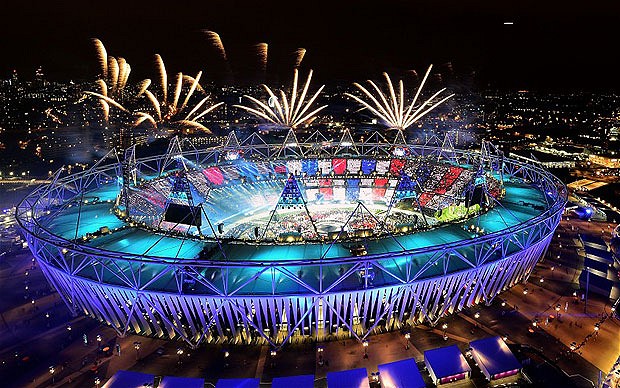
Faust At The Games: The Olympic Path Of Destruction

Joseph Grosso

A recent anecdote, one that had been foreshadowed for weeks, proclaimed that this past winter Boston had broken its own record for snowfall having an ungodly 110.3 inches dumped on it in three months. If such a grueling winter, and its tedious effects- such as its paralyzing of mass transit, can have a positive effect, it seems to have Bostonians questioning their bid to host the Summer Olympics in 2024. Since the United States Olympic Committee (USOC), in a surprise move, chose Boston over Los Angeles, a city that already has hosted the event (and one would think possesses an attractive amount of sprawl, to represent the American bid poll numbers are in decline. A WBUR (local public radio in Boston) poll from February had support at only 44 percent; a more recent one put the number at 36 percent.

Meanwhile over at the winter half of the 2022 Olympics, Beijing is in position to become the first city in history to host both the summer and winter games; this despite a lack of snow that would force different events to be staged 150 miles apart. The reason for Beijing’s potential good fortune: the five democratic cities that initially put up bids (Munich, Oslo, Krakow, Stockholm, and St. Moritz) withdrew due to overwhelming public opposition. Beijing’s only remaining competition: the free terrain of Kazakhstan.

It seems plausible that the International Olympic Committee (IOC) would favor Beijing for having already burned through $40 billion hosting the 2008 Summer Games, a record until it was surpassed by the $51 billion dropped in Putin’s Russia for the 2014 Winter Olympics. A record which Beijing can still claim distinction is the amount of displaced people. 1.5 million people were displaced in the run-up to the games in 2008 surpassing the 720,000 forcibly displaced in South Korea ( then ruled by military dictator Chun Doo-Hwan) to clear the way for the 1988 Summer Games. Overall in the past quarter century the Centre on Housing Rights and Evictions estimates that over two million people have been displaced due to the Olympics.

To the totalitarian mind the Olympics has the obvious appeal of acting as a ‘coming out’ party, an official joining to a prosperous global community, the inherent effect of which is the glorifying of both the repressive state as well as its ruling party or leader all through the pricey pomp and circumstance of Olympic brotherhood (decorated with grotesque architecture often produced by globe-trotting Western architects- again China probably holds the lead here) and of its useful corollary political neutrality. The culmination of this had to be the Nazi regime’s hosting of the Games in 1936 where in fact the first Olympic torch relay took place, the brainchild of chief organizer Dr. Carl Diem and thoroughly promoted by Joseph Goebbels (Goebbels commissioned Leni Riefenstahl to film the relay as part of the Nazi propaganda film titled ‘Olympia’ released in 1938).

Of course democracies aren’t completely above such corruption and skullduggery. No doubt such a global introduction and acceptance was what the Brazilian president Lula da Silva had in mind back in 2009 when Brazil was awarded the 2016 Summer Olympics. After all here were his words at the time:

Today is the day that Brazil gained its international citizenship…
I think this is the day to celebrate because Brazil has left behind the level
of second-class countries and entered the ranks of first-class countries.
Today we earned respect.

No doubt similar ecstasy was invoked by Brazil’s hosting of the past World Cup. The World Cup being the Olympics’ fellow mega sporting which in 2022 will be staged in Qatar (brought to its audience by slave laborers from Nepal whom a report not long ago by The Guardian revealed were dying at a rate of almost one a day. By some estimates Qatar will spend $100 billion, including funds for nine state of the art stadiums). This after the Cup figures to be blessed by Vladimir Putin in 2018. In the case of Brazil, by June 2013 the country was engulfed in the largest protests since the fall of the dictatorship in the mid-1980s as millions stormed the streets to protest corruption, displacement , and the billions diverted to Olympic infrastructure, much of which has dubious usefulness after the games, while the Brazilian economy stagnates.

Cost overruns are endemic to the point of absurdity. Just prior to the2010 Winter Games Vancouver, with public money, was forced to import snow to make certain the games begin on schedule. After an initial estimated price-tag of $1.3 billion for the games in 2004 by city leaders in Athens and the IOC, Greece was on the hook for $5.3 billion as soon as the details were flushed out and by the time the torch moved on the number spent was over $14 billion. Four years later 21 of the 22 Olympics facilities had fallen into disrepair occupied by squatters and covered with graffiti.

Such a dismal record apparently means nothing to demigods of the IOC. Why should it? Wined and dined in potential host cities by politicians of all stripes longing for their brief moment in Olympic sunshine (IOC president Thomas Bach had nothing but good things to say about Putin before and after Sochi) and with billions in revenue with billions more coming due to lucrative TV contracts, the IOC doesn’t foot the bill for construction costs, nor pay any of its athletics, or even share its revenue with host countries. Most of its expenditures go to local national Olympic committees that organize bids and hence keep the cash machine rolling.

In the case of Boston the local committee calls itself Boston2024. A few weeks ago The Boston Globe revealed that six of the committee’s 10 salaried employees are making over $100,000. Former Massachusetts governor Deval Patrick was slated to pull in $7500 a day for occasional travel as group’s ambassador until the tastelessness of that even had current mayor Martin J. Walsh register his disgust. Patrick has since said he’ll work for free. Mitt Romney, who bills himself the savior of the Salt Lake City Games in 2002 by allegedly bridging a $379 million shortfall and a bribery scandal (though many are those who say he overestimated his role and his main accomplishment was getting $1.3 billion of taxpayer money poured in the Games- something of an inevitability historically), is working hard behind the scenes. Boston2024 is trying to convince a justly skeptical public that the Boston Olympics would be funded strictly with private money. After initially resisting the idea the committee now claims it will sponsor a public referendum in November 2016.

The tragedy is that there will be cities that will ‘win’ the bidding process and host that and future Olympics. Paris, Hamburg, and Rome are said to be some other contenders for 2024. No doubt some will back off due to public opposition and maybe the IOC will again simply reach for the totalitarian option. Either way it’s safe to say that, as long as for most of the world the Olympics remain a TV show promoting cheap patriotism and phony sentiments of global brotherhood, the regime of corruption, displacement, and repression will go on. Given that the Nazis themselves established the torch relay all those years ago perhaps such a reality need not be considered shocking.

Urgent ‘Musts’ Needed for Palestinians

Ramzy Baroud

Waiting on Israeli society to change from within is a colossal waste of time, during which the suffering of an entire nation – torn between an occupied home and a harsh diaspora – will not cease. But what are Palestinians and the supporters of a just peace in Palestine and Israel to do? Plenty.
Those who counted on some sort of a miracle to emerge from the outcome of the recent Israeli elections have only themselves to blame. Neither logic nor numbers were on their side, nor the long history laden with disappointing experiences of “leftist” Israelis unleashing wars and cementing occupation. Despite a few differences between Israel’s right and the so-called left on internal matters, their positions are almost identical regarding all major issues related to Palestine. These include the Right of Return and the status of occupied Jerusalem to the illegal settlements.
But Palestinians are not without options. Sure, the odds against them are great, but such is the fate of the oppressed as they are left between two options: either a perpetual fight for justice or unending humiliation and servitude.
First, the most difficult obstacle to overcome is the stronghold of Mahmoud Abbas and his corrupt circle on Palestine’s political discourse at home. This is not an outcome of Abbas’s particular savvy or the genius of his class. The post-Oslo circle only exists to maintain the status quo: US interests and involvement as a mediator in the conflict, Israel’s security – thus the constant crackdown on Palestinian opposition and resistance – and ensuring that the Palestinian Authority (PA) has a reason to exist for the sake of ensuring the many privileges that come with the job.
Second, for that to take place, the very ailments that have afflicted Palestinian society for years, leading to the creation of the ineffectual PA in the first place, would have to be confronted heads on. One such condition is factionalism, which has to be overpowered by a collective that defines itself first and foremost as Palestinian.
Factionalism, in its current form, has destroyed much of the social fabric of Palestine. It has divided the already divided people into fragments making them easy to be controlled, manipulated, suppressed – and when necessary – besieged. 67 years are just too long a period for a nation that lives mostly in exile, trapped or confined behind walls, to sustain its political identity and remain unified around the same “constants” without proper leadership.
Third, such seismic change cannot come easily. It must be gradual and part of a national initiative. It must be a conversation that brings friends and rivals not to divide material perks, useless “ministries” and worthless “government” posts, but rather to mend the broken unanimity that once existed. In fact, once upon a time, Palestinians were not united or disjointed around the frivolous “peace process,” but instead around “national constants,” where the Right of Return took central stage.
The transition from disunity and chaos into something visionary and not confined by short-term political interests, must be smooth, calculated and led by respected Palestinian figures, not those with hands soiled by blood and corruption.
Fourth, one major issue that must dominate the new political discourse is the Right of Return for Palestinian refugees, guaranteed by international law. The issue is not only essential in its centrality in the lives of millions of Palestinians suffering in Syria, Lebanon and elsewhere, but is also essential to any sensible understanding of the conflict and its resolution.
The struggle in Palestine doesn’t date back to the war of 1967, but the Zionist takeover of Palestine between 1947-48 that resulted in nearly a million refugees, the expropriation of their land, homes, rights and the attempt at erasing any evidence of their existence.
By marginalizing the Right of Return, one diminishes the very roots of the conflict, and any serious attempt at reconciling the painful past with the equally agonizing present.
Fifth, Palestine 48 must be fully incorporated into national agenda. The Palestinians of 1948 have always, and will remain a major component of the Palestine question and the Palestinian struggle for freedom and human rights. The fragmentation between the communities were imposed by calculated political realities, enforced by Israel or circumstances. That said, the issues have never been truly separated: the plight of Palestinians in Israel, those under military occupation in the occupied territories, and refugees in the diaspora all go back to the same historical point of reference – the Nakba of 48. These common struggles continue to be sustained by Israel, its racist laws, its military occupation and its refusal to adhere to international law.
Without the Palestinians of 48, the Palestinian national identity will remain politically fragmented and scarred. The persistence and collective strength of that population is an important asset, and their struggles are part and parcel of the struggle and resistance of Palestinians in the occupied territories and those in the diaspora.
Sixth, resistance must be respected.
The term “resistance” once dominated references made by Palestinian leaders in yesteryears, but was purposely marginalized following the signing of Oslo in 1993. That was driven by two subtle understandings that resistance was ineffective, and that to achieve a degree of validity and stateliness in the eyes of their US benefactors, the new rulers of Palestine needed to abandon seemingly unsophisticated references to a bygone era.
Yet without resistance there is only submission and defeat, which is precisely what took place. Only popular resistance in the West Bank and Jerusalem, the steadfastness of 48 Palestinians, crowned by the legendary resistance of Palestinians in Gaza under a harsh siege and repeated wars, continue to frustrate Israel. Yet, the harsher Israel tries to destroy Palestinian resistance, the more emboldened Palestinians become, for resistance is a culture, not a political choice.
Seventh, BDS must continue to grow, bridge gaps. Resistance is part and parcel of the ongoing global campaign, to boycott, divest from and sanction Israel. The outcome of the Israeli elections, and the rise of a more self-assertive Palestinian political collective by 48 Palestinians, would mean that BDS must enlarge its mission, not just rhetorically by practically as well.
The BDS movement had already emphasized equality for 48 Palestinians as a main objective that is as vital as all other objectives. The Joint List Arab party which won 13 seats in the Knesset solidified the relationship between Palestinian Arab communities within Israel as the BDS movement has to a large extent solidified the rapport between Palestinian communities across political and geographical divides. But more is needed. The new self-assertive Palestinian community in Israel deserves greater engagement.
Finally, one State must become the rally cry for equality and freedom.
The more empowered and racist Israel becomes, and the deeper it digs into the roots of its Apartheid and racist institutions and walls, the more obvious the answer becomes: a state for two peoples with equal rights. Both Palestinians and Jews exist in that very space, but they are governed by two sets of laws that make peaceful co-existence impossible. In order to speed up the achievement of that moment and lessen suffering, Palestinians have some urgent work to do.
It is time for Palestinian communities everywhere to surmount ideological, factional and political divides, reach out to one another, unite their ranks, and harness their energies, for no matter how deep the divide, Palestine is, should and will always be one.

Bolivia’s Contested Process of Change

Benjamin Dangl

A fist fight broke out in a local campesino union office in La Paz one afternoon last April while I was waiting to interview the union’s leaders. The fight was over how funds for government-supported projects were spent. Last week, at a campaign rally for an El Alto mayoral candidate losing in the polls, speeches were largely about the struggle over the political capital and legacy of a series of anti-neoliberal rebellions in the early 2000s. And this past Sunday, the party of President Evo Morales,the victor in general elections last October, lost key races in regional elections across the country. Such events point to the contested nature of Bolivian politics within and without the so-called “process of change” under Morales.
Popular uprisings helped paved the way to the 2005 election of Evo Morales, the country’s first indigenous president and a leader who promised to bring about long-overdue socialist and anti-imperialist changes to the impoverished, but resource-rich, country. The campesino and indigenous movement protagonists of the 2000s are now largely aligned with the Movement Toward Socialism (MAS), Evo Morales’ political party. In the lead-up to Sunday’s regional elections, this support was visible in neighborhood council offices in El Alto, where campaign literature for MAS candidates was distributed, and in a major campesino confederation in La Paz, where a massive campaign banner blanketed office headquarters.
But when talking with movement leaders inside these buildings, it was clear that their support was critical and uneven. While most backed Morales, they were also critical of right-wing politicians brought under the MAS umbrella, corruption scandals, a heavy dependence on extractive industries, and the high levels of violence against women in the country. While in the public eye these movements supported the MAS, their support was also based on a less visible process of debate, power-struggles and critique within the movements themselves.
0-1-0-PatanaElAlto
Still, this close alliance with the government recently contributed to a corruption scandal which has allegedly implicated various indigenous and campesino movement leaders who have been accused of pocketing government funds destined for community projects. While the investigation into this corruption case is far from complete, the allegations stuck well enough on many leaders that it significantly lowered popularity for key MAS candidates in regional elections.
The corruption allegations weakened the candidacy of Felipa Huanca, MAS gubernatorial candidate for La Paz, someone who rose up through the ranks of the Bartolina Sisa campesina movement. The MAS mayoral candidate for El Alto, Édgar Patana, was also implicated in corruption charges; one notorious leaked video showed Patana receiving a packet of money from former El Alto mayor, Fanor Nava. (On the campaign trail, Patana never explained what was in the envelope.)
The corruption theme weighed heavily on campaigns in La Paz and El Alto, and seriously contributed to these candidates’ loss on Sunday. Even Morales came out after the election to say that, in the department of La Paz and the city of El Alto, voters “cast a punishment vote against corruption.”
Another reason for the MAS’s loss in La Paz and El Alto, however, was Morales’ own stance against MAS opponents in the election. Facing potential defeats, the president threatened that he would not work with opposition politicians in El Alto or in the department of La Paz if voters elected them. “If you want more [government-funded] projects, there is Édgar Patana; if you want more projects, there is Felipa Huanca. Think about this, it depends on you,” Morales told voters. The threat had the reverse effect; many voters responded by shifting their support to MAS opponents.
Outside of MAS losses in La Paz and El Alto, at the time of this writing, opposition parties are reported to have won regional elections in most mayoral races in key cities, with the MAS winning only four of the nine governorships. On a national level, these results are a far cry from the 60% support Morales received in last year’s general election, which also granted the MAS 2/3 of the seats in congress.
In terms of the regional election, the MAS may have misread the political situation, and chose candidates poorly. Morales admitted this much during the actual campaigns. This demonstrates a certain miscommunication between MAS leadership and its base in various parts of the country. However, the opposition victories on Sunday don’t indicate a renewed, united offensive against the MAS. Major individual challengers to the MAS may rise out of this election (such as the Sol.bo party’s Felix Patzi, who won the La Paz governor race), but nationally, opposition from the right and left is still fragmented. Local political dynamics are quite distinct from the national scene; opposition to the MAS locally doesn’t necessarily translate into opposition to the MAS nationally, as an Andean Information Network report on Bolivia’s 2010 regional elections pointed out.
In the end, the regional election results speak of the complex political terrain in a country where, in key cities and departments, MAS hegemony is challenged from a variety of political positions. Following the election, new checks and balances to MAS party power may continue to open up spaces of dissent, debate and contestation that will deepen Bolivia’s wider process of change, a process that the MAS doesn’t, nor did it ever, completely control.

Challenging the Silence Racism Creates

David Ragland

When racial bias occurs it is customary to suggest that such practices are out of the norm or something only done by an individual out of touch with prevailing social values, but racism is part of American social ecology, often as unrecognized as the air we breathe.
That contaminant of racism in our national atmosphere has become more sharply noticeable, however, since the generalized uprising of hurt protest following the Ferguson, Missouri police shooting death of Michael Brown in August last year. We are beginning to see that it all connects, that each incident relates to the others.
Oklahoma University Sigma Alpha Epsilon and now Bucknell University’s recent racist outburst cogently demonstrate that such incidents are widespread in American higher educational institutions. On March 20, 2015 three Bucknell students on the campus radio station during the “Happy Time show” made racial slurs. The following is from an account released by John Bravman, Bucknell University President.
Student 1: “Niggers”
Student 2: “Black people should be dead.”
Student 3: “Lynch ‘em!”
The three students who made the statements have been expelled as of Monday March, 30, 2015. According to sources close to the University administration their fraternity[s] have revoked their memberships.
Over the past few days, Bucknell University administration and a concerned group of students and faculty have worked to formulate a response to avoid the status quo of silence on campus. The violence advocated in the language of this and other incidents points to a set of greater truths.
1. Racism is rooted in violence that seeks to silence those it targets.   Many are inclined to avoid discussing race and racism, but silence only hides and misdirect racist acts and language so as to convince us racism does not exist.  While the onslaught of news describing people of color murdered by police may be shocking to many who don’t experience police brutality or harassment, they are unsurprising to people of color and yet these occurrences are often labeled as isolated or as the victim’s fault.
In my own classroom, we recently discussed the brutalization of Martese Johnson, a student at University of Virginia who was beaten by Alcohol Beverage control officers, who falsely charged him with “public intoxication and obstruction of justice,” contradicting every eyewitness claiming the opposite.  One of my students snickered with another student.  When I asked what was funny, she said he had a fake I.D. I later forwarded to her the article pointing out his I.D. was not fake.
This interaction bothered me until I began to reflect on Jennifer Trainor’s — author of Rethinking Racism — discussion of how racism is rooted in emotion tempered by social norms, culture and history.  What my students were reflecting was, “there had to be a reason, because the police would never do this to us.”  And indeed they would not, because those students are white, from communities with wealth. At the same time, these episodes undermine their faith in the status quo, as they should.  This is unsettling for many, as schooling and work trains people to accept social norms and be happy about it.  Those who suggest that things are otherwise are frequently silenced and labeled as complainers.
2. Racist language and acts of racism are mechanisms of stratified justice radically favoring the wealthy while dividing the rest of us. Historian Joseph Ellis, in his book Founding Brothers, points out in a chapter entitled Silence, that the Founding Fathers agreed that the rigorous and morally oriented debate on slavery would not be mentioned until that generation’s death.  This founding act of silence gave generations to come the sense that slavery was simply part of the culture, when it was actually highly contested but silenced in favor of political expedience to satisfy the economic interests of wealthy landowners- who were the only citizens with voting rights.  Today we rarely mention the ways a small wealthy class benefit from laws that protect them, while convincing a larger portion of Americans to believe in a dream that will never benefit them—a phenomenon frequently updated from the days of slavery to today.
Citizens United is the 2010 Supreme Court decision that allows corporations to be considered individuals and their political donations part of free speech, allowing countless hundreds of millions of new and highly influential dollars into election campaigns on behalf of candidates who vote just the way the corporate donors want them to. Why then if corporations are individuals, there is no criminal prosecution for corporate polluters or for those financiers who caused the 2008 market crash?  At the same time, corporations profit from massive incarceration of people of color and the legal system across America, including Ferguson, is complicit.  The mayor of Ferguson continues to deny what the U.S. Department of Justice study finds, (despite racist language in emails) that racism is a key part of the criminalization of Blacks.  I argue that this silence allows violence against people of color to continue.
One Drug Enforcement Agency officer recently reported that he was told to avoid white neighborhoods. For many who resist this line of thinking, the myths of fairness, democracy (despite the evidence that the US no longer meets many indicators for a robustly democratic society), and idea that they too will have the American dream is played upon by unscrupulous politicians who evoke fear to get elected. We are divided. We are thus conquered.
3. Finally, we need a national conversation to listen and truly hear the daily experience of the least among us, in order to challenge the silence of racism, change our behavior and deconstruct the institutions that reinforce racism. Dr. Betty Reardon, a close mentor and peace educator, often says that if you were born and raised in this society, it is impossible to be untouched by racism.  We are all involved in some way and should thus all struggle against this systemic flaw. Recently the Truth-Telling Project invited people from across the US to Ferguson to share their experience of police violence and its context.  The Truth-Telling Project connected local residents with community organizations who are empowering their own communities to learn our tragedy can inform transformation.  The underlying thought of this project is that before reconciliation or healing can occur, police practices, and the root causes of racism and economic inequality must begin to change. As well, personal stories and experience contain truth that can guide our actions toward structural change.
While racism is inseparable from the American experience, we have to revisit the past, listen to the experience of others to challenge the violence and language that leads to it if we are to realize the possibility of democracy and dream of an America that works equitably for all who touch these shores.
Visit www.thetruthtellingproject.org to upload your video expressing your experiences and hopes.

Financial Literacy Month?

Ralph Nader

April 1st marks the start of Financial “Literacy” Month. Ironically, a group of researchers and experts say the month — declared by Congress in 2004 to promote smart money management — should be re-named Financial “Illiteracy” Month. Why? Because financial literacy as it is generally taught does not work.
Just look at student loan debt. According to new data from the U.S. Department of Education, young people are late on over 33 billion dollars’ worth of student loans. That overdue debt is just part of the problem. Many of these young people already have other credit issues that can impact their ability to get a good job, or ultimately buy a home or build a savings and retirement account.
Why isn’t financial literacy education working? Because financial literacy education is largely funded by the very same businesses that prosper when young people make poor money decisions — big banks, credit card companies and other huge financial industry businesses. These businesses are concerned with selling their wares, not in teaching customers to buy something that may be better or cheaper from a competitor or to not incur any debt at all. Too often, financial service businesses prosper when young people buy the wrong product, pay a higher interest rate than necessary, fall for the lure of high-interest credit card debt and impulse buying, or otherwise get injured financially by their lack of financial skills.
If you have trouble believing that conflicted businesses actually rule financial literacy, check out the national corporate sponsors of any financial literacy resource and you will find a rogue’s gallery of companies that profit from money mistakes or have paid heavy fines for committing financial misconduct against their own customers.
This means that financial education tools influenced by these businesses focus mainly on the dry mechanics of money — the difference between a stock and a bond or how interest makes your savings grow. The focus is not on teaching consumers how to be savvy in their financial dealings.
“It’s ironic that financial literacy resources influenced by conflicted businesses will tell you what to do if you’re in trouble with debt. Usually their advice includes a money-making proposition for the business. But these conflicted businesses will completely ignore the reasons you got in debt in the first place,” says Malcolm Kirschenbaum, the president of the FoolProof Foundation. FoolProof was formed with the help of former CBS anchor Walter Cronkite to deal with the problem of ineffective financial literacy education.
“None of the finance industry’s tools teach ‘defensive spending,'” Kirschenbaum adds. “None teach skepticism in financial transactions. None impart the critical need for caution in dealing with any situation that impacts a young person’s financial or personal well-being.”
“Is a credit card company going to support a financial literacy program that teaches kids to pay their credit card bill in full each month?” asks Will deHoo, head of FoolProof’s Walter Cronkite Project. “Is a bank going to sponsor a program that says, ‘Be sure and read about the billions in fines our sponsor has paid for hurting its own customers!’? Of course not.”
Ineffective programs lead to unprepared young people. Even the Federal Reserve Bank of Cleveland came to that conclusion in a major study in 2008: “The literature does not succeed in establishing the extent of the benefit provided by financial education programs, nor does it provide conclusive support that any benefit at all exists,” the study concludes. And the respected Jumpstart Coalition’s annual survey of high school students has consistently shown that financial education does not increase financial knowledge among high school students.
A solution to this ongoing crisis is emerging courtesy of the FoolProof Foundation’s Walter Cronkite Project. The project is offering a financial literacy curriculum that works. It is free, no strings attached — right now, to all teachers and educators. The curriculum is extensive — it offers up to 22 hours of financial literacy training, all turn-key for the teacher/mentor.
The Cronkite curriculum has now been tested by 5000 teachers nationally, and millions of people have looked at the FoolProof curriculum online. Because of its tough, ethical advocacy for young people, the curriculum has become the only financial literacy program in the United States that is endorsed by both the Consumer Federation of America and the National Association of Consumer Advocates. Teachers and other educators can review and test the curriculum immediately, for free at foolproofteacher.com.
The Cronkite Project has also launched a web-driven version of its curriculum for college-age young people and others with limited financial skills called FoolProof Solo.
Conservatives like to tout personal responsibility as a hallmark of their political philosophy. FoolProof touts the same message: you are ultimately responsible for your financial mistakes and future. FoolProof Foundation programs deliver this tough message: you can learn to protect your rights as a consumer or you can be fleeced. A short video, appropriately titled “Sucker Punch“, explains the financial risks posed by irresponsibly entering the credit card economy.
Teaching young people how to be smart with their money is certainly a left/right convergence issue worth pursuing. The Walter Cronkite Project’s goal is to expand its reach nationally. If you are concerned about the financial future of young people, help the Cronkite project spread the word about the FoolProof curriculums. Tell teachers or any educators you know. Share the FoolProof links with media contacts. Visit the Cronkite Project website yourself. Access to all FoolProof resources is totally free, agenda-free, and online.
Let us use this financial “illiteracy” month to turn the tide on faulty financial literacy practices for young people today and for future generations to come.

Iran, Sanctions and the Fate of the Nuclear Talks

Gareth Porter

As the P5+1 and Iran agree to continue talks on a possible joint statement past a midnight deadline into Wednesday, the most contentious issue in Lausanne still appears to be how and when sanctions on Iran will be lifted.
Virtually all the details of the negotiating positions of the two sides remain cloaked in secrecy. However, Middle East Eye has learned from an informed source in contact with negotiators in Lausanne that the core issue remaining to be resolved is whether the P5+1 will end some sanctions as soon as Iran has taken what it is calling “irreversible’ actions to implement the agreement.
Iran has already made some significant concessions on the sanctions issue, the source revealed. Iran and the six-nation group, led by the US, have agreed that unilateral US and European sanctions as UN Security Council sanctions that related to Iran’s nuclear programme could be “suspended” rather than being lifted permanently at the beginning of the implementation of the agreement. The Iranian delegation is also not contesting that the UN Security Council resolutions that forbid assistance to Iran’s ballistic missile program and other military programs can stay in place, the source said.
But the remaining bone of contention is that the six-nation group has insisted on maintaining the entire legal system of sanctions in place, even after the sanctions have been suspended, until the International Atomic Energy Agency (IAEA) has reached the conclusion that Iran’s nuclear programme is entirely for peaceful purposes – a process that it admits could take many years. US and European officials have been telling journalists on background for months that maintaining the sanctions architecture in place is necessary to ensure not only that Iran implements the agreement fully but also that it has no ambitions to obtain nuclear weapons.
But Iran has pointed out to the US and European negotiating teams that it is being asked to carry out curbs on its nuclear programme that are effectively “irreversible”, and which should be reciprocated by the P5+1 with termination of some sanctions in each case, according to the source.
The source gave examples of Iranian concessions which Iran argues would be irreversible if implemented, including the redesign of the Arak heavy water reactor the elimination of its stockpile of low enriched uranium and the ratification of the Additional Protocol by the Iranian parliament. Iran is demanding that the agreement include language calling for the timely ending of sanctions in response to the actual implementation in each case.
Iran has agreed to redesign the Arak heavy water reactor, which the P5+1 had called a proliferation threat because of the roughly 10 kg of plutonium that it would produce annually.  The redesign that Iran has agreed to carry out would reduce the output of plutonium to 1 kg per year, according to the source in contact with the negotiators.  Therefore, expect the P5+1 to go beyond merely suspending sanctions to reciprocate the implementation of the agreement.
A senior Iranian official told the International Crisis Group last June that the redesign of the Arak reactor would involve the replacement of calandria, the existing vessel that holds the reactor core, with a smaller one.  The officials said it would take years for Iran to reverse that change and restore the original rector.
Frank Von Hippel of Princeton University, a former assistant director for international security in the White House Office of Science and Technology, confirmed in an interview with MEE that the agreed plan for redesigning the Arak Reactor does indeed involve the replacement of the calandria and is therefore, in practical term, “irreversible”.
Von Hippel also said the Iranian agreement to reduce its stockpile of low enriched uranium to a very low level, on top of the reduction in the number of centrifuges to roughly two-thirds of the present operational level, would take about three years to reverse.
Iranian negotiators are not that concerned about the P5+1 refusal to lift sanctions until Iran’s provides full information on the “Possible Military Dimensions”, according to the source.  “The PMD issue is not a problem,” the source said, because Iran is prepared to give the agency all the access it needs as part of the agreement.
The much more serious Iranian concern is the six nation group’s insistence that the IAEA must also verify the peaceful nature of the programme, as though the implementation of the agreement were not sufficient evidence.  Iranian negotiators have pointed out to Western diplomats that the IAEA could take up to 15 years to arrive at a final judgment, as it did in the case of South Africa, the source said.
A senior Iranian official told the International Crisis Group last November that IAEA officials, responding to Iran’s question about the time required, had refused to rule out the possibility that it would take more than ten years to complete its assessment of Iran’s case.

Fractured Britain

Binoy Kampmark

The main British parties could be in more than spot of bother. Parliament has been dissolved, and what promises to be a rather tart, occasionally vicious campaign is in the offing. If we are to take the figures seriously, a current crop of 40 percent of British voters remain undecided – and in all probability disgusted. Notions of a “uniform swing” to any one side have been dismissed by such papers as The Economist, given an increasingly fragmented Britain.
The pollsters are having a punt that Britain, a country famously hostile to the notion of constructive coalitions over battering adversarial politics, could be in for another term of “give and take”. Much of this may be occasioned by gains made by parties nipping away at the heels of Labour and the Tories. For Labour, a threat is being mounted to the north, where the Scottish National Party is running up the numbers in traditional seats. In Tory-land, there is a distinct possibility that the UK Independence Party is going to do the same.
The marketing techniques of the parties – certainly the major ones – have proven woeful. Labour’s Ed Miliband is desperately going into a cleansing phase, having a good scrub of his socialist credentials after the not so merry assault on his credibility by such characters as Sir John Ritbat. He found himself in some bother when he refused to rule out the possible renationalisation of the British railways. The man with the “image problem” has been doing his best to use it to his advantage, being self-effacing, and attempting to steer the debate into calmer policy waters.
Miliband has, in turn, struck out at the Tories as moving more aggressively into the realm of populism, while also venturing that UKIP’s Nigel Farage would also endorse such policies as “increased NHS privatisation and yet more tax breaks for billionaires.” But he can also rely on the free advertising being provided by Prime Minister David Cameron, who seems transfixed by the “weakness” of his rival for No. 10 (The Guardian, Apr 1). It would seem that the Australian Tory campaign chief, Lynton Crosby, is short on ideas, moving to a form of default tribalism.
Cameron, a the conservative incumbent, hopes to find salvation in the right, even as he inflates his image as spit and polish, followed by a lifeline of trendiness to the young voter. (He admits in Heat magazine being “related to Kim Kardashian.”) This is the usual Blairite nonsense made so popular by New Labour – you sex up the content to show how in touch you are.
The usual blue-collar flirtations are also a must, even if Cameron was always a member of the capital establishment crowned by the Eton trimmings. Asked what he envisaged being when growing up: “All sorts of things: a soldier, a lorry driver, a farmer.” After university, he joined that most un-credible of criminal classes: politics. All in all, Cameron will do anything to avoid either a minority government, or a coalition, though both must figure as distinct possibilities in this election. Majority rule may well be a dream.
The threat being posed by UKIP has made the Tory leader desperate to pull the rug of policy from under Nigel Farage’s clan. There is the usual, unimaginative push for surpluses through savaging public expenditure. Then there is a firm promise to tackle immigration, something that is only feasible if a deal is struck with Brussels.
The usual stock-in-trade mendacity about Britain’s troubled relationship with Europe will also feature with its usual menace. Eurocratic evils across the channel are condemned, often through such adventurous conjectures as threats posed to the Sunday roast by EU rules on energy efficient appliances, or that British taxpayer funds are being channelled into the bullfighting industry.
UKIP knows it can get votes on the board by pressuring Cameron to push for a referendum on EU membership. The conservatives have so far promised that, in the event of victory, they will have one by 2017. Farage has upped the ante – he is seeking a referendum before Christmas.   Cleverly, Farage has stolen the show in that regard, suggesting a pact of support with any party willing to go for a poll on Europe.
Loving his cake and wolfing it down as well, Farage avoids any mention of full coalition membership. George Osborne, the current chancellor, has had to fend it off such suggestions. “Even engaging with Nigel Farage is giving credibility where there is none… I don’t think he is a credible participant in this election because the only thing he does is open the door to Ed Miliband” (The Guardian, Mar 15). Tory haemorrhaging to UKIP remains a threatening prospect.
The grouping set for the mightiest losses will be the Liberal Democrats, whose sheep-like members lay down with the Tory wolves with predictable results. This has not stopped their leader, Nick Clegg, from attempting to distance himself from the devastating relationship. “Cows moo. Dogs bark. And Tories cut. It’s in their DNA.” Despite impending losses, the Lib Dems may still be a force in a tight race. A reduction to 30 seats would be disastrous, but not unworkable in a hung parliament. The spectre of a hung parliament remains the greatest terror of the major parties.

Why Did the AFT End Its Coca-Cola Boycott?

Russell Mokhiber

In October, 2014, the American Federation of Teachers passed a resolution to boycott all Coca-Cola products.
The resolution — “Stop Coca-Cola’s Abuse of Children and Violation of Human Rights” —  called for a boycott of Coca-Cola products based upon a litany of violations of workers’ rights and child labor laws on the part of the company.
Now, just four months after that resolution was passed, the AFT executive committee, has reversed course and passed a resolution ending the boycott.
AFT officials said that the passage of the boycott resolution last year “drew an immediate reaction from the Coca-Cola Company, whose national leadership sought an opportunity to provide the American Federation of Teachers with information on actions taken in recent years to address these concerns.”
As a result of these meetings, the AFT “will collaborate with the Coca-Cola Company in areas where we have a strong mutual interest, such as the elimination of hazardous child labor and advocating for increased educational opportunities for children as the best way to eliminate the poverty that is the root cause of child labor.”
The partnership agreement between AFT and Coca-Cola was signed March 23 by AFT President Randi Weingarten and Ed Potter, Coke’s director of global workplace rights.
Also on hand was former U.S. Secretary of Labor Alexis Herman, who is a member of the Coca-Cola board of directors.
The grassroots movement to push the Coca-Cola boycott resolution was spearheaded by Barbara Bowen, a professor of English at Queens College and the Graduate Center of The City University of New York (CUNY) and current president of the Professional Staff Congress/CUNY. Bowen did not return calls seeking comment.
But the reversal of the boycott did not sit well with the AFT members at the grassroots who were involved in getting the boycott resolution passed. And it did not sit well with other consumer and labor activists.
Sharon Silvio, an AFT union member from Rochester, New York, said she was “very disappointed” in the reversal of the boycott and wanted questions answered about how and why the reversal came about.
NYU Professor Marion Nestle, author of the upcoming Soda Politics: Taking on Big Soda (and Winning) (Oxford University Press, October 2015), said Coca-Cola’s partnership with AFT “is an example of Coke’s typical strategy: partner and buy the silence of the partners on issues of labor rights and health.”
“How much did this cost Coke?” Nestle asked. “Not enough to be worth it, I’ll bet.”
Gary Ruskin of the Oakland, California based U.S. Right to Know said that Coca-Cola “preys on American children and is responsible in part for the epidemic of obesity and type 2 diabetes that afflicts our nation’s children.”
“It is not the proper role of the American Federation of Teachers to partner with child predators, such as Coca-Cola,” Ruskin said. “By partnering with a child predator, the AFT’s agreement will undermine the moral authority of teachers nationwide. That is a regrettable outcome for teachers, schools, and especially our children, who deserve so much better from their teachers.”
The labor activist Ray Rogers, director of Corporate Campaign Inc., who was instrumental in getting the boycott resolution passed by the AFT, said that he hoped that Weingarten “at least got a lifetime’s worth of free product for advancing Coca-Cola’s interests over the well being of children.”
“Her actions have helped Coca-Cola promote yet another display of phony compassion for children, while obliterating the hard work of AFT members and local leaders to pass a resolution aimed at holding the company accountable for the use of illegal child labor in the dangerous fields of sugar cane harvesting, and Coke’s well-documented complicity in violence against union leaders in Colombia and Guatemala and the outsourcing of thousands of jobs to low-wage subcontractors,” Rogers said.
Rogers said that CNN’s Kyung Lah’s May 2, 2012 expose on illegal, hazardous child labor in Mindanao portrayed Coca-Cola as one of the main customers of Filipino sugar factories.
One 13-year-old boy, Alvic James, explained that he dropped out of school when he was in the first grade because “his family didn’t have enough money to eat.” Alvic says he wants to learn to read and write but because he is needed in the fields he has “no time to go to school.”
“The most effective way for Coca-Cola to help end illegal child labor in places like the Philippines and El Salvador is not through pointless additional studies, audits and meaningless rhetoric, but to pay sugar processors enough money to pay fair wages to sugar cane harvesters,” Rogers said. “Then these children can live a life free of the plantation fields and be in schools and playgrounds.”
The AFT released a picture of Weingarten sitting beside two of Coca-Cola officials — Ed Potter and Alexis Herman —  in front of  two bottles of Coke, two bottles of Sprite, a can of Diet Coke and a large Coca-Cola canister.
“A question for the 1.6 million teachers and health professionals AFT represents — what message does this photo and Randi Weingarten’s promotion of Coca-Cola send to teachers, parents and health professionals everywhere?” Rogers asked.
“Randi Weingarten should get paid well from Coke’s advertising department as it continues to aggressively market products to children that fuel the childhood obesity, high blood pressure and diabetes epidemics,” Rogers said.

1 Apr 2015

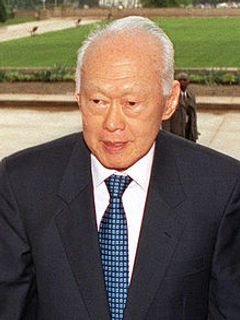
Lee Kuan Yew, founder of Singapore (1923-2015)

Gustav Kemper

In the early morning hours of Monday, March 23, Lee Kuan Yew, the first prime minister of Singapore, which he governed from 1959 through 1990, died at the age of 91.
The sheer quantity of condolences from heads of states worldwide and obituaries published in major international newspapers was remarkable for a politician who headed a city state with a current population of just 5.5 million people.
Lee Kuan Yew
Lee was hailed as “a giant of history” (US President Barack Obama), a “great statesman” (Indonesian President Joko Widodo), a “lion among leaders” (Indian Prime Minister Narendra Modi), “one of the greatest leaders of modern times that Asia has ever produced” (Japanese Prime Minister Shinzo Abe), “a giant of our region” (Australian Prime Minister Tony Abbott), a “legendary figure in Asia” (United Nations Secretary-General Ban Ki Moon), and an “old friend of the Chinese people” (Chinese President Xi Jinping), to cite but a few. He has been praised for his wisdom, statesmanship, far-sightedness, bluntness and strong leadership, and celebrated as the founding father of Singapore, who was “instrumental in transforming the country from a colonial trading post to an independent, thriving city state” (Singapore Straits Times), with a gross domestic product per capita ranking third in the world.
The Singaporean government declared a seven-day period of mourning. All universities, schools, the National Trade Union Congress, business organizations and state administrations participated in commemoration services.
Pictures of Singapore street life in the 1960s and 1970s have been contrasted with images of the current city to document the dramatic changes that have occurred.
What is missing in all these eulogies is any mention of the price the international working class has paid and is still paying for these changes, and for the gargantuan wealth that international capital has been able to accumulate through the network of industrial and financial operations penetrating the Asian region via headquarters and subsidiaries based in Singapore.
Singapore gained its independence in the period of national independence struggles that swept the world after World War II. A new generation of middle class intellectuals, who had grown up under the British colonial regime, enjoyed British-style education, and experienced the Japanese occupation of Singapore, went to study at universities in the United Kingdom after the war. It was there that a group of young ambitious men gathered, expressing the political interests of the Singaporean and Malayan bourgeoisie and their desire to shake off the yoke of colonial rule. Lee Kuan Yew, who was known as “Harry Lee” at that time, soon became the leader of this group.
This aspiring elite was faced with the growing influence of communist ideas among the working people of South East Asia, who were influenced by the Stalinist parties of either the Soviet Union or China, where the revolution of 1949 under the leadership of Mao Zedong had just swept away the bourgeois Kuomintang. There was also the pressure in neighbouring Indonesia of the world’s third largest Communist Party, with some three million members, and a Communist guerrilla army active on the Malayan peninsula.
Under these conditions, Harry Lee declared to the 1950 Malayan Forum in London: “The choice lies between a communist republic of Malaya and a Malaya within the British Commonwealth led by people who, despite their opposition to imperialism, still share certain ideals in common with the Commonwealth… if we do not give leadership, it will come from the other ranks of society.”
The working class on the Malayan peninsula had grown rapidly with the increasing demand for tin and rubber from the developing beverage companies and the automotive industry in America. There were significant strikes and protests by the working class in Singapore and Malaya in the immediate post-World War II period. These were contained by the Malayan Communist Party, allowing the British to return and resume control of their former colony.
It was clear to Lee that in order to gain the support of the masses, he would need to accommodate some of their desires for social justice and income redistribution. In his last years in England, he established strong connections to leaders of the Labour Party and officials within the British security complex, a network that helped him in later years to manage the handover of power from the British to the first new national administration.
Back in Singapore, he worked as a lawyer, defending trade unionists and left-wing politicians. Together with a group of friends who had studied with him in London, he formed the political cadre that would establish the new People’s Action Party (PAP) in 1954. Knowing that he needed the support of the Malay masses and the Chinese-speaking working class in Singapore, he maneuvered to integrate leaders of the underground Malayan Communist Party (MCP), who were operating undercover within the trade unions, under the banner of the PAP.
The Stalinist advisors to the MCP, from both Moscow and Beijing, promoted the “people’s united front” policy, subordinating the interests of the working class to the national bourgeoisie, a policy that had already led to the defeat of the Chinese Revolution in 1925-27 and the Spanish Revolution in 1936. The Stalinist parties in both Moscow and Beijing had long abandoned the aim of uniting the international working class in a common fight against imperialism. As Chin Peng, one of the leaders of the MCP later admitted, Beijing was more interested in creating trouble for the colonial powers in Malaya to keep them from intervening in China.
The Malayan Communist Party played the crucial political role in elevating Harry Lee, who now used his Chinese name Kuan Yew, to power. It was the principal force in subordinating the working class to the bourgeois leader and promoting illusions in him.
Lee Kuan Yew studied Mandarin and several Chinese dialects, as well as Bahasa Malay, in order to communicate directly with the workers in Singapore, who could not understand his English-language speeches.
He secretly worked with the British colonial administration, especially the security apparatus, when he needed to contain the influence of the Communist cadres within the PAP. Under the Internal Security Act, these political opponents could be detained at will, which helped Lee keep control of the PAP leadership.
Even after his election as the first prime minister of Singapore in 1959, Lee Kuan Yew preferred to let the British security forces continue their policing job for several years so that he could maintain his façade as a representative of the workers.
The Communists finally left the PAP in order to form their own party, Barisan Sosialis, in 1961. Lee Kuan Yew launched an aggressive campaign against the Barisan Sosialis, and under the banner of national independence for Malaya he managed to win the support of the masses. Mass detentions followed, with leaders of strikes, trade union officials and Barisan Sosialis leaders arrested and imprisoned. Under these conditions, LKY managed to win the 1963 election in Singapore.
The Malayan leader, the Tunku Abdul Rahman, representing the interests of the Malayan bourgeois class, feared the strong political influence and competition of the Chinese bourgeois elite, concentrated in Singapore, and felt threatened by the political activity of the Communist forces, which were mainly comprised of Chinese working people. In August 1965, he refused to accept the formation of a Malayan Federation, with Singapore as a member.
On August 9, 1965, Lee Kuan Yew declared the independence of Singapore as a city state, knowing that with the loss of the “hinterland” on the Malayan peninsula, with its rich natural resources, Singapore’s future would heavily depend on foreign capital investment and the growing trade between Europe and Asia.
Consequently, his government aimed at establishing conditions that would attract capital investments from the Western imperialist countries. These included political conditions deemed stable and capable of withstanding opposition to capitalist exploitation, a working population politically disciplined and controlled by the National Trade Union Congress, the creation, with the support the US and Israel, of the most modern army in South East Asia, and the development of an infrastructure that would support modern communication and transport channels, including a first class airline and port facility.
While the Suharto regime in neighbouring Indonesia slaughtered one million members or alleged members of the trade unions and Communist Party of Indonesia in 1965-1966, Lee Kuan Yew had no qualms meeting with General Suharto and establishing a long-lasting friendship.
Besides political oppression, Lee Kuan Yew used social policy incentives to contain the working class. These included a huge housing development project under which people could buy their own flats financed by their pension schemes, the provision of secure jobs in international companies with salaries higher than in neighbouring countries, and a good education system.
These conditions created the basis for the high economic growth rates Singapore generated over the ensuing decades. The Singapore “success story” is not a story of Lee Kuan Yew, nor of Singapore alone, but of the complex social, political and economic development of South East Asia after the Second World War. It is the story of a highly conscious national bourgeois elite exploiting the hunger of imperialist capital for profit opportunities in the vast Asian market, with the world’s largest concentration of people, and the story of the treacherous role of Stalinism.
The glorification of Lee Kuan Yew today is praise for the leader who opened the gate to the exploitation of the South East Asian working class and resorted to political oppression whenever workers tried to fight for their own interests. European and American heads of state are particularly enamoured of Singapore’s political system, in which dictatorial powers are wielded behind a formal democratic façade. Academic circles in leading Western universities and think tanks are promoting this model of “soft” dictatorship as an appropriate and more efficient alternative to the “lame dame of democracy,” as Herfried Münkler, professor of political science at Humboldt University in Berlin, characterised Western parliamentary systems in an article in mid-2010.
Lee Kuan Yew enjoyed the friendship of politicians who admired and envied his ability to act without political restraint in a dictatorial way, and have his actions whitewashed as examples of Confucian paternalism. These admirers included Ronald Reagan, Margaret Thatcher, Helmut Schmidt and Henry Kissinger. Deng Xiao Ping took inspiration from the Singapore model when he opened up the Chinese market to international capital by setting up special economic zones in the 1980s.
But the dynamics of imperialist expansion in Asia in recent decades have produced new conflicts. China has increased its economic power, threatening the hegemony of the US in Asia.
The US has responded with Obama’s “pivot to Asia,” which includes a relentless build-up of US naval forces at a special port facility in Singapore. The China-backed Asian Infrastructure Investment Bank (AIIB) is a direct challenge to US-controlled institutions such as the World Bank, with the European powers signing up to be founding members.
The working class of Singapore is feeling the pinch from these developments. The “quantitative easing” programs of the US Federal Reserve have flooded the international market with cheap money, and prices for property have increased tremendously in Singapore, putting an end to the vision of Singaporeans owning their own flats. Young families with an average income are no longer able to finance their own apartments, while education costs have also increased. The last general election in Singapore, held in 2011, dealt the PAP a heavy blow, with opposition parties winning nearly 40 percent of the popular vote.
The working class needs to reject the hype around the figure of Lee Kuan Yew and learn the lessons of its own history.