3 Apr 2015

Cold War 2.0

William Blum

Cold War 2.0, part I
In my last dispatch I brought you the latest adventure of US State Department Spokesperson Jen Psaki trying to defend the indefensible. She said then: “As a matter of longstanding policy, the United States does not support political transitions by non-constitutional means,” which prompted me to inform my readers: “If you know how to contact Ms. Psaki, tell her to have a look at my list of more than 50 governments the United States has attempted to overthrow since the end of the Second World War.”
On March 13 her regular attack on all things Russian included this exchange with Associated Press writer Matthew Lee:
Lee: On this issue, did you get any more about this request to the Vietnamese on Cam Ranh Bay and not allowing the Russians to – and not wanting them to allow – you not wanting them to refuel Russian planes there?
Psaki: Well, just to be clear – and maybe I wasn’t as clear yesterday, so let me try to do this again – it’s – our concern is about activities they might conduct in the region, and the question is: Why are they in the region? It’s not about specifically refueling or telling the Vietnamese not to allow them to refuel. [emphasis added]
Lee: So there hasn’t been a request to stop refueling them, or there has?
Psaki: It’s more about concerns. It’s not as much about Vietnam as much as it – as it is about concerns about what activities they would be in the region for.
Lee: Okay. Well, you – I mean, there are U.S. planes flying over there all the time.
Psaki: Sure, there are.
Lee: So you don’t want Russian planes flying there, but it’s okay for U.S. planes to fly there? I mean, I just – it gets to the point where you – the suggestion is that everything the Russians are doing all the time everywhere is somehow nefarious and designed to provoke. But you can’t – but you don’t seem to be able to understand or accept that American planes flying all over the place, including in that area, is annoying to the Chinese, for one, but also for the Russians. But the suggestion is always that the American flights are good and beneficial and don’t cause tension, and that other people’s flights do cause tension. So can you explain what the basis is for your concern that the Russian flights there in the Southeast Asia area are – raise tensions?
Psaki: There just aren’t more details I can go into.
Cold War 2.0, part II
On Saturday, the Obama administration released a series of satellite images that it said showed the Russian army had joined the rebels in a full-scale assault to surround troops in the area around the city. Russia has denied that it is a party to the conflict, and it was impossible to verify the three grainy black-and-white satellite images posted to Twitter by the U.S. ambassador to Ukraine, Geoffrey Pyatt.
According to the United States, the images, commissioned from the private Digital Globe satellite company, showed artillery systems and multiple-rocket launchers Thursday in the area near Debaltseve.
“We are confident these are Russian military, not separatist, systems,” Pyatt tweeted. (Washington Post, February 15, 2015)
When the time comes to list the ways in which the United States gradually sunk into the quicksand, slowly metamorphosing into a Third-World state, Washington’s campaign of 2014-15 to convince the world that Russia had repeatedly invaded Ukraine will deserve to be near the top of the list. Numerous examples like the above can be given. If I were still the jingoistic nationalist I was raised to be I think I would feel somewhat embarrassed now by the blatant obviousness of it all.
For a short visual history of the decline and fall of the American Empire, see the video “Imperial Decay” by Class War Films (8:50 minutes).
During Cold War 1.0 the American media loved to poke fun at the Soviet media for failing to match the glorious standards of the Western press. One of the most common putdowns was about the two main Russian newspapers – Pravda (meaning “truth” in Russian) and Izvestia(meaning “news”). We were told, endlessly, that there was “no truth inPravda and no news in Izvestia.”
As cynical as I’ve been for years about the American mainstream media’s treatment of ODE (Officially Designated Enemies), current news coverage of Russia exceeds my worst expectations. I’m astonished every day at the obvious disregard of any kind of objectivity or fairness concerning Russia. Perhaps the most important example of this bias is the failure to remind their audience that the US and NATO have surrounded Russia – with Washington’s coup in Ukraine as the latest example – and that Moscow, for some odd reason, feels threatened by this. (Look for the map online of NATO bases and Russia, with a caption like: “Why did you place your country in the middle of our bases?”)
Cold War 2.0, part III
Following the murder of Russian opposition leader, and former Deputy Prime Minister, Boris Nemtsov in Moscow on February 27, the West had a field day. Ranging from strong innuendo to outright accusation of murder, the Western media and politicians did not miss an opportunity to treat Vladimir Putin as a football practice dummy.
The European Parliament adopted a resolution urging an international investigation into Nemtsov’s death and suggested that the Organization for Security and Cooperation in Europe, the European Council, and the United Nations could play a role in the probe.
US Senators John McCain and Lindsey Graham introduced a Senate Resolution condemning the Nemtsov murder. The Resolution also called on President Obama and the international community to pursue an independent investigation into the murder and redouble efforts to advance free speech, human rights, and the rule of law in Russia. In addition, it urged Obama to continue to sanction human rights violators in the Russian Federation and to increase US support to human rights activists in Russia.
So it went … all over the West.
Meanwhile, in the same time period in Ukraine, outside of the pro-Russian area in the southeast, the following was reported:
* January 29: Former Chairman of the local government of the Kharkov region, Alexey Kolesnik, hanged himself.
* February 24: Stanislav Melnik, a member of the opposition party (Partia Regionov), shot himself.
* February 25: The Mayor of Melitopol, Sergey Valter, hanged himself a few hours before his trial.
* February 26: Alexander Bordiuga, deputy director of the Melitopol police, was found dead in his garage.
* February 26: Alexander Peklushenko, former member of the Ukrainian parliament, and former mayor of Zaporizhi, was found shot to death.
* February 28: Mikhail Chechetov, former member of parliament, member of the opposition party (Partia Regionov), “fell” from the window of his 17th floor apartment in Kiev.
* March 14: The 32-year-old prosecutor in Odessa, Sergey Melnichuk, “fell” to his death from the 9th floor.
The Partia Regionov directly accused the Ukrainian government in the deaths of their party members and appealed to the West to react to these events. “We appeal to the European Union, PACE [Parliamentary Assembly of the Council of Europe], and European and international human rights organizations to immediately react to the situation in Ukraine, and give a legal assessment of the criminal actions of the Ukrainian government, which cynically murders its political opponents.”
We cannot conclude from the above that the Ukrainian government was responsible for all, or even any, of these deaths. But neither can we conclude that the Russian government was responsible for the death of Boris Nemtsov, the American media and politicians notwithstanding. A search of the mammoth Nexus news database found no mention of any of the Ukrainian deceased except for the last one above, Sergey Melnichuk, but this clearly is not the same person. It thus appears that none of the deaths on the above list was ascribed to the Western-allied Ukrainian government.
Where are the demands for international investigations of any of the deaths? In the United States or in Europe? Where is Senator McCain?

British Values: Real and Imagined

Dan Glazebrook

David Cameron has been at it again. Following the brutal attacks on visitors to the Bardo museum in Tunisia last month, Cameron took the opportunity to repeat one of the most common and pernicious falsehoods of his premiership – that he is a staunch defender of a set of moral absolutes he calls ‘British values’. “In the end” he said, “our values – freedom of speech, democracy, the rule of law – … will win through”. That the Tunis attacks were a direct result of his own fateful decision in 2011 to turn Libya over to a hotchpotch of ultra-sectarian and racist death squads, who then trained the Bardo attackers, was of course conveniently glossed over. But this theme – of Cameron’s dogged pursuance of his British values in the face of an Islamist onslaught – has been trotted out every time any European joins the tens of thousands of Libyan, Nigerian, Malian, Syrian, Algerian, and Iraqi victims of his policy of recruiting sectarian militants as tools of regime change. Thus when Lee Rigby was killed in London by a man (Michael Adebolajo) who had been offered a job by MI5 just weeks earlier, Cameron opined that “the terrorists will never win because they can never beat the values we hold dear, the belief in freedom, in democracy, in free speech, in our British values, Western values”. And when Mohammed Emwazi was granted instant celebrity status by the British media following his youtube beheadings of journalists and aid workers, Cameron said that Emwazi’s actions were “the very opposite of everything this country stands for”, despite the fact that his own intelligence services headhunted Emwazi to work for them, just as they had facilitated the passage to Syria of the man who most probably trained him.
Cameron’s crucial role in creating and sustaining the death squads he claims to oppose, however, is well known to anyone paying attention to events in the Middle East, and has been written about extensively elsewhere by myself and others. What I want to critique here is Cameron’s claim that democracy, the rule of law and free speech and tolerance are indeed ‘British values’ in any meaningful sense. In fact, these values neither originated in Britain nor have ever been sincerely practiced by British governments.
Take democracy, for example. Even the mainstream textbooks don’t claim that it originated in Britain; Athens is generally supposed to be its birthplace (although there is increasing evidence that the Athenians based it on systems already in place in Africa). Cameron does have an answer for this, of course. In his article for the Daily Mail following the uproar over the mythical ‘Trojan Horse plot’, he writes that “People will say that these values are vital to other people in other countries…But what sets Britain apart are the traditions and history that anchors them and allows them to continue to flourish and develop. Our freedom doesn’t come from thin air. It is rooted in our parliamentary democracy”. What he doesn’t mention is that this particular version of democracy is based on a profound distrust of the people, and was consciously and openly designed to keep them out of decision making as far as possible. Also noteworthy is that the British government has only ever allowed a tiny privileged section of those subject to its power to vote for it – and still does. Only when non-aristocratic owners of business had become fabulously wealthy were they given the vote (in 1832), and when the franchise was extended to workers 35 years later, it was limited to those with the highest wages and living standards. When the universal male franchise was achieved in Britain in 1918, it was of course denied to the tens of millions of colonial subjects (including many Northern Irish Catholics) whose labour and resources were by then creating relatively privileged conditions for those in the ‘motherland’. Even today, British power extends far beyond Britain’s territorial borders, and yet the Iraqis, Afghans, Libyans, Somalis and others who are subject to its greatest abuses have no say in who forms the government. If democracy means that those who are the subjects of power have some influence over who wields it, Britain is still sorely lacking in this regard.
And what of the rule of law? Once again, despite the 800 year existence of the Magna Carta constantly trumpeted by Cameron, when it comes to international affairs, he has treated this apparently sacrosanct British principle with absolute contempt. From his support for Blair’s destruction of Iraq in 2003, to his own blitzkrieg against Libya in 2011, he has been a proud defender of the unprovoked war of aggression – defined by the Nuremberg tribunal, lest we forget, as “not only an international crime; [but] the supreme international crime, differing only from other war crimes in that it contains within itself the accumulated evil of the whole”. Even on the domestic front, he has been more than happy to violate the rule of law when it suits him. Thus at the slightest hint of civil unrest in 2011, Cameron’s government instructed magistrates to ignore their own sentencing guidelines and imprison everyone ‘involved’ in the youth insurrection, no matter how slight their offence, throwing judicial independence to the wind in the process. Worse still, every passing week produces more evidence of the apparent collusion between the intelligence services, police, and government ministers in facilitating and covering-up institutional child sex abuse on a horrific scale – and yet Cameron’s government appears to have done everything possible to delay an inquiry into the issue and limit its powers. The rule of law may well be valued in Britain – but it certainly isn’t applied to the higher echelons Cameron represents.
On tolerance and freedom of speech, Britain may seem to fare a little better. But this is only true if we ignore history, foreign policy and Cameron’s own ‘anti-terror’ legislation. Historically, Britain has hardly been a model of toleration. We needn’t go back to King Edward I’s expulsion of the Jews (many of whom sought refuge in the historically much more tolerant Islamic empires) or the anti-Catholic laws (in place until 1829 and only repealed in response to the threat of civil war in Ireland) to find institutionalised discrimination: racialised stop-and-searches have actually increased since the 1999 MacPherson Inquiry’s conclusion that the British police were “institutionally racist”. This is perhaps not surprising, however, given that the British Empire itself was built on intolerance and discrimination, stripping native peoples of political rights and often reducing them to a legal status little different from animals or property. In this regard, the 2012 laws passed by the NATO-installed Libyan government – laws which threaten life imprisonment for supporters of the previous government, and impunity for anyone who kills them – is fully in line with actual historical British practice abroad – but not with some mythical commitment to ‘tolerance’ and free speech. Back at home, Cameron’s redefinition of extremism to include ‘non-violent’ varieties, combined with draconian new proposals to ensure that all educational institutions rid themselves of all hints of such extremism, are the very antithesis of ‘freedom of speech’, as commentators of all political stripes have noted.
Perhaps most insidious of all, however, is Cameron’s claim that “The Western model of combining vibrant democracy with free enterprise has delivered great progress and prosperity”. In reality, the ‘Western model’ has not been based on ‘vibrant democracy’, but precisely on its opposite – on the dispossession of the vast majority of those subject to its power, from the native Americans and African slaves of yesteryear, to the countless millions subject to IMF structural adjustment or NATO bombardment today. But neither has it been based on ‘free enterprise’. As scholars such as Ha-Joon Chang have shown in detail, the truth is that every Western nation used massive protectionism during their rise to prosperity. Even today, the strongest industries in the West – from US agribusiness and pharmaceuticals to British finance – are completely dependent on massive government subsidies, demonstrated most clearly in the $15trillion global bankers bailout following the financial crash of 2007-8. Protectionism and colonialism/ neo-colonialism, then, are the real foundation, and continuing basis, of Western prosperity. To ascribe this prosperity to a set of ‘values’ which have never been taken seriously by Britain’s governing elites is not only a falsification of history, but a slander on those whose own dispossession and impoverishment was the flipside of this prosperity. Only by being honest about the role of Britain’s African, Asian and American colonies in creating Britain’s prosperity – and Britain’s role in creating and perpetuating their poverty – can we hope to genuinely build an inclusive society based on mutual respect and understanding for all those who find themselves here ‘because we were there’.
Britain’s governing elites, then, have consistently undermined the values they claim to espouse – and none more than their greatest advocate, Mr Cameron himself. But this does not make his narrative meaningless. In a sense, this article, by taking his sacred principles at face value and questioning whether the British government lives up to them, is completely missing the point. For the real purpose of the narrative is not, and has never been, to establish a standard which we should aspire to reach. Far from it. The purpose is solely to provide a stick with which to beat Islam. It is not that ‘we’, as Brits, are actually supposed to practice these ‘British values’ ourselves – the point is rather to provide solid grounds for hating the Islamic societies that are always presented as the greatest transgressors of these values. Don’t get me wrong – Cameron is constantly at pains to point out that ‘the vast majority of law abiding British Muslims’ share these values. But his very language leads us to believe that those Muslims who do share such values do so becauseof their Britishness, and despite their Islam. The danger of this narrative is multiple. Not only does it reinforce ignorant prejudices about Islam’s ‘aversion’ to democracy, the rule of law and tolerance – but it also justifies the rejection of such values by groups such as ISIS. For ISIS are the prime believers in Cameron’s message that such values are ‘British’ and ‘western’. And as people who hate Britain and the west and all it has done to the world, they feel duty bound to reject the values it espouses. Yet they forget that Islamic culture has a proud – and much longer – history of practicing them than does the ‘west’ itself. And why do they forget this? Because they believe the distortions of their own history perpetrated by Cameron and his ilk. The more, therefore, that Cameron claims democracy, tolerance and the rule of law to be distinctly British phenomenon – insinuating all the while that they are not indigenous to Islam – the more that angry young Muslims, who have seen their homelands torn apart by Britain, are drawn into the orbit of those militant groups who reject these values. But then, for Cameron, this is all fine. More Muslims joining ISIS means more fighters in his proxy war against Assad – and all without a single soldier returning home in a body bag. This, at least, gets us a little closer to understanding what Cameron really values.

The Obama Arms Bazaar

William D. Hartung

With the end of the Obama presidency just around the corner, discussions of his administration’s foreign policy legacy are already well under way. But one central element of that policy has received little attention: the Obama administration’s dramatic acceleration of U.S. weapons exports.
The numbers are astonishing. In President Obama’s first five years in office, new agreements under the Pentagon’s Foreign Military Sales (FMS) program—the largest channel for U.S. arms exports—totaled over $169 billion. After adjusting for inflation, the volume of major deals concluded by the Obama administration in its first five years exceeds the amount approved by the Bush administration in its full eight years in office by nearly $30 billion. That also means that the Obama administration has approved more arms sales than any U.S. administration since World War II.
The majority of the Obama administration’s arms sales—over 60 percent–have gone to the Middle East and Persian Gulf, with Saudi Arabia topping the list at $46 billion in new agreements. This is particularly troubling given the complex array of conflicts raging throughout the region.
The Saudi intervention in Yemen is just the latest example of the potentially disastrous consequences of runaway U.S. arms exports. The Obama administration has set new records for the value of U.S. weapons deals with the Saudi regime. The Saudis have used U.S.-supplied weaponry to help put down the democracy movement in Bahrain, and now to expand the conflict in Yemen to the point that it may spark a region-wide war. In addition, over $500 million in U.S weaponry destined for Yemeni security forces has gone missing, and may have found its way to Houthi forces or even to al-Qaeda in the Arabian Peninsula. The faction of the Yemeni army that has joined hands with the Houthi rebellion has ample U.S.-supplied armaments as well. It’s hard to imagine a clearer example of the negative consequences of aggressive arms dealing than the current situation in Yemen.
To be fair, the Bush administration has done more than its fair share in proliferating weaponry to current and potential U.S. adversaries in the Middle East. A significant portion of the $25 billion in arms and training supplied to Iraqi security forces—most of it on Bush’s watch—was abandoned to Islamic State (ISIS or IS) forces when they swept through northern Iraq in summer 2014, and IS also captured weapons that the CIA supplied to “moderate” Syrian factions. The Obama administration’s $500 million plan to arm and train forces to fight IS in Syria may not fare much better.
Although U.S. arms are contributing to violence and chaos in the Middle East, some of the largest payoffs for U.S. weapons-exporting firms have come far from any current battlefield. Lockheed Martin’s F-35 combat aircraft program—the largest weapons initiative ever undertaken by the Pentagon—depends in part on billions in sales to a dozen foreign partner nations, ranging from NATO members like the United Kingdom, Italy, and Turkey to non-NATO allies like Australia, South Korea, and Israel. Although many of these connections were established during the Bush years, the Obama administration has worked assiduously to expand exports of the F-35.
Team Obama has also been working overtime to open new growth markets like exports to India. The United States has made nearly $5 billion in arms sales to India in the past five years, most notably for Boeing C-17 transport planes but also including torpedoes, anti-ship missiles, and howitzers. And a new U.S.-India defense cooperation agreement that Obama announced during his January 2015 visit to India includes promises to help India develop aircraft carriers and a new generation of jet engines.
Controlling Arms Sales?
One area of arms transfer policy where the Obama administration has had a positive impact is in its support for a global Arms Trade Treaty (ATT). Unlike the Bush administration, which was joined at the hip with the National Rifle Association—a determined opponent of the ATT—the Obama administration supported the treaty, albeit not in as strong a version as some arms control advocates would have liked. Although the treaty has no hope of being ratified by the current, Republican-controlled Senate, the Obama administration has signed it and publicly pledged to live up to the standards on human rights, anti-corruption, and other key criteria set out in the ATT. The key question now is what this commitment will mean in practice.
Unfortunately, even as the Obama administration has committed itself to monitoring and controlling arms exports under the ATT, it has loosened internal U.S. requirements on the licensing of weapons and weapons-related exports. The most important element of the administration’s multifaceted arms-export reform initiative was the decision to remove thousands of items from the State Department-monitored U.S. Munitions List (USML) and place them on the Commerce Control List administered by the Commerce Department. The Commerce Department has historically been more closely associated with arms-export promotion than arms-export control, and its regulations are considerably looser than the State Department’s.
This Obama administration’s policy shift could inadvertently make it easier for U.S. weapons to fall into the hands of terrorists or human rights abusers. The most likely channel for such illicit transfers would be via front companies set up in countries that can now receive significant military equipment and arms components without a license. The absence of a strict licensing requirement will make it harder to keep track of the ultimate destination of military and military-related items exported by U.S. companies.
The second major problem with the Obama administration’s deregulation of arms exports is that weapons and weapons components that are moved to the jurisdiction of the Commerce Department are not likely to receive the regular human-rights vetting that occurs during the State Department’s licensing process.
The Obama administration has defended its new arms export control policy as an effort to put “higher fences around fewer items” so that scarce enforcement resources can be concentrated on high-end weapons and weapons components whose transfer could undermine U.S. military superiority. But the administration’s narrow focus on controlling the flow of modern equipment to potential competitors or major adversaries ignores the danger posed by making it easier to export low-tech items that can be used by repressive regimes, such as guns, light vehicles, and surveillance equipment. On balance, the Obama administration’s arms export licensing reforms are a step backwards.
New Policy on Drones
The most controversial arms-export policy question of all may be determining what countries are allowed to purchase armed or arms-capable drones from the United States. The Bush administration never enunciated a clear policy on this issue, but after years of deliberations the Obama administration announced its approach earlier this year.
On first glance the details of the new Obama drone export policy seem relatively unobjectionable. It calls for the approval of drone exports “on a case-by-case basis.” It also requires recipients to pledge not to use U.S.-supplied systems to illegally attack neighboring states or engage in “unlawful surveillance” or “unlawful force” against their own populations. And the administration has pledged to engage in rigorous end-use monitoring to ensure that these systems are only used for agreed-upon purposes and are not transferred to third parties without U.S. approval.
Unfortunately, the reasonable standards enunciated by the Obama administration aren’t likely to prevent the misuse of U.S.-supplied drones in practice. Once the United States supplies weaponry to a nation or group, it has very little control over how that weaponry is used. U.S. arms supplied to anti-Soviet fighters in Afghanistan ended up in the hands of violent jihadis, some of whom ended up as founding members of al-Qaeda. And, as indicated above, Middle Eastern allies from Bahrain to Egypt to Saudi Arabia have used U.S-supplied weapons to put down democracy movements. Yet Washington may be tempted to supply drones to precisely these regimes for use in the war on IS. Indeed, in late February it was revealed that the next recipient of U.S. drones might be the United Arab Emirates, which is slated to get an unarmed version of the General Atomics Predator system. Under the new Obama policy, will the sale of armed drones to the Persian Gulf be far behind?
The ongoing expansion of U.S. arms exports has potentially devastating consequences for human rights, regional stability, and U.S. security. It’s time for Congress and the public to hold the Obama administration to higher standards in this critical area of foreign policy. Otherwise, the spectacle of U.S. weapons being used to fuel conflict, enable human rights abuses, and foster instability in key areas of the world is likely to continue unabated.

The Enduring Reality of Government by Wealth

John Chuckman

If you really want to understand the world in which we live – its endless wars, coups, interventions, and brutality towards great masses of people – you need to start with a correct understanding of the political machinery at work. Talk of liberal interventions or fighting for rights, Western values, and democracy are hopelessly naïve and mostly deliberately deceptive. America’s record in such matters is one of securing everything from bananas, copper, and crude oil concessions to, at the very least, foreign governments obedient to its mandates after removing a disliked leader, whether elected or not. There is no concern for principles outside of their being featured in blowhard, insincere political speeches. The interests of America’s government do not match the interests of ordinary people, those in America or anywhere else, and, were the informed consent of the governed genuinely involved in launching bloody adventures, they likely never would happen.
The underlying reality of how people in the West are governed now compared to hundreds of years ago is surprisingly unchanged, much the way the rules governing how chemical bonds form have not changed despite a long and great parade of events and discoveries in the visible world. Despite all the revolts, revolutions, congresses, constitutions, and great movements over the centuries, we are in fact governed in the same essential way people
Of course to see this, you have to strip away the forms and rituals we have constructed over the centuries, forms and rituals which create impressive effects much like the green smoke and thunderous voice of the Wizard of Oz, a wizened old man who worked from his curtained control room, pulling levers and hitting buttons to create intimidating effects. Most Americans remain impressed with the smoke and thunder and cheap magic tricks, it requiring some dedicated effort to shake off well-done illusions, and, as I’ve written before, Americans work extremely hard in their jobs or live a kind of marginal life trying to scrape by on low wages or part-time work, either of which situations leaves little time or inclination to question what government is really doing and for whose benefit.
And so long as America remains under the rule of wealth, it is unlikely other states, as in Western Europe, will emerge from it because America’s establishment has such decisive influence – economic, financial, military, and political – over many of them.
What is considered as wealth changes over time and with economic development, and with those changes so do its interests as well as the practices of its power. Great deposits of copper ore or crude oil In the Middle Ages were virtually worthless. Wealth then was land for agriculture, forestry, and hunting, with the family names of owners determined by their estates. The revenue from that natural wealth was converted to great houses and jewels and the implements of war. War, too, was a source of wealth with most wars being little more than adventures for dominance and looting on a grand scale. Again, as in our own day, they were dressed up with slogans about principles or causes which had almost no meaning. The case of the “Christian” Crusades, which continued their pillaging and orgy of killing, on and off, for centuries, springs to mind. Soldiers and sailors, up until modern times, were not motivated by their paltry pay and poor supplies, it being understood as a condition of employment that they would enjoy a share of the bounty looted in any campaign.
Today, the forms wealth are as diverse and complex as is our society, and many of them are not apparent to ordinary people in the way great estates and hunting rights and obligations in war and peace to great lords were apparent in 800. Even as late as, say, 1850, wealth in the form of belching factories employing armies of people was often still quite apparent, but today’s complex banking and securities and financial institutions are not well understood by most people, although they represent immense wealth just as real in its demands and power as estates and obligations of the 9th century. Wealth today also comes from huge global manufacturing concerns of every description often with operations scattered out of sight, great shipping and transportation fleets, or electronic and communications empires. Land itself remains an important form of wealth where it can produce industrial-scale crops or contains deposits of valuable minerals or can generate flows of electricity or has been developed into great cities or resorts. War remains a source of wealth, only on a scale which could not have been imagined a few hundred years ago, but the spoils no longer go to soldiers in professional armies, they go to those responsible for the war, often in forms not easily recognized, as with special rights and concessions and secret arrangements.
As the nature of wealth evolved from the Middle Ages to the Modern Era, outward forms and rituals of government also changed. We have moved from the near-absolute power of kings and autocrats through aristocracies and republics with senates to a great variety of forms, parliaments and congresses, which appear designed to yield, to one degree or another, the consent of the governed.
But appearances, as in the case of the Wizard of Oz, can be deceiving.
Today, a single wealthy individual cannot make the kind of demands upon ordinary people that marked arrangements in the Middle Ages – although that must be qualified as I’m sure anyone who has become involved in a dispute with a wealthy neighbor or a great corporation will be happy to explain – but the class of wealthy people can indeed make just such demands, and they do so all the time. You will be taxed to pay for the schemes that their lobbying establishes, your water and air will contain the pollution of their manufacturing and mining, your children will be sent to kill and die in their wars, the ethics or morals you were taught as a child will be trampled upon, and virtually all important legislation will deal with the rights and interests of wealth, and not those of the broad mass of people.
In America, once in four years you will be asked to choose between two names, both of which have been closely vetted by the powers that be, to elect as head of government. Not only have they been vetted, but the immense costs of their campaigns in reaching you on television, at rallies, and with opinion polls to regularly fine tune their words will be paid almost exclusively by those whose real interests are at stake in every major election, the wealthy and their important serving institutions of government. The end effect is not really all that different than the old single-candidate Soviet elections at which the press trained Americans to sneer.
Many of America’s founding fathers had dark suspicions about the existence of wealth being secure in the presence of democratic government, and that is why they created forms – mostly adapted from Britain, a place no one regarded as a democracy then – to keep wealth safe. Over a couple of centuries, the original arrangements were modified, the country moving from a tiny one percent or so privileged voters – for perspective, that’s roughly the same as the percent of voters in China’s Communist Party deciding who rules the country – to something approaching universal suffrage, but always arrangements were made to safeguard wealth against the assumed predations of democracy.
In elections for the American Senate, the legislative body with real power, authority, and privilege, you again will be asked to choose between two well-vetted and well-connected candidates. Others may run, but they will be rendered helpless by the vetted candidates’ flood of money and resources, you will never hear their voices, and America’s press – itself an empire of wealth serving wealth – will waste no time on their views. In the case of the Senate, you will be asked once in six years to vote, with the elections staggered so that only one-third of that body faces election at any time – a perfectly-conceived formula for keeping the old bunch in charge despite issues which might have generated election discontent. In fact, you can never “throw the bums out” in America. Anyway, there really isn’t much risk for Senators running for re-election, with incumbents winning about 95% of the time. Senate seats are so secure they sometimes become family sinecures, handed down from father to son. After the election, unless you live in a small-population, insignificant state, you will never see or meet your Senator, and you will certainly have no opportunity to lobby. Virtually all seeing, meeting, and lobbying will be done by the wealthy sponsors of the successful candidates or by their hired help.
The average American Senator is said to spend two-thirds of his or her time securing funds for the next election, and such elections have now been bid-up to unbelievable amounts of money. The huge costs serve as what economists call “a barrier to entry,” a kind of high financial wall which keeps others from entering the political market, or, if somehow they do manage to enter, keeps them from effectively competing. Only the other wealth-vetted and connected candidate will have any hope of collecting a big enough pot of money to threaten an incumbent. The belief that people giving millions of dollars to candidates expect nothing in return is not even worth discussing. What they get – apart from goodies like important and prestigious appointments or valuable government contracts – is access, and access is exactly what most people never enjoy. Intimate access to politicians in high office, people always mindful of the necessity for another overflowing campaign war chest, is genuine power.
It is not impossible to have compatibility between democracy and wealth, but it requires a set of laws and regulations concerned with campaign financing, lobbying, and dis-establishing a political duopoly of two privileged parties, laws which simply cannot happen in America over our lifetimes. In America, law makes corporations persons, and the highest court, packed by judges appointed to serve wealth’s interests, has ruled that campaign money is free speech. These are not things easily turned around.
The American system of campaign financing not only assures the secure power of domestic wealth, it assures also the influence of wealthy lobbies serving the interests of foreign states, Israel being the most outstanding example. Other foreign states also exploit this system to varying degrees, but no other state has more than five million American citizens in great part keen to serve its interests. And many of them are successful, affluent, and well-placed people enjoying a connected set of organizations and well-funded lobbies. Other foreign states also do not enjoy having many of their lobbyists in America being dual-citizens, free to move back and forth between the country being lobbied and the country being lobbied for, surely an ethical issue for politics and foreign affairs of the first magnitude. It is a unique situation in many respects, and it has helped create a unique set of problems in the world.
The wealthy interests of America happen to share some important interests with lobbyists for Israel, including securing the Western world’s supply of energy and not permitting the rise of states of any power in the Middle East who disagree with America’s essential views. It is important to keep in mind that “America’s essential views” are not necessarily the views of most of the American people and that many of those “essential views” have never received genuine informed consent. Elections conducted the way America’s high-level elections are conducted are incapable of bestowing meaningful consent, especially in vitally important matters.
The Israeli-American alliance is something of an unholy one because in binding America so closely to Israel, some huge and unresolvable conflicts have been created. Israel is associated with a long series of wars and abuses in the region, and, ipso facto, so is America. Israel, given the nature of its founding, expansion, and practices, is not liked by any neighboring states, although many now cooperate secretly, and sometimes even openly, in areas of mutual interest and have learned to tolerate its existence, the way generally eased by large American bribes or equally large American threats.
Traditionally, states in the Middle East are not democracies. Their often short histories have given limited opportunity for wide-spread development and prosperity creating a strong middle-class, the sine qua non for democracy. With the United States always (insincerely) praising democracy – including Israel’s grotesque contradiction of “democracy for some but not others” – it has been caught in a bind between supporting what it says it opposes and opposing what it says it supports.
Its proposed solution was a huge CIA project, nick-named “the Arab Spring” by America’s wealth-serving and often dishonest press, a set of manufactured uprisings intended to bring a semblance of democracy to the region. It has been largely a failure, ending with some countries trapped in chaos or civil war and others, notably Egypt, briefly gaining a government Israel hated intensely, the truth being that genuine democracy in virtually any of these countries will not be friendly to Israel’s geopolitical ambitions in the region nor to those of its American promoter and protector. While the “Arab Spring” was allowed to proceed in some states, in others, where it was neither intended nor desired, such as Saudi Arabia or Bahrain, spill-over effects were deliberately and violently suppressed with American assistance. So the American-Israeli relationship now still locks the United States effectively in fighting against democracy in some countries and in supporting absolute monarchs and oligarchs in others, while in still others, such as Syria and Iraq, it is involved literally in smashing them as states, in violation of all international law and long-term good sense.
The entire situation is an ongoing disaster and is almost certainly not sustainable over the long term. How do you insist a huge country like Egypt remain a backwater without democratic rights indefinitely? How can you justify the destruction of an ancient and beautiful country like Syria? How can you justify supporting absolute monarchs and keeping their people in total political darkness? How do you continue supporting Israel in its abuse of millions, depriving them of every human right, or in its constant aggression to secure its hegemony? The drive for regional hegemony is all that is behind Israel’s constant hectoring of Iran, and how is that behavior different to the aggressive wars condemned by the Nuremburg Tribunal? It’s not, of course. Further, destructive, deliberately-induced conflicts like that in Syria, by degrading its economic advance, only slow the day for democracy’s having a real chance to emerge.
So here is America, self-proclaimed land of the free, mired in a vast situation where it works to suppress democracy, supports tyrants, and supports aggressive war because its leaders, with no genuine consent of the governed, have put it there, and this is just one of many unhealthy and destructive consequences of wealth’s rule in the United States. Wealth has no inherent interest in democracy, and it is entirely up to a people anywhere to demand respect for democracy through laws.

Tracking Killer Cops

Rebecca K. Smith

Last week, two stories of police shootings on opposite sides of the country made the news. The Seattle Times reported the story of a man who was sleeping in bed when two police officers opened his bedroom door, demanded an ID, and when he reached for his wallet to give them his ID, the officers opened fire and shot him 16 times. The officers had arrived at the house with a warrant for his housemate for failing to check in with a probation officer, and they had already removed his housemate from the house at that time.  The victim survived but had to go through multiple surgeries and spend months in recovery. His medical bills were hundreds of thousands of dollars, and he will likely never fully recover and never work again. He filed a civil lawsuit for excessive force in federal court and the case eventually settled for $5.5 million.
On the opposite side of the country, the Washington Post reported the story of a Pennsylvania police officer who attempted to pull a man over for expired emission tags, and after the man drove away and then ran on foot, the officer shot him with a Taser two times in the back, and then shot him twice in the back and killed him after he fell to the ground. Reminiscent of the shooting of Oscar Grant in Oakland, the man was unarmed, lying face down on the ground, and had nothing in his hands at the time the officer shot him in the back and killed him. Ironically, the officer’s Taser camera recorded the fatal shooting, and provided the local district attorney with evidence to file criminal homicide charges against the officer.
What these stories have in common is the presence of police officers that violently and unnecessarily overreacted and caused irreparable harm to unarmed civilians who were not criminals and posed no danger to anyone. These officers operated under the assumption to shoot first, and ask questions later.   As civilian policing becomes more and more militarized, this combat mentality is having devastating consequences. We have a justice system in this country that requires probable cause to arrest, innocent until proven guilty, and trial by jury before conviction and sentencing. Even if the individual is convicted, the death penalty is usually not issued as the sentence. Our justice system is turned on its head when police officers are free to act as judge, jury, and executioner and carry out the death penalty as their first response to a stressful situation.
Amid the seemingly never-ending news of police shootings and killings of unarmed civilians, there is a rising public demand for more police accountability. To placate this growing demand, a few months ago, Congress passed a new version of the Death in Custody Reporting Act, 42 U.S.C. 13727. This law, which is a revised version of a law that has been on the books for over a decade, requires state and federal law enforcement agencies to report how many people are killed by their police officers. The idea is that all of the state and federal law enforcement agencies will report these police-caused deaths to the U.S. Attorney General, who will then analyze the data and publish reports with that information. Although the law never really worked in the past, politicians promise that this version will work because there are penalties now if the law enforcement agencies do not comply.
The language of the law states that the states must report to the Attorney General on a quarterly basis the following information: “information regarding the death of any person who is detained, under arrest, or is in the process of being arrested, is en route to be incarcerated, or is incarcerated at a municipal or county jail, State prison, State-run boot camp prison, boot camp prison that is contracted out by the State, any State or local contract facility, or other local or State correctional facility (including any juvenile facility).”
For each person killed by police, each state must report:
“(1) the name, gender, race, ethnicity, and age of the deceased; (2) the date, time, and location of death; (3) the law enforcement agency that detained, arrested, or was in the process of arresting the deceased; and (4) a brief description of the circumstances surrounding the death.”
If a state does not comply, the Attorney General may, in her discretion, choose to withhold up to 10% of federal funds for law enforcement operations in that state. The key word here is “discretion.” This means that the Attorney General can also choose not to issue any penalty at all for noncompliance, which basically renders the law toothless. Also, the law does not apply to any state that can prove that complying with the law is unconstitutional under its state constitution.
A separate provision of the law also sets forth substantially the same requirements for all federal law enforcement agencies.
If any data is actually provided, the Attorney General must complete a report by December 18, 2016 that “examine[s] the relationship, if any, between the number of such deaths and the actions of management of such jails, prisons, and other specified facilities relating to such deaths.” All data from state and federal law enforcement agencies must be included in this report.
We can imagine what the report would find if all of the law enforcement agencies in the country actually provided all the required data under this law. So is there any way to make sure that our local law enforcement agencies are complying with this law? One way to check up on your local law enforcement agency to see if it is complying is to file a public records request under your state’s public records laws for any documents that indicate whether or not your local law enforcement agency is complying with the reporting requirements of the Death in Custody Reporting Act. Additionally, if you are seeking this information from a federal law enforcement agency, you can file a similar public records request under the Freedom of Information Act.
If you decide to file these record requests in your community, let us know what you find out.

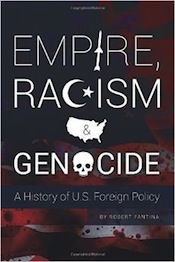
Anti-Israel and the Myth of Anti-Semitism

Robert Fantina

To believe some news reports, one would think that a second Holocaust is upon us. Anti-Semitism, we are told darkly, is rearing its ugly head in a degree not seen since Nazi Germany. This poses a threat not only to all Jews, but also to all freedom-loving people around the world.
It is, once again, time for a reality check. Opposition to Israeli polices does not equate to anti-Semitism. Author and lecturer Norman Finklestein, the son of Holocaust survivors, put it succinctly in 2006, when he said this: “Whenever Israel faces a public relations debacle its apologists sound the alarm that a “new anti-Semitism” is upon us.” Let’s look at some of the recent events that have sparked the current anti-Semitism hysteria.
The Boycott, Divest and Sanction (BDS) movement. This is a global effort to focus attention on the brutal apartheid regime of Israel by not doing business with companies operating in the occupied West Bank. It also includes the very successful efforts to convince entertainers and academics not to appear in Israel. It is not anti-Semitic; it is simply pro-freedom, and that means freedom for Palestine.
Southampton University was scheduled to host a conference this month, entitled ‘International Law and the State of Israel: Legitimacy, Responsibility and Exceptionalism’. Organizers say that the conference will “engage controversial questions concerning the manner of Israel’s foundation and its nature, including ongoing forced displacements of Palestinians and associated injustices”. This conference incurred the wrath of the Zionist right, with statements saying that the aim of the conference is to delegitimize Israel. In a serious blow against academic freedom, the university has withdrawn its support for the conference.
During last summer’s genocidal onslaught by Israel against Palestine, university Professor Steven Salaita tweeted his displeasure and disapproval of that mass murder. He had been offered a tenured position at the University of Illinois at Urbana-Champaign, and he and his wife had both resigned their positions, and sold their house in anticipation of the move to Illinois. However, at the last minute, the offer from the university was rescinded, due to those very tweets. By criticizing Israel, he was accused of being anti-Semitic.
Accusing people who support the BDS movement of being anti-Semitic has become all the rage in Zionist circles. Some examples:
* Malcolm Hoenlein, executive vice chairman of the Conference of Presidents of Major American Jewish Organizations, said last month that the BDS movement is “the 21st century form of 20th century anti-Semitism.” He further said, astonishingly, that criticism of Israel is the same thing as criticism of Jews. Zionists are desperate to make that connection, in the vain hope that it will successfully cause people to hesitate criticizing Israel, not wanting to be labelled anti-Semitic. Unfortunately for them, society has, for the most part, moved past that point.
* New York Senator Charles Schumer (D) said this: “It is very suspicious that those who promote boycotting Israel do not seek boycotts against any other nations in the world.” That is like saying that people who donate exclusively to the American Cancer Society don’t care about heart disease. They have simply chosen, for any of a variety of reasons, to support that cause. People involved in the BDS movement focus on Israeli violations of Palestinian human rights.
* Former Pink Floyd band member Roger Waters, an outspoken critic of Israel’s apartheid regime, and a supporter of the BDS movement, has denied being anti-Semitic. In response to comments made by Gerald Ronson, chairman of the Jewish Community Security Trust, suggesting that Mr. Waters was an anti-Semite, Mr. Waters said this: “On a personal note, Mr Ronson, my father, the son of a coal miner from County Durham, pulled himself up by his bootstraps, eventually got a degree from Durham University, went off and taught divinity, history, and English in Jerusalem between 1935 and 1938, and subsequently died in Italy on February 18, 1944 fighting the Nazi menace. Do not dare to presume to preach to me, my father’s son, about anti-Semitism or human rights.”
One wonders why there isn’t any talk about anti-Arab attitudes. Let’s look at some recent evidence.
Avigdor Lieberman, Israel’s Foreign Affairs Minister, in discussing the perceived loyalty or disloyalty of Israeli Arabs, who comprise approximately 20% of Israel’s population, said this on March 8: “Whoever’s with us, should get everything. Those who are against us, there’s nothing to be done — we need to pick up an ax and cut off his head. Otherwise we won’t survive here.”
During Israel’s bombardment and invasion of the Gaza Strip in 2014, during which more than 2,000 Palestinians, including more than 500 children, were killed, The Times of Israel and the 5 Towns Jewish Timespublished an article entitled ‘When Genocide is
fantinaPermissible’. In it were these words: “If political leaders and military experts determine that the only way to achieve its goal of sustaining quiet is through genocide, is it then permissible to achieve those responsible goals?”
And as long as the topic of genocide has reared its ugly head, let’s talk about Israel’s onslaught of the summer of 2014. Israel used Palestinian children has human shields; assassinated unarmed children playing on a beach; bombed hospitals, mosques and homes; bombed United Nations schools that were being used as refugee centers, despite having it confirmed more than ten times that these refugee centers were sponsored by the U.N. All this is in violation of international law. Israel, and some of the world community, said this was all done to ‘defend’ itself from Palestinian fireworks. International law is clear: an occupied country has every right to oppose the occupying force. Even putting that aside, it is illogical to suggest that an occupying force can ‘defend’ itself from its victim. The foxes, when raiding the henhouse, aren’t defending themselves from the hens.
The old narratives about Israel and Palestine are no longer valid. Zionists in the U.S., those in Congress who bow and scrape before the sacred AIPAC (American Israel Political Affairs Committee) altar in order to finance their reelection campaigns, and those on the religious right, are quick to paint critics of Israel as anti-Semites. Occasionally, although not often, the old canard of ‘self-hating Jew’ is thrown at Jews who criticize Israel. Both of these tired and worn labels no longer stick; they are the final weapons of desperate people who cannot justify the savagery Israel constantly commits against the Palestinians and seek to deflect attention from those atrocities.
For decades, this strategy worked, but those days are now in the past. It is arguable that Israel’s savage mass murder last summer was a turning point; the news media might have whitewashed this atrocity, but the Twittersphere, Facebook, Instagram and other social media tools brought it all home to people around the world. The old narrative, that of poor, vulnerable little Israel striving to do nothing more than to survive, is over. The truth is now widely known, and while resisted by the U.S. Congress, even its days of denial are numbered. Israel Prime Murderer Benjamin Netanyahu put the final nail in that coffin when he proclaimed that there would be no independent Palestine during his administration. Change comes slowly, especially in the halls of U.S. governance, but it does happen. It cannot come soon enough for Palestine.

Nothing is Right in the Middle East

Andre Vltchek

There is nothing, absolutely nothing right in the Middle East these days. There seems to be no hope left, and no fervor. All that was pure was dragged through filth. All that was great here was stolen or smashed by the outsiders. Enthusiasm had been ridiculed, then drowned, or burned to ashes, or shattered by tanks and missiles.
Corruption thrives – corruption that inundated this entire region since the early days of Western colonialism, and then was sustained through the present-day imperialist global regime.
The land of the Middle East is tired; it is crying from exhaustion. It is scarred by wars. It is dotted with oil wells and rotting armor vehicles. There are corpses everywhere; buried, turned into dust, but still present in minds of those who are alive. There are millions of corpses, tens of millions of victims, shouting in their own, voiceless way, not willing to leave anyone in peace, pointing fingers, accusing!
This land is where so much began. Europe was nothing, when Byblos and Erbil stood tall, when a fabled civilization was forming in Mesopotamia, when Aleppo, Cairo and Al-Quds could only be rivaled by the great cities of China…
And this is where greatness, progress, decency and kindness were broken and bathed in blood by the crusaders, and later by the colonialist scum.
Europeans like to say that this part of the world is now ‘backward’, because it never experienced renaissance, but before it was broken and humiliated; it went much farther than renaissance, following its own way and direction. A primitive and aggressive medieval Europe took most of the knowledge from here.
All this means nothing now. Almost nothing is left of the glorious past. Grand Arab cities, once exhibiting their fabulous socialist concepts, including public and free hospitals and universities, even several centuries before Karl Marx was born, are now choking in smog, polluted, with almost nothing public remaining. Everything is privatized, and corrupt monarchs, generals and mafias are firmly in charge, from Egypt to the Gulf.
People wanted to have it exactly the opposite way. After the WWII, from North Africa to Iran, they were opting for various socialist concepts. But they were never allowed to have it their own way! Everything secular and progressive was smashed, destroyed by the Western masters of the world. And then came the second wave of semi-socialist states: Libya, Iraq and Syria, and they were bombed and destroyed as well, as nothing socialist, nothing that serves the people is ever allowed to survive in the ‘third world’ by Washington, London and Paris.
Millions died. Western imperialism orchestrated coups, sent brothers against brothers, bombed civilians and invaded directly, when all other means to achieve its hegemonic goals failed.
It created, it ‘educated’ a substantial layer of cynical servers of the Empire, the layer of new elites who are accountable to the governments in Washington, London and Paris, and treat their own people with spite and brutality. This layer is now ruling almost entire region, is fully backed by the West, and therefore there is extremely difficult to remove it.
Recently, at the “American University” in Beirut, one of the local academics told me “this region is doomed because of corruption”. But where did corruption come from, I wondered aloud. One after another, secular and socialist leaders in the Arab world were removed, overthrown. The Empire put the lowest grade of thugs, the most regressive monarchs and dictators, on the thrones.
The truth is, like in Africa, the people of the Middle East lost all hope that they could ever be allowed to elect the governments that would defend them and represent their interests. They sank to bare ‘survival mode’, to extreme individualism, to nepotism and to cynicism. They had to, in order to survive, in order to make their families and clans to stay afloat in the world forced on them by the others.
The result is atrocious: one of the most advanced civilizations on earth was converted into one of the most regressive.
***
And as a result, there is bitterness, humiliation and shame in the entire Middle East. There is an unhealthy, unnatural mood.
The thugs in Beirut, Amman, Erbil, Riyadh and Cairo are driving their shiny SUV’s and latest European sedans. New and newer luxury malls are offering top designer brands for those who make huge profits from the refugee crises triggered by the Empire, or from the crude which is being extracted by mistreated migrant workers. Humiliated Southeast Asian maids, often tortured, raped and abused, are sitting on the marble floors of the shopping centers, waiting for their masters who are engaging in unbridled food and shopping orgies, spending money that they never had to work for.
Collaborators are extremely well rewarded, for serving the Empire directly, for keeping business rolling and oil wells pumping, for staffing the UN agencies and through them providing legitimacy to this grotesque state of things, for brainwashing local youth in West-sponsored schools and universities.
All this is extremely hard to observe and to stomach, unless one is on a certain ‘wave’, immunized and indifferent, lobotomized, resigned to this state of the world.
The Middle East is of course not the exception – it is just a part of what I often describe as the ‘belt’ of client states of the West; a belt that winds from Indonesia through almost the entirety of Southeast Asia, then via the sub-Continent and the Middle East, down to Kenya, Rwanda and Uganda.
***
Now Saudi Arabia is bombing Yemen. It does it in order to give full support to the outgoing pro-Western regime, and in order to damage Shi’a Muslims. Recent Saudi actions, as so many previous actions by that brutal client state of Washington, will open the doors to terrorism, and will kill thousands of innocent people. Shockingly, that is probably part of the plan.
I am now constantly invited to talk shows and radio and television interviews, to speak on the topic. But what more could be said and added?
The horrors of Western, Israeli, Saudi and Turkish aggressions (direct and indirect) are repeating themselves, year after year, in various parts of the Middle East. People are killed, many people, even children. There are some protests, some accusations, some ‘noise’, but at the end, the aggressors get away with everything. It is partially because the mass media in the West is twisting all the facts, again and again, and it does it extremely successfully. And most of the Arab media outlets are taking Western propaganda directly from the source, feeding it to their own people, shamelessly.
It is also because there is no effective international legal system in place that could punish aggressors.
The UN is nowhere to be found, when the acts or real terror are committed. Once in a while it is ‘concerned’, it even ‘condemns’ aggressors. But there are never any sanctions or embargos imposed against Israel or the United States, even Saudi Arabia. It is understood that the West and its allies are ‘above the law’.
This sends powerful signals to the rulers of the Middle East. The Egyptian military, which killed thousands of poor people right after it grabbed the power in a 2014 coup (which is commonly not defined as a coup, there), is now once again ‘eligible for US military aid’.
Fully prostituted Egyptian elites danced on the streets of Cairo when the coup took place, as did the elites in Chile, in 1973. I saw them, when I was making a documentary film for the South American Telesur, a film on how the West derailed the Arab Spring. They were posing for my cameras, cheering and hugging me, thinking that I am one of their handlers from the US or Europe.
Recently, I found an Egyptian UN staffer staring threateningly into my face:
“A coup?” she whispered. “You call it a coup? Egyptian people don’t call it a coup.”
How would I dare to argue with such a respectable representative of the Egyptian nation? I noticed that the pro-Western Egyptian elites love to pose as ‘Egyptian people’, as those species that are far removed from their mansions and chauffer-driven limousines.
***
There are tens of millions of people displaced in this part of the world. They come from Iraq and Syria, and from Palestine. There are new refugees and decades old refugees. Now, most certainly, there will be millions of Yemeni refugees.
In Lebanon alone, 2 million Syrian refugees live all over the place, some renting huts and houses, others, if the can afford it, leasing apartments in Beirut. But the UN and local authorities do not even register hundreds of thousands of them, those in Bekaa Valley and elsewhere. Refugees told me that many of them get turned away. If there is no registration, there are no food rations, no education for children and no medical care.
I saw refugees from several Iraqi cities, in Erbil, in Iraqi administered Kurdistan. They were escaping from the ISIS, which were created by the West.
A nuclear scientist Ishmael Khalil, originally from Tikrit University, told me: “All that I had was destroyed… Americans are the main reason for this insanity – for the total destruction of Iraq. Don’t just just me, ask any child, and you will hear the same thing… We all used to belong to a great and proud nation. Now everything is fragmented, and ruined. We have nothing – all of us have become beggars and refugees in our own land… I escaped five months ago, after ISIS devastated my university. And we all know who is behind them: the allies of the West: Saudi Arabia, Qatar and others…”
Then I stood by what was left of a bridge, connecting the two shores of the Khazer River, just a few kilometers from the city of Mosul. ISIS blew up the bridge. A few villages around it were flattened by the US bombing. A Kurdish colonel who was showing me the area was proud to mention that he was trained in the UK and US. It felt like total insanity – all forces united in destroying Iraq, had the same sources: the US, the NATO, and the West!
A few kilometers from the frontline were oil fields, but local people said that oil companies were just stealing their land; nothing was coming back to local communities. As the flames of the oil refineries were burning, local people were digging out roots and herbs, in order to survive.
And there was a camp for Syrian refugees, too, nearby. But refugees were screened. Only those who expressed their hatred for the President al-Assad were allowed to stay.
***
Beirut is symbolic to what is happening in the entire Middle East.
Once glorious, the city now ranks near the bottom of quality of life indexes. With basically no public transportation, it is choking, polluted and jammed. Electric blackouts are common. Miserable neighborhoods are all around. Education and medical care are mostly private and unaffordable to the great majority. Dirty money propels construction of expensive condominiums, posh malls and overpriced restaurants.
Luxury cars are everywhere. Expensive condominiums, yachts, vehicles and designer clothes are the only measure of worth.
It is all thoroughly grotesque, considering that there are 2 million Syrian refugees struggling all over this tiny country. There are old Palestinian refugees in depressing camps. There are the hated and discriminated Bedouins, there are the abused Asian and African maids…
“Work is punishment”, says local credo. Nobody bothers to work too much.
There is plenty of money, but most of it does not come from work. Huge amounts come from drugs, from ‘accommodating refugees’, from business in Africa and elsewhere, from remittances of those who work in the Gulf.
Israel is next door. It is threatening, and periodically it attacks.
Hezbollah is the only large movement in the country that is fighting for social welfare of the people. It is also fighting Israel whenever it invades. And now, it is locked in an epic battle with ISIS. But it is on the terrorist list of the West, because it is Shi’a, and because it is too ‘socialist’ and too critical of the West.
In Beirut, everything goes. The rich are burning their money like paper. They ride their luxury cars and bikes without mufflers, run people over on pedestrian crossings, and never yield. They are mostly educated in the West and trilingual (Arabic, French and English). They commute back and forth to Europe as if it is a next-door village.
The need of the upper classes to show-off is all that matters in Beirut.
The poor – the majority of the Lebanese people – do not exist. One never hears about them. They are irrelevant.
***
Those who rule over the Middle East are corrupt, cynical, and unpatriotic.
And they are scared, because they know that they have betrayed their own people.
The more scared they are, the more brutal are their tactics. I see them in action, in Bahrain, Egypt, Iraq and elsewhere.
Most of the left-wing movements and parties in the Middle East were destroyed, bought or derailed. Politics are about clans and religious sects and money. There is hardly any ideology left. There is no knowledge about Venezuela and Ecuador, China and Russia. The poor people love Russia, because “it stands against the West”, but there is very little understanding of the world outside the Middle East and the old colonial master – Europe.
Nothing feels right in the Middle East, these days.
New reports are coming in, alleging Israel of interrogating, torturing young Palestinian children.
Yemen, that ancient land with which I fell in love with from first sight, many years ago, is bleeding and burning.
Two cradles of civilization – Iraq and Syria – are totally torn to pieces, devastated.
Libya is breaking apart, most likely beyond repair, absolutely finished as a country.
Egypt is once again squeezed in an horrendous military grip.
Shi’a people in Bahrain and Saudi Arabia are suffering great discrimination and violence.
People are dying; people are displaced, discriminated against. There is no justice, no social justice for the majority, the same scenario like in Indonesia, like in sub-Continent, like in East Africa, like everywhere where the Western imperialism and neoliberalism managed to have their way.
The West worked very hard to turn the Middle East into what it is now. It took centuries to transfigure this culturally deep and great part of the world into the horror show. But it is done!
The rest of the world should watch and learn. This should not be allowed to happen elsewhere. The “Southeast Asia – East Africa Corridor” is what the West wants to convert entire planet into. But it will not succeed, because there is Latin America, China, Russia, Iran, South African, Eritrea and other proud and determined nations standing on its way.
And the Middle East, one day, will stand up, too! The people will demand what is theirs. They will demand justice. Recently, they tried but they were smashed. I have no doubt that they will not give up – they will try again and again, until they win.