4 Apr 2015

The Ambiguities of the Nuclear Framework Deal

Gareth Porter

The framework agreement reached on Thursday night clearly gives the P5+1 a combination of constraints on Iran’s nuclear programme that should reassure all but the most bellicose opponents of diplomacy. It also provides the basis for at least a minimum of sanctions relief in the early phase of its implementation that Iran required, but some of the conditions on that relief are likely create new issue between Iran and the Western powers over the process. The agreement’s dependence on decisions by the International Atomic Energy Agency (IAEA) and the penchant of Israeli intelligence for discovering new evidence of illicit Iranian activities will encourage moves to delay or obstruct relief of sanctions.
US and European officials had been telling reporters that they would phase out their sanctions on oil and banking in return for Iranian actions to modify its programme only gradually over several years, and made it clear that the purpose of this strategy was to maintain “leverage” on Iran.
Iran, however, was demanding that those sanctions be lifted immediately upon delivering on their commitments under agreement. And a source close to Iranian negotiators told Middle East Eye that Iran was confident it could deliver on all of the actions related to its enrichment programme and Arak within a matter of months.
The same diplomatic conflict was being fought over UN Security Council sanctions: Iran wanted them to end as soon as they have fulfilled its commitments; the US and its allies were insisting that those sanctions could only be suspended gradually on a schedule that would extend through most or all of the initial ten-year period. And the P5+1 was also demanding that, in order to get those sanctions lifted, Iran would have to fully satisfy the IAEA that it had cooperated completely in regard to the “possible military dimensions” (PMD) of its programme, and wait for the IAEA to give Iran a clean bill of health that its nuclear  programme is for peaceful purposes only.
Figuring out how those pivotal issues were finally resolved requires sifting through evidence that is not entirely clearcut.  The two sides apparently agreed that they would not release any official text of the agreement. The joint statement by EU foreign policy chief Frederica Mogherini and Iranian foreign minister Zarif, which is the closest thing to an official statement, was very brief and general and failed to clarify the provisions on sanctions removal. And the only available text of their statement, a transcript of the English language translation of Zarif’s Farsi language version of the statement, which was published in theWashington Post, unfortunately fails to complete the one sentence on how the issue of sanctions removal was removed, because it was partially inaudible.
The fact that no official text was released has meant that press coverage of the content of the agreement has relied primarily on the much more detailed summary of the agreement by the US State Department and on remarks by Secretary of State John Kerry. The US interpretation of the agreement, however, is ambiguous on some aspects of the sanctions removal issue, raising serious questions about what was precisely agreed on.
On US and European unilateral sanctions on oil and banking, which are of greatest short-term importance to the Iranian economy, the documents says those sanctions “will be suspended after the IAEA has verified that Iran has taken all of its key nuclear-related steps.” That wording appears to suggest that the sanctions would be suspended immediately upon the verification of the last step taken by Iran.
The US text thus seems to indicate that the Iranians won their demand that the Western powers give up their scheme for a “gradual” or “phased” withdrawal of sanctions.   But the Iranians had wanted some of the sanctions removed each time they completed the implementation of a commitment, and instead the payoff comes only after the final step taken.
The US document also makes it clear that the “architecture of sanctions” regarding US unilateral sanctions – meaning the legal and bureaucratic systems underlying the sanctions – “will be retained for much of the duration of the deal and allow for snap back of sanctions in the event of significant non-performance.” The Iranians have complained that suspending sanctions while leaving the threat of future sanctions in place has an intimidating effect on banks and businesses regarding resumption of relations with Iranian entities.  But they didn’t have much leverage  over that question.
The UN sanctions issue was resolved in a distinctly different way. According to the US text, all the UN Security Council resolutions on Iran, which impose various sanctions on Iran, “will be lifted with the completion by Iran of nuclear-related actions addressing all key issues (enrichment, Fordow, Arak, PMD and transparency).”
The implication of the US summary is that Iran would get some sanctions relief from the UN Security Council each time it has completed the implementation of one of its key “irreversible” commitments, as Iran had been demanding – not only at the end of all of its performance on all of the commitments. The inclusion of the PMD (“possible military dimensions”) of the Iranian nuclear programme as an issue on which Iran would have to satisfy the IAEA introduces a potential obstacle to early sanctions relief, because IAEA Director General Yukiya Amano has said it could take several years to complete its assessment of the issue.  But at least a delay by the IAEA would not prevent Iran from obtaining relief upon completing the other actions it would take.
Further confusing the interpretation of the agreement, Secretary of State John Kerry referred to the United States and its “international partners” providing sanctions relief “in phases” – a statement that appears inconsistent with the State Department text. In a tweet on Thursday, Zarif cited the Iran/P5+1 joint statement as saying the US would “cease all application of ALL nuclear-related secondary economic and financial sanctions”, and asked rhetorically, “Is this gradual?”
Judging from the US interpretative statements, Iran could get the bulk of the sanctions relief in the initial period of implementation – much of it within the first year or so. But that prospect would depend on the good will of the Obama administration and the IAEA. The Obama administration may well be inclined to facilitate the provision of early sanctions relief. But the political dynamics swirling around US and IAEA policies toward Iran suggest that the processes of IAEA assessment and delivery of sanctions may not go as smoothly as Iran would hope.
Looking even further ahead, Iran is certainly concerned about how a future US administration could and would implement the agreement. Iran was insisting that the UN Security Council resolution repealing previous resolutions with a new one reflecting the comprehensive agreement be passed before the change in administration in Washington in 2017, according to the source in contact with the negotiators. It remains unclear whether the P5+1 agreed to that demand.
One thing the US text makes clear is that the issue of Iranian research and development on advanced centrifuges research & development (R&D) remains unresolved. The US statement says that for the first ten years of the agreement, enrichment R&D will have to be consistent with maintaining breakout timeline of at least one year – obviously based on further understandings that have not been revealed or are yet to be negotiated. And beyond that period, the Iranian R&D plan will be “pursuant to the JCPOA”, meaning the final Joint Comprehensive Programme of Action” is still to be negotiated.

A Path Toward Hamas-Fatah Reconciliation

Franklin Lamb

Shatla camp, Beirut
One imagines that few would question that intra-Palestinian divisions and rivalries have exacted a heavy toll on a majority of the more than 3.8 million Palestinian refugees and their descendants who are registered with the United Nations. These refugees out of the current nearly 12 million Palestinians whose country was illegally occupied in 1948 and each of whom possess, under international law the Full Right of Return to their country. As physical and social infrastructures in the camps continue to deteriorate, all refugees suffer and particularly students among whose ranks ever fewer attend ill- equipped classrooms sometimes with untrained teachers with outmoded curriculum obsolete in the modern marketplace. The Hamas-Fatah conflict is letting down the Palestinian youth when they seek advice and practical options and are failing to give youngsters who are Palestine’s future the entrepreneurial spirit and potential of the private sector. This obtains because we have not to date successfully challenged the outlawing of Palestinian refugees right to work and earn a living in Lebanon.
The continuing Hamas-Fatah divisions are a particularly sharp detriment to the more than 1.8 million Palestinian refugees in Gaza, the approximately 249,000 remaining in Lebanon in addition to approximately 44,000 who have so far reported to UNRWA’s field office in Lebanon, opposite Shatila camp, having fled the nearly two year siege of Yarmouk camp in Damascus. Today, the Hamas-Fatah divisions are exhausting and diverting the energies of these two key Palestinian pillars and they are disrupting progress toward ending the Zionist occupation of their homeland. The split is causing a perceptible decline in international support for the just Palestinian cause and the longer it continues it causes yet more hardships in the camps.
This bleak situation despite earlier efforts at Palestinian reconciliation including the Cairo Agreement of 2005, the National Reconciliation Document of June 2006, Fatah–Hamas Mecca Agreement (February 2007), the 2011 Cairo Accords ( May 2011), the Fatah–Hamas Doha Agreement (2012) and the most recent proposals for a Hamas-Fatah “unity government” (April 2014) and the urging of a Hamas-Fatah “unity government” (March 2015).
A member of the Hamas political bureau advised this observer at a Beirut conference a few days ago that the movement accepts in principle a Swiss proposal of March 2015 to resolve the crisis facing Palestinian Authority employees in the Gaza Strip.
But with one condition.
Hamas wants the Swiss proposal to be addressed in the context of a definitive Palestinian reconciliation agreement. And with good reason, as the gentleman elaborated that so far the international community will not accept a Palestinian Authority in which there is Hamas participation, even though the Islamic movement won the election in 2006. Hence, for example, it is difficult for international donors to contribute towards the salaries of workers who have been employed by Hamas in Gaza since 2007. Moreover, the EU has this month kept Hamas on its terrorism blacklist despite a court decision ordering Brussels to remove the Palestinian group from the register. Brussels has lodged an appeal against a December ruling by the bloc’s second-highest court that Hamas should be delisted for the first time since 2001. The appeal process is expected to take about 18 more months.
Despite the above-noted efforts for a Fatah-Hamas accord over that past nearly half-century, problems of language interpretation, sharp political differences, periodic obstructionism from both sides, external interventions by Israel and the US, moves by some regional powers to impose their own visions of reconciliation, as well as selective implementation have prevented much substantive progress.
It is against this backdrop that an important and refreshingly substantive conference on Palestine was held this month in Beirut on the subject of Prospects and Challenges for Palestinian Reconciliation. It was jointly sponsored by two well respected think-tanks, the Johannesburg- based Afro-Middle East Center (AMEC) (www.amec.org.za) and Lebanon’s Al-Zaytouna Center for Studies and Consultations (www.alzaytouna.net/), the latter now in its 1lth year.
The conference was attended by an impressive assembly of academics, policy makers and officials from Hamas, Fatah, the Population Front for the Liberation of Palestine (PFLP), the Democratic Front for the Liberation of Palestine (DFLP), the Palestinian National Initiative, and Hezbollah among others. The two day gathering included concentrated discussions and proposals from the Palestinian factions concerning their stances towards reconciliation and its activation, the utility of international paradigms for transnational justice, internal and external factors affecting reconciliations and concrete proposals for solutions and future prospects.
The American attendees sitting at the same table with Hezbollah’s delegation sought the former’s commitment and partnership in a reinvigorated civil right to work campaign in Lebanon to remove for every Palestinian refugee in the 12 camps the outlawing of working in more than 50 professions in Lebanon and to grant Palestinians the civil right to purchase a home should they have the money.
In summary the American participants argument to Hezbollah and others in attendance included their belief that such an important and long sought victory for Palestinian refugees here would transfer substantive hope and energize every Palestinian and reignite the Palestinian revolution of days past and that this realistic and imminently achievable victory would be to the credit of Hamas-Fatah and their supporters joining ranks, discussing peaceful civil rights campaign tactics, negotiating, compromising and working together. The right to work campaign would give both groups ample mutual contacts and ‘break the ice’ for working closely together for more shared victories to the benefit of their people along the lines of what is envisage by the earlier proposals for unity.
It is doubtful that there was one delegate attending the al- Zaytouna-Amec conference on Palestinian Reconciliation whose gut does not churn when the person reflects on the fact that for 67 years, Palestinian refugees in Lebanon continue to be denied the most elementary civil right to work and to own a home. A right that under the 1953 Refugee convention, the UN Declaration of Human Rights, countless international humanitarian law treaties, principles, standards and rules and international customary laws which bind all countries and that are granted to every other refugee in the world, including those suffering under Zionist apartheid occupation and the colonists who are still living on their family homesteads in Palestine. Palestinian refugees are today barred from dozens of jobs and professions outside the squalid camps, including engineering, law and medicine, nor are they allowed to buy property in Lebanon. In cases where Palestinian refugees are able to find employment, often “illegal,” their salary is less than half that of their Lebanese counterparts and they are not eligible for medical insurance or severance pay.
There are prevailing myths here in Lebanon about dark consequences that would ensue the granting the most basic of civil rights to Palestinian refugees until they can return home. From across Lebanon’s poisoned sectarian political spectrum- recently fueled also by the spreading Sunni-Shia Bellum Sacrum, were Lebanon to comply with its legal, moral and religious duty and treat Palestinians as humans these ‘the sky is falling’ shrieks would likely dissipate.
Granted, the idea of Hamas-Fatah reconciliation is yet another existential nightmare for the Zionist regime still occupying Palestine. Foreign Minister Avigdor Lieberman sarcastically announced this month that Palestinian Authority President Mahmoud Abbas must decide whether he wants peace with Hamas or with Israel. Lieberman said it would be impossible for Fatah to have peace with Israel while simultaneously being joined with Hamas. Likewise, Benjamin Netanyahu gave Mahmoud Abbas, an ultimatum: either reconciliation with Hamas or negotiations with Israel.
In summary, while many political factions in Lebanon, alongside their internal and external sponsors, continue to play the Palestinian card and pledge “Resistance”, none are doing what their frequently claimed religious and political principles would require.
It is submitted that if Hamas and Fatah were to put aside their political differences, even just long enough to help their fellow refugees in Lebanon achieve dignity and elementary civil rights this mutual reconciliation effort would likely soon lead to wider Hamas-Fatah unity and intensify solidarity among the Palestinian refugee community and accelerate return to their homeland, Palestine.

No Exit: Pain and More Pain

Charles R. Larson

How do you bring a person back from such pain, such horror, that that person can live a normal life? How do you convince a person who believes that he is the source of such disgust, of such self-loathing, that it is others who are the cause of that defilement and not that person himself? How do you convince a person with such dark fears that inflicting more pain on himself, that punishing himself, is not the appropriate cure or path toward improvement? These are some of the many questions in the netherworld, under the surface, of Hanya Yanagihara’s A Little Life, a novel about a man who believes that he does not deserve life, even a little bit of it, because of actions that happened to him many years earlier when he was still a child. An abused child, which should be obvious, though the abuse here is much more horrific than I have ever read before—so vile that I fear that many readers will reach a point of repulsion and toss the book aside before the final sections which offer a kind of redemption, possibly even hope, though the getting there is such an arduous task.
There are four main characters—once college roommates—at the center of Yanagihara’s story, though one of them, Jude, is the most important. We follow these men from their early years after college, through their careers, their relationships with others, but especially with one another, until they are all in their early fifties. There’s JB, an artist; Malcolm, an architect; Willem, an actor; and Jude, who is a lawyer. By the end of the story, all have become successful in their careers, but not so much with other people. Ostensibly straight, they have also engaged in occasional sexual activities with other men (JB considers himself gay). Their closeness to each other becomes somewhat fluid down through the years, though it is the bonding of the group that is the deepest emotion most of them will ever feel. Interestingly, though the author is a woman, women play only minor roles in their lives, which tells you how strong their loyalties are to one another.
As undergraduates, they learned about each other’s idiosyncrasies and their pasts—except for Jude who, whenever asked about his hanyachildhood, would respond that it was too boring, too plain for elaboration. Nor did the others ever see him undressed. He always wore long-sleeves and trousers. The fact that Jude was a cutter, that he cut himself, was largely concealed and continued to be disguised because of Andy, his doctor of many years—who genuinely tried to help him but also enabled him to keep injuring himself.
The lengthy narrative, with multiple of time shifts, slowly reveals what happened to Jude as a child. He was a foundling, left at a monastery in Montana and raised by the brothers. The physical abuse started there, beatings especially, but later sexual. Jude would pick up objects he discovered unattended: pencils, buttons, and food, mostly items of no value. But one day he pocketed one of the brothers’
cigarette lighters, and when it was later discovered with his meager possessions, the worst of the physical abuse began. Father Gabriel rubbed olive oil on the back of one of Jude’s hands and then took the lighter and lit the oil. The Sharia-like mentality of the brothers at the monastery regarded punishment as one of its core preventive controls. The brother remarks, “This is what you get. You’ll never forget not to steal again.” If it were only that simple.
Things get much worse when Brother Luke—the one brother Jude believes he can trust—runs off with him and uses the ten-year-old boy as their source of income by prostituting him to hundreds of men. That is also when Jude begins to believe that he is the guilty party, that he is the source of his disgust. Brother Luke’s own sexual abuse of the boy further eliminates whatever iota of dignity Jude might have had. The result is that later in his life, as an adult, Jude can’t stand to be touched by anyone. Any sexual activity with people who actually care for him becomes impossible. And the cutting—and attempts at suicide—resurfaces in moments of tension throughout his life, even though his three college roommates do their best to protect him from the world.
Pedophilia is at the center of A Little Life, as it was in Yanagihara’s earlier novel The People in the Trees (2012). I thought that novel was extraordinary when I reviewed it two years ago, but also rough going because of decisions that characters make that are ethically questionable. My hunch is that A Little Life was written before People in the Trees and that no publisher would tackle the current book until the other one became such a success. One wonders what has provoked Yanagihara to write about pedophilia in both of these novels, and one can’t help being curious about the absence of females in both stories. I doubt that there will be answers to these questions.
A Little Life contains some of the tenderest depictions of platonic love between men that I have ever read. These are the relationships in the novel that redeem the horrific incidents of Jude’s childhood. But I can’t imagine any subject that is more unsettling than children who are abused by predatory men, emotionally crippled for life, and then—as the coup de grace—these children, once they become adults, believe that they are responsible for what has happened to them. It’s a terrifying result.
Hanya Yanagihara: A Little Life
Doubleday, 736 pp., $30

Pakistan: MQM Under Siege

Rana Banerji

Not since Pakistan’s former Interior Minister, late Nasrullah Khan Babar’s, crackdown in mid-1995, has the Mohajir/ Muttahida Quami Movement – Altaf (MQM- A) been subjected to such a relentless siege by the Pakistan Rangers and the Sindh Police in Karachi. On March 11, 90, Azizabad, or `Nine Zero’, the home of Altaf Hussain in Federal B Area, the sanctified MQM headquarters, was raided by Pakistan Rangers. Several MQM-A party workers were arrested, arms and ammunition allegedly stolen from NATO containers seized, and five criminals wanted in the January 2011 murder of journalist Wali Khan Babbar were apprehended. The current operations in Karachi have been ongoing since August 2014.

The effort of the law and order authorities, assisted by the para-military Pakistan Rangers, has been to attempt to cleanse the greater metropolitan area of Karachi from the endemic violence, a peculiar mix of drug mafia-related crimes, extortions, kidnappings, sectarian reprisals and even `gang-warfare’, which has plagued the city for the past two decades, causing a systematic outward flow of business capital and investments from what used to be the economic hub of Pakistan.

This has also gotten entangled with the `war on terror’, as a lot of besieged Tehrik-e-Taliban Pakistan (TTP) cadres escaping the army dragnet in the Federally Administered Tribal Areas (FATA) have been seeking safe havens in mosques and new Pashtun settlements in Karachi’s outlying suburbs.

Recent exposures about involvements in criminal activities revealed in the confessions of Sualat Mirza who faces death penalty for killing Karachi Electric Supply official, Shahid Hamid in May, 1999, and extortion of the worst kind brought out in the Pakistan Rangers report on the September 2012 Baldia Factory fire, have badly damaged the image of the party.

The MQM-A’s dilemma has been particularly acute, as the ebb in its fortunes coincides embarrassingly with the fall from grace of its leader in exile, `Quaid-e-Qiwan’ Altaf Hussain, in London. Altaf came to the adverse notice of the Metropolitan Police on two accounts: first on suspicion of involvement in the 2010 killing of the MQM-A’s second in command, Imran Farooq, outside his East London home. Altaf’s nephew, Iftikhar was detained by the authorities in June 2013 but was released shortly. Two other suspects, Mohsin Ali Syed and Mohammed Kashif Khan Kamran, fled to Pakistan and are now believed to be in the Inter-Services Intelligence’s (ISI) custody.

The second reason for Altaf Hussain’s predicament was the discovery of large amounts of unaccounted-for cash in his Edgware house in North London,fuelling suspicions of money laundering. Altaf was detained for questioning but has not been arrested so far even as investigations continue.

Although former Pakistani President General Pervez Musharraf’s 2009 National Reconciliation Ordinance dropped 72 criminal cases against Altaf Hussain, the Pakistan army is unlikely to have forgotten the June 1991 incident where servig army officer Major Kaleem was tortured to death while in MQM custody. In particular, Lt Gen Rizwan Akhtar, currently Director General, ISI, and erstwhile DG, Pakistan Rangers, Sindh, appears convinced that this is the way to go if Karachi has to rise from its perpetual condition of `ordered disorder’, (phrase used by Laurent Gayer in his 2014 book, 'Karachi').

The current crackdown on MQM's violence-prone cadres was started by current DG, ISI, Lt Gen Rizwan Akhtar, in his previous incarnation, as DG Pakistan Rangers, Sindh. The Pak Rangers, under its new DG, Maj Gen Bilal Akbar and V Corps Commander, Lt Gen Naved  Zaman, formerly DDG, Counter Terrorism, ISI, continue to work on the script crafted by Akhtar and endorsed by incumbent Army Chief, Raheel Sharif. This is evident also from the recent gallantry award citation of `Hilal-e-Shujaat’, bestowed on Akhtar, which mentions his role as DG, Pak Rangers, in the recent Karachi operations.

The party’s second-string leadership in Karachi has begun to squirm and squeal. They organised protest demonstrations outside Nine Zero even as the Pak Rangers’s 11 March raid was underway. This forced the Pakistan Rangers to file a case against Altaf Hussain and his party, under the Anti-Terrorism Act, for criminal intimidation.
When Pakistan’s incumbent Prime Minister Nawaz Sharif visited Karachi few days later, their request for an audience went unheeded. A delegation led by Farooq Sattar, including Haider Abbas Rizvi, Faisal Sabzwari and Khalid Maqbool Siddiqui, was later able to meet him in Islamabad. They complained against the police/Rangers’ high-handedness in repressing their cadres’ legitimate political activities.

Though the party has dominated the Karachi political scene since 1988, in recent months, a perception has grown that the MQM-A is losing ground, even politically. In the May 2013 elections, though it was able to win 17 out of 20 Karachi seats in the National Assembly and 34 of 42 Provincial Assembly seats from Sindh, its vote share declined by 4 % as Pakistan Tehrik-e-Insaaf (PTI) was able to make a sizable dent.

The PTI has replaced the Awami National Party (ANP) as the bigger party in Pashtun dominated-new settlements in the SITE Industrial area and Sohrab Goth. It has complained, alleging involvement of MQM hit men after its popular politician, Zahra Shahid Hussain, was killed in May 2013. PTI chief Imran Khan harbours a visceral dislike of Altaf Hussain, a sentiment heartily reciprocated by MQM leaders. In fact PTI and MQM-A workers clashed in Karachi as recent as 30 March.

The army-backed crackdown has fuelled speculation about a possible change in MQM-A leadership. Names of Mustafa Kamal, former Nazim, who did a lot to improve the city’s infrastructure but had to go into exile in Dubai after having crossed the leaders, and Dr IshratulIbad, MQM’s durable and longest-serving Sindh Governor (since 2002) have been mentioned. There is even some talk of Musharraf emerging again in a political role to inherit his `natural’ Mohajir mantle, though this may not be quite palatable just yet, either to Sharif or to the army leadership, whose main concern is limited to see that he is absolved from State sedition charges.

At present, it appears that the purpose of the army/ ISI/ Pakistan Rangers operation is not to totally demolish the party but to significantly curb its criminal mafias and de-fang capacity to hold the State and Provincial Administration to ransom, so that Karachi can slowly limp back to a tolerable state of `ordered disorder’ again.

3 Apr 2015

New York exhibition looks at “political art” of the 1930s

Fred Mazelis

The Left Front: Radical Art in the ‘Red Decade,’ 1929-1940, at the Grey Art Gallery, New York University, New York City, January 13-April 4, 2015
The exhibition currently on view at New York University’s Grey Art Gallery is indeed an ambitious one. Entitled “The Left Front: Radical Art in the ‘Red Decade,’ 1929-1940,” it presents the work of dozens of American artists, both immigrant and native-born, who were radicalized in this period of the Depression, revolutionary struggle, the rise of fascism and the looming threat of world war.
The show, consisting of about 100 works by 40 artists, originated in the Chicago area at the Mary and Leigh Block Museum of Art at Northwestern University. It has been enlarged and expanded at NYU, using books, periodicals, photographs and film from the university’s well-known Tamiment Library, with its important holdings on the history of the socialist and labor movements in the US.
Much of the Grey Gallery exhibition consists of lithographs and other prints, in line with the emphasis of these artists on producing work for a mass audience instead of wealthy patrons or the art market. Many of the artists are not well-known, although the names of Louis Lozowick, Kenneth Hayes Miller, Rockwell Kent, Isabel Bishop, Raphael Soyer and especially Stuart Davis will be more familiar to those acquainted with 20th century American art.
The show examines the work of politically conscious artists in the period between the 1929 Wall Street Crash and the Second World War. This is undoubtedly an important subject, both for art-historical and aesthetic as well as political reasons. As the director of the Block Museum notes in the extensive guide to the show, “In light of the recent global recession, the study of artworks created by artist-activists in the 1930s provides a crucial historical backdrop for understanding artists’ responses to moments of social, political and economic crisis—then and now.”
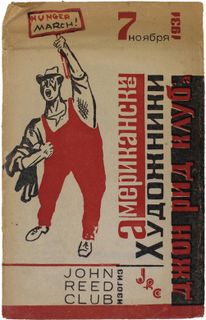
‘American Artists of the John Reed Club’ (1931) in ‘The Left Front.’ Photo: Amherst Center for Russian Culture/Amherst College
Unfortunately, the historical backdrop is not seriously and truthfully explored. While it is certainly worthwhile to view many of these works, an in-depth presentation must surely go beyond the fairly obvious issue of what immediately propelled these artists to take up their work.
What were the social and historical circumstances that moved them to come around the John Reed Clubs? The JRC were initiated by the US Communist Party in 1929 and named after the famed American journalist and Communist, the subject of the movie Reds, who wrote the classic account of the October 1917 revolution, Ten Days That Shook the World (1919), and died of typhus in the Soviet Union in 1920.
What was the role of the Communist Party, to which most of these artists gravitated, during this period? How was the work of these artists affected by the events of the 1930s? What became of the “Left Front”? (The title of the show is taken from the name of a short-lived Chicago-based art magazine in the early 1930s, but the curators are applying it to a broader movement during this decade.). What was the significance of the aesthetic issues these artists wrestled with, and how were they related to the struggles within the Soviet Union on “proletarian culture” and “proletarian art”? On these issues the NYU exhibit is often superficial where it is not misleading.
Either because it is too demanding, or perhaps because it cuts too close to the political bone, the curators fail to confront the centrality of the rise of Stalinism and Trotsky’s fight against the bureaucracy to 20th century cultural life. The artists under consideration in the present show were not the product of some relatively “organic” or contradiction-free left-wing artistic development, as the exhibition suggests. The movement the artists adhered to, the Communist Party, had suffered a fatal degeneration by the mid-1930s, and, in fact, was dominated by anti-Marxist conceptions about art and society.
The classical Marxist tradition of Plekhanov, Trotsky, Voronsky and others, which insisted upon the objective character of artistic cognition, had been repudiated by a petty bourgeois bureaucracy in the CPUSA and the Stalinist movement internationally that was hostile to the independent movement of the working class and frightened of genuinely challenging artistic work. Within the American CP, the Marxist conception that culture should enlighten and uplift the mass of the population through a determined struggle was rejected, in favor of an adaptation to national-populist traditions, generally empty rhetoric about art as “a weapon” and uncritical allegiance to the Soviet bureaucracy.
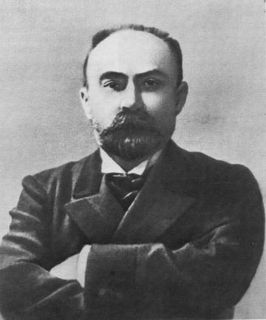
Georgi Plekhanov
Most of the artists represented here associated themselves with the conception of “proletarian art.” This false theory, which attracted much support in the years after the 1917 Revolution, proceeded from an abstract and formal identity between art and politics. It denounced most of the art of the past as “bourgeois” and therefore reactionary, and announced, in a leap that was the antithesis of Marxism, that the working class now had to create—laboratory-style—its own art.
Both Lenin and Trotsky bitterly opposed these views. Trotsky argued inLiterature and Revolution (1924) and many other writings and speeches that the art of the future would be socialist, not proletarian art, and that the proletariat, as an oppressed class, had to assimilate the cultural achievements of the past in the building of a new, classless society.
The debate over proletarian art played a significant role in the growing nationalist degeneration of the Russian Revolution, fought by the Trotskyist Left Opposition. “Proletarian culture” was utilized, especially after Lenin’s death, by the conservative bureaucracy under Stalin. It became part of the repudiation of socialist internationalism. The Stalinists used the slogan to justify an indefinite period of rule by the national-opportunist bureaucracy.
Opposing the rejection of past culture, Trotsky wrote, “It would be monstrous to conclude…that the technique of bourgeois art is not necessary to the workers. Yet there are many who fall into this error. ‘Give us,’ they say, ‘something even pock-marked, but our own.’ This is false and untrue. A pock-marked art is not art and is therefore not necessary to the working class. Those who believe in a ‘pock-marked’ art are imbued to a considerable extent with contempt for the masses and are like the breed of politicians who have no faith in class power but who flatter and praise the class when ‘all is well.’”
This was not, of course, an argument against realism in art or in literature, but rather the insistence that realism and naturalism had to be genuine, not based on flattery and an unreal idealization of the working class or anyone else. Trotsky argued that the artist who genuinely devoted him- or herself to the struggle against capitalist exploitation had to grasp the dialectical relationship between image and reality.
Trotsky’s opposition to “proletarian art” was an eloquent answer to the attempt to straitjacket literature and art. As he wrote in 1938, “Truly intellectual creation is incompatible with lies, hypocrisy and the spirit of conformism. Art can become a strong ally of revolution only insofar as it remains faithful to itself.”
These issues are not seriously addressed in the exhibition, although they come in for one or two brief mentions. In fact, although Trotsky wrote voluminously on the subject of socialism and culture, the quote in the above paragraph is the only mention of his views, and it is almost buried inside a glass case alongside a copy of one of the early issues of Partisan Review, the magazine founded by anti-Stalinist intellectuals who briefly flirted with Trotskyism in the late 1930s.
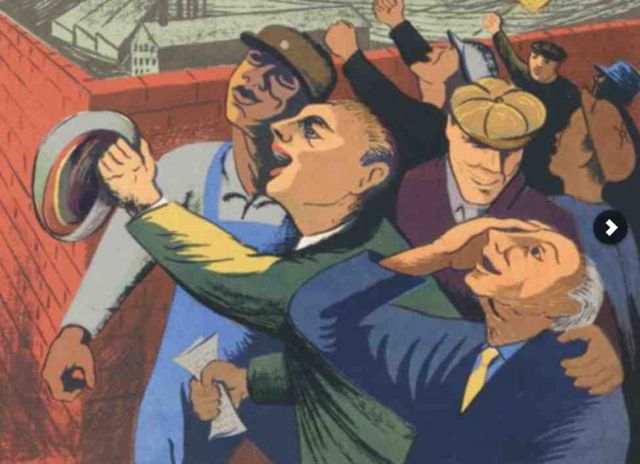
Harry Gottlieb (American, b. Bucharest, Romania, 1892-1992), "The Strike is Won," 1940. Color screenprint, 12 1/4 x 16 1/2 in. Collection of Belverd and Marion Needles
There is more than a bit of “pock-marked” art in The Left Front. Even if many of these artists were well-meaning, their work exhibits little of the “faith in class power” that Trotsky referred to.
Several examples stand out, especially among the artists based in Chicago who perhaps were under the influence of a syndicalist outlook in that industrial center, which in turn reinforced the doctrine of proletarian art.
Morris Topchevsky (1899-1947), a prolific artist active in Chicago, is represented by a number of works in this show, including Strike Against Wage Cuts (1930), a watercolor and pencil sketch that is little more than an idealized depiction of workers being addressed by a strike leader. A lithograph by Harry Gottlieb (1895-1992), The Strike Is Won (1937) is even more in the tradition of Stalinist socialist realism, with its lifeless portrayal of saintly workers and upturned faces.
There is little that is genuine and nothing that is revolutionary about these works and a number of others along similar lines in the exhibit. These include Mitchell Siporin’s (1910-1976) watercolor Spanish Civil War (after Goya), an unimaginative transposition of Goya’s famous The Third of May, 1808, the depiction of Spanish resistance to Napoleonic occupation, to the Spanish Civil War of the late 1930s.
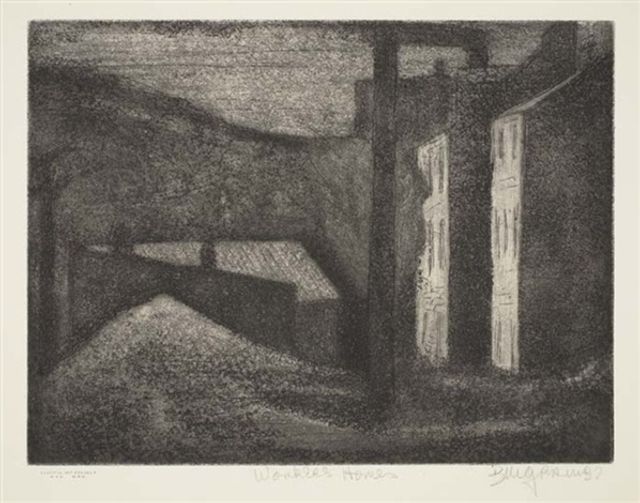
Blanche Grambs (American, b. Beijing, China, 1916-), "Workers' homes," 1937-38. Etching and aquatint, 9 x 11.7 in.
There were other artists, to be sure, who produced more serious work despite the constraints of “proletarian art.” William Gropper (1897-1977) was well-known as an artist and cartoonist. His 1935 lithograph, Uprooted, has some strength, and the work of Blanche Grambs (1916-2010), including Workers’ Homes, is affecting in its somber portrayal of the sacrifices and struggles of workers in the Depression.
There were also artists who rejected the conception of “proletarian culture.” Louis Lozowick (1892-1973) stands out for his sharply critical comments. He is quoted in the exhibition, next to an interesting 1930 lithograph, Still Life with Breakfast, declaring, in 1929: “[O]ne way in which a revolutionary artist can affirm allegiance to his cause is by repudiating that petty bourgeois legacy, the unsolicited heroization of the worker… art has its own specific problems of importance to the artist and the worker.”
Lozowick went on to become a leader of the John Reed Clubs during the Stalinist “Third Period” in the early 1930s. While it is unclear when or whether he broke politically with Stalinism, his work was never characterized by the rigidity of “proletarian art,” and his remarks quoted above suggests he was not unacquainted with Trotsky’s criticism.
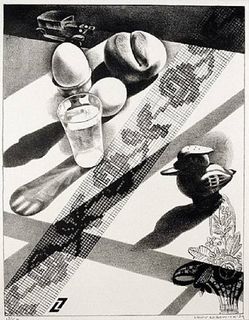
Louis Lozowick (American, b. Ukraine, 1892-1973), "Still Life with Breakfast," 1929. Lithograph, 10 3/8 x 8 in.
Stuart Davis (1892-1964) is perhaps the most well-known artist in the show. He exhibited as part of the legendary 1913 Armory Show—which introduced American audiences to European Impressionists, Fauvists and Cubists—when he was only 21 years old. He was, at least during the “Red Decade,” close to the Communist Party, but he never showed any interest in the Stalinist line on art. The exhibit includes one of Davis’s typically jazz-influenced modernist works, the 1939 lithograph New Jersey Landscape.
An entire section of the NYU exhibition comes under the heading of “The Popular Front.” In terms of historical context, this is perhaps the weakest part of the show. The prominent wall caption explains that the John Reed Clubs were closed down and in 1936, “former John Reed Club members organized the call for an American Artists Congress…as a more inclusive artists’ collective with new goals.” It goes on to explain, “The American Artists Congress reflected a changed political program for the international left.” The purpose of the Popular Front was “to build an international coalition among Communists, Socialists, Democrats and independent leftists of all persuasions.”
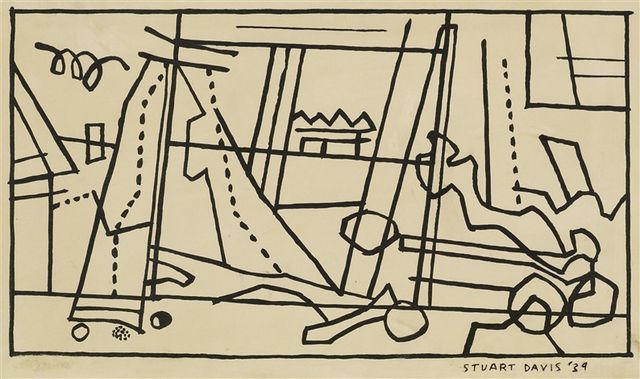
Stuart Davis, (American, b. Philadelphia, PA., 1892-1964), "New Jersey Landscape (Seine Cart)," 1939, 7.63 x 13.63 in.
This is a serious falsification of the nature of the Popular Front, why it came into being and how it functioned. The “international left” referred to by the curators was the Stalinist apparatus and its counterrevolutionary operations all over the world. While it pursued a coalition with “democratic” imperialists like Roosevelt, virtually the entire leadership of the October Revolution was framed up and executed in the infamous Moscow Trials of 1936-38. The Popular Front was not separate from this drowning of the revolution in blood. In Spain GPU assassins murdered left-wing critics such as Andres Nin and Trotsky’s secretary Erwin Wolf, in a crucial element of the Stalinists’ betrayal of the Spanish Revolution. In the US the explosive CIO movement was brought firmly under the control of the Democratic Party, with the Stalinists playing a crucial role.
It should be noted that the shutting down of the John Reed Clubs paralleled the shift inside the Soviet Union from the Third Period line in which “proletarian culture” was the official doctrine. Without fundamentally altering the theoretical framework, the Stalinist cultural dictators now insisted on “socialist realism,” which prescribed “uplifting” work that was above all aimed at glorifying Stalin and the bureaucratic apparatus.
As for those who strayed from this diktat, their treatment was most prominently illustrated by the violent attacks on composer Dmitri Shostakovich and his opera Lady Macbeth of Mtsensk in 1936. The Soviet experimental theater director Vsevolod Meyerhold was arrested in 1939 and executed the following year. Many lesser-known artists in the USSR suffered the same fate, or simply retreated into silence.
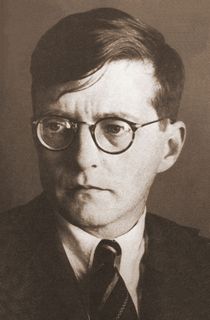
Dmitri Shostakovich
Outside the Soviet Union, a somewhat looser approach was—or had to be—taken, in line with the needs of Moscow’s foreign policy. There was greater leeway for artists like Davis, Lozowick, Miller, Bishop and others, as long as they made no political criticisms.
The “historical backdrop” provided by this exhibition says nothing about any of this. Instead these years are celebrated as the heyday of “activist art” of the 1930s. While it briefly mentions aesthetic differences, they are not developed and above all are not related to the shifts in Stalinist policy during this decade.
Clearly the sympathies of the curators are with the liberals who welcomed an alliance with the Stalinists, an alliance directed against the working class. That is why, after ignoring the Stalinist crimes in the USSR, Spain and elsewhere, the exhibition suddenly explains that the “Red Decade” ended in disappointment with the announcement of the Stalin-Hitler nonaggression pact in August 1939. The membership of the AAC quickly plummeted, reflecting the disaffection of its liberal members as well as the confusion of Communist Party supporters. The liberals were generally unmoved by the Moscow Trials (or approved of them), but the disruption of the US-Soviet alliance was another matter.
The primary impression left by the curators of this exhibition, especially in its concluding sections, is nostalgia for the Popular Front. If only Stalin had not temporarily allied himself with Hitler, they seem to say, the “activist” artists of the 1930s could have continued their work.
Politically this means a continuing orientation, 75 years later, to the capitalist Democratic Party, the line now pursued by the pseudo-left. Aesthetically it suggests an uncritical revival of what passes for “populist” art, today focused largely on identity politics as well as various forms middle-class protest.
The enormous struggles impending against poverty, inequality and the threat of world war will doubtless give birth to new artistic trends. The main lesson to be taken from “The Left Front” exhibition is that it will be necessary to fight against contemporary versions of “pock-marked” art. For all those who wish to confront the question, “What is revolutionary art?” there is no substitute for a serious study of Trotsky and the work of the Trotskyist movement on the issues of culture and revolution.

Sri Lankan police crackdown on protesting students

Pradeep Ramanayake

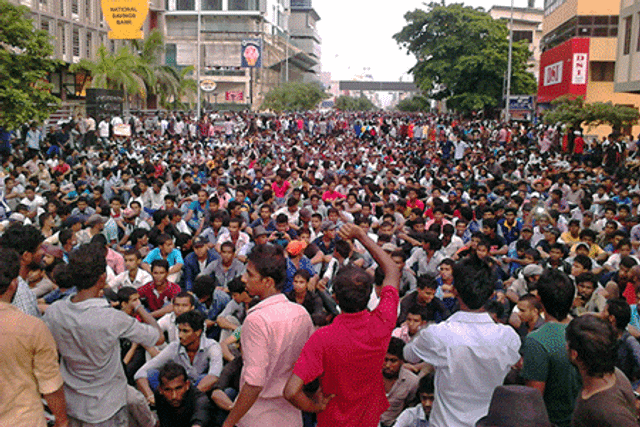
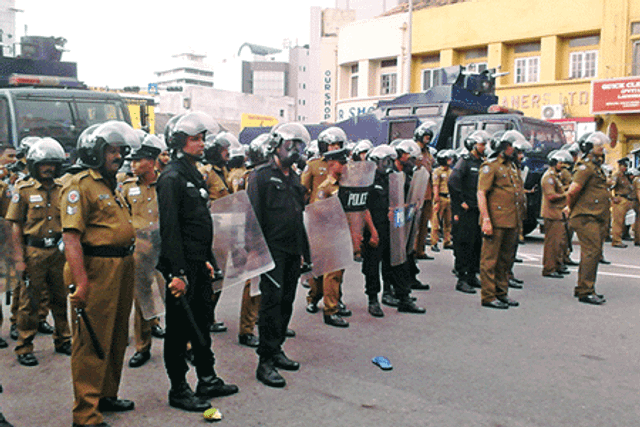
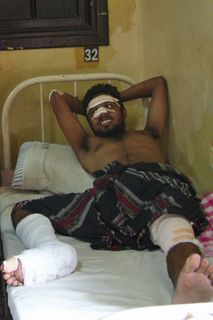
Sri Lankan police brutally assaulted university students marching to Prime Minister Ranil Wickremesinghe’s office in central Colombo on Tuesday. Riot police used tear gas and water cannon against the students who were planning to present a list of demands. Five students were injured and five others were arrested. Police were later forced to release those arrested after students staged a sit-down protest on the main Galle Road.
Students demonstrate in central Colombo
Thousands of students marched eight kilometres from Jayawardenepura University to central Colombo. Their 14 demands included the payment of promised increases in Mahapola student loans, the withdrawal of new fee regulations for school education, the abolition of private universities and the withdrawal of increased Open University course fees. The protest was organised by the Inter University Students’ Federation (IUSF), which is controlled by the fake-left Frontline Socialist Party (FSP), a split off from the Sinhala communalist Janatha Vimukthi Peramuna (JVP).
It was the first police attack on students since President Maithripala Sirisena won office in January. Sirisena promised to end the “dictatorial rule” of former President Mahinda Rajapakse and to guarantee democratic rights.
Prime Minister Ranil Wickremesinghe’s office released a statement about the police assault. Hypocritically it declared that the “occurrence of such an unfortunate situation is regrettable” but then attempted to justify the attack. “If the protesters had peacefully allowed their representatives to reach the Prime Minister’s Office such a situation would have not arisen,” it declared.
The immediate cause of the students’ outrage was the government’s failure to increase Mahapola student loans. The Sirisena government promised to lift the interest free loans from 2,500 rupees (about $US19) to 4,000 rupees. Sirisena’s election manifesto promised to raise the loan to 5,000 rupees. In February, the Jayawardenepura University student welfare department even named the students who would receive the increased loan. The university administration, however, unilaterally reversed this decision.
Police deployed to attack students
Sirisena and the United National Party (UNP) also promised during the election to increase public employees’ salaries by 10,000 rupees in two instalments but have since reduced the promised wage rise and changed it to an allowance.
The new government has also attacked public education by imposing a new system of levying school fees. Under the cover of preventing corruption, it has cracked down on school administrations that have been forced to collect resources from parents because of inadequate government funding. A circular entitled “prohibition of informal money collection in schools” has now formalised these collections, effectively ending free public education.
Last year, the Rajapakse government dramatically raised Open University student fees to 60,000 rupees. The students have been protesting for the past three months to demand withdrawal of the increase. Sri Lankan university students lack properly-equipped lecture halls and rooms, labs, libraries, lecturers, research opportunities and hostel facilities.
The former Rajapakse government suppressed student opposition by abolishing studentships, suspending classes and mobilising police to assault and arrest protesting students. In line with plans to impose new austerity measures against working people, the Sirisena and UNP-led coalition government is using similar repressive measures.
The International Monetary Fund (IMF) recently refused a request from the Sirisena government for a $4 billion loan. It demanded that the government fulfil pledges made by the previous government to reduce its budget deficit to 4.4 percent of gross domestic product this year and to 3.8 percent of GDP by 2016. The IMF has also called for the further privatisation of state-owned enterprises.
While Sirisena and the UNP-led government face a new general election in June, this week’s attack on students demonstrates that it will not hesitate to crack down on any resistance to austerity measures by workers, the poor and young people.
One of the students injured in the police attack
The ongoing student protests are an indication of a growing anger and militancy. While Tuesday’s march showed students’ determination to fight the government’s cuts to public education, it also exposed the bankrupt program of the IUSF leadership, who are desperately claiming that the new government can be pressured to change course.
During the presidential election, the IUSF leadership, including its convener Najith Indika, gave back-handed support to Sirisena’s campaign. The IUSF organised meetings of university academics who vociferously backed Sirisena. Immediately after Sirisena was elected, Indika sent him a letter imploring, “We expect at least some democratic reforms under your temporary government.”
Contrary to the IUSF’s appeals, the Sirisena government, which is driven by the demands of the international banks and the intensifying crisis of global capitalism, will intensify its assault on public education, health and other vital social programs and basic democratic rights. This can only be fought by mobilising students, workers and the poor on the basis of the socialist and internationalist program advanced by the International Youth and Students for Social Equality and the Socialist Equality Party.

Malaysian prime minister under pressure over US-led economic pact

John Roberts

Malaysian Prime Minister Najib Razak is facing an increasing challenge from within his United Malays National Organisation (UMNO), the major force in the 14-party Barisan Nasional (BN) coalition government. UMNO, based on the national capitalist elite, has exercised autocratic power in Malaysia since independence from Britain in 1957.
Former Prime Minister Mahathir Mohamad is bitterly opposed to Najib for signing up, in 2010, to US President Barack Obama’s proposed Trans-Pacific Partnership (TPP). The TPP is a mechanism through which Wall Street is seeking to fully open up economies in the Asia Pacific for American trade and investors. Above all, the TPP is directed against China.
Through the TPP, the US is pressing for the dismantling of national regulatory measures and the protection of the “intellectual property rights” of American corporations, particularly in areas such as software, media and pharmaceuticals. Mahathir has denounced the 12-nation TPP as a plan to colonise Malaysia.
Among the TPP’s provisions are many that would adversely affect the protected business empires that cluster around UMNO, including those regarding investment rules, state-owned enterprises and the country’s pharmaceutical industry.
The moves against Najib stem from the basic economic and foreign policy differences that erupted between Mahathir and the Anwar Ibrahim-led wing of the ruling elite in 1998 following the 1997 Asian financial crisis. Mahathir dumped Anwar as deputy prime minister for supporting US-backed International Monetary Fund demands to dismantle the protectionist measures underpinning UMNO’s Malay-dominated business base.
Mahathir, now 89, who left office in 2003 after 22 years, formally withdrew his support from Najib last August. Tensions built up after the 2013 election in which the BN won only 47 percent of the vote to the PR’s 51 percent. The ruling coalition was saved by a blatant gerrymander that gave it 133 seats to the opposition’s 89. Mahathir held Najib responsible for the debacle.
Mahathir’s faction includes Deputy Prime Minister Muhyiddin Yassin, former Finance Minister Daim Zainuddin, senior UMNO figure Jazlan Mohamed and Mahathir’s son, Kedah state Chief Minister Mukhriz Mahathir. When pro-Najib UMNO leaders called a national meeting of UMNO’s 191 divisional leaders on March 8 to pledge support for Najib, 31 did not turn up.
Mahathir has also condemned Najib for limiting the economic preference system for ethnic Malays, implementing some pro-market “reforms,” abolishing the Internal Security Act and initially promising to repeal the Sedition Act. The economic preference regime dovetails with the race-based electoral system that discriminates against Chinese and Indian Malaysians.
The Mahathir faction has honed in on a scandal surrounding Najib’s national investment fund, the 1Malaysia Development Bhd (1MDM). Founded in 2009 to promote foreign direct investment, it has had little success, while amassing debts reported to total $US11.2 billion.
According to a Bloomberg report,1MDB has trouble servicing its debt. A syndicate led by Deutsche Bank is owed a payment of $975 million in September. Poor rating of assets will adversely affect a 1MBD float planned for later this year. Last month, Deputy Prime Minister Muhyiddin declared that the government should not bail out 1MDB.
The Sarawak news portal Sarawak Report alleged that Low Jho Teck, a Penang business figure, was involved in siphoning off $US700 million in a petroleum deal that involved 1MDB. Jho Teck is a close friend of Najib’s stepson Riza Aziz. As chairman of 1MDB, Najib is vulnerable to questions about its operations. Last year, Asia Sentinel reported a study that identified strange sources of loans taken out by 1MDB.
Last month, Mahathir seized on a New York Times article that pointed to Najib’s considerable family assets in the United States. Mahathir asked about the source of this enormous wealth.
Public bickering inside UMNO continues despite the jailing of the opposition coalition People’s Alliance (PR) leader Anwar Ibrahim on February 10 for five years and stepped-up attacks on dissent using the anti-democratic Sedition Act.
Najib’s government, in fact, has intensified its anti-democratic assault on the opposition parties since Malaysia’s highest court overturned Anwar’s 2012 acquittal on a trumped-up charge of sodomy on February 10. Anwar was immediately consigned to jail to serve out his five-year sentence.
Following a demonstration of 10,000 in support of Anwar in Kuala Lumpur on March 7, the police on March 16 arrested Anwar’s eldest daughter, Nurul Izzah. She was detained on sedition charges for making a speech in parliament quoting her father’s criticism of the court for “bowing to political masters” and being “partners in a crime that contributed to the death of a free judiciary.”
Malaysia’s Sedition Act, which dates from British colonial times, criminalises speech with an undefined “seditious tendency.” This is believed to be the first time since 1978 that a member of parliament has been arrested under the notorious Act. For now, Nurul has been released on bail, pending further police inquiries.
These repressive measures were designed to appeal to UMNO’s extreme right wing and undermine support for the Mahathir faction, but the internal backstabbing has continued.
Najib’s political weakness has made him more dependent on the ultra-nationalists and Islamists inside UMNO. Najib has refused to say whether federal UMNO will support moves by the Parti Islam se-Malaysia (PAS) government in Kelantan to impose the reactionary Islamic criminal code, which includes penalties of amputation and stoning to death.
PAS leaders in the state secured the support of local UMNO lawmakers against PAS’s partners in the PR coalition—Anwar’s secular Malay-based Keadilan and the ethnic Chinese based Democratic Action Party. Even if the measure does not get the backing it needs in the national parliament, it has the potential to break up the PR.
Economic developments are exacerbating the political instability. Exports fell by 8.2 percent in January, year on year. The ringgit has fallen 6 percent this year against the US dollar, mainly due to falling oil and gas prices. Oil and gas exports make up 20 percent of exports and 30 percent of government revenues. In January, Najib announced $1.5 billion in spending cuts and pushed ahead with the extremely unpopular goods and services tax, which commenced on April 1.
The Obama administration has pushed hard to bring Malaysia into its anti-China “pivot to Asia” strategy, which includes the TPP, and Najib has responded by seeking to deepen the relationship. For this, he has received Washington’s de facto support for his repressive measures against Anwar and the opposition.
Obama visited Malaysia last April, the first trip by a US president since 1966, and will do so again in November to discuss intelligence sharing and military cooperation, under the “strategic partnership” that Najib and Obama announced last year.
Now concerns are being expressed in Washington about the instability of Najib’s leadership and its potential impact on Malaysia’s pro-US orientation. The US Council of Foreign Relations website on March 18 carried an article entitled “Growing Political Crisis in Malaysia?”
In Malaysia, as elsewhere across the Asia-Pacific region, the aggressive drive by the Obama administration to encircle China, militarily and economically, is fracturing relations within ruling circles.

Underground gas fire shuts down central London

Paul Mitchell

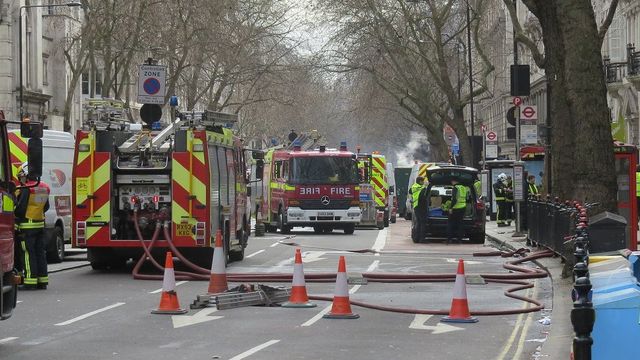
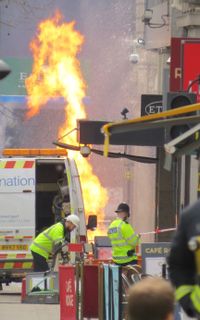
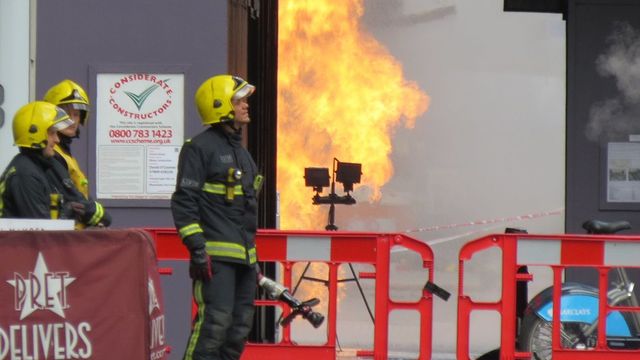
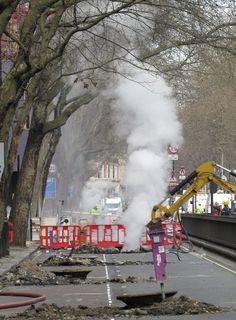
An underground gas fire spotted midday Wednesday in Kingsway, one of central London’s major north-south roads, caused chaos, cutting off power and plunging the area into darkness. Balls of fire and plumes of toxic smoke were still shooting out of manholes and cracks in the road 24 hours later.
Dozens of fire engines, police and utility vehicles, and hundreds of firefighters, police officers, gas and electricity workers remained in Kingsway and neighbouring roads, all of which remain closed to traffic.
Firefighters on the scene in London
Thousands of workers had to be evacuated from the areas around Kingsway, one of London’s busiest office and shopping districts. At the top of the road, Holborn Underground rail station was closed. Offices, colleges, theatres and shops were shut down, as were the Royal Courts of Justice, Britain’s most important law courts. Telecommunications companies O2 and Vodafone reported little or no network coverage across Central London because the fire had destroyed cabling to a phone mast.
Emergency workers and police at the scene of one of the fires
Students at the prestigious London School of Economics (LSE) were forced to find temporary accommodation. The LSE Provost and Deputy Director emailed staff and students to say, “All LSE’s central campus buildings have been evacuated and closed off.”
London Fire Brigade assistant commissioner, Dany Cotton, said, “This is a technically difficult and unusual incident to tackle as it is underground. Firefighting in tunnels is very hazardous and one of the reasons that the fire is still burning is because of the dangers involved in extinguishing the fire before the gas supply is shut down, which could result in the risk of a subsequent gas explosion.
“Firefighters have, however, been applying water through access points throughout the night, to control the spread of the fire. The fire is contained in the tunnel and we are making steady progress and working with the utility companies and the police to bring this incident to a close.”
The fire brigade said a faulty power cable had triggered the blaze, but that it was unconnected to another underground fire nearby earlier in the day. On Wednesday afternoon, a smaller underground fire broke out a couple of miles away in Stoke Newington.
Firefighters at one of the fires near the LSE on Wednesday
Matt Rudling, a spokesman for UK Power Networks, owners of London’s power cables, tried to deflect criticism from the company, declaring, “The gas is still burning under there and until we can gain access to that particular area we won’t understand what’s caused it and what we can do.” He added, “The Healthy and Safety Executive have been working closely with us in working to mitigate these issues.”
Holes dug by emergency workers at Kingsway
A policeman told this reporter that the area was likely to remain closed for several days, and then the road needed to be inspected and repaired. A power worker said that Kingsway was “notorious” for the number of tunnels and ducts carrying all the utility services—gas, electricity, water and telecommunications.
Besides the utility infrastructure, underneath Kingsway is a complex of tunnels, dug by London Transport during the Second World War, which later became the London terminal of the first-ever transatlantic telephone cable. During the Cold War, the underground became a “city under a city,” one of many such secret subterranean complexes designed for the purpose of surviving nuclear warfare. They are now derelict, awaiting redevelopment. 
The power worker explained, “It only needs a spark to come in contact with a gas leak and it travels along the ducting, melting everything along the way. There’s so much building going on in London and everyone wants their power ‘now’. It means everyone is under pressure to get the job done.” 

Germany and France stage joint military build-up

Peter Shwarz

A joint meeting of the German and French cabinets on Tuesday in Berlin reached an agreement for Germany and France to jointly build a combat drone, and work together more closely on satellite reconnaissance.
In the coming months, an agreement to develop a European drone will be signed, with Italy also participating. Over the course of this year, an initial study will concretise the requirements for the new aircraft. The project will also be opened up later to other interested parties such as Spain and Poland. The new drone should be operational no earlier than 2020 and no later than 2025.
It will be a drone capable of flying for up to 24 hours at a height of 3,000 to 15,000 metres, and will be able to gather intelligence as well as fire missiles. So far, only the US and Israel have built such drones.
Airbus (Germany, France), Dassault (France) and Finmeccanica (Italy) had already made a proposal for such a craft two years ago. They will probably be responsible for the development and construction of the new drone, which will consume hundreds of millions, if not billions of euros, according to experts.
The joint cabinet meeting also decided to extend Franco-German cooperation on military reconnaissance satellites. A corresponding agreement should be signed by June. Among other things, the German Ministry of Defence will invest €210 million in the future French reconnaissance system CSO (Composante Spatiale Optique) to gain greater access to its satellite imagery.
President François Hollande and Chancellor Angela Merkel justified the joint rearming with strategic arguments. It would ensure greater independence from the industries and information of other states, Hollande said. This is a sign of technical competence and a question of political power. Those who know the situation, can act”, he said, and “those with their own satellite imagery, are free to decide.”
In an interview with the Süddeutsche Zeitung, French Defence Minister Jean-Yves Le Drian particularly stressed the decoupling from the United States. “We Europeans can do it, we Europeans should have done it long ago”, he said. “When we finally do it, then we increase the independence from the United States in this field, technically and militarily.”
Le Drian explicitly supported the plans for a European Army brought into play by German Defence Minister Ursula von der Leyen and European Commission President Jean-Claude Juncker in recent weeks.
Chancellor Angela Merkel said she was “very happy” that the long existing plans were finally being implemented. “The project shows how closely we work together,” she said.
Plans for a European Army and close military cooperation between Germany and France had existed in the 1990s. The aim is to enable Europe to pursue its own global interests independently of the United States.
Some of these plans have already been implemented. For example, an existing Franco-German corps was converted into a European Brigade. Several European armaments projects—like the Euro Fighter, the NH90 helicopter and the A400M transport aircraft—were agreed.
However, with the Iraq war, which divided Europe into supporters and opponents in 2003, the failure of the EU constitution project in 2005 and the 2008 financial crisis, these plans ground to a halt. Fiscal policy conflicts between Germany and France were exacerbated. In foreign affairs, France has focused on its former colonial territories in Africa and the Middle East, while Germany turned towards Eastern Europe.
The conflict with Russia in Ukraine, and the deepening of the crisis in the Middle East, then brought Germany and France closer together again. In both cases, the closing of ranks was in response to the aggressive and sometimes erratic actions of the US.
In Ukraine, Paris and Berlin in particular supported the putsch in Kiev, which brought a pro-Western regime to power. However, for economic reasons, they do not want to push sanctions against Russia too far, in contrast to Washington, and reject building up the Kiev regime militarily. In the Middle East, they regard the United States as increasingly responsible for the entire region sinking into war.
In its efforts as a “power in the centre”, Germany is striving to become the hegemonic power in Europe and a world power, seeking close cooperation with France in order not to be isolated. This is why Berlin has demonstratively, albeit mostly symbolically, supported the French military intervention in Africa. And in foreign policy initiatives such as the Minsk Agreement and the Lausanne negotiations with Iran, German Foreign Minister Frank-Walter Steinmeier always stresses solidarity with his French counterpart Laurent Fabius.
France is pleased with this support. After the joint cabinet meeting in Berlin, Merkel and Hollande cynically used the Germanwings disaster in the south of France and the attack on the satirical magazine Charlie Hebdo to justify their military and foreign policy cooperation.
Since the beginning of the year, Germany and France had “come closer together” as a result of several “critical tests”, Merkel told the press conference. Hollande added, the Franco-German friendship had become “more a Franco-German fraternity in the last few weeks”. In the past crises, “our two countries [were] only one country”. Germany and France were “two big states, who also play their role on the world stage”, and want to “influence Europe and the fate of the world”.
However, this evocation of liberty and fraternity also covers over deep-going conflicts and contradictions that can always break out again. Economically, France, which has long been stagnating, feels crushed by the German export offensive. And nationalist parties are growing in both countries, like the National Front, which rejects cooperation between the two governments.
In addition to military and political aims, the drone project also pursues economic objectives. Huge profits and technological advantages are always linked with multi-billion-euro defence projects.
US manufacturers have sold their drones to Europe, but have refused to grant access to the technical documentation. Foreign technology is “mostly like a so-called black box,” reports Die Zeit. “European operators may not open up and inspect important components, let alone maintain and repair them. Despite transatlantic partnership—that goes too far, especially for the Germans”.
From a German perspective, the drone project is also another step in a systematic military upgrade, which is being driven forward ever faster since government representatives announced the “end of military restraint” at the beginning of last year. Only ten days ago, the cabinet agreed to increase the defence budget by €8 billion.
The German defence ministry does not want to wait until the planned euro drone is ready—which the experience of previous European armament projects suggests could be a long time. Later this year, it will decide on the purchase or leasing of American or Israeli attack drones. This involves the Israeli “Heron TP” drone and the infamous “Predator” from the United States.