22 Mar 2016

Forecast 2016: Cardinal Transitions

Varun Sahni


In 2016, India is likely to hit a ‘sweet spot’ and come to be seen – despite a host of domestic debilities and external vulnerabilities – as an island of growth and stability. This year, several countries whose internal dynamics are acutely relevant to India will undergo internal transitions of one sort or another. Leading the pack are the three countries that constitute India’s three cardinal external relationships: the US, China, and Pakistan. Three others – Myanmar, Afghanistan and Nepal – in India’s immediate neighbourhood too are experiencing protracted political transitions. Finally, there is an important evolving relationship with Brazil, a country three oceans and two hemispheres away that is experiencing severe internal turbulence and could well be heading towards transition.

The US
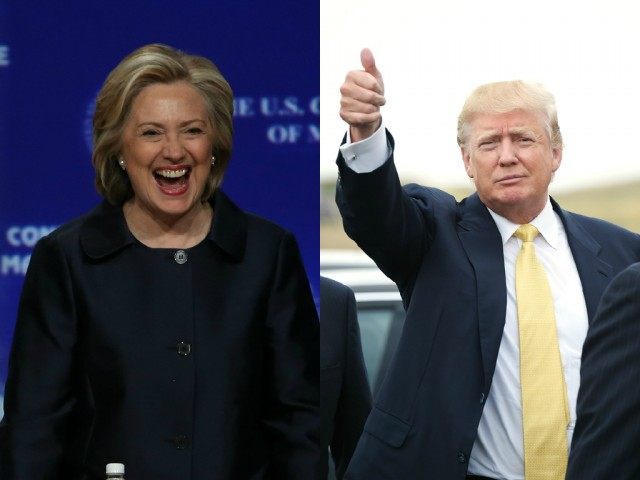
The 2016 US presidential election is turning out to be one of the most unusual since the 1948 Truman-Dewey matchup. It is increasingly expected that Hillary Clinton will face Donald Trump after the primaries; but much could yet happen to overturn this expectation. Trump, Clinton, Ted Cruz and Bernie Sanders all speak to sectional constituencies that feel scared, angry and ignored. As in the late 1970s, many Americans feel humiliated and demoralised about what they see as their country’s decline in world affairs. When a similar mood prevailed in 1980, an unconventional candidate, Ronald Reagan, was elected. The world could once again witness an unexpected electoral outcome in the 2016 US presidential elections. The US has not been as internally divided as today since the Civil War. These divisions are not only causing electoral unpredictability but also policy uncertainty and even paralysis. Predicting the contours of Washington's policies under a Clinton administration is at least a plausible venture; but under a Trump administration, who can tell what will happen?

China
The ongoing rebooting of China is equally important. Change will not be easy for a $12 trillion economy comprising 1.35 billion people. Chinese President Xi Jinping’s Chinese Dream is centenarian: making China a moderately well-off society by 2021 and a fully developed nation by 2049, i.e. the 100th anniversaries of the founding of the Communist Party of China (CPC) and the People’s Republic of China (PRC) respectively. Economically, rebooting China is essential: after three decades of 10 per cent annual growth rates, China is now a middle income country that must transform its export-led growth and government-led investment model to a more sustainable lower growth trajectory that relies on internal demand and consumption-led growth.

Transformation has a sharp political edge under Xi. The anti-corruption campaign has severely disrupted tacit understandings across all levels of the CPC, especially in the higher echelons. So far, the only winners appear to be the so-called ‘princelings’, children of first generation CPC revolutionaries. As political power is increasingly being monopolised by a single leader, the orderly decadal transitions of the administrations of former Chinese Presidents Jiang Zemin and Hu Jintao may no longer serve as a template for the future. Certainly, the ‘collective leadership’ of the Hu years is already a thing of the past.

Pakistan
Pakistan too will experience a significant transition this year. The country’s Army Chief, Gen Raheel Sharif, is scheduled to retire on 29 November. He has garnered immense popularity in the Pakistani society and across the political spectrum by taking the battle to groups like the Tehrik-e-Taliban Pakistan (TTP). He has characterised the TTP as an even greater threat to Pakistan than India is. Such characterisation was a clear departure from his predecessors as also from his own biography: his maternal uncle and elder brother were killed in wars against India. Although several voices advocate that he should be given an extension, Sharif has insisted that he will leave in November.

Given the monopoly Pakistan’s military has over the country’s overall policies related to India, the Kashmir issue, and nuclear weapons, from an Indian perspective, the identity of Sharif’s successor is a significant matter. The senior-most lieutenant general, Maqsood Ahmad, is currently a military adviser at the UN Department of Peacekeeping Operations. Most likely, he will retire from the army in January 2017, as will three other lieutenant-generals who follow Ahmed in seniority. Thus, Sharif’s likely successors are lieutenant-generals Ishfaq Nadeem Ahmed or Javed Iqbal Ramday, currently commanders of 2 Corps (Multan) and 31 Corps (Bahawalpur) respectively. However, there is a long tradition of supersession when army chiefs change in Pakistan. Sharif’s successor could be someone lower on the seniority list, such as Lt Gen Rizwan Akhtar, currently director-general, Inter-Services Intelligence. Both the identity and orientation of Sharif’s successor would be important factors in New Delhi-Islamabad relations.

Myanmar
Ostensibly, the ongoing political transition in Myanmar is the least problematic of the three other transitions in India’s immediate neighbourhood that have the potential to pose challenges for Indian policy. Electoral democracy has certainly triumphed in Myanmar. The next crucial stage will be for a democratic system to provide effective governance. Several factors could yet upset systemic stability. Keeping Myanmar military onside during the transition is critical; and with 25 per cent of the votes in the parliament, the military can block any constitutional amendment. There are huge pent up expectations in Myanmar’s population and, after receiving such a massive electoral majority, the National League for Democracy government will be expected to produce visible results soon. The ethnic minorities' issue, especially of the Rohingyas, could bring significant external pressure on the young democratic government. Finally, Htin Kyaw as president and Aung San Suu Kyi as the power behind the throne could be a feasible arrangement in the immediate future, but in the longer term, this could kindle the problem of dual centres of power.

Afghanistan
In 2016, Afghanistan too may face the problem of dual power centres. The US-brokered arrangement of September 2014 that resulted in Ashraf Ghani as Afghanistan’s president and Abdullah Abdullah as the country’s chief executive officer has worked much better than most had expected. The Taliban’s so-called annual ‘spring offensive’ can be expected from mid-April. However, US President Barack Obama’s October 2015 decision to maintain the current force of 9,800 through most of 2016, then begin drawing down to 5,500 late in early 2017, works to Kabul’s favour. That the Taliban and the Islamic State are now targeting each other adds to Afghanistan’s perturbation and violence but further strengthens the government. India’s core challenge in Afghanistan will remain the same: maintaining its high levels of development assistance while its personnel and citizens continue to be specifically targeted by the Taliban and other insurgents.

Nepal
The most prolonged and troubled transition in India’s regional neighbourhood has been in Nepal. New Delhi’s role in this transition also marks one of the biggest failures of Indian foreign policy in the recent years. In part, Kathmandu’s problem has been one that it shares with other relatively small countries: the tendency of having a difficult time acknowledging and designing for ethno-cultural diversity. Sri Lanka is another South Asian example of this tendency. However, Nepal’s protracted transition, particularly its constitution-making travails, also highlight the difficulties of framing a constitution in an era of mass politics and intrusive mass media. The Madhesi problem is likely to remain unresolved through 2016, with continuing negative spill-over effects on India. Given India’s organic ethno-cultural and ecological linkages with Nepal, this is unfortunate but unavoidable.

Brazil
Brazil – India’s new partner in the BRICS and other ventures – is experiencing a year of Olympian discontent. The economy is shrinking as the recession cuts deep: a negative growth rate of 3.9 per cent is expected in 2016, albeit it could be as severe as 6 per cent. The world still expects Brazilians to rally around and throw a big party when the Olympic Games begin in Rio de Janeiro in mid-2016. However, these days, the mood in Brazil is particularly grim. Investigations of corruption in Petrobras, the massive state-owned energy company, have led to prosecutions and indictments that have now reached the highest levels of government. The speaker of the Chamber of Deputies in Congress has been indicted for corruption. Shockingly, corruption charges have now tainted former Brazilian President Luiz Inácio Lula da Silva, the patron saint of the Brazilian left and mentor of incumbent President Dilma Rousseff. Calls for Rousseff’s resignation are increasing and there are moves to begin impeachment proceedings in Congress. Rousseff’s impeachment is unlikely as she still has the support of most Workers Party (PT) and Party of the Brazilian Democratic Movement (PMDB) legislators. However, it is sobering to consider the possibility that the Rousseff administration is de facto at an end and will limp on as a lame duck till 2018. Most worryingly, the possibility of massive public unrest on ideological right-left lines cannot be discounted.

Red Herrings
In this analysis of key transitions, situations of stasis have obviously been ignored. However, some cases of supposed stability should also be problematised. For instance, it is unclear as to how long incumbent Bangladeshi Prime Minister Sheikh Hasina and her Awami League party will be able to marginalise their longstanding traditional rivals, Khaleda Zia and the Bangladesh Nationalist Party, or continue the process of retributive justice against the perpetrators of the 1971 independence war genocide. Likewise, although he still seems to be firmly in the driving seat in Russia, in 2016, some searching questions will be asked about President Vladimir Putin’s staying power.

NSS 2016: Implications of Russia's Absence

Urmi Tat


The Nuclear Security Summit (NSS) 2016 is the last in a series of four summits held to identify and commit to time-bound agendas on nuclear security concerns. The Washington Summit (2010) focused on securing nuclear material and radiological substances, with the intention of preventing nuclear terrorism, while the Seoul Summit (2012) identified nuclear security with nuclear safety in the wake of the Fukushima nuclear disaster. The Summit also introduced the goal of removing Highly Enriched Uranium (HEU) from civilian operations. The Hague Summit (2014) involved a detailed articulation of the goals set in 2012, such as strengthening nuclear architecture, enhancing the role of the International Atomic Energy Agency (IAEA), ensuring safety of nuclear materials against trafficking and smuggling, among others. With the last edition to the series of Summits scheduled to be held in Washington, DC from 31 March to 1 April 2016, several pressing concerns need to be addressed. However, an official declaration of non-participation by Russia carries several implications for the effectiveness of the upcoming Summit. 

What are the outstanding goals of the NSS and how could Russia's absence impact their implementation?

Outstanding Goals
The chief concerns to be addressed in the Summit stem partly from the shortcomings of the previous conferences and partly from developments in the security environment. The agendas of the previous Summits have been limited to nuclear security, especially towards reducing the use of HEU for military and civilian purposes. However, in practice, countries have barely touched upon sensitive issues such as reduction in the use of HEU for military materials. This is problematic, considering the fact that 83 per cent of weapons-usable HEU and plutonium is in military materials and only 17 per cent in civilian application. 
The threat of nuclear terrorism by non-state actors remains crucial to the nuclear security discourse, with an increasing number of terrorist groups showing interest in acquiring nuclear equipment and know-how. Further, recent reports of stolen nuclear material from Iraq have fuelled fears of radioactive material falling into the hands of the Islamic State (IS). The concern of cyber security is also set to be an important spill-over from the previous Summits, with the exploitation of cyber vulnerabilities becoming an all-pervasive security threat. The Trilateral Initiative signed at the 2014 Summit has the potential to keep the momentum of the Summit operating beyond 2016, and involves implementation of major recommendations of the IAEA for nuclear and radiological security. The 2016 Summit needs to take on the initiative of convincing nuclear-armed states like China, Russia, India and Pakistan to join this enterprise.
Russia’s Absence: A Dent to the Summit’s Credibility?
Russia’s absence needs to be evaluated with regard to its diplomatic clout in nuclear security affairs. Since the Cold War, Russia has been an important actor in securing fissile materials and combating the threat of nuclear terrorism. One of Moscow’s greatest contributions in this regard has been the pledge to remove all HEU from Ukraine by 2012. Although Putin’s discontent over the US’ attitude towards the Crimean crisis marked his absence from The Hague Summit, Russia’s participation was instrumental in the advances made there. Thirty five nations agreed to integrate international security guidelines into their national legislations. The combined pressure of US and Russia has been critical in introducing a sense of urgency and commitment to the nuclear security issue. Russia's non-participation must be seen in the larger context of souring US-Russia relations. With differences in Ukraine and Syria continuing to offset ties, this marks a watershed in their relationship.
In light of the goals to be achieved, the absence of a key international player like Russia would be detrimental to the sanctity of the conference itself. The input of one of the five formally recognised nuclear powers is crucial to the realisation of farsighted goals, and Russia’s absence could mean a number of things as far as their implementation is concerned. Russia’s dispensability of the conference might encourage countries to take the Summit lightly and remain rigid towards compromises. The climate of skepticism is detrimental to the expansion of goals and confrontation of contentious issues that the Summit needs. Russia is estimated to hold the world's second largest stock of civilian HEU, after the US. Moscow operates over fifty research reactors, pulsed reactors and critical assemblies using HEU, as well as five HEU-fueled icebreakers. Russia’s absence sends a message of its lack of prioritisation of nuclear issues to the global community and sets an uncomfortable precedent for future conferences.
Although non-participation in the Summit does not signal an end to US-Russia collaboration on nuclear security issues and does not rule out useful steps taken by other nations, it could well lead to a break in the momentum initiated by the Summits. The Summit processes were able to engage governments, industry and the academic community and have been important for capacity-building. Russia’s attitude towards the upcoming Summit however, places this sense of immediacy in jeopardy. Nuclear cooperation should not be seen as a bargaining chip, falling to the whims of political sentiments. 

LWE and the Role of Economic Development and Key Industries

Jed Lea-Henry


The mere presence of poverty, economic stagnation, and relative underdevelopment within a community or a section of society itself dramatically increases the likelihood of them suffering from or resorting to violent uprisings or civil war. Conversely, notable increases in Foreign Direct Investment (FDI), and Gross Domestic Product (GDP), economic growth, societal employment and rates of pay, all help immunise societies against such violence. This is the ‘grievance narrative’ of conflict forecasting. Former UN Secretary General Kofi Annan once said, “Every step taken towards reducing poverty and achieving broad-based economic growth is a step toward conflict prevention.” So, it is understandable that this tends to be the means by which the rise, and longevity of left-wing extremism (LWE) in India has been explained.

Following the 1991 economic reforms, India’s industrial sector lurched into overdrive. Neglected primary resources such as natural gas, oil, coal, forestry, and minerals were suddenly being pursued to support and extend the agricultural sector (the second-largest in the world in terms of output, and which employs half of India’s total workforce), the manufacturing industry (comprising 25 per cent of India’s GDP and nearly the same percentage of the total workforce in areas such as chemical, pharmaceuticals, textiles, and mineral refinement), and the service industry that has been the engine of the Indian economy for the past few decades.

Today, India is the world’s fastest growing major economy, and according to predictions by the World Bank, will remain that way throughout 2016. Yet, as the country continues to grow into an economic super-power, and as core-industries begin to drive that growth more than ever before, people are increasingly paying more attention to those who are seemingly left behind; and particularly when their grievances seem to fuel support for Maoism (or Naxalism) as the vanguard of LWE in India. With UN data showing that statistically, the living standards of the bottom 300 million Indians (in terms of purchasing power parity) have not improved since 1991, the Indian government has whole-heartedly bought into this understanding of Maoist violence. A link famously outlined in detail in a 2008 Planning Commission Report, and accepted by several influential politicians was that the Naxal problem is not a mere law and order problem.

With an eye on addressing imbalances between regional Maoist strong-holds and the major growth centres of the country, development policies have become increasingly ‘securitised’, with vast swathes of targeted initiatives being launched, which include: the National Rural Employment Guarantee Act (NREGA, now renamed as MGNREGA), the Backward Districts Initiative, and the Backward Regions Grant Fund. Additionally, other existing central government policies have been expanded, and large sums of state funding have been allocated to addressing the problem.

However, although some of these targeted development programs have shown some degrees of success, it has been wildly inconsistent, with increases in development not neatly correlating to declines in violence in the same way as it seemed to do in the inverse. Rather, the opposite has tended to happen: the presence of increased industrial development has coincided with further grievances and greater insurgency. Again, this has been primarily expressed via LWE.

Given the huge scope for industrial investment, and with an estimated $1 trillion worth of unexplored mineable resources, the development of India’s ‘Red Corridor’ appears to stand in the country’s national interest (independent of targeted efforts at left-wing de-radicalisation). And in many cases, it has been pursued without consideration for the plight of the local, often Adivasi, population. In order to make themselves appear as attractive investment opportunities, local and state governments have often been happy to skirt laws, regulations and the rights of local peoples - an issue most commonly reported in the Maoist strongholds of Odisha, Chhattisgarh and Jharkhand). This has tended to take the form of forced displacement (an estimated 150, 000 people since 2004) and/or environmental degradation.

Related, yet more surreptitious grievances have involved the redistricting of land in order to avoid paying compensation; allowing industries (under the Joint Forestry Management programme) to operate as third parties in the privatisation of forests (such as with the behaviour of the Indian Tobacco Company in Andhra Pradesh); by over-incentivising ‘upstream’ development projects (such as dams and non-labour intensive factories, including extraction industries such as mining and timber) that benefit the broader economy yet provide little long-term benefit to the local region; the development of rural transport infrastructure (under the Pradhan Mantri Gram Sadak Yojana ‘PMGSY’) and telecommunication infrastructure (under the Universal Service Obligation Fund) as a means to monitor and launch military offensives against the Maoists, rather than as a means to win hearts and minds; a stripping back of the Forest Conservation Act in order to allow greater, unchecked development; and the release of misleading forecasts concerning the impact and compensation related to projects such as with the South Korean Pohang Iron and Steel Company’s (POSCO) $12 billion investment in Odisha.

However, this also represents a selective and favourable understanding of LWE support, often relying upon anecdotal evidence, weak correlative data, a glossing over of ‘push’ vs. ‘pull’ factors, and by simply overlooking a number of statistically integral dynamics as merely peripheral. The rise of, and support for, LWE violence in India is also well correlated to high levels of corruption, low literacy rates, and the presence of easily stolen resources (such as explosives on mine sites); and has considerably stronger statistical correlations (above and beyond issues of development) to the rise of societal fear from conflict in neighbouring districts, with hard to access terrain (heavily forested areas), and with high population densities of lower or oppressed castes.

Supporting these alternative explanations, movements toward greater self-determination, such as with the creation of Jharkhand in 2000, have tended to produce upsurges in Maoist support rather than expected declines. If anything, this speaks to an unscrupulous LWE movement that seeks opportunities and various aggrieving factors to further their ideology rather than as a movement rising and falling based on the level and nature of societal development.

Patriarchy, ISIS And Female Slaves

Suman Quazi

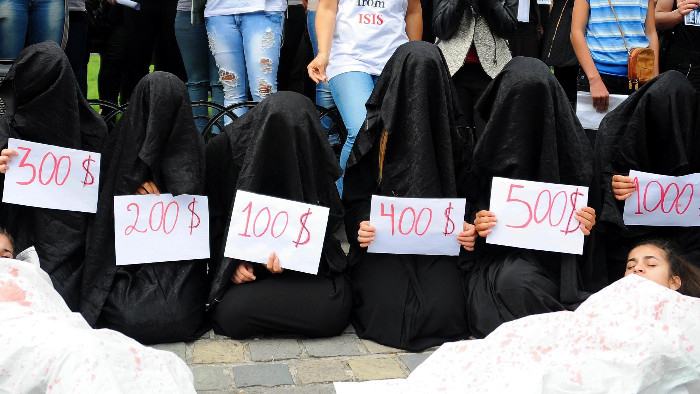
Women protest against ISIS' barbaric violence towards women. (Photo: Anadolu Agency/Dursun Aydemir)
Do they not reflect on the Qur’an, or is it that their hearts have locks upon them? The Qur’an (47:24)
In an attempt to re-read the Quran from without and within- long established patriarchal perceptions of its holy verses- we find Asma Barlas reminding us of these words at the outset of her book “Believing Women in Islam- Unreading Patriarchal Interpretations of the Quran”.
While the ambit of theoretical debates on what the Quran says or sanctions, may be misled with reflections or chains of varied opinions, that there are indeed chains upon the ankles of women which we have dragged along with us into the contemporary world, is a sad reality. A reality that has plagued our kind for centuries at end.
On 3rd August, 2014, ISIS fighters attacked the villages of Mount Sinjar in northern Iraq in an attempt to capture “bigots” and bring them to justice for belying the so call tenets of Islam. This area was predominantly inhabited with the simple folklore of the Yazidi tribe who committed the crime of praying to the “Melek Taus”. According to the beliefs of this community, the Melek Taus or the Peacock Angel is primary amongst the 7 angels sent by God and represents their unredeemed Satan. To the fundamentalist, patriarchal and uncompromising Islamists of the ISIS, this comprises the heinous crime of Satan worship. The Yazidi community is also looked down upon for their practices in polytheism. It was in this self-appeasing and contorted reasoning, that ISIS fighters sought justification for the catalogue of disasters they began inflicting upon the Yazidis women.
Soon after the capture of Sinjar, ISIS’s English publication “Dabiq” released an article called “The Revival of Slavery Before the Hour," wherein it unabashedly and unequivocally claimed its support for and intentions of reviving the slave industry. Like that, with a sleight of hand the fates of thousands of women were reduced to the life of servitude, torture and rape. Everyday. For months.
Ever since, the ISIS has been running a full-fledged and organized system of enslaving their captives as spoils. Hordes of women have been herded off in looted Hajj(pilgrimage) buses to the cities of Mosul and Raqqa, to their makeshift slave markets for the purpose of being bought and sold like cheap second hand garments no one has any use for, in exchange of arms, money and even cigarettes.
The Islamic State Research and Fatwa Department has invested committed efforts in institutionalizing Slavery and the consistent torment of women and children through a rigorous system of memos, guidelines and internal policies. As if the cruel mortification- through rape, violence, abuse, forced abortions and deplorable living conditions- of more than 3000 women was not enough pain inflicted, the Fatwa (no 64) which was released on 29th January, 2015 made way for newfound atrocities with its explicit guidelines. According to this ruling, it made it unlawful for a man to copulate (read: rape) with a woman who had not finished her menstrual cycle or was pregnant. And so began the saga of forcing contraceptives down the throats of these captive women. Excruciatingly invasive virginity tests, public stripping, beating (when found pregnant or menstruating) came along with it so axiomatic and easily as if it were only a driftwood in a stream. Albeit a stream of blood. The levels of destitution upshot to such a high that these women prayed for death and pregnancy alike (gathered from the accounts of many women who were smuggled out and into the refugee camps of Dohuk) as the only ways out of their misery. These repeated accounts from the survivors of this hell, has also established that some of the captives were as young as 9 years old. Raped. Tortured. In the name of Jihad. In the name of religion. In the name of God. Or in the garb of some other new explanation that justifies the dehumanizing of women.
21 and fearless, Nadia Murad- an escaped fugitive- spoke at the UN with steadfast eyes and un-quivering when she said “we have the right to demand a global stance because we share other values of humanity…no religion accepts enslaving women and raping children”. Herein I will quote Barlas again where she says-
“To accept the authority of any group and then to resign oneself to its misreadings of Islam not only makes one complicit in the continued abuse of Islam and the abuse of women in the name of Islam”
The long standing institutions of patriarchy have sought to belittle and thereafter justify the demeaning of women for years, repeatedly. However, when the tolls of inequality are counted in terms of lives these intellectual debates seem perfunctory and even irrelevant.
Efforts have been made by various smugglers from the Kurdish community to bring some recluse to a very few portion of these afflicted women. However, the fervor with which their destruction has been taken up, their fates cannot be assumed.

White Feminists/Black Blobs

Mara Ahmed

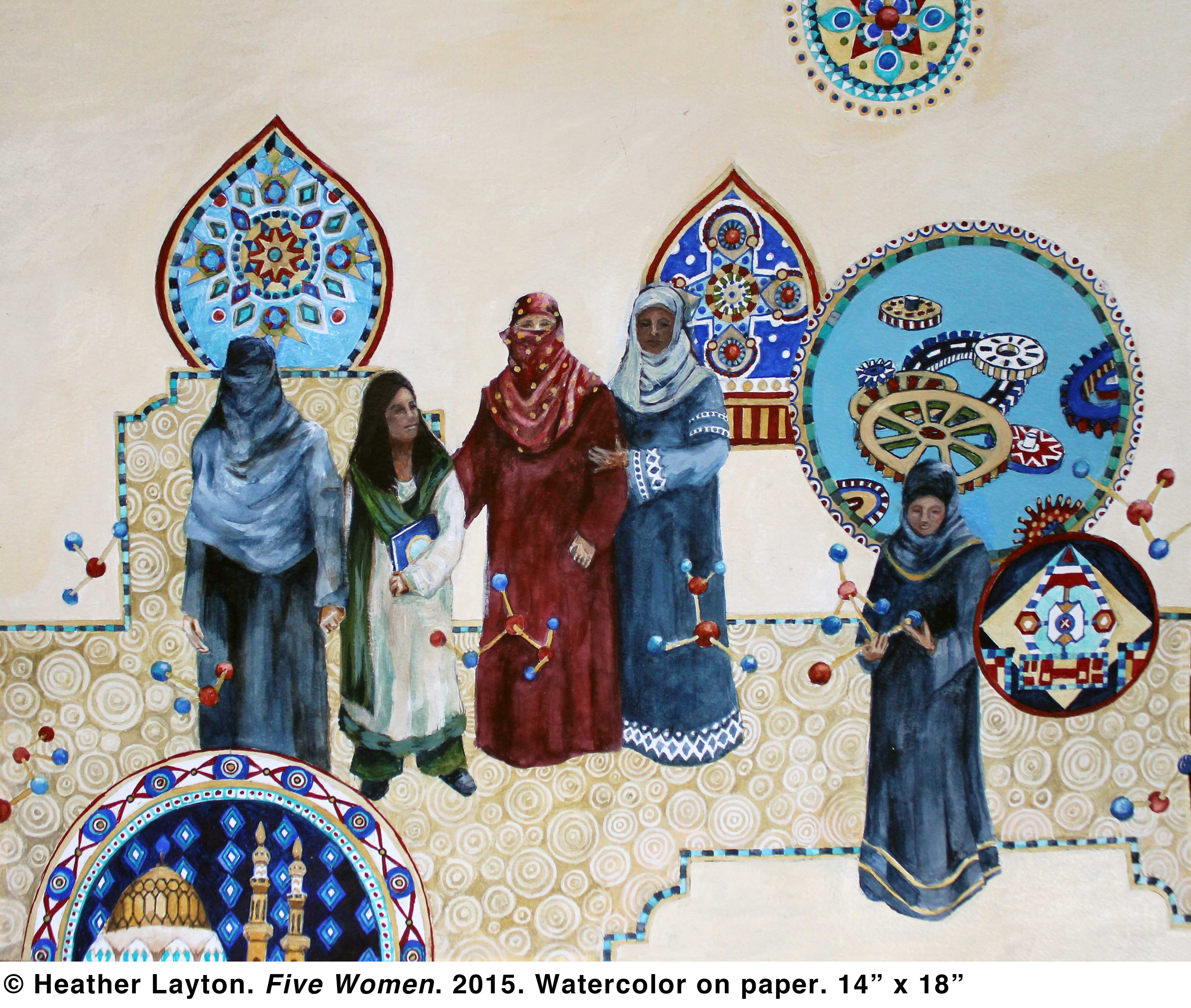
My friend expressed her strong visceral reaction to the five anonymous blobs. She was referring to a photograph I had posted on social media, in which I stood with five women wearing the niqab, at a conference in Upstate New York. My white feminist friend was convinced we were witnessing oppression. She was particularly galled by the fact that these women were academics. She mentioned how Camille Paglia, Betty Friedan and Hillary Clinton have interesting interactions with strangers because we all know what they look like. How are we supposed to communicate with blobs?

One of the formative words of my childhood is the Urdu word meyana ravi which means the middle path or the way of moderation. My mother invoked it frequently by reminding us that it was a concept loved deeply by the Prophet Muhammad. He lived by it in both small and monumental ways. For example, his advice to eat with temperance, just short of satiating one’s hunger, always struck me as universally profound. Islam’s take on wealth is equally sensible. Although charity is a religious obligation and humility is part of Islam’s DNA, one is urged to live well, meaning no ascetic renunciation of worldly pleasures, no monastic reclusion, no self-imposed austerity. Every society exists along a normative socio-political spectrum, but within the prevalent moral and legal code, we are free to exercise our judgment and express ourselves fully. The golden rule in the midst of such freedom is moderation.

When I walked into a symposium about cultural identity and religious beliefs, organized under the aegis of interfaith dialogue, my thoughts returned to meyana ravi and its centrality in Islam. University professors and educators from Muslim countries had been invited to present their papers. Most of them were from Saudi Arabia and the majority women. I am familiar with the Saudi abaya, a black overcoat worn on top of clothing, not unlike a Moroccan djellaba or a long kaftan, but I was taken aback by the full facial veiling. I couldn’t help but think what a severe take that was on modesty. I felt for the women as the room was uncomfortably warm. One of them looked at me and laughed as she tried to fan herself with the lower section of her veil, a moving part that fell over her nose and mouth. As we went around the room and introduced ourselves, it became clear that many of the men at the symposium were not educators. They were either the husbands or sons of the female professors. In Saudi Arabia, women are not allowed to travel alone. At lunchtime, the women didn’t join the rest of the group. They found a private room where they could take off their veils and eat comfortably.

The papers that were read at the conference were structured around a utopian Islamic paradigm which had very little to do with reality. For this reason, they were almost entirely indistinguishable. They quoted freely from the Quran, stressed the necessity to respect other religions (there is no compulsion in religion), and advocated compassion and tolerance towards religious minorities according to Islamic protocol. The discussions sparked by these papers were more informative. They used culture and religion interchangeably, thus anchoring “Muslim culture” to one specific way of being, which because Islamic, was clearly the best.

An Indonesian professor intervened with a thought-provoking presentation, in which he stressed the idea that culture was human-made and therefore not monolithic. Religion outlines certain basic values which culture subsumes. As an example, he offered the basic tenet of modesty in women’s clothing, which meant that women shouldn’t go around wearing bikinis but, within reasonable parameters, they could decide what modesty meant to them. This argument was followed by a short deliberation on how women should dress and what the Quran and Sunnah reveal on the matter, but some of the women brought the debate to a felicitous close.

As I got to know the women more, the stark visuality of the veil began to wear off. They greeted me with kisses on the cheek, very similar to how the French se font la bise. They took selfies with my Bosnian American friend and I, and were keen to post everything online. I don’t cover my hair and my friend wears a hijab but does not veil fully. They didn’t seem to have a problem with either one of us. I noticed the close relationship between one of the women and her teenage son, who had taken time off from college to accompany her on this trip. They were academics, mothers, opinionated Muslims, women of color, finicky dressers, social media aficionados, and our sisters in the struggle against patriarchy.

The struggle against patriarchy, that’s what I kept coming back to - how it is twofold for women who belong to disenfranchised communities. On the one hand we must contend with white men in suits, with long histories of imperial profiteering, sitting calmly in boardrooms, instituting laws that control the Maghrebian woman’s body. We have white women who in their haste to diagnose oppression, marginalize further by dehumanizing and isolating what is not in line with their ideas of female emancipation. Then we have the struggle within our own communities, where patriarchy, conservative tradition, and autocratic political structures have brewed a lethal mix. These factors are not disconnected from history and global politics of course. Saudi Arabia is a particularly good example of how the West remains complicit in the repression of Arab self-expression. Close military ties between the United States and the Saudi regime ensure just that.

The obvious links between staggering Western wealth and centuries of imperial conquest and plunder are not mentioned in polite society. Yet there they are. Colonialism reinforced and intensified patriarchal structures in colonized lands and present day imperial wars continue to perpetuate that status quo. White feminists tend to overlook these interdependencies, i.e. some of the economic, legal and sexual freedoms enjoyed by Western women are an indirect result of imperial expansion and profit. These disparities are not natural, they have to be maintained by military force and tyrannical financial structures.

How we dress is an important signifier of identity. In her email, my friend kept referring to the veiled women’s fashion choice and how she had more sympathy for the hijab versus the niqab. But attire goes beyond fashion. It is intimately linked to how we want to project ourselves in the world, it can embody religious or cultural affiliations, it can speak of race, gender and economic class, it provides functionality and protection. The depersonalization of the niqab or burka is often pointed out, but perhaps it is no more homogenizing than the cheap, ready-to-wear clothing manufactured in Bangladesh and Vietnam, under precarious conditions, and thrust upon us by fashion retail every single season.

In order to delve more into covering up and how it interacts with identity, I interviewed another white friend of mine, an activist whose politics aim to be trans-inclusive and whiteness-decentralizing. She started wearing the hijab six months ago. She talked about unquestioned whiteness (accompanied by unquestioned privilege) versus contentious whiteness (which includes people of diverse racial backgrounds passing as white). As a trans woman and a white hijabi, she finds herself mostly on the side of contentiousness – whether it be whiteness, Muslimness or femininity. On top of practical benefits such as not having to worry about one’s hair, she feels that the hijab provides her a sense of security. She embraces the scarf as a symbol of femininity, as well as the modesty and humility she has learned to associate with Islam, but she doesn’t have much use for its oppressive connotations. How do strangers react to her? TSA agents are obviously interested in inspecting her headgear but generally speaking, reactions to her scarf have been neutral - some antagonism but also incidents of heightened chivalry from men. In any case, she told me she was so over the “mystical powers” of the hijab, she wears it as a matter of routine, a habit, an extension of who she is.

To assume that a piece of cloth wrapped around one’s head can spell the complexities of subjugation (or liberation) is astonishingly reductive.

In the early 1990s, the New York based Pakistani artist, Shahzia Sikander, donned an elaborate lace veil for a few weeks in order to record people’s reactions. What fascinated her was her own relationship to the veil - the sense of security and control she experienced by being able to test society’s behavior, whilst being protected from its gaze.

The principle of the male gaze is a cornerstone of feminist theory. Mary Wollstonecraft, Simone de Beauvoir and Hélène Cixous have written extensively about the duality patriarchy creates whereby woman is positioned as the opposite of man, as his inferior or the other. Woman becomes the object of the male gaze and therefore begins to exist only as a body, not an autonomous being possessing both mind and soul as well as physicality. This objectification places oppressive limits on a woman’s agency and dictates a divide between the private and public spheres. Women need to be contained in private spaces and are banished from or invisibilized in public arenas.

How ironic then that although Eurocentric feminists understand the meaning of the male gaze, they are much less sensitive to the power of their own gaze and the objectification of women they see primarily as bodies, as the physical representation of the backward exotic.

The split between the private and public is meaningful here. As in France, most Western feminists are keen on ejecting the visually non-Western other (women in burqas or headscarves being its most obvious manifestation) from public spaces. It’s as if the liberal feminist imaginary cannot exist in conjunction with an Oriental manifestation of what it might mean to be a woman, unless it is in opposition to it - it must strive to dominate and efface in order to define itself.

It’s important to remember, however, that it is precisely in shared public locations that diverse cultural encounters happen, where we learn to dialogue and function as a vibrant society of equally empowered citizens. My feminist friend thought the women’s niqabs were inhibiting their ability to communicate, but state policing of communal spaces can isolate and exclude in a way that clothing most certainly cannot.

Excluding and alienating for purposes of integration is a pretty obvious oxymoron, yet this type of faulty logic is embraced happily as a manifestation of solidarity. There is a difference between paternalism and solidarity. In the words of Australian Aboriginal artist and activist Lilla Watson:

If you have come here to help me, you are wasting your time. But if you have come because your liberation is bound up with mine, then let us work together.

Let us strive to learn one another’s histories, cultures, political realities and forms of struggle. Let us have the courage to recognize the racist infrastructure undergirding global power imbalances and our complicity in systems of dominance. Let us forge alliances that are respectful of difference and politically evolved. Gender justice is only one component of the broader struggle for racial and economic justice as well as queer and transgender rights. Let us confront these inequities simultaneously, exhaustively, mindfully. Exclusion is not an option.

The Crusade In Favour Of GMO: Falsehoods And Vilification Will Not Fool The Public

Colin Todhunter

Pro-GMO campaigners often attack critics of the technology by claiming their negative views of it emanate from well-funded environmentalist groups or commercial interests in the organic food sector. The assertion is that such bodies promote falsehoods and scaremongering about GM to protect their own interests and that the GMO agritech sector has fallen victim to this.
Another claim is that critics rely on quackery on the internet or on some form of discredited science that is only carried out by those whom the ‘scientific community’ has seen fit to marginalise due to ‘bad’ science and a perceived political agenda.
The gist of the argument is that pseudo-science and a powerful ideologically motivated group are holding the world to ransom by conspiring to mislead the public and prevent the spread of GM, which according to pro-GMO activists, is denying the poor and hungry of the world access to food.
In a recent piece on Huffington Post, Jon Entine followed a similar line of attack to denigrate Rachel Parent, her family’s business interests and the campaign which she heads, Kids Right To Know (KRTK). He calls Parent a well-polished ‘crusader’ against GM food. He also argues that on the KRTK website, there is a stream of studies cited that raise concerns about GM, but which, according to Entine, are predictably and conveniently labelled as being mostly a combination of fringe research and a collection of discredited, misconstrued and biased studies.
Entine claims to present a “well-reasoned critical analysis” of Rachel Parent’s views by referring readers to a blog, where we are informed there are hundreds of independent studies on GM and they all show safety. During his lengthy attack, he concludes that Rachel Parent is a tool for vested interests.
Entine himself has a history of ‘hit’ pieces against prominent figures. If he wants to talk about people posing as a tool for vested interests, he is on very thin ice indeed in terms of his own situation: see "the making of an agribusiness apologist". Indeed, that ice melted long ago to expose his lack of objectivity or credibility as an 'independent' analyst.
It should be made clear that opposing GM is not affecting the world's ability to feed itself. Feeding the world is first and foremost a political issue. We hear much about the potential of GM, but the reality is that GM crops have been fraudulently placed on the commercial market, have contributed nothing to alleviating food poverty or food insecurity (have actually undermined it) and have caused a great deal of damage to health and the environment and livelihoods too.
The path to feeding the world lies in helping smallholder farmers to develop their (non-GMO) methods in the Global South, where the majority of hungry people live. These farmers are the backbone of global food production. It also depends on challenging rigged trade, neo-liberal economics, structural inequalities and food commodity speculation, among other issues (see this).
We now have food surplus countries in the West which mirror food deficit areas elsewhere, of which the latter have become dependent on (US) agricultural imports and strings-attached loans and aid. Look no further than Africa to see what has happened. At the time of decolonisation in the 1960s, Africa was not just self-sufficient in food but was actually a net food exporter. Today, almost every country is a net food importer.
Food and agriculture has become wedded to power structures that have restructured indigenous agriculture across the world and tied it to an international system of trade based on export-oriented mono-cropping, commodity production for a manipulated and volatile international market and indebtedness to international financial institutions. The solution lies in nations prioritising food self-sufficiency and extricating themselves from a system of international trade and markets that have been manipulated for both the commercial and geopolitical gain of mainly the US and its agribusiness companies.
However, the continuous push to privilege GM ahead of anything else serves the commercial agenda of transnational agribusiness (and marginalises other models of agriculture that deliver proven results) and acts as an ideological and political device that diverts attention away from an economic system of 'globalisation' which is fuelled by and serves these companies. For example, the argument in favour of GM in India cynically plays on a situation created by this very system, as outlined here.
The aim of the Pro-GMO lobby is to depolticise the GM debate and to get us all to focus on the ‘science’. But even when focussing on science, the pro-GMO lobby still fails to make its case.
The book 'Altered Genes, Twisted Truth' highlights how GM is not based on sound science at all but on the systematic subversion of it. Then there is the claim that there have been hundreds of independent studies showing the safety of GM and the claim of there being a scientific consensus on GM. Both such claims were made by Entine in his piece and both are bogus.
Biotechnology seed companies, aided by advocates from academia and the blogopsphere, are using their substantial resources to broadcast the myth of a ‘scientific consensus’ on the safety of GMOs. In its 2014 report, Food & Water Watch dismisses the so-called scientific consensus that Entine and others like to claim.
The well-referenced report notes that the scientific bodies that purportedly are part of the ‘consensus’ are few in number and are by no means representative of the entire scientific community. The GMO-consensus campaign has misquoted or misrepresented these scientific bodies to falsely assert that they are part of a consensus on GMO safety.
The GMO-consensus campaign points to the Royal Society of Medicine and the Royal Society of London as part of the scientific consensus, but neither organisation has an official policy on GMO safety. The report notes the positions of several other leading scientific institutions and academies across the world that the pro-GMO consensus campaign has used to forward its case. It concludes that the campaign uses a mix of cherry-picked quotes, industry-backed sources and misrepresentations of positions held to feed its spin.
Hundreds of independent scientists in relevant fields have come forward to condemn the GMO-consensus campaign. The claim that all credible science is on the side of GM and only a few incompetent maverick scientists indulge in anti-GM pseudo-science is propaganda and nothing else. The aim is to propagate this falsehood time and again in the hope people will come to believe it.
There is also no consensus in the scientific literature. Entine and others like to cite big-lists that supposedly make the case for GMO. Begin to sift through these studies and it becomes clear the case is being misrepresented via a mix of industry-supported sources and listing studies that do not claim there is safety regarding GM and which are often not independent of the bio-tech industry.
There is a genuine controversy about GM, and the public as consumers are right to be concerned. Despite the pro-GMO crusaders trying to argue that environmentalists and the organic industry have undue influence and are misleading the public on GMO, this situation is far from the truth.
The massive wealth of the biotech/agribusiness industry has been translated into political clout within the media, science, governments and policies: for example, see this on the corporate hijack of the FDA and EPA in the US, this on the EFSA and Monsanto in Europe, this and this on the situation in India and this on the push to get GM into the UK over the heads of the public - of course, the secretive and corrupt TTIP could possibly achieve this in the long run; and then factor in the $100 million spent to prevent labelling GMOs in the US and the amount spent on lobbying, advertising and campaign donations (see this about spending by Monsanto for the US alone).
The smear campaigns engaged in by pro-GMO economic neoliberal crusaders are intended to denigrate all criticism of GMOs in the eyes of the public, from wherever it comes. By attacking KRTK, Entine doesn’t destroy or undermine the logic and facts upon which critics of GM base their arguments, including those of Rachel Parent. If anything, this type of hit piece, laced with the usual misrepresentations about the efficacy, safety and reality of GM, indicates a certain desperation and demonstrates a failure to convince the public about the need for GM.

America Cannot Be Great Again

Linh Dinh

Interviewed by Spiegel in 2005, Lee Kuan Yew observed, “The social contract that led to workers sitting on the boards of companies and everybody being happy rested on this condition: I work hard, I restore Germany's prosperity, and you, the state, you have to look after me. I’m entitled to go to Baden Baden for spa recuperation one month every year. This old system was gone in the blink of an eye when two to three billion people joined the race—one billion in China, one billion in India and over half-a-billion in Eastern Europe and the former Soviet Union.”
Though American workers never could demand a one-month vacation a year, they enjoyed increasing pays and benefits from the end of WWII to the 80’s. If hard working, even a high school drop out could buy a house, car and send his kids to college. What Yew said applied to all of the West, and its decline can be traced to the entrance of China, in particular, into the commercial fray. Free from the self-imposed shackles of hard-core Communism, China has gutted entire Western industries, since these cannot compete with China’s low waged workforce. Other Asian countries, India, Pakistan and Vietnam, etc, have also forced the shut down of many American factories.
Call it what you will, Globalism, Neo-Liberalism or just plain Capitalism, the open market rewards only those who can offer any product at the lowest price, thus we have this often cited “race to the bottom” in terms of wages. Donald Trump didn’t just outsourced, he in-sourced cheap, immigrant labor. Had he not, his businesses wouldn’t be able to compete.
Having made his billions, Trump is proposing a 45% tariff on Chinese imports, which means a $199 iPod will cost $288.55, and a $90 pair of Nike will be bumped to $130.50. Moving factories back to the US will create jobs yet push prices to the sky. To stay competitive, then, American companies will be forced to pay American workers what their Chinese counterparts make a month, $202.45. That’s the reality of a global market that workers everywhere, from Mexico to Bangladesh, must deal with.
Even with its competitive edge, China is unable to sell as much as before, for its exports have dropped 25.4% year-to-year, as of February. China has announced plans to lay off 1.8 million steel and coal workers, and that’s just the beginning of its own decline.
Our ruling elites know the global economy is keeling, and that’s why they’re preparing for war. When there’s less to go around, only the most vicious will eat. Most Americans don’t realize they’ve been living way beyond their means for decades. With record debts, the US is in fact the poorest country on earth, but this is not evident since we have a global goon squad called the United States military. Keeping nearly the entire world in line, we can demand goods with our fiat money. Even Bernie Sanders knows this, and that’s why he’s basically a support-the-troops and anti-Russia kind of guy.
Sanders’ base are mostly comfortable whites who pretend to be anti-racist while staying as far away from all minorities as possible. They also mock and despise poor whites. While heavily invested in Capitalism, many pretend to be Socialists, while their spoiled children pose as Communists. Sander’s supporters are those who voted for Obama twice without feeling any remorse, for all they care about is appearing to do what’s right.
Though the US can’t win wars, it’s adept at wrecking countries. With unprecedented spying, we also know what’s in every politician’s closet, so any career can be torpedoed at will. This also raises the question of why Trump is still left standing if he’s such a threat to the establishment? The casino business isn’t the cleanest, and just about everyone has his Eliot Spitzer, Bill Clinton or Pee-Wee Herman lapses. If there are no scandals to be dug up, they can be fabricated. Our press is not shy about telling lies.
What we have isn’t democracy but relentless mind control, then phony elections. Just about none of our national “representatives” represent us. With our corporate media, two deeply corrupt parties, “super delegates” and unaccountable voting machines, our elections are basically rigged.
Trump, Sanders and Clinton are simply trotted out to absorb people’s anger and passion. The military banking complex will continue to do what it wants to do. It doesn’t matter if Clinton or Trump is our next President, American living standards will only nosedive further, with only our super corrupt ruling elites thriving. Behind walls monitored by drones and combat vets, they will chuckle as we try to lob Molotov cocktails onto the fringes of their golf courses.
You can’t have a campaign based on measured expectations, so instead of “TOGETHER WE GO DOWN,” “IT WON’T BE SO BAD” and “HOPEFULLY A SOFT LANDING,” we have “MAKE AMERICA GREAT AGAIN,” “A NEW AMERICAN CENTURY,” “REBUILD THE AMERICAN DREAM” and “UNLEASH THE AMERICAN DREAM,” etc.
Even with competent and honest leadership, our future will be most difficult, but since we’re repeatedly railroaded into “electing” one huckster after another, it sure looks like we’ll be up Hillary Creek without a trump card.

Coal giant Peabody Energy on verge of bankruptcy

Clement Daly

Amidst the ongoing collapse in global commodity prices, St. Louis-based Peabody Energy warned last week it “may need to voluntarily seek protection under Chapter 11 of the US Bankruptcy Code.” The energy giant is the world’s largest privately owned coal company with a more than 130-year corporate history.
A Peabody bankruptcy would be only the latest in a string of high-profile coal company failures—among the wreckage of dozens of smaller operations—in the US, including Arch Coal (January 2016), Alpha Natural Resources(August 2015), Walter Energy (July 2015), Patriot Coal (May 2015 and July 2012) and James River Coal (April 2014). Bankruptcies at beleaguered coal producers Foresight Energy and Cloud Peak Energy are also expected soon.
In each case, the bankruptcy courts are being employed to attack the wages, pensions, health care and working conditions of miners—gains realized through decades of struggles—and shift the entire burden of the crisis enveloping the global coal industry onto their backs. Peabody will use any forthcoming restructuring to do the same to its approximately 7,600 employees in the US.
The United Mine Workers of America (UMWA) has issued no public statements on the threatened bankruptcy and further jobs massacre. For decades, the UMWA has had the closest corporatist relations with the giant coal company. It has not called a strike against Peabody since a walkout by 7,000 miners in 1993, which the UMWA betrayed paving the way for the company to slash the jobs, wages and benefits for thousands of active and retired miners.
In 2007, Peabody spun off its unionized operations to a new corporate entity, Patriot Coal, in order to divest itself from its higher-costing operations in the Appalachian Basin while offloading substantial liabilities associated with pensions, health care and environmental obligations to the new company. Loaded up with debt, Patriot would declare the first of two bankruptcies in 2012.
In January, the UMWA reached a court agreement with Peabody that allowed the company to escape its final $70 million payment owed to a health fund covering 12,000 Patriot Coal miners, including many who worked for Peabody.
On March 15, Peabody announced it would utilize a 30-day grace period in relation to a $71.1 million interest payments owed on its debt in order “to have conversations with our lenders about our alternatives, while maintaining options around our interest payments.” By the time trading opened the next morning, the company’s shares had lost around half their value and were trading at about $2.00 per share. It represented a dramatic decline from highs of $123.45 a share in the first quarter of 2015 and $299.00 as recent as the first quarter of 2014.
In its 2015 annual report to the US Securities Exchange Commission (SEC) released March 16, Peabody claimed it was $6.3 billion in debt and had maxed out one of its lines of credit in February. The company lost nearly $2 billion last year on top of a $787 million loss in 2014, losses it said it expects to continue.
“We incurred a substantial loss from operations and had negative cash flows from operating activities for the year ended December 31, 2015. Our current operating plan indicates that we will continue to incur losses from operations and generate negative cash flows from operating activities,” the statement explained.
“As a result of these factors, as well as the continued uncertainty around global coal fundamentals, the stagnated economic growth of certain major coal-importing nations, and the potential for significant additional regulatory requirements imposed on coal producers, among others, there exists substantial doubt whether we will be able to continue as a going concern,” the statement warned.
While it attempts to negotiate with its creditors, Peabody—which has already cut its global workforce by 20 percent since 2012—is seeking to improve its financial position by selling assets, cutting costs and increasing productivity. The company is set to conclude a sale of its El Segundo and Lee Ranch coal mines in New Mexico, as well as its Twentymile Mine in Colorado, to Bowies Natural Resources. Peabody also boasts in its SEC filing of having cut operational and administrative costs by some $760 million.
Without giving specifics, Peabody told the Gillette News Record earlier this month that it had “implemented a small number of job reductions at its Caballo and Rawhide mines” in Wyoming’s Powder River Basin. These come on top of 75 layoffs in the company’s Arclar Mine Complex in Illinois earlier this year and the announcement last June that it would eliminate approximately 25 percent of its corporate and regional support positions, about 250 jobs, in order “to create a leaner organization and lower costs.”
“However, there can be no assurance that our plan to improve our operating performance and financial position will be successful or that we will be able to obtain additional financing on commercially reasonable terms at all,” the company warned in its SEC filing. “If we are not able to timely, successfully or efficiently implement the strategies that we are pursuing to improve our operating performance and financial position, obtain alternative sources of capital or otherwise meet our liquidity needs, we may need to voluntarily seek protection under Chapter 11 of the U.S. Bankruptcy Code.”
A Peabody bankruptcy would signify not only a deepening of the crisis of the US coal industry and American capitalism, but of global capitalism as well. The company controls some 6.3 billion tons of thermal and metallurgical coal reserves in the US and Australia, selling nearly 230 million tons last year. The company operates internationally through offices in the US, Australia, United Kingdom, Germany, China and India.
According to the US Energy Information Administration (EIA), US coal production in 2015 reached its lowest level since 1986. Bound up with this was a 21 percent drop in exports as compared to 2014. China, which imported some 8.3 million tons of US coal in 2013, took fewer than 0.5 million tons in 2015 as its economy slowed to its lowest rate in 25 years.
Amid these declines is a staggering collapse of the US coal industry’s market value. According to analysts at the Rhodium Group, “The four largest US miners by output, Peabody Energy, Arch Coal, Cloud Peak Energy and Alpha Natural Resources, which account for nearly half of US production were worth a combined $34 billion at their peak in 2011. Today they are worth $150 million.”
“Coal producers are suffering through a historic rout,” reported Bloomberg Business in January. “Over the past five years, the industry has lost 94 percent of its market value, from $68.6 billion to $4.02 billion.”
Particularly hard hit is the Central Appalachian Basin—southern West Virginia and eastern Kentucky—where extensively mined seams have led to high production costs. However, the mine closures and layoffs, which have devastated the Appalachian region over the past few years, are now spreading to other coal basins in the American Midwest and West.
In fact, Peabody’s troubles highlight this trend because it no longer operates any mines in Appalachia, since spinning these operations off to Patriot Coal in 2007. At its US operations, Peabody mines thermal coal in Illinois, Indiana, Wyoming, Colorado, New Mexico and Arizona primarily for domestic electricity production. At its massive North Antelope Rochelle surface mine in the Powder River Basin, the company produced approximately 110 million tons of coal in 2015—more than the entire state of West Virginia.
However, thermal coal’s share of the domestic energy market has steadily eroded in the face of cheap, abundant natural gas. In its Short-Term Energy Outlook released last week, EIA forecasts that “2016 will be the first year that natural gas-fired generation exceeds coal generation in the United States on an annual basis.”
Peabody also controls substantial thermal and metallurgical reserves in Queensland and New South Wales in Australia. In 2015, Peabody’s Australian operations produced nearly 35 million tons, about 77 percent of which was exported on the global market.
In 2011, Peabody bet on the continued rise of China and its strong demand for metallurgical coal used in steelmaking by acquiring Macarthur Coal Limited. However, metallurgical coal prices have plummeted since then with the slowdown of the Chinese economy.
“After reaching $330 per metric in 2011,” noted Bloomberg in January, “prices have since tanked to a quarter of that level. Goldman Sachs Group Inc. forecasts benchmark metallurgical coal prices to fall to $75 this year.”
Coal miners in China are also facing the brutal consequences of the global economic crisis. According to the China National Coal Association, China has about 10,760 mines, about 5,600 of which will closed over the next three to five years in an effort to cut surplus production by as much as 500 million tons. In 2016 alone, the government aims to cut production by 60 million tons by closing more than 1,000 coal mines. Announcements by the Chinese government last month that it intends to eliminate 1.3 million jobs in the coal industry and another 500,000 steelworker jobs have led to angry protests and demonstrations by thousands of workers.

Hunger stalks US campuses

Johanna Proust

The iconic pictures of life on American college campuses notwithstanding, hunger is a prevalent and growing problem among US students.
This year the Houston Food Bank will be offering 250 “Food Scholarships,” providing 50-60 pounds of food to San Jacinto College students who qualify. The problem of hunger on campuses is little reported but widely felt. Financially hard-pressed students around the country—well aware that without a degree their chances of employment are drastically lower—are routinely missing meals in order to stay in school.
Since the 2008 economic crash, states have accelerated the de-funding of public education. Forty-seven out of 50 states have cut aid to colleges, with state spending on higher education nationwide down an average of 20 percent. These cuts have resulted in skyrocketing tuition.
The average cost of tuition and fees at US colleges and universities more than doubled between 1970 and 2013—but public university tuition has almost quadrupled. Pell Grants, the federal program for low-income students, covered 67 percent of the average cost of attendance in 1975. As of 2012, it covered only 27 percent, and is lower yet today.
The net effect of these state and federal budget cuts has been to transfer the burden of higher education from government onto the backs of students and their families.
This cost-shift has meant the ballooning of student loan debt, now amounting to over $1.35 trillion, and large numbers of students scrimping to cover daily necessities.
Nate Smith-Tyge, co-founder of the national College and University Food Bank Alliance (CUFBA), emphasized that rising tuition has meant students and their families are foregoing food. “I’ve seen a family of four or five trying to live on $1,000 a month,” he told the Toledo Blade. He pointed to the growth of food pantries on campuses and stated that they have grown from 35 in 2010 to over 267 today.
In 2012 the National Survey of Student Engagement in 2012 reported 60 percent of students were worried about affording regular expenses, with just under one-third unable to buy necessary academic materials due to the cost. Three years later, the 2015 survey states that the financial stress for students has not diminished, but worsened.
Smith-Tyge is also the current food bank director of one of the first on-campus food pantries (opening in 1993) at Michigan State University. He stated that more than 4,000 students and family members are provided with food at his campus during the academic year. Students in Michigan can receive food assistance from on campus food pantries at Eastern Michigan University, University of Michigan (campuses in Ann Arbor, Dearborn, and Flint), Saginaw Valley State University, Western Michigan University, Wayne State University, Grand Valley State University, Finlandia University, and Delta College.
Michigan has more on-campus food pantries than most states, which Smith-Tyge says is a direct result of the state’s economy: “The economic pressure we experienced acutely in the state led to a lot of the programs.” The hardship was compounded by cuts in 2011 that limited access to food assistance programs to those college students who worked a minimum of 20 hours per week. Thirty thousand students in the state were stripped of their food stamps under the changes.
Additionally, student dormitories and campus food services have been almost entirely outsourced to for-profit vendors driving up costs substantially. Smith-Tyge notes that for commuting students meal plans are incredibly expensive. For example, at Eastern Michigan University, the cheapest add-on meal plan option, just eight meals a week, is $2,275 per semester. That money is due up front, which is hard to swing on a college student budget. “It’s not really accessible for a lot of people,” points out Smith-Tyge.
Clare Cady, director and co-founder of CUFBA, described the growing trend of food insecurity as a serious challenge across the US. “A lot of them [food insecure college students] are working full time and still struggling,” she told the Indiana Public Media’s Chad Bouchard. “And some of them are supporting families and a lot of them don’t have parental support financially.”
Food insecurity is commonly defined as the limited or uncertain availability of nutritionally adequate and safe foods, or the ability to acquire such foods in socially acceptable ways (as opposed to “dumpster diving,” etc.).
“Our food pantry is absolutely something that our students need,” said Virginia Speight, the associate vice president of student affairs and director of residence life at University of Toledo told the Blade.
According to “Hungry to Learn,” a December 2015 report by Wisconsin’s HOPE Lab, half of all community college students are struggling with food and/or housing insecurity. Forty-three percent said they couldn’t afford to eat balanced meals, which clearly affects cognitive abilities. Fully 20 percent were classified as “hungry,” the authors found after surveying over 4,000 students nationally.
A 2014 survey at the University of California showed that more that one-quarter of the student population had skipped meals “somewhat often” or “very often” to save money.
Two in five (40 percent) of 274,000 students at the City University of New York have reported experiencing food insecurity within the last year.
Students find that after paying their tuition, they have no resources left to live on. Goldrick-Rab, the University of Wisconsin professor of education policy and poverty associated with HOPE Lab, noted in “Hungry to Learn” that federal student aid guidelines assume “zero living expenses” when a student is living at home. This scenario is especially far from reality for low-income families.
Kayla Neff, a 19-year-old Spanish and computer science student at Central Michigan University who qualified for food assistance before Michigan cut the program, said she and her father shared about $150 a month in grocery money from the program. “Students should be focusing on their education, not whether or not they’ll be able to eat dinner or whether they can manage to find a job and balance it on top of their studies,” said Neff in an email interview with MLive.
According to a 2014 report, Feeding America found that nearly half of its college clients (49.3 percent) had been forced to choose between expenses for educational purposes or food, and that 21 percent had faced this predicament every month for the preceding 12 months.
Even students at Ivy League universities are struggling to afford food, revealed a Rolling Stone expose last December. A smartphone app called Swipes, created by two Columbia University sophomores, allows students to give meals from their meal plan to other students. “Swipes has been downloaded over 900 times since its September launch,” co-founder Helson Taveras told RollingStone, “Some students actually use it, essentially, for almost every meal, so there’s a core group of students who really are dependent on this working.”
The overall growth of poverty and prevalence of low-wage jobs combined with skyrocketing education costs are forcing many students to abandon their education in the middle of their curriculum. A 2009 report by Public Agenda, a nonprofit and nonpartisan organization, stated that more than half of college students who dropped out of school did so because they needed to work in order to make money. The report also found that more than a third said that re-enrolling would not be possible even if they received a grant that would cover the cost of their tuition and textbooks.
Not only is food insecurity a serious issue confronting students throughout the country, but so is homelessness. In other words, students are not just worrying about their next meal, but also finding a place to sleep. “We have students receiving full aid, but then sleeping in somebody’s car because they could not afford to pay rent,” said UC Davis Chancellor Linda Katehi in a report to the Wall Street Journal .
The HOPE Lab report showed 13 percent of community college students facing homelessness. Results from the City University of New York indicate that 42 percent of students (100,000 people) are housing insecure, including 29 percent of students who stated they do not have enough money to pay rent.
In 2014, more than 56,000 college students on the FAFSA (Free Application for Federal Student Aid) application form identified themselves as homeless. But these numbers only account for those who provide “proof” of homelessness to federal authorities.
Student hunger is just one component of the growing face of hunger across America. According to the nonprofit network of food banks Feeding America, one in six Americans face hunger, and more than 46 million depend on the food pantries to meet basic nutritional needs. Compounding this dire crisis is the fact that more than one million people are expected to lose food stamp benefits in the US during the course of 2016 as a result of bipartisan agreements to reimpose three-month limits on some recipients.
A recent survey published on the journal EducationWeek noted that three out of four public school teachers said their students regularly come to school hungry and 93 percent of responding teachers said they worry about the long-term effects of hunger on children’s education.