Riffath Khaji
On 27 March 2016, a suicide attack by the Jamaat-ul-Ahrar (JuA), a Tehreek-i-Taliban (TTP) faction, at Gulshan-i-Iqbal Park in Lahore killed 70 people and injured 250, The JuA spokesperson, Ehsanullah Ehsan, reportedly claimed that the target was Pakistan's minority Christian community, many of whom had gathered in the park to observe Easter.
The TTP has been known to target religious minorities in Pakistan. Christians in Pakistan comprise less than two per cent of the total population and are the second largest minority community after Hindus. The Christian community lives primarily in Karachi, Punjab, Lahore, Faisalabad and Khyber Pakhtunkhwa.
The Gulshan-i-Iqbal attack highlights the evolving and expanding strategy of the TTP. The Pakistani Taliban has always been a well networked organisation with huge manpower at its disposal. Ever since its formation in 2007, it has primarily been launching violent attacks at a steady frequency, targeting state establishments and law enforcement agencies. In the last few years, they seem to have expanded the scope of their targets. In the beginning, they did not target the public - their focus was on the military and associated establishments and personnel. Now, their strategy seems to be changing. In the recent past, mosques, tribal jirgas (councils), public spaces, and now, religious minorities, have been targeted as well.
The TTP is now going for soft targets that include schools and colleges - examples include the Peshawar school attack in 2015 and the Bacha Khan University attack in 2016. Does this show a weakness within the TTP? Or are they expanding their focus areas?
The leadership tussle within the TTP is also to be taken into account while trying to understand the target expansion. Mullah Fazlulah, formerly the leader of the Tehreek-e-Nafaz-e-Shariat-e-Mohammadi (TNSM), assumed leadership of the TTP in 2013 and has been trying to consolidate his position. There have been a few splits within the TTP and Fazlullah is perhaps under pressure to carry out stronger attacks with greater magnitude to assert his control and the group’s ability to strike the state. There are Pakistani news reports that claim Fazlullah was killed in a drone strike in January 2016.
An obvious question that needs addressing also is the linkage between the TTP and the Afghan Taliban in some of these high profile attacks within Pakistan. Though the Afghan Taliban is believed to be on friendly terms with the Pakistani military, they seem to not have influence in controlling the TTP.
However, all these organisations active in the region have organic relations based on their shared history and ideology. The Taliban - whether Afghan or Pakistani - seem to have a common perspective when it comes to certain issues. These include their goal of complete ouster of the US' presence, stopping drone attacks, withdrawal of Pakistani military personnel, and above all, the imposition of Sharia. Despite having different factions, there appears to be a larger umbrella understanding amongst the different groups within the Taliban fold. The state in Pakistan has not succeeded in challenging this, nor do they have a strategy to tackle it.
Finally, despite the factional differences within the TTP, Fazlullah appears to be calling the shots. It seems that the splits have not reduced the TTP's lethality. Factional differences within the TTP emerged after Fazlullah assumed power in 2013, resulting in the emergence of four important groups - Ahrar-ul-Hind, TTP South Waziristan, the Jamaat-ul-Ahrar and the Sajna group. But this has not undermined the TTP's reach.
The Lahore attack also shows the TTP’s strength in carrying out attacks in major Pakistani cities. Lahore has normally been more peaceful than the other, more volatile cities in Pakistan. Lahore has also remained truly cosmopolitan in its spirit when compared to the others.
The Lahore attack will also highlight the expanding profile of the TTP’s targets. In 2013, a suicide attack in a church killed 15 people. Jamaat-ul-Ahrar carried out another attack in Wagah in November 2014, where 60 people died and over a 100 were injured.
The current attack is also aimed at the political base of Punjab, and as a strike against the incumbent Prime Minister of Pakistan, Nawaz Sharif. Ehsanullah Ehsan, spokesperson of the JuA, said, “We want to send this message to Prime Minister Nawaz Sharif that we have entered Lahore. He can do what he wants but he won’t be able to stop us. Our suicide bombers will continue these attacks."
The Punjab government ordered the closure of all public parks and declared three days of mourning. But is this enough? There has to be a proactive strategy in all the provinces (and not just in Khyber Pakhtunkhwa and the Federally Administered Tribal Areas) to fight the militancy, the TTP, and its supporters. The TTP is expanding its base, and the security forces must also expand their operations against them.

9 Apr 2016
NATO Causes Refugees, Then Uses Them As Excuse For More Invasions
Eric Zuesse
NATO is the anti-Russia military club of nations, even after the communist Soviet Union and its military club against the U.S., the Warsaw Pact, ended in 1991 — NATO didn't reciprocate that by ending itself, as it should have done (and would have done if the U.S. President at the time, George Herbert Walker Bush, had had any basic decency; instead, he said in private, “To hell with that; we won, they didn't!” but he continued telling Gorbachev that NATO wouldn't move “one inch to the east” — which promise he was planning to violate, and which his successors have been violating).
With the Soviet Union and its Warsaw Pact gone, NATO's claimed raison d'etre was also gone, but NATO shamelessly continued on, and it even has expanded right up to Russia's borders (just try to imagine what John Fitzgerald Kennedy would have thought if it hadn't been Soviet nuclear missiles merely in Cuba in 1962, but all surrounding the U.S. — and that's the situation today but reversed: today's Russia is in the situation of 1962's U.S., but even more so, though NATO has the audacity to accuse Russia of ‘aggression' for, essentially, defending itself from NATO — from the enemies that are increasingly surrounding it!). (Yes, what America has been doing, really, is that bad.)
Millions fleeing the region in a humanitarian crisis of a magnitude not seen since World War Two.Terrorist groups like ISIL taking hold of ungoverned spaces. And spreading violence across the region and beyond. Inciting attacks on our streets. From Brussels to Istanbul, Paris to San Bernardino. These are attacks on our open societies. On the values we share.
So our response must be strong.
Who caused those refugees? The U.S. and other NATO nations did. The American White House had been seeking to overthrow the Russia-friendly leaders, specifically in Lybia, Syria, and Ukraine, but also elsewhere. And now, the refugees from those invasions are flooding into Europe. Oblivious to this reality, Stoltenberg continued:
To protect our territory, we must be willing to project stability beyond our borders. If our neighbours are more stable, we are more secure.
There was stability (and peace, and remarkable and remarkably evenly-distributed prosperity) in Libya under Gaddafi, whom the U.S. and some of its NATO allies killed. There was stability, peace, and moderate prosperity, also in Syria under Assad, whom the U.S. and some of its NATO allies tried to kill. (Gaddafi and Assad were the two non-sectarian national leaders in the Middle East; NATO downed one, and still tries to down the other.) (The U.S. plan to overthrow the secular government of Syria and replace it by a sectarian, specifically fundamentalist Sunni and Saudi-allied government, had actually been drawn up by the CIA in 1957, but couldn't be carried out until 2011, and Obama has been putting it into practice ever since.) There was stability throughout the Middle East before the U.S.-led NATO bombing campaign enabled the chaotic opposition forces to capture and kill Gaddafi, and before the U.S., Turkey, Saudi Arabia, Qatar, and UAE, organized the intended overthrow of the secular (non-sectarian) Shiite leader of Syria, Bashar al-Assad, in order to replace him with imported fundamentalist Sunni jihadists, passionate to establish a fundamentalist-Sunni Islamic state there (a terrorist-state, it inevitably would be, but NATO likes that fine, because it produces yet more of a market for its ‘defense' contractors such as Lockheed Martin — you scratch my back, Lockheed; I'll scratch yours, NATO).
NATO is the biggest hoax in the history of the world: it's an extension of a fascist CIA takeover of the formerly democratic nations, of the United States and Europe, by infiltrating fascists into NATO, and its associated propaganda organs: the Atlantic Council, the German Marshall Fund of the United States, USAID, Open Society Foundations, Brookings Institution, American Enterprise Institute, and other Establishment (i.e., Western aristocracy-controlled) organizations.
Specifically regarding Russia, Stoltenberg said:
About Russia, we don't see any imminent threat against any NATO allied country, including the countries in the Eastern part of the Alliance. But what we see is a more assertive Russia responsible for aggressive actions in Ukraine and willing to use military force. Not only invest in Russian military capabilities but also the willingness to use those capabilities to intimidate neighbours, to change borders in Europe, annex Crimea, destabilizing Eastern Ukraine and having troops in Georgia and Moldova and so on. And this, of course, is of great concern and that's the reason why we are responding and when I say we I mean the United States and Europe together. Before we didn't have forces in the Eastern part of the Alliance and now we have forces there on a rotational basis. And we have substantially increased our readiness to redeploy forces if needed. So again I'm concerned but as long as we are able to adapt and because we are able to adapt we are in a way responding to those concerns and making sure that the Baltic countries, all NATO allied countries are safe because NATO is there. … Russia is trying to re-establish a sphere of influence around its borders and that's why they are behaving as they are in Georgia and Moldova and Ukraine. And that's not acceptable because they are violating international law, they are not respecting the sovereignty and the territorial integrity — the sovereignty and the territorial integrity of independent Nations, countries in Europe and that's also the reason why it's important that we respond. At the same time — and we are responding by the biggest re-enforcement of collected defense since the end of the Cold War. But at the same time I always underline that NATO is not seeking a confrontation with Russia. We will avoid a Cold — new Cold War. [Later he said this:] after the illegal and illegitimate annexation of Crimea in 2014 NATO decided to suspend all practical cooperation with Russia [but he was saying that there was no ‘new Cold War', even though he's surrounding Russia by new enemy countries, which, according to “The Debate on NATO Expansion”, are now to include: Ukraine, Montenegro, Croatia, Macedonia, Georgia, Bosnia and Herzegovin, Serbia; and, possibly also Kosovo, which “will probably be admitted to the Alliance as well.”]
When he said, “Russia is trying to re-establish a sphere of influence around its borders and that's why they are behaving as they are in Georgia and Moldova and Ukraine,” one can think rationally about that by reversing sides and considering what one should think of “America is trying to re-establish a sphere of influence around its borders and that's why they are behaving as they are in NAFTA (with Mexico and Canada), and behaved as it did during the Cuban Missile Crisis.” To Stoltenberg: for Russia to think like that is “assertive” and “aggressive.”
Here are the facts regarding specifically “Crimea” there — the NATO club's current excuse for demonizing Russia (and for Obama's economic sanctions to crush Russia):
Back in February 2014, Obama overthrew (please click on the link if you have any doubt about anything that's being said here) the democratically elected President of Russia's neighbor Ukraine, in an extremely bloody coup, which was at least a year in being set-up, and the rationale for this ‘democratic uprising' was that that actually democratically elected President was corrupt — but no one mentioned that all of Ukraine's post-Soviet leaders have been corrupt. Obama's agent Victoria Nuland had instructed the U.S. Ambassador in Ukraine whom to get appointed to take over control of Ukraine as soon as the coup would be completed, and that person did become appointed — and top officials of the EU were shocked to find out that it had been a coup. The “armed militias in ski masks” that Obama referred to in the coup (and in the ‘Anti Terrorist Operation' afterward), were actually his, not Viktor Yanukovych's (the President whom Obama overthrew); they were America's mercenaries, not either Yanukovych's or Russia's operatives as he pretends they were. And, now, after the extremely bloody civil war that resulted in Ukraine when the regions that had voted overwhelmingly for the President whom Obama overthrew rejected Obama's coup-regime and refused to be ruled by it, Ukraine is even more corrupt than it ever was, but, for some mysterious reason, the United States isn't overthrowing the post-coup government. Obama had gotten what he basically wanted out of his coup: Russia's ability to pipeline its gas into the EU is now severely hampered by the necessity to establish alternate pipeline-routes. Ukraine is crucial to strangulating Russia, because most of Russia's gas-pipelines into Europe run through its formerly friendly neighbor, Ukraine, which now is rabidly anti-Russian. So: the coup and ethnic-cleansing and all the rest have been just a part of America's effort to strangulate Russia; and all of the maimed and dead people are merely collateral damage — no concern of Obama (nor of his NATO).
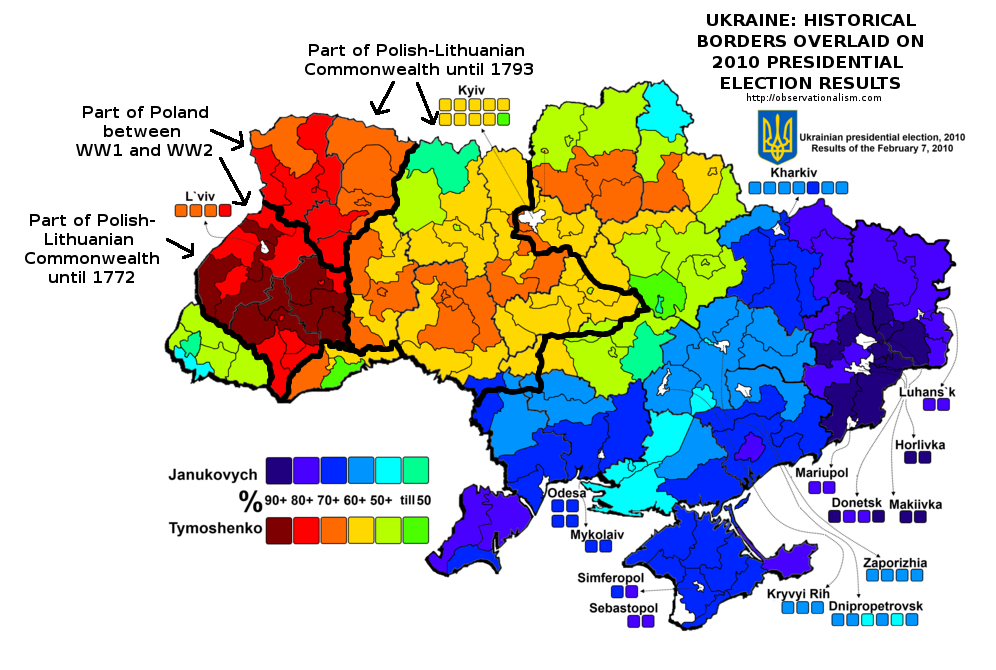
Furthermore, on 20 February 2014, the peak day of the coup, Crimeans who had been in Kiev demonstrating against overthrowing the President for whom 75% of Crimeans had voted, commissioned a number of buses to take them promptly back to Crimea, especially because the rabidly racist anti-Russian fascists whom the U.S. had hired to carry out the coup terrified them. These buses en-route back to Crimea got stopped by those fascists (from the very same organization that was headed by the man who actually led the coup), who beat the escaping Crimeans bloody and burned at least one of their buses. Some undetermined number of these victims were killed, and many were injured, but there was no official investigation of this event, which became known in Crimea as“The Korsun Massacre” and “The Pogrom of Korsun”; consequently, the Obama-installed coup-regime — which was soon to produce massacres far worse, such as this and this — denies that it happened, but those videos caused Crimeans, who already were against the coup, to be determined to separate from Ukraine and rejoin Russia, of which Crimea had been a part for hundreds of years until the Soviet dictator in 1954 transferred Crimea from Russia to Ukraine (without even asking the Crimean people). (That's the same dictator, Nikita Khrushchev, whom U.S. President JFK faced down in the Cuban Missile Crisis in 1962; but, now, U.S. Presidents treat Khrushchev's arbitrary action in regard to Crimea as presenting a bigger argument for Crimeans to have no right to determine what their government will be than the Scotts do regarding whether it will continue to be par of the UK, or the Catalans do regarding whether it will continue to be in Spain. We're not bombing the Catalans nor the Scotts for demanding the right of self-determination — just the residents of Donbass for their rejecting the coup that overthrew the man, Yanukovych, for whom they had voted 90%.)
So: NATO and the U.S. regime know that what they are accusing against Russia are lies. They aren't deluded, nor merely mistaken on the facts. They created the problems; they know they created the problems; and, now, they blame Russia (and leaders who are friendly to Russia) for having caused the problems by Russia's ‘aggression', which is simply Russia's necessary efforts to defend itself against U.S. aggression.
Then, Stoltenberg said that NATO intends to make more official its alliance with the people who sponsor jihadists throughout the world:
I very much believe that we can expand and enhance our cooperation with the Gulf Cooperation Council. I visited the United Arab Emirates a couple of weeks ago and and I think that in a way by helping countries in the region to stabilize the region we are of course also making the countries more secure. The whole idea is that if our, NATO's neighbourhood is more stable they are more secure and we are more secure so it's not in a way -security is not you get less of if you share it; you get more security if you create security together. So I strongly believe in us working together with the GCC.
The GCC is run by Saudi Arabia, just as NATO is run by the United States. GCC consists not only of the royals of Saudi Arabis (the al-Sauds), but of the royals of Qatar (the al-Thanis), of Kuwait (the al-Sabahs), of UAE (six royal families), of Bahrain (the al-Khalifas), and of Oman (the bin-Saids). All of them are fundamentalist Sunnis. They are the main competitors against Russia, the world's largest producer of oil and gas. They, like the U.S. and its allied aristocracies in the various European nations, want to cut Russia out of the world's largest oil-and-gas market, the EU, and to cut in the GCC royals. The GCC royals also are the main funders of jihadist groups that commit terrorist acts in both the U.S. and Europe — all of which groups are likewise fundamentalist Sunnis, just like their royal paymasters are. The top funder of Al Qaeda prior to 9/11 was — and at least as of 2009 it still remained — the Saud princes and their business-partners. But NATO is allied with them. This is how NATO intends “to project stability beyond our borders”: by becoming even tighter-allied with the funders of international jihadist groups.
So: the refugee problem in Europe is caused by the enemies of the European peoples, and these enemies are the aristocracies of the U.S., the EU, and the GCC.
Stoltenberg was arguing possibly to expand NATO to include the GCC.
He was also asked there about Turkey, which — under Tayyip Erdogan's dictatorship — is the Saud family's representative in NATO. A Brookings Institution scholar inquired:
“General Breedlove said recently that he felt the Russians were weaponizing the refugee situation with the aim of destabilizing Europe, and I know NATO has sent some sea patrols in the Aegean recently. But my question is why did it take so long for NATO to respond to such a serious security threat to the European continent when Greece and Turkey, both frontline States, are members of NATO?”
Stoltenberg replied:
Turkey participate in the coalition fighting ISIL. Turkey provides military assets but in addition Turkey provides infrastructure, bases, the Incirlik Base and other facilities for the efforts of the coalition fighting ISIL. So without Turkey it would have been much more difficult to, for instance, to conduct many of the air strikes and so on fighting ISIL. Second Turkey is the NATO ally most affected by the influx of refugees. They host more than two million, close to three million perhaps refugees and so Turkey is heavily affected by the crisis in Iraq, Syria, ISIL.
Here are the facts on that:
Turkey supplies ISIS. (ISIS is called “ISIL” by the Obama Administration in order to mislead people to think that ISIS wasn't started by someone who had been enraged by the U.S. invasion and destruction of Iraq in 2003. But ISIS is the usual name, and the second-most common name for it is Daesh, which is the term that the Saud family prefer to use for it. Daesh is the Arabic version of ISIL: the Sauds are merely deferring, but in Arabic, to U.S. President Obama's preferred name for the group. However, ISIS, hearing the term Daesh in Arabic, find it insulting, and have “reportedly threatened to ‘cut out the tongues' of anyone it hears using the term'.”)
The GCC, those royal families and their retainers, are the funders of international jihad, not only of ISIS, but of Al Qaeda, etc.However, almost all the money that comes into Al Qaeda is from the Sauds.
When asked specifically about Libya, Stoltenberg said:
One issue we have discussed and also discussed during my visit here to Washington this week and also with Secretary Ash Carter was the possibility of NATO providing AWACS support, our surveillance plane. And that is on the table now and it's going to be addressed in NATO and then we will be able to provide you with a more precise answer but AWACS support in one way or another is now an issue which is discussed in the Alliance.
He put that forward as being part of a necessary response, by NATO, to the infestation of Libya by “ISIL.” He made no mention of the fact that neither ISIS nor any other jihadist groups were allowed in Libya by Gaddafi, nor present there — that the military campaign there by the U.S., France, and Britain, had enabled the ISIS-infestation of Libya, because what the U.S. and its allies had done had turned it into a failed state.
NATO's chief propaganda-arm, the Atlantic Council, put it this way about that part of his presentation (where Stoltenberg was talking about the need to bring about closer ties with the GCC):
“Laying the ground for a potential NATO role in Libya — where ISIS has put down roots in a dysfunctional environment that has until recently seen the country divided between two rival governments — Stoltenberg said Libya will need all the help it can get and that the Alliance is ready to step up.” In other words, NATO's propaganda-arm said: NATO needs to assist the West's governments to finish the job of taking control over Libya.
That's a perfect example of: bomb a formerly Russia-friendly country into a failed state; then claim that because it's a failed state, we've now got to take it over — for the benefit of U.S.-dominated international oil companies and the international corporations of aristocrats in countries that are allied with America's aristocracy. (As regards the publics in any nations, their interests don't count, according to the people who do count.)
Of course, it makes sense, then, that the GCC royals will now be NATO's allies in this grand campaign to ‘protect the Western World'.
The enemies of the European peoples are those royal families, and their own and America's aristocracies. These are the authentic enemies not only of Europeans, but of the American people, too.
It's not really country-against-country, such as the powers-that-be pretend; it's the aristocracy against the public, everywhere. Sectarianism, jihadists, bigotries of all types, are among the main means by which aristocracies become enabled to control the public and turn them into cheap cannon-fodder to achieve their conquests. It's an ancient technique, and commonly called “Divide and rule.” One public then hates another public. Enslaving the public mentally, by such lies and myths, is the model that every aristocracy has found to be most fruitful, the cheapest way for conquests to be achieved. The cannons might not be cheap (the aristocracy sell those to the taxpayers, the publics, of every country), but the fodder are: the public are a real bargain — they don't just pay for the weapons, they use them, against some other public.
Where Are Marx And Lenin When We Need Them?
Paul Craig Roberts
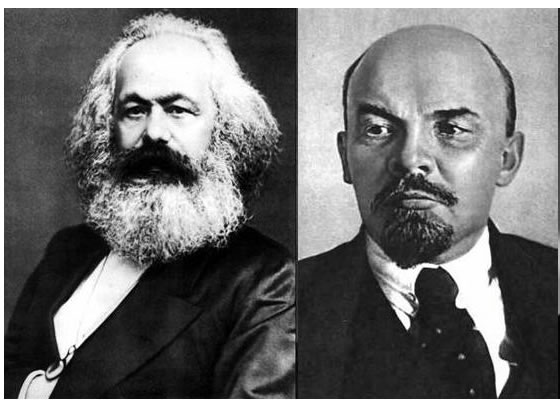
Marx and Lenin were ahead of their time. Marx wrote before offshoring of jobs and the financialization of the economy. Lenin presided over a communist revolution that jumped the gun by taking place in a country in which feudal elements still predominated over capitalism. In 21st century America capitalism has been unfettered from the regulations that democratized it and made it serve society. Today capitalism is being financialized with the consequence that its productive power is being drained into the service of debt.
When I was a young man, an individual with one million dollars was very rich. Anyone with a few millions more was considered richer than rich. Today there are people who have thousands of millions of dollars.
Few earned their billions by producing goods and services sold to consumers.
The neoliberal economists, who prescribe economic policy not only in the West but also in Russia and China, incorrectly claim that money received is money earned. In fact, how did the Less-Than-One-Percent really get their thousands of millions?
They got them through political connections and through purely financial transactions.
When the Soviet Union fell apart as a consequence of hardline communists arresting President Gorbachev, well connected individuals in Russia and the Soviet province of Ukraine, especially those well connected to Washington and Israel, ended up with massive holdings that formerly were state properties.
In the US billionaires result from bank lending for leveraged takeovers of companies. The takeovers produce riches for the takeover person from curtailing company pensions and using the company’s cash to pay off the takeover loan. Often the company and its employees are ruined, but the takeover artist walks away with massive amounts of money. Manipulation of initial public offerings are another source of riches as are securitized derivatives.
Classical economists, and Michael Hudson today, define these profits as “economic rents,” the income from which required no increase in real output to produce. In other words, these billionaire wealth gains are a form of parasitism based on exploitation and not on the production of real output. The gains result from draining income from production into the service of debt.
Today’s capitalist economies are far more dysfunctional than Marx supposed. For the past two decades Western economies have served no one but the very rich, and the exploited masses have submitted to their exploitation. The Western public may as well be slaves.
There is no reason for a person to have thousands of millions of dollars. The money elevates the political power of individuals over the power of the electorate. Indeed, the money becomes the electorate. The money is used to purchase political control, which destroys representative government. Billionaires, such as Sheldon Adelson, George Soros, and the Koch brothers, use their billionaire fortunes to control the US government in their interests. A Republican Supreme Court has made this easier for them.
The rise of financial power in Russia and China has created private power centers in those countries that, like the ones in the US, are independent of the governments. These power centers have the potential to capture the governments and to use public offices to further concentrate wealth in few hands. Privatizations in Russia and China will strengthen the independent power of narrow private interests as they have in Europe and the UK. Neoliberal economics guarantees that eventaully private money controls the government.
Oxfam, an international charity headquartered in Oxford, England, reports that 62 billionaires own half of the wealth in the world.
It was Warren Buffett, one of the richest mega-billionaires, who said that his secretary’s tax rate was higher than his. If governments do not rectify this, revolution will.
But apparently voters won’t, at least not in the US. Hillary represents the One Percent, as the Clinton’s $153,000,000 in speaking fees attest, but the 99 percent are self-destructing by voting in support of Hillary’s ambition to gain the presidency. Apparently, H. L. Mencken was correct, the vast majority of Americans are morons.
Lebanon: Now It Is Being Forced To Collapse
Andre Vltchek
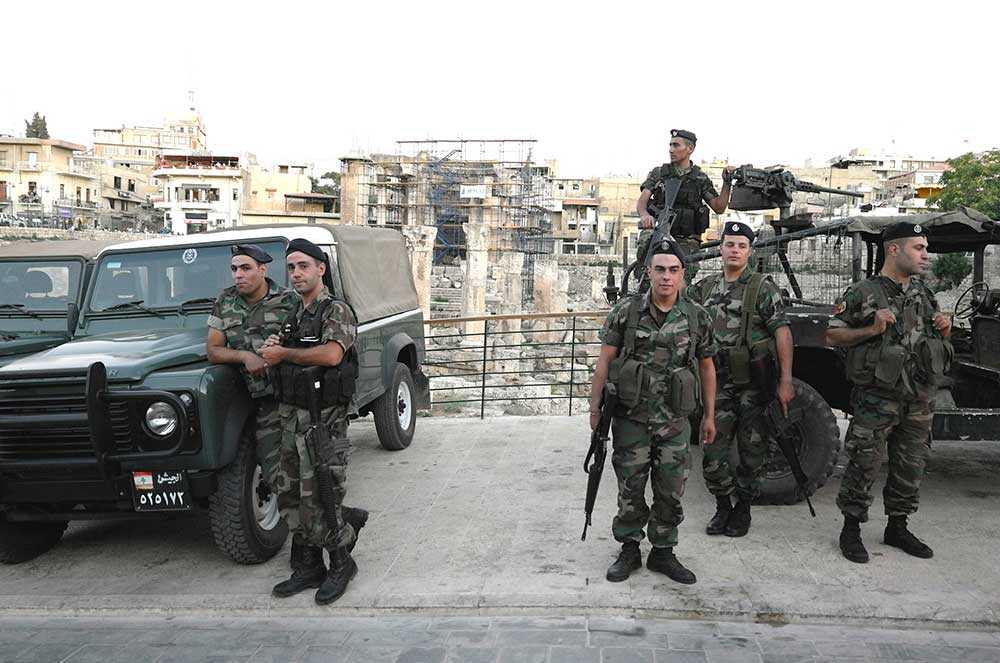
Lebanese army ready to defend Tripoli
Lebanon cannot stand on its feet, anymore. It is overwhelmed, frightened and broke.
It stands on the front-line, facing the ISIS in the east and north, a hostile Israel in the south and the deep blue sea to the west. 1.5 million (mostly Syrian) refugees are dispersed all over its tiny territory. Its economy is collapsing and infrastructure crumbling. The ISIS is right at the border with Syria, literally next door, or even with one foot inside Lebanon, periodically invading, and setting up countless “dormant cells” in all Lebanese cities and all over its countryside. Hezbollah is fighting the ISIS, but the West and Saudi Arabia apparently consider Hezbollah, not the ISIS, to be the major menace to their geopolitical interests. The Lebanese army is relatively well-trained but badly armed, and like the entire country, it is notoriously cash-strapped.
These days, on the streets of Beirut, one can often hear: “Just a little bit more; one more push, and the entire country will collapse, go up in smoke.”
Is this what the West and its regional allies really want?
Top foreign dignitaries, one after another,are now paying visits to Lebanon: the U.N. chief Ban Ki-moon, World Bank Group President Jim Yong Kim and the EU foreign policy chief, Federica Mogherini. All the foreign visitors are predictably and abstractly expressing “deep concern” about the proximity of the ISIS, and about the fate of the 1.5 million Syrian refugees now living in the Lebanese territory. “The war in the neighboring Syria is having deep impact on tiny Lebanon”, they all admit.
Who triggered this war is never addressed.
And not much gets resolved. Only very few concrete promises are being made. And what is promised is not being delivered.
One of my sources that attended the closed-door meeting of Ban Ki-moon, Jim Yong Kim and the heads of the U.N. agencies in Beirut, commented: “almost nothing new, concrete or inspiring was discussed there.”
The so-called international community is showing very little desire to rescue Lebanon from its deep and ongoing crises. In fact, several countries and organizations are constantly at Lebanon’s throat, accusing it of ‘human rights violations’ and of having a weak and ineffective government. What seems to irritate them the most though, is that Hezbollah (an organization that is placed by many Western countries and their allies in the Arab world on the “terrorist list”)is at least to some extent allowed to participate in running the country.
But Hezbollah appears to be the only military force capable of effectively fighting against the ISIS - in the northeast of the country, on the border with Syria, and elsewhere. It is also the only organization providing a reliable social safety-net to those hundreds of thousands of poor Lebanese citizens. In this nation deeply divided along the sectarian lines, it extends its hand to the ‘others’, forging coalitions with both Muslim and Christian parties and movements.
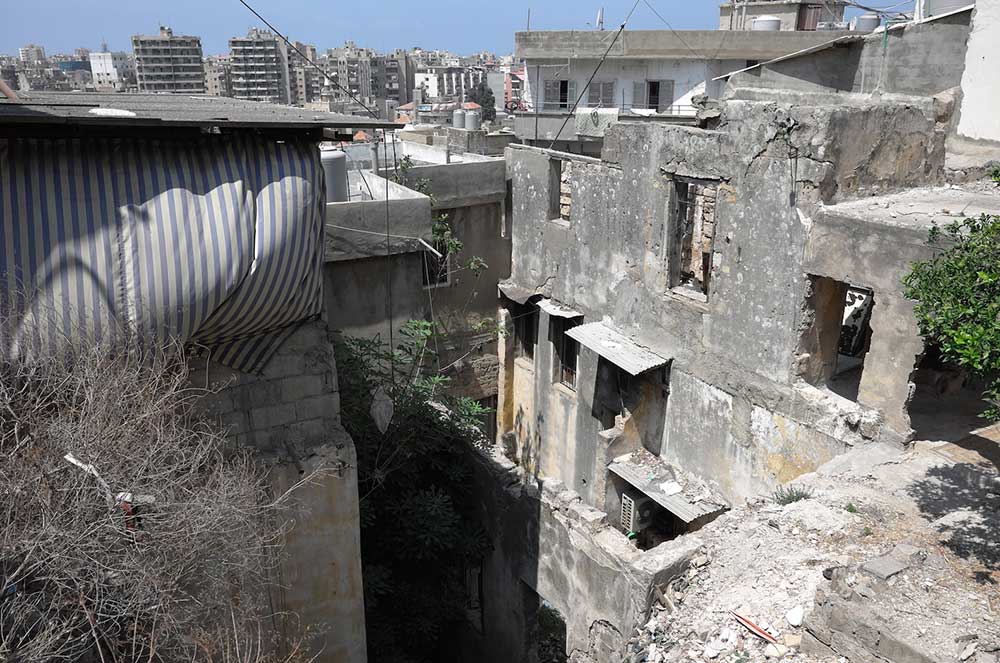
Northern city of Tripoli-soon warzone again
Why so much fuss over Hezbollah?
It is because it is predominantly Shi’a, and Shi’a Muslims are being antagonized and targeted by almost all the West’s allies in the Arab world. Targeted and sometimes even directly liquidated.
Hezbollah is seen as the right hand of Iran, and Iran is Shi’a, it stands against Western imperialism determinedly, alongside Russia, China and much of Latin America – countries that are demonized and provoked by the Empire and its ‘client’ states.
Hezbollah is closely allied with both Iran and with the Bashar al-Assad’s government in Syria. It combats Israel whenever Israel invades Lebanon, and it wins most of the battles that it is forced to fight. It is openly hostile towards the expansionist policies of the West, Israel and Saudi Arabia; its leaders are extremely outspoken.
“So what?” many people in the region would ask, including those living in Lebanon.
Angie Tibbs is the owner and senior editor of Dissident Voice who has been closely watching events in the Middle East for the last number of years. She believes that a brief comparison between events of 2005 and today is essential for understanding the complexity of the situation:
“In a country where, since the end of civil wars in 1990, outward civility masks a still seething underbelly wherein old wounds, old wrongs, real and imagined, have not been forgotten or forgiven, the military and political success of Hezbollah has been the most stabilizing influence. Back in 2005, following the bomb explosion that killed former Premier Rafic al Hariri and 20 others, the US and Israel proclaimed loudly that "Syria did it" without producing a shred of evidence. The Syrian army, in Lebanon at the request of the Lebanese government, was ordered out by the US, and UN Resolution 1559 stated in part that all Lebanese militias must be disarmed. The plan was clear. With Syrian forces gone, and an unarmed Hezbollah, we had two moves which would leave Lebanon's southern border completely vulnerable, and then -- well, what would prevent Israel from barging in and taking over?”
Ms Tibbs is also convinced that the so-called international community is leaving Lebanon defenseless on purpose:
“A similar devious scenario is unfolding today. Hezbollah is busy fighting ISIS in Syria; the Lebanese army, though well trained, is poorly armed. Arms deals are being cancelled, the UN and IMF, and, in fact, the world community of nations are not providing any assistance, and little Lebanon is gasping under the weight of a million plus Syrian refugees. It's a perfect opportunity for ISIS, the proxy army of Israel and the west, to move in and Lebanon's sovereignty be damned.”
Indignant, several Lebanese leaders are snapping back.The Foreign Minister Gebran Bassil even refused to meet with Ban Ki-moon during his two-day visit of Beirut and the Bekaa Valley.
One of Lebanon’s major newspapers, the Daily Star, reported on March 26th, 2016:
“Foreign Minister Gebran Bassil Saturday accused the international community of approaching the Syrian refugee crisis with a double standard; hours after U.N. chief Ban Ki-moon departed Beirut following a two-day visit.“They create war, and then call on others to host refugees in line with human rights treaties,” he said in a televised news conference from his residence in Batroun.”
*

Once lavish downtown of Beirut - now ready for war
Lebanon is collapsing. Even its once lavish capital Beirut is experiencing constant blackouts, water shortages and garbage-collection dramas. Economically, the country is in a sharp decline.
Dr. Salim Chahine, Professor of Finance, at the American University of Beirut, is usually at least moderately upbeat about his country. Developments of recent years, however, wear off his optimism.
“Although the Coincident Indicator issued by the Lebanese Central Bank, BDL, has recently suggested a slight enhancement in economic activity, several officials are sending clear warnings about further deterioration of the situation. The regional geopolitical tensions, the civil conflict in Syria, as well as their implications internally have impacted tourism, trade, and the real estate sectors. According to HSBC, deposits from Lebanon’s largest expatriate population – that usually provide the necessary liquidity for government’s borrowing – may grow at a slower rate in the near future given the worsening conditions in the Gulf. As the country enters in its sixth year of economic slump, HSBC remains skeptical about a short-term recovery. The public deficit is currently rising by around 20% per year, and the GDP growth rate is close to zero.”
Yayoi Segi, an educationalist and the Senior Program Specialist for UNESCO’s Arab Regional Office based in Beirut, works extensively in both Syria and Lebanon. The education sector is, according to her, struggling:
“The public education sector is very small in terms of its coverage in the country, reaching only about 35 percent of the school age population. The state allocation to education is less than 10 percent while the world average or benchmark is 18-20 percent. The situation is further compounded by the currently ongoing crisis in the region whereby Lebanon has had to accommodate a large influx of refugees. The public provision of education has expanded and continues to expand. However, it is impacting on quality and contributes to an increasing number of vulnerable Lebanese students dropping out of school, while it can only reach 50 percent of Syrian refugee children.”
Nadine Georges Gholam (not her real name), working for one of the UN agencies, says that lately she feels phlegmatic, even hopeless:
“What has been happening to Lebanon particularly these past five years is really depressing. I used to actively take part in protests to voice my anger and frustration. But now I don't know if they make any difference or change anything at all. There is no functioning government in sight. 300,000 tons of unprocessed trash accumulated in just 8 months. There is sectarian infighting. Regional conflicts... What else? Lebanon can't withstand such pressure, anymore. All is going down the drain, collapsing...”
But worse is yet to come. Recently, Saudi Arabia cancelled a US$4 billion aid package for Lebanon. It was supposed to finance the massive purchase of modern weapons from France, something urgently needed and totally overdue. That is, if both the West and the KSA are serious about fighting the ISIS.
The KSA “punished” Lebanon for having representatives of Hezbollah in the government, for refusing to support the West’s allies in the Arab League (who define Hezbollah as a terrorist group), and for still holding one of Saudi Arabia’s princes in custody, after he attempted to smuggle 2 tons of narcotics from Rafic Hariri International Airport, outside Beirut.
The story of the Saudi prince is truly grotesque but ‘explosive’. Lebanese authorities found some cocaine on board his private jet, most likely for the personal use of his family and friends. But most importantly there was an industrial quantity of Captagon,which is not some recreational drug, intended for the underground nightclubs of the Gulf in general, nor for the notorious private orgies in Saudi Arabia in particular. It is, as I was told by several local experts, a “drug that makes one extremely brutal; a drug, which destroys all fear. It is a ‘combat narcotic’, which has been given mainly to the ISIS fighters.It could have been destined for Iraq and the ISIS cells there, but most likely the Saudi Prince was carrying it for the Saudi allies in Yemen. Or both… Or most likely,for both.”
Lebanon obviously “crossed the line”. It refused to play by the script painstakingly prepared by the West and its partners. And now it is being slapped, brutally punished, some even say: “sacrificed”.
*
These are of course the most dangerous times for this tiny but proud nation. Syrian forces, with the great help of Russia, are liberating one Syrian city after another from the ISIS and other terrorist groups supported by Turkey, KSA, Qatar and other Western allies.
The ISIS may try to move into Iraq, to join its cohorts there, but the Iraqi government is trying to get its act together, and is now ready to fight. It is also talking to Moscow, while studying the great success Russia is having in Syria.
For the ISIS or al Nusrah, a move to the weak and almost bankrupt Lebanon would be the most logical step. And the West, Saudi Arabia and others, are clearly aware of it.
In fact, the ISIS is already there; ithas infiltrated virtually all cities and towns of Lebanon, as well as its countryside. Whenever it feels like it, it carries out attacks against the Shi’a, military and other targets. Both the ISIS and al Nusrah do. And the dream of the ISIS is blatant: a caliphate with access to the sea, one that would cover at least the northern part of Lebanon.
If the West and its allies do nothing to prevent these plans, it is because they simply don’t want to.
There are several scenarios how the “fall of Lebanon” could occur. The simplest one is this:
Israel could execute another invasion, or even a “mini-incursion” into Lebanon. It periodically does, anyway. And it keeps threatening, warning that it will again. The Lebanese army is too weak to do anything to defend the country. Hezbollah would throw its forces from the battlefield with the ISIS (in the northeast) down to the south. There they would be tied down for at least several weeks. And that would allow the ISIS to move in, across the border, almost unopposed. Dormant cells - “5th columns” - would be immediately activated. The country could collapse within just a few days.
Now Lebanese leaders should be talking to Teheran and Moscow, immediately, while there is still at least some time left to avert absolute disaster. They should be openly asking for help. There are always wide-open channels with Iran. But instead of hosting a delegation that would try to prevent imminent collapse of Lebanon, Russia had to deal with a recent visit of Saad Hariri, former PM and the leader of “Future Movement”; a man who is openly anti-Hezbollah and, like his (assassinated) father Rafic Hariri, a staunch ally of the KSA, and on top of it, a Saudi Arabiancitizen!
‘Coincidentally’, Robert Fisk wrote, sarcastically, about Mr. Hariri, for The Independent on 3 March 2016:
The Sunni Lebanese Future Movement’s leader and former Prime Minister, Saad Hariri, is a Saudi citizen – as was his assassinated ex-prime minister father Rafic – and is now quite taken aback by the willful actions of a nation to which he has always given as much allegiance as he has to Lebanon. The Future Movement, it seems, did not try hard enough to ameliorate Lebanon’s official criticism of Saudi Arabia in the Arab League and should have prevented Hezbollah from destabilizing Yemen and Bahrain – even though there is no physical proof that either Hezbollah or Iran have actually been involved in the Yemeni war or the Shi’a revolt against the Bahraini autarchy, where a Sunni king rules over a Shia majority.
*
Tiny Lebanon is finding itself in the middle of a whirlwind of a political and military storm that is consuming virtually the entire Middle East and the Gulf.
In the last decades, Lebanon has already suffered immensely. This time, if the West and its allied do not change their minds, it may soon cease to exist altogether. It is becoming obvious that in order to survive, it would have to forge much closer ties with the Syrian government, as well as with Iran, Russia and China.
Would it dare to do it? There is no united front inside Lebanon’s leadership. Pro-Western and pro-Saudi fractions would oppose an alliance with those countries that are defying Western interests.
But time is running out. Just recently, the Syrian city of Palmyra was liberated from the ISIS. Paradoxically, the great Lebanese historic cities of Baalbek and Byblos may fall soon.
Panama Papers revelations intensify crisis of Cameron government in Britain
Robert Stevens
Pressure on the UK Conservative government intensified Friday, after Prime Minister David Cameron finally admitted that he and his wife, Samantha, personally profited from his late father’s offshore fund.
Among the 11.5 million records leaked in the “Panama Papers” was the fact that Ian Cameron was a director of Blairmore Holdings, a client of Mossack Fonseca, the fourth largest offshore law firm. The Panama Papers detail how Mossack Fonseca clients were able to launder money, dodge sanctions and avoid paying tax.
Blairmore Holdings was set up in 1982 and managed tens of millions of pounds on behalf of wealthy families, banks and celebrities. The company avoided paying any tax in Britain by being incorporated in Panama and formally conducting its business in the Bahamas. A Blairmore Holdings prospectus written in 2006, to attract rich “sophisticated” investors with at least $100,000 to buy shares, was explicit that the fund sought to avoid UK income tax and corporation tax on profits.
Cameron’s admission that he profited from his father’s financial dealings had to be dragged out of him. Following the leak of the Panama Papers last Saturday, his spokeswoman insisted Monday that whether or not the Cameron family was still invested in the fund was “a private matter.”
On Tuesday, Cameron was again asked and said, “I have no shares, no offshore trusts, no offshore funds, nothing like that.” Later that day, Downing Street issued a statement declaring, “The prime minister, his wife and their children do not benefit from any offshore funds.”
Another statement Wednesday declared, “There are no offshore funds/trusts which the prime minister, Mrs Cameron or their children will benefit from in future.” [Emphasis added]
Finally, on Thursday evening, in his fifth version of events in four days, Cameron admitted having shares in his father’s company and profiting from them. He told ITV News, “We owned 5,000 units in Blairmore Investment Trust, which we sold in January 2010.” He said he owned the shares from 1997 to 2010, a period that covers all his years as an MP and as leader of the Conservative Party prior to becoming prime minister. When he finally sold the shares in 2010 for £31,500, some 13 years later, and the year his father died, he and his wife made a profit of £19,000.
On Wednesday, it emerged that Cameron personally intervened to prevent offshore trusts from being part of European Union-wide moves on tax avoidance. In 2013, Cameron wrote to Herman Van Rompuy, then president of the European council, demanding that trusts should not automatically be subject to the same transparency requirements as companies. EU legislation adopted in 2015 required a central register of the true owners of companies, but not trusts.
Newspapers involved in releasing the leaked documents have already started censoring their publication. Nine Tory MPs and peers are implicated so far, including leading figures Lord Michael Ashcroft, Baroness Pamela Sharples and former MP and Minister of State at the Northern Ireland Office, Michael Mates.
Two of Cameron’s friends, both of whom donated to Cameron’s campaign to be Tory leader, are also named—JCB manufacturing heir Lord Anthony Bamford and the Fleming family.
Bamford has donated more than £4 million to the Tories. The Flemings amassed a vast banking fortune and in 2000 sold merchant bank Flemings for $7.7 billion. The family now deal in wealth management as Stonehage Fleming, registering at least 18 Mossack Fonseca companies from its Liechtenstein office.
David Cameron and his wife personify the super-rich, privileged layer who lord it over society. As far back as 2009, their joint wealth was estimated at well in excess of £30 million.
The prime minister once said in private that he was “born with two silver spoons” in his mouth. His mother, Mary, descended from a wealthy MP who owned a mansion on a 660-acre estate in Berkshire. Ian Cameron’s family was in banking, and the prime minister’s paternal grandfather, Donald, left the then enormous sum of £1 million in his 1958 will. In 2007, the Sunday Times Rich List estimated Ian’s wealth at £10 million. When he died, his estate was valued at just £2.74 million, but this did not include his non-UK assets. He siphoned off an unknown amount of money to Jersey and had financial links to Switzerland.
In his ITV interview, the prime minister disclosed that he was left £300,000 in his father’s will. This was a rather convenient amount, as an estate valued below £325,000 is not subject to Inheritance Tax.
However, Cameron’s wealth is dwarfed by that of his wife, Samantha Gwendoline Sheffield, the daughter of 8th Baronet Sir Reginald Adrian Berkeley Sheffield, and Annabel Lucy Veronica Jones, the Viscountess Astor.
Samantha’s mother, Annabel, runs the furniture and interior retailer Oka. Her father owns an 18,736-acre estate on the remote Scottish island of Jura, held in an offshore company based in Nassau.
According to the Daily Mail, Sir Reginald Sheffield has a property portfolio worth upwards of £20 million that includes 3,000 acres of arable land. Properties he owns include a “£5 million stately home near York; a place in London; and the family seat in Lincolnshire, a Regency mansion called Normanby Hall.”
Normanby Estate Holdings alone are worth almost £2.2 million, with Samantha and her sister Emily owning a £77,000 stake in it.
Cameron’s wife was also a director of stationery firm Smythson, and when she cashed in on a reported 275 shares in 2005, received an estimated £400,000. Smythson is also located in a tax haven, via a holding company in Luxembourg and linked to a trust in the Channel Island of Guernsey.
The amount Cameron has made from his father’s shady dealings is slim pickings compares to what awaits him and his cronies after leaving office. Former Labour Prime Mister Tony Blair has set the benchmark, accumulating personal wealth estimated at £100 million within a decade of standing down.
It is difficult to predict whether Cameron will survive or how far the crisis will reach in British ruling circles. Anger has mounted this week at the disclosures, with Cameron’s approval rating sinking to its lowest level since 2013. A YouGov survey published yesterday found that Labour Party leader Jeremy Corbyn is now ahead of Cameron on approval ratings, as the #resigncameron hashtag on Twitter trended all day.
Moreover, the crisis engulfing Cameron comes in the lead-up to the June 23 referendum on the UK’s continued membership of the EU. The Tories are deeply divided over the issue, with more than 100 Eurosceptic MPs out of a total of 250, and most of the party’s wider base opposed to the Remain camp led by Cameron—in turn reflecting deep divisions within ruling circles. This could precipitate a move against Cameron, but also serves to shield him from attack for fear that his downfall will benefit the anti-Euro wing of the Tories.
No one appears more determined to protect Cameron than Corbyn and his Shadow Chancellor John McDonnell.
The timidity of their statements are in inverse proportion to the escalating public anger. Indeed, many workers and young people will rightly be bemused that Corbyn refuses to even call a motion of no confidence in Cameron. Instead, he first described Cameron’s situation as a “private matter,” and only called for an investigation “to decide whether or not tax has been paid” on the shares. Asked if Cameron should resign, he replied, “Let’s take one thing at a time.” For his part McDonnell also stressed that Cameron’s evasions were “not a matter of resignation at the moment…”
Subscribe to:
Posts (Atom)