Samanvya Hooda
Since 2006, Iran’s economy had grown more isolated following the imposition of sanctions related to its nuclear programme. The economic dynamics of sanctions forced Iran to restructure the economy in a way that minimised criminalisation. The Islamic Revolutionary Guard Corps (IRGC) was the biggest beneficiary of this policy. How will President Hassan Rouhani’s planned reforms affect the IRGC’s economic clout they have gained and their relative strength within the system?
The power of the IRGC – a weighty entity since its inception – increased manifold during the terms of former President Mahmoud Ahmadinejad, himself an ex-IRGC officer. This power was consolidated by granting no-tender contracts in construction, oil, natural gas and infrastructure projects. The IRGC is also believed to operate Iran’s shadow economy involved in smuggling and sanctions busting; and its fronts control all major sectors of the economy, including banking, mining, shipping, aviation, electronics, etc.
The post-sanctions withdrawal of foreign companies created a vacuum in the economy that businesses affiliated with the IRGC filled. This kept Iran’s oil-dependent economy running, but also ensured a monopoly in the energy sector for IRGC affiliates. For instance, the IRGC owned Khatam al-Anbiya was awarded a no-tender contract to develop the South Pars gas field in the Persian Gulf, the largest in the world. Other IRGC firms provide ancillary services in these sectors. Any competition was swiftly annexed by the Corps itself. The Oriental Oil Kish, Iran’s first private oil drilling company is an example. Effectively, the IRGC monopolised the oil and gas industry by stifling private sector participation.
Telecommunications is the largest non-oil sector in the Iranian economy. This too is controlled by the IRGC. The Telecommunication Company of Iran (TCI) has a monopoly over fixed-line infrastructure, and until recently, was the largest Internet Service Provider in the country. The IRGC-linked Mobin Trust Consortium (MTC) owns 90 per cent of the TCI’s shares. TCI’s subsidiary, the Mobile Communication Company (MCI) has the largest market share of mobile services in Iran, and is valued upwards of US$4 billion. The TCI also controls bandwidth allocation for data services, ensuring IRGC dominance in the telecommunications industry.
The bulk of the IRGC’s economic clout comes from its presence in large-scale development in the country. This sector is also dominated by Khatam al-Anbiya, which along with its subsidiaries, executes contracts in large development projects such as dams, highways, railways, mining, offshore construction, pipelines, and even parts of the Tehran Metro.
Post Sanction ReliefEconomic liberalisation therefore threatens entrenched economic interests and has a knock down effect on the power dynamics of the political system. Reintegration with the world economy imposes a dilemma. Iranian investment laws require international companies to operate in joint ventures with domestic companies in key sectors and involve significant technology transfer. While the IRGC controls most of the investment eligible sectors, sanctions specifically exclude the IRGC and affiliates from receiving any foreign investment. For example, EU sanctions on most IRGC affiliates and personnel will be lifted in 2024, but US sanctions will continue.
The current situation therefore creates a huge window of opportunity for the Iranian private sector. It is precisely for this reason that the private sector will become a potent threat to the income of the IRGC, now more than previously. In fact, foreign investment and new technology will almost certainly give the private sector a decisive edge over the IRGC companies. The IRGC’s woes are compounded by the fact that it does not have new markets, since most petroleum contracts are on a long-term basis (20-25 years), limiting its opportunities even post the lifting of sanctions.
In the telecommunications industry, the MCI leads the sector with a very slim margin; it is closely followed by a joint venture between the South Africa-based MTN group and a consortium with indirect ties to the IRGC. Foreign investment with rival groups will threaten the IRGC’s monopoly, but not to the extent it will in the energy sectors. The MTC announced their intention to sell all their shares in TCI in 2015, allowing further foreign investment that will lead to a reduced IRGC role in the industry.
The IRGC’s economic activities face competition and the erosion of its market share across several sectors will result in significant loss of income. This income, currently estimated at several billion dollars annually, funds several of its security initiatives, including power projection in Syria and other parts of West Asia. This loss of revenue makes the IRGC more dependent on the presidency and legislature for funding. Compounding this, moves are afoot to drastically reduce state funding of the IRGC. For instance, President Rouhani slashed the IRGC’s funding by 16 per cent just one day after the lifting of sanctions. The February 2016 parliamentary elections produced a legislature no longer controlled by radical conservatives, further diminishing institutional opposition to IRGC budget cuts.
Far from the IRGC profiting from sanctions relief, the Joint Comprehensive Plan of Action (JCPOA) will diminish its economic and systemic clout, and possibly herald an irreversible shift in the power dynamics in Tehran.

1 Jun 2016
Wolfson Full Postgraduate Scholarships in UK 2016/2017
Application Deadline: Autumn round
Stage 1 applications deadline: accepted no later than 1st July, 2016
Stage 2 applications deadline: 1st September, 2016
Stage 1 applications deadline: accepted no later than 1st July, 2016
Stage 2 applications deadline: 1st September, 2016
Offered Auunally? Yes
Brief description: Doctoral (DPhil) research Scholarships in Humanities for students of all nationality to study in one of nine selected UK Universities including University College London, University of Cambridge, University of Edinburgh, University of Oxford, University of Sheffield, University of Southampton, University of Warwick, University of York, School of Oriental and African Studies.
Eligible Subject Areas: The Wolfson Postgraduate Scholarships will fund doctoral research in three disciplines that align closely with the Foundation’s interests: history, literature and languages.
About Scholarship
The Wolfson Postgraduate Scholarships in the Humanities programme awards funding to support doctoral studies at nine carefully selected universities. The initiative reflects our concerns about funding for the humanities and the potential impact of increased undergraduate student debt on postgraduate studies. Our aim is thus not only to support some of the most exciting students, but also to make a statement about the value of the humanities. We believe that high quality academic research in this field is of critical importance to British society. We hope that this programme might help to attract further funding to the sector.
Scholarship Offered Since: Not Specified
Selection Criteria
Wolfson Scholarships are awarded to outstanding students who demonstrate the potential to make an impact on these fields and to be future academic leaders. They are awarded solely on merit to students aspiring to an academic career.
Eligibility
Candidates should be applying to start a new doctoral course at one of the participating universities.
Please ensure you meet the requirements for entry to your course, including English language requirements.
The Scholarships are available in three disciplines that align closely with the Foundation’s interests: history, literature and languages. The Scholarships are available for doctoral research only and will be paid over three years. For full-time students, it is expected that students complete their doctorate in three years.
Number of Scholarships: Twenty seven scholarships are funded each year at nine universities across the UK
Scholarship Benefits: The scholarships are worth some £27,000 each year (over three years), and cover fees, provide a maintenance stipend, and provide for some research and training costs.
Duration of Scholarship: Three (3) years
Eligible Countries: The scheme is open to all nationalities including African countries. Applicants should be intending to return to their country of ordinary residence following their studies.
To be taken at (country): The participating universities are selected using a formula based on their research record. Institutions currently involved in the programme are: University College London, University of Cambridge, University of Edinburgh, University of Oxford, University of Sheffield, University of Southampton, University of Warwick, University of York, School of Oriental and African Studies. Individuals should apply directly to the university and not to the Foundation.
How to Apply
Candidates should apply for graduate study to any of the participating institutions. The recipients are nominated by their host university, and enquiries should be directed to the relevant university in the first instance.
Visit scholarship webpage for details
Scholarship Provider: Wolfson Foundation UK: The Wolfson Foundation is a charity that awards grants to support and promote excellence in the fields of science and medicine, health, education, and the arts and humanities.
Jane M Klausman Women in Business Scholarships for international students 2016/2017
Application Deadline: Applications must be completed and presented to Zonta clubs according to the club’s assigned deadline. A club recipient is selected, and the application is presented to the governor/regional representative by 1st July, 2016. The district/region recipient is selected, and the application is presented to Zonta International Headquarters by 1 September 2016. International recipients will be contacted by their Zonta club leader by mid October 2016.
Offered annually? Yes
Brief description: The Jane M. Klausman Women in Business Scholarship is offered annually by the Zonta International Club for women in different parts of the world
Eligible Countries: Any country where Zonta international club has presence.
Eligible African Countries: Benin, Burkina Faso, Cote D’Ivoire, Ghana, Mongolia, Niger, Nigeria, Senegal, Sierra Leone, Togo
Eligible Field of Study: Buisness related courses
About Scholarship: Because Zonta International believes in gender equality, the Jane M. Klausman Women in Business Scholarship program helps women pursue undergraduate and master’s degrees in business management and overcome gender barriers from the classroom to the boardroom. The Jane M. Klausman Women in Business Scholarship was established in 1998 from a generous bequest by Jane M. Klausman, a member of the Zonta Club of Syracuse, New York, USA, and the 1990-1995 Zonta International Parliamentarian. Since the program’s inception, Zonta has awarded 399 Scholarships to women from 50 countries.
Scholarship Offered Since: 1998
Scholarship Type: Scholarships for women in business
Selection Criteria and Eligibility: Women pursuing a business or business-related degree who demonstrate outstanding potential in the field are eligible. Online students are also eligible. Members and employees of Zonta International or the Zonta International Foundation are NOTeligible to apply for the Scholarships.
Number of Scholarships: Up to 32 scholarships
Value of Scholarship: Zonta International awards scholarships of US$1,000 each at the district/region level and twelve international scholarships in the amount of US$7,000 each.
The Jane M. Klausman Women in Business Scholarships are awarded annually and may be used for tuition, books or living expenses at any university, college or institution offering accredited business courses and degrees.
Duration of Scholarship: Onetime financial grant
To be taken at (country): Any country
How to Apply
The Jane M. Klausman Women in Business Scholarship program operates at the club, district/region and international levels of Zonta International. To apply, please contact the Zonta club nearest you. Applicants must be nominated by a local Zonta club. Applications selected by Zonta clubs are sent to their respective Zonta Governors/Region South America Representative. A district/region evaluating committee selects one applicant per district/region to submit to Zonta International Headquarters. The Zonta International Jane M. Klausman Women in Business Scholarship Committee selects twelve international recipients from the district/region applicants.
Visit Scholarship Webpage for details
Sponsors: Jane M. Klausman Women in Business Scholarships are made possible through investment income generated by the Klausman bequest, and by generous contributions from Zontians, Zonta clubs and friends of Zonta.
Korean Government Scholarships for Bachelors, Masters and PhD studies for Developing Countries 2016/2017
Application Deadline: Applicants submit their applications either to the Korean Embassies around the world or to the partering universities in Korea. The embassies and universities select the successful candidates among the applicants in the 1st round of selection. The applicants of the successful candidates will then be forwarded to NIIED.
Recommendations (Embassy, University) are expected from:
October 2016 to November 2016 – Undergraduate
March 2017 to April 2017 – Graduate
Offered annually? Yes
Brief description: The Korean Government offers Bachelors, Masters and PhD Scholarships for International Students to study at various Korean Universities and Higher Institutions 2016/2017
Accepted Subject Areas: Courses offered at one of the 60 participating Korean higher institutions
Eligible Countries
The scholarships are open to students from the following countries:
China, Japan, Russia, Cambodia, Mongolia, Vietnam, Mexico, India, Indonesia, Thailand, Laos, Malaysia, Philippines, Kazakhstan, Myanmar, Chinese Taipei, Uzbekistan, Turkey, USA, Ethiopia, Colombia, Nepal, Senegal, Bangladesh, Ukraine, New Zealand, Sri Lanka, Morocco, Azerbaijan, El Salvador, Egypt, Tanzania, Germany, France, Dominica, Chile, Iran, Canada, Democratic Republic of the Congo, Kyrgyzstan, Saudi Arabia, Singapore, Pakistan, Gabon, Romania, Belarus, Bulgaria, Slovakia, United Kingdom, Czech, Guatemala, Ecuador, Algeria, Yemen, Uganda, Belize, Honduras, Italy, Tunisia, United Arab Emirates, Poland, Ghana, Georgia, Greece, Guinea, Guinea-Bissau,NIGERIA, Republic of South Africa, Netherlands, Nicaragua, Democratic Republic of Timor-Leste,Rwanda, Libya, Lithuania, Moldavia, Bahrain, Barbados, Bahamas, Venezuela, Bolivia, BurkinaFaso, Brazil, Brunei, Serbia, Seychelles, Sudan, Sweden, Slovenia, Armenia, Argentina, Haïti, Ireland, Afghanistan, Angola, Oman, Austria, Uruguay, Iraq, Israel, Zambia, Cameroon, Qatar,Kenya, Costa Rica, Cote d’Ivoire, Croatia, Tajikistan, Turkmenistan, Panama, Paraguay, Papua New Guinea, Peru, Fiji, Hungary, Australia, Jordan
About Scholarship: The Korean Government Scholarship Program (KGSP) is offered to international students who want to pursue Bachelors, Masters and PhD degrees in Korean Universities. The scholarship is aimed to provide international students with an opportunity to conduct advanced studies at higher educational institutions in Korea, to develop global leaders and strengthen Korea-friendly networks worldwide.
Scholarship Offered Since: Not specified
Eligibility
Undergraduate program
Prospective applicants must meet the following qualification criteria;
- Must be a citizen of the country to which the scholarship is offered, which also applies to the applicants’ parents
- Have graduated or will be scheduled to graduate from high school as of March 1st of the invitation year
- Must possess above 80% (out of 100%) cumulative grade point average (CGPA), or must be within the top 20% (out of 100%) in rank in high school.
Graduate program
- The applicant and his/her parents must hold foreign citizenships.
* Applicants who hold Korean citizenship are not permitted to apply for this program. - Applicants must be under 40 years of age as of Sep. 1st, 2013 (born after Sep. 1st, 1973).
- Applicants must hold a Bachelor’s or Master’s degree as of September 1st of the selection year.
* Applicants who have enrolled in or graduated from a university in Korea are not eligible for the KGSP program. Specifically, applicants who have previously enrolled in or graduated from an undergraduate program, a master’s program, or a doctoral program in Korea cannot apply for this program. - Applicants must maintain a grade point average (GPA) of at least 2.64 on a 4.0 scale, 2.80 on a 4.3 scale, 2.91 on a 4.5 scale, or grades/marks/score of 80% or higher from the previously attended institution. If the applicant does not satisfy the above GPA requirements, he/she will be ineligible to apply to this program.
How Many Scholarships are available? 170 persons (undergraduate course), 700 persons (graduate course) will be awarded.
170 persons (undergraduate course), 700 persons (graduate course) will be awarded.
What are the benefits?
Undergraduate Program
- Airfare: A round-trip economy class ticket
- Monthly Allowance: 800,000 won per month
- Relocation (Settlement) Allowance: 200,000 won upon arrival
- Repatriation Allowance: 100,000 won upon completion of studies
- Language Training Fee : The full costs up to 1 year
- Tuition: All admission fees are waived by the host institution (university). The tuition is covered by NIIED and the university
- Medical Insurance: 20,000 KRW per month (partial coverage)
- Korean Proficiency Grants: 100,000 KRW per month for scholars with TOPIK Level 5 or 6
Graduate Program
- Airfare: A round-trip economy class ticket
- Monthly Allowance: 900,000 won per month
- Relocation (Settlement) Allowance: 200,000 won upon arrival
- Language Training Fee : The full costs up to 1 year
- Tuition: All admission fees are waived by the host institution. The full tuition is paid by NIIED and the University.
- Medical Insurance: 20,000 won per month(limited insurance coverage) will be provided to the university for students.
- Research Allowance: 210,000 won for students in humanities and social sciences; 240,000 won for students in natural and mechanic sciences per semester
- Dissertation Printing Costs: 500,000 ~ 800,000 won for the costs related to a printing dissertation
- Korean Proficiency Grants: 100,000 KRW per month for scholars with TOPIK Level 5 or 6
Selection Criteria:
1st Selection: Applicants submit their applications either to the Korean Embassies around the world or to the partering universities in Korea. The embassies and universities select the successful candidates among the applicants in the 1st round of selection. The applicants of the successful candidates will then be forwarded to NIIED
2nd Selection: The NIIED selection committee selects the successful candidates among those who passed the 1st round.
3rd Selection: Among the successful candidates who have passed the 2nd round, the applicants of those who applied through the Korean Embassies will be reviewed by universities for admission. Successful candidates must get admission from at least one of the universities.
How long will sponsorship last?
Undergraduate course: 1 year Korean language course + 4 year bachelors course
Master’s course: 1 year Korean language course+ 2 years of Master’s course
Doctoral course: 1 year Korean language course + 3 years of Doctoral course
To be taken at: Korean Universities.
How can I Apply?
Applicants can only apply for the scholarships through the Korean Embassy in their home country or a participating Korean University. See list of Contact Information of Korean Embassies and Universities in this PDF document
Visit Scholarship Webpage and here for more details about this scholarship
Sponsors: The Korean Governement, National Institute for International Education
Imperial Exceptionalism: a Cause Worthy of Defeat
John Wight
Rather than accept the onset of multipolarity demanded by the emergence of Russia and China as major strategic, military and/or economic powers, Washington and its proxies are determined to increase military, economic, and geopolitical pressure on both with the objective of returning them to their ‘rightful place’ in service to US hegemony.
On the frontlines in this struggle – in the Middle East, Eastern Europe, and the Pacific and South China Sea – tensions have deepened in recent weeks, to the point where the prospect of direct military confrontation between East and West is closer now than it has been since the Cuban Missile Crisis.
The Middle East
In the Middle East the continuing advance of Kurdish forces in Raqqa province in northern Syria with US air and logistical support carries with it the seeds of a post-ISIS conflict between the Kurds and the Syrian government. Indeed, as they close in on Raqqa City, the de facto capital of the so-called Islamic State, the Kurds and non-Kurds who make up the Syrian Democratic Forces (SDF) look increasingly like the third force that Washington and its allies have been trying to locate and cultivate since Syrian the opposition came to be dominated by Salafist-jihadist groups in 2012.
Not that crushing ISIS militarily has been anything less than a non-negotiable priority of right-thinking humanity from the moment the Salafist death cult erupted across a large swathe of northern Iraq and Syria in 2014. It absolutely has been. However, with this process now well underway, it would be folly for anyone to believe that once ISIS – and also al-Nusra – have been defeated that Syria’s sovereignty will be secure. The fact that Russia’s recent offer to the US of coordinating airstrikes and support for the SDF and Kurdish advance was rebuffed tells its own story. It is a story that began in March with a gathering of Kurdish leaders and representatives of various other disparate groups and factions that took place in the northern Syrian town of Rmeilan in Hasakah province, at which an autonomous federation across a section of northern Syria was declared. Predictably, the declaration was immediately and firmly rejected by Damascus.
However the violence that broke out between pro Assad and Kurdish militia forces in the northern Syrian town of Qamishli the following month, clashes in which twelve people were killed, leave no doubt the Kurds are serious when it comes to creating an autonomous province in the country post-ISIS, confident of US support and, with it, success.
Washington’s objective of regime change in Syria may have been forced off the table by Russia’s military intervention in support of the government in Damascus, but this doesn’t mean it has been abandoned altogether. How could it be when Assad’s removal is, as a tranche of Clinton’s leaked emails confirmed recently, the key plank of a strategy to isolate and weaken Iran while rendering Hezbollah’s threat to Israel moot along the way?
Off the table means under the table ready to be rolled out again should the opportunity present itself, which given where we are right now will be under either a Clinton or Trump administration in Washington. Certainly, Washington’s regional allies, the Turks and Saudis, remain fully committed to this objective; the Saudis in particular upping the rhetoric only recently with it in mind, levelling threats of resorting to a‘Plan B’ when it comes to removing Assad from power should diplomatic efforts fail to make any headway in this regard.
The mere thought of the Saudis emerging from the conflict in Syria strengthened in the region rather than weakened is a sobering one. In fact, no greater injustice could there be than this when we consider what Syria and its people have suffered during the course of a struggle against the forces of hell in the form of thousands of crazed Salafist-jihadists hell-bent on the genocidal extirpation of the country’s minorities.
Eastern Europe
When it comes to Eastern Europe, the Obama administration’s determination to plough ahead with the deployment of its controversial Aegis missile defense system, which has just gone operational in Romania, proves that the US political and military establishment is not about to give up the unipolarity it has enjoyed over the past three and half decades without a struggle.
As it was after the Second World War so it remains over seven decades on when it comes to US strategy towards Moscow – the establishment of a cordon sanitaire with the objective not only of containing Russia’s military capability but placing its government under the kind of pressure it hopes will strengthen political opposition within the country to Putin and the policy of challenging the accomplished fact of US global hegemony.
Moscow has demonstrated remarkable restraint given the provocation it has been subjected to in recent weeks and months. Specifically, we are talking the increased presence of US navy ships patrolling in the Baltic Sea; NATO military exercises conducted on the Estonian-Russian border with the participation of German troops in the very week Russia held its annual Victory Day celebration, commemorating its triumph over the Nazis in the Second World War; and the prolongation of US and EU economic sanctions over the conflict in eastern Ukraine.
China’s security threatened by Thaad deployment
Washington also plans to deploy its Thaad anti-ballistic missile system in South Korea, ostensibly to meet the threat posed by North Korea across its border. However the Thaad system threatens China’s security, with Beijing announcing in response its intention of deploying nuclear-armed subs to patrol the Pacific for the first time in the nation’s history, necessary in order to maintain their nuclear deterrence.
Obama, who completed a week-long tour of various Asian countries in the run up to the meeting of the G7 in Japan, gave a speech in Hanoi during which, referring to the ongoing territorial disputes in the East and South China Seas involving China, Japan, Vietnam, and the Philippines, without even a hint of self reflection had the temerity to declare: “Nations are sovereign and no matter how large or small a nation may be, its territory should be respected.”
Washington is currently engaged in raising the temperature in the Middle East, Eastern Europe and Asia as the Obama presidency limps towards an ignominious close. The objective is neither the spread of freedom nor democracy and human rights. The objective is solidifying an empire in the name of US exceptionalism.
It is a cause worthy of defeat.
After Empowering the 1% and Impoverishing Millions, IMF Admits Neoliberalism a Failure
Benjamin Dangl
Last week a research wing of the International Monetary Fund came out with a report admitting that neoliberalism has been a failure. The report, entitled, “Neoliberalism: Oversold?” is hopefully a sign of the ideology’s death. They were only about 40 years late. As Naomi Klein tweeted about the report, “So all the billionaires it created are going to give back their money, right?”
Many of the report’s findings which strike to the core of the ideology echo what critics and victims of neoliberalism have been saying for decades.
“Instead of delivering growth,” the report explains that neoliberal policies of austerity and lowered regulation for capital movement have in fact “increased inequality.” This inequality “might itself undercut growth…” As a result, the report states that “policymakers should be more open to redistribution than they are.”
However, the report leaves out a few notable items on neoliberalism’s history and impact.
The IMF suggests neoliberalism has been a failure. But it has worked very well for the global 1%, which was always the IMF and World Bank’s intent. As Oxfam reported earlier this year, the wealthiest 1% in the world now has as much wealth as the rest of the planet’s population combined. (Similarly, investigative journalist Dawn Paley has proven in her book Drug War Capitalism that far from being a failure, the Drug War has been a huge success for Washington and multinational corporations.)
The IMF report cites Chile as a case study for neoliberalism, but never mentions once that the economic vision was applied in the country through the US-backed Augusto Pinochet dictatorship – a major omission which was no casual oversight on the part of the researchers. Across Latin America, neoliberalism and state terror typically went hand in hand.
The fearless Argentine journalist Rodolfo Walsh, in a 1977 Open Letter to the Argentine Military Junta, denounced the oppression of that regime, a dictatorship which orchestrated the murder and disappearance of over 30,000 people.
“These events, which stir the conscience of the civilized world, are not, however, the greatest suffering inflicted on the Argentinean people, nor the worst violation for human rights which you have committed,” Walsh wrote of the torture and killing. “It is in the economic policy of this government where one discovers not only the explanation for the crimes, but a greater atrocity which punishes millions of human beings through planned misery. . . . You only have to walk around greater Buenos Aires for a few hours to check the speed with which such a policy transforms the city into a ‘shantytown’ of ten million people.”
This “planned misery,” as Naomi Klein’s Shock Doctrine vividly demonstrates, was the neoliberal agenda the IMF has pushed for decades.
The day after Walsh mailed the letter to the Junta he was captured by the regime, killed, burned, and dumped into a river, one of neoliberalism’s millions of casualties.
Islamophobia: Why Are So Many People So Frightened?
Robert J. Burrowes
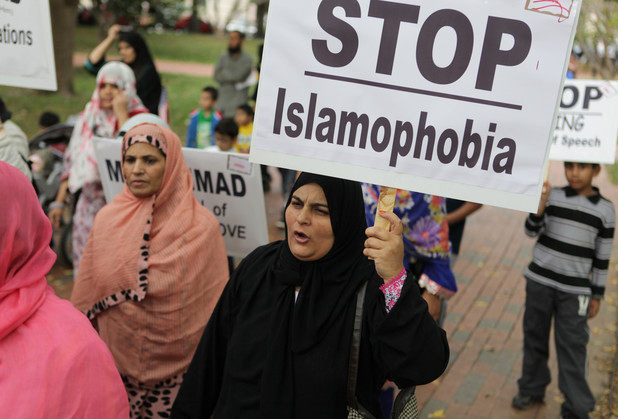
Islamophobia has become a significant factor driving politics in many western countries.
Islamophobia – fear of Muslims – is now highly visible among European populations concerned about terrorist responses from Islamic groups claiming Jihadi links. However, it is also evident among those same populations in relation to the refugee flow from the Middle East. In addition, Islamophobia is highly evident among sectors of the US population during the presidential race. It is a significant issue in Australia. Outside the West, even the (Muslim) Rohingya in Burma are feared by Buddhist monks and others.
Given that this widespread western fear of Muslims was not the case prior to the US-instigated 'War on Terror', do Muslims around the world now pose a greater threat to western interests than previously? Or is something else going on here?
In short, why are so many westerners (and others) now frightened of Muslims? Let me start at the beginning.
Human socialization is essentially a process of terrorizing children into 'thinking' and doing what the adults around them want (irrespective of the functionality of this thought and behavior in evolutionary terms). Hence, the attitudes, beliefs, values and behaviors that most humans exhibit are driven by fear and the self-hatred that accompanies this fear. For a comprehensive explanation of this point, see 'Why Violence?' http://tinyurl.com/whyviolence and 'Fearless Psychology and Fearful Psychology: Principles and Practice'. http://anitamckone.wordpress.com/articles-2/fearless-and-fearful-psychology/
However, because this fear and self-hatred are so unpleasant to feel consciously, most people suppress these feelings below conscious awareness and then (unconsciously) project them onto 'legitimized' victims (that is, those people 'approved' for victimization by their parents and/or society generally). In short: the fear and self-hatred are projected as fear of, and hatred for, particular social groups (whether people of another gender, nation, race, religion or class).
This all happens because virtually all adults are (unconsciously) terrified and self-hating, so they unconsciously terrorize children into accepting the attitudes, beliefs, values and behaviors that make the adults feel safe. A child who thinks and acts differently is frightening and is not allowed to flourish.
Once the child has been so terrorized however, they will respond to their fear and self-hatred with diminishing adult stimulus. What is important, emotionally speaking, is that the fear and self-hatred have an outlet so that they can be released and acted upon. And because parents do not allow their child to feel and express their fear and hatred in relation to the parents themselves (who, fundamentally, just want obedience without comprehending that obedience is rooted in fear and generates enormous self-hatred because it denies the individual's Self-will), the child is left with no alternative but to project their fear and hatred in socially approved directions.
Hence, as an adult, their own fear and self-hatred are unconscious to the individual precisely because they were never allowed to feel and express them safely as a child. What they do feel, consciously, is their hatred for 'legitimized' victims.
Historically, different social groups in different cultural contexts have been the victim of this projected but 'socially approved' fear and hatred. Women, indigenous peoples, Catholics, Afro-Americans, Jews, communists, Palestinians…. The list goes on. The predominant group in this category, of course, is children (whose 'uncontrollability' frightens virtually all parents until they are successfully terrorized and tamed).
The groups that are socially approved to be feared and hated are determined by elites. This is because individual members of the elite are themselves terrified and full of self-hatred and they use the various powerful instruments at their disposal – ranging from control of politicians to the corporate media – to trigger the fear and self-hatred of the population at large in order to focus this fear and hatred on what frightens the elite. This makes it easier for the elite to then attack the group that they are projecting frightens them.
For now, of course, Muslims are the primary target for this projected fear and self-hatred, which accounts for the US-led western war on the Middle East. Islamophobia thus allows elites and others to project their fear and self-hatred onto Muslims so that elites can then seek to destroy this fear and self-hatred. Obviously, this cannot work. You cannot destroy fear, whether yours or that of anyone else. However, you can cause phenomenal damage to those onto whom your fear and self-hatred are projected. Of course, there is nothing intelligent about this process. If every Muslim in the world was killed, elites would simply then project their fear and self-hatred onto other groups and set out to destroy those groups too.
In fact, as western elites now demonize Russia and encircle it with nuclear weapons and ABM defense systems, we simply witness another example of these elites projecting their fear and self-hatred.
If you are starting to wonder about the sanity of this, you can rest assured there is none. Elites are insane. If you want to read a fuller explanation of this point, see 'The Global Elite is Insane'.
So is there anything we can do? Fundamentally, we need to stop terrorizing our children. As a back up, we can provide safe spaces for children and adults alike to feel their fear and self-hatred consciously (which will allow them to be safely released). By doing this, we can avoid creating more insane individuals who will project their fear and self-hatred in elite-approved directions.
In addition, if you are fearless enough to recognize that elites are manipulating you into fearing Muslims and others whom we do not need to fear, now would be a good time to speak up and to demonstrate your solidarity. You might also like to sign the online pledge of 'The People's Charter to Create a Nonviolent World'. http://thepeoplesnonviolencecharter.wordpress.com
Suppressed fear and self-hatred must be projected and they are usually projected in socially approved ways (although mental illnesses and some forms of criminal activity are ways in which this suppressed fear manifests that are not socially approved).
In essence, Islamophobia is a manifestation of the mental illness of elites manipulating us into doing their insane bidding. Unfortunately, many people are easy victims of this manipulation.
Islamophobia – fear of Muslims – is now highly visible among European populations concerned about terrorist responses from Islamic groups claiming Jihadi links. However, it is also evident among those same populations in relation to the refugee flow from the Middle East. In addition, Islamophobia is highly evident among sectors of the US population during the presidential race. It is a significant issue in Australia. Outside the West, even the (Muslim) Rohingya in Burma are feared by Buddhist monks and others.
Given that this widespread western fear of Muslims was not the case prior to the US-instigated 'War on Terror', do Muslims around the world now pose a greater threat to western interests than previously? Or is something else going on here?
In short, why are so many westerners (and others) now frightened of Muslims? Let me start at the beginning.
Human socialization is essentially a process of terrorizing children into 'thinking' and doing what the adults around them want (irrespective of the functionality of this thought and behavior in evolutionary terms). Hence, the attitudes, beliefs, values and behaviors that most humans exhibit are driven by fear and the self-hatred that accompanies this fear. For a comprehensive explanation of this point, see 'Why Violence?' http://tinyurl.com/whyviolence and 'Fearless Psychology and Fearful Psychology: Principles and Practice'. http://anitamckone.wordpress.com/articles-2/fearless-and-fearful-psychology/
However, because this fear and self-hatred are so unpleasant to feel consciously, most people suppress these feelings below conscious awareness and then (unconsciously) project them onto 'legitimized' victims (that is, those people 'approved' for victimization by their parents and/or society generally). In short: the fear and self-hatred are projected as fear of, and hatred for, particular social groups (whether people of another gender, nation, race, religion or class).
This all happens because virtually all adults are (unconsciously) terrified and self-hating, so they unconsciously terrorize children into accepting the attitudes, beliefs, values and behaviors that make the adults feel safe. A child who thinks and acts differently is frightening and is not allowed to flourish.
Once the child has been so terrorized however, they will respond to their fear and self-hatred with diminishing adult stimulus. What is important, emotionally speaking, is that the fear and self-hatred have an outlet so that they can be released and acted upon. And because parents do not allow their child to feel and express their fear and hatred in relation to the parents themselves (who, fundamentally, just want obedience without comprehending that obedience is rooted in fear and generates enormous self-hatred because it denies the individual's Self-will), the child is left with no alternative but to project their fear and hatred in socially approved directions.
Hence, as an adult, their own fear and self-hatred are unconscious to the individual precisely because they were never allowed to feel and express them safely as a child. What they do feel, consciously, is their hatred for 'legitimized' victims.
Historically, different social groups in different cultural contexts have been the victim of this projected but 'socially approved' fear and hatred. Women, indigenous peoples, Catholics, Afro-Americans, Jews, communists, Palestinians…. The list goes on. The predominant group in this category, of course, is children (whose 'uncontrollability' frightens virtually all parents until they are successfully terrorized and tamed).
The groups that are socially approved to be feared and hated are determined by elites. This is because individual members of the elite are themselves terrified and full of self-hatred and they use the various powerful instruments at their disposal – ranging from control of politicians to the corporate media – to trigger the fear and self-hatred of the population at large in order to focus this fear and hatred on what frightens the elite. This makes it easier for the elite to then attack the group that they are projecting frightens them.
For now, of course, Muslims are the primary target for this projected fear and self-hatred, which accounts for the US-led western war on the Middle East. Islamophobia thus allows elites and others to project their fear and self-hatred onto Muslims so that elites can then seek to destroy this fear and self-hatred. Obviously, this cannot work. You cannot destroy fear, whether yours or that of anyone else. However, you can cause phenomenal damage to those onto whom your fear and self-hatred are projected. Of course, there is nothing intelligent about this process. If every Muslim in the world was killed, elites would simply then project their fear and self-hatred onto other groups and set out to destroy those groups too.
In fact, as western elites now demonize Russia and encircle it with nuclear weapons and ABM defense systems, we simply witness another example of these elites projecting their fear and self-hatred.
If you are starting to wonder about the sanity of this, you can rest assured there is none. Elites are insane. If you want to read a fuller explanation of this point, see 'The Global Elite is Insane'.
So is there anything we can do? Fundamentally, we need to stop terrorizing our children. As a back up, we can provide safe spaces for children and adults alike to feel their fear and self-hatred consciously (which will allow them to be safely released). By doing this, we can avoid creating more insane individuals who will project their fear and self-hatred in elite-approved directions.
In addition, if you are fearless enough to recognize that elites are manipulating you into fearing Muslims and others whom we do not need to fear, now would be a good time to speak up and to demonstrate your solidarity. You might also like to sign the online pledge of 'The People's Charter to Create a Nonviolent World'. http://thepeoplesnonviolencecharter.wordpress.com
Suppressed fear and self-hatred must be projected and they are usually projected in socially approved ways (although mental illnesses and some forms of criminal activity are ways in which this suppressed fear manifests that are not socially approved).
In essence, Islamophobia is a manifestation of the mental illness of elites manipulating us into doing their insane bidding. Unfortunately, many people are easy victims of this manipulation.
Colluding In Lies: The Brexit Debate
Binoy Kampmark
The Brexit argument (whether Britain should remain or otherwise in the European Union), has become hysterically hyperbolic. That was the view of former Tory MP Gyles Brandreth, expressed with usual alacrity on the news quiz show Have I Got News For You.
Times in Britain are viciously partisan. No one wants to see their dog left out of this particular fight. The result is a vicious mauling being handed out by all sides on whether the leavers or stayers have the upper hand.
The Institute for Fiscal Studies, one of Britain’s more prominent tax think tanks, went in against the Vote Leave campaign, suggesting that the austerity regime would be prolonged by a departure from the EU. That would be the only way to plug consequential multi-billion pound holes in the budget arising from lower foreign investment and poorer trade returns.
The IFS also took issue with various figures being used by the Leave campaign, most notably the suggestion that Brussels receives £350 million every week from the sceptred isle. That particular figure has become the holy marker for former London mayor Boris Johnson. According to the body, that assessment conveniently ignored the role of the rebate and a range of other subsidies for business and research. Taken together, the amount ending in EU coffers was more likely £150 million.
Vote Leave, in what has been symptomatic of the debate, could only dismiss the IFS projections as issuing from a “paid-up propaganda arm of the European Commission”. Naturally, “The IFS was not a neutral organisation.” Objectivity is suffering a long drawn out death.
Then came a study by Migration Watch which emphasised the undesirables coming into the country. While Johnson and company rail against the succubi of Brussels, they also fear the influx of humans.
Migration Watch duly supplied some ammunition with a suitably alarmist prediction, claiming that up to half a million refugees and their assortment of relatives would make their way to Britain after 2020. The supposition there is that those granted asylum in other EU countries – Germany, Greece, and Italy – would leapfrog their way into the UK on acquiring citizenship.
The group’s report asserts that leaked documents from Germany suggest that each person granted asylum would be followed by up to four family members. Building on figures farmed from Eurostat that 1 million migrants would be successfully granted asylum for 2015 and in the first quarter of 2016, the numbers are predictably inflated for effect.
According to the group’s chair, Andrew Green, “The UK could well face a significant secondary flow of refugees from Europe in the coming years adding to the already huge strain being placed on housing and public services.”
Britain Stronger in Europe, the official front for the cause to stay in the EU, had another position, rubbishing the projections as counterfeit. For Emma Reynolds, MP for Wolverhampton North East and former shadow communities secretary, the “overwhelming majority of refugees will never get the right to come to Britain”. Another charming state of affairs.
On the side of the stayers, the situation has also been absurd, focusing on subjects emptied of political content. Vapid videos from the In Campaign are proliferating about how a lifestyle is at risk if the vote of June 23 favours departure. One, Votin, proves particularly grating in its semi-literate framing, using grammatically challenged terms. The unfortunate casualty in that production is the letter g. There is “earnin”, “makin”, “roamin” and “chillin”; there is “ravin” topped off by the smashing hashtag “#votin.”
Its supposition is that the young are suitably disengaged in mindless activity to avoid the argument altogether. The reaction from that very segment was savage. “It failed to speak their language,” snorted The Telegraph, “instead implying they are stupid.”
The corporate sector is similarly using another tack that emphasises a rather different notion of governance. For them, the profit factor, rather than the representative, democratic one, counts. Their apocalyptic warnings say little about reforming the EU and everything about keeping capital free.
Airbus, for instance, has insisted that leaving the EU would lead to a fall in investment in Britain. The company itself employs somewhere in the order of 15,000 people. Such direct arguments, even threats, tend to resemble acts of electoral bullying. If you vote to leave, goes this line of thought, you vote for the dire consequences of unbalanced budgets and lower growth.
Rather than drawing constructive arguments from each side, the descent to a bottom in the maelstrom of illogical fear has been undertaken. Between the dogmatic Brexiteers and the warning stayers, there is much more nonsense to be had before the referendum.
The Boiling Pot
Richard Heinberg
On the surface, things appear normal. The status quo of life in America circa 2016 isn’t to everyone’s liking, but at least the system is still working after a fashion. The price of oil is going up a bit: that means the cost of driving is also creeping higher, but steeper prices provide a little welcome relief for an oil industry otherwise teetering on the brink of financial ruin. There are tiresomely long lines at airports, but that means people have the wherewithal to pay for plane tickets. Most people are disgusted with the presumptive U.S. presidential candidates, but at least the machine of electoral politics is still marginally functioning. The stock market is up, unemployment is down. We’re muddling through.
Or are we? Beneath the lid, a pot of trends is coming to a boil. If Carl Jung was right about the existence of a collective unconscious, it must be seething with nightmares right about now.
So far, 2016 is the hottest year in history. And not by just a smidgen: every single month so far has set a record. This handy little animation has been making the rounds of environmental websites in the last couple of weeks; it shows a climate system that is shooting off the rails.
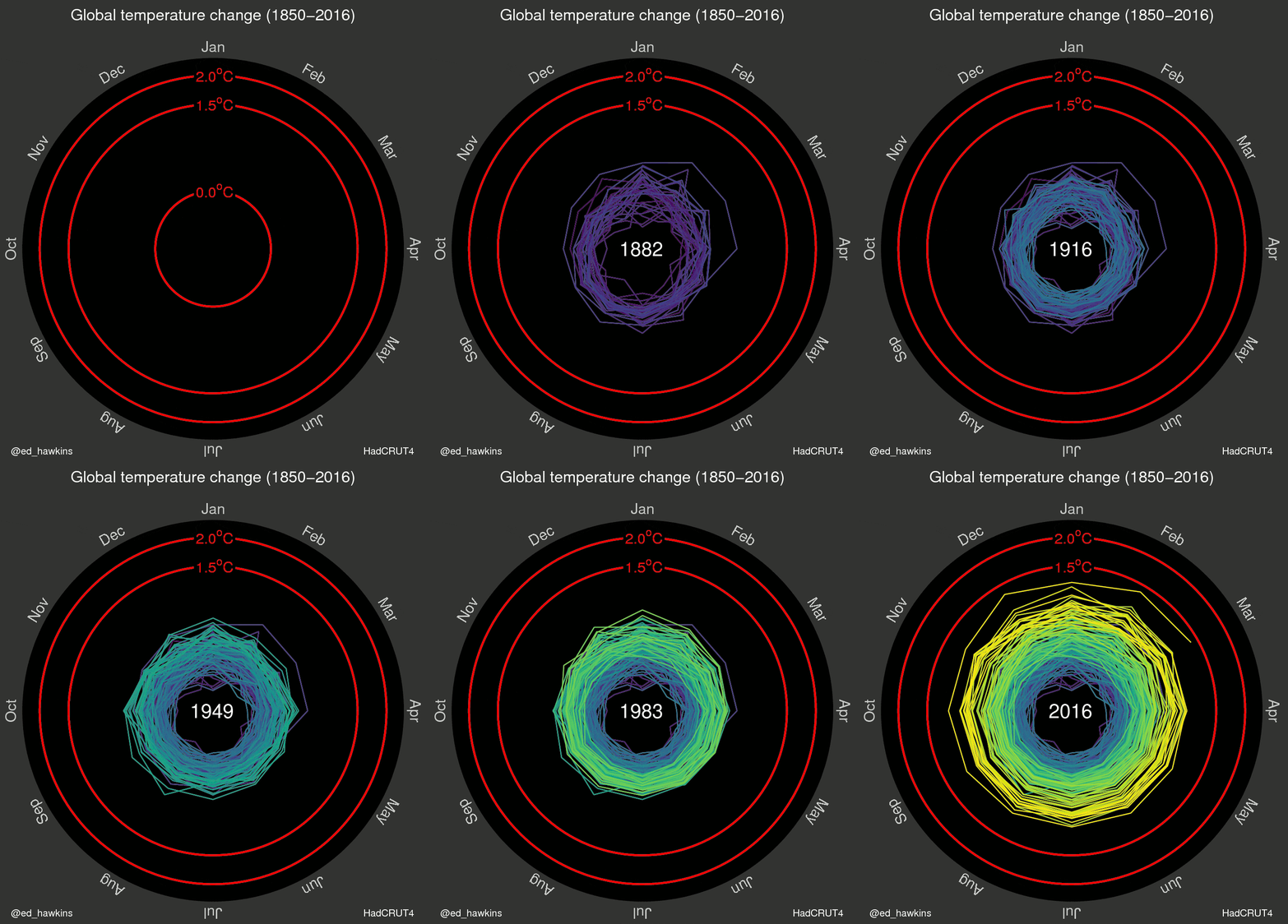
Slow, linear change is giving way to self-reinforcing feedbacks and non-linear lurches. Last December (just 6 months ago), delegates to climate talks in Paris agreed to try to limit global warming to 1.5 degrees centigrade. Extend the temperature trend shown in that animation for just another few months and we may well be beyond that threshold. How long until we get to two degrees? Three?
Arctic sea ice this month is by far at the lowest extent ever recorded and temperatures in Siberia are rising four times faster than in the rest of the world, releasing enormous amounts of methane and carbon stored in permafrost.
In the energy world, the growth of unconventional oil and gas supplies appears to have postponed peak oil for a decade (conventional oil production flatlined starting in 2005; all the supply increase since then has come from tight oil, tar sands, heavy oil, and deepwater oil)—but at what cost?Unconventional oil production carries higher environmental risks, including increased greenhouse gas emissions per liter of finished fuel.
And it took massive investment to finance the surge in unconventionals. If it hadn’t been for easy-money central bank policies in the wake of the 2008 global financial crash, it’s likely the fracking boom would have been an unnoticeable blip. A few years of sky-high oil prices were also necessary. But high prices weakened demand for oil, just as drillers flooded the market with the wrong grades of crude in the wrong places at the wrong time. The result: an oil price crash (starting in mid-2014) and financial bloodletting within the industry.
We appear to be in a new era in which oil prices are either high enough to stimulate new supply, in which case they are also high enough to cripple the economy; or they are low enough to stimulate the economy, but also so low as to decimate the industry. There is no longer any tenable middle ground.
Arctic sea ice this month is by far at the lowest extent ever recorded and temperatures in Siberia are rising four times faster than in the rest of the world, releasing enormous amounts of methane and carbon stored in permafrost.
In the energy world, the growth of unconventional oil and gas supplies appears to have postponed peak oil for a decade (conventional oil production flatlined starting in 2005; all the supply increase since then has come from tight oil, tar sands, heavy oil, and deepwater oil)—but at what cost?Unconventional oil production carries higher environmental risks, including increased greenhouse gas emissions per liter of finished fuel.
And it took massive investment to finance the surge in unconventionals. If it hadn’t been for easy-money central bank policies in the wake of the 2008 global financial crash, it’s likely the fracking boom would have been an unnoticeable blip. A few years of sky-high oil prices were also necessary. But high prices weakened demand for oil, just as drillers flooded the market with the wrong grades of crude in the wrong places at the wrong time. The result: an oil price crash (starting in mid-2014) and financial bloodletting within the industry.
We appear to be in a new era in which oil prices are either high enough to stimulate new supply, in which case they are also high enough to cripple the economy; or they are low enough to stimulate the economy, but also so low as to decimate the industry. There is no longer any tenable middle ground.
Today’s price of $50 per barrel is high in historic terms, but still too low to allow the industry to recover from the past two years of staggering losses. The trouble is, the unconventional production binge required a lot of cash, and most of it was borrowed. According to data compiled by FactSet and Yahoo Finance, the U.S. energy sector is drowning in $370 billion of debt, double the amount a decade ago. Just to make interest payments, energy companies shelled out $16.7 billion in 2015—half of their total operating profit. And despite rebounding oil prices, the situation is getting worse, with over 86 percent of energy sector operating profits going to interest payments in the first quarter of 2016. Unless prices zoom back past $100 a barrel, the tens of billions of dollars in debt coming due between 2017 and 2020 will likely trigger a wave of defaults and bankruptcies.
That could spell serious trouble for an economy that has been on life support for eight years now. After the nearly catastrophic crash of 2008, low interest rates, bailouts, and quantitative easing succeeded in restoring a sense of economic normalcy, though at the cost of more financial bubbles (in housing, fracking, and tech) and increased economic inequality. But what will the wizards of finance do when things turn ugly again—as they inevitably will, sooner or later? Negative interest rates will prove more than a little unpopular with savers, and throwing trillions more at banks and investors won’t help the masses afford to pay interest on their mounting debt or to buy more consumer goods.
A pressure cooker needs an escape valve, and this year politics is serving that function for the pressure cooker that American society has lately become. Bernie Sanders is giving voice to popular anger at increasing economic inequality, and at Wall Street’s immunity from being held culpable for the 2008 crash and its continued predation on the rest of the economy. Donald Trump is a megaphone for the blind fury of the wage class at its ongoing destruction by globalization and immigration. There is a heavy scent of anti-establishmentarianism in the air; that leaves poor Hillary Clinton, the consummate establishment politician, trying desperately to sound like an outsider and a critic of the globalized, financialized governmental megamachine she has labored for decades to help build, manage, and sell to voters.
For the next six months the upcoming U.S. presidential election will probably be the main focus of discussion for both the media and Main Street. A lot depends on the outcome, but a good outcome is hard to imagine; only shades of bad. Sanders is the only candidate with a sound energy and climate policy, but he has a vanishingly small chance of actually becoming the next president. Clinton is the odds-on favorite: she has the backing of Wall Street, the Washington foreign policy establishment, and the military-industrial complex. She would doubtless continue most of the current administration’s domestic policies (including its confused and largely self-defeating climate and energy policies), but her stance toward Russia, China, and the Middle East would likely be far more combative—hardly what we need at a moment when global tensions are likely to be exacerbated by weakened economies.
But don’t count Trump out. Riding on a tide of white working-class wrath, he has managed to surpass the expectations of all of his critics. While it is next to impossible to divine actual policy proposals from his muddled, self-aggrandizing speeches, he did manage to give broad hints at his energy and climate intentions in a talk in North Dakota last week, where he made it fairly clear that he just doesn’t care about climate change, that he really likes fossil fuels (including coal), that he doesn’t like wind or solar that much, and that he understands so little about the country’s resource reserves and energy production statistics that he somehow thinks it physically possible for the U.S. to become a significant net exporter of oil and gas. As to his likely foreign policies, your guess is as good as mine.
A Trump presidency could lead to a nearly unprecedented period of turmoil for the nation: blue states and red states would be at each other’s throats. The fallout for relations with other countries are unknown, but the implications for climate and energy would clearly be horrific.
“Blowing off steam” is a phrase often used to describe the harmless pranks of teenagers, though it could also apply to a continent-destroying super-volcano. In the American political context, the scale of the impending steam and magma release is uncertain. But pressure is building and the available outlets are few.
Whoever the next president turns out to be, her or his term in office will likely coincide with another financial crash, which could well turn out to be much worse than the 2008 debacle. Social pressures from rising inequality and dashed expectations will build to explosive levels. And climate impacts may well take forms that even a Donald Trump cannot ignore.
Altogether, the next eight years are unlikely to be as safely corked and bottled as the last. They say crisis is opportunity. We may be facing more opportunities than we know what to do with; may we seize them skillfully!
That could spell serious trouble for an economy that has been on life support for eight years now. After the nearly catastrophic crash of 2008, low interest rates, bailouts, and quantitative easing succeeded in restoring a sense of economic normalcy, though at the cost of more financial bubbles (in housing, fracking, and tech) and increased economic inequality. But what will the wizards of finance do when things turn ugly again—as they inevitably will, sooner or later? Negative interest rates will prove more than a little unpopular with savers, and throwing trillions more at banks and investors won’t help the masses afford to pay interest on their mounting debt or to buy more consumer goods.
A pressure cooker needs an escape valve, and this year politics is serving that function for the pressure cooker that American society has lately become. Bernie Sanders is giving voice to popular anger at increasing economic inequality, and at Wall Street’s immunity from being held culpable for the 2008 crash and its continued predation on the rest of the economy. Donald Trump is a megaphone for the blind fury of the wage class at its ongoing destruction by globalization and immigration. There is a heavy scent of anti-establishmentarianism in the air; that leaves poor Hillary Clinton, the consummate establishment politician, trying desperately to sound like an outsider and a critic of the globalized, financialized governmental megamachine she has labored for decades to help build, manage, and sell to voters.
For the next six months the upcoming U.S. presidential election will probably be the main focus of discussion for both the media and Main Street. A lot depends on the outcome, but a good outcome is hard to imagine; only shades of bad. Sanders is the only candidate with a sound energy and climate policy, but he has a vanishingly small chance of actually becoming the next president. Clinton is the odds-on favorite: she has the backing of Wall Street, the Washington foreign policy establishment, and the military-industrial complex. She would doubtless continue most of the current administration’s domestic policies (including its confused and largely self-defeating climate and energy policies), but her stance toward Russia, China, and the Middle East would likely be far more combative—hardly what we need at a moment when global tensions are likely to be exacerbated by weakened economies.
But don’t count Trump out. Riding on a tide of white working-class wrath, he has managed to surpass the expectations of all of his critics. While it is next to impossible to divine actual policy proposals from his muddled, self-aggrandizing speeches, he did manage to give broad hints at his energy and climate intentions in a talk in North Dakota last week, where he made it fairly clear that he just doesn’t care about climate change, that he really likes fossil fuels (including coal), that he doesn’t like wind or solar that much, and that he understands so little about the country’s resource reserves and energy production statistics that he somehow thinks it physically possible for the U.S. to become a significant net exporter of oil and gas. As to his likely foreign policies, your guess is as good as mine.
A Trump presidency could lead to a nearly unprecedented period of turmoil for the nation: blue states and red states would be at each other’s throats. The fallout for relations with other countries are unknown, but the implications for climate and energy would clearly be horrific.
“Blowing off steam” is a phrase often used to describe the harmless pranks of teenagers, though it could also apply to a continent-destroying super-volcano. In the American political context, the scale of the impending steam and magma release is uncertain. But pressure is building and the available outlets are few.
Whoever the next president turns out to be, her or his term in office will likely coincide with another financial crash, which could well turn out to be much worse than the 2008 debacle. Social pressures from rising inequality and dashed expectations will build to explosive levels. And climate impacts may well take forms that even a Donald Trump cannot ignore.
Altogether, the next eight years are unlikely to be as safely corked and bottled as the last. They say crisis is opportunity. We may be facing more opportunities than we know what to do with; may we seize them skillfully!
Australia: Jobs losses continue to mount amid collapsing wage levels
Terry Cook
Recently released data from the Australian Bureau of Statistics (ABS) on jobs and wages confirms that tens of thousands of workers are either without work of any kind or are being forced into insecure, low-paid casual and part-time employment.
The worsening situation—a direct outcome of the pro-market policies of Liberal and Labor governments—gives the lie to the claims of both parties that they will create jobs and improve living standards if they win power in the July 2 federal election.
According to ABS labour force figures for April, unemployment remained at 5.7 percent, unchanged from the previous month. While part-time employment increased by 20,200, the number of full-time jobs fell by 9,300 in April. Since December, over 75,000 new part-time jobs have been generated with 50,000 full-time jobs eliminated.
The job situation facing young people is far worse. The official national youth unemployment rate is now 12.3 percent with another 20.2 percent of youth underemployed. The number of young people starting apprenticeships has fallen by 100,000, or 40 percent, in the past three years.
Casualisation has also contributed to a sharp fall in the number of hours worked. ABS figures show that in April, the total of hours worked dropped 1.1 percent to 1,614 million. In the past 12 months to April, the total hours worked fell by 0.5 percent making it the first time in three years that the annual total has declined.
The ABS figures understate the real levels of joblessness because the agency regards anyone who has worked for one hour a week as employed. An alternative survey by Roy Morgan Research showed unemployment for April stood at 10.4 percent and under-employment at 7.7 percent—a total of over 2.3 million people.
Another indicator of Australia’s mounting jobs crisis is provided by FTI Consulting, which provides data on the number of companies entering external administration. According to its figures, 10,299 businesses went into administration over the last 12 months to March, an increase of 18 percent on the previous corresponding period.
Recent high-profile insolvencies this year include Queensland Nickel, the electronic retail chain Dick Smith, furnishing and fashion retailer Laura Ashley and iron ore company Arrium, employing over more than 11,000 people.
Along with these are a raft of lessor publicised failures including the travel division of Round the World Experts, video-on-demand company Quickflix, marketing company Brand New Media and pet supplies distributer Animal Supplies Group, which all entered administration in April and May. According to the Australian Securities and Investments Commission, 159 retailers entered external administration between January and March, up from 149 in the first quarter of 2015.
Thousands more jobs are under threat with the ongoing collapse of the mining boom, as mineral commodity prices continue to decline in response to falling demand in Asia, particularly in China, Australia’s main export market.
On Tuesday, iron ore prices dropped to $US50.27 a tonne which will see further cost cutting and jobs losses, particularly at Australia’s smaller and medium producers where higher production costs make them more susceptible to price falls. These include Atlas Iron Limited, BC Iron Limited, Grange Resources Limited and the Fortescue Metals Group, all of which have shed jobs over recent months.
In May, ABS data released the slowest quarterly growth in average wage rates in the 18-year history of the statistical series. In the March quarter, wages rose by just 0.4 percent in the private sector and 0.5 percent in the public sector.
Media, telecommunications, IT, rental, hiring and real estate industries saw wage growth of just 0.1 percent; education and training recorded a 1 percent increase; and in transport, postal and warehousing wages rose by 0.7 percent in the March quarter. The mining sector, once the main growth area in the economy, increased by a meagre 1.4 percent. On average, Australian wages rose by just 2.1 percent in the past year.
Commonwealth Bank senior economist John Peters told the media that the low wages growth was because businesses confronted a “much more flexible labour market” and a “lacklustre jobs market.”
In fact, increasing numbers of employers, with the support of the unions, are utilising the economic downturn and threat of further sackings and plant closures to not just put downward pressure on pay demands but to impose wage freezes.
Two weeks ago, Alcoa, with the backing of the Australian Workers Union (AWU), used the threat of closure to impose a one-year wage freeze on its 540-strong workforce at its aluminium smelter in Portland, Victoria.
In March, Australian Paper forced 160 workers at its Maryvale mill in Victoria’s Latrobe Valley to accept a pay freeze and a four-day week as part of a new union-negotiated workplace agreement.
In South Australia, steel maker Arrium demanded 400 workers at its iron ore mine accept a 10 percent pay cut just before the company went into administration in May.
Last November, BlueScope Steel management, in collaboration with the unions, axed 500 jobs and imposed a three-year pay freeze at the company’s Port Kembla steel operations, south of Sydney, after threatening to shutter its entire operations.
Subscribe to:
Comments (Atom)