11 Jun 2016

Normalisation Of Rape Culture In India: Eroticised Regressive Nationalism

Parul verma

There is a fine line between prevention and normalisation of any entity. When an event manifests itself through the acceptance of society , passively as an everyday occurrence or something that is unavoidable, it already is nurturing a dysfunctional repressed violent idea. One of the celebrated deviant normalcy in the Indian society is that of a Rape. What imparts it as ‘being normal’ is the idea that sexual desires are male prerogative ,exacerbation of display of police apathy in handling rape cases, victim blaming, fears of stigmatization suffered by rape victims and their families.
But, what I am going to focus in the article is the how Rape gets trivialized in the form of most mundane rules and regulation , that Indians follow , thinking of these rules as a Prevention strategy rather than passive Normalisation. Before we critically drown into How And Why we are unconsciously promoting the idea that Rape is unavoidable , we need to put forth the basic questions.
Why the collective cultural psyche of the Indian, view a Rape as inherent unavoidable sexualized event? How each one of us (yes, you the Feminist as well) are indulging in the trivialisation of rape in India that has categorised it as Normal? How the mundane usual laws like that of a segregation and assinging a different coach in the public transport for females, is a form of normalisation of a Rape Culture?
Body of a Woman as a Political conquest
Rape of the women in India has been normalised since the Post colonial times. By the end of the article, you wouldn’t wonder ,why the body of the woman becomes the primary target in any onset of communal or national riots.
During thee 1947 Partition of India, as the Nation was mourning the segregation of the lands and the ‘ once assimilated religious diversity’, as many as 100,000 women were abducted and raped . Muslim women were abducted by Hindu and Sikh men into India, and Hindu and Sikh women were abducted by Muslim men into newly partitioned Pakistan (Das, Critical Events, 59). Women’s' bodies became political site that communicated the language of Nationalism and Power. Each woman raped by the opponent, became an Object of Conquest. The nation state( India) synonymous as "Bharat Maata" was portrayed as the mother, a woman that needed protection against the outside enemy. The idea of gaining control over the land through conquering the Body of this " Bharat Maata" seduced the Unconscious psyche of the male aggressive thanatos .The desire to possess it, see it, touch it, conquer it , claim it, wandered in the Unconscious fantacy of men .
Thus, women's bodies thus became arenas of violent struggle. Women were humiliated, tortured, brutally raped, and murdered as part of the process that reflected the communal, national and religious conquest by the opponents. The rapes didn’t just led to the violation of the body but it symbolised the Political conquest. D.A Low argues that while the men of the opposite side were killed, woman were abducted. Literary evidence provides accounts of women’s skin being marked with tattoos of religious slogans, signing of the skin by the aggressor and imprinting of the patriotic slogans like “ Pakistan Zindabad” or “ Jai Hind”
You see, the skin of the woman was not just sexually violated but it became a story via which the aggressor commented its victory to the “ other's “. The infiltrating the Othered land through the coerisive usage of Militarisation was the Objective but the raping of the woman of the Other community has a Subjective infiltration. In fact, laws was introduced for the woman who were impregnated by the rivals. Rapists frequently mutilated and disfigured the girls' skins . Many women had their breasts chopped off, others suffered the abuse and torture of their genitals -- in most cases leading to death. The Indian government now estimates that 83,000 women and girls were abducted and raped during Partition, but other believed this estimate is far too conservative
The worst case scenario was encountered when the victim was impregnated by her rapist. Though Military Evacuee Organisation (M.E.O.) and Liaison Agencies had been established in Punjab in September, 1947, nothing was done at Government level to alleviate the sufferings of the abducted women until 6th December, 1947, when the following agreement was made between Governments of India and Pakistan regarding recovery of abducted women: The following decisions reached at the Conference between the Governments of India and Pakistan held on the 6th of December, 1947, are brought to the notice of all concerned for early compliance: Every effort must be made to recover and restore abducted women and children within the shortest time possible. Conversion by persons abducted after 1st March, 1947, will not be recognised, and all such persons must be restored to their respective Dominions. The wishes of the persons concerned are irrelevant. Consequently, no statements of such persons should be recorded before magistrates. ( Dr. Kirpal Singh "Partition and Women" Abstracts of Sikh Studies - June 1999)
The Normalisation of the Rape has been practised in India since the Post -colonial era where the primary conquest of the Other community was not through the land but its women. The act of being a Nationalist or fighting for the Nation became a regressive act of in-acting of the fantacy of Eroticised dysfunctional Nationalism , on the bodies of the woman of the “other” community.
Now, never wonder, why you hear the incidents of woman being raped as soon as the communal riots initiates in India. Looking at the statistics of the communal riots since 1980’s, the body of the woman becomes the primary target of the display of the regressive Power via the Rape.
Naroda Patiya massacre ( Gujarat Riots )Reports presented by Citizen's Initiative, and Human Rights Watch stated that out of the 36 women killed in the Naroda Patiya massacre, most were sexually assaulted before their deaths; surviving women also reported being assaulted. According to Human Rights Watch, women and girls were "brutally raped before being killed". Most of the rapes took place in public, and the victims were then killed and their bodies burnt. Among the women surviving in the relief camp, many suffered the most bestial forms of sexual violence – including rape, gang rape, mass rape, stripping, insertion of objects into their bodies and molestation.
Another 1984 Sikh Massacre witnessed the same ideology. Although the official numbers of women who were raped were not disclosed, but most of the women, especially those who had some surviving male members in their family, were not willing to say they had been raped although most of them did talk about women in general having been abducted and raped. They were pressured into staying silent about their personal experience merely by the threat of social ostracism within their own community such as being abandoned by husbands or not finding husbands if unmarried.
The Desire of a Submissive Woman ( Power and Psychological Discourse of Rape )
It becomes important to analyse why the Indian psyche shares a cognitive prism that of a woman , who is submissive and the value of her character is weighted by her purity. The idea of woman, who ought be pure, pious and submissive is directly proportional to the trivialisation of the Rape Culture. Victim blaming, slut shaming are the result of this regressed collective stereotype that the Indian society shares.
We need to understand that the Political acquisition , in the form of Erotic Regressive Nationalism is just part side of the exploited coin. Gender representation within the Indian culture passively promotes Rape Culture. Scholarly presentation of the gendered sexual manipulation and roles assigned to each gender has been written on, since ages. Indian woman's accumulation of "self abasement"( Spivak ) i.e. the degree to which they have assimilated the regressive devaluation of woman and their sexuality ,merging with the idea of submission to the male kingship , has had a direct role is shaping of the woman's selfhood. The similar concept has been explained by Sudhir kakar, expressing how the idea of the " ideal woman " has seeped into the cultural unconsciousness of the Indian society via the Religious text , fables, traditional scriptures that define an " ideal woman " as a pious and submissive female.
“...the ideal of womanhood incorporated by Sita is that of chastity , purity, gentle tenderness and of singular faithfulness which cannot be destroyed or disturbed by her husband’s rejection, slight or thoughtlessness.... the moral is the familiar one: whether treated well or ill a wife should never indulge in ire..” ( Kakar, 1978:66 )
The gendered sexual role given to the woman precipitated from the shared Cultural texts is largely responsible of the prototype of a woman who should be submissive sexually and otherwise in miscellaneous activities. The encounter with a strong woman, in cases leads to the “ conceptual shock “ ,furthermore leading to the usage of aggressive Unconscious defence by the rapist.
For example, In the documentary of the Nirbhaya rape case, when Leslee Udwin interviewed the charged rapists, one of the rapist said two things of significance: Mukesh Singh said Nirbhaya invited her rape by being out on the streets at night when she should have been at home “cooking and cleaning” as he put it. He then said Nirbhaya should not have resisted the rape; if she had not fought back, if she had submitted meekly and quietly to being raped then he and his three other rapist friends would not have thrust a rod repeatedly into her vagina, pulling her entrails out and battering her to death.
Ask Yourself
Ladies, when you travel in the metro, rushing to the first compartment reserved for ladies, you are consciously making an attempt to travel securely. You might be just adhering to the rules of travelling in the compartment assigned for your safety, but unknowingly you are Normalising the trivialisation of the Rape culture. How , you ask ? You are unconsciously agreeing to the concept of sexual desires as the male prerogative that cannot be avoided, hence the precaution of travelling in an all ladies compartment. You are not resisting the idea of this trivialisation. I am not saying to boycott travelling in the ‘all ladies compartment ‘ , but question as to why a girl can’t travel in the midst of the male crowd without a fear of being molested or raped.? Why can’t you firmly believe that in the onset of a horrendous unwanted sexual act, the perpetrator will be charged with effective legal consequences immediately?
As women, we both know the answer. But, as we both are busy protecting ourselves from the unwanted gaze, we are passively contributing in the preservation of the trivialisation of the Rape culture by incorporating norms that avoids the rape but fails to eradicate it.

Italian Lessons

Linh Dinh

From “Positano,” a 1953 article by John Steinbeck:
About ten years ago a Moslem came to Positano, liked it and settled. For a time he was self-supporting but gradually he ran out of assets and still he stayed. The town supported him and took care of him. Just as the mayor was their only Communist, this was their only Moslem. They felt that he belonged to them. Finally he died and his only request was that he might be buried with his feet toward Mecca. And this, so Positano thought, was done. Four years later some curious meddler made a discovery. The Moslem had been buried by dead reckoning and either the compass was off or the map was faulty. He had been buried 28 degrees off course. This was outrageous to a seafaring town. The whole population gathered, dug the Moslem up, put him on course and covered him up again.
This tale of an outsider being embraced is very resonant to me, as I’m always outside of everywhere, even my birthplace. Living in Saigon from 1999 to 2001, I was often mistaken for a Taiwanese, simply because I was fatter and lighter than the locals, and my body language was different. I planted my feet too far apart, rarely leaned against anything and never squatted.
Steinbeck’s account is also close to home because my wife and I spent two years in Italy. Our stay in Certaldo, population 16,000, was the happiest of our lives. Although Vietnamese, we were a part of that town and, further, felt more embraced by the earth and time. History snuggled us. Certaldo’s walls of bricks from different centuries, stones and mortar immemorial reminded us, daily, that humanity endures and remembers.
Sort of.
A mere block from our apartment was the Boccaccio House. I had read the 14th century author in college, back when a higher education meant trying to acquire as wide a historical and geographical perspective as possible. Now, it’s militant solipsism. Restored in the 19th century, the Boccaccio House was destroyed by an American bomb in WWII, then rebuilt again. His tomb lies in a church thirty yards down Giovanni Boccaccio Street. In spite of the solemn inscription, “Han sub mole iacent cineres ac ossa Iohannis,” Boccaccio’s bones aren’t beneath, but dug up and tossed away in 1783. Lord Byron lamented this desecration in 1818, “even his tomb / Uptorn, must bear the hyaena bigot’s wrong.”
Everywhere, there were sights to contemplate. One September, we looked out our kitchen window to see the glass coffin of Beatific Giulia riding by as she made her annual trip down the hill, carried on the shoulders of townspeople. When Giulia died in 1367, church bells pealed by themselves, Certaldesi claim, but this is also said of Saint Verdiana of nearby Castelfiorentino, and of Saint Fina and Beatific Vivaldo of San Gimignano, that hilltop town of many towers, visible from our bedroom window.
Certaldo is the setting for but one story in the Decameron, with its population depicted as simpletons foolish enough to be tricked by a glib talking Friar Cipolla, or Brother Onion, a nod to Certaldo’s most famous produce. Only one Certaldese is described in detail, “a stocky kitchen-maid, who was plump and coarse and bowlegged, with a pair of paps like a couple of dung-baskets and a face like Baronci, her skin plastered in sweat, grease and soot” [translated by G.H. McWilliam]. Ah, but it’s good to be immortalized by your most celebrated son! I saw this story dramatized in Certaldo.
Stories must be swapped and retold, for without memory, a man or community is nothing. Visiting Certaldo in the 1830’s, Frenchman Antoine Claude Pasquin reported, “the inhabitants, dealers in wood and charcoal as in Boccaccio’s time, are still exactly like those he so humorously describes, agiati (at their ease); and the taste for hearing and telling stories continues popular in the country.”
The truth is, story telling was an enjoyable compulsion wherever people gathered, but this most human of impulses has been nearly snuffed out in this age of television, recorded music and, more recently, smart phones. Now, we mostly fling crude fragments of stories at each other. If texted, they are perforce illiterate and incoherent. Even face-to-face, we often have to scream to barely rise above the percussive thumps, guitar snarls and rapped obscenities.
With no large streets, vast parking lots or huge shopping malls, 21st century Certaldo retains its human scale. We walked everywhere. Each evening, hundreds of people gathered in Piazza Boccaccio, in front of the town hall, just to stroll, sit on the church steps, say hello or chat with their neighbors. Teenagers flirted, kids played. Under a clump of trees across from the ice cream parlor, old men in rumpled suits relaxed. A flaxen haired girl picked up a large, dry leaf, and that was her toy for the evening.
At first, I assumed that everyone but my wife and I was Italian, but soon enough, I saw, or was told, that there were Albanian, Moroccan and even Sri Lankan immigrants among the locals. We knew a Chinese family ran the Hong Kong clothing shop, but we never saw them. At Pizzeria Cavour, the cashier was a Chinese teenager. Even now, I can hear her clear, crisp command, “Dimmi!”
Among the pizza toppings, one could choose hotdog, and at Finn Mac Cool Irish Pub, there was a Confederate flag with a death figure brandishing a bloody knife and “THE SOUTH WILL RISE AGAIN.” Other signs of American culture included Mormon missionaries who rang our bell one evening, kids trick o’ treating and, of course, American music on the radio. At a local festival, a teenage singer sang R.E.M. with the help of a lyric sheet.
Certaldesi needed few pretexts to get together. There were several festivals, a huge communal meal, political dinners and a fashion show featuring locals modeling clothes from the town’s shops. Seeing a flyer for a walking club at the supermarket, my wife and I decided to join. Paying modest fees, we took several bus trips to nearby towns, where everyone walked around for a couple of hours then had a drawn out meal together. Wine would be poured, and songs would pour forth. More than sightseeing or exercising, socializing was the real purpose, obviously, for there was no reason why each participant couldn’t just drive the relatively short distance to wherever we were going.
At Piazza Boccaccio one afternoon, I saw two of the organizers of the walking club. Smiling, they asked if my wife and I were coming to the next gathering. The plan was not even to squeeze onto a bus, but merely meet at some field just outside of town to gaze at stars.
“No,” I shook my head. “It’s just outside of town.” I grinned.
Frowning somewhat, one of the men explained, “Going somewhere is not why we do this!”
As with so much else, seeing each other face-to-face to share stories was the real reason.
Dodging the Black Death, the Decameron’s narrators told wise and amusing stories to affirm life. In the Thousand and One Nights, Scheherazade had to keep inventing stories to prolong her own life. Without meaningful stories, a culture is more or less dead. What stories do we have besides the stultifying fantasies and vapid fables force fed to us endlessly by the suited hyenas?
To not be able to tell and hear stories is torture. In Philadelphia, my home, solitary confinement was equated with penitence. Visiting Eastern State Penitentiary in 1842, Charles Dickens reported, “I believe that very few men are capable of estimating the immense amount of torture and agony which this dreadful punishment [solitary confinement], prolonged for years, inflicts upon the sufferers; and in guessing at it myself, and in reasoning from what I have seen written upon their faces, and what to my certain knowledge they feel within, I am only the more convinced that there is a depth of terrible endurance in which none but the sufferers themselves can fathom, and which no man has a right to inflict upon his fellow creature.” While not technically in solitary confinement, too many of us are solitary enough. Seeing nothing but ourselves, photographing mostly ourselves, we rage at others for not admiring us.
If small town Italy had such an ideal human arrangement, why would anyone ever leave? To make money, of course. My best friend in Certaldo was Niccolo, and I’m still in touch with him more than a decade later. Niccolo left Certaldo even before I did. A sommelier, he found a job in Japan, and has been there since 2003, working first for an Italian restaurant, then as a breakfast manager at a large hotel. Six years ago, Niccolo confided that he yearned to return to Certaldo to become a yoga teacher, but that plan has been scrapped, since the Italian economy has been sinking ever lower. Niccolo’s sister has emigrated to Germany.
Six months ago, Niccolo asked me to proofread his resume so he could apply for a job in Taiwan. Truly brilliant, Niccolo can speak, read and write English, French, Spanish and Japanese, and get by in German. Nearly forty, Niccolo must think he can learn Chinese too.
A broken economy destroys communities. War, too, obviously. This world will be increasingly immersed in both.

Warming World: Can India Cope With Drought?

Swati Agarwal

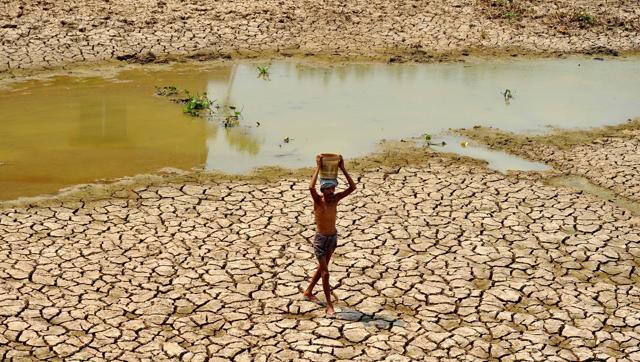
Severe heat waves intensified across northern and parts of western India when temperature in some places rose to above 50C.
The meteorological department issued a warning of likelihood of further intensification of temperature, pointing to the impact of worsening climate change.
These changes led to drought like situations for two consecutive years affecting the economy of around 10 states across 256 districts and impacted livelihoods of nearly 330 million people in rural India.
This magnitude and scale of the impacts due to drought have rarely been witnessed in recent time in any other part of the world.
Estimates by the Central Statistical Organization (CSO) indicate the share of agriculture and allied sectors (including agriculture, livestock, forestry and fishery) has declined to 15.35% of the Gross Value Added (GVA – 2015-16), but it supports nearly 70% of the population.
Given this, worsening of drought in the country could stunt economic growth through direct and indirect impacts such as- loss of livelihoods, loss of agricultural produce, loss of soil health, distress migration to urban areas and increased expenses on relief, which adds up to the total cost to the economy.
Moreover, this would adversely impact on health of children and women besides increasing farm debt due to loss in livestock and farm economy in the drought-hit districts.
It is believed that if drought like situation prevails, farmers in some of the States like Maharashtra, Gujarat, and Andhra Pradesh will be worst hit due to agrarian crisis leading to farmer suicides which is currently over 160% higher than for all Indians excluding farmers, though direct linkage of farmer suicides to drought is not well established.
However, despite two consecutive droughts in the country, Indian economy continued to grow at 7.9% in 2016 Quarter 1 and is expected to grow at 7.2% in Quarter 2 in the year.
The economy has diversified to the extent that consecutive droughts do not affect the economy in any significant way.
In addition, the drought resilience framework in India addresses drought in its multiple dimensions:
-Meteorological (through early warning systems, crop weather watch group, improved datasets)
-Hydrological (through improved irrigation, water conservation and management)
-Agricultural (via drought resistant seeds distribution, soil conservation practices)
-Socio-economic (addressing the issues of livelihoods of people through relief, subsidized food, alternate employment opportunities)
Through these efforts, India has come to a situation, where droughts no longer lead to famine or famine like conditions.
While the economy as whole has achieved resilience from the impacts of drought, rural communities in large parts of the country continue to face the wrath of monsoon failure, leading to distressed selling of lands, movable assets, and migration.
This is aggravating poverty of the people affecting their nutritional standards rendering them more vulnerable to disease and ill-health and loss of productivity.
As per a recent industry study, total estimated impact on the Indian economy of drought in the year 2016 is estimated at $100 billion.
The Indian government is able to provide ex-post relief to drought sufferers through national and state disaster response funds, but there remains a wide financial gap.
The fund has an annual corpus of around 60,000 crores INR for a period of 5 years to respond to all types of disasters covering 29 states in India. This demonstrates an inadequacy of the funds for disaster relief in the country.
The Disaster Management Act, 2005 called for creation of the National Disaster Mitigation Fund, but the government in its wisdom has decided not to set up the fund. However, the Govt of India has created the National Adaptation Fund on Climate Change that receives funding through budgetary allocation.
The fund currently has a total corpus of nearly 350 Crore INR to be disbursed across a range of sectors requiring adaptation support.
If the allocations under this fund is also drawn towards addressing drought related stress and losses, cumulatively the total financial requirements would remain inadequate.
The prime strategy for India’s drought resilience plans therefore needs to be charted out in a way beyond the business-as-usual practices which will address drought resilience as an ex-ante measure.
The call by Prime Minister Modi to prepare a contingency plan for 67 districts in the country that are prone to drought even in years of normal monsoon is a welcome initiative.
This would ensure long term sustainability of the agricultural community against the recurring drought. Until, these plans are in place effectively, drought would continue to affect millions of poor people.
Therefore government initiatives need to be supplemented through community based interventions for climate change adaptations for drought resilience.
The Green Climate Fund should open a window of opportunities for such adaptation initiatives through grassroots level pilot projects, activities, and cross-cutting research which could be further improvised and replicated on a larger scale to all drought stressed regions in the country.

Canadian economy faces sharpest quarterly contraction since financial crisis

Roger Jordan

The second quarter of 2016 is set to witness the sharpest contraction of Canada’s economy since the depths of the global financial crisis in 2008-9.
Announcing late last month that it would maintain its base interest rate at a record low 0.5 percent, the Bank of Canada projected Canada’s economy would contract between April and June. While much of the projected downturn can be put down to the estimated 1.25 percent knocked off economic growth by the Alberta wildfires and resultant halt to oil production, a number of key economic sectors continue to deteriorate. Researchers at BMO Capital Markets have predicted that this will result in a second-quarter contraction of more than 1 percent.
The gloom deepened further when Statistics Canada revealed May 31 that the economy contracted in March by 0.2 percent, even though overall first-quarter growth was at an annual rate of 2.4 percent. The main drag on growth was a poorly performing energy sector, which fell 1.5 percent in March alone.
Subsequently, the Alberta wildfires cut oil production by an estimated 1 million barrels a day—a cut that translates into $70 million in daily losses for producers.
Canada is expected to have the lowest growth among the G7 in 2016 and among the lowest among the 34 OECD (Organization for Economic Cooperation and Development) countries. Among OECD states, only Switzerland, Norway and Greece have experienced less growth than Canada during the past year.
Canada has been hard hit by falling commodity prices, especially the collapse in oil prices from over $100 per barrel in 2014. Tens of thousands of oil workers have lost their jobs, and Canada’s oil-producing provinces, particularly Alberta and Newfoundland, are in deep recessions. Provincial governments, including the Liberal government of Dwight Ball in Newfoundland and Rachel Notley’s NDP government in Alberta, have responded by slashing spending in austerity budgets.
To the surprise of many analysts, May’s job figures, which were released yesterday, showed a slight decrease in unemployment to 6.9 percent, but there were major regional variations linked to the crisis in the energy sector. When discouraged workers are included, the jobless rate is closer to 10 percent.
The Bank of Canada (BoC), in the semiannual review of the financial system it issued Thursday, made a strongly worded warning of the danger posed by overinflated housing markets in Vancouver and Toronto and the sharp downturn in resource-dependent regions. “Strong regional divergence persists among housing markets,” it wrote. “Job losses have increased financial stress for highly indebted households in the regions most affected by low commodity prices.”
Housing prices have repeatedly set new records over the past year, and several reports, including one from the OECD, have warned of the possibility of a major correction—that is, a sharp fall in housing prices. At the same time, the market in Calgary is plunging due to the troubles facing the energy sector.
The latest figures show that the price of an average home in Toronto rose 15 percent over the past year, while in Vancouver the increase was 30 percent. Statistics show that a relatively small decline in house prices would leave a significant section of homeowners with negative equity (i.e. owing more money than the worth of their homes), a development similar to that which took place in the United States in 2008.
Statistics point to steadily rising household debt. With wages stagnating or declining, Canadians have borrowed ever-larger sums to cope with rising prices for housing and other necessities. By the end of 2015, average household debt was equal to 165 percent of household income, making Canada the country with the highest ratio of household income to debt in the G7. The BoC noted in its review that “economic fundamentals” would not “justify continued strong [house] price increases,” a tacit admission that they are unsustainable.
The BoC’s review also pointed to challenges arising from the economic slowdown in China and other emerging economies, as well as the prospect of persistently low commodity prices.
A further mounting cause of concern for the ruling elite is the disastrous decline in business investment. In the first quarter, gross fixed capital formation, which includes company outlays on machinery, structures and equipment, fell by 1.5 percent. It was the fifth quarter in a row that such investments contracted. Also down were business inventories, shaving 0.3 percent off the annualized growth rate.
Economists now expect that the BoC will not increase interest rates from their current record low until well into 2017. This creates a major problem for the financial elite because the US Federal Reserve may move ahead with plans to increase its rates this year. A divergence between interest rates in Canada and in its largest trading partner would result in a sharp drop in the value of the Canadian dollar, stoking inflation.
The first quarter also saw Canadian corporations post their worst quarterly profits in five years. Profits were down 4.6 percent from the fourth quarter of 2015, continuing their decline for a third straight quarter and reaching their lowest level since the fourth quarter of 2010. The poor performance was led by energy corporations, which suffered their worst quarter since the oil price crash, with collective losses totaling $4.8 billion. Manufacturers of petroleum and coal products made their first quarterly loss in 23 years.
Overall, half of the 22 sectors surveyed registered quarter-to-quarter declines. Manufacturing profits fell 7.8 percent, their sixth straight quarter-to-quarter reduction, quarrying and mining profits 9.5 percent, their fourth straight quarter-to-quarter drop, and finance and insurance profits 7.1 percent.
The Liberal government came to power pledging an economic stimulus program to boost growth. In reality it is preparing for major attacks on the working class, with the aim of boosting corporate profitability and attracting investment by improving “competitiveness,” while upholding the reactionary fiscal framework brought about by decades of social spending cuts and tax breaks for big business and the rich implemented by successive federal Liberal and Conservative governments.
The closest allies of Justin Trudeau and his federal Liberal government at the provincial level, the Liberal governments of Ontario and Quebec, continue to implement ruthless austerity measures, slashing public services and imposing concessionary contracts on the workers who administer them.
Last month, federal Finance Minister Bill Morneau declared that action has to be taken to encourage labor market “flexibility,” i.e. to make it easier for companies to shed workers. The multimillionaire former Bay Street pension executive declared, “The ability to grow a business by hiring people would seem like a positive thing, but if you’re unable to actually resize your business one year or four years later with changes in the economy, that presents a real challenge for business managers to actually take the decision.”
The consequences of such policies can be seen in France, where the Socialist Party government is seeking to force through a right-wing labor market “reform” to deregulate the jobs market in the face of mass popular opposition.
The appointment of Dominic Barton, a director at the global consultancy firm McKinsey, to head the government’s council of economic experts exemplifies the government’s anti-working class agenda. McKinsey recently published a report warning the world’s biggest firms that they need to prepare for a profit “squeeze” and growing resistance within the working class to their cost cutting.
In his first budget, tabled in March, Morneau announced that the government would record $110 billion in budget deficits over the coming five years, due to the rapidly deteriorating economy and the Liberals’ attempt to stimulate growth by spending on infrastructure. Such spending is aimed above all at boosting corporate profitability, as shown by the government’s commitment to find $6 billion in annual budgetary savings by the end of its first four-year term in office.
The Liberals’ stimulus plans are a drop in the bucket in the face of the deep-going crisis confronting global capitalism. Moreover, the greatest crisis of world capitalism since the Great Depression of the 1930s is fueling militarism and great power conflict, as well as a turn on the part of all the rival national bourgeoisies, Canada’s included, to economic nationalism and protectionism.
The utter impossibility of the major capitalist powers coordinating their economic policies to stanch the crisis was demonstrated by last month’s G7 summit meeting. While Trudeau declared that he would be pressing for language in the summit statement committing the world’s seven largest imperialist powers to stimulus spending instead of rigid austerity, the end result was a communiqué that sanctioned each government pursuing its own course.

Australia: Labor unveils “tough, unpopular” budget cuts

Mike Head

With three weeks still to go before the July 2 federal election, the Labor Party yesterday repudiated another set of pledges to oppose deep cuts to welfare, healthcare, education, pensions, aged care and family payments.
Families with children, students and universities—all already facing acute financial stresses—are especially targeted by Labor’s latest policy reversals, which will slash social spending by another $6.1 billion over the next decade.
Worse is yet to come. Labor leader Bill Shorten said there would be further “hard” measures before the election. “We will need to make difficult decisions as this election unfolds,” he declared.
In previous elections, incoming governments waited until the voting was out of the way before junking their promises. This is no longer possible because of a rapidly deteriorating economic situation in Australia and internationally. The corporate and media elite is demanding an austerity agenda to make the working class pay for the economic breakdown, and Labor is just as committed as the Liberal-National Coalition government to satisfying those dictates.
Shorten described yesterday’s measures as “fair,” claiming they would affect “rich” families. But among the biggest items were halving family tax benefits for families with combined incomes of over $100,000 a year, stripping more than $500 million from them over the next four years. This would hit many working class households, most of which now depend on having both parents working in order to try to make ends meet.
Likewise, the government’s current freeze on the indexation of the Private Health Insurance and Medicare Levy Surcharge thresholds would be continued for 10 years to 2026–27, making thousands of families liable to pay the tax levy of up to 1.5 percent of income. Households would pay an extra $2.3 billion over the decade.
Students face a reduction in the threshold for repayment of HECS-HELP tuition fees from annual incomes of $54,126 to $50,638. This would raise another $129 million from graduating students over 10 years. Fees would rise by $159 million over the decade for students in early childhood education, maths, science and nursing.
Resources for universities, chronically starved of funds, would be cut by a further $3.7 billion over the decade by indexing funding to the official cost of living index, not education costs.
This is the second instalment of promises to be ditched. Two weeks ago, Labor repudiated pledges worth more than $9 billion over four years. It abandoned plans to retain the $4.5 billion school kids bonus and reverse $3.6 billion in pension cutbacks and $1.2 billion in aged care cuts.
Labor has foreshadowed further budget measures, such as imposing a four-week wait for young people to access unemployment benefits, raising the age of eligibility for the Newstart jobless allowance to 25, and removing the carbon pricing scheme compensation for new welfare recipients.
A party spokesman told the Australian Financial Review the measures included some “tough, unpopular” decisions and “it’s not going to be pretty for the true believers.” These are vows to deliver the requirements of big business, regardless of the electoral backlash or working class opposition, just as Labor governments have done in the past.
In a bid to exploit the hostility toward the Coalition government’s budget cuts, Labor’s election slogan remains: “We’ll put people first.” But the shift in its focus to assure business of its intentions was symbolised by the removal from Labor’s election web site of two petition campaigns that ran for months. One was called, “Don’t pocket our pensions” and the other, “Fair go for families.”
Shorten yesterday underscored Labor’s essential bipartisan unity with the Coalition government, not only matching the government’s pledge to eliminate the $40 billion budget deficit by 2020-21 but saying the difference between the two on the deficit over the next four years would be “relatively modest.”
A day earlier, Labor released a vague ten-year “economic plan” that would allow slightly higher budget deficits than the government’s until 2020–21, then cut spending enough to return to surplus. But this provoked warnings by business economists and global ratings agencies that Australia’s credit rating was threatened, because of the country’s rising public and private debt levels.
One economist, John Daley from the Grattan Institute, pointed to the mounting frustration in big business with the failure of federal governments, both Labor and Coalition, to dismantle welfare entitlements and slash social spending since the global crash erupted in 2008.
Daley said Labor had “placed the AAA rating at risk” because governments and oppositions were again delaying harsh measures. “They [the agencies] are very nervous about a pattern of behaviour that puts off tough decisions again and again,” he said.
A cut in the credit rating would increase the interest rates on government and corporate debt, including that held by the country’s four major banks. This is under conditions where the mining boom has collapsed, prices for commodity exports have plummeted, a debt-fuelled housing bubble is showing signs of bursting and many areas of the country are already in recession.
Labor’s move yesterday came in direct response to demands in the corporate media for it to impose key cuts to health, education and welfare that have been blocked in the Senate since the 2014 budget. This impasse has largely resulted because in the last federal election, in 2013, “independent” and “third party” candidates won about 25 percent of the votes for the Senate by posturing as opponents of the major parties—Labor, Liberal/National Coalition and Greens—and felt compelled to oppose the most egregious cuts for the sake of their own political survival.
Australian Financial Review political editor Laura Tingle voiced fears that the July 2 election could result in greater political instability. “There has been a lot of talk around what sort of Senate the next government will face. But whoever actually takes their seats in both houses, the relationship between the government of the day and the Senate will be heavily influenced by the extent to which the two major parties ultimately agree on a range of these spending measures.”
In its June 9 editorial, the Australian demanded that Labor return to the path of “economic and fiscal reform” pioneered by the Hawke and Keating Labor governments in the 1980s and 1990s. It was Labor—backed by the trade unions—that began the assault on the social position of the working class, cutting taxes on companies and high-income recipients, and carrying out the greatest redistribution of wealth to the rich in Australia’s history.
In its election statement, the Socialist Equality Party warned against any illusions in Labor’s efforts to regain office via “shameless lies that it will pour billions into health, education and infrastructure.” The statement explained: “The credit rating agencies have made clear they will insist on savage cuts to social spending to slash the budget deficit. And Labor will obey their dictates.”
That warning has already been vindicated, and there is still three weeks of the election campaign to run.

Croatian government collapses after four months

Markus Salzmann

The Croatian government led by the non-party pharmaceutical manager Tihomir Oreskovic has fallen apart after just four months in power.
Last week, the head of the rightward-leaning Croatian Democratic Union (HDZ), Tomislav Karamarko, withdrew support from Oreskovic and allowed the coalition with the right-wing liberal Most party, under its leader Bozo Petrov, to collapse.
However, because Oreskovic has no intention of resigning, the HDZ could introduce a motion to remove him in parliament. Oreskovic previously demanded the resignation of Karamarko and Petrov from their joint position as deputy prime minister. The HDZ leader then ended the coalition. The issue is now whether the HDZ will manage to cobble together a new majority in parliament or if new elections will be required.
Karamarko came under severe pressure after it was revealed that his wife received consultancy fees of €60,000 from a lobbyist for the Hungarian minerals firm Mol. The opposition Social Democrats (SDP) responded in May by initiating impeachment proceedings against Karamarko.
Parliamentary elections last November ended in a tie between the right-wing HDZ and SDP. The new party, Most, became the kingmaker and united with the HDZ to appoint Oreskovic as Prime Minister. Oreskovic had never before publicly participated in political life and was unknown to the wider public. The former head of a North American pharmaceutical concern was, in the words of former intelligence agency chief Karamarko, pledged to impose “tough reforms.”
From the outset, fierce conflicts and controversy rocked the new government. Three Most deputies left the party and refused to vote for Oreskovic because they did not agree with the allocation of ministries. Regardless, the coalition explicitly agreed on an extremely right-wing programme.
The HDZ is based on ultra-conservative and radical right-wing groups. In May, the government backed a “march for life,” which was initiated by clericalist and openly fascist forces against the right to abortion. The most prominent participant was the wife of the Prime Minister, Sanja Oreskovic. The chairman of the council of bishops, Selimir Puljic, felt so emboldened that he proposed a referendum on the lifting of the ban of the fascist greeting from World War II, “Ready for the fatherland,” in the military.
The minister of veterans, Mijo Crnoja, who has since resigned, planned a list of “national traitors,” a state register of all those who did not show enough “devotion to the fatherland” in the war against Serbia or spoke out against the government. He was explicitly defended by Oreskovic.
In addition, the coalition also agreed to continue to deter refugees fleeing the imperialist wars in the Middle East and close off the so-called Balkan route.
At the end of April, the government passed a national reform programme in response to a critical country report by the European Union which demanded the implementation of further reforms. Oreskovic referred to sixty “not difficult, but necessary” austerity measures being put in place. On the spending side, comprehensive cuts were included which hardly left any sector untouched, from healthcare to childcare and agriculture.
The government also pressed ahead with the privatisation of state enterprises. Above all, the state electricity provider and highway company are to be hived off as soon as possible, and will be connected with large-scale layoffs. The pension system is also to be reformed. An increase in the retirement age to 67 is planned.
Croatia has been in a deep economic crisis since 2008. The country has one of the highest unemployment rates in the EU, officially at 16 percent.
Public debt continues to increase, currently standing at 87 percent of GDP. The budget deficit, at 5.9 percent, is well above the Maastricht criteria, which stipulate that EU members must maintain a budget deficit of less than 3 percent of economic output.
After six years of recession, the Croatian economy grew minimally last year. Croatia was recently unable to issue any new government debt because political instability pushed interest rates too high. Moody’s downgraded Croatia’s credit rating in March.
Large protests erupted last month in response to attacks on the education system. The attempt by the openly fascist culture minister Zlatko Hasanbegovic to turn the education system to the right unleashed the largest protest movement in years. Forty thousand people took to the streets in the capital Zagreb with other demonstrations taking place across the country. Hasanbegovic, a historian, has defended and relativised the crimes of the Ustashe regime during World War II.
The collapse of the government has provoked a serious political crisis in the country. Oreskovic and President Kolinda Grabar-Kitarovic have already held secret talks to discuss future steps. The government is under significant pressure from the EU and the International Monetary Fund to pursue a sustained austerity program.
Representatives of all parties agree that the imposition of economic reforms takes priority. Vladimir Seks, a leading figure in the HDZ, stated that even the resignation of Karamarko could be considered and may even be “in the national interest” to allow the government to proceed with its austerity program. Bloomberg news agency cited a business representative as saying, “Economic growth in Croatia is more important than temporary political instability.”

Turkey’s Erdogan uses terror attack to escalate repression of opposition

Halil Celik

The Kurdistan Freedom Falcons (TAK), a splinter from the Kurdistan Workers' Party (PKK), has claimed responsibility for a car bomb attack in central Istanbul Tuesday, which killed seven police officers and four civilians and wounded another 36.
"The action was carried out to counter all the savage attacks of the Turkish republic in Nusaybin and Sirnak and other places," a statement declared, referring to Turkish army operations in the southeast of the country.
TAK warned “foreign tourists who are in Turkey and who want to come to Turkey: Foreigners are not our target but Turkey is no longer a safe country for them. We have just started the war.”
The BBC reported that Tuesday's attack was a “sacrifice action”, implying that it was a suicide bombing. This contradicts earlier reports on what is the fourth bomb-attack in central Istanbul this year, which stated that a remote-controlled device was detonated as a riot-police bus was passing by.
According to the Anadolu Agency, following the explosion, there were gunshots in the area, which was closed off to the public and media by police. An Istanbul 10th Criminal Court has issued a broadcast ban in Turkey on the blast. The ban covers all news, interviews and critique in print, visual, internet media and social media.
Another car bombing on June 8 hit the police headquarters of the southeastern town of Midyat, Mardin. Two police officers were killed and many others wounded.
Visiting the wounded in a hospital after the attack in Istanbul, President Recep Tayyip Erdogan once more promised to “continue our fight against these terrorists to the end tirelessly.” His statement was reinforced by Prime Minister Binali Yildirim, who said, “No matter what, the state of the Republic of Turkey will never ever make concessions in the fight against terror.”
Chairperson of the main opposition Republican People’s Party (CHP) Kemal Kılıçdaroğlu and the leader of far-right Nationalist Movement Party (MHP) also condemned the attack, while Selahattin Demirtaş, co-chair of the pro-Kurdish Peoples’ Democratic Party (HDP), slammed the Justice and Development Party (AKP) government for failing to put an end to bloodshed. He blamed the government for creating the conditions for such attacks and called on the leaders of four parties represented in the Turkish parliament to come together at a meeting to put an end to the violence.
The PKK claimed responsibility for a similar May 12 car-bomb attack in Istanbul that wounded seven people. It has waged an armed insurgency against the Turkish state since 1984 and frequently targets passing police and military vehicles with remote-controlled car bombs in its attacks in the largely Kurdish populated southeastern areas of Turkey.
Turkish military and police forces have mounted a sweeping operation against the PKK for more than a year, during which thousands of people have been killed and some 400,000 civilians have been forced to leave their homes, while Kurdish towns go to ruin.
The latest terror attack will only accelerate and facilitate the drive of the Turkish ruling elite towards militarism and dictatorship, while confusing the masses. Immediately after the attack, Erdogan approved a law lifting the immunity of 138 lawmakers, paving the way for criminal proceedings against them.
The main target is the pro-Kurdish HDP, the third-largest party with 59 MPs, which has been consistently accused by Erdogan and his government of aiding and abetting the PKK. But other parties have also been opened to repression in order to pave the way for Erdogan’s plan to amend Turkey’s constitution to create an executive presidency, giving himself dictatorial powers.
On the same day, the Erdogan government brought forward a bill to provide legal protection “to soldiers involved in security operations against groups listed as terrorist organizations.”
The proposal includes a range of measures increasing the authority of the soldiers participating in “anti-terror operations” while requiring the prime minister’s permission to investigate or put on trial the commanders and the chief of general staff.
The bill would allow the Turkish army to participate in operations in central provinces, with a proposal from the Interior Ministry and a decision from the cabinet. A similar judicial shield was previously granted to National Intelligence Organization personnel, granting the prime minister the authority to halt all investigations into its officials.
These moves came a day after the recent wave of reshuffles in the judiciary, in which more than 3,700 judges and prosecutors who had made decisions displeasing Erdogan were replaced by the government, headed by Erdogan’s henchman, President Binali Yildirim, who replaced then Prime Minister Ahmet Davutoglu in May after Erdogan forced him to step down.
Primary responsibility for the terrorist attacks in Turkey rests with the Turkish government and its Western allies, which have been waging a regime-change operation against the Syrian government of President Bashar al-Assad to which end they have gathered, organized, financed and trained Sunni-Islamist militants in a sectarian war that has devastated Syria and Iraq. It is this that has created the basis for the growth of Islamic State (ISIS).
The war in Syria, together with the anti-terror statutes, are also being employed for repression against ethnic Kurds, aimed at preventing the establishment of an autonomous Syrian Kurdish entity on Turkey’s borders.
These twin aims often conflict, given that Washington and the European powers are keen to utilise the Kurdish Peshmerga military forces against Assad and are actively contemplating the partition of Syria. This has forced Erdogan into a series of pragmatic shifts, including utilising Islamist forces such as ISIS and the al-Qaeda-linked al-Nusra against the Kurds. These shifts have in turn brought the AKP regime into conflict with Washington and Berlin, while Ankara's warmongering and invasive Syrian policy has brought Turkey to the brink of war with Russia. Last year, amid the escalating war against the PKK, Turkish air forces deliberately downed a Russian fighter in Syria.
According to official figures, thousands of PKK militants and some 1,000 security forces as well as civilians have been killed, while whole Kurdish towns have been destroyed over the last six months. Erdogan has responded with threats and bluster directed against his increasingly dissatisfied Western allies, who he suspects with some justification of conspiring to remove him—in particular by seeking to cultivate Davutoglu.
Turkey is also gripped by growing economic difficulties, having witnessed a dramatic fall in investment, trade and tourism that is further provoking social unrest. The only answer of the Turkish ruling elite to its worsening social, economic and political troubles is to escalate its drive to militarism and dictatorship.

Hillary Clinton signed off on drone assassinations, emails reveal

Patrick Martin

In his online endorsement of Hillary Clinton to succeed him in the White House, President Obama declared that she was more qualified than any previous candidate for the presidency. A report Friday in the Wall Street Journal indicates that these “qualifications” include personal participation in approving drone-missile assassinations.
Clinton’s role in the chain of command leading to the incineration of thousands of people in Pakistan, most of them innocent civilians, is one of the secrets concealed in the long-running investigation of her use of a private email server while Secretary of State in the Obama administration.
The Wall Street Journal article reports that in 2011 and 2012, after a series of internal disputes between the CIA and the State Department over how drone missile strikes in Pakistan were complicating US diplomatic relations with the government in Islamabad, the State Department was given the right to veto missile strikes if their timing was considered especially provocative to the Pakistani government.
The US Ambassador to Pakistan, Cameron Munter, or another official at the embassy, would be informed of drone strikes in advance by the CIA, and would then consult with the State Department, going up the line all the way to Secretary of State Clinton, about whether to formally “concur” or “non-concur” in the action.
According to the Journal, such communications would normally pass through the internal State Department communications system, with Clinton given oral briefing and responding in the same way. However, there were some instances, usually when officials were on vacation or during holiday periods, or when the high-security system was too cumbersome and an immediate reply was needed, when an aide would send Clinton an email about an impending strike, for her response.
The Journal wrote: “The vaguely worded messages didn’t mention the ‘CIA,’ ‘drones’ or details about the militant targets, officials said.”
These emails are apparently among those now considered top-secret by the intelligence agencies, although they were not so classified by the State Department at the time. As the Journal noted, “The CIA drone campaign, though widely reported in Pakistan, is treated as secret by the U.S. government. Under strict U.S. classification rules, U.S. officials have been barred from discussing strikes publicly and even privately outside of secure communications systems.”
Significantly, the Journal, whose editorial page is ferociously hostile to Clinton and treats her use of a private email server as a major criminal offense, reported that “Several law-enforcement officials said they don’t expect any criminal charges to be filed as a result of the investigation, although a final review of the evidence will be made only after an expected FBI interview with Mrs. Clinton this summer.”
It has been clear for more than a year that the email controversy is being driven by sections of the military-intelligence apparatus allied to the Republican Party and seeking an even harder line in US foreign policy than that pursued by the Obama-Clinton administration. A series of leaks has kept the issue before the public to undermine Clinton’s political standing and, potentially, sabotage her campaign entirely.
What is remarkable about the latest revelation is that it does link Clinton directly to criminal activity, only not in the sense long alleged by her right-wing political opponents. The criminal activity is her personal participation in the campaign of drone-missile assassination, conducted by the CIA and Pentagon at the direction of President Obama, in complete violation of international law.
The Wall Street Journal account indicates that State Department opposition to specific drone missile strikes was related entirely to problems of timing—a mass incineration coming on the eve of sensitive US-Pakistani talks or the visit of a top US official to Islamabad—and did not represent any objection to the program itself.
The newspaper reported, “Only once or twice during Mrs. Clinton’s tenure at State did U.S. diplomats object to a planned CIA strike, according to congressional and law-enforcement officials familiar with the emails.”
As for the CIA’s concerns about secrecy—now given voice by Republican officials, from congressional representatives on up to Donald Trump—the Journal account concedes that the drone missile program was widely publicized in Pakistan.
“Despite being treated as top secret by the CIA, the drone program has long been in the public domain in Pakistan,” the newspaper noted. “Television stations there go live with reports of each strike, undermining U.S. efforts to foster goodwill and cooperation against militants through billions of dollars in American aid.”
The language is priceless. According to this leading US newspaper, it was not the missile strikes themselves, spreading death and destruction, but the television reports about them, that were causing a political backlash in Pakistan.
As for the insistence on secrecy, this had a clear political motive. The CIA and Pentagon wished to keep the missile assassination secret, not from the Pakistani population, who could see the toll in men, women and children incinerated and maimed, but from the American people, who were not to be allowed to know what the government of the United States was doing, allegedly in their name.

Widening unrest in Papua New Guinea following police shooting of student protesters

John Braddock

Angry protests have spread across Papua New Guinea (PNG) following the police shooting of unarmed student protesters in the capital Port Moresby on Wednesday. Up to 38 students were injured, including one with a gunshot wound to the head. Initial reports that four students were killed were denied by Prime Minister Peter O’Neill.
O’Neill has been the focus of sustained student protests and mass boycotts of classes for the past six weeks. He is accused of allegedly authorising payments for fraudulent legal bills amounting to $A30 million ($US22 million). Following the occupation of the University of Papua New Guinea (UPNG) by heavily-armed police on May 17, the first semester was suspended and students ordered to vacate the campus.
Behind the corruption scandal is an immense social crisis caused by the collapse of the economy. PNG, which is heavily reliant on mining exports, including oil and gas, is at the sharp end of the precipitous decline in global commodity prices, mirroring the intractable problems of other so-called “petrodollar” economies.
The Australian Financial Review reported in April that, having been the fastest growing economy in the Pacific region the previous year, PNG ended 2015 “in crisis management with cash shortages and budget cuts more severe than those in Greece’s austerity package.” The government sought an emergency World Bank loan of $US300 million to tackle a foreign exchange crisis, a humanitarian disaster from a severe drought and a ballooning budget deficit. The move followed a failure to raise $US1 billion on bond markets.
Government revenues have slumped by 21 percent, prompting sweeping attacks on public services and living standards. The national health budget alone has been slashed by almost 40 percent. The student uprising followed a series of strikes early this year by power workers, miners and public servants, amid broadening opposition to the economic turmoil.
The student leadership, however, has so far limited the protests to the issue of government corruption, while emphasising their “patriotic” intentions and orienting towards the opposition parliamentary parties—which are also mired in corruption and have no solution to the social crisis.
Wednesday’s police attack erupted as 1,000 students were leaving the UPNG’s Waigani campus to go to parliament. Student leaders intended to show support for a planned motion of no confidence in O’Neill’s People’s National Congress Party government by the parliamentary opposition.
Armed police intercepted several chartered buses before the students departed. When they decided to march and began heading towards the university’s outer gate, the police fired live rounds and tear gas directly into the protest.
Radio New Zealand reported scenes of “chaos,” with hundreds of students fleeing after the police opened fire. One student, Zacharia Yakap, said “since the police were even running into the campus looking for students, the students ran into nearby bushes where the police also followed through and shot them.” Another, Stacey Yalo, told ABC News, “It is coming to a point where they are actually targeting students as if they’re criminals. They’re shooting at them. They’re out here to shoot and kill.” Journalist Rose Amos reported being kicked and punched by two police officers after seeking cover.
Port Moresby Hospital CEO Grant Muddle said they dealt with eight gunshot casualties, including four seriously wounded. All were stabilised and admitted to the hospital. A dozen other protesters were treated for injuries, while 10 students were taken to a hospital in Gerehu. Muddle said that police had shot tear gas into a crowd outside the emergency department entrance, hitting patients with gas.
Later, as outrage spread, police were reported to be on “high alert” in Mount Hagen, where there was an attack on the police station, and in Lae where students rallied. Several road blocks were erected on the main road through the Highlands region. The UPNG administration obtained a court order banning further protest action, but student leaders have not ruled out more mass mobilisations and class boycotts.
O’Neill denied that the police targeted the students, and claimed that their only response was the use of tear-gas and “warning shots” in reply to rock-throwing by protesters. Student leader Peter Nahi said O’Neill’s claims were “just not true.”
O’Neill has announced there will be an inquiry, but it will only investigate the “agitators” who he insists are responsible and not why police fired on unarmed protesters. The inquiry will “determine the underlying reasons for continued student unrest promoted by individuals outside the student body,” O’Neill declared. The ombudsman has announced a separate “independent” inquiry.
Australian Foreign Minister Julie Bishop called for “calm” and intoned that “the right to protest peacefully and lawfully be respected.” Australian Prime Minister Malcolm Turnbull told ABC television on Wednesday that he had spoken with O’Neill who informed him that he was “leaving the handling of the matter to the police.” O’Neill flatly rejected an offer by Turnbull of Australian “help.” “Of course Malcolm has got every right to call me any time he wants to, but as I indicated to him, these are internal matters for Papua New Guinea,” O’Neill declared.
Turnbull’s phone call indicates the grave concerns within the Australian ruling elite about the deteriorating situation in its former colony. Australia is PNG’s dominant source of trade, investment and aid. Australian companies, particularly timber and mining, have commercial interests estimated at over $A18 billion. Canberra continues to rely on PNG to house its Manus Island refugee detention centre, despite a PNG Supreme Court ruling that it is illegal. Currently, 56 elite Australian Federal Police officers are on duty “mentoring” their local PNG counterparts.
China increasing has its own commercial interests in the country—highlighted by the massive Ramu Nickel mine. O’Neill reportedly flew out to Beijing immediately following the protests, a visit that will be closely watched in both Canberra and Washington.
PNG occupies a key geo-strategic position in the deepening confrontation with China, stemming from the Obama administration’s “pivot to Asia” and US-led preparations for war. Australia’s 2016 Defence White Paper emphasised that “the security, stability and cohesion of Papua New Guinea” was vital for a “secure, resilient Australia with secure northern approaches.”
Washington’s interests in PNG were bluntly spelled out to a Congressional committee in 2011 by then US Secretary of State Hillary Clinton., She declared: “Let’s put aside the moral, humanitarian, do-good side of what we believe in, and let’s just talk, you know, straight realpolitik. We are in a competition with China ... Exxon Mobil is producing it [a $19 billion gas project in PNG]. China is in there every day in every way trying to figure out how it’s going to come in behind us, come in under us.”
The shootings will only intensify popular grievances against the government, and moves to oust O’Neill could well be underway. Canberra, backed by Washington, would be intimately involved in any such development. O’Neill himself came to office in 2011 through an illegal parliamentary manoeuvre backed by the Australian government to oust his predecessor Michael Somare, who was regarded as too close to Beijing.
On Thursday, the Australian identified three former prime ministers still in parliament—the influential former independence leader Michael Somare, Paias Wingti and Julius Chan—“who may each be prepared to step into the breach until the election,” which is due in 2017. Canberra is by no means indifferent as to who that might be.