14 Nov 2016

Trump victory batters emerging markets

Nick Beams

Donald Trump’s victory in the US presidential election lifted American stock markets on the back of the belief that financial deregulation and possible increased infrastructure and military spending could provide a profit boost. But it was a different story in “emerging” markets, where currency values have fallen and funds have been withdrawn.
According to the Institute for International Finance, emerging market stocks and bonds experienced a $2.4 billion outflow in the past week, most of it after the election.
Last Thursday, the iShares Emerging Markets’ exchanges traded fund suffered its worst single day of outflow since 2011, with more than $1.5 billion in withdrawals.
Latin America was particularly hard hit. Currencies fell sharply, led by a 12 percent decline in the value of the Mexican peso since the election, hitting a record low on Friday. The Brazilian real fell by 5.2 percent against the dollar on Thursday—its biggest single-day drop in five years.
The declines were not confined to that continent. The South African rand was down about 6 percent for the week. Indonesian stock markets fell 4 percent on Friday and the rupiah dropped by 2.7 percent, prompting an intervention by the country’s central bank.
Emerging market bond funds suffered their first outflow in four months and JPMorgan’s emerging market currency index experienced its worst week in three years. According to one financial analyst quoted by the Financial Times: “In just two days, half of the last six months’ gains have been given back.”
Asian bond markets were hit by a sell-off. Yields on 10-year government debt rose sharply in South Korea and Thailand. As with all fixed income debt, yields rise as the price of bonds falls. The yield on 10-year South African bonds rose to 9 percent, its highest level since September.
Several factors are driving the emerging market downturn. There is concern that Trump’s protectionist “America first” policies will have a significant impact on global supply chains. These fears are also reflected in US stock markets. The stocks of tech-based companies, which depend on cheap-labour countries for their business models, did not join last week’s rise on Wall Street.
Another major factor is the sharp rise in US bond yields which followed the Trump victory on the expectation that any infrastructure spending program, coupled with major tax cuts for corporations and the wealthy, will increase US government debt. The yield on 10 year-treasury bonds, considered to be a global benchmark, rose by 37 basis points (0.37 percentage points) last week to finish at 2.15 percent, the first time it has gone over 2 percent since the beginning of the year.
The prospect of higher yields in the US is attracting funds from emerging markets. According to Ashely Perrott, head of pan-Asia fixed income at UBS Asset Management in Singapore: “If [US] treasury yields continue to march higher, that will put pressure on emerging markets. What you think is an opportunity initially might turn into a regret.”
Rapid movements of funds out of emerging market debt back to the US could have major global ramifications. The Japanese financial firm Nomura noted that a move “meaningfully above” 2.25 percent in US 10-year treasuries in the short run “could result in a significant redemption flow… potentially triggering a broader risk-off event.” In other words, major outflows could bring about a rush for the exits, leading to global financial turbulence.
The International Monetary Fund has reported that world debt now stands at a record $152 trillion and warned that high debt levels in emerging markets could make them vulnerable to a reversal of capital flows.
No one has any clear idea of what specific measures a Trump administration will implement and whether they will get through the US Congress. But any policies that increase fiscal spending, at least in the short term, are likely to bring about higher inflation and will increase pressure on the US Federal Reserve to lift interest rates.
Whatever the medium-term outlook, there is a growing expectation that the US Fed will raise its base rate by 0.25 percent when it next meets in December.
That prospect appears to have strengthened on the back of remarks by Fed vice-chairman Stanley Fischer. Addressing a conference convened by the central bank of Chile, he said the Fed appeared to be reasonably close to achieving its objectives on inflation and employment and “the case for removing accommodation gradually is quite strong.”
Rising interest rates in the US will in turn bring about a stronger US dollar and a further fall in emerging market currency values, with consequences for emerging market dollar-denominated debt because the real value of that debt rises with every increase in the dollar. There was significant financial turbulence in January and February when the Fed raised rates by 0.25 percent last December, with global equity markets experiencing one of their worst starts to the year on record.
In the longer term, as the Financial Times noted, there is considerable scope for further rises in yield because outstanding US debts are twice what they were relative to gross domestic product when Reagan came to power in 1980s. Much of that increase has occurred in the recent period, with US debt almost doubling to $14 trillion since the global financial crisis of 2008.
The other longer-term factor that will impact not only on emerging markets but the world economy as a whole is the “America first” nationalism that forms the core of the Trump economic agenda.
In a research note on the impact of Trump’s policies, the US bank Citigroup said that while they might provide a short-term boost for the US economy, they could set off a disastrous global trade war.
“A US-led trade war is a material downside risk for the global economy, which could easily trigger a global recession. In our view, the election outcome significantly increases the risks around the global macroeconomic outlook, including for inflation, and future Fed policy,” it said.

Managing Differences is the Key to Sino-India Relations

Siwei Liu


Close on the heels of the Indian Prime Minister Narendra Modi’s trip to Hangzhou, China for the G20 meeting last month, Chinese President Xi Jinping made his second India visit to participate at the Brazil Russia India China and South Africa (BRICS) Summit on 15-16 October 2016 in New Delhi. There is no doubt that the frequent interactions between the top leaders of both countries are helpful for the current Sino-Indian relations that have experienced setbacks in the past years. At the same time, differences on some key issues have disrupted the smooth development of bilateral ties. It is time for China and India to adopt an inclusive approach for managing their differences, with them being the two biggest powers in Asia. This also means that the two sides should show greater mutual respect and pursue a win-win cooperation to avoid the Thucydides Trap.

Athough evidently there is no reason for making an over-pessimistic assessment on current China-India ties, there still remain major differences and disagreements between the two countries. Indian policy-makers and strategic analysts repeatedly state that China does not take care of India's interests on some issues, including India’s entry into the NSG and India’s efforts to get the United Nations to impose sanctions on anti-India terror groups based in Pakistan. India has also been opposed to the Chinese-initiated China–Pakistan Economic Corridor (CPEC) arguing that the corridor passes though the disputed region of Kashmir. The extension of India’s strategic frontier to the western Pacific Ocean along the lines of its Act East policy, and its security relationships with Japan and the US, cause concerns to the Chinese strategic community. China has also been closely watching the Indian stance on the South China Sea issue; upto now India has had an unclear policy on this issue. 

Thankfully, the two sides have channels of communication and opportunities for interaction both at the multilateral level and at the bilateral level. In recent years, the two sides have recognised the importance of using some of the multilateral mechanisms to enhance bilateral dialogues and negotiations, including the Shanghai Cooperation Organisation, the G20 and the BRICS summit. In addition to these, a number of new bilateral mechanisms have also been established, including a ministerial-level mechanism to tackle terror, a working mechanism for consultation and coordination on border affairs, and so on. The two sides also held the first round of dialogue on maritime cooperation this year. There is no denying that these mechanisms provide a good platform for the two nations to discuss each other’s positions, expectations and interests. 

Exploring and creating channels of communication is only the first step for achieving positive ties. The next and the more important step should involve the two sides thinking deeply on how to manage their differences and address the divergence of interests between the two countries. China and India should avoid a zero-sum approach to manage their differences; adopting a comprehensive approach is the best choice. 

How can the two sides push the bilateral ties forward? First, fostering an inclusive environment and restoring some positive energy for the current bilateral ties is very important. This understanding will have to be reflected in the national discourse and national institutions; for instance, bilateral ties are not only impacted by realistic national interests, but also by the behaviour and speeches of national leaders, diplomats, public intellectuals, etc. China and India should encourage related people, institutions and media to use a positive discourse to describe the developments in bilateral ties and make the relationship appear valuable and friendly. 

Second, an all-encompassing approach requires taking some effective steps to respect the other’s core interests and values. If possible, the two sides should have more frank exchanges and a express each others interests and concerns more clearly, particularly on its national security stance. In addition, the two sides should believe that any side’s friendly behaviour in bilateral ties possibly could motivate the other side to think actively about their own behaviour. For instance, India could avoid exerting pressure on China on the South China Sea issue - an area of Chinese core national and strategic interest - and if possible India could even try to ease the tension in the region. Similarly, China could cooperate with India on counterterrorism, nuclear safety and maritime security governance, among other areas. 

Third, a broader vision is required in both countries to manage the China and India relations. Besides their bilateral issues, China and India should also think about the effective management of regional and global affairs. As the overall national strength of both nations rises and as their strategic frontiers expand, there is greater scope for clash of interests and disagreements, especially at the regional level. Therefore, both sides need to recognize their responsibility to pursue an inclusive economic development and security cooperation for a stable and prosperous Asia. One of the ways to do this is by joining hands to provide public goods at the global and regional platform.

12 Nov 2016

Leadership and Advocacy for Women in Africa (LAWA) Fellowship Programme 2017/2018

Application Deadline: Friday, 13th January, 2017
Offered Annually? Yes
Eligible Countries: Over 80 women’s human rights advocates from Botswana, Cameroon, Ethiopia, Ghana, Kenya, Liberia, Malawi, Namibia, Nigeria, Sierra Leone, South Africa, Swaziland, Tanzania, Uganda and Zimbabwe have participated in the LAWA Program, and we hope to include Fellows from additional countries in the future.
To be Taken at (Country): Georgetown University Law Center in Washington, D.C., USA
About the Award: The Leadership and Advocacy for Women in Africa (LAWA) Fellowship Program was founded in 1993 at the Georgetown University Law Center in Washington, D.C., in order to train women’s human rights lawyers from Africa who are committed to returning home to their countries in order to advance the status of women and girls in their own countries throughout their careers.
LAWA group
Type: Fellowship, Masters
Value of Fellowship: The LAWA Fellowship provides the tuition for the Foundations of American Law and Legal Education Course (a U.S. $2,200 benefit) and for the LL.M. degree (a U.S. $46,865 benefit) at the Georgetown University Law Center, as well as professional development training. Candidates who are admitted to the LAWA Program must be prepared to cover the costs of all additional expenses (such as their visas, travel, housing, utilities, food, clothing, health insurance, books, etc.), and must be able to demonstrate to the U.S. Embassy for visa purposes that they have the funds available to cover those expenses (approximately $28,000).
Duration of Fellowship: The entire LAWA Fellowship Program is approximately 14 months long (from July of the first year through August of the following year), after which the LAWA Fellows return home to continue advocating for women’s rights in their own countries. The LAWA Program starts in July, when the Fellows attend the Georgetown Law Center’s Foundations of American Law and Legal Education course. From August through May, the LAWA Fellows earn a Master of Laws (LL.M.) degree at Georgetown with an emphasis on international women’s human rights and complete a major graduate paper on a significant women’s rights issue in their home countries. After graduation, the LAWA Fellows then have an opportunity to engage in challenging work assignments for several months at various public interest organizations to learn about different advocacy strategies to advance women’s human rights, before returning home to continue advancing women’s human rights in their own countries.
Upon completion of their Program, LAWA Alumnae have returned home to assume prominent leadership positions enabling them to focus on women’s rights issues in non-governmental organizations, government agencies, law schools, courts, legislatures, and private firms.
More Fellowship Guideline: LAWA Alumnae have formed their own non-governmental organizations, such as the Women’s Legal Assistance Center in Tanzania and Legal Advocacy for Women in Uganda (LAW-Uganda) to promote women’s human rights in their countries (e.g., by bringing impact litigation under their countries’ statutes, constitutions, and the human rights treaties that their countries have ratified).
How to Apply: The 2017-2018 LAWA Fellowship application is available here.
For more details about this fellowship programme, visit fellowship webpage

105 Developing Solutions Masters Scholarships in UK for African and Commonwealth Countries 2017

Application Deadline: 24th March 2017 (12 midday UK time)
Offered annually? Yes
Eligible Countries: All countries in Africa and the Commonwealth (See list of countries below)
To be taken at (country): University of Nottingham UK
Eligible Fields of Study
  • Faculty of Engineering,
  • Faculty of Medicine and Health Sciences,
  • Faculty of Science,
  • Faculty of Social Science
About Scholarship: Founded in 2001, Developing Solutions is The University of Nottingham’s flagship international scholarship programme for  postgraduate masters courses.
University of Nottingham
Type: Masters degree
Eligibility: You can apply for the Developing Solutions scholarship if you:
  • are a national of (or permanently domiciled in) AfricaIndia or one of the countries of the Commonwealth listed below AND
  • are classed as an overseas student for fee purposes AND
  • have not already studied outside of your home country AND
  • are not currently studying at a University of Nottingham campus or are not a University of Nottingham graduate AND
  • already hold an offer to start a full-time masters degree programme, including MRes, at Nottingham for September 2017 in an area of study within the:
    • Faculty of Engineering,
    • Faculty of Medicine and Health Sciences,
    • Faculty of Science,
    • Faculty of Social Science
  • Priority is given to candidates who have not previously studied outside of their home country. Students currently studying in the UK are not eligible to apply.
Number of Scholarships: 105 Developing Solutions scholarships available for 2017 entry:
  • 30 x 100% tuition fee
  • 75 x 50% of tuition fees 
Value of Scholarship: 100% tuition fee and 50% tuition fee
Duration of Scholarship: For the one year masters program
Eligible Countries: Nationals of (or permanently domiciled in) Africa, India or one of the countries of the Commonwealth listed below:
Anguilla, Antigua and Barbuda, Bangladesh, Barbados, Belize, Bermuda, British Virgin Islands, Brunei, Cayman Islands, Dominica, Dominican Republic, Falkland Islands, Fiji, Gibraltar, Grenada, Guyana, Jamaica, Kiribati, Malaysia, Maldives, Montserrat, Nauru, Nepal, Pakistan, Papua New Guinea, Pitcairn, St Helena, St Kitts and Nevis, St Lucia, St Vincent, Solomon Islands, Sri Lanka, Tonga, Trinidad and Tobago, Tristan da Cunha, Turks and Caicos, Tuvalu, Vanuatu, Western Samoa.
How to Apply: You’ll need to first apply for admission for Masters degree and be registered as a full-time student at the university. It is important to go through the Application requirements before applying.
Scroll down the page and click on View guidance on completing your online application and apply 
Scholarship Providers: The University of Nottingham
Important to Note: Application for admission to study at Nottingham should be received at least six weeks before the scholarship closing date to allow time for our Admissions office to process the application and confirm your offer, before you can apply for the scholarship. Any application for admission to study submitted later than six weeks before the scholarship closing date is not guaranteed to be processed in time.

A Call for Resistance in Dark Times

Henry A. Giroux

Americans have now entered into one of the most sickening and dangerous periods of the 21st century. Trump is not only a twisted caricature of every register of economic, political, educational, and social fundamentalism, he is the apogee of a warrior culture committed to rolling back civil rights, women’s reproductive rights, and all vestiges of economic justice and democracy.
Trump is the fascist shadow that has been lurking in the dark since Nixon’s Southern Strategy. It has now come into the light knowing full well that it no longer has to code or apologize for its hatred of all those who do not fit its white-supramicist and ultra-nationalistic script.
In light of the country tipping over into authoritarianism, we have learned is that liberalism with its third way economic and political polices is dead, nothing more than an ugly corpse decomposing on the national landscape. Its commitment to neoliberalism and the financial elite has helped to usher America into the dark night of authoritarianism.
We have also learned that the economic crisis and the misery it has spurned has not been matched by an ideological crisis, a crisis of ideas, education, and values. In part, that is because the left and progressives have not taken education seriously enough as central to the meaning of politics. Without an informed public, there is no resistance in the name of democracy and justice.
Of course, power is never entirely on the side of domination, and in this coming era of acute repression, we will have to redefine politics, reclaim the struggle to educate, change individual and collective consciousness, engage in meaningful dialogue with people left out of the political landscape, and build broad based social movements. There are hints of this happening among youth of color and we need to be attentive to these struggles.
This is a time to both talk back and fight back. It will not be easy but it can happen and there are historical precedents for this. The main vehicle of change and political agency has to be young people. They are the beacon of the future and we have to both learn from them, support them, contribute where possible, and join in their struggles.
The lights are going out and the time to wake up from this nightmare is today. Forget depression, look ahead, get energized, read, build alternative public spheres, become guerrilla fighters. There are no guarantees in politics, but there is no politics that matters without hope, that is, educated hope.

Diplomatic row erupts between Sri Lanka and China

W.A. Sunil 

The Sri Lankan foreign ministry on Monday voiced its “displeasure” about comments made early this month by Chinese ambassador Yi Xianliang on Chinese financial assistance to Sri Lanka. The diplomatic row underscores the continuing strained relations between Sri Lanka and China since the pro-US President Maithripala Sirisena was installed in office in January 2015.
Yi’s comments were made in response to a reporter’s question at a November 1 press conference held during a seminar at the Chinese embassy. The ambassador was asked clarify “what they [the Sri Lankan government] call ‘expensive loans’ from China that were taken out by the previous regime [of President Mahinda Rajapaske].”
Yi said some Sri Lankan ministers and the media had spoken about “expensive loans” from China. He commented: “I talked with Ravi [Karunanayake], the minister of finance. Ravi criticised this many times publicly. I asked him, if you don’t like this one [loans from China] why have you spoken to me about getting another one?”
The ambassador explained that the interest rate for loans from China’s Exim Bank was 2 percent for friendly countries. He asked why this was considered expensive, when the rate for commercial loans from Europe was 5 percent.
Yi said claims that China’s loans were expensive were “really unfair.” He added: “The Sri Lankan people and the government should have a more thankful attitude towards China. For a long time, we have supported and assisted Sri Lanka in international forums and bilateral business fields.”
Yi also voiced his concerns over the slow progress of China-funded projects in Sri Lanka. He stated: “I do believe that political in-fighting should not be linked to Chinese assistance.”
Sri Lankan Finance Minister Karunanayake angrily opposed the ambassador’s comments, telling the media: “I cannot imagine that the envoy of a friendly country thought it fit to make those remarks.” He declared that he was “Sri Lanka’s finance minister and not China’s.” The Colombo media reported that an unnamed senior Sri Lankan foreign ministry official had said the ambassador’s statements were “highly unprofessional.”
The Chinese foreign ministry responded by defending the ambassador. Foreign ministry spokesman Lu Kang said the ambassador had only “clarified some misunderstandings and misleading remarks regarding China-Sri Lanka cooperation at a seminar.”
On Monday, Sri Lankan foreign secretary Esala Weerakoon telephoned Yi to express the government’s concerns. Weerakoon later issued a statement declaring that he told Yi “it is not necessary for the ambassador to communicate his concerns through the media.”
While Karunanayake and the foreign ministry condemned the Chinese ambassador, senior Sri Lankan officials and members of parliament routinely criticise loans awarded to the government of former President Mahinda Rajapakse. These sorts of denunciations, along with allegations of corruption directed against Rajapakse, were commonplace during last year’s presidential election campaign.
In fact, the criticism of Chinese investments was an integral component of the US-led regime-change operation to oust Rajapakse and install Sirisena as Sri Lankan president.
Washington was hostile to Rajapakse’s close relations with Beijing, which cut across the US “pivot to Asia”—the aggressive economic and military effort to subordinate China to its geo-strategic interests—and wanted him removed and replaced with a pro-US regime. India, a rival of China and its influence in other South Asian countries, backed Washington’s campaign.
After coming to power, the Sirisena-led government suspended all Chinese-funded development projects, including the $US1.4 billion Colombo Port City Project. Beijing regarded the port plan as a key part of its Maritime Silk Route initiative, linking China’s sea routes in the Indian Ocean and Arabian Sea with West Asia and Africa. The cash-strapped Colombo government over the past months, however, has been making overtures to Beijing for new funding.
Sirisena and Prime Minister Ranil Wickremesinghe visited China separately twice this year, hoping to mend strained relations. Both leaders met with Chinese President Xi Jinping, signed economic agreements and invited investors. Both countries agreed to sign a Free Trade Agreement (FTA) in March next year. China is still Sri Lanka’s top donor and investor, with $409 million a year in direct investments.
Colombo eventually removed restrictions on the Port City Project, while amending clauses that promised to grant a portion of reclaimed land freely to the Chinese construction company. Beijing agreed to convert part of Sri Lanka’s debts to equity, buying the Chinese-funded Hambantota sea port and Mattala airport in Sri Lanka’s south. The Sirisena-Wickremesinghe regime also agreed to provide 15,000 acres, near Hambantota, for a special economic zone for Chinese companies.
While economic relationships between two countries have strengthened in recent months, diplomatic strains are intensifying as the Sri Lankan government steps up its involvement in the US and Indian efforts to isolate China.
Senior officials from the Obama administration, including Secretary of State John Kerry and US ambassador to the UN Samantha Power, visited Sri Lanka, hailing the new regime in Colombo. US Pacific Command (PACOM) officials also visited and new military training programs were put in place.
In August, the first Operational Level Bilateral Defence Dialogue was held between a PACOM delegation and Sri Lankan security forces at Sri Lanka’s navy headquarters. According to reports, the discussion was held to “develop military engagements for the next three years, from 2016” and continue training and other exercises involving the armed forces of both countries.
A group of members of parliament, known as the Joint Opposition (JO) and led by former President Rajapakse, is seeking to gain political advantage from the current diplomatic differences. The MPs, who are campaigning to topple the government, praised Yi’s criticisms, declaring that China had “set the record straight.”
The growing US military presence in Sri Lanka and in Indian waters is part of Washington’s military preparations against China. Beijing clearly regards this as a threat to its interests in the region.

Australian government pushes ahead with lifetime refugee ban

Max Newman

Legislation to impose a lifetime ban on any refugees even visiting Australia passed the House of Representatives, parliament’s lower house, last Thursday. The Liberal-National government remains determined to get the bill through the Senate despite widespread public opposition to its blatant violation of international law.
The bill bars any adult refugees detained in Australia’s “offshore” camps on Nauru or Papua New Guinea’s Manus Island since July 2013—contemptuously described as the “regional processing cohort”—from ever applying for any Australian visa. In order to punish them for trying to seek protection in Australia, they will be stopped from ever entering the country, even to visit their children or other family members.
This denial of basic legal and democratic rights flagrantly violates one of the core provisions of the 1951 Refugee Convention, which prohibits signatory countries from penalising or discriminating against asylum seekers, regardless of whether they arrive by means declared “illegal” by that country’s laws.
The legislation also gives the immigration minister an arbitrary power to lift the ban on selected individuals or classifications of refugees—in the supposed “public interest”—opening the way for political, economic and social discrimination. The lawless character of that power is underscored by decreeing that the minister has no compellable “duty” to consider exempting anyone from the lifetime ban.
Prime Minister Malcolm Turnbull’s government is intent on proceeding with the bill despite condemnation by the United Nations High Commissioner for Refugees (UNHCR). In a short statement last week, Thomas Albrecht, the UNHCR regional representative described the proposed legislation as “deeply concerning.”
“Seeking asylum is not ‘illegal,’” Albrecht stated. “Refugees need and deserve protection and respect. The basic human right of every person to seek asylum from persecution is not diminished by their mode of arrival. Those forced to flee persecution need and deserve conducive conditions of protection, and a sustainable long-term solution.”
According to media reports, the government is hoping to soon finalise a deal with the outgoing Obama administration to swap about 1,800 Nauru and Manus detainees for a similar number of Central American refugees who have been blocked from entering the United States.
Immigration Minister Peter Dutton said the bill must be passed to ensure that any swap does not permit the detainees to eventually enter Australia. “What we don’t want is if somebody is to go to a third country that they apply for a tourist visa or some other way to circumvent what the government’s policy is by coming back to Australia from that third country,” he stated.
Any such deal would therefore be based on punishing refugees, barring them permanently from reunifying with family and friends, and overturning the basic democratic right to choose where to live.
Faced with deep popular disgust toward the legislation, the opposition Labor Party cynically decided last Tuesday to vote against it, while emphasising its bipartisan agreement on the basic anti-asylum seeker policy and its readiness to embrace a reactionary swap deal.
Labor leader Bill Shorten said his party maintained a “unity ticket” with the government on stopping any asylum seekers from ever settling in Australia. Shorten said the “unity ticket” did not extend, however, to a “lifetime ban on tourists.”
In essence, Labor has made a tactical shift to head off public outrage, while propping up the underlying framework of militarily repelling refugee boats and indefinitely detaining any asylum seekers who manage to arrive.
In fact, it was the previous Labor government that reopened the brutal Nauru and Manus camps in 2012, accompanied by a lifetime ban on detainees living in Australia. Under that policy, detainees would also be incarcerated for many years—as long as refugees languished in camps in the Middle East and elsewhere—to remove any “incentive” for asylum seekers to try to reach Australia by boat.
As a result of Labor’s latest tactical ploy, and the earlier stated opposition of the Greens to the bill, the government needs the support of eight of the ten other remaining senators (“cross­benchers”) for the legislation to pass the Senate.
The depth of the popular sentiment, however, has also provoked a rift in Senator Nick Xenophon’s team, which holds three Senate seats. Xenophon, a right-wing nationalist, has said he cannot guarantee the support of his two Senate colleagues for the bill.
This situation reflects the wider precariousness of the government, which only holds 30 of the 76 Senate seats and just a one-seat majority in the lower house.
The Greens welcomed Labor’s hypocritical stance, with their immigration spokesman Senator Nick McKim calling it a “crawl towards a more compassionate approach to refugees.” He said it was “time for Labor to add some vertebrae to their newly formed spine and reject offshore detention and boat turnbacks.”
McKim’s statement only serves to whitewash Labor’s record, and the role of the Greens themselves in ensuring the parliamentary survival of the last minority Labor government, from 2010 to 2013, as it imposed the total ban on refugee settlement.
The Labor Party does indeed have a “spine” when it comes to refugees. It has been a world leader in introducing anti-asylum legislation. In 1992, the Keating Labor government imposed mandatory detention of all asylum seekers, setting a global precedent. And it was the last Greens-backed Labor government that initiated the practice, which the Coalition government continues today, of forcibly returning Sri Lankan asylum seekers to face possible torture, imprisonment and death.
Labor’s face-saving stance was also heralded as a step forward by the Refugee Action Coalition (RAC), whose spokesman Ian Rintoul is a member of the pseudo-left state-capitalist group Solidarity. The RAC said: “Labor’s stance makes it almost certain that Turnbull’s bill will be defeated. It is a welcome first sign that the days of bipartisan support for offshore detention are ending.”
This claim seeks to sow deadly illusions in Labor, and to divert the opposition of broad layers of working, professional and young people back into the hands of the parliamentary establishment.
Meanwhile, with Labor’s full support, unknown numbers of refugee boats are being intercepted at sea by the navy and either turned around with barely enough supplies to reach land or their passengers are transported back illegally to their country of origin. All this is being done behind the backs of the Australian population, under the cover of military secrecy.
The number of people trying to flee to Australia, and other countries, will only grow as the global refugee crisis deepens, driven by the escalation of violence and war across the Middle East by the US and its allies, including Australia.

UK: Working-class families in record levels of debt

Joe Mount

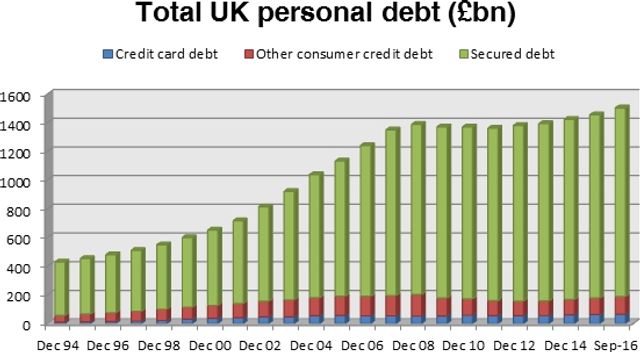
New figures reveal that household debt in Britain has reached the record level of £1.5 trillion after growing by 3.5 percent since last year, according to the Bank of England.
This is equivalent to 82 percent of the value of the UK’s entire economic output each year. It is placing an unprecedented financial burden on working-class households due to rising house prices and depleted savings.
Indebtedness is becoming the “new normal” for families struggling to make ends meet. Economic stagnation and government austerity measures are eviscerating incomes and pushing thousands more into unemployment.
Mortgages secured against property comprise the overwhelming majority of the debt, with the remainder made up of personal loans and credit card debt. This is equivalent to an average of £30,000 per person, or 113 percent of average income, according to The Money Charity. In reality, household debt is unequally distributed across society and affects the poorest worst, with most having small or no savings. The figures also neglect student debt, which typically stands at £44,000 upon graduation.
The rise in total UK personal debt 1994-2016. Source: Bank of England
The national total of personal debt ballooned at a rate of 10 percent per year during the 1990s and 2000s, trebling between 1997 and 2008, when it reached the previous record level of $1.39 trillion. The figure plateaued in the wake of the global financial crash in 2008 as consumer spending collapsed and has begun to rise again during recent years.
The renewed growth in personal debt is mainly due to increasing secured debt such as mortgages, driven by soaring house prices. The average house price for first-time buyers rose by 8 percent since last year to over £180,000, according to the Office of National Statistics. However, the British Bankers’ Association has noted that consumer credit is also growing more rapidly than at any time since the 2008 crash. Dependence upon credit increases the risk of serious debt problems caused by unexpected changes in economic circumstances. Trades Union Congress (TUC) research found that squeezed wages have pushed millions to rely on credit to cover essential costs, with over 3 million households unable to keep up with debt repayments.
The scale of the debt crisis is expressed by the following figures from The Money Charity. Every day in Britain:
* 1,322 people report being made redundant.
* 247 people are declared insolvent or bankrupt, up 22 percent since last year.
* 17 properties are repossessed and over 300 landlord possession orders are made.
* The Citizens’ Advice Bureaux deals with 4,495 debt cases, second only to benefit enquiries.
The crisis will intensify in the aftermath of the decision for Britain to leave the European Union (EU) following the June referendum. Economic growth and business investment are predicted to fall amid uncertainty over the outcome of the negotiations on the terms of Britain’s exit from the EU.
Living standards will be hit by rising inflation and the fall in the value of the pound. Inflation is expected to spike from the current rate of 1 percent to 4 percent next year, while the value of the pound sterling has fallen to a 31-year low, making imported goods more expensive.
The Bank of England reduced the base interest rate to a record low of 0.25 percent in August, after maintaining a 0.5 percent rate since 2009, in an attempt to boost the economy. This had little effect on consumer interest rates due to a rise in credit card interest rates.
The rate cut was seen as a political move by the governor of the Bank of England, Mark Carney, who supports Britain remaining in the EU and was seen to be casting a critical judgement on the outcome of the Brexit referendum. Expressing sharp divisions within the British bourgeoisie, he faced harsh criticisms from major pro-Brexit figures on the right wing of the Conservative party, but has remained in his post.
These trends, along with possible interest rate hikes, will make the debt burden more difficult to cope with. Money Advice Trust boss Joanna Elson, responsible for National Debtline, warned, “The spectre of significantly higher inflation is a real concern. Many households have still not recovered from the last big squeeze on incomes in the aftermath of the financial crisis. The risk is that this new pressure on household budgets could tip many more people into financial difficulty.”
Wages fell precipitously during the years following the 2008 crash, falling 10.4 percent in real terms, the largest fall among leading Organization for Economic Co-operation and Development (OECD) countries, according to a recent study. Political responsibility for these social attacks lies with the trade union bureaucracy, the Labour Party and their pseudo-left apologists. These forces have worked to systematically demobilise any collective defence of jobs, conditions and social services.
Wages will be cut further as the corporate elite impose the costs of economic contraction and market uncertainty on the working class. The National Institute of Economic and Social Research predicts a 0.5 percent fall in disposable incomes in 2017. If current trends continue, real wages will not rise before 2020, according to the Guardian.
This will only intensify the debt crisis facing workers. “A further squeeze on household incomes, made worse by the freeze on benefit uprating, will leave even more households struggling. With over 7 million people already using credit to pay for everyday essentials, there is a real danger of more falling into severe problem debt,” warned Peter Tutton of debt charity StepChange.
Chancellor of the Exchequer Philip Hammond is attempting to project a mood of calm control in the run-up to the autumn budget statement on November 23, having made statements that he will pull back from the harsh imposition of austerity associated with his predecessor George Osborne. This myopic and rose-tinted view has been buoyed by claims that the Brexit vote has not had the cataclysmic result predicted by the supporters of Britain remaining in the EU. This is merely the calm before the storm. The chancellor seeks to avoid spooking international markets and sparking a debt crisis on the scale of that which engulfed Greece after the financial crash.

Greece: Syriza government reshuffle prepares new attacks on working class

Katerina Selin

Greek Prime Minister Alexis Tsipras, who heads the coalition government under the pseudo-left party Syriza (Coalition of the Radical Left), reshuffled his cabinet at the beginning of November. This is in response to the growing political and social crisis in the country and is directed at working more closely with international lenders, in order to enforce the agreed austerity more rigorously. The new cabinet was sworn in on November 5.
Tsipras had “excluded all voices from the government or negotiations that represented an obstacle in relations with the creditors,” Greek newspaper To Ethnos commented on the reshuffle. He wanted to create “new political room for manoeuvre” and “demonstrate willingness to reform,” wrote Spiegel Online. Tsipras described the step as “a chance for a new beginning”—a typical Tsipras euphemism for a new wave of social attacks.
The losers in the reshuffle include the Shipping Minister Theodoris Dritsas, Minister for Economics and Development Panos Skourletis, Culture Minister Aristidis Baltas and Education Minister Nikos Filis—four veteran Syriza cadre.
Dritsas had served as shipping minister in two terms of the Syriza government, and is responsible for the privatisation of the Port of Piraus. He is part of the “53+ movement,” the so-called left wing of Syriza, and had several times expressed criticism of the privatisation plans, without fundamentally rejecting them.
Now Dritsas is being replaced by Panagiotis Kouroumblis, who was a member of the social democratic Pasok until 2011, voting for the first austerity memorandum as a parliamentary deputy at the time. He later switched to Syriza and served in its first cabinet as health minister, and as interior minister in its second cabinet.
He has been replaced at the Interior Ministry by Panos Skourletis, an old comrade of Tsipras, who had previously delayed several privatisations, such as the sale of the water and power plants.
Former minister for education, research and religious affairs, Nikos Filis, had come into conflict with the Orthodox Church because he wanted to replace Greek-Orthodox teaching with a more general religious instruction in schools. However, Tsipras adopted a more conciliatory attitude towards the Archbishop of Athens, who had expressed sharp criticism of Filis, implicitly demanding his sacking.
Tsipras has integrated a number of younger faces in his cabinet, whom he can rely on in the negotiations with the international creditors. Among his loyal apparatchiks are the Labour Minister Efi Achtsioglou, his new State Secretary Dimitris Liakos and government spokesman Dimitris Tsanakopoulos.
Before her appointment, the 31-year-old lawyer Achtsioglou headed the Political Bureau of the Labour Ministry and was involved in negotiations with the creditors concerning labour law and social security. According to the newspaper To Vima, shortly after entering office, she signed off on the “new negotiating guidelines” with the European experts group, which is demanding reform of Greek labour law. Achtsioglou had wanted to pursue several of their demands, including the introduction of short-time working. The European representatives also proposed extending the mass sackings, changing the minimum wage in the private sector and limiting industry-wide labour contracts and negotiations.
Achtsioglou has to introduce 21 ministerial decisions in the next days, including measures affecting pensions. Supplementary pensions are to be cut by a further €439 million in 2017. This year, pension cuts have already amounted to some €230 million.
This policy is meeting growing resistance. In October, the Syriza government had shown it was willing to attack protesting pensioners using tear gas. Last Wednesday, thousands of angry pensioners demonstrated again in Athens, loudly demanding their money back, which the government had “stolen from the pension fund.” The day before, new cuts in supplementary pensions came into effect, hitting over 248,000 pensioners.
The demonstration ended at the Labour Ministry, where several pensioners symbolically burnt the letter they had received from the Labour Minister about the pension cuts. Similar protests were held in Thessaloniki and the central Greek town of Larissa.
Tsipras’ reshuffle has also strengthened ties to big business. His right-hand in economic questions is now State Secretary Liakos, who enjoys the best links with financial and business circles. He has worked for years as an investment manager and leading stock market figure, and enjoys good relations with the European Commission and the Bank of Greece and its manager Janis Stournaras, who at the highpoint of the crisis between 2012 and 2014 was finance minister in the right-wing Samaras government.
Liakos’ political career was encouraged in 2012 by then vice premier Ioannis Dragasakis. He worked on the third memorandum and in 2015, under Finance Minister Janis Varoufakis, participated in negotiations with the European institutions. At that time, in contrast to Varoufakis, he supported a wide-ranging deal with the president of the European Commission, Jean-Claude Juncker.
A close associate of Tsipras is also the 34-year-old government spokesman Tsanakopoulos, who graduated in law at the University of London; between 2012 and 2014 he was legal adviser to Tsipras and in 2015 headed his political bureau.
Two other new appointments send a clear signal to the international creditors:
One is Dimitris Papadimitriou, professor and president of the Levy Economics Institute of Bard College in New York. The well-known economist, who enjoys extensive connections in US business circles and regularly writes for the Greek business newspaper Kathimerini, was a surprise appointment as minister for economics and development.
Papadimitriou’s state secretary is now Stergios Pitsiorlas, who since 2015 was head of the privatisation body TAIPED, which is organising the selling off of Greek state assets. These include the sale of several regional airports to Germany’s Fraport AG. In the 1990s, the lawyer was an EU adviser on economic aid to Greece, and since 2008 has held leading positions in construction companies and other businesses, including in renewable energy, an area in which Greece wants to work more closely with German business in the future.
In April, in an interview with Spiegel Online, Pitsiorlas made clear that he was an important man for Tsipras’ privatisation plans. Der Spiegel pointed to growing resistance in the government to the privatisation fund, which had been characterised by Shipping Minister Dritsas (since deposed) as a “state within a state.” Pitsiorlas responded optimistically: “There is conflict in the government, but Prime Minister Tsipras is personally engaged and intransigent ministers ordered to push forward the privatisations as planned.” He dubbed the new super-fund, which will conduct even larger privatisation projects, a successful concept for Greece, praising the German cuts diktat: “The pressure exercised by Germany to establish this fund will have positive consequences.”
Finance Minister Efklidis Tsakalotos, Foreign Minister Nikos Kotsias and Vice Premier Dragasakis retained their posts—a signal to the international institutions that the previous course will be maintained.
Defence Minister Panos Kammenos, from the right-wing populist coalition partner the Independent Greeks (Anel), remained in office. The new cabinet has even expanded the position of Anel. In future, the economically significant Tourism Ministry will be headed by Elena Kountoura. The daughter of a well-known general and monarchist, Kountoura came to Anel via an illustrious career as a model and as a politician in New Democracy (ND) for many years.
The cabinet reshuffle marks a further turn to the right by the pseudo-left Syriza government, which has capitulated to the international financial elite on every issue since coming to power in January 2015. Tsipras is closing ranks and pushing through a hard line against inner-party critics. He needs a government he can rely on in the coming period of class battles. After nearly two years of brutal austerity, the pseudo-left Syriza has lost all its support in the working class.
A recent poll by the University of Macedonia showed Syriza plummeting to 15 percent, while ND rose to 30 percent. The fascist Golden Dawn, with 7 percent, remained in third place, losing some ground. But the mood in the population is directed against the entire political establishment. This is reflected in the fact that all party leaders were rated negatively by over 60 percent of those questioned. The fascist Nikolaos Michaloliakos polled worst, with an 86.5 percent negative rating, followed by Anel boss Kammenos (82.5 percent) and Tsipras (75 percent). Panagiotis Lafazanis, who founded the pseudo-left party Popular Unity along with other ex-Syriza members in an effort to capture workers’ discontent, received a 72.5 percent negative rating.

Australian establishment concerns over future of US alliance under Trump

James Cogan

The Australian political, corporate and media establishment has responded with bewilderment to the fact that Donald Trump will be the next president of the United States—a development it did not want and had almost universally declared impossible, prior to November 8.
During the election campaign, Trump insisted that an administration he headed would repudiate the Trans Pacific Partnership economic agreement; impose sweeping tariffs, not only on China but on other key Australian trading partners, such as Japan and India; declare Beijing a “currency manipulator” and provoke open trade war; and demand that US allies in Europe increase military spending as the price for ongoing security relations with Washington. In Asia, Trump condemned the expense associated with maintaining US basing arrangements in Japan and South Korea, and expressed indifference to both countries assembling their own nuclear arsenals.
While there was general commentary on these declarations, none of them was taken particularly seriously within Australia’s ruling circles. The assessment made by the US and Australian media “opinion-makers”—that Trump was unelectable due to his populist rhetoric and manifest personality flaws—was simply accepted as fact.
Labor Party opposition leader Bill Shorten, who has the closest ties to the American establishment, was so confident of Trump’s defeat that he broke with diplomatic protocol and publicly commented on the US election in October. “By his own words and his own actions,” Shorten declared, Trump “has confirmed the worst fears of millions in the United States and beyond its borders that he is entirely unsuitable to be leader of the free world.”
Shorten continued: “I know I am not the only one relieved that with every passing day, with every disgusting, demeaning comment Mister Trump makes, the possibility of him being president fades.”
Summing up the view of the vast majority of the Australian elite on the eve of the election, Greg Sheridan, the pro-Republican Party, right-wing foreign editor of Rupert Murdoch’s Australian, wrote on November 8: “You can take it to the bank—the American election is effectively all over, Hillary Clinton has won.”
Since Clinton’s concession in the early hours of November 9, a panicked Australian political establishment has rushed to accommodate to Trump’s victory while seeking to work out the extent of its implications.
Australian Prime Minister Malcolm Turnbull, who heads an unstable conservative Liberal and National Party coalition government, was the second world leader after Israel’s to have Trump answer his phone call. Turnbull delivered personal congratulations and vowed to work closely with the new administration.
Labor’s Bill Shorten began his backtracking from his previous comments on Trump with a Facebook statement declaring: “Australians should also know our alliance with the United States has grown and thrived for seven decades—no matter who’s in charge.”
Reports indicate that the Australian embassy in Washington and diplomatic staff in Canberra are scrambling to establish contact with the somewhat unknown individuals who may be installed into key security, foreign policy and economic secretarial and under-secretarial posts of Trump’s administration.
Media commentators and strategic analysts, however, unimpeded by the diplomatic restraints of political office, are giving full vent to their fears and uncertainties.
Since World War II, Australian imperialism has looked to and relied upon the United States to assert its strategic and economic interests on the world arena and particularly in Asia. In exchange, Canberra has functioned as the loyal adjunct of Washington on virtually every international issue. It plays a major role as part of the ANZUS military alliance with the US, hosts critical American military bases and has dispatched its own armed forces to participate in every predatory war that US imperialism has waged to assert is global hegemony, from Korea and Vietnam, to Iraq in 1990–1991, and, over the past 15 years, to Afghanistan, Iraq and Syria.
Since 2011, Canberra has functioned as one of Washington’s main allies in the Obama administration’s “pivot to Asia.” It has become thoroughly embroiled in the US agenda of threatening China with war if it fails to bow to Washington’s demands, aimed at enshrining American dominance over the Asia-Pacific region. At the centre of the “pivot” has been its most crucial economic aspect, the Trans Pacific Partnership, which would establish a regional trading bloc that excluded China, putting pressure on the latter to radically open up those areas of its economy that remain protected from penetration by US, Japanese, Australian and other financial and corporate conglomerates.
The implications of the TPP’s collapse, and of the development of a US administration that retreats from both the economic and military aspects of the “pivot,” has been one of the main subjects in the post-election media commentary in Australian strategic circles.
On November 9, the Australian Financial Review (AFR) bluntly editorialised: “In a year when globalisation and open markets have been under pressure as never before, its greatest bastion has fallen to a political huckster with a contradictory and self-defeating agenda…. Strategically, it is a historic rupture in the post-war world. Mr Trump vows to abandon the global leadership that Washington assumed in 1945. Others may move into the vacuum…. Australia will need to look to the like-minded in East Asia to counterbalance the influence of rising regional giant China. The region will become more heavily armed and dangerous. With a less reliable America, we may find ourselves with greater regional strategic responsibility.”
Strategic analyst Hugh White, one of the few establishment critics of Australian involvement in the “pivot,” wrote the same day in the AFR: He [Trump] is not going to stand up for US allies. But without those allies America cannot remain the leading power in Asia. Indeed, without those allies, America cannot remain a significant strategic player in Asia at all. If Trump acts as he has talked, we might be seeing the end of the American era in Asia.”
Paul Kelly, Rupert Murdoch’s editor-at-large at his flag-ship Australian, has authored a stream of worried commentary on the US elections. In today’s edition, he wrote: “Beware confident predictions about what Trumpism means once the man sits in the Oval Office. This is a classic in Donald Rumsfeld’s notion of ‘known unknowns’—things we know we don’t know….
“It is imperative that Trump, in office, change the style and content of his proposed foreign policy. Threats to NATO and to US allies Japan and South Korea are reckless and a threat to world stability. They risk fuelling a huge anti-Americanism in democracies around the globe while achieving little for the US national interest.”
Kelly’s reference to “anti-Americanism” has been echoed by other commentators. What they are referring to, however, is not hostility among ordinary people toward the American population, but a potential turn by the ruling elites of various countries to develop alternatives to their longstanding alliances and relations with the United States.
James Brown, a former military officer who works with the United States Studies Centre at the University of Sydney, told the media on November 9 that Trump’s victory meant Australia “would have to be more cautious in how we cooperate and collaborate with the US in Asia. We would be more worried about the way the US would support us in any sort of security situation, so it might lead us to take another look at our defence strategy.”
Former Labor Party Prime Minister Paul Keating has been the most explicit. Speaking on an Australian Broadcasting Corporation current affairs program, Keating declared: “The foreign policy of Australia is basically we have tag-along rights to the US…. It’s time to cut the tag. It’s time to get out of it.”
Behind the perplexity gripping the Australian establishment lies the threat of the breakdown of its alignment with the US, which has provided the framework for the country’s foreign policy, defence and investment and trade relations for more than 75 years. The advent of a Trump presidency, which itself is a symptom of the collapse of America’s global primacy, is now compelling the Australian ruling elites to reassess how they can defend their interests in a world dominated by geo-strategic and economic uncertainties.