23 Nov 2016

Merkel to run for fourth term as German chancellor

Ulrich Rippert

Christian Democratic Union (CDU) leader Angela Merkel will run for a fourth term as German chancellor. On Sunday, she announced that she would once again stand for the office of CDU chairperson at the party conference in early December. She told a press conference that, in her opinion, the party chairmanship meant she was automatically the party’s candidate for chancellor and consequently she would stand in next year’s federal election.
Media reports pointed out that Merkel had indicated four years ago that she wanted to use her third chancellorship to prepare a change of leadership in the party and government. However, the growing crisis in Europe has left her little room for manoeuvre. At the press conference on Sunday, Merkel emphasized that she had “thought long and hard” and her decision had not been an easy one.
The fact that she has decided to stand a fourth time is directly related to the Brexit vote and election of Donald Trump as US president. Trump’s nationalist policy of “America first” has rocked European politics to the core.
Trump’s election success was seen in Europe as a vote of no confidence in the ruling elites, represented by Hillary Clinton and the Democratic Party. Many articles have pointed out that a similar development is taking place in Europe and Germany. Opposition to official policy is growing significantly. Brexit was only the beginning of an intensification of the crisis of the European Union. In the coming period, victories for far-right parties are in the cards in Austria, the Netherlands and France.
While the ruling elite in the US is lining up behind Trump, a similar development is taking place in Germany behind Merkel. All of the establishment parties are converging and seeking to form a kind of political fortress against the population.
A new Merkel chancellorship is an appeal for a continuation of the current “grand coalition” of the “union” parties—the CDU and the Bavarian-based Christian Social Union (CSU)—and the Social Democrats (SPD). It is in addition a call for all parties to close ranks and work together more closely. The recent decision to make Foreign Minister Frank-Walter Steinmeier of the SPD the joint presidential candidate of the SPD and the CDU/CSU has the same goal.
Many media commentators have described a reelection of Merkel as a “policy of stagnation” and “business as usual.” In fact, the opposite is the case. A Merkel cabinet 4.0 would not be merely a continuation of what has already taken place. Merkel’s decision for a renewed candidacy is linked to a political offensive, prepared long in advance, aimed at tackling foreign and domestic policy changes with energy and aggressiveness.
To those critics who warn that continuing the grand coalition will reinforce political disillusionment and extra-parliamentary protest, Merkel supporters reply: “Bring it on!” Her new candidacy is bound up with preparations to intensify the policies of militarism and the expansion of state powers to combat social opposition that already constitute the foundation of the program of the grand coalition. A review of the record of the current grand coalition shows that Merkel’s renewed candidacy must be understood as a threat.
Following the federal election of 2013, coalition negotiations lasted an exceptionally long time, until it became clear that the governing parties had agreed on a fundamental change in foreign policy in favour of militarism and war. Foreign Minister Steinmeier, Defence Minister von der Leyen, President Gauck and others declared that Germany was “too big and too important” to comment on “world politics from the sidelines.”
For the first time since the end of World War II and the crimes of the Nazi dictatorship, leading German politicians stressed that the period of military restraint was over. In future, Germany would intervene more independently in crisis regions and focal points of world politics—expressly by military means.
There followed a process of intensive military rearmament. In close alliance with the US, the German government organized a coup in Kiev and, using fascist forces, brought a pro-Western regime to power that threw Ukraine into civil war and triggered a confrontation with nuclear-armed Russia.
Next came the deployment of the Bundeswehr in Syria in support of NATO. At the same time, the intervention of the Bundeswehr in Africa was put into motion. German Defence Minister Von der Leyen recently announced additional military expenditures totalling €130 billion, and a new white paper from the Defence Ministry envisages the deployment of the Bundeswehr at home and abroad.
In the European Union, Merkel and her finance minister, Wolfgang Schäuble, have intensified the social crisis with their brutal economic policy. The result is 23 million unemployed in Europe. Millions more work in the low-pay sector and in irregular jobs.
In many countries—Portugal, Spain, Italy and Greece—youth unemployment is over 50 percent. Poverty is growing among the unemployed, young people, low-wage workers and pensioners. This social counterrevolution culminated in drastic austerity measures for Greece, devastating the whole country.
In Germany, poverty is increasing rapidly. Over 12 million people are officially registered as poor, and children are particularly affected. Eight million people work in precarious forms of work. In 2030, 50 percent of all pensioners will receive a pension equivalent to minimal Hartz-IV social payments, despite having worked their entire lives. Business associations are already calling for an increase in the retirement age to 73.
At the same time, a small minority lives in the lap of luxury. The government has created conditions in which this minority can enrich itself enormously at the expense of the majority. Income from investment assets and property has risen by more than 30 percent over the past 15 years.
Preparations for a state of emergency and dictatorship are being pushed forward to suppress resistance to these policies. Based on the anti-terrorism laws, a huge monitoring apparatus is being created. Police and intelligence services work closely together, and the Bundeswehr is active inside the country, despite the fact that both practices violate Germany’s Basic Law.
The attack on basic democratic rights is most evident in the vicious campaign against refugees. The right to asylum has been mutilated to the point of non-existence. Desperate people fleeing wars in the Middle East and Africa are being abused, detained in prison camps, intimidated and deported. Hundreds drown every month in the Mediterranean.
The government and the media are stirring up a hate campaign against Muslims that recalls the Nazi pogroms against Jews. It serves the same purpose, to divide the working class, and plays into the hands of the far right Alternative for Germany (AfD).
The election of Trump in the US has made clear where such a policy leads. Resistance to this development is growing among workers and young people, but the government is determined to pursue its course. With her announced intention to stand for a fourth term, Chancellor Merkel has thrown down the gauntlet on the eve of major class battles.

US arms Syrian Islamists with surface-to-air missiles

Bill Van Auken

A US-backed Islamist militia in southern Syria has been armed with portable surface-to-air missiles, so-called manpads. These weapons are capable of shooting down Syrian government aircraft as well as Russian warplanes, which have played a prominent role in providing air support to the Syrian army against the Al Qaeda-linked “rebels.”
The group, the Ansar al-Islam Front, exhibited the weapons, SA-7 Strela-2 missiles, in a video it posted on Sunday, claiming that it had “a good number” of them in its possession. The video, produced by a Dubai-based Syrian opposition propaganda network, shows the Islamists un-crating, assembling and testing the manpads.
“We, in Ansar al-Islam Front, have distributed several points of air defense to counter any attempt by the Syrian warplanes or helicopters, which bomb points in Quneitra Province. We have a good number of these missiles,” one of the Islamists states in the video, according to a translation posted by the web site Middle East Eye.
A second individual, identifying himself as Abu Bilal, tells an interviewer: “We, in Ansar al-Islam Front and factions of the FSA, are distributing equipment and soldiers toward Tal al-Hara, Mashara, Sandaniya and Jabata. And in the coming days you will hear good news from Quneitra and its surroundings.”
The shipping of these portable anti-aircraft missiles to Syria marks a major escalation of the US-backed war for regime-change that has devastated the country for the past five years, leading to the deaths of some 300,000 Syrians.
In September, US officials told the Reuters news agency that, after the breakdown of a brief US-Russian-brokered cessation of hostilities and amid renewed fighting around the northern Syrian city of Aleppo, Washington might resort to a “Plan B,” giving the green light to Saudi Arabia and Qatar to funnel the portable anti-aircraft missiles to the Syrian Islamists. At the time, however, State Department and administration official spokesmen denied the report.
Whether the delivery of the manpads has been ordered by the Obama White House, the CIA, the Pentagon or some faction within the vast US military and intelligence apparatus it is impossible to say. What is clear, however, is that they are intended to establish new “facts on the ground” in Syria before a Trump administration takes office in January.
Pressure for a US escalation in Syria has mounted since Trump gave an interview to the Wall Street Journal on November 11 in which the president-elect called into question the CIA and Pentagon operations for arming so-called “moderate rebels” in Syria, saying “we have no idea who these people are.”
In a rambling and incoherent statement to the Journal, Trump said he had “an opposite view of many people regarding Syria,” adding, “My attitude was you’re fighting Syria, Syria is fighting ISIS, and you have to get rid of ISIS. Russia is now totally aligned with Syria, and now you have Iran, which is becoming powerful, because of us, is aligned with Syria.”
The statement set off alarm bells within the US political establishment, whose predominant layers are committed to a strategy of escalating confrontation with Russia as part of drive to militarily assert US hegemony over the Middle East and, more broadly, the landmass of Eurasia.
The New York Times responded with an editorial “The Danger of Going Soft on Russia,” in which it accused Trump of acting as “Putin’s apologist” and insisted, “Since Mr. Trump has refused to criticize the Kremlin, it’s important that Mr. Obama figure out, before he leaves office, how to punish Russia...”
It would appear that shipping surface-to-air missiles to Syria, raising the prospect of US-backed forces shooting down Russian aircraft and triggering a far wider and more dangerous conflict, is part of this “punishment.”
As yet, Trump has enunciated no clear policy in relation to the conflict in Syria, outside of vows on the campaign trail to “bomb the shit out of ISIS.” At the same time, however, many of those surrounding him, including his vice president-elect Mike Pence and his nominee for CIA director Mike Pompeo, have strongly advocated direct US military intervention against the Syrian government of Bashar al-Assad.
The group which received the anti-aircraft weapons, Ansar al-Islam, while apparently counted by Washington as part of the “moderate” opposition in Syria, was previously designated as a terrorist organization by the US and the United Nations, as well as a number of other countries, because of its affiliations with the Al Qaeda network.
It first emerged as an armed group in the wake of the US invasion of Iraq in 2003, fighting against US occupation troops and later the forces of the US-imposed regime in Baghdad. With the fomenting of the war for regime-change in Syria, it sent its members into that country to fight against the Assad government, thereby winning US backing.
Two years ago, the majority of the group’s leadership announced that it was joining the Islamic State (also known as ISIS), which is supposedly the main target of Washington’s ongoing military intervention in Iraq and Syria. Some elements, apparently including those who have now been armed with manpads, rejected the merger, despite their shared ideology and objectives.
Previously, US officials had warned against supplying such weapons to Syrian “rebels” for fear that they would end up in the hands of Al Qaeda-affiliated fighters and could be turned against not only Syrian and Russian warplanes, but also Western civilian passenger jets. In the past, weapons funneled to so-called CIA-vetted “moderates” have quickly fallen into the hands of the Al Nusra Front, Syria’s Al Qaeda affiliate. Now it appears that such concerns have been cast aside and the missiles have been supplied directly to forces tied to Al Qaeda.
The introduction of these weapons into the conflict in Syria in flagrant violation of international law is indicative of the growing desperation within US ruling circles over the debacle confronting its regime-change operation. Syrian government forces have made increasing inroads in the past few days in eastern Aleppo, the last stronghold of the US-backed Islamists, taking back at least a third of the area previously occupied by these forces.
The mounting hysteria found consummate expression in a speech delivered Monday at the United Nations by US Ambassador to the UN Samantha Power, the administration’s foremost standard-bearer of “human rights” imperialism. Power read out the names of a dozen Syrian military commanders alleged to have attacked civilians or overseen torture in Syrian jails, warning, “Those behind such attacks must know that we in the international community are watching their actions, documenting their abuses and one day they will be held accountable.”
Power made no mention of war crimes committed by the US-backed “rebels,” which are also under investigation by the International Criminal Court, nor of the recent report that the global court is investigating over a decade of torture carried out by the US military and the CIA in Afghanistan and at so-called “black sites” around the world. One could easily come up with a list of a dozen US commanders who carried out attacks leading to the mass murder of civilians, from the brutal sieges of the Iraqi city of Fallujah in 2004 through to the assault on the Doctors Without Borders hospital in Kunduz, Afghanistan just a year ago.
Even as Power was speaking, a report filtered out of Syria that US warplanes struck a cotton mill in the village of Salhiyeh in the northeastern part of the country, killing 10 civilians, including children. Among the dead were three workers at the mill, a family of six who had taken shelter there after fleeing from a US-backed offensive in the area, and a bystander. Independent estimates place the number of civilians killed by US air strikes in the country at well over 1,000.

22 Nov 2016

Next Einstein Forum (NEF) Fellowship 2017 for Africans From Around the World

Application Deadline: 27th January 2017
Offered annually? Yes
To be taken at (country): Kigali, Rwanda
About the Award: The Next Einstein Forum (NEF), an African Institute for Mathematical Sciences (AIMS) initiative in partnership with the Robert Bosch Stiftung, announces the opening of the Next Einstein Forum (NEF) Fellows Programme which will identify 15 of Africa’s top young scientists, honoring their achievement and contributions to Africa and the world’s development at the next Next Einstein Forum (NEF) Global Gathering.
The NEF Fellows is a select programme that recognises Africa’s best young scientists and technologists. These innovators and emerging leaders, at least 40 percent of whom are women, will have two main opportunities as a Next Einstein Forum (NEF) Fellow:
  1. Advance their scientific career. NEF Fellows have a unique platform to:
    • Present their work at the NEF Global Gathering in the presence of leading scientists, journalists, industries and business people from the world.
    • Gain exposure to a global audience of approximately 100 million viewers and readers worldwide.
    • Draw upon the vast networks of NEF members and participants for support, connections and counsel to advance their work.
    • Develop mentoring relationships with leading scientists, policymakers, industry representatives and civil-society leaders
  2. Inspire the next generation of African innovators. NEF Fellows participate in campaigns and events to encourage young people to pursue scientific careers.
The Next Einstein Forum is bringing together scientists working across the globe with those working in Africa. Each of these 15 young scientists was named a "gamechanger" at the conference — and might just be the next Einstein. Photo: Courtesy of NEF
Offered Since: 2013
Type: Fellowship
Eligibility:  Applicants should be under 42 years old and have a doctorate degree with a demonstrated track record of innovative research and findings. NEF Fellows must also be passionate about raising Africa’s science profile and be able to captivate both a scientific and non-scientific audiences.
Number of Awardees: 15
Value of Scholarship: 
  • Attend the prestigious, invitation only Next Einstein Forum (NEF) Global Gathering in Kigali, Rwanda in March 2018 alongside Nobel Prize winners,Heads of states, experienced and emerging scientists and representatives from leading global organisations and civil societies.
  • Research and innovations will be showcased as an example of the potential of young, exceptional, scientific talent from Africa.
  • Collaborate with, receive mentoring from and partner with leading scientists, policy makers, industry representatives and civil society leaders as well as other young African scientists.
  • Contribute to the establishment of a positive global view of science in Africa.
  • Application and programme participation are completely free.
How to Apply: Download the Application Form here:
It is important to go through the Eligibility requirements and Applcation processes before applying.
Award Provider: The African Institute for Mathematical Sciences (AIMS)
Important Notes: The selected NEF Fellows will be announced in June 2017.

France: International Space University (ISU) Scholarships for Developing Countries 2017/2018

Application Deadlines:
  • MSS Program: 15th March 2017
  • SSP17 Program:  31st January 2017
  • SH-SSP17 Program: 31st October 2016
Offered annually? Yes
Eligible Countries: 
– Applicants from Europe
– Applicants from the United States, Canada and Australia
– Applicants from developing countries
– Applicants from other countries (within the limits of funds available)
To be taken at (country): France
Type: Postgraduate
Selection Criteria: Financial aid is granted on the basis of:
– Academic and professional merit
– Demonstrated efforts in personal fund-raising
– Demonstrated financial need
Number of Awardees: Numerous
Value of Scholarship: MSS scholarships are granted to help towards tuition fees only. ISU does not assist with living expenses, travel or insurance costs for the MSS. SSP scholarships are granted for help towards tuition fees and living expenses only. ISU does not assist with travel expenses or health insurance for the SSP.
How to Apply: 
  • Applicants for the MSS program 2017-2018 should apply online on the ISU website and send the requested documents by 15 March 2017 if they are requesting scholarships, and by 30 June 2017 if they have already secured their tuition fees.
  • SSP17 applicants should apply online on the ISU website and send the requested documents by 31 January 2017 if they are requesting scholarships, and by 30 April 2017 if they have already secured their tuition fees.
  • SH-SSP17 applicants should apply online on the ISU website and send the requested documents by 31 October 2016 if they are in need of financial aid, and by 30 November 2016 if they have already secured their tuition fees.
Award Provider: International Space University
Important Notes: Financial aid will be awarded within the limits of funds available, so early applications are highly recommended. Please note that the relevant box on the Confidential Financial Information form of the application must be checked. It is recommended that candidates make a personal effort to raise funds enabling them to attend the program. Such initiatives are taken into consideration when ISU allocates funding.
When submitting your application to ISU, please don’t forget to attach your resume. Your resume may be given by ISU Staff Members to sponsors. However, ISU will not give its sponsors contact information, but will try its best to match applicant’s profiles to sponsor requirements.

How to Scrap the Electoral College

John LaForge

Sixteen years ago, as the 2000 presidential election recount in Florida transfixed the nation, the newly elected Senator Hillary Rodham Clinton spoke directly to the likelihood that Al Gore would win the popular vote and still lose the election:
“I believe strongly that in a democracy, we should respect the will of the people,” Mrs. Clinton said, “and to me that means it’s time to do away with the Electoral College and move to the popular election of our president,” the New York Times reported.
If Mrs. Clinton had worked as hard over the last 16 years to abolish the EC as she worked to win the Democratic nomination, she would be moving back into the White House in January. Five times in US history and twice this century the popular vote winner has “lost” the presidential election because of the slavery-tainted Electoral College. (Counting enslaved people as almost-persons increased the official populations of slavery states — and in-turn boosted their Electoral College clout.)
Sec. Clinton, by winning more votes than Donald Trump — between 1 and 1.5 million more, Politifact says 800,000 more — would in any other country in the world be the President-elect. But because of the Electoral College’s absurd winner-take-all rules, Trump snaps up every electoral vote in Pennsylvania, Michigan, and Wisconsin (giving him his EC margin of victory), even though he won by a mere 1 percentage point in all three states.
Ralph Nader called again Nov. 10 for elimination of the Electoral College. “Hillary Clinton won the election,” Nader said. “We’ve gotta get rid of the electoral college,” he said, because it “makes the US a mockery of the world” — the same way America’s handgun violence, climate change denial, death penalty, and astronomical healthcare costs do. “Nowhere else on Earth can someone can win the popular vote and lose the election,” he said.
“The two major parties don’t own all the votes” Nader said, referring to the fact that “electors” in the “college” are nothing but officials from the two major parties, elected office holders, or funders with vested interests who always vote blindly for their party’s nominee based only on their single state’s final tally — regardless of the will of the nationwide majority.
The National Popular Vote bill
One answer to this anti-democratic election rigging is the National Popular Vote bill. The law would guarantee the presidency to the candidate who receives the most popular votes nationwide. The bill has already been passed into law in 11 states; states that control a total of 165 electoral votes. The law will take effect nationally when it is enacted by states with a total of 105 more electoral votes. Most recently, the bill was passed 40-to-16 in the Republican-controlled Arizona House; 28-to-18 in the Republican-controlled Oklahoma Senate; 57-to-4 in the Republican-controlled New York Senate; and 37-to-21 in the Democratic-controlled Oregon House.
The Electoral College is based on state law, so when enough additional states pass the National Popular Vote bill — enough to add up to the 270 electoral votes needed to win the White House — then the “electors” would be legally bound to vote for the popular vote winner and never again steal an election from the top vote getter.
Even Trump himself has criticized the Electoral College. Just before the 2012 election, in a Twitter post that looks astonishingly factual today, he called the EC “a disaster for a democracy.” For months this year he railed against the “rigged election.” But like all Democrats and all Republicans before him, rigged elections are only a problem when they lose.
For more details about how to abolish the Electoral College, check out nationalpopularvote.com

Attacks On Minorities In Bangladesh: Not Communal But Fascistic By Nature

Taj Hashmi


Recently, Muslim mob attacks on Hindu houses and temples in Nasirnagar (Brahmanbaria) and elsewhere in Goplaganj, Chittagong, and Sunamganj districts in Bangladesh have drawn wide media attention, within and outside the country. I can’t agree more with Daily Star’s editorial (Nov 2) that Government inaction would only embolden the bigots; and that: “any mix of politics and faith cannot work a democracy…. Whoever plays with fire should know that fire would ultimately play him.”
The attacks on dozens of Hindu temples and destruction of hundreds of Hindu houses in Nasirnagar alone were based on wild rumours about one local Hindu youth’s offensive Facebook posting against Islam. However, these are false flag operations to justify the attacks on local Hindus. The main motive of the attacks, as the National Human Rights Commission observes, was “to grab Hindu property”.
While Hindu victims were licking their wounds in Brahmanbaria, Chittagong, Gopalganj, and Sunamganj villages, on 6 November, some rowdy Bangladeshi Muslims – allegedly with police and local ruling party MP’s support – attacked and killed two “tribal” Santal Christians at Gobindapur in Gaibandha district in northern Bangladesh. Thousands of Santals lost movables, forced to flee the villages, and local police had arrest warrants for 300 Santals (who fled to avoid arrest) for resorting to violence.
We believe the expropriation of thousands of Santal peasants from around 800,000 hectares of land in the locality was the only motive behind local Muslim villagers’ premeditated attacks on Santals, with a local ruling party MP and police protection. Muslim villagers set ablaze hundreds of makeshift homes of the Santals after ransacking and looting their each and every valuables and driving out of homes. Sultana Kamal, a leading human rights activist in Bangladesh, blames ruling party supporters for the “communal attacks” on minorities across the country. However, I have strong reservations about using the expression  “communal attacks”, in this regard.
While colonial divide-and-rule policy, conflicting economic and political aspirations, and religious fanaticism of people were mainly responsible for the communal riots in British India, the post-colonial ethno-religious conflicts in South Asia are anything but “communal”. Historically, communal riots in colonial Bengal were between rival communities who hated, maimed, plundered, raped, and killed each other; there was hardly any one-sided victimization of minorities by members of majority communities as has become normative in Bangladesh since 1947. Kishoreganj (1930), Dhaka (1941), Noakhali (1946) and parts of Comilla and Jamalpur witnessed only a handful of one-sided attacks by majority Muslims on minority Hindus during the British rule.
While expropriation, rape, and killing of minorities weren’t uncommon in Bangladesh up to early 1970s, they reached their climax in 1971, when with Pakistani occupation army support, even certain minority communities retaliated against the majority. Politically, economically, and numerically dominant Bengali Muslims haven’t put an end to the process of victimization of disempowered members of Hindu, Chakma, Larma, Mogh, aboriginal Garo, Santal, and other communities after the Liberation.
So much so that soon after the Liberation, Indian journalist Basant Chatterjee in his eyewitness account (Inside Bangladesh Today) wrote that the average Bangladeshi Muslims were much more anti-Hindu and anti-Indian than their immediate past generation who had grown up during the Pakistani period. He, however, didn’t give any socio-political and psychological explanations for the growing hatred for Hindus and India among Bangladeshi Muslims. It’s both historical, and cultural, in the broad sense of the expression, especially bad governance, which promotes unaccountability and the sense of impunity among sections of the population who are close to the citadel of power.
It’s not a religious problem. The popular culture based on age-old tradition of hatred for people professing different religions from the religion of the main stream of the population – albeit in the name of religious superiority – nurtures communal hatred. Hate and mistrust for minorities who speak different languages or belong to different ethno-linguistic groups also promotes racial or linguistic riots. Bangladesh is no exception in this regard.
Thanks to the bitter history of Hindu domination of Bengali Muslims in British India, and the manipulative communal historiography and policy promoted by the Pakistani authorities during 1947 and 1971, many Bangladeshi Muslims nurture hatred for anything Hindu and Indian. Of late, India’s malevolent and intrusive policy toward Bangladesh has further aggravated the situation. However, it’s too trite an assumption that attacks on Hindus, Santals, and other minorities in Bangladesh by majority Muslims are “communally motivated”.
The way some Bangladeshis desecrate Hindu-Buddhist temples, burn down minority properties, expropriate, rape, and kill members of minority communities are primarily greed-induced, economically motivated political violence by a tiny minority of Muslim hoodlums. Being too weak to resist the criminals, non-Muslim, and non-Bengali (Hill Tribes, Garos, and Santals) victims simply suffer, flee, or die without any redress. Many of them sell their properties (at nominal price) and migrate to India. Similarly, the killing of thousands of Muslims following the destruction of the Babri mosque by Hindu mobs in India in 1992, and the Gujarat killings organized by the then Chief Minister Narendra Modi in 2002 – around 3,000 Muslims got killed – were not communal riots but state-sponsored pogroms of Muslims.
Prime Minister Hasina’s statement is heartening. She promised foolproof security to the minorities; didn’t blame the major opposition parties for the attacks on Hindus at Nasirngar; and admitted internal feuds within her party had been the main factors behind the problem. One wonders as to how one would explain attacks on Hindu minorities elsewhere in the country, before and after the Nasirnagar incidents! Firstly, there are tens of thousands of bigots among Bangladeshi Muslims who justify discriminatory treatments against Hindus – including expropriation, expulsion and even rape and killing of Hindus – only because intolerant Hindus do so to the minority Muslim community in India. Secondly, criminal elements among Bengali Muslims take advantage of the troubled waters to loot and extort hapless Hindus and other marginalized people, in the name of glorifying Islam.
Although the problem is primarily political, we can’t ignore the overpowering influence of the age-old culture of hatemongering against Hindus among Bengali Muslims, who learnt the pejoratives coined long before the emergence of Bangladesh to denote Hindus, such as kafir (non-believer), mushrik (polytheists), and mala’un (the cursed one). They learnt how to express their contempt for Hindus religion, gods and goddesses, during the peak of Muslim separatist movement in the first half of the 20th century. They even didn’t spare a dead Hindu. Mullahs taught them to wish eternal hell-fire or Fi Naare Jahannam to all Hindu souls.
In the backdrop of the growing intolerance towards Hindus and other minorities in Bangladesh, politicians, intellectuals, and people from every walk of life should resist the manifestation of intolerance and racism in any form. They eventually lead to totalitarian governance or fascism. Educated Bangladeshis’ aversion to politics, and their insatiable greed, and proclivity to plunder to become rich overnight are big obstacles to good governance. There’s no point blaming the leaders while the followers are equally bad. “A people that elect corrupt politicians … are not victims … but accomplices”, said George Orwell.
It’s time to make using pejoratives like kafir and mala’un against ethno-religious minorities a felony, a hate-crime. It would be a bold step toward ending persecution of religious and ethno-national minorities, because any society that allows hate-crime against minorities, eventually witnesses large scale religious or racial riots, and even pogroms. We know the history of unimpeded hate-crime against Jews in Germany, and African Americans in the US.

Record-low sea ice as Arctic temperatures soar

Daniel de Vries


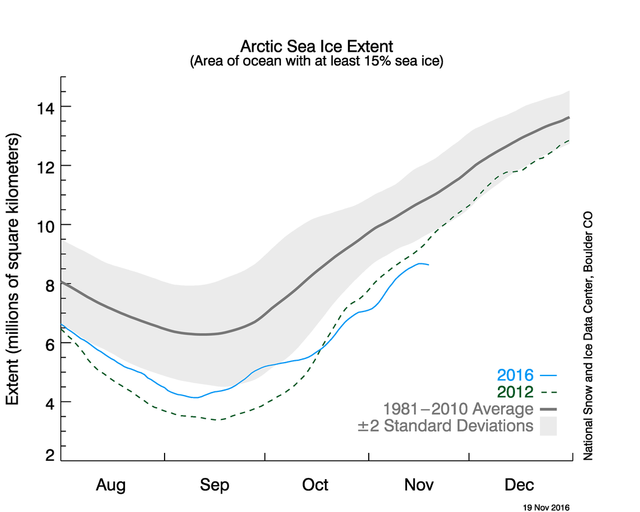
Never since satellite monitoring began in the late 1970s has such little ice covered the polar seas this time of year. In both the Arctic and the Antarctic, the extent of sea ice is tracking at the lowest levels on record.
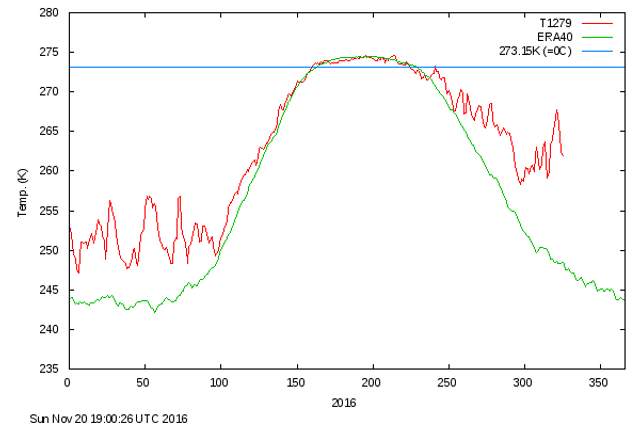
The onset of polar night in the Arctic, in which the sun never rises above the horizon, typically triggers rapid ice growth as consistently bitter cold temperatures chill the warmer seas. However over the past two months, temperatures in the high Arctic have remained unusually warm. Temperatures last week rose to a startling 20 degrees Celsius (38 degrees Fahrenheit) above the historical average.
This extraordinary warmth is in part attributable to shrinking ice cover and may well drive further losses. And it is not just high air temperatures. Mark Serreze of the National Snow and Ice Data Center explained to the Washington Post, “There are some areas in the Arctic Ocean that are as much as 25 degrees Fahrenheit (14 degrees Celsius) above average now,” he said. “It’s pretty crazy.”
While it is too early to say whether this season’s winter ice maximum will set a new low, the long-term trends are unmistakable. The decline of ice, particularly in the Arctic, is recognized by climate scientists as an alarming indicator of a warming planet. The amount of ocean area covered by at least 15 percent ice reached a minimum in 2012, with the subsequent years all well below the long-term average.
It is not only the extent of the ice that concerns scientists, but its shrinking thickness and age. According to NASA, a comparison between September 2014 and September 1984 shows a decline of older ice, four years old or more, by a staggering 94 percent. Virtually all of the older, thicker ice has melted away or thinned, leaving the region more vulnerable to additional melting during relatively warm weather.
Sea ice extent this year compared to long term average
This vulnerability is not merely a theoretical possibility. At the end of 2015, for example, a storm and warm spell triggered the loss of ice over an area the size of Florida at a time when the ice pack would normally be growing, according to a recent analysis by NASA’s Goddard Institute. The “extremely warm” temperatures were 10 degrees Celsius above normal, half the magnitude of the current warm spell.
The current extraordinarily high temperature abnormalities in the Arctic are matched by equally cold deviations spanning almost the entirety of the vast region of Siberia. This month, nearly 140 low temperature records were set in Russia, from the Finland border to the Sea of Japan. Schools in central Russia shuttered as temperatures plunged to negative 36 Celsius (negative 33 Fahrenheit).
2016 daily mean Arctic Temperater (red) compared to long term mean (green)
The record heat in the Arctic and cold over the continents are linked. Jennifer Francis, a climatologist at Rutgers University, told the Post, “The Arctic warmth is the result of a combination of record-low sea-ice extent for this time of year, probably very thin ice, and plenty of warm/moist air from lower latitudes being driven northward by a very wavy jet stream.”
An increasing amount of research has tied changes in atmospheric circulation patterns to the loss of Arctic sea ice. The wintertime Arctic polar vortex, a circulating zone of low pressure extending several miles up in the atmosphere, has weakened over the past few decades, together with retreating sea ice. This weakened and perhaps shifting vortex allows colder weather, normally confined to the polar region, to escape farther south. The current weather patterns appear to be a prime example of this phenomenon.
Vast changes are afoot not only in the northern latitudes but in the Antarctic as well. In recent years, up through 2014, the region had seen growth in winter sea ice extending into the Southern Ocean. While these gains were far outweighed by the losses in the Arctic, this year has brought a stark reversal. Now, for the first time, sea ice extents near both poles are on course for record lows.

Insurance fund for US pensions could be insolvent by 2025, agency director warns

Gabriel Black

Last week the Pension Benefit Guaranty Corporation (PBGC) released its 2016 annual report, which showed that its multiemployer program deficit had risen by $6.5 billion to a record-high debt of $58.8 billion. The agency’s combined debt for its single and multiemployer program totals $79.4 billion.
In a conference call, last week, PBGC Director Tom Reeder said the agency is set to run out of funds by 2025 unless action is taken.
The Pension Benefit Guaranty Corporation (PBGC) is an independent government agency created in 1974 to ensure the payment of pensions. The PBGC pays out pensions up to a federally defined maximum (about $60,000 a year in 2016) when pension plans under its protection break down.
The growth of the combined PBGC debt to nearly $80 billion testifies to the deep crisis of the US pension system.
Amid the deepening global economic crisis, employers, both public and private, have launched an attack on workers’ pensions. Employers have sought to end defined pension plans and replace them with cheaper and weaker 401(k) plans. When employers are unsuccessful at reducing pensions and retirement health benefits they use bankruptcy, as well as merger and acquisition, to tear up old contracts.
The PBGC’s debt is an estimation that it makes based on the balance between expected defaults of pension plans that it covers and its incoming funds, primarily based on premiums paid by suppliers of these pension plans.
The large increase this year of the PBGC debt is based on their estimation that more plans they cover are expected to default in the coming decade.
Secretary of Labor Tom Perez wrote in the introduction of the report: “Insolvency of PBGC’s multiemployer insurance program would devastate not only the retirement benefits of the 1 million to 1.5 million participants and their families in these at-risk plans, but all the participants in multiemployer plans that are currently receiving financial assistance from PBGC as well.”
In the PBGC’s multiemployer fund, a fund that allows companies to pool together into one larger pension fund, there are about 10 million workers. Of these 10 million workers, 1.5 million are in plans that are likely to run out of money in the next 20 years.
The PBGC’s solution to the crisis is to ask Congress to dramatically raise the premium rates paid by companies for the PBGC’s insurance service. The PBGC said in June that the minimum rate increase needed to prevent the insolvency of the agency was a 360 percent hike. Currently the rate is $27 per person per year.
For companies paying pensions to large groups of employees, a 360 percent hike is a significant increase in the insurance premium. Furthermore, this increase is coming at a time when pension plans are already under attack and the cost of retirement is being pushed back onto the workers.
The result of this dramatic hike would be to intensify the attack on workers’ pensions. Employers would offload the cost of the rate hike onto workers’ pension plans, further threatening the right of all workers to a good retirement.
If the hike is not permitted—a move that would amount to an effective congressional sabotage of the PBGC—the entire insurance system could collapse, leaving millions of workers with no pensions at all.
One pension fund that would be affected is the Central States Pension Fund. The Central States Pension Fund is one of the multiemployer funds that the PBGC now oversees and pays out due to the fund’s problems. This fund primarily provides pensions to hundreds of thousands of former truck drivers, one of the nation’s largest professions.
Last week, DuPont announced that it would no longer contribute to current employees’ pension plans, effectively stopping payments to 13,000 current employees effective November 2018. In addition to this, the company is eliminating all retirement health benefits, including dental and life insurance for all employees under the age of 50.
The announcement follows the merger of DuPont with Dow. The $130 billion merger will create the largest chemical company in the world in an effort to stave off the deepening global economic crisis.
New DuPont employees were already cut off from the pension in 2007. These workers are on 401(k) plans, which are subject to the likely prospect of a new financial crisis in the coming years.
The company estimates that this recent cut to pensions will save the company $550 million. Earlier this year the company also eliminated 2,500 jobs, about 4 percent of DuPont’s global workforce.

Australia: Desperate refugee sets fire to himself in a bank

Peter Byrne

The bipartisan anti-refugee policy of successive Australian governments led to another tragedy last Friday. A young Rohingya man, who fled Burma as an unaccompanied teenager nearly four years ago, reportedly doused himself with petrol and set himself alight in a suburban branch of the Commonwealth Bank.
Nur Islam, 21, had been living in acute poverty at Springvale, a working class Melbourne suburb. He was on a temporary bridging visa, which not only denied him refugee status but blocked basic social and political rights, including to work.
The petrol spread over the floor and exploded in a fireball, injuring 26 other customers, who mostly suffered from smoke inhalation. Six people received serious burns and two remain in a critical condition in hospital, including Nur Islam.
Exactly four years ago yesterday, the then Labor Party government of Prime Minister Julia Gillard imposed a new restrictive category of bridging visas on about 30,000 asylum seekers. They were then released from overcrowded immigration detention centres—where many had been held for years—supposedly to “live in the community.”
This new visa classification was even more inhumane than the “temporary protection visas” (TPVs) introduced by the previous Liberal-National Coalition government, which barred permanent residency and family reunion rights to refugees—even if they were officially recognised as needing protection from persecution.
TPV holders live in limbo, and endless fear of deportation, compelled to reapply for visas every three years. Bridging visa holders are in an even more precarious situation, with the government able to revoke their visas at any time, and expel them. Denied the right to work, they have to subsist on welfare payments set at 89 percent of poverty-level unemployment benefits. For Nur Islam, this meant living on about $30 a day.
The motivations behind Nur Islam’s alleged actions are not yet clear, but a worsening mental illness no doubt contributed. His visit to the bank failed to provide him with desperately needed money, following a recent cut to his meagre fortnightly welfare payments. The circumstances of the horrific incident suggest that it was an attempted suicide and not an attack on innocent bystanders.
Over the past few years, numbers of refugees have been driven to suicide by the brutal government-imposed regime that is designed to force them to return to the countries they fled.
Adding to Nur Islam’s anxiety would have been reports that the current Liberal-National government is preparing to deport many refugees. The 30,000 bridging visa holders were expecting letters before the end of the year advising them that they face expulsion. Many refugees have also had bridging visas expire and then suffered lengthy delays in securing visa renewals. In the meantime, they literally live in the shadows of society, depending on charities to survive.
Brigidine Asylum Seekers Project worker, Sister Brigid Arthur, told the media that bridging visa holders are denied “any kind of certainty or security about their future, and [it] has them living in poverty and isolation.” If they work illegally for cash-in-hand they are prone to super-exploitation by unscrupulous employers, who can threaten to report them to the immigration authorities.
Any breach of the code of conduct attached to bridging visas can result in refugees being thrown back into detention. The code bans “disruptive activities that are inconsiderate [or] disrespectful”—a definition that is both arbitrary and bars them from legally protesting against their plight.
Some details of the traumatic conditions of Nur Islam’s life have begun to emerge. He fled Burma as a 17-year-old—one of the 1.5 million Rohingya now living precariously in other countries. They are Muslims, persecuted and still denied citizenship rights by the Burmese government led by State Counsellor Aung San Suu Kyi.
The Australian government’s plans for deportations take place amid renewed repression by the Burmese military against the Rohingya with reports of rapes, the levelling of villages and a rising death toll.
Australian Burmese Rohingya Organisation spokesperson Habib Habib told reporters that more than 90 percent of Rohingya refugees are still on bridging visas, some for as long as four years. Even to apply for temporary protection visas, they face years of delay. The government has cut legal aid funding, forcing refugees to pay huge lawyers’ fees or await pro bono legal assistance.
Nur Islam arrived by boat in 2013 and was immediately detained by the Labor government on Christmas Island, an Australian outpost in the Indian Ocean. He was later transferred to a detention centre near the remote town of Weipa in far northern Queensland. Eventually he was granted a bridging visa.
The young man lived in a dilapidated house with other Burmese refugees in Springvale, where 70 percent of residents were born overseas. He slept in the living room with people he met while in detention.
His housemate told the media that Nur Islam’s mental health deteriorated as he claimed to have seen ghosts, talked to himself and spent nights wandering in the house’s backyard. His mother had asked him to send money to assist his older sister, who had been hospitalised in Burma, and Nur Islam was distraught at having nothing to send.
In mid-2013, the last Labor government, then headed by Kevin Rudd, escalated the attack on refugees by reopening Australia’s primitive “offshore” detention camps on Nauru and Papua New Guinea’s Manus Island, and consigning all asylum seekers who arrived after that date to be incarcerated in these facilities indefinitely.
Victorian state Labor Premier Daniel Andrews tried to cover up this record when he told the media that the Springvale bank fire “ought not to be used as a political weapon by anybody who finds fault with any of the policy settings we have at the moment.”
Ostensibly, Andrews was referring to right-wing groups calling for a Donald Trump-style ban on Muslim immigration in the wake of the incident. But his comments sought to obscure the reality that the tragedy was the outcome of the policies of successive federal governments, including the previous Greens-backed Labor government.
By repelling, detaining or imposing dehumanising conditions on refugees, Australian governments are not only flouting international law—the 1951 Refugees Convention recognises a right to seek asylum without being punished or discriminated against.
Governments, federal and state, are also demonising refugees—some of the most vulnerable members of society—and effectively blaming asylum seekers for the worsening destruction of jobs, living standards and basic social services being produced by the capitalist profit system itself.
This offensive is deepening. Prime Minister Malcolm Turnbull’s government is now preparing legislation to impose a lifetime ban on refugees who try to reach Australia, barring them from ever entering the country, even to visit their families. It is also planning a cruel refugee swap with the United States, blocking many of the victims on both sides of the Pacific from rejoining their families.
One can only imagine the distressing impact of these announcements on a mentally fragile young Rohingya refugee living in dire poverty, and with his fate resting with the Australian government.

French crackdown on “youth delinquency” in New Caledonia

John Braddock

France’s Socialist Party government will send 53 extra police to New Caledonia in February amid high-level concerns over growing “lawlessness” in the small French Pacific territory, which has a population of less than 300,000.
A special policing unit will combat “youth delinquency.” This means intensifying police repression against marginalised youth, particularly indigenous Kanaks, who suffer high levels of unemployment and impoverishment.
The deployment was announced earlier this month at hastily convened talks in Paris, involving Interior Minister Bernard Cazeneuve, Justice Minister Jean-Jacques Urvoas and Overseas Minister Ericka Bareigts, following several days of unrest in the territory. The main road south of Noumea, the capital, was blocked by dozens of burned stolen cars during clashes between young Kanaks and the security forces. The closure left more than 10,000 people without normal deliveries of food, medicines and fuel for three days.
The clashes, near the township of St Louis, were triggered by the fatal shooting of a 23-year-old prison escapee late last month. Prosecutors claimed a police officer fired at the driver of a van travelling at speed toward one of his colleagues, supposedly trying to hit him.
The following day, five police were injured after being shot at, allegedly by armed youth, when they tried to clear roadblocks that had been set up in retaliation. The main road north from Noumea was also blocked by burning cars.
The family of the slain man have challenged police claims about the circumstances of his death. Roch Wamytan, the Kanak Grand Chief of the area, said there were witnesses and an official complaint would be laid in an effort to uncover the truth.
Seeking to outdo President Francois Hollande’s administration, right-wing former French President Nicolas Sarkozy, a candidate in next year’s presidential election, immediately demanded compulsory military service in New Caledonia to curb “crime.” Sarkozy told Les Nouvelles Caledoniennes that military training should be mandatory for youth over 18 who are not in education or employment. He also proposed lowering the age of criminal responsibility from 18 years to 16 in order to “end the [ruling] Socialists’ culture of impunity.”
Radio New Zealand reported that New Caledonian politicians welcomed the promised crackdown. The Republican Party proposed increased public surveillance, restrictions on alcohol sales and harsher penalties for young offenders. Former territorial president Harold Martin said Paris was no longer “playing down the seriousness of the problem” but predicted it would not stop young Kanaks “raiding” the Noumea area.
Wamytan did not oppose the crackdown, but said “customary authorities”—the indigenous Kanak leadership—needed to be “tied in” to any new measures. He criticised some proposals as like “using a hammer to kill a fly.”
The incidents point to explosive social tensions as the economic crisis impacts on Kanak youth. Clashes in impoverished areas have occurred with increasing violence over the past two years. In March, 40 police were deployed against youth deemed responsible for break-ins in the St Louis area. Shots were fired at a police armoured vehicle when it sought to recover a stolen car.
The “law and order” measures are being instituted as the working class is being thrust into struggles over jobs and living standards. Following a 40 percent drop in the global price of nickel, major job cuts are underway in the mining and processing sector.
Last November, New Caledonia President Philippe Germain warned that the closure of a nickel refinery in the Australian state of Queensland could lead to widespread civil unrest. New Caledonia’s mines were the main suppliers of the smelter before it was shut down in March.
Hundreds of workers at the Société Le Nickel processing plant in Noumea struck and set up pickets last November to oppose the loss of 60 jobs and a decision to delay building a new power plant for the smelter. The unions shut down the strike, while steering workers behind the demands of the Republicans to lift export restrictions. The previous August, truck drivers from the mining contractor union ContraKmine, who feared for their jobs, blockaded Noumea for three weeks demanding an increase in approvals for exports of ore to China.
Currently, the Koniambo (KNS) nickel plant, owned by the transnational Glencore-Xstrata and Northern Province’s Société Mininère du Sud Pacifique, is axing 140 positions from its workforce of 950. A court temporarily halted the first tranche of 47 sackings, saying the company failed to follow proper procedures.
Political tensions are also building amid preparations for a referendum on the territory’s independence. On November 7, French Prime Minister Manuel Valls chaired a meeting in Paris attended by New Caledonia’s leading pro- and anti-independence politicians, to discuss the plebiscite. Under the terms of the 1998 Noumea Accord, the vote must be held by November 2018.
According to Radio NZ, Valls expressed concern that the “unrest” exhibited near Noumea in recent weeks could be unleashed again.
Last month, 5,000 people rallied in Noumea to demand that Kanaks be automatically enrolled for the vote. The roll is restricted to long-term residents who are also on the general electoral list. The Kanaks have a customary status but an estimated 25,000 are not on the general roll and are at risk of missing out. There are claims of fraud by the French authorities in the vetting process.
The demand for independence has a long history. In 1984 the Kanak Socialist National Liberation Front (FLNKS) launched the most recent struggle for independence by proclaiming a provisional government. French settlers, or “caldoches,” retaliated by killing 10 Kanaks in an ambush at Hienghene. All the accused were acquitted by a Noumea court. The massacre was followed by the murder of a prominent FLNKS leader, Eloi Machoro, by paramilitary marksmen. His death sparked riots and barricades throughout the territory.
Tensions climaxed in April 1988 when a group of Kanaks captured the gendarmerie on the island of Ouvea, killing 4 policemen and taking 27 hostages. Some 300 elite troops were flown in and stormed a cave where the Kanaks were holed up, killing 21. Two police died. The troops reportedly tortured and beat civilians during the operation.
Deep divisions over independence continue. The 2014 elections saw a victory to three anti-independence parties—Caledonia Together, Front for Unity and Union for Caledonia in France. Together they won 29 of the 54 seats in the Congress, but just 49 percent of the popular vote.
With a permanent military garrison of 1,500 troops, New Caledonia remains vital to France’s imperialist geo-strategic positioning in the Pacific. After years of lobbying by France, New Caledonia and French Polynesia were recently admitted to membership of the regional Pacific Islands Forum in order to boost moves, led by American allies Australia and New Zealand, to counter China’s growing influence.

German city builds four-metre-high wall in front of refugee shelter

Anna Rombach

The building of a four-metre (13-foot) high wall in front of a refugee shelter in a Munich suburb has provoked consternation and outrage. Criticism has been directed not only against the Munich politicians responsible, but also the reactionary refugee and war policies of the grand coalition (Christian Democratic and Social Democratic) government in Berlin.
For two years, seven residents of an owner-occupied development in the Neuperlach district of Munich have been blocking the construction of a refugee shelter. They justified their actions by citing expected noise nuisance due to the 160 unaccompanied minors and young asylum seekers who would move into the home.
The sinister “compromise solution” of the Administrative Court is the construction of a massive stone wall that separates the residential area from the refugees.
Its huge mass is reminiscent of a prison wall. Even for a sound-protection barrier it is over-sized. Nearby there is another facility for refugees, which, despite being only 50 metres from the autobahn, has just a three-metre-high noise barrier.
Guido Bucholtz, a member of the Ramersdorf-Perlach district council and former Green Party member, said he was shocked when he saw the wall at the beginning of November. He uploaded a video clip of it onto the Internet, triggering a wave of protests. “How can things be like this here, that we have to build a wall between refugees and residents using the transparent argument of noise protection,” Bucholtz told the Deutsche Presse-Agentur. “This is a signal: The refugees are sealed off because we don’t want to have them anyway.”
Media interest rapidly developed. Thousands criticized the building of the wall on social media, which runs diametrically against previous practices in Munich. Many Neuperlach residents were also shocked.
“Madness,” “It looks like what happened under Hitler,” “Like the Berlin Wall,” “Like World War II,” “Terrible,” “Horrible” and “Impossible,” were some comments made by Neuperlach residents on YouTube.
Many have pointed out that the wall is higher than the Berlin Wall (3.6 metres). Others have noted that the trees and bushes next to the refugee home provide enough sound damping, and that a cycle path and footpath also separate the home from adjacent properties. The houses are approximately 25 meters from the boundary marked by a planted embankment.
Numerous media outlets have reported on the dispute in Munich, including newspapers (and also right-wing web sites) in England, France, Austria, Italy and the US. Some of them have used the xenophobic example for their own propaganda purposes. For example, Russia’s Pravda drew a link between refugee criminal statistics and the building of the wall.
The broadcaster Bayrische Rundfunk took the anti-immigrant residents’ side, and argued that the value of their homes could fall as a result of the new shelter. Security was also at risk: “An elderly woman expressed grave fears because she was walking alone on the pavement at night.”
By contrast, an online petition against the wall on Change.org received thousands of signatures in no time. It is addressed to Mayor Dieter Reichert (Social Democratic Party, SPD), the Munich City Council and the Bavaria Higher Administrative Court. It says: “The wall 2.0 is a disgrace for Germany and even more so for the otherwise cosmopolitan and multicultural Munich.”
In 2015, many Munich inhabitants welcomed harassed and exhausted refugees, spending days and nights at the city’s main railway station to greet the new arrivals and providing them with whatever they needed after their long journey. These residents were subsequently disappointed that their assistance and efforts were not better utilised and the authorities soon sent them home.
Munich’s City Council saw heated debates. The Greens have responded to the protests and are now calling for the demolition of the wall. The SPD is torn on the issue, since its leader in the state legislature, Markus Rinderspacher, described the wall as “a symbol of separation and isolation.”
Thomas Kauer (Christian Social Union, CSU), chair of the Ramersdorf-Perlach district council, claimed that it was merely a matter of noise abatement and was not an attack on refugees: “I won’t let our district get a bad reputation.”
Politicians of all parties are seeking to conceal the real cause of the refugees’ misery. For example, none of them point to the obvious connection between the large numbers of refugees and the imperialist war policies of the Western powers, including Germany, in the Middle East, Eastern Europe and Africa.
The official discourse also covers up the role played by the establishment parties and media when it comes to stoking up fears and hostility toward people fleeing war and poverty. The media throws up examples like New Year’s Eve in Cologne, and the false allegations of criminal activity by immigrants, to whip up divisions in the population. The wall in Neuperlach is an opportunity for the establishment mouthpieces to shift responsibility for the government’s xenophobic policies onto the backs of the population.
In reality, the resentment against refugees stems first and foremost from the operations of Germany’s establishment parties. They consciously stoke chauvinist sentiments and are responsible for the rise of right-wing movements. For example, Merkel said in September: “For the next few months, the most important thing is repatriation, repatriation and again repatriation.”
The SPD is singing the same tune, and attacks Merkel from the right. Ex-Chancellor Gerhard Schröder (SPD) attacked Merkel for her supposed welcoming culture earlier in the year. The SPD party chair, Sigmar Gabriel, sought to play off workers in Germany and refugees against each other when he commented: “We must be careful that there are not people in Germany who feel that the politicians in Berlin always have money when, for example, it is a matter of rescuing the banks, or now to help refugees.” (Emphasis added)
The two so-called opposition parties, the Greens and the Left Party, are primarily seeking to become part of a government coalition. The Green state premier of Baden-Württemberg, Winfried Kretschmann, agreed to the abolition of the right of asylum for refugees from Serbia, Macedonia and Bosnia-Herzegovina. In the Bundesrat (Upper Chamber of the federal parliament), Kretschmann will also vote against asylum for Tunisians, Moroccans and Algerians. His party colleague Boris Palmer, mayor of Tübingen, declared that it was necessary to deport “violent” refugees even to Syria. “There are also areas in Syria that are not at war,” Palmer said.
As for the Left Party, it is a master at presenting a public face supporting the “humane” treatment of refugees, while simultaneously and more decisively supporting the right. Its duplicitous means is a “smart and calculated division of labour” between the “party inside the state apparatus” and the “party outside the state apparatus,” as advocated by Harald Wolf.
As a state premier, Bodo Ramelow (Left Party) has ensured that Thuringia, with more than 30 percent of deportations of rejected asylum seekers at the beginning in 2016, stood in the top three states nationwide alongside Bavaria and Saxony in terms of hostility to refugees. His party comrade Sahra Wagenknecht advocates a ceiling on refugee numbers, and with her statement “Those who abused [our] hospitality, have precisely forfeited that hospitality,” accommodated to or adopted an ultra-right-wing position.
None of the established parties is committed to the humane treatment of refugees. On the contrary, these parties are responsible for a political climate that incites people against each other.
On Thursday last week, a meeting of the Ramersdorf-Perlach district council took place—this time under police protection, as several houses belonging to those supporting the wall had been daubed with slogans such as “Nazi filth.” The CSU representatives Kauer and Markus Blume used this and tried to ostracise Bucholtz, the critic of the wall. In a foul attempt to silence opponents of the wall, they claimed he was responsible for setting the ball rolling and disturbing the peace and quiet of law-abiding citizens.