29 Dec 2016

“Opioid orphans”: Foster care systems in US buckle under weight of drug epidemic

Naomi Spencer

Social services and foster care programs across the United States are overwhelmed by the influx of children from families shattered by the opioid epidemic. In West Virginia, Kentucky, Ohio, and other states, thousands of children have been orphaned and placed into foster care or living arrangements with relatives who struggle to make ends meet with inadequate compensation.
In West Virginia, 5,182 children were in foster care this year, a 13 percent increase over 2015 and 24 percent higher than 2012. Substance abuse has been cited as a factor in 80 percent of cases where children were removed from their homes between 2011 and 2015, according to the state Department of Health and Human Resources. Cuts to social safety net programs have compounded the difficulty of caring for these children with fewer resources and staff.
Ohio confronts a similar problem, with a 19 percent rise in the number of children removed from parental custody since 2010. “Honestly, if something doesn’t happen with this addiction crisis, we can lose a generation of kids,” Robin Reese, executive director of Lucas County Children Services, told the Wall Street Journal in an article published December 15. “God knows I would hate to see orphanages come back, but the child-protection system is being inundated now.” In Lucas County, a rural area south of Toledo, billboards advertise the need for new foster parents to try to meet a 20 percent increase in the number of children removed from parental custody.
Kentucky has the highest rate of children placed into the “kinship care” of grandparents or other relatives in the country. Statewide, 7 percent of children—70,000 kids—are living with neither parent. Kentucky also has the highest rate of child homelessness in the US. Drug overdoses are a prime factor in this social crisis. In eastern Kentucky, like in West Virginia, where the coal industry was once the foundation of the economic life of communities, drug addiction has soared. In Harlan County, once a major coal-mining center, 26 percent of children are reported as homeless.
Deaths from drug overdoses have spiraled upwards in recent years, surpassing gun homicides and contributing to a decline in life expectancy in the US. Most of the drug overdoses are due to opioids like prescription painkillers and heroin. In the past year, drugs like fentanyl, an opioid at least 50 times stronger than morphine, and carfentanil, an elephant tranquilizer thousands of times stronger than morphine, have circulated into the heroin market and contributed to a sharp increase in overdoses and deaths. The number of babies born suffering from drug withdrawal, a condition called neonatal abstinence syndrome, is also on the rise.
When parents die of drug overdoses or are arrested and jailed, children are placed into the custody of the state or with relatives. Many grandparents and even great-grandparents must assume responsibility for caring for young children, creating financial and sometimes health hardships on them.
“They never expected to be raising their grandchildren, but are thrilled to have them in their home,” explains a West Virginia caseworker in an appeal for charitable donations to a struggling elderly couple in a Charleston Gazette-Mail piece November 26. Their grandchildren are ages two and four and their grandparents were unable to afford winter coats for them. “They have struggled greatly at the loss of their son and his wife and cannot understand the circumstances surrounding their deaths. They only want what is best for their granddaughters and they want to give them a good start in life.”
One private non-profit child welfare organization, the Children’s Home Society of West Virginia, reports that it has provided emergency shelter to more than 14,600 children in the last year at its 13 locations across the state. On any given night, according to Chris Freeman, the society’s director of communications, the shelters are near or at capacity, with an average of 100 children at the shelters.
Many children suffer serious emotional trauma at the loss of their parents. They may have witnessed overdoses or discovered their deceased mothers and fathers. Often they have been living in poor conditions, including homelessness, with spotty school attendance, or experienced malnutrition, abuse and neglect. They frequently have symptoms of post-traumatic stress disorder, or develop learning and behavioral problems.
While they need urgent care, children with mental distress face a waiting list of two months or more even in metropolitan regions. Those in rural areas have little to no resources beyond their families.
In the absence of adequate social services and counseling, these children are vulnerable to slipping into truancy, homelessness, or drug addiction themselves. The response of the state, as it has responded to the drug epidemic and the collapse of the economy, has been to resort to a law-and-order crackdown and prisons.
West Virginia incarcerates rising numbers of young people, mostly for low-level offenses that would not be considered crimes if perpetrated by an adult. “In the last 16 years, youth confinement has declined in almost every state except West Virginia, where the confinement rate has grown by almost 50 percent,” noted Kim White, a member of the Mental Health Matters organization and assistant professor of social work at Marshall University.

US weapons dealers top the market in global arms sales

Nick Barrickman 

US-based arms exporters continued to dominate government-to-government weapon sales in 2015, according to a report from the Congressional Research Service (CRS) released last week. The study focused on sales from supplier nations to developing countries from 2008-2015, which accounted for 80.6 percent of all conventional weapons trade during that time.
The annual report is intended as “a means [to] assist Congress in… assessing how the current nature of the international weapons trade might affect U.S. national interests.”
Between 2008 and 2015, over $583 billion in weapons sales were conducted internationally. The US accounted for over $208 billion of this, or 35 percent. Russia, the second highest seller, sold a little more than $86 billion during the same period. Together, both countries controlled over 52 percent of worldwide conventional arms trade from 2012 to 2015.
US arms dealers concluded $40.2 billion in agreements, representing over half of global arms trade, in 2015. This amount was up from $36 billion a year earlier. After the US, France (selling $15 billion), Russia ($11.1 billion) and other nations in Western Europe rounded out the list of top arms dealers for the year. China, a chiefly regional power in the arms industry, sold $6 billion in weapons in 2015.
Additionally, the US ranked first in arms deliveries conducting nearly $17 billion in weapons transfers in 2015. This was followed by Russia with $7.2 billion and France with $7 billion in such sales.
Significantly, the report excluded the cost of sales to “subnational groups,” such as those engaged in civil wars or insurgencies which the US may be funding.
The US’s most reliable clientele include some of the world’s most egregious human rights abusers. The top buyers of US weapons in 2015 include: Qatar ($17.5 billion), Egypt ($12 billion) and Saudi Arabia ($8 billion), the latter of which is conducting a brutal air war against the population of Yemen. Since 2009, the US has sold nearly $100 billion in tanks, bombs and jets to the Saudi regime. The inclusion of such states in the US’s list of top buyers of weaponry exposes as a lie US officials’ claims to be concerned about “human rights” or “democratic values” in its international dealings.
Taken year-over-year, the total value of weapons trade was slightly down in 2015; from $89 billion in 2014 to $79 billion. The report attributes this to “the weakened state of the global economy… and the slow international recovery from the recession of 2008” which has forced certain developing countries to forego new purchases.
Despite the slight slowdown, it “appears likely [the US] will hold its position as the principal supplier to key developing world nations, especially with those able to afford major new weapons,” the report’s author remarks with satisfaction.
The report notes, “from the onset of the Cold War period, the United States developed an especially large and diverse base of… clients globally with whom it is able to conclude a continuing series of arms agreements annually” to “help ensure that friendly states were not placed at risk… by arms transfers by the Soviet Union or its allies.” Today, however, “the principal motivation for arms sales by key foreign suppliers [is] based as much, if not more, on economic considerations as those of foreign or national security policy.”
The significance of this statement is made clear later in the report, as the author notes, “As new arms sales have become more difficult to conclude in the face of economic factors, competition among sellers has increased.” It adds, “[A] number of weapons-exporting nations are focusing… on potential new clients in countries and regions where they have not been traditional arms suppliers.”
Similar to the processes fueling competition in other global industries, as tensions grow between countries in the arms trade, there are heightening risks of a military clash between well-armed international rivals.
According to the CRS, as the US has gained ground in arms sales to emerging nations, it has lost in total arms sales globally. In 2008, the US conducted 52 percent of international arms deals. By 2015, that percentage had dropped to 40 percent, with economic rivals Russia, China and the European Union increasing their portions of the global weapons trade.
The Obama administration has been integral in fueling the growth of the global arms trade. From 2001 to 2008, the US averaged $11 billion in arms trade agreements with emerging countries. From 2009 to 2015, that average grew to more than $23 billion annually.

World’s richest increased their wealth by $237 billion in 2016

Nick Beams

The world’s wealthiest 200 billionaires increased their net worth by $237 billion in 2016, taking their total wealth to $4.4 trillion as of the close of trading on Tuesday, an overall increase for the year of 5.7 percent, according to calculations by Bloomberg.
The major factor in the wealth increase is the surge in the US stock market since the election of Donald Trump on November 8, with the Dow Jones Industrial Average heading towards 20,000, an increase of close to 9 percent in seven weeks, or 69 percent on an annualized basis.
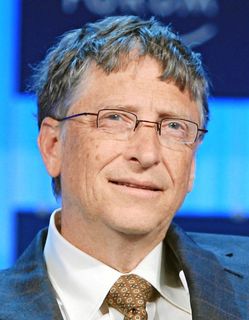
Bill Gates
At the top of the rich list is Microsoft co-founder Bill Gates, whose net worth is $85.9 billion. As the Bloomberg report noted, without taking into account any interest payments or other wealth-enlarging factors, he would have to spend $2.3 million every day for the next 100 years to run down this vast fortune.
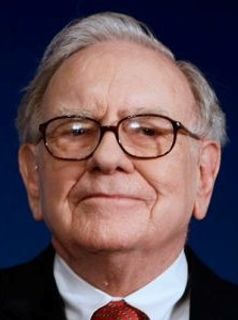
The biggest gainer for the year was Warren Buffett, whose investment firm Berkshire Hathaway saw its net worth increase by $11.8 billion, largely on the back of holdings in airlines and banks, whose stock values have soared since the election of Trump. His total wealth has risen to $74.1 billion, an increase of 19 percent for the year.
US billionaires have increased their wealth by $77 billion since the Trump victory based on expectations that his commitment to end corporate regulations and carry out both corporate and personal income tax cuts will boost profits.
Warren Buffet
That perception has been reinforced by Trump’s appointees to key cabinet posts, including billionaire Wilbur Ross to head the Commerce Department and former Goldman Sachs executive Steven Mnuchin as Treasury secretary. 
Summing up the post-election euphoria in ultra-wealthy circles, hedge fund billionaire Ray Dalio, who ranks 63rd on the top 200 list, said last week that Trump had lifted the “animal spirits” of capitalism and the market could rise even further. Simon Smiles, the investment manager for ultra-high-net-worth clients at UBS Wealth Management, said, “2016 ended up being a spectacular year for risk assets.”
Another major beneficiary was oil industry mogul Harold Hamm. His wealth more than doubled, rising by $8.4 billion to reach $15.3 billion, on the expectation that a Trump administration will slash regulations on the extraction of fossil fuels. Overall, the 49 energy, mining and metal billionaires saw the biggest increase in wealth of any category, recording an increase of $80 billion after a decline of $32 billion in 2015.
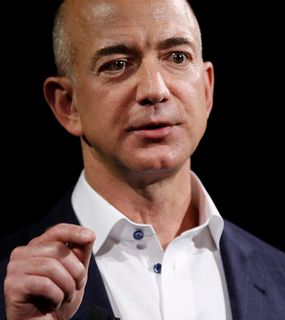
Other major beneficiaries were Amazon founder Jeff Bezos and Mark Zuckerberg, the co-founder of Facebook. Bezos, who doubled his wealth in 2015 to $60 billion, increased it by a further $7.5 billion this year, while Zuckerberg added $5.4 billion.
Jeff Bezos
The accumulation of wealth at the heights of society is mirrored in income statistics. A recently completed study by economists Thomas Piketty, Emmanuel Saez and Gabriel Zucman found that the share of national income received by the bottom half of the US population has been reduced from 20 percent in 1980 to 12 percent, while the income of the top 1 percent has risen from 12 percent to 20 percent. In other words, some 8 percent of national income has been transferred from the bottom half of the population to the top 1 percent.
This trend has been accelerating not least because of the spread of part-time and contract working under the Obama administration, as revealed in a major study released this month. Conducted by Harvard economist Lawrence Katz and Princeton economist Alan Krueger, it found that 94 percent of the 10 million jobs created during the Obama administration were temporary, contract or part-time positions. The proportion of workers engaged in such jobs increased from 10.7 percent of the population to 15.8 percent. At the same time, the study found that under Obama, there were 1 million fewer workers engaged in full-time jobs than there were at the start of the recession.
The growth of this type of contingent work provides a significant boost to profits. Employers of part-time labour are not required to provide benefits for employees. Young workers have been the hardest hit by the growth of contract labour and were the largest proportion of such employees. The study found that they generally do not receive any benefits, even when they are employed on a full-time basis.
Krueger, a former chairman of the White House Council of Economic Advisers, said he was surprised by the findings of his own study, noting that the loss of full-time work has hit every demographic. “Workers seeking full-time, steady work have lost,” he said.
Together with the growth of fabulous wealth for the upper echelons and the figures on rising income inequality, the Krueger-Katz study further punctures the hype of the outgoing Obama administration that it has organised an “economic recovery” benefiting the mass of ordinary workers and their families.
These trends are reflected internationally. A report released by the International Labour Organisation earlier this month found that wage growth worldwide has decelerated since 2012, falling from 2.5 percent to 1.7 percent. If China, where wage growth has been faster than elsewhere, is excluded, the growth in global wages drops from 1.6 percent to just 0.9 percent.
The ILO study also pointed to the rise of social inequality, noting that in Europe, the top 10 percent of employees take home 25.5 percent of total wages, while the bottom 50 percent get 29.1 percent.
This year has been characterised economically by a further increase in wealth and income for the top layers of society, continuing the trend since the global economic crisis. This redistribution of wealth and income from the bottom to the very top has been fuelled by the provision of trillions of dollars in ultra-cheap money to the banks and financial speculators.
Politically, it has been marked by a shift in the other direction, with the growth of social opposition.
This has taken the form of intensifying hostility to the entire official political establishment, reflected most notably in the Brexit vote in the United Kingdom and the US presidential election, not only in the support for Trump but more directly in the support for the self-proclaimed “socialist” Bernie Sanders.
At present, however, the political situation is marked by a profound contradiction. While the growth of social opposition is being driven by growing anti-capitalist sentiment, so far it has resulted in political gains for right-wing political forces, a contradiction that finds its sharpest expression internationally in the election of Trump and his installation of a cabinet of billionaires, military figures and ultra-right-wing and fascistic demagogues.
The responsibility for this situation rests entirely with the official “left” parties and the trade unions, which have functioned as the chief enforcers for all the attacks on the wages and social conditions of the working class in the US and worldwide since the crisis of 2008.
But while right-wing political tendencies have been the initial beneficiaries, the social crisis will intensify and assume ever more explosive forms, posing the necessity for the resolution of the present political impasse through the development of a mass socialist movement armed with a revolutionary perspective for the conquest of political power by the working class.

28 Dec 2016

ENS de Lyon Ampère Excellence Scholarships for International Students 2017/2018 – France

Application Deadline: 12th January, 2017
Offered Annually?  Yes
Eligible Countries: Countries where the CEF procedure applies (See list below)
To Study at (Country): France
Field of Study: All Masters programs in the Exact Sciences, the Arts, and Human and Social Sciences (except FEADép Master’s programs).
Type: Masters
Eligibility: Eligible candidate must:
  • be a foreign national
  • be 26 years old maximum at the application deadline (born after 11 January 1991).
  • Candidate for admission in Masters Year 1: provide proof that you have obtained a Licence (equivalent to 180 ECTS European credits) or an equivalent diploma/level recognized by the ENS deLyon.
  • Candidate for admission in Masters Year 2: provide proof that you have successfully reached Masters Year 1 level (equivalent to 240 ECTS European credits) or have attained an equivalentdiploma/level recognized by the ENS de Lyon (e.g. MPhil).
Number of Awardees: Not specified
Value of Scholarship:  1,000€ a month during one or two academic years
List of Eligible Countries: Algeria, Argentina, Benin, Brazil, Burkina Faso, Cameroon, Chile, China, Colombia, Comoros, Congo (Brazzaville), Cote d’Ivoire, Egypt, Gabon, Guinea, India, Indonesia, Iran, Japan, Lebanon, Madagascar, Mali, Marocco, Mauritania, Mauritius, Mexico, Peru, Senegal, Russia, South Korea, Taiwan, Togo, Tunisia, Turkey, USA, Vietnam.
How to Apply: Interested candidates are to complete and submit the online application forms and upload supporting documents by 12 January 2017, 12h00 pm (Time at Lyon – France).
It is important to read the scholarship brochure and visit the official website (link found below) to access the application form and for detailed information on how to apply for this scholarship.
Award Provider: ENS de Lyons

University of Geneva Excellence Masters Fellowships for International Students 2017/2018

Application Deadline: 15th March 2017 (for Masters starting September 18, 2017).
Offered Annually?  Yes
Eligible Countries: International
To Study at (Country): Switzerland
Field of Study: Studies in any of the disciplines covered by the Faculty of Science.
About the Award: The Faculty of science of the University of Geneva is an internationally top-ranked scientific institution covering a broad range of scientific disciplines: Astronomy, Biology, Chemistry and Biochemistry, Earth Sciences, Environmental Sciences, Computer Sciences, Mathematics, Pharmaceutical Sciences and Physics.
It has a strong focus on research and hosts three National Centres of Competence in Research of the highly competitive Swiss National Science Foundation (Chemical Biology; SwissMAP; Planets) and many European collaborative research projects. The Masters of the Faculty of Science constitute an ideal entry for high-level professional and academic careers.
Type: Masters
Eligibility:
  • Application for an Excellence Fellowship is open to students from any university with very good performance in their studies (belonging to the best 10% of their bachelor’s program) and that have completed the Bachelor degree or expect to complete it within 6 months.
  • Selection of the applicants will be based on excellence.
  • Evaluation will be made on the basis of the documentation sent by the applicants.
  •  French proficiency is not a formal requirement for the Masters of the Faculty of science.
Number of Awardees: Not specified
Value of Scholarship:  CHF 10’000 to CHF 15’000/year (no teaching duties)
Duration of Scholarship: one year. The scholarship can be extended for the regular duration of the chosen Master’s programme (three or four semesters) provided the applicant is academically successful at the end of his/her first semester of studies.
How to Apply: The application (in English or French) consists of:
  • Application Form (60 Kb, doc)
  • A Curriculum Vitae including the transcript of exams passed during the bachelor education, with grades.
  • A two-page essay in which the applicant describes his/her specific scientific interests, specifies the Master’s program at the Faculty of Science he/her would like to pursue, and motivates the intention to pursue a Master of Science programme at the University of Geneva.
  • If possible: Letters of references from two professors (preferably sent by them directly to the e-mail address indicated below). They should specifically attest if the candidate fulfills the conditions of the Excellence Fellowship Program (see above).
  • Any other pertinent information like results of GRE (General requirement examination), of TOEFL or other language test.
Award Provider: University of Geneva

Amsterdam Excellence Scholarship (AES) for International students 2017/2018

Application Deadline: Deadlines for the AMS differ per Faculty or Graduate School. Click the link below to view specific scholarship deadlines.
Offered annually? Yes
Eligible Field of Study: The Amsterdam Excellence Scholarship (AES) is eligible for these fields. Also, you can find the specific eligibility requirements, selection criteria and application instructions on the Faculty or Graduate School websites.
  • Child Development and Education
  • Communication
  • Economics and Business
  • Humanities
  • Law
  • Psychology
  • Science
  • Social Sciences
About Scholarship: The University of Amsterdam, Netherlands has recently launched a prestigious new scholarship programme targeting exceptionally talented Master’s students from outside Europe. The Amsterdam Excellence Scholarship (AES) is a full scholarship of €25,000, covering tuition and living expenses for one academic year. There is the possibility of an extension for a second year for two-year Master’s programmes.
Offered Since: 2015
Type: Masters degree
Selection Criteria: Eligible candidates are selected for a scholarship on the basis of their academic excellence and promise in the proposed field, as evidenced by:
  • the candidate’s academic record. Students from any discipline belonging to the top 10% of graduates from their class can apply;
  • the academic quality of the educational institute where the undergraduate (or graduate) programme has been obtained;
  • a letter of recommendation by a dean, teacher or academic supervisor;
  • the quality of the letter of motivation (maximum 500 words) in which the candidate explains the reasons for choosing the specific Master’s programme (broader context, relevance for future career);
  • a description of extracurricular activities such as participation in student committees, international experience, sports or music at a high level or volunteer work;
  • proof of English proficiency (IELS/TOEFL) :TOEFL (internet-based) –  overall score of 100 (with a minimum score of 22 in each of the different components), IELTS (academic) – overall score of 7.0 (with a minimum score of 7.0 in each of the four components);
  • the quality of the application as a whole (completeness, accuracy, consistency).
Eligibility: Students from any discipline who graduated in the top 10% of their class may apply. Candidates wishing to apply for an AES scholarship must meet the following requirements:
  • Hold a non-EU/EEA passport and not be eligible for support under studiefinanciering, the Dutch system of study grants and loans. The scholarship office should be notified as soon as possible of any change in nationality, type of residence permit, and/or possible studiefinanciering support throughout the academic year.
  • Be (provisionally) admitted to an English-taught Master’s degree programme at the University of Amsterdam which is registered in the Central Register of Higher Education Programmes (CROHO). You can apply for the Master’s programme and the AES scholarship simultaneously. Your Master’s application will be assessed before the AES deadline. In your application, clearly indicate that you are applying for the AES scholarship.
  • Be (provisionally) admitted to a Master’s programme at the UvA for the first time. An AES will not be awarded to candidates who are admitted for a second Master’s programme at the UvA.
  • Be able to comply with Dutch visa regulations as indicated by the Dutch Immigration Service (IND).
  • Be enrolled at the UvA as a full-time student for the academic year and the programme for which the scholarship is awarded. Scholarship continuation is not guaranteed when a candidate changes his or her Master’s programme.
  • The candidate should not receive another scholarship for the same period of study as the AES. Notify the UvA if you have been awarded and accepted another scholarship.
Number of Scholarships: The UvA will award up to 15 of these scholarships annually.
Value of Scholarship: Full scholarship of €25,000, covering tuition and living expenses for one academic year. Scholarship recipients become part of a select community, taking part, for example, in extracurricular activities developed specially for them.
Duration of Scholarship: Students who receive the AES for a two-year Master’s programme will be evaluated after one year of study. The scholarship will only be continued for the second year if the AES student has completed all courses of the first year on time and with a grade point average of 8.0.
Eligible Countries: International students
To be taken at (country): University of Amsterdam, Netherlands
How to Apply: Applications for the Amsterdam Excellence Scholarship (AES) are made through the admissions office of the faculties and graduate schools. As long as you meet all the requirements, you can apply for the AES at the same time as you register for your programme.
Sponsors: University of Amsterdam, Netherlands

Amsterdam Merit Scholarships (AMS) for International Students 2017/2018

Application Deadline: Deadlines for the AMS differ per Faculty or Graduate School. Click the link below to view specific scholarship deadlines.
Offered annually? Yes
Eligible Field of Study: The Amsterdam Merit Scholarship (AMS) is eligible for these fields. Also, you can find the specific eligibility requirements, selection criteria and application instructions on the Faculty or Graduate School websites.
Child Development and Education
Communication
Economics and Business
Humanities
Law
Medine
Psychology
Science
Social Sciences
About Scholarship: The University of Amsterdam (UvA) aims to attract the world’s brightest students to its international classrooms. Outstanding students from outside the EU/EEA can apply for an Amsterdam Merit Scholarship (AMS).
Offered Since: 2015
Type: Masters degree
Selection Criteria: The applicant must meet the eligibility criteria in order to be considered for the AMS scholarship. The applicant should:
  • hold a non-EEA nationality or nationalities only;
  • not be entitled to receive a Dutch study grant or loan (Studiefinanciering);
  • not be eligible to pay the reduced tuition fee rate for EEA students at the UvA;
  • not receive a full coverage scholarship for the same period of study as the AMS scholarship;
  • have submitted a complete application to one of the (Master’s) programmes of the UvA;
  • have been (or will be) admitted to one of the (Master’s) programmes of the UvA;
  • be able to comply with the conditions to obtain a Dutch visa (if applicable).
Number of Scholarships: The UvA will award up to 15 of these scholarships annually.
Value of Scholarship: The scholarship cannot be used as a (partial) tuition waiver. The applicant must still pay the full tuition fee. The scholarship can vary between €2,000 and €12,000.
Duration of Scholarship: Students who receive the AES for a two-year Master’s programme will be evaluated after one year of study. The scholarship will only be continued for the second year if the AES student has completed all courses of the first year on time and with a grade point average of 8.0.
Eligible Countries: International students
To be taken at (country): University of Amsterdam, Netherlands
How to Apply: Applications for the Amsterdam Excellence Scholarship (AES) are made through the admissions office of the faculties and graduate schools. As long as you meet all the requirements, you can apply for the AES at the same time as you register for your programme.
Sponsors: University of Amsterdam, Netherlands

Kisii University-DAAD Msc and PhD Scholarships for African Students 2017/2018

Application Deadline: 15th February 2017
Offered annually? Yes
Eligible Countries: Kenyans or citizens of a sub Saharan African country.
To be taken at (country): Kisii University, Kenya
Eligible Field of Study: Applications are invited from qualified candidates for the award of DAAD Msc and PhD scholarship in the area of specialization of Fisheries.
About Scholarship: Kisii University offers DAAD In-Country/In-Region Scholarships for Postgraduate Studies, Eastern Africa 2017/2018. The awards are available for up to a maximum of two years (Master) and three years (Ph.D.) respectively.
kisii university kenya
Type: MSc and PhD degrees
Eligibility: The applicants must meet the following criteria for selection:
  • they must have a minimum of upper second class or first class honours degree in fisheries or in a closely related biological sciences field of study for MSc scholarship.
  • they must have a minimum of an Msc in Fisheries or in a closely related aquatic sciences field with above average grades for PhD Scholarship.
  • The PhD proposals must demonstrate relevance to development, and MUST be free of any plagiarism.
  • The candidates must have had their degree not more than six years ago.
  • Candidates must be Kenyans or citizens of a sub Saharan African country.
  • They must have proof of admission to the desired degree programme.
  • The applicants must fulfil all the DAAD application requirements available in the Kisii University website: kisiiuniversity.ac.ke.
  • Female candidates and candidates from less privileged regions or groups as well as candidates with disabilities are especially encouraged to apply.
Number of Scholarships:
  • Msc Fisheries – 4 Scholarships
  • PhD Fisheries – 2 Scholarships
Value of Scholarship: DAAD will pay tuition fees to the university according to the submitted fees structure and a monthly stipend to the scholarship holder, covering cost of living including accommodation.
In addition, the scholarship holder will receive an annual study and research allowance. This allowance is intended to cover any costs related to the student’s research project. The annual study and research allowance is paid in local currency and is equivalent to the amount of EUR 230.00 for Master’s scholarship holders and EUR 920.00 for Ph.D. scholarship holders.
Within the final year of studies, DAAD pays a lump sum of EUR 1,025.00 to the scholarship holder (in local currency). This final allowance is granted to cover the thesis production costs in the last year of the course of studies (i.e. second year for Master students, third year for Ph.D. students).
Duration of Scholarship: This award will be available for a maximum of two years (for MSc), three years (for PhD) and the studies will be undertaken at Kisii University beginning September 2016.
How to Apply: Applications accompanied by a CV, required documents outlined in information sheet for scholars both in soft and hard copy should be sent to the coordinator Kisii University – DAAD scholarships Programme, Research and Extension Office, P.O Box 408-40200, Kisii. Email: research[at]kisiiuniversity.ac.ke.
Only nominated candidates will be informed to apply for the DAAD Scholarships in the DAAD Portal.
Visit Scholarship Webpage for details
Scholarship Provider: German Academic Exchange Service – DAAD.

French Embassy Fully-funded Masters and PhD Scholarship Programme for African Students 2017/2018

Application Deadline: 24th March 2017.
Eligible Countries: South Africa, Lesotho
To be taken at (country): France
Type: Masters and PhD
About the Award: Launched in 2010, the French Embassy Masters and PhD scholarship programmes form part of the commitment between France and South Africa to establish fruitful partnerships between their universities while building a vast network of academic and professional contacts.
Masters Scholarships
Eligibility: The Embassy of France invites students who wish to continue their tertiary education at Masters Level in France to apply for its bursary programme for the academic year September 2017-2018.
  • Students must hold at least a Bachelor’s degree.
  • As more and more Master programmes are taught in English, basic knowledge of French is desirable, but not required.
Number of Awardees: 20
Value of Scholarship: Tuition fees, the Schengen visa fees, a monthly stipend towards living expenses, health insurance and the flight tickets.
Duration of Scholarship: Students can either apply for the first year of a Master’s degree (M1) or, if they have an honours degree, the university may admit the student into the second year of a Master’s degree (M2) in order to complete their degree after one year. The duration of the grant is therefore one year, once renewable should a student originally admitted in M1 continue with the M2 programme.
How to Apply: Download information sheet and application form.
PhD Research Grants
Eligibility: The French Embassy of South Africa bursary programme is currently proposing grants for 2017 to facilitate international academic and scientific mobility for researchers towards French institutions of higher education.
  • Candidates must hold a Master’s degree or its equivalent.
  • There is no deadline for applications, and students are invited to apply throughout the year. It is however advised that students apply early in the year due to limited available funding.
Number of Awardees: Not specified
Value of Scholarship: The bursary includes visa expenses, round-trip flight tickets, social and medical insurance and a monthly stipend for living expenses.
Duration of Scholarship:  3 – 6 months per year, with an option of renewing it for the next 2 years.
How to Apply: For PhD’s application forms or more information concerning the bursaries, please contact CampusFrance South Africa at pretoria[at]campusfrance.org.
Award Provider: French Embassy

Government of Flanders Mastermind Scholarships for International Excellent Students 2017/2018 – Belgium

Application Deadline: 30th April 2017.
Offered annually? Yes
Eligible Countries: All
To be taken at (country): Various universities in Belgium
  • KU Leuven / University of Leuven
  • University of Antwerp
  • Ghent University
  • Hasselt University
  • Vrije Universiteit Brussel
University colleges (Arts and Nautical Sciences)
  • Antwerp Maritime Academy
  • Artesis Plantijn University College Antwerp
  • Erasmus University College Brussels
  • Karel de Grote University College
  • LUCA School of Arts
  • University College Ghent
Eligible Field of Study: The program holds for all study areas.
About the Award: The programme aims to promote the internationalization of the Flemish Higher Education, as stated in the Action Plan for Student Mobility, Brains on the Move (September 2013).
Students cannot apply directly. Applications need to be submitted by the Flemish host institution.
Offered Since: 2015
Type: Masters
Eligibility: The Flemish host institution applies on behalf of the student.
General eligibility requirements
  • The applicant applies to take up a Master degree programme at a higher education institution in Flanders (hereafter ‘Flemish host institution’).
  • The applicant should have a high standard of academic performance and/or potential. He/she meets all academic entrance criteria, including relevant language requirements, for entering the Master programme in question offered by the Flemish host institution.
  • All nationalities can apply. The previous degree obtained should be from a higher education institution located outside Flanders.
  • Students who are already enrolled in a Flemish higher education institution cannot apply.
Selection: A Flemish selection committee awards the scholarships, in cooperation with the Flemish Department of Education and Training.
Number of Awardees: 45
Value of Scholarship: The incoming student is awarded a scholarship of maximum €7.500,- per academic year.
Duration of Scholarship: The duration of mobility is minimum 1 academic year and maximum the full duration of the master programme. If the student obtains less than 45 ECTS in the first year, then he/she loses the scholarship in the second year.
How to Apply: You can find more information in the guidelines for application in the Scholarship Webpage link. However, you need to contact the Flemish higher education institution to inquire about their internal selection procedures and deadline for submitting the application.
Award Provider: Flemish Government

Doubling Down on Disaster: the Degradation of Brazil

Mark Weisbrot

When Brazilian President Dilma Rousseff was impeached in May and removed from office in August, many called it a coup.
The president was not charged with anything that could legitimately be called a crime, and the leaders of the impeachment appeared, in taped conversations, to be getting rid of her in order to cut off a corruption investigation in which they and their political allies were implicated.
Others warned that once starting down this road, further degradation of state institutions and the rule of law would follow. And that’s just what has happened, along with some of the political repression that generally accompanies this type of regime change.
On Nov. 4, police raided a school run by the Movimento dos Trabalhadores Rurais Sem Terra (MST), in Guararema, São Paulo. They fired live (not rubber bullet) ammunition and made a number of arrests, bringing international condemnation. There had previously been eight arrests of MST organizers in the state of Paraná. The MST is a powerful social movement that has won land rights for hundreds of thousands of rural Brazilians over the past three decades, and has also been a prominent opponent of the August coup.
The politicization of the judiciary was already a major problem in the run-up to Rousseff’s removal. Now we have seen further corrosion of institutions when a justice of the Supreme Court issued an injunction removing Senate President Renan Calheiros because he had been indicted for embezzlement.
Calheiros defied the order, whereupon the sitting president of the republic, Michel Temer, negotiated with the rest of the Supreme Court to keep Calheiros in place. The great fear of Temer and his allies was that Calheiros’s removal could have derailed an outrageous constitutional amendment that would freeze real (inflation-adjusted) government spending for the next 20 years, which has now been passed by the Congress.
Given that Brazil’s population is projected to grow by about 12 percent over the next 20 years, and the population will also be aging, the amendment is an unprecedented long-term commitment to worsening poverty. It will “place Brazil in a socially retrogressive category all of its own,” noted Philip Alston, the UN special rapporteur on extreme poverty and human rights, describing the measure as an attack on the poor.
The government’s proposed public pension cuts would hit working and poor people the hardest.
The deterioration of democracy, the rule of law and civil rights is what happens when a corrupt elite uses illegitimate regime change to ram through big, regressive, structural changes for which it could never win support at the ballot box.
The international media tells us that budget tightening is necessary and will actually help pull Brazil out of its depression. But this goes against basic economic and accounting logic, as well as empirical evidence, including Brazil’s own disastrous experience since the beginning of 2014.
Brazil’s exorbitantly high interest rates, with the current Selic (policy) rate at 13.75 percent, are another failed macroeconomic policy that is blocking the country’s economic recovery. These are set by the Central Bank, and have been among the highest in the world, in real terms, for decades.
The current government has nothing to offer but a repeat of the long-term economic failure of 1980–2003 — during which time there was about 0.2 percent per capita gross domestic product annual growth — which the population will not accept.
Hence its degradation of the country’s most important political institutions.