2 Jan 2017

Eternal Hostility: a New Year’s Resolution

KATHY KELLY

This New Year’s Eve, 750 heavy wooden crosses were distributed to a gathering of Chicagoans commemorating the victims of gun violence killed in 2016. Rev. Michael Pfleger and the Faith Community of St. Sabina Parish had issued a call to carry crosses constructed by Greg Zanis. The crosses, uniform in size, presented the name and age and, in many cases, a facial photo of the person killed. Some who carried the crosses were relatives of the people killed. As the group assembled, several sobbed upon finding the crosses that bore the names and photos of their loved ones.
Those carrying the heavy crosses along Chicago’s “Magnificent Mile” of high end shops and restaurants knew that other arms than theirs were aching…aching with longing for loved ones who would never return. In 2016, more people were killed in Chicago by gun violence than in New York City and Los Angeles combined. The number killed represented a 58% increase over the number killed in 2015.  “How could this happen?” – was the question asked on the front page of the Chicago Tribune.
It was a year of social service program shutdowns driven by the Governor’s office in Springfield.  The Rev. Dr. Martin Luther King’s description of a triplet of giant evils, each insoluble in isolation from the others, helps us identify an answer to the Tribune’s question.  King spoke of the giant triplets of racism, extreme materialism and militarism.  Training for, and the diversion of money to, wars overseas was a crisis inextricable from the race crisis at home, as were policies promoting radical wealth inequality. Representative Danny Davis, of Chicago, whose grandson was killed by gun violence in 2016, insists that “poverty was fueling the city’s bloodshed, and that Chicago needed to make investments ‘to revamp whole communities.’”
Poverty and racism clearly interact: Blacks and Latinos comprise 56% of the incarcerated population, yet only 30% of the U.S. population. A report documenting the rates of incarceration for whites, African Americans, and Hispanics in the Illinois state prison system notes that over half of this prison population is black. For every 100,000 people in the state, 1,533 black people are imprisoned as compared to 174 white people and 282 Hispanic people. The consequences of incarceration affect entire communities: former prisoners are restricted in terms of employment, their families are disrupted, housing becomes unstable, they become disenfranchised, and stigmas persist.
Yet we ignore the militaristic triplet at our peril.  Gun violence in Chicago is condemned, as it should be, and yet a message to every one of the 9,000 Chicago Public School children participating in U.S. military junior ROTC programs is that killing is acceptable if you are following orders, or avenging the honor or advancing the goals of a loyal group. Killing of civilians by the U.S. military is considered regrettable but acceptable “collateral damage.” These killings eliminate “high value targets”. The mere suspicion of harboring a targeted person in a home, restaurant, or mosque becomes an excuse for an airborne drone attack to execute whole families or communities. Ironically, this policy enacts an airborne version of a drive-by shooting.
Soldiers who have seen combat are less likely to praise the virtues of military life. “The myth is that the military teaches discipline,” say the Chicago area Veterans for Peace, in their ‘education not militarization’ campaign. “The reality is that the military teaches children to follow orders without question and to use the military solution to conflict resolution – that is, death and destruction.”
President Obama had tears in his eyes in January, 2016, calling for relief from record breaking shootings and killings in the U.S. Yet 2016 became a record breaking year for U.S. export of weapons to other countries.  The U.S. is responsible for nearly 33% of worldwide weapon exports—by far the top arms exporter on the planet.
“Arms deals are a way of life in Washington,” writes William Hartung. “From the president on down, significant parts of the government are intent on ensuring that American arms will flood the global market and companies like Lockheed and Boeing will live the good life. …American officials regularly act as salespeople for the arms firms. And the Pentagon is their enabler… In its first six years, team Obama entered into agreements to sell more weaponry than any administration since World War II.”
Carrying a cross along Michigan Avenue yesterday, I thought of the terrible slaughter in World War I that killed 38 million people. Elites, weapon makers, and war profiteers drove millions of men into the trenches to fight and die in the war that was to end all wars. In 1914, mired in mud, war-weary and miserable, troops on both sides took matters into their own hands. For a brief, yet magnificent time, they enabled the “Christmas truce.” One account relates how some German troops began singing one of their carols, and British and other troops then sang a carol from their side. As voices wafted across the no-man’s land, troops began calling out to one another.
“Time and again during the course of that day, the Eve of Christmas, there were wafted towards us from the trenches opposite the sounds of singing and merry-making, and occasionally the guttural tones of a German were to be heard shouting out lustily, ‘A happy Christmas to you Englishmen!’ Only too glad to show that the sentiments were reciprocated, back would go the response from a thick-set Clydesider, ‘Same to you, Fritz, but dinna o’er eat yourself wi’ they sausages!’”
“The high command on both sides took a dim view of the activities and orders were issued to stop the fraternizing with varying results. In some areas, the truce ended Christmas Day in others the following day and in others it extended into January.”
Dr. King said, “Our only hope today lies in our ability to recapture the revolutionary spirit, and go out into a sometimes hostile world declaring eternal hostility to poverty, racism, and militarism.”   The soldiers in those trenches went out into their no-man’s land and showed the world one way to end wars.   They should never have had to.  It was left to them to venture into the no-man’s land, risking exposure to the others’ fire and their generals’ punishment for disobeying orders.
No matter what gang is issuing the orders to kill, whether a massive military power or a smaller group that has acquired weapons, we can all claim our right not to develop, store, sell or use weapons. We can claim our right not to kill and not to live with the memory of having killed. “Declaring eternal hostility” to the fear, greed and hate which are our real enemies seems to be our true hope. We can lay aside forever the futility of killing. We can be hopeful and determined that our resources and ingenuity are directed toward meeting human needs.

ISIS Will Lose the Battle of Mosul, But Not Much Will Remain

Patrick Cockburn

Winners and losers are beginning to emerge in the wars that have engulfed the wider Middle East since the US and UK invaded Iraq in 2003. The most striking signs of this are the sieges of east Aleppo in Syria and Mosul in Iraq, which have much in common though they were given vastly different coverage by the Western media. In both cities, Salafi-jihadi Sunni Arab insurgents were defending their last big urban strongholds against the Iraqi Army, in the case of Mosul, and the Syrian Army, in the case of east Aleppo.
The capture of east Aleppo means that President Bashar al-Assad has essentially won the war and will stay in power. The Syrian security forces advanced and the armed resistance collapsed more swiftly than had been expected. Some 8,000 to 10,000 rebel fighters, pounded by artillery and air strikes and divided among themselves, were unable to stage a last stand in the ruins of the enclave, as happened in Homs three years ago, and is happening in Mosul now.
But what gives the rebel defeat in east Aleppo its crucial significance is not so much the battle itself, but the failure of their foreign backers – Turkey, Saudi Arabia and Qatar – to come to their aid. Ever since 2011, the advance and retreat of government and rebel forces in Syria has been decided by the quantity of arms, ammunition and money they could extract from their outside backers. President Assad always looked to Russia, Iran and Shia paramilitaries from Lebanon and Iraq.
The decisive moment in the Syrian war came in September 2015 when the Russian air force intervened on President Assad’s side. The US did not like it, but they were not prepared to oppose it militarily. Russia may not be a global superpower, but it is seen as a superpower in the Middle East. Come the assault on east Aleppo, the rebels’ old allies in Ankara, Riyadh and Doha proved incapable or unwilling to raise the stakes unless backed by the US.
If the rebels’ traditional allies did not help them when they still held east Aleppo, it is unlikely that they will do so after they have lost it. This does not mean that the US is the fading power in the Middle East as Mr Obama’s critics claim, but the White House has been very careful not to be dragged into a war in Syria to serve somebody else’s agenda. Getting the US to overthrow Assad was at the heart of the Syrian opposition’s policy since 2011, when they believed they could orchestrate regime change in Damascus along the lines of what had just happened in Tripoli with the overthrow and killing of Muammar Gaddafi.
US policy is more proactive than it is given credit for. Obama gave priority to defeating Isis and it is unlikely that Donald Trump will change this. Isis is proving a tough opponent in Iraq and Syria and in December was able to recapture Palmyra, which the Syrian Army, strongly backed by Russia, had taken amid self-congratulatory celebrations in March. An important event that did not happen in 2016 was the defeat of Isis, whose continuing ability to set the political agenda was bloodily demonstrated when a stolen lorry mowed down people at a Christmas fair in Berlin on 18 December.
A more substantive sign of Isis’s strength is the ferocity and skill with which it has fought for Mosul. The Iraqi army and Kurdish offensive started on 17 October, and Mosul city was reached on 3 November. Since then progress has been slow and at the cost of heavy casualties. The Iraqi security forces, including the Shia paramilitaries, lost 2,000 dead in November according to the UN. Isis is using hundreds of suicide bombers, snipers and mortar teams to slow their enemy’s advance, which has so far only taken 40 per cent of east Mosul. Some of the battalions in the elite 10,000-strong “Golden Division” are reported to have suffered 50 per cent losses.
In the longer term, the Iraqi government will probably take Mosul, though by then it may not look much different from east Aleppo. One of the few items in Trump’s foreign policy that was made clear in the campaign was that there will be total priority given to eliminating Isis. This will have important consequences for the region: the great Sunni Arab revolt in Syria and Iraq aiming at regime change, which seemed to come close to success several times between 2011 and 2014, is faltering and is likely to go down to defeat. Assad and the Shia-dominated government in Baghdad are going to survive.
Russia was a big gainer in 2016 as other powers began to view it, perhaps to an exaggerated extent, as a superpower reborn. President Putin is demonised by Western governments and media, but this is a backhanded recognition of his global influence. At the same time, the US had suffered no great defeat and is repairing relations with Iran. Obama’s goals may have been modest, but, unlike those of George W Bush, they were attainable.
Syria has become the battlefield in which confrontations and rivalries that had little to do with Syria are fought out. This is why the war became so intractable. Iran has come out ahead because the Shia alliance it leads is winning in Iraq and Syria. It may look more powerful than it really is because the US destroyed the Taliban in 2001 and Saddam in 2003, the two Sunni powers that had previously hedged Iran in to the east and west. It will soon see if its more positive relationship with the US will be reversed by a Trump administration.
The Arab Spring of 2011 saw revolution, but also counter-revolution: Saudi Arabia and Qatar, followed by the oil-rich Sunni monarchies of the Gulf, sought to take over the leadership of the Arab world that had once been dominated by Egypt, Iraq and Syria. The Gulf states have proved incapable of fulfilling their new role and their various initiatives have produced or exacerbated calamitous wars in Syria, Iraq, Libya and Yemen.
Saudi Arabia’s more proactive and aggressive policies since King Salman succeeded to the throne in January 2015 have generally ended in frustration. Saudi intervention in Yemen has not ended a stalemated war and air strikes have brought the country to the verge of famine.
The biggest loser of all in 2016, aside from the Syrian and Iraqi people, has been Turkey. It helped stoke the war in Syria only to find that the main beneficiaries were the Syrian Kurds, whose political and military leadership was drawn from the Kurdistan Workers Party (PKK) that has been fighting a guerrilla war in Turkey since 1984. The country’s president, Recep Tayyip Erdogan, is devoting his greatest efforts to thwarting the creation of a de facto Kurdish state in northern Syria, and the displacement of Assad has become a side issue.
Erdogan is creating a more authoritarian state as he tightens his grip on state institutions and media in the wake of the failed military coup of 15 July. He justifies his actions as reactions to crises, such as the Turkish Kurd insurgency, that are in large part his own creation. Isis, whose volunteers were once allowed to cross the Turkish-Syrian border with little trouble, are now creeping back to carry out suicide bombings in Turkey.
Donald Trump may try to change existing US policy in the Middle East, but not if he wants to carry out his domestic agenda. On the other hand, the Middle East is the region of perpetual crises which sucks in outside powers whether they like it or not. What the last five years have shown is that violence bred in the Middle East cannot be contained, and it impacts on the rest of the world in the shape of desperate migrants seeking new homes or savage terrorist attacks.

NATO’s Playbook Of Proxy Wars In The Middle East

Nauman Sadiq

Since the times of the Soviet-Afghan jihad, during the eighties, it has been the fail-safe game plan of the master strategists at NATO to raise money from the oil-rich emirates of Saudi Arabia, Qatar, UAE and Kuwait; then buy billions of dollars’ worth of weapons from the arms’ markets of the Eastern Europe; and then provide those weapons and guerilla warfare training to the disaffected population of the victim country by using the intelligence agencies of the latter’s regional adversaries. Whether it’s Afghanistan, Chechnya, Bosnia, Libya or Syria, the same playbook has been executed to the letter.
More to the point, raising funds for proxy wars from the Gulf Arab States allows the Western executives the freedom to evade congressional scrutiny; the benefit of buying weapons from the unregulated arms’ markets of the Eastern Europe is that such weapons cannot be traced back to the Western capitals; and using jihadist proxies to achieve strategic objectives has the advantage of taking the plea of plausible deniability if the strategy backfires, which it often does. Remember that al-Qaeda and Taliban were the by-products of the Soviet-Afghan jihad, and the Islamic State and its global network of terrorists is the blowback of the proxy war in Syria.
Notwithstanding, the Western interest in the Syrian civil war has mainly been to ensure Israel’s regional security. The Shi’a resistance axis in the Middle East, which is comprised of Iran, the Syrian regime and their Lebanon-based proxy Hezbollah, posed an existential threat to Israel; a fact which the Israel’s defense community realized for the first time during the 2006 Israel-Hezbollah war during the course of which Hezbollah fired hundreds of rockets into northern Israel.
Those were only unguided rockets but it was a wakeup call for Israel’s military strategists that what will happen if Iran passed the guided missile technology to Hezbollah whose area of operations lies very close to the northern borders of Israel?
Therefore, when the protests broke out against the Assad regime in Syria, in early 2011 in the wake of the Arab Spring uprisings, under pressure from the Zionist lobbies, the Western powers took advantage of the opportunity and militarized those protests with the help of their regional allies: Turkey, Jordan and the Gulf Arab States. All of the aforementioned states belong to the Sunni denomination, which have been vying for influence in the Middle East against the Shi’a Iranian axis.
Moreover, since the beginning of the Syrian civil war in August 2011 to June 2014, when the Islamic State overran Mosul in Iraq, an informal pact existed between the Western powers, their regional allies and the Sunni Arab jihadists of the Middle East against the Shi’a resistance axis. In accordance with the pact, the Sunni militants were trained and armed in the training camps located in the border regions of Turkey and Jordan.
This arrangement of an informal pact between the Western powers and the Sunni Arab jihadists of the Middle East against the Shi’a Iranian axis worked well up to August 2014, when Obama Administration made a volte-face on its previous regime change policy in Syria and started conducting air strikes against one group of Sunni militants battling against the Syrian regime, i.e. the Islamic State, after the latter transgressed its mandate in Syria and overran Mosul and Anbar in Iraq and threatened the capital of another steadfast American ally: Masoud Barzani’s Erbil in the oil-rich Iraqi Kurdistan.
After the reversal of policy in Syria by the Western powers and the subsequent Russian military intervention on the side of the Syrian regime, the momentum of Sunni Arab jihadists’ expansion in Syria has stalled and they now feel that their Western patrons have committed a treachery against the Sunni jihadists’ cause; that’s why, they are infuriated and once again up in arms to exact revenge for this betrayal.
If we look at the chain of events, the timing of the Paris and Brussels attacks has been critical: the Islamic State overran Mosul in June 2014, the Obama Administration began conducting air strikes against the Islamic State’s targets in Iraq and Syria in August 2014, and after a lull of almost a decade since the Madrid and London bombings in 2004 and 2005, respectively, the first such incident of terrorism took place on the Western soil at the offices of the Charlie Hebdo in January 2015, and then the Islamic State carried out the November 2015 Paris attacks and the March 2016 Brussels bombings.
Notwithstanding, it is an irrefutable fact that the United States sponsors the militants, but only for a limited period of time in order to achieve certain policy objectives. For instance: the United States nurtured the Afghan jihadists during the Cold War against the erstwhile Soviet Union from 1979 to 1988, but after the signing of the Geneva Accords and the consequent withdrawal of the Soviet troops from Afghanistan, the United States withdrew its support from the Afghan jihadists.
Similarly, the United States lent its support to the militants during the Libyan and Syrian civil wars, but after achieving the policy objectives of toppling the Qaddafi regime in Libya and weakening the anti-Israel Assad regime in Syria, the United States relinquished its blanket support from the militants and eventually declared a war against a faction of Syrian militants, the Islamic State, when the latter transgressed its mandate in Syria and dared to occupy Mosul and Anbar in Iraq in early 2014.
The United States’ regional allies in the Middle East, however, are not as subtle and experienced in the Machiavellian geopolitics. Under the misconception that the alliances in international politics are permanent, the Middle Eastern autocrats keep pursuing the same untenable policy indefinitely, which was laid down by the hawks in Washington for a brief period of time in order to achieve certain strategic objectives.
For instance: the security establishment of Pakistan kept pursuing the policy of training and arming the Afghan and Kashmiri jihadists throughout the ’80 and ‘90s and right up to September 2001, even after the United States withdrew its support from the jihadists’ cause in Afghanistan in 1988 after the signing of the Geneva Accords.
Similarly, the Muslim Brotherhood-led government of Turkey has made the same mistake of lending indiscriminate support to the Syrian militants even after the United States’ partial reversal of policy in Syria and the declaration of war against the Islamic State in August 2014 in order to placate the international public opinion when the graphic images and videos of the Islamic State’s brutality surfaced on the internet.
Keeping up appearances in order to maintain the façade of justice and morality is indispensable in international politics and the Western powers strictly abide by this code of conduct. Their medieval client states in the Middle East, however, are not as experienced and they often keep pursuing the same unsustainable policies of training and arming the militants against their regional rivals, which are untenable in the long run in a world where pacifism is generally accepted as one of the fundamental axioms of the modern worldview.
Notwithstanding, the conflict in Syria and Iraq is actually a three-way conflict between the Sunni Arabs, the Shi’a Arabs and the Sunni Kurds. Although after the declaration of war against a faction of Sunni Arab militants, the Islamic State, the Obama Administration has also lent its support to the Shi’a-led government in Iraq, but the Shi’a Arabs of Iraq are not the trustworthy allies of the United States because they are under the influence of Iran.
Therefore, the Obama Administration was left with no other choice but to make the Kurds the centerpiece of its policy in Syria and Iraq after a group of Sunni Arab jihadists transgressed its mandate in Syria and overran Mosul and Anbar in Iraq from where the United States had withdrawn its troops only in December 2011. The so-called Syrian Democratic Forces are nothing more than Kurdish militias with a tinkering of mercenary Arab tribesmen in order to make them appear more representative and inclusive in outlook.
As far as the regional parties to the Syrian civil war are concerned, however, Saudi Arabia, Jordan and the Gulf Arab States might not have serious reservations against the close cooperation between the United States and the Kurds in Syria and Iraq, because the Gulf Arab States tend to look at the regional conflicts from the lens of the Iranian Shi’a threat. Turkey, on the other hand, has been wary of the separatist Kurdish tendencies in its southeast more than the Iranian Shi’a threat.
The sudden thaw in Turkey’s relations with Russia and latent hostility towards the West is partly due to the fact that Erdogan holds the US-based preacher, Fethullah Gulen, responsible for the July coup plot and suspects that the latter has received tacit support from certain quarters in the United States’ intelligence community; but more importantly, Turkey also feels betrayed by the duplicitous Western policy in Syria and Iraq, and that’s why it is now seeking close cooperation with Russia in the region.

The Ominous Calm is both Good and Bad for J&K

Syed Ata Hasnain


After the 2013 hanging of Afzal Guru, many had expected that the Valley would boil. Nothing much happened, leading people to inquire from Kashmiris as to why this was so. Friends from Kashmir often say that people from the Valley do not respond to events immediately, and that they nurse a grudge or a grouse and add layers of it to their psyche before allowing it to vent into action.

That is why unnatural silence is never good. The silence in the Valley at present can at best be called ominous. It is giving people a break from all the terrible negativity. There is a sizeable population that believes what has happened is wrong but its voice is drowned out by a noisy and clamorous set who wish to dictate the course.

The ominous silence is palpable. Terrorists attempted to break that with the recent ambush at Pampore. That is a tactical event for the Army to sort out by strengthening road security along the highway. 

What should the State leadership and the Centre be doing at this time? Aside of congratulating themselves on the demonetisation exercise and its supposed effect of stopping stone throwing there is much that can be done in the winter that will have a positive impact in the summer. There is no need to allow the separatists the initiative to decide what they wish to do.

Firstly, Jammu can begin becoming the hub of the 'way forward' discussions. Not among Jammuites alone but between various stakeholders, such as a few Kashmiri students, traders, teachers, retired bureaucrats and policemen. Let the media in Kashmir begin reporting this even though it would tend to initially ignore it.

Secondly, if the Separatists do begin street turbulence again, the police forces had better have answers in the form of non-lethal weapons. The pellet gun that took away much credibility from our otherwise fairly controlled response in 2016 has been branded as the symbol of all oppression. In such internal asymmetric conflicts, symbolism becomes significant. An injury by a pellet gun again will magnify the negative message manifold. Hence, if alternatives cannot be thought of, then the tactics must be thought through, albeit there is no reason why universal methods of crowd control cannot be adapted by India's police forces. Institutions such as the National Police Academy or even the Central Reserve Police Force Academy, whose job it is to act as intellectual planks for doctrinal guidance for the police forces, must be deeply involved in the research on control of mob violence and employment of non lethal weapons.

The administration should be looking at ensuring societal stability. There are reports of enhanced vigilantism of the kind societies in the throes of radicals suffer. Within India's social tolerance, such a phenomenon cannot hold people and society to ransom. No administration can absolve itself of the responsibilities of stopping this. Where are Kashmir's elected representatives? Are they with their people or spending time in Jammu? The political class has to get back to the grind of politics, and that begins from the grassroots and not from the Assembly House. Specific areas that have witnessed voids of such activity for long must have their representatives visiting them along with the 'intezamiya' (local civil administration). The Army should only be too happy to create the environment and confidence for this. Its role is not independent from the overall efforts needed to restore normalcy and prevent resurgence of a 2016 like situation again.

What Should the Army be Doing? 
As one of the key stakeholders and stabilisers, the Army should be in overdrive in what it is really good at, i.e. in playing potential scenarios of the future. It should also involve other stake holders and even Chief Minister Mehbooba Mufti herself who is seen to be far more involved with Unified Command than most of her predecessors. It does this wonderfully. The new Army Chief, an experienced hand, will assume office soon. The Army and Corps Commanders are new and most of the division commanders are due for change. Winter is usually the time for conventional war games in Northern Command. These can always be converted to comprehensive exercises to think the situations through and evolve ideas. The involvement of other institutions such as the Army War College and the Doctrine Branch of Army Training Command must be increased. The degree of thinking the Army does on its current threats in the hybrid sphere is perhaps insufficient. The Northern Command needs as much intellectual support because its command and staff functionaries are always short of time. For measure, the quality of protection of the soft targets in the rear needs to improve manifold. One cannot be strong everywhere but there is nothing that intelligent deployment, back to basics and good response cannot overcome.

The Unified Command must think well ahead. If there is peace and quiet in the Valley once the Durbar returns in May 2017 all the traditional issues will get thrown up again. Among them the West Pakistan Refugees, the return of the Kashmiri Pandits, the restoration of the Kashmiri Pandit culture, and most importantly, the Armed Forces Special Powers Act (AFSPA). After the spate of violence in 2016, it was presumed that demands for abrogation of AFSPA were no longer valid as the need for empowerment of the Army was a given. However, even six months down the line if there is peace, demands against AFSPA will rise. Everyone will get back to trying to understand what it is all about. By that time the Army's hierarchies would have changed and institutional memory being what it is, much reinvention of the wheel would again be taking place. To avoid that, the hard work should be done now by teams of experienced officers. 

One simple exercise on social media urging parents to get their children to school had phenomenal effect on turnout for examinations. If just a few themes are selected jointly by the Unified Command to work through social media campaigns, it will boost our capability to fight in different dimensions. The Northern Command is gaining experience in this and the State Government must join hands with it to run more such campaigns.

Both Pakistan and India will shortly have new military leaderships. Let us hope that better sense prevails and J&K can look forward to an elongated period of peace and quiet, without there being anything ominous about it.

31 Dec 2016

Best films of 2016

David Walsh & Joanne Laurier


Although technologies have sped upand made possiblemany things, they cannot by themselves overcome the gap between reality and its artistic assimilation and representation. That gap, in the first place, has an objective character.
As Leon Trotsky noted in Literature and Revolution, “The nightingale of poetry, like that bird of wisdom, the owl, is heard only after the sun is set. The day is a time for action, but at twilight feeling and reason come to take account of what has been accomplished. … As a matter of fact, all through history, mind limps after reality.”
The artistic mind is certainly limping along badly at present. In fact, for the moment the gap between art and reality is growing larger, as the economic and political contradictions intensify at an ever quickening pace.
This past year witnessed various political earthquakes: Brexit, a near coup in Turkey, the election of Donald Trump, the conflict in Syria, the anti-Russian hysteria of the American media, etc. A number of the events, in a contradictory manner, expressed mass popular disaffection and anger. Right-wing, nationalist parties have gained the most at this point, because of the utter worthlessness of both the traditional “left” parties and trade unions and the upper middle class pseudo-left, totally obsessed with race and gender. This is not a permanent situation.
For the most part, the film community in the US, at least on the surface, remains in thrall to racial and gender politics and the Democratic Party. This largely prevents it at present from doing anything truly sharp or innovative, or orienting itself to the most burning social questions.
Loving
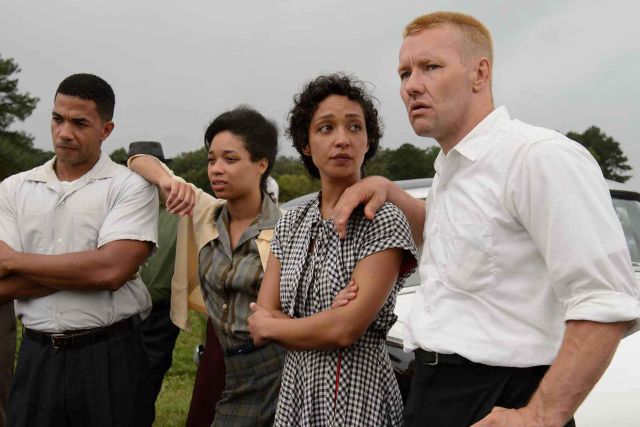
However, whatever the conscious intentions of the filmmakers involved, both Free State of Jones (Gary Ross) and Loving (Jeff Nichols) cut across the racialist narrative in particular. Each in its own way demonstrated on the basis of historical experience that a struggle against oppression in America, including racism, is only possible on the basis of the highest, noblest ideals and the combined efforts of the entire working class population.
Oliver Stone’s Snowden, moreover, argued that the Obama administration represented a “seamless transition” from its predecessor in continuing to construct not merely the foundations, but the walls and floors of a police state.
Snowden
The appearance of those three films had some significance. Appropriately, the overall critical and media response to Free State of Jones and Snowden was hostile.
A number of important foreign films from 2015 made brief appearances in North American movie theaters in 2016, including Colonia (Florian Gallenberger), about the horrors perpetrated by the Chilean military dictatorship and its ex-Nazi supporters, and The People vs. Fritz Bauer (Lars Kraume), on the hunt for Adolf Eichmann and the Frankfurt Auschwitz trials in the early 1960s. Also from 2015, less significant, but still intriguing, were Ixcanul [Volcano] (Jayro Bustamante), about a Mayan girl in Guatemala and her struggles, and Microb e and Gasoline (Michel Gondry), in which a couple of French adolescents try to make their way in the world.
Sami Blood
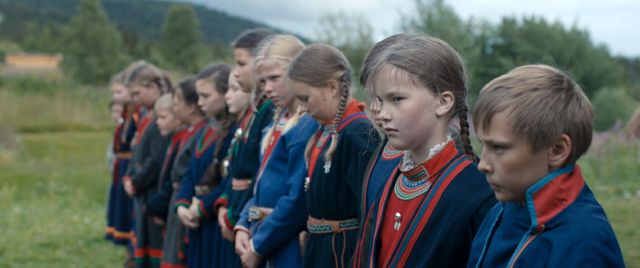
We saw a number of films at film festivals this year that have not yet been released in the US. Most prominent among them were The Chosen (Antonio Chavarrías), about Trotsky’s assassination, Sami Blood (Amanda Kernell), on the subject of the aboriginal people in Sweden in the 1930s, Marija (Michael Koch), dealing with immigrants in Germany, and Lady Macbeth (William Oldroyd), which treats social oppression and stifling in the 19th century.
So here are three lists:
1. New films released in 2016 in the US
Free State of Jones (Gary Ross)
Loving (Jeff Nichols)
Snowden (Oliver Stone)
Certain Women (Kelly Reichardt)
Indignation (James Schamus)
Wiener-Dog (Todd Solondz)
If they are not successful films, Manchester by the Sea (Kenneth Lonergan) and Moonlight (Barry Jenkins), and perhaps Paterson (Jim Jarmusch), at least indicate a growing interest in the conditions and feelings of wider layers of the population, and not just the top 5 or 6 percent.
Marija
2. 2015 films released this year in the US
The Colony (Colonia, Florian Gallenberger)
The People vs. Fritz Bauer (Der Staat gegen Fritz Bauer, Lars Kraume)
Ixcanul, or Volcano (Jayro Bustamante)
Microbe & Gasoline (Microbe et Gasoil, Michel Gondry)
Lady Macbeth
3. Films viewed at festivals this year and not yet released in the US
The Chosen (El elegido, Antonio Chavarrías)
Sami Blood (Sameblod, Amanda Kernell)
Marija (Michael Koch)
Lady Macbeth (William Oldroyd)
Past Life (Avi Nesher)
Radio Dreams (Babak Jalali)

Popular music in 2016

Hiram Lee & Matthew Brennan

Much of the popular music released in North America this past year was uninspired and superficial. Some of it was merely empty-headed and crude. Chart-topping artists like Bruno Mars and Kanye West were content to sing hymns to their own egos and careers. As it turns out, listening to performers sing or rap about how wealthy and successful they are is perhaps twice as boring as simply hearing someone talk about it.
Those artists who did turn their attention to real life faced a genuine obstacle in their path. The presence on the more “socially-conscious” albums this year of conceptions bound up with identity politics and racialist perspectives was pervasive. Questions of war, poverty, and social devastation—affecting hundreds of millions of people of every race, gender, and nationality around the world—were largely ignored.
It is critical for artists to overcome decades of anti-working class conceptions that have been nearly ubiquitous in universities and upper-middle class intellectual circles. A broader concern with social life in all its complexity, and with the working class itself, is urgently needed from artists, including musicians.
Many prominent musicians considered vaguely to be “socially conscious”—including singers (and siblings) Solange and Beyoncé, rappers Common and Kendrick Lamar—visited the White House this year to meet with, perform for and celebrate the Obamas. Nothing very good, and certainly nothing oppositional, will come from such layers.
But there were others whose music showed concern for wider layers of people, whose work was animated by a genuine sense of protest and whose love songs were more passionate and truthful than the rest. Whatever limitations their music may contain, the artists listed below, in our view, created some of the more moving and meaningful works this year.

Hiram Lee

Pop

William Bell (1971)
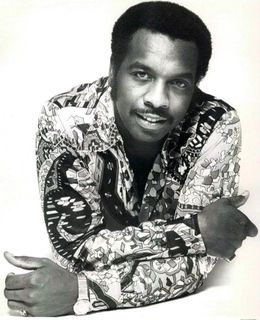
While there were significant contributions from veteran R&B singers like William Bell and Aaron Neville, many of the better “pop” albums came from the world of country music. There was a tendency, however, for even some of the better performers to imitate their inspirations a little too exactly, sometimes turning out nostalgic carbon copies of music from an earlier period (Kelsey Waldon). Others closer to Nashville have something to say, but tend to be a little too slick and inoffensive for their own—or anyone else’s—good (Brandy Clark and Mark Chesnutt).
Paul BurchMeridian RisingWilliam Bell—This is Where I LivePJ Harvey—The Hope Six Demolition Project
PJ Harvey—"The Hope Six Demolition Project"
Sturgill Simpson—A Sailor’s Guide to EarthRobert Ellis—Robert EllisBrandy Clark—Big Day in a Small TownShovels and Rope—Little SeedsMark Chesnutt—Tradition LivesAaron Neville—ApacheAndrew Bird—Are You SeriousKelsey Waldon—I’ve Got A Way

Jazz

Arriving at a list of favorite jazz albums required sifting through a lot of pseudo-R&B, overly academic works rich on math but low on feeling and works by self-indulgent free jazz performers who couldn’t resist interrupting a groove every few measures with some off-time flourish of drum rolls or squeaking saxophone reeds—drowning in a stream of consciousness.
These works stood out. Not all of it will please traditionalists.
Ralph Peterson Trio—Triangular IIIHerlin Riley—New DirectionHouston Person & Ron Carter—ChemistryMurray, Allen & Carrington [David Murray, Geri Allen & Terri Lyne Carrington]—PerfectionOmer Avital—Abutbul MusicCharles Lloyd & The Marvels—I Long to See YouMatthew Hartnett—Southern ComfortAllen Toussaint—American TunesJohn Scofield—Country for Old MenBranford Marsalis Quartet w/ Kurt Elling—Upward Spiral

Matthew Brennan

Albums

Robbie Fulks (Photo credit: Robman94)
These were albums that I felt conveyed, or attempted to convey, human and humane qualities with a notable sensitivity or creativity. There was the warmth and playfulness in the John Prine duets, the thoughtful and engaging samples and songs crafted by Oddisee and Moodymann, and the empathetic voices Courtney Marie Andrews and Robbie Fulks give to the characters in their songs.
It is also notable that PJ Harvey (and though less musically rewarding, ANOHNI as well) wrote an album almost entirely dedicated to grappling with the official hypocrisy of the Obama administration.
I was also moved by the more subdued, but thoughtful jazz albums by Jeff Parker (of Tortoise) and the Wolfgang Muthspiel Quintet. And there were a number of interesting if uneven field recordings from Africa during the 1950s, 60s and 70s released this year (for example, Paul Bowles’ 1959 Morocco recordings and the “Wake Up You” Nigerian rock recordings of the mid-1970s), but I thought the one that was most rewarding was the Bobo Yeye collection from post-colonial Burkina Faso during the 1960s and 70s.
John Prine—For Better, Or WorseOddisee—The Odd TapePJ Harvey—The Hope Six Demolition ProjectBobo Yeye: Belle Époque In Upper Volta (Collected Artists)
Wolfgang Muthspiel—Rising GraceJeff Parker—The New BreedCourtney Marie Andrews—Honest LifeRobbie Fulks—Upland StoriesMoodymann—DJ Kicks 

Individual songs

John Prine & Fiona Prine (Elvis Presley cover)—“My Happiness”
Caleb Klauder & Reeb Willms (Buck Owens cover)—“There Goes My Love”
Charles Bradley—“Good To Be Back Home”
Frankie Cosmos—“On The Lips”
Frank Ocean—“Pink + White”
Hamilton Leithauser & Rostam—“A 1000 Times”
Hamilton Leithauser & Rostam—“1959”
Hope Sandoval & Kurt Vile—“Let Me Get There”
Kevin Morby—“I Have Been To The Mountain”
The Handsome Family—“Gold”
Anderson .Paak—“The Dreamer”
Andrew Bird & Fiona Apple—“Left Handed Kisses”
PJ Harvey—“The Wheel”
ANOHNI—“Drone Bomb Me”
Jeff Parker—“Cliché”
Leyla McCalla—“A Day for the Hunter, A Day for the Prey”
Ryley Walker—“The Roundabout”
Jessy Lanza—“Oh No”
KING—“The Greatest”
Andrew Bird (Photo credit: Dani Cantó)

Instrumental/Electronic Music

LMYE—“Cali 76”
Jefre Cantu-Ledesma—“Love’s Refrain”
Carl Gari & Abdullah Miniawy—“Darraje”
Khun Narin—“Chackim”
Explosions In The Sky—“Logic Of A Dream”
The Range—“Florida”
Glenn Jones—“Flower Turned Inside Out”
Nathan Bowles—“Gadarene Fugue”

Great Barrier Reef suffering worst-ever coral bleaching

Bryan Dyne

Researchers from Australia and the United States have reported that a 700-kilometer span of Australia’s Great Barrier Reef has lost two-thirds of its shallow-water coral in the past nine months as a result of coral bleaching induced by global warming. This is the most severe episode of coral loss on the Great Barrier Reef on record, surpassing the events of 1998, 2002 and 2006. It will take at least ten years for the region to recover.
The current mass bleaching was caused by water temperatures approximate 1 degree Celsius above average from February to April (late summer and early fall in the Southern hemisphere), the result of climate change and assisted by a particularly strong El Niño. About half of the coral in the northern part of the reef are dead. Given that the reef lost more than half of its coral between 1985 and 2012, this latest episode threatens continued existence of the Great Barrier Reef as a whole.
To check against this phenomenon happening randomly, the researchers generated thousands of different climate models, looking at the relationship between ocean temperature and human carbon emissions. While it is not impossible that this warming could have occurred without humans, the chance that this could have occurred naturally is just over a half of a percent. This agrees with three decades of study into the relationship between global warming and coral bleaching.
Like all coral reefs, the Great Barrier Reef is a series of complex organisms that survive largely based on the symbiotic dependency between coral and an algae known as zooxanthellae. The algae provides the coral food and color while the coral provides an environment for the algae to grow. The relationship, however, is rather fragile and continues largely based on the conditions surrounding the reef, including weather such as typhoons or hurricanes, the water’s chemical composition and the water’s temperature.
If, as in the current case, water temperatures rise above a certain threshold for an extended period of time, the coral becomes stressed and expels its algae. This leaves the coral bleached white and reduces its energy supply by ninety percent. At this point, the coral begins to starve and has anywhere from months to weeks to live. Starvation in turn also leaves the coral more likely to die from predators such snails and crown of thorns starfish, bacterial infections and pollution.
Rising temperatures are not the only threat to coral reefs. Increased oceanic acidification (another consequence of global warming), chemical pollutants, runoff and overfishing are among the other factors that can stress coral enough to cause bleaching.
The loss of the Great Barrier Reef would have far-reaching ecological consequences. It has existed for about 18 million years and in its current form for about 8,000 years, since the last Ice Age. It is the largest structure on Earth constructed by living organisms. It consists of 2,900 individual reefs over 900 islands, spanning 344,400 square kilometers and can be clearly seen from outer space.
Millions of animals use it as their primary breeding ground each year, including several million aquatic creatures and between 1.4 and 1.7 million birds. It is home to 5,000 species of mollusks, 1,500 species of fish, 500 species of algae and seaweed, 215 species of birds and dozens of species of sea turtles, sharks, sea horses and other aquatic creatures. Hundreds of these species are endangered, with many of those being unique to the region.
As global ocean temperatures continue to rise, the life supported by the Great Barrier Reef is increasingly threatened. If the current warming continues apace, the reef is predicted to undergo a mass bleaching once every two years, rather than once every five or ten years. Given that it will take a minimum of ten years to recover from the current bleaching, more frequent occurrences raise the risk of the Great Barrier Reef as a whole dying off and many of the species it protects going extinct.
The problems facing the Great Barrier Reef are of a global character. Reefs in Hawaii and the Caribbean have also suffered mass coral bleaching events that coincide generally with global warming and particularly with El Niño events. In 1998, a global bleaching event killed off one-sixth of the world’s coral. In 2010, reefs in Southeast Asia and the Indian Ocean suffered there worst recorded bleaching events, with some regions losing 20 percent of their total coral.
While coral bleaching has been observed for about a bit more than a century, occurrences in the first half of the 20th century were local and relatively mild. Parts of reefs would bleach, smaller sections would die, but the reefs as a whole would recover. An early instance of regional bleaching was observed during 1979, in the Caribbean and the Florida keys. The first recorded global coral bleaching event coincided with the El Niño of 1982-83.
Since then, global bleachings have occurred in the wake of every El Niño weather pattern. It was established in 1990 that global warming is the primary culprit. Research published then by climate scientists at the Smithsonian Institution conclusively showed that the coral bleachings of 1979-80, 1982-83 and 1986-88 were a result of warmer ocean waters caused by the combined effect of El Niño and rising average ocean temperatures as a result of increased carbon emissions.
The situation has grown more serious in the past quarter century. Human-induced global warming has continued apace, with 90 percent of the excess heat caused by carbon emissions going into the world’s oceans. As a result, average global ocean temperatures have increased 1 degree Celsius since 1980, stressing coral reefs globally to just under the conditions for bleaching. It is estimated that if carbon emissions continue as they are, coral reefs will suffer bleaching every other year by the mid-2030s. As was predicted in 1990, if the trend of increasing global temperatures is allowed to continue, coral reefs will soon no longer exist.

Soaring prison populations highlight social crisis in Australia

Robert Campion

Recent reports have revealed an accelerating increase in imprisonment rates in Australia, a damning indicator of social distress and the repressive responses of consecutive Labor and Liberal-National governments, federal and state.
Nearly 40,000 people are now in prison around the country, compared to a total in 1975 of 8,900 prisoners. Historically, the national imprisonment rate between 1945 and 1985 remained relatively stable, averaging 65 prisoners per 100,000 adults. This figure has more than trebled since the 1980s to 208 prisoners per 100,000 adults in 2016.
There has been virtually no media coverage of this spiralling trend, because it raises serious questions about the connection with the rising level of social inequality over the same decades.
In its latest Prisoners in Australia report, released this month, the Australian Bureau of Statistics (ABS) says the number of prisoners in adult corrective services custody increased by 8 percent in the past year—from 36,134 prisoners at June 30, 2015 to 38,845 at June 30, 2016. The imprisonment rate rose by 6 percent from 196 prisoners per 100,000 adult population in 2015.
The ABS report highlights a stark rise in the number of unsentenced adult prisoners—that is, prisoners who are still waiting trial or sentencing but who have been denied bail. It states that this number increased by 22 percent, from 9,898 in mid-2015 to 12,111 in mid-2016, following a similar 21 percent increase from 2014 to 2015.
Some of the reasons behind this growth in imprisonment were studied by the Jesuit Social Services (JSS) in a report, States of Justice, also published this month. It showed that the imprisonment rate jumped by 25 percent during the past five years, despite the rate of offences remaining relatively steady.
States of Justice points to the social and economic roots of the trend. It found that 25 percent of prisoners are homeless when they enter prisons and 43 percent are homeless when they leave. Half are unemployed upon entering, and find it even more difficult to find work upon leaving, with 79 percent having to rely on welfare payments. The JSS report concludes: “In many cases prison does not prevent crime—it may well nurture it.”
Equally disturbing is the fact that almost half of the male prisoners and over 60 percent of the females have a reported history of mental illness. There is also a high chance that they have used illicit drugs, with related offences increasing by 40 percent from 2008–09, and most of the rise occurring between 2013 and 2015.
Just as revealing is the fact that the typical prisoner is highly unlikely to have finished secondary education. Only 16 percent of prisoners completed Year 12, and only a third finished Year 10.
There was also a disturbing rise in disadvantaged children being held in detention in the state of Victoria between 2010 and 2015. The proportion of detained children with prior or current involvement with Child Protection authorities increased from 51 percent to 64 percent.
As a result of all these factors, the recidivism rate is growing. Five years ago, 39.9 percent of prisoners returned to prison less than two years after their release. Now, the figure is 44 percent.
There are no rising crime rates to explain these results; in fact, the crime rate is either steady or dropping. The number of people committing crimes has risen only 1 percent since 2010, and the number of victims of crime has fallen by approximately 3 percent.
What has occurred are reactionary “law and order” campaigns with successive Labor and Coalition seeking to outdo each other in incarcerating people. The measures included ever-more draconian legislation, severe sentencing laws, restrictions on bail and jailing for non-payment of fines.
This has been accompanied by relentless media sensationalism about the supposedly soaring levels of violent crimes and the fraudulent “war on terror”—a catchcry seized upon by governments around the world to bolster the state apparatus and attack democratic rights.
This offensive is having a serious impact on the most disadvantaged members of society, further exacerbating social inequality.
The Jesuit report mentions the promise of the Hawke Labor government to “do better” 25 years ago, upon receiving the report of its Royal Commission into Aboriginal Deaths in custody. Since that time, however, the number of Aboriginal and Torres Strait Islander (ATSI) people in custody has doubled.
Other figures show that the incarceration rate for indigenous people, who are the most oppressed section of the working class, has skyrocketed by 75 percent over the past decade, compared to a 33 percent increase for non-indigenous prisoners. According to the Jesuit report, the ATSI imprisonment rate stands 13 times higher than the rate for non-ATSI prisoners.
The Jesuit report recommends putting public spending to “much better use” by expanding investment into “prevention, early intervention (especially early childhood services) and diversion.” It calls for the “reform of the justice system” by introducing “recidivism targets” and “more intensive transition support,” and a more “combined effort” to collect data on the social crisis.
These calls are falling on deaf ears in the corporate and political establishment because Australia, like other countries, is embroiled in a pro-business assault upon working conditions, social services and basic democratic rights. Far from an exception, in terms of incarceration, Australia is, in fact, ahead of countries such as the United Kingdom, France and Germany.
Amid a worsening global economic crisis and mounting social inequality, the entire political establishment, which includes the Greens, has nothing to offer working people and youth except the threat of repression and imprisonment. Above all, the erection of an ever-greater police and prison apparatus reveals a fear of growing class tensions and an attempt to intimidate and suppress the development of popular unrest.

UK: The Sky takeover deal and the rehabilitation of Rupert Murdoch

Thomas Scripps

Five years after the billionaire media oligarch Rupert Murdoch and his key personnel got away scot-free in the phone hacking scandal, their rehabilitation by the British ruling elite is complete.
This month, an £11.2 billion deal was agreed between Murdoch’s 21st Century Fox and the UK TV company Sky.
Providing Karen Bradley, the Conservative government’s Secretary of State for Culture, Media and Sport, accepts the arrangement, Fox—which already owns 39 percent of Sky—will pay £10.75 a share for the remaining 61 percent, taking full control of the company. Once Bradley is formally notified of the deal, her department has 10 days to decide if the takeover triggers public interest concerns and whether media regulatory body Ofcom will be called to investigate.
The Murdochs, through News UK, already control the largest circulation share of any newspaper group in Britain—owning The SunThe Sun on SundayThe Times and The Sunday Times—at just under 30 percent on weekdays and over a third on Sundays. With full control of Sky, they would also gain just under 20 percent of the TV news market and 45 percent of radio audience through Sky’s supply of news to radio stations. The immense wealth of the Murdoch’s business empire would also exercise a quasi monopoly of journalistic talent and manpower.
The deal is an attempt to complete the takeover following the failure of Fox’s previous bid in 2010/11. That fell through following revelations that the now defunct News of the World Sunday tabloid, also owned by Murdoch, had illegally hacked, on an “industrial scale,” the phones and computers of thousands of individuals—including the mobile of murdered schoolgirl Milly Dowler—and had also bribed police officers. Such was the public revulsion and anger at these practices that the 168-year-old newspaper was forced to close.
The findings led to a major police investigation, resulting in a number of trials and convictions—although not of Murdoch and his family—and the establishment of the Leveson Inquiry into the activities of the British press. In this atmosphere, ruling circles deemed Murdoch’s business empire too “toxic” to be allowed a substantial extension of its ownership of media outlets in Britain.
Less than six years later, however, there is broad confidence among Fox and Sky executives that the deal will be given the go ahead. James Murdoch, Rupert’s son, and CEO of Fox and Chairman of Sky, announced with confidence, “this [deal] passes regulatory muster.” He continued, “We think… that no meaningful concessions will need to be made.”
That the Murdochs can move to complete their plans so soon is testimony to the thorough job done by the British ruling class and judicial system in obscuring their criminal influence and activity. From the outset, it was clear that Leveson’s inquiry was intended only to whitewash the role played by Murdoch and those close to him in the hacking scandal and to obscure the multitude of shady connections between his media empire and the British bourgeoisie.
Rupert Murdoch’s ridiculous claim that he was completely unaware of the illegal practices at his newspaper was accepted. While acknowledging “some concern” over James Murdoch’s evidence, Leveson let the matter lie, stating that he was unable “to reach any conclusion.”
As for Murdoch’s relationship to British politics, Leveson engaged in a blatant cover-up. Acknowledging that politicians from all parties had developed a relationship with the media “which has not been in the public interest,” the report stated there is no evidence of “anything resembling a ‘deal’ whereby News International's support was traded for the expectation of policy favours.”
In the latter part of 2015, the negligible impact of Leveson on Murdoch’s operations became clear. In September, Murdoch reinstated Rebekah Brooks, the disgraced former head of News of the World and The Sun, as CEO of his News UK. Millions of pounds were thrown at defending Brooks in her 2014 trial over phone hacking—her legal team reportedly earning £30,000 per week. She was acquitted on the shaky plea of “incompetence.” One month later, the Crown Prosecution Service declared there would be no further prosecutions over the phone hacking scandal. The second part of the Leveson Inquiry, into the “Ethics and Culture” of the British press, has been kicked into the long grass.
The new Sky deal is an indication that Murdoch feels ready to return to business as usual. Among the broader population, however, there remains significant, well-founded, distrust of the corrupt billionaire. A petition launched by campaigning group 38 Degrees calling on Bradley to refer the bid to Ofcom, has reached 141,000 signatures, gaining 37,000 in its first 24 hours. A separate petition set up by Avaaz had reached 40,000, with 7,000 messages sent in to Bradley’s office.
These concerns will fall on deaf ears. The timing of the Murdoch empire’s effort to take control of Sky is significant. Commentators have pointed to the falling value of the pound versus the dollar post-Brexit, advantaging Fox, who would pay in dollars. Economic calculations, however, are only half the story. That Fox feels confident to make the bid is indicative of the serious political motives in play.
Murdoch supported the Leave campaign in the referendum on Britain’s membership of the European Union (EU), in expectation of major reforms in favour of big business and the super-rich should the UK leave. The Leave campaign was backed by The SunThe Sun on Sunday and The Sunday Times. His other UK paper, The Times made a tactical call for Remain. Given that the government of Theresa May is determined to push through Britain’s EU exit, the strengthening of Murdoch’s hand in UK media would be a considerable advantage.
May and Murdoch met this September in New York, just three months before the Sky deal was announced. Though Bradley told parliament the two had not discussed the takeover, given the extensive relations between all of Britain’s official political parties with the billionaire, this cannot be taken at face value.
Another critical element is involved in the Sky deal. In the last period, there have been indications of a growing militant movement of the working class against nearly a decade of deepening austerity. Over the last year, 50,000 junior doctors held unprecedented strikes, along with postal workers and rail workers. Other workers, including airline cabin crew have voted to strike—with the trade union bureaucracy sabotaging these before they got off the ground.
Murdoch has considerable experience in breaking strikes, having presided over the smashing of the Fleet Street printers’ strike—with the aid of police violence and union treachery—during the Wapping dispute of 1986. Ever since, his newspapers have remained at the forefront of attacks on strikers and working people generally. The Tory government has repeatedly stated its determination to break workers’ strikes, and in March will introduce new anti-strike laws. Murdoch and his media empire are considered a valuable and staunch ally in this effort.
Aware of the widespread hostility to Murdoch among the population, former Labour leader Ed Miliband deemed it necessary to offer token opposition. Miliband declared in parliament “We all said in 2011 that never again would we allow the Murdochs to wield unfettered power.” In fact, Miliband, in his position as Leader of the Opposition in 2011, only called on then Prime Minister David Cameron to apologise for a “catastrophic error of judgement” in hiring Andy Coulson—imprisoned in the hacking scandal—as an advisor.
Labour can go no further in their criticisms as they are as intimately associated to Murdoch as are the Tories. In 2011, Brooks stated, “I went to Downing Street regularly while [Gordon] Brown and [Tony] Blair were at Number 10.”