25 Sept 2017

No clear winner in New Zealand election

John Braddock & Tom Peters

The New Zealand election on Saturday delivered an inconclusive result, with neither the incumbent National Party nor the main opposition Labour Party in a clear position to form a government. The outcome is likely be decided by whichever is able to strike a deal with the right-wing, anti-Asian New Zealand First.
According to provisional results, National remains the largest party with 46 percent of the vote and 58 seats, two seats down on 2014. Labour has 35.8 percent (45 seats), NZ First 7.5 percent (9 seats), and the Greens 5.9 percent (7 seats). ACT with 0.5 percent has one seat by virtue of an electorate deal with National. Labour and the Greens, who campaigned as potential coalition partners, have a combined total of 43 percent.
Based on the current figures, a Labour-Green-NZ First government would command a majority of just 61 to 59. An estimated 384,000 special votes, including those cast overseas, 15 percent of the total, will not be counted until October 7.
On Saturday night, NZ First leader Winston Peters boasted, “We hold all the main cards.” He refused to answer questions about which party he would ally with. Peters has previously formed coalitions with National, from 1996–98, and Labour from 2005–08, the latter rewarding him with the post of foreign minister. NZ First ran a Trump-style campaign based on national protectionism, rabid anti-Asian xenophobia and calls for a massive cut to immigration.
Concerned about political instability, the corporate media has signalled its preference for a National-NZ First coalition. The Sunday Star Times insisted that Peters has “no choice.” “The voting public,” it warned, “cannot, and will not tolerate him abusing his kingmaker position” by supporting Labour when it trails National by 12 points. The paper’s front page highlighted Prime Minister Bill English’s assertion that he has the “moral authority” to lead National into government for a fourth consecutive term.
Labour leader Jacinda Ardern and Green Party leader James Shaw, however, have both declared they will try and form a coalition with NZ First.
The result reveals the same over-riding tendencies in recent elections in the US, Australia and France: widespread alienation and disaffection with the entire political establishment. Despite strenuous efforts to promote increased voter participation, the official turnout of 78.8 percent of registered voters was just above the 2014 figure of 77.9 percent. In that election, more than a million people either abstained or did not register.
The main feature of the campaign was the desperate attempt to divert widespread social opposition into safe parliamentary channels. This required a concerted operation to stave off the collapse of the Labour Party, which was polling at an historic low of 23 percent in July. The media, trade unions and pseudo-left groups sought to whip up support for Labour and its new leader Ardern, installed in August, based on bogus claims that the party would address the deepening social crisis facing working people.
Ardern, however, made no significant appeal to the working class. She rejected being called a “socialist,” instead saying she was a “progressive” and a “pragmatist.”
In the face of widespread anti-war sentiment, Ardern supported English’s decision to send more New Zealand troops to Afghanistan. Both leaders refused to rule out joining a catastrophic US-led war against North Korea. Ardern repeatedly reassured big business that a Labour-led government would not increase taxes to address the worsening social disaster, including homelessness, the soaring cost of living and the crisis in the health system
The surge in support for Labour, particularly among youth and students, did not reach the level predicted. The party’s vote rose to 36 percent from 25 percent in 2014, its worst result in 92 years. Much of the increase came from the Greens, whose support dropped from 10.7 to 5.9 percent. NZ First was polling at 13 percent before Ardern’s elevation, but ended on 7.5 percent, a point below its 2014 result.
Labour gained support from layers of the upper middle class, while losing votes in some of its strongholds. The Labour Party candidate for Ohariu, Greg O’Connor, a former police union head, took the wealthy Wellington electorate from National’s coalition partner United Future. Meanwhile in the nearby “safe” working-class seat of Hutt South, Labour’s candidate and party vice president Ginny Andersen lost by over 2,000 votes to National’s Chris Bishop.
The most significant shift among working-class voters towards Labour occurred in the seven Maori electorates which Labour won by decisive margins. Labour had historically dominated the seats until inroads were made over the last 15 years by the Maori nationalist Maori Party and Mana, which postured as representing an “independent Maori voice.” In fact, both outfits represent the interests of a highly privileged layer who control $NZ40 billion in Maori business assets, while the majority of Maori remain highly oppressed and marginalised.
The Maori Party, which has been in coalition with National since 2008 and helped implement its austerity measures, received just 1.1 percent of the vote, and lost its two remaining MPs. Mana’s leader, Hone Harawira, who lost his seat in 2014, failed to regain it. Mana, falsely championed in previous elections by pseudo-left groups as “pro-poor” and “anti-capitalist,” is now a moribund organisation.
Labour failed to increase its support in a number of Auckland’s urban working-class seats. The opposition parties’ campaign to scapegoat Asian migrants for the housing crisis, low wages and unemployment, coupled with demands for cutting immigration by more than 40 percent, was decisively rejected.
For the past five years, Labour, the Greens, Mana and the trade unions have largely adopted NZ First’s anti-immigrant politics in order to divide the working class along racial lines, while lining up with Washington’s preparations for war against China.
More than a quarter of New Zealand’s population is immigrant, heavily concentrated in the Auckland region. An article by Newsroom pointed out that Labour made little headway in Auckland, performing worst in those seats with a high number of migrants.
In New Lynn, Labour’s support declined by 500 votes between 2014 and 2017. In nearby Te Atatu, Labour’s campaign chair Phil Twyford, infamous in 2015 for blaming ballooning house prices on people with “Chinese sounding names,” saw his majority cut by several hundred.
The final days of the election campaign were dominated by a witch-hunt against National Party MP Jian Yang and several other politicians based on wild and unsubstantiated accusations that they are “Chinese Communist Party” agents. The McCarthyite campaign, which appears to have involved individuals close to US and Australian intelligence agencies, is intended to shift New Zealand politics into closer alignment with the US preparations for war against China.
On September 19, NZ First, now being courted by both major parties, demanded a “special commission” to investigate “China’s impact on our democracy.” Peters echoed Trump and Obama’s hypocritical denunciation of Chinese “expansionism,” which has been the pretext for a major US military build-up against China.
The Daily Blog, funded by several trade unions, supports this pro-imperialist campaign. Following the election it declared, “National’s total acquiescence to Chinese business interests... will quickly become the major issue.”
The next government, whatever its composition, will inevitably come into conflict with the working class as it continues to impose austerity while diverting billions of dollars to the military, strengthening ties with the US and promoting nationalism and xenophobia to prepare the country for war.

Scottish Labour leader Kezia Dugdale quits

Steve James

Kezia Dugdale, the eighth leader in 18 years of the Labour Party in Scotland, resigned last month after two years in the job.
Dugdale, a right-wing careerist devoid of principles or any record of struggle in the working class, was from the first at odds with Jeremy Corbyn’s leadership of the British party. Her career points to the hollowed-out character of Labour and underscores how Corbyn’s refusal to wage a struggle against the right-wing has played the central role in maintaining its dominance of the party.
At times, it seemed Dugdale was more loyal to Scottish First Minister and Scottish National Party (SNP) leader Nicola Sturgeon. But no campaign was mobilised against her, and her departure was not even anticipated. Rather, she simply walked away from a post that had become politically tiresome and personally awkward.
Dugdale joined the Labour Party as an unemployed law graduate at a loose end, having had an interest in student welfare on the student union. She considered politically-minded students as “geeks.” She was selected as a member of the Scottish parliament (MSP) in 2011 via the list system and quickly appointed as shadow minister for youth employment. By 2014, still a complete unknown, she was elected deputy leader to arch right-winger and Blairite Jim Murphy.
Murphy led the Labour Party’s campaign for a “No” vote in the 2014 Scottish independence referendum, which was waged on an entirely right-wing, pro-imperialist basis, arm-in-arm with the hated Conservative government, rather than opposing efforts to divide Scottish and English workers. Despite voters rejecting independence by a 55 to 45 percent majority, the Labour Party went on to suffer the most catastrophic electoral collapse in its history, with the party viewed, on the basis of its long record in local as well as national government, as indistinguishable from the Tories. Labour, for decades the dominant party in Scotland, lost all but one of its 41 Westminster seats in the 2015 general election to the SNP.
Murphy immediately resigned to be replaced by Dugdale, who won 72 percent of the vote among Labour members against fellow right-wing nonentity Ken Mackintosh. Dugdale’s main credentials for office appeared to be that she was right-wing and female. Shortly after her election in Scotland, however, Corbyn won the leadership of the British Labour Party which, in a highly distorted way, reflected political shifts to the left among broad sections of workers.
Dugdale opposed Corbyn from the first and voted for the Blairite candidate, Yvette Cooper. She supported successive efforts to unseat Corbyn by the right-wing, and in June 2016 called on him to resign. Two months later, she voted for Owen Smith, who challenged Corbyn for Labour leadership. When Corbyn again won, Dugdale immediately stated Corbyn’s chances of winning an election were “slim to nonexistent.” Twenty-four hours later, realising which way the wind was blowing and confirming her lack of political convictions, she insisted the exact opposite, stating, “Of course Jeremy Corbyn can win a general election.”
Dugdale, nevertheless, continued her efforts to undermine Corbyn. In September 2016, both the Scottish and Welsh Labour parties won autonomy within Labour to set their own policies and to have representation on the party’s powerful National Executive Committee (NEC). The move deprived Corbyn of a majority on the NEC. Dugdale trumpeted her success and promised to be a “loud and passionate voice for Scotland’s interests”—that is, for the right-wing Labour apparatus and its business backers in Scotland.
The NEC dispute also highlighted tensions between Dugdale and Corbyn on the constitutional question. Since being elected, Dugdale had attempted to triangulate Labour into a position where it was less vulnerable to the Scottish nationalist claims that Labour in Scotland was merely a branch of Labour in London. In the party’s election manifesto, 20 years after Labour’s original devolution legislation, Labour offered, with Dugdale’s backing, “the option of a more federalised country—dangling the possibility of a further extension of powers to the regional elite, while avoiding a breakup of the UK.
Dugdale also consistently gave the impression of being closer to the SNP than sections of her own party. As deputy Labour leader, she had already professed herself a “fan” of Scottish First Minister Nicola Sturgeon. In the immediate aftermath of the 2016 Brexit vote, Dugdale went as far as to confess that it was “not inconceivable” that she might back another Scottish independence vote if it helped keep Scotland in the European Union.
By early 2017, it emerged that Dugdale, whose father is an SNP supporter, was actually dating an SNP MSP, Jenny Gilruth, Parliamentary Liaison Officer for SNP deputy leader, John Swinney. Extraordinarily, the two appear to have met on a tour organised by the US State Department—which notoriously holds such recruiting events for prospective CIA assets.
Labour, in the event, did better than expected in this year’s snap June 8 election, winning 30 seats, including six recovered in Scotland. Corbyn embarked over the summer on a tour of 64 key marginal seats which Labour needs to win to form a government without support from one of the minority parties. Eighteen of these are in Scotland and all are currently held by the SNP.
Had Corbyn had the slightest interest in a struggle against the right-wing in his own party, this tour, through Labour’s lost industrial heartlands in Scotland, would have been the time and place to do it. He could have denounced Dugdale’s campaign against him and exposed Labour’s fostering of the political climate in which the SNP could emerge. He could then have denounced the SNP in power for its implementation of Tory policies and revived the accurate term “Tartan Tories”—once coined by Labour to describe the nationalists.
Instead, although matters do indeed appear to have come to a head during Corbyn’s tour, it was over what tactics best served business interests. Dugdale spoke on BBC radio late August of her view that Corbyn was “very open” to her repeated calls for Scotland, in the context of Brexit, to develop distinct employment policies in line with the needs of Scottish-based employers. Corbyn rejected this, but from a rival view of what was best for business: “I think that becomes very complicated because if you are trading, companies exist in Scotland, exist in Wales, exist in England, they are making things, doing things together, it would be very, very difficult if not impossible to see how we could separate those out. It has to be a UK-wide agreement.”
Dugdale resigned days later.
Only two candidates have come forward to replace her. Anas Sarwar, reportedly the favourite, is a right-wing multi-millionaire MSP and a shareholder in his family’s low-wage cash-and-carry empire.
Sarwar’s opponent is Richard Leonard, the preferred candidate of Corbyn supporters in Scotland around the Campaign for Socialism group. Leonard, formerly an organiser for the GMB trade union, has also been supported by Simon Fletcher, who organised Corbyn’s 2015 leadership campaign based on recruiting a layer of new party members. He is supported by the pseudo left. The Socialist Party Scotland, for example, hailed Leonard’s candidacy, claiming that Labour can be a “party that fights for the interests of the working class”… if only it changes its position to support Scottish independence.

In Paris, Mélenchon calls on trade unions to control opposition to austerity

Anthony Torres & Kumaran Ira

On Saturday, Jean-Luc Mélenchon’s movement, Unsubmissive France (LFI, La France Insoumise), held its national rally in the Place de la République in Paris amid growing protests against President Emmanuel Macron’s decrees scrapping the country’s Labour Code. Between 30,000 and 150,000 people came to Paris for the protest. Whatever the precise number, the rally was noticeably smaller than the protest organised in Paris by the trade unions in the context of a national day of action on September 21.
WSWS reporters spoke to a number of the protesters in attendance. The rally was extremely heterogeneous, with many teachers, IT workers and youth having mobilised to protest Macron’s decrees, which aim to destroy legal obstacles to unfair dismissal, wage and job cuts, and permanent temp contracts. Others joined the protest because they agreed with the perspective outlined by Mélenchon, who demanded that the union bureaucracy maintain its domination of workers’ protests against Macron.
In his speech Mélenchon, wearing a patriotic tricolour sash, declared: “We are ready to rally behind them [the unions]. … We are aware of the strength of the trade union organisations and of salaried workers.” He sowed the illusion that thanks to his collaboration with the unions, the tiny LFI parliamentary group in the National Assembly could somehow block the adoption of the decrees. “The struggle is not finished, it is only beginning,” he said.
The various union bureaucracies, however, have been working hand in glove with the government since Macron was elected in May. They are negotiating the decrees and preparing future attacks with Macron, while trying to stabilise Prime Minister Edouard Philippe’s government by blocking the growing opposition of workers and youth to Macron’s policies of austerity and war. The unions are holding secret meetings with the government, and individual union bureaucrats are joining the staffs of various ministries.
Mélenchon’s appeal to the unions to lead the protest thus signifies an attempt to strangle protests against the decrees and to give tacit support to Macron’s reforms. Mélenchon is also working with the New Anti-capitalist Party (NPA), the Stalinist French Communist Party (PCF), and the former presidential candidate of the Socialist Party (PS), Benoît Hamon. They are preparing an alternate government for French imperialism, should the Philippe government collapse.
The alliance between Mélenchon and Hamon, whose Socialist Party was the first to include decrees like Macron’s in early drafts of its labour laws in 2016, underscores the cynicism of Mélenchon’s pose of opposition to the current president’s austerity policies. He is not at all trying to break with the corrupt, anti-working class forces that have passed for the “left” in France since the 1968 general strike. Rather, following the collapse of the PS in the presidential elections in May of this year, Mélenchon is trying to regroup PS forces and its various allies into a new political tool for the ruling class.
The NPA participated in the rally in Place de la République, as did PCF national secretary Pierre Laurent and Hamon, who said he wanted “the mobilisation to continue.” Philippe Poutou, the NPA’s 2017 presidential candidate, called on Mélenchon: “Launch an appeal to everyone to start something, you’ve got the means to do it more than us.”
Mélenchon responded, “I’m trying to find the right dose. I don’t want to send you all into the wall.” And by letting the unions “dose” the protests, that is, isolate them industry by industry and bottle them up in France alone despite growing social anger across Europe, Mélenchon is working to block the emergence of a revolutionary, international struggle of the working class.
A certain proportion of the protesters were fairly open about supporting Mélenchon’s reactionary and anti-worker perspective. They told WSWS reporters that they were not necessarily favourable to forcing the retraction of all of Macron’s decrees, and insisted they did not want to discuss the link between Mélenchon and his Greek ally, the pro-austerity Syriza government of Alexis Tsipras.
Others said they were looking for a way to oppose Macron and the rising dangers of war internationally and dictatorship inside France. They were sceptical about the union protests and were waiting to see what Mélenchon would propose.
Ninon, a teacher, declared: “I think we have to call a stop to all these measures against the workers. I am in solidarity with the other workers, even if I am not the person who will be hit first in the public service. This is a government that is on the side of business, of big business and finance, not of the workers.”
When the WSWS asked Ninon if she believed Mélenchon’s perspective would allow him to change these policies, she replied: “In the short term, he can’t, he is not in power. I don’t believe in it so much, however. I’m waiting to see. Many people will be mobilised today and in October. I am convinced that the government will not back down. But I can’t simply stay home, either.”
Ninon also expressed her opposition to the state of emergency and dramatically expanded police and surveillance powers in France: “It should not last. But it will, we know it. It will always be a way to impose the laws rapidly, to spy on political opposition figures. I am against it. I do not think it is very effective in terms of fighting terrorism. That is not where the problem comes from.”
She also condemned Trump’s threats of nuclear war against North Korea: “It’s quite clear. He [Trump] is crazy, he is dangerous, that’s obvious. If it continues, there will be a very real danger.”
Jocelyn, an IT student, said she was attending her first protest and that she opposed both Macron’s labour decrees and the state of emergency, which, she said, “does not serve a useful purpose. … It does not stop any attacks, I don’t think. For me it’s clear, it’s a dictatorship. In any case, the election was rigged, from the moment all the media started attacking all the candidates except Macron. He was being brought forward. From that moment on, you could see France isn’t a democracy. … It is a dictatorship, too.”
Maximilien, a musicology student, also explained that he was demonstrating not only against the decrees, but also against the state of emergency and war: “I am absolutely against war. I don’t know what to think about it. It is so sad that we have gotten this far. I’m for peace. That is one of the major reasons I am here today.”
Laurent, an IT worker, pointed to the increasingly deep disenchantment of the French people with the established political parties: “We saw it in the legislative elections, there was an extraordinary level of abstention. Elections don’t get people to go vote. … I’m not an LFI member but it’s one of the parties I feel closest to. But if tomorrow its proposals don’t please me, I will leave.”

Turkey threatens war over Iraqi Kurdish independence referendum

Halil Celik 

The Iraqi Kurdish Regional Government’s (KRG) independence referendum slated for today has further escalated dangers of a major war in the Middle East. Threats from Baghdad, Tehran and Ankara, as well as warnings from the United States and European Union (EU), are raising the question of another possible military intervention, this time against Iraqi Kurds.
The Turkish government—which has for more than two years launched military operations against Kurdish nationalist parties, both at home and in Iraq, devastating Kurdish-populated towns in Turkey and forcing tens of thousands of Kurds to flee their homes—is leading the charge.
On Saturday, September 23, in an extraordinary session during which the chairman intervened to silence the pro-Kurdish Peoples’ Democratic Party (HDP) spokesperson, the Turkish parliament extended the government’s mandate for military action another one year. This mandate permits the Justice and Development Party (AKP) government to deploy troops to Iraq and Syria.
Thus the Turkish parliament has opened the door for a Turkish invasion of the KRG. It attacked the referendum as part of “efforts to break the territorial integrity of Iraq and Syria, which would endanger Turkey’s national security.”
During the parliamentary debate, spokespersons of the ruling AKP and its de facto partner, the fascistic Nationalist Movement Party (MHP), sharply criticized the referendum, calling for its cancellation, and attacking the KRG’s President Barzani.
The spokesperson of the opposition Republican People’s Party (CHP) also declared its support to the motion, however only after criticizing the AKP’s foreign policy in the Middle East, including its active participation in the US-led wars in Iraq and Syria. The HDP was the only party that stood against the motion, arguing for the Kurdish people’s right to self-determination.
The Turkish parliament’s decision came only hours after a meeting of Turkey’s National Security Council (MGK) chaired by Erdogan on late Friday, September 22. The MGK issued a written statement warning that “Turkey reserves its rights based on international conventions.” This is an open threat of not only diplomatic and economic sanctions, but also a military intervention.
Speaking to reporters on the same day, Turkish Prime Minister Binali Yildirim also said Ankara would “not refrain from using its natural rights. ... This referendum is an issue of Turkey’s national security.”
Presidential spokesperson İbrahim Kalın then issued a statement warning the KRG that the referendum would “have serious consequences.” On September 23, he wrote on his Twitter account that “Erbil should immediately correct this grave mistake that will trigger new crises in the region.”
Since September 18, the Turkish army has held military exercises in Turkey’s Sirnak province, as a sign of Ankara’s “determination” to avoid the emergence of an independent Kurdish state inside the current boundaries of Iraq. The Turkish army had already deployed troops, tanks and artillery to the Iraqi and Syrian border.
The Iraqi government in Baghdad has also threatened to intervene militarily against the KRG if the referendum results in violence. As the Turkish parliament debated the motion, Iraqi Chief of Staff General Othman al-Ghanimi arrived in Ankara to meet with his Turkish counterpart General Hulusi Akar and discuss the KRG referendum and Iraq’s territorial integrity.
Akar reportedly plans to meet with his Iranian counterpart, Major General Mohamed Baqeri, to discuss events in Iraq and Syria and moves against the Kurdish-nationalist Kurdistan Workers’ Party (PKK), which since 1984 has waged guerrilla war against the Turkish state. The Iranian Chief of General Staff had already paid a three-day visit to Ankara, in August 15-17, to discuss possible common military operations “against terrorist organizations” in the KRG.
The Iranian Chief of Staff also warned the referendum “would be the basis for the start of a series of tensions and conflicts inside Iraq, the consequences of which will affect neighboring countries. So, for this reason, the authorities of the two countries [Turkey and Iran] are emphasizing that it is not possible and should not be done.”
While the Turkish, Iranian and Iraqi governments regard the referendum as a serious threat to the territorial integrity of Iraq, the KRG's Western allies, including Washington and the EU, are mainly criticizing its timing. They cite the need to concentrate on the ongoing fight against the Islamic State (IS).
The Israeli government of Benjamin Netanyahu, on the other hand, has openly supported the KRG’s referendum on independence.
The growing threat of sanctions and or military action from Ankara, and repeated warnings from Baghdad and Tehran, as well as the Western powers, however, have apparently not impressed the KRG’s President Masoud Barzani. He said on Saturday that they would not renounce independence, whatever the cost.
First elected in 2005 by the Kurdish regional parliament and in 2009 by popular vote as KRG president, Barzani’s term of office in fact ran out in August 2015, after a two-year extension. Having presided over a de facto government since then, the corrupt Kurdish leader faces ever growing popular opposition—in part, over his regime’s economic and financial dependence on Ankara, which brutally suppresses its own Kurds, and its slavish obedience to the US and European imperialists.
By pushing for the independence referendum, Barzani is playing the card of nationalism to disorient Kurdish workers, poor peasants and the youth, who have repeatedly paid the price of the decades-long maneuvers of the Kurdish nationalists with the imperialist and regional states.
The Iraqi Kurdish referendum and Ankara’s military deployment along the border only fan the flames amidst ongoing war and growing ethnic and sectarian divisions, in Iraq and Syria and across the region.
Ankara has long been preparing to launch another military adventure in Iraq or Syria—with or without collaboration of, or even against, the Barzani leadership. This now also threatens to ignite a military conflict with the troops of Ankara’s NATO allies, now operating on the ground with Kurdish forces. With all its unforeseen consequences, such an invasion would lead to a dangerous military escalation that could easily get out of control.

Iraqi Kurdish referendum stokes Mideast war tensions

Jean Shaoul & Jordan Shilton 

The Kurdistan Regional Government (KRG) in Iraq’s, oil-rich, predominantly Kurdish north is proceeding today with a referendum on Kurdish independence. The vote is expected to endorse the KRG’s call for the creation of a separate state.
Washington has long served as a patron of the KRG. But it and the European imperialist powers are opposed to today’s referendum, as are Iraq’s central government, and Turkey, Iran, and Syria, which are all home to significant Kurdish minorities.
Turkey has been adamant in demanding the KRG scrap the referendum, with Turkish government officials issuing warnings late into the night Sunday of dire consequences for the KRG if the referendum is held. Calling the referendum a threat to the national security and territorial integrity of Turkey, Iraq, and Iran, Turkish Deputy Prime Minister Bekir Bozdağ, declared, "We are telling (KRG President) Barzani and his administration: It is not over yet. Stop playing with fire and cancel the referendum decision."
For its part, the US fears a Kurdish independence bid will further destabilize its already fragile puppet regime in Baghdad and inflame or trigger fratricidal ethno-religious conflicts across the region, thereby cutting across its own drive to establish unbridled hegemony over the world’s most important oil-exporting region—in particular, its plans to mobilize its local clients for confrontation and war with Iran.
In pursuit of its predatory geostrategic interests, US imperialism has waged virtually uninterrupted war in the Middle East for the past quarter-century, destroying whole societies and razing state structures. A key element in this process has been the inciting of ethnic and religious sectarian divisions, including the promotion of Kurdish nationalism.
Following George W. Bush’s illegal invasion of Iraq in 2003, Washington cooperated closely with the KRG, while in neighbouring Syria, the Pentagon and CIA have backed the Kurdish-dominated Syrian Democratic Forces (SDF) in the US war for regime change in Damascus.
KRG President and Kurdistan Democratic Party (KDP) leader Masoud Barzani announced the referendum via an executive decree last June, although his term as president ended more than two years ago. The referendum was endorsed at a barely quorate parliamentary session earlier this month.
Barzani, seeking to bargain with the major imperialist powers as Kurdish nationalists have done for decades, insists that today’s vote is merely consultative and will not result in the immediate formation of an independent Kurdish state.
Apart from Barzani’s KDP, among the many fractious parties of the Kurdish elite only the Kurdistan Islamic Union (KIU) has unequivocally supported the referendum. The KRG’s second-largest party, the Patriotic Union of Kurdistan (PUK), which is led by former Iraqi President Jalal Talabani and has ties to Iran, has been badly divided over whether to back the referendum.

Intensifying regional conflicts

Echoing the position of the US and the European powers, the UN Security Council issued a statement last Thursday expressing “concern over the potentially destabilizing impact of the Kurdistan Regional Government's plans to unilaterally hold a referendum next week.”
US Secretary of State Rex Tillerson and Defense Secretary James Mattis, as well as British Defence Minister Michael Fallon, have all visited the KRG capital, Erbil, in recent weeks to try to persuade Barzani to cancel or at least postpone the vote.
US imperialism fears that the political and probable military conflicts unleashed by the referendum will cut across its chief immediate Mideast goals: preventing Tehran from establishing a land corridor to supply its allies in Syria and Lebanon and preparing for an all-out clash with Iran.
The Kurdish vote takes place as a new and even more dangerous phase of the war in Syria between the US and the Assad regime and its Russian and Iranian backers looms, as they scramble to gain control of territory vacated by vanquished ISIS forces. Last week, Trump used his UN General Assembly address to denounce Iran as a “criminal” and “rogue” regime and serve notice that he could scuttle the Iran nuclear deal in coming days.
Support for the Kurdish referendum has come from Israel, with Prime Minister Benjamin Netanyahu giving an explicit endorsement. For decades, Tel Aviv has maintained close ties to the KDP, which has been led by the Barzani family since its formation. It views the emergence of an independent Kurdistan on Iran’s borders as a weapon to be wielded against Tehran. Russia, which enjoys substantial commercial relations with Erbil, including through sizeable investments by the energy giant Rosneft, has avoided condemning the vote.
Until recently, Turkey has enjoyed close and lucrative relations with Barzani and the KRG. But it vehemently opposes the referendum, fearing that a vote for independence, let alone the emergence of an independent Kurdish state on KRG territory, could boost Kurdish nationalist-separatist forces in Turkey’s southeast.
Since 1984, Turkish security forces have waged a ferocious war against a Kurdistan Workers’ Party (PKK)-led insurgency that has led to the deaths of some 40,000 people, the destruction of 40,000 villages and the forcible displacement of up to one million people.
On Saturday, an emergency meeting of the Turkish parliament extended special authorization for its troops to act in Iraq and Syria in the interests of “national security.”
Ankara is concerned that the KRG referendum will also encourage the PKK-aligned YPG (People's Protection Units) in northern Syria to try to turn the autonomous zones they control along the Turkish border into a separate state. The YPG has emerged as the backbone of the US-sponsored proxy army in Syria, even as Washington has assured Turkey it supports the “integrity” of Syria.
On Friday, in defiance of pronouncements from Washington, the Kurdish authorities in northern Syria held the first stage of planned elections at district, municipal and regional levels—elections that they say could be followed by an independence bid if Damascus refuses to recognize them.

The sectarian partition of Iraq

Within Iraq, the referendum is especially contentious because it will include not only the three KRG provinces of Erbil, Dohuk and Sulaimaniyah, but the so-called “disputed territories” of Khanaqin, Sinjar, Makhmor, and oil-rich Kirkuk.
The “disputed areas” are currently controlled by KRG Peshmerga forces, but lie outside the recognized borders of the three northern provinces that make up the KRG and include large Arab, Turkmen, and Arabic-speaking religious minorities.
This raises the prospect that non-Kurdish peoples could be forcibly incorporated into an independent Kurdish state and the danger of violent ethnic conflict.
This is especially true in oil-rich Kirkuk province, which was annexed by the KRG’s Peshmerga fighters in 2014 in the wake of Islamic State’s offensive across northern and western Iraq. With the referendum excluding the Arab district of Hawija still occupied by Islamic State, a pro-independence vote in Kirkuk seems assured.
Other “disputed territories” are now less homogeneously Kurdish following the former Baathist regime’s deliberate transfer of Arab populations into them in order to reduce local Kurdish dominance.
As a result of fears stoked by the referendum, local Turkmen leaders have called on Baghdad to declare martial law in Kirkuk and deploy armed forces to prevent the referendum.
The referendum is also contentious in some towns within the KRG. Demonstrations that led to angry clashes took place earlier this month in Mandali, in Diyala province, one of the three provinces that form the KRG, protesting against the town’s inclusion in the referendum.
Some of those in favour of Kurdish independence question the referendum’s timing, arguing that it is a ploy to consolidate Barzani’s power in Kurdistan and strengthen his bargaining hand with Baghdad.
Last Monday, following a vote in the Iraqi parliament opposing the referendum, Iraq’s Supreme Court ordered the suspension of the referendum pending an investigation into its legality. The Iraqi constitution guarantees “the unity of Iraq” and grants no right of secession.
Iraqi Prime Minister Haider al-Abadi, who has come under increasing pressure from his political opponents to come out forcefully against the referendum, declared that Iraq might resort to force “to protect our population, to protect our Kurdish population and our Arab and Turkmen and other ethnic populations of our own country.”

The reactionary character of Kurdish nationalism

The attempt to create an independent, capitalist Kurdish nation-state through the reshuffling of the borders that British and French imperialism imposed on the Middle East at the end of World War I is reactionary. It would not serve the interest of Kurdish workers and toilers, never mind the region’s myriad other peoples, but would only create more favourable conditions for imperialist-incited nationalist, ethnic and religious movements to flourish.
The rhetoric about “self-determination” for the Kurds notwithstanding, more than a century of historical experience has demonstrated that the Kurdish bourgeoisie is incapable of establishing independence from imperialism, the principal obstacle to realizing the democratic and social aspirations of all the peoples of the Middle East.
While the Kurdish peoples in Iraq, Iran, Turkey and Syria face discrimination, the record shows that the separatist and communalist programs of the Kurdish nationalist parties only serve to divide the working class along ethnic, cultural and religious lines, and are devoid of any genuine democratic or progressive content.
In pursuit of its own selfish class interests, the Kurdish bourgeoisie has time and again made the Kurds the pawns and proxies of the imperialist and regional powers, who once their predatory objectives have been realized cruelly abandon the Kurdish people to their fate.
Washington’s war drive in the Middle East since the 1991 Gulf War has exposed the Kurdish nationalists as tools of imperialism. In exchange for a few crumbs from imperialist plunder and exploitation—such as limited autonomy in Iraq—they have hired themselves out as proxy forces for imperialism.
The Kurdish nationalists welcomed the illegal US-led invasion of Iraq in 2003, even though Washington had tacitly backed Baghdad’s suppression of a Kurdish uprising just after the Gulf War. Despite Talabani’s Patriotic Union of Kurdistan and Barzani’s Kurdish Democratic Party having supported opposing sides in the 1980-1988 Iran-Iraq war, they joined forces in the corrupt Kurdistan Regional Government established in 2005.
The KRG worked with the US occupation and is now playing a leading role in the US-led war against Islamic State. It provided manpower for the bloody imperialist-led offensive against the ISIS in Mosul, an ethnically diverse, Sunni Arab-majority city. In the course of this onslaught, numerous reports point to blatant acts of ethnic cleansing by Kurdish forces aimed at driving Arab and other minority populations from areas that they intend to integrate into a Kurdish state.
The oppression faced by the vast majority of the Kurdish population, together with workers and toilers across the Middle East as a whole, can be overcome only in a united struggle in opposition to the continued domination of the region by imperialism.
As Leon Trotsky, co-leader with Lenin of the Russian Revolution, established in his theory of permanent revolution, the outstanding democratic tasks in countries of a belated capitalist development can be accomplished only as part of the struggle for socialism. The fight for such a program demands not the repartition of the Middle East on ethnic and sectarian lines, but rather the unification of the workers and toilers in the fight for the United Socialist States of the Middle East as part of the struggle for socialism globally.

The rise of the AfD and the rightward lurch of official politics in Germany

Peter Schwarz

For the first time since the fall of the Nazis, a right-wing extremist party is entering Germany’s national parliament. With 13 percent of the vote in Sunday’s federal election, the Alternative for Germany (AfD) became the third largest party in parliament, finishing behind the governing Christian Democratic Union/Christian Social Union (CDU/CSU) and the Social Democratic Party (SPD), which suffered an electoral collapse. The CDU/CSU obtained 33 percent of the vote, its worst result in over 60 years.
The AfD has acquired political influence far beyond its actual strength. It set the tone in the election campaign with its agitation for a crackdown on refugees and the strengthening of the state’s repressive apparatus. All of the establishment parties sought to outdo the AfD with pledges to hire more police and deport more refugees, thereby bolstering the far-right party. Why vote for the more established parties’ versions of the AfD’s chauvinist and authoritarian politics when you could vote for the real thing? The CDU/CSU lost more than a million voters to the AfD, while the SPD lost 470,000 and the Left Party lost 400,000.
That being said, the AfD’s right-wing extremist programme does not enjoy mass support. Even among AfD voters, 60 percent said they backed the party as a protest and not because they support its policies. The AfD’s rise is, above all, the result of the rightward lurch of all of the established parties, which, with the support of the media, are doing all they can to channel mounting social discontent in a right-wing direction.
In the past, nominally left parties would be expected to benefit from a social crisis such as that which is gripping Germany, including the explosive growth of low-wage jobs, the rise of poverty and homelessness, the lack of affordable housing, the catastrophic conditions in the schools and hospitals, and the growing danger of war. But neither the SPD nor the Left Party are capable of making a social appeal to voters.
The SPD is politically bankrupt and reviled. Having imposed the Hartz laws, tax cuts for big business and the rich, and an increase in the retirement age to 67, the SPD bears chief responsibility for the outrageous levels of social inequality.
An even more abject role is played by the Left Party. Workers long ago stopped taking its combination of left phrases and right-wing policies seriously. The Left Party’s main task consists in blocking a movement of workers to the left. In eastern Germany, where the Left Party long dominated, the AfD finished in second place behind the CDU. There, the far-right party won 22 percent of the vote. The AfD even managed to take first place among men, with 27 percent of the male vote.
The ruling elite came to terms with the AfD even before the votes had been counted. It is only a matter of time before it integrates the right-wing extremist party into government.
CSU leader Horst Seehofer declared that the AfD won votes because the CDU and CSU “left open their right flank.” He pledged that they would change this in the future and take a “clear stand.”
The historian Michael Wolffsohn rejected describing the AfD as “Nazis.” It is, he said, a reaction to “major social problems” such as the flood of refugees, for which the other parties have no answers. Political scientist Jürgen Falter warned against overdramatising the AfD’s entry into parliament. Far from being a “cause for concern,” it represented “a normalisation of German politics after our history.”
The established parties’ horror at the AfD’s right-wing extremist policies was hypocritical from the outset. This is shown by the case of Jörg Baberowski. The professor at Berlin’s Humboldt University, who cleared the way for the AfD with his agitation against refugees and his downplaying of the crimes of the Nazi regime, received unanimous backing from the established parties and the media when the Sozialistische Gleichheitspartei (SGP—Socialist Equality Party) publicly criticised him. The SPD, whose leading member Sabine Kunst is the president of Humboldt University, and the Left Party played a prominent role in the defence of Baberowski. Even when a court confirmed that Baberowski could be described as a right-wing extremist, they continued to support him.
The AfD’s rise is the result of the rightward shift of the entire ruling class, which is responding to the global capitalist crisis and the growth of internal and external tensions by returning to its most despicable traditions. In the 1930s, business associations, the military, bourgeois politicians and academics reacted to the intensification of the class struggle by backing Hitler and supporting his appointment as chancellor.
This must be taken by the working class as a serious warning. None of the establishment parties, least of all the SPD and Left Party, are willing or able to stand up to the right-wing extremists.
Similar developments are taking place in other European countries. In France, the right-wing extremist candidate for the National Front, Marine Le Pen, made it to the second round of the presidential election. In Austria, the participation of the far-right Freedom Party (FPÖ) in government following elections in October is seen as all but certain. The social democrats as well as the conservatives are ready to form a coalition with it.
The Sozialistische Gleichheitspartei is the only party that stood in the federal election on a left-wing and socialist platform. “With their right-wing policies, the SPD, the Left Party and the Greens facilitate the growth of the far-right Alternative for Germany (AfD),” the SGP’s election statement declared. “This right-wing extremist party can pose as an opposition force only because none of the establishment ‘left’ parties oppose the ruling class with a socialist perspective.”

23 Sept 2017

A Peep Into Rohingya Refugee Life In Chennai

Syed Ali Mujtaba

There is much attention on the plight of the Rohingyas in the media these days. Rohingyas are an ethnic population of over one million Sunni Muslims living in Myanmar’s Northern Rakhine state.
They are being persecuted by their own government and the United Nations has called them as the world’s most persecuted community.
Since last one decade, scores of Rohingyas have fled from Myanmar after the repeated sectarian violence orcastrated by the Burmese government that has denied them citizenship under the 1982 Burmese Citizenship Act.
In the current wave of persecution, approximately 400, 000 Rohingas has fled their country to Bangladesh, which is finding it hard to shelter such a large number of human populations having meager resources.
As a part of humanitarian assistance the Government of India has launched “Mission Insanyat” to help the Rohingas living in the camps in Bangladesh and it is providing them the necessities of life.
Even when all these are happening, some hostile statements are being made by the Central Ministers against the Rohingas fleeing their country.
India’s Home Minister Rajnath Singh has called Rohingas as infiltrators who can’t be granted refugee status and to be deported to Maynmar as early as possible. Roghingas are seen as jihadis having links with Islamic state.
This has sent shock wave in the country, because this is quite contrary to the principled stand that India use to take on such issues once upon a time.
According to the Factsheet India issued by the UNHCR in May 2016 there are 19,142 Myanmarese refugees in India. Among them there could be approximately 10,000 Rohingyas living in India.
The Rohingyas are concentrated in New Delhi, Jammu, Rajasthan, Hyderabad, and, to a lesser extent, in Tamil Nadu and in Kerala.
All of them have come from Bangladesh utilizing the services of ‘dalals’ who have contacts in various parts of India.
As far as Rohingas in Chennai are concerned let’s have a peep into their lives at Kelambakkam refugee camp here in Chennai.
They are of 2012 lot when there was similar kind of persecution in Maynmar and Rohingas had fled their country and first reached Bangladesh and then to India.
They are living here in a ramshackle government-run cyclone shelter where years ago there used to be Sri Lankan Tamils living.
There are about 94 Rohingya refugees staying and belong to 19 families comprising 47 children, 25 women and 22 men.
Rohingas are mild-dark complexioned people and several of them are wheatish in color. They can pass off as local Tamils but for their distinctive ‘Rohingya’ language. They can speak a mix of Urdu and Hindi and thats what helps them to communicate with the local people here.
This group of 94 people had made an arduous journey from Myanmar to Bangladesh by boat and then on foot to cross the West Bengal border to come to India. And then they moved to Kolkatta to board a train to Chennai.
It was a hell of a journey for them all the way from Myanmar to Chennai. All along, they had to shell out a huge amount of money to the brokers (dalals), to make sure they reach safely into India.
Although they arrived in Chennai in 2012, their “tryst with nomadic life” ended when police caught them by the end of 2014.
The National Human Rights Commission (NHRC) intervened and issued notice to the Government of Tamil Nadu seeking clarification on the subject.
The Collector of Kancheepuram rose to the occasion and provided them accommodation in the cyclone shelter in Kelambakkam with a condition that they should not associate them with local politics or political parties.
The Rohingyas in the Kelambakkam camp are recognized as refugees by the UNHCR and they are issued a refugee card which lists out their individual particulars like name with photograph, sex, age, date of arrival etc.
These refugees have registered with the Foreigners’ Registration Office (Police Superintendent), in Kancheepuram and have a Residential Permit i8s issued by the authorities there. Their refugee card is a guarantee of their legal status.
While the Kelambakkam camp provides a roof over the heads of these refuges, it lacks basic amenities. There is only one water tap outside the main building and there only two toilets for all. The main hall where the refugees live is partitioned by hanging old clothes and each family occupies a space measuring 5’ by 5’.
They have apportioned the space for each of the family by turning clothes as “walls,” with things strewn around and fly swarming everywhere.
The open veranda is full of dirt and the monsoon season has made the condition much worse. The refuges take their bath and wash their clothes outside. Each family has a traditional earthen kitchen on the open ground where they use twigs and fire wood.
When the Rohingyas settled down in Kelambakkam they numbered only 14, but as the news spread that they have a permanent home, others joined them and today they number 94.
The refugees live in a ground plus one shelter known as ’round building’ indicating its circular shape. While six families live on ground floor, eight are on the first floor and five have put up shacks on open ground around the building.
Electricity bill is borne by the government and water is available throughout the day. The shelter is opposite the local Government Primary Health Centre where they can get medical assistance. There is a local school nearby where their children go for studying.
In the shelter there is a mosque in a makeshift hut that is separate from the living area. Here, they offer prayer five times every day. The local Muslims are lending a helping hand to the refugees and so are some NGOs, and philanthropists who are showing their magnanimity towards them.
The refugees, many of whom are skilled workers do odd jobs including rag picking, daily wage laborer, shoe polishing etc. to eke out a living. Some of them even though have specific set skills like driving can’t do so without having license.
The UNCHR is a pillar of strength to the Rohingas refugees in Chenai. It maintains cordial relations with the Department of Immigration and government of India
The Chennai office of the UNHCR is confident that as and when validity of the refugee card expires, they could easily get them extended. According to UNCHR, Rohingas can peacefully live here till such atmosphere is created in their home country.

Alzheimer’s Burden On Families

Zeenat Khan

What can be more ironic and catastrophic when a renowned linguist loses her language altogether,as the deadly Alzheimer’s disease (AD) fiercely ravages her brain? That is what did happen to Alice Howland, a professor and a linguistics expert at Columbia University, New York. Initially, it started with her inability to remember the word ‘lexicon’ while giving a lecture. From then on she forgot how to get back home after taking a run around campus. She went to see a well-known neurologist at the New York- Presbyterian Hospital. Alice was diagnosed with early onset of Alzheimer’s, an irreversible, progressive disease. Her biologist husband and three grown children reacted in different ways to her fast deteriorating condition. Unable to cope with the life changing situation, Alice’s husband takes a job at the Mayo Clinic in Minnesota, on the pretext that he has big medical bills to pay. Ultimately, the youngest daughter, Lydia, an aspiring actress and the rebel in the family gives up her dream and movesback to New York from Los Angeles to become her mother’s fulltime caregiver.
The Alice I am talking about is a fictional character in a 2015 movie called ‘Still Alice’ that I watched last night for the second time. In the movie, the celebrated actress Julianne Moore plays Alice. For her very realistic and touching portrayal of Alice, she took the Oscar trophy home in the best actress category.
Likewise in the real life usually an adult daughter like Lydia often has no choice but to become a caregiver. She has to give up a career and neglect other family duties, her own relationship– because of love, concern, and moral obligation to care for a sick and elderly parent. For any caregiver, it can be overwhelming and a heavy burden to shoulder.In portraying Alice, Moore was able to shine a light on Alzheimer’s and how the burden of this disease finally was dumped on Lydia who had no understanding of this debilitating disease.
Since 2012, the entire month of Septemberof each year is considered World Alzheimer’s Month.This international campaign’s main goal is to raise global awareness, challenge the stigma and misinformation about AD. Globally, the number of people now living with dementia is expected to rise from the current 46 million to 131.5 million by 2050. About 5 million people alone in the United States suffer from Alzheimer’s disease. It is estimated that by 2050, as many as 13.4 million Americans will be affected with this fatal disease.
The Alzheimer’s scenario in Asian countries including India and Bangladesh is somewhat unknown because of stigma surrounding permanent dementia. Dementia in most cases is considered an old age problem and therefore the incidences are not reported. About 4 million people in India have some form of dementia. “An estimated 460,000 people were suffering from dementia in Bangladesh in 2015, and the number is expected to rise to 834,000 in 2030 and 2,193,000 in 2050 respectively.”According to WHO, the government hasn’t given it a priority and there is little awareness about this disease.
A couple of months ago, a Bengali drama that I had watched on You Tube somewhat addressed the issue of dementia. There were some haunting scenes where a grandfather became a diminished figure because of this raging disease. He was mostly left alone in a locked room, isolated, and away from everyone. He was thought to have gone mad because he asked questions repeatedly. Family members didn’t know how to communicate with him and failed to understand that may be he was trying to express a specific thing. Because of the family’s lack of understanding of AD, he became a subject of ridicule where everyone poked fun at his expense.
AD deprives a person of his or her memory, disrupts cognitive abilities and personality. The patients experience mood changes, their day- to- day life become very limited. The disease starts with symptoms like simple forgetfulness: not being able to remember where the car keys are, trying hard to recall a friend’s phone number, after a phone conversation forgetting what the call was all about, or while walking, not sure whether to take a left or a right turn to reach home.Eventually, a complete brain failure kills the patient who has this dreadful disease.
Alzheimer’s is a universal disease and it spares no one. From the former British PM Margaret Thatcher to one of my neighbors had to withstand the challenges of coping with a cruel and absurd ordeal that had no chance of getting easier. The families with Alzheimer’s patients have to endure a nightmarish circumstance and many challenges of coping with this disease. The patient’s new sense of self is an unknown territory for an inexperienced caregiver. Worldwide, most of the caregivers of an Alzheimer’s patient are not trained professionals to care for that patient over a long period of time. There are enormous responsibilities that come with this disease. Sometimes it exceeds the caregiver’s capacity for caring.
Whether one is the patient or the primary caregiver – AD affects every member of a family on some level. With all kinds of drugs and innovative modern medicine, now the Alzheimer patients live longer. This prolongation can be viewed as a blessing or a curse. This memory-robbing chronic disease is indeed one of the hardest to deal with when a patient loses total sense of self. The stress of watching a loved one slowly declining affects everyone in the family.
With Alzheimer’s, a family member has to become a surrogate for the patient. He/she is accountable to make end-of-life decision for the patient. It is like taking care of an infant, from bathing, personal hygiene, preparing meals to spoon feeding and all that is in-between. The caregiver becomes the patient’s life line. All the custodial decisions like medicine, business affairs and putting the person’s overall well-being in order can become very distressing for the caregiver of an Alzheimer’s patient. More often an adult daughter or a spouse hasto see to every need of a patient who doesn’t remember anything.
Faced with such huge responsibility and colossal task, a caregiver herself can become a victim of serious illness. Spending endless hours with the patient, day in day out, the caregiver can develop dementia, according to experts who had done studies. Their alcohol intake increases and some become chain-smokers. They suffer from depression and become ill. They lack exercise because they become housebound in caring for the patient.
A joint study done by researchers of Johns Hopkins University and Utah State University concluded that the spouses of Alzheimer’s patients were six times as likely to develop dementia themselves. They become socially isolated and ignore their own health. They perhaps feel by doing that they become better care givers.
Most families in the United States or elsewhere are not fortunate enough to hire round-the-clock nursing care for an Alzheimer’s patient like the Regans or the Kennedys. In both families they had Alzheimer’s patients. Because of the socio-economic differences the educated and well to do families are in a position to bring this disease to focus and be at the forefront. They also can pay greater attention to their own health and not be a victim to this disease. The less advantaged group can only rely on family. Caring for someone with Alzheimer’s can be a very long, stressful and an intensely emotional journey for a caregiver. Without any support group, an overburdened caregiver may become an invisible victim of this dreadful disease.

FDA recommends approval of new leukemia treatment

Benjamin Mateus

A panel of the Food and Drug Administration (FDA) recently made a unanimous recommendation to approve the “first-ever treatment that genetically alters a patient’s cells to fight cancer, transforming them into what scientists call a living drug that powerfully bolsters the immune system to shut down the disease.”
In the summary of their report, the authors explain that in 2014 the FDA granted “breakthrough therapy” designation to CTL019 for being the first time in medical history that personalized cellular therapy has been used to treat patients with a high-risk B-cell leukemia. In their study, they describe how T-cells, which are one of the body’s types of white blood cells and a key part of the human immune system, can be engineered to fight malignant cancers.
This area of research gained steam in 2006 after the first human clinical trials using Chimeric Antigen Receptor (CAR) T-cell technology demonstrated that it was possible to redirect T-cells to attack cancer cells. This normally does not happen because T-cells regard cancer cells as native to the body or fail to detect them, and thus do not destroy them. Since then, there have been many investigations in this field that have ultimately led to the current discovery.
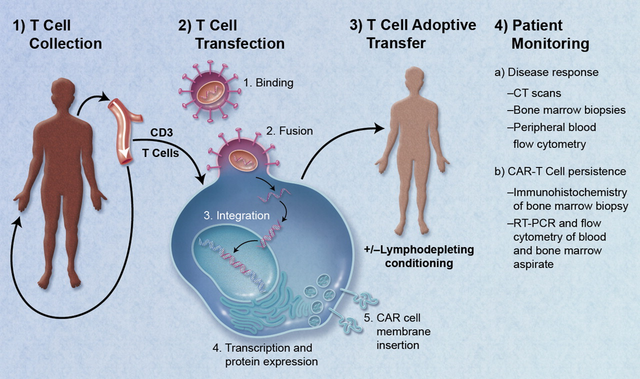
Blood is extracted from the patient so their T-cells can be engineered to fight leukemia and then reintroduced into the body.
The treatment process begins with removing T-cells from a patient’s serum and genetically modifying them so they can attack the cancerous B-cells. The researchers used a disabled form of human immunodeficiency virus (HIV) that can carry the new genetic material and incorporate it into the T-cells, thereby reprogramming them. The T-cells can now recognize the protein called CD-19 on the surface of the B-cell and attack it. The reprogrammed T-cells are then infused back into the patient where they multiply and eradicate the cancer.
With such therapy there are also complications involving the Cytokine Release Syndrome (CRS) that can have severe consequences for the patient. This means the inflammatory response to the treatment is brisk and characterized by high fevers, low blood pressures, and low oxygen saturation. The body undergoes an inflammatory-mediated shock similar to a major infection. It becomes imperative to appreciate the delicate but complex systems of interaction that such efforts mediate. Yet, CAR T-cell therapy holds the possibility to eradicate cancer in these patients permanently.
As compared to tumor vaccines that have a low affinity to their target, with responses occurring over several months, T-cell transfer responses are measured in days to weeks. A single reprogrammed T-cell can kill up to 100,000 cancer cells.
There are currently 30 clinical trials open for the treatment of B-cell malignancies involving many major institutions in the United States, Europe, China, and Japan. CAR T-cell therapy is also being investigated for an assortment of hematological as well as solid tumor malignancies such as breast and lung cancer.
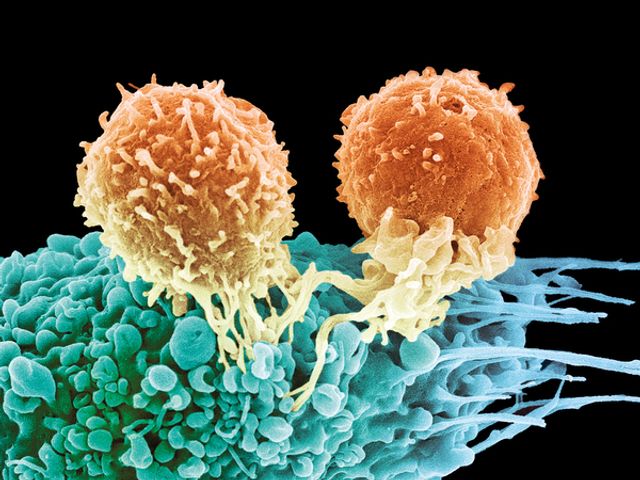
T-cells seek out specific sites on other cells, antigens, in order to bind with and kill cancer cells.
CAR T-cell therapy is a seismic shift from current conventions for treatment, yet significant work lies ahead. Unknowns include finding the optimal gene transfer method that is less complicated, safe, and financially feasible, and which ensures a consistent T-cell mediated immune response. The T-cell expansion is currently being carried out at local cancer treatment centers. Suitable methods to scale up production and increase output while adhering to strict quality control is necessary. The appropriate dosing of T-cells needs to be worked out. Protocols need to be standardized from institution to institution.
Because it is a patient-specific treatment, CAR T-cells must be manufactured for each patient on a case-by-case basis. Accordingly, it is only feasible now at large academic centers that have extensive expertise and resources. At the same time, however, a single infusion of T-cells is sufficient to induce a tremendous proliferation and rapid response.
The kinetics of T-cell expansion and tumor rejections appear to be dependent on the type of tumor and remain to be further studied. Though CAR T-cells are considered targeted therapy, the mechanisms by which this occurs are unknown and thought to be multifactorial. T-cells are versatile in their ability to target and kill through multiple methods of attack. It is hypothesized that tumors can only escape CAR T-cells through antigen (surface receptor) loss.
If the FDA approves the recommendation for CAR T-cell treatment for B-cell Acute Lymphoblastic Leukemia (ALL), it would be the first gene therapy to reach the market in the United States. Novartis, a Swedish-based global healthcare company, would be the first to offer such treatment while it works to investigate similar approaches to other blood and solid organ malignancies.
B-cell ALL afflicts about 6,000 people in the United States with a peak incidence at 2-5 years of age. These patients undergo a rigorous treatment with multidrug regimen divided into several phases. Most treatment protocols can take two to three years to complete. Many of them will require supportive care with blood products, treatment for infections with broad spectrum antibiotics and correction of metabolic imbalances. Despite the debilitating side effects, most will be cured. However, approximately 15 percent will not respond or relapse.
White blood cells (green) attacking a cancer cell (purple).
The results from the clinical trials conducted at the University of Pennsylvania have been dramatic for this subset of patients with a very slim prognosis. One such patient, Emily Whitehead, was treated in 2012 at age 6. Though the side effects of the CAR T-cell treatment were severe and nearly killed her, she emerged cancer free and continues to remain in remission.
The data Novartis presented to the FDA panel included results from 63 patients treated from April 2015 to August 2016. Fifty-two patients (82 percent) went into remission, which is considered astonishing given the severity of the disease. Certainly, the CRS is an issue they are grappling with as well as concerns for possible future medical complications for which there are presently no answers. This means that such patients would likely be treated at specialized centers where expertise with the treatment will be important for patient safety.
Though Novartis has not commented on treatment costs, analysts predict that individualized treatments could cost more than $300,000. It is unlikely insurance companies would approve such an expense. Most likely the only way that working people could obtain such life-saving treatments is to be among the few selected as subjects in clinical trials.
There are certainly ethical issues to this which are not being raised in the mainstream journals. Arguments in support of the high cost follow the irrational logic that these patients will assume high costs of treatment for their cancer in the long run anyway.
Similar arguments have been used by successive administrations to slowly slash federal funding for medical research. Trump’s proposed budget cut for the National Institutes of Health would reduce the organization’s funding by 20 percent, from $31.8 billion to $26 billion. Such cuts will directly and negatively impact any further research into this new way to fight cancer.