11 Apr 2018

HIV Research for Prevention (HIVR4P) Scholarships for Developing Countries (Fully-funded to attend Conference in Madrid, Spain) 2018

Application Deadline: 23rd April 2018.

Eligible Countries: Developing Countries

To Be Taken At (Country): Madrid, Spain

About the Award: HIVR4P is dedicated to ensuring the participation of researchers, community activists, and civil society representatives, especially those from resource-limited settings and communities. The conference offers full scholarships as well as registration-only scholarships. Scholarships are highly competitive and will be awarded based on the availability of funds.

Categories of Award:
  1. Research
  2. Community
  3. New Investigator Awards
Type: Conference

Eligibility: 
Research:
  • Research scholarships are open to graduate students, postdoctoral fellows, or junior faculty within two years of faculty appointment who are actively involved in HIV prevention research. Such research may include but is not limited to basic science, preclinical research, product development, clinical research, social science, and public health.
  • Applications will be evaluated based on the candidate’s motivation for attending, quality of recommendation letter, and whether the applicant is from a developing country and/or a country most affected by the HIV epidemic.
  • A first author abstract submission is required to be considered for a research scholarship.
Community:
  • Community scholarships are open to individuals who are actively involved in HIV prevention or care as a community advocate, educator, care provider, program manager or a related role, and who are able to effectively communicate knowledge gained at the conference to the communities they represent.
  • Applications will be evaluated based on the candidate’s track record in education or training, motivation for attending the meeting, quality of his/her recommendation letter and whether the applicant is from a developing country and/or a country most affected by the HIV epidemic.
New Investigator Awards
  • Successful applicants must be a graduate student, postdoctoral fellow or junior faculty within the first two years of a faculty appointment and the presenting author of an accepted abstract.
  • New Investigator Awards are based on the quality and score of the submitted abstract; conference scholarship recipients will be prioritized.
  • All scholarship applicants who meet the eligibility criteria will be considered for the New Investigator Award. Awardees will receive full scholarship benefits plus an oral presentation of their accepted abstract.
Number of Awards: Not specified. For the New Investigator Awards, HIVR4P will offer five including the Mathieson Award.

Value of Award: A full scholarship includes:
  • Complimentary conference registration including admittance to all conference sessions and access to conference materials
  • Airline ticket (round trip economy, non-refundable)
  • Up to six nights lodging at the conference venue
  • A full conference scholarship does not include transportation to or from the airport, visa application fees, or a per diem stipend.
A registration-only scholarship includes:
  • Complimentary conference registration including admittance to all conference sessions and access to conference materials
Duration of Program: 21-25 October 2018

How to Apply: Applicants will be asked to upload a letter of recommendation from one of their referees (<500 words) and a copy of their CV (limited to 3 pages). Please note that each file should not exceed 5MB. Allowed file types are pdf, doc, docx.

Apply Now

Visit the Program Webpage for Details

Award Providers: HIVR4P

EuroMarine Individual Fellowships for International Researchers 2018

Application Deadline: 27th April 2018.

Eligible Countries: Morocco, Peru, South Africa, Tunisia, or Turkey.

To Be Taken At (Country): European countries

About the Award: In 2018 as in 2017, instead of directly funding Capacity Building and Training activities, EuroMarine will grant individual fellowships to let EuroMarine PhD students and scholars in their first post-doctoral position attend an advanced course of their choice.
  • Individual fellowships (500 €; PhD students and scholars in their first post-doctorate)
Field of Study: 
  • All training courses with topics relevant to the EuroMarine domain, both in Europe and globally (organised by EuroMarine members or external courses).
  • Any type, on-site as well as e-learning/online courses.
Type: Fellowship, Research

Eligibility:  
  • Young scientists: PhD students or individuals undertaking their first post-doctorate contract are eligible for this funding.
  • The young scientist must be a student or employee of a EuroMarine full Member Organisation (having committed to pay its 2018 contribution to the EuroMarine budget) or an Invited Member from one of the following countries: Morocco, Peru, South Africa, Tunisia, or Turkey.
  • Only one application per individual per call. There is no limit on how many young scientists per organisation can apply but a maximum of three individuals from any one organisation can be awarded grants in any one call round.
Number of Awards: Not specified

Value of Award:
  • A grant of up to €500 to contribute towards covering direct costs related to participation in a training event. Eligible costs are participation fees, and travel & subsistence expenses.
  • If total participation costs exceed the grant amount, successful applicants must cover the additional costs from other sources.
Duration of Program:  There is no limit to the duration of the activity, but it must run and be completed between 1 June – 30 November 2018.

How to Apply: Applications must be submitted by email to fellowships@euromarinenetwork.eu. All applications will receive a confirmation email acknowledging submission.
It is important to go through the Application requirements before applying.

Visit the Program Webpage for Details

Award Providers: Euromarine Network.

Takeda Young Entrepreneurship Award for Young Entrepreneurs (Funded to Japan) 2018

Application Deadline: 30th June 2018

Eligible Countries: All

To be taken at (country): Japan

About the Award: The Award targets young entrepreneurs or entrepreneurial individuals who challenge technological or social needs in the real world. The Takeda Foundation believes that the challenging activities of young individuals trying to address real technological and social needs will lead to the creation of goods and services that enhance the well-being of people throughout the world, which is the mission of the Foundation.

Type: Entrepreneurship, Contest

Selection Criteria: The Takeda Young Entrepreneurship Award will be given to the individuals who propose the most creative and promising projects with a high potential for enhancing the well being of people at the site. The Takeda Foundation will select the Best Entrepreneur and 5 Entrepreneurs.
The Awardee will be selected from among the candidates who apply for the Takeda Young Entrepreneurship Award. Candidates should submit an application paper describing the background of the targeted issue, and his or her ideas for a solution to address that issue in 1000 words or less with figures (within 3 pages). They are also requested to submit a supporting report (in 300 words or less) written by an individual who receives benefit from the solution.

Selection: should include the items listed below.
  1. The selection involves document examination and an on-line individual
  2. presentation by the selected candidates. The document examination will start August, and the online individual presentation will be held in October.
  3. The selection results will be announced in early November.
  4. The awarding ceremony and workshop will be held in February, 2019.
Value of Award: The recipient of the Best Entrepreneur Award will receive a diploma, plaque and monetary prize of 1,000,000 Japanese yen. Each recipient of the Entrepreneur Award will receive a diploma, plaque and a monetary prize of 200,000 Japanese yen.

How to Apply: 
  • Registration: Please register at  here  before you submit the application form. You will receive your reception number and an address for submission of your application form.
  • Application form : URL for down loading the Application form will be sent to you after registration.
It is important to go through the application requirements before applying.

Visit Award Webpage for details

Award Provider: The Takeda Foundation

African Postdoctoral Training Initiative (APTI) Fellowships for African Researchers 2018

Application Deadline: 11th May 2018

Eligible Countries: African countries

To Be Taken At (Country): Candidate’s home country.

About the Award: APTI fellows will train in a global health research area of priority for their home institutions and countries, and AAS, BMGF and NIH, while building bridges and lasting connections between the partner organizations and African scientists and institutions. While at the NIH, the fellows must be on leave or sabbatical from their home institution under the NIH Intramural Visiting Fellow Program

Field of Research: The research priority areas are in infectious diseases, nutrition, and reproductive, maternal, and child health and developing skills for clinical and translational research.

Type: Research, Training

Eligibility: 
  • Must be citizens of and currently employed in an academic, research, or government position in an African country.
  • Must have a relevant doctoral degree (e.g., PhD, MD, MBBS) awarded no more than 15 years earlier.
  • Must have less than 5 years of relevant research experience by their entry on duty date at NIH.
Selection criteria:
  • Professional merit, scientific ability, and potential future career impact (based on CV, letter of interest, and two reference letters).
  • Assurance and availability of resources from the home institution for a designated, funded research position for the postdoc upon completion of their fellowship (expressed in letter from director/head of research of home institution).
  • Commitment to return to their home country following completion of training (expressed in a letter of interest).
  • A selection committee will ensure the best match of outstanding candidates and NIH laboratory positions. Additional selection factors may include diversity in scientific research areas, geographic origin, and gender.
Number of Awards: Not specified

Value and Duration of Award: APTI fellows will be expected to lead important research programs in their home countries and institutions. After successful completion of the two-year postdoctoral fellowship, trainees will be provided with 50% salary support for an additional two years to assist their transition into independent researchers.

How to Apply: 
Apply here:  https://aasishango.ccgranttracker.com/ 

Visit the Program Webpage for Details

Award Providers: The African Postdoctoral Training Initiative – a partnership of the African Academy of Sciences, the Bill and Melinda Gates Foundation, and the U.S. National Institutes of Health.

Australian asylum seekers stripped of minimal welfare payments

Max Newman

As of this month, the Australian government is eliminating the bare income support for an estimated 12,500 asylum seekers living in the country, awaiting the outcome of refugee applications.
The Liberal-National Coalition’s move is designed to push them into penury and homelessness, forcing many to return to the countries they fled, in line with the bipartisan “border protection” regime of shutting Australia’s doors to refugees.
The asylum seekers have been languishing in Australia for up to five years on temporary bridging visas. For most of this time they have not been permitted to work as they waited for refugee visa decisions.
Until now, the status resolution support service (SRSS) provided a paltry living allowance of up to $270 a week. This is only 89 percent of the Newstart unemployment benefit, which is itself below poverty levels. The SRSS also provided casework support for housing as well as trauma and torture counselling.
As of April 9, the SRSS is being “transitioned out” and those asylum seekers deemed “job-ready” will soon have their payments scrapped. A list of single female and male asylum seekers will be passed on to settlement services, which are expected to assess their “job readiness” by May 7. Then, from June 4, they will have their financial support cut. Families face the same treatment from late May, with payment cuts starting on July 18.
A Department of Home Affairs spokesperson told the media that the SRSS was not a social welfare program, adding: “Individuals on a bridging visa with work rights and who have the capacity to work are expected to support themselves prior to being granted a substantive visa or departing Australia.”
Any asylum seeker studying full-time will have their payments abolished. “If an adult chooses to study full-time, when they are able to work, they are not eligible for SRSS income support,” the spokesperson said. This is particularly punitive because the government recently flagged plans to introduce a university-level English test as a requirement for Australian citizenship.
Thousands of asylum seekers rely on the SRSS, together with charities, for food and housing. Some suffer from acute mental and physical health issues, brought on by the conditions they experienced in the war-ravaged countries they fled. Many are unable to work or will find it impossible to secure employment.
Refugee Council of Australia policy director Joyce Chia said the announcement was “completely terrifying.” She told the Guardian: “We are already hearing of people self-harming, we’re hearing of people losing housing, of huge levels of depression and anxiety.” The government was “going to punish these people and some will be driven over the edge.”
In a statement, Jana Favero from the Asylum Seeker Resource Centre, which supports over 1,000 asylum seekers living in the community, described the SRSS as a “life-saving” service. She commented: “The government is confusing us by saying that people need university-level English to become Australian, yet in a cruel twist of irony, the government is preventing people studying English by removing support services.”
Shayne Neumann, the Labor Party’s immigration spokesman, supported the government’s announcement, saying any “abuses” in the welfare system needed to be stamped out. He only added that the Coalition should “stop playing politics” with vulnerable people.
Greens immigration spokesman, Senator Nick McKim, called the announcement a “deeply unfair decision which could force people into poverty, homelessness and exploitative jobs.” The Greens are attempting to distance themselves from their own responsibility in creating the conditions in which asylum seekers can be stripped of basic income support.
In 2012, the Greens-backed Gillard Labor government issued a visa ban on all asylum seekers who had reached Australia by boat, forcing them onto bridging visas. These visas robbed asylum seekers of the right to family reunion and, at the time, forbade them from working.
This affected some 30,000 asylum seekers while the minority Labor government was in office. From 2013, the Coalition government continued the ban on visa applications, which was not fully lifted until 2016.
Under former Prime Minister Tony Abbott, then Malcolm Turnbull, the government has attempted to prevent what it calls Labor’s “legacy caseload” from living in Australia. In 2014, the Abbott government introduced a Fast Track Assessment Program to try to prevent asylum seekers from appealing adverse visa decisions.
In March last year, the Turnbull government announced that asylum seekers on bridging visas had 60 days to complete complex refugee visa applications or face being cut off welfare or deported. Last September, Turnbull’s government stripped 100 asylum seekers of their housing and income support.
These anti-democratic measures flow from the reactionary “border protection” regime which is aimed at vilifying vulnerable refugees and blaming them for the failure of successive governments to provide decent jobs, working conditions and essential services such as education, health care and housing.

Malaysian parliament dissolved for snap general election

John Roberts 

Malaysian Prime Minister Najib Razak’s government dissolved the national parliament last Saturday, setting the stage for an early general election. Yesterday, the Election Commission (EC) fixed May 9 as polling day. Twelve of the 13 state assemblies will be dissolved for state elections on the same day.
The decision puts the polling day ahead of the Muslim Ramadan that begins in mid-May and well before jailed opposition leader Anwar Ibrahim is due to be released in June. Anwar was convicted and jailed in 2015 on trumped-up sodomy charges.
Since formal independence from Britain in 1957, Malaysia has been a virtual one-party state. Najib’s United Malays National Organisation (UMNO), along with its coalition partners in the Barisan Nasional (BN), has ruled continuously.
The regime was designed, above all, to serve the interests of the ethnic Malay ruling elites that back UMNO, as well as business cronies represented by UMNO’s main coalition partners in the Malaysian Chinese Association and the Malaysian Indian Congress.
At the last general election in 2013, BN lost the popular vote for the first time to the opposition coalition led by Anwar. BN still won a majority in the 222-seat national parliament, due to an electoral gerrymander, but lost its two-thirds majority needed to amend the constitution.
Over the past five years, Najib has pulled out all stops to politically undermine the opposition parties, including through the jailing of Anwar. Najib has called the snap election and instituted further measures to rig the election in BN’s favour. His own position will be in doubt if BN suffers another poor result.
Najib faces the prospect of fresh investigations into the 1MDB state development fund scandal if the opposition parties take office. At least $US4.5 billion disappeared from the fund. International investigations suggest that hundreds of millions went into Najib’s personal accounts.
Malaysia’s government-controlled media has all but buried the scandal. In addition, Najib’s cautious support for Washington’s anti-China policy has ensured there has been limited international pressure on the issue.
Before calling the election, the government moved on multiple fronts.
On March 28, the parliament voted 129 to 80 to approve the new electoral boundaries drawn up by the EC. A new electoral law had faced legal challenges and protests, but the EC received the go-ahead from the Appeals Court last December.
The law manipulates electorates. Pro-opposition voters are bundled into larger electorates, while pro-government voters are in far smaller ones. The new boundaries give an enormous advantage to the BN in at least a third of the 222 federal seats and six state assemblies, according to various analysts.
The average size of a constituency normally won by the BN has now shrunk to 48,000 voters, whereas those associated with opposition victories average 79,000.
The EC paid particular attention to Selangor, the most powerful economic state, where the opposition won the federal vote as well as control of the state government in 2013. The largest opposition seat of Damansara has 150,439 voters, while the smallest, the BN seat of Sabak Bernam, has just 37,216.
Shahrul Aman, head of the electoral reform group Bersih, told the Guardianthat by gerrymandering the popular vote, the government could retain power with as little as 16.5 percent of the vote.
Another measure, enacted on April 2, is a “fake news” law that takes censorship to a new level. Punishments for circulating fake news have been set at 500,000 ringgit ($123,000) and a maximum of six years in jail. The government already has in place sedition and criminal defamation laws that have been used to prosecute opposition figures and journalists.
A Human Rights Watch report last month pointed out that the new law sets no standards to determine what is false and makes no distinction between malicious acts or mistakes. It is in effect left to the government and security apparatus to determine what is “fake” and to charge anyone they wish.
In a third move against the opposition, the Registrar of Societies (RoS) deregistered the United Malaysian Indigenous Party (PPBM) for at least 30 days on spurious technical grounds. The PPBM was formed by former Prime Minister Mahathir Mohamad, who joined the opposition coalition Pakatan Harapan (PH) and is its prime ministerial candidate.
The ban will become permanent if the party fails to submit paperwork from the party’s December annual meeting. The ban is designed to undermine PH, which counted on the Malay chauvinist PPBM to attract votes from UMNO’s traditional ethnic Malay Muslim base.
The RoS is using the PPBM ruling to refuse to register the PH as a formal coalition. If the PPBM ban stays in place, Mahathir and other PPBM candidates will be prohibited from referring to themselves as party members.
The PH was formed after the collapse of the opposition People’s Alliance (PR) coalition that contested the 2013 election. The PR consisted of Anwar’s urban ethnic Malay-based Peoples Justice Party (Keadilan), the ethnic-Chinese based Democratic Action Party (DAP) and the rural-based Islamist Parti Islam se-Malaysia (PAS). UMNO exploited the racist and religious card to encourage the PAS leaders to leave the PR in 2015.
The new opposition PH coalition initially consisted of Keadilan, the DAP and PAS breakaway Parti Amanah Negara, which then joined with Mahathir’s PPBM—a breakaway from UMNO—on the basis of campaigning to remove Najib. It is a highly unstable political formation.
Mahathir and Anwar have sharp political differences, particularly over economic policy. In the midst of the 1997–98 Asian financial crisis, Mahathir, who was then prime minister, sacked Anwar, his deputy and finance minister, and expelled him and his supporters from UMNO. When Anwar initiated anti-corruption protests, he was arrested and eventually jailed on phony charges.
Mahathir was bitterly opposed to Anwar’s promotion of the International Monetary Fund agenda of opening up the Malaysian economy, which threatened UMNO’s business cronies. Mahathir’s attack on Najib has been on the same basis: that he has made too many pro-market concessions. Mahathir also remains committed to discrimination against the country’s ethnic Chinese and Indian minorities as the means to ensure the economic and political dominance of the Malay elites.
As part of the coalition deal, the PPBM was awarded 52 of the coalition’s candidacies. If the new coalition wins, Mahathir has promised to pardon Anwar, allowing him to become prime minister. Because the underlying differences remain, there is no guarantee that the promises will be kept, or that the HP coalition will stay intact.

Togo doctors strike over disastrous state of public hospitals

Eddie Haywood

In late March, doctors and nurses, fed up with the deteriorating state of Togo’s public health care system, walked out on strike, completely shuttering hospitals and clinics in the capital city, Lomé. Patients were turned away at various hospitals and were encouraged to seek care at privately run facilities, with existing patients discharged.
Speaking to the popular support for the strike among Togolese, prominent activist Farida Nabourema told the New York Times, “People have a lot of respect and consideration for the doctors. The strikes are a key part of the resistance.”
The issues underlying the strike are the miserable conditions experienced by medical personnel and patients alike throughout the entire public health care system. The government is starving funding for health care, spending the criminally negligent amount of just $16 per person in a country of nearly 8 million.
The ratio of available doctors per patient in Lomé, Togo’s largest city, with a population 837,000, is extremely low—four for every 10,000. This is in contrast to international standards, which call for 20. Medical facilities are plagued by obsolete or non-functioning equipment, and for every 13 patients, there is one nurse, when the standard calls for one for every four.
According to a report in the New York Times documenting the deplorable conditions present in a neonatal ward at the central hospital in Lomé, air-conditioning had malfunctioned, leaving infants on the ward languishing in the sweltering heat common to the West African region. Worse still, there was only one nurse to attend to the care of two dozen newborn infants, all suffering from life-threatening conditions.
Mothers of infants on the ward were compelled to implore family members and friends for money to purchase basic supplies from pharmacies elsewhere in the city. Public hospitals suffer a chronic shortage of medicines, thermometers, bandages, and even clean water.
The Times noted the case of Tresor Tsolenyanou, an infant born in February afflicted with gastroschisis, a condition in which the intestines are exposed through a hole in the abdominal muscles. The survival rate for newborns in Togo stricken by gastroschisis is nearly zero. By comparison, in the United States, the survival rate of an infant born with the condition is 90 percent.
Expressing the utter helplessness felt by medical staff after decades of chronic neglect for health care in the country, Dr. David Dosseh, a surgeon at the central hospital in Lomé, told the Times, “ When you accept to work in these conditions, you might be complicit in a situation that could cause death. You are responsible . So at a certain moment, you have to ask if it’s better to just stop working.”
Many employed in the health care sector work long hours and receive low pay and remuneration for their service of providing health care for the Togolese masses. A new doctor just out of medical school can expect to make less than a taxi driver.
The central hospital in Lomé has come to be known among Togolese as “the Morgue.” Underscoring the ghastly appellation, a surgeon at the hospital, Dr. Atchi Walla, told the Times, “In the emergency room, if you don’t pay, you die.”
Owing in large part to government corruption, medical personnel in the course of their duties must cope with broken equipment, lack of electricity, and a lack of water. Frequently, due to persistent blackouts suffered throughout the country, surgeons perform operations in the light provided by a cellphone.
Underlining the deplorable state of health care in the country, Dr. Agbessi Amouzou, a Togolese public health professor at Johns Hopkins University, who studies public health systems in sub-Saharan Africa, told the Times that public health care in Togo was a complete disaster.
Expressing the contempt of the government of President Faure Gnassingbé for the doctors, and the abysmal state of the public health care system, Minister of Health Moustafa Mijiyawa hung up without saying a word when the Times called for a comment regarding the strike and the overall dismal state of public hospitals.
The doctors’ strike comes amid growing social opposition to Gnassingbé, whose family has ruled Togo for half a century.
In September last year, the eruption of social opposition to dynastic rule took the form of near-revolutionary dimensions when thousands of Togolese took to the streets of Lomé and throughout the country to express their disgust with the government, calling for the immediate resignation of the president. In response to the uprising, police forces detained, tortured and killed scores of demonstrators.
Police arrested and jailed Ihou Majesté, vice dean of the University of Lomé medical school, in March for comments he allegedly made on an audio clip circulated online in which he compared the Ministry of Health to a broken-down car.
Togo is among the most impoverished countries in the world. In a country with a GDP of $4.4 billion, according to UNICEF, 81 percent of the population lives on $2 or less per day. On the other end of the economic scale—as one example—Lomé-based Ecobank presides over a financial empire spread across 36 African countries, and holds assets totaling $24 billion. The bank’s annual revenues of $3 billion are nearly equal to Togo’s GDP and dwarf the paltry $128 million provided for the health care of millions in the country.
The World Bank in 2015 declared Togo friendly for business, with the country rising 15 places, to 149 of the most business-friendly nations, surpassing Nigeria. As a result, there has been a scramble by international banks and corporations for the profits to be made in Togo.

Swiss whistleblower Falciani arrested in Spain on order from Switzerland

Marianne Arens 

On Wednesday, April 4, Hervé Falciani was arrested in Madrid. The whistleblower, who is expected to be extradited to the Swiss authorities, was released from custody the following Thursday under strict regulations.
As reported in the Guardian as well as other news sources, Falciani was previously an IT specialist at the HSBC Bank in Geneva, Switzerland. He provided a great service to the British, French and German tax authorities by sending them data on thousands of cases of tax fraud.
Falciani has lived undisturbed in Spain for the past five years. Switzerland sentenced him to prison on grounds of “economic espionage” in 2015 and requested his extradition. Until now, Spain has failed to carry out this request.
That could now change. When Falciani was released from custody on Thursday, the court confiscated his passport, and a judge passed strict regulations against him. He is no longer allowed to leave the country and must check in regularly with the court.
The proceedings of the Spanish judiciary against Falciani fall directly in line with the suppression of the Catalonian separatists and the prosecution of the former Catalonian president, Carles Puigdemont. It is believed that Falciani will be used as a piece in a trade deal for the two Catalonian politicians, Anna Gabriel and Marta Rovira, both of whom emigrated to Switzerland in the previous weeks.
Falciani moved from Switzerland to France at the end of 2008. He carried in his luggage the names of 130,000 individuals and organisations that he knew through his work at HSBC Bank to be using Swiss banking secrecy to commit money laundering and tax evasion. He then presented this knowledge to the French, British and German tax authorities, an action that would go down in banking history as the “Swiss-Leaks Affair.”
Switzerland would then sentence Falciani to five years of imprisonment in his absence, for revealing banking data to foreign tax authorities. He was arrested in July 2012 in Barcelona and held for months in custody.
However, the Spanish judiciary opposed the extradition in that case. The Spanish state prosecution ruled in May 2013 that the accusations against Falciani were not punishable in Spain but, to the contrary, that he had acted in accordance with Spanish laws against money laundering and tax evasion.
The documents of the scandal were published in 2015 and revealed that thousands of customers of HSBC, including heads of state, kings, sport stars and other celebrities, committed tax fraud and money laundering. The Spanish government was even able to profit off of Falciani’s revelations, and collected over €300 million in tax revenue.
However, the whistleblower was arrested on Wednesday as he made his way to a presentation at a Madrid university. Under the title “When It’s Heroic to Tell the Truth,” Falciani was expected to deliver remarks on tax evasion and corruption.
The Spanish government is obviously working towards getting hold of not just Puigdemont, but other Catalonian politicians as well. A visit is planned for April 23 by the Spanish foreign minister, Alfonso Dastis, to Bern, Switzerland. An extradition of Falciani could be used as part of a deal to assure the extradition of the Catalonians Gabriel and Rovira.
Gabriel, floor leader of the CUP (Candidacy of the People’s Unity) in the Barcelonan parliament, supported the referendum on October 1 of last year over the independence of Catalonia. Gabriel fled Spain earlier this year to avoid arrest after receiving a summons from the Spanish Supreme Court.
Rovira, general secretary of the ERC (Republican Left of Catalonia), also emigrated to Switzerland recently so as to avoid being thrown in prison. The Spanish judiciary has already arrested a string of Catalonian politicians since the referendum.
Switzerland renewed its demands for extradition to Spain. As Folco Galli, speaker of the Swiss Office of Justice (BJ), explained, an official petition for the immediate extradition of the whistleblower has recently been finished.
Galli denied any connection to the extradition of the other Catalonian politicians and stated that there is “absolutely no scope of discretion for such deals.” However, the speaker refrained from answering questions as to a petition of extradition from Spain for Gabriel or Ravira. He defended this, claiming that such international correspondence is confidential and is to be released at the discretion of the foreign offices.
The proceedings against Falciani are accompanied by moves towards a police-state across all of Europe. The European governments, including the non-European Union member Switzerland, are working together very closely to advance the interests of the banks.

Students protest against Macron as strikes against austerity mount in France

Johannes Stern & Alex Lantier

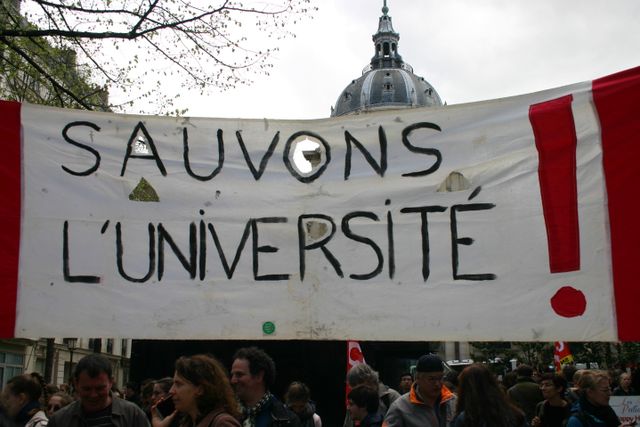
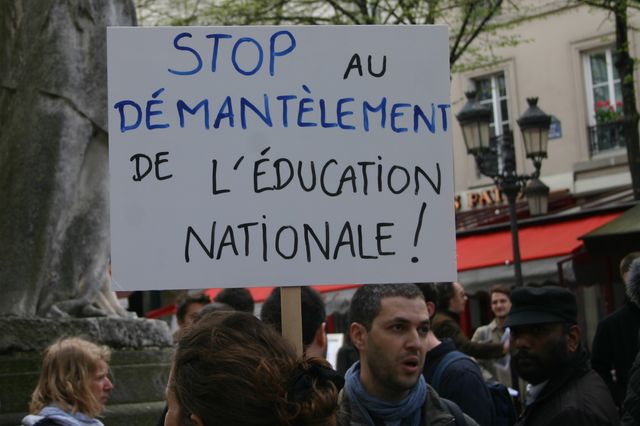
Amid the growing strike movement in France, students are stepping up action against the reactionary policies of President Emmanuel Macron. A half century after the brutal police repression of student protests provoked the May-June 1968 general strike, during which over 10 million workers struck and occupied their factories, students are occupying university buildings, defying threats from university administrators, police and far-right thugs to protest the Macron administration.
The escalating strike action by workers against Macron has gone hand in hand with a movement of campus occupations by university students in France—over half of whom are already in the workforce, holding down jobs to pay for tuition and living expenses while they study.
All over the country, students are occupying campuses and holding general assemblies and demonstrations. Yesterday over 2,500 students participated in the general assembly at the university in Rennes. Universities where buildings are being occupied or blockaded include Paul-Valéry University in Montpellier, Jean-Jaurès University in Toulouse, the Victoire site of University of Bordeaux-Montaigne, the Lumière 2 campus of the University of Lyon, University of Lille-3, the universities of Rouen and Strasbourg, and the Saint Denis, Tolbiac, Clignancourt and Nanterre campuses of the University of Paris.
"Let's save the university"
Yesterday, as Air France workers struck, grounding a quarter of flights, and rail workers prepared to go back on strike on Friday, thousands of students marched in a “Day of Action” to protest a new law issued by Macron imposing new selection rules limiting students’ access to university education. The new law, the Orientation et Réussite des Étudiants (ORE, Orientation and Success for Students), is set to come into effect in September.
In Paris over 1,000 participated in a demonstration at the Sorbonne University, which was heavily guarded by police. A WSWS reporting team intervened in the protests at the Sorbonne, distributing the perspective “Fifty years after May-June 1968, the class struggle erupts in France” and interviewing students. Students spoke out against the growing social inequality Macron’s education policies will produce, as well as the growing danger of war.
Léo, who is studying history and English at the Sorbonne, told WSWS reporters that he is protesting “because of the new law that passed.”
“Before university was basically for everybody if you got your baccalaureate, but now you have to have certain prerequisites,” he explained. “For example, if you want to study geography you have to travel, if you want to study English you have to do an internship in English. You have to do things not everyone can afford, so university is not for everyone now, but only for more privileged parts of the population.”
Léo solidarised himself with the growing strikes against the privatisation of the French National Railways (SNCF). “We also agree with the SNCF strike. Our protest is about student issues, but it’s also about what the government is now doing to the refugees. Sending policemen to just beat up students. And we don’t want this government keep passing laws we don’t agree with. And we want to say that we don’t agree with it.”
"Stop the dismantling of public education"
Asked what he hoped the movement would accomplish, Léo said: “We are trying to put pressure and make everybody understand why we are here. Maybe if more of us come out, the government will step back from what it is doing. We are not sure about that, but at least we are trying.”
When WSWS reporters pointed out, however, that Macron will not retreat and make concessions, because he is working closely with the European Union and diverting hundreds of billions of euros to the military to prepare for war, Léo said: “This is true. And, for example, the SNCF reform is also taking place because the European Union wants liberalisation. The German government did it before. But France is based on public services, and they should be for everyone. We feel that they want to take away everything that was won in past struggles, and that’s why we are here.”
Léo pointed to the growing opposition among European youth to war: “I am just against the army. Like for example in Mali and everywhere else, there are French troops there because they are former French colonies. And we just keep interfering in the affairs of countries that are not ours, and it is just disgusting and we should stop that.”
Asked about Macron’s announcement of plans to reintroduce the draft, Léo said: “We talked about it during the [2017 presidential election] campaign, because Mélenchon said something a bit similar, but we are just against it. I am against it and also my friends who are on my political side are also against it.”
He added: “We are not prepared and we don’t want to die in wars again. In the Sorbonne, inside the building, you have a list of names of people who went to war and all these people died. There are tons of names everywhere. And you see this every day. So when I hear about the draft, this is just disgusting.”
Similarly, a history student told the WSWS that she and her friends are worried about the comments of Macron and Jean-Luc Mélenchon advocating a return to the draft: “We do not feel like we are at war, but we are talking about the coming reform on universal military service. I find that unsettling, in fact, because it is as if a conflict were being prepared.”
Several students stressed their concern at the way Macron’s education agenda would increase social inequality, even as his economic policies aim to slash social spending and wages and reduce large swathes of the workforce to temp status.
"No to a police state"
Michel told the WSWS: “I feel solidarity for the workers’ struggles and I feel I am involved. And I also feel solidarity for their working conditions. First of all, there is a campaign to denounce the rail workers and legitimize the reform. I find this pretty disgusting because that is just appealing to jealousy of various people in order to get a legislative measure through that is unfair. And, moreover, it is based on lies to say that the rail workers are privileged people; that’s outside of reality.”
Michel stressed that Macron’s education policies would increase the gap between the super-rich and the broad mass of the working population: “The impact of the reform, overall, will be to reinforce social inequality. Because as I see it, only certain parts of the population will be able to choose general, academic fields of study and temporarily leave the labour market. And on top of this, this week a commission of the National Assembly will begin examining a bill to increase tuition fees.”
Emile also criticised how Macron’s education law would increase social inequality: “It really gives an advantage to families that can make very long-term plans several years in advance to know what course of study to follow, in which high school, and to join which university. And it’s been shown that it is the families of teachers, management and executives that have advantages in making such calculations. … That is not the right way to go, solving budget problems with a policy of social and academic selection. I don’t think it’s good.”
Asked if he supported the struggles of the working class against Macron, Emile said: “Yes, we’re in complete solidarity, I hope even that for most students it is an inseparable part of their decision to mobilise. … State policy is always in the same mind-set of short-term profitability. That is not the right approach to take.”

France and UK spar to be leading US military partner in Syria

Chris Marsden

France is playing the leading European role alongside the United States in preparing for military action against Syria that threatens a direct confrontation with Russia.
US President Donald Trump has held two conversations with French President Emmanuel Macron, the latest on Monday night. On Tuesday morning, France issued a statement pledging to retaliate against Syrian President Bashar al-Assad if it is proved that his government and armed forces were responsible for the supposed chlorine gas or nerve gas attack in Eastern Ghouta.
Referring to Macron’s earlier declaration regarding the use of chemical weapons, spokesperson Benjamin Griveaux told Europe 1 radio, “If the red line has been crossed, there will be a response,” before adding that intelligence “in theory confirms the use of chemical weapons.”
A French statement explained that both countries had “exchanged analyses confirming the use of chemical weapons.”
So politically vital is the relationship being forged between the US and France that CNN ran an April 9 op-ed by former New York Times columnist David A. Andelman titled, “With France in, Trump has no excuse not to act on Syria.”
Andelman voiced his ire over events in August 2013, when President Barack Obama and his French counterpart, François Hollande, pledged united military action over false claims that Assad had used sarin gas, but Obama “pulled back from the abyss, with French bombers poised on their runways.”
Today, Andelman wrote, with Macron scheduled to pay a state visit to the White House in two weeks, “there is every reason for Trump to steel himself and go into battle with a staunch friend and ally, Macron’s France, at his side…”
Britain’s ruling elite, whose foreign policy depends on preserving the vaunted “special relationship” by being first off the blocks in any US-led war, is apoplectic at this latest turn of events. The media overflows with militarist rhetoric mixed with expressions of concern at being overshadowed by France.
Rupert Murdoch’s Times quoted “senior figures” warning Prime Minister Theresa May of the UK “losing influence in Washington to France if it turned down a request by President Trump to join a retaliatory strike.” The article added, “President Macron of France was said by Whitehall sources to be ‘egging on’ Mr Trump.”
Downing Street had been “left embarrassed as Mrs. May was still waiting to speak to Mr. Trump last night,” the Times continued, leaving Foreign Secretary Boris Johnson speaking alternately to “his US and French counterparts yesterday as he sought to keep Britain within any joint action.”
The Daily Telegraph, the house organ of the Tory Party, was equally warlike and concerned at the UK losing influence with the US to France. It too noted how the UK’s standing with Washington was undermined when, on August 30, 2013, Conservative Prime Minister David Cameron, faced with widespread anti-war sentiment and divisions in the military, called a parliamentary vote on a planned strike on Syria and lost. This played a significant role in Obama backing down over Syria the next day.
The Telegraph wrote, “The fact that Mr. Trump called French President Emmanuel Macron prior to calling Mrs. May should be seen as an indication of Washington’s enduring wariness about Britain’s ability to support military interventions.”
Thanks to Cameron, “the parliamentary precedent has now been set whereby any overseas intervention by the British military requires Commons approval,” it complained. “Unlike Mrs. May,” it continued, “the French president has no constraints on his authority when it comes to launching military action, and if Washington is looking for a prompt response against the Assad regime, he might find the French are in a better position to act than the British.”
Britain’s loss of position is only acting as a spur to its offering the use of a Royal Navy attack submarine armed with Tomahawk cruise missiles or possibly Royal Air Force fast jets capable of firing Storm Shadow cruise missiles.
Speculation is rife over whether May will now act without parliamentary approval and reverse the precedent set by Cameron, or, in what is considered a less likely move, recall MPs from their Easter break.
The Tory right is adamant that May should proceed without parliamentary approval. Tom Tugendhat, chairman of the foreign affairs committee, told May to “stick with your allies… We can be legalistic or we can be realistic.”
A senior military source took the same line, telling the Times, “You have to examine options… [It is] a prime minister’s decision at the end of the day.”
The most politically vicious response came from Tory MP John (Johnny) Mercer, a captain and career soldier until 2013. Writing in the Telegraph April 8, Mercer denounced a parliamentary vote and the possibility of Labour MPs led by Jeremy Corbyn opposing actions as symptoms of broad-based anti-war sentiment that must be fought.
“The nation’s politics have become nauseatingly pious since Iraq,” he wrote. A parliamentary vote was “a uniquely useless way of conducting foreign policy, and in almost one action emasculates us on the world stage… It is a cop-out to go to Parliament on issues of national security…”
He continued: “It is now time get out there and tell the British people what modern warfare is about,” including targeting “every individual inside Syria involved in the chemical weapons decision-making cycle,” levelling military bases and recognising that Assad “should have been dead long ago.”
“We don’t shy away from targeting individuals with drones in their beds because the political risk is too high,” he insisted.
Writing again in the Sun, Mercer focused his ire on “my largely Labour Party fellow parliamentarians [who] voted against taking military action against President Assad in 2013… You can draw a clear correlation between our vote in Parliament in 2013, Obama’s unenforced red line in 2013 and an emboldened Putin and Assad.”
The Sun ’s own warmongering centred on a denunciation of Corbyn for his past leadership of the Stop the War Coalition, which was more concerning than “his dalliances with IRA sympathisers and Soviet spies.”
Stephen Bush suggested in the pro-Labour New Statesman that no one need be too concerned at a parliamentary vote because, even though Corbyn is urging a political solution, “There is a significant group of Labour MPs who bitterly regret not voting with the government in 2013 and that buffer of 30 to 50 MPs means that if May wants some kind of military response to this attack, she has the votes for it.”
Bush is correct in his appraisal of the parliamentary arithmetic, thanks to Corbyn’s refusal to oppose the naked warmongers in his own party. With Tony Blair himself stating that no Commons vote is needed on war, the Blairites’ position was epitomised by Simon Tisdall in the Guardian, who insisted, “It’s time for Britain and its allies to take concerted, sustained military action,” ending the situation where “hands are thrown up in horror at the prospect of another open-ended, armed Western intervention in the Middle East.”
But this is not simply about a parliamentary vote. The British ruling class is both vitriolic in its attacks on Corbyn and bitterly opposed to any repeat of a democratic vote on its war plans, no matter how meekly Corbyn frames his protests, because this might provide an impulse to the widespread anti-war sentiment among workers and youth.
May appears to have heeded the advice, convening a meeting of the National Security Council yesterday to discuss the UK response and speaking directly to Macron and Trump.

10 Apr 2018

Australian universities integrated into military build-up

Oscar Grenfell 

An article published by the Conversation last month has underscored the extent to which Australian universities are integrated into a vast military build-up through a string of defence research initiatives and expanding ties with private military contractors.
The report, by University of Melbourne academics Tilman Ruff and Alex Edney-Browne, begins by noting that the federal Liberal-National government’s 2016 Defence White Paper outlined an 81 percent increase in military spending over a decade, or around $495 billion.
Ruff and Edney-Browne also draw attention to a $3.8 billion allocation to the Export Finance and Insurance Corporation, a little-known government body, announced by Prime Minister Malcolm Turnbull last February. The money is aimed at expanding arms exports with the stated goal of Australia becoming one of the world’s top 10 weapons dealers.
The unprecedented allocation of resources to the military follows substantial increases to the defence budget by the previous federal Labor governments of Kevin Rudd and Julia Gillard. It is aimed at placing the country on a war footing, in line with Australia’s backing for Washington’s “pivot to Asia,” a major US military build-up in the Asia-Pacific in preparation for conflict with China.
In 2011, the Greens-backed Gillard Labor government, as part of its support for the US pivot, signed secret agreements that expanded basing arrangements and integrated the Australian military into the US war machine. The report in the Conversation makes clear that universities are a key component of this project, which has been deepened by successive governments.
In 2014, the Defence Science and Technology Group (DST Group), a wing of the Department of Defence, which researches and develops new military, surveillance and intelligence technologies, announced the formation of the Defence Science Partnerships (DSP) program.
Dr Alex Zelinsky, DST Group’s chief defence scientist, declared that it would “provide a uniform model for universities to engage with Defence on research projects and ensure a consistent approach to intellectual property and cost sharing.”
Zelinsky made clear that the program was aimed at subordinating universities and academic research skills to the needs of the military. “The program’s strength lies in its potential to harness Australia’s world-class research and better align it to Defence priorities through increased collaboration and a greater sharing of resources and infrastructure,” Zelinsky declared.
In 2015, Zelinsky forecast that DSP would “grow into a $40m to $50m” program per year, up from that year’s figure of $16 million. Currently, 32 universities are partners in the program. They range from the country’s prestigious “sandstone” universities, such as the University of Melbourne and the University of Sydney, to institutions with a large working-class student cohort, including the University of Newcastle and Western Sydney University, in New South Wales.
The activities of the DSP are opaque. In an article in the Australian in 2015, Zelinsky wrote that the “next stage” was “to begin knitting together universities to work on specific challenges associated with the national science and research priorities.” Zelinsky indicated that of “particular interest to Defence is the cybersecurity priority.”
The year after Zelinsky’s article appeared, the Department of Defence announced a $12 million outlay of funds to establish a “purpose built” cyber-security facility at the Australian National University in Canberra. The centre brings together students, academics and intelligence agents from the Australian Signals Directorate (ASD), in a collaboration focused on “data analytics, performance computing and cyber security.”
The ASD is Australia’s primary electronic eavesdropping agency. It works closely with the US National Security Agency, as part of the intelligence sharing “Five Eyes” network, which has been involved in spying on the private communications of hundreds of millions of people, illegally tapping foreign heads of state and conducting offensive cyber-warfare operations.
As part of the DSP, a number of universities, including ANU, offer scholarships for undergraduate and postgraduate students to participate in defence research. The centre at the Australian National University makes clear that the aim is to harness their skills for the military and integrate them into the murky world of professional spies, military contractors and academics who collaborate with the military.
Ruff and Edney-Browne also point to direct ties between Australian universities and the US military. Last year, the Department of Defence joined with the US Department of Defence in establishing a Multidisciplinary University Research Initiative.
The program, funded to the tune of $27 million, provides grants to universities for specific research projects, and facilitates collaboration in military research between US and Australian institutes. Ruff and Edney-Browne note that the grants are provided to universities for research on “designated topics” with “potential for significant future defence capability.” Like the DSP, the programs are shrouded in secrecy.
A key aspect of the militarisation of universities, outlined in the Conversationreport, is their rapidly expanding ties to private military contractors.
Ruff and Edney-Browne point to the establishment last year of a new Lockheed Martin research centre at the University of Melbourne. Lockheed Martin, the largest military contractor in the world, has the closest ties to the Pentagon, and has developed some of the most highly-coveted American war technology, including next generation fighter jets and drones that have been used to bomb Yemen, Iraq, Syria and other targets of US aggression.
According to a 2016 article in the Age, the centre, known as STELaR Lab, will focus on “developing sophisticated computer software to help direct attacks” on targets. LM Australia and New Zealand chief executive Raydon Gates said it would develop “the ability in a conflict situation to analyse that data and then make the correct decision.” Lockheed Martin stated that the lab will also focus on “autonomous systems, robotics, command, control, communications, computing, intelligence, surveillance and reconnaissance.” All of these technologies are critical to the preparation and waging of wars against militarily advanced adversaries.
In an indication of the bipartisan backing for the military build-up, STELaR Lab’s launch in August 2016 was attended by then Liberal-National Coalition Defence Industry Minister Christopher Pyne, as well as Stephen Conroy, then Labor’s shadow minister for defence and Victorian Labor Premier Daniel Andrews. The centre has received funding from the DST Group.
DST Group previously funded the establishment of the Defence Science Institute (DSI) at the University of Melbourne’s Parkville campus. Opened in 2010 with the backing of the federal Labor government of Kevin Rudd, the DSI’s stated aim is to “build defence science research networks.”
The DSI also funds programs at other universities, including one at RMIT University in Melbourne examining “unmanned aircraft systems” that can fly and harvest their own energy in “urban environments.” Another, in partnership with the US Army, is aimed at developing artificial enzymes, which may “decontaminate nerve agents … offering protection to war fighters and civilians in a range of chemical and biological threats.” In other words, preparations for urban and chemical warfare.
The Conversation article notes that ties between the universities and military contractors are continuing to expand. In February, the University of Melbourne signed a “memorandum of understanding” with BAE Systems, a major British arms manufacturer, for the establishment of a manufacturing and innovation centre at Fishermans Bend. The centre is slated to supply the army with new AMV35 Combat Reconnaissance Vehicles.
In its announcement, BAE Systems made clear that it is seeking to integrate the university into its activities as closely as possible. It stated that “the two organisations have agreed to consider opportunities to collaborate in relations to graduate placement, internships, research and development activities and sharing of facilities (real estate and tools and equipment).”
The University of South Australia, Adelaide University and Flinders University are also part of a research network established by BAE Systems.
Significantly, last month, the company won a $1 billion federal government contract to “upgrade” the “Jindalee Operational Radar Network (JORN).” The systems operations are shrouded in secrecy, but it is known that it is used to surveil much of the Asia-Pacific region. BAE Systems stated that JORN, “plays a vital role in supporting the Australian Defence Force’s air and maritime operations, border surveillance, disaster relief and search and rescue operations.”
An article in the Age in 2006 noted that JORN was “a key link” in “a new anti-ballistic missile shield” being developed by the United States. While such “shields” are invariably presented in defensive terms, they will undoubtedly play a central role in offensive military operations, including any US strike against North Korea or China.
The academics who authored the Conversation report note that the expanding ties between universities and military contractors potentially implicate the former in major crimes. BAE Systems third-largest customer is the despotic Saudi Arabian regime, to which it supplies aircraft used in the genocidal bombing campaign against Yemen.
Significantly, the report in the Conversation concludes by warning that the militarisation of the universities could pose a risk to academic freedom. It stated: “As Australian research councils struggle and universities face a funding freeze, academics with limited funding options may be driven to seek military funding. This could undermine their control over the direction and use of their research. Academics may be less inclined to speak out against military funding if their department, colleagues, or PhD students rely on it.”
University administrations have already cracked down on anti-war activities at campuses across the country.
In 2015, the University of Sydney banned a Socialist Equality Party meeting opposing the drive to war and the glorification of militarism on Anzac Day, the nationalist public holiday which celebrates the unsuccessful Australian, British and New Zealand invasion of Turkey in World War I. The International Youth and Students for Social Equality, the youth wing of the SEP, has faced repeated attempts to prevent it from forming affiliated student clubs by student union and university administrations at a number of campuses, including at the University of Melbourne.