16 Jan 2019

Violence Against Women: A Pandemic No Longer Hidden

Cesar Chelala

Harvey Weinstein never imagined that actresses’ complaints against his abusive behavior would trigger a worldwide movement for women’s justice and fair treatment by men. Despite continued acceptance of physical and sexual violence against women, both women and men are now organizing across cultures and socioeconomic classes to challenge and change gender-based abuse and injustice.
Recently, in Argentina, the denunciation by actress Thelma Fardin that she was raped by the well-known Argentine actor Juan Darthés when she was 16 and he was a 45-year-old man forced him to leave the country in shame. In Sao Pablo, Brazil, where Darthés was hired to work in a restaurant, he was met by the loud complaint of a large group of Brazilian women.
Worldwide, the most common kind of gender violence is domestic violence, which occurs in the home or within the family. It affects women regardless of age, education or socioeconomic status. Although generally women are the victims, men are also abused by their wives or partners. Violence also occurs among same-sex partners.
Although physical violence and sexual violence are easier to see, other forms of violence include emotional abuse, such as verbal humiliation, threats of physical aggression or abandonment, economic blackmail and confinement at home. Many women report that psychological abuse and humiliation are even more devastating than physical violence because of the negative long-lasting effects on their self-confidence and self-esteem.
In many countries violence against women, especially in the domestic setting, is seen as acceptable behavior. Even more disturbing, a large proportion of women are beaten while they are pregnant. Comparative studies reveal that pregnant women who are abused have twice the risk of miscarriage and four-times the risk of having low-birth-weight babies than non-battered pregnant women.
Extent of the problem
Few precise figures on violence against women exist, but existing numbers are shocking. In every country where reliable studies have been conducted, statistics show that between 10% and 50% of women report that they have been physically abused by an intimate partner during their lifetime.
According to Mexico’s Health Ministry, about one in three women suffer from domestic violence, and it is estimated that over 6,000 women in Mexico die every year as a result. A study of women in Mexico sponsored by the government (Encuesta Nacional sobre la Dinámica de las Relaciones en los Hogares 2006), reported that 43.2% of women over 15 years old have survived some form of intra-family violence over the course of their last relationship.
Domestic violence is rife in many African countries as well. In Zimbabwe, according to a United Nations report, it accounts for more than six in ten murder cases in court. According to surveys, 42% of women in Kenya and 41% in Uganda reported having been beaten by their partners. Although some countries such as South Africa have passed women’s rights legislation, the big test — full implementation, with teeth — has not been passed.
In China, according to a national survey, domestic violence occurs in one-third of the country’s 270 million households. A survey by the China Law Institute in Gansu, Hunan and Zhejiang provinces found that one-third of the surveyed families had witnessed family violence and that 85% of victims were women.
In Japan, as in many other countries, the number of reported cases has increased in recent times. According to some advocates working to end domestic violence, this may signal that survivors may be overcoming cultural and social taboos that once forced them into silence. According to the National Police Agency, the number of consultations with the police from survivors of domestic violence in 2017 rose 3.6 percent compared to the previous year to reach a total of 72,455.
In Russia, estimates put the annual domestic violence death toll at more than 14,000 women. Natalya Abubikirova, executive director of the Russian Association of Crisis Centers, in a statement to Amnesty International, drew a dramatic parallel to capture the scope of the problem, “The number of women dying every year at the hands of their husbands and partners in the Russian Federation is roughly equal to the total number of Soviet soldiers killed in the 10-year war in Afghanistan.”
In a study conducted by the Council for Women at Moscow State University, 70% of the women surveyed said that they had been subjected to some form of violence — physical, psychological, sexual or economic — by their husbands. Some 90% of respondents said they had either witnessed scenes of physical violence between their parents when they were children or had experienced this kind of violence in their own marriages.
Research carried out in several Arab countries, indicates that at least one out of three women is beaten by her husband. Despite the serious consequences of domestic violence, and the increasing frequency of violence against women, not enough is done by the governments of Arab and Islamic countries to address these issues. “To date, there is no comprehensive and systematic mechanism for collecting reliable data on violence against women in Arab countries,” states the United Nations Development Fund for Women (UNIFEM).
In many Islamic countries, or in countries with a substantial Muslim majority, passages from the Koran are sometimes used to justify violence against women. Yet many religious experts state that Islam rejects the abuse of women and advocates equality in the rights of women and men. In many cases, violence against women — including killings — are based more on cultural than religious grounds and are justified by the need to protect a family’s honor.
There is no single factor that accounts for violence against women, but several social and cultural factors have kept women particularly vulnerable to this phenomenon. What they have in common, however, is that they are manifestations of historically unequal power relations between men and women. In Latin America, a culture of machismo often gives license for such abuses.
When this kind of relationship becomes established, people become conditioned to accept violence as a legitimate means of settling conflicts — both within the family and in society at large — thus creating and perpetuating a vicious cycle.
Women who marry at a young age are more likely to believe that sometimes it is acceptable for a husband to beat his wife, and are more likely to experience domestic violence than women who marry at an older age, according to a UNICEF study.
Lack of economic resources and the capacity to lead economically independent lives also underscore women’s vulnerability to violence, and the difficulties they face in extricating themselves from a violent relationship.
Consequences of violence against women
Worldwide, violence is as common a cause of death and disability among women of reproductive age as cancer. It is also a greater cause of ill health than traffic accidents and malaria together. According to the World Health Organization (WHO) violence against women claims almost 1.6 million lives each year — about 3% of deaths of all causes.
What’s more, sexual violence increases women’s risk of contracting sexually transmitted diseases, including AIDS (through forced sexual relations or the difficulty in persuading men to use condoms), increases the number of unplanned pregnancies, and may lead to various gynecological problems such as chronic pelvic pain and painful intercourse.
According to the WHO’s “World report on violence and health,” between 40% and 70% of female murder victims in Australia, Canada, Israel, South Africa, the United Kingdom, and the United States were killed by their husbands or boyfriends — often within the context of an ongoing abusive relationship.
Studies conducted in the United States reveal that each year approximately 4 million women are physically attacked by their husbands or partners. One U.S. study concludes that violence against women is responsible for a large proportion of medical visits, and for approximately one-third of emergency room visits. Another study found that in the United States, domestic violence is the most frequent cause of injury in women treated in emergency rooms, more common than motor vehicle accidents and robberies combined.
In the United States, 25% of female psychiatric patients who attempt suicide are survivors of domestic violence, as are 85% of women in substance abuse programs. Studies carried out in Pakistan, Australia and the United States show that women survivors of domestic violence suffer more depression, anxiety, and phobias than women who have not been abused.
Domestic violence can have devastating consequences on children as well. According to a UNICEF report, as many as 275 million children worldwide are currently exposed to domestic violence. One of the findings of the report is that children who witness domestic violence not only endure the stress of an atmosphere of violence at home but are more likely to experience abuse themselves.
It is estimated that 40% of child-abuse victims also have reported domestic violence at home. In addition, children who are exposed to domestic violence are at greater risk for substance abuse, teenage pregnancy, and delinquent behavior.
Although doctors and health personnel can greatly help the victims, many times they are not trained to diagnose abuse accurately. And women are often reluctant or afraid to report abuse.
Various cultural and socioeconomic factors, including shame and fear of retaliation, contribute to women’s reluctance to report these acts. Legal and criminal systems in many countries also make the process difficult. Currently, in the U.S., the fear of deportation has kept many immigrant women, particularly from Central America, from denouncing violence at the hands of their husbands and partners. Men threaten to report women to immigration authorities should they seek legal assistance.
Frequently, fear keeps women trapped in abusive relationships. It has been found that almost 80% of all serious gender violence injuries and deaths occur when female survivors of violence attempt to leave a relationship — or after they have left.
Preventing violence against women
Governments and Non-Governmental Organizations (NGOs) have been increasingly responsive to women groups’ demands to deal seriously with this issue. In Bangladesh, new laws make violence against women a punishable offense. Belgium, Peru, and Yugoslavia have amended laws to more clearly define sexual harassment.
The Dominican Republic, Portugal, Spain, Uruguay, and Belgium, among others, have passed laws that increase penalties for domestic abuse. The Kingdoms of Jordan and Morocco have made strides to protect women’s rights — denouncing so-called honor killings in the former and providing confidential victims’ assistance hotlines in the latter.
In India and Bangladesh, a traditional system of local justice called salishe is used to address abuse on a case-by-case basis. For example, when a woman is beaten in Bangladesh, the West Bengali non-governmental organization Shramajibee Mahila Samity sends a female organizer to the village to discuss the situation with the people involved and helps find a solution, which is then formalized in writing by a local committee.
In China, there has been some progress regarding this issue as well, such as placing posters on some roads and in subways stressing the problems that domestic violence represents to society. The All-China Women’s Federation has been playing a significant role in bringing domestic violence into the legislative and policy-making processes.
Given the difficulties in properly diagnosing abuse or reluctance report it, prevention of violence against women is a key strategy. As a World Health Organization report states, “The health sector can play a vital role in preventing violence against women, helping to identify abuse early, providing victims with the necessary treatment and referring women to appropriate and informed care. Health services must be places where women feel safe, are treated with respect, are not stigmatized, and where they can receive quality, informed support.”
Studies carried out in industrialized countries shows that public health preventive approaches to violence can lower the negative impact of domestic violence. Prevention acts at three levels: primary prevention stops the problem from happening; secondary prevention stops it from progressing further; and tertiary prevention teaches survivors, after the fact, how to avoid its repetition. In England, primary prevention strategies have included educating children and youth in schools and community centers about effectively managing challenging emotions such as anger and frustration which can lead to violence. Lessons also focus on promoting positive gender relations and healthy self-esteem which can mitigate violence,
Many governments find it difficult to work with women at the community level, which is where NGOs come into play. This is the case in Jamaica, Malaysia, and Mozambique, among others, where these organizations have been particularly active. In Ethiopia, the Association of Women’s Lawyers is actively working against sexual violence and domestic abuse.
However, more work needs to be done if this pandemic is going to be controlled. Government and community leaders should spearhead an effort to create a culture of openness and support to help eliminate the stigma associated with women victims of violence. Also, stricter laws should be enacted and enforced, followed up with plans for specific national action.
In the U.S., the Centers for Disease Control and Prevention has devised a set of strategies to help control this kind of violence through a technical package of programs, policies, and practices. Because it has a comprehensive approach, its use can have a definite effect in lowering the considerable burden of intimate partner violence.
The involvement of men is also critical to curb the spread of violence. In this case, also, NGOs have proven to be more effective than government agencies. In Cambodia, Jamaica and the Philippines, NGOs are working effectively with men to support women’s empowerment and rights. The Women’s Centre of the Jamaica Foundation counsels young male parents and trains male peer educators through its program Young Men at Risk.
Domestic violence is a threat to equality and justice. Forced out of the shadows and into the light, violence against women is finally being addressed worldwide, but efforts need continued attention and mobilization in order to succeed in the long term.
César Chelala is an international public health consultant and a winner of several journalism awards. He is the author of “Violence in the Americas” and “Maternal Health”, both publications of the Pan American Health Organization.


How Long Can Nepal Blame Others for Its Woes?

Barbara Nimri Aziz

“Every family has someone outside.” Conversations about Nepal’s dysfunctional economy invariably lead to its four million citizens, mainly young men, working abroad. (Some say they number seven million– either way, a sizable slice in a population of 28 million.)
Those workers are migrants to Arab Gulf States, Malaysia and India. Their remittances, supporting millions of families at home, form the unhealthy backbone of Nepal’s economy.
One hardly gets beyond the alarming statistic when a culprit is identified –“The Arabs”. Maybe a suppressed guilt is behind Nepalis’ litany of hardships which “Arabs” and by implication Muslims inflict on their four million compatriots. “Look how Nepali workers are mistreated!” “Someone should protect them.” “Hundreds arrive home in boxes!” “No human rights there.”
With no check on exaggerations and misinformation, prejudice continues unabated.
There’s abundant sympathy for exploited countrymen, while any suggestion that conditions within Nepal could be responsible for the exodus is absent. Don’t overseas remittances actually help workers’ families? There’s no acknowledgment of the benefits of employment, anywhere. Consider how many businesses, from rental properties to food services, are sustained by families receiving remittances. Kathmandu has hundreds of low cost private schools enrolling children of overseas workers seeking a better chance for the next generation. Where are the anecdotes of returned workers investing what they’ve saved to lift themselves out of an otherwise hopeless cycle of poverty?
All we hear are stale, decades-old, stories of “Arab exploitation”, stories that help conceal Nepal’s failure towards its citizens. Let’s be honest: workers look overseas for redress because of hopeless conditions at home.
Is it time for me to speak up? Having worked in Nepal for so long, I am viewed as a Tibetan-speaking American ‘friend’, not Arab or Muslim. Taking up the matter, finally, is not about defending Arabs or Islam; it’s about questioning this nation’s policies that allow prejudice against Arab people to distract from its responsibilities. As a ‘friend’, I call on Nepal to admit some liability for its hapless citizens. This country refuses to address fundamental structural problems, its neglect of industry, its shoddy public schools that even poor families are abandoning, its lack of agricultural support programs, its avoidable reliance on foreign aid.
Much of what we read about Arab state policies is indefensible. Their excesses are embarrassing for many like me who share Arab heritage and faith. Visiting homes in the Middle East, I myself feel embarrassed seeing how some overseas employees are treated (however mild and however much in common with domestic workers’ treatment in USA).
How can anyone defend workers toiling in extreme weather conditions without proper rest, food, medical attention or protection from harm? How can one not demand action against abusive employers?
Fifteen years ago, with the collapse of an exploitative carpet manufacturing industry within Nepal (where nobody blamed Tibetan managers’ treatment of child laborers) Malaysia and Arab Gulf countries became a market for Nepal’s millions of jobless. Mainly young, poorly educated men, seeing overseas earnings as a solution to dim prospects at home, joined citizens from India, Bangladesh and Pakistan seeking work abroad. In desperation, they naively signed contracts that left them highly vulnerable and in debt.
Despite obstacles and fears, migrating is the easiest (sic) alternative to hopelessness at home. (This applies to educated Nepali professionals too.) Traveling to distant lands for work is an established pattern, with departures increasing by the month.
Ram is one of many who, working as drivers, cooks, carpenters, or plumbers earn as much as 150,000 Nepali rupees (about $1,500) monthly. A few expatiates operate cafes catering to other workers. After 3-4 years they return to Nepal and purchase a car to hire out, or they invest in a business, usually with relatives (also returned migrants). Few resume agricultural work however. Abandoned fields met Broughton Coburn on his recent visiting to a Gurung village after three decades; it’s a widespread phenomenon across Nepal, a result of villagers leaving for overseas. (Declining domestic production increases Nepal’s unhealthy reliance on imports too.)
Yet, speaking with returned workers, I don’t hear tales of despair. Indeed, they report they learned valuable work habits abroad. Past sufferings seem of less concern than the corruption they face at home when applying for licenses, when seeking an affordable school.
Migrants’ positive experience is unarguably not 100%. Some recount heartbreaking stories: they were beset by thieves who stole their savings (cash transported in a suitcase); they fell ill, exhausted savings, and returned empty-handed. Some die overseas–from heart attacks, in labor accidents or other mishaps, their bodies shipped back to a family burdened by debt. Some women experienced sexual abuse by employers or brokers. (To address this Nepal passed a law prohibiting women from working in Arab counties.)
My colleagues, investigative journalist Devendra Bhattarai and filmmaker Kesang Tseten, were the first to report on the hardships of Nepal’s overseas workers and mistreatment by Arab employers. (Bhattarai recently posited that 90% of workers are more than satisfied with their overseas experience.) Perhaps because of those early exposés, difficulties of migrant workers were widely publicized and some checks were instituted. Anecdotal accounts of “Arab” malfeasance still define the public’s view of Arabs and Muslims while Nepal itself remains unaccountable for its people’s hardships.
“Hundreds return in boxes every month” is how one colleague opens a discussion of his country’s economy. My rejoinder about irresponsible government policies is met with silence.
Few Nepalis forget the fate of twelve citizens working in Iraq in 2004; all were executed after being held hostage by extremists opposing the U.S. invasion. The shock those killings created in Nepal led to anti-Muslim riots; for weeks Nepali Muslims (an established minority in the country) feared leaving their homes. The nation had known nothing as cruel, even during their recent civil war. That image of massacred Nepalis feeds persistent anti-Muslim feelings; it’s the prism through which they view any story about migrant employment.
By contrast the public here retains its amnesia over the role of Nepali UN peacekeepers in the spread of cholera in Haiti after the 2010 earthquake. The cholera strain, traced to Nepal through Nepali peacekeepers stationed in Haiti, killed up to 9,000 and sickened tens of thousands. (When investigators confirmed the link, the United Nations denied victims’ compensation . The Nepali press hardly covered the issue.)
Prejudice against Arabs festers despite more recent investigative work by a leading Nepali news outlet. The Nepali Times has taken a more sobering look into Nepal’s migration crisis: first is joblessness at home; second, the government neither assists farmers to increase yields nor helps develop markets for farm produce; third, policy planning does not include supporting manufacturing which would train and employ Nepal’s least educated. Workers’ problems, it notes, begin with officials demanding bribes for permits; applicants are next confronted by fraudulent Nepali labor brokers. Nepal’s embassies abroad offer no help. The Nepali Times series also suggests that the government may hope to avoid unrest among jobless youths at home by encouraging their exodus.
Nepal’s unaccountability is endemic. Its avoidance of responsibility is actually bolstered by a lenient and loyal foreign donor base. China’s disregard of Nepali ineptitude, noted in my recent article, is matched by other countries and aid agencies.
Examples of failed programs due to corruption and incompetence on Nepal’s side are abundant, and commonly overlooked. Perhaps overseas employment should therefore be viewed as Nepal’s singularly successful aid program.

Bangladesh government oversees police attacks on protesting garment workers

Wimal Perera

Thousands of garment workers in the Ashulia district on the outskirts of Dhaka, the capital of Bangladesh, protested on Monday to express their opposition to a meagre wage rise announced by a government-appointed committee the day before. Heavily armed police backed by Bangladesh Border Guard troops dispersed the workers.
Monday’s demonstrations, which were accompanied by strikes, were the eighth consecutive day of protests by garment workers who have launched a renewed struggle against their poverty-level wages and onerous conditions.
On Sunday, a tripartite committee composed of ten representatives from the Awami League-led government of Prime Minister Sheikh Hasina, along with factory owners and union officials, outlined a revised pay deal aimed at diffusing the protests.
The latest offer follows Hasina’s introduction last September of a minimum monthly wage of 8,000 taka ($US95). Workers, however, had called for double that amount. Workers on mid-level wage grades did not receive any pay rise as a result of the government increase.
The committee asserted that its Sunday announcement would result in a rise for those workers who had not experienced one in September.
Workers rejected this claim and condemned the committee for failing to meet their demands. They have stated that wage disparities are increasing and that pay for long-term and mid-level employees is either stagnating or declining. Some have said that companies are shifting workers from one pay grade to another to ensure that they do not receive any, even minimal, rise.
The government appointed the tripartite committee early last week after workers in the Ashulia and Savar districts resumed their protracted campaign for improved wages on January 6.
On January 7, thousands of workers from five factories in the Ashulia industrial belt took to the streets, blockading the Abdullahpur-Baipayl highway. Police attacked the demonstrators with batons, tear gas and rubber bullets, injuring around 100 workers. One protester, Sumon Mia, who was employed at the Anlima Textile factory in Savar’s Kornopara area, was shot dead by police.
When workers rejected Sunday’s wage announcement and continued to protest, Siddiqur Rahman, President of the Bangladesh Garment Manufacturers and Exporters Association (BGMEA) threatened to impose a lockout. He told workers that if they did not end their struggle, “you will not be paid any wages and we will shut down factories for an indefinite period.”
Yesterday, having attacked Monday’s demonstrations, the government mobilised armed police and Border Guard Bangladesh troops inside and outside factory premises. The Daily Star reported that police repeated Rahman’s threats, using loudspeakers to warn: “If you do not join work you will not be paid.”
Many of the protesting garment employees returned to their factories. The Star reported that on Tuesday workers were met by “additional police forces… outside most of the factories,” and that “security was beefed up inside the factories as well.”
The government, police and factory owners are also unleashing a witch-hunt against workers. Sana Shaminur Rahman, the superintendent of industrial police in Dhaka, told the media yesterday that his department was “investigating people who are acting as instigators of the unrest in the sector.”
Rahman added: “For instigating unrest in the RMG sector some perpetrators have been detained and we will take action against them.” Police have already filed cases against some of those involved in the protests.
The unions have also made plain their role as an industrial police force for the companies and the government, joining Prime Minister Sheikh Hasina and the major industrial associations in demanding that workers end their protests.
Bangladesh Garment and Industrial Workers Federation President Babul Akter told the media this week: ‘We had to accept it as the proposal came from our prime minister. How can we dishonour it? We urged all workers to resume work. We hope the prime minister will ensure our proper wages in the near future.”
There are signs of intense hostility among workers towards the unions. Montoo, an operator at a garment factory in Ashulia, told the Daily Star, “We don’t have any trust in the union leaders.” He added that many workers had stopped paying any attention to the statements of union officials.
Garment workers in Bangladesh are among the lowest paid in the global industry. The government’s changes to pay rates are aimed at entrenching the super-exploitation that prevails throughout the sector.
Khondaker Golam Moazzem research director at the Centre for Policy Dialogue published a paper this month comparing wage levels between September 2013 and 2018. He noted that as a proportion of the total gross pay that garment workers earn, the guaranteed basic wage had declined, compared with allowances that can be easily eliminated or cutback by the corporations.
According to the study, in 2013, the gross monthly wage for a grade seven worker was 5,300 taka. The basic wage accounted for 3,000 taka, or 56.6 percent of that sum. Last year, after the minimum gross wage increase to 8,000 taka, the basic wage accounted for 4,200 taka, or 52.5 percent of the pay for a grade worker.
Moazzem noted that the declines in the basic wage could be used to lower various allowances, which are often set as a proportion of the guaranteed pay of a worker.
The struggle for a 16,000 taka monthly wage began in December 2016, when some 150,000, workers in the Ashulia industrial belt staged demonstrations for 10 days. The government brutally suppressed the movement, overseeing the sacking of at least 1,600 workers. Around 1,500 were charged with various offences including “inciting” the agitation, “trespassing,” “vandalism” and “theft.” Most of those targeted were blacklisted, preventing them from finding work in the industry.
The Hasina government and the corporate elite, along with the unions and the entire political establishment, are preparing similar repression. They are terrified that the current dispute could be the spark for a mass movement of the Bangladeshi working class. Garment workers in the country number 4.5 million.
The struggles in Bangladesh are part of a resurgence of the international working class. They coincide with a two-day general strike by more than 150 million Indian workers last week, a walkout by more than 33,000 teachers in Los Angeles in the United States and weeks-long demonstrations by “yellow vest” protesters in France.

Grenfell Tower: Class action lawsuit in US against flammable cladding manufacturer

Paul Bond

A class action lawsuit in the United States against Grenfell Tower cladding manufacturer Arconic underscores how culpability for the fire that killed 72 is an open secret. It also reveals the extent to which the institutions of the British ruling class are going in order to prevent any pursuit of the guilty.
The case starkly reveals capitalism’s priority of profits over lives.
The suit, first filed one month after the fire of June 14, 2017 by shareholder Michael Brave, accuses Arconic of defrauding shareholders over its supply of cladding panels at Grenfell Tower. Brave is seeking to recoup “significant” shareholder losses stemming from the company’s failure to disclose its use of “highly flammable” Reynobond PE cladding panels prior to the fire.
Between June 14 and June 27, 2017—when the company finally announced it would stop selling the panels for use in high-rise blocks—Arconic’s share price fell 21 percent, reducing its market value by more than $2.5 billion. Prices rallied after the company’s announcement.
US shareholders commonly sue companies over unexpected stock price falls they believe could have been avoided. The suit alleges that the “precipitous decline” in share price after the fire cost them money.
Arconic was created in 2016 through a division of Alcoa Inc. into two independent companies. It makes vast profits manufacturing cladding panels, including ones that are highly combustible—showing revenues of $13 billion (£10.3 billion) in 2017, the year of the fire. The suit encompasses the decisions and actions of parent and offspring companies—one of the claims is that an inaccurate prospectus was provided for a $1.3 billion share issue in 2014—and alleges that there is some continuity in their boards.
Brave argued that shareholders had been deceived by inadequate disclosures over the panels. The suit’s starting point was that use of the panels significantly increased the risk of property damage, injury or death in buildings containing them. Brave described Arconic’s public statements as “materially false and misleading at all relevant times.”
Brave named as defendants Arconic’s former Chief Executive Klaus Kleinfeld and its current Chief Financial Officer, Kenneth Giacobbe, insisting they should be held liable for the content of public statements.
The suit’s scope has since expanded considerably and now includes banks alleged to have misled investors in underwriting the share issue, including the US arm of the Royal Bank of Scotland (RBS), Morgan Stanley, Credit Suisse, Citigroup, Goldman Sachs and others.
More board members have been named, including Alcoa director Ratan Tata, head of trusts holding a 66 percent stake in the multinational Tata group’s holding company; Ernesto Zedillo, who as Mexican president presided over privatisations and austerity measures and has since served on the boards of multinationals like Citigroup; Stanley O’Neal, former chairman of investment bank Merrill Lynch; and Sir Martin Sorrell, former head of WPP, one of advertising’s global “big four” companies.
Sorrell was Britain’s highest paid FTSE 100 CEO in 2016, when he earned £48 million from WPP, and he was a non-executive director of Alcoa/Arconic from 2012 until March 2017. He told the press he was “greatly saddened by the horrific events at Grenfell. However, I left the board of the company in March 2017 and I cannot comment on the legal actions.”
The lawsuit’s implications are that the company’s actions before the fire did make it culpable.
The suit claims the Alcoa Inc./Arconic board “made false and/or misleading statements and/or failed to disclose” and that “Arconic knowingly or recklessly supplied its highly flammable Reynobond polyethylene (PE) cladding panels for use in high-rise buildings.”
The suit cites a Reuters report, published in June 2017, which revealed emails between Arconic and Harley Facades and Rydon, the contractors responsible for the refurbishment of Grenfell Tower. Between May and July 2014 Deborah French, Arconic’s UK sales manager, handled inquiries on the availability of samples of different types of Reynobond aluminium-covered (ACM) panels.
Arconic manufactures Reynobond panels in three types: one with a non-combustible core (A2), one with a fire-retardant core (FR), and one with a polyethylene core (PE). In their brochures Arconic described PE panels as suitable for buildings up to 10 metres high, and FR panels as suitable for buildings up to 30 metres. Above that height A2 panels should be used.
All five types of panel discussed in the emails were only available in combustible PE and FR versions. Grenfell Tower was over 60 metres high.
Arconic told Reuters it had known the panels were for Grenfell Tower, but said it was not the company’s role to decide on whether they were compliant with local building regulations or not.
Rydon and Harley had claimed their work complied with regulations.
Arconic’s own brochure warned of flammability. “[I]t is crucial to choose the adapted products in order to avoid the fire to spread to the whole building. Especially when it comes to facades and roofs, the fire can spread extremely rapidly.”
In a statement that should damn all those responsible, it noted, “As soon as the building is higher than the fire fighters’ ladders, it has to be conceived with an incombustible material.”
Arconic declined to tell Reuters if they knew how tall the tower was. The emails do not discuss the building’s height, but do refer to “Grenfell Tower” and mention other high-rise projects. Reuters pointed out that Arconic knew how many panels were being supplied, so were aware of the total coverage of the building.
A source from one company told Reuters that Arconic had “full involvement” throughout the contract bidding. Omnis Exteriors, which cut the tiles to shape for the cladding contractor, said it had “fulfilled the order as directed by the design and build team.”
German and US regulators have banned some forms of plastic-filled cladding, like the Reynobond PE, on high buildings because of the fire risks.
The US “rules-based” approach to regulation requires specific legislation for each example. Advocates of the UK’s “principles-based” approach argue that by placing responsibility on companies to operate safely, based on common understanding of risks, it avoids the emergence of loopholes by requiring companies to take account of new information immediately.
What Grenfell demonstrates is that both systems are implemented on behalf of corporations. When challenged on the emails, Arconic issued its “sympathies” and pledged to “fully support the authorities as they investigate.”
The official inquiry has repaid their confidence. It was deliberately not intended to bring the guilty to justice. The 2005 Inquiries Act, under which it was called, states categorically, “An inquiry panel is not to rule on, and has no power to determine, any person’s civil or criminal liability.” It separated discussion of the events of that night from broader national or political issues.
Having limited the list of issues to be covered, the inquiry then deferred the bulk of the substantial material relating to the actions of companies involved in Grenfell’s refurbishment to its second phase. It has now been announced that this phase will not begin until late 2019 at the earliest.
The corporations have run rings around the inquiry to the extent that Arconic felt able to make a bullishly hostile closing statement. Their counsel told the final day of Phase One of the inquiry that the spread of the fire was not due to the flammable cladding, but to the combination of materials used in the refurbishment, including the window frames and insulation.
He further claimed it was “impossible to argue that ACM PE was non-compliant” with building regulations. Arconic asserted at the beginning of the inquiry that the panels were “at most, a contributing factor.”
As we noted at the closure of Phase One, “The fact that Arconic felt emboldened enough to deliver such a self-serving and unremorseful denial of responsibility for the spread of the fire, indicates that it feels safe in the knowledge that the inquiry will do nothing to bring those who are guilty to justice.”
The shareholders’ lawsuit demonstrates that capitalism takes more seriously the threat to investors’ finance than the lives of the working class. All those responsible for the decisions that cost 72 lives must be arrested and charged, not allowed to hide behind who bears the lion’s share of responsibility for social murder at Grenfell Tower.

PG&E’s Chapter 11 bankruptcy filing: Corporate executives again to get away with murder

Jessica Goldstein

On Monday, San Francisco-based utility Pacific Gas and Electric Company (PG&E) announced that it would file for Chapter 11 bankruptcy on January 29 amid mounting liabilities due its complicity in the wildfires that tore across California in 2017 and 2018, which killed dozens, displaced thousands of people, destroyed tens of thousands of homes and burned hundreds of thousands of acres of land.
PG&E is the largest power utility in the US by number of customers, supplying electricity and natural gas to 16 million customers in Northern and Central California, operating as a local monopoly. The company faces widespread litigation, including government investigation into the deadly wildfires that tore across the state of California over the past two years, lawsuits from victims and the possibility of over $30 billion in liabilities. The potential liabilities tower over the company’s total market value of $4.2 billion.
PG&E stock fell by 52 per cent after the announcement on Monday, and an additional 39.5 per cent on Tuesday, although some of the loss was later regained. The company missed a $21.6 million interest payment, which caused its $18 billion debt to fall on the bond market. On Monday, its stock was down over 80 per cent from late 2017.
The company fears that it will face “significant liability” in excess of its insurance coverage if its power lines and other equipment are found to have caused the massive Camp Fire, which burned the mountain community of Paradise to the ground in November and killed 85 people.
Chapter 11 bankruptcy will result in a freeze of the company’s debts and protection from creditors seizing its assets while the company works out a plan to compensate its creditors. It’s likely that, if the bankruptcy proceedings go through, the current company will emerge as a newly restructured holding company, shifting the burden of its debt and liability payments on to the working class—in the form of higher energy costs and corporate “restructuring” that will result in cuts to jobs, wages and benefits.
It is possible that the California state legislature, controlled by the Democratic Party, could help PG&E to avoid bankruptcy by allowing it to raise its already high utility rates. The average rate paid for the utility by customers in California is 16 cents per kilowatt hour, nearly twice as much as the rate paid by customers in neighboring Oregon and nearby Washington state, and significantly higher than the US average of 10 cents per kilowatt hour.
The California Public Utilities Commission, which regulates the company, began investigations in late December to determine whether the company should pursue “significant structural changes,” including becoming a state-owned utility or splitting up its businesses.
There is evidence that points directly to the corporation’s role in causing the wildfires that devastated so much of the northern half of the state over the past two years. At the outset of the November 2018 Camp Fire—which became the deadliest in the state’s history—firefighters responded to a fire sparked by downed power lines 10 miles outside of Paradise at Poe Dam, owned by PG&E.
Sixteen wildfires which swept across the state in 2017, killing an official total of 44, were found to have been sparked by PG&E’s equipment, for which the company faces $17.3 billion in liabilities. PG&E was found by investigators to have violated safety regulations in 11 of those incidents.
These so-called natural disasters were anything but natural. They were the result of cuts to maintenance, safety and labor costs by the company in order for top executives to extract large payouts and serve the profit demands of their major shareholders, including BlackRock and Vanguard, two of the three most powerful investment firms in the world, along with State Street.
PG&E announced on Sunday that its board of directors had fired CEO Geisha Williams with a $2.5 million cash severance. Williams became CEO in March 2017, meaning that many of the most destructive wildfires in California’s history occurred under her direction.
Nick Stavropuolos, ex-president and chief operating officer, was eligible for $6.9 million in cash upon his retirement in September 2018. Stavropoulos oversaw the falsification of records related to PG&E’s gas pipeline system from 2012-2017. The discovery of the falsified records was a revelation, as it came two years after the 2010 San Bruno disaster, when a company gas line exploded, killing eight and destroying a neighborhood.
Former CEO Peter Darbee, who presided over the San Bruno disaster, received a $34.8 million severance payout upon his departure, and Anthony Earley, Williams’ direct predecessor, was also involved in the record falsification scandal and received $10.4 million in severance when he retired in 2017.
The Democratic Party, which controls the state legislature in California, has done nothing to stop the greedy executives of PG&E from profiting off of the disasters caused by its cost-cutting measures and negligence. It has done just the opposite. After the Camp Fire ravaged Paradise and the surrounding area, former Democratic Governor Jerry Brown toured the area with Republican President Donald Trump and Democratic Governor-elect (now current Governor) Gavin Newsom in an attempt at damage control, saying nothing to substantially condemn the corporation for the disaster.
Later, Brown applauded the pittance offered by the Trump administration as emergency aid to the victims of the disaster as “substantial funding” on CBS’s “Face the Nation.” Brown himself presided over massive cuts to social programs in California during his tenure as governor from 2011-2018.
While the Camp Fire raged in November, two Republican and ten Democratic California legislators indulged on a trip to Maui with utilities executives, hosted by the Independent Voter Project, to discuss legislation that would protect utilities companies from the financial burden from fines incurred for their responsibility in wildfires. The legislation would allow utility companies to raise rates to offset the costs of wildfire fallout, and although PG&E executives were not present, the legislation would serve its profit interests. According to the nonprofit Consumer Watchdog group, the twelve lawmakers received a total of over $630,000 in campaign donations from utility companies.
The International Brotherhood of Electrical Workers (IBEW), the trade union which represents workers at PG&E, has said nothing to condemn the recklessness of PG&E’s top executives and the devastating outcome for the working class in California. Like other trade unions, it has sought to keep the struggle of the working class behind the dead-end politics of the Democratic Party and tied to the profit system, which exploits workers and the earth for profit.
In fact, the IBEW Local 1245 boasted that it helped to write the language of California legislation last summer that required a utility to give 15 days’ notice before filing for bankruptcy, stating that it is a protection for workers. In reality, it is nothing but a protection for the company, as it allows the company two weeks to obtain aid from the state and its shareholders in figuring out ways to raise rates or restructure, which are measures that ultimately are aimed at attacking the working class and forcing them to pay for the crimes of the corporate elite.
Whether PG&E is rescued by the state, splits itself up or files for bankruptcy, the corporate parasites at the top will once again get away with murder unless the working class intervenes with its own program to take control of the utility corporation and transform it into a publicly-owned enterprise.
Workers who live in the areas served by PG&E and understand the risks to their lives of corporate negligence would not allow for such devastation to occur so that a few people could bask in unfathomable wealth. But that is precisely what occurs when the capitalist class has control over the means of production; basic necessities such as gas and electricity are a source of profit, not regarded as a social need. The safety of hundreds of thousands of people is put at risk without a second thought.
In order for workers to put forth their own program to establish democratic control over the energy companies, they must join hands with workers coming into struggle across the world, including 33,000 Los Angeles public school teachers on strike, 70,000 factory workers at the US-Mexico border who organized wildcat strikes, Yellow Vest protesters in France, and 30,000 oil-workers across the US, whose contracts are set to expire on February 1.
Workers in all industries are intricately linked by the complex system of capitalist production. Virtually all sections of workers rely on the energy industry in some way, and vice versa. But in order to link their struggles together, energy workers must cast off the bankrupt politics of the Democratic and Republican parties and their servants in the trade unions. These organizations will never represent the working class. They allow the working class to suffer disasters like the Camp Fire while they turn a blind eye to corporate recklessness.
Energy workers cannot fight the capitalist class without the help of other workers in a unified struggle to end the profit system of rule and replace it with socialism, a system in which workers have democratic control over the major industries, and in which the means of production are used to meet social need, not private profit.

Bolivia’s Morales and Brazil’s Bolsonaro collaborate in rendition of Cesare Battisti to Italy

Bill Van Auken

The arrest of the former Italian leftist Cesare Battisti on the streets of Santa Cruz de la Sierra, Bolivia, and his summary expulsion to Italy, where he faces life in prison, has been celebrated by Italy’s far-right government and its strongman interior minister, Matteo Salvini, as well as by the Brazilian government of Jair Bolsonaro, the fascistic former army captain who became president this month.
The arrival of the Italian air force plane carrying Battisti at Rome’s Ciampino military airport Monday morning was turned into a grotesque spectacle of revenge and reaction. Salvini turned out for the affair dressed in a police jacket, posing as if he had personally captured the 64-year-old fugitive. He brayed that now the “communist assassin will rot in jail.” Accompanying Salvini was Italy’s justice minister, Alfonso Bonafede.
Salvini followed up this squalid spectacle with a televised interview in which he vowed to hunt down all the “red assassins” and demanded that French President Emmanuel Macron “return to Italy the fugitives that should not be drinking champagne under the Eiffel tower, but should be rotting in jail in Italy.” According to the Italian daily Repubblica, there are nine Italian former leftist fugitives living in France.
Bolsonaro also celebrated, sharing a congratulatory phone conversation with Salvini. He then held a meeting at the Palacio do Planalto with the Bolivian ambassador to Brazil and participated in a gala luncheon with various ministers and members of the military to which the Bolivian and Italian ambassadors were invited.
The Brazilian president’s son had previously sent a message to the right-wing Italian interior minister promising him that his “little present” was on the way.
The language echoes that used by the former US-backed military dictatorships that, with the aid of the CIA, launched Plan Condor, a conspiracy to collaborate in the hunting down, rendition and murder of thousands of left-wing opponents.
The treatment of Battisti was entirely in keeping with the methods utilized during that bloody period in Latin America’s history.
A former member of the short-lived autonomist organization Proletari Armati per il Comunismo (Armed Proletarians for Communism, PAC), which advocated armed acts as a means of promoting the “self-organization” of the working class, he was arrested in 1979 and convicted two years later of belonging to an armed group and concealing a weapon. As a youth, Battisti had been arrested for a number of petty criminal offenses before, at the age of 18, joining the armed group during Italy’s so-called Anni di piombo (Years of Lead) in the 1970s and early 1980s. This was a convulsive decade that saw killings and kidnappings by armed groups like the Red Brigades, along with far bloodier terrorist bombings by neo-fascists, as well as police state repression and threats of a fascist-military coup.
Escaping from prison in 1981, Battisti was sentenced in absentia to life in prison by a court of appeals in connection with four murders, two of which he was accused of committing, and two of being an accomplice. The conviction was carried out based on so-called “special laws” adopted by the Italian state for the alleged purpose of combatting terrorism.
Battisti, who has maintained his innocence, was convicted on the basis of his interrogation, which included a brutal form of waterboarding, as well the testimony of mentally unstable witnesses and others providing testimony in return for lighter sentences, along with forged documents and ballistics evidence that appeared to exonerate him.
One does not have to embrace the retrograde guerrillaist politics of Battisti’s youth nor to pronounce definitively on his guilt or innocence to recognize that his arrest and transfer to Italy represented a gross violation of international law and his basic democratic rights.
Battisti had twice been granted political asylum because of the recognition that he would not be treated justly by the Italian government. The first instance was in France, where he lived for 14 years thanks to the so-called “Mitterrand Doctrine” established under French President François Mitterrand, barring the extradition to Italy of those convicted of violent acts under Italy’s “special laws” so long as they had renounced violence. The practice was terminated under the right-wing government of French President Jacques Chirac, which signaled its intention to extradite Battisti in 2002.
He then traveled to Brazil, where he was arrested in 2007, spending four years in jail before Workers Party President Luiz Inácio Lula da Silva, on his last day in office at the end of 2010, moved to rescind an extradition order and set him free.
The renewed attempt to extradite Battisti from Brazil began under Michel Temer, the vice-president of PT President Dilma Rousseff, who assumed the presidency after her impeachment. The election last October of the fascistic Bolsonaro sealed his fate as far as Brazil was concerned.
On December 14, Battisti crossed the border into Bolivia and applied for political asylum, presenting Bolivian officials with four folders of documents on his case.
He had heard nothing in relation to his application when on Saturday he was surrounded by Bolivian police along with Italian police working as agents of INTERPOL in Santa Cruz.
After he was safely aboard the Italian air force jet, the Bolivian government of President Evo Morales claimed that it had rejected Battisti’s plea for asylum last month. If so, this was a decision taken in total secrecy, with Bolivia’s National Commission for Refugees never bothering to inform him or the public, much less provide a hearing of his case.
Morales has remained silent about the extra-judicial rendition of Battisti to Italy, but his minister of government, Carlos Romero, defended the action, claiming the fact that Battisti had entered Bolivia illegally required his “obligatory departure from Bolivia.” This is the same doctrine that the Trump administration has attempted to impose in the US to deny Central American refugees the right to apply for asylum, a claim that has been overruled by the US judiciary.
The reality is that Battisti’s life and freedom have been traded by the Morales government as part of a filthy deal with the far-right regime of Bolsonaro in Brazil and the fascistic Silvini in Italy. Morales attended Bolsonaro’s inauguration on January 1, and it is likely that Battisti’s fate was sealed there as part of talks to guarantee relations between Bolivia and Brazil, including the 23 million cubic meters of gas per day that Bolivia sells to its far larger neighbor to the north.
The Bolivian president, who has secured the support of the country’s courts in overriding a popular referendum and the country’s constitution in order to run for a fourth consecutive term as president, apparently had no difficulty in riding roughshod over international laws regarding the right to asylum and the treatment of refugees.
The Bolivian government’s actions are in line with the sharp turn to the right by what remains of the governments of Latin America’s so-called “Pink Tide” and their pseudo-left satellites, which, under the combined pressure of global finance capital from above and an increasingly restive working class from below, are repudiating the defense of even the most basic democratic rights.
Bolivia’s rendition of Battisti follows the measures taken by the Ecuadorian government of President Lenin Moreno to impose punishing conditions upon WikiLeaks founder Julian Assange, who sought refuge in Ecuador’s London embassy, and to prepare the way to handing him over to US prosecutors.
While Bolivian police played the leading role in the arrest of Battisti, the Morales government has been treated as a bit player in the operation, with Salvini promoting his semi-fascist ally Bolsonaro as the main partner in this extra-judicial operation.
For his part, Bolsonaro had sought to have Battisti returned to Brazil so that he could be subjected to another “perp walk” on Brazilian television before being flown off to Italy. Italian authorities, however, feared that this would provide him access to his Brazilian attorneys and invoke a requirement under Brazilian law that his life sentence be reduced to 30 years in prison, which, given his age, likely entails an effective life sentence in any case.
The Battisti rendition has far broader international significance. It is emblematic of a sinister shift in world politics, in which flagrant violations of international law and human rights by authoritarian regimes are becoming more and more common and accepted in Latin America, Europe and beyond. It recalls the conditions that existed in the darkest days of the 1930s, when the Brazilian regime of Getulio Vargas deported the German-Brazilian Communist Party member Olga Benário Prestes to be gassed to death in a Nazi concentration camp.

Fire kills 18 at rehab center in Ecuador

Cesar Uco

Last Friday afternoon, a fire broke out in a rehabilitation center for alcohol and drugs addiction that left 18 dead—17 found asphyxiated at the site and one declared dead when he arrived at the hospital. There were eight injured, some with severe burns, who were transferred to three local hospitals. Ultimately, this tragedy is a direct consequence of government austerity policies implemented by President Lenin Moreno since taking office in May 2017, prioritizing incentives for foreign investment at the expense of public health and education.
The owners of the rehab center locked all of the exits to the two-story building in the middle of the afternoon, so that the inmates could not escape. Initially, the owners of the establishment were blamed for having abandoned it. First they took flight, and shortly after were arrested by the police.
The fire was caused by one of the youngest inmates trying to escape and setting fire to a mattress. Others also burned mattresses until the fumes made it impossible to breathe inside the center, to the horror of the neighbors who did not know how to help them.
The rehabilitation center, ironically named “Nueva Vida” (New Life) is located in a low-income neighborhood near the port of the Ecuadorian coastal city of Guayaquil. It consisted of very few rooms and was filled to overcapacity with 56 patients.
After a telephone call to emergency services, firefighters arrived: “15 units were deployed, among which were five ambulances from the Fire Department and more than 60 agents collaborated in the emergency,” according to the newspapers.
Several patients saved their lives by jumping from a balcony; others dug a hole in a wall.
Relatives of some 30 patients arrived, anguished over the uncertainty of whether their relatives were among the dead.
According to the Guayaquil newspaper El Universo, “The relatives of the young people who were hospitalized surrounded a woman who was reading the list of the injured. Two mothers cried inconsolably. Then they ran to the hospital in Monte Sinai, in the northwest of the city. They were told that they had taken their children there. Other injured were transferred to the Abel Gilbert Pontón hospitals in the Suburb, and to the Guasmo Hospital in the south.”
“The bodies of the deceased were found in the bathroom on the ground floor, and the others, in a large living room without furniture,” the newspaper reported. Most of the dead were teenagers.
“In the list of wounded,” continues the newspaper, “all men, between 17 and 40 years’ old … Other women joined hands, prayed and fainted when they did not hear the names of their children … One of them was Angela. Her son was 26 years and had been admitted to the rehabilitation center a month ago. The owner of the establishment had asked for $100 per month.”
That amounts to a huge amount of money in a country where the minimum monthly wage is $386. That working class families dedicate such a large portion of their income to such centers is a measure of the desperation created by drug addiction.
The governor of Guayas, Raúl Ledesma, went to the scene and revealed that the clinic had operating permits that had expired one year ago.
“This is evidence of a lack of control by the authorities; we will not allow this to continue, and we will regulate or close” such centers, This is a farce given that it had emerged just a week before the mass tragedy of January 11 that there had been similar cases in two other centers located in the same area of Guayaquil, but without major consequences.
President Moreno tweeted a message of condolence, “extending his fraternal embrace” to the families of the victims. This hypocritical gesture was answered by hundreds of people on social media who charged that the government is responsible for the massacre.
One wrote: “In this country there is no control or help for youth who have fallen into drugs, their families are forced to seek this.” A child added: “Dad, let’s separate the drug trafficking (crime) with consumption (public health problem)”
Denouncing the government as “incompetents” who had written off taxes for the banks, another wrote: “With the money you give the bankers you would have rehabilitation clinics.”
And several identified the massacre as part of a bigger problem in Ecuador: “Not only clinics … [there are] no spaces for children and young people to have their minds occupied in art or sport.”
According to a study carried out by the University Esan of Peru, in Ecuador “the rehabilitation centers, both legal and clandestine, exceed 300, according to the statements of the Minister of Health, Carina Vance. But, the number of state-run centers is very low or almost nil, compared to the number of private. Only 15 are public.”
The most significant factor in the problem of youth drug addiction is the high rate of youth unemployment. “Grupo Adecco carried out a survey of 400 young people between 18 and 27 years old and determined that 70 percent cannot find a job,” reported the National Institute of Statistics and Census (INEC).
Ecuador is one of the three countries in Latin America that has the US dollar as its currency. Its economy is heavily dependent on oil prices, swinging from surpluses under conditions of high prices a decade ago to 10 consecutive years of deficit.
“This year closed with a deficit of $3,332 million, but in 2008 there was a surplus of $2,673 million. Since then there have been only red numbers,” according to the Guayaquil newspaper El Universo.
Economic analyst Alberto Acosta Burneo, forecast a bleak future for Ecuador: “In 2014 the price of oil began to fall and the government, instead of making adjustments, replaced the oil income with debt.”
Statistics worldwide indicate that with an increase in poverty and unemployment, drug use also increases. This problem is greater in coca-producing countries such as Colombia, Ecuador, Peru and Bolivia. The consumption of PBC (Basic Cocaine Paste), which is extremely addictive, has seen a drastic rise in recent years.
Addiction is a disease recognized by all the major medical centers worldwide. In the United States, medical insurance accepts up to 28-day treatments at a cost of between $ 20,000 and $ 30,000 per person—a bonanza for owners of US centers. But it is now known that the only reason why patients who undergo such month-long rehabilitation do not consume is because they are locked up. Most, once they step into the street, return to consumption.
This is because it is estimated that it takes 90 days to get rid of the “craving” for drugs, and more than two years for the brain to begin to recover its normal functions.
Drug addiction is not merely a personal failing nor a medically defined disease. It is, above all, a social disease that is bound up with the social oppression of the capitalist system, and that produces a great deal of profit for not only drug traffickers, but for the global financial institutions that launder their proceeds.

French worker sentenced to six months’ jail over Facebook call for demonstrations

Will Morrow

In a series of actions this past week, the government of French President Emmanuel Macron has intensified police-state repression aimed at crushing “yellow vest” protests against social inequality.
Hedi Martin
On Tuesday, January 8, 28-year-old protester Hedi Martin was sentenced to six months’ jail without parole at a correctional tribunal in the southern town of Narbonne. His sole “crime” was to have published a Facebook post on January 2 that called for a “yellow vest” blockade of the petrol refinery at Port-la-Nouvelle. Police arrested him in the early hours of January 3, shortly after he published the post.
The statements of the state prosecutor and judge at Martin’s hearing made clear that the jailing is aimed at intimidating calls for protests. The president of the tribunal, Philippe Romanello, denounced him for having a “definite notoriety” from his Facebook Live videos standing on roundabouts at yellow vest protests in the region, noting that he had resigned from his short-term contract at a chocolate factory to “spend between four and seven hours every day” demonstrating.
Quoting from Martin’s Facebook posts, Romanello continued, “This message [posted on January 2] gives one the impression that you are at the centre of information.” Martin’s post had called for “standing up to the CRS [riot police]” who have been brutally attacking demonstrators with flash-bang grenades, bean-bag bullets, tear gas and baton charges. “What did you mean by this?” Romanello asked. “You can understand that the message is ambiguous.”
The state prosecutor, Marie-Agnès Joly, had demanded an even harsher sentence of two years’ imprisonment and a three-year ban from protesting in public places for Martin, but admitted that he had not committed any actual violent acts. “It’s not a matter of blaming him for carrying out an act (violence or public damage), but of participation in a violent movement,” she said.
Such arguments, trampling underfoot constitutionally protected rights to strike and protest, belong to the judicial arsenal of a fascistic police state, not a democratic republic. According to this logic, tens of thousands of people who have participated in the yellow vest protests could be thrown in jail.
After a brief reprieve over the Christmas and New Year period, the yellow vest protests have grown in size for the past two weeks. The government’s own figures, widely disputed as underestimates, admit that 80,000 people participated last Saturday, up from 50,000 the week before. It is reacting with a further intensification of its police crackdown.
Images surfaced on social media this week confirming that riot police stationed near the Arc de Triomphe in Paris last Saturday afternoon were brandishing semi-automatic Heckler & Koch G36 weapons with live ammunition cartridges.
Local demonstrators reported that the officers were riot police and not part of a specialised firearms unit. A French National Police spokesman confirmed to the Daily Mail that the officers were equipped with the firearms, but would not discuss their operational use “for security reasons.”
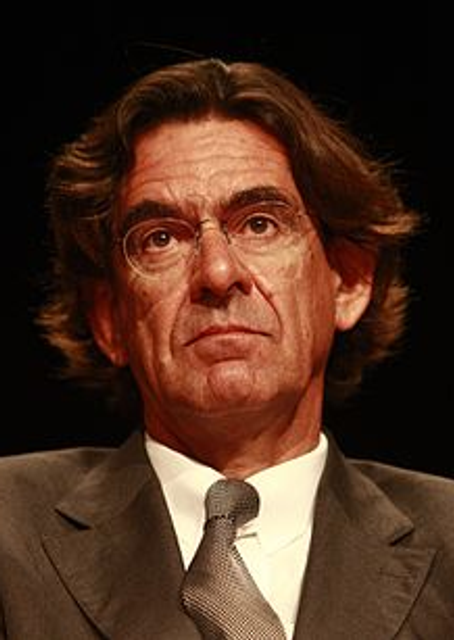
Luc Ferry
Last week, however, Luc Ferry, the education minister from 2002 to 2004 under conservative President Jacques Chirac, called for police to use live fire on yellow vest protests. “What I don’t understand is why we don’t give the police the means to put an end to this violence,” he told the “Free Spirits” programme on Classic Radio on January 7.
Asked if this would require using live ammunition, he replied: “So what? Listen, frankly, when you see guys beating up an unfortunate policeman on the ground, that’s when they should use their weapons, once and for all! That’s enough.”
Calling for the deployment of the military, Ferry said: “We have the fourth largest army in the world, and it is able to put an end to these c--ts.” He added: “These kinds of thugs, these kinds of c--ts from the extreme right, the extreme left and from the housing estates that come to hit the police, that’s enough.”
The working class in France and internationally must be warned: Opposition to plans for mass repression now being hatched at the top echelons of the capitalist state is a critical task.
Ferry’s denunciations of the yellow vests are not the isolated ravings of a madman. The bourgeoisie across Europe is stunned and terrified by a mass mobilisation of workers and youth to demand an end to rising social inequality and the policies of Macron and his predecessors—slashing taxes for the rich, boosting military spending and imposing brutal austerity on the working class. Unable to devise any other policies to protect its wealth amid the deepest crisis of world capitalism since the 1930s, the ruling class is publicly discussing the resort to mass repression.
The fact that police are being armed with live semi-automatic weapons at demonstrations shows that preparations are being made to respond accordingly. It is ever clearer that Macron’s statement last November of his sympathies for fascist dictator Philippe Pétain, who collaborated with the Nazi occupation of France, was not a historical remark but a statement profoundly reflecting the class character of his government.
All the European imperialist powers solidarised themselves with Egyptian General Abdel Fattah el-Sisi, the butcher of Cairo, who has drowned revolutionary protests in blood since 2013, in the wake of the 2011 revolution. As the World Socialist Web Site noted at the time, the response of the European powers supporting the dictator was proof of their own willingness to use the same methods against workers in their own countries.
The political crisis caused by the upsurge of the class struggle is exposing the real nature of capitalist “democracy.” The young worker Hedi Martin is thrown in jail for six months for a Facebook post calling on protesters to “stand up” to riot police, while a former minister is provided airtime on national radio to deliver fascistic rants calling for mass murder of protesters.
Meanwhile, in Bordeaux, Olivier B., a volunteer firefighter and father of three, remains in hospital in an induced coma, after police shot him in the head with a bean-bag gun and threw a stun grenade at him last Saturday. Doctors have reported he is in a stable condition but has suffered a brain hemorrhage and already undergone one operation.
The incident only became publicly known through a bystander video shared on social media, showing Olivier lying still face-down on the ground after a group of police turned a corner and fired on him. Many other protesters have had their hands or legs blown up, lost eyes or suffered permanent injuries from police bean-bag bullets.
Yesterday evening, President Macron arrived in the small Normandy town of Grand-Bourgtherolde to launch his fraudulent “national debate” aimed at pacifying popular opposition with empty promises of “dialogue.” In anticipation of protests, riot police closed down areas of the town and were given power to order anyone in the area to immediately remove a yellow vest, on pain of a €135 fine.
A local reporter tweeted a photo of police photographing the ID cards of protesters, quoting a demonstrator who noted that police were creating a database of political opponents.