22 Feb 2020

Bank of America/Vital Voices Global Ambassadors Program 2020 for Women Entrepreneurs (Fully-funded to New York, USA)

Application Deadline: 28th February 2020

Eligible Countries: International

To Be Taken At (Country): New York, USA

About the Award: The program is a partnership between Vital Voices, a leading NGO in women’s leadership and development and Bank of America, based on a shared belief in the need to invest in women who are creating economic and social progress around the world.

Type: Entrepreneurship

Eligibility: 
  • A woman entrepreneur or social entrepreneur who owns a majority stake in a qualifying business / organization, is the key decision maker in the business / organization and manages it on a day-to-day basis
  • The applicant must have a minimum of 10 years of experience in a professional setting
  • The applicant must have worked in her existing business / organization for a minimum of 5 years
  • Proficient in English
  • Demonstrate a commitment to the core principles of the “Vital Voices’ Leadership Model” –   Innovative, collaborative, and driven by a clear sense of mission; engaged in their communities and are committed to advancing the status of women and girls.
  • Demonstrate high-potential for leadership and a desire to take on leadership roles both within and outside of their business / organization
Please note, very important – if you are involved in more than one business / organization, the above criteria must apply to the business / organization that you would like to focus on during this mentorship opportunity

Entry Criteria:
  • For profit or social entrepreneur of a legally registered business / organization+ (for this program, a social enterprise is a business / organization with a social mission and an earned revenue stream) that is engaged in providing solutions to climate change and environmental sustainability.
  • Should have a minimum annual revenue of at least US$ 150,000 and a maximum annual revenue of US$ 10 million
Not eligible for this program:
  • Non-profit or Non-Governmental organization (NGO’s)
  • Start-up or early stage businesses
Selection Criteria: 
  • 10 applicants will be chosen to participate and notified by mid to late March 2020
  • Applications will be assessed to determine participants based on a variety of factors, including the following considerations:
    • Ability to commit to the entire week of in-person program,  training, mentorship  and pre-event webinars – no exceptions
    • Submitted Business / Strategic Plan and identified needs for development
    • Alignment with the Vital Voices Leadership model
    • Willingness to accept feedback and coaching from mentors
    • Ability to implement change within her business/organization
    • Anticipated impact on business or organization based on application
    • Willingness to help shape the community dialogue about women’s advancement in their region, and wield the influence necessary to do so.
Number of Awards: 10

Value of Award: All travel, meals and accommodation costs for mentees participating in this program are covered in full by the Global Ambassadors Program
  • One week in-person training program in New York City, including:
    • Strategic Planning for Business Growth
    • Financial Management
    • Human Resource Management
    • Communications workshops including Branding, Social & Digital Media, Public Speaking and Executive Presence
    • Participation in Bank of America’s Center for Women Entrepreneurs LIVE event
  • A 1:1 mentoring relationship with an established woman executive.  Previous mentors include: Donna Langley, Chairman, Universal Filmed Entertainment Group; Ibukun Awosika, Chairman, Board of Directors, First Bank of Nigeria Ltd.; Dr. Sachiko Kuno, President and CEO, S&R Foundation; Luz Maria de la Mora, Undersecretary for Foreign Trade, Mexico’s Secretariat of Economy; Manal Zraiq, General Director, Massar International; Ana Birchall, Deputy Prime Minister of Romania; Norah Casey, Broadcaster, Author, Publisher.
  • Inclusion in the Vital Voices network of more than 16,000 women from 181 countries and territories around the world.
  • Opportunity for cross-cultural exchange with women from around the globe.
  • Opportunities for your business/organization to be profiled via digital channels, social media and in earned media coverage.
  • On-going support and mentorship, specific to your needs,  through the Global Ambassadors Program for 1+ year
Duration of Award: 4th to 8th May 2020

How to Apply: Applicants are required to:
  • Complete and submit this online Application Questionnaire (Link below)
  • Submit a two-minute video  (described in the last section of this application)

Visit the Program Webpage for Details

Brazil’s Bolsonaro Says No to Democracy

Cesar Chelala

“The Big Honcho suppressed all the newspapers that risked timid repairs to his management, and promised that factories would produce better wrapping paper. He then closed most magazines, including those dedicated to beekeeping and winter fabrics. Finally, he got rid of school publications, which, as is known, impress children’s minds. Concluded these tasks, the Big Honcho sent emissaries to international credit agencies to request subsidies that would stop the inexplicable rise in illiteracy.” Thus wrote the Argentinian writer David Lagmanovich (1927-2010) in his book Historias del Mandamás (Big Honcho Stories.)
In January 2010, Jair Bolsonaro, Brazil’s President, suggested that the state should censor textbooks to promote conservative values. This was just one of many attacks on democracy carried out by the Bolsonaro government. On February 7, 2020, a wide array of Brazilian intellectuals including Sebastiao Salgado, Arnaldo Antunes, Djamila Ribeio, Caetano Veloso, Chico Buarque, and Petra Costa, among 2,000 others, wrote an op-ed article in which they denounce the Bolsonaro’s government intention to censor textbooks, spy on teachers and repress minority groups. The Brazilian intellectuals asked for international support to reign in these abuses.
They cite, among many other facts, that on January 16, 2020, Bolsonaro and Roberto Alvim, the then secretary of culture, filmed a joint broadcast that set out their ideological plans for the country. During a video announcing a national arts award, Alvim made incidental mentions to Nazi principles and used phrases from Joseph Goebbels, the Nazi propagandist. Only after international outrage and condemnation did Alvim step down.
Attacks against the media by the Bolsonaro government are systematic. In 2019 alone, more than 208 attacks on media outlets and journalists were reported in Brazil. In January 2020, the prosecutor’s office conducted a baseless investigation into the American journalist Glenn Greenwald for his participation in an alleged conspiracy to hack the cellphones of Brazilian government officials. Greenwald had been conducting an investigation of corruption and political bias among Brazilian prosecutors and judges.
At the same time, the Bolsonaro government has led a systematic attack on respected cultural institutions in the country through funding cutbacks and censorship. In an eerie resemblance to what is happening in the United States, the Bolsonaro government denies global warming and its dangerous consequences such as ever more frequent forest fires. In addition, it disregards environmental preservation efforts carried out by indigenous communities. Bolsonaro is an open admirer of President Donald Trump.
In an evident move to strengthen its dictatorial characteristics, government leading officials, plus the President’s sons, are advocating for a return to the military dictatorship-era law AI-5 (Institutional Act Number 5) originally issued in 1968 by the military regime ruling the country. According to that law, government authorities are allowed to close congress, disregard court orders and suspend constitutional rights, all in the name of restoring order to the country.
The Bolsonaro government is intent on creating social disorder and violence to justify the implementation of harsh measures against political opponents and bring back the military-era measures against democracy and human rights. This was underscored by the President’s son, Eduardo, when he admitted that they crave violence and disorder to justify repressive measures.
These are difficult times for the Brazilian people. If Brazil’s Big Honcho continues his attacks on progressive people and institutions, he will irreparably damage the rule of democracy and human rights in that suffering country.

Extensive Chemical Safety Fraud Uncovered at German Testing Laboratory

Jonathan Latham

The case of an animal rights activist who infiltrated an independent German chemical testing laboratory has triggered the discovery of an apparently extensive chemical testing fraud.
LPT Hamburg, with around 175 employees, is one of the largest contract laboratories in Germany. It is a family owned private company. It prepares regulatory studies on behalf of the pharmaceutical and pesticide industries and has three locations: Mienenbüttel in Lower Saxony, Neugraben in Hamburg and Wankendorf in Schleswig-Holstein.
An initial case of fraud was reported in 2019 by the German magazine FAKT, which worked with the animal rights organisations Cruelty Free International and SOKO-Tierschutz to expose the findings of the undercover employee. The disturbing irregularities they discovered included the death and replacement of animals without this being reported to authorities.
This distressing video from FAKT summarises the findings and was filmed at LPT.
But since the initial investigation by FAKT five former employees of LPT Hamburg have come forward with new information.
In interviews broadcast by FAKT in November of 2019, one employee told the magazine of testing fraud:
“I not only experienced it, I did it myself. I forged documents; our studies. If the results did not meet expectations, I was asked to improve them. The data that did not fit in were marked so that I could enter it on the blank protocol the new values that were given to me. The new report was also marked with the old date and my signature…”
A second employee who came forward told FAKT:
“These animals, especially in the high-dose group, actually had completely open skin – so it was the raw meat that was visible, miserable really miserable. […] In fact, one animal died in the high-dose group and was replaced by another animal. Here, too, the tattoo number, which is in the chest area of the animal, was cut out of the dead animal and added to the organs of the replaced animal after the end of the study. So that it looks as if this animal had not died at all.“
A third told FAKT that they had observed repeated falsification of studies and that they later reported this to the German authorities:
“So, a few months after I left LPT, I contacted the responsible authorities here. And had an appointment. And in this appointment we discussed the LPT issue together. It was also about manipulation of data and of course about the fact that studies were so strongly influenced that it was not compatible with my conscience.”
However, the employee never heard from the authority again.
These revelations have major implications for public and environmental health. They undermine the idea that testing by commercial laboratories is independent of the chemical industry, thereby challenging the validity of the entire system of toxicological evaluation of chemicals like pesticides and pharmaceuticals. These allegations echo previous cases of chemical testing fraud, such as the IBT scandal of the late 1970s, including the more recent realisation that this fraud was covered up by the overseeing government agencies, such as the US EPA.
A further implication, according to a new report on the LPT case carried out by PAN GermanyCorporate Europe Observatory and Global 2000 of Austria, is that many of the studies supporting the EU’s reapproval of glyphosate came from LPT.
According to the EU’s reassessment of glyphosate, all industry-derived studies on genotoxicity concluded that glyphosate was safe, or nearly so. On the other hand, the majority of peer-reviewed studies concluded it was not. In its reauthorization process the EU agency which evaluated glyphosate concluded that the industry studies submitted were reliable and the peer-reviewed studies were “not reliable”. This designation cleared the way for reauthorization. At least 21 studies submitted by Monsanto supporting glyphosate’s reauthorization came from LPT.
The primary given reason why peer reviewed studies are deemed inadmissible by regulators is that they do not have the technical certification known as Good Laboratory Practice (GLP). GLP follows OECD guidelines which were adopted by the EU in 2004.
GLP has long been criticised as failing to guarantee high quality research (Elliott et al. 2016Myers et al. 2009Wagner and Michaels 2004). It has always been defended, however, on the basis that it prevented exactly this kind of fraud.

Election Con 2020: Exposing Trump’s Deception on the Opioid Epidemic

Anthony DiMaggio

Donald Trump has long presented himself as an advocate for the disadvantaged, and this narrative continues to play into his political strategy as he seeks reelection come November. Nowhere is this clearer than in the president’s claims that he’s committed to combating drug addiction. His administration announced in 2019 $1.8 billion “in funding to states” that focused on “expanding access to [drug] treatment,” with “more than $900 million in new funding for a three-year cooperative agreement with states, territories, and localities to advance the understanding of the opioid overdose epidemic and to scale-up prevention and response activities.” Trump bragged about the administration’s achievements in his latest State of the Union address:
“With unyielding commitment, we are curbing the opioid epidemic. Drug overdose deaths declined for the first time in nearly 30 years. Among the states hardest hit, Ohio is down 22 percent, Pennsylvania is down 18 percent, Wisconsin is down 10 percent – and we will not quit until we have beaten the opioid epidemic once and for all.”
Trump has long benefited from the narrative that he speaks for the disadvantaged. In the wake of the 2016 election, academics, reporters, and pundits consistently linked his campaign to the theme of economic decline, echoing his promise to “Make America Great Again” by bringing back manufacturing jobs back to the people. Post-election reporting portrayed Trumpism as a function of working-class whites’ frustration with the economic status quo. One widely reported 2016 study linked Trump support to economic decline, suicide, and drug abuse. The study’s author, sociologist Shannon Monnat, described her findings this way:
“In many of the counties where [Trump] did the best, economic distress has really been building, and social and family networks have been breaking down for several decades…It’s really about downward mobility and the dismantling of the American dream at a larger community level. And Trump has capitalized on and exploited feelings of the people in these communities. In a lot of these places, good-paying jobs and dignity that goes along with those good-paying jobs has been replaced by suffering and hopelessness and the belief that people in power don’t really care about them or their communities.”
The “Trump supporters as economically and physically downtrodden” narrative became a mainstay in American political discourse following Trump’s election. Another 2018 study by researchers from the University of Texas found that Trump averaged 60 percent of the vote in U.S. counties with an “above average rate of opioid prescriptions in 2015,” compared to 39 percent in areas with “below average” opioid use. Reporters were quick to identify a causality at work, as the Washington Post wrote that the relationship between drug abuse and Trump support “could be explained by the prevalence of working-class voters [in depressed areas] and measures of economic distress,” while Newsweek postulated “that the socioeconomic factors that may inspire someone to vote for Trump also may increase the likelihood that he or she would depend on opioids.”
Following these findings, some pundits have echoed the notion that Trumpism is a symptom of neoliberal economic decline. Trump voters, we are told, suffer from “shit life syndrome,” defined by the continued “misery” of “suicide, drug overdose death, and trauma for surviving communities.” But numerous problems exist with the above narrative. For one, there’s little evidence that Trump has been more effective than previous officials in fighting opioid addiction. Government efforts to combat opioid-related overdose deaths predate Trump’s administration. For one, the CDC’s introduction of new prescription guidelines, which were designed to combat opioid over-medication, date back to 2016, prior to Trump’s election. Furthermore, opioid deaths remain high under the Trump administration – higher than in past years. While opioid overdoses fell from 2017 to 2018, CDC statistics demonstrate that they remained higher in 2018 than at any other time in the last 20 years (with the exception of 2017). In other words, the “progress” made under Trump has been extremely limited, compared to the scope of the problem.
Finally, Trump’s claims of progress in fighting addiction ring hollow considering his efforts to strip tens of millions of Americans of their health insurance via the repeal of the Affordable Care Act (ACA). That repeal would have rolled back the expansion of Medicaid, which is the largest source of national funding for mental health programs and substance abuse treatment. As the Washington Post reported, the ACA repeal would have meant the loss access to drug treatments for 1.3 million Americans who gained access to this benefit following the law’s expansion of Medicaid.
Aside from Trump’s poor record in fighting opioid abuse, we should also reject claims that his presidential campaign appealed to the economically less fortunate – particularly those suffering from drug addiction. As I’ve exhaustively documented, a close examination of survey after survey, including dozens of different economic measures, demonstrates there is little to no evidence that Trump supporters were more likely to suffer from economic insecurity or disadvantage. And research examining metropolitan regions throughout the country demonstrates that areas hardest hit by manufacturing job loss were actually less likely to favor Trump in 2016.
To the extent that manufacturing job loss impacted political behavior, available data reveals that the areas hardest hit by outsourcing suffered primarily from demobilization. Which is to say that Americans in these regions became increasingly disillusioned about the value of voting in general. We see this most clearly in the finding that the Democratic Party lost 3.5 times more votes than Republicans gained, when comparing presidential election voter turnout in geographic areas where manufacturing job loss was worst.
But what about the finding that Trump performed better in areas hardest hit by mental health problems and drug addiction? A closer look at available data calls into question the claims of pundits that economic desperation fueled intensifying mental health and drug abuse problems, thereby indirectly fueling support for Trump’s 2016 presidential campaign. To more closely examine such claims, I analyzed the best available survey data measuring individual responses regarding mental illness and drug abuse in the run-up to the 2016 election – the September to October Atlantic/PRRI “white working class” survey. The survey asked Americans about their presidential voting preferences, and about whether respondents (or anyone in their households) had “experienced or struggled with” various problems “in the past 12 months,” including “alcoholism or excessive drinking,” “depression,” and “drug addiction.”
In my statistical analysis, I measured the extent to which depression, alcoholism, and drug addiction were significantly associated with Trump support, controlling for survey respondents’ political party affiliation, ideology, race, income, gender, age, and education level. The results undermine the narrative that economic depression fueled mental health and drug addiction problems, thereby driving voters to support Trump’s campaign. On the one hand, self-reported alcoholism and drug addiction are both statistically unrelated to Trump support in 2016. On the other hand, self-reported problems with depression are significantly associated with Trump support. The findings are similarly mixed when looking only at white respondents. Whites reporting drug addiction problems were no more likely to support Trump, although whites reporting problems with alcoholism and depression were significantly more likely to support Trump.
While mental illness and alcoholism among whites were linked to Trump support, these problems were almost entirely unrelated to poverty and economic desperation. My examination of the 2016 Atlantic/PRRI poll finds that, for whites with depression, whites suffering from alcoholism, and whites facing drug addiction problems, none of these groups were statistically more likely to be economically disadvantaged. Which is to say that none of the three were more likely to report lower incomes, on average, compared to respondents who did not face these problems. This is where the 2016 “Trump as hero of the downtrodden” narrative unravels. These results make it clear that there’s little reason to think that economic desperation is a unique contributor to depression or to drug abuse, or to think that economic disadvantage is indirectly fueling Trump support.
The central lesson from these findings is that we should be careful not to fall into classist attacks on the poor, which pathologize the less fortunate as uniquely suffering from mental illness and drug abuse. There’s little reason to link these factors, considering the failure to identify a relationship between mental illness, drug abuse, and income. Americans of all economic stripes deal with issues of drug addiction and mental illness; these problems are not unique to the poor. A closer analysis of the Atlantic/PRRI poll finds that between 3 to 6 percent of white respondents cited struggles with drug abuse, depending on the specific income group in the survey. Between 3 to 9 percent of whites cited problems with alcoholism, while 16 to 25 percent of whites cited struggles with depression. But in none of these three metrics was income a significant predictor of drug and mental health struggles, controlling for respondents’ race, gender, political party, ideology, age, and education.
It’s become commonplace in U.S. political rhetoric to depict the Trump administration as a champion of the poor, disadvantaged, and dispossessed. This myth originates from Trump himself, who popularized the tall tale that one of the wealthiest plutocrats in American history could somehow be trusted to fight for the interests of the poor and marginalized. American journalists have endlessly reinforced the myth of Trump as a working-class hero, which is unsurprising considering the long-documented official source bias in the news. But there’s no reason that Americans should embrace this propaganda any longer. The president has shown little interest in helping the poor and vulnerable. There’s no reason to think this will change moving forward with an administration that’s consistently devoted itself to plutocratic politics.

“Robodebt” assault on Australian welfare recipients deliberately targeted the vulnerable

Margaret Rees

Damning revelations continue to emerge about the federal government’s illegal Online Compliance Intervention debt recovery scheme—known as robodebt—used to automatically issue debt notices to allegedly overpaid welfare recipients.
After receiving computer-generated letters declaring that they owed the government massive debts, supposedly due to exceeding harsh income limits, welfare recipients were subjected to harassment by profit-driven debt collectors or the tax office, which garnisheed their tax returns.
The government threatened to jail people unless they paid the demanded amounts or produced documents, going back up to seven years, to disprove any alleged over-payments. People living in poverty were treated like criminals for failing to keep accurate records of income.
Despite government denials, it is now known that the robodebt system was used increasingly against the most vulnerable members of the working class—i.e., those suffering homelessness, medical conditions, mental ill-health, family and domestic violence, or facing crisis situations or caring responsibilities.
Last August it was leaked that the program was expanded significantly to include people aged over 65 and other sensitive groups, such as disability support pensioners. The government claimed at the time it was not “considering any proposal to commence online compliance for vulnerable Australians.”
Yet at least 11,000 disability pensioners paid back supposed debts in full from 2016 and the repayments increased by 230 percent between 2017–18 and 2018–19, from $2.3 million to $7.7 million. Part repayments were not included in these totals.
Then the Liberal-National Coalition government admitted in November it had obtained more than $15 million through the robodebt system from 9,149 people with a “vulnerability indicator.”
It is now clear also that the government knew the scheme was illegal long before it conceded that in the Federal Court last November. In 2017, longstanding Administrative Appeals Tribunal member Terry Carney ruled in five appeals cases that the failure of a person to “disprove” the possibility of a debt was not a legal foundation for a debt. The onus remained on Centrelink to establish a debt and its size. Carney was then removed from the tribunal.
Yet the government is still refusing to say how much money must be paid back to welfare recipients, or set a deadline for refunds. Answering a question about robodebt in the Senate on February 13, Families and Social Services Minister Anne Ruston said: “I am not in a position to pre-empt the outcome of the court’s deliberations.” She was referring to a class action of about 10,000 people against the robodebt scheme launched late in 2019.
Moreover, the government is pushing ahead with measures to revamp the scheme. Ruston said “program changes” would make the scheme “more robust.” The government would no longer use “income averaging” data from the Australian Tax Office as the sole reason for determining a debt. In other words, the scheme is to be recalibrated and pursued with a slightly different format.
The Labor Party’s shadow minister for government services, Bill Shorten, last week urged the government to apologise to those wrongly charged with debts, and to repay the money. But it was the last Labor government that launched the “data matching” offensive against welfare recipients.
While assistant treasurer in the Greens-backed Gillard Labor government in 2011, Shorten stated that income compliance detection would be stepped up. “The new matching data link is expected to increase the number of former customers identified for this process by an additional 65,000, above current detection levels, over four years,” he vowed.
Both Labor and the Coalition have followed the orders of the corporate elite in deepening the attack on welfare entitlements. The aim is to ramp up the pressure on the poor to accept low-paid employment on substandard conditions, further drive down wage levels for all workers, and hand out more corporate and high-income tax cuts.
The Murdoch family’s Australian hailed this decades-long offensive last week. It gloated in its February 10 editorial that 13.5 percent of citizens aged 16 to 64 are in receipt of a welfare payment, the lowest proportion since 1989. It compared the figure to 1994, when it was 23.6 percent. It noted that the proportion had been reduced to 17.2 percent by the end of the 1996–2007 Howard Coalition government and then to 16.5 percent by 2013, when the subsequent Rudd and Gillard Labor governments were defeated.
The editorial continued: “The statistics do not reveal the full picture of reform, however. One of the most important trends in recent years has been the shift to the Newstart Allowance (with a basic rate of $559 a fortnight, and an obligation to look for work) from the more generous Disability Support Pension ($850.40 a fortnight).”
The newspaper commended the last Labor government for launching the drastic tightening of the eligibility criteria for the disability pension, so that from a peak of 793,000 recipients in 2012 the number fell to 680,300 by mid-2018. The editorial concluded that governments must do much more to slash welfare, complaining that it cost one third of federal revenue.
Under these “reform” prescriptions, the poor and powerless are to be hounded into submission. Figures reported in June 2019 showed that 42 percent of people on Newstart actually have an illness or disability that prevents them from working full time.

Coronavirus cases outside China are alarming, global health officials say

Benjamin Mateus

As of February 21, 76,825 cases of coronavirus, or Covid-19, have been diagnosed. This week Chinese health officials reported they would revert to confirming cases of Covid-19 using test kits, further adding to the confusion on the actual trends in the epidemic being reported in mainland China.
The true infection rate will probably not be known for some time until positive serological tests can be performed on the population. Some epidemiologists have compared the 2019-nCoV epidemic to a very severe flu season, indicating that we may be facing coronavirus seasons like the flu in years to come. There is great urgency to develop a vaccine or antiviral therapy.
There have also been 2,250 deaths attributed to the 2019-nCoV, with 18,903 people who have recovered from their infection. The bulk of these fatalities have occurred in Hubei province, the epicenter of the epidemic. Data for 19,047 “closed cases” indicated that 16,917 (89 percent) recovered and were discharged, while 2,130 (11 percent) succumbed to Covid-19. Health officials have warned that recovered patients who have undergone nucleic testing of nasal swabs are demonstrating that they continue to harbor the coronavirus. They have speculated that these patients may still be capable of infecting others.
According to Worldmeter, there are presently 55,905 active cases, down from a peak of 58,622 on February 18. Of these cases, 79 percent are considered mild, presenting with flu-like symptoms. The rest of the cases numbering 12,064 patients (21 percent) are in serious condition and require hospitalization and a higher level of care, which can include supplemental oxygen and possibly intensive care with ventilator support. Overall, about five percent were in critical condition, of which a little more than two percent have died.
The Chinese Centre for Disease Control and Prevention (CCDC) recently published its data on 44,000 cases of Covid-19. The death rate reported in Hubei province stands at 2.9 percent, while in the rest of the country it remains much lower, with 0.4 percent dying from complications related to the infection. Elderly with medical conditions are at a significant risk of dying from acquiring the infection. The absolute case fatality rate for those over 80 years of age approached 15 percent.
Admittedly, the Chinese medical staff is at the highest risk of becoming infected due to their close contact with the afflicted and also because of frequent lack of adequate protective supplies. The recent report of the demise of Dr. Lie Zhiming, the 51-year-old neurosurgeon and director of the Wuchang Hospital in Wuhan, has again provoked outrage and frustration. Over 1,700 Chinese health care workers have been infected.
The trend in the total number of cases in China has continued to plateau with reports of daily confirmed cases declining now for more than a week, although confirmation of recent Covid-19 cases in prison populations caused a spike in new cases yesterday. Also, the trend in the number of deaths attributed to Covid-19 has appeared to have reached its inflection point.
However, cases outside of mainland China have been steadily climbing, standing presently at 1,361. World Health Organization health officials’ sentiments remain mixed. While there are assurances that the epidemic is being contained on mainland China now with the lowest reported daily case counts, there are also troubling signs that the epidemic may be advancing in other countries.
Though Japan has the highest count in the “other countries” category, the majority of these have been attributed to the growing cluster of cases on the Diamond Princess luxury cruise ship harbored in Yokohama, now standing at 634 out of 742 total cases in the country. Two infected Japanese passengers, who were recently evacuated to local hospitals, have died. Both were in their 80s and suffered from chronic medical ailments. Travel advisories to Japan have now been issued, while the government has begun suspending major public events.
As of Friday morning, Japanese officials have called the two-week quarantine on the luxury cruise liner over, and those who were testing negative, approximately 500 individuals, have disembarked. Virologists are studying the catastrophe on board to attempt to understand why the virus was so contagious. They speculate that a super spreader phenomenon was at play or that the virus can survive on multiple surfaces. They will also study the infectivity of the contagion and its distribution of severity to compare with those being reported in Hubei province.
The fallout from the returning 14 infected Americans from Japan has garnered attention in major news outlets. The Washington Post reported that Trump administration health officials were in a fierce debate with the CDC who disagreed with the State Department, contending that those individuals posed a considerable risk for infecting those who remained disease-free. According to the Post, “Efforts to prevent the new pathogen from spreading have revealed the limits of the world’s readiness for an unprecedented public health emergency.” At certain times of social crisis, the mainstream media can express the simple truth but is unable to offer a suitable antidote.
In a show of international disunity, another luxury liner, the MS Westerdam, which had left port from Hong Kong to Japan on February 1 for a 14-day excursion, found itself left a castaway in open waters as four countries refused it harbor over concerns of Covid-19, though all passengers were reportedly well. Finally, after two weeks at sea, Cambodia offered a berth at the port of Sihanoukville. The ship was carrying 1,455 passengers and 802 crew members.
In a precarious maneuver, Cambodian President Hun Sen allowed passengers to disembark with little else than having their temperatures taken to prove they were not ill. He greeted them as they set foot on the ground for a photo opportunity prohibiting any face masks or wearing protective gear. Though Cambodia is a strong ally of China, with their economies closely linked, analysts speculated that this stunt was an attempt by the Cambodian president to ingratiate himself with the US.
Approximately 650 of those who had been on board were Americans. One of those passengers, an 83-year-old female, who flew to Malaysia along with 144 others, developed a high fever upon landing in Kuala Lumpur. She was tested, and it was confirmed she had Covid-19. Cambodia then proceeded to quarantine the remaining passengers, but by then, however, hundreds had already left the country.
Though the number of cases in Thailand, Hong Kong and Taiwan has stabilized, South Korea recently noted a rapid escalation of cases over three days, tripling the previous number of cases. Presently there are 204 documented cases of Covid-19.
With the sudden spike in cases, South Korean Prime Minister Sye-Kyun declared the Covid-19 epidemic an emergency. The cities of Daegu and Cheongdo have been declared “special care zones.” The military bases are also on lockdown as three soldiers were found infected. The 2.5 million population of Daegu has been told to stay home, initiating an essential lockdown.
Iran has also now confirmed a total of 13 new cases, bringing their total to 18, with two additional deaths. Lebanon and Israel have confirmed their first cases, indicating that Covid-19 may be getting a foothold in the Middle East. Ukraine’s Ministry of Internal Affairs reported that on Thursday, clashes occurred between residents resisting efforts by the government to quarantine 45 Ukrainians and 27 foreign citizens at a facility at Poltava region.
Meanwhile, Chinese officials are reeling from a cluster of Covid-19 cases taking place in cramped prisons across three provinces, affecting more than 500 prisoners. Beijing has sent in a team of law enforcement personnel to begin investigating the fiasco that has caught the news media by storm.
He Ping, head of the ministry’s Bureau of Prison Administration, said, “With a heavy heart and sense of responsibility, I am reporting to you that as of February 20, five prisons in Hubei, Shandong and Zhejiang have reported infections among their populations.” Beside several guards becoming infected, authorities suspect that the infection has spread to a juvenile detention center in Zhejiang province.
South China Morning Post reported that Xie Wijun, Communist Party secretary of the province’s Department of Justice, and seven prison officials were summarily relieved of their posts for mismanagement. These are a series of political fallouts that continue as China and the world are thrown into a social turmoil.
Speaking on behalf of the financial oligarchs of the world, President Xi Jinping at a meeting of the Communist Party Politburo said, “Priority should be given to ensure leading companies that are important in the global supply chain restore production and supply, maintaining the stability of the supply chains. It is necessary to help key export enterprises resume work and production as soon as possible.”
According to Oxford Economics’ Global Economic Model forecast, the rapid spread of the coronavirus infection will weaken China’s GDP growth sharply in the short term, having a ripple effect on the rest of the globe. The global growth rate for quarter 1 of 2020 is expected to slow to just 1.9 percent and for the year down from 2.5 percent to 2.3 percent. GDP in 2019 stood at 2.6 percent. In practical terms, this amounts to $1.1 trillion in lost income.

A “ceasefire” in Washington’s Afghanistan debacle

Bill Van Auken

US Secretary of State Mike Pompeo confirmed Friday that Washington and the Taliban had reached an agreement to begin a one-week “reduction in violence” in Afghanistan, beginning today as the first step toward the signing of a peace deal at the end of this month in the Qatari capital of Doha.
Such an agreement would ostensibly set the stage for the withdrawal of US troops and the end of what has been the longest war in US history, initiated more than 18 years ago with the illegal October 7, 2001 invasion of Afghanistan. In exchange, the Taliban is to pledge that it will prevent Al Qaeda elements from operating in the country.
Afghan villagers pray over the grave of one of the 16 victims killed in a shooting rampage by a US soldier in the Panjwai district of Kandahar province south of Kabul, Afghanistan, 2012 [Credit: AP Photo/Allauddin Khan]
Since that day, nearly 2,400 US troops have lost their lives in the Afghanistan war, nearly 10 times that number have been wounded, and many more are suffering Post-Traumatic Stress Disorder (PTSD) from being sent into a dirty colonial war. The cost of this “endless war” has reached roughly $1 trillion. At its height, the Pentagon was squandering some $110 billion a year, roughly 50 percent more than the total annual US federal budget for public education.
For the Afghan people, the toll has been far greater. By conservative estimates, over 175,000 have been killed outright by the violence, with hundreds of thousands more wounded, while millions have been forced from their homes.
This carnage has continued right up until the announcement of the partial cease-fire Friday. Virtually every day this month has brought reports of the slaughter of civilians in US air strikes. Five civilians, one woman and four children, died under US bombs in Badghis province on February 6. On February 7, Afghanistan’s Independent Human Rights Commission reported three civilians were killed and one wounded in a US strike, all of them university students on their way home from a funeral. On February 8, five civilians died in an airstrike on a vehicle in Farah province. Another eight civilians were killed in a US strike in Nangrahar province on February 14.
Afghanistan’s tragic encounter with US imperialism did not begin in 2001, but dates back more than 40 years to the late 1970s, when the Democratic administration of Jimmy Carter and the CIA orchestrated the mujahideen Islamist insurgency against the Soviet-backed government in Kabul. Their aim, in the words of Carter’s national security adviser, Zbigniew Brzezinski, was to give the Soviet Union “their Vietnam.” Of course, it was the Afghans who were the main victims of this covert intervention, dubbed by the CIA as “Operation Cyclone,” which unleashed a protracted civil war whose victims number over one million.
The war ended with the Taliban, a student-based Islamist movement, gaining control over the vast majority of Afghanistan in 1996. And, while Washington never established formal diplomatic relations with its government, it knew that the Taliban’s leadership were men with whom one “could do business.” The Trump administration’s special envoy for Afghanistan, Zalmay Khalilzad, who negotiated the current deal, worked in the 1990s for the energy conglomerate Unocal—now part of Chevron—negotiating with the Taliban on a deal for a trans-Afghanistan gas pipeline.
Both before and after September 11, 2001, the Taliban offered to cooperate with Washington in bringing Osama bin Laden to trial. US officials rejected all such overtures, with the CIA doubtless having their own uses for Al Qaeda, which had originated as part of the agency’s mujahideen operation of the 1980s.
The intervention in Afghanistan, planned well in advance of 9/11, was launched not to prosecute a “war on terrorism,” but rather to project US military power into Central and South Asia in pursuit of geo-strategic interests, seizing control of a country bordering on the oil-rich former Soviet republics of the Caspian Basin, as well as China.
The war in pursuit of these aims was a war of aggression, a violation of international law that gave rise to a host of other crimes: massacres, rendition and torture, Guantanamo and CIA “black sites,” as well as the US Patriot Act and a wholesale assault on democratic rights within the US itself.
In the end, this war has proven an unmitigated debacle. If all Washington wanted was a deal with the Taliban to exclude Al Qaeda and similar forces from Afghanistan, it could have gotten that two decades ago without sending a single soldier.
What has the more than $1 trillion spent by Washington on this war, instead of pressing social needs, bought? The government, described by US officials themselves as a “kleptocracy,” controls little of the country and is despised by the majority of its population. The puppet character of this regime is confirmed by its exclusion from the US-Taliban talks.
The results of the last election, held in September with a record-low turnout of less than 25 percent, were just announced this week amid charges of gross fraud. Opposition candidate Abdullah Abdullah, installed as “CEO” after the last fraudulent election, has refused to accept the legitimacy of President Ashraf Ghani’s reelection and has vowed to set up a parallel government, severely complicating proposed intra-Afghan negotiations on “a comprehensive and permanent ceasefire and the future political roadmap for Afghanistan” that are supposed to follow the signing of the US-Taliban deal.
As for the Afghan security forces, while suffering grievous losses, they have proven incapable of resisting the Taliban without intense US air support and American special forces “advisors.” The number of “insider” attacks, in which Afghan soldiers turn their guns on US and NATO trainers, has continued to mount.
After more US dollars (adjusted for inflation) were spent on Afghan reconstruction than were appropriated for the entire Marshall Plan for the recovery of Western Europe after World War II, Afghanistan remains one of the poorest countries on the planet, with more than half the population living below the official poverty line, the equivalent of a dollar a day.
Whether the deal announced Friday will culminate in an end to the US military presence in Afghanistan is far from certain. A similar agreement that was to be signed at Camp David last September was called off at the last minute by Trump on the pretext that a Taliban attack had claimed the life of a US soldier.
While Trump no doubt hopes to promote any agreement as a fulfillment of his 2016 campaign pledge to end America’s “endless wars,” he announced a complete withdrawal of US troops from Syria last year with the same aim, only to reverse himself and order US Army units to seize control of the country’s oil fields. Moreover, both Democratic and Republican politicians have called for the US to maintain a “anti-terrorism” force on the ground in Afghanistan.
Whatever the final outcome, a US-Taliban agreement will not signal the dawn of peace, either in Afghanistan or internationally. The country will remain an arena of conflict, both between rival warlords and militias, as well as between the two regional powers vying for dominance in Kabul, Pakistan and India. The US, Russia and China will continue pursuing their own conflicting interests in the country, exacerbating internal tensions.
Moreover, the impetus for a US withdrawal from Afghanistan is bound up with the strategic doctrine spelled out by the White House and the Pentagon in which the “war on terror” has been replaced by “great power” conflict as the focus of US military operations. The supposed move to end America’s longest war is bound up with the preparation for what would be the world’s most catastrophic military confrontation with nuclear-armed Russia and China.
It is no coincidence that the announcement of the limited deal with the Taliban came on the same day that the first of 20,000 US troops began arriving in Europe for the largest war games on the continent in a quarter century, being staged as a rehearsal for a war of aggression against Russia.
The war in Afghanistan, like that waged in Iraq, was based on lies. Among the most important exposures of these lies, told by presidents, Democratic and Republican alike, as well as generals, and echoed by a pliant corporate media, came from the courageous Army whistleblower Chelsea Manning and WikiLeaks publisher Julian Assange. Both are today imprisoned, Assange in London, facing extradition to the US to face espionage charges and a possible life sentence, and Manning in Virginia, being held indefinitely without charges for refusing to testify against him.
Those responsible for the criminal wars in Afghanistan and Iraq, however, have never been held to account. That is the task of the working class in the US and internationally, mobilizing its independent strength in struggle against war and the capitalist system that is its source.

UK Johnson government rolls out restrictive “points-based” immigration system

Richard Tyler

Home Secretary Priti Patel announced Wednesday that Britain will scrap “free movement” of labour and introduce a restrictive “points-based” immigration system from January 31, 2021. This follows the end of the transition period after the UK formally left the European Union (EU) on January 31 this year.
Predictably, the pro-Tory tabloids welcomed the new measures in the most lurid terms, with the Daily Mail proclaiming an “Immigration Revolution.”
The curtailing of free movement brings to an end a situation that has existed for nearly 30 years, since the adoption of the Maastricht Treaty in 1992, which formally established the European Union and heralded a “single European market” allowing the free passage of goods and labour throughout the bloc.
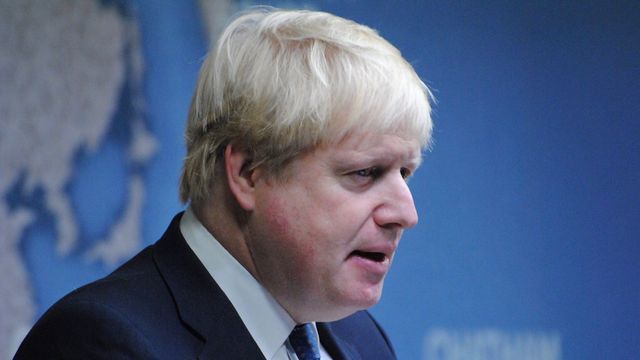
Boris Johnson [Credit: Chatham House]
In future, those seeking to come to the UK to live and work will be required to achieve a score of at least 70 points against various criteria, such as having a job offer from a Home Office “approved sponsor” which pays at least £25,600, passing a skills threshold, requiring a PhD in some areas of work and, given pride of place, speaking English.
While EU citizens could previously come to the UK to work or study without requiring a visa, a new visa application process will be introduced, for which they must pay a fee. According to the Home Office, “most EU citizens will enrol facial biometrics using smartphone self-enrolment.” While stating “fingerprints will not initially be required,” this could change. The British state is setting in place the infrastructure to gather massive amounts of biometric data on all those who enter.
The 16-page policy statement issued by the Home Office makes clear that the UK borders will be firmly closed to what it terms “low-skilled workers.” Neither will it be possible to come as a self-employed person, as many Eastern European migrants currently working in the building trade have done. Border checks will be stepped up and entry with a valid European ID card will no longer be possible, requiring all those arriving to have a passport.
Those able to meet the onerous points requirements will be denied recourse to any income-related benefits should their fortunes change—for example, if they lose their job—until they have successfully acquired “indefinite leave to remain,” which usually takes at least five years.
EU citizens will be permitted to travel to the UK for up to six months without a visa as long as they do not work, and to pass through the expedited “e-gate” border system, but this would be “kept under review.”
The Home Office briefing says those departing the UK after their leave has expired will find their “future interactions with UK immigration” impacted. A minor infringement or mistake with a leaving date could prevent a person returning to the UK at all.
In full little Englander mode, Patel said the measures “taking back control of our borders” would “attract the brightest and the best from around the globe, boosting the economy,” while the government was “no longer going to have a route for low-skilled workers to come to the UK.”
Her claims that the new immigration system would be good for the economy were immediately contradicted by several representatives of big business, largely motivated by the closing off of a pool of relatively cheap labour in jobs that pay at or near the minimum wage, but also by a skills gap in many key areas.
Carolyn Fairbairn, director general of the Confederation of British Industry (CBI), said that “in some sectors firms will be left wondering how they will recruit the people needed to run their businesses. With already low unemployment, firms in care, construction, hospitality, food and drink could be most affected.”
A CBI report in 2018 found that 30 percent of workers in the domestic food and drink industry, the largest manufacturing sector in the UK, are EU migrant workers. The meat industry relies on 63 percent of staff on the plant floor being EU nationals, extending as high as 80 percent in some cases.
UK Hospitality chief executive Kate Nicholls said, “[R]uling out a temporary, low-skilled route for migration in just 10 months’ time would be disastrous for the hospitality sector and the British people.”
Local Government Association chair James Jamieson said, “The social care system faces one of the most serious challenges and any reforms need to ensure the social care workforce can be maintained.”
Years of austerity, council cuts and the privatisation of previously council-run provision mean the care sector is already breaking down. One in 11 posts remain unfilled, with migrant workers constituting almost a sixth of its 840,000-strong workforce in England. Under the new system, they would be classified as “low-skilled” and an already crisis-ridden care sector would be cut off from recruiting migrant labour.
Liberal Democrat home affairs spokeswoman, Christian Jardine, described the new immigration system as being based on “xenophobia” and even former Tory cabinet minister Stephen Dorrell called it “the worst kind of dog-whistle politics.” But Labour’s Shadow Home Secretary Diane Abbott merely suggested the government appeared not to have “thought through what the effects of this policy would be on the economy as a whole.”
The Trades Union Congress, as of this writing, has not issued a press release opposing the government’s move to further divide workers in Europe and internationally and defending the rights of migrants.
Those in the trade union bureaucracy who advocated for Brexit, including various Stalinists in the Rail, Maritime and Transport (RMT) union and “Blue Labour” ideologues such as Paul Embery, together with their accomplices such as the Socialist Party, are politically responsible for this outcome. They all embraced the narrative that immigrant labour from the EU must be curbed as a means of safeguarding wages and conditions. Now their demand and their rhetorical justifications can be heard from the lips of Boris Johnson and Priti Patel, even as they prepare a major offensive against the working class.
The same is true from the media, with the freesheet Metro, part of the Daily Mail group, declaring a “Ban on cheap EU workers.”
As the Socialist Equality Party warned at the time of the Brexit referendum, “The Leave campaign is focused almost exclusively on demands to ‘take back control’ of the UK’s borders in order to clamp down on EU migration—blaming migrants for the collapse of essential social services that have been gutted by years of anti-working class measures implemented by successive Labour and Conservative governments”.
The ending of free movement of labour and introduction of anti-democratic immigration policies are of a piece with the Conservative government’s move towards a hard Brexit. In his recent speech, Britain’s lead trade negotiator with the EU, David Frost, told his European counterparts the UK would in future not be constrained by EU labour, social, environmental and fiscal rules. Nor would it submit to oversight and control by European institutions and courts.
What this means for workers was made clear by Patel, who stressed that the government expects workers in Britain, including foreign-born workers settled here, to fill the gaps in low-paying areas such as food processing, agriculture and the care system by “making their skills relevant”—a euphemism for accepting lower wages and backbreaking working conditions.
The recently installed chancellor, Rishi Sunak, is a fervent advocate of freeports, where companies enjoy massive tax breaks and labour regulations are “relaxed,” i.e., workers can be exploited even more intensely. Such moves to establish a “Singapore-on-the-Thames” will spearhead the general offensive against wages and working conditions that is the real aim of “Getting Brexit Done.”
The continued demonization of migrants by the ruling elite is essential to the creation of a “hostile climate” to divide the working class and justify cuts to essential social services, including health care.
In addition, in response to complaints of employers, Patel said that the minimum income qualification can be relaxed so that migrants will be able to enter the UK as part of a cheap labour workforce, as and when needed. The legislation states that “the minimum salary threshold will be reduced to £25,600. If a person earns less than this—but no less than £20,480—they may still be able to apply by ‘trading’ points on specific characteristics against their salary. For example, if they have a job offer in a shortage occupation.” One of the jobs categorised as a shortage occupation is nursing. After tax and insurance, take home on a salary of £20,480 is just £17,462.