24 Mar 2020

US Congress moves toward massive bailout of big business

Patrick Martin

Senate Majority Leader Mitch McConnell closed out the Senate session Monday night without bringing his proposed $2 trillion bonanza for corporate America to a vote. There is, however, little doubt that the legislation will be passed by the Republican-controlled Senate and the Democratic-controlled House of Representatives within a day or two.
The highly publicized wrangling between Democrats and Republicans over the exact terms of the absurdly named CARES Act (Coronavirus Aid, Relief, and Economic Security Act) is only political theater, engaged in by both parties in order to disguise the highway robbery being carried out by corporate America, using the coronavirus crisis as a pretext.
This massive boondoggle has nothing to do with helping people endangered either medically or financially by the epidemic and the economic dislocation it has caused. The financial aristocracy has seized on the public health crisis as an opportunity to raid the federal treasury, plundering the American people and grabbing whatever it can.
Following the motto of Democrat Rahm Emanuel—“Never let a good crisis go to waste”—both parties are using the COVID-19 epidemic as a chance to obtain favors for their corporate masters beyond their wildest dreams and far beyond anything they carried out in the 2008-2009 bailout of Wall Street and the auto industry.
As it stands now, the bill drafted by the Republican leadership and endorsed by Trump—he urged Monday that it be passed exactly as presented by McConnell—would provide more than $1.8 trillion in financial aid and other appropriations, the bulk of it directed to the big corporations and the wealthy.
The provisions include:
* $500 billion for large corporations
* $350 billion for “small business”
* $300 billion in direct payments to households
* $250 billion for state unemployment benefit funds
* $136 billion in additional funds for federal agencies, including the military and the Department of Homeland Security
* $106 billion in payments to hospitals, the Veterans Administration and other public health agencies.
The biggest single slice, $500 billion in loans and loan guarantees for big corporations, has been widely termed a “slush fund” under the control of Treasury Secretary Steven Mnuchin. While the money is earmarked to some extent—$50 billion to passenger airlines, $8 billion to cargo airlines, and $17 billion to firms supplying the Pentagon or intelligence agencies with critical equipment and capabilities—the bulk of is to be distributed by the Treasury as Mnuchin decides.
Companies receiving aid are required to maintain the same employment levels as prevailed on March 13, 2020, but only “to the extent practicable,” a loophole that renders the requirement completely meaningless.
Other rules prohibit companies that receive federal bailouts from engaging in stock buybacks, bonuses and other measures to enrich their executives, but Mnuchin has the authority to waive all such requirements at his discretion. In addition, the identity of the companies receiving the cash is to be concealed, so that there will be no oversight except by the Trump administration.
There is no restriction, even of a formal character, on the gargantuan salaries of the CEOs and other top executives of major companies like Boeing. The former and current top officials of Boeing should be criminally prosecuted for such crimes as manufacturing what they knew to be the defective 737 Max jet, two of which crashed on takeoff, killing a total of 356 people. Instead, they are being rewarded by having their eight-figure incomes underwritten by the taxpayers.
When the Obama administration bailed out the auto industry in 2009, by contrast, the Democrats and Republicans demanded steep cuts in the wages and benefits of autoworkers, including a 50 percent cut in the starting pay for new hires. No such demands were made then of the auto executives, and there will be no cuts for the corporate CEOs this time around either.
As for the $350 billion for “small businesses,” the description of what constitutes such an entity—effectively any company with fewer than 500 employees—is so elastic that most hedge funds will be queuing up to shove their snouts in that particular trough. The Trump Organization, the president’s personal holding company, has about 500 direct employees, as do several of its subsidiaries. Asked whether his own company would benefit from the massive bailout bill, Trump would reply only, “We’ll have to see.”
There is no question that the lion’s share of the “small business” funding will be gobbled up by those able to hire the necessary lobbyists and lawyers, not by family-owned restaurants, dry cleaners or gas stations. These funds are particularly enticing because even the loan portion of the program can be “forgiven” at the discretion of the Treasury.
The main issues in dispute between the Democrats and Republicans are how much of the bill should be devoted to window dressing as opposed to the central purpose of the bill, aiding the corporations and the wealthy, which both parties enthusiastically support.
The Democrats advocate a bit more camouflage, in the form of funds for state and local governments and hospitals and direct payments to workers. The wrangling in the Senate has allowed even hardened right-wingers like Joe Manchin of West Virginia to posture as advocates of working people.
Among the provisions in the Senate bill that have drawn little attention is the exclusion from the $1,200 per adult cash payment of anyone who did not file an income tax return for 2018 or 2019. This includes millions of Americans, most of them poor, who relied entirely on nontaxable Social Security or retirement income, or who had no taxable income at all and were dependent on various forms of federal and state aid.
Another provision would bar any funds going to “nonprofits receiving Medicaid expenditures,” language that would exclude Planned Parenthood, a frequent target of attack by anti-abortion zealots among the Christian fundamentalists who exercise vast influence in the Republican Party. It could also exclude payments to agencies providing disability assistance, nursing home care and other social services.
In the maneuvers around the passage of the corporate bailout, Majority Leader McConnell telegraphed the real purpose of the bill by attempting to schedule a vote for 9:45 a.m. on Monday morning. He calculated that this would create the maximum pressure for passage, since the New York Stock Exchange opens trading at 9:30 a.m. and an immediate plunge would trigger a 15-minute “circuit breaker” halting trading.
This maneuver failed only because Democratic Minority Leader Charles Schumer delayed the vote until noon, but the message was clear: Wall Street wants this bill, and its ultimate passage is accordingly assured. (Schumer has received more campaign cash from New York financial interests than any other senator).
The backroom negotiations between McConnell, Schumer, Mnuchin, House Speaker Nancy Pelosi and House Minority Leader Kevin McCarthy continue under conditions of an all-out mobilization of corporate lobbyists across Washington, whose dimensions were summed up by the New York Times in the headline, “Coronavirus Stimulus Package Spurs a Lobbying Gold Rush.”
“The prospect of a bailout of a scale without precedent has set off a rush to the fiscal trough, with businesses enduring undeniable dislocation jostling with more opportunistic interests to ensure they get a share,” the Times wrote. Among the many claimants were the sportswear company Adidas, “seeking support for a long-sought provision allowing people to use pretax money to pay for gym memberships and fitness equipment,” and drone manufacturers, claiming that they can “deliver medical supplies or food without risking human contact that could spread the virus.”

Military, Trump administration ready plans for domestic crackdown as virus spreads across US

Eric London

According to a Politico report published Saturday, the Trump administration, through Attorney General William Barr, is urging Congress to pass legislation that would allow for the suspension of due process during the coronavirus crisis.
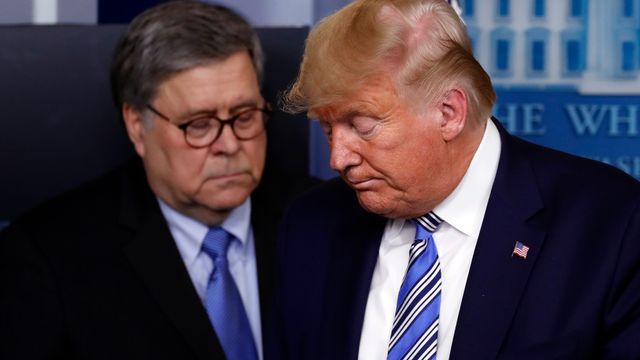
President Donald Trump and Attorney General William Barr, Monday, March 23, 2020, in Washington. (AP Photo/Alex Brandon)
The administration proposal calls for the suspension of habeas corpus, the centuries-old democratic principle protecting the right of a person under arrest to require the government prove the legality of the arrest in a hearing before a judge.
Justice Department documents call for giving the attorney general the power to override constitutional protections in federal court proceedings “wherever the district court is fully or partially closed by virtue of any national disaster, civil disobedience, or other emergency situation.” This would apply to “any statutes or rules of procedure otherwise affecting pre-arrest, post-arrest, pre-trial, trial, and post-trial procedures in criminal and juvenile proceedings and all civil process and proceedings.”
The proposal underscores the criminality of the ruling class’s response to the dangerous spread of the virus.
On the one hand, the Trump administration has responded to the devastating impact of the crisis with a policy of malign neglect, ignoring warnings, refusing to provide adequate testing and failing to produce and distribute masks and other medical equipment needed to save millions of lives. Even after having declared a “national emergency,” the ruling class has made very little money available for disease prevention and mitigation and to protect the working class from the economic fallout of mass sickness and unemployment.
On the other hand, the ruling class has made trillions available to the banks and corporations and lowered interest rates to near-zero to prop up the stock market. Now, as the administration confronts growing anger over its response and a wave of walkouts by workers in key industries, it is preparing to defend the wealth of the rich through dictatorial forms of rule.
Politico cited civil rights lawyer Norman L. Reimer, who said that pursuant to the Justice Department proposal, “you could be arrested and never brought before a judge until they decide that the emergency or the civil disobedience is over.” He continued, “I find it absolutely terrifying … That is something that should not happen in a democracy.”
The Politico report claims the Justice Department’s requests “are unlikely to make it through a Democratic led-House.” This is cold comfort, however, considering that the Democratic Party is currently advancing similar anti-democratic measures, such as the EARN IT Act, a bipartisan bill that would abolish end-to-end encryption. The Democrats are, moreover, the most vocal in attacking free speech and calling for internet censorship.
The Justice Department’s request for extraordinary executive powers comes as two Newsweek reports by William Arkin detail how the US military is preparing to potentially take control of the day-to-day governing of the country and to deploy troops on US soil.
The first Newsweek report, published March 18, notes that “Above-Top Secret contingency plans already exist for what the military is supposed to do if all the Constitutional successors are incapacitated” by the virus, that is, if Trump and all those in the presidential line of succession become ill or are quarantined. “Standby orders were issued more than three weeks ago to ready these plans, not just to protect Washington but also to prepare for the possibility of some form of martial law,” the report continues.
It adds: “According to new documents and military experts, the various plans—codenamed Octagon, Freejack and Zodiac—are underground laws to ensure government continuity. They are so secret that under these extraordinary plans, ‘devolution’ could circumvent the normal Constitutional provisions for government succession, and military commanders could be placed in control around America.”
Newsweek also reports that should the military step in to subvert the Constitution, the commander of the US Northern Command (NORTHCOM), General Terrence O’Shaughnessy, “would in theory be in charge if Washington were eviscerated” by the virus.
The second Newsweek report, published March 20, states that the US military “is preparing forces to assume a larger role in the coronavirus response, including the controversial mission of quelling ‘civil disturbances.’”
The plans center on federalizing the state national guards, effectively nullifying the principle of posse comitatus, which bars the military from conducting domestic law enforcement operations.
Newsweek cites “a senior military planner working on coronavirus but not authorized to speak on sensitive planning matters,” who “says that deployment of federal troops in support roles is being prepared,” including to conduct traffic stops, home searches and seizures and arrests.
The report continues: “Once military forces are dispersed off bases in America, the senior planner says, they will have to contend with ‘force protection’ and will be thrust into difficult general law enforcement roles, particularly as shelter-in-place and other quarantine situations escalate.”
As necessary as quarantines and other protective measures are from a public health standpoint, the focus of the military’s response is to prepare to suppress democratic rights and put down social opposition.
Newsweek references an internal military plan for “Civil Disturbance Operations” called CONPLAN 3502. The plan relates to domestic military deployments in response to “riots, acts of violence, insurrections, unlawful obstructions or assemblages, group acts of violence, and disorders prejudicial to public law and order,” according to a military study, which cites as historical precedent the use of the military to crush strikes and labor protests.
According to a 2006 Homeland Security Department document not cited in the Newsweek report, titled “National Strategy for Pandemic Influenza,” the government has made specific preparations for the possibility of protests during a pandemic.
“Due to stresses placed upon the health care system and other critical functions, civil disturbances and breakdowns in public order may occur,” the Bush-era document reads. The pandemic security document also references CONPLAN 3502 and states: “Tasks performed by military forces may include joint patrolling with law enforcement officers; securing key buildings, memorials, intersections and bridges; and acting as a quick reaction force.”
On February 1, Defense Secretary Mark Esper signed a secret set of Warning Orders (WARNORD) putting NORTHCOM and units deployed to the eastern seaboard on alert that they should “prepare to deploy,” including to the “National Capital Region.”
Newsweek reports that “now, planners are looking at a military response to urban violence as people seek protection and fight over food and, according to one senior officer, in the contingency of the complete evacuation of Washington.”
The Trump administration has invoked the Stafford Act and the Defense Production Act, but has thus far refused to exercise those provisions by which the government can force corporations to mass produce equipment needed to address the crisis.
In a New York Times op-ed yesterday, Massachusetts physician Daniel M. Horn wrote that “without swift action, parts of the United States will run out of ventilators in the coming weeks,” as COVID-19 cases skyrocket. Horn warned that “there appears to be no firm plan other than re-purposing ventilators from surgery centers.” He added, “How can we build a nimble logistics operation that can rapidly deploy those machines the moment that a shortage appears imminent? The truth is: We have no idea.”
Instead of addressing the urgent need for mass production of medical equipment and protective gear for health care workers, the ruling class has responded to the crisis by pouring money into the stock markets and preparing to suppress social opposition. This is the response of a capitalist social order that poses a great risk to the fate of tens of millions of people.

Europe’s coronavirus death toll passes 10,000

Robert Stevens

More than 10,000 people have been killed by coronavirus across the European continent. The gruesome milestone has been reached just five weeks after the first death was recorded on the continent, in France, on February 15.
With yesterday’s 1,414 new deaths, the total for the entire continent reached 10,220 deaths from 192,663 cases. Among the European Union’s 27 countries, 9,720 deaths have been recorded from 172,407 cases.
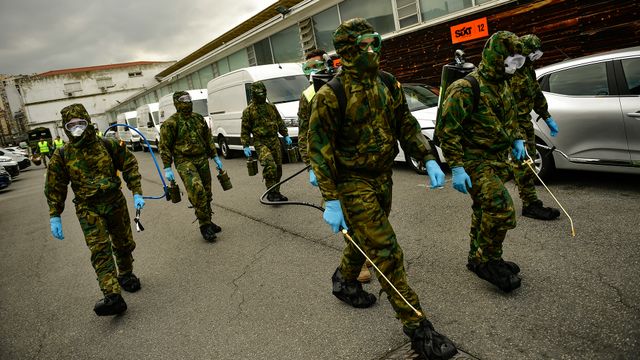
Members of Military Emergency Unit arrive at Abando train station, in Bilbao, northern Spain, Monday, March 23, 2020. (AP Photo/Alvaro Barrientos)
In Italy, 601 new fatalities brought the total to 6,077 deaths. Almost 5,000 new cases of the virus were reported. Many more lives are threatened even before these new cases, with 50,418 active cases and 3,204 classed as “serious, critical.” All told, 63,927 people have been infected in Italy.
In Spain, the death toll reached 2,206, with 434 new deaths reported, up from 391 the previous day. There were 4,321 new cases, making for a total of 27,528 active cases. Some 2,355 are classified as "serious, critical."
The inability of health and social care services across Europe to cope with the destructive impact of the virus—after decades of being underfunded, privatised and de-staffed—resulted in soldiers, drafted to disinfect and run residential homes in Spain, finding elderly people dead in their beds, abandoned to their fate with the country under a strict lockdown.
In France, there were 186 new deaths, an increase over the previous day’s 112, bringing the total to 860. The deaths included another two medics, one a GP and the other a gynaecologist. There are over 13,000 active cases in the country, 8,675 people in hospital and 2,082 people in critical condition.
A further 34 people perished in the Netherlands, bringing the total to 213, and 24 people died in Germany, bringing fatalities to 118.
In the UK, after it was announced that 54 more people had died, and 335 in total, Conservative Prime Minister Boris Johnson announced a lockdown of the country Monday evening. People can leave their homes only for “very limited purposes,” including “shopping for basic necessities, as infrequently as possible” and “one form of exercise a day.” Only two people can be together, unless they live in the same household. Police can enforce the lockdown, “including through fines and dispersing gatherings,” said Johnson.
The Foreign Office advised the up to one million Britons on holiday or on business trips abroad to return to the UK immediately. They warned that otherwise there would likely be no more commercial flights available, with air routes likely shutting without warning Tuesday and Wednesday.
Johnson’s government has refused to take a number of critical measures to stop the spread of the virus. Its original plan, before being forced to retreat, was to allow the mass infection of the population, supposedly to achieve “herd immunity.” The government still advises all who suspect they have the virus not to seek treatment in hospital, but to “self-isolate” at home—without being tested.
More evidence is emerging that those who are contracting the virus and in some cases dying are from many age ranges, including younger, fitter people, from a baby who was born with the virus to a group of three 30-year-old junior doctors in the same UK hospital who were diagnosed Sunday and required ventilators.
In response, the ruling elite is putting into operation draconian attacks on civil liberties that set a dangerous precedent, while providing no real medical assistance.
Yesterday, the Johnson government was able to pass all stages in the House of Commons of the Emergency Coronavirus Bill, under which he and his ministers are granted extraordinary authoritarian powers, including banning any assembly of people, at any time and place.
This week, Hungary’s parliament will hear a bill under which far-right prime minister Viktor Orbán is set to receive dictatorial powers enabling him to rule by decree. The powers provide no defined cut-off date and include imprisoning those deemed to be spreading “fake news” for prison terms of up to five years.
No government in Europe or internationally is carrying out the mass testing required to successfully quarantine and then treat those infected, who may not be showing symptoms but who are still spreading COVID-19. Even front-line medical staff are not being tested. Due to health service cuts, there is hopelessly inadequate provision of basic medical facilities, including ventilators and personal protective equipment (PPE) for staff.
In contrast, the banks, corporations and super-rich are being granted bailouts that eclipse those granted to the bankers and financial institutions after the 2008 global financial crash. In recent days, Germany, France, Britain and Spain have announced massive subventions to big business, under conditions in which millions of workers have already been laid off, with only those in essential services now employed in most European countries.
Well over a trillion euros have been made available in a matter of days to prop up the financial aristocracy and corporate billionaires. Chancellor Angela Merkel’s government has made available a package worth around €750 billion to protect Germany’s banks and major corporations. Emmanuel Macron’s French government committed €300 billion and Johnson’s Chancellor Rishi Sunak £350 billion.
Spain’s Socialist Party Prime Minister Pedro Sánchez has committed $219 billion to the corporations, including €100 billion of guarantees for company loans. A further €17 billion of direct support for enterprises is available and €83 billion is reportedly being reserved for private sector investment.
These handouts represent a gigantic raid on the public purse for the second time in a decade. Germany’s bailout is the equivalent of 20.5 percent of GDP, Spain’s, 15.6 percent and the UK’s, 15 percent.
These bailouts followed the lead of the European Central Bank, which last week announced a €750 billion new money-printing programme aimed at keeping financial markets afloat. The ECB is committed to buying government debt and private securities with the new funds by the end of this year.
These vast sums are just a down payment, with government officials in treasuries in the main European counties stressing that there will be “unlimited” funds available. This was confirmed yesterday, as Johnson’s government agreed to nationalise the losses of every private rail franchise in Britain for the next six months initially. This transfers all revenue and cost risk to the government, but leaves private firms able to still reap profits and be paid a management fee under an “emergency measures agreement.”
Workers throughout Europe must demand a programme directly opposed to that of the corporations and the governments that act on their behalf. They must reject this unprecedented bleeding dry of the public purse for the purpose of funding big business and the bankers. These entities must be taken under public control and run by the working class in the interests of society.
In a statement Monday, “The spread of the pandemic and the lessons of the past week,” the WSWS proposed the measures necessary for workers to take forward the fight against the COVID-19 pandemic: “The working class must demand universal testing and free and equal access to health care; the closure of all nonessential production, with full income to those affected; safe working conditions in industries essential to the functioning of society; and an emergency program to build health care infrastructure and ensure that all medical workers have access to the necessary equipment.”

23 Mar 2020

The IMF Abandons Venezuelans to the Threat of the COVID-19 Pandemic

Nino Pagliccia

No government that had to bow to the power of a financial institution like the International Monetary Fund (IMF) knows the harsh consequences to which it will have to submit. That includes the Venezuelan government. And yet last March 15 president Nicolas Maduro filed a formal request to the IMF for a financing facility of US$5 billion from the emergency fund of the Rapid Financing Instrument (RFI) with the following words in a letter sent to the IMF director Kristalina Georgieva and that Arreaza published on his Twitter account:
“Only under the spirit of solidarity, brotherhood, and social discipline, we will be able to overcome the situation that comes our way, and we will know how to protect the life and wellbeing of our peoples.”
To no avail. The IMF took the decision to reject the requested loan to combat the COVID-19 pandemic in Venezuela. Although predictable, it is shocking. (We make the side note that while we trust the source of the information, we have not been able to confirm it officially from Venezuela nor have we been able to find the information on the IMF website.)
What makes the IMF decision particularly disgraceful is the fact that the special RFI fund was set up precisely to respond to the current pandemic. Instead the IMF made a politicised decision totally contrary to its purported intentions and Venezuela’s legitimate request.
The Washington-based institution rejected the request with the unprincipled excuse: “Unfortunately, the Fund is not in a position to consider this request,” claiming that there is “no clarity” on international recognition of the country’s government. “As we have mentioned before, IMF engagement with member countries is predicated on official government recognition by the international community, as reflected in the IMF’s membership. There is no clarity on recognition at this time”.
The IMF has a membership of 189 countries. Venezuela has been a member since 1946 despite its intentions to withdraw in 2007. Only about 50 countries are reported to recognise self-appointed unelected “interim president” Juan Guaidó. The majority of IMF countries have recognised elected president Maduro. This leaves no doubt that the IMF decision responds to political pressure from dominant powers like the US, Canada, and several EU countries.
Iran had recently made a similar request to the IMF for the same amount. At the time of writing we do not know the decision. A recent analysis suggests that it will be very unlikely that the IMF will grant a loan to Iran as the IMF is seen as a “soft power tool” of the US. However, the analysis continues, “This is great PR for the Iranian government, specifically the hardliners. It allows the government to tell the general population that they tried to reach out for help, but that the international community turned their back on them.”
What makes the request for IMF special funding particularly crucial at this time is that these two countries have been forced into an economic situation similar to war time or a siege – despite their wealth in resources – is the fact that they are under severe US unilateral coercive measures (sanctions) that prevent them from purchasing medication and medical supplies ever more necessary in a situation of pandemic. Following the just announced drop of oil price below $25 a barrel, both countries can only expect the situation to get worse even if they were able to freely export oil without US intervention.
Venezuela, has been the object of escalating threats as well as financial and economic blockade by the US since 2017. Despite that, it has been able to confront the crisis with a series of internal policies and the solidarity of countries such as Cuba, China and Russia. Venezuela does not have a critical health situation due to CODIV19 virus with only 42 confirmed cases to date. All standard prevention programs and recommendation are in place but things can quickly change for the worst.
Venezuela’s heavy reliance on loans would be unnecessary if the government could have access to the financial resources it owns but have been blocked. US has imposed an oil blockade that has blocked the purchase of oil from Venezuela’s state oil company, PDVSA. It has also confiscated Venezuela’s US subsidiary CITGO, worth $8 billion. This is a huge blow for Venezuela, which receives around 90% of government revenue from the oil industry. The US government has also frozen $5.5 billion of Venezuelan funds in international accounts in at least 50 banks and financial institutions.
We must conclude that the IMF shamefully abandons Venezuelans to the threat of the COVID-19 pandemic on a political decision. However, we also must recognise that the US has typically either created national crises or taken advantage of natural crises for its unrelenting regime change goal. There is no other explanation for the additional “sanctions” imposed on Iran at this time.

Entertainment industry in North America devastated by layoffs

Penny Smith

Due to the deadly coronavirus pandemic, the entertainment industry across North America has effectively shut down, leaving hundreds of thousands of already precariously employed workers suddenly without an income.
Over the last few days, all the major studios have announced widespread production closures. On March 13, streaming giant Netflix announced the shutdown of all scripted film and television production in the US and Canada for two weeks. Disney+ and Apple TV+ have halted all live-action productions indefinitely. Warner Bros. has shut down some 70 series and pilots “currently filming or about to begin,” according to the studio, and Amazon Original has paused on all its series currently in production. US-based networks NBC and FX shut down production of some 35 shows and four shows, respectively.
In Los Angeles, a raft of dramas, sitcoms and talk shows have canceled or suspended production, affecting over 200,000 workers. In Canada’s main film hub of Toronto, virtually all production had already been suspended, in total affecting 30,000 jobs. Forty-eight out of 51 productions have been shut down in British Columbia, mainly in the Vancouver area, affecting more than 20,000 workers.
Black Widow–one of the films whose release has been delayed
“Everyone is in a state of shock,” a key assistant location manager who was working on a television show in Atlanta that opted to end its season early told Variety. “We have no idea when things will start back up again.”
All sections of the entertainment industry have been impacted, including scheduled theater performances, cinematic releases and industry events. On March 12, Broadway theater in New York, notorious for extremely high levels of unemployment and poverty wages, announced it was shutting down after New York Governor Andrew Cuomo ordered a statewide ban on gatherings over 500 people. On March 19, Montreal-based circus performance company, Cirque Du Soleil, announced it was laying off 4,679 workers.
Movie theaters, where many positions are part-time and the average worker makes the minimum wage, have mostly closed down. Two of the largest theater chains in the US, AMC Theaters and Regal Cinemas, have shut down nationwide after ticket sales plunged to the lowest in 20 years. Last Tuesday, Cineplex announced the temporary closure of all 165 theaters across Canada, followed by Landmark Cinemas, the country’s second-largest movie chain with 46 theaters.
The entertainment industry is a growing segment of the gig economy that almost by definition offers little or no job security. Live theater wages are cut-rate and the unemployment rate extremely high. Many workers typically rely on second jobs such as serving in a restaurant, many of which are now closed. An actress who works as an usher on Broadway told Variety that “my co-workers shared my anxiety, but we all knew this was not a fear of contracting the coronavirus, it was financial. ‘How am I going to make rent this month?’ became as common as ‘hello’ in the course of 24 hours.”
There have been few guarantees in the precarious film and television business either. The chaotic and frenzied production environment means workers are hurried in and out of employment, often with contracts that don’t extend beyond that day or that week. The studios increasingly rely on an expanding base of on-demand, low-wage production assistants and laborers.
An artist working in costly Vancouver, whose production closed down last week, told the WSWS, “I am not breathing easily as the coming weeks and months loom of financial commitments with no substantial and affirmative idea of what the financial supports will look like ... [I have] feelings of uncertainty, and overwhelming worry about the big ‘what ifs’ as this pandemic unfolds daily.”
Another Vancouver worker, whose production was still open and operating with a skeleton crew as of last week, told the WSWS, “I’m still working because I can’t pay rent otherwise. After this [production shuts down], there’s nothing.”
Workers in the communal setting of the entertainment industry are at great risk of exposure to coronavirus. The recommended practice of “social distancing” is a virtually impossible measure to take. Theaters and cinemas are transient, congested and poorly ventilated spaces. Film and television production houses are often like mini-villages populated by thousands of workers working in close confines, and there are dozens if not hundreds of cast and crew interacting on a single set during shooting. Fatigue and stress, which compromise the immune system, also render workers more vulnerable to infection.
Despite the serious threats posed to entertainment workers’ health and well-being posed by the coronavirus, many film and television productions were slow to react. In Georgia, where more than 5,000 film and television crew are employed, it continued to be “business as usual,” according to a state official, despite the fact that there had already been 31 confirmed and presumed coronavirus cases reported in the state, including one death. Those figures for Georgia have since grown to 555 confirmed cases and 20 deaths.
On March 10, the LA Times reported there had been no film permit cancellations in Los Angeles, even though the total number of coronavirus cases in Los Angeles County recorded by public health officials that day was 17. On-location filming has since been shut down, as cases have climbed to 351 across Los Angeles County, including four deaths.
In Chicago, film permits were still being issued last week, ignoring the fact that a crew member working on the Fox series NeXt tested positive for coronavirus on March 10. The crew member had been working at Cinespace Film Studios, a massive 30-stage production facility operating with at least six productions. Only a week and a half later, Illinois state imposed a “stay at home” order after the state recorded over 700 cases. The Chicago Film Office has since temporarily stopped issuing film permits.
Film and television productions in New York City were still active as of March 13, undeterred by Mayor Bill De Blasio’s declaration of a state of emergency and admission that the situation in the city was “radically changing.” A matter of days later, New York state was declared the “epicenter” of the coronavirus crisis in the US as cases soared beyond 11,000.
Netflix has announced a pathetic $100 million fund to help its international workforce, small change considering the almost $8 billion in revenue the giant media-services provider and production company generated last year. Netflix’s pledge of two weeks’ pay to their own casts and crew members affected by the production suspensions will have little effect in the long-term. According to Dr. Amy Greer, Canada Research Chair in Population Disease Modelling at the University of Guelph, the population may be faced with up to eight months of “aggressive social distancing.”
The shutdown of film and television production is a global phenomenon. The Indian film industry, one of the largest in the world, announced a suspension of all film, television, advertising and web series as of March 19. According to the Hollywood Reporter, the India Motion Picture Producers’ Association “also advised all Indian film crews currently at work on projects overseas to return to the country within the next three days.”
In the UK, reports the Guardian, “the situation for ‘below the line’ crew appears equally catastrophic. Bectu (Broadcasting, Entertainment, Communications and Theatre Union) estimates around 50,000 industry freelancers will have lost their jobs as a result of the pandemic.”
In the face of increasing closures of cinemas and production delays internationally, the film industry stands to lose at least $20 billion, even in the short-term. Productions that were at the beginning stage or at the midway point will claim losses against insurance, but for those companies without insurance that cannot absorb the cost of the disruptions, production is continuing. This is the motivating factor behind the studios’ decisions to close or not close a given production, not the overall threat posed to their crews’ general health and safety.
According to Forbes, the film industry made a record-breaking $100 billion last year. Today, a single blockbuster film can generate $1.5 billion or more at the international box office alone. But no matter how enormous the profit raked in by the studios, the conditions for workers worsens, with low wages, unemployment, underemployment and increasing reckless disregard for worker safety.
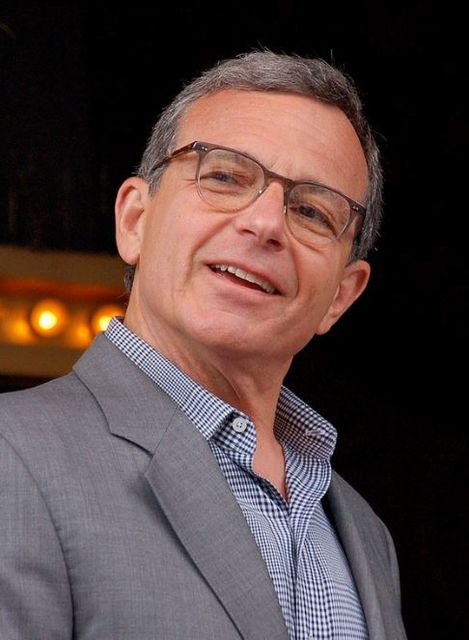
Earlier this month, as news broke of widespread and sudden job losses across the entertainment industry, Disney shareholders endorsed a $47.5 million 2019 pay package for former CEO Robert Iger, a decline from 2018, when he was paid $65.6 million. In late February, Iger stepped down as head of Disney. Now, various voices are claiming coronavirus could well be the reason Iger resigned. Analyst Neil Cybart, for example, suggested that “Iger’s surprise resignation as Disney CEO was related to coronavirus. He stepped down on February 25th. Disney had already seen the coronavirus impact in China. They knew Japan was next.”
Disney's Robert Iger (Photo credit–Angela George)
In relation to the pandemic, Disney has explained: “The impact of the novel coronavirus (‘COVID-19’) and measures to prevent its spread are affecting our businesses in a number of ways. We have closed our theme parks; suspended our cruises and theatrical shows; delayed theatrical distribution of films both domestically and internationally; and experienced supply chain disruption and ad sales impacts.”
The entertainment industry unions have reacted to the coronavirus crisis with their typical paralysis and ineptitude. The feeble initiatives such as temporary membership dues amnesty will hardly improve things for workers faced with long-term unemployment and poverty. The unions’ response to the sudden job and wages loss of their workers is to plead with the governments in the US and Canada for emergency relief.
The needs of working people must take absolute and unconditional priority over all considerations of corporate profit and private wealth. It is not a matter of what the ruling class claims it can afford, but what masses of people need.
The Socialist Equality Party advances the demand for accessible and universal testing and free treatment for all those infected, and an emergency program to expand health care infrastructure. The immediate closure of non-essential plants and other workplaces is essential, with full income for workers affected, including those working in the entertainment industry. No worker should be expected to place his or her life in danger, and should be financially compensated for loss of income.
We call on all workers and young people to join this campaign and support this fight. The building of an international socialist and revolutionary movement is the central question of our time. It is a matter of life and death.

COVID-19 health disaster and political crisis intensify in Australia

Mike Head

A dramatic increase in officially-reported COVID-19 infections in Australia, taking the same trajectory as the exponentially rising toll in Italy and internationally, has further exposed the criminal lack of preventive public health measures by the federal and state governments, while forcing them into partial economic shutdowns.
Yesterday the soaring rate of infections triggered an open rift in the self-styled “national cabinet” formed by Liberal-National Prime Minister Scott Morrison and his state and territory counterparts, five of whom are from the Labor Party.
The premiers of the two most populous and badly-infected states, New South Wales (NSW) and Victoria, yesterday announced shutdowns of all “non-essential” industries. But Morrison browbeat them at last night’s online cabinet meeting into agreeing to only limited closures. Major infection sites such as shopping malls, schools, factories and mines will remain open across the country.
What none of the government heads mentioned is that, at the current rate of infections, which are quadrupling each week, the number will exceed 1.4 million within five weeks. Just yesterday, another 281 people were recorded as testing positive, bringing the total to 1,354 by last night.
A fortnight ago, COVID-19 cases in Australia totaled 91. A week ago, it was 376. The number will exceed 1,500 by tonight. Rather than “flattening the curve,” as the governments claim, their measures have permitted the total to skyrocket. Seven people have died so far.
These figures seriously understate the true spread of the virus because testing is being strictly limited to those already displaying COVID-19 symptoms or who have been in “close contact” with a confirmed infected patient.
All the government heads, Liberal-National and Labor alike, are trying to blame the public, especially young people, for allegedly ignoring “social distancing” messages. But the record shows that it is these governments and the capitalist class they serve that are responsible for the spiraling health disaster.
These governments have muddied and undercut the public health precautions by their indifferent responses, driven only by private profit concerns. Just over a week ago, Morrison was encouraging people to join football crowds. It is no wonder that the already historic levels of distrust of the political leaders, accentuated by the bushfire catastrophe, have deepened.
Even while Morrison and the Labor leaders denounced people for going to beaches and bars, they were still sabotaging their own quarantine systems, always in the interests of corporate profit. One of the most grotesque examples was the federal and NSW governments allowing five huge cruise ships to dock in Sydney this month and herd passengers off without any infection checks.
In one case alone, that of the Ruby Princess, about 2,700 passengers, some already displaying COVID-19 symptoms, were rapidly offloaded last Thursday. At least 23 have since tested positive for the virus, too late to avert its spread.
Far from any concern about the lives and livelihoods of millions of people, the total preoccupation of the government leaders is with trying to shore up major corporations, such as the cruise line operators, and the financial elite as a whole. This includes forcing school teachers to keep working in dangerous classrooms, while handing billions of dollars to the banks and business.
From midday today, all states and territories have shut pubs and clubs, as well as cinemas, nightclubs, casinos, gyms, indoor sporting venues, churches and places of worship, while cafes and restaurants can only be open for takeaway orders. Yet schools are supposed to remain open, although the outrage of teachers and parents has forced governments to allow parents to keep their children home from school without penalty.
Each government, except for Victoria and NSW, has shut its borders or imposed tight restrictions on movement. Even here, exceptions are being made for big business. The Western Australian government has given a carve-out to the mining companies, allowing 2,500 fly-in, fly-out workers to continue to enter the state to work on mine sites and oil and gas rigs.
To try to boost the financial elite, the federal government announced another $66 billion economic “survival” package yesterday, but it was immediately rendered impotent by the shutdown announcements. Over the past 10 days, Morrison’s government has allocated $198 billion in such packages, three-quarters of it for corporate tax breaks and subsidies, on top of billions of dollars more in state and territory government handouts.
The cynical pretence by Morrison and the Labor leaders that these measures would help keep workers employed was shattered this morning. Massive queues formed outside the government’s Centrelink welfare offices and the MyGov website crashed. Hundreds of thousands of workers, laid off already by businesses large and small, have started anxiously lining up to register for dole payments.
At the same time, not a cent of the multi-billion dollar packages is to be spent on addressing the ever-more urgent emergency situation in the health system, which will soon be overwhelmed.
Even if the spread of infection is limited to the official “best-case” scenario of 20 percent of the population (that is, five million people), the estimated 2,023 intensive care beds across the country fitted with ventilators could not meet the need. Judging by international experience, one million people could require hospitalisation, needing up to 50,000 ventilators.
This health system breakdown is well underway. Doctors, nurses, paramedics and aged care workers are reporting acute shortages of personal protection equipment, such as masks and gowns, and other essential medical resources. In many cases, supplies have dried up because of the worsening global pandemic, underscoring the lack of preparation by governments in Australia and around the world.
Many people will die, or suffer life-long health damage, as a direct result of the big business-driven gutting of public health services for decades, and the refusal of governments to provide the necessary medical facilities, despite waves of pandemics, such as SARS, since the turn of the century.
Under yesterday’s “survival” package, small and medium-sized businesses can apply for wage subsidies of up to $100,000 each—if they keep workers employed—and for government-guaranteed loans capped at $250,000 each. But as the Centrelink queues demonstrate, employers have quickly thrown vast numbers of workers onto the scrapheap.
Nicki Hutley of Deloite Access Economics told the Australian Broadcasting Corporation that 75 percent of jobs would be eliminated in affected industries. Neither wage subsidies nor loans would avert that, she said. By earlier estimates, more than two million workers will soon be jobless or “under-employed.”
These workers, like other welfare recipients, will have to wait until April 27 to receive an extra $550 a fortnight in Jobseeker (formerly Newstart) payments. After keeping Newstart recipients on sub-poverty level benefits for years, the federal government will double the payments from that date, but just for six months. This will be far too little for most workers, whose households are deeply in debt, mainly due to exorbitant mortgage repayments or rents.
Likewise, all welfare recipients will get a second one-off extra payment of $750, but not until July. Morrison contemptuously claimed that these pittances meant the government was “supercharging our safety net and supporting the most vulnerable to the impacts of the crisis.”
All this is being done with the bipartisan support of the Labor Party. Its leader Anthony Albanese and other parliamentary leaders joined hands at a meeting with Morrison and his senior ministers yesterday to agree to quickly legislate the government’s economic packages today in a rump session of parliament and then shut it down indefinitely.
This is part of an anti-democratic and authoritarian official response. Acutely aware of widespread discontent, the federal and state governments are deploying police units, joined by military forces, onto the streets in the name of enforcing shutdown and quarantine measures.
Morrison told a media conference yesterday: “I’ve already had the Defence Forces being deployed into the states to assist with medical check-ups and chase-ups, contact tracing.”
Writing in News Entertainment newspapers on the weekend, George Megalogenis summed up the fears in ruling circles. “The question of recession is now redundant; the challenge is to maintain social order for the six months of Australia’s isolation.”
If the cash splashed on the banks and employers was instead poured into the health system, lives could still be saved, but that would be intolerable to the capitalist elite. This shows the necessity for the working class, including health and education workers, to take matters into their own hands, as part of the fight for the complete socialist reorganisation of society.

Two Sri Lankan prisoners killed and six injured amid national coronavirus lockdown

Saman Gunadasa & K.Ratnayake

Two prisoners were killed and six more injured on Saturday when guards opened fire during unrest at Anuradhapura Prison in Sri Lanka’s North Central Province. One of those shot died at the prison, which is about 200 kilometres from Colombo, while the other died in hospital.
Citing the coronavirus threat, Sri Lankan prison authorities imposed a ban on all visitors on March 18. Committee for the Protection of Prisoners President Senaka Perera told the media that the Anuradhapura prisoners were angry over the poor-quality food supplied by the authorities since the bans.
Perera said that Sri Lankan prisons are so congested that, in some cases, 5,000 inmates are crammed into facilities meant to accommodate 800 people. According to brief media reports, tensions also rose last week inside Kegalle jail after rumours spread that a coronavirus-infected individual had been brought to the prison.
Anuradhapura prisoners began protesting on Saturday morning after they heard that four inmates had been infected with coronavirus. Authorities claimed they opened fire when some prisoners tried to escape. It is not yet clear whether prison guards or Special Task Force police fired on the unarmed inmates. Army personnel have been deployed near the prison since Saturday night.
The Anuradhapura prison riot occurred as President Gotabhaya Rajapakse imposed a nationwide lockdown, beginning on Saturday morning. While it will be lifted in several parts of the country today, the northern districts and several districts in north-western and western province, including Colombo, will remain under lockdown until Tuesday morning.
Rajapakse initially refused to impose a national lockdown, claiming that his administration could control the situation. He also rejected calls for a postponement of the previously scheduled April 25 general election, hoping to exploit the inability of other parties to campaign. On March 19, the Electoral Commission announced, after the closure of nominations that day, that it was postponing the national poll.
Last night, the number of people in quarantine in Sri Lanka—at hospitals and homes—rose to nearly 12,000 and confirmed infections reached 82. No deaths have been reported.
Amid the rapid spread of COVID-19 nationally and internationally, the Rajapakse administration finally decided to impose a short-duration national lockdown.
The callous and criminally irresponsible attitude of the Rajapakse government was reflected in the president’s national address on the pandemic last Tuesday. Rajapakse demagogically declared his administration could control the pandemic and then, in a reactionary call, blamed “outsiders” for bringing it to Sri Lanka.
Rajapakse said a Chinese tourist was found infected in January and released in early February after having recovered, unintentionally revealing that the government took no precautionary measures during this time to protect the rest of the population.
The president also blamed migrant workers and tourists for the spread of the virus, asserting: “Our biggest problem is the travelers, almost 2,000 in number, who had entered the country from high risk countries for about two weeks before we actually started quarantine.”
Rajapakse, who insisted that his administration “will be able to completely control this situation,” did not announce any additional funds to improve the healthcare system.
As of Friday, the government has allocated just 500 million rupees ($US2.67 million) for coronavirus health expenses, even as the number of hospital beds for treatment of those infected is rapidly decreasing.
The main quarantine centres have been improvised at armed forces-controlled camps, or institutions like the Kandakadu rehabilitation centre and Batticaloa University. There are currently 22 quarantine centres in Sri Lanka but many of these are unlivable because of the high tropical heat and minimal facilities.
In contrast to Rajapakse’s claims about “preparedness,” World Health Organisation (WHO) Regional Director Dr. Poonam Khetrapal Singh cautioned countries in South Asia, including India, Sri Lanka and Bangladesh, to “urgently scale-up aggressive measures” and to “do more, and urgently” to fight the virus. She said testing was very limited in these countries, which is one reason for the low number of reported cases.
Rajapakse also used his speech to push election propaganda for his Sri Lanka Podujana Peramuna (SLPP) and to promote “a strong government led by [his older brother and former president] Mahinda Rajapakse.”
The Rajapakses are fighting to secure a two-thirds majority in the election in order to remove existing constitutional restrictions on the executive presidency and to ruthlessly impose the burden of the escalating economic crisis on workers and the poor.
COVID-19 is intensifying the global crisis of capitalism and drastically impacting on the Sri Lankan economy. On Friday foreign investors withdrew funds from Sri Lanka, placing pressure on the rupee. The Central Bank also announced an immediate three-month ban on non-essential imports, including cars and electronic goods, to halt the drain of foreign reserves.
President Rajapakse is using the pandemic to further militarise his administration. Prior to his March 17 national address, he held a meeting with members of the Special Task Force set up to combat the pandemic. The new agency is packed with senior military officers.
Brushing aside calls for a total lockdown of Sri Lanka, Rajapakse said: “We managed to defeat LTTE terrorism, unlike other countries in the world. Other countries may have the best medical facilities but we managed to cure infected people, through our efforts.”
Former army commander General Daya Ratnayake, who is current head of the Ports Authority, declared: “This is a time that belongs to the military… The military must get the upper hand.”
On the same day, Rajapakse formed the National Operation Centre for the Prevention of COVID-19 and appointed Army Commander Major General Shavendra Silva to head it.
Rajapakse’s reference to defeating the LTTE, in Colombo's brutal decades-long war against the Tamil population, is an attempt to whip up communalism. Its aim is to divert attention from his government’s refusal to adequately respond to the coronavirus. “I’m the one who runs this country. Those holding responsible posts should do as I say,” he told the meeting.
While ordinary Sri Lankans face enormous hardships, Rajapakse cynically announced a miniscule reduction of the retail price of a kilo of dhal to 65 rupees and a tin of fish to 100 rupees. In the same breath, he announced massive concessions to big business and investors: “I am also ordering banks and finance companies a recovery period of six months for loan facilities taken out by businesses… [and] steps are being taken for banks to give capital at four percent interest.”
Sri Lankan workers and the poor, like their counterparts around the world, cannot rely on governments and the ruling elites to provide an adequate healthcare system, financial support and other vital resources for the sort of internationally coordinated effort required to defeat the coronavirus pandemic.
That is why the working class must take the initiative by uniting with its class brothers and sisters around the world in the fight for a socialist program and the abolition of the capitalist profit system.

Russian cases of coronavirus surge as economic crisis hits

Clara Weiss

As of Sunday evening, the number of confirmed coronavirus cases in Russia has climbed to 367, up from 253 on March 20. Starting today, Russia is closing its borders for all international travel. The ban is set to stay in effect until May 1.
According to official statistics, Russia has performed well over 100,000 tests with over 50,000 people having been under medical supervision over the past month. Numerous reports and individuals, often affiliated with the liberal opposition of the right-wing politician Alexei Navalny, suggest that these numbers are a significant understatement of the real number of cases. In particular, a reported 37 percent spike in pneumonia cases in Moscow in January sparked rumors that the real number of coronavirus infections is being covered up.
There has also been conflicting information about what was initially reported as the first person to have died from COVID-19. The 79-year-old woman had been a lecturer at the Gubkin Oil and Gas University and reportedly continued her job, including interaction with students and faculty, until the day before she was hospitalized. The fact that she had preexisting conditions was used by the state-controlled press to downplay the incident, and although she had contracted COVID-19, the officially reported cause of death was a blood clot.
All of Russia’s 85 regions have by now declared high-alert status. All large gatherings are banned, schools and universities are moving to remote-learning, and individuals are encouraged to work from home. Russians returning from abroad are mandated to self-quarantine for two weeks. All cultural establishments with seats for more than 50 people have been closed.
A national referendum initially scheduled for April 22 on far-reaching constitutional measures proposed by President Vladimir Putin is likely set to be postponed. Like bourgeois governments internationally, the Kremlin seeks to exploit the crisis for a further crackdown on democratic rights. The proposed constitutional changes already entail a significant strengthening of the propagation of right-wing Russian nationalism and a consolidation of the role of the Orthodox Church, a hotbed of far-right and fascist tendencies. Since the crisis began, the Russian parliament has extended the potential terms for Vladimir Putin, who has been president or prime minister since 2000, indefinitely.
Last week, Putin urged an intensified struggle against “cybercrimes” to fight “extremism” and “terrorism,” a barely veiled announcement of already extensive internet surveillance. Putin stressed, “It is essential to continue to foil any actions aimed at destabilizing the situation in society, at violating traditional spiritual and moral values, provoking interethnic and interreligious discord.”
The government has also sought to whip up xenophobia over the coronavirus. One of the first responses by the local government in the major industrial city of Yekaterinburg, for instance, was to deploy a “Cossack patrol” in neighborhoods with many Chinese immigrants. Last week, reports also emerged that at least 79 Chinese nationals had been detained and deported for allegedly violating quarantine. About half of them were university students. The usual penalty for such violation is just a fine of less than $10.
The Russian oligarchy is promoting nationalism and xenophobia and pushing for greater surveillance and dictatorial measures, as social tensions are set to escalate over both the medical and socioeconomic impact of the pandemic.
The dissolution of the Soviet Union and restoration of capitalism were the beginning of what has now been three decades of unending cuts to social spending in education and healthcare, in particular.
The destruction of social services and staggering poverty levels have left the population in overall poor health. The average life expectancy is 71.6 years, five years less than in the US or EU. For men, it is only a little above 65 years. The largest HIV epidemic outside of sub-Saharan Africa has been raging in the country for years, with an estimated two million people or more affected out of a population of 140 million.
Russia still has more hospital beds and ventilators per capita than countries such as the US or Italy. Thus, there are some 40,000 ventilators in Russia, or 27.3 per 100,000 residents, compared to 18.8 per 100,000 residents in the US, 12.9 in the UK and 8.3 in Italy. However, leaving aside the fact that even these numbers would be insufficient, in the likely scenario of a further dramatic exponential rise in the number of cases, much of the equipment is old.
Comparing the Italian and Russian healthcare systems, the anesthesiologist Vladimir Budyansky told the liberal newspaper Meduza, “Let’s say we take your average ICU: 20 beds, and each one has one person on artificial ventilation. We have the same equipment they do [in Italy], there are doctors, there are nurses. I think that in a lot of situations, we’ll have it worse for a variety of reasons. For example, when they say they don’t have enough nurses for them, that means there used to be one nurse per patient, and now, there’s one for every two. Well, we’ve got one nurse serving three or four or five already. So what’s twice as bad as usual for them is two times better than what we have normally.”
Budyansky also pointed out that while some ventilators are modern devices, others are “old-fashioned” and unfit for use for lung ventilation procedures. “All else held equal, we’ll have a relatively spotty situation with treating critically ill patients in some regions of the country.”
Like virtually all countries affected by the pandemic, Russia is also facing serious shortages in masks. According to a report by Gazeta.Ru, the lack of masks may last all the way through the pandemic. Currently there are neither masks in pharmacies nor in the hands of manufacturers, and it is unclear when they will be produced and delivered again. Before the crisis began, about 80 percent of masks on the world market were produced by China. Russian newspapers report that the government is now drawing in military personnel, prisoners and students to sew new medical masks.
As a result of a combination of Western sanctions and failed import-substitution policies, there has also been a severe shortage of medicines in Russia.
In early March the ruble experienced its most significant devaluation in years after Russia and Saudi Arabia failed to reach an agreement on world oil prices. About 60 percent of exports and 30 percent of GDP depend upon oil and gas, making the Russian economy highly vulnerable to the world economic crisis and oil price collapses.
Russia already experienced a recession in 2014-2016, largely as a result of the economic warfare by the US and EU over the Ukraine crisis. Since 2014, real wages have continuously declined, and those counted as extremely poor have grown to over 20 million now, out of a population of 140 million. Now, the economic and social conditions for tens of millions of workers are set to further worsen dramatically through both the economic repercussions of the recession and the measures taken by the government to curtail the coronavirus pandemic at the expense of the working class population.
A reader of the World Socialist Web Site in Moscow noted, “Universities and schools have now all moved to remote instruction. But not all teachers and students can work remotely. Moreover, not all institutions provide the teachers with the [necessary] technological equipment and access to video communication services. Many people have to buy the technological equipment and subscribe to the software with their own money. There were reports that there are no notebooks left in some stores. … Companies and organizations which cannot guarantee remote work for their workers are reportedly sending them on vacation without pay. …. There are reports indicating that three million businesses could go bankrupt. Because of these developments social tensions may rise. The prices for products of mass consumption were already constantly rising before the pandemic.”