3 Apr 2020

Europe: Over 520,000 coronavirus cases and almost 38,000 deaths

Robert Stevens

European countries, including Spain and the UK, announced record-high daily coronavirus death tolls Thursday. With the 4,199 new deaths yesterday, 37,864 have already perished in Europe. There have been more than 521,000 cases of COVID-19 infections on the continent including 33,661 new cases.
In Spain, 950 died—the third consecutive day of a record high.
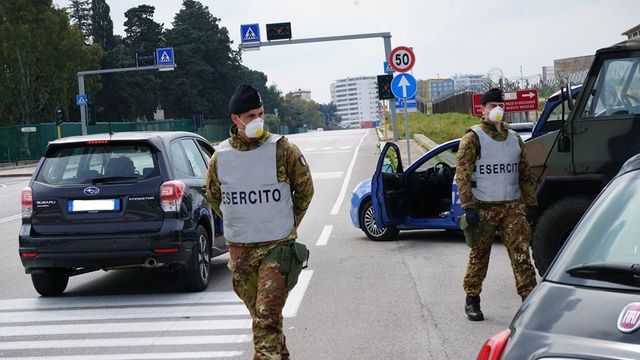
Italian Army soldiers monitoring cars and controlling the streets in Bari: (credit Twitter: Italian Army)
In the UK, the death rate has quadrupled in a week. In just four days since Monday, 1,693 coronavirus deaths have been announced—more than were recorded on all days up to March 29. The Department of Health and Social Care reported a record 569 deaths Thursday, taking the total to almost 3,000 (2,921). This was the second consecutive day Boris Johnson’s Conservative government announced over 500 deaths. Wednesday’s 563 fatalities were a 31 percent increase on the previous day.
With an age range of the latest deaths between 22 and 100 years old, nearly 8 percent (44 people) of yesterday’s victims had no known underlying health conditions.
Britain is now showing the terrible daily toll commonplace in Italy and Spain, with the pandemic taking over 13,000 and 10,000 lives in those countries.
The UK infection rate has also shot up, with 4,324 new cases announced Wednesday and 4,244 Thursday. Total infections in the UK stand at 33,718 but are in reality much higher. Hardly any tests were done when the outbreak began, despite months of warnings. Three weeks ago, Johnson announced—as part of attempting to enforce his “herd immunity” policy aimed at infecting everyone in the country with coronavirus—that no systematic testing would be done and that everyone who showed symptoms should self-isolate.
More than 1.7 million people in the UK have likely caught coronavirus over the past 15 days. Data from the NHS 111 online service revealed that web-based assessments flagged 1,496,651 people as potential carriers; a further 243,543 calls to 111 and the 999 emergency number concluded callers had signs of COVID-19.
It was only after widespread outrage at its social Darwinist policy that the government was forced to pledge that widespread testing would be done. Even now, just 163,194 tests have been completed with yet another promise yesterday of 100,000 a day for the end of April. Only 2,000 of 550,000 National Health Service frontline workers have been tested.
The BBC’s head of statistics, Robert Cuffe, commented Thursday, “if that [UK death rate] keeps up, we’d expect to see in the region of a thousand deaths a day by the weekend.” Sky News economist Ed Conway noted that “For the past week or so,” the UK’s death rate has “been doubling every three days” and “if the growth rate continued like that, in a week’s time there would be 10,000 people dead and the UK would be on a far worse trajectory than Italy.”
An explanation of this steeper curve emerged late yesterday, when NHS England reported that the earliest death in the UK had in fact occurred on February 28, one week earlier than previously reported. In total, six people had died in hospital prior to March 5.
In Italy, 760 died Thursday, taking the total to almost 13,915. Two new studies suggested the true death toll could be significantly higher than reported. The InTwig data analysis firm reveals that while there were 4,500 deaths in the hardest-hit city of Bergamo, the Civil Protection Agency only reported 2,060 deaths. The University of Bergamo, using historical data from the national statistics office compared to current hospital data, showed that deaths in the north of Italy doubled in the first three weeks of March, compared with the average number of deaths during the same period between 2015 and 2019. The uncounted deaths were mostly elderly victims who were not admitted to hospital and never tested for the virus.
The government welfare assistance website remains down, leaving Italy’s most vulnerable unable to receive any COVID-19 scheme for financial support. An estimated 3.3 million Italians work in the black economy and don’t qualify for welfare support schemes. Twenty thousand army soldiers are deployed in southern Campania, Puglia and Sicily to patrol the streets amid rising tensions as citizens run out of food and money.
Germany announced 168 new deaths, taking the total to 1,099. After Berlin approved its “coronavirus aid programme”—a bailout worth €600 billion for the banks, corporations and the super-rich—anger among workers is growing. In the past days, health employees in hospitals, nursing homes and workers in businesses vital to the supply of the population’s needs have criticised catastrophic and unsafe working conditions.
Truck drivers, airport workers, delivery workers and steelworkers are also voicing opposition. A worker at the Outokumpu stainless steel group in Krefeld, speaking anonymously to the WSWS, said, “We’re all angry, feeling betrayed. Even those in risk groups still have to work. An info sheet says they should talk to the company doctor. I did that. He advised me to wash my hands and disinfect myself. But we don’t have any disinfectant, or face masks. I use keyboards, telephones, etc.”
In a dramatic development, France's death toll shot up by 1,355. Previously, Emmanuel Macron's government had only released the deaths of those who had died in hospital of coronavirus. Yesterday, it announced that 884 people had also perished in retirement and care homes. On top of the 471 hospital fatalities, this takes total deaths to 5,387. Other countries, including until recently Britain, have also not included those who died outside hospital in their fatality announcements to play down the scale of the catastrophe they are responsible for.
Aware of explosive social anger in workplaces, the Stalinist General Confederation of Labour (CGT) has issued an authorization for public sector workers outside the hospitals to strike in April. The CGT is not calling for strike action or opposition to President Emmanuel Macron, but cynically authorizing isolated action by individual workers while the union bureaucracy keeps working with the government to slash wages and social benefits.
Workers have mounted strikes or walked off the job at Amazon, in supermarkets, in the auto industry and in aeronautics. One worker at an air conditioner manufacturing plant told the press, “This epidemic has woken up a lot of people…now the masks are falling. Usually management manages to calm them down, but today they are seeing that even when it is a matter of life and death, management has no concern for them.”
Lockdowns throughout the continent have led to staggering job losses. The Financial Times reported Wednesday, “Unemployment is growing much faster than in previous recessions because the measures taken to slow the spread of the virus are felt most severely in low-wage, labour-intensive sectors such as retail, hospitality and other consumer-facing services.”
In the UK, more than 1 million people have been forced onto the welfare rolls in just two weeks. Austria reported Wednesday that unemployment now stood at over 12 percent—the highest level since records began in 1946. In Spain, over 900,000 people have been made unemployed since the outbreak began there. In Norway, unemployment has risen from 2.3 percent to 10.4 percent in little over a month. The Financial Times noted the government’s Labour and Welfare Administration statement that a quarter of tourism and transport workers and almost a fifth of retail workers were now claiming unemployment insurance.
The newspaper reported that in Germany, “some 470,000 companies have applied for government wage subsidies through the ‘Kurzarbeit,’ or short-hours, programme—almost five times higher than the 100,000 people who used the scheme during the 2008-2009 recession.”

Another indication of the devastating impact of the coronavirus on the working class is seen in the map produced by the Catalan regional government in Spain, showing that the virus is six or seven times more prevalent in Barcelona’s poorer areas than in wealthier areas.

Navy fires captain who warned of COVID-19 spread on aircraft carrier

Jessica Goldstein

In a clear statement that saving lives in the COVID-19 pandemic cannot be allowed to interfere with the war aims of US imperialism, the U.S. Navy fired the commander of the aircraft carrier Theodore Roosevelt who warned about the spread of the disease.
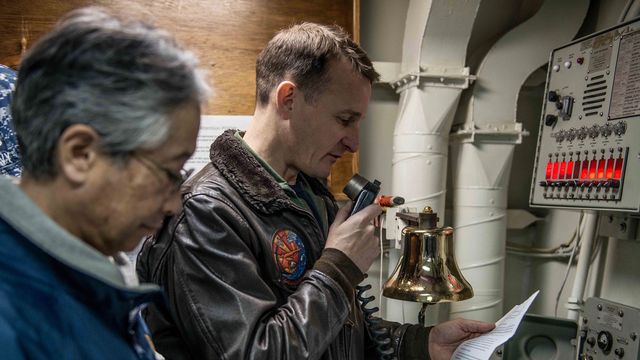
Capt. Brett Crozier conducts a remembrance ceremony for the 2011 Sendai earthquake and tsunami victims. (U.S Navy)
US Navy Captain Brett Crozier was fired on Thursday just two days after he sent a letter asking his superiors to take emergency action to allow the crew of the USS Theodore Roosevelt, which is suffering a major COVID-19 outbreak, to disembark.
“We are not at war. Sailors do not need to die. If we do not act now, we are failing to properly take care of our most trusted asset: our Sailors,” Crozier wrote in the letter.
Acting Navy Secretary Thomas Modly was clear about the message he was sending. Simultaneously referring to the ship by its nickname, “the big stick” and using the term to euphemistically refer to the power of US imperialism, Modly said “The nation needs to know that the big stick is undaunted and unstoppable… our adversaries need to know this as well. They respect and fear the big stick and they should. We will not allow anything to diminishes that respect and fear.”
He continued, “We are not at war by traditional measures, but neither are we at peace.”
On Wednesday, US president Donald trump announced a deployment of forces to Latin America, in a nominally counter-narcotics operation targeting Venezuela “We’re deploying additional Navy destroyers, combat ships, aircraft and helicopters, Coast Guard cutters and Air Force surveillance aircraft, doubling our capabilities in the region,” Trump declared.
Earlier in the day, Trump had made another war threat, stating, “Upon information and belief, Iran or its proxies are planning a sneak attack on US troops and/or assets in Iraq. If this happens, Iran will pay a very heavy price, indeed!”
The USS Theodore Roosevelt pulled into the island of Guam, A US territory in the western Pacific Ocean, last week after several soldiers on board tested positive for COVID-19. Sailors began falling ill about two weeks after it made a port call at Da Nang, Vietnam. About 100 cases of COVID-19 had been reported in Vietnam at that time, with most of them near Hanoi, well north of Da Nang.
The four-page letter, which included an uncharacteristically emotional appeal to top Navy officials, was sent to between 20 and 30 individuals identified as Navy leaders. The letter was leaked by the San Francisco Chronicle the following day.
Crozier called for all but ten percent of the over 4,000-person crew to disembark the ship and be quarantined in isolation as soon as possible in Guam, with remaining crew members to remain on as a “necessary risk” to sanitize and secure the ship while docked.
The letter raised concerns about the impossibility of social distancing and isolation of those diagnosed with COVID-19. “Due to the close quarters required on a warship and the current number of positive cases, every single Sailor, regardless of rank, on board the [Theodore Roosevelt] must be considered ‘close contact,’” Crozier wrote.
Naval ships require large amounts of sailors to live and work together in a confined space around the clock, with shared sleeping quarters, restrooms, workspaces and computers, a common mess hall, movement constraints requiring communal contact with ladders and hatches, and complex workflows which require close contact. “The current strategy will only slow the spread,” he wrote. “The current plan in execution on TR will not achieve virus eradication on any timeline.”
Crozier criticized the promises made by senior military officials for tests for all crew members aboard the carrier last week, as it was not a solution to the tight quarters which exacerbated the spread of the virus.
“Keeping over 4,000 young men and women on board the TR is an unnecessary risk and breaks faith with those Sailors entrusted to our care.”
On Tuesday, US President Donald Trump made his position clear on the situation on the Theodore Roosevelt, offering no sympathy or concern but simply saying that he would “let the military make that decision”.
Modly denounced Crozier’s writing the letter as an “uncharacteristic lapse of judgment” that created a “panic”. Modly continued, “And that’s what’s frustrating about [it], it created the perception that the Navy’s not on the job, and the government’s not doing its job.”
David Lapan, a retired Marine Corps colonel and former top spokesman for the Pentagon Joint Chiefs of Staff, and the Marine Corps, did not believe that Crozier’s letter created any more panic than what already existed. He told DefenseOne, “The idea that it got out there and it created panic among families — you don’t think the families didn’t already know what was going on on that ship? You don’t think the sailors weren’t already telling their families what was happening on the ship? That’s ridiculous...It’s more believable that the letter would cause the families to be upset that the Navy wasn’t taking the right steps to protect their loved ones.”
According to military.com, which tracks official cases of COVID-19 in the Department of Defense, as of Thursday there have been 1,638 total cases of COVID-19: 893 military, 256 dependents, 306 civilians and 95 contractors. 85 of the total have required hospitalization and five have died.
The US Navy announced Wednesday that it had begun moving 3,000 soldiers of the nearly 5,000-large crew into available hotel rooms in Guam. Because there are not enough beds on the island currently, Modly told the press that the Navy would work to “create tent-type facilities” when needed. The Navy has denied that the letter or public reaction spurred these actions, claiming that preparations had been underway.
In a Wednesday morning press conference, Governor of Guam Lou Leon Guerrero confirmed she would agree to allow sailors off the aircraft carrier and into strictly guarded and monitored hotels off the Navy base under certain restrictions.
“In partnership with the Guam Hotel and Restaurant Association, public health officials and representatives of the Navy, only sailors testing negative for COVID-19 will be housed in vacant Guam hotels ... subject to a 14-day quarantine period enforceable under the Uniform Code of Military Justice,” she said.
Senator Sabina Perez of Guam raised concerns over the ability of the island to handle the influx of patients from the ship and fears among the island’s residents that without protective measures in place that the virus would spread at an accelerated pace on the island, which had 82 cases and three deaths since Thursday. Perez called on President Trump to utilize the Defense Production Act to accelerate the manufacturing of needed medical supplies and for the US military to mobilize available medical resources.

The US Navy stopped giving information to the Guam media on the breakdown of positive cases aboard the ship after a Pentagon memo prohibited its release, citing it as information which could “compromise national security”.

One million infected with coronavirus worldwide, more than 50,000 dead

Patrick Martin

The world has passed several grim milestones overnight in the coronavirus pandemic. The total number of people infected worldwide has hit one million. More than 50,000 people have died, and in the United States, where COVID-19 seems to be spreading most rapidly, there were more than 25,000 new cases and the death toll passed 5,000.
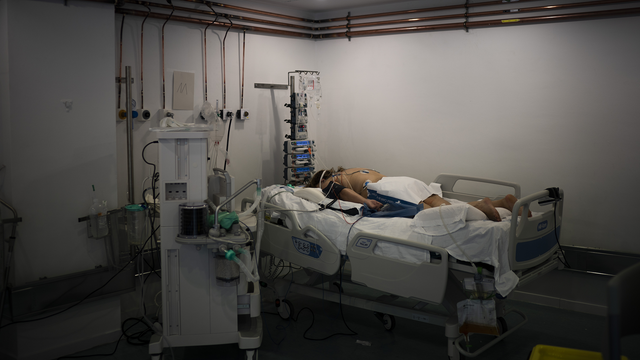
A COVID-19 patient undergoes treatment at a library that was turned into an intensive care unit (ICU) at German Trias i Pujol hospital in Badalona, Barcelona province, Spain, Wednesday, April 1, 2020.
The epidemic’s toll is unevenly distributed at this point, with the advanced industrialized countries, excluding Japan, accounting for the vast majority of the reported cases and deaths.
The United States, with 331 million people, accounts for 4.25 percent of the world’s population, but nearly 24 percent of world coronavirus cases, and 11 percent of coronavirus deaths.
The five largest countries in Western Europe, Italy, Spain, France, Britain and Germany, have a combined population of 321 million, 4.16 percent of the world total, but they account for 40 percent of the coronavirus cases and a staggering 63.6 percent of the deaths.
Sometime Friday, there will be six countries in the world with greater death tolls than China, where the coronavirus first made its appearance late last year: the US, Italy, Spain, France, Britain, and Iran, where there are now more than 50,000 cases.
The fatality rate among those infected varies widely from country to country, in part because of different levels of testing, from 1.3 percent in Germany, to 2.4 percent in the United States, 6.3 percent in Iran, 8.7 percent in Britain, 9.1 percent in France, 9.2 percent in Spain, and an unfathomable 12.1 percent in Italy.
Germany’s apparently exceptional status—it has 84,794 cases, surpassing China, but “only” 1,107 deaths—seems likely to be short-lived. Its more developed and better-financed healthcare system, compared to the other European countries, is now groaning under the strain. Germany posted the second-largest increase in cases Thursday, behind Spain but ahead of Italy, and is reaching the point where the death toll could begin to mount rapidly—as has already begun in the Netherlands, Belgium and Switzerland, its nearest neighbors.
In Russia, the only large European country not yet in desperate straits, there were 771 new cases Thursday, an increase of 25 percent in a single day.
There is every reason to fear that COVID-19 will strike the less developed countries of Asia, Africa and Latin America with even greater ferocity than in the United States and Western Europe, given their much more limited healthcare systems. The majority of humanity can see their future in the harrowing scenes being played out now in Madrid, Milan, Paris and New York City.
Coronavirus has begun to appear in the Indian subcontinent, in Indonesia, and in the Middle East beyond Iran. There were more than 1,000 new cases Thursday in Brazil, the most of any South American country.
The comparatively low figures from African countries are more likely a reflection of their extremely poor healthcare infrastructure, which makes detection of the virus in its early stages unlikely, and their relative remoteness from international commerce and travel, which only postpones the onset of the epidemic rather than preventing it.
As the United Nations admitted, in a report issued earlier this week, “The COVID-19 Pandemic is a defining moment for modern society,” the greatest such challenge, and threatening the greatest loss of life, since the Second World War. The report warned, “The speed and scale of the spread, the severity of cases, and the societal and economic disruption has already been dramatic and could be more so as it takes hold in poorer nations.”
But despite the stark warning posed in the UN report, there is not the slightest chance its recommendations for national governments to put an end to war, economic sanctions and trade conflicts, in favor of global collaboration to defeat the coronavirus, has any possibility of realization. Not so long as the capitalist system prevails, and every government acts as the instrument of the capitalist ruling elite, defending its wealth and privileges, not the health and lives of the people.
The coronavirus pandemic is a world event of epoch-making significance, not least in demonstrating the abysmal character of the leadership which the capitalist class has elevated into positions of power: Giuseppe Conte in Italy, Pedro Sanchez in Spain, Emmanuel Macron in France, Boris Johnson in the UK, and the execrable Donald Trump in the United States. This collection of political ciphers, bankers, thugs and ignoramuses is a clear demonstration of the unfitness of the capitalist class to rule.
The moronic stupidity of the American political leadership, in particular, was shown in the comments of Georgia Governor Brian Kemp, a devoted acolyte of Trump, who announced a lockdown for his state Thursday, after a criminally long delay. He admitted that he had not known, until that day, that COVID-19 could be spread by infected people who themselves did not show any symptoms of the disease.
It is particularly noteworthy that the countries hit hardest by the pandemic up to now are the richest societies on the planet with the greatest resources. Yet it has proven impossible for the capitalist ruling class to make any serious effort to mobilize these resources to provide even the most elementary medical products—masks, gowns, gloves and other personal protective equipment (PPE) needed by healthcare workers on the front lines against the coronavirus.
The social gulf between the ruling elite and the working class was put on stark display Thursday when doctors and nurses held a public protest outside Montefiore Hospital in the Bronx, in New York City, to demand necessary supplies.
Laura Ucick, a resident physician, read a statement: “When I go to work, I feel like a sheep going to slaughter. My colleagues and I are writing our last will and testament. I’m 28 years old. We feel that we may not survive this pandemic, and yet we show up each day at this hospital to take care of our community.”
Xenia Greene, an ICU nurse, followed: “We don’t ask our service men and women to go to war without means to protect themselves, or policemen to work without bulletproof vests. So why, why are we asking nurses to enter rooms with reused masks because we don’t have enough supplies? Then I say, make the supplies.”
As opposed to these impassioned pleas, the White House offered its daily dose of lies, diversions and self-praise, in a “press briefing” whose only purpose was to promote illusions in Trump. It was remarkable that not a single speaker at the press conference even bothered to address the skyrocketing numbers for infections and deaths from coronavirus in the United States. This is a government that takes no responsibility whatsoever for the lives of the people over whom it rules.
Vice President Pence called the US healthcare system “the strongest in the world,” which, given its visible collapse, should serve as a warning, not encouragement. Trump’s son-in-law Jared Kushner, the scion of a real estate empire with no expertise in healthcare or emergency planning, made his first appearance as a leading figure in the Coronavirus Task Force.
According to a report Wednesday night in Politico, the 39-year-old Kushner, husband of Ivanka Trump, “has emerged as perhaps the most pivotal figure in the national fight against the fast-growing pandemic.” Backed by a group of cronies including his former roommate and several consultants from McKinsey, he has created an alternative power center based in the Federal Emergency Management Agency, which Trump put in charge of day-to-day coronavirus operations.
According to Politico, “Federal decision-making is complicated by the fact that Kushner has the full confidence of President Donald Trump, with whom he confers multiple times a day, while Trump has expressed frustration with some of the leaders of health agencies.”

While the Trump administration replicates the degenerate court cabals of Louis XVI and Nicholas II, before the French and Russian revolutions, in its monumental indifference to a tidal wave of suffering and death, it is inviting the same fate.

2 Apr 2020

Locked Down and Locking in the New Global Order

Colin Todhunter

On 12 March, British PM Boris Johnson informed the public that families would continue to “lose loved ones before their time” as the coronavirus outbreak worsens. He added:
“We’ve all got to be clear, this is the worst public health crisis for a generation.”
In a report, the Imperial College had warned of modelling that suggested over 500,000 would die from the virus in the UK. The lead author of the report, epidemiologist Neil Ferguson, has since revised the estimate downward to a maximum of 20,000 if current ‘lockdown’ measures work. Johnson seems to have based his statement on Ferguson’s original figures.
Before addressing the belief that a lockdown will help the UK, it might be useful to turn to an ongoing public health crisis that receives scant media and government attention – because context is everything and responses that are proportionate to crises are important.
The silent public health crisis
In a new 29-page open letter to Fiona Godlee, editor-in-chief of the British Medical Journal, environmentalist Dr Rosemary Mason spends 11 pages documenting the spiraling rates of disease that she says (supported by numerous research studies cited) are largely the result of exposure to health-damaging agrochemicals, not least the world’s most widely used weedkiller – glyphosate.
The amount of glyphosate-based herbicides sprayed by UK farmers on crops has gone from 226,762 kg in 1990 to 2,240,408 kg in 2016, a 10-fold increase. Mason discusses links between multiple pesticide residues (including glyphosate) in food and steady increases in the number of cancers both in the UK and worldwide as well as allergic diseases, chronic kidney disease, Alzheimer’s, Parkinson’s, obesity and many other conditions.
Mason is at pains to stress that agrochemicals are a major contributory factor (or actual cause) for the spikes in these diseases and conditions. She says this is the real public health crisis affecting the UK (and the US). Each year, she argues, there are steady increases in the numbers of new cancers in the UK and increases in deaths from the same cancers, with no treatments making any difference to the numbers.
Of course, it would be unwise to lay all the blame at the door of the agrochemicals sector: we are subjected each day to a cocktail of toxic chemicals via household goods, food processing practices and food additives and environmental pollution. Yet there seems to be a serious lack of action to interfere with corporate practices and profits on the part of public bodies, so much so that a report by the Corporate Europe Observatory said in 2014 that the then outgoing European Commission had become a willing servant of a corporate agenda.
In a 2017 report, Hilal Elver, UN Special rapporteur on the right to food, and UN Special Rapporteur on human rights and hazardous substances and wastes Baskut Tuncak were severely critical of the global corporations that manufacture pesticides, accusing them of the “systematic denial of harms”, “aggressive, unethical marketing tactics” and heavy lobbying of governments which has “obstructed reforms and paralysed global pesticide restrictions”.
The authors said that pesticides have catastrophic impacts on the environment, human health and society as a whole, including an estimated 200,000 deaths a year from acute poisoning.  They concluded that it is time to create a global process to transition toward safer and healthier food and agricultural production.
At the time, Elver said that, in order to tackle this issue, the power of the corporations must be addressed.
While there is currently much talk of the coronavirus placing immense strain on the NHS, Mason highlights that the health service is already creaking and that due to weakened immune systems brought about by the contaminated food we eat, any new virus could spell disaster for public health.
But do we see a ‘lockdown’ on the activities of the global agrochemical conglomerates? Not at all. As Mason has highlighted in her numerous reports, we see governments and public health bodies working hand in glove with the agrochemicals and pharmaceuticals manufacturers to ensure ‘business as usual’. So, it might seem strange to many that the UK government is seemingly going out of its way (by stripping people of their freedoms) under the guise of a public health crisis but is all too willing to oversee a massive, ongoing one caused by the chemical pollution of our bodies.
Mason’s emphasis on an ongoing public health crisis brought about by poisoned crops and food is but part of a wider story. And it must be stated that it is a ‘silent’ crisis because the mainstream media and various official reports in the UK have consistently ignored or downplayed the role of pesticides in fueling this situation.
Systemic immiseration
Another part of the health crisis story involves ongoing austerity measures.
The current Conservative administration in the UK is carrying out policies that it says will protect the general population and older people in particular. This is in stark contrast to its record over the previous decade which demonstrates contempt for the most vulnerable in society.
In 2019, a leading UN poverty expert compared Conservative welfare policies to the creation of 19th-century workhouses and warned that unless austerity is ended, the UK’s poorest people face lives that are “solitary, poor, nasty, brutish, and short”. Philip Alston, the UN rapporteur on extreme poverty, accused ministers of being in a state of denial about the impact of policies. He accused them of the “systematic immiseration of a significant part of the British population”.
In another 2019 report, it was claimed that more than 130,000 deaths in the UK since 2012 could have been prevented if improvements in public health policy had not stalled as a direct result of austerity cuts.
Over the past 10 years in the UK, there has been rising food poverty and increasing reliance on food banks, while the five richest families are now worth more than the poorest 20% and about a third of Britain’s population lives in poverty.
Almost 18 million cannot afford adequate housing conditions; 12 million are too poor to engage in common social activities; one in three cannot afford to heat their homes adequately in winter; and four million children and adults are not properly fed (Britain’s population is estimated at 63 to 64 million). Welfare cuts have pushed hundreds of thousands below the poverty line since 2012, including more than 300,000 children.
In the wake of a lockdown, we can only speculate about how a devastated economy might be exploited to further this ‘austerity’ agenda. With bailouts being promised to companies and many workers receiving public money to see them through the current crisis, this will need to be clawed back from somewhere. Will that be the excuse for defunding the NHS and handing it over to private healthcare companies with health insurance firms in tow? Are we to see a further deepening of the austerity agenda, let alone an extension of the surveillance state given the current lockdown measures which may not be fully rolled back?
The need for the current lockdown and the eradication of our freedoms has been questioned by some, not least Lord J. Sumption, former Supreme Court Justice. He has questioned the legitimacy of Boris Johnson’s press conference/statement to deprive people of their liberty and has said:
“There is a difference between law and official instructions. It is the difference between a democracy and a police state”.
Journalist Peter Hitchens says a newspaper headline for what Sumption says might be – ‘Former Supreme Court justice says Johnson measures lead towards police state’ or ‘TOP JUDGE WARNS OF POLICE STATE’.
But, as Hitchens implies, such headlines do not appear. Indeed, where is the questioning in the mainstream media or among politicians about any of this? To date, there have been a few isolated voices, with Hitchens himself being one.
In his recent articles, Hitchens has questioned the need for the stripping of the public’s rights and freedoms under the pretext of a perceived coronavirus pandemic. He has referred to esteemed scientists who question the need for and efficacy of ‘social distancing’ and keeping the public under virtual ‘house arrest’.
An open Letter from Dr. Sucharit Bhakdi, emeritus professor of medical microbiology at the Johannes Gutenberg University Mainz, to Angela Merkel calls for an urgent reassessment of Germany’s lockdown response to Covid-19. Then there is Dr Ioannidis, a professor of medicine and professor of epidemiology and population health at Stanford University. He argues that we have made such decisions on the basis of unreliable data. These two scientists are not alone. On the OffGuardian website, two articles have appeared which present the views of 22 experts who question policies and/or the data that is being cited about the coronavirus.
Shift in balance of power
Professor Michel Chossudovsky has looked at who could ultimately benefit from current events and concludes that certain pharmaceutical companies could be (are already) major beneficiaries as they receive lavish funding to develop vaccines. He asks whether we can trust the main actors behind what could amount to a multibillion dollar global (compulsory) vaccination (surveillance) project.
The issue of increased government surveillance has also been prominent in various analyses of the ongoing situation, not least in pushing the world further towards cashless societies (under the pretext that cash passes on viruses) whereby our every transaction is digitally monitored and a person’s virtual money could be declared null and void if a government so decides. Many discussions have implicated the Bill and Melinda Gates Foundation in this – an entity that for some time has been promoting the roll-out of global vaccine programmes and a global ‘war on cash’.
For instance, financial journalist Norbert Haring notes that the Gates Foundation and US state-financial interests had an early pivotal role in pushing for the 2016 demonestisation policy with the aim of pushing India further towards a cashless society. However, the policy caused immense damage to the economy and the lives and livelihoods of hundreds of millions in India who rely on cash in their everyday activities.
But that does not matter to those who roll out such policies. What matters is securing control over global payments and the ability to monitor and block them. Control food you control people. Control digital payments (and remove cash), you can control and monitor everything a country and its citizens do and pay for.
India has now also implemented a lockdown on its population and tens of millions of migrant workers have been returning to their villages. If there is a risk of corona virus infection, masses of people congregating in close proximity then returning to the countryside does not bode well.
Indeed, the impact of lockdowns and social isolation could have more harm than the effects of the coronavirus itself in terms of hunger, depression, suicides and the overall deterioration of the health of older people who are having operations delayed and who are stuck indoors with little social interaction or physical movement.
If current events show us anything, it is that fear is a powerful weapon for securing hegemony. Any government can manipulate fear about certain things while conveniently ignoring real dangers that a population faces. In a recent article, author and researcher Robert J Burrowes says:
“… if we were seriously concerned about our world, the gravest and longest-standing health crisis on the planet is the one that starves to death 100,000 people each day. No panic about that, of course. And no action either.”
And, of course, each day we live with the very real danger of dying a horrific death because of the thousands of nuclear missiles that hang over our heads. But this is not up for discussion. The media and politicians say nothing. Fear perception can be deliberately managed, while Walter Lippmann’s concept of the ‘bewildered herd’ cowers on cue and demands the government to further strip its rights under the guise of safety.
Does the discussion thus far mean that those who question the mainstream narrative surrounding the coronavirus are in denial of potential dangers and deaths that have been attributed to the virus? Not at all. But perspective and proportionate responses are everything and healthy debate should still take place, especially when our fundamental freedoms are at stake.
Unfortunately, many of those who would ordinarily question power and authority have meekly fallen into line: those in the UK who would not usually accept anything at face value that Boris Johnson or his ministers say, are now all too easily willing to accept the data and the government narrative. This is perplexing as both the government and the mainstream media have serious trust deficits (putting it mildly) if we look at their false narratives in numerous areas, including chemical attacks in Syria, ‘Russian aggression’, baseless smear campaigns directed at Jeremy Corbyn and WMDs in Iraq.
What will emerge from current events is anyone’s guess. Some authors like economist and geopolitical analyst Peter Koenig have presented disturbing scenarios for a future authoritarian world order under the control of powerful state-corporate partners. Whatever the eventual outcome, financial institutions, pharmaceuticals companies and large corporations will capitalise on current events to extend their profits, control and influence.
Major corporations are already in line for massive bailouts despite them having kept workers’ wages low and lining the pockets of top executives and shareholders by spending zero-interest money on stock buy backs. And World Bank Group President David Malpass has stated that poorer countries will be ‘helped’ to get back on their feet – on the condition that further neoliberal reforms and the undermining of public services are implemented and become further embedded:
“Countries will need to implement structural reforms to help shorten the time to recovery and create confidence that the recovery can be strong.  For those countries that have excessive regulations, subsidies, licensing regimes, trade protection or litigiousness as obstacles, we will work with them to foster markets, choice and faster growth prospects during the recovery.”
In the face of economic crisis and stagnation at home, this seems like an ideal opportunity for Western capital to further open up and loot economies abroad. In effect, the coronavirus provides cover for the further entrenchment of dependency and dispossession. Global conglomerates will be able to hollow out the remnants of nation state sovereignty, while ordinary people’s rights and ability to organise and challenge the corporate hijack of economies and livelihoods will be undermined by the intensified, globalised system of surveillance that beckons.

New Zealand workers speak out on unsafe conditions, wage cuts

Tom Peters

Workers in New Zealand remain deeply concerned about being exposed to the potentially deadly COVID-19 coronavirus. The Labour Party-led government’s four-week shutdown of schools and non-essential businesses began on March 26 in an attempt to stop the virus from spreading.
So far, New Zealand has confirmed 797 cases of the virus, with one death. The numbers are rising each day. Most cases relate to international travel, but many originated within New Zealand.
Despite Prime Minister Jacinda Ardern’s claim that her government has acted faster than other countries, there has been nowhere near enough testing to know the extent of contagion. Just over 26,000 tests have been conducted.
This week, the government finally widened the criteria so anyone with symptoms can be tested regardless of whether they have a history of travel. This will still not identify people who are infected but have no symptoms.
There are many reports of vulnerable workers being placed at risk. On March 28, Stuff reported on workers at a New World supermarket in the affluent Wellington suburb of Thorndon, near Parliament. They were sent an email telling them if they stayed home they would be placed on leave without pay, even if they had health problems.
A similar message was sent to workers in a Christchurch supermarket. “The email was signed off with the hashtag #bekind,” Stuff noted.
Stan, a resident of Levin, north of Wellington, told the World Socialist Web Site he and his wife were concerned as they share a house with a supermarket worker. “My wife has diabetes and fibromyalgia, which makes her more vulnerable to COVID-19.” The supermarket worker “has to be careful because he might pass it on,” he explained.
“It’s only been less than a week of the lockdown and frontline workers are getting stressed out and overwhelmed already,” Stan said. He added that “without mass testing, treatment and isolation, the quarantine will have limited long-term effect. Why haven’t they been stockpiling tests since November? Why aren’t they testing all staff in essential services?”
The WSWS spoke with a kitchen worker from a South Island public hospital, who asked to remain anonymous to avoid any negative repercussions.
She said the company she worked for had provided hand sanitiser and gloves but no face masks. Workers were informed about a two-metre social distancing rule, but this was not being enforced. “Protocols are very vague,” she said.
The worker explained that she had long-standing health problems. “I know that I’m at risk because it’s stated on the COVID-19 government website that people with high blood pressure shouldn’t be working. I take blood pressure medication because I have hypertension and I regularly see my doctor about my heart problems.
“So I went to work on Thursday, Friday, Saturday knowing that I’m at risk. It didn’t sit well with me.”
The worker then rang the Ministry of Health who told her “you’re right, high blood pressure is a risk.” After multiple phone calls and discussions with doctors and her employer, the worker succeeded in getting time off work, but her medical certificate still did not specify she was at “high-risk.” “Why is it so hard to admit that I am at risk and I am eligible for the wage subsidy?” she asked.
The lack of face masks for workers preparing hospital food is particularly concerning. The government has repeatedly stated that it has millions of masks and other personal protective equipment (PPE) available, and is procuring more from overseas. But hospital workers, disability carers and others have reported shortages. An online petition demanding higher-quality PPE for doctors and nurses has more than 16,000 signatures.
Another petition last week calling for the shutdown of the meat processing industry over unsafe conditions gained over 2,600 signatures. The Otago Daily Times reported on March 31 that a worker at Silver Fern Farms’ Finegand processing factory said there were no masks and workers were “told to be two metres away from others but that’s just really unrealistic in [this] type of work.”
“If we walk off the job, we won’t get the subsidy, and if we stay at work, we risk getting COVID-19,” the worker said. The Meat Workers Union is working closely with businesses to keep the factories in operation.
While the government is giving billions of dollars to businesses, thousands of workers have been sacked. Others have been forced to stay home during the lockdown on reduced pay. Companies affected by the pandemic can get a “wage subsidy” from the government but are not obliged to pay full wages, compelling many people to seek welfare payments.
A Taupo resident, whose husband had taken a pay cut from his restaurant job, told the WSWS it was too hard to get assistance. “They need to make it easier to get food grants while this is happening. Phones [are] overloaded with the Ministry of Social Development,” she said. “What about all those people who don’t have the internet or phone? There are still people who are poor enough that can’t afford these so-called necessities.”
Fletcher Building, New Zealand’s largest construction company, today announced a 20 percent wage cut for 9,000 employees during the four-week lockdown. Should the lockdown be extended, it will cut wages by 50 percent for the next four weeks, and 70 percent after that.
The WSWS has seen a letter sent to workers at Downer Group announcing a 20 percent wage cut. It declared, “we have to make some sacrifices now” to avoid redundancies. The wage reduction would last at least four weeks and could be “extended up to 12 weeks.” The construction and engineering company, which operates primarily in Australia and New Zealand and employs 53,000 people, made an underlying profit of $340.1 million in 2019.
The letter said Downer had been “working closely” with four trade unions which “are supportive of us working to retain as many jobs as possible.” The E Tu union released a brief statement on March 31 saying members at Downer were “free to accept this offer to ensure your income continues at 80 percent,” even though the union did not believe the company’s process was lawful. The statement has since been removed from the union’s website.

Indonesian government declares “national emergency” after downplaying coronavirus threat

Owen Howell

After weeks of government denials that the coronavirus had even reached Indonesia, and weeks more of official claims that adequate screening measures were in place, the country of 270 million people faces a health disaster unprecedented in scale.
At a press conference on Tuesday, Achmad Yurianto, the government’s spokesperson for COVID-19 affairs, announced 114 new infections and 14 new deaths. That brings the official total, which dramatically understates the extent of the spread, to 1,677 confirmed infections and 157 deaths. The virus has been detected in 32 of the country’s 34 provinces.
President Joko Widodo then declared a national public health emergency to be imposed until May 29.
Earlier in the day, Foreign Minister Retno Marsudi said the government would ban all arrivals and transits by foreign nationals in Indonesia. The country is bracing for a wave of Indonesian workers returning from Malaysia, which recently declared a national lockdown.
With the highest death rate in South-East Asia, at almost 9 percent, current numbers suggest that more people in Indonesia are dying from the virus than have recovered. The figures also suggest that only those who are seriously-ill are receiving treatment and appearing in the official statistics.
Over 80 percent of the 1,528 confirmed cases detected are on Java. This indicates the development of clusters on the densely populated island, but likely also reflects the fact that testing has largely been limited to the country’s major cities.
Over the weekend, a report published by a team from the University of Indonesia warned that the coronavirus pandemic would result in a death toll greater than that of the devastating Aceh tsunami in 2004, which killed more than 167,000 people.
The report warned that without substantial government intervention, 240,000 people could die by the end of this month. Even with a “moderate intervention” by the authorities, 48,000 may perish in April. A “high-intensity intervention” could lower the fatalities to 12,000.
On Friday, the government acknowledged that as many as 700,000 people may already have come into contact with the virus. Achmad Yurianto, an Essex University professor of applied mathematics, said that up to half the population, or 135 million people, could be infected by mid-May.
Government measures, including limitations on mass gatherings and calls for people to practice social distancing, combined with a criminal lack of testing, have drawn heavy criticism from medical experts.
The critics have repeatedly spoken of the urgent need to impose obligatory social distancing, close down schools and workplaces, ban travel between provinces and limit public transport services. Their pleas, however, have thus far fallen on deaf ears.
“What we feared most is that our health system cannot cope with the pandemic,” Iwan Ariawan, a biostatistics lecturer at the University of Indonesia, told the Jakarta Globe. “In this regard, the number of our hospitals, hospital beds, ICUs [intensive care units], ventilators, and isolation rooms, would not be adequate if we do not implement the proper intervention.”
Warnings issued by the Indonesian Doctors’ Association, which has urged the government for weeks to provide more funds for healthcare, have taken on an increasingly desperate tone. Its spokesperson Halik Malik said last Friday: “The government’s plans are in tatters and they appear to be avoiding a lockdown. Our health system is not as strong as [in] other countries.”
Images on social media of doctors and medical workers threatening to go on strike have been widely shared. At least eight doctors have died of the virus. In a tweet that soon became viral, the brother-in-law of one of the deceased doctors attacked the government’s handling of the crisis, saying: “The limited amount of protective equipment is hard to forgive.”
Indonesia had fewer than four doctors for every 10,000 people, according to World Health Organization data from 2017.
There was speculation in the local media on Sunday that the capital’s metropolitan area, Greater Jakarta, deemed to be the epicentre of COVID-19 within the country, was likely to close its borders for travel. The Transportation Ministry, having curtailed some services, is reportedly discussing further restrictions on public transport in Greater Jakarta.
On Monday, however, Widodo again rejected calls for a lockdown of Jakarta. The decision is motivated solely by concern for corporate profit interests, including those of major transnational corporations with operations in the city. It means that the city’s almost ten million workers, many of whom live and work in densely-populated areas, are imperiled by unchecked community transmissions.
While some workers, including in office-based and professional sectors have been able to work from home, this has not been an option for the vast majority, who are employed in industries that rely on workers being on site. The extreme shortage of protective equipment, in a situation where the virus is known to have been spreading undetected for at least a month, has meant that workers must risk their lives on the job.
Economic instability in the major cities and fears of contracting the virus are forcing thousands, many unemployed or evicted from their dwellings, to return to their hometowns in the countryside. This mass exodus to the country, known as mudik, will be particularly widespread during the religious holiday period of Idul Fitri in late May. It could greatly accelerate the spread of the disease.
This year’s Idul Fitri season was expected to see around 20 million city dwellers travel to towns and villages. Jodi Mahardi, spokesperson for the Coordinating Maritime Affairs and Investment Ministry, told the Jakarta Post last Thursday that a national ban on the mudik was being “seriously considered” by the government, but none has been announced.
Rural areas in Central Java province are witnessing an abrupt surge of incoming traffic, as tens of thousands of Jakarta residents continue to arrive by bus. Provincial governors across Java have announced their intention to monitor mudik travellers and prioritise them as the first to undergo COVID-19 tests, once more testing kits arrive from China.
At Tuesday’s press conference, Widodo announced a new regulation that “gives financial authorities the power to take extraordinary steps to ensure public health, save the national economy and the financial system.”
The regulation would waive a cap on a maximum budget deficit for three years. A stimulus package of $US24.9 billion, which includes significant corporate tax cuts and handouts, will widen the 2020 budget deficit to as much as 5.07 percent of gross domestic product, the largest in more than a decade.
Last year, Widodo introduced a series of pro-business policies, including the privatisation of water supplies, bills slashing regulations over corporate control of land and natural resources, and the further neutering of the state’s anti-corruption body. His administration’s agenda was met with opposition in the form of mass student protests across the country last September.
The increased presence of military figures and Suharto-era generals in the national cabinet, announced in October, was a clear expression of the Indonesian ruling elite’s fear of further social upheavals.
Now, confronted with this pandemic, Widodo’s cabinet has given permission to the national police to “take proportionate law enforcement steps.” The president warned at the press conference: “We are preparing the option of martial law under abnormal circumstances. We are prepared to take such a measure, but not under the current circumstances of course.”
His statements are a warning that growing anger over the government’s grossly negligent response to the pandemic will be met with state violence and repression.

Modi government represses desperate migrant workers amid calamitous coronavirus lockdown

Wasantha Rupasinghe & Keith Jones

People across India and around the world have been shocked and outraged by the pictures of poor migrant workers caught up in the Indian government's ill-conceived and socially reckless 21-day nationwide coronavirus lockdown.
Without prior warning and, as soon became only too readily apparent, without any serious preparation, Indian Prime Minister Narendra Modi announced on the evening of March 24 that starting at midnight the country's 1.37 billion people—with a few, unspecified exceptions—would be confined to their homes for the next three weeks.
Modi provided no explanation as to how people would procure food, and in India's villages and urban shanty towns, water, while they were under lockdown. Nor did he say how the more than 90 percent of India's workers who work, usually for no more than subsistence wages, in the unregulated “informal sector” would be able to procure food and other essentials if they went three weeks without work and without pay.
Only on March 26 did the government bother to announce a meagre relief package. Much of this consists of handouts of basic foodstuffs promised for weeks and even months hence, and tiny increases in the funds, or in the case of the National Rural Employment Guarantee wages, paid out by poverty alleviation programs. Underscoring the slapdash and fraudulent character of the Bharatiya Janata Party (BJP) government's relief measures, the government arbitrarily included expenditures by state governments to which they have not committed, so as to inflate the headline money amount. Even so, the 1.7 lakh crore rupee (US $22.5 billion) package amounts in per capita terms to little more 1,200 rupees or about US $16.
Left to fend for themselves by a callous and criminally negligent government and ruling elite, poor working people have had to resort to desperate measures.
This is exemplified by the plight of India's migrant workers, who toil in construction, garment manufacture, as day labourers and domestics, and whom Modi's lockdown has cast adrift.
Without work, money, and in many cases shelter, because they slept at their place of work or because they can no longer afford their squalid makeshift dwellings, millions of migrant workers, sometimes with children in tow, have fled Delhi, and the urban centres of Maharashtra, and Gujarat to return to their native villages. And, since all rail and bus transport has been suspended, they are walking home—in some cases barefoot.
Tragically, in so doing, they risk bringing the coronavirus pandemic from India's urban centres to its villages, where the majority of the population still lives and where even rudimentary health facilities are nonexistent.
Having created this nightmare, India's far-right Hindu supremacist government and state apparatus have responded in their typically brutal and brutish fashion.
Fearing social unrest, as the movement of the migrant workers swelled into the largest migration since the 1947 communal Partition of the subcontinent into India and Pakistan, several state governments, including Uttar Pradesh and Delhi, announced they would organize for buses to ferry the workers home to their villages. But this measure was hastily organized, leading to chaotic scenes in which thousands, and in some cases tens of thousands, congregated en masse to scramble for bus seats—making further mockery of the Modi government's claim that its impromptu lockdown was the key to imposing the “social distancing” needed to break the chain of coronavirus infection.
Following this debacle, the central government's Home Ministry issued a directive Sunday that the migration must be stopped, with those already en route blocked from crossing state borders.
This soon led to clashes between workers and the police at several places. In one such incident, about 500 garment workers in Surat, Gujarat clashed with police, when the latter fired tear gas at them to prevent them embarking on the journey to their native villages.
Workers who have traveled in some cases hundreds of kilometres —so, as they have repeatedly told the press in anguished tones, as to escape hunger and starvation--have been met with hostility from authorities.
Particularly horrific was the treatment meted out to a group of migrant workers when they arrived in Bareilly, a city of more than a million about 250 kilometres east of Delhi. As documented in a video that has gone viral, municipal workers and firemen clad in protective gear forced the migrants, some with their luggage tied to their backs, to squat. They then sprayed them with a sodium hypochlorite solution that is commonly used as a bleaching agent and that Bareilly uses as a disinfectant in cleaning its buses. The city administration, which ordered the action, has continued to defend it as a necessary preventive measure. However, Dr. Rajan Naringrekar, an insecticide officer for the Mumbai city government, exposed their fatuous claims that the disinfectant is benign. "It can cause itching or burning and is not approved to be used on humans," he told the Indian Express.
The Modi government's response to the coronavirus is in keeping with its role as an enforcer for Indian big business, utterly indifferent and hostile to the interests and aspirations of India's workers and toilers. During its nearly six years in office, it has presided over brutal austerity, while promoting privatization, deregulation, and the spread of contract labour, and integrating India ever more deeply into Washington's military-strategic offensive against China.
Till its sudden announcement of a nationwide lockdown at midnight March 24, the BJP government's efforts to contain the pandemic focused almost entirely on bans on foreign travellers. Despite a mounting outcry from medical specialists, it refused to organize systematic testing, and even now in the midst of a nationwide lockdown is stubbornly refusing to follow the World Health Organization's injunction to all governments to prioritize mass testing and contact tracking. Yesterday, Dr. R. Gangakhedkar of the Indian Council of Medical Research said that to date India has conducted COVID-19 tests on a grand total of 47,951 people.
Although the number of confirmed cases has surged in recent days, with 370 new cases and three deaths yesterday, Indian authorities continue to publicly claim there is no “community transmission.” However, in arguing before the Supreme Court this week to uphold its efforts to block the movement of migrant workers, a government spokesman claimed that it is possible that three in every ten migrant workers is infected!
Given India's dense population, mass poverty, and dilapidated urban and virtually nonexistent rural health infrastructure, the coronavirus is unquestionably a terrible menace. But the actions of the Modi government, including its calamitous lockdown, have multiplied the threat many times over.
Undoubtedly, an important factor in the Modi government's swing from cavalierly claiming India was an exemplar to the region and the world in fighting the virus to imposing the 21-day lockdown was the calculation that it could serve its communalist, authoritarian political agenda. In the months preceding the lockdown, the Modi government had been shaken by mass opposition to its anti-Muslim Citizenship Amendment Act and growing working-class resistance to austerity and poverty wages.
Significantly, yesterday the government approached the Supreme Court to ask it to sanction the censoring of reporting on the COVID-19 pandemic. According to a report published by the Committee to Protect Journalists, it has petitioned the court to issue a “directive to news outlets to refrain from publishing any COVID-19-related news without clearance from the government.”
The health and socioeconomic crisis now stalking India is not due just to the failure of the Modi government and the BJP, but of Indian capitalism and all its political representatives.
For decades, successive governments at both central and state levels have maintained health spending at little more than one percent of GDP. Thanks to the pro-investor policies pursued by all sections of the political establishment, from the BJP and the Congress Party to the Stalinist CPM and CPI, hundreds of millions of people—the rural toilers and much of the working class—have effectively no access to health care in normal times, let alone during a pandemic. Hundreds of millions of others, all but the most privileged sections of the middle class, the rich and India's newly minted class of 120-plus billionaires, make great financial sacrifices, including incurring massive debts, to purchase care from a patchwork private health care system, with the private sector accounting for 82 percent of all outpatient visits in India and 58 percent of inpatients.