20 Apr 2020

French prime minister outlines end to quarantine as coronavirus deaths reach almost 20,000

Will Morrow

French Prime Minister Edouard Philippe and Health Minister Olivier Véran addressed a press conference last night, outlining the government’s plans to end prematurely the nationwide quarantine during the coronavirus pandemic.
The press conference, which lasted more than two hours, consisted of a series of lies, evasions and self-congratulations in regard to the French government’s own disastrous and criminally negligent policies.
Yesterday, another 395 COVID-19 deaths were reported across the country, bringing the total number of French dead to 19,718. Of these, 7,469 deaths have been reported in aged care homes, where the real rate of mortality is likely far higher. At least 45 percent of aged care homes have reported one or more infection among residents. More than 5,900 people remain in hospital emergency beds, in excess of the 5,000 emergency beds that were officially available prior to the outbreak.
Neither Philippe nor Véran provided any rational scientific or medical basis, during their press gathering, for the reopening of the economy on May 11 announced last Monday by President Emmanuel Macron. Having already provided hundreds of billions of euros to the corporate and financial elite to ensure that their fortunes are protected from the economic crisis triggered by the pandemic, the government is pushing—like its counterparts internationally—for a rapid return-to-work under unsafe conditions.
Philippe declared that the population would have to “learn to live with this virus.” What this means in practice is that thousands of workers will continue to die, and that this must come to be seen as a normal part of life, so that the corporations can continue to extract profits from the working class.
A large portion of Philippe’s remarks were devoted to defending the government’s own reaction to the virus. The latest CEVIPOF poll for the month of April released on Saturday showed that only 39 percent of the population believed the government had “managed this crisis well.” The website Gala cited an unnamed ministry adviser on Friday stating that “there will be a dégagiste [demanding the downfall of the government] movement after the crisis. It’s the end of all of us.” The term dégager [resign] was a main slogan of the Tunisian revolution of 2011.
In one characteristic lie, for example, Philippe stated that the government had maintained 107 million protective masks in stock prior to the pandemic, and that this would be sufficient to supply the health system for 20 weeks under normal conditions. He did not specify that these were virtually all lower-grade masks not designed for use by medical personnel, but only suitable for the general population to prevent the spread of an illness.
In 2009, the government had maintained in stock over 460 million higher-grade FFP2 masks, designed for use by medical professionals, which the government had calculated would suffice for 90 days in the midst of an epidemic. In 2011, the Sarkozy government cancelled the programme of maintaining FFP2 mask stocks completely, as part of the drive by the political establishment to slash health care spending. By the time the first coronavirus cases were detected in France, the government had no centralized stock of FFP2 masks.
The government has provided few details about how it intends to end the quarantine, and Philippe stated that the details were still being worked out and would only be revealed some time in the next two weeks.
Health Minister Véran announced that beginning today, limited visits of no more than two people at a time, will be permitted in aged care homes and facilities for the disabled and without any physical contact.
Beginning on May 11, schools will reopen, though possibly not all at once. Philippe raised the possibility that they will be reopened progressively by region, or that half the students will attend classes in one week, and half the other.
The reopening of schools has been widely opposed by health care professionals and by teachers on social media. Philip Klein, a French doctor preparing to return from Wuhan, where he has worked through the pandemic, told Europe 1, “In the case of an end to quarantine … the last thing you should do is reopen schools.” Klein stated that children are “often asymptomatic carriers and are therefore transporters of the epidemic,” and reopening schools too quickly would be “an enormous risk.”
From the standpoint of the ruling class, however, the reopening of schools is a necessity in order to allow employees to return to work.
Philippe reported that the reproduction rate of the infection had been reduced to 0.65 during the quarantine, meaning that every 100 people with the disease infect, on average, another 65 people. The aim of the measures put in place after the quarantine would be to maintain this rate “at or below one.”
However, the government has not provided any scientific basis for the claim that an end to confinement will not lead to an immediate and catastrophic resurgence of the pandemic’s spread. The total number of cases across France remains unknown. Official policy remains testing only those most at risk. GP clinics are unable to carry out tests, and people who present COVID-19 symptoms, unless they have already developed respiratory difficulties, are told to go home. Véran claimed the government would seek to increase the total number of tests from 125,000 per week to 500,000 by May 11.
Despite the full support of the media, the end to quarantine remains opposed by the majority of the French population, which does not wish to be forced back to work in order to allow the spread of the disease to kill themselves and their family members. The most recent Yougov poll for the Huffington Post showed that 51 percent of the population still supported total confinement, with over 80 percent believing the government should have imposed confinement earlier.
The Macron government is seeking to utilize the economic pressure on the working class caused by its own refusal to provide adequate support throughout the pandemic as a cudgel to drive people back to work—this despite the fact that the conditions of the pandemic have only deepened the conditions of social inequality and poverty.
On Wednesday, hundreds of people waited in a line for a free food distribution run by a private charity in the Saint-Denis suburbs north of Paris—some arriving at 8:00 a.m., three hours before the beginning of the distribution, to secure their place.
The charity had run three food distributions in the previous eight days; the first was attended by 190 people, the second by 490 and the third by 750. Several workers spoke to Le Monde, including a 42-year-old nurse’s assistant and single mother with three children, who could not afford to provide food for her children during the confinement. A restaurant worker and father of seven children receiving state unemployment benefits, said his payments did not cover the cost of food for his children, who normally eat at the school canteen under state-subsidized programmes for €1 per day: “My children are hungry the whole day and what I receive is not enough.”
The alternative presented by the government, however, between a prolonged continuation of quarantine in deepening poverty, and a return to work in unsafe conditions, is a false one. The real alternative is a massive mobilization of public resources and organization of production to provide vital medical equipment and safe conditions for health workers and employees involved in essential production, and maintain quarantine for the rest of the population, with decent living conditions. Such a policy could only be carried out through the mass mobilization of the working class to expropriate the ill-gotten wealth of the financial oligarchy and rationally allocate the wealth of society in the fight against the pandemic.

Spanish workers strike against being forced to work without protection

Alejandro López

Workers of the Spanish pizza restaurant chain Telepizza went on strike on Saturday after 11 employees were sanctioned for refusing to work in unprotected environments. Days before, Glovo, Deliveroo and Uber Eats workers staged a protest in Madrid, which was dispersed by the police.
Strikes and protests are growing against the Socialist Party (PSOE)-Podemos government’s murderous policy—endorsed by the Stalinist Workers Commissions (CCOO) and social democratic General Union of Labour (UGT) unions—of sending millions of non-essential workers back to work, no matter the death toll. Spain’s COVID-19 deaths rose to 20,453 yesterday, while the number of recorded infections has passed 195,944, including 30,000 health care workers.
The government now plans to make children, one of the most contagious age groups, leave home next week and return to school, as part of its “de-escalation of confinement measures.”
The vast majority of workers oppose this policy. Last Saturday, Telepizza workers went on strike, called by the General Confederation of Labour (Confederación General del Trabajo-CGT), their third strike this year. While previously they struck against precarious jobs and wages, now they are striking against management’s decision to impose disciplinary sanctions on 11 workers, including suspending them from employment and wages for 20 days, after they refused to work without personal protective equipment (PPE) and health and safety protocols.
Telepizza workers have been denouncing the lack of health and safety equipment for weeks. When the state of alarm and lockdown was announced three weeks ago in Spain—lifted partially last week for millions of non-essential workers—Telepizza was classified as an “essential service.” Many Telepizza staff opposed this, saying junk food offered by Telepizza is not an essential service. This did not stop the Madrid region from striking a deal with the firm to offer meals to 12,000 schoolchildren from low-wage families while schools remain closed.
The following day, workers in Palencia decided to not go to work. One worker told El Norte de Castilla: “Most of the workers agreed not to go to work. So we didn’t go because we consider it unsafe and we are not offering an essential service, like supermarkets.”
On Saturday, the strike ( huelga ) became a trending topic on Twitter, #HuelgaTelepizzaCovid, with tens of thousands of tweets in support from workers in similar situations. One worker wrote, “All my support to our sanctioned colleagues. All of us have to do the same. I hope the example sets a spark. Self-organisation and strike!”
While the CGT has been forced to call the strike amid mounting anger, in truth it has done everything possible to isolate the strikers. While it is smaller than the CCOO and UGT, it controls layers of the union bureaucracy in auto manufacturing (GM, SEAT, Renault, Nissan, Volkswagen, and Ford), as well as in the civil services, post offices, banking, health and education sectors. It has received over a million votes in trade union elections, but has not mounted any broader action during the pandemic and is working to isolate the Telepizza strike.
CCOO and the UGT have remained completely silent on the strike, working as policemen for the PSOE-Podemos government. Both union confederations have sanction the policy of the government and companies to not provide safe working environments and PPE, declaring the day before the government ordered millions back to work that such precautions “are difficult to apply in the vast majority of work places.”
On Thursday, nearly 100 riders from Glovo, Deliveroo and Uber Eats—the on-demand courier services that purchase, pick up, and deliver meals and food products—protested in the centre of Madrid against pay cuts, precarious conditions and the lack of PPE. Protests also happened in Seville, Malaga and Cartagena. All erupted outside the official trade unions.
Protesting on their motorbikes and bicycles in the empty streets of Madrid, they demanded the companies provide them with PPE and a bonus for working in an unhealthy environment. The companies have refused so far, claiming the workers are independent contractors and therefore the company is not required to cover these costs.
Workers at Glovo, a Spanish start-up founded in 2015 and valued at over $1 billion, also went to company headquarters in Madrid to protest the unilateral reduction of the base rate per order, from €2.50 to €1.20 per order. Soon after, police intervened to identify protesters and disperse the demonstration.
This represents the second open confrontation between the police and the workers since the start of the pandemic. A few weeks ago, police assaulted steelworkers in the Basque country protesting against being forced back to unsafe, non-essential jobs amid the deadly COVID-19 pandemic.
Podemos—a petty-bourgeois populist organisation, hailed by the pseudo-left as Europe’s next “radical democratic” party after the defeat of the Syriza (Coalition of the Radical Left) government in Greece—is showing its true face. Syriza went down in history for blatantly betraying its election promises, imposing the most austerity measures and anti-refugee policies of any recent Greek government. Podemos is following suit, using its time in government to force millions of workers back to work amid a deadly pandemic, a move endangering the lives of countless thousands of workers.
The criminal role played by Podemos exposes its allies such as Bernie Sanders, Jeremy Corbyn, Jean-Luc Mélenchon of La France Insoumise, and Katja Kipping of Die Linke, and is a warning of what would happen if they came to power in the US, UK, France or Germany.
While it is not yet known how many infections and deaths will result from this policy, it is clear that the “progressive” PSOE-Podemos government is terrified at growing social opposition to their policies and is working with the armed services to prepare repression of the working class. On Sunday, the head of the General Staff of the Civil Guard, Colonel José Manuel Santiago, commented overtly on this in the daily press conference on the pandemic. He said that one of the Civil Guard’s functions in the pandemic is to “minimize the opposition climate to the government’s crisis management.”
He made this remark while discussing how the Spanish government monitors “fake news,” which, Santiago said, is provoking “social stress.” The Interior Ministry was forced to make a statement hours later, claiming this was a “lapse” on Santiago’s part.
Santiago’s statement underscores the terror of the PSOE and Podemos at growing opposition among workers to their back-to-work policy amid the pandemic, and highlights the growing sentiment in ruling circles to use the army against the population.
According to a poll on Saturday by El País, 59 percent of the population supports the argument that “Confinement must be kept to the maximum, even if this implies greater economic deterioration and more unemployment.”
The role of Podemos, which includes significant sections of the officer corps within its ranks, is a warning to workers in Spain and internationally. It is critical to fight for the formation of rank-and-file action committees in workplaces and factories, to fight to defend lives and livelihoods and to build a new revolutionary leadership in the working class fighting for a socialist perspective against Podemos. Only through the formation of such committees can the Spanish working class fight to halt all non-essential production, and provide protection to all workers in essential industries.

Millions in the UK go hungry in the shadow of COVID-19

Harvey Singh

The number of people facing food insecurity in Britain has quadrupled under the COVID-19 lockdown.
This was the finding by Dr. Rachel Loopstra from King’s College London, in her analysis of data provided in a YouGov survey commissioned by the Food Foundation charity. The survey results indicate that more than three million UK residents have gone hungry in the first three weeks of lockdown.
Respondents said, “someone in their household has been unable to eat, despite being hungry, because they did not have enough food.”
According to the survey, of 8.1 million people (16 percent of the population) in Britain believed to be facing food insecurity during the crisis, just over one fifth (21 percent) did not have enough money to buy adequate food supplies, half were unable to get the food they needed from the shops due to shortages and a quarter were unable to leave their homes and had no other way to get the food they needed.
It found that an estimated 7.1 million people had someone in their household who had to reduce or skip meals because they could not access or afford sufficient sustenance.
The findings reveal that more than 1.5 million adults in Britain are worried about obtaining enough food for themselves and their families, including 53 percent of workers employed in the National Health Service (NHS). Over one million people must go a whole day without food since the UK went into lockdown.
With schools closed, half of parents on low incomes with children eligible for free school meals reported they had not yet received any of the substitute meals promised by the government. This means an estimated 830,000 children are likely to be going without adequate daily nourishment.
In a further threat to life and welfare, 12 percent of those surveyed—equating to 6.1 million adults—said they were struggling to follow the “stay at home” regulations because they had to keep working to survive.
Based on the responses, an equivalent of over one million people had lost all their income, with 43 percent of those who reported a drop in income expecting to receive no help from the government.
The long-term consequences of the current food insecurity will be the further indebtedness of the very poorest. This is indicated by the share reporting they had already had to borrow money (6 percent) in the form of a loan, just a week into the lockdown. Households with children were two-and­-a-half times more likely to have borrowed in order to survive.
On March 21, the government instructed people at greater risk from COVID-19 to self-isolate for 12 weeks. It said it would contact 1.5 million people in this category and set up a system, including local authorities, voluntary organisations, and business, to deliver food parcels to the homes of those who lacked family support.
But according to a report in Guardian, one week later “the scheme [was] not yet running and will take a few weeks to scale up to supplying food to 400,000 people.” The Food Foundation has calculated that already more than twice that number—860,000 people who fall into the medically vulnerable categories—were suffering from food insecurity even before the pandemic crisis.
The antecedent history of the coronavirus pandemic in Britain, as internationally, is one of 12 years of economic and social austerity imposed on the working class. This has been the unrelenting programme of the financial elite following the 2008 global economic crisis.
Years of austerity and below inflation wage increases have had a devastating impact on the conditions of millions of the most vulnerable. In fact, the Food Foundation itself released a report just 18 months ago, revealing that half of all households in the UK were unable to spend enough to meet the cost of the government’s own basic recommended dietary requirements.
As well as a food crisis exacerbated by the COVID-19 pandemic, deteriorating housing conditions are also a major negative factor for workers, placing them at increased risk of infection.
A recent report by the New Policy Institute (NPI) titled “Accounting for the Variation in the Covid-19 Caseload across England: An analysis of the role of multi-generation households, London and time —placed particular emphasis on the two largest and most affected regions: the capital, London and the second largest city, Birmingham, in the Midlands.
Looking at a single day, April 5, the research established “there is a statistical link across local authority areas between the confirmed COVID-19 caseload and the proportion of households where pensioners and working-age live together, especially in areas of high deprivation.”
Even after allowing for the much higher infection rates in London, the NPI study finds that the top five most-crowded areas in the country have seen up to 70 percent more coronavirus cases than the five least-crowded, where better-off homeowners are likely to live in larger homes, often including spare bedrooms and more than one bathroom.
London, which has 21,357 confirmed cases (with 3,825 deaths in hospitals alone), followed by the Midlands, which has 16,903 cases (with 2,900 hospital deaths) and is fast becoming a new epicentre of the disease in the UK. Both include areas of extreme overcrowding. Over 11 percent of homes in the capital and 9 percent of homes in Birmingham are classed as overcrowded–the two highest rates in the UK.
The report confirms fears that the cramped living conditions in the poorest and most overcrowded parts of Britain’s cities are accelerating the spread of the virus.
NPI director Peter Kenway told the Observer newspaper, “Our models show that even when you allow for the obvious factors, there is still a heightened risk to overcrowded households, especially when you have older people living with younger people,” he said.
Professor Gabriel Scally, President of Epidemiology at the Royal Society of Medicine, said, “Houses in multiple occupation must be in the same category as care homes because of the sheer press of people. I have no doubt that these kinds of overcrowded conditions are tremendously potent in spreading the virus.
“The Victorians paid the price for housing people in fundamentally unsatisfactory, unhealthy places when cholera and typhoid came calling. We’re now in an era of new novel diseases, which will just love the modern equivalent of Victorian slums, where people do not have enough space or, quite possibly, enough ventilation or sunlight.”
The Observer cited the conditions of a handful of families in London and Birmingham.
Walid Alhusien, a 46-year-old pizza delivery driver, “lives with his wife and five children in a room just four metres square in Mitcham, south London. They must share a bathroom and kitchen with four strangers. He fears what might happen if the virus strikes. ‘I can hear two of my neighbours coughing all the time,’ he said. ‘It is really scary. I want to protect my family but what can I do?’”
He is also compelled to work four days a week, “I feel guilty I am taking this risk. I know I could bring it into the house, but I need the money. I have to look after my children’s needs.”
Aisha Malik lives in a severely overcrowded house in Ladywood, Birmingham with elderly parents and her husband, who developed coronavirus symptoms while working in a local supermarket. Malik, her husband and her two children squeeze into one bedroom while her parents sleep on the sofa downstairs. Her sister’s family cram into another bedroom and her siblings must share beds elsewhere in the house.
“My mum and dad are old and vulnerable … they both suffer from diabetes and my dad’s got heart disease as well,” she said. “We are literally all living on top of each other–how can we stay safe?”
The Birmingham constituency of Ladywood has the highest rate of overcrowding outside London and the city also has one of the highest proportions of families sharing with elderly relatives in the country.
The NPI analysis suggests that areas with a high proportion of over-70s sharing with younger families had almost three times the coronavirus cases compared with neighbourhoods where more elderly people lived in their own homes.
The report concludes, “the lockdown is revealing the inequality in our housing … this research shows there is a clear link between local area deprivation and Covid-19 cases.”
The Ministry of Housing, Communities and Local Government stated recently, “We’ve given councils access to £1.6bn to help them during this national emergency, including for finding safe and suitable accommodation for families who need it.”
To put class relations in coronavirus Britain into perspective: £1.6bn is barely one tenth of overall local funding cuts by central government since 2010. The richest 15 individuals in Britain had a collective fortune of £184 billion in 2019, which has only grown since then, far exceeding the annual budget for the NHS throughout the UK.

UK think tank urges pension cuts to pay for pandemic

Margot Miller

The coronavirus pandemic is being seized on by the ruling elite to implement long-cherished plans to further erode UK pensions—a foretaste of massive austerity to come.
A new report by the Social Market Foundation (SMF) urges the Conservative government to abandon the “triple-lock” mechanism, which afforded pensioners a measure of income protection.
The triple-lock guarantees that state pensions increase each year, either by 2.5 percent, the average growth in wages in Britain, or the percentage growth in prices measured by the consumer price increase—whichever is the highest. Following this measure, pensions rose 3.9 percent in April, shadowing the rise in wages.
Anticipating a deep slump precipitated by global lockdowns, rising unemployment and collapsing wages, the SMF suggests the government replace the triple-lock with a double-lock, eliminating any guarantee of a 2.5 percent annual pension increase.
The SMF is a “top 12” UK think tank. Favoured by former Conservative Prime Minister John Major, it was closely associated with the Blair Labour government’s privatisation of public services. Current board members and policy advisors include Labour MP Dame Margaret Hodge and Stephen Kinnock, along with Tory MPs Tom Tugendhat, Laura Farris and Liberal Democrat Baroness Susan Kramer.
Titled “Intergenerational Fairness in the Coronavirus Economy,” the report by SMF Research Director Scott Corfe is an argument for intergenerational warfare. Those of working age, he writes, “bore the brunt” of the 2008 financial crisis and are now shouldering the cost of the coronavirus pandemic—it is time for old people to “share the sacrifice.”
The current economic lockdown, he complains, is “aimed at saving the lives of those at greatest risk, a group that is largely (but not exclusively) made up of older people … As we emerge from the crisis, older generations must uphold their part of the contract by bearing a fair proportion of future tax rises and welfare reforms.”
Unsurprisingly, there is no suggestion that the obscene wealth of the financial oligarchy should be taxed or confiscated to meet urgent social needs. Instead, Corfe forecasts that “Austerity Round Two” is looming to pay for the £370 billion financial bailout in the government’s Emergency Coronavirus Bill—money overwhelmingly funnelled to the banks and financial markets.
The SMF dismisses hopes for a “V-shaped recovery” in favour of the sober outlook of the Organisation for Economic Co-operation and Development (OECD) that “the global economy will potentially suffer for years to come.” Corfe warns of “years of tax rises and spending cuts as we emerge from the crisis.”
Echoing US President Donald Trump’s arguments for a return to work and profit making, Corfe writes, “Some are starting to question whether the cure for coronavirus might be worse than the disease.”
In fact, according to the Office for National Statistics, 93 percent of the population support lockdown measures to contain the pandemic. But governments around the world are hellbent on enforcing a return to work despite the complete absence of mass testing, contact tracing, quarantining or the resources demanded by public health workers to treat the sick and dying.
Corfe writes, “It is deemed crass to put a price on life (or at least to talk about it – the reality is that health care is rationed all the time on the basis of cost and whether treatment is worth it in terms of the perceived ‘value’ of the ‘quality-adjusted life years’ it adds).”
The SMF’s macabre proposals are combined with lying claims that “We have come together as a nation to protect our elderly and vulnerable.” The cynicism is breath-taking. The toll of the Johnson government’s “herd immunity” policy is over 16,000 dead— the majority aged 65 years and 39 percent in the over-85 age group. Meanwhile, care homes for the aged have become killing fields.
In the midst of immense human suffering, the SMF argues that “Austerity Round Two” must be “shared”—starting with ending the triple lock on pensions, saving the treasury £200 billion over five years.
The UK state pension is the lowest of any OECD country. The full weekly rate of the UK basic state pension is £134.25 a week. Men born after April 1951 and women born after April 1953 get the new state pension, up to a maximum £175.20. The Pension Policy Institute estimates, however, that only 45 percent of pensioners will qualify for the full amount .
Couples fare the worst—the value of their state pensions decreased 20 percent, from 1994/95 to 2017/18.
The triple lock was introduced in 2010 by the Tory/Liberal Democrat coalition government to sugarcoat plans to attack pensions. The government was determined to roll back so-called gold-plated pensions in the public sector, provoking the biggest strikes in the UK for decades.
In December 2011, over 2 million public sector workers, including civil servants, teachers and lecturers in 37 trade unions, launched a 24-hour strike against proposed attacks to pensions. The subsequent climbdown by public sector unions means that public sector workers now work longer and pay more for inferior pensions.
Further inroads into state pensions have included lifting the retirement age. Between 2010 and 2018, the age that women can apply for the state pension was raised to 65 from 60, and in 2020 it was lifted for both men and women to 66, with plans to raise it to 68 by 2039.
The Conservative Party’s 2017 manifesto proposed replacing the pension triple lock with a double lock by 2020, but this was shelved in a deal with the Democratic Unionist Party, after opposition from the Tories substantial pension-aged base.
Commenting on the SMF’s proposals, pensions expert Ian Browne at wealth management firm Quilter plc said, “[I]t is rightly being brought up again as something that needs to be changed to ensure intergenerational fairness.”
“With the increased borrowing from the government to help pay for the coronavirus lockdown, there has arguably never been a better time politically to replace the triple lock,” Browne commented.
The International Monetary Fund has long pressed the UK to abandon the triple lock and introduce means testing of pensions. An ageing population is viewed under capitalism not as a success story—a product of improved public health under the post war welfare state—but as a non-productive drain on society’s resources away from profits.

Europe’s pandemic death toll passes 100,000

Robert Stevens

Sunday marked a terrible milestone, as the coronavirus death toll passed 100,000 across Europe. An additional 3,287 deaths yesterday take the number of officially recorded fatalities across the continent to 102,565. Nearly 1.1 million coronavirus cases (1,088,651) have been announced, meaning the 102,000 plus deaths represent a fatality rate of nearly 10 percent.
Even as the big business media pointed to a lessening of the number of deaths in some countries, the gruesome death toll rises—an indictment of the entire profit system. The five major states in Europe—Germany, France, Spain, Italy and the UK—account for around 85,000 of the 100,000 plus deaths.
In Spain, 565 deaths were reported Saturday, and 410 new deaths announced yesterday. Spain’s death toll stands at 21,238 deaths—the third country to reach the horrific milestone of 20,000 behind Italy and the United States.
In Italy, 482 more people were announced dead on Saturday and 433 on Sunday, with 23,660 fatalities overall. This week, the Istituto Superiore di Sanità, Italy’s leading technical-scientific body, published a report revealing that 2,724 elderly patient deaths in residential medical facilities were certified COVID-19 infections. There is no precise number of COVID-19 deaths in care homes, where doctors often do not arrive and the deaths are not reported to municipal authorities.
On Saturday, France recorded 642 deaths, and 395 more on Sunday (total deaths 19,718).
In Germany, 186 deaths were announced Saturday and 104, Sunday. Germany is routinely described in the corporate media as a model in how to confront the virus—but deaths there are now approaching five thousand (4,642). Some 145,184 cases of COVID-19 have been recorded by Berlin.
The UK is engulfed in a social catastrophe for which the ruling class is fully responsible. Britain is around four weeks behind Italy and Spain in terms of the spread of the virus, but has become the pandemic’s epicentre in Europe.
On Saturday, 888 deaths were announced and 596, Sunday, as the death toll reached 16,060. Some 5,589 of these deaths have occurred in the last week. Claims of a “glimmer of good news” as the “first wave” of the virus reached its peak in the UK (Daily Mail) were shot down as Saturday's 5,525 new cases represented the third highest jump since the outbreak of the pandemic in the UK. An even higher 5,850 new cases were reported Sunday.
Boris Johnson’s Conservative government has refused to publish in its daily fatalities tally the number of people who have died in care homes or in their own home. It is estimated that the number of deaths in Britain could be double, if not more, than the official tally.
The Tories are also concealing the true number of health workers who have perished. The Nursing Notes web site reported that 86 had already died by Sunday morning—mainly through the chronic lack of personal protective equipment (PPE). This weekend, NHS hospitals ran out of protective gowns and many warned that they were running short of oxygen.
The devastating impact of the Johnson government’s policy of “herd immunity” is being played out in the mass loss of life. The Sunday Times Insight team reported Sunday that despite being warned by scientists from mid-January of an unfolding catastrophe, the government pushed through its “herd immunity” strategy that was officially announced as policy by government chief science adviser, Sir Patrick Vallance, on March 12.
Johnson and his government did nothing to combat the virus for a five-week period from January 24 to March 2. On January 24, the government held an emergency COBRA meeting, but as the Times reports this was only to “brush aside the coronavirus threat… Matt Hancock, the health secretary, bounced out of Whitehall after chairing the meeting and breezily told reporters the risk to the UK public was ‘low.’”
Johnson, after holidaying with his fiancée, Carrie Symonds, from December 26 to January 5 in the Caribbean aboard a yacht and at a mansion—paid for him to the tune of £15,000 by mobile phone billionaire David Ross—was so unconcerned by the mounting coronavirus epidemic that he didn’t attend the January 24 COBRA meeting or four subsequent COBRA meetings on COVID-19.
On February 3, four days after the UK exited the European Union, Johnson gave a speech in London in which he declared, “we are starting to hear some bizarre autarkic rhetoric, when barriers are going up, and when there is a risk that new diseases such as coronavirus will trigger a panic and a desire for market segregation that go beyond what is medically rational to the point of doing real and unnecessary economic damage, then at that moment humanity needs some government somewhere that is willing at least to make the case powerfully for freedom of exchange, some country ready to take off its Clark Kent spectacles and leap into the phone booth and emerge with its cloak flowing as the supercharged champion, of the right of the populations of the earth to buy and sell freely among each other.”
Johnson then disappeared for another 12 days for a “working” holiday from the middle of February, this time at government’s grace-and-favour 115-room Chevening country estate, with Symonds. By March 2, when Johnson finally attended a COBRA meeting, it was simply to sign off on the herd immunity strategy that was to be announced 10 days later. His “battle plan” consisted of telling the population the government would “contain, delay and mitigate the spread of the virus.”
Johnson and his partner attended alongside 81,520 other people the England v. Wales rugby game at Twickenham on March 7. Three days later the government allowed the Cheltenham horse racing festival to go ahead attended by 250,000 people over four days. A number of people immediately reported being taken ill after attending.
The scale of deaths being contemplated is revealed by the Sunday Telegraph, which reported, “Britain assumed a deadly virus would ‘inevitably’ cripple the NHS and kill up to 750,000 people during a secret cross-government exercise held in 2016 to test preparedness for an outbreak, officials have admitted.”
In 2016, the government held its Exercise Cygnus into the impact on Britain of a novel respiratory influenza pandemic. The exercise revealed that the National Health Service would rapidly collapse, leading to hundreds of thousands of deaths.
The Telegraph cites a “senior Whitehall official involved in drawing up Cygnus,” who said, “Everything we planned for was based on the idea that a disease would kill lots and lots of people… We didn’t spend a lot of time exploring how we could prevent it in the first place. Instead we looked at how we could build up mortuary space and intensive care beds after it had already spread.”
The central theme of the British media, including the main supporters of the Tories in the Telegraph, Mail and Sun, is to insist Johnson return from nearly dying himself from COVID-19 and roll out a return to work to “save the economy.” The Sunday Mail headlined its front page, “Get Britain moving again.” It reported that a “grand coalition” of senior political and business figures is demanding the government “lift the shutters” and map out an end to the lockdown. Among these were “Former Cabinet Ministers David Davis and Iain Duncan Smith,” who have joined forces with Labour leader Sir Keir Starmer and City bosses to warn the lack of a clear exit strategy could wreak lasting damage on the UK economy.
This is the agenda of governments continent-wide.
In Italy, the government plans to use a smartphone app developed by Milan-based tech start-up, Bending Spoons, to track people who test positive for the coronavirus as part of efforts to speed up the government’s “back to work” before the end of the pandemic.
This weekend, Spanish Socialist Party Prime Minister Pedro Sánchez, after sending millions back to work last week, said, “In the month of May we will begin taking the first steps towards a new normality.”

As US deaths exceed 40,000, Trump escalates reckless back-to-work campaign

Andre Damon

On Sunday, the death toll from the COVID-19 pandemic crossed 40,000 in the United States, with nearly 20,000 deaths in the past week alone.
The pandemic has exposed the complete dysfunctionality of American society and its incapacity to provide the most basic necessities—medical care, protective equipment and even food—to its citizens.
The government did nothing to prepare for the pandemic, Trump downplayed the disease as a “hoax,” and the media ignored it for months. While thousands of heroic healthcare workers, forced to work in unsafe conditions, fell ill and died, banks and corporations received the largest bailouts in human history.
Images of mass graves in New York City and of bodies piled up in refrigerated trailers and stuffed into spare rooms at Sinai Grace Hospital in Detroit will never leave the consciousness of the health care workers who witnessed them or the working class as a whole.
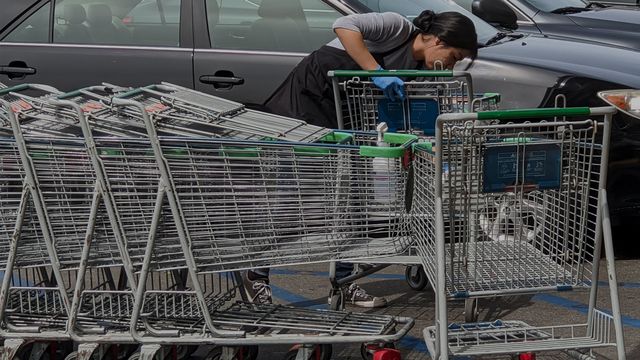
A worker without a mask sanitizes shopping charts before they are reused by waiting patrons outside the 365 Whole Foods Market in Los Angeles Tuesday, March 31, 2020.. (AP Photo/Damian Dovarganes)
All over the country, hundreds of thousands of people are grieving the loss of their friends and loved ones. With millions laid off, countless households are just days away from total penury, turning to overstretched food pantries.
Despite Trump’s narrative that the pandemic has been contained, the disease is spreading to new parts of the country, with every state reporting at least one death, as the disease rampages through nursing homes and prisons.
In the midst of this disaster, the Trump administration is single-mindedly focused on re-opening American businesses, despite the lack of measures necessary to contain the pandemic. The Trump administration’s overriding concern is to ensure that the pandemic does not interfere with the enrichment of Wall Street and the major corporations.
The White House has made clear it is calling for businesses to reopen under conditions in which the infrastructure to test all suspected cases, quarantine those infected, and trace their contacts does not exist.
This is despite the warning by the World Health Organization and leading epidemiologists that it is utterly irresponsible to reopen businesses under these conditions, which would only fuel a resurgence of the pandemic.
Trump’s demand for a return to work has been supported by substantial sections of the media. On Sunday, NBC’s evening news program led not with the massive death toll, but with far-right protests, some with just dozens of participants, demanding the reopening of businesses. The media ignored the role of far-right groups in calling the demonstrations, occupying state capitols bearing assault rifles and flying Confederate flags and swastikas.
While the broadcast news downplayed the numerous strikes, sick-outs, and protests by workers taking place around the country and the world against a return to work under unsafe conditions, they have framed the tiny right-wing protests as the legitimate expression of the popular will.
Trump’s proposal that businesses in substantial portions of the United States reopen by May 1, initially presented as an absurd pipe dream, has now become the baseline. Even Michigan Governor Gretchen Whitmer announced that her state, facing the highest COVID-19 case fatality rate in the country, would reopen businesses by the start of next month.
“Lockdown showdown” was the theme of ABC News’ Sunday talk show, which presented the prospect of reopening businesses as a conflict between those who, like Trump, advocate a “big bang” and those, like Utah Governor Gary Herbert, who say the process should be “more like a dial.”
Trump and dominant sections of the media frame the question of reopening the country as a choice between losing lives and mass impoverishment. But this dichotomy is false. It assumes the prerogatives of the capitalist system as given, in which the state extends unlimited resources to the financial and corporate elite, but cannot ensure the economic livelihoods of workers during a pandemic.
The demand for a premature return to work was accompanied with a massive intensification of US efforts to scapegoat China for the pandemic. As with the demand to reopen businesses, Trump has set the tone for the Democrats and the media. On Tuesday, Trump announced that the White House would end US funding for the World Health Organization in a statement falsely blaming China for the pandemic.
The next day, the Associated Press published an article entitled, “China didn’t warn public of likely pandemic for 6 key days,” bolstering Trump’s false claims that China is responsible for the pandemic. This narrative—referring to the week between January 14 and January 20—is contradicted by even the most cursory analysis of US media reports at the time, which makes clear that the progress of the disease was being widely and accurately reported in the international press by the first week of January.
The Democrats and their associated media outlets are seeking to beat Trump at his own game. In a front-page article on Sunday, the New York Times painted Trump as too eager to appease China. “Eager to continue trade talks, uneasy about further rattling the markets and hungry to protect his relationship with President Xi Jinping at a moment when the United States is relying on China’s manufacturers for lifesaving medical supplies, Mr. Trump has repeatedly muddied Republican efforts to fault China.”
Democratic presidential candidate Joe Biden took up this theme, accusing Trump in a new campaign ad of leaving “America vulnerable and exposed to this pandemic” by putting “his trust in China’s leaders instead.”
On Tuesday, The Washington Post published an article seeking to legitimize, without evidence, a right-wing conspiracy theory, pushed for months by Trump’s fascistic former campaign manager Stephen Bannon, that COVID-19 was created in a Chinese laboratory. The Post fished the claims out of Bannon’s private sewer and laundered it for use on the Sunday talk-shows, where it was a major topic of discussion.
The class struggle never rests, and imperialism never relaxes its predatory aims. This is especially true in a crisis. While workers are making these sacrifices, the US government provided a $6 trillion bailout to Wall Street and major corporations. The policy of quantitative easing and ultra-low interest rates, in effect for over a decade before the pandemic, was intensified in response to it.
If the ruling class has its way, the society that emerges from the crisis will be characterized by an intensification of all the tendencies that prevailed before the pandemic—more inequality, more exploitation, more poverty and more war.
While the ruling class’s assertion of its interests in the crisis is more immediate and direct, that of the working class will be more powerful. All over the world, from Italy to California, workers are refusing to labor in unsafe conditions and fighting to oppose a premature return to work. The efforts of the oligarchs to utilize the crisis to expand their wealth at the expense of thousands upon thousands of lives will produce immense social unrest.
The pandemic has made clear the bankruptcy of the capitalist system. In their struggle against the Trump administration’s back-to-work campaign, workers must take up the fight for the socialist transformation of society.

18 Apr 2020

Banks levy numerous charges on customers for services

Shivani Dwivedi & Ashish Kajla

All the banks, especially the public sector banks have a moral obligation and social responsibility of promoting financial inclusion and social welfare. The banks run on the deposits and when a bank sinks, depositors lose their savings. Therefore, deposit holders have a right to the common and basic banking services for free of cost. If banks look at it only from the commercial angle, then they will not achieve the goal of serving common people. Ironically, now banks have begun foisting numerous fees on customers for very basic services. It starts with the balance amount becoming lower than the require limit, to charges whenever one swipes the debit card or even withdrawing more than a specified number of times at the ATM. Every transaction from bank account leads to fees.
Here are some details to understand that for which services and how much amount the banks are deducting as a charge from saving account holders:
Minimum Balance: Almost every bank asks its saving account holders to maintain a minimum amount of balance, as monthly or quarterly average balance. The penalty on failing to maintain the minimum balance varies from bank to bank. SBI deducts Rs 20 per month whereas private banks deduct as much as Rs 650 per month.
Cash Deposit Withdrawal: Saving account holders are not allowed to have unlimited cash withdrawals and deposits from banks, not even from their home branch. Banks are allowing only a handful of free transactions every month from bank branches. Upon exceeding the allowed number of free transactions, mostly 3 to 5 every month, customers need to pay charges anywhere between Rs 50 to Rs 150 depending upon the bank.
ATM, debit card and cheques: There was no restriction on number of financial and non-financial transactions done through ATM. Later, RBI put a limit on number of free transactions, 5 from own bank’s ATMs and 5 from other bank’s (3 in metro cities) ATMs. Now banks are charging between Rs 8 to Rs 20 depending upon the type of transaction such as balance inquiry, mini statement and cash withdrawal.
Additionally, from Rs 100 to Rs 500 are charged as annual fee on debit cards. Replacement or issuance of new debit card costs Rs 100-250. Banks also charge every time a customer resets the ATM PIN.
SMS Alerts of Banking Transactions: Banks are also charging for the text messages that customers receive as and when there is a transaction. A service which started to enhance the security and alert the customers of any unlawful or fraud transaction, has also become a way of extracting money from depositors. Banks are charging Rs 15-20 per month, quarterly in some cases for the text message service.
Documentation: Banks are even charging their customers when they update their KYC documents, for issuance of duplicate passbook and account statements.
Apart from these charges, there are many other charges that banks levy on services. It is clear that there is not a single service left which banks provide without any charge. Every service comes at a cost for poor and common depositors. In fact,many customers are not even aware about the deduction of these bank charges from their saving accounts. They are completely unaware about the quantum of amount and the kind of services for which banks deduct their money. Bank charges are making the condition of poor worse and vulnerable by making them more financially weaker.
It is evident from these charges against every banking service that bank don’t exist anymore for the common people. They have become business firms like any other business industry who are letting the corporates go free when they don’t pay back their loans but penalise the common people without whom deposits they won’t survive.
Through the ‘No Bank Charges’ campaign, we demand that RBI MUST ask banks to remove all the charges levied on savings accounts. RBI should set guidelines for the banks and ensure that the banks do not exploit depositors.

Internet Ban in Kashmir and Its Impact on People

Bilal Ahmad Dar

India’s Internet shutdown in Kashmir is the longest ever in a democracy.The Washington Post
Internet ban in Kashmir is a norm now. Prior to the abrogation of Article 370, the authorities would snap mobile connectivity and Internet services intermittently citing security reasons. But with the abrogation of Article 370 on 5th August 2019, Kashmir has remained cut off from the rest of India and the world for continuous eight months because of communication blockade and all that. The authorities on the dictates of the establishment cornered Kashmiris with every which way. Snapping communication conduits of the people is an act of colonial oppression. Had not there be a fear of dissent on the part of the people, the authorities would not have hampered the Internet connectivity! Abrogation of Article 370 without due consultations of the people of Kashmir is nothing but a kind of imperialistic move on the part of the people who are ensconced on the cozy and high profile seats at the Centre.
The Apex Court of the country has time and again issued orders for the restoration of high speed Internet in Jammu and Kashmir but the authorities have always given a deaf ear to it. The authorities are playing a kind of delaying tactics. They keep on deferring the restoration of the high speed Internet without any ha and hum. Deferment of this kind is a sheer intent to oppress people mentally. Mental oppression of the people is worse than the physical oppression. David Kaye, the U.N special rapporteur on freedom of expression called this internet blockage “draconian” and “worse than collective punishment”
Without Internet, as we know, life is almost impossible. These days every institution is largely dependent on the Internet. Health Department, Education Department etc. cannot provide services to people without Internet. Major tests conducted in the Health Department are done online. How can this particular department do these tests when Internet works but at a snail’s pace! Because of this, both doctors and patients suffer. The lockdown because of the pandemic has made life complex and complicated. The Education sector of Jammu and Kashmir has suffered a lot because of this Internet blockade. These days we have a trend of online classes throughout India. The authorities have directed teachers for the online classes. How is it possible in Jammu and Kashmir where people are entitled only to 2G Internet speed! Where we are not able to browse a simple file! Where we are not in a position to open our email because of very slow Internet speed!
The Internet ban is a human rights violation. The Supreme Court said that the access to the Internet is a fundamental right under Article 19 of the Constitution. But in Kashmir, authorities do not consider it so. The authorities cite many implausible and preposterous reasons for this Internet ban.  Recently NITI Aayog member V.K Sarswat said that Internet suspension in Jand K does not have any impact on the economy, as people use it there ‘to watch dirty films online’. This kind of statement is only meant to defame people of the valley. The statement further connotes a kind of mind set of Mr. Sarswat and his ilk.
The authorities are so callous and indifferent to the woes and miseries of people here that even after the country wide lockdown was announced by Prime Minister Narendera Modi, high Internet has not been restored in Kashmir.  In this lockdown, Internet is one of the means of survival for people, in a way. People can use Internet to know about the measures and precautions that are to be taken to prevent themselves from the virus. But in Kashmir people have been relegated to dark ages. People in Kashmir are not able to use email etc. because of Internet ban. Students are not able to apply for the courses offered by the Universities both at the State and National level.  The students preparing for competitive exams are badly affected. The Internet outage has forced many people to move out of the valley at very dear costs. The students are suffering from mental, physical and emotional unease because of this. Internet is a means through which students can explore about the career opportunities but the Internet ban in Kashmir has put a permanent lockdown on the career avenues of students.  The research scholars enrolled in different universities of the valley were badly affected by this Internet ban. I myself suffered a huge loss with reference to Phd research work. Prior to the abrogation of Article 370, I had communicated two of my research papers to the reputed International Journals for publication. But as the Internet was suspended, I could not get any response with regard to the manuscripts. After five long and traumatic months, I boarded a flight for Delhi to resume my research work At Aligarh Muslim University. On landing at Delhi airport, as I switched on my mobile data, a flood of emails flooded my mobile phone. As I sorted my emails, I found a response email to my communicated manuscripts. The response was sent by the chief editor of the journal. The duration for the editing of my manuscripts was only twenty days, when already five months had gone by. I could not publish my research papers well in time. The same story could have happened to many researchers of the valley as well. How can the students of the valley compete at National or International level, when they do not have access to the Internet!
The prolonged Internet ban in the valley has left the lives of people, their jobs and their economy in  ruins.  Many software engineers and those who provide online services have been rendered jobless. And India is the biggest democracy and brazenly claims Kashmir as its “Integral part”.

US-China Trade War

Naveed Qazi

The conflict between the US and China is not simply economic — it has political, cultural and military dimensions.
For quite a while, world’s two largest economies, or superpowers, as a matter of fact, have been locked in a trade war. The result has been imposition of tariffs on hundreds of billions of dollars worth of each other’s goods.
While U.S. President Donald Trump has long accused China of unfair trading practices, forced transfer of American technology, and intellectual property theft, China on the other hand believes that United States is trying to curb its rise as a global economic power. The reason behind it is China’s military expansion into the South China Sea, and its expansive Belt and Road Initiative, as well as an ambitious plan to move up the value chain ladder, which was outlined in 2015.
The trade war has changed the global landscape, disrupting supply chains, most notably in the technology sector. Lucy Colback, in an Oped for Financial Times wrote: “perhaps the most significant consequence of this is the potential for a longer-term decoupling of China and the U.S., and the emergence of two rival and separate spheres of influence, in both trade and technology.”
Trump’s “America First” campaign ignited the trade war in recent times, and the uncertainties around the trade war eventually harmed the global economy. Trump’s tariff policy aims to encourage American consumers to buy American products, by making imported goods more expensive. During his election campaigns, he wanted to bring more production back into the country, in order to protect U.S. jobs.
But, the reality lies somewhere else, as many Americans don’t care about these new developments. Americans would rather pay as little for computer, electronics or clothing, even if it means other Americans lose their jobs.
Many are also concerned about the political leverage of China over U.S. fiscal policy. If it was not China, that bought Treasury’s on a large scale, interest rates would have risen in U.S. and thrown the country into a recession. However, this would not be of China’s interests, as of now, because U.S. shoppers would then buy fewer Chinese exports.
According to a recent B.B.C. report, U.S. has imposed tariffs on more than $360 billion of Chinese goods, and China, in retaliation has levied tariffs on more than $110 billion of U.S. products, lately. This has led to higher costs for U.S. businesses and consumers. In this scenario, the annual trade deficit wouldn’t likely change, which has risen and fallen, over the years, and hovered around $345.6 billion, in 2019. When it comes to U.S. companies competing with cheap Chinese goods, they must reduce their costs, or go out of business. To reduce costs, they often outsource jobs to China, or India.
If Trump were to start a continual trade war, the most immediate effects would be felt by American companies such as Walmart, which import billions of dollars of cheap goods. The price of these goods would skyrocket, because of new set tariffs. The end result would likely be a war of attrition that China is infinitely in a better position to win.
In current times, China’s foreign currency reserves now stand at more than $3 trillion. In contrast, the U.S. has foreign exchange reserves that levitate at $120 billion. An increase of tariffs would automatically trigger penalties in the World Trade Organisation, and might even lead to WTO’s collapse, which would then lead to higher tariffs against U.S. exports. While all of this might take a little while, China would likely emerge unscathed, but the scenario will be catastrophic for American businesses and employment.
In August 2019, when US Treasury Department officially designated China as a currency manipulator, the news had prompted further selling in global financial markets and raised speculation that China could take even more aggressive steps to devaluate its currency. A year earlier, exporters from most U.S. states also experienced dismal sales to China. Total U.S. merchandise exports to China fell 11% to about $107 billion, according to U.S. Commerce Department. Particularly hard hit were Texas, Florida and Alabama –each state saw sales plunge to more than 25%.
As the trade war has dragged, the companies have had to consider finding alternative sources of inputs for their production chains, too. It was less simple than buying completed goods, from new vendors, and switching to new component suppliers that come with friction costs as well as, potentially higher prices. With the result, trust, quality assurance, and logistical networks were all to be rebuilt. As the chain is not well oiled, at least to start with, the manufacturers lose.
Also, due to an uncertainty paralysis around the globe, nearly one third of respondents to an AmCham China survey said that they had delayed or cancelled their investment decisions. In a September 2019, EUCham survey, nearly two thirds of respondents said that they had left their strategies unchanged, but were monitoring the situation closely. A previous questionnaire of the same survey reflected that majority respondents were trying to adapt to the trade war, while the remaining had delayed investment and expansion decisions.
The conflict between the US and China is not simply economic — it has political, cultural and military dimensions. For these reasons, the trade war will unlikely diminish anytime soon. Over the longer term, the U.S. and China would split into two spheres of influence, one centered around the U.S. and abiding by its standards — from technology to governance — and another centered around China.
Former Federal Reserve chair, Janet Yellen had also warned that competition between the United States and China could also slow the development of artificial intelligence, 5G mobile networks and other technology related to America’s national security.
During the Future Forum panel discussion, the Financial Times’s Martin Wolf noted that even the Americans don’t seem to have decided what they want. Mr Wolf said that the phase one trade deal came “in the context of America going through a massive rethink in its relations with China, and it hasn’t made its mind up yet”.
With phase one trade deal signed, it is now possible for China to respond to Trump’s tariff pressure. The deal tests the limits of U.S. power, however, in the past, the Trump administration has sent contradictory messages, at times insisting U.S. companies to get better access to the Chinese market, and at other times, ordering the U.S. companies to leave China.
The centerpiece of phase one deal is a pledge that China will buy some $200 billion in U.S. goods and services. In return, the United States will suspend some of the new tariffs Trump previously announced. But, this appeal to managed trade will ultimately increase Chinese leverage over U.S. So long as U.S. exports depend on the appeasement of Chinese politicians, the threat that China will pull the plug on the system will continue to hang over U.S.–China trade relations.
According to an Oped by Geoffrey Gertz in Brookings: “the phase one deal does not achieve any of the complex structural reforms U.S. policymakers have been seeking around industrial policy, the Made in China 2025 program, and broader state influence in the economy. Earlier experiences suggested neither U.S. diplomatic appeals nor WTO trade restrictions would sway China into giving up these core aspects of its economic model. The lesson of the phase one deal is that aggressive tariffs won’t either.”
The Trump administration continues to insist these problematic issues will be resolved in a phase two deal. But, its highly unlikely that it would happen. By using different tactics, U.S policymakers have always had a limited ability to change Chinese behavior. The moot problem is that Washington needs a strategy that deals with China as it is, not as it hopes it might be. That’s how the problem with China would be resolved.

New Zealand businesses, media call for lifting of lockdown measures

John Braddock

On April 14, nearly three weeks into a month-long nationwide lockdown to combat COVID-19, the New Zealand Treasury painted a dire picture of the country’s economic prospects.
The announcement preceded the International Monetary Fund forecast that the world economy is entering its worst slump since the 1930s Great Depression and that the loss of output will “dwarf” that which flowed from the 2008 global financial crisis.
Treasury’s modelling predicted a surge in NZ’s unemployment to 13 percent, even if COVID-19 infections are contained and the nation’s lockdown is eased after four weeks, beginning on April 23. Attempting to browbeat workers into accepting a prompt return to work, it forecast a massive increase in unemployment to 26 percent and a fall in GDP of 23 percent if the strictest shutdown level remains in place for six months.
The unemployment rate, currently just over 4 percent, is expected to be higher in the June quarter than the 6.7 percent reached during the 2008 crisis. In the latest onslaught, the NZME media group revealed last week it had cut 200 jobs, while the owner of restaurant franchise operator Burger King was placed in receivership and mobile phone operator 2Degrees announced it would cut its staff of 1,200 by 10 percent.
Following the Treasury’s report, Finance Minister Grant Robinson ratcheted up the government’s fiscal stimulus package above the $NZ20 billion already pledged. He told BusinessNZ that small enterprises will get a $3 billion boost through tax breaks.
As of Friday, authorities had reported eight new cases of coronavirus in the previous 24 hours, bringing the total to 1,409, with two more deaths, for a total of 11.
Like governments around the world, the priority of Prime Minister Jacinda Ardern’s Labour-led coalition has been to prop up the wealth of the super-rich and big businesses, with billions in corporate bailouts at the expense of working people. Even as the pandemic continues to rage internationally, campaigns are underway for workers to return to work in order to shore up profits.
Sections of NZ’s business elite and the media are already braying for the lockdown to be ended, and demanding that working people risk their lives and health to defend the capitalist economy. Taking their cue from US President Donald Trump, prominent media commentators have begun calculating the “cost” of saving lives versus the measures they deem necessary to restart the economy.
Even before the first hints that the number of new COVID-19 cases was beginning to decline, a drumbeat was initiated calling for more shops and businesses to reopen. Under the headline “Kill or Cure?” the Sunday Star Times demanded to know on its April 5 front page: “When will this end, and could the solution be worse than the disease?”
The next day, TV3 breakfast host Duncan Garner told viewers: “Businesses are screaming for a signal we are returning to work soon.” Heather du Plessis-Allan on Newstalk ZB declared: “I’m starting to feel desperate for businesses who have been told they’re not allowed to operate during this lockdown.”
Broadcaster Mike Hosking said on April 17: “Basically, we have lost a month economically.” The lockdown had “failed” and “Australia’s numbers are equal if not better than ours,” he declared.
Some of the commentary bordered on the fascistic, identifying cohorts of people whose lives could be sacrificed. Commentator Matthew Hooton wrote in the New Zealand Herald on April 4: “It may be repulsive to express it explicitly, but a protracted suppression strategy would materially and perhaps permanently damage the lives of the two million New Zealanders under the age of 30 to briefly maintain the life expectancy of some thousands of people in their 80s.”
Speaking on Radio NZ on April 14, Hooton criticised “more extreme elements in the public health community” who are advocating some form of lockdown for six months or longer. Former National Party Finance Minister Steven Joyce told Newstalk ZB it was a “pie in the sky” fantasy to suggest COVID-19 could be eliminated, and said that staying in lockdown would cause “irreparable financial damage” to businesses.
Health experts have warned, however, that the government does not yet have sufficient scientific information on which to base a decision. Otago University epidemiologist David Skegg told a parliamentary committee the government would be playing “Russian roulette” with people’s lives if it exited the lockdown without ramping up its contact-tracing work.
Epidemiologist Michael Baker, who is on the Health Ministry’s COVID-19 technical advisory group, said some of the data he needed to see to be confident of reducing to alert level 3 may not yet exist. He told Radio NZ that he had been asking the Health Ministry for weeks for key data about border control, contact tracing and testing but had not received it, nor had the advisory subgroup he was on with four other epidemiologists.
Baker previously predicted a “long, drawn-out battle with the virus” as waves of the pandemic hit separate countries at different times. “Anyone who says it will be over by Christmas hasn’t thought about it enough,” he said.
In contrast to the growing back-to-work agitation, a survey released last week found that almost two-thirds of people would accept an extension of the lockdown beyond April 22.
Research NZ asked if they would be willing to remain in lockdown for at least another two weeks beyond when it is due to finish. Sixty percent agreed they would, 14 percent disagreed, and 26 percent didn’t know. This was despite many respondents’ fears about losing jobs and paying mortgages and rents.
Despite this, and the continuing emergence of new cases of COVID-19, government leaders have begun preparing the way to drop the current lockdown from alert level 4 to level 3. While still restrictive, a level 3 lockdown would enable many businesses to begin operating again. Significantly, schools will reopen, raising concerns among teachers and parents that they could once again become centres for the spread of the virus.
Prime Minister Ardern is set to announce on Monday whether the lockdown will end.

Deputy Prime Minister Winston Peters, from the right-wing populist NZ First Party, declared on April 16 that the country is “likely” to come out of lockdown next week, meaning “a whole lot” of businesses could immediately reopen if they met guidelines. Peters also criticised the World Health Organisation for not declaring the pandemic earlier and claimed it did not act fast enough, in line with recent statements by US President Donald Trump.