21 Apr 2020

The COVID-19 pandemic and the rise of economic nationalism

Nick Beams

The coronavirus pandemic and its economic consequences have revealed, in the living experience of billions of people the world over, the internal rot and decay of the capitalist system, together with its patent absurdities.
One only need point, by way of example, to the fact that the founder of Amazon, Jeff Bezos, the richest man on the planet, has increased his fortune by $24 billion since the start of the year to more than $138 billion, while nurses and health workers in the US and around the world are battling the virus without the necessary protective equipment.
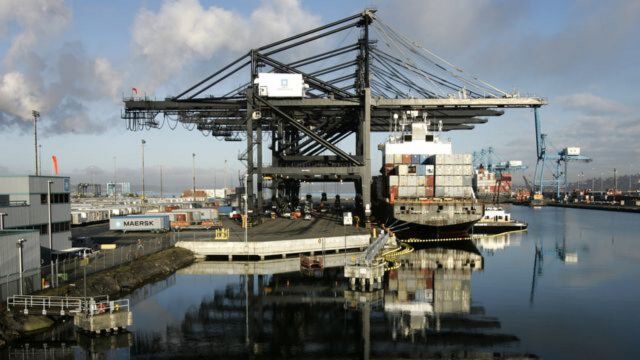
A container ship from Horizon Lines Inc. is unloaded at the Port of Tacoma Wednesday, Feb. 13, 2008, in Tacoma, Wash. (AP Photo/Ted S. Warren)
Other examples abound, such as the fact that health authorities and states in the US have been forced to fight against each other in the capitalist “free market” to secure necessary equipment and supplies, or that thousands are queuing at food banks in the US, while dairy farmers pour milk away and agricultural producers plough their crops into the ground.
While exposing such contradictions, covered over in the now bygone era of so-called “normal times,” the pandemic has also revealed those fundamental truths that have long formed the basis of the fight for genuine socialism.
First and foremost, it has made clear that the tiny minority of corporate and financial oligarchs, and the profit system over which they preside, stand as an obstacle to the rational organisation and scientific planning of the economy and society necessary to deal with the threat to human life. This is an obstacle that must be removed.
However, it would be a mistake to see this immense social problem as applying only to the extraordinary state of affairs produced by the pandemic. It has a far broader reach.
The proponents of a return to work, irrespective of the health dangers posed to workers, maintain that a continued lockdown means more economic stress and worsening poverty, as well as health and psychological problems. Such problems, however, could be rapidly resolved through the expropriation of the vast fortunes of the Bezoses of the world, to provide a living income to all, while dealing with the health crisis.
As the World Socialist Web Site perspective of Saturday 18 April explained, if the wealth of the 250 billionaires in the United States, with a collective net worth of close to $9 trillion, were expropriated and distributed evenly among the 100 million poorest households, it would provide each one with a monthly income of $5,000 for 18 months.
Moreover, the problems described by the return-to-work advocates as a product of the lockdown, are actually those of daily life, created by the “normal” operations of the capitalist system. And they will be massively intensified in the wake of the pandemic as the ruling classes seek to pump value, extracted from the working class, into the mountain of fictitious capital created as a result of the bailout of the corporations and the financial system.
Every day workers have their health impaired by the relentless worsening of conditions. Every day they work under the threat they could be thrown out of work and reduced to poverty, as the result of some “restructuring” operation.
Every day they face the prospect that, as a result of gyrations in the global financial system and the actions of speculators, they could be thrown onto the scrapheap, have their pension, superannuation, or 401(k) plans slashed, their mortgage repayments increased and so on—changes that can devastate their lives in the blink of an eye.
In other words, the madness made manifest by the pandemic is only a particularly egregious expression of the daily functioning of a malignant social and economic order.
Just as the pandemic has laid bare the absurdities, irrationalities and destructive consequences of the profit system, so it has revealed the reactionary character of the political structures on which the accumulation of private profit is based—i.e., the nation-state system.
By its very nature, the pandemic has revealed, both from a health and an economic standpoint, the necessity of international collaboration and co-operation.
There is no national solution to the health dangers posed by the virus—it requires a planned global response. An individual nation may bring the virus under control within its confines, but then be confronted with the danger of a “second wave” of infections, due to its continued spread in other parts of the world. The virus does not have a passport, nor does it recognise immigration and border controls.
This pandemic has delivered a major shock to the world. But it has been a trigger event for the crisis, the conditions for which had been developing over a considerable period. It is no more the underlying cause of the present crisis than was the assassination of Austrian Archduke Franz Ferdinand, which triggered the outbreak of World War I, the fundamental reason for the conflict.
The pandemic has not only triggered the crisis. It has been the accelerant for processes already well advanced before it arrived on the scene. One of these is the growth of national divisions and conflicts.
Long before the denunciations of China, now pouring forth from the Trump administration and its allies around the world over the virus outbreak, the US intelligence and military apparatus, backed by the political establishment—Democrat and Republican—together with powerful sections of the mass media, had designated China as a threat to the “national security” of the US.
In the strategic planning documents of the US military machine, the “war on terror” was replaced by an insistence that it was now necessary to prepare for an era of “great power competition,” in which China was designated the chief danger to US economic and military hegemony.
Trade war had been launched through the imposition of tariffs and China’s plan for economic and technological development had been declared an existential threat to US national security, accompanied by a series of bans on Chinese telecom companies and the launching of a global campaign by the US to have its allies exclude the Chinese company, Huawei, from the development of 5G networks.
While the US, at least to this point, is the main proponent of economic nationalism, under the “America First” doctrine of the Trump administration, the same tendencies are reflected everywhere.
The European Union is riven with divisions and conflicts, the most prominent of which has been Brexit. The EU is split over an economic response to the pandemic, with Germany striving to maintain its dominance over the bloc, as leading figures in the political establishment insist it must play a greater role in global affairs.
As a result of the pandemic, voices are being raised that the disruption of global supply chains, caused by the spread of the virus, along with lockdowns, have revealed problems in economic globalisation, meaning that each country must look to the protection of its “own” economy.
US Commerce Secretary Wilbur Ross set the tone back in January, when he declared that supply chain disruptions in China, resulting from the virus outbreak, would encourage US firms to shift their operations back to American soil.
The Japanese government of Shinzo Abe has set aside $2.2 billion from its economic stimulus package to assist manufacturers to shift production out of China.
New York Times article by Neil Irwin on April 16, entitled “It’s the end of the world economy as we know it,” cited remarks by Elizabeth Economy, a senior fellow at the Council on Foreign Relations, who said there was a “rethink” underway over how much each country wanted to be reliant on another.
While this was not the end of globalisation, she raised, the pandemic had accelerated thinking in the Trump administration that there are “critical technologies, critical resources, reserve manufacturing capacity that we want here in the US in case of crisis.”
The article noted that France’s finance minister has directed French companies to re-evaluate their supply chains, to become less dependent on China and other Asian nations.
In the US, where anti-China outbursts are escalating daily, the South Carolina Republican Senator Lindsey Graham has even suggested the US should punish China over COVID-19 by cancelling its holdings of US Treasury bonds.
A gauge of the speed of these processes can be obtained by contrasting the situation that now prevails with what occurred in the wake of the global financial crisis of 2008.
In April 2009, leaders of the G20 met in London to commit themselves to a co-ordinated response, vowing that never again would they go down the road of the protectionist measures that had played such a disastrous role in the Great Depression, helping to create the conditions for World War II.
For a time, the commitment to “resist protectionism” was a regular feature of statements by all international economic bodies, such as the G20 and G7. Now even the phrase has disappeared, under conditions where all the institutions established in the post-war period to regulate the post-war affairs of global capitalism—the World Trade Organisation, the G7, the International Monetary Fund, the World Health Organisation—are torn by conflicts or in an advanced state of decay.
The significance of these developments can only be understood within their broader historical context.
In the 19th century, the development of capitalism and the productive forces of mankind were aided by the formation of national states, such as the unification of Germany in 1871, the establishment of the Italian nation-state and the American civil war, which laid the political foundations for the development of the United States as an economic powerhouse.
But the advance of the productive forces did not stop at national borders. It spread globally in the last quarter of the 19th century and the opening decade of the 20th. This vast economic development, however, brought to the surface a central contradiction in the global capitalist system—one that has bedevilled it ever since—between the development of a global economy and the division of the world into rival nation-states and great powers.
This conflict exploded in the form of World War I, as each capitalist government sought to resolve it, as Leon Trotsky noted, “not through the intelligent, organised co-operation of all of humanity’s producers, but through the exploitation of the world’s economic system by the capitalist class of the victorious country.”
The Russian Revolution of October 1917—the overthrow of capitalism by the working class—pointed to the only way out. It was conceived and fought for by Lenin and the leadership of the Bolshevik Party as the opening shot of the world socialist revolution, that is, the taking of political power by the international working class, as the pre-condition for the reconstruction of the global economy on socialist foundations—the necessary next stage in the historical development of mankind.
The war resolved nothing. Economic nationalism intensified over the succeeding two decades, leading to the outbreak of an even more devastating world war in 1939.
In the last days of World War II and its immediate aftermath, the leaders of world imperialism recognised that a new international economic order and monetary system had to be constructed, because any return to the conditions of the 1930s would bring socialist revolution, including in the US.
There was an attempt to overcome the contradiction between the development of a global economy and the division of the world into rival nation-states and great powers, through the development of a new world trading and monetary system based on the economic might of the major imperialist power, the United States. This was the foundation of the Bretton Woods monetary system established in 1944, in which the US dollar, backed by gold, became the preeminent international currency.
But this system failed to provide a lasting solution. It only temporarily, in historical terms, ameliorated it. The essential contradiction re-emerged, because the very economic expansion it had produced undermined the foundation on which it was based—the economic superiority of the US over its rivals.
The beginning of the end of that dominance announced its arrival with the decision by US President Nixon, on August 15, 1971, to remove the gold backing from the US dollar. The relative weakening of the US vis-à-vis its economic rivals meant it could no longer maintain the system it had created.
The historic economic decline of the US has continued apace in the period since. From the economic powerhouse of world capitalism, it has become the centre of capitalist rot and decay, manifested, above all, in the process of financialisation—the complete divorce of wealth accumulation from the underlying process of production—and the making of profit, not through industrial development, as once took place, but by means of parasitism and speculation.
That rot erupted to the surface in the 2008 financial crisis and has now exploded in even more grotesque forms in the wake of the pandemic—exemplified in the present rise of the stock market as tens of thousands die.
However, US imperialism has no intention of fading from the scene. Rather, confronted by rivals on every front—China, Germany, the European Union and Japan—and seeing enemies everywhere, it is determined to maintain its position by all means necessary, including war.
The source of the great problems confronting humanity is not economic globalisation and the integration of economic and social life on a world scale.
Globalisation of production, in and of itself, represents an important advance. It raises the productivity of labour—the material foundation for all economic advancement—to new levels. Furthermore, the vast and complex systems of planning and communication, by which transnational corporations carry out their economic activities, lay the material foundation for a higher form of society, a planned international socialist economy, consciously controlled and democratically regulated by the world’s producers—the international working class.
In 1934, as war clouds were once again gathering, Trotsky warned that the call by fascist and nationalist regimes for a return to the “national hearth” had profound significance.
While the prospect of harmonious national economic development on the basis of capitalist property was a complete fiction, it had a menacing political reality. It signified the drive by the major powers to gather together all the economic resources of the nation in preparation for war. That war erupted just five years later, with even more devastating consequences than the first imperialist conflagration.
Today, the promotion of economic nationalism—now being accelerated as a result of the pandemic—has the same reactionary content.
The problems confronting mankind do not arise from economic globalisation as such, but are rooted in the deepening contradiction between this progressive development and the reactionary social and political order, based on private profit and the division of the world into rival nation-states and great powers, within which it is encased.
The productive forces, created by the labour of the international working class, must therefore be liberated from these reactionary fetters. That path was charted in the opening shot of the world socialist revolution in October 1917. It is the path to which the international working class must now return, as the only way forward out of the present crisis.


COVID-19: A Gendered Reading of a Pandemic

Akanksha Khullar 


The gender-disaggregated data available so far for COVID-19 demonstrates an almost equal number of confirmed cases between men and women. However, mortality rates are higher among men (2.8 per cent) than women (1.7 per cent). Purely from the perspective of a physical illness, the virus appears to affect women less severely than men. However, emergencies such as this one do not function in a vacuum; i.e. they do not have health implications alone. Their negative socio-economic impacts could exacerbate pre-existing inequalities and create new ones. And, although these impacts are serious for all, they are likely to affect women more.

Labour in the Health SectorFor instance, COVID-19’s disproportionate effects on women draws from the fact that a majority of healthcare workers across the globe are women. With healthcare workers at the forefront of combating the pandemic, they are at a greater risk than most of contracting the illness. To illustrate, Spain now has 40,000 confirmed COVID-19 cases, of which 5400—nearly 14 per cent—are medical professionals. In Italy, 9 per cent of the total cases have occurred among health workers, and about 3,300 doctors and nurses have been affected in China.

According to the World Health Organisation (WHO), women account for about 70 per cent of workers in the health and social care sector. This means relatively more female medical professionals are being exposed to the virus on a day-to-day basis in comparison to their male counterparts. The worldwide shortage of personal protective equipment (PPE) such as masks, gloves, and sanitisers, worsens this scenario.

Division of Labour in HouseholdsThe state-imposed lockdowns being adopted across the world too have a gender dimension, which comes into sharper focus in traditional households where women already shoulder a substantial proportion of the domestic workload. Could this workload increase?

Even more developed countries with relatively greater gender parity struggle to put women at an equal footing owing to still predominant gender stereotypes and discriminatory social norms. Resultantly, it is women who have predominantly tended to carry out household work, including caregiving duties. According to the International Labour Organisation (ILO), globally, women carry out 76 per cent of the total amount of unpaid caregiving responsibilities, which is over three times more than men.

Subsequently, with restrictions on movement, shutting down of businesses and schools, and with every member of the family being at home—the burden of these unpaid and household responsibilities could likely continue to fall more heavily on women, particularly in traditional households. This is especially problematic for women who also have professional responsibilities and are working from home due to lockdowns.

Gender-Based ViolenceProlonged quarantine measures could be a serious catalyst for escalation in domestic violence, placing victims at potentially far greater risk than before. According to the WHO, one in three women in the world experience physical or sexual violence in their lifetimes. Based on the probability of these lockdowns impacting businesses and increasing financial difficulties, which could be accompanied by spikes in alcohol consumption, anxiety, and depression—all considered triggers for violence against women—a resultant escalation in gender-based domestic violence could be anticipated.

This has already been documented in India: since the countrywide lockdown began, there was a two-fold increase in gender-based violence, with 257 complaints registered in the final week of March 2020 (23 March-1 April) alone. In Spain, calls to the domestic violence hotline have increased by 18 per cent, and a state-run hotline website recorded a 270 per cent increase in the number of sexual violence cases. This trend is visible globally.

Divisions of Labour in the WorkplaceEconomic repercussions of pandemics are well understood. Research suggests that women are more vulnerable to being laid off in such an environment. In the current situation, informal and part-time jobs are at the greatest risk of suspensions. In both developed and developing economies, many informal sector jobs are mostly undertaken by women. For instance, in South Asia, over 80 per cent of women in non-agricultural jobs are in informal employment; in sub-Saharan Africa, 74 per cent; and in Latin America and the Caribbean, 54 per cent. Even in the formal economy, many industries that are directly affected by the lockdowns—such as travel, tourism, F&B, food production etc—have high female labour participation.

Clearly, women are at a greater disadvantage in an already negative economic environment. This could be further exacerbated in any economic crisis precipitated by the COVID-19 pandemic. A fact sheet published by Organisation for Economic Co-operation and Development demonstrates how, among other things, jobs created during and after an economic crisis are mostly built for, and offered to, men.

ConclusionOverall, it is evident that the multi-dimensional socio-economic effects of the COVID-19 pandemic has a sizable gendered dimension. Consequently, gender-responsive policies will be necessary for mitigating the effects of the pandemic in a sustainable and equitable manner.

20 Apr 2020

Zimbabwe’s Food Crises

Naveed Qazi

Zimbabwe’s food security poses a serious threat to national security, as it can cause civil unrest and general insecurity in the country.
Zimbabwe is facing the worst food shortage in recent memory. Once known as the breadbasket of the continent, the country is now facing its most serious crises. It has resulted in a lot of fear and loss of hope among people. Nearly half of Zimbabwe’s population, some eight million people, face food insecurity, with majority of population concentrated in the rural areas.
According to a report in November 2019, by Hilal Elver, the U.N’s Special Rapporteur on the right to food, Zimbabwe counts amongst the four highest food insecure States, alongside conflict-ravaged countries. In her preliminary findings, she said that the international community should scale up humanitarian aid to eliminate hunger and malnutrition in the country.
Zimbabwe has been ranked 9th by American charity organisation Concern Worldwide among the ‘world’s top ten hungriest countries’ in 2018. The reasons are often attributed to climate change. In the 2018-2019 season, parts of southern Africa, including Zimbabwe, received their lowest rainfall since 1981, according to the U.N. Office for the Coordination of Humanitarian Affairs. Many smallholder farmers have not had a good harvest for two or more years. Meanwhile, the continued advance of Army Worm, a highly destructive moth larvae, threatens those who have managed to grow maize and other staples.
The country has less than 5 percent access to irrigation facilities. Due to climate change, the ground water levels have also diminished, and temperature has also increased. There has been lack of reliable rainfall in the past five seasons. Food insecurity in urban areas has also been a cause of concern, as a heavy tax system, pervasive corruption, livestock losses, power cuts, recent droughts, high levels of unemployment, conditionalities set by U.S. and E.U., and low wages have affected the households. Businesses are also struggling and thus reducing their workforce.
Add to that, the country is also facing an economic recession with shortages of basics such as fuel and medicines. There were inflationary pressures seen in 2008, when the country stopped pegging its currency at par with the United States dollar. Zimbabwe adopted the use of U.S. dollar after hyperinflation drastically reduced the value of the local currency. However, ‘dollarising’ hit a major bump in 2015, when the dollar started vanishing from the formal banking system. In a bid to end the US dollar shortage, Zimbabwe’s central bank introduced bond notes – a form of surrogate currency that was backed by a $200 million bond facility from the Export-Import Bank. But, black market speculation quickly diminished the bond note’s value, triggering a shortage, which central bank tried to offset by creating electronic notes. It prompted the bank to merge bond notes –both physical and electronic- into Real Time Gross Settlement (RTGS) dollar, known as Zimdollar. Despite that, the effort has failed after Zimdollar quickly fell prey to black market speculation that sent its value plummeting.
Zimbabwe’s food security poses a serious threat to national security, as it can cause civil unrest and general insecurity in the country. Many people can only afford one meal a day. In Harare, people spend long hours queuing for food, as well in front of banks to get cash, and in shops to obtain cooking gas or water. While the food is readily available in supermarkets, inflation of upto four hundred ninety percent has made the people ‘food insecure’. There are scores of people who have migrated from poor rural areas to cities in search of job opportunities, to improve their access to sufficient and adequate food and other public services. However, they had ended up living in informal settlements that are multiplying in the streets of Harare. With the result, spreadable diseases due to unsafe water and open sewage are increasing.
According to a report in Al Jazeera, “the most vulnerable segments of society, including the elderly, children and women, are forced to rely upon coping mechanisms such as, school dropout, early marriage, and sex trade to obtain food, behavioural patterns that often are accompanied by domestic violence.”
Most of the schools in Harare are no longer able to continue their school feeding programmes. At best, some schools are able to offer one meal a week per classroom. The report, compiled by Unicef and the Zimbabwe National Statistics Agency, shows high levels of privation in rural areas, where 76.3% of children live in abject poverty. Statistics observed by the Guardian ascertain that almost half of these children do not have enough of the right food to eat. Child poverty is more prevalent in Mashonaland Central, Manicaland and Matabeleland North.
According to Reuters, Zimbabwe’s agriculture minister, Perrance Shiri, said that the country has less than 100,000 tonnes of grain in its strategic reserves. The grain reserve has a 500,000-tonne capacity, but has seen a drop after a poor harvest. Zimbabwe consumes 80,000 tonnes of maize every month.
For grain imports, Zimbabwe’s president Emmerson Mnangagwa has introduced measures designed to facilitate an increase in grain importation to alleviate the local shortages.
In January, Zimbabwe permitted the importation of genetically modified grains for the first time in over a decade, with the Grain Millers Association of Zimbabwe acquiring 100,000 tonnes of genetically engineered maize from South Africa and Brasil.
In addition, the government has zero-rated VAT and import duty on all basic commodities, and created a green channel to fast-track essential food consignments, through the land-locked country’s border posts.
Even though these interventions have helped, they have been not enough to deal with the widespread food shortages.
The World Food Programme says it needs a further $200m (£152m) to meet hunger needs in the country. Many consultants and research authors have called on the country to adopt policies such as large scale feeding programmes.
While Zimbabwe bought 100,000 tons of corn and received delivery of it from Tanzania in 2019, it hasn’t been in contact with the country ever since, as Tanzania seems to limit exports to build its own reserves. The World Food Programme has also imported 20,000 tons of corn from South Africa and 50,000 tons from Ukraine and Mexico. The government has not been involved in those shipments.
The irony is that there is also a lot of food wastage in the country. There are piles and piles of vegetable rotting in the food markets, because people do not have enough money to buy. Zimbabwe has also become a matter of concern for under-nutrition levels. The 2018 Barilla report titled Fixing Food, noted that Zimbabwe was one of eleven African countries still lagging behind in “implementing health eating guidelines at national level.”

India: A land in lament

Sarosh Bana

A farrago of failures of the authorities is confounding India’s desperate struggle against the coronavirus disease (Covid-19), as the nation is facing a prolonged lockdown. As public services collapsed with the abrupt imposition of the world’s biggest – and toughest – lockdown that quarantined the population of 1.3 billion from 25 March, there are fears that the unfolding humanitarian tragedy will far eclipse the viral disaster that has hitherto slain 324 and afflicted 9,352 others in the country.
There was widespread panic when Prime Minister Narendra Modi came on television at 8 pm on 24 March to announce that the 21-day lockdown would begin that midnight, in four hours. Binge purchases stripped bare supermarkets, groceries and pharmacies in no time.
Also, with 93 per cent of the country’s 540-million workforce engaged in the informal sector with no social security and comprising largely migrant workers who are daily wagers, roadside vendors, servants, drivers and contract labourers, there was a mass exodus from the towns and cities where they worked, to their families back in rural India.
Out of job, and with meagre savings – they remit most of their earnings to their families – and with public transport revoked, most were left with no option but to trudge the vast distances, even 400 km and more, to their hometowns. They were, however, turned upon by the police who thrashed and humiliated them for venturing out. At least 17 of them died soon after while dodging police brutality in making their way home. One man was midway from his village 200 km away when he collapsed out of exhaustion, but was left to die in the streets by unconcerned policemen. One 11-year-old boy died of starvation. Groups of four and five workers were separately mowed down by speeding vans.
In a radio broadcast on 29 March, the Prime Minister apologised for the grim developments and said he understood what the poor were going through. However, the next day, state borders were sealed off, stranding those fleeing even further, without food, water or shelter.
Millions of them have started starving, even as some public-spirited individuals and organisations bribe the police for permission to distribute food where they can. Some of those in flight were lined up by officials posted at state borders and fumigated from head to foot with chemicals and then pushed back across the borders without food, water or rest. One lost an eye as a result. Some of them proudly proclaimed they were skilled cooks whose food was savoured by those patronising their eateries, but were now themselves suffering pangs of hunger.
The situation is little better in urban India. Though essential services like food and medicine have been exempt from the shutdown, roadside vegetable and fruit vendors have been chased away, their pushcarts upturned and their wares squashed by policemen on the rampage. Trucks freighting fruits and vegetables have been stopped by police seeking bribes to let them through, with catastrophic consequences. Truckloads of food items are thus rotting away, farmers too are suffering as their produce is not being picked up in time, and retail outlets are running low on stores. Most online retailers have ceased operations.
Curiously, the country has enough food reserves – including 59 million tonnes (mt) of foodgrain – to feed the population for the next one year, but these are not being released to tide over the on-going crisis.
The crisis of the poor exacerbates India’s struggle against the coronavirus. Two-thirds of the population lives on less than $2 a day and they have been the worst affected by the closure. The situation threatens to precipitate a manmade famine that will devastate especially these segments on the margins of society.
India’s first active case of Covid-19 was carried into the country on 30 January from China where it was first detected over a month earlier. But though the World Health Organisation (WHO) that very day declared the outbreak a ‘public health emergency of international concern’ and on 11 March designated it a ‘pandemic’, counselling a vigorous global response to counter it, India’s health ministry officials even on 13 March were telling reporters that coronavirus is “not a health emergency” and “there is no need to panic”.
The government’s attention was diverted by other issues. For instance, the entire administration was focussed on preparations for US President Donald Trump’s 36-hour state visit to the country in the last week of February, reportedly spending $17 million just for his three-hour sojourn in Ahmedabad, in Gujarat state. Besides, the nationwide unrest, provoked by the enactment of a communally discriminatory legislation, peaked while Trump was in the capital city of New Delhi, leading the authorities to counter it forcefully.
Opposition parties also alleged that the Modi government had delayed imposing the lockdown as it was devoting its energies in much of March towards horse-trading to pull down the Congress party-led government in the politically significant state of Madhya Pradesh and replacing it with that led by Modi’s Bharatiya Janata Party (BJP).
Healthcare workers were besides alarmed by critical medical supplies running low. Even in the best of times, the country’s feeble health services are stretched, there being an average of only 0.6 beds per 1,000 population and one doctor for every 1,457 people, these dismal ratios plummeting in rural India. While the government budgets 2.1 per cent of the GDP towards Defence, the share of Public Health is a mere 0.44 per cent. Testing for the virus has remained weak, reaching a total 195,748 on Sunday.
Yet, India has been exporting planeloads of life-saving drugs to various countries in what is widely seen as an effort at “medical diplomacy”. The government retracted a ban it had itself briefly imposed on such drugs on 19 March, including the experimental Covid-19 treatment, hydroxychloroquine (HCQ), after Trump threatened retaliation if the anti-malarial medicine was not shipped to the US. While authorities insist there is no domestic shortage of HCQ, pharmacists say it has almost disappeared from the market.
Earlier, India had airlifted 15 tonnes of medical supplies by an air force plane to coronavirus-hit China that included surgical masks and gloves, infusion pumps, enteral feeding pumps and defibrillators. Drug consignments are also being sent to other afflicted countries like the UK, Spain, Germany, Mauritius, Seychelles and Bahrain.
Seized of the viral dilemma, the Prime Minister now says that his previous slogan on the pandemic, namely, Jaan hai to jahaan hai (if there is life, the world will exist) must be changed to Jaan bhi, jahaan bhi (life will be there, together with the world).

Australian governments refuse to assist international students amid pandemic

John Harris

Australian Prime Minister Scott Morrison told a press conference earlier this month that his government would not provide any support to international students and visa-holders whose lives have been disrupted by the coronavirus pandemic and global economic downturn.
Speaking for the entire political establishment, Morrison callously declared that international students who cannot support themselves in Australia should “return to their home countries.”
There are some 2.17 million international students, workers and backpackers on temporary visas who currently reside in Australia. Many of them face visa expirations, unemployment and travel restrictions. It is estimated that there are as many as 570,000 student visa-holders in Australia.
When the crisis began, no concessions were provided so that visa-holders could afford tickets for flights which more than doubled in cost. Numerous countries rapidly locked down their borders limiting travel arrangements. The ending of most international flights from Australia means that hundreds of thousands are now effectively trapped.
Promoting divisive nationalism, Morrison declared at the press conference, “our priority is on supporting Australians.” In reality, the government, with the full support of Labor and the unions, has provided hundreds of billions of dollars to the major corporations, while virtually nothing has been done to assist the million of workers thrown into unemployment.
In an attempt to deflect anger over the lack of support, acting Immigration Minister Alan Tudge later stated that temporary visa holders who have been in the country for over a year will be able to access their Australian superannuation for support.
Given that visa-holders are among the lowest-paid of workers, their superannuation will be woefully inadequate to cover their basic living expenses. They are, moreover, being forced to deplete their limited savings just to survive.
Under regressive visa laws, international students have a 20-hour weekly limit on paid work. They are also prevented from accessing essential medical and social services. This has made it virtually impossible for students to save money and secure full-time work.
Most with a job are exploited as cheap labour. Many have been forced into low-paying, sometimes dangerous, cash-in-hand jobs in the fruit picking, retail and hospitality industries. Others work in the “gig economy,” as ride-share and food delivery drivers.
A recent survey of over 3,700 visa-holders, conducted by Unions New South Wales, revealed that almost half of the participants had lost their jobs since the crisis began. A further 20 percent said that their number of working hours had been cut. Some 43 percent said that they had to skip meals.
Even before the pandemic began, many international students were living on the precipice of a crisis.
According to 2017 figures from Universities Australia, one in two international undergraduate students reported overall expenses greater than their income. About 50 percent were in paid casual or part-time employment with a median of 15 hours a week. Almost nine in ten were compelled to rely on financial support from relatives.
International students have been heavily affected by unaffordable housing costs in the major cities, especially Sydney and Melbourne. Thousands have been forced into crowded shared accommodation where the disease can spread like wildfire.
Many now confront the prospect of homelessness. Andrea Andrade from Venezuela , who has been studying at a TAFE in Perth since 2018 and recently lost her job, told SBS News: “I cannot pay rent, I cannot pay food. We did try talking to our landlords but they cannot help us. I have savings but it’s only a matter of time before that runs out. I do have family who can help me in case of an emergency … but they’re going through the same situation.”
Marcos Bento, a Brazilian student who came to Australia four years ago, told the Special Broacasting Services network : “If I had the four or five thousand dollars to buy one ticket back to Brazil… if I had money to go back to Brazil I would have money to support myself here.”
After losing his job in Sydney, he said: “I have no idea about the future, no money to pay rent… We are afraid about the situation, we know you are meant to stay home, but if you stay home you must have food and rent or else you go homeless.”
Bento said that he had spent over $40,000 to study in Australia for his master's degree in public health which is due to finish in September. He said leaving the country now could mean he will fail his course and that his fees will have been wasted. He said the university had not provided him with options to finish his degree remotely.
For decades, international students have been exploited as 'cash-cows' paying astronomical upfront tertiary course fees, usually in the tens of thousands of dollars a year. In 2019, the international student “market” was worth approximately $37 billion, comprising almost 40 percent of Australia’s exports of services and 9 percent of total exports.
It was the Hawke Labor government that in 1985 introduced full upfront fees for international students. This was a prelude to the abolition of free education two years later, with fees brought in for domestic students. Ever since, revenue from international students has grown considerably under consecutive Labor and Liberal-National governments.
Labor has bemoaned the impact that the crisis will have on the multi-billion dollar university model, but has said virtually nothing about the dire plight of international students, making clear that their abandonment is bipartisan policy. State governments, many of them Labor-led, have similarly done nothing to assist the students.
The indifference of the political establishment contrasts with the response of ordinary people. In a number of cities, workers have organised to provide international students with cheap or free groceries and other essentials. Some small businesses in Sydney and elsewhere have given international students a free meal each day.
The situation confronting international students is part of the offensive against the entire working class, which is being made to pay for the crisis triggered by the pandemic. It underscores the need for a fight by all students and workers for the social right to free, high-quality education for all, and for an end to the discriminatory measures targeting international students and visa-holders.

Apple and Google implementing smartphone-based contact tracing technology

Kevin Reed

On April 10, the tech corporations Apple and Google announced a collaborative effort to introduce COVID-19 contact tracing capabilities into their mobile technologies. In a joint statement, the Silicon Valley tech giants wrote that they intended to “enable the use of Bluetooth technology to help governments and health agencies reduce the spread of the virus, with user privacy and security central to the design.”
The statement elaborated further, “Apple and Google will be launching a comprehensive solution that includes application programming interfaces (APIs) and operating system-level technology to assist in enabling contact tracing. Given the urgent need, the plan is to implement this solution in two steps while maintaining strong protections around user privacy.”
Step one of the accelerated development plan will allow official apps from public health authorities to interoperate between the Android and iOS mobile operating systems. In step two, the companies will enable Bluetooth-based contact tracing in their underlying platform as part of the core capability of smartphones.
Apple and Google announced on April 10 the joint implementation of contact tracing technology into the Adroid and iOS operating system [Photo credit: Apple/Google Infographic]
The second phase of the project, according to the joint statement, “is a more robust solution than an API and would allow more individuals to participate, if they choose to opt in, as well as enable interaction with a broader ecosystem of apps and government health authorities.” The short press statement then repeats again for a third time, “Privacy, transparency, and consent are of utmost importance in this effort, and we look forward to building this functionality in consultation with interested stakeholders.”
Contact tracing is a primary scientific method for responding to and combatting a pandemic. According to the Centers for Disease Control and Prevention (CDC), contact tracing is the process of locating everyone who comes into direct contact with someone who has been infected and then taking certain specified actions to contain the virus from spreading further. The CDC calls for monitoring contacts of infected people after notifying them of their exposure and then “ensure the safe, sustainable and effective quarantine of contacts to prevent additional transmission.”
Most people who get COVID-19 are infected by their friends, neighbors, family or work colleagues, so these relationships are the ones that contact tracing is concentrated on. In countries and regions that have combined contact tracing with widespread testing—such as South Korea, Singapore and Hong Kong—death rates have been relatively low compared to countries, like the US, that are testing only those who show symptoms of COVID-19.
Traditionally, contact tracing requires the creation of large teams of trained professionals who trace relatives, neighbors and friends to find anyone who has come into contact with a sick person or someone who has died. The contact tracers stay in touch with those testing negative and ask questions, look for symptoms and recommend courses of action.
With the development of mobile and cloud-based computer technologies, advanced contact tracing systems have already been developed and used internationally. According to a report in the Atlantic, the governments of South Korea and Singapore used a combination of smartphone location data, video surveillance and credit card records to monitor citizen activity during the pandemic.
The Atlantic report went on, “When somebody tests positive, local governments can send out an alert, a bit like a flood warning, that reportedly includes the individual’s last name, sex, age, district of residence, and credit-card history, with a minute-to-minute record of their comings and goings from various local businesses.”
According to a report in Nature, in some districts of South Korea, the contact tracing information shared with the public “includes which rooms of a building the person was in, when they visited a toilet and whether or not they wore a mask.” The South Korean government argues that the public is more likely to trust it if it releases transparent and accurate information about the virus. Many of the laws allowing the information to be made public were passed since the country’s outbreak of the Middle East Respiratory Syndrome (MERS) in 2015.

In Singapore, residents downloaded an app called TraceTogether, which uses Bluetooth technology to keep a log of those with mobile devices who are nearby. When someone gets sick, they upload the relevant data to the Ministry of Health, which then contacts the owners of all the devices logged by the infected person’s phone.
A fast-track discussion has been underway since the middle of March about the development of mobile technology-based contact tracing in the US led by the Silicon Valley tech giants. Papers have been published by leading academic and health policy research institutions and proposals have been advanced regarding guidelines for the use of location data and the collection of other information related to the pandemic.
On April 8, the American Civil Liberties Union published a document, “The Limits of Location Tracking in an Epidemic,” which is directed at US lawmakers and raises questions about the effectiveness of cell phone contact tracing capabilities. The ACLU statement says, “location data contains an enormously invasive and personal set of information about each of us, with the potential to reveal such things as people’s social, sexual, religious, and political associations. The potential for invasions of privacy, abuse, and stigmatization is enormous.”
Apple and Google are both well aware that any proposal containing the phrases “to help governments” and “strong protections around user privacy” will be viewed by the public as oxymoronic. This is why they are working to convince the public that their coronavirus initiative is only for the purpose of containing the pandemic and not a government surveillance operation.
A huge amount of data will be collected by contact tracing smartphones, such as geolocation and the device details of all those who come into contact with each person. For governments to gain access to this data—especially if it is stored in a national or international database—represents a trove of information on the entire population far beyond anything currently available.
In the case of Israel, the government of Prime Minister Benjamin Netanyahu moved rapidly on March 17 to pass legislation that authorized contact tracing of the public by the Shin Bet security service with previously secret technology that had been used for so-called “anti-terrorism” surveillance.
Meanwhile, there is no doubt that the aggressive collaborative effort by the Apple and Google—coming one month after a special meeting between the White House and the tech companies on March 11 to discuss the pandemic—is part of an effort make sure that any global implementation of pandemic track and trace technologies are dominated by US corporations.
With the potential for every smartphone owner on the planet—approximately 3.5 billion people—to install the contact tracing software on their devices, investors on Wall Street see an opportunity for a massive business opportunity.
Smartphone technology has the enormous potential to play a critical role in isolating and halting the spread of the coronavirus. However, with the COVID-19 pandemic intensifying national conflicts and the ruling elite exploiting the crisis to both intensify state surveillance and increase their wealth, the only way that this potential can be realized in a progressive manner is under the democratic control of the working class through the struggle for socialism on a world scale.

Millions of internal migrant workers suffering under India’s lockdown

Rohantha De Silva

Internal migrant workers across India are confronting increasingly harsh conditions, including lack of food and starvation, and unhygienic, overcrowded accommodation, as a result of the government’s coronavirus lockdown.
Prime Minister Modi’s 21-day lockdown was announced on March 24 without any prior warning or any substantial plan to provide the basic needs of working people and the rural toilers. This has brought immense hardship to millions of workers who are employed as daily low-wage workers in the textile, leather, retail, tourism, construction and other sectors.
When their workplaces closed, these workers had no money to buy food or pay rent and wanted to return to their home villages.
Last Tuesday, the government’s callous attitude toward these workers was displayed when police in Mumbai violently attacked protesting internal migrants.
A group of workers who have been trapped in Mumbai without their wages gathered to demand transport facilities to get back to their villages hundreds of kilometres away. They were attacked by the police who arrested 11 people, including a television journalist.
The incident is part of the growing wave of protests, walkouts and strikes by workers around the world against the appalling conditions they face amid the pandemic. While the financial elites are using the crisis to enrich themselves, as indicated by rising stock market values, the masses are trapped in ever-worsening and life-threatening social conditions.
With all public transport halted, up to 600,000 migrant workers were confronted with having to walk hundreds of kilometres to reach their villages. Those who failed to do so were herded into temporary shelters arranged by state governments. The shelters are unhygienic and without adequate amenities, including food and water. In most cases, the only meals are provided by charities and NGOs rather than state government authorities.
The rising anger of daily wage earners exploded on April 14 when Modi announced that the lockdown would be extended until May 3.
At around 4 p.m., a few hours after Modi’s announcement, jobless migrant workers in Mumbai, including many from Bihar, Uttar Pradesh, and West Bengal, gathered at a railway station in Mumbai demanding transport back to their villages. Their numbers quickly swelled to around 1,500.
West Bengal worker Asadullah Sheikh told the Week magazine: “We have already spent our savings during the first phase of the lockdown. We have nothing to eat now.”
Police responded by declaring the protest an unlawful assembly and accusing the participants of rioting and disobedience. Later that night, they arrested Vinay Dubey and several others. Dubey posted a video on a Facebook page in which he declared: “We are stuck at home. We are dying. So we might as well die fighting.”
The posting has gone viral. The Hindu reported on April 15, a day after the protest, that the posting was liked by 16,000 people and shared by 15,000.
Television journalist Rahul Kukarni was among those arrested. Police claim that he had reported that train services would be resuming. This “outside agitation” allegedly prompted the protest.
According to the Scroll.in web site, Kulkarni had reported an internal note by South Central Railway authorities that suggested a decision to run special trains for stranded people.
The police attack on the demonstration is a desperate attempt to divert political attention from the government’s failure to provide any real assistance to these low-paid workers.
The Mumbai protest was not unique to that city. That night in Surat, in the neighbouring state of Gujarat, hundreds of migrant workers held a sit-down protest on a road in the Varachha area on Tuesday evening demanding to be sent home.
Surat is a busy seaport and a commercial and economic centre. Eighty migrant workers were arrested four days earlier, on April 10, for staging a protest and demanding they be sent back to their home villages.
Migrant workers’ demonstrations have been held in other states, including Haryana, New Delhi, Telangana and Kerala. Participants voiced their anger to the News.18 site last Wednesday.
News.18 reported that most of the workers were attempting to survive on just one meal per day and were entirely dependent on donations from charities. It cited a comment from Manohar Kumar, a construction worker stuck in the southern Indian city of Hyderabad, who said he was living on “rice and starch, which was doubling up both as dinner and lunch.”
Kumar added: “Some of my co-workers are planning to go to the nearest police station and demand transport to return home.” He explained that he was so desperate to escape the appalling conditions created by the lockdown that he had even considered walking the 350 kilometres to his home.
There are currently over one million people unable to return to their home cities and villages, trapped in so-called relief camp accommodation. Government authorities are currently running over 22,500 of these camps, accommodating about 630,000 people. The remaining 400,000 people are in 3,909 NGO-run facilities.
These facilities are dangerously cramped and unhygienic. While the World Health Organisation and other medical experts insist that social distancing must be practised, this is impossible for those stranded in these camps.
According to a recent survey by Jan Sahas, an NGO, 90 percent of migrant workers have lost their only source of income since the lockdown began and four out of 10 lack enough resources for one day’s rations. The extension of lockdown until May 3 will worsen the situation they face.
The Indian ruling elites, like their capitalist counterparts around the world, refuse to provide the most minimal requirements to sustain the lives of millions of the poorest and most exploited sections of the working class.

How German CEOs are profiting from the coronavirus crisis

Peter Schwarz

The executives of major German corporations are raking in millions from the coronavirus crisis. This emerges from an article in the economic section of the Süddeutsche Zeitung April 15.
The newspaper report is based on figures related to so-called director’s dealings—the buying and selling of shares in a company by its own managers. Such trades are not the same as share buybacks, i.e., the buyback of shares by the company itself. In the latter case, executive members also benefit if they own shares in their own company—the buyback reduces the number of total shares and thus increases the value of the shares remaining.
Director’s dealings should be prohibited as a form of insider trading because top managers invariably have inside information relevant to the future development of the company and their decisions directly influence the share value of the company. Nevertheless, such trading is allowed—managers merely have to follow certain rules and report transactions.
The article in the Süddeutsche Zeitung reports that many executives from Germany’s leading firms registered on stock indexes (e.g., Dax, M-Dax and S-Dax) bought up shares of their own companies after share prices plummeted because of the coronavirus crisis. The article mentions in particular Carsten Spohr (CEO, Lufthansa), Stephan Sturm (Fresenius), Martin Brudermüller and Saori Dubourg (BASF), Rudolf Staudigl (Wacker Chemie) and almost the entire board of Lanxess.
When they bought the shares, the chief executives suspected or knew that the federal government was planning a €600 billion package to support major German corporations and that their share prices would rise again soon. The companies were in close contact with the government at the time.
And it worked. After the Dax tumbled below 8,500 points on March 18 it has since risen steeply and is currently stable above 10,000 points. On April 14, it even reached 10,700 points—an increase of 25 percent within four weeks. This means that leading executives have made a killing while most workers have been forced on to short-time work allowances of 60 percent of salary and must fear for their jobs.
The managers had made use of the same strategy during the 2008 financial crisis, the Süddeutsche reports, citing Olaf Stotz from the Frankfurt School of Finance & Management, who has studied the subject for years.
“Prior to the bankruptcy of the US investment bank Lehman Brothers in mid-September 2008, members of boards of directors, of supervisory boards and persons close to them sold off shares on a large scale,” the article states. “In 2009 they then used the low prices to buy shares in their own companies. The almost 200 share purchases by insiders within just two weeks represented a record high at the time.” The Süddeutsche article does not reveal how many so-called worker representatives sitting on German company supervisory boards also cashed in on these trades.
To recall, at the height of the financial crisis of 2008–2009 the Dax had plunged to a record low of 3,666 points. In February this year it reached a historic high of 13,580 points. Those buying and selling at the right moment could almost quadruple their assets in just 11 years.
Following the 2008 crisis the German government intervened with hundreds of billions of euros to “save” banks and companies. Since then these funds have been recovered through a policy of zero indebtedness and massive cuts in social spending—one reason for the devastating effects of COVID-19, which hit at a time when the German health system was cut to the bone.
It is noteworthy that one of the beneficiaries of this orgy of enrichment is Fresenius CEO Sturm. On March 16, Sturm bought shares in his own company for €57,000. Fresenius is an international health care company and one of the largest private hospital operators in Germany with a market value of $30 billion.
Sturm bought shares when it was reported that the Spanish government intended to nationalise the country’s hospitals, a measure which would have hit Fresenius hard. Two days later, Fresenius announced that speculation about any such nationalisation lacked any basis and the company share price soared by 14 percent.
Compared to BASF CEO Brudermüller, however, Sturm is a small fish. On March 9, Brudermüller bought up shares in his own company to the tune of nearly half a million euros. Two weeks later, the Bundestag passed its €600 billion injection for large corporations. “Were Brudermüller or other company executives involved in drawing up the deal?” Süddeutsche asks. “The response by BASF was evasive: Management is ‘always in regular exchange with many levels of federal and state politics, especially of course in times of crisis.’”
The board of directors of the chemical company Lanxess also intervened heavily in the markets. Its members bought €784,000 worth of shares on March 11, shortly after the company announced a share buyback program.
The enrichment of the Dax bosses is just one example of how the coronavirus crisis is massively exacerbating class conflict in capitalist society. While millions of workers in hospitals, shops and factories risk their lives for starvation wages, lose their jobs, are plunged into debt, or die of COVID-19, the wealthiest social layer is exploiting the crisis to enrich itself even more.

Over 1,000 sailors on French carrier Charles de Gaulle sick with COVID-19

Anthony Torres

France’s nuclear aircraft carrier Charles de Gaulle arrived at its home port in Toulon a week ago with 50 confirmed cases of COVID-19 on board. After more testing, the Defense Ministry announced that 1,081 sailors were infected with the coronavirus out of 2,010 sailors tested on the carrier and its escorting fleet. Currently, 24 sailors are hospitalized with one in critical condition, and 545 sailors are presenting symptoms.
Since January 21, the Charles de Gaulle had been operating in the Mediterranean as part of Operation Chammal targeting Syria and Iraq, and then the North Atlantic for a mission slated to end on April 23. In the North Atlantic, according to the Navy, it was tasked with “deepening knowledge of the areas traversed and contributing to stabilizing the Euro-Mediterranean and Euro-Atlantic regions.” Its escorts included German, Belgian, Spanish and Portuguese frigates.
There is growing anger among the carrier’s crew, whose commander was refused permission to end the mission as the ship arrived at the Atlantic port of Brest on March 13 with confirmed coronavirus cases aboard. A month before arriving at Brest, the carrier had put in at a port in Cyprus. Initial reports suggested the first cases could have emerged after a five-to-eight-day incubation period and spread very rapidly.
Charles De Gaulle nuclear-powered aircraft carrier (Image credit: U.S. Marine Corps photo by Maj. Joshua Smith)
One sailor anonymously told the press, “The armed forces played with our health and our lives. … It is impossible to respect social distancing measures aboard an aircraft carrier.”
The infected sailors are victims of the imperialist war drive in the Middle East threatening Iran, Russia and China. Like Washington, Paris is sabre rattling against Russia in the Mediterranean, where Moscow backs the Syrian regime against NATO, and in the Euro-Atlantic area. Putting its imperialist geostrategic interests first, including above all intensifying war threats against Russia and China, President Emmanuel Macron’s government acted with contempt for the sailors’ health with its refusal to allow the sailors to disembark to safety.
The disaster on the Charles de Gaulle follows the outbreak aboard the US aircraft carrier USS Theodore Roosevelt, whose captain was sacked after asking for authorization to evacuate the vessel as COVID-19 tore through the crew.
US Defense Secretary Mark Esper refused to grant authorization to the crew to leave the ship, as the Trump administration insisted that the carrier be ready for war in the Pacific despite the many of the crew falling ill. Since then, several hundred American sailors have tested positive due to Washington’s insistence on continuing its threats against China in the Pacific. The US sailors are currently being treated at the US military base on Guam.
Similarly, the mass infection of three-fifths of the Charles de Gaulle’s crew took place after the French Navy refused an urgent appeal from its commander for an emergency evacuation.
L’Express reported, “as early as March 13, the ‘pasha’—this is how the ship’s captain is called—reportedly sent a message to his superiors asking to halt the ship’s mission. As it was preparing to enter in Brest harbor for a three-day stop, cases of COVID-19, or at least suspected as such, had emerged aboard. Ship captain Guillaume Pinget was concerned and therefore asked to scrap the aircraft carrier battle group’s moves northwards to instead return to Toulon, its home base, to confine the entire crew to try to avert the worst.”
Now, the French armed forces are undertaking a disembarkation operation to place 1,900 sailors in quarantine. The spokeswoman for the maritime prefecture of Toulon, Christine Ribbe, said: “Our objective is to protect all our sailors but also their families and the French people by deploying an unprecedented operation to greet them that will be as humane, as coordinated, as concerted but also as effective as possible.”
The disembarkation of the crew required a heavy logistical operation. Sailors were evacuated by ship as well as by buses, trucks and other vehicles to avoid all contact with the exterior and thus limit the risks of further infections. An operation to decontaminate the carrier as well as its complement of warplanes began last Tuesday so that they can “recover as soon as possible their full operational capacity,” the Defense Ministry stated.
The sailors who tested positive and those presenting symptoms, it added, are being “transferred to dedicated locations … in accord with the armed forces’ health services and the Saint-Anne military hospital” in Toulon. It is only after the health quarantine and further testing that the carrier’s crew will be allowed to return to their families.
Ribbe stressed that “Everyone will be tested.” The sailors, including the roughly 1,700 serving aboard the Charles de Gaulle and over 200 aboard an escorting frigate, are to be confined for a two-week period without contact with their families, “on military installations of the Var region and surrounding areas.”
Celyne Flandrin, the wife of an infected sailor, spoke to the press about the dismay of the sailors’ families. “They maintained hygienic measures and tried to enforce social distancing,” she said, including “the same restrictions that we know on land due to the shelter-at-home order,” with the ship’s bar and other non-essential services being closed. However, she noted, as in all aircraft carriers, “the size of common areas and installations is quite narrow, everyone is packed in.”
On Friday, French Navy spokesman Captain Eric Lavault insisted that all precautionary measures applicable in France had been respected aboard the vessel. Lavault also denied the reports in L’Express that Pinget had requested to halt the ship’s mission and disembark, instead telling RTL: “Very officially, I deny this report. It is erroneous.”
Lavault immediately admitted, however, that many are asking questions about the decisions taken at the time of the Brest port call and demanded incoherently that the public refrain from asking about the causes of the disaster: “I think we must avoid formulating hypotheses, as I see now that some people are doing. Indeed, we are all thinking about the port call at Brest, but there probably will be some other hypotheses and an epidemiological investigation will give answers.”
Last Wednesday, journalist Justine Brabant reported for the Médiapart news site on further errors in the handling of the epidemic aboard. Fourteen days after the March 13-16 port call in Brest, the armed services reportedly relaxed social distancing orders among the crew.
As the sailors themselves are saying, this event has exposed that the Navy brass and the Macron government treat them as cannon fodder—just like workers, whom Macron is ordering back to work in the middle of the pandemic, endangering countless thousands of lives.