27 Apr 2020

Police in Seine-Saint-Denis suburbs of Paris prepare for food riots

Anthony Torres

The COVID-19 pandemic is exposing the class gulf separating workers from the financial aristocracy, which refuses to ensure decent health and food conditions for masses of people.
As imperialist governments shower financial markets with trillions of euros (or dollars), the World Food Program foresees that the number of people facing starvation this year could double to 265 million. Food riots have erupted in Africa and Latin America, from Cape Town to Caracas, and could break out in some of the world’s wealthiest cities.
In an email to the police prefect of the Île-de-France region around Paris, Georges-François Leclerc, the police prefect of the Seine-Saint-Denis department, stressed his concern that food riots could break out in his department, the poorest in the Paris metropolitan area. The satirical weekly Le Canard enchaîné reported the content of his email: “The greatest risk I face in the next fifteen days, apart from health risks, is the food danger.”
Leclerc added that if “risks” of food riots threaten the western Val-d’Oise suburbs, they are “at maximum” in the northern and eastern suburbs of Seine-Saint-Denis: “We have 15,000 to 20,000 people in slums, emergency shelters and migrant worker camps who will have a hard time finding enough to eat. The underground economy, theft, the ‘Uber-economy’, and the collapse of temp work have all seen a large, sudden collapse in revenues for precarious workers in Seine-Saint-Denis.”
This follows repeated clashes in the Paris metropolitan area after a policeman in Villeneuve-la-Garenne, a suburb north of Paris, opened his car door right in front of a 30-year-old motorcyclist as he passed by. The man suffered a very serious compound fracture to his leg and is still in hospital, where he has launched a lawsuit against police.
Since then, there have been repeated clashes in Villeneuve-la-Garenne and nearby Nanterre and Gennevilliers between police and local inhabitants, as residents have thrown stones and other objects at approaching police cars, and cars were also burned in Bagneux. Of 700 housing complexes classified as “dangerous” by French domestic intelligence, 65 have seen rioting.
The Seine-Saint-Denis department is densely populated and has a large concentration of workers from immigrant backgrounds. Many workers live from precarious jobs, and even before the pandemic, the unemployment rate was twice France’s national average of 8 percent, while more than one-third of 15-to-24-year-olds were out of work.
Without a vaccine or a cure for the virus, the only way for workers to keep safe from COVID-19 is to shelter at home. However, the unemployment subsidies and few hundred euros in supplementary family benefits announced by President Emmanuel Macron for working class families do not allow them to live in confinement, whereas hundreds of billions of euros have been handed out to the banks and major corporations. The global pandemic is exposing the social inequality produced by capitalism and the bankruptcy of the so-called “French social model.”
While the Macron government has called on private firms to pay a €1,000 tax-free bonus to workers who are still on the job doing emergency tasks, many workers in Seine-Saint-Denis have seen no such bonuses. “The €1,000 euro bonus, I don’t have a right to it,” Stéphane Lafeuille, a temp garbage collector, told the press, complaining of the danger of waiting in long lines for food handouts amid an epidemic: “With the other temp workers, we live constantly in great danger. If we fill our fridges, we get coronavirus.”
“Fear is everywhere. If I catch the virus, I have nothing, no safety net,” he added.
Many children, who rely on school lunches for their only balanced meal, are going hungry with schools shut down and the state doing nothing to guarantee the population’s survival. When the Seine-Saint-Denis council requisitioned a cafeteria at a Clichy-sous-Bois school to fix 1,500 meals, it turned out that 3,000 people needed to eat; a second cafeteria still needs to be requisitioned.
In his mail, the police prefect Leclerc warned that “what we could get away with for one month of confinement, we can’t get away with for two months… when we can only distribute tickets for 15 days to 9,500 people whereas we need to feed 15,000 to 20,000 people.”
Workers, in particular in Seine-Saint-Denis, also make up the bulk of the deaths from the illness: their presence at work exposes them to the virus, whereas the lack of infrastructure prevents them from respecting social distancing measures. The latest available state demographic statistics, for March 13-April 6, showed that after eastern France, where the coronavirus first broke out, Seine-Saint-Denis has seen the largest increase in mortality over the same period last year of any region of France: 101.8 percent.
The Seine-Saint-Denis department furnishes the labor sacrificed by the ruling class so that society can be kept running, fed and cared for. The many nurses, deliverymen, territorial agents and medical assistants who live in this area cannot telecommute to work like 57 percent of management staff, or flee Paris to second residences in the countryside as large parts of the upper-middle classes and the bourgeoisie have done.
Seine-Saint-Denis workers not only are the most exposed to COVID-19 and to the food insecurity that flows from it, but also are less well cared for. Seine-Saint-Denis only has 0.5 hospital beds per 10,000 residents—only a third of the percentage of the city of Paris proper, which itself has a totally insufficient supply of hospital beds that was rapidly depleted by the onrush of cases from the pandemic.
Sylvie Thomassin, the mayor of the town of Bondy in Seine-Saint-Denis, said she had never signed so many death certificates day after day, adding that it was linked to overcrowding and precarious living: “We have a lot of social housing, which is often too small, and so it is hard for residents not to bump into each other at home. … Obviously this living at close quarters makes things worse.”
Frédéric Adnet, the head of emergency medical services in the department, said, “It is quite simple, there are more deaths in Seine-Saint-Denis because there are more infections. … The virus circulates far more easily here than elsewhere. Confinement is hard in impoverished areas like ours, where there are many large families in tiny apartments, housing complexes for migrant workers and slums. It is well known that infectious diseases affect the precarious more, because contagion is easier and they are harder to follow for treatment.”
It is an unanswerable condemnation of the social order that in the very cities where the “essential” workers live who resupply, feed and care for the population as a whole, countless thousands are going hungry or falling ill and dying without proper care. The vast bank and corporate bailouts benefiting the super-rich must be expropriated, and these vast social resources used to properly care for the oppressed masses of the working class.

US nursing homes: A goldmine for real estate and private equity firms

Isaac Finn

Seemingly overnight the COVID-19 pandemic has jeopardized large sections of the nursing home and long-term elderly care industry. Multiple senior housing-related stocks suddenly dropped as part of the stock market crash at the beginning of March, and some remain at levels comparable to their prices following the 2008 economic crisis.
Ventas, Healthpeak Properties and Welltower—known as the “big three” health care real estate investment trusts (REIT)—all experienced sharp drops in their stock prices as a result of the virus. Ventas declined from a stock price of $59.77 per share on February 14 to $22.52 on April 3, while Healthpeak’s stocks fell from $31.64 per share on February 28 to $20.96 on March 20. Welltower, which is the most senior-oriented of the three, saw stocks drop from $89.32 per share on February 14 to $37.26 on April 3.
Once considered a safe investment in a growing industry, nursing home advocates have requested the federal government set aside $15 billion dollars to help the industry handle the crisis brought on by the COVID-19 pandemic. The $15 billion dollars would come on top of the Centers for Medicare and Medicaid Services (CMS) advancing payment to nursing homes and providing as much as $1.5 billion in aid.
The seemingly sudden crisis within the long-term elderly care industry is particularly astonishing given previous estimates that the sector would be rapidly expanding. By some estimates the value of the US long-term care market was expected to reach $737.1 billion by 2026 with a compounded annual growth rate of over 7 percent.
Many companies saw the potential for growth in the industry as “baby boomers,” the roughly 73 million Americans born between 1946 and 1964, become senior citizens. Some business analysts also noted the possibility of consolidating the nursing home industry. It is now becoming apparent, as the coronavirus rips through the nursing home population, claiming thousands of lives, that these estimates had no relationship with providing quality care for the largest number of people, or insulating the industry from a potential health crisis.
Industry breakdown
In the US there are roughly 15,400 nursing home facilities that are tasked with taking care of about 1.5 million residents. Approximately 70 percent of nursing homes in the US are run for profit with the rest run either by non-profits or government owned.
The nursing home industry has a complex ownership structure, which partially hides the influence of other corporations and trusts in the operation of a facility. According to the New York Times, six large healthcare REITs have business interests in more than 1,500 nursing homes mostly through long-term lease agreements related to the properties the nursing homes rent. While the REITs owned a diverse array of nursing homes, elder care facilities and medical buildings, the lease agreements often included substantial rent increases every year.
In 2017 Kaiser Health News reported that almost three-quarters of nursing homes in the US, which would total more than 11,000 facilities, outsource goods or services with companies they are invested in or owned. These types of arrangements between companies with a shared investment or owner are known as “related party transactions.” As a result of these agreements owners of nursing homes can grant themselves extremely favorable agreements, but not include the profits on a nursing home’s account. In 2015 nursing homes paid related companies $11 billion.
The use of “related party transactions” creates certain legal difficulties for individuals and families attempting to sue nursing homes because it is harder to get payments from the other companies. Kaiser Health News also found that nursing homes that use this corporate structure on average employed eight percent fewer nurses and aides, were nine percent “more likely to have hurt residents or put them in immediate jeopardy of harm,” and “were fined 22 percent more often for serious health violations” compared to independent nursing homes.
According to the most recent analysis from the Times, almost half of residents in for-profit nursing homes were living in facilities with below-average staffing. In comparison 23 percent of residents of non-profit or government nursing homes were in facilities with below-average staffing.
There has also been a growth of private equity investment within the nursing home industry which has further negatively impacted care. One study from 2017 into facilities owned by Golden Living found that facilities had significantly fewer deficiencies than competitors but rose to roughly the national average after they were purchased by a private equity firm.
HCR ManorCare, at one time the second-largest nursing home operator in the US, was bought in 2007 by Carlyle Group, a private equity firm, and experienced a rapid decline in subsequent years. According to the Washington Post, the number of health-code violations rose by 26 percent every year between 2013 and 2017. These violations included failure to prevent or treat bedsores, medication errors and not assisting residents with eating and personal hygiene. In 2018 the healthcare provider declared bankruptcy and ownership was transferred to its then landlord, Quality Care Properties.
A separate study released on March 9, titled “Does Private Equity Investment in Healthcare Benefit Patients? Evidence from Nursing Homes,” found that after a private equity buyout a nursing home’s rating based on the CMS five-star system declined on average by eight percent. Since 2015 there have been almost 190 private equity deals related to nursing homes, compared to 116 between 2010 to 2014. The total worth of such deals grew from $1 billion between 2010–2014 to $5 billion between 2015–2019.

Where the money comes from

The largest source of revenue for nursing homes is government programs, particularly Medicaid. The nonprofit National Investment Center for Seniors Housing & Care (NIC), reported last year that over 67 percent of all skilled nursing facility patient days were covered by Medicaid in the third quarter. While this was the greatest share covered by Medicaid since NIC started reporting this data in 2012, Medicare covered just short of 11 percent of patient days.
Medicare has the highest reimbursement for nursing home facilities and Medicaid has the lowest.
John Whitman, a lecturer at the Wharton School focused on aging and long-term care management, described the dangers of Medicaid becoming the primary means of paying nursing homes. At the National Summit on the Future of America’s Nursing Home Industry in 2017, he stated, “Medicaid in 35 of 50 states pay an average of $23 below the actual cost of providing care. So, unable to attract Medicare or private pay residents [due to changes in the industry] these facilities then start admitting even more Medicaid residents to help fill their beds—as financial losses continue to increase.”
It is apparent that the response by the industry has been to rely on a variety of cost cutting measures, and further government support.
Over 2,300 nursing homes use an affordable loan program run by the Department of Housing and Urban Development. The program, which guarantees $20 billion in mortgages, is used by roughly 15 percent of the country’s nursing homes compared to around five percent 25 years ago. In 2018 the Rosewood Care Center in Inverness, Illinois, defaulted on a $146 million loan from the program.
Amid the ongoing COVID-19 pandemic, more public money is being pumped into the private health care and nursing home industry. Out of the $2.2 trillion emergency rescue passed last March with the support of both the Democrats and Republicans, $30 billion was allocated for hospitals and health care facilities such as nursing homes. Undoubtedly this money will do more to line the coffers of real estate trusts and private equity investment firms than it will to improve conditions for nursing home residents, patients and health care workers.

As mass layoffs intensify, tens of millions in US stand to lose health insurance

Alex Johnson

In a blog released by the Economic Policy Institute (EPI) earlier this month, the non-partisan think tank revealed that some 9.2 million people lost their health insurance coverage over the previous four weeks due to the coronavirus pandemic and the nationwide economic shutdown. Up to 35 million Americans could lose their coverage in the next few weeks.
EPI generated their projection using data from unemployment insurance (UI) claims that have been filed due to an unprecedented number of layoffs and furloughs that resulted from businesses closing. The institute estimates that 45 percent of the workers who received health benefits from their employers lost coverage either immediately or over subsequent weeks. On April 2, the institute released its first estimated track of lost health coverage, reporting 3.5 million had lost health benefits as a result of 8.7 million UI claims.
Its current approximation demonstrates that this number has almost tripled in just two weeks, as more Americans are finding themselves without health insurance as a result of layoffs and hours reductions. Since the week of April 2, 17 million UI claims have been added, bringing the total UI claims to 26 million by April 20.
Moreover, the number of individuals receiving coverage from an employer could decline by 12 million to 35 million, according to the consulting firm Health Management Associates. This would include both workers and their family members who are covered through the same plan. Roughly 58 million non-elderly people earning $50,000 a year who receive coverage through their employers would have their health coverage adversely affected.
The acceleration of unemployment claims has increased the desperation of Americans for health insurance. In mid-March, more than 3,700 Maryland residents had signed up for public and private health insurance about a week after the state opened its special enrollment period due to the coronavirus. The uptick in health insurance purchases has also been fueled by fears of the virus infection itself, with many individuals and families who have contracted COVID-19 facing unbearable financial circumstances due to exorbitant medical bills. A joint analysis conducted by the Peterson Center on Healthcare and Kaiser Family Foundation (KFF) found that the cost of treatment for severe cases of COVID-19 could top $20,000.
Dr. Steffie Woolhandler, a lecturer at Harvard University, said regarding the historic rise of terminated employer-provided health care that “the epidemic highlights the folly of tying health coverage to jobs.” She told the commondreams.org, “Our health care system saddles people with medical bills when they’re least able to afford them because they’ve been laid off or are too sick to work.”
In West Virginia alone, more than 30,000 people are expected to become uninsured, according to the forecast made by the Health Associate consulting firm. West Virginia Health Right, a charitable foundation that provides free health services to the state’s poorest residents, has had its clinic be inundated with calls from distressed families seeking care. The clinic has received 15 to 20 calls a day since late March from newly uninsured people, some of them members of the middle class who have never sought out charitable relief. Although the state has mandated limiting health-related visits that aren’t emergencies, the clinic has had to accept 113 patients over the past month, a jump from 72 that were serviced a year ago around this time.
Demands for health care coverage and treatment on a mass scale is more significant given the projected number of severely ill COVID-19 cases. A KFF study released this week analyzed data from the 2018 Behavioral Risk Factor Surveillance Alliance System and discovered 4 in 10 American adults, some 92 million people, have a high risk of developing serious illness if they become infected with the coronavirus.
Access to testing for COVID-19 is also severely limited for the uninsured. Studies have found that over half of uninsured people do not have a regular doctor or clinic to go to when medical care is needed, which leaves many not knowing where to go for testing if they think they have been exposed to the virus.
In certain states, nearly half the population is susceptible to serious illness, such as in West Virginia (49.3 percent). In some of the states with the highest number of reported coronavirus cases, the share of adults developing extreme symptoms is relatively high, including in Louisiana and Florida (42.1 percent each) and Michigan (41.2 percent). It is estimated that 5.1 million adults who are at a higher risk of getting a serious illness if they become infected with coronavirus are uninsured.
Despite increasing public pressure on the Trump administration to allow a new enrollment period for the health care exchanges under the Affordable Care Act, the administration has remained firmly opposed to it. The annual enrollment period allocates time between November and January for people to enroll in health insurance. Health care advocates across the country have protested this inhumane policy, highlighting that nearly 30 million people in the US remain uninsured. Combined with the rising number uninsured due to job loss, this is leaving many at risk of contracting COVID-19 and facing crippling medical fees or the threat of death.
Many adults who are uninsured also face a great risk of being exposed to the novel coronavirus. A significant segment of the occupations deemed “essential,” therefore requiring workers to show up, tend to provide minimal to no health care coverage. These include workers in service-oriented jobs such as grocery workers and food delivery services.
Uninsured workers who are forced to take time off due to illness or having a family member become sick will likely suffer significant financial consequences as a result of missing work, as there exists no official program to offer assistance for individuals without paid sick leave. In 2018, only an estimated 26 percent of workers said they had paid sick leave. This has forced many low-wage workers to avoid taking time off, putting their health at significant risk.
The recent trillion-dollar economic stimulus package passed by Congress in response to the pandemic crisis, known as the CARES Act, included no provision authorizing assistance for the millions of uninsured, with unfathomable sums of money handed to the major corporations and banks. Uninsured people are vulnerable to paying the full cost of care and often at higher rates than those with insurance, whose coverage would be able to negotiate with hospital chains to lower payment rates.
Although some in the uninsured population can get care at community health centers and charitable institutions, these providers are vastly underfunded and have limited resources. Also, not all uninsured individuals have geographic access to a safety net provider, making low-cost care essentially impossible. Due to the domination of the health care market by for-profit providers, and the lack of public options for care, many uninsured individuals are left to bear the burden of a medical bills without any prospect of relief.

Confirmed coronavirus cases in the US surpass one million

Bryan Dyne

The number of confirmed coronavirus cases in the United States rocketed past one million over the weekend, with more than 100,000 cases detected in the past three days. The most new cases were recorded in New York, New Jersey, Massachusetts, Illinois, Pennsylvania, California, Maryland and Texas. The tally of the dead also grew to new heights of 56,000. Deaths from COVID-19 in the US are continuing to rise by an average of 2,000 each day.
The United States currently has one third of the world COVID-19 caseload, which stands at three million. While Europe as a whole still has more cases, the US is currently on track to overtake the continent within the next two weeks. Worldwide, the death toll is approaching 210,000.
Amid the ongoing spread of the worst global pandemic in a century, Georgia, Florida, Ohio and Texas are among nearly 20 states that are either launching or preparing to implement over the next week “Phase 1” reopening plans. They are doing so based on the claim that the number of observed new cases has been declining for at least 14 days, and that reopening is thus safe. Collectively, the states that are opening are home to about half of the American population.
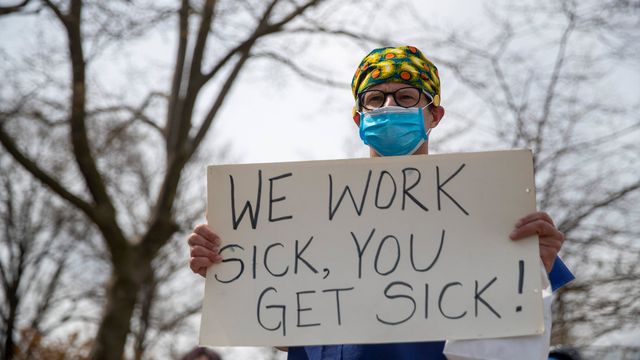
Nurses hold a demonstration outside Jacobi Medical Center, New York (Image Credit AP Photo/Mary Altaffer)
Whatever the claims of the various governors, there is no medical or scientific basis for lifting social distancing and isolation measures. Even a single new case indicates community transmission in a region, which can easily spiral into a spate of new cases as people again begin to mingle in large groups.
New cases inevitably mean new deaths, as more people are exposed to the deadly contagion. The widely cited University of Washington Institute for Health Metrics and Evaluation (IHME) study, which in early April claimed that only 60,000 lives would be lost, and has been used repeatedly to justify reopening, is being blown apart by the pandemic itself. The US death toll from the pandemic will surpass the 60,000 figure in the course of the coming week.
When asked on Sunday’s “Meet the Press” when he thought it would be safe to reopen, infectious disease specialist Dr. Michael Osterholm warned, “We are in the very earliest days of the situation right now.” He noted that for places like New York, which saw a large spike and now a relative decline in the number of new coronarvirus cases each day, “they have to understand that’s not the mountain. That is the foothills. They have mountains to go yet. We have a lot of people to get infected before this is over.”
Osterholm was referencing two basic facts about the current pandemic. First, because hundreds of millions of people have remained at home and thus far not been infected, they are all potential carriers for the virus, and will be exposed to it as they are forced to go back to work or come into contact with people returning to crowded or enclosed areas such as restaurants and bars. Second, there is still no mass testing program in the United States that is capable of giving a clear picture of just how far the virus has spread, nor is there a contact tracing program to test those who have been in the presence of someone who tested positive for COVID-19.
This was made clear over the weekend as testing in New York and Illinois increased. If the virus’s spread were limited, the ratio of the number of people who tested positive to the total number of people tested would go down. Instead, that number in both states remained relatively stable, indicating that the amount of testing is still insufficient to capture just how far the virus has spread.
The actual number of deaths caused by the virus was thrown into further doubt last week by a series of reports that indicated large-scale undercounting. Studies of the “excess deaths” in regions around the world suggest that the current official tallies account for only half of the deaths caused by the pandemic, while other analyses suggest that there may have been 28,000 cases in the US by March 1, rather than the official count of 23.
Such figures were barely mentioned by the American media or political elite over the weekend. The primary concern of the Democrats, as revealed in a segment between House Speaker Nancy Pelosi and Jake Tapper on CNN’s “State of the Union,” is to pass another stimulus bill. Pelosi insisted that the previous bill, which omitted aid to state and local governments and additional food stamp funding, contained no concessions to President Trump. Neither spoke of the states reopening nor of the dangers posed by such moves.
The Democrats are claiming that the next coronavirus bill will provide funding for states and municipalities facing tens or hundreds of millions of dollars in shortfalls from reduced tax revenues. Moody’s Analytics conservatively estimates that $203 billion will be lost nationally through the end of fiscal year 2021, about a fifth of last year’s revenue.
This has been opposed by Republicans in both houses of Congress. Senate Majority Leader Mitch McConnell asserted that the federal budget is not “revenue replacement for state governments.” He also suggested that states should “use the bankruptcy route,” despite the fact that states can’t legally declare bankruptcy.
Either way, the massive shortfall in state budgets will be used as a bludgeon to massively cut social programs such as education, transportation and public health. New York Governor Andrew Cuomo has stated that funding for schools could be cut in half. He also said, “Public transit systems, local police departments, fire departments and even health care systems could see their state aid plunge without more help from the top.”
There is also the likelihood that negotiations on a new stimulus bill will be used by the Trump administration to force states to reopen in exchange for emergency funding.
State and local pensions will also be targeted. Illinois is currently facing a $10 billion hole in its pension fund and is borrowing even greater sums to cover its costs. Nationally, $24 trillion is linked to various forms of retirement funds. The pandemic has been used by both parties to justify massive bailouts to Wall Street. Now it will be used to gut workers’ pensions and vital social services on behalf of America’s corporate oligarchy.

US billionaires increase wealth by $280 billion since March, as millions are unable to get unemployment benefits

Gabriel Black

Never allow a crisis to go to waste,” said Rahm Emanuel, former investment banker, Chicago mayor and White House chief of staff to President Barack Obama, in response to the 2008 financial crisis. Emanuel and Obama led the reorganization of class relations in the United States, cutting social services, education, health and pensions, and accelerating a shift to temporary and low-paid work. As a result they created the largest stock market boom in history.
Today, this catchphrase is once again on the lips of the ruling class. The largest financial and corporate powerholders are seeking to use the global health emergency to expand their wealth and increase the exploitation of the working class.
The billionaires in the United States have increased their wealth by $282 billion since the mid-March stock decline, according to a new report by the Institute for Policy Studies. While more than one fifth of the American population is now unemployed, and millions are deprived of basic needs and confront an uncertain future, the fortunes of the ultra-rich have not only recovered, they are improving substantially.
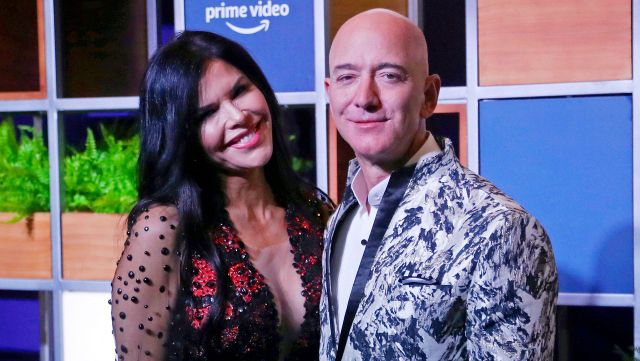
Jeff Bezos and his girlfriend (AP Photo/Rafiq Maqbool, File)
Jeff Bezos’s fortune increased by $25 billion between January 1 and April 15. Never in history has any individual made so much wealth so quickly. As the report noted, “this is larger than the Gross Domestic Product of Honduras, which was $23.9 billion in 2018.”
Eight billionaires, so-called “pandemic profiteers,” have increased their wealth, each, by over $1 billion during this time: Jeff Bezos (Amazon), MacKenzie Bezos (Amazon), Eric Yuan (Zoom), Steve Ballmer (Microsoft), John Albert Sobrato (Silicon Valley real estate), Elon Musk, Joshua Harris (Apollo, financial asset management) and Rocco Comisso (Mediacom, cable and internet).
Why, when 200,000 have died around the world and millions more lives are in jeopardy, are the ultra-rich profiting so fabulously?
First, the bailout package crafted and voted on unanimously by Republicans and Democrats has funneled wealth to the richest banks and corporations, while leaving peanuts for the working population.
The $2.2 trillion CARES Act gives only $550 billion to direct payments and extended unemployment, which most people have yet to receive. Of the remaining more than $1.7 trillion, $500 billion goes directly to bailing out major corporations. While $377 billion ostensibly goes to small businesses, most have not seen a penny, as the banks pocketed $10 billion in fees and larger companies largely consumed the available funds.
The CARES Act also contains within it an additional $173 billion in tax breaks to super-wealthy individuals and companies. For example, it allows households earning at least $500,000 a year to reduce their taxes by substantially increasing deductions from business losses and applying them to taxable money earned on the stock market.
All of this is on top of trillions being funneled into the financial markets and corporate coffers by the Federal Reserve.
Meanwhile, a study from the Pew Research Center finds that while over 10 million people applied for unemployment in March, only 29 percent of jobless Americans received any benefits that month. The report says that unemployed workers “face a hodgepodge of different state rules governing how they can qualify for benefits, how much they’ll get and how long they can collect them.”
Real unemployment has grown past 20 percent of the population. Over 26.5 million jobs have been lost, adding to the 7.1 million people who were already unemployed prior to the crisis.
Even when workers receive these benefits, they come, ultimately, at the expense of state and federal debt. Like in 2008, when state after state and city after city faced a budget crisis, so too, with COVID-19, will fiscal problems emerge. Who will pay when budgets are exceeded? As in Detroit, Michigan and Stockton, California in the aftermath of the 2008 financial crisis, the ruling class will once again say, “There is no money” for basic social services such as education and clean water. Meanwhile, trillions are funneled to the ultra-wealthy.
A second reason the pandemic has been a bonanza for the ultra-rich is that it has intensified corporate consolidation, part-time and temporary work, and digital and physical automation.
Bloomberg writes: “Big Business Has All the Advantages in the Pandemic.” While most small businesses are on the rocks--deprived by larger firms of the small funding that was theoretically given to them in the CARES Act--many large corporations, such as Amazon, are carrying out a massive hiring spree. Walmart plans to hire 150,000 people by May; Amazon, 100,000; and Dollar Store, 25,000.
Because larger firms are more likely to have the capital not only to weather the crisis, but to dominate internet-based commerce, they will come out of the crisis with even greater domination of their market. In particularly hard-hit industries, such as the oil and gas sector, the giant companies like Chevron and ExxonMobil see the crisis as an opportunity to purchase their smaller competitors.
The Financial Times likewise writes that “Covid-19 will only increase automation anxiety” as companies “pandemic-proof their operations.” Capitalism has a natural tendency toward automation, which in the long term breeds economic crises and joblessness. Mark Muro, a senior fellow at the Brookings Institution, says COVID-19 will spur a “surge of labour-replacing technology,” as automated cashiers, cars, logistic robots and automated assembly lines replace workers. Again, the largest companies will emerge on top because they are the ones that can afford this automated overhaul.
Capitalism’s fundamental trajectory—toward increasing automation, temporary and part-time work, corporate consolidation, ever increasing inequality and financial bubbles—will intensify. The result, in turn, will be an ever more staggering concentration of wealth in the hands of the few.
The socialist response to the COVID-19 crisis demands that this mass of wealth be confiscated. The major companies which dominate our lives cannot be run for the private profit of a handful of billionaires who seek to squeeze the working class, literally, to death. They must be placed under the social and democratic control of the working class.

EU steps up push for return to work amid COVID-19 pandemic

Alex Lantier

Six weeks after confinement measures began across southern Europe amid the COVID-19 pandemic, the European Union (EU) and governments across the continent are stepping up pressure on workers to return to work even as the pandemic continues. Fully 23,680 new cases of COVID-19 were confirmed yesterday across Europe, for a total of 1.27 million cases and 121,800 deaths. The decision to lift confinement measures, vastly accelerating the pandemic’s spread, is politically criminal and will cost countless thousands of lives.
The example of China’s Hubei province—the pandemic’s first epicenter, where the spread was halted by a far longer confinement lasting from January 23 to April 8, by which point only a few dozen largely imported cases were still being discovered in all of China—has been thrust aside. This weekend saw 6,865 new cases recorded in Spain, 4,681 in Italy, 2,272 in France, 2,178 in Germany, and 9,376 in Britain. Yet governments are pressing for a return to work against the opinions of scientists and of the working population.
This follows a European Union (EU) summit Thursday that announced a €1 trillion bailout and committed the EU to imposing back-to-work policies across the continent. “We discussed progress on the various dimensions of the European response to the pandemic and welcomed the Joint European Roadmap towards lifting of COVID-19 containment measures,” European Council President and former Belgian Prime Minister Charles Michel announced after the summit.
European Council President Charles Michel speaks during a media conference on the European Union response to the COVID-19 crisis at EU headquarters in Brussels, Wednesday, April 15, 2020 (Image Credit: John Thys, Pool Photo via AP)
Tomorrow, Spain’s Council of Ministers is to approve Prime Minister Pedro Sanchez’s plan for ending confinement measures, while French Prime Minister Édouard Philippe will announce his government’s plan for an exit from the lockdown in France.
Italian Prime Minister Giuseppe Conte has announced that his government will publish its plans for a May 4 reopening of nonessential companies by the beginning of this week “at the latest.”
While these governments have largely avoided giving concrete details about the policies they plan to implement after the lockdowns, it is already clear that, in the absence of a vaccine or a cure for the virus, the result will be a large increase in COVID-19 cases and deaths.
In Spain, where 59 percent of the population supports strengthening instead of canceling confinement measures, the Coordination Center for Health Alerts and Emergencies (CCAES) has called for intensive care wards to double the number of beds available after the confinement is ended. The CCAES made clear that the Spanish government's policy is not to try to eradicate the disease. Rather, it is seeking to keep the number of cases “at a level that the health system can tolerate, avoiding the risk that it could be overwhelmed,” as in the first wave of the epidemic.
The CCAES also noted that “herd immunity” strategies proposed by European governments were unacceptable as they would flood health systems and lead to mass deaths. “It is not reasonable to base pandemic control strategies on waiting for a sufficiently high percentage of the population to develop total or partial immunity, which implies an unacceptable number of cases and deaths.”
In France, an epidemiological study by the Rouen University Hospital Center (CHU) found that the lockdown cut hospital deaths before April 19 by at least 61,739 (83.5 percent). It estimated that without a lockdown, 23 percent of the population would have had the disease by then. The lockdown thus “avoided around 590,000 hospitalizations and 140,000 admissions into intensive care,” it found. This would have overwhelmed France’s 10,500 available intensive care beds, a figure itself doubled only thanks to health staff’s emergency efforts since the beginning of the pandemic.
This falls roughly in line with projections by Imperial College in London that a “herd immunity” policy would cost at least 250,000 lives in Britain alone. Such fatality rates, at the level of the entire European continent, would lead to a death toll in the millions.
This points to the vast dangers posed by prematurely ending lockdowns and the political criminality of calls by British Prime Minister Boris Johnson and German Chancellor Angela Merkel to deal with COVID-19 by means of “herd immunity.” Nonetheless, French President Emmanuel Macron is pressing ahead with precisely such an agenda.
Several state scientific bodies warned against the policies proposed by Macron, who has ordered a return to work and reopening of schools on May 11. The government’s scientific council, led by Dr. Jean-François Delfraissy, issued a statement calling for schools to remain closed until September and for deconfinement to wait until intensive care units were back to normal occupancy levels. The General Health Directorate reported that despite the gradual tendency for infection numbers to fall, the total number of patients on respirators in France actually increased by 28 yesterday.
Bitter divisions are erupting inside the Macron government itself, as ministers panic at the prospect of an eruption of popular anger after a second wave of COVID-19 cases. One minister complained anonymously to L’Obs about reports on the unviability of a “herd immunity” strategy of hoping the population would be immune if everyone caught the virus. “We seem to be discovering that you can catch coronavirus several times,” the minister said, “but our entire strategy was based on developing immunity. Our situation is that we are falling into an abyss.”
The European bourgeoisie is plunging ahead with a politically criminal back-to-work policy. It is easy for corporate management and wealthy investors to shelter at home, and EU ruling circles are as indifferent to the death of millions of workers in Europe returning to work to boost their profits as an Egyptian pharaoh watching slaves die to build the pyramids.
This toxic class contempt for human life emerged in comments by German Parliament President Wolfgang Schäuble—the prominent architect of capitalist restoration in East Germany in 1989 and of EU austerity after the 2008 crash—attacking calls to protect human life amid the pandemic. He told the Tagesspiegel that when he hears “that all must give way to protecting life, I must say: that is not absolutely correct... If there is an absolute value in our Constitution, it is human dignity. One cannot touch it. But it does not rule out that we must die.”
Schäuble’s horrifying eagerness for death is not simply a personal trait, however, but a particularly brutal expression of the profit interests of the entire European ruling class.
The European financial aristocracy, well aware of a building financial crisis before COVID-19 emerged, has responded to the pandemic by showering itself with vast handouts of public money. The European Central Bank (ECB) announced a €750 billion bank bailout, buying various types of debt to pay off investors in the major banks. The larger European Union (EU) governments each announced hundreds of billions of euros in corporate bailouts, while the EU launched a €540 billion rescue package overwhelmingly targeted to big business, and then announced its most recent €1 trillion bailout at its summit last Thursday.
Even as massive sums are lavished on bailouts of firms, including Air France-KLM (€10 billion) and automaker Renault (€5 billion planned), financiers are demanding that workers return to work to make profits to back the massive amounts of fictitious capital pouring through the financial system. VW in Germany, Toyota in France and other firms in nonessential industries are already reopening in close collaboration with the trade unions.
Naturally, capitalist politicians are presenting various more apparently palatable arguments for ending the lockdown, insisting it is too destructive and costs small businesses and wage earners too much. This was the tack taken by Conte, who told La Repubblica, “We cannot continue with this lockdown. We risk too heavily compromising the country’s socio-economic fabric.”
In fact, the main reason lockdowns have generated hardship is that EU states left countless workers and small businesses with virtually no income. Long lines have formed for limited food distributions in working class districts of Paris, Madrid and other European cities.
Workers must reject this false choice between working and dying in a pandemic and starving in confinement, or the claim that mass deaths are now inevitable. Modern science and technology make it possible to let masses of workers shelter at home, receiving the necessary food and medicine, while scientists work on vaccines and treatments for COVID-19. However, this will require the expropriation of the massive sums of money looted from public treasuries by the financial aristocracy and a political struggle to bring down reactionary governments across Europe and fight to transfer power to the working class.

International Solidarity for Nuclear Security: Lessons from a Pandemic

Manpreet Sethi

In his September 2019 UN General Assembly speech, President Trump said, “The future does not belong to globalists… the future belongs to sovereign and individual nations who protect their citizens…” Less than six months later, the president found himself confronting a global emergency where no “sovereign and individual nation” could hope to exclusively protect its citizens, unless others did so, too. Ironically, therefore, human security is more globalised than ever before, as each state’s ability to fight COVID-19 is equally dependent other states being able to fight it just as effectively. The cover of Time magazine captured this reality well– “Apart, Not Alone.” Indeed, the fight against the novel Coronavirus has unambiguously highlighted the need for international solidarity.
As the battle against COVID-19 rages across the globe in as many as 185 countries, these efforts are largely being carried out at discrete national levels, with broad guidance from the WHO. None of the commonly thought of great powers—the P-5—have shown any attempt at collective leadership on the matter. Rather, at least two of them, the US and China, are caught up in mutual accusations on the virus’ origins. While the leadership in Washington has displayed arrogance and hyper-nationalism, in Beijing, it has resorted to non-transparency.
Owing to these sets of behaviour, international solidarity looks out of reach at this moment. But, there is an inherent limitation to handling a pandemic at only national levels. As it stands, most states have resorted to lockdowns and social distancing as their primary tools. These strategies make every individual’s health reliant on the behaviour of the other. Any person who defies the requirements could become a weak link and pose a risk to the safety of many. Similarly, at the international level, any state that does not effectively enforce measures to check the virus could become a weak link and fuel the crisis once global travel normalises. The health security of an individual, and that of a state, is globalised. Laxity in rigour, carelessness of action, or hiding of information in any one state could become a global threat in no time given the highly contagious nature of this virus.
Even more scary is the prospect of use of the virus by non-state actors (NSA) for the purpose of bio-terrorism. UN Secretary General Antonio Guterres drew attention to this fact on 10 April when he issued a warning on the possibility of NSAs gaining access to virulent strains. He said, “the weakness and lack of preparedness exposed by this pandemic provide a window onto how a bio-terrorist attack might unfold.”
While the current crisis has brought a focus to the risk of bio-terrorism, the international community cannot afford to take its eyes off the challenge of nuclear and radiological terrorism either. In fact, nuclear security requires a similar level of solidarity as is being considered necessary in handling the current health emergency. All states, irrespective of whether they have nuclear holdings or not, need to understand and share the burden of collective action to ensure no leakage of nuclear and radiological material, technology, or equipment takes place.
Nuclear security, like bio-security, must be premised on the ethic of global cooperation, which is anchored in good nuclear governance. Just as the handling of this pandemic COVID requires robust national surveillance to detect, isolate, and treat, so also nuclear security. Such cooperation should ideally be facilitated by an international institution that is seen to be impartial, effective, and quick at sharing real-time intelligence and best practices. In the case of nuclear security, the IAEA is at the centre. The IAEA would do well to learn from the current experience of the WHO.  One of the most evident lesson relates to the public credibility of an international institution and how that is linked to funding and related loyalties, as also its enforcement ability. The WHO has suffered on all these fronts—and these are areas that require attention from the perspective of nuclear security, too.
The IAEA was built largely for the purpose of implementing safeguards to check horizontal nuclear proliferation. Subsequently, nuclear safety was added to its responsibilities. It has no regular budgetary provisions for nuclear security and can offer only an advisory, recommendatory role on the matter. These handicaps could seriously jeopardise its ability to demand and enforce national nuclear security commitments. The situation can be remedied only when addressed collectively by the wider nuclear security community. Preventing the risk of nuclear terrorism requires a comprehensive plan—at both national and international levels. These need to be developed and implemented as a whole-of-government effort at the national level, and adopted as an all-states approach at the international level. Every stakeholder has to recognise the criticality of their role.
COVID-19 exposes our common fragility as individuals and states and how open it is to exploitation if we remain narrowly concerned with only our own security. The reality is that security in the case of bio and nuclear threats is indivisible. The security of every unit—person or state—is contingent on others’ good behaviour and acceptance of rules. Important lessons for nuclear security can be learnt from the ongoing efforts to address this pandemic—the most important being the need to accept our shared sense of vulnerability, and assume a shared commitment to responsibility.

25 Apr 2020

Food and Agricultural Organisation (FAO) Fellowship Programme 2020 for Member Countries

Application Deadline: 31st July 2020 9:59:00 PM

Eligible Countries: FAO Member countries.

To Be Taken At (Country): FAO Regional, Sub-regional, Country Offices or Headquarters

About the Award: The Food and Agriculture Organization of the United Nations (FAO) leads international efforts to defeat hunger and to support development in member countries in the areas of agriculture, fisheries and forestry. FAO’s mandate is to raise levels of nutrition, improve agricultural productivity, better the lives of rural populations and contribute to the growth of the world economy.
The Fellowship Programme is designed to attract fellows, typically PhD students, researchers and professors, who have an advanced level of relevant technical knowledge and experience in any field of the Organization. They are willing to fulfil their specialized learning objectives and at the same time, contribute their technical expertise and knowledge through time-bound arrangements with FAO. Assignments should be in line with FAO Strategic Objectives and UN Sustainable Development Goals.

Type: Fellowship

Eligibility:
  • Graduate or post-graduate degree (Master’s or PhD) or be enrolled in a PhD programme.
  • Working knowledge of at least one FAO language (Arabic, Chinese, English, French, Russian or Spanish). Knowledge of a second FAO language will be considered an asset. Only language proficiency certificates from UN accredited external providers and/or FAO language official examinations (LPE, ILE and LRT) will be accepted as proof of the level of knowledge of languages indicated in the online applications.
  • Be nationals of FAO Member Nations
  • Age: no age limits.
  • Candidates should be able to adapt to an international multicultural environment and have good communication skills.
  • Candidates with family members (defined as brother, sister, mother, father, son or daughter) employed by FAO under any type of contractual arrangement are not be eligible for the Fellows Programme.
  • Candidates should have appropriate residence or immigration status in the country of assignment.
Selection Criteria: Candidates may be assigned in a field relevant to the mission and work of FAO.

Number of Awards: Numerous

Duration of Program: According to time bound agreement with hiring office

How to Apply: 
  • To apply, visit the recruitment website Jobs at FAO  at FAO and complete your online profile. Incomplete applications will not be considered. Only applications received through the recruitment portal will be considered.
  • Candidates are requested to attach to their application a research proposal, copy of their academic qualifications and copies of their language proficiency certificates.
Visit Program Webpage for Details

Important Notes: 
  • Qualified female applicants and qualified nationals of non- and under-represented member countries are encouraged to apply.
  • Persons with disabilities are equally encouraged to apply.
  • All applications will be treated with the strictest confidence.
  • FAO strongly encourages candidates from the Global South and Indigenous Peoples to apply to this Call for Expression of Interest

Canadian government sends military into care homes as it pushes for a premature return to work

Roger Jordan & Keith Jones

Canada’s two most populous provinces, Ontario and Quebec, have requested that the military be mobilized to help deal with the catastrophic conditions in longterm care facilities. Quebec has requested 1,000 troops, in addition to the 150 Canadian Armed Forces personnel already deployed there. Ontario is asking for the military’s support at five especially hard-hit care homes.
The appeals for military intervention are being made even as the Quebec and Ontario governments, their counterparts across the country, and Canada’s corporate elite are mounting an increasingly aggressive campaign for a premature return to work and the “reopening” of nonessential services and businesses. 
During the past week, this campaign has shifted into high gear, while total coronavirus cases surged to more than 43,500, and COVID-19 deaths rose to 2,294. Residents of long-term care facilities account for more than half of the total deaths.
Ontario Premier Doug Ford’s and Quebec Premier Francois Legault’s pleas for military intervention are a tacit admission of the deplorable state of health and social care systems, which are on the verge of breakdown after decades of austerity. But regardless of the extent of the help provided by the armed forces, the ruling elite is not mobilizing the military with the aim of saving lives. Rather, it is part of a political offensive aimed at creating the impression that the governments are bringing the situation under control, so that the reckless back-to-work campaign, which risks the lives of hundreds of thousands of workers and their families and the total collapse of the health care system, can proceed in the face of mass opposition.
Although Ford formally announced Thursday that “nonessential” services in Ontario will remain closed until May 6, and a state of emergency will remain in force until May 12, huge swathes of the manufacturing sector that are deemed “essential” are preparing to reopen. Toyota and Fiat-Chrysler auto plants and Magna auto parts plants, which employ tens of thousands of workers combined, are set to reopen during the week of May 4. Other production facilities were never even closed due to the Ford government’s lax definition of what constitutes an “essential service.”

Governments push to reopen economy as pandemic rages unchecked

In neighbouring Quebec, Legault has already lifted a ban on residential construction work, which was only imposed after widespread worker protests. The right-wing populist premier has pledged to announce next week a comprehensive strategy to lift the remainder of the restrictions.
Similar conditions prevail in Alberta, where the oil and gas sectors have been allowed to continue operating unhindered inspite of the fact that large groups of workers live and work in close quarters.
In Saskatchewan, where important industries like oil and potash mining never closed down, the hard-right government of Scott Moe became the first provincial government Thursday to present a formal plan for reopening the economy. Some shuttered businesses will be allowed to open their doors on May 4 in a five-stage plan that Moe justified by saying that Saskatchewan has successfully “flattened the curve.” 
In a cynical attempt to provide his government’s criminal policy with some cover, Moe sought to portray his strategy as careful and restrained, stating, “If we move too quickly, we risk increasing the spread of COVID-19. If we move too slowly, we risk permanent damage to the livelihoods of thousands of Saskatchewan people.”
This is a false set of alternatives, motivated by the ruling elite’s determination to begin extracting profits from working people as soon as possible without any regard for human life. It is not the ongoing lockdown that threatens the livelihoods of thousands of workers and small business owners in Saskatchewan and millions more across Canada. Rather, it is the policies of the ruling class. It failed to make any preparations for the pandemic. And since North America became the epicentre of the COVID-19 pandemic in March, its political hirelings have focused on bailing out the banks and big business to the tune of hundreds of billions of dollars.
The criminally irresponsible drive to reopen the economy under conditions in which virtually nothing has been done to strengthen Canada’s dilapidated health care system, the inadequate levels of testing and contact-tracing represent a still greater threat to the livelihoods and well being of workers and their families. 
This week Dr. Theresa Tam, the federal government’s chief medical officer, stated that Canada’s coronavirus testing capacity would need to be tripled to 60,000 tests per day in order to reopen the economy safely. Even such levels of testing, which the provinces show no signs of achieving, would mean that just 1.8 million Canadians, or a mere five percent of the population, could be tested each month.
Meanwhile, throughout the health care and longterm care sectors, brave and committed nurses, doctors, and other personnel are being forced to risk their lives due to the lack of basic personal protective equipment.
The disastrous health consequences that await millions of workers if they are forced back to their jobs under conditions of few to no health and safety protections can be seen at facilities where the virus has already spread. At the Cargill meatpacking plant near High River, Alberta, 440 employees have been infected, with a further 140 cases connected to the outbreak. A 60-year-old female worker has died, and her husband is in a serious condition in hospital.
At the JBS meat packing plant in Brooks, Alberta, 96 cases have been recorded, leading the company to reduce production to one shift. Two deaths have been linked to the outbreak.
At the Kerl Lake oil tar-sands work camp north of Fort McMurray, Alberta, at least 12 workers have contracted the disease. Major outbreaks of the virus have also been recorded at two poultry plants in British Columbia, among transit workers in Ontario, grocery store workers across the country, and health care workers.

Canada’s ruling elite embraces “herd immunity”

Even as the virus runs rampant through a growing number of work sites that continue to operate, the ruling elite is pushing full steam ahead with a plan that will inevitably produce an explosion in the number of coronavirus cases as workers begin congregating in factories, offices, and crammed public transit across the country.
This amounts to a policy of “herd immunity.” Workers are being ordered to accept mass infection and even death as a part of “normal” daily life. As Legault put it Thursday, “It may sound frightening, but once Quebecers understand the concept of herd immunity, they will see it is the best way out of the current pandemic. The concept of natural immunization does not mean we are going to use children as guinea pigs. What we are saying is people who are less at risk, people who are under 60, can get a natural immunization and impede the wave.” 
This is all lies. For one thing, every government that has openly pursued the “herd immunity” strategy, most notably Boris Johnson’s in Britain, was forced to retreat in the face of widespread opposition from experts and skyrocketing death tolls. Moreover, there is not yet any firm scientific proof that people infected with COVID-19 obtain immunity. Even if they do, nobody knows how long it would last. Legault is thus effectively gambling with the lives of millions of workers and their families based on a hunch and a desire to ramp up corporate profits once again.
From the outset of the pandemic, the chief focus of Canada’s ruling elite has been to safeguard the wealth and profits of the superrich while placing workers and the health care system on rations. While the federal Trudeau government and Bank of Canada proved able to collectively funnel over $650 billion into the coffers of the big banks and corporations in a matter of days to prop up the financial markets and salvage investors, Ottawa criminally squandered two months before taking any action to support hospitals and medical staff. Only on March 10 did the federal government even write to the provinces to ask them about their medical supply needs.
No less striking is the contrast between the Trudeau government’s support for big business and investors and the paltry and inadequate assistance being offered workers who have lost their jobs or are unable to work due to the pandemic. Under the Canada Emergency Response Benefit (CERB) they will receive the taxable sum of $2,000 per month for a maximum of four months. Underscoring the economic devastation experienced by millions across the country, over 7.1 million people have applied for CERB to date.

Unions seek to smother rising working class opposition

The problem the ruling elite confronts in enforcing its reckless return to work agenda is that it is opposed by the vast majority of working people. In a poll in late March, 90 percent of respondents said lockdown measures should stay in place until either a medical solution for the coronavirus, such as a vaccine, is available (44 percent), or the health care system is able to manage a patient surge (46 percent). Needless to say, neither of these conditions is even remotely close at this point in time.
Worker protests have also increased, with a series of work stoppages in Ontario being launched by transit workers, postal workers, and autoworkers to demand safe working practices. This is part of an international trend, with transit workers, and workers at Amazon and other delivery services in the US and Europe protesting the refusal of their employers to provide basic protections from the virus even as they accelerate production.
This necessary assertion of the most basic class interests of working people will only continue and strengthen if it is mounted in political opposition to the procapitalist unions and the NDP, which have responded to the pandemic by strengthening their corporatist alliance with the Liberal government and big business. 
This week, the Ontario Secondary School Teachers Federation became the last of the four provincial teacher unions to conclude a sellout three-year deal with the right-wing Ford government. The deal includes the real wage cut demanded by Ford in the form of pay hikes below the inflation rate in each of the next three years, and enshrines many of the government’s education cuts. The four unions are in the final stages of sabotaging a months-long struggle by teachers and their supporters that saw the largest teacher strike in the province since the 1990s, and that could have become the spearhead of a mass working class challenge to the hated Ford government and the ruling elite and capitalist austerity as a whole.
The capitulation of the teacher unions has strengthened the hand of Ford. The hard-right premier is being lauded in the corporate media as a steady pair of hands during the coronavirus crisis. Even the “liberal” Toronto Star headlined a recent column, “Doug Ford has risen to the coronavirus challenge.” The ruling elite hopes that he can use this political capital to force workers back to their jobs, despite the risk to their lives this poses.
Unifor, like the United Auto Workers in the US, is working hand in glove with the giant automakers to reopen their facilities as quickly as possible. “We will give the green light at the end of the day if our local union leadership feels comfortable with that,” Unifor President Jerry Dias told Automotive News Canada on Thursday. “(A)s of now, we haven’t heard this big outcry saying, ‘Don’t do it, it’s too early.’ We haven’t heard any of that.”
The unions’ shameless collaboration with capitalist politicians and bosses to risk the lives of working people underscores the urgent necessity of the working class intervening to fight for its own demands to deal with the pandemic and its economic fallout. These must include: mass testing and contact tracing to bring the pandemic under control; the shutdown of all nonessential industries with full pay for all workers affected; and the provision of protective equipment and care to all workers in essential sectors. Instead of being made to pay for the crisis with their health and even their lives due to the ruling elite’s criminal back-to-work policy, workers must initiate a political offensive for a workers’ government and the transformation of the banks and major corporations into publicly-owned utilities under workers’ control so that society’s vast resources can serve human need, not private profit.