27 Apr 2020

Netherlands’ criminal herd-immunity policy puts hospitals on brink of collapse

Harm Zonderland & Parwini Zora

As the COVID-19 crisis ravages the globe, capitalist governments in Europe and across the world are putting the profits of the super-rich above the lives of millions of working people. The Dutch government’s “intelligent lockdown” strategy, implemented starting on March 16, exemplifies this politically criminal strategy.
Since then, even though the pandemic continues to rage, most European countries have announced or implemented “back-to-work” orders that sacrifice workers’ health and lives to profit-making. In the Netherlands, most of the retail sector and other non-essential industries were kept in business throughout, with limited “social distancing” measures taken in an attempt to somewhat slow the contagion.
Addressing the public on April 21, Prime Minister Mark Rutte announced the extension of its lockdown until May 20, while easing some restrictions on primary and secondary schools. Although there has been a reportedly minimal decline in contamination rates and hospital admissions over the past two weeks, lifting school restrictions poses a grave public health danger by exposing school children, teachers and caregivers to COVID-19.
This is a continuation of the Dutch government’s policy of “herd immunity,” that is, trying to infect as many people as possible with the virus, hoping the population will collectively become immune. In a televised speech on March 16, Rutte baldly declared, with stunning indifference to human life, that “the reality is that a large part of the Dutch populace will contract the virus.” After weeks of promoting the criminal idea of “herd-immunity”, even commissioning studies to see if the Dutch people were getting closer to it, the government is now methodically loosening the lock-down.
The current promotion of a “Dutch intelligent lockdown” aims to project the illusion that the Rutte government is fighting the virus, while legitimising and effectively continuing the herd-immunity strategy. In fact, the measures implemented by The Hague have done little to slow the spread of the virus.
Yesterday, the Netherlands have 37,845 confirmed cases of COVID-19, over 10,281 hospitalisations and 4,475 dead in a population of only 17 million. Most infections are in the southern provinces of Brabant and Limburg, while the northern provinces of Drenthe, Friesland and Groningen report fewer confirmed cases. It is only since April 6 that the Communal Health Service (GGD) started testing its personnel more broadly. Members of the general public are tested for COVID-19 only when admitted to a hospital with serious symptoms, so these statistics are underestimates.
In his last speech, Rutte said his government’s chosen “strategy” was “maximum control” of the spread of the virus via social distancing and a partial lock-down. “With this approach, where most people will only develop mild complaints, we gain herd immunity,” Rutte claimed.
These criminal policies go hand-in-hand with Rutte’s pledge of full support to Dutch corporations, promising he “will not let them down”. An initial €15 billion was reserved from state coffers as subsidies for large corporations, whilst the Dutch and French governments discuss bailing out Air France-KLM. In return, Rutte and the Dutch king had nothing to offer than a brief and insincere “thank you for a fantastic job!” to its chronically underfunded and over-worked health care staff.
The Dutch health care system has been stripped bare over the past decades by successive liberal governments. The privatisation of hospitals and clinics has reached such levels that in 2018 a conglomerate of five hospitals was no longer deemed profitable and allowed to go into bankruptcy. The patients were hastily moved to other nearby hospitals and all medical equipment and furniture were auctioned to pay off the hospitals’ creditors—the banks, insurance companies, and pharmaceutical corporations.
For years, health care workers have been fighting for high staffing levels to cope with ever-rising workloads and better wage increases to keep up with the rising cost of living. In 2019, no less than 25 regional health care strikes resulted in the first-ever national strike last November, which closed down 83 hospitals.
The combined capacity of intensive care units (ICU) in Dutch hospitals stand only at a shockingly low 1,150. This has been expanded over the past week alone to 2,400, with just 505 beds reserved for non-COVID-19 patients.
Referring to the extra work-pressure on ICU medical staff, Diederik Gommers, the chairman of the Dutch Association for Intensive Care, said: “You are asking your personnel to stretch out. An ICU nurse who is used to tend to two patients, now has three or maybe four to care for. (…) Then one can make critical mistakes where patients can die. That is where we are right now.”
De Volkskrant reported that the past weeks have seen a jaw-dropping 30 percent decline in cancer diagnoses due to cancellations of annual public examinations en masse as a badly overstretched health care system prioritises COVID-19 treatment. Also, a Gupta Statistics investigation found that some 40 percent of regular hospital care is no longer provided, and many diagnostic procedures are currently on hold.
As a result of profit maximisation in hospitals, the usage of personal protective equipment (PPE) like face masks were already reduced to cut operational costs per intervention.
With total disregard for public health, the Dutch “State Institute for Public Health and Environment” (RIVM) is trying to white-wash the massive shortage of protective gear, advising against the use of face-masks in public, falsely claiming it would not help to slow the spread of the virus and could even exacerbate the risk of contamination. In an attempt to wash his hands of the matter, and stifle the debate, Health Minister Hugo de Jonge told the parliament that he cannot “conjure away those shortages.”

Estimated £515 monthly loss to UK households due to COVID-19 the tip of the iceberg

Julia Callaghan

UK households are expected to lose £515 in post-tax income each month, April to June, as a result of attacks on their living standards during the coronavirus pandemic.
Consultancy firm, the Centre for Economics and Business Research (CEBR), found that households will suffer an overall £43 billion loss—equating to a 17 percent reduction in monthly household disposable income (income adjusted for taxes and benefits.)
The CEBR bases its estimate on several factors: increased unemployment, cuts to income and reductions in working hours. The reality is that the impact on millions of workers goes much further and deeper than the study outlines.
The report cites Department for Work and Pensions (DWP) data showing there were 950,000 applications for universal credit (UC) between March 16-31—almost 10 times the number in a “typical” two-week period. The universal credit helpline was flooded by newly unemployed workers during March, with 5.8 million calls in seven days, and 2.2 million calls in a single day on March 30. Panicked callers reported on Twitter waiting hours on the phone over many days.
The CEBR report is premised on the “Office for Budget Responsibility estimates that job losses could reach up to 2.1 million in the second quarter.” According to data issued last week, the number of UC claims had already hit 1.8 million by April 12. The report notes, “Benefits claims will replace some of the lost disposable income, but not all of it, leaving UK households £1.5 billion out of pocket per month.”
For payrolled employees, the government—in a bailout worth hundreds of billions for corporations—has agreed to pay 80 percent of wages through its furlough scheme. The CEBR states that “one in three private sector workers” could be furloughed and the “impact of the furlough scheme on incomes varies depending on what is agreed between employers and employees, but in the majority of cases workers will see at least a 20% fall in their gross earning.”
The report notes that “even though the scheme will save many from redundancy, there will still be a sizeable hit to disposable incomes, which we estimate to stand at £3.9 billion per month.”
The CEBR states, “Without the government’s furlough scheme, the cost to households of coronavirus would easily be double what we have estimated.” However, the scheme will only last until the end of June, after which the future of many furloughed workers, under conditions of a deep recession, is perilous.
According to Guardian economics editor Larry Elliott, the furlough scheme could simply delay a massive rise in unemployment. “Furloughed workers are really an army of the hidden unemployed,” he says, who will “become more visible” once state subsidies end.
As the world economy attempts to recover from what the International Monetary Fund says is its biggest hit since the Great Depression, many of these jobs may no longer exist, with a greater burden placed on the remaining workforce.
Millions of self-employed people will receive no support at all until June, when it will be judged if they are eligible for a grant of 80 percent of their average earnings. This means sole traders such as drivers, childminders, beauticians and cleaners, whose income suddenly stopped with the lock-down, must attempt to find a way to survive on savings, loans or benefits for at least three months. The CEBR points out that this dire situation will significantly affect household finances, adding “a further hit of £3.5 billion to disposable incomes per month.”
Devastating for many, the government is exploiting a technicality in the structure of umbrella company contracts. Those freelancers, contractors and agency workers who are employed through umbrella companies will be not be eligible for 80 percent of their average earnings but only for 80 percent of the minimum wage.
Many workers in some of the most precarious financial situation, on flexible or zero hours contracts, face destitution. The CEBR’s report says, “The nearly 4 million workers in the UK on flexible hours or zero-hours contracts have also inevitably been hit by this crisis, as it is easy for companies to reduce costs by scaling back their hours. Analysis has shown that people with variable hours expect to earn only 59% of their usual income as a result of the coronavirus shutdown.”
Even this is a gross underestimate of the real situation. A new survey by AppJobs, an online platform that compares app-based jobs around the world, reports that almost 70 percent of “gig economy” workers have no earnings at all now. Only 23 percent have any savings and as a result 89 percent are looking for a new source of income.
Many workers in the “grey economy”, from cash-in-hand builders to home hairdressers, risk contracting and spreading the virus as they attempt to keep working in order to survive. This “hidden” workforce is mostly made up of young, low-income households earning less than £10,000 a year. John Philpott, of the Jobs Economist consultancy, said, “They are going to be very tempted to keep going. They are people who are living from hand to mouth constantly, who are going to have to scrimp for whatever they can get… They are going to be pretty desperate.”
Facing an impossible situation, many employees are being told they must “choose” between taking further pay cuts or losing their job altogether.
The CEBR report highlights the losses suffered by employees of corporations such as Heathrow Airport and the Grant Thornton accounting firm, which have been “asked” to accept wage cuts of up to 40 percent while the coronavirus impacts their business. The CEBR reports that these examples are part of total “wage reductions and scaling back of working hours for people with variable hours contracts” that “are estimated to result in a further £5.3 billion monthly hit to households’ disposable incomes.”
Trade unions, such as Unite and GMB, acted well ahead of the corporations’ latest cuts in assisting the slashing of workers’ incomes. In February, the unions sanctioned a 10 percent cut in salary and allowances for their members at Heathrow, under the cynical guise of fighting to “ringfence as many jobs in the future and play our part in protecting as many colleagues as possible.” Workers livelihoods are not being protected but are being handed over by the unions to ensure the continued profitability of billion-pound corporations.
All this is only a hint of the major restructuring that is taking place, of both the labour market and the social position of the working class. Conservative Chancellor Rishi Sunak warned that money given to corporations as part of the £350 billion due to the pandemic will “need to be paid back at some point” as part of “chipping in together to right the ship.”
The reality is that the corporations and super-rich are getting a massive bailout and the working class are being forced to pay whatever is required to reimburse any losses incurred by the ruling elite. They are paying with deep cuts to their income and working conditions, further destruction of their public services and social protections, and if necessary—their lives—as the drum beat for a return to work and production for profit grows ever louder, while the pandemic continues to rage.
The reported £515 monthly loss per household represents the tip of the iceberg. The colossal collapse in workers’ income in Britain is being experienced by workers across the world. This is the situation just a few weeks into a crisis that has transformed daily life for almost everyone, with no end in sight. As banks, corporations and their shareholders are gifted with trillions, struggling workers everywhere are confronted—suddenly and starkly—with the reality of who is going to pay.

Germany: Daimler and VW boost production and demand billions in taxpayers’ money

Dietmar Gaisenkersting

Although around 2,500 people in Germany are being infected by the coronavirus every day, Daimler and Volkswagen started production again this week.
At Daimler, about 80 percent of the 170,000 employees have been affected by short-time working in one form or another since the beginning of April. Only production of the luxury cars, the new S-Class, has been maintained.
Now Daimler is starting up drive and transmission technology production in particular. Not only their plants in Germany, but above all in China, where production is up and running again, are dependent on this. Daimler board member for human resources Wilfried Porth and General Works Council Chairman Michael Brecht proudly declared that some plants would start immediately with three shifts, others with two, or initially only one shift.
In China, 32 of the 33 plants that Volkswagen operates with partners are already producing. In order to ensure the supplying of these plants, VW’s component plants in Braunschweig and Kassel restarted production on April 6. The parts plants in Salzgitter, Chemnitz and Hanover in Germany, and in Poland, followed suit after Easter. “The gradual start-up of our plants was important in order to secure supplies to the overseas plants,” asserted Thomas Schmall, chairman of the Board of Management of the Volkswagen Components Group.
The production plants are now reopening. This week, VW plants in the Slovakian capital Bratislava and in Zwickau in Saxony are starting up. In Zwickau, VW is building its first electric model, the ID.3 compact car.
Next week will also see the restarting of production at other German VW plants, including the main plant in Wolfsburg and the VW commercial vehicle plant in Hanover. Cars are also to roll off the assembly line again starting next week in Spain, Portugal, Russia and the US. Factories in South America and South Africa are to follow in May.
The organization of worldwide supply chains is a particular problem for Volkswagen, Daimler and all the other auto manufacturers. VW has 6,500 supplier companies in Europe alone. While work has been resumed in China for several weeks now, the production of components in Italy or France is still severely restricted. However, the planned start-ups are now secured, Daimler manager Porth reported.
The fact that production is being restarted and the workforces are being put in mortal danger is the result of a concerted action by the auto manufacturers, the IG Metall union and its works council representative and the German government.
The VW general works council, chaired by Bernd Osterloh, passed a works agreement about two weeks ago, “which lays down the framework for a controlled ramp-up of production in the factories.” The “100-point plan to fight the pandemic” applies to the company’s approximately 630,000 employees worldwide.
The 100 or so health protection measures range from the obligation to wear masks and to adhere to safety distances and hygiene rules, to the requirement to regularly measure body temperature. Osterloh said that VW was setting “a standard in the industry.”
This was also claimed by the board of directors and the chairman of the works council, Brecht of Daimler, who together announced the official resumption of production. “We have always said that when we start again, the risk of infection should be lower here than outside the company,” Brecht announced.
The company and the works council developed measures for the protection of employees based on risk assessments for each workplace. “In principle, the catalogue that emerged from this is the catalogue that was used as the basis for the recommendation of the VDA industry association and ultimately, also for the considerations of the German government,” Porth said. “We have done a lot of preparatory work on this.”
In other words, the corporations and works councils jointly devise the mechanisms by which workers are sent back into the factories and through which the federal government then justifies its criminal policy of ending the lockdown in order to revive profits.
In an additional act of intimidation, works council leader Brecht and personnel director Porth have also warned that workers could still lose their jobs if, at least in the medium term, profits do not start to flow again.
According to the DPA [Deutsche Presse-Agentur] press agency, Porth emphasised that if demand levels off below what the company has based its plans on, it would also be clear that the previous savings targets and planned job cuts would not be enough. “The fact that we will have to make adjustments is obvious,” said Porth. How this would be implemented would have to be seen in due course. “We do not yet know how the market will react,” added Brecht.
In order to stimulate demand, Daimler believes that measures “which could strengthen demand in these times of great uncertainty among customers are definitely worth considering.”
VW is less reticent in this respect. Similar to BMW, which is demanding an “innovation premium,” the VW group is embellishing its demand for further billions in handouts (in addition to the billions in state short-time work benefits) with a call for tax bonuses when consumers buy an “environmentally friendly vehicle.”
German manufacturers are now proposing a new edition of the “eco-rebate,” which was financed from diversification funds after the global economic crisis of 2008-2009. At that time, car buyers who scrapped their more than nine-year-old car received a premium of €2,500 [US$2,707] towards buying a new car, which is why the name “scrappage premium” quickly became established.
Although the number of new passenger car registrations rose in 2019 by more than 700,000, or 23 percent compared to the previous year, the number of new car registrations was still extremely low. But of the 2 million scrappage premiums paid out, German manufacturers received relatively little, with their mostly expensive and larger vehicles. This is because drivers of cars that are at least 10 years old are rarely in a financial position to afford a BMW, Mercedes, Audi or higher-class VW, let alone a Porsche. The premiums therefore went largely to Asian manufacturers of small cars.
The daily Süddeutsche Zeitung reported on Tuesday that “behind the scenes” there was “haggling” over lower VAT (sales tax) rates. Because many cars are company cars, “and especially many of them are German makes,” the flat-rate taxes of 0.5 percent for cars with alternative drives and 1 percent for cars with combustion engines could be halved.
Companies can offset the purchase of expensive company cars against tax. But drivers of company cars have to pay tax on this so-called monetary benefit, at 1 percent of the purchase price per month. Thus, for a vehicle costing €50,000, €500 per month must be taxed, which is to be halved.
VW COO Ralf Brandstätter did not commit himself in talks with finance daily Handelsblatt, but left the government some leeway. On May 5, car manufacturers, industry representatives and the trade unions will meet with the federal government for the next auto summit, where a bonus model will certainly be suggested to the government.
Brandstätter is of the opinion that this will put other European countries under pressure. “The fact that we are now starting production again is also a signal to Europe,” he said. Volkswagen, he said, was counting on the uniform lifting of restrictions in Europe on public life and in the economy. “This has been understood in politics,” said the millionaire confidently. Other European countries would then have to follow suit very soon with their own support programmes.
The money must flow quickly, Brandstätter said. Car dealerships have opened again, and soon the road traffic offices and vehicle registration offices will also be back in business. For Brandstätter, this would be the right moment and a support programme should be available at that time. “It would be good news if this went hand in hand,” he said. The VW manager said such a programme would probably have to be ready in May or June. “Together, we must succeed in overcoming this pandemic,” he added.
Brandstätter, like all the auto executives and trade union officials, equates the fight against the pandemic with securing the company’s profits. For the boardrooms, the government and the union leaders, the coronavirus crisis is first and foremost an economic crisis, to which the health and lives of workers must also be sacrificed.
Brandstätter claims that the promotion of the automotive industry can be justified from an economic point of view. “Many people will benefit when the automotive industry gets going again,” he stressed.
This is the old mantra of capitalism. The workers are fine when the economy is fine. Brandstätter does not care that this is an obvious lie right now. While the number of victims of the COVID-19 pandemic is rising worldwide, shareholders’ profits are climbing due to the rise of the stock markets. The top few percent of society live in their own world.
It is urgently time to take the auto companies out of the grip of shareholders, their executives and works councils and turn them into social property democratically controlled by the workers.
Then the car companies could also be put in the service of the fight against the pandemic. At present, the factories’ only purpose is to make a profit. To cover this up and justify starting production, VW is now also producing simple face masks. “There is already a machine with a weekly production of 500,000 masks in China. In Braunschweig, a second machine will achieve similarly large quantities,” Brandstätter announced. VW also wants to produce disinfectants for surface cleaning.
The cynical and inhuman claim of the car companies is that none of this was possible before, since then it concerned human lives, not profits and dividends.

Police in Seine-Saint-Denis suburbs of Paris prepare for food riots

Anthony Torres

The COVID-19 pandemic is exposing the class gulf separating workers from the financial aristocracy, which refuses to ensure decent health and food conditions for masses of people.
As imperialist governments shower financial markets with trillions of euros (or dollars), the World Food Program foresees that the number of people facing starvation this year could double to 265 million. Food riots have erupted in Africa and Latin America, from Cape Town to Caracas, and could break out in some of the world’s wealthiest cities.
In an email to the police prefect of the Île-de-France region around Paris, Georges-François Leclerc, the police prefect of the Seine-Saint-Denis department, stressed his concern that food riots could break out in his department, the poorest in the Paris metropolitan area. The satirical weekly Le Canard enchaîné reported the content of his email: “The greatest risk I face in the next fifteen days, apart from health risks, is the food danger.”
Leclerc added that if “risks” of food riots threaten the western Val-d’Oise suburbs, they are “at maximum” in the northern and eastern suburbs of Seine-Saint-Denis: “We have 15,000 to 20,000 people in slums, emergency shelters and migrant worker camps who will have a hard time finding enough to eat. The underground economy, theft, the ‘Uber-economy’, and the collapse of temp work have all seen a large, sudden collapse in revenues for precarious workers in Seine-Saint-Denis.”
This follows repeated clashes in the Paris metropolitan area after a policeman in Villeneuve-la-Garenne, a suburb north of Paris, opened his car door right in front of a 30-year-old motorcyclist as he passed by. The man suffered a very serious compound fracture to his leg and is still in hospital, where he has launched a lawsuit against police.
Since then, there have been repeated clashes in Villeneuve-la-Garenne and nearby Nanterre and Gennevilliers between police and local inhabitants, as residents have thrown stones and other objects at approaching police cars, and cars were also burned in Bagneux. Of 700 housing complexes classified as “dangerous” by French domestic intelligence, 65 have seen rioting.
The Seine-Saint-Denis department is densely populated and has a large concentration of workers from immigrant backgrounds. Many workers live from precarious jobs, and even before the pandemic, the unemployment rate was twice France’s national average of 8 percent, while more than one-third of 15-to-24-year-olds were out of work.
Without a vaccine or a cure for the virus, the only way for workers to keep safe from COVID-19 is to shelter at home. However, the unemployment subsidies and few hundred euros in supplementary family benefits announced by President Emmanuel Macron for working class families do not allow them to live in confinement, whereas hundreds of billions of euros have been handed out to the banks and major corporations. The global pandemic is exposing the social inequality produced by capitalism and the bankruptcy of the so-called “French social model.”
While the Macron government has called on private firms to pay a €1,000 tax-free bonus to workers who are still on the job doing emergency tasks, many workers in Seine-Saint-Denis have seen no such bonuses. “The €1,000 euro bonus, I don’t have a right to it,” Stéphane Lafeuille, a temp garbage collector, told the press, complaining of the danger of waiting in long lines for food handouts amid an epidemic: “With the other temp workers, we live constantly in great danger. If we fill our fridges, we get coronavirus.”
“Fear is everywhere. If I catch the virus, I have nothing, no safety net,” he added.
Many children, who rely on school lunches for their only balanced meal, are going hungry with schools shut down and the state doing nothing to guarantee the population’s survival. When the Seine-Saint-Denis council requisitioned a cafeteria at a Clichy-sous-Bois school to fix 1,500 meals, it turned out that 3,000 people needed to eat; a second cafeteria still needs to be requisitioned.
In his mail, the police prefect Leclerc warned that “what we could get away with for one month of confinement, we can’t get away with for two months… when we can only distribute tickets for 15 days to 9,500 people whereas we need to feed 15,000 to 20,000 people.”
Workers, in particular in Seine-Saint-Denis, also make up the bulk of the deaths from the illness: their presence at work exposes them to the virus, whereas the lack of infrastructure prevents them from respecting social distancing measures. The latest available state demographic statistics, for March 13-April 6, showed that after eastern France, where the coronavirus first broke out, Seine-Saint-Denis has seen the largest increase in mortality over the same period last year of any region of France: 101.8 percent.
The Seine-Saint-Denis department furnishes the labor sacrificed by the ruling class so that society can be kept running, fed and cared for. The many nurses, deliverymen, territorial agents and medical assistants who live in this area cannot telecommute to work like 57 percent of management staff, or flee Paris to second residences in the countryside as large parts of the upper-middle classes and the bourgeoisie have done.
Seine-Saint-Denis workers not only are the most exposed to COVID-19 and to the food insecurity that flows from it, but also are less well cared for. Seine-Saint-Denis only has 0.5 hospital beds per 10,000 residents—only a third of the percentage of the city of Paris proper, which itself has a totally insufficient supply of hospital beds that was rapidly depleted by the onrush of cases from the pandemic.
Sylvie Thomassin, the mayor of the town of Bondy in Seine-Saint-Denis, said she had never signed so many death certificates day after day, adding that it was linked to overcrowding and precarious living: “We have a lot of social housing, which is often too small, and so it is hard for residents not to bump into each other at home. … Obviously this living at close quarters makes things worse.”
Frédéric Adnet, the head of emergency medical services in the department, said, “It is quite simple, there are more deaths in Seine-Saint-Denis because there are more infections. … The virus circulates far more easily here than elsewhere. Confinement is hard in impoverished areas like ours, where there are many large families in tiny apartments, housing complexes for migrant workers and slums. It is well known that infectious diseases affect the precarious more, because contagion is easier and they are harder to follow for treatment.”
It is an unanswerable condemnation of the social order that in the very cities where the “essential” workers live who resupply, feed and care for the population as a whole, countless thousands are going hungry or falling ill and dying without proper care. The vast bank and corporate bailouts benefiting the super-rich must be expropriated, and these vast social resources used to properly care for the oppressed masses of the working class.

US nursing homes: A goldmine for real estate and private equity firms

Isaac Finn

Seemingly overnight the COVID-19 pandemic has jeopardized large sections of the nursing home and long-term elderly care industry. Multiple senior housing-related stocks suddenly dropped as part of the stock market crash at the beginning of March, and some remain at levels comparable to their prices following the 2008 economic crisis.
Ventas, Healthpeak Properties and Welltower—known as the “big three” health care real estate investment trusts (REIT)—all experienced sharp drops in their stock prices as a result of the virus. Ventas declined from a stock price of $59.77 per share on February 14 to $22.52 on April 3, while Healthpeak’s stocks fell from $31.64 per share on February 28 to $20.96 on March 20. Welltower, which is the most senior-oriented of the three, saw stocks drop from $89.32 per share on February 14 to $37.26 on April 3.
Once considered a safe investment in a growing industry, nursing home advocates have requested the federal government set aside $15 billion dollars to help the industry handle the crisis brought on by the COVID-19 pandemic. The $15 billion dollars would come on top of the Centers for Medicare and Medicaid Services (CMS) advancing payment to nursing homes and providing as much as $1.5 billion in aid.
The seemingly sudden crisis within the long-term elderly care industry is particularly astonishing given previous estimates that the sector would be rapidly expanding. By some estimates the value of the US long-term care market was expected to reach $737.1 billion by 2026 with a compounded annual growth rate of over 7 percent.
Many companies saw the potential for growth in the industry as “baby boomers,” the roughly 73 million Americans born between 1946 and 1964, become senior citizens. Some business analysts also noted the possibility of consolidating the nursing home industry. It is now becoming apparent, as the coronavirus rips through the nursing home population, claiming thousands of lives, that these estimates had no relationship with providing quality care for the largest number of people, or insulating the industry from a potential health crisis.
Industry breakdown
In the US there are roughly 15,400 nursing home facilities that are tasked with taking care of about 1.5 million residents. Approximately 70 percent of nursing homes in the US are run for profit with the rest run either by non-profits or government owned.
The nursing home industry has a complex ownership structure, which partially hides the influence of other corporations and trusts in the operation of a facility. According to the New York Times, six large healthcare REITs have business interests in more than 1,500 nursing homes mostly through long-term lease agreements related to the properties the nursing homes rent. While the REITs owned a diverse array of nursing homes, elder care facilities and medical buildings, the lease agreements often included substantial rent increases every year.
In 2017 Kaiser Health News reported that almost three-quarters of nursing homes in the US, which would total more than 11,000 facilities, outsource goods or services with companies they are invested in or owned. These types of arrangements between companies with a shared investment or owner are known as “related party transactions.” As a result of these agreements owners of nursing homes can grant themselves extremely favorable agreements, but not include the profits on a nursing home’s account. In 2015 nursing homes paid related companies $11 billion.
The use of “related party transactions” creates certain legal difficulties for individuals and families attempting to sue nursing homes because it is harder to get payments from the other companies. Kaiser Health News also found that nursing homes that use this corporate structure on average employed eight percent fewer nurses and aides, were nine percent “more likely to have hurt residents or put them in immediate jeopardy of harm,” and “were fined 22 percent more often for serious health violations” compared to independent nursing homes.
According to the most recent analysis from the Times, almost half of residents in for-profit nursing homes were living in facilities with below-average staffing. In comparison 23 percent of residents of non-profit or government nursing homes were in facilities with below-average staffing.
There has also been a growth of private equity investment within the nursing home industry which has further negatively impacted care. One study from 2017 into facilities owned by Golden Living found that facilities had significantly fewer deficiencies than competitors but rose to roughly the national average after they were purchased by a private equity firm.
HCR ManorCare, at one time the second-largest nursing home operator in the US, was bought in 2007 by Carlyle Group, a private equity firm, and experienced a rapid decline in subsequent years. According to the Washington Post, the number of health-code violations rose by 26 percent every year between 2013 and 2017. These violations included failure to prevent or treat bedsores, medication errors and not assisting residents with eating and personal hygiene. In 2018 the healthcare provider declared bankruptcy and ownership was transferred to its then landlord, Quality Care Properties.
A separate study released on March 9, titled “Does Private Equity Investment in Healthcare Benefit Patients? Evidence from Nursing Homes,” found that after a private equity buyout a nursing home’s rating based on the CMS five-star system declined on average by eight percent. Since 2015 there have been almost 190 private equity deals related to nursing homes, compared to 116 between 2010 to 2014. The total worth of such deals grew from $1 billion between 2010–2014 to $5 billion between 2015–2019.

Where the money comes from

The largest source of revenue for nursing homes is government programs, particularly Medicaid. The nonprofit National Investment Center for Seniors Housing & Care (NIC), reported last year that over 67 percent of all skilled nursing facility patient days were covered by Medicaid in the third quarter. While this was the greatest share covered by Medicaid since NIC started reporting this data in 2012, Medicare covered just short of 11 percent of patient days.
Medicare has the highest reimbursement for nursing home facilities and Medicaid has the lowest.
John Whitman, a lecturer at the Wharton School focused on aging and long-term care management, described the dangers of Medicaid becoming the primary means of paying nursing homes. At the National Summit on the Future of America’s Nursing Home Industry in 2017, he stated, “Medicaid in 35 of 50 states pay an average of $23 below the actual cost of providing care. So, unable to attract Medicare or private pay residents [due to changes in the industry] these facilities then start admitting even more Medicaid residents to help fill their beds—as financial losses continue to increase.”
It is apparent that the response by the industry has been to rely on a variety of cost cutting measures, and further government support.
Over 2,300 nursing homes use an affordable loan program run by the Department of Housing and Urban Development. The program, which guarantees $20 billion in mortgages, is used by roughly 15 percent of the country’s nursing homes compared to around five percent 25 years ago. In 2018 the Rosewood Care Center in Inverness, Illinois, defaulted on a $146 million loan from the program.
Amid the ongoing COVID-19 pandemic, more public money is being pumped into the private health care and nursing home industry. Out of the $2.2 trillion emergency rescue passed last March with the support of both the Democrats and Republicans, $30 billion was allocated for hospitals and health care facilities such as nursing homes. Undoubtedly this money will do more to line the coffers of real estate trusts and private equity investment firms than it will to improve conditions for nursing home residents, patients and health care workers.

As mass layoffs intensify, tens of millions in US stand to lose health insurance

Alex Johnson

In a blog released by the Economic Policy Institute (EPI) earlier this month, the non-partisan think tank revealed that some 9.2 million people lost their health insurance coverage over the previous four weeks due to the coronavirus pandemic and the nationwide economic shutdown. Up to 35 million Americans could lose their coverage in the next few weeks.
EPI generated their projection using data from unemployment insurance (UI) claims that have been filed due to an unprecedented number of layoffs and furloughs that resulted from businesses closing. The institute estimates that 45 percent of the workers who received health benefits from their employers lost coverage either immediately or over subsequent weeks. On April 2, the institute released its first estimated track of lost health coverage, reporting 3.5 million had lost health benefits as a result of 8.7 million UI claims.
Its current approximation demonstrates that this number has almost tripled in just two weeks, as more Americans are finding themselves without health insurance as a result of layoffs and hours reductions. Since the week of April 2, 17 million UI claims have been added, bringing the total UI claims to 26 million by April 20.
Moreover, the number of individuals receiving coverage from an employer could decline by 12 million to 35 million, according to the consulting firm Health Management Associates. This would include both workers and their family members who are covered through the same plan. Roughly 58 million non-elderly people earning $50,000 a year who receive coverage through their employers would have their health coverage adversely affected.
The acceleration of unemployment claims has increased the desperation of Americans for health insurance. In mid-March, more than 3,700 Maryland residents had signed up for public and private health insurance about a week after the state opened its special enrollment period due to the coronavirus. The uptick in health insurance purchases has also been fueled by fears of the virus infection itself, with many individuals and families who have contracted COVID-19 facing unbearable financial circumstances due to exorbitant medical bills. A joint analysis conducted by the Peterson Center on Healthcare and Kaiser Family Foundation (KFF) found that the cost of treatment for severe cases of COVID-19 could top $20,000.
Dr. Steffie Woolhandler, a lecturer at Harvard University, said regarding the historic rise of terminated employer-provided health care that “the epidemic highlights the folly of tying health coverage to jobs.” She told the commondreams.org, “Our health care system saddles people with medical bills when they’re least able to afford them because they’ve been laid off or are too sick to work.”
In West Virginia alone, more than 30,000 people are expected to become uninsured, according to the forecast made by the Health Associate consulting firm. West Virginia Health Right, a charitable foundation that provides free health services to the state’s poorest residents, has had its clinic be inundated with calls from distressed families seeking care. The clinic has received 15 to 20 calls a day since late March from newly uninsured people, some of them members of the middle class who have never sought out charitable relief. Although the state has mandated limiting health-related visits that aren’t emergencies, the clinic has had to accept 113 patients over the past month, a jump from 72 that were serviced a year ago around this time.
Demands for health care coverage and treatment on a mass scale is more significant given the projected number of severely ill COVID-19 cases. A KFF study released this week analyzed data from the 2018 Behavioral Risk Factor Surveillance Alliance System and discovered 4 in 10 American adults, some 92 million people, have a high risk of developing serious illness if they become infected with the coronavirus.
Access to testing for COVID-19 is also severely limited for the uninsured. Studies have found that over half of uninsured people do not have a regular doctor or clinic to go to when medical care is needed, which leaves many not knowing where to go for testing if they think they have been exposed to the virus.
In certain states, nearly half the population is susceptible to serious illness, such as in West Virginia (49.3 percent). In some of the states with the highest number of reported coronavirus cases, the share of adults developing extreme symptoms is relatively high, including in Louisiana and Florida (42.1 percent each) and Michigan (41.2 percent). It is estimated that 5.1 million adults who are at a higher risk of getting a serious illness if they become infected with coronavirus are uninsured.
Despite increasing public pressure on the Trump administration to allow a new enrollment period for the health care exchanges under the Affordable Care Act, the administration has remained firmly opposed to it. The annual enrollment period allocates time between November and January for people to enroll in health insurance. Health care advocates across the country have protested this inhumane policy, highlighting that nearly 30 million people in the US remain uninsured. Combined with the rising number uninsured due to job loss, this is leaving many at risk of contracting COVID-19 and facing crippling medical fees or the threat of death.
Many adults who are uninsured also face a great risk of being exposed to the novel coronavirus. A significant segment of the occupations deemed “essential,” therefore requiring workers to show up, tend to provide minimal to no health care coverage. These include workers in service-oriented jobs such as grocery workers and food delivery services.
Uninsured workers who are forced to take time off due to illness or having a family member become sick will likely suffer significant financial consequences as a result of missing work, as there exists no official program to offer assistance for individuals without paid sick leave. In 2018, only an estimated 26 percent of workers said they had paid sick leave. This has forced many low-wage workers to avoid taking time off, putting their health at significant risk.
The recent trillion-dollar economic stimulus package passed by Congress in response to the pandemic crisis, known as the CARES Act, included no provision authorizing assistance for the millions of uninsured, with unfathomable sums of money handed to the major corporations and banks. Uninsured people are vulnerable to paying the full cost of care and often at higher rates than those with insurance, whose coverage would be able to negotiate with hospital chains to lower payment rates.
Although some in the uninsured population can get care at community health centers and charitable institutions, these providers are vastly underfunded and have limited resources. Also, not all uninsured individuals have geographic access to a safety net provider, making low-cost care essentially impossible. Due to the domination of the health care market by for-profit providers, and the lack of public options for care, many uninsured individuals are left to bear the burden of a medical bills without any prospect of relief.

Confirmed coronavirus cases in the US surpass one million

Bryan Dyne

The number of confirmed coronavirus cases in the United States rocketed past one million over the weekend, with more than 100,000 cases detected in the past three days. The most new cases were recorded in New York, New Jersey, Massachusetts, Illinois, Pennsylvania, California, Maryland and Texas. The tally of the dead also grew to new heights of 56,000. Deaths from COVID-19 in the US are continuing to rise by an average of 2,000 each day.
The United States currently has one third of the world COVID-19 caseload, which stands at three million. While Europe as a whole still has more cases, the US is currently on track to overtake the continent within the next two weeks. Worldwide, the death toll is approaching 210,000.
Amid the ongoing spread of the worst global pandemic in a century, Georgia, Florida, Ohio and Texas are among nearly 20 states that are either launching or preparing to implement over the next week “Phase 1” reopening plans. They are doing so based on the claim that the number of observed new cases has been declining for at least 14 days, and that reopening is thus safe. Collectively, the states that are opening are home to about half of the American population.
Nurses hold a demonstration outside Jacobi Medical Center, New York (Image Credit AP Photo/Mary Altaffer)
Whatever the claims of the various governors, there is no medical or scientific basis for lifting social distancing and isolation measures. Even a single new case indicates community transmission in a region, which can easily spiral into a spate of new cases as people again begin to mingle in large groups.
New cases inevitably mean new deaths, as more people are exposed to the deadly contagion. The widely cited University of Washington Institute for Health Metrics and Evaluation (IHME) study, which in early April claimed that only 60,000 lives would be lost, and has been used repeatedly to justify reopening, is being blown apart by the pandemic itself. The US death toll from the pandemic will surpass the 60,000 figure in the course of the coming week.
When asked on Sunday’s “Meet the Press” when he thought it would be safe to reopen, infectious disease specialist Dr. Michael Osterholm warned, “We are in the very earliest days of the situation right now.” He noted that for places like New York, which saw a large spike and now a relative decline in the number of new coronarvirus cases each day, “they have to understand that’s not the mountain. That is the foothills. They have mountains to go yet. We have a lot of people to get infected before this is over.”
Osterholm was referencing two basic facts about the current pandemic. First, because hundreds of millions of people have remained at home and thus far not been infected, they are all potential carriers for the virus, and will be exposed to it as they are forced to go back to work or come into contact with people returning to crowded or enclosed areas such as restaurants and bars. Second, there is still no mass testing program in the United States that is capable of giving a clear picture of just how far the virus has spread, nor is there a contact tracing program to test those who have been in the presence of someone who tested positive for COVID-19.
This was made clear over the weekend as testing in New York and Illinois increased. If the virus’s spread were limited, the ratio of the number of people who tested positive to the total number of people tested would go down. Instead, that number in both states remained relatively stable, indicating that the amount of testing is still insufficient to capture just how far the virus has spread.
The actual number of deaths caused by the virus was thrown into further doubt last week by a series of reports that indicated large-scale undercounting. Studies of the “excess deaths” in regions around the world suggest that the current official tallies account for only half of the deaths caused by the pandemic, while other analyses suggest that there may have been 28,000 cases in the US by March 1, rather than the official count of 23.
Such figures were barely mentioned by the American media or political elite over the weekend. The primary concern of the Democrats, as revealed in a segment between House Speaker Nancy Pelosi and Jake Tapper on CNN’s “State of the Union,” is to pass another stimulus bill. Pelosi insisted that the previous bill, which omitted aid to state and local governments and additional food stamp funding, contained no concessions to President Trump. Neither spoke of the states reopening nor of the dangers posed by such moves.
The Democrats are claiming that the next coronavirus bill will provide funding for states and municipalities facing tens or hundreds of millions of dollars in shortfalls from reduced tax revenues. Moody’s Analytics conservatively estimates that $203 billion will be lost nationally through the end of fiscal year 2021, about a fifth of last year’s revenue.
This has been opposed by Republicans in both houses of Congress. Senate Majority Leader Mitch McConnell asserted that the federal budget is not “revenue replacement for state governments.” He also suggested that states should “use the bankruptcy route,” despite the fact that states can’t legally declare bankruptcy.
Either way, the massive shortfall in state budgets will be used as a bludgeon to massively cut social programs such as education, transportation and public health. New York Governor Andrew Cuomo has stated that funding for schools could be cut in half. He also said, “Public transit systems, local police departments, fire departments and even health care systems could see their state aid plunge without more help from the top.”
There is also the likelihood that negotiations on a new stimulus bill will be used by the Trump administration to force states to reopen in exchange for emergency funding.
State and local pensions will also be targeted. Illinois is currently facing a $10 billion hole in its pension fund and is borrowing even greater sums to cover its costs. Nationally, $24 trillion is linked to various forms of retirement funds. The pandemic has been used by both parties to justify massive bailouts to Wall Street. Now it will be used to gut workers’ pensions and vital social services on behalf of America’s corporate oligarchy.

US billionaires increase wealth by $280 billion since March, as millions are unable to get unemployment benefits

Gabriel Black

Never allow a crisis to go to waste,” said Rahm Emanuel, former investment banker, Chicago mayor and White House chief of staff to President Barack Obama, in response to the 2008 financial crisis. Emanuel and Obama led the reorganization of class relations in the United States, cutting social services, education, health and pensions, and accelerating a shift to temporary and low-paid work. As a result they created the largest stock market boom in history.
Today, this catchphrase is once again on the lips of the ruling class. The largest financial and corporate powerholders are seeking to use the global health emergency to expand their wealth and increase the exploitation of the working class.
The billionaires in the United States have increased their wealth by $282 billion since the mid-March stock decline, according to a new report by the Institute for Policy Studies. While more than one fifth of the American population is now unemployed, and millions are deprived of basic needs and confront an uncertain future, the fortunes of the ultra-rich have not only recovered, they are improving substantially.
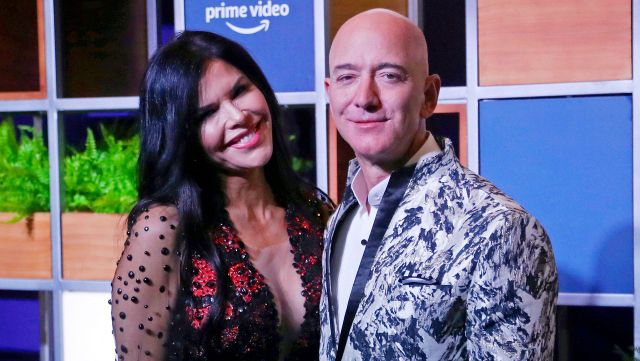
Jeff Bezos and his girlfriend (AP Photo/Rafiq Maqbool, File)
Jeff Bezos’s fortune increased by $25 billion between January 1 and April 15. Never in history has any individual made so much wealth so quickly. As the report noted, “this is larger than the Gross Domestic Product of Honduras, which was $23.9 billion in 2018.”
Eight billionaires, so-called “pandemic profiteers,” have increased their wealth, each, by over $1 billion during this time: Jeff Bezos (Amazon), MacKenzie Bezos (Amazon), Eric Yuan (Zoom), Steve Ballmer (Microsoft), John Albert Sobrato (Silicon Valley real estate), Elon Musk, Joshua Harris (Apollo, financial asset management) and Rocco Comisso (Mediacom, cable and internet).
Why, when 200,000 have died around the world and millions more lives are in jeopardy, are the ultra-rich profiting so fabulously?
First, the bailout package crafted and voted on unanimously by Republicans and Democrats has funneled wealth to the richest banks and corporations, while leaving peanuts for the working population.
The $2.2 trillion CARES Act gives only $550 billion to direct payments and extended unemployment, which most people have yet to receive. Of the remaining more than $1.7 trillion, $500 billion goes directly to bailing out major corporations. While $377 billion ostensibly goes to small businesses, most have not seen a penny, as the banks pocketed $10 billion in fees and larger companies largely consumed the available funds.
The CARES Act also contains within it an additional $173 billion in tax breaks to super-wealthy individuals and companies. For example, it allows households earning at least $500,000 a year to reduce their taxes by substantially increasing deductions from business losses and applying them to taxable money earned on the stock market.
All of this is on top of trillions being funneled into the financial markets and corporate coffers by the Federal Reserve.
Meanwhile, a study from the Pew Research Center finds that while over 10 million people applied for unemployment in March, only 29 percent of jobless Americans received any benefits that month. The report says that unemployed workers “face a hodgepodge of different state rules governing how they can qualify for benefits, how much they’ll get and how long they can collect them.”
Real unemployment has grown past 20 percent of the population. Over 26.5 million jobs have been lost, adding to the 7.1 million people who were already unemployed prior to the crisis.
Even when workers receive these benefits, they come, ultimately, at the expense of state and federal debt. Like in 2008, when state after state and city after city faced a budget crisis, so too, with COVID-19, will fiscal problems emerge. Who will pay when budgets are exceeded? As in Detroit, Michigan and Stockton, California in the aftermath of the 2008 financial crisis, the ruling class will once again say, “There is no money” for basic social services such as education and clean water. Meanwhile, trillions are funneled to the ultra-wealthy.
A second reason the pandemic has been a bonanza for the ultra-rich is that it has intensified corporate consolidation, part-time and temporary work, and digital and physical automation.
Bloomberg writes: “Big Business Has All the Advantages in the Pandemic.” While most small businesses are on the rocks--deprived by larger firms of the small funding that was theoretically given to them in the CARES Act--many large corporations, such as Amazon, are carrying out a massive hiring spree. Walmart plans to hire 150,000 people by May; Amazon, 100,000; and Dollar Store, 25,000.
Because larger firms are more likely to have the capital not only to weather the crisis, but to dominate internet-based commerce, they will come out of the crisis with even greater domination of their market. In particularly hard-hit industries, such as the oil and gas sector, the giant companies like Chevron and ExxonMobil see the crisis as an opportunity to purchase their smaller competitors.
The Financial Times likewise writes that “Covid-19 will only increase automation anxiety” as companies “pandemic-proof their operations.” Capitalism has a natural tendency toward automation, which in the long term breeds economic crises and joblessness. Mark Muro, a senior fellow at the Brookings Institution, says COVID-19 will spur a “surge of labour-replacing technology,” as automated cashiers, cars, logistic robots and automated assembly lines replace workers. Again, the largest companies will emerge on top because they are the ones that can afford this automated overhaul.
Capitalism’s fundamental trajectory—toward increasing automation, temporary and part-time work, corporate consolidation, ever increasing inequality and financial bubbles—will intensify. The result, in turn, will be an ever more staggering concentration of wealth in the hands of the few.
The socialist response to the COVID-19 crisis demands that this mass of wealth be confiscated. The major companies which dominate our lives cannot be run for the private profit of a handful of billionaires who seek to squeeze the working class, literally, to death. They must be placed under the social and democratic control of the working class.

EU steps up push for return to work amid COVID-19 pandemic

Alex Lantier

Six weeks after confinement measures began across southern Europe amid the COVID-19 pandemic, the European Union (EU) and governments across the continent are stepping up pressure on workers to return to work even as the pandemic continues. Fully 23,680 new cases of COVID-19 were confirmed yesterday across Europe, for a total of 1.27 million cases and 121,800 deaths. The decision to lift confinement measures, vastly accelerating the pandemic’s spread, is politically criminal and will cost countless thousands of lives.
The example of China’s Hubei province—the pandemic’s first epicenter, where the spread was halted by a far longer confinement lasting from January 23 to April 8, by which point only a few dozen largely imported cases were still being discovered in all of China—has been thrust aside. This weekend saw 6,865 new cases recorded in Spain, 4,681 in Italy, 2,272 in France, 2,178 in Germany, and 9,376 in Britain. Yet governments are pressing for a return to work against the opinions of scientists and of the working population.
This follows a European Union (EU) summit Thursday that announced a €1 trillion bailout and committed the EU to imposing back-to-work policies across the continent. “We discussed progress on the various dimensions of the European response to the pandemic and welcomed the Joint European Roadmap towards lifting of COVID-19 containment measures,” European Council President and former Belgian Prime Minister Charles Michel announced after the summit.
European Council President Charles Michel speaks during a media conference on the European Union response to the COVID-19 crisis at EU headquarters in Brussels, Wednesday, April 15, 2020 (Image Credit: John Thys, Pool Photo via AP)
Tomorrow, Spain’s Council of Ministers is to approve Prime Minister Pedro Sanchez’s plan for ending confinement measures, while French Prime Minister Édouard Philippe will announce his government’s plan for an exit from the lockdown in France.
Italian Prime Minister Giuseppe Conte has announced that his government will publish its plans for a May 4 reopening of nonessential companies by the beginning of this week “at the latest.”
While these governments have largely avoided giving concrete details about the policies they plan to implement after the lockdowns, it is already clear that, in the absence of a vaccine or a cure for the virus, the result will be a large increase in COVID-19 cases and deaths.
In Spain, where 59 percent of the population supports strengthening instead of canceling confinement measures, the Coordination Center for Health Alerts and Emergencies (CCAES) has called for intensive care wards to double the number of beds available after the confinement is ended. The CCAES made clear that the Spanish government's policy is not to try to eradicate the disease. Rather, it is seeking to keep the number of cases “at a level that the health system can tolerate, avoiding the risk that it could be overwhelmed,” as in the first wave of the epidemic.
The CCAES also noted that “herd immunity” strategies proposed by European governments were unacceptable as they would flood health systems and lead to mass deaths. “It is not reasonable to base pandemic control strategies on waiting for a sufficiently high percentage of the population to develop total or partial immunity, which implies an unacceptable number of cases and deaths.”
In France, an epidemiological study by the Rouen University Hospital Center (CHU) found that the lockdown cut hospital deaths before April 19 by at least 61,739 (83.5 percent). It estimated that without a lockdown, 23 percent of the population would have had the disease by then. The lockdown thus “avoided around 590,000 hospitalizations and 140,000 admissions into intensive care,” it found. This would have overwhelmed France’s 10,500 available intensive care beds, a figure itself doubled only thanks to health staff’s emergency efforts since the beginning of the pandemic.
This falls roughly in line with projections by Imperial College in London that a “herd immunity” policy would cost at least 250,000 lives in Britain alone. Such fatality rates, at the level of the entire European continent, would lead to a death toll in the millions.
This points to the vast dangers posed by prematurely ending lockdowns and the political criminality of calls by British Prime Minister Boris Johnson and German Chancellor Angela Merkel to deal with COVID-19 by means of “herd immunity.” Nonetheless, French President Emmanuel Macron is pressing ahead with precisely such an agenda.
Several state scientific bodies warned against the policies proposed by Macron, who has ordered a return to work and reopening of schools on May 11. The government’s scientific council, led by Dr. Jean-François Delfraissy, issued a statement calling for schools to remain closed until September and for deconfinement to wait until intensive care units were back to normal occupancy levels. The General Health Directorate reported that despite the gradual tendency for infection numbers to fall, the total number of patients on respirators in France actually increased by 28 yesterday.
Bitter divisions are erupting inside the Macron government itself, as ministers panic at the prospect of an eruption of popular anger after a second wave of COVID-19 cases. One minister complained anonymously to L’Obs about reports on the unviability of a “herd immunity” strategy of hoping the population would be immune if everyone caught the virus. “We seem to be discovering that you can catch coronavirus several times,” the minister said, “but our entire strategy was based on developing immunity. Our situation is that we are falling into an abyss.”
The European bourgeoisie is plunging ahead with a politically criminal back-to-work policy. It is easy for corporate management and wealthy investors to shelter at home, and EU ruling circles are as indifferent to the death of millions of workers in Europe returning to work to boost their profits as an Egyptian pharaoh watching slaves die to build the pyramids.
This toxic class contempt for human life emerged in comments by German Parliament President Wolfgang Schäuble—the prominent architect of capitalist restoration in East Germany in 1989 and of EU austerity after the 2008 crash—attacking calls to protect human life amid the pandemic. He told the Tagesspiegel that when he hears “that all must give way to protecting life, I must say: that is not absolutely correct... If there is an absolute value in our Constitution, it is human dignity. One cannot touch it. But it does not rule out that we must die.”
Schäuble’s horrifying eagerness for death is not simply a personal trait, however, but a particularly brutal expression of the profit interests of the entire European ruling class.
The European financial aristocracy, well aware of a building financial crisis before COVID-19 emerged, has responded to the pandemic by showering itself with vast handouts of public money. The European Central Bank (ECB) announced a €750 billion bank bailout, buying various types of debt to pay off investors in the major banks. The larger European Union (EU) governments each announced hundreds of billions of euros in corporate bailouts, while the EU launched a €540 billion rescue package overwhelmingly targeted to big business, and then announced its most recent €1 trillion bailout at its summit last Thursday.
Even as massive sums are lavished on bailouts of firms, including Air France-KLM (€10 billion) and automaker Renault (€5 billion planned), financiers are demanding that workers return to work to make profits to back the massive amounts of fictitious capital pouring through the financial system. VW in Germany, Toyota in France and other firms in nonessential industries are already reopening in close collaboration with the trade unions.
Naturally, capitalist politicians are presenting various more apparently palatable arguments for ending the lockdown, insisting it is too destructive and costs small businesses and wage earners too much. This was the tack taken by Conte, who told La Repubblica, “We cannot continue with this lockdown. We risk too heavily compromising the country’s socio-economic fabric.”
In fact, the main reason lockdowns have generated hardship is that EU states left countless workers and small businesses with virtually no income. Long lines have formed for limited food distributions in working class districts of Paris, Madrid and other European cities.
Workers must reject this false choice between working and dying in a pandemic and starving in confinement, or the claim that mass deaths are now inevitable. Modern science and technology make it possible to let masses of workers shelter at home, receiving the necessary food and medicine, while scientists work on vaccines and treatments for COVID-19. However, this will require the expropriation of the massive sums of money looted from public treasuries by the financial aristocracy and a political struggle to bring down reactionary governments across Europe and fight to transfer power to the working class.