28 Apr 2020

Is Sri Lankan President Rajapakse plotting a coup under cover of anti-pandemic measures?

K. Ratnayake

Amid a profound economic and political crisis, Sri Lanka’s minority government has taken a series of sinister, authoritarian steps in conjunction with the military that indicate a coup d’état could be in preparation.
At the very least, the government is using the COVID-19 pandemic as the pretext to mount a power-grab, insert the military even more fully into the running of the state, and run roughshod over working people’s democratic rights—all in flagrant violation of democratic-constitutional norms.
In so doing, President Gotabhaya Rajapakse and his prime minister and brother, the former President Mahinda Rajapakse, are not simply accruing more power at the expense of their bourgeois opponents. Their real and principal target is the working class.
Even prior to the pandemic and consequent global economic collapse, Sri Lanka’s economy was in profound crisis. During the last two years of the previous United National Party (UNP)-led government, which President Gotabhaya Rajapakse promptly sacked after winning last November’s election, there was a powerful wave of protests and strikes against its brutal International Monetary Fund-imposed austerity measures.
Early Monday morning, the Rajapakse government had been slated to lift a weeks-long anti-coronavirus shutdown in most of the country. Instead, with virtually no warning, it ordered an even more draconian 24-hour all-island curfew till 5 a.m. Tuesday. The reason given for this was that it would facilitate the return to their respective camps of military personnel who had been on leave.
Prior to the curfew announcement, the defence secretary, retired Major General Kamal Gunaratne had issued a notice cancelling leave for members of all three armed forces and ordered all troops to report to their respective officers in charge.
Imposing a 24-hour all-island curfew to facilitate military deployments is without precedent in Sri Lanka. Not even during the Sri Lankan state’s almost three-decade civil war against the Tamil minority was such a step taken.
Also in apparent contradiction with Gunaratne’s original order, it soon emerged that rather than returning to their normal camps, many of the soldiers are to be deployed to the national capital, Colombo. There they are to be housed in schools, including five of the city’s larger ones.
No official explanation has yet been given for the deployment. However, in an interview early last week, President Gotabhaya Rajapakse spoke about the deploying the military in Colombo as part of what he called the “war time” measures needed to fight the coronavirus pandemic, which thus far has officially claimed seven lives in Sri Lanka on almost confirmed 600 COVID-19 cases.
In another unusual move, the military has taken over the external security of the parliament, according to defence spokesman Brigadier Chandana Wickremesinghe. Parliament administration has said that 120 policemen were removed from security detail and replaced with troops, purportedly because the police were needed to help with the enforcing the anti-coronavirus lockdown, which is to remain in force in Colombo till May 4.
Rajapakse won the election last November by making a calibrated and demagogic appeal to mass opposition to the UNP-led government’s austerity, on the one hand, and, on the other, by rallying support from big business by casting himself as a Sinhalese-Buddhist “strongman” who could force through unpopular measures.
A former colonel, Rajapakse has cultivated close ties to the military and a reputation for ruthlessness. He served as his brother’s defence secretary in the final stages of the civil war, which ended in 2009 in the state-ordered military slaughter of tens of thousands of Tamil civilians. Moreover, during this period, under draconian Emergency Regulations and the Prevention of Terrorism law, the country’s security forces unleashed state repression across the island against workers, political opponent and journalists.
Within days of winning the presidency, Gotabhaya Rajapakse shunted aside the UNP government and installed his brother as prime minister. He then kept parliament largely in abeyance, because the new government lacked a parliamentary majority, until March 2, when he gained the constitutional right to call an early election.
His stated aim is to secure a two-thirds majority in parliament in a snap-poll, held before the government is compelled to impose a new and even more draconian round of austerity measures. He wants to push through constitutional changes giving him, as executive president, sweeping, arbitrary powers.
Rajapakse’s anti-democratic machinations have become even more pronounced with the outbreak of the pandemic.
With the support of the military and the caretaker government headed by his brother, Prime Minister Mahinda Rajapakse, he has used presidential decrees to arrogate exceptional power, even as the elections have been postponed, initially indefinitely and now tentatively to June 20.
Since March 20, the Western Province, Puttalam in the north-west and Jaffna district in war-ravaged north have been under lockdown, or in Sri Lankan parlance “curfew.” In other areas, the lockdown/curfew has been relaxed intermittently.
The lockdown is patently illegal. To conform with Sri Lankan law, it would have to be publicised by a gazette notification or declared under emergency laws. If it was implemented though gazette notification this would have to be presented to parliament. Similarly, a declaration of emergency must be approved by parliament.
But Rajapakse, exploiting the pandemic to seize new powers, has simply ignored the law, and curtly dismissed opposition appeals for the dissolved parliament to be recalled.
Police have arrested some 40,000 persons for failing to respect the illegally-imposed lockdown and confiscated more than 10,000 vehicles belonging to them. None of the opposition parties or media has challenged these actions.
After his election Rajapakse filled many key posts with senior military officers. Following the outbreak of the coronavirus pandemic, he has further militarised the administration. Army Commander, Lt. General Shavendra Silva has been appointed to head the National Centre for Prevention of COVID-19. Retired Air Martial Roshan Gunatilake has been appointed as governor of the Western Province.
While imposing repressive new powers over the population in the name of fighting the highly-contagious and potentially-lethal coronavirus, the Rajapakse government has shown callous disregard for the health and well-being of Sri Lanka’s workers and toilers.
During the past two months, no mass testing has been conducted, as repeatedly urged of all countries by the World Health Organisation (WHO). Health workers lack proper protective equipment, and while the government found billions of rupees to help bail out big business, no significant funds have been allocated to modernise and strengthen the dilapidated health service.
The lockdown was imposed hastily and without plans to ensure that workers and the rural poor would be provided food and other essentials, including medicine. Hundreds of thousands of daily wage workers have lost their jobs and now find themselves without any means of support.
Behind Rajapkase’s turn to authoritarian methods of rule lies fear of, and preparation for, a headlong conflict with the working class.
The global economic crisis triggered by the pandemic has cut off the Sri Lankan ruling elite’s main foreign-exchange earners—the tourism and garment industries—while leading to a plummet in remittances from overseas migrant workers.
Desperate to impose the burden of the economic crisis on the working class, the Rajapakse government, like its counterparts in India, the US, and Europe, has moved aggressively to reopen the economy. Fourteen Free Trade Zones (FTZs) have already been reopened. At the same time, Rajapakse has sanctioned big business calls for job, wage and pension cuts, saying “the head of each [private] organisation has the freedom to decide who should report to work and the number of employees.”
Workers must beware. Rajapakse has talked of deploying troops to Colombo to impose “war-time” like measures. “I have instructed the defence secretary,” he boasted last week, “to ensure that the situation remains under control, as it was during the war, and ensure that people … act in a disciplined manner.” While today that may take the form of their imposing a lockdown that inordinately punishes the poor, on the morrow their deployment may serve to enforce a back-to-work under dramatically inferior conditions for working people.
Yesterday many of the opposition parties appealed to President Rajapakse to reconvene parliament to defuse the political-constitutional crisis provoked by his illegal actions. They pledged to forego any attempt to unseat the minority government and offered to provide it “responsible cooperation.”
Those making this appeal, included the UNP, its breakaway group Samagi Jana Balavegaya, the Sri Lanka Freedom Party, the Tamil National Alliance, the Sri Lanka Muslim Congress and the parties of the plantation trade unions.
The Janatha Vimukthi Peramuna (JVP) did not join in this appeal, but it has twice participated, along with the above parties, in all-party meetings and has praised the government’s actions to “prevent [the] coronavirus pandemic,” thereby strengthening Rajapakse and his anti-democratic actions.
These parties have only minor tactical differences with the Rajapakses’ rule. While they may on occasion prattle about democratic rights they are all steeped in chauvinism, are complicit in the imposition of IMF austerity, and most are outspoken advocates of bringing Sri Lanka four-square behind US imperialism’s anti-China war-drive.
The developments in Sri Lanka must serve as a sharp warning to workers, not only on the island, but all over the world. Under the cover of necessary measures to fight the COVID-19 pandemic, the capitalist ruling elites are attacking democratic rights, seizing draconian powers, and militarising society.
Workers in Sri Lanka must intervene independently in this crisis, in opposition to all the rival bourgeois factions, so as to defend their lives and livelihoods and secure their basic social and democratic rights. Action committees must be built in every workplace to mobilise the political and industrial strength of the working class and rally the rural poor against capitalist reaction, and to prosecute the struggle for a workers and peasants’ government committed to socialist policies and the fight for international socialism.

Johnson returns to Downing Street to map out end of COVID-19 lockdown

Robert Stevens

Yesterday, Boris Johnson returned to Downing Street three weeks after being rushed into hospital suffering with COVID-19 and nearly dying in an intensive care unit.
The big business media spread the word as to what was wanted from Johnson’s return. The Daily Telegraph headlined, “Johnson to ease the lockdown this week” as its editorial insisted “the PM must lead us out of this impasse.”
The Daily Mail headlined, “Boris bounces back to get Britain moving.”
The Times led with a piece: “Ministers plan how to get Britain back to business”. An op-ed by Max Hastings was crudest in setting down the message from business circles. “We need to toughen up for the pain ahead,” wrote the aging reactionary. “We are slowly recognising realities about Covid-19. There will be no tidy, early ending: it will ebb and flow, with resurgences and possible heavier death counts, for months and perhaps years. Yet the chances that it will kill a healthy, youngish person are less than those of their being eaten by a great white shark… It is boring to bang on about the war [!], but hard not to do so, because it was the last period at which our leaders faced similar huge life-and-death decisions. Every course involved risk. Duty required ministers and commanders to choose the least bad from a range of unwelcome options, accepting the need to pay a price in lost lives in the greater interest of the nation.”
Johnson began his day with a speech outside Downing street to reassure the capitalist class that his government would move towards ending the lockdown in the weeks ahead. But he spoke to them directly to warn that the conditions for doing so openly did not yet exist.
Just two days after the UK reached the grim milestone of 20,000 deaths and heading toward becoming the second worst impacted country in the world, thanks to Johnson’s belatedly modified “herd immunity” policy, he appealed for more time to change the political narrative and establish “facts on the ground” by allowing businesses to begin opening—without officially ending the lockdown.
“We are now beginning to turn the tide” and “making progress," he claimed, under conditions in which the Financial Times has calculated that the real number of “excess deaths” caused by COVID-19 was over 41,000 by April 21 and another estimate puts the real number at over 61,000.
There were “fewer hospital admissions, fewer Covid patients in ICU, and real signs now that we are passing through the peak… [W]e defied so many predictions, we did not run out of ventilators or ICU beds, we did not allow our NHS to collapse.”
As Johnson spoke, Nursing Notes announced, “at least 134 health and social care workers are now believed to have died of COVID-19”—an increase of six on the previous day.
This yawning chasm between rhetoric and reality prompted Johnson to directly address “British business,” rather than continue to feign concern for working people.
“To the shopkeepers, to the entrepreneurs, to the hospitality sector, to everyone on whom our economy depends, I understand your impatience. I share your anxiety. And I know that without our private sector, without the drive and commitment of the wealth creators of this country, there will be no economy to speak of. There will be no cash to pay for our public services, no way of funding our NHS.”
Johnson shared the “urgency” to resume economic activity and making profit: “And yet we must also recognise the risk of a second spike, the risk of losing control of that virus and letting the reproduction rate go back over one. Because that would mean not only a new wave of death and disease but also an economic disaster, and we would be forced once again to slam on the brakes across the whole country, and the whole economy, and reimpose restrictions in such a way as to do more and lasting damage.”
Johnson knows that the propaganda sheets of the ruling class have been ramping up the drum beat for a mass return to work for weeks, in the full knowledge that this can only end in a second wave of the pandemic that will likely claim more lives than the first. But he was warning them of the political, rather than the economic consequences, given the entrenched opposition to such a move in the working class.
Poll findings published by Sky News last week found that over half the population would not support key parts of society and the economy being reopened in the next few weeks. 51 percent wanted primary schools to stay shut, 53 percent wanted secondary schools to stay shut, 67 percent wanted to keep people working from home and 72 percent wanted to keep older people indoors.
But despite cautioning big business to “contain your impatience,” the government is allowing numerous companies to proceed with a phased return to work, led by building corporations and manufacturers, alongside high-street names. This would continue, as the UK begins “gradually to refine the economic and social restrictions and one by one to fire up the engines of this vast UK economy.”
Over the weekend, it emerged that McDonalds was making plans to gradually reopen its 1,000-plus high street restaurants, while bakery chain Greggs announced Monday it will open 20 of its stores next week—with a further 700 of its over 2,000 branches to follow.
Speaking to the Sunday Times, Steve Morgan, the former CEO of housebuilder Redrow, who donated £1 million to Johnson’s general election campaign, said, “We’re actually in danger that the medicine—if you want to call the lockdown that—is more harmful than the cure.”
Implementing the desired agenda of a full return to work depends above all on the collusion of the Labour Party and the trade unions. The last part of Johnson’s speech was a paean to “national unity,” which will involve “reaching out to build the biggest possible consensus across business, across industry, across all parts of our United Kingdom, across party lines, bringing in opposition parties as far as we possibly can.”
The Labour Party has emerged as the most open and consistent advocate of a return to work, given the crisis facing the Tory government. In preparation for Johnson’s return, Labour leader Sir Keir Starmer wrote him a letter Saturday stating that he would continue “to engage constructively with the government.”
Starmer’s major concern was that the Tories had not provided an “exit strategy” and the “UK government has fallen behind Wales and Scotland, which have both published details on this important matter.”
He concluded, “This [global pandemic] is a national crisis and therefore needs a national response. Will you therefore commit to publishing an exit strategy as soon as possible?”
Starmer called on Johnson to commit to “holding talks with teachers, trade unions, businesses, local authorities [that Labour controls in all the urban centres] and community leaders about how such a strategy can be implemented.”
Before the day was out, the Guardian reported that “Ministers have held a series of high-level meetings with trades unions and business leaders amid fears that millions of people will be too fearful to return to work as pressure intensifies on the government to publish a path out of the national lockdown.” The unions will serve as the industrial police force to oversee a return to work across industry, with the newspaper reporting that union leaders were involved in “seven sector-by-sector meetings chaired by the business secretary, Alok Sharma, in recent days--after concerns arose in Whitehall that many employees may be reluctant to return to the workplace, even when the government gives the green light.”

27 Apr 2020

Record Inequality, COVID-19, and the Crisis of the Have-Nots

Anthony DiMaggio

Americans have historically struggled to see inequality as a major societal problem. Inequality in the U.S. was at record levels, even before the emergence of the Covid-19 public health and economic crisis. And Americans have long been tolerant of high inequality in their own country. Less than half historically have said inequality reduction should be a top policy priority of government. And the gap between rich and poor historically ranks as a low concern for most, compared to other economic concerns such as the deficit, the national debt, jobs and unemployment, and the state of the economy more generally. Furthermore, for decades, from the late-1980s through the late-2010s, a majority have refused to recognize that an economic divide exists in the U.S. between haves and have-nots, despite approximately half the country holding almost no financial assets or wealth.
But increasingly desperate economic times appear to be drawing added attention to the problem of inequality, amidst the Covid-19 crisis. Considering the dramatic negative effects it has had on the health and finances of millions of Americans, we are seeing significant public support for addressing the problem of inequality. With millions now filing for unemployment claims, and the number of uninsured sure grow dramatically as Americans are thrown out of their jobs in record numbers, a new poll that I coordinated with Harris Insights Polling finds that a majority of Americans agree the federal government should actively seek to reduce inequality, amidst the worsening economic crisis produced by Covid-19. The survey, of 2,018 Americans, conducted between April 7-9, 2020, finds that 78 percent of Americans agree that “considering the spread of coronavirus in the United States and its impact on the economy and the American people,” it is “somewhat” or “very important” that “the U.S. government commit to reducing economic inequality” over the next year, through “raising the minimum wage” and “taxing households making more than $250,000 a year to guarantee health care coverage to all Americans who lack access.” Only 21 percent feel reducing inequality through these actions is “not very important” or “not at all important.”
As the Harris poll shows, not all Americans feel equally strong about such actions. Public attitudes on inequality reduction vary by income, age, and between renters and homeowners. Support for inequality reduction is higher among younger Americans, age 18-34 (82%), individuals earning less than $50,000 a year (82%), renters (84%), and individuals with children (81%), compared to older Americans, 65 and older (67%), individuals earning more than $100,000 a year (73%), home owners (76%), and individuals without children (77%). These findings suggest that, while support as across the board for government initiatives to lower inequality is high, it is highest among demographic groups that are traditionally the most economically disadvantaged, and the most likely to be in financial need in a period marked by economic crisis.
Despite strong support for government action to reduce inequality, opinions remain divided on the severity of economic inequality within the U.S. Fifty-seven percent of Americans agree that “in a time of growing economic instability and rising unemployment claims, the U.S. is increasingly divided between the ‘haves’ and ‘have-nots.’” By comparison, 43 percent agree that “recent economic troubles are only temporary, and the economy will soon bounce back, so it makes little sense to speak of ‘haves’ and ‘have-nots.’” Groups that are most likely to agree that the U.S. is divided include younger Americans, from 18-34 (64%), individuals earning less than $50,000 a year (61%), renters (61%), and women (60%), compared to older Americans age 65+ (51%), individuals earning more than $100,000 a year (53%), home owners (56%), and men (54%). Again, we see a significant divide among Americans on recognition of the inequality problem. More historically privileged groups are relatively less likely to recognize the U.S. divide between haves and have-nots, compared to disadvantaged groups.
Still, the findings from the Harris poll are significant because they suggest a mass awareness of the inequality problem, and a recognition that government action should be taken. As recently as April 2019, Gallup polling found that 58 percent of Americans disagreed that the U.S. was divided between haves and have-nots. This sentiment was reinforced by decades of surveys from Gallup showing that a majority of Americans have never recognized an economic divide in their country between haves and have-nots. But most Americans are no longer trying to deny that their nation is economically divided, at a time when we face the worst economic crisis since the Great Depression.
Whether states and the federal government choose in the future to prioritize inequality reduction – via a mandated increase in the minimum wage, taxes on the wealthy to provide health insurance to millions who have lost employer-provided coverage, or through some other actions, is not yet known. But one point is abundantly clear based on recent polling: public pressure is rapidly building for government to take a more active role in reducing the misery and suffering of those who have been hardest hit by the Covid-19 economic crisis. And short of more effective efforts to reduce such misery, most Americans will likely continue to prioritize government action in a time of rising economic instability and need.

Black Sea Pollution

Naveed Qazi

The Black Sea is dying. Under the current bad environmental conditions, more than one hundred sixty million people in Bulgaria, Ukraine, Russian Federation, Romania and Turkey are exposed to danger.
The amount of marine litter in the Black Sea is twice as high as in the Mediterranean Sea. The concentration of some toxins exceed their threshold value, according to results of the Joint Black Sea Surveys presented by the EU/UNDP-funded project “Improving Environmental Monitoring in the Black Sea: Selected Measures” (EMBLAS-Plus), and the Ministry of Ecology and Natural Resources of Ukraine at a press conference in Odesa on July 29, 2019. The surveys were held in 2017 – 2019 in the coastal waters of Georgia, Ukraine and Russia and in the open sea.
The litter flowing into the Black Sea, studied by EMBLAS, mainly comes from four major rivers: the Danube (which flows through several European countries, including the Republic of Moldova and Ukraine in the Eastern Neighbourhood region), the Dniester (Moldova and Ukraine), the Don (Russia), and finally the Rioni, which flows through Georgia.
The research by EMBLAS has it that eight three percent of marine litter found in the Black Sea is plastic namely bottles, packaging and bags. Large rivers such as Danube and Dniester bring to the sea from six to fifty items of litter per hour. Micro plastics have also been found in the sediments of Black Sea both in its shelf parts and in the depths of more than 2,000 m.
Some priority hazardous chemical substances are also present, which makes it the most polluted sea in the world. These substances include benzo(a)pyrene, several pesticides, insecticides, mercury and flame retardants in fish. In addition to that, over one hundred twenty four chemicals, dangerous for the sea ecosystem, and human health, were identified including persistent organic pollutants, metals, pesticides, biocides, pharmaceuticals, flame retardants, industrial pollutants and personal care products. These substances had not been monitored earlier, and they are now proposed to be included for regular monitoring.
In history, it was in the 1970s and 1980s, when the Black Sea ecosystem suddenly collapsed. There were vast amounts of dead plants, and animals that covered the beaches of Romania, and western Ukraine, and between 1973 and 1990, losses were estimated as sixty million tons of bottom animals, including five million tons of fish.
The most significant factor attributing to Black Sea’s pollution has been the massive over-fertilisation of the sea, by compounds of nitrogen and phosphorus, largely as a result of agricultural, domestic and industrial sources. This over-fertilisation produces eutrophication, which has changed the structure of the Black Sea ecosystem.
Eutrophication is the over-enrichment of water bodies with organic matter that results in lack of oxygen, and severe reductions in water quality, and in fish and other animal populations. The effects of eutrophication were felt across the entire Black Sea.
As a process, the nitrogen and phosphorus compounds (nutrients) enter the Black Sea from sources from around seventeen countries in its drainage basin, particularly through rivers. It is estimated that the six Black Sea countries contribute about seventy percent of the total amount of the substances flowing to the Black Sea, as waste from human activities. Some of this amount and almost all of the remaining thirty percent (from the other eleven non-coastal countries) enter the Sea through the Danube River.
By the time the Soviet Union collapsed in 1991, water quality of Black Sea had dwindled from the inflow of industrial strength agricultural fertilisers. At that time, scientists warned aloud that Black Sea might become the first major waterway devoid of life. It was this point that the newly empowered ex-Soviet states came up with an action. They formed the Black Sea Commission (BSC), whose secretariat sits in Istanbul, and drew up the Convention on the Protection of the Black Sea Against Pollution, which came into force in 1994.
The system is more complicated than most, making the protection of Black Sea a challenge. Dense, salty waters flowing in from the Bosporus Strait sink to the bottom, while fresh river water that drains from five major rivers floats overtop. This means that the fertiliser runoff concentrates on the sea surface, stimulating the rapid progress of microscopic algae, and suffocation of marine creatures.
This lack of mixing also leaves nearly ninety percent of the Black Sea naturally devoid of oxygen, limiting the range of species that thrive in the waters. And to complicate matters, as bacteria feed themselves on organics, such as plants or dead creatures, in this oxygen-less environment, they naturally produce hydrogen sulfide (H2S). As the world’s largest reserve of H2S, maritime authorities carefully monitor the gas, every now and then.
For years, the Black Sea’s agony was hostage to Cold War suspicions. But, what seemingly separates these water woes from most previous crises is the apparent inability of officials in Russia, Ukraine, Bulgaria, Romania, Turkey and Georgia, the six-shoreline countries, to set aside their political differences, to work for the sea’s survival. Relations have soured to such a point that a number of governments have broken off some diplomatic relations. Whatever good had existed to tackle environmental degradation has long since melted into thin air.
According to an article by Hugh Pope in The Independent: ‘Dams have cut the flow of main rivers by up to a half. The level of lifeless, sunless water has now risen up to one hundred twenty metres below the surface, suffocating the once fertile north-western coastal shelf. The marine food chain, already under severe pressure from over-fishing, was hit by a parallel invasion of jellyfish. Oyster beds were the first resource to disappear, attacked by an invading Japanese sea snail in the 1940s. Nearly thirty kinds of marketable fish have dwindled to half a dozen. Tourist beaches have to be closed when they turn brown and smelly. And the sea grass fields in the north-western coastal shelf have shrunk to a fifty- square kilometre patch, five per cent of their former extent.’
During the war in 2014, when Moscow threw its support behind separatists in the Donbass area of Eastern Ukraine, and then annexed the Crimean peninsula, there were unique complications for the sea. No longer in control of large swathes of their waters, the Ukrainian environmental authorities ascertained that they were unable to keep a watch on the waste that seeped from stretches of their coastline. Increased Russian and naval exercises have had also led to the closure of some parts of the Sea to civilian traffic, preventing environmental groups from conducting surveys.
In the sea, the Dolphins now are already endangered. The monk seal has already disappeared from Black Sea waters over the past decade, after a series of tourist resorts laid claim to its last cliff-side habitats in Bulgaria. Stocks of anchovies, a favored delicacy from coast to coast, are seemingly on their last legs. So low are most other fish stocks that Romanian conservationists say their country’s fishing fleet has largely switched to hunting sea snails, and other critters, in order to stay economically relevant. With the result, victimised by over-fishing, six out of the seven sturgeon species are now seriously endangered.
To counter environmental degradation, some policy planning has also been adopted, in the past, most notably the GEF Strategic Partnership on Black Sea and Danube Basin. The partnership was a multilateral structure established with the cooperation of the World Bank (WB), the United Nations Development Programme (UNDP), the United Nations Environment Programme (UNEP), and other financiers, as well as basin countries to address the degradation of the Black Sea and Danube Basin region.
The GEF Strategic Partnership, launched in 2001, was the first major initial funding of ninety five million US dollars in GEF grants to tackle the pollution. It was an initiative coordinated among UN agencies, and the World Bank in support of a country-driven program that addresses the key concern of this basin: pollution from nutrients and subsequent eutrophication that is the cause of many environmental and water use problems.
The GEF Investment Fund for Nutrient Reductions, managed by the World Bank, was another initiative established to catalyze investments, and accelerate action by other stakeholders interested in the recovery of the Black Sea. It aimed to leverage $210 million to complement $70 million GEF grant funds for nutrient reduction investments in the agriculture, and municipal and industrial wastewater treatment sectors, and for wetland restoration.
Quite lately in October 2019, a team of seventeen marine scientists from four countries, including Turkey, have joined forces in a new project aiming at evaluating the degree of pollution in the Black Sea Scientists on board the research vessel “Mare Nigrum”. They carried out sampling of water, sediments and marine organisms to assess the health of the sea, which marks the majority of Turkey’s northern border. The project, “Assessing the vulnerability of the Black Sea marine ecosystem to human pressures” (ANEMONE), was launched with the Black Sea Joint Scientific Cruise. The aim of the Marine scientists is to study this data, through laboratory work, including processing of samples, data analysis and assessment. The results will serve to map the bottom habitats, and to assess the biodiversity, and integrity of the seabed, under the requirements of the Marine Strategy Framework Directive. The results will be shared, collated and published as the report on the “Status of the Environment of the Western Black Sea.”
The project, ‘Waste Free Rivers for Clean Black Sea’, will also be implemented throughout the period 2018-2020, using €1,008,497 in financial aid, allocated by the European Union, under the Joint Operational Programme (JOP) Black Sea Basin 2014-2020. It involves three countries, and facilitates cross-border cooperation between Georgia, Moldova, and Romania, for the introduction of modern waste management practices, in order to help enhance the quality of the environment, and contribute to reducing river, and marine litter in the Black Sea Basin countries.

Rising Piracy in Gulf of Guinea

Naveed Qazi

Gulf of Guinea continues to be world’s most dangerous route for international shipping trade. Called as ‘world piracy hotspot’, it has now eclipsed the troubled waters off Somalia in the Horn of Africa, by becoming a new epicenter for piracy, looting and kidnappings. According to International Maritime Bureau, almost eighty two percent of maritime kidnappings in the world occurred in the Gulf of Guinea in 2019. Attacks against merchant ships were recorded off Togo, Benin, Nigeria, Cameroon and Equatorial Guinea.
There were seventy-two attacks on vessels at sea, in 2018, between Ivory Coast and Cameroon, up from twenty-eight in 2014, and thirty in 2019, as per a report in The Economist.
Pirates in the Gulf of Guinea target all kinds of vessels: crews from fishing, refrigerated cargo vessels, or even oil tankers. They have been mostly attacking ships with international crews, according to data by United States Maritime Administration (MARAD). These felons mostly operate out of the labyrinthine waterways in the Niger delta, near which most of West Africa’s attacks occur. Mostly, Nigerian criminals often take hostages to countries like Benin, Togo, and Cameroon, and the situation has become concerning. According to intelligence agencies, which are already suffering from lack of resources, this behaviour is often linked to land-based criminal activity. Throughout the region, there is an ample supply of foot soldiers camps in remote locations, where hostages can be held during negotiations.
Security agencies are often to be blamed because they don’t see the other link between attacks against merchant ships and illegal fishing, fuel smuggling or illegal migration. Add to that, the total number of hijacking incidents have been going under-reported by the media for many years, which is creating a compromise on information gathering.
Since 2018, there have been fewer attacks on ships, but more hijackings, involving guns and knives. International Maritime Bureau reported that one hundred twenty one seafarers were taken as hostages, during attacks in the Gulf of Guinea in 2019. This represented more than ninety percent of global kidnappings at sea.
According to Wolf Kinzel, frigate captain and expert on maritime security in the region at the German Institute for International and Security Affairs (SWP), the approach of the pirates has changed. Now, instead of three seamen, they take the whole crew with them, as hostages for money. West Africa’s pirates don’t take the ships, with them, unlike the Somalis, because they have nowhere to hide them. The pirates were raking in an average of almost five million US dollars in ransom per ship, according to One Earth Future (OEF), an NGO.
The Gulf of Guinea covers eleven thousand square kilometers, and stretches from Angola to Senegal.  It is one of the world’s most important shipping routes for oil exports and consumer goods from the Niger Delta, and from Central and West Africa respectively. It is also strategic in terms of supply of fish stock and fish protein for the whole world. However, as it is not very well guarded, this creates ideal conditions for piracy there.
In March 2019, thirty-three countries came together to carry out maritime security training in the Gulf of Guinea. Some nations pressed the need for more funding, infrastructure and co-operation. The EU has also provided twenty nine million Euros to support West Africa integrated Maritime Security project. The countries in West and Central Africa also signed the Yaounde Code of Conduct in 2013, aimed at fighting illicit activities at sea. Implementation has been slow, yet navies and maritime agencies in the region have become much more active, in collecting relevant information.
Nigerian navy, which is the most powerful in the region, recently installed eight automated, camera equipped surveillance towers, just off its coast, in an effort to tackle a surge in pirate attacks. But, at the same time, Nigerian navy has been quite recently underfunded and neglected, as compared to its army and armed force; so the country lacks a definite plan to tackle the menace yet, according to Cheta Nwanze, head of research at Lagos-based security and political analysis firm SBM intelligence.
Shipping firms often complain that the pirates are in league with Nigerian military officials, citing incidents in which pirates flee before military vessels arrive, or they have information how many crew are aboard the ship, before they arrive. Pirates captured by Nigerian navy are often released quietly, and the country is yet to make piracy a criminal offense. That’s why BIMCO, the largest international association representing ship-owners, want America and China to deploy its forces to the Gulf of Guinea. Ship-owners also want to deploy private armed guards in Nigerian waters. For now, Nigeria only lets them hire escort vessels staffed by naval officers, which makes security seem as some sort of corporate business.
Kidnappings in the Gulf of Guinea have become so common that it is proving costlier for firms to operate. Now, businesses have to factor additional costs of independent security contractors, extra insurance, and on occasions also bribe and give ransom money. The economic cost of piracy in West Africa in 2017 was $818.8 million up from $793.7 million in 2016. Nearly a quarter was spent on contracting maritime security, as per a report on Al-Jazeera.
As per Oceans Beyond Piracy’s 2017 State of Maritime Project report, insurance also represents a huge cost, the total cost of additional war risk area premiums incurred by ships traveling the Gulf was $18.5m in 2017 alone, and thirty five percent of ships transiting the area also carried additional kidnap and ransom insurance totaling $20.7m.
According to Cormac McGarry of Control Risks, a consultancy: ‘many pirates have gained experience fighting for separatist groups. These groups typically resent how much oil money is stolen by politicians in the far-off capital, and would like to steal it for their own ethnic group, or themselves. Cult-like gangs also abound in the delta, with names like the Icelanders and the Vikings. Members moonlight as pirates to make extra cash. Piracy also rises during election years. Local politicians are said to pay and arm the gangs to attack rivals.’
Shipping managers often argue that firms themselves should do more to protect their crews. International shipping organisations have drawn up recommendations, based on the experiences in Somalia. They include wrapping the deck in razor wire, and building a “citadel” on board, where the crew can barricade themselves, and call for help.
At this point in time bureaucracy has made cooperation difficult, as security forces are not allowed to travel from one country to another, to pursue pirates without informing the neighboring country beforehand.
However, there have been recent efforts in Nigeria, including a large conference in October that led to the Abuja Declaration. It seems a step in the right direction. The declaration highlighted shortcomings of countries around the Gulf of Guinea related to ocean governance and law enforcement at sea. Concrete actions have to follow.
In terms of intelligence gathering, Nigeria’s ‘Deep Blue’ project is already enhancing intelligence, where the agencies can study high risk vessels, can embark on dark activities, monitor vessels involved in suspicious movements, and stop vessels that are involved in illegal ship to ship transfers. The agencies can also take value from Falcon Eye assets, a maritime domain awareness asset, that give them the intelligence they need, whenever they want. Although, ‘Deep Blue project’ is still evolving, and not in its full operational capability yet.

As Bolsonaro pushes to reopen schools, Brazilian state governments escalate attacks on education

Gabriel Lemos

As part of his drive to reopen the economy amid the COVID-19 pandemic, Brazil’s fascistic President Jair Bolsonaro advocated on Monday, April 20, the reopening of military and civic-military secondary schools beginning this week. His intention is that this will lead to the reopening of all schools in Brazil and pave the way for the reopening of business in general.
“Perhaps [the reopening of civic-military schools] is the first step for us to return to normality in terms of studies,” said Bolsonaro. Showing his usual contempt for the Brazilian population, the fascistic president justified his proposal by saying, “It’s a reality: on average, 70 percent will catch the virus… It is no use running away from this reality.” That 70 percent of the population will become infected means 160 million Brazilians. With a low estimate of the fatality rate at 1 percent, this means at least 1.6 million deaths.
Bolsonaro’s defense of reopening schools took place after a talk with Ibaneis Rocha (MDB), governor of the Federal District, where the Brazilian Armed Forces has one of its 13 military schools that are spread throughout the country. The Federal District also has nine of the 53 civic-military schools opened by the Bolsonaro government since his inauguration.
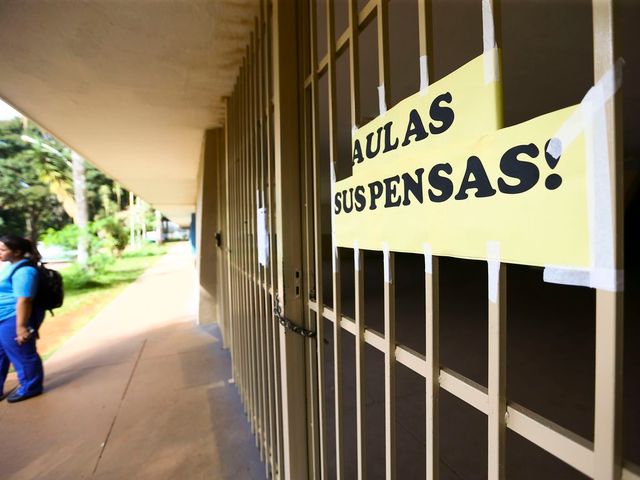
Sign reading "Classes Suspended" on school gate in Brazil. (Credit: Marcelo Camargo/Agência Brasil)
One day after the announcement of the possible reopening of these schools, the daily Jornal de Brasília reported that students’ parents rejected Rocha and Bolsonaro’s proposal, organizing a petition to the governor and the state prosecutor’s office.
An outraged mother told the Jornal de Brasília, “Our children are not guinea pigs,” while another added that “there is no scientific or legal basis for it.” An opinion poll released by Datafolha Institute on April 20 showed that 68 percent of Brazilians support social isolation.
The Federal District was the first in Brazil to order the closing of schools on March 12. With the detection of community transmission of coronavirus, São Paulo and Rio de Janeiro, the first and third most populous states in the country respectively, closed schools on March 16. By March 17, both public and private school systems in Brazil were closed.
The defense of Bolsonaro’s return to school came a few days after the fascist president fired his health minister, Luiz Henrique Mandetta, who came into conflict with Bolsonaro’s proposal for refusing to defend “vertical isolation”—the isolation of adults over 60 years old and those with chronic diseases—while everyone else returns to work. Bolsonaro’s downplaying of the effects of COVID-19, saying it was a “little flu,” and his open defense of the reopening of business also led him to clash with former allies in the states, such as the right-wing governors Ronaldo Caiado (DEM), from Goiás and João Doria (PSDB), from São Paulo.
However, as the impact of social isolation upon an economy that has not grown for six years has become increasingly clear, with an optimistic forecast of a fall of more than 5 percent in GDP this year, the governors have also begun to express the will of the Brazilian ruling class to reopen the economy. According to the daily O Globo, by April 22 ten Brazilian states had already relaxed their quarantines and two others had presented plans to gradually reopen the economy.
These relaxations of quarantine measures are taking place as the number of cases and deaths from COVID-19 in Brazil are growing rapidly. By Sunday, 4,205 deaths and nearly 62,000 cases had been confirmed, with scientific studies indicating that the real toll is likely 12 times greater due to the pervasive lack of testing. According to the COVID-19 Observatory, which includes the largest Brazilian and two foreign universities, the number of deaths from the disease in Brazil is growing faster than in Spain during the same stage of infection.
In the states of São Paulo, Rio Grande do Sul and Minas Gerais, which are among the most industrialized in the country, the move to reopen the economy has been accompanied by attacks on teachers and school staff. Even before the worsening economic situation triggered by the coronavirus pandemic, Minas Gerais and Rio Grande do Sul were two of the first three Brazilian states to declare a state of fiscal calamity in 2016.
The coronavirus crisis has led the state of Minas Gerais to increase its deficit forecast for 2020 from 13 to 21 billion Brazilian reals (US$2.3 to 3.7 billion). Meanwhile, the tax on consumption of goods and services (ICMS), responsible for 80 percent of the state’s revenue, is expected to fall by R$15 billion (US$2.6 billion) this year.
On Thursday, April 23, the governor of Minas Gerais, Romeu Zema (Novo), detailed his plan to reopen business throughout the state. Cynically called Minas Consciente (Conscious Minas), the plan was announced as the state had 51 COVID-19 deaths and 1,308 confirmed cases, with a number of suspected cases of almost 80,000.
Governor Zema had already tried to force the state’s 135,000 teachers back into the public schools on April 22 to organize distance learning activities that will be offered to students beginning May 4. He also ordered the return to the schools of 50,000 school staff, such as outsourced janitors and cleaning staff, who are one of the most exploited labor forces in Brazil and whose presence at school could help spread the coronavirus like wildfire in the state’s poorest communities.
However, on April 15, a decision by a Minas court supported a suit filed by the teachers’ union and suspended the return of teachers and staff to the schools. The state public prosecutor’s office also recommended that the Education secretary not reopen schools.
Teachers in Minas Gerais went on strike in early February after suffering years of low wages. The strike was suspended when the governor announced the closing of schools. With wages delayed for years, until last week teachers in the state had not yet received their pay for the second half of March.
In the southernmost state of Brazil, Rio Grande do Sul, Governor Eduardo Leite (PSDB) has already relaxed the quarantine, telling the daily Folha de S. Paulo on Wednesday, “we have to manage isolation in a rational way.” The forecast is that the state will lose R$700 million (US$122 million) with the shutdown of economic activity in April.
Teachers and public sector workers in Rio Grande do Sul have had their salaries delayed for more than 50 months and have gone almost six years without a wage increase. At the end of last year and beginning of this year, teachers went on strike against Leite’s pension reform, which wound up being approved by the Legislative Assembly after the union and the pseudo-left organizations sowed the illusion that the courts would bar it.
The Leite government has also cut transport benefits for public sector workers and has reduced a benefit for teachers who live far from the schools where they work.
In Brazil’s most populous and wealthiest state, São Paulo, the month of April is expected to end with 30 percent less tax revenue than March, and the decrease in tax revenues due to the coronavirus crisis could reach as much as R$10 billion (US$1.8 billion) by June.
Last Tuesday, April 14, Governor João Doria announced an austerity plan that postpones until the second semester a bonus paid to teachers whose schools exceed targets in standardized testing and cuts food, transportation and other benefits for all public sector workers.
Shortly after the schools closed, Doria also suspended the contracts of lunch staff, caregivers for disabled students and school transport drivers at the more than 5,000 schools across the state.
Doria has clashed a few times with President Bolsonaro for defending the quarantine measures in the state, earning him the praise of former Workers Party (PT) president, Luiz Inácio Lula da Silva, as an example for the fight against COVID-19 in Brazil. However, on Wednesday, April 22, Doria presented a plan to gradually ease the quarantine measures beginning on May 11. On Friday, April 24, Doria announced that public schools will gradually reopen beginning in July. There is also the possibility that infants and younger children will return to school even before July, allowing parents to return to work.
These moves to reopen the economy and the attacks on education are taking place amid the start of online classes in public schools throughout Brazil. The state of São Paulo, which has the largest public school system in the Americas, with 3.5 million students, was the first to present a distance learning platform in Brazil for teachers and students to use during the quarantine. This platform, which will be rolled out next week, was elaborated with the aid of technology giants Google and Microsoft, as well as educational foundations of large Brazilian corporations and banks, such as AMBEV, Itaú and Rede Globo, which see the pandemic as an opportunity to increase their presence in the lucrative educational market.
The situation with online teaching in public schools contrasts dramatically with that of the most expensive private schools in the country, whose monthly fees can reach R$10,000 (US$1,800). After the Ministry of Education allowed classes in all basic education—from kindergarten to high school—to be replaced by online education during the pandemic, these schools immediately began online learning.
Undoubtedly, the coronavirus pandemic will intensify the already enormous educational inequality in one of the most unequal countries in the world. At the same time, public schools will tend to suffer even greater cuts. The economic crisis caused by the pandemic is being used as a pretext for a growing presence of large corporations and banks in a system that involves almost 50 million students in Brazil.
This situation will lead to an explosion in the struggle of workers in defense of public education in Brazil and throughout the world in the coming period. A confrontation is inevitable between the capitalist governments and the major corporations and banks, on one side, and teachers and students, on the other.

Netherlands’ criminal herd-immunity policy puts hospitals on brink of collapse

Harm Zonderland & Parwini Zora

As the COVID-19 crisis ravages the globe, capitalist governments in Europe and across the world are putting the profits of the super-rich above the lives of millions of working people. The Dutch government’s “intelligent lockdown” strategy, implemented starting on March 16, exemplifies this politically criminal strategy.
Since then, even though the pandemic continues to rage, most European countries have announced or implemented “back-to-work” orders that sacrifice workers’ health and lives to profit-making. In the Netherlands, most of the retail sector and other non-essential industries were kept in business throughout, with limited “social distancing” measures taken in an attempt to somewhat slow the contagion.
Addressing the public on April 21, Prime Minister Mark Rutte announced the extension of its lockdown until May 20, while easing some restrictions on primary and secondary schools. Although there has been a reportedly minimal decline in contamination rates and hospital admissions over the past two weeks, lifting school restrictions poses a grave public health danger by exposing school children, teachers and caregivers to COVID-19.
This is a continuation of the Dutch government’s policy of “herd immunity,” that is, trying to infect as many people as possible with the virus, hoping the population will collectively become immune. In a televised speech on March 16, Rutte baldly declared, with stunning indifference to human life, that “the reality is that a large part of the Dutch populace will contract the virus.” After weeks of promoting the criminal idea of “herd-immunity”, even commissioning studies to see if the Dutch people were getting closer to it, the government is now methodically loosening the lock-down.
The current promotion of a “Dutch intelligent lockdown” aims to project the illusion that the Rutte government is fighting the virus, while legitimising and effectively continuing the herd-immunity strategy. In fact, the measures implemented by The Hague have done little to slow the spread of the virus.
Yesterday, the Netherlands have 37,845 confirmed cases of COVID-19, over 10,281 hospitalisations and 4,475 dead in a population of only 17 million. Most infections are in the southern provinces of Brabant and Limburg, while the northern provinces of Drenthe, Friesland and Groningen report fewer confirmed cases. It is only since April 6 that the Communal Health Service (GGD) started testing its personnel more broadly. Members of the general public are tested for COVID-19 only when admitted to a hospital with serious symptoms, so these statistics are underestimates.
In his last speech, Rutte said his government’s chosen “strategy” was “maximum control” of the spread of the virus via social distancing and a partial lock-down. “With this approach, where most people will only develop mild complaints, we gain herd immunity,” Rutte claimed.
These criminal policies go hand-in-hand with Rutte’s pledge of full support to Dutch corporations, promising he “will not let them down”. An initial €15 billion was reserved from state coffers as subsidies for large corporations, whilst the Dutch and French governments discuss bailing out Air France-KLM. In return, Rutte and the Dutch king had nothing to offer than a brief and insincere “thank you for a fantastic job!” to its chronically underfunded and over-worked health care staff.
The Dutch health care system has been stripped bare over the past decades by successive liberal governments. The privatisation of hospitals and clinics has reached such levels that in 2018 a conglomerate of five hospitals was no longer deemed profitable and allowed to go into bankruptcy. The patients were hastily moved to other nearby hospitals and all medical equipment and furniture were auctioned to pay off the hospitals’ creditors—the banks, insurance companies, and pharmaceutical corporations.
For years, health care workers have been fighting for high staffing levels to cope with ever-rising workloads and better wage increases to keep up with the rising cost of living. In 2019, no less than 25 regional health care strikes resulted in the first-ever national strike last November, which closed down 83 hospitals.
The combined capacity of intensive care units (ICU) in Dutch hospitals stand only at a shockingly low 1,150. This has been expanded over the past week alone to 2,400, with just 505 beds reserved for non-COVID-19 patients.
Referring to the extra work-pressure on ICU medical staff, Diederik Gommers, the chairman of the Dutch Association for Intensive Care, said: “You are asking your personnel to stretch out. An ICU nurse who is used to tend to two patients, now has three or maybe four to care for. (…) Then one can make critical mistakes where patients can die. That is where we are right now.”
De Volkskrant reported that the past weeks have seen a jaw-dropping 30 percent decline in cancer diagnoses due to cancellations of annual public examinations en masse as a badly overstretched health care system prioritises COVID-19 treatment. Also, a Gupta Statistics investigation found that some 40 percent of regular hospital care is no longer provided, and many diagnostic procedures are currently on hold.
As a result of profit maximisation in hospitals, the usage of personal protective equipment (PPE) like face masks were already reduced to cut operational costs per intervention.
With total disregard for public health, the Dutch “State Institute for Public Health and Environment” (RIVM) is trying to white-wash the massive shortage of protective gear, advising against the use of face-masks in public, falsely claiming it would not help to slow the spread of the virus and could even exacerbate the risk of contamination. In an attempt to wash his hands of the matter, and stifle the debate, Health Minister Hugo de Jonge told the parliament that he cannot “conjure away those shortages.”

Estimated £515 monthly loss to UK households due to COVID-19 the tip of the iceberg

Julia Callaghan

UK households are expected to lose £515 in post-tax income each month, April to June, as a result of attacks on their living standards during the coronavirus pandemic.
Consultancy firm, the Centre for Economics and Business Research (CEBR), found that households will suffer an overall £43 billion loss—equating to a 17 percent reduction in monthly household disposable income (income adjusted for taxes and benefits.)
The CEBR bases its estimate on several factors: increased unemployment, cuts to income and reductions in working hours. The reality is that the impact on millions of workers goes much further and deeper than the study outlines.
The report cites Department for Work and Pensions (DWP) data showing there were 950,000 applications for universal credit (UC) between March 16-31—almost 10 times the number in a “typical” two-week period. The universal credit helpline was flooded by newly unemployed workers during March, with 5.8 million calls in seven days, and 2.2 million calls in a single day on March 30. Panicked callers reported on Twitter waiting hours on the phone over many days.
The CEBR report is premised on the “Office for Budget Responsibility estimates that job losses could reach up to 2.1 million in the second quarter.” According to data issued last week, the number of UC claims had already hit 1.8 million by April 12. The report notes, “Benefits claims will replace some of the lost disposable income, but not all of it, leaving UK households £1.5 billion out of pocket per month.”
For payrolled employees, the government—in a bailout worth hundreds of billions for corporations—has agreed to pay 80 percent of wages through its furlough scheme. The CEBR states that “one in three private sector workers” could be furloughed and the “impact of the furlough scheme on incomes varies depending on what is agreed between employers and employees, but in the majority of cases workers will see at least a 20% fall in their gross earning.”
The report notes that “even though the scheme will save many from redundancy, there will still be a sizeable hit to disposable incomes, which we estimate to stand at £3.9 billion per month.”
The CEBR states, “Without the government’s furlough scheme, the cost to households of coronavirus would easily be double what we have estimated.” However, the scheme will only last until the end of June, after which the future of many furloughed workers, under conditions of a deep recession, is perilous.
According to Guardian economics editor Larry Elliott, the furlough scheme could simply delay a massive rise in unemployment. “Furloughed workers are really an army of the hidden unemployed,” he says, who will “become more visible” once state subsidies end.
As the world economy attempts to recover from what the International Monetary Fund says is its biggest hit since the Great Depression, many of these jobs may no longer exist, with a greater burden placed on the remaining workforce.
Millions of self-employed people will receive no support at all until June, when it will be judged if they are eligible for a grant of 80 percent of their average earnings. This means sole traders such as drivers, childminders, beauticians and cleaners, whose income suddenly stopped with the lock-down, must attempt to find a way to survive on savings, loans or benefits for at least three months. The CEBR points out that this dire situation will significantly affect household finances, adding “a further hit of £3.5 billion to disposable incomes per month.”
Devastating for many, the government is exploiting a technicality in the structure of umbrella company contracts. Those freelancers, contractors and agency workers who are employed through umbrella companies will be not be eligible for 80 percent of their average earnings but only for 80 percent of the minimum wage.
Many workers in some of the most precarious financial situation, on flexible or zero hours contracts, face destitution. The CEBR’s report says, “The nearly 4 million workers in the UK on flexible hours or zero-hours contracts have also inevitably been hit by this crisis, as it is easy for companies to reduce costs by scaling back their hours. Analysis has shown that people with variable hours expect to earn only 59% of their usual income as a result of the coronavirus shutdown.”
Even this is a gross underestimate of the real situation. A new survey by AppJobs, an online platform that compares app-based jobs around the world, reports that almost 70 percent of “gig economy” workers have no earnings at all now. Only 23 percent have any savings and as a result 89 percent are looking for a new source of income.
Many workers in the “grey economy”, from cash-in-hand builders to home hairdressers, risk contracting and spreading the virus as they attempt to keep working in order to survive. This “hidden” workforce is mostly made up of young, low-income households earning less than £10,000 a year. John Philpott, of the Jobs Economist consultancy, said, “They are going to be very tempted to keep going. They are people who are living from hand to mouth constantly, who are going to have to scrimp for whatever they can get… They are going to be pretty desperate.”
Facing an impossible situation, many employees are being told they must “choose” between taking further pay cuts or losing their job altogether.
The CEBR report highlights the losses suffered by employees of corporations such as Heathrow Airport and the Grant Thornton accounting firm, which have been “asked” to accept wage cuts of up to 40 percent while the coronavirus impacts their business. The CEBR reports that these examples are part of total “wage reductions and scaling back of working hours for people with variable hours contracts” that “are estimated to result in a further £5.3 billion monthly hit to households’ disposable incomes.”
Trade unions, such as Unite and GMB, acted well ahead of the corporations’ latest cuts in assisting the slashing of workers’ incomes. In February, the unions sanctioned a 10 percent cut in salary and allowances for their members at Heathrow, under the cynical guise of fighting to “ringfence as many jobs in the future and play our part in protecting as many colleagues as possible.” Workers livelihoods are not being protected but are being handed over by the unions to ensure the continued profitability of billion-pound corporations.
All this is only a hint of the major restructuring that is taking place, of both the labour market and the social position of the working class. Conservative Chancellor Rishi Sunak warned that money given to corporations as part of the £350 billion due to the pandemic will “need to be paid back at some point” as part of “chipping in together to right the ship.”
The reality is that the corporations and super-rich are getting a massive bailout and the working class are being forced to pay whatever is required to reimburse any losses incurred by the ruling elite. They are paying with deep cuts to their income and working conditions, further destruction of their public services and social protections, and if necessary—their lives—as the drum beat for a return to work and production for profit grows ever louder, while the pandemic continues to rage.
The reported £515 monthly loss per household represents the tip of the iceberg. The colossal collapse in workers’ income in Britain is being experienced by workers across the world. This is the situation just a few weeks into a crisis that has transformed daily life for almost everyone, with no end in sight. As banks, corporations and their shareholders are gifted with trillions, struggling workers everywhere are confronted—suddenly and starkly—with the reality of who is going to pay.

Germany: Daimler and VW boost production and demand billions in taxpayers’ money

Dietmar Gaisenkersting

Although around 2,500 people in Germany are being infected by the coronavirus every day, Daimler and Volkswagen started production again this week.
At Daimler, about 80 percent of the 170,000 employees have been affected by short-time working in one form or another since the beginning of April. Only production of the luxury cars, the new S-Class, has been maintained.
Now Daimler is starting up drive and transmission technology production in particular. Not only their plants in Germany, but above all in China, where production is up and running again, are dependent on this. Daimler board member for human resources Wilfried Porth and General Works Council Chairman Michael Brecht proudly declared that some plants would start immediately with three shifts, others with two, or initially only one shift.
In China, 32 of the 33 plants that Volkswagen operates with partners are already producing. In order to ensure the supplying of these plants, VW’s component plants in Braunschweig and Kassel restarted production on April 6. The parts plants in Salzgitter, Chemnitz and Hanover in Germany, and in Poland, followed suit after Easter. “The gradual start-up of our plants was important in order to secure supplies to the overseas plants,” asserted Thomas Schmall, chairman of the Board of Management of the Volkswagen Components Group.
The production plants are now reopening. This week, VW plants in the Slovakian capital Bratislava and in Zwickau in Saxony are starting up. In Zwickau, VW is building its first electric model, the ID.3 compact car.
Next week will also see the restarting of production at other German VW plants, including the main plant in Wolfsburg and the VW commercial vehicle plant in Hanover. Cars are also to roll off the assembly line again starting next week in Spain, Portugal, Russia and the US. Factories in South America and South Africa are to follow in May.
The organization of worldwide supply chains is a particular problem for Volkswagen, Daimler and all the other auto manufacturers. VW has 6,500 supplier companies in Europe alone. While work has been resumed in China for several weeks now, the production of components in Italy or France is still severely restricted. However, the planned start-ups are now secured, Daimler manager Porth reported.
The fact that production is being restarted and the workforces are being put in mortal danger is the result of a concerted action by the auto manufacturers, the IG Metall union and its works council representative and the German government.
The VW general works council, chaired by Bernd Osterloh, passed a works agreement about two weeks ago, “which lays down the framework for a controlled ramp-up of production in the factories.” The “100-point plan to fight the pandemic” applies to the company’s approximately 630,000 employees worldwide.
The 100 or so health protection measures range from the obligation to wear masks and to adhere to safety distances and hygiene rules, to the requirement to regularly measure body temperature. Osterloh said that VW was setting “a standard in the industry.”
This was also claimed by the board of directors and the chairman of the works council, Brecht of Daimler, who together announced the official resumption of production. “We have always said that when we start again, the risk of infection should be lower here than outside the company,” Brecht announced.
The company and the works council developed measures for the protection of employees based on risk assessments for each workplace. “In principle, the catalogue that emerged from this is the catalogue that was used as the basis for the recommendation of the VDA industry association and ultimately, also for the considerations of the German government,” Porth said. “We have done a lot of preparatory work on this.”
In other words, the corporations and works councils jointly devise the mechanisms by which workers are sent back into the factories and through which the federal government then justifies its criminal policy of ending the lockdown in order to revive profits.
In an additional act of intimidation, works council leader Brecht and personnel director Porth have also warned that workers could still lose their jobs if, at least in the medium term, profits do not start to flow again.
According to the DPA [Deutsche Presse-Agentur] press agency, Porth emphasised that if demand levels off below what the company has based its plans on, it would also be clear that the previous savings targets and planned job cuts would not be enough. “The fact that we will have to make adjustments is obvious,” said Porth. How this would be implemented would have to be seen in due course. “We do not yet know how the market will react,” added Brecht.
In order to stimulate demand, Daimler believes that measures “which could strengthen demand in these times of great uncertainty among customers are definitely worth considering.”
VW is less reticent in this respect. Similar to BMW, which is demanding an “innovation premium,” the VW group is embellishing its demand for further billions in handouts (in addition to the billions in state short-time work benefits) with a call for tax bonuses when consumers buy an “environmentally friendly vehicle.”
German manufacturers are now proposing a new edition of the “eco-rebate,” which was financed from diversification funds after the global economic crisis of 2008-2009. At that time, car buyers who scrapped their more than nine-year-old car received a premium of €2,500 [US$2,707] towards buying a new car, which is why the name “scrappage premium” quickly became established.
Although the number of new passenger car registrations rose in 2019 by more than 700,000, or 23 percent compared to the previous year, the number of new car registrations was still extremely low. But of the 2 million scrappage premiums paid out, German manufacturers received relatively little, with their mostly expensive and larger vehicles. This is because drivers of cars that are at least 10 years old are rarely in a financial position to afford a BMW, Mercedes, Audi or higher-class VW, let alone a Porsche. The premiums therefore went largely to Asian manufacturers of small cars.
The daily Süddeutsche Zeitung reported on Tuesday that “behind the scenes” there was “haggling” over lower VAT (sales tax) rates. Because many cars are company cars, “and especially many of them are German makes,” the flat-rate taxes of 0.5 percent for cars with alternative drives and 1 percent for cars with combustion engines could be halved.
Companies can offset the purchase of expensive company cars against tax. But drivers of company cars have to pay tax on this so-called monetary benefit, at 1 percent of the purchase price per month. Thus, for a vehicle costing €50,000, €500 per month must be taxed, which is to be halved.
VW COO Ralf Brandstätter did not commit himself in talks with finance daily Handelsblatt, but left the government some leeway. On May 5, car manufacturers, industry representatives and the trade unions will meet with the federal government for the next auto summit, where a bonus model will certainly be suggested to the government.
Brandstätter is of the opinion that this will put other European countries under pressure. “The fact that we are now starting production again is also a signal to Europe,” he said. Volkswagen, he said, was counting on the uniform lifting of restrictions in Europe on public life and in the economy. “This has been understood in politics,” said the millionaire confidently. Other European countries would then have to follow suit very soon with their own support programmes.
The money must flow quickly, Brandstätter said. Car dealerships have opened again, and soon the road traffic offices and vehicle registration offices will also be back in business. For Brandstätter, this would be the right moment and a support programme should be available at that time. “It would be good news if this went hand in hand,” he said. The VW manager said such a programme would probably have to be ready in May or June. “Together, we must succeed in overcoming this pandemic,” he added.
Brandstätter, like all the auto executives and trade union officials, equates the fight against the pandemic with securing the company’s profits. For the boardrooms, the government and the union leaders, the coronavirus crisis is first and foremost an economic crisis, to which the health and lives of workers must also be sacrificed.
Brandstätter claims that the promotion of the automotive industry can be justified from an economic point of view. “Many people will benefit when the automotive industry gets going again,” he stressed.
This is the old mantra of capitalism. The workers are fine when the economy is fine. Brandstätter does not care that this is an obvious lie right now. While the number of victims of the COVID-19 pandemic is rising worldwide, shareholders’ profits are climbing due to the rise of the stock markets. The top few percent of society live in their own world.
It is urgently time to take the auto companies out of the grip of shareholders, their executives and works councils and turn them into social property democratically controlled by the workers.
Then the car companies could also be put in the service of the fight against the pandemic. At present, the factories’ only purpose is to make a profit. To cover this up and justify starting production, VW is now also producing simple face masks. “There is already a machine with a weekly production of 500,000 masks in China. In Braunschweig, a second machine will achieve similarly large quantities,” Brandstätter announced. VW also wants to produce disinfectants for surface cleaning.
The cynical and inhuman claim of the car companies is that none of this was possible before, since then it concerned human lives, not profits and dividends.