28 Apr 2020

COVID-19’s Economic Holocaust

Richard Gale & Gary Null

For all the uncertainties the COVID-19 pandemic poses to the world, especially in the US, one thing seems evident.  Our neoliberal capitalist civilization has proven itself to be unprepared for unexpected crises and catastrophes. For decades, the US has been falling behind other developed nations to infuse economic resiliency in society. Not only has the American medical system and federal health agencies been shown to be naked, we are also discovering we cannot rely on epistemological statistics and computer modeling alone to account for our flawed health policies.
Aside from the pandemic’s toll on people’s lives, there is also its impact upon the national economies and the global economy at large that is barely being discussed in any depth. Rather, hopes and wishes are being directed towards life returning to normal.  We are expected to believe that our addiction to unconscionable consumerism will return, employment will rise and the American dream can again be mentally photo-shopped on the horizon. In short, we are persuaded that the comfort of our illusions and denial of harsh realities will return.  However, if a past Nobel laureate of economics, Joseph Stiglitz, is correct, then “if you leave it to Donald Trump and Mitch McConnell we will have a Great Depression.” Likewise, former Federal Reserve chair Jenet Yellen has also warned that the 30% GDP decline is leading us towards Depression. In fact, we may already be there.
As of today, the federal government has guaranteed $5.2 trillion dollars to keep the economy afloat as a depression worse than 1932 looms overhead. Some economists believe that this massive bailout is insufficient and upwards to $10-15 trillion may be necessary.  In 2008, with one broad stroke the Obama administration rescued Wall Street.  What was believed to be just the TARP bailout of $700 billion was in fact over $4 trillion worth of outlays, including TARP and other FED and Treasury expenditures.  The Levy Institute at Bard College calculated the outlays may have been as high as $29 trillion, a number the Sanders’ campaign had quoted.
Obama’s bailout was to assist the incompetency and corruption of Wall Street and the financial industry. Today it is a submicroscopic organism, approximately 120 nanometers (one nanometer is one billionth of a meter or about 20 oxygen atoms lined up), that threatens the financial well being of most Americans.
However before the COVID-19 reached our shores, the US was already in a horrible debt crisis. Fiscal conservatives are angered that the US National Debt has reached $24.5 trillion while at the same time adamantly ignoring that the US Total Debt now hovers above $77 trillion. Neither party shows concern about Americans’ increasing personal debt (mortgage, credit card, auto, student loans, etc), nor the rise in corporate, state and city debts. When we take into consideration $144.6 trillion in US Unfunded Liabilities, $20.4 trillion in Social Security Liability, and $31.6 trillion in Medicare liability, the nation lingers on the precipice a total collapse.
Before the pandemic, Trump boasted an unemployment level as low as 3.6 percent. But in the US, there are different ways to calculate unemployment figures. There is the official figure (U-3) that Wall Street and presidential administrations rely upon and then a more realistic statistic or U-6 that includes those underemployed and those only marginally attached to the work force.  Before the pandemic the “real” or U-6 employment was 6.9 percent.  Finally there is the shadow statistic, which adds the millions of Americans who have dropped out of the work force because their benefits ceased or because they are homeless or unaccounted for by the Labor Bureau.  When those adjustments are made, the shadow unemployment is likely around 23 percent.
Now, unemployment is skyrocketing.  The most recent estimate is that over 26 million people lost work during the past month and, according to Fortune magazine, the official unemployment rate may be as high 18 percent.  Consequently a more accurate unemployment figure would be approximately 32 percent or almost a third of population. This is far worse than at the height of the Great Depression when unemployment stood at 25 percent.  The dark side of American jobs has been decades of large layoffs, workers being replaced by automation, downsizing, corporate consolidation due to equity partnerships, mergers and off shoring of manufacturing. In addition, tens of thousands of foreign professionals have received work visas and are eager to take the place of middle seniority positions in firms for lower salaries and without full benefits.  The system is so corrupt that the millions of people who work full time for less than a living wage are completely ignored. Hence most Americans are deep in debt and frequently live paycheck to paycheck. The fact of the matter is that there is no security whatsoever for millions of people who may not find work for a very long time.
Even if the lockdown were to end tomorrow, the lights would not immediately switch back on.  Throughout the financial news, we are reading headlines of companies eyeing bankruptcy as credit ratings are being rapidly downgraded.  Retail stores are being especially hit badly. According to Global Data Retail, over 190,000 retail stores have closed, accounting for nearly 50 percent of the nation’s retail square footage. Forbes has listed Dillards, JC Penny, Kohl’s, Levi Strauss, Macy’s, Nordstrom, and Signet to likely go under.  Others include Pier 1 Imports, Rite Aid, J Crew that is loaded up with private equity debt, Fairway supermarkets, and niche organic grocer Lucky’s. Macy’s capital alone dropped from $6 billion to $1.5 billion since February. This trend had already been rising since Trump came to office with large chain companies increasingly closing outlets including Walgreens, Gap, GNC, H&M and Victoria’s Secret. For sure, when and if the pandemic ends, there will be far less retail stores. The New York Times predicts very few are likely to survive. And we are not even looking at the hundreds of their vendors that are also being affected.
With 60 percent of Americans eating regularly outside the home, the restaurant industry is also being hit fiercely. Restaurants employ more minority managers than any other industry — approximately 60% — and employs almost 16 million people. Between 2010 and 2018, it represented the largest number of low middle class jobs ($45,000 to $75,000), 300 percent more than the overall economy. Now a restaurant apocalypse is underway, with an estimated 20 percent of restaurant operations going under. Larger chains are far better equipped. They are simply closing down dining room facilities and only offering carryout, pickup, delivery or drive-thru. Smaller independent restaurants are at the greatest risk.
Then there are the farms, the concentrated agriculture feeding organizations (CAFOs) and food chain suppliers. In the past it was very rare to enter a large grocery store and find empty shelves. Now it is a common sight because the food supply chain has been upended. Pork and other meat suppliers such as Smithfield Foods, Tyson and Cargill are forced to close plants. Due to Trump’s draconian position on immigration of foreign workers, farm produce will not be harvested. Niv Ellis at The Hill reports that “some $5 billion of fresh fruit and vegetables have already gone to waste.”  The pandemic, therefore, is contributing to rising food insecurity throughout the nation. Before the pandemic, Ellis notes, 37 million Americans were already food insecure.  The additional 26 million unemployed will increase that number, and it is sure to continue to climb. Finally, the UN Food and Agriculture Organization expects that the frantic efforts underway by countries to import basic staple foods may launch global food inflation.
We are also facing “the quickest and deepest oil demand crash in history,” says Richard Heinberg from the Post Carbon Institute. Oil prices plunged to an inconceivable negative minus $37 a barrel last week as global fossil fuel demand dropped roughly 30 percent.  “The entire petroleum industry,” writes Heinberg, “is teetering.”  Natural gas producers relying on hydrofracking shale, which had already been burdened with high debt from private equity, are scrambling for bankruptcy protectionAccording to Reuters, “numerous midstream companies [in the energy sector] backed by private equity are in danger of bankruptcy.” With the collapse of hydro-fracking companies, the pipeline firms have also entered troubled waters. The Federal Reserve Bank of Kansas City predicts that 40 percent of energy producers may be insolvent “if oil prices remain around $30 a barrel” for the year. Then consider the larger picture of the impact this has on the 6.4 million people working in the energy sector.
Also we might consider the future of 15 million Americans who work in the tourism industry, including hotels, entertainment, parks, museums, etc. It is estimated that 96 percent of global tourism has vanished in the blink of an eye.
State and local city governments are also “staring at budget shortfalls that will substantially exceed what they faced during the great recession.” States are reporting significant gaps in their capacity to remain fiscally afloat. The Republican Senate led by Mitch McConnell seems determined to withhold $150 billion of emergency funds to the states in the CARES Act before Congress — less than half of the $300 billion to $1 trillion state legislators are demanding. Consequently, states are staring into a deep abyss.
Americans who will either return to a job or seek work when the pandemic slows will be further imprisoned by an economy buried in greater debt.
  • Downsizing will accelerate along with borrowed money to continue operations while the White House refuses to pass a rent holiday, forgive student loans and other debts, cease payday loans, reduce interest rates on credit nor provide free healthcare for those infected with COVID-19;

  • The average person without a steady paycheck is living off savings and credit cards. Therefore, when the economy reopens, large numbers of people will be unable to return to the marketplace to circulate dollars;

  • As corporate debt mounts, the most insidious truth are the vultures of capitalism who will profit. These are the great white sharks in the finance industry that smell blood. For the trillions of dollars Trump is dishing out to the 1 percent, these are the first to get the lion’s share of the quarry.
Nobody in the mainstream media has properly criticized the huge monetary allocations being made for the pandemic. The FED is buying corporate debt in order for companies to off load their mistakes and receive fresh, new money. But the average small business receives the left over pennies.  The virus is teaching us the harsh reality about Washington pervasive culture of corruption. On this account both parties have no empathic regard for average citizens and small business owners.  Even the money from Trump’s and Mnuchin’s stimulus package given to citizens can be confiscated by debt collectors.
Imagine if you are an average citizen, not an insider, at the conference table with executives from Facebook, Google, the major banks and mega-corporate industries. You have no income or savings and no health insurance. If you are hungry, where do you get money for food? Where do you get money if you are sick or gas for your car?  The unintended consequences of Trump’s and the Congress’ irresponsible and inhumane policies are literally bankrupting the nation.
By extension the millennial and iGen generations are the victimized recipients of this debt bequeathed to them by older generations. They are further compromised with the inability to secure jobs equal to their educational level nor secure a satisfying living wage. They are burdened with high interest student loans. They also are far more aware of the impact climate change will have on their futures. Therefore, millions of young adults are rapidly losing faith in America’s neoliberal capitalist system and our self-centered culture of predation.
Similar to waking up the day following September 11, 2001, we will be emerging into a new world after the COVID19 pandemic subsides. It is now being called the “shut-in economy.” The pandemic is not solely a health crisis; it is equally an existential crisis, an impasse in the global civilization that is forcing us to realize that our over dependence and perverse reliance upon natural resources, such as fuel, energy, food and corrupt banking and healthcare services, is fragile. We are learning that at every level there are numerous cracks in our structures of governance and our economic and social bases.  Yet the virus did not break the nation; it has been broken for a long time. Only now more people are waking up from their dream. Furthermore, few people, including the mainstream media, now believe there will ever be a return to the normalcy of life that ended after Wuhan had its first patient infected with the virus. It is time for every individual to reassess her or his priorities. A life full of well-being is more possible today if we realize the virus has also been our teacher. But it is living a life that is founded upon simplicity, insight and wisdom, and community rather than consumption and competitive power.

Coronavirus antibody tests lack validity and sufficient accuracy to offer reliable guarantee of immunity

Benjamin Mateus

As the global back-to-work drive accelerates, countries, including Britain, Chile, Germany, Italy and parts of the United States, have begun testing sections of their respective populations for coronavirus antibodies. Chile has already announced it will be issuing “health passports” that will provide an excuse to send workers back to the workplace.
Presently, there is no scientifically proven basis for governments to suggest that having acquired antibodies to the SARS-CoV-2 virus guarantees immunity to reinfection, nor should it serve as a basis for an “immunity passport.” This was stated most clearly by the World Health Organization last Friday, “There is currently no evidence that people who have recovered from COVID-19 and have antibodies are protected from a second infection.”
The WHO continued that, despite claims to the contrary, “there is not enough evidence about the effectiveness of antibody-mediated immunity to guarantee the accuracy of an ‘immunity passport’ or ‘risk-free certificate’.” The agency also warned, “People who assume that they are immune to a second infection because they have received a positive test result may ignore public health advice. The use of such certificates may therefore increase the risks of continued transmission.”
One of the most well-known attempts to justify sending workers back to offices and factories based on a supposed antibody count comes from the controversial Santa Clara study, as it has come to be known. Jay Bhattacharya, a Stanford researcher, recruited patients through Facebook ads targeted by geography and demographics to determine the prevalence of the virus in the community.
Participants provided blood samples which were tested using Premier Biotech’s serology test kit, which looks for antibodies to the virus. Based on a finding of 50 positive tests out of a total of 3,335, they concluded that the prevalence of the disease ranged from 2.5 to 4.2 percent, a 50- to 85-fold increase over the 956 cases then reported by the state of California. The implication was that the infection fatality rate for the coronavirus was about 0.1 to 0.2 percent, much lower than previously thought. The study was published online before going through a peer-review process.
The story was immediately picked up by the mainstream media, claiming that the research demonstrated the pandemic had largely run its course and that it was time to begin opening the country. This became a key part of the narrative presented on behalf of the world’s financial oligarchs, by an assortment of corporate executives and government officials, that the population must return to work to save capitalism, regardless of the risks. The antibody test has become their godsend—both a touchstone and an artful dodge.
However, they make no mention of the fact that the data in the Santa Clara study has been widely discredited in the days since its release. An initial review of the statistics by biostatistician Balaji S. Srinivasan provides a step -by-step critique of the errors, showing that anywhere from 35 percent to 100 percent of those testing positive may have been false positives, implying that they did not actually have antibodies to the coronavirus.
Srinivasan also exposed how the recruitment of people for the study inherently biased the results. Instead of a random search of the population, potential subjects were targeted based on whether or not they felt they had been exposed in the recent past even if they had no symptoms. This would potentially select people with antibodies into the study and wrongfully skew the results.
More worrisome in the Santa Clara study is its unfounded conclusion that the lethality of COVID-19 is just slightly higher than that of the flu. This goes against everything that is known about the experience of frontline health care workers in New York City and numerous other countries. If the virus is so much less lethal than previously thought, they do not bother to explain why COVID-19 fatalities have exceeded those from cardiovascular disease and cancer nor acknowledge that in every country the staggering excess deaths reported have been due to COVID-19.
It has also been revealed by BuzzFeed News that the wife of the lead author had sent an email to a Silicon Valley middle school’s private email server to recruit subjects, promising they would have peace of mind with regards to their immunity if they would participate. Additionally, the email falsely claimed that the FDA had approved the antibody test and worded the email in a manner that would attract participants who may previously have been ill.
Worth mentioning is one of the co-authors on the study, John Ioannidis, a Stanford public health researcher, who had argued back in March that the mortality rate of COVID-19 may be much lower, potentially making the lockdown “totally irrational.” His opinion was published in STAT on March 17. Lead authors of the Santa Clara study, also Stanford researchers, Eran Bendavid and Jay Bhattacharya, made similar claims in the Wall Street Journal on March 24. Clearly, these investigators had well-formed opinions prior to conducting their investigation.
The conclusions of a similar population-based antibody study in New York, where 3,000 samples were collected from 40 locations across 19 counties, were announced last Thursday by New York Governor Andrew Cuomo, who claimed that about one in five people in New York City and nearly 14 percent of the population of his state may have antibodies to the coronavirus.
However, given the reported specificity of their antibody test, Dr. Anisha Jha of Harvard’s Global Health Institute pointed out on Twitter that the real rate of infections in New York could be as low as seven percent, and possibly half of those testing positive may actually be designated as “false positives” and not really carrying protective antibodies, and therefore are susceptible to contracting and possibly dying from the disease.
These and other ultimately misleading studies prompted Dr. Mike Ryan, the head of the WHO’s emergencies program, to say, “There’s been an expectation that herd immunity may have been achieved and that the majority of people in society may already have developed antibodies. I think the general evidence is pointing against that and pointing towards a much lower seroprevalence” of COVID-19.
As an aside, terms like sensitivity and specificity of a test can be misleading to the layman. Adding complexity to understanding these “statistical” categories are critical distinctions and differences that have to be made between diagnostic and screening tests. It is one matter to see if a known infected patient has antibodies to SARS-CoV-2. But when the test is applied to a healthy, not infected population, where the prevalence for the disease is low, the test would likely generate a disastrous outcome.
According to Richard Hoffman, MD, MPH, director of the Division of General Internal Medicine at the University of Iowa Carver College of Medicine, “When [a test is] applied to a lower risk population the predictive value [of the test] drops. … This is particularly a problem when you are talking about screening, where the prevalence of disease in the population is usually quite low. This has important public health implications because the number of false positive tests can be in the hundreds of thousands or even millions.”
The dangers of sending people back to work without protection against the coronavirus, without immunity or otherwise, was underscored by the increase in cases and deaths over the weekend. The total number of cases globally surpassed three million as the pace of new cases has remained steady for more than three weeks. According to official figures, over 200,000 people have died since the COVID-19 pandemic erupted on to the world stage, a figure which is still significantly undercounted .
The reason that there are doubts about any immunity to the coronavirus is because that process within the body is complex, and the response by the body to the antigen is still not well understood. In general, the development of immunity to a pathogen is a multistep process that takes two to three weeks to complete. The initial response is called a “non-innate” response in which the body’s immune system directs white blood cells such as neutrophils, macrophages and dendrites to the site of infection to slow the progress of the virus.
The adaptive response is much slower, requiring days or weeks to be established. Components of the virus are initially presented to white blood cells—T-cells and B-cells—which then develop a highly specific response to that pathogen. The coordinated effort leads to the production of antibodies, which are specialized proteins that travel through the blood and lymphatic systems. When they encounter the virus, they bind to it, preventing the virus from causing disease.
However, reports of early reinfections in Japan, as well as concerns over dozens of individuals in South Korea who tested positive after a documented COVID-19 infection, have health authorities and scientists perplexed. According to the spokesman for the South Korean health and welfare minister, Son Young-rae, these positive results occurred between two days and two weeks after patients were released from quarantine. Some had developed fevers and respiratory symptoms as well. They were placed back into isolation. Data from China on patients discharged from a Wuhan hospital corroborates these unusual developments, with approximately 5-10 percent of patients who had been pronounced “recovered” have tested positive for the virus again.
Though most studies to date have shown that patients who have recovered produced antibodies to the virus, there is also evidence from a Shanghai-based university reporting on 175 patients with confirmed COVID-19, that in one-third of them, low antibody levels were detected, and in a small subset of patients, the neutralizing antibodies were undetectable by study assays. The data also suggests there is a more complex interplay between the virus and the person’s immune response.
There have not been any studies conducted that indicate that the presence of antibodies to SARS-CoV-2 has conferred immunity to subsequent infection. There have only been speculations based on experiences of previous viral infections.
Recognizing that all individuals lack immunity to the novel coronavirus, surveillance of people who have antibodies to the SARS-COV-2 in a population can allow inferences about the extent of infection. Antibody tests, when adequately validated and appropriately used, can assist with such public health measures. These efforts should be coordinated to answer essential questions such as determining the extent of infection in the general population, including age-specific cumulative incidence, as well as assessing the fraction of asymptomatic infections. Eventually, this will also better define the case fatality ratio. No such scientifically planned national effort has been put forth in the United States.
The coordinated attack on science, dismantling the rigors and principles of the scientific process, is not a new phenomenon but has taken on a dangerously absurd turn when, in the name of science, the ruling elites attempt to support the unconfirmed hypothesis that it is safe to return to work based on screening tests for antibodies that may produce high rates of “false positives.” These endeavors are intended to force a Rubicon, committing the working class to endure the diktats of the markets, to making the coronavirus endemic in society, never mind the staggering potential loss in human life that such measures may cause.

Protests in Somalia after police killing during pandemic lockdown

Stephan McCoy

Angry protests broke out in Somalia last Saturday following the fatal shooting of at least one civilian in the capital, Mogadishu, by a police officer, with crowds burning tires and demanding justice.
The man, whose name has not been released, was killed by a policeman enforcing the night-time curfew mounted to halt the spread of the coronavirus in place since mid-April.
The protests reflect a broader anger towards the brutal methods utilized by the security forces during the curfew, with residents reporting beatings and other abusive treatment. The government has exploited the pandemic to build up the powers of the state to repress opposition to its unpopular rule, under conditions where the Islamist group al-Shabab controls much of the country and relations with the federal states are poor.
Somalia recorded its first case of the coronavirus mid-March in a student recently returned from China and its first death on April 8. As of April 27, there have been 436 confirmed cases and at least 23 people have died, although these figures are likely to be an underestimate.
While most of the cases are in the capital, there are at least five in Somaliland and two in Kismayo, Jubaland, one of whom is an internally displaced person (IDP). Among those who have died from the deadly disease is the Justice Minister of Hirshabelle state, Khalifa Mumin Tohow, and another is a legislator.
Somalia, which has seen three decades of civil wars and conflict that have left the country without basic infrastructure, has one of the weakest health systems in the world. The Global Health Security Index rates it 194 out of 195 countries. There are just 20 ICU beds to serve a population of 12 million in the whole country. While there are 14 isolation centres in the country, there is only one hospital dedicated to COVID-19 patients.
A modern hospital in Mogadishu with ventilators and critical medical equipment remains inaccessible to the public. It has been closed for two years because of a dispute between the Somali government and the United Arab Emirates (UAE) that built the hospital.
As with most countries on the African continent, Somalia’s public health system has little in the way of personal protective equipment (PPE) and a complete lack of the necessary medical equipment. Absent laboratories able to test for the virus, all swabs must be sent to South Africa, causing long delays and making any strategy of contact tracing, isolation and treatment all but impossible.
Health care workers are being forced to work under conditions where they must risk exposing themselves, their loved ones and their patients to the coronavirus. At least 15 health care workers have already contracted the disease.
The virus comes amid a deepening economic crisis in the country—a consequence of the decades of wars and interventions orchestrated and fomented by US imperialism as it seeks to counter the growing economic influence of China on the African continent. At least half of the country’s 12 million population are at risk of hunger; 3.1 million people need health assistance; 2.7 million need water and sanitation; and 2.6 million have been driven from their homes.
The International Monetary Fund and World Bank have moved to increase Washington’s influence over the war-torn country, signing off on a debt relief package worth at least $5 billion. Somalia’s debt will supposedly be reduced from $5.2 billion to $557 million over a period of three years. The catch is that the country must submit itself to the usual demands—“broad economic reforms,” “debt management” and “building an inclusive economy”—all of which mean deeper penetration by the banks and multinational corporations.
There is a great fear among experts and medical professionals that the pandemic will kill more people in Somalia than anywhere else in the world due to poverty, long running conflict and the large number of internally displaced people living in atrocious conditions in settlement camps. Last week, the UN Office for the Coordination of Humanitarian Affairs (OCHA) said, “The impact on the 2.6 million IDPs living in more than 2,000 crowded settlements with limited access to health and water, sanitation and hygiene services would be catastrophic.”
There are fears that the virus has crept into the settlements for IDPs fleeing the fighting and US airstrikes. The cramped and crowded conditions, lack of access to even the most basic amenities such as water and hygiene services, let alone to health care, make the settlement an ideal breeding ground for the virus.
In addition to the curfew, the government has halted international flights, closed its borders, banned large gatherings and shuttered schools and universities, leaving many children roaming the streets and increasing their chances of contracting the disease. Khadija Hassan told the Guardian, “It is as though the schools were closed for public holiday ... students and children are ... playing football and gathering in crowds in the neighbourhood.”
Many families are dependent upon remittances sent back from the multi-million Somali diaspora. Remittances account for a larger portion of Somalia’s national budget than international aid. But remittances worth more than $0.8 billion dollars a year have nosedived as Somalis overseas have lost their income due to lockdowns and the shuttering of their businesses. There are at least 250,000 Somalis in the UK who have been hard hit by the virus in both health and economic terms.
The continuing armed conflict in the country threatens to worsen the pandemic. There has been no let-up in insurgent violence by al-Shabab. All hopes of a ceasefire between the government and al-Shabab are crumbling, with both sides exploiting the crisis to pursue their own ends and punish the population.
According to recently released figures, US Africa Command (AFRICOM) has massively escalated Washington’s undeclared war in Somalia, carrying out 39 airstrikes in the country in the first four months of this year, three more than it did during all eight years of the Obama administration. Last year, the Trump administration carried out 63 air strikes. According to AFRICOM spokesperson John Manley, the total number of Defense Department personnel based in Somalia fluctuates between 650 and 800 “depending on training missions, operations and other security force assistance activities.”
UN Secretary-General António Guterres has called for a “global ceasefire” in the face of the pandemic, saying, “There should be only one fight in our world today, our shared battle against COVID-19.” Even as he was speaking, AFRICOM conducted an “airstrike targeting al-Shabaab terrorists in the vicinity of Bush Madina, Somalia,” according to a command press release.
Reports indicate the number of US troops and commandos on the continent remain at an all-time high. Similarly, despite talk of demobilisation and reduction of forces the presence of the US military in Africa has expanded. According to the Intercept, there are now five US bases in Somalia, second only to Niger.
The Somali government and the African Union Mission in Somalia (AMISOM) have continued their operations, with the SNA and AMISOM killing six al-Shabab militants and three foreign militant leaders in Lower Juba. AMISOM is due to draw down its forces this year.
The US’s focus on Somalia is due to the country’s position in the Horn of Africa at the entrance to the Red Sea, through which much of the oil from the Middle East passes. The US’s main base is in neighbouring Djibouti where China has set up its own overseas military base. Somalia, along with longstanding interventions by US imperialism, has become the focal point of rival geo-political interests by various regional powers such as Turkey and the UAE.

Canada’s Trudeau spearheads reckless back-to-work drive in alliance with hard-right provincial governments

Roger Jordan

Prime Minister Justin Trudeau and Canada’s 13 provincial and territorial premiers agreed at an on-line first ministers meeting last Friday to draw up national guidelines to reopen the services and economic sectors that were shut down in March to stop the spread of the coronavirus. The announcement underscores that Trudeau’s federal Liberal government—in conjunction with the hard-right premiers of Ontario, Quebec, Saskatchewan, and Alberta—is leading a precipitous “reopening” of the economy that will precipitate a rapid escalation of the COVID-19 pandemic, causing tens of thousands more deaths.
Infections across the country are already rising rapidly with social distancing measures in place. The total number of coronavirus cases has passed 48,500, with over 2,700 deaths.
Speaking at his daily press conference Friday, Trudeau declared, “In the coming months we will be able to loosen a number of the restrictions and rules that we have right now on personal mobility, in certain sectors [and] on the economy.” Two days earlier, he added that his government recognizes “that different provinces will make different decisions about how and where to start restarting and opening their economies.”
In other words, the Trudeau government is giving a blank cheque to Quebec’s Francois Legault, Ontario’s Doug Ford, Alberta’s Jason Kenney, and Saskatchewan’s Scott Moe, who are pushing to reopen their economies with criminal disregard for the lives of working people and their families. Saskatchewan, New Brunswick, and Prince Edward Island have already presented plans to roll back social distancing measures and allow businesses to reopen.
This was certainly the message received by Legault, who felt emboldened last Thursday to bluster about his government’s adoption of a “herd immunity” policy, which would result in skyrocketing deaths. “It may sound frightening, but when Quebecers understand the concept of herd immunity, they will see it is the best way out of the current pandemic,” remarked Legault. “The concept of natural immunization does not mean we are going to use children as guinea pigs. What we are saying is people who are less at risk, people who are under 60, can get a natural immunization and impede the wave.”
Making good on his statements, Legault presented a plan yesterday to reopen schools and childcare facilities across the province, starting on May 11.
This plan, which is overwhelmingly motivated by a desire to facilitate the sending of parents back to unsafe workplaces, threatens the lives of students, teachers, support staff, and their families. Quebec has recorded just under 25,000 COVID-19 cases. Deaths have surpassed 1,590.
In neighbouring Ontario, right-wing populist Premier Ford ensured that most of the manufacturing sector could remain open throughout the lockdown by declaring it an “essential service.” This resulted in the absurd situation of even luxury items, such as hot tubs, being produced amid a rampaging pandemic. The province’s major auto plants, which collectively employ tens of thousands of workers, are set to begin reopening next week.
Meanwhile, the pandemic continues to spread largely unchecked. On Sunday, infections in the province surged past 14,400. With 24 new deaths, the number of fatalities rose to 835. The failure to get the virus under control compelled Education Minister Stephen Lecce to announce later in the day that the province’s public school system will remain closed until at least May 31.
Both Ontario and Quebec have also been forced to call on the support of almost 1,500 Canadian Armed Forces personnel to help with the catastrophic conditions in long-term care facilities.
But Ford and his right-wing henchmen are not about to allow a raging pandemic to get in the way of corporate profits. On Friday Ford stated that he will present a plan this week for “reopening Ontario’s economy.” Underscoring that his chief concern will be boosting corporate profits, he added, “Businesses across Ontario are paying a heavy, heavy price to put their people and their communities first.”
His cynical attempt to pose as a defender of small businesses struggling due to the shutdown is a fraud. The reality is that working people and small business owners are struggling to make ends meet not due to the lock-down, but because the ruling elite has pursued an economic policy aimed at bailing out the banks and super-rich, placing everyone else on rations.
The federal government, with the support of all the opposition parties including the NDP, has funneled at least $650 billion into the coffers of the banks and financial markets, while only a tiny fraction of that sum has been set aside for financial relief for workers and their families. The government’s headline bailout measure, the Canada Emergency Response Benefit, is already close to running out of funds less than two months into its existence as applications surpass seven million.
The policies pursued by the provincial governments have the same essential content. Jason Kenney’s United Conservative government in Alberta has provided billions in support to the province’s big oil and energy companies, while small businesses and workers struggle to survive. In remarks to a Facebook Live broadcast last Thursday, Kenney, who has imposed billions of dollars in austerity measures to fund a four percentage-point corporate tax cut, cynically declared, “[T]here is not enough fiscal power in the government in Alberta to insulate everyone from the economic adversity we are going through.”
The determination by Trudeau, Legault, Ford, and company to push ahead with reopening the economy has nothing to do with medical or scientific advice. In fact, virtually all experts agree that easing social distancing and allowing businesses to reopen will trigger an upsurge in infections, which Canada’s already overstretched health care system will struggle to deal with. Instead, the push is motivated by a desire to allow the corporate elite to intensify the exploitation of the working class so as to place the burden of the multibillion dollar bailout of the banks and big business squarely on their backs.
The criminally irresponsible character of the back-to-work drive was underscored Saturday, when even the federal government’s top doctor, chief medical officer Theresa Tam, felt compelled to issue a warning about easing lockdowns. “The idea of … generating natural immunity is actually not something that should be undertaken.” Referring to Legault’s contention that low-risk population groups could be allowed to get infected so “herd immunity” is reached, Tam added, “Even a young person might get severely sick or get into the ICU, so it’s not a concept that should be supported.”
Tam’s remarks reflect mounting tensions between medical professionals and the rapacious demands of Canadian big business. Like their counterparts in every country, Canada’s political and financial elites are prioritizing corporate profits and the wealth of the superrich over human life.
Dr. Isaac Bogoch, an infectious disease physician at Toronto General Hospital, spoke out over the weekend against the claim that people who have recovered from COVID-19 could be issued with immunity passports. This suggestion is frequently cited by proponents of reopening social and economic life as part of a “herd immunity” strategy. “With the data that we have today, it’s just not responsible to think that if you have an antibody test, that means you’re immune and you can safely reintegrate at a place of work or in a place where people congregate together,” commented Bogoch. The World Health Organization (WHO), has repeatedly warned that evidence is lacking as to whether people have immunity after recovering from a COVID-19 infection, or how long that immunity may last.
Workplaces that have remained open have become distribution centres for the virus, as shown by mass outbreaks among workers at longterm care facilities, meatpacking and poultry plants in Alberta and British Columbia, and oil work camps in Alberta. Nonetheless, the trade unions, led by Unifor in the auto industry, are working hand in glove to help the major corporations get workers back on the job as soon as possible.

El Salvador’s president brands gangs and opposition as “plagues”

Andrea Lobo

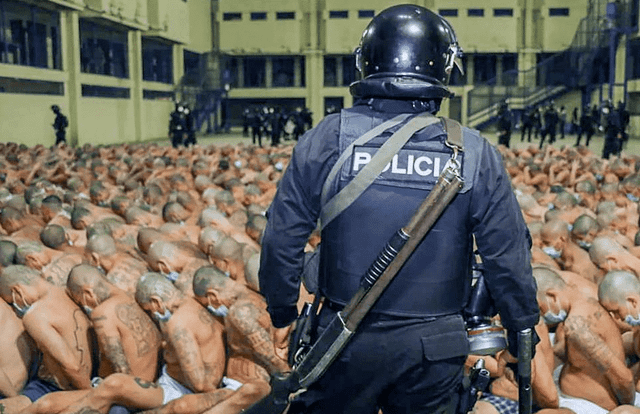
In the early hours of Saturday, prisoners in El Salvador were pulled out of their cells, stripped to their underwear and forced to tightly press against each other on the floor while officials ransacked their cells. With 323 confirmed COVID-19 cases and eight deaths, President Nayib Bukele warned on Monday that there is a “total community transmission,” meaning that the outbreak is far larger than reported.
Outrageous images of hundreds of half-naked prisoners forced to sit pressed against each other in tightly packed rows could easily be interpreted as unauthorized leaks. Some of the photos, however, were shot by the government’s own photographers and shared by Bukele himself and several government agencies, while the international media was welcomed into the prison to film the horrific spectacle.
The operation began after the government declared a “state of emergency,” citing an alleged uptick in murders across the country, ostensibly ordered by gang leaders from within the prisons. There was no evidence provided to support this claim, nor any found in the raids. Detained gang leaders were placed in isolation, and members of rival gangs recklessly placed in common cells.
El Salvador's prisoners subjected to barbaric crackdown (Credit: El Salvador’s Presidency Press Office)
The policy is itself murderous and dictatorial. On March 10, Bukele himself ordered an end to an existing “state of emergency” in prisons to focus on ending overcrowding and “preventing the coronavirus in the prison population.” Even the 1983 constitution, established by a fascist military junta, does not conceive of the extra-legal fabrication of a “state of emergency.” It lists a “regime of exception” that suspends most constitutional rights, but not “the right to life, physical and moral integrity” being denied to prisoners. The measures have endangered staff at prisons, and the whole country.
There are a number of objectives behind this “anti-gang” campaign as the pandemic crisis intensifies, but “protecting Salvadoran lives” is not among them. The crackdown is less a reaction to killings than a calculated class response to growing social opposition. All across the world, the capitalist ruling class is concluding that protecting their wealth and profit interests during the deepening crisis is incompatible with democratic forms of rule.
On Friday morning, Bukele met with US Ambassador Ronald Johnson to call US President Donald Trump. This was followed by public statements of mutual support. Later that day, the government and El Salvador’s main business organizations announced a plan to “reactivate the economy,” including a $1 billion program involving mostly loans for corporations and small businesses and a mere $50 million for food assistance.
“We have been developing this economic proposal with international organizations and investors who buy Salvadoran bonds,” commented Economy Minister Nelson Fuentes. Bukele added: “Our priority will continue to be protecting the health and lives of Salvadorans; however, in parallel, we’ll give a push to our economy to hold on and start the engines of our creativity, entrepreneurship and labor.” Shortly afterward, he ordered the assault on the prisoners.
On the one hand, corporations are demanding a “gradual” re-opening of nonessential businesses under unsafe conditions, even though the quarantine measures have been extended until May 16.
On the other, the working class, whose majority survive day-to-day in the informal sector, demands aid and continued social distancing measures and other protections necessary to contain the virus. Widespread protests broke out and were repressed by riot police on March 30, when the government closed the offices handing out $300 stipends to the most impoverished sectors.
Under these pressures, the response by the Salvadoran oligarchy is defined by its total subordination to US imperialism, as administrators—within the domain of the Salvadoran nation-state—of the supply of cheap labor, natural resources and a limited consumer market for transnational corporations and finance capital, combined with the sacking of public finances for bondholders.
Behind his “anti-gang” campaign, Bukele is openly moving to undermine the Legislative Assembly and establish a personalist dictatorship with the support of the armed forces. Since his electoral campaign last year, he has based his strategy on exploiting popular disdain for the corrupt traditional parties.
The Assembly is controlled by the Farabundo Marti Front for National Liberation (FMLN) and the Republican National Alliance (ARENA), which shared power from the end of the civil war in 1992 until 2019, consistently defending the interests of the ruling elite through austerity, privatizations, the maintenance of poverty wages and the creation of US-trained special forces who have been associated with death squads.
Despite direct violent threats, they have responded to Bukele’s policies with mild criticism, while doing everything possible to prevent the outbreak of protests. They have approved record spending for the military and a $2 billion loan to deal with the pandemic.
On February 9, Bukele occupied the Assembly with troops, claiming the legislators were tied to the gangs and demanding the approval of a loan for the further buildup of the armed forces. A crowd of a few thousand Bukele supporters gathered outside, demanding that troops drag the opposition deputies out.
Last Thursday, Bukele fabricated a “significant suspicion” of a COVID-19 outbreak among legislators to force the suspension of the Assembly’s proceedings that day. On Sunday, he claimed on Twitter that the government has not seen a “single cent” of the money approved by the Assembly, adding, “Sooner or later, they [legislators] will pay for their anti-patriotic actions.” And on Monday morning, his legal secretary, Conan Castro, spoke of “signs,” again without providing evidence, that the political parties are financing the reported uptick in killings.
Seeking to create a war atmosphere, Bukele then shared pictures of a meeting with the security cabinet, held around 1 a.m. on Monday.
While initially aimed against the Congress and gangs, both of whom he has referred to as “plagues,” the ultimate target of this authoritarian drive is the working class. Bukele seeks to mobilize fascistic layers of the armed forces and his politically disoriented supporters as shock troops against social opposition from workers and youth. This is signaled by numerous comments on official publications featuring the pictures of the huddled prisoners. One man wrote, “What a treat to spray Baygon [insecticide]—all the cockroaches together.” Another wrote, “Maybe they’ll die faster that way, all those killer dogs.”
This weekend, police arrested Aaron Elías Martínez, after he recorded a video on social media claiming to lead an armed group against “all those who want to agitate people against the president.” In what was clearly a response to the arrest, Bukele sought to promote death squad activity as a legitimate defense. He tweeted, “The use of lethal force is authorized for self-defense and defending the lives of Salvadorans.” He added that his government will provide legal defense to those “unjustly accused of defending the lives of honorable people.”
The “social quarantine” measures have already been focused on attacking due process and normalizing police abuses much more broadly than in the prisons. Over 2,000 people, mostly informal workers, have been arrested. As of April 22, the Human Rights Ombudsman had reported 778 accusations against the police and military regarding “illegal detentions” and “cruel, inhuman and degrading treatment” as part of the quarantine. El Faro reported that on April 15, seven soldiers and a police official entered and raided rooms in at least six homes in Mejicanos, threatening people and warning them not to leave their homes, while potentially contaminating them.
The conditions are being prepared to employ the quarantine measures to crack down on opposition, force increasing numbers of workers to risk infecting themselves and their families at work, and cover up the human toll from COVID-19 and a lack of food and other basic necessities.
This would require the participation of the largest maras, or gangs, MS-13 and Barrio 18, which effectively control most districts and hold large business interests. They have also been documented in the harassment of militant workers at maquiladoras at the service of their owners.
Such barbaric plans, however, have not made a reckoning with mass opposition in the working class. Class actions against a premature return to work are already a global phenomenon. Workers, however, need to draw the necessary conclusions from the official response to the pandemic. Opposing the turn to dictatorship and the indifference of the government to their lives and livelihoods requires a revolutionary struggle of the international working class against the capitalist profit system, which is the source of these processes. In El Salvador, this means the building of a section of the International Committee of the Fourth International to lead the working class to fight for power and socialism.

Brazilian justice minister resigns, charging Bolsonaro with interference in the Federal Police

Miguel Andrade

The government of Brazil’s fascistic President Jair Bolsonaro, already reeling under the combined impact of the uncontrolled spread of the COVID-19 pandemic and its impact on the country’s economy, has been further destabilized by the resignation of Justice Minister Sérgio Moro and his denunciation of Bolsonaro for political interference in ongoing investigations.
Moro’s resignation at the end of last week followed Bolsonaro’s firing of the head of the Brazilian Federal Police, Maurício Valeixo. The Brazilian National Press initially published in the country’s Federal Register that Valeixo had resigned and that both Bolsonaro and Moro had accepted his resignation. Hours later, however, Moro called a press conference to deny that Valeixo had resigned and announce that he would himself resign in protest over Bolsonaro’s action.
Moro charged that Bolsonaro’s motive for firing Valeixo’s was a desire to interfere in the investigations. He bluntly declared: “The president told me he wanted [as head of the police] someone of his personal circle, whom he might call and collect information. It is not the role of the Federal Police to relay this kind of information.”
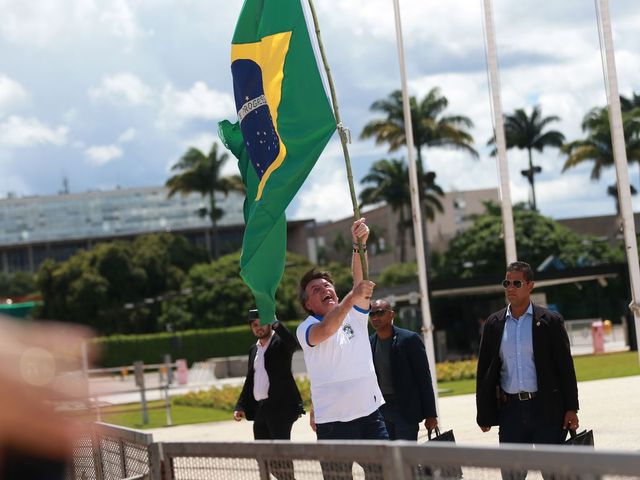
Bolsonaro participates in demonstration of his supporters in Brasilia (Credit: José Cruz/Agência Brasil)
As grave as they are, the charges leveled by Moro against Bolsonaro pale in comparison to the multiple investigations being conducted by several Brazilian agencies against the president and his sons, including possible involvement in the horrific death squad murder of Rio de Janeiro’s Socialism and Liberty Party (PSOL) city councilor, Marielle Franco, in 2018.
Hours after Moro’s resignation, the Intercept Brasil posted a report showing that the Rio de Janeiro attorney general’s office, in collaboration with the Federal Police, had evidence directly connecting Senator Fávio Bolsonaro, the president’s eldest son, with the suspected hitmen who killed Franco, ample reason for the Brazilian president to want access to and direct control over ongoing investigations.
As the convoluted case has developed, it became known that the chief suspect in the murder, Ronnie Lessa, was Bolsonaro’s neighbor in a Rio gated community, and is believed to be part of the so-called Crime Office gang, whose suspected leader Adriano da Nóbrega had relatives working as aides to Flávio when he was a member of Rio’s state parliament.
The Crime Office gang is one of Rio’s militias, gangs composed mainly of active duty and retired police officers which control large swathes of Rio de Janeiro, collecting informal taxes and monopolizing access to gas, electricity and the internet, as well as drugs and gambling.
The militias are direct successors to the death squads that murdered political opponents of the 1964–1985 military dictatorship. They evolved during the 1980s and 1990s promising “security” against drug dealers and petty criminals. The Bolsonaro family, heavily involved with the repressive forces and unapologetic admirers of the most vicious acts of the dictatorship, have regularly and publicly praised militia members.
Last November, Brazil’s largest media group, the Globo conglomerate, directly charged Bolsonaro with involvement in Franco’s execution, claiming a leaked police report proved the hitman Lessa had been in touch with Bolsonaro hours before the murder. The supposed evidence was disputed by officials and the issue buried from public attention until Nóbrega, Lessa’s alleged crime boss, was murdered by the police at a hideout in the state of Bahia.
The murder of Franco was one of the main themes addressed by Bolsonaro as he lashed out against Moro in a press conference called after his resignation. Bolsonaro claimed the Federal Police were doing less to investigate the attempt on his own life on the campaign trail in 2018—which Bolsonaro barely survived—than the murder of Franco. In fact, the Franco case is being investigated by the police in Rio and attempts to federalize the probe have been resisted by her family in order to avoid Moro’s and Bolsonaro’s interference.
Bolsonaro’s assailant, Adélio Bispo de Oliveira, was declared mentally incompetent, and the case was closed in 2019. Bolsonaro claimed Moro was neglecting the issue and it was legitimate that he replaced the Federal Police head over that case. He also charged Moro with being insufficiently committed to his far-right pro-gun, anti-abortion and anti-LGBT agendas.
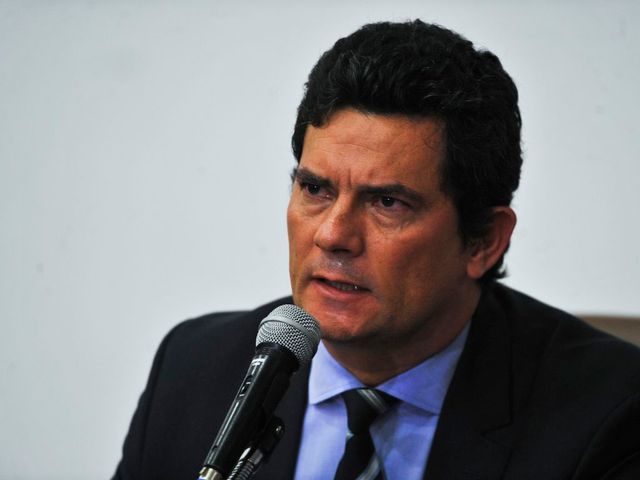
Sergio Moro (Credit: Marcello Casal Jr/Agência Brasil)
Moro’s resignation further fueled the frenzied political atmosphere that has dominated Brazil for almost a year. There is increasing speculation that Bolsonaro could face impeachment or be forced to resign.
Moro’s resignation comes barely two weeks after Bolsonaro sacked his health minister, Luiz Henrique Mandetta, for opposing his criminal neglect of the spread of the COVID-19 pandemic in the country and the president’s attempts to sabotage state governors’ imposition of quarantines to slow it down. Bolsonaro has for over a month denied states any financial help in an attempt to force them to end their economic shutdowns. The government has likewise delayed the distribution of medical equipment as the number of confirmed coronavirus cases has reach 65,000 and the number of deaths nearly 5,000. Both numbers are known to be gross underestimations of the virus’s real toll as images circulate worldwide of corpses piling up in hospitals and mass graves being dug in Brazil’s largest cities.
The defection of Moro also comes less than a week after Bolsonaro took part in a fascist demonstration in front of the army headquarters calling for a military intervention and the shutdown of Congress, the Supreme Court and the banning of the opposition, all of which organizers claimed were sabotaging Bolsonaro’s rule by opposing his back-to-work orders.
The anxiety within the ruling class over Moro’s departure was expressed by a 6 percent plunge in the market and a race to the dollar that cut the exchange rate of the Brazilian real by 4 percent.
Moro leaked WhatsApp messages to Globo in which Bolsonaro sent him a link to a press report headlined “Federal Police goes after 10 to 12 Bolsonaro loyalists in the House,” followed by his insistence that this was “one more reason to fire” Valeixo.
The morning after the resignation, the major Brazilian newspapers were unanimous in siding with Moro. Their attitude was summed up by the editorial of the country’s most widely read paper, Folha de S. Paulo, which declared that as a result of Moro’s resignation it had become “unavoidable that the concerned authorities open investigations into charges of civil crimes and impeachable offenses leveled against Jair Bolsonaro.”
The effect of Moro’s resignation is further amplified by his popularity among Bolsonaro’s supporters and his reputation within ruling circles—and also internationally—as a supposed crusader against corruption, lending credibility to Bolsonaro in the face of multiple scandals.
Before being appointed as Bolsonaro’s Justice Minister—and, until his resignation, widely believed to be the president’s likely first appointment to the Supreme Court—Moro acted for four years as the leading judge in the so-called Car Wash (Lava Jato) operation, which uncovered a massive bribes and kickbacks scandal centered at the state-run oil giant Petrobras and overseen by the Workers Party (PT) toward the end of its 13-year rule.
While the scandal implicated virtually the entire political establishment, combined with a deep economic crisis resulting in a 7 percent GDP drop in 2015–2016 along with brutal austerity measures imposed by then-president Dilma Rousseff, it provoked widespread revulsion among the PT’s working-class base. The party’s right-wing opposition was able to exploit this popular hostility to remove the PT from power on trumped-up charges of budget manipulation.
Moro took active part in the right-wing exploitation of the crisis by the ruling class, mostly through the pursuit of a corruption case against former PT President Luiz Inácio Lula da Silva, popularly known as Lula, Bolsonaro’s main adversary in the 2018 elections and the leading candidate in the polls. While the massive rejection of the PT in traditional left-leaning regions such as Rio de Janeiro, Rio Grande do Sul and the working class suburbs of São Paulo made a PT victory far from certain, Moro politically intervened against the party on several occasions, and later was exposed in leaked phone messages as having improperly coached the prosecution against Lula before sentencing him on corruption charges and knocking him out of the election.
Bolsonaro took former PT strongholds by wide margins after running his campaign as a virtual referendum against the political system and the party that had controlled the government for more than a dozen years. During his campaign he lionized the former judge. He sought to use his connection to the supposedly incorruptible Moro as political insurance against fears within the ruling elite that an exposure of the fascistic former army captain’s criminal ties, forged during three decades as a backbencher in Congress—and former member of the PT’s legislative coalition—would plunge the country back into political crisis.
Whatever the real reasons for Moro’s treating the dismissal of the head of the Federal Police as a red line and publicly exposing Bolsonaro—after a year of supporting the president’s fascistic policies—his resignation will deepen an insoluble crisis of bourgeois rule in Brazil. While the ruling elite turns toward the military and increasingly authoritarian forms of rule, growing popular unrest over the economic crisis and the criminal response of the government to the COVID-19 pandemic is creating the conditions for an eruption of class struggle by the Brazilian working class.

Miners with black lung face COVID-19 danger as US mines continue operations

Samuel Davidson

The US states of Pennsylvania, West Virginia, Virginia, Alabama and Kentucky have all allowed underground coal mining to continue in the midst of the coronavirus pandemic despite the fact that infection by the disease would mean almost certain death for any of the thousands of coal miners and retirees already suffering from black lung.
Coal workers’ pneumoconiosis, more commonly called black lung, is a life-threatening and very painful illness caused when coal dust scars and blocks lung tissue, making it harder and harder for a miner to take in oxygen.
Miners and health care workers are concerned over the impact that a major lung infection such as caused by COVID-19 would have on people already suffering from a serious lung disease.
COVID-19 “would be a nail in the coffin,” said Teresa Tyson, president and CEO of The Health Wagon, which operates free clinics in Wise, Virginia and surrounding counties, speaking to the HuffPost about her father, a former miner who has black lung.
“We are seriously worried about our population out here,” Tyson continued. She said her staff has spent weeks preparing for COVID-19, making sure patients had three months’ supply of medicine.
Black lung clinics throughout the region have shut down during the pandemic. Many health care workers were needed to confront the COVID-19 pandemic, and medical officials at the centers did not want to take the chance of a black lung client coming into contact with a COVID-19 patient and becoming infected.
Rural Americans have also seen a loss of health care as hospitals in rural areas are closed down in record numbers. Last year 19 hospitals closed, and there have already been eight closures so far this year, despite the global pandemic. 
There are no official statistics on the number of COVID-19 cases among coal miners. The Appalachian coal-producing region is still relatively free of the coronavirus compared to major population centers such as New York, Philadelphia and Detroit, where government inaction has allowed the pandemic to take hold with deadly consequences.
Yet many of the counties in this region have cases numbering in the hundreds, some in the thousands, posing a deadly threat to coal miners.
Two western Pennsylvania miners tested positive for coronavirus, forcing Consol Energy to close the Bailey mine while they disinfected machinery and work areas. The mine has since reopened.
“To their credit they’ve taken some steps,” said a miner who works at the mine. “They have staggered the crews going into the mine, so instead of having 30 guys in an elevator, there are 10.
“Of course, if one of those guys is sick the other nine are going to get it. And science says that the virus lives on surfaces for up to three days. I don’t think they are disinfecting the elevator between each crew.”
The miner, who asked that his name not be used for fear of retaliation from the company, pointed out that there are many joint areas that the miners use, and that even cleaning them once a day will leave a lot of miners exposed.
“We are all climbing in and out of the same crew cars, using the same bath house. If a miner gets it, it is going to spread,” said the miner. “The bottom line is the company cares about profits and not miners.”
According to the Centers for Disease Control (CDC), approximately 20 percent of underground coal miners and 10 percent of surface miners have or will develop black lung.
In reality the number is much higher. A 2016 National Public Radio investigation of data from 11 black lung clinics in Virginia, West Virginia, Pennsylvania and Ohio found 962 cases of the most severe form of black lung, known as Progressive Massive Fibrosis (PMF), in the previous five years, or ten times the 99 cases identified by the government. 
Most miners receive no benefits for black lung. To receive benefits, a miner must have worked for 15 years in the mines and be 100 percent disabled. This places many miners, when they begin to develop black lung, in a Catch-22 situation; either quit working but have no income for themselves and their family, or keep working until they are at death’s door.
After decades of a steady decline in the number of cases, black lung among miners began to rise again in the 1990s. Government officials have never bothered to find out why, but miners have told the World Socialist Web Site that the reason is the growth of long wall mining, which releases huge quantities of coal dust into the air.
Most disturbing is that new cases of black lung are affecting miners at a younger age, and it often comes with fibrosis, another lung disease caused by breathing in rock dust. Fibrosis is more aggressive and deadly than black lung.
The giant long wall machines cut both the coal and rock in their path, creating vast amounts of rock dust along with the coal dust. This problem has also gotten worse as coal companies continue operations in narrower and narrower coal seams to extract the most coal possible, but also running through much more rock.
Last month, coal operators sought to cut the excise tax used to fund black lung benefits by 50 percent. Currently coal operators pay just $1.10 per ton of underground coal mined and $.55 per ton for surface mining. They lobbied for the cut as part of the government’s $2.2 trillion bailout of Wall Street.
The cut was not included, but the fund for black lung benefits faces bankruptcy anyway, as coal operators have gone bankrupt in record numbers over the past five years. Funds for the benefits are expected to run out in 2022, but it may turn out to be even be sooner, as more coal operators file for bankruptcy.
Senator Joe Manchin, Democrat from West Virginia, and Republican Senate Majority Leader Mitch McConnell of Kentucky refused to include funding for black lung benefits in a bill passed last year, which transferred $750 million a year from the fund used to clean up pollution at abandoned mines to the United Mine Workers Health and Pension fund.
While confronting the fear of COVID-19 infection, coal miners are also facing the threat of layoffs, as demand for coal plummets. There has been a long-term decline in coal usage as power companies shift away from burning coal to the less expensive natural gas. At the same time, demand for both electrical power and the highly profitable metallurgical coal has fallen off the cliff in the last six weeks, as the economy shuts down due to the coronavirus.

New York state’s economy spirals into the abyss under the effects of COVID-19

Philip Guelpa

A newly released consultant’s report prepared for the New York Division of Budget predicts that losses to the state’s economy will reach $243 billion due to the coronavirus pandemic, representing approximately 14 percent of the state’s GDP.
The study, produced by Boston Consulting Group (BCG), assumes that full recovery to the level that existed before the pandemic will not be achieved for three years, until the first quarter of 2023. It factors in the effects of the federal CARES Act.
This dire prediction has profound implications regarding the severity of the pandemic’s effects on the working class.
The projected years-long span of the recovery, likely a best case scenario, will exacerbate the already severe condition of the state budget, adopted earlier in the month. In February, prior to the outbreak of COVID-19, New York Governor Andrew Cuomo had projected a $6 billion deficit for the 2020–2021 state budget, indicating that the state’s economy was already facing difficulties.
Only two months later, the state budget deficit estimate more than doubled to $13.3 billion due to a combination of anticipated increases in expenditures and reductions in revenue caused by the pandemic. This prompted a wide range of cuts to education, health and other social programs in the proposed budget. In addition to specific cuts, the state’s budget director, Robert F. Mujica Jr., was authorized to make further cuts based on periodic reviews during the course of the fiscal year.
During the fiscal years 2021–2024, tax revenues are estimated to decline by $61 billion from previous projections. Over the last two months alone, the state’s tax receipts have fallen by 12.4 percent. Cuomo, a Democrat, has vehemently refused to consider raising taxes on the wealthy.
The state budget already includes $10.1 billion in cuts. Among these are aid to localities, encompassing education, health care and municipal budgets, reduced by $8.2 billion at a time when municipalities are faced with insurmountable blows to their own economies and budgets. Funding to state agencies will be cut by 10 percent. Together, these reductions will add to the already mounting wage cuts and layoffs across the state.
The New York Department of Labor reports that over the last five weeks the total number of new jobless claims has already reached 1.4 million, an increase of over 2,100 percent over the same period last year. This represents about two-thirds of the total jobless claims filed in the state during the entire Great Recession, from June 2007 to November 2009. The latest figure does not include self-employed, gig or part-time workers. The state’s current official unemployment rate is about 13 percent. Based on the report’s conclusions, that rate will increase dramatically as the crisis continues.
The study’s estimates are based on comparisons with the economic effects of past disease episodes. Given that the scientific understanding of COVID-19 is still in its infancy, let alone the totally inadequate governmental response so far, any projections regarding the course of the disease and its economic consequences must be taken with a great deal of caution. The total number of reported infections in New York state is nearly 300,000 and the total deaths 22,612 as of April 27. The rate of reported new cases across the state, as of April 26, was over 5,900 per day, remaining above 5,000 except for two days since March 25. Although it has declined from its peak, the daily death toll remains in the multiple hundreds.
Despite the evidence that the pandemic rages on, in concert with a growing number of other states Governor Cuomo is already proposing a plan to “reopen” the state, beginning with construction and manufacturing, as soon as May 15. Cuomo tweeted last week, “We believe NY is past the peak and we are now descending the other side of the mountain.” The plan, which has yet to be described in detail, envisions the opening to be conducted in phases, by region, with “upstate” (i.e., outside of the New York City metropolitan area—the city and its suburbs) going first.
The infection and death rates upstate have in general been considerably lower than in the New York City region, largely due to the implementation of social distancing, the shutting of non-essential businesses and activities and lower population densities. Without adequate testing, contact tracing and quarantine of infected individuals, the proposed opening is highly likely to result in a surge of new cases across the region.
As the BCG report itself states in its legal disclaimer, “The COVID-19 situation is rapidly evolving, on a daily basis. This document represents one scenario based on discrete data from one point in time. It is not intended as a prediction or forecast about duration of lockdown; peak of viral infections; efficacy of government or health care responses to the virus; or other health or societal impacts…” Indeed, as the ramifications of the pandemic continue to compound, conditions are likely to be even worse. Nevertheless, the study is intended to assist the government in its drive to “reopen” the state’s economy.
Based on the consultant’s study, Budget Director Mujica states in his cover letter, “We are already taking the first steps to reduce spending impacting tens of thousands in the state workforce while planning for further actions. In the absence of federal aid, we will have no choice but to move forward with these devastating and unprecedented reductions.”
Given that the multiple federal “bailouts” have so far been targeted overwhelmingly to large businesses, while millions of workers are losing their jobs and falling into poverty, and that the pattern is likely to continue under the government of the rich, states and municipalities across the country face economic collapse with horrific consequences for the working class. New York, representing 8 percent of US GDP, is but one of 50 states. Similar cuts will be made to social programs across the country.
Despite all this, the one unshakable principle that guides the actions of the ruling class and its minions in both parties and at all levels of government is that the wealth of the corporate and financial aristocracy is to remain untouched while millions face disease and death with an ever shrinking social safety net. Their only solution is to force people back to work, which will result in an even wider spread of the disease and an ever-mounting death toll.
The only way to avert this disaster is for the working class to seize the trillions of dollars hoarded by the financial elite and implement a socialist program for the benefit of the entire population.

Growing resistance in Germany to the opening up of schools

Andy Niklaus & Carola Kleinert

There is growing public opposition in Germany to the government’s policy of opening up schools despite the continued spread of the coronavirus pandemic. Following the press release issued by the government last Wednesday, tens of thousands of pupils, teachers and parents have spoken out against the proposals to open up schools and compel pupils to take exams planned long before the coronavirus struck.
High school students in various federal states were expected to begin taking their exams on Monday. This is despite the legitimate concerns on the part of students that they may be infected and then transmit COVID-19 to their families under conditions where schools provide only minimal and entirely insufficient protection.
There are no tests available to identify those affected by the virus, and students will not be given protective masks. The required safety distance of at least 1.5 metres between classroom tables is irregularly observed—as demonstrated in private photos and videos available on social media.
Disinfectants are not made being available nationwide, among other things, on the grounds that this helps protect children and adolescents from the health risks accompanying such disinfectants. It is up to the teachers, like the students, to provide their own masks.
In Berlin, one high school student applied to postpone her exams due to the serious illness of members of her family. An administrative judge rejected the student’s request, referring to the guidelines set down by the Berlin Senator for Education Sandra Scheeres (Social Democratic Party, SPD). High school students belonging to groups of those alleged to be at particular risk, or related to those affected by the virus, are still expected to take their exams in separate rooms.
The high school student, Lisa, from North Rhine-Westphalia, published on Twitter an open letter to the minister of education, in which she calls for “a halt to the hasty renewal of school operations.” To the WSWS, she reaffirmed her request for the alternative of giving an “average level high school diploma or average degree to all.” She denounced those politically responsible, saying: “We are not guinea pigs to be tested for the consequences of loosening up restrictions!”
When asked about the hygienic situation at her high school prior to the pandemic, Lisa reported that the situation was “horrific.” “The school toilets were in a very poor hygienic condition: there was no soap, no towels, clogged toilets and overfilled rubbish bins in the toilets,” she said. The school management had tried to improve the situation with measures such as toilet supervision, but without success. “Not all of the toilets were cleaned regularly by cleaning staff. Warm water remains a dream. There is no such thing in schools,” Lisa said.
She could not report on the current protective measures at her school. Her teacher offered to hold a digital discussion because she belongs to a risk group. “On Monday, I will have to see whether I dare take part in classes or try instead to prepare for my exams at home,” Lisa said. “My mother is very upset because she and one of my three siblings belong to those at risk. She thinks that any idea the schools will comply with hygienic standards is utopian.”
Her classmates have varying views about the demand to obtain a so-called average high school diploma—i.e., adopting the previous average school grade of the student during his or her studies. Some approved, while others considered the exams to be necessary. However, they all agreed that exams should not be held “under these circumstances.” “All of the pupils had worries and fears, but given the fact that exams have not been cancelled, many are forced to attend classes, otherwise they will fail to fulfil the requirements for their diploma.”
Like many other pupils and high school students, Lisa emphasised not only the health aspects involved, but also the lack of equal opportunity in the exams compared with previous years. No account is taken of the huge pressure under which the high school students have to take the exams. She said, “It is morally and ethically unacceptable to give students sole responsibility for attending school and the attendant risks of being infected with a deadly virus through contact with people on the way to and from school, and then transmitting this virus to those at home!”
From this point of view, Lisa also noted the situation in the health care system. “In the event of a second wave, our health care system would be overloaded, which would involve thousands more casualties. This is the standpoint of the Robert Koch Institute and prominent virologists such as Dr. [Christian] Drosten.”
When asked whether she saw a connection between the school openings and the campaign for a “return to work,” Lisa replied: “From the beginning of the coronavirus crisis, I have only seen economic interests at work. Open the schools so everyone can go back to work and have no reason to stay home. I think it’s very obvious. This is extremely irresponsible and will very likely cost many lives. It’s really sad to see the value politicians place on the population when it comes to big business interests—i.e., none at all.
“A few months ago, I thought that Germany had struck a reasonable balance with its form of capitalism, but the type of politics today has proven the opposite.”
Lisa is not alone in this respect. Young people and workers face fundamental political issues in their demands for the protection of their lives and health. Their demands inevitably lead to conflict with the political establishment and the entire profit-oriented social system.