4 May 2020

Devastating fire in South Korea kills at least 38 workers

Ben McGrath

A fire at a construction site in South Korea last Wednesday afternoon killed at least 38 workers and injured another 10, eight of whom are in serious condition. Investigators were still searching for victims’ remains on Sunday. These types of deadly fires are a common occurrence in South Korea, where safety measures are often ignored to boost profits. Last week’s is one of the deadliest fires in the country in more than a decade.
The blaze took place in the second underground level of a warehouse under construction in the city of Icheon, Gyeonggi Province, 80 kilometres southeast of the capital, Seoul. A total of 78 workers were in the building when the blaze started. It began when a flammable material called urethane, used for installing insulation, ignited and exploded. The flames quickly spread due to “rapid combustion,” according to authorities, and lasted for more than five hours. The building did not have sprinklers or other obligatory safety measures.
As oil mist accumulates when urethane is used, construction companies are required to install ventilation systems to remove the mist and other gases. They are also supposed to strictly regulate the use of the other equipment in the area of the flammable material, such as welding tools. It is believed that workers were told to continue welding while the urethane was being used to speed up construction time. A worker at a construction site next to the warehouse stated, “The danger was obvious, but the company failed to properly provide safety equipment compared to [at] other sites.”
Seo Seung-hyeon, head of the Icheon fire department, described the terrible results, “There was no clothing left on the workers at all. We presume that an ignition of oil mist caused an explosion and the sudden combustion gave the workers no chance to escape.” Many of those who died in other parts of the building succumbed to toxic gases.
Authorities launched an investigation on Thursday to determine the exact cause of the fire and to determine what safety regulations were violated. Some 28 people had been questioned by the end of Thursday and another 15 people at the construction company Kunwoo, which was building the warehouse, have been barred from leaving the country.
Yi Sang-seop, the CEO of Kunwoo, spoke to grieving families for five minutes to offer an apology, before reportedly fleeing the scene as mourners demanded to know what measures the company would take to prevent future accidents. Yi gave no answers.
Icheon was also the location of a deadly fire in 2008 that killed 40 workers in a refrigerated warehouse. Another 46 people died in a 2018 fire at a hospital in Miryang that lacked sprinkler systems. A month before that, in December 2017, 29 people were killed at a sports centre in Jecheon, which also had no sprinklers.
Families expressed anger towards the government and the construction company following Wednesday’s deadly blaze. “I got so angry listening to the mayor (of Icheon, Eom Tae-jun) apologize…The words were the same as 12 years ago, only the speaker had changed. If they promised that nothing like this would happen again, then it shouldn’t happen,” a worker, giving only his family name Gim, told the Kyunghyang Shinmun. Gim, who has worked in construction for 20 years, lost a nephew in Wednesday’s fire.
Gim continued: “The companies squeeze the workers of subcontractors and just tell them to do everything ‘quickly’ to shorten the construction time. If the workers ask for change, the only answer they get is ‘if you don’t like it, then don’t come to work tomorrow’.”
The workers killed were all irregular or subcontract workers, meaning that they lacked basic job protections, making it easier for the company to fire them. They included two workers from Kazakhstan and one from China. Irregular workers are paid significantly less than their regular counterparts and are often forced to do more dangerous jobs while also lacking benefits.
Conscious of the common occurrence of fires as well as public anger towards the government’s indifference to safety, Prime Minister Jeong Se-gyun said during a meeting of government ministers on Thursday, “We need to find a more practical solution in order to prevent the recurrence of fires at construction sites.”
Presidential spokesman Gang Min-seok stated President Moon Jae-in had said during a Wednesday emergency meeting that despite supposed new safety measures announced after the 2017/2018 fires, “It is regrettable that a similar accident reoccurred. It means we've not learned the lesson from previous accidents.”
The new “safety measures,” enacted in February 2018, were little more than a cosmetic response to the dangerous conditions that persist around the country. It involved an eight-week campaign of additional fire safety checks, minor additional preventative steps, and a public awareness drive. This amounted to pro forma inspections, with little done to address actual safety violations, let alone to demand the installation of protective equipment and ensure companies follow safety regulations.
On Labor Day, Moon offered empty platitudes to the grieving families while stating his government was improving working conditions around the country. “Due to the efforts of workers, the minimum wage hike, transitioning irregular positions to regular ones and the 52-hour work week have been implemented. Through these measures, our society is overcoming polarization,” the president claimed.
There is no truth in these words, as the disaster on Wednesday shows. Cosmetic measures have been taken during the course of Moon’s administration that do nothing to change the actual situations workers face.
Whatever steps are taken after this latest fire will not address the status of irregular workers or impose any demands on big business. The government’s empty words of condolence will be packed away and forgotten until the next disaster when they will be trotted out again only to mollify public anger and cover up the entrenched indifference under capitalism to the lives of workers.

Modi government punishes officials for urging increased taxation of rich to fight coronavirus

Wasantha Rupasinghe

The panicked response of India’s far-right government to a suggestion from some Indian Revenue Service (IRS) officials that higher taxes be imposed on the rich and super-rich to help fund the country’s response to the COVID-19 pandemic has demonstrated, yet again, that Prime Minister Narendra Modi and his Bharatiya Janata Party (BJP) are loyal servants of the country’s rapacious capitalist elite.
The suggestion was made as the highly contagious and potentially lethal novel coronavirus continues to surge across the world’s second most populous country, and as an ill-prepared government lockdown inflicts enormous economic hardship on India’s workers and toilers. As of yesterday, India had more than 42,000 confirmed COVID-19 positive cases and 1,380 deaths. Because of the government’s rationing of tests and the lack of health facilities in large swathes of the country, these figures undoubtedly severely underestimate the true extent of the pandemic.
A report titled “Fiscal Options & Response to COVID-19 Epidemic,” or FORCE, was prepared by a group of 50 IRS officers and shared on Twitter on April 25. It suggested raising the income tax rate by up to 40 percent and imposing a super-rich tax for those with income over 10 million Indian rupees or US $130,989 to “rebuild the economy post-coronavirus pandemic.” It also proposed the reintroduction of a wealth tax for those with a net wealth of 50 million rupees ($654,584) and above, and the levying of a “one-time COVID Relief Cess” of 4 percent on those with a taxable income of 1 million rupees ($13,079) and above.
Almost as soon as the report became public, the Modi government initiated an inquiry against three senior IRS Association officers—Prashant Bhushan, general secretary of the Indian Revenue Service Association (IRSA), Sanjay Bahadur (principal director of investigation) and Prakash Dubey (director of the department of personnel and training)—for their alleged involvement in the preparation and release of the policy paper.
According to news reports, IRSA had submitted the FORCE report to the chairman of the Central Board of Direct Taxes (CBDT) a few days before it was shared on Twitter. The report was meant to initiate internal discussion, but was later leaked to the public via social media because the CBDT chairman stonewalled, refusing to issue any formal response to it.
The Modi government is now demanding the IRS officials answer charges that they created “confusion and uncertainty with respect to the policy of government with respect to income tax” amid a pandemic. They are also under investigation for producing a document for wide dissemination that “amounts to criticism of government policies” by senior tax officers, thereby “causing avoidable embarrassment to the government.”
While the Modi government feels “ embarrassed ” about a suggestion for a modest increase in the tax ation o f the super - rich, it has proven callously indifferent to t he fate of hundreds of mill ions of day-labourers who have lost their jobs and livelihoods due to its chaotic coronavirus lockdown. Nor has it shown any remorse for the millions of migrant workers who have been herded in to makeshift camps in appalling living conditions as a result of its failu re to make any provisions for their sustenance during the lockdown . (See: HYPERLINK "https://www.wsws.org/en/articles/2020/04/02/indi-a02.html" Modi government represses desperate migrant workers amid calamitous coronavirus lockdown )
The BJP regime’s claim that the FORCE report’s proposals for increased taxes on the incomes and wealth of the rich “amounts to criticism of the government’s policies” underscores that its principal focus is protecting the wealth of India’s tiny super-rich elite and convincing foreign investors they can make super-profits off the sweatshop exploitation of the working class.
As the Hindustan Times acknowledged in its report on the controversy, the BJP government reduced corporate tax rates drastically in September 2019, “sacrificing Rs. 1.45 lakh crore (more than $19 billion) in revenue.” The report continued, “Companies were given the choice of opting for a lower corporate tax rate of 22 percent (15 percent for newly incorporated companies) provided they don’t seek exemptions.”
The Modi government is granting such massive tax concessions to the corporations and super rich under conditions where close to 900 million people in India are forced to live on less than $2 a day. In a further concession to the wealthy elite, the Reserve Bank of India (RBI), the country’s central bank, has written off about 686.07 billion rupees of outstanding loans from the top 50 wilful defaulters. These include Vijay Mallaya, the billionaire liquor baron who absconded to Britain in 2016.
The BJP government fears that exposure of its pro-capitalist agenda, which it seeks to conceal behind a veil of phony populist rhetoric and strident communalism, could trigger a social explosion. Mass working class opposition to the Modi government was already developing before the pandemic, and undoubtedly has been further fuelled by its ruinous class response to the COVID-19 crisis. The government knows that under these conditions a call for increased taxation of the rich and super-rich could find mass support and—notwithstanding the moderate intentions of the FORCE report’s authors—serve as a catalyst for social struggle.
The coronavirus pandemic and 40-day-long national lockdown have sent shockwaves through the Indian economy. Modi’s lockdown, which was announced without preparation or forewarning, has created catastrophic conditions. Unemployment in urban areas has risen to more than 30 percent and millions of migrant workers are going hungry, if not starving, in impromptu “relief camps,” whose organization and provisioning the BJP central government and the various state governments have left largely to NGOs and charities.
The government has announced a mere 1.7 trillion rupee ($22.5 billion) package of relief measures, equivalent to just 0.8 percent of India’s GDP and about $16 per person. Much of this money is in fact recycled, and much of the increased food rations for India’s poorest will not be available for weeks hence.
By contrast, the Reserve Bank of India, at the government’s urging, has injected 3.7 trillion rupees ($49.4 billion) into the country’s financial markets to boost the fortunes of Indian and foreign capital. On April 27, the RBI opened a special 500 billion rupee ($6.56 billion) liquidity facility for mutual funds.
When Modi extended the lockdown for a further 19 days, the BJP government announced no increase in its miserly relief measures. Nor was any relief package presented to address the needs of the MSME (Micro, Small and Medium Enterprises) sector, which employs over 100 million people.
A tiny and corrupt super-rich layer has accumulated a mountain of money that could easily meet the urgent needs of the poor and oppressed under conditions of a raging pandemic. The study “Time to Care” released by Oxfam ahead of the 50th Annual Meeting of the World Economic Forum this year noted that India’s richest 1 percent own more than four times the wealth possessed by the 953 million people who make up the bottom 70 percent of the country’s population. The collective wealth of the 63 richest Indian billionaires is more than the entire annual budget ($360 billion), according to the Oxfam study.
With its pro-investor reforms, Modi’s BJP-led government has taken the process of boosting the wealth of this tiny wealthy layer at the expense of the working class to new heights. However, the entire Indian bourgeoisie is responsible for this state of affairs. Successive governments at the centre and state level have enforced pro-corporate policies, including those led by the opposition Congress Party and supported by the Stalinist parliamentary parties, the Communist Party of India (Marxist) or CPM and the Communist Party of India (CPI).
It was the Stalinist-backed, P.V. Narasimha Rao-led Congress Party government that in 1991 abandoned the Indian bourgeoisie’s failed state-led capitalist development strategy and initiated the drive to make India a cheap-labour haven for global capital. And until 2014, when Modi’s BJP came to power, the Congress did most of the heavy lifting in pushing through anti-worker neo-liberal reforms—privatization, massive tax cuts for business and the rich, the elimination of price subsidies, etc.—as well as in transforming India into US imperialism’s principal ally and junior partner in the region.
While the entire political establishment has colluded in slashing taxes for the rich and big business for the past three decades and even now opposes seizing even a fraction of the immense fortunes of India’s 130 plus dollar billionaires to fund health care or feed the poor, it has funnelled hundreds of billions of dollars over the past two decades into building a nuclear-armed military to pursue the Indian bourgeoisie’s predatory global ambitions. A report released on April 27 by the Stockholm International Peace Research Institute demonstrated that India was the world’s third-biggest military spender in 2019, trailing only the United States and China.

US Steel lays off 2,700 workers, threatens to cut one-third of its production workforce

Samuel Davidson

US Steel announced plans to lay off 2,700 workers immediately and up to 6,500 in the near future, as steel production continues its tailspin, devastating workers, their families and the communities they live in.
After posting a $391 million loss for the first quarter of 2020, the Pittsburgh-based company said it was sending out Worker Adjustment and Retraining Notification (WARN) notices to 6,500 employees, or over a third of its 16,000 production workers. Last month, the company laid off 750 salaried workers, or one-quarter of its white-collar workers.
US Steel, the second-largest US-based steel producer, has 21,000 employees in North America, about 18,000 of whom are in the United Steelworkers union. The company employs another 12,000 workers in Europe, most of who are in Kosice, Slovakia, where more layoffs are expected.
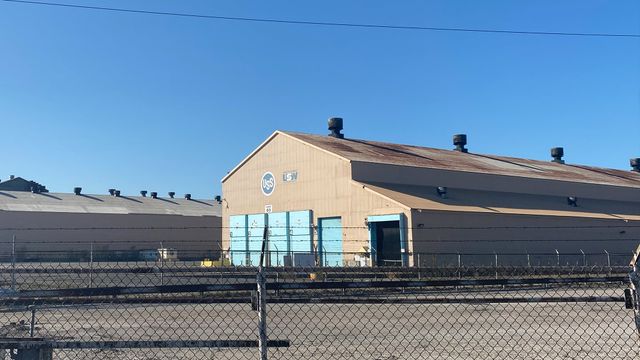
US Steel Indiana Harbor (Image Credit: M. Walters)
While announcing the immediate layoffs, the company said in a statement that due to the continued downturn in the economy it was keeping the option open for thousands of more job cuts.
At its Mon Valley plants, south of Pittsburgh, US Steel is idling the #1 blast furnace at its Edgar Thomson Works in Braddock and scaling back production at its Irvin Works in nearby West Mifflin. The company is also scaling back production at its Clairton Coke Works in the Pittsburgh area.
The majority of the WARN notices were sent to 3,800 workers at its Gary Works in Gary, Indiana, and its nearby Midwest Plant in Portage, Indiana. Press reports are saying that the company plans to lay off 10 percent of the workforce at those facilities but could lay off far more as steel demand continues to plummet.
The company is idling the #6 blast furnace at the Gary Works, and there will be corresponding layoffs throughout the mills in the rolling and finishing section.
US Steel is one of northwest Indiana’s largest employers, and the layoffs will have a devastating impact on an area that has never recovered from the deindustrialization that started in the 1980s and was escalated after the 2008 global financial crash.
In early April, ArcelorMittal, the world’s largest steel producer, which employs about 10,000 workers in northwest Indiana, announced it was idling the Indiana Harbor #3 blast furnace and the Indiana Harbor #4 blast furnace in East Chicago, as well as the Cleveland #6 blast furnace, leaving it with just four blast furnaces running in the US during the pandemic.
Even before the current layoffs, 36 percent of the residents of Gary lived below the government’s absurdly low official poverty threshold of $24,600 for a family of four in 2017. A survey found a staggering 60.5 percent of children enrolled in nursery schools and 57.3 percent in grades one through four live in poverty in the area.
Since the outbreak of the coronavirus, Lake County, which includes Gary, has suffered nearly 2,000 COVID-19 cases and 95 deaths. Businesses have closed, driving up unemployment in the area, and food banks are overwhelmed as people scramble for enough to eat.
The layoffs will also hit US Steel’s mining operations. All 260 employees at its Minntac iron mine and pellet processing plant in Mountain Iron, Minnesota, will be laid off on May 10. This follows last month’s announcement that the Keetac mine in Keewatin, Minnesota, will close by the end of May.
The company’s Tubular Operations mills in Lorain, Ohio, and Lone Star, Texas, will also be closed with indefinite layoffs slated to begin on May 24. Both mills make pipes for the gas drilling and fuel transport industry, which has been hit by the collapse in oil and natural gas prices.
The company has already shut down one of its blast furnaces in Granite City Works in Illinois, and on March 30, it shut down production at its Great Lakes Steel works on Zug Island in Detroit.
The United Steelworkers, one of staunchest supporters of the Trump administration’s trade war measures against China and other countries, has long colluded with the steelmakers in the downsizing of the industry. Once again it is doing nothing to oppose layoffs at US Steel or ArcelorMittal. Rodney D. Lewis, the president of USW Local 1014 at the Gary Works, said, “This is a company in flux. I wish I could tell you what the end game is with this company but truthfully speaking I doubt they have a clue.”
The company also has killed plans for $1.5 billion in improvements to its Mon Valley Works, which would have added long overdue capital investment to a continuous caster at the Edgar Thomson Works and updates and pollution controls for the Clairton Coke Works.
Never before has the steel industry been through such a sudden and complete collapse in demand for steel. Production of cars and appliances, two of the largest consumers of steel, have fallen off as the COVID-19 pandemic sweeps through the US and world economy. Construction of new homes, businesses and offices have all but stopped.
The American Iron and Steel Institute (AISI) report shows that steel production is falling off a cliff. For the week ending April 11, production was down 33 percent from last year and capacity utilization fell to just 56 percent, its lowest level since the 2008-09 crisis when utilization fell to just above 50 percent.
These numbers will decline further when the institute issues its reports for the rest of April.
The price of hot-rolled coiled steel, the industrial benchmark, has fallen 18 percent from $608 a ton in January to less than $500 a ton today. Just a little more than a year ago, the price of steel had peaked at over $900 a ton. The price is expected to drop further as the demand for steel dries up. Coils, beams and slabs of steel are piling up in the yards of steel mills throughout the country and world.

Millions of Americans cannot pay their rent

Kayla Costa

On May 1, millions of Americans were not able to pay their rent due to the dire social crisis sparked by the COVID-19 pandemic, opening up a housing crisis in which many working class families face a future of debt, eviction and homelessness.
The exact number of people who failed to meet rent or mortgage payments on May 1 has not been published. However, based on statistics gathered by the National Multifamily Housing Council, 31 percent of renters (25.8 million people) across the country will either fail to pay their April rent or will do so belatedly.
Experts predict that the rate will be far higher for the month of May, as the economic and social impact of the COVID-19 crisis deepens. An estimated 44 percent of New York City residents say they cannot pay their May rent, according to a localized survey by PropertyNext.
In addition, 6.4 percent of all active home mortgages are currently in forbearance, temporarily extending the due date on a family’s payment, according to financial website Bankrate. This accounts for roughly 8 million households involving mortgages carrying an unpaid principal of $754 billion.
Already, at least 3.8 million homeowners have sought mortgage relief and had stopped making their payments by the end of April, a 2,400 percent increase from early March, according to Black Knight, a mortgage technology and data provider.
According to official figures, more than 30 million people have applied for unemployment benefits over the past six weeks. This is likely an underestimation of the number of people who have been laid off or furloughed due to the inability of many individuals to successfully file a claim, as underfunded and technologically backward state unemployment offices are inundated with requests. The true unemployment rate is estimated at between one-third and one-fourth of the eligible population.
While trillions of dollars are handed over to the financial oligarchy by the political establishment, tens of millions of Americans face unemployment, loss of health care coverage, poverty and hunger. Without jobs and still waiting on stimulus checks and unemployment benefits, thousands are lining up their cars at food banks across the country. Small business owners are among those affected, as are undocumented immigrants, who do not qualify for any benefits.
Emberlea, a veteran with metastatic stage four cancer who is living with her adult son in the Sacramento area of California, spoke with the World Socialist Web Site about the enormous financial hardship produced by the pandemic and the area’s high rents.
Emberlea
“Our rent is close to $2,000 a month,” she explained. “That is close to 60 percent of our regular income. We paid only $500 this month for rent because my son hasn’t gotten compensation yet. The apartment complex took the $500 and applied the rest over the next eight months, an extra $170 per month.”
States such as Arizona, California, Colorado, Illinois, Maryland, Massachusetts, Michigan, New York, Oregon and Washington have enacted moratoriums on evictions, preventing landlords from initiating the eviction process for an average of two months. However, families are still responsible for repaying their missed payments on top of their ongoing monthly expenses. This creates a situation of insurmountable debt, which most people will never be able to pay off, given the fact that the majority of the US population did not have enough saved to afford a $1,000 emergency expense before the pandemic.
“If you lose your job for two or three months, you might be $3,000 in the hole with no way to really make that up,” Matt Desmond, a sociologist and lead investigator at a Princeton University project called Eviction Lab, told National Public Radio. “We’re faced with millions of families who are behind in rent.”
The financial impact will hit renters in major US cities particularly hard, given the enormous cost of living that is difficult to manage even while working a full-time job. To give a sense of the burden, the average monthly cost of a two-bedroom apartment ranges between $974 in St. Louis to $3,629 in San Francisco.
The National Low Income Housing Coalition calculated that 11.5 million or more people will now be spending at least 50 percent of their income on rent, up by 1.5 million people since the mass layoffs and state shutdowns began in March.
Calls for a freeze on rent and mortgage payments have found growing support from renters and homeowners in major cities throughout the United States and parts of Canada. In some cities, tenants are organizing rent strikes to collectively negotiate with their landlords or issue demands to state governments.
Emberlea has been trying to organize her Sacramento neighborhood to collectively withhold their rent and mortgage payments. “We have so many people out of work,” she said. “We have to make it very clear that the capitalist class, the owners, the CEOs, the bankers, the politicians are sucking the lifeblood out of us. They are working us so hard for almost nothing.”
She added: “How out of touch do you have to be when we’ve got food banks where there are lines miles and miles long of people needing food? They are destroying crops of food. They’re pouring milk out at dairies. They’re crushing eggs because if they can’t sell it, they don’t need it. This is happening all over California, everywhere.”
Facebook groups for tenant coordination are growing and new ones are being established in cities such as Portland, San Francisco, Oakland, New York City, Los Angeles, Kansas City, St. Louis, Jersey City, San Francisco, Seattle, Austin, Milwaukee, Chicago and Philadelphia, as well as cities in Canada.
In New York City, tenants from 2,000 living units across 57 buildings have organized rent strikes to demand that Governor Andrew Cuomo order a halt to rent payments. The Los Angeles Tenant Union reported a rise in membership from 3,000 before the outbreak to 8,000 by mid-April. As of this writing, nearly 1.8 million people signed a “Rent Strike 2020” petition, stating their agreement with the demand for a mortgage and rent freeze along with their intention to withhold rent payments, either voluntarily or because they have no money.
A coalition of pseudo-left and activist groups that stands behind the official “Rent Strike 2020” campaign are seeking to subordinate popular opposition to the Democratic Party, under the false claim that Democratic politicians can be pressured to carry out serious measures to address the social crisis.
This role is exemplified by Socialist Alternative member and Seattle City Councilwoman Kshama Sawant, who is working to channel popular anger behind appeals to Democratic Governor Jay Inslee to enact a temporary cancellation of rent payments. Sawant told her audience at an April 16 town hall that to pressure the Democratic Party, “We will need a fighting movement, and a May 1 rent strike will help to build momentum.”
To mount an effective fight against evictions and impossibly high rents, the struggle must be consciously directed not to the Democratic Party, but rather to the growing wave of strikes and protests by the working class against the policy of both parties to impose the full cost of the pandemic crisis on the working population, summed up in the drive to force workers back to work without any protection against the virus.
Behind the landlords stand banks and big investors who reap immense profits from the private housing market. Thus, the struggle must be guided by the principle that the health and basic needs of the population must take unconditional priority over private profit. The Socialist Equality Party calls for the formation of workers’ neighborhood committees to link up with rank-and-file factory and workplace committees, independent of the pro-corporate trade unions and the Democratic Party.
The criminally negligent response to the pandemic on the part of the Trump administration and governments around the world, driven by a class policy of subordinating human life to corporate profits and the stock market, has demonstrated that the fight against COVID-19 is a fight against the capitalist system. It must be guided by a program to unite the working class internationally to put an end to the profit system and establish socialism.

Austria lifts most measures to counter coronavirus pandemic

Markus Salzmann

As of May 1, the Austrian government lifted almost all restrictions aimed at controlling the coronavirus pandemic. Despite the continuing spread of COVID-19 throughout Europe, the government in Vienna has assumed a pioneering role with its “easing policy,” which poses a deadly risk for hundreds of thousands of people.
The “COVID-19 Relaxation Regulation,” passed by the coalition of the conservative People’s Party and the Greens, lifts almost all restrictions in force since March 16. Lockdown restrictions are ended, and all shops can reopen. Smaller shops and garden centres had already opened two weeks ago. With the new regulations, “entering public places” is now permitted again.
The only restriction is maintaining a minimum distance of 1 metre between people who do not live in the same household. This is a farce. Until now, most European countries have required a minimum distance of 1.5 metres, which experts regard as an absolute minimum.
Prime Minister Sebastian Kurz (Image Credit: Photo: Raul Mee (EU2017EE))
The only other restriction is that “when entering enclosed public places” a facemask must be worn. But even this measure, which offers minimal protection, is completely ineffective because the regulation is a first step towards allowing mass events. Public events with a maximum of 10 participants are now also permitted, and in the case of funerals, up to 30. The ban expressly does not apply to private events, which are permitted without restrictions. There are also no longer any restrictions for religious institutions and open-air markets.
Restaurants and cafes opened from May 1. A maximum of four adults per table are to be served, with a 1 metre distance between tables. Face masks will only be compulsory for employees. Schools will also be reopened for classes in May.
Public transport is to resume regular service starting May 11. Here, the already too small minimum distance will be abolished, with the approval of Health Minister Rudolf Anschober (Greens). In mid-April, the Green Party Vice-Chancellor and Minister of Sport Werner Kogler announced that there would be no more restrictions on sporting activities. Furthermore, the opening of borders and the resumption of the tourist business are currently being planned. Hotels are to reopen from the end of May.
This is particularly insidious, as the Austrian winter sports resort of Ischgl was a “germ cell” for the spread of coronavirus in Europe. It was one of the first focal points from which the virus spread en masse throughout Europe. The federal state of Tyrol acted with extreme negligence. Although there were already indications of spreading infection with the dangerous virus on March 5, skiing and partying continued in Ischgl until March 13.
With the “new normal” announced by Chancellor Sebastian Kurz (Austrian Peoples Party, ÖVP), Austria is at the forefront of the “return to work” movement throughout Europe. For weeks, Kurz and other government representatives have been trying to convey the image that the virus has been practically defeated and that it is possible to return to “normality.” This is nothing but false propaganda in the interests of big business and the super-rich.
The pandemic continues to spread around the world. So far, there have officially been more than 15,500 cases in Austria among its almost 9 million inhabitants. By May 1, 589 people had died nationwide as a result of the coronavirus. At present, 472 infected persons are receiving hospital treatment, 124 of them in intensive care units. Compared to the previous day, this represented 80 new infections and five deaths. In neighbouring Germany, too, the number of infections and deaths is increasing daily. On Friday, the number of reported deaths rose to over 6,600 and the total number of infections to more than 163,000.
Experts are alarmed about the rapid and far-reaching moves to loosen all restrictions and have criticized them. Virologist Christoph Steininger fears a second wave of infection. “The biology has not changed. This sounds like the Austrian solution,” said Steininger. The situation in public transport is particularly worrying, he said, as viruses in enclosed spaces such as subways are infectious for up to 72 hours.
Risk groups should avoid public transport, advises epidemiologist Eva Schernhammer in this context. “In Austria, a second wave is not unrealistic; on the contrary: one must assume that it will come,” she said.
Schernhammer, from the University of Vienna, thus also confirmed statements made by the German virologist Christian Drosten to national broadcaster ORF. She said the state needed to implement measures to nip a second wave in the bud. “Sufficient capacity is needed, not only to be able to test particularly critical groups of people such as medical staff regularly, but also so that people with symptoms do not have to wait days for a test and the result.”
But the number of tests has been deliberately kept low since the beginning of the crisis. Between April 12 and 19, only 20 per 1,000 inhabitants were tested in Austria. This is even less than in Germany, where the number of tests is too low. Even in Estonia, the testing rate is significantly higher, at 31 per 1,000.
According to an unreported study, significantly more people in Austria are infected with the coronavirus than the official statistics indicate. In comparison to the 8,500 cases officially reported at the beginning of April, about 28,500 people were affected, according to the Sora opinion research institute. This was only the mean value.
More than 67,000 infected persons can be assumed. For the study, Sora had about 1,500 people tested for the virus. Experts criticize this number of participants as far too low.
In a simulation, researchers from Columbia University came to a far higher number of unreported cases. As the scientific magazine Science reported, they simulated the spread of the coronavirus with a pandemic simulation program using data from an early phase of the epidemic in China when there were no contact restrictions. According to this, for every person who was proven to be infected, there were about seven undetected cases.
The government in Vienna is completely indifferent to scientists’ objections. The policy of the conservative-Green government is also oriented towards the far-right on the coronavirus question. The extreme right-wing Austrian Freedom Party (FPÖ) has initiated a campaign, “Alliance against Corona Madness,” demanding the withdrawal of all public measures against the pandemic. Until last year, the ÖVP had been in coalition with the FPÖ, before the Greens replaced them in January.
The situation in hospitals and nursing homes is particularly dramatic—as everywhere in Europe. As early as the beginning of April, a nursing home in the Graz area had to be evacuated after half of the nursing staff had become infected and its safe operation could no longer be guaranteed.
Infections are now known from numerous other homes. Such facilities “are struggling to find protective equipment,” as the Kurier reports. Masks and protective equipment are in short supply and hygienic procedures are not guaranteed. As the Tagesschau reported, a general practitioner from Lower Austria died of coronavirus at the beginning of April. This case is a “clear sign that a reaction from the highest authority is finally needed,” wrote the President of the Lower Austrian Medical Association, Christoph Reisner. He criticised the government, saying, “At the moment, we can only distribute the masks and gloves we receive as gifts from other organisations.”

Think tank sees coronavirus crisis as “opportunity” for German militarism

Gregor Link

The world economic crisis triggered by the coronavirus pandemic has become a catalyst for the plans of German imperialism to force Europe under its hegemony and to grasp for world power again.
This is most openly expressed in a recent paper by the German Council on Foreign Relations (DGAP), an influential German think tank. Under the title “Deterrence and Defence in Times of COVID-19”, it says: “As the unprecedented economic fall-out of this crisis is starting to become apparent, it may seem tempting to curtail defence spending. However, “current volatility in the world,” according to the authors of the study, would make this “irresponsible.”
Christian Mölling, the main author, is well networked in foreign policy circles. Before becoming DGAP research director and program director for security and defence, he worked for the German Marshall Fund of the United States and the German Institute for International and Security Affairs (Stiftung Wissenschaft und Politik, SWP), which jointly published the programmatic paper“New Power, New Responsibility” in 2013.
German Chancellor Angela Merkel (Wikipedia Commons)
“Europe”—meaning, above all, Germany—“can still shape its own destiny,” write Mölling et al. “Germany’s upcoming EU presidency” offers “a genuine opportunity” to emerge from the crisis “intact” and “possibly even stronger.” In order to achieve this goal, the advisers to the German government call for a “comprehensive conflict strategy” in the confrontation with rival powers, both within the borders of Europe and at the global level.
With a view to Germany’s EU Council presidency in July, the authors write: “This may have looked like a routine job—until now. The fact that the largest EU economy, the largest defence spender and the second largest military force in the EU takes over in midst of the crisis gives Berlin leverage to shape outcomes in the defence realm.” Germany should use its leadership role to “shield key European defence and industrial capabilities” and “propose a pragmatic redesign of instruments like the European Defence Fund and PESCO [Permanent Structured Cooperation].”
PESCO is the preliminary stage of a continental European military alliance being promoted by Germany in particular. Except for Denmark and Malta, all EU states belong to it. Founded in November 2017, the cooperative “is to be seen as a direct reaction to the British [EU] exit referendum,” Ronja Kempin of the SWP told the Frankfurter Allgemeine Zeitung in 2019.
As a basis for German options for action, the DGAP authors draft various scenarios of political developments on the European continent.
The common starting point of these scenarios is the following situation: “From 2020 onwards, European countries are likely going to find themselves under a double strain: While public finances will come under stress, the need for continued or even increased defence investment will remain as the security environment deteriorates.”
The DGAP paper argues that the military and weapons are indispensable for managing the political upheavals arising from the crisis and at the same time to assert German and European geostrategic interests against international rivals: “Europe cannot take a tough stance on Russia in the east and neglect the south. It is not possible for Europe to focus on just one pillar. It must address deterrence, defence and crisis management simultaneously.”
The paper describes the effects of such a policy as follows: “As some governments are forced to declare bankruptcy, the remaining forces are needed for internal security tasks.” This would result in a lack of investment in the national armed forces. The security situation would be “tense as Russian analysts assume that the nuclear threshold has been lowered due to the loss of conventional capabilities.”
Elsewhere it says: “Given the lack of US leadership in the global response to COVID-19, Beijing is currently positioning itself as the alternative provider of soft power. Beijing is presenting an image of control and benevolence, delivering medical equipment and test kits to Europe and elsewhere, while the United States is barely able to handle the crisis at home.”
In fact, the United States was the greatest “source of uncertainty” from the German point of view. The DGAP paper states that it is possible that the “deep rift in US society” and the “enormous strain that the fight against the pandemic puts on the US economy” could lead to a political withdrawal of the United States from Europe.
The result of such an “Ami goes home” [Yanks go home] scenario would be “an intra-European debate on nuclear deterrence. Given that Europe includes nuclear powers as well as countries that have signed and ratified the Treaty on the Prohibition of Nuclear Weapons, internal cohesion is strained. Both budget and nuclear debates meet with political resistance in individual states. This paradoxical situation of having to spend more while budgets are becoming tighter exacerbates political rifts between Europeans. Just as during the last crisis, Europeans have different spending priorities. Diverging spending patterns impact defence industries differently across Europe.”
From the German point of view, the goal in this situation must be to politically “integrate” countries that have fallen behind in the meantime. To this end, a political instrument should be developed that corresponds to NATO’s national framework concept.
The idea that the global crisis—despite considerable challenges—presents itself above all as an opportunity for German imperialism runs like a red thread through the DGAP study.
With a view to major European armaments projects such as MGCS (Franco-German battle tank) and FCAS (joint European air combat system), the paper recommends, for example, that the German government take the initiative immediately. This crisis “offers a chance to overcome national sentiment in organizational and defence industrial cooperation.” It should be seized even though political resistance is to be expected. Germany should “envisage the next generation of defence industrial cooperation and consolidation.”
But the stubborn nationalism of other EU countries is not the only brake on German ambitions that could now finally be “overcome.” Another “obstacle” that needs to be removed is the “firewall that traditionally separates civilian and military R&D in Europe.” Instead, the aim must be to use all available means more “creatively” to achieve military and strategic goals. If even this does not produce the desired results, “alternative means” must be used.
The paper literally states: “Conflict has already spilled out of the conventional military domain. If military means prove more expensive or less effective than alternative ones, it is prudent to consider a more comprehensive way to engage in conflicts and deter adversaries. Such a comprehensive conflict strategy could build on the lessons learned from hybrid warfare and foreign influence operations against Europe” (emphasis added).
These lines leave no doubt that the German bourgeoisie, despite its defeat in two world wars, is preparing new historical crimes behind the backs of the people. In 2005, the American military strategist Frank G. Hoffman defined “hybrid warfare” as a “combination of conventional and irregular ways of fighting in connection with terrorist actions and criminal behaviour.”
When German military advisers speak of “alternative means” in this context, this must be taken as a serious warning. The “elements” of such hybrid warfare are, according to the definition, among other things the use of “nuclear, biological, chemical and improvised explosive devices,” the implementation of “disinformation and propaganda campaigns” together with cyber-attacks, as well as the “deployment of covertly fighting troops, or soldiers and military equipment without national emblems, operating on foreign territory.”

Trump White House steps up return to work drive

Bryan Dyne

President Donald Trump’s virtual town hall meeting last night marked a new stage in his administration’s drive to force the American population back to work amidst the spreading coronavirus pandemic. That it was held at the Lincoln Memorial, which honors the fight for equality which the 16th president embodied, gave the event an even more politically obscene character.
The primary purpose of the event, titled “America Together: Returning to Work” and moderated by Fox News anchors Bret Baier and Martha MacCallum, was to justify forcing workers back to work without any real protection against the deadly virus. It was held after a weekend of meetings at Camp David with Trump’s top advisors, reportedly including Ivanka Trump, Jared Kushner, National Economic Council Director Larry Kudlow and press secretary Kayleigh McEnany, to map out the administration’s pivot from the public health disaster to the resumption of corporate profit-making.
While announcing no measures to combat the pandemic, which continues to spread across the country, Trump opened by claiming, “I think we’ll have a vaccine by the end of the year,” implying that it was now safe for people to be exposed to the virus. Neither Trump nor the moderators made any mention of the warnings by medical experts internationally that a vaccine would likely take at least 18 months to develop.
President Donald Trump speaks during a Fox News virtual town hall from the Lincoln Memorial. (AP Photo/Evan Vucci)
He then proceeded to demand that schools, colleges and universities reopen by September, and boasted of his executive order to keep meat packing plants open even as the pandemic infects and kills large numbers of workers. When asked about employees worried about getting infected, he said, “The employees have to want to work. If they don't want to work, that's one thing. But they are working and they need the money.”
Trump tied any possibility of federal support to states and municipalities facing economic collapse to a payroll tax cut, calling it “essential” to any piece of legislation he would sign. A payroll tax cut would simultaneously provide a further windfall to corporations and the rich and slash revenues that support Social Security and Medicare. The gutting of these core social programs has long been a goal of the financial oligarchy and the Republican right.
There was no suggestion by the president, the moderators or the video-taped and carefully vetted questioners that social distancing measures should be kept in place and non-essential businesses remain closed until the disease was contained.
The continued rise in confirmed coronavirus cases across the country, however, underscores the fact that there is no scientific or medical basis for Trump’s drive to force people back to work. The number of new cases in states, including Colorado, Georgia, Indiana, Iowa, Minnesota, Nebraska, Texas and Wyoming, is trending upwards even as they are reopening, while the number of new cases in Alabama, Florida, Maine, Mississippi, Missouri, North Dakota, Oklahoma, South Carolina, South Dakota, Tennessee, Utah, and West Virginia has stayed relatively constant.
No state has seen a consistent reduction in the number of new COVID-19 cases over the past 14 days, ostensibly the criterion to reopen under Trump’s official guidelines.
Just as the number of cases has continued to rise in the United States, currently standing at just under 1.2 million, the number of deaths has also continued to climb, currently at more than 68,500. This includes more than 3,000 over the weekend. Internationally, there are more than 3.5 million officially confirmed cases and nearly 250,000 recorded deaths.
These figures are why Dr. Mike Ryan of the World Health Organization (WHO) on Friday insisted that to safely loosen social distancing measures and reopen businesses, there had to be in place the capacity for comprehensive testing, contact-tracing and quarantining, something that exists nowhere in the United States. Ryan also said that exiting from “public health and social measures… requires a very careful, well-planned process that’s based on, number one, understanding the exact epidemiology of the disease in your country or at subnational level; so do you understand the problem, do you understand where the virus is?”
This is the basic question that is still largely unknown across the world and especially in the United States. One fact rarely mentioned by the media is that as testing has been expanded, the percentage of positive cases to the number of tests has stayed constant. This indicates both that the pandemic is still spreading and that the current level of testing does not capture the full extent of the pandemic in the country.
This has not stopped every section of the American political and media establishment from supporting the reopening drive. The Wall Street Journal on Friday published an editorial titled, “Testing Isn’t Everything,” with the tag line, “It won’t banish the coronavirus, and it’s not an excuse for not reopening,” directly contradicting the advice the WHO has been giving for months.
The Democratic-aligned Washington Post, owned by Amazon billionaire Jeff Bezos, published an editorial on Sunday under the headline, “Managing the reopening.”
At a recent news conference, Colorado Governor Jared Polis, a Democrat, lashed out at a reporter who asked whether or not the state had enough testing to reopen. He retorted, “You’re still obsessed with testing.” He then demanded that people focus on “the need to wear masks, the social distancing and protecting our most vulnerable,” in order to cover up the fact that the pandemic is still spreading in the state.
The position of the Trump administration itself was spelled out very explicitly by the president’s son-in-law Jared Kushner last Wednesday, when he asserted on Fox that, “We’re on the other side of the medical aspect of this and I think we’ve achieved all the different milestones that are needed. So the federal government rose to the challenge, and this is a great success story and I think that that’s really what needs to be told.”
What success story? Yesterday, in a discussion with Fox’s Chris Wallace, White House Coronavirus Task Force Response Coordinator Deborah Birx backtracked from the administration’s previous statement that there would only be 60,000 fatalities from the pandemic, claiming that “our projections have always been between 100,000 and 240,000 American lives lost.” She added that the estimate applies only “with full mitigation.”
Neither Birx nor Wallace batted an eye at the staggering figure, which is more than the number of American deaths in World War I and about half those in World War II. And, as Birx openly admits, this projection holds only if physical distancing is maintained.
The policies being advocated by Birx, Polis, Kushner and Trump amount to developing some form of “herd immunity.” By not testing and contact-tracing to know where the virus is, while simultaneously ordering everyone back into the factories, offices and workplaces, they are setting up the majority of the population to be exposed to the deadly contagion.
Even under the most optimistic scenarios, millions will likely die. The most conservative estimates of the infectiousness of the virus state that half of the population will need to become infected and successfully fight off the virus before it will be unable to spread. At a death rate of just 1 percent, about 1.2 million people would die, nearly double the number of soldiers killed in the Civil War.
This at the same time assumes that everyone gets adequate health care. While the medical infrastructure in the most hard-hit places in the US—New York and New Jersey—has not yet totally collapsed, it no doubt would if the number of cases suddenly increased two-, five- or ten-fold. At that point, data from Italy and Wuhan suggests that up to five percent of people die because there are not enough ventilators and other critical supplies to go around. In this scenario, 6 million would die.
Moreover, whether or not a recovered patient remains immune to the coronavirus is still an open question. Immunity from the SARS pandemic in 2002–2004 lasted on average two years, which means the only reason that virus did not become seasonal is that it was contained. There is concern among epidemiologists that the current coronavirus pandemic will become seasonal, and because there is no immunity or vaccine, it will kill some percentage of the population every year.

2 May 2020

Child pornography: Burgeoning cases amid nationwide lockdown

Hardeep Singh & Prajakta Pradhan

Introduction
There is no doubt that with the ever-increasing use of the internet, cases of child pornography have increased at a burgeoning rate. The reason behind this fact is that the internet itself has extraordinarily diminished the obstruction to passage for the creation and dissemination of child pornography. This ease of creation and transmission of child porn from one paedophile to other paedophiles and from one country to several other countries has given child pornography a new life and vigour.
Drastic Spurt in Demand for child pornography material amid COVID-19
On April 13, the India Child Protection Fund (ICPF) claimed that there has been burgeoning demand for child sexual abuse material amid lockdown due to COVID-19. There has been a 200% spurt in demand for violent child abuse content since December 2019. Metropolitan cities like Delhi, Mumbai, Kolkata and Chennai are at the top of the list for such demand. Many paedophiles and sadistic criminals are exploring the internet all day long, making the internet dangerous for children.
On February 12, 2020, the Ministry of Electronics and IT (MeitY) released preliminary guidelines and sent it to the law ministry for final approval. The guidelines state that internet giants will be required to install in-built automated filters for content related to child pornography. An improvement in these guidelines is expected in the area of social media platforms. Encrypted social media platforms make it difficult for law enforcement authorities to track down messages; therefore, the government is seeking ways to make them responsible and liable too.
International Legal Frameworks
The UN Convention on the Rights of the Child (CRC) – It is a human rights treaty that espouses the multifarious rights of children. It requires the member states to act in the best interest of a child and protect them from any form of sexual exploitation. This is inclusive of the exploitation of children in pornographic acts.
The United Nations Convention against Transnational Organized Crime (UNTOC) – It is a United Nations treaty against all forms of organized international crimes. Many International pieces of research and studies show that child pornography is carried on worldwide through many organized criminal gangs. This treaty requires the member states to criminalize organized crimes and show full cooperation in its suppression.
ILO Convention no 182 on the Elimination of the worst forms of child labour– Offences against children are of the worst form. Therefore, in the wake of repeated calls for an international convention, the International Labour Organization adopted this convention in June 1999. This convention requires the member states to prevent worst forms of child labour which are described in article 3 as “the use, procuring or offering of a child for prostitution, for the production of pornography or pornographic performances”
Legal provisions and Judicial approach concerning child pornography in India
Possessing, distributing or producing child pornography is a crime in India. Legislation passed under Indian penal code was not competent enough to effectively protect the children from the sexual offence as it had many loopholes. It had a very narrow scope and did not cover the wide range of offences which were steadily increasing therefore, the government passed the POSCO Act in 2012.
POSCO Act, 2012
To provide a robust legal framework for the protection of children from offences of sexual assault, sexual harassment and pornography, while safeguarding the interest of the child at every stage of the judicial process, legislation was passed in the parliament commonly known as protection of children from sexual offences (POSCO ACT 2012). This act mentions a variety of offences under which an accused can be punished.
It recognises various forms of penetration other than penile-vaginal penetration and criminalises acts of immodesty against children too. Offences under the act include Penetrative Sexual assault, sexual assault, sexual harassment, child pornography and aggravated penetrative sexual assault. Chapter 3 of POSCO ACT deals exclusively with child pornography; it criminalises the use of a child for pornography.
Information Technology Act, 2000
Section 67(b) of the IT Act deals with child pornography, depicting children engaged in the sexually explicit act, creating text or digital images or advertising or promoting such material depicting children obscenely or indecently etc. or facilitating abusing children online or inducing children to online relationship with one or more children etc. come under this Section. ‘Children’ mean persons who have not completed 18 years of age, for this Section. Punishment for the first conviction is imprisonment for a maximum of five years and a fine of ten lakh rupees and in the event of subsequent conviction with imprisonment of seven years and a fine of ten lakh rupees.
In the case of Jan hit Manch & Ors. v. The Union of India, a PIL was filed under article 67(b) of the IT Act which sought a blanket ban on pornographic websites. The NGO had argued that websites displaying sexually explicit content harmed the youth of India. Since section 67(b) contains provisions against crimes committed by a particular person, the Supreme Court rejected the petition and advised the petitioner to file a petition against individual websites or person.
Indian Penal Code
The selling and distribution of pornographic material are illegal in India under section 292 and the manufacturing, publishing and distribution of pornography are illegal in India under section 292, 293. In the case of Kamlesh Vaswani vs. Union of India and others, a writ petition was filed in the Hon’ble Supreme Court to direct the respondents to block pornography websites and restrict both private and public access to them. This petition was filed on the grounds of ‘obscenity’ which is an offence under section 292, 293 and 294 of the Indian Penal code. The Supreme Court stated that innocent children can’t be made a prey to such heinous activities in the name of liberty and freedom of expression and directed the government to suggest ways to curb such activities.
Conclusion and the way forward
India’s population is mostly dominated by youngsters. In this regard, the laws should be made in consonance and for the betterment of the children as they are the future of this country. It can’t be argued that sexual offences against children should go on without serious consequences. These are one of the most heinous and brutal crimes which can be committed by a person. The offences of child pornography, erotic entertainment, the creation, ownership and expansion of such materials keep on raising worries among officials and law implementation organizations on both national and universal levels. The fact that such crimes are increasing continuously at an alarming rate proves that children worldwide are at extraordinary risk.

Racism, caste and religious prejudices might increase in post-Corona India

Abhay Kumar

In the past, pandemics have spread far and wide and have killed many. The deadly coronavirus, similarly, has been causing havoc. It is, however, unique in a sense that it has engulfed almost every part of the world, killing hundreds of people with each passing day. The mighty states of the world appear helpless before this ephemeral virus. The virus, which was first reported in winter, remains uncontrolled during the pick of summer. People, locked up in rooms, are getting more and more frustrated. Some of them are even feeling suffocated. The destitution and starvation have immeasurably escalated. To put it briefly, the scenario today is unimaginably grim. Yet, I feel more worried about the post-corona world.
Reasons for my anxieties are several. I am afraid that the post-corona world might be more authoritarian. It might become a breeding ground for social conservatism. The incidents of racism may shoot up. But what is most horrible is that they might find ideological justifications. The rulers might seek to take away the several gains which the radical movements have achieved so far after too much sacrifice.
In the aftermath of the virus, the world may witness a different political habitat. People, particularly those consisting of the working classes and the marginalised groups, would find it difficult to hold rallies and gatherings. The space for them to express their grievances may shrink further.
To curb their voices, the authorities may borrow the language of corona pandemic. They may put up several hurdles to holding popular gatherings and demonstrations. Nonetheless, Whatever I am visualizing amounts by no means to say that the movements by people would be completely banned and crushed. It has only to say that there would be the issuance of stringent orders in order to discourage big gatherings. In the name of maintaining public health and hygiene, norms, aimed at diluting the principles of equality, might be formulated and put in place. Apart from coercion, the government may seek the support of citizens. It is likely that a large number of middle-classes would come out in supporting the government once the bogey of threat to public safety is invoked.
A current period of lockdown has already served several purposes. Though the claims have been made that the lockdown is in place to break the chain of the spread of virus, it is hardly discussed how it is violently disciplining the people. For example, even the narrow and busy allays of a slum-like locality of the yesterdays in south Delhi now wear a deserted look. Earlier, the same place was brimming with the flow of people. Within a month of lockdown, the disciplinary impact could easily be marked out. A large number of self-appointed volunteers are seen holding up dandas (batons) in their hands, instructing the passers-by to put on mask properly.  They were also seen asking the people to be locked up and to behave as “responsible” ones and to follow the instructions of the government. In some bizarre and outrageous instances, they have also been interrogating the vegetable vendors whether or not they have ‘locality-specific’ Aadhar card in order to sell the vegetables.
Democracy can’t be imagined w­ithout the active participation of people. Strikes, gatherings, rallies, protests, demonstrations are sign of its vibrancy. The rulers and their allies, such as the social conservatives and the businessmen, have always tried to control the movements of people. The restrictions on forming the trade unions and conducting students’ elections reflect their discomfort. Putting several guidelines and prohibitions during the election campaigns is supposed to curb the people’s movements. In political philosophy, it has been found that the conservative thinkers have always shown their great fear against the rise of plebian from below.
The democratic regime cannot afford to openly suppress the public gatherings. To make itself distinct from the authoritarian regime, it often takes recourse to certain excuses in order to prohibit such freedoms. The rulers often resort to the discourse of public safety, law and order, national interest etc., and seek to create legitimacy before launching a crackdown. I am therefore afraid that the post-corona world might give another ideological weapon in the hands of the rulers. They may use the language of this pandemic and cite the issue of public health for creating a public opinion against people’s gathering and radical mass politics.
In the field of education too, the post-Corona world wouldn’t remain unaffected. It may see a spurt in e-learning. A large number of teachers, who survive by offering private tuition by visiting door to door, may find it difficult to get work. The big companies are entering in the business of e-learning and taking away the space of human interaction. It is quite evident that the practice of uploading video lectures has been increasing rapidly. The business of online classes would further grow.
Apart from generating the issues of employment, it would pave the way for mass surveillance. ‘Who is teaching what’ and ‘who is learning what’ would be monitored. Although the benefits of video lecture are not completely denied, it has a potential for misuse. Several teachers have already expressed their discomfort with regard to teaching under eyes of camera. They are afraid that if they express opinions against the college authority and the government, they might land up in jail.
It is all evident that the post-corona world may lead to drastic unemployment. The tourism and aviation industries would be hard hit. The miseries of workers and common people are likely to increase. Even those who are working in service sectors would not be spared. The news is already arriving that hundreds of journalists, some of them who have bagged awards until the last year, have been fired. The size of newspapers has also shrunk. Many of the newspaper vendors have said that they have no money to eat. The print media is hard hit.
It is likely that vacancies for jobs would be drastically reduced, if not completely stopped. In the name of “austerity” measures, further assault on the welfare schemes would be made. The logic of lack of resources would be abuzz.
Over and above all, perhaps, the worst manifestation of the post-corona would be in the sphere of our social relation. Several gains related to equality and fraternity may be robbed. Social distancing would further increase. Untouchability would be more practiced. Muslims may emerge as a new untouchable group. The long struggle for inter-dining and inter-marriage would be affected. The mixing of people might be seen as a ‘threat’. The caste and religious prejudices are likely to intensify. Racism would increase. Those who do not look like the people of Hindi heartland would be suspiciously seen. Muslims, Dalits, residents from the north-eastern states might be further stereotyped.
The pernicious omen is already being witnessed. The social conservatives, far more than the virus, have become super active. “Our traditions are so scientific that we fold our hands and say ‘Namaste’. This does not let the virus spread”, for instance, are the remarks being made by several upper caste Hindus. Even a qualified and experienced doctor whom I know for a long time recently told me over phone. “Muslims are very dirty. They take food off the same plate and do not consider spit of fellow Muslims as dirty”. The prejudiced doctor made such a remark while he was convincing me that the Hindu way of maintaining a social distance was much more “scientific”. Even media, particularly Hindi, is misleading people. They carry stories on a daily basis, implying that the Indian way of life (read Hindu/Brahminical) based on nature is far more “superior” than others. The extremists are busy with organizing gau mutra party and drinking ‘cow urine’ to cure corona virus.
On the idea of inequality in Hindu social order, Dr. B.R. Ambedkar (Who were the Shudras) has made a remarkable statement which seems even more relevant now than ever before. He has said that inequality as a practice is found in Hindu as well as non-Hindu societies; but the difference between them is that the former justifies inequality as its “ideal”. To substantiate his argument, Ambedkar refers to Purusha Sukta, the ninetieth hymn of the tenth Mandala of the Rig Veda that justifies inequity. Babasaheb has argued that Purusha Sukta, unlike any other religious text, has made “an ideal real”.
The fear, stigma and suspicion, born at the time of corona, may outlive this period. The political power, the corporate and the “social orthodoxy” may use them to sell inequality as an “ideal”. I think fighting against these reactionary forces would be far more difficult than that of coronavirus.
These are some of my anxieties as to how the post-corona world might look like. Nevertheless, I do not claim to make any definite prediction about the future here. Rather, the essay is an attempt to share my apprehensions with you. Thus, I invite you for a collective thinking.