6 May 2020

German big business demands end to lockdown

Peter Schwarz

Two weeks after the initial lifting of some of the coronavirus lockdown's restrictions in Germany, demands for its total abandonment have reached fever pitch. Business associations in particular are intensifying the pressure. The governments in Germany's federal states are engaged in a race to see who can overturn the restrictions the fastest. The news media and newspapers have shifted their propaganda into high gear.
They are all playing Russian roulette with the lives of hundreds of thousands of people. Although the number of active cases in Germany has been in decline for a month due to social distancing measures, the lifting of the regulations threatens to produce an explosive growth in infections. The virus has lost none of its threatening character, and a vaccination is expected only next year.
Above all, the pandemic is continuing to expand, making clear that only a global solution is possible. In the United States, the number of infections has increased by around 30,000 per day to reach 1.2 million with 950,000 active cases. This does not include undetected infections. The infection curve is rising rapidly in Russia, which is recording an average of 10,000 cases per day. There is also no noticeable decline in new infections in Britain, which with over 29,000 deaths has now surpassed Italy as the worst-affected country in Europe. In Germany, around 6,900 people have died from the virus.
BDI President Dieter Kempf, Chancellor Angela Merkel and BDI General Manager Joachim Lang at the German Industry Day 2017 (Wikimedia Commons)
On Monday, almost all schools in Germany reopened for select classes. A scientific study published over the weekend showed just how dangerous this is. The study disproves the claim that the infection risk is lower among children than other age groups.
A research team at the Berlin Charite Hospital led by virologist Christian Drosten examined the amount of virus contained within 3,712 samples and found that the quantity was not significantly different among the various age groups. Children could therefore be as infectious as adults. The researchers warned against an unrestricted reopening of schools and kindergartens.
Nonetheless, German Chancellor Angela Merkel and the minister presidents of the federal states are set to agree on the further opening of schools and kindergartens during a meeting today. Joachim Stamp, the Family Minister in North Rhine-Westphalia, did not even bother to wait until the meeting. On the Morning Briefing podcast with former Handelsblatt editor Gabor Steingart, Stamp declared that his state, which accounts for 20 percent of Germany's population, would open its schools and kindergartens on its own terms if no agreement was reached. “We will not accept being fobbed off for another week,” he said.
The pressure to lift the restrictive measures and reopen schools and kindergartens is coming above all from big business. One business association after another has spoken out over recent days in favour of a rapid return to work, even if this costs large numbers of lives. “What carries more weight, the danger to human lives or the threat to jobs and growth,” wrote the Süddeutsche Zeitung in summing up their arguments.
Following the Wednesday's meeting, it needs to be clear “in which stages social and economic life will start moving again,” demanded Dieter Kempf, president of the Federal Association of German Industry (BDI). Every week of economic shutdown costs “the German economy a figure in the mid tens of billions in value created.”
The Federal Association of Mid-sized Businesses penned an open letter to the Chancellor and minister presidents, “End the one-sided fixation on a purely virological approach and with it the dangerous game being played with the future of this country. Lift the lockdown before it's too late.”
The spokesman for mid-sized businesses for the Christian Democrats and Christian Social Union, Karsten Linnemann, demanded a “staged plan for all branches with a clear perspective.” The president of the Ifo Institute, Clemens Fuest, appealed for a convincing plan for an exit. Eric Schweizer, president of the German Chamber of Industry and Trade (DIHK), called for “clear criteria and pragmatic decisions.”
Since the beginning of the lockdown, the banks and major corporations have cashed in on hundreds of billions of euros in state funds. The bailout programmes and wage compensation paid by the federal government and the states amount to €1.2 trillion alone. In addition, €500 billion is being made available by the European Union Commission and more than €1 trillion by the European Central Bank. The ECB will purchase state and private debt so as to boost the stock markets.
Only a fraction of these vast sums is aimed at combating the pandemic and its social consequences, or the support of small businesses, which are going bankrupt in large numbers. The overwhelming majority will end up in the bank accounts of the banks and major corporations. The largest company on the German stock exchange, Volkswagen, is currently negotiating with the federal government over a bailout and premiums for customers worth billions of euros, even though the company made a €17 billion profit last year and paid out billions more to shareholders—above all to the wealthy Porsche and Piech families, and top managers.
The representatives of big business are now demanding that these huge sums of money be squeezed out of the working class. This is the real reason for their insistence on the lifting of the lockdown.
Wolfgang Schäuble, the 77-year-old president of Germany's parliament, provided the slogan for this campaign when he told the Tagesspiegel 10 days ago that human lives should be sacrificed for business interests. Ever since, almost everyone advocating a rapid end to the lockdown bases their remarks on Schäuble.
In an interview with the Mittelbadische Presse, which appears in his electoral district, Schäuble reiterated his point. “The longer the measures last, the greater will be the economic and social consequences,” he said. “Therefore, it is not correct to say that the protection of life and health has unconditional priority over everything else.”
In the same interview, Schäuble demanded that the billions now flowing into the pockets of the super-rich must now be “generated,” i.e. obtained through the exploitation of the working class and social spending cuts. “But at the moment, I'm concerned that the people are under the impression that the state can pay for everything,” he said. “In the end, however, we can only spend as much on assistance and social welfare as we generate.”
As German Finance Minister, Schäuble was responsible for the ruthless austerity programmes that destroyed Greece's social services and plunged working people into bitter poverty. His words must be taken as a warning.
While big business, the media, and politicians push for an end to the lockdown, they are also deliberately seeking to exploit the anxieties of middle class layers who fear for their existence. The media has systematically played up demonstrations of a few dozen people protesting against the “restriction of basic rights” by the coronavirus measures.
On Saturday, 5,000 people attended one such demonstration for the first time, after the Federal Constitutional Court overturned a ban by the city of Stuttgart. While the organiser, the IT businessman Michael Ballweg, claimed he was neither left- nor right-wing, the demonstration was welcomed enthusiastically by right-wing extremists as a blow against the “dictatorship of the virologists.”
Christian Drosten, the leading virologist in Germany, is now receiving death threats, according to the Guardian. The campaign against him was also joined by North Rhine-Westphalia Minister President Armin Laschet, who is a candidate to succeed Merkel and is pushing for a rapid end to the lockdown. The virologists change “their opinions every few days,” said Laschet accusingly on the Anne Will talkshow. They warned about a spike in infections that never came, he added.
The well-known business journalist Ranga Yogeshwar described this as “nonsense.” The reality is that a second wave has not yet materialised because the virologists' advice was followed. “Instead of celebrating the success of the measures and being satisfied with the positive course of events so far, criticism of the experts is growing.”
The pandemic could be contained and its social impact overcome if merely a fraction of the trillions of euros now flowing into the pockets of the corporations and super-rich was invested in combatting the virus, personal protective equipment, universal testing, childcare for parents who have to work, and support for the unemployed and small business.
But such a solution is incompatible with the capitalist system, which rests on the enrichment of a minority at the expense of the vast majority. It requires the mobilisation of the working class for a socialist programme.

US nursing home catastrophe: Increasing numbers of the elderly fall victim to COVID-19

Kate Randall

Long-term care homes overrun with COVID-19 infections and deaths, refrigerated trailers holding bodies that overburdened funeral homes cannot accept, nursing home morgues stacked with corpses, seniors left to suffer and die alone—these are just some of the horrors and indignities that face residents of America’s facilities caring for the elderly during the coronavirus pandemic.
The Trump administration has openly stated that up to 100,000 Americans can expect to die in the coming weeks and months as states move to reopen the economy. This shocking revision upwards of the administration’s death projections were recounted by the president on Sunday with cold-blooded contempt for the lives of those who stand to die. And the numbers are likely an underestimation.
Disproportionately included among these countless thousands of deaths will be the elderly, many of them residents of nursing homes and other long-term care facilities. In the US, perhaps more than in any other nation, seniors are not revered by the powers that be for their long years of labor and family care, but rather are seen as a drain on the economy. It can be said with confidence that the wiping out of large numbers of the older population is seen by the ruling elite as a convenient and positive byproduct of the coronavirus pandemic.
An internal report of the Centers for Disease Control and Prevention (CDC) and Department of Health and Human Services (HHS) published by the New York Times projects that 3,000 daily deaths can be expected by June 1. This horrific death toll is the price the American ruling elite says is required to restart the economy under conditions where COVID-19 infections continue to steadily rise.
COVID-19 has already exacted a grim toll among the nearly 3 million individuals living in long-term care facilities across the US, including in nursing homes, assisted living facilities and intermediate care facilities. Another 3 million people work in these facilities, the majority under deplorable conditions and for poor pay, and with little to no protection against contracting the virus themselves.
According to the Kaiser Family Foundation (KFF), in the 23 US states that publicly reported death data in long-term facilities, there were over 10,000 reported deaths due to COVID-19 among residents and staff. In five states—Delaware, Massachusetts, Oregon, Pennsylvania, Colorado and Utah—deaths in these facilities accounted for a staggering 50 percent or more of coronavirus deaths.
Horrific stories continue to emerge from long-term care facilities across the country in the pandemic. Of the more than 25,000 deaths in New York, the nation’s hardest hit state, at least 4,813 residents with confirmed or presumed cases of COVID-19 have died at 351 of New York’s 613 nursing homes since March 1. On Monday the state reported more than 1,700 previously undisclosed deaths at nursing homes and adult care facilities.
At one New York City nursing home, the Isabella Geriatric Center in Manhattan’s Washington Heights, nearly 100 of its 705 residents have died. Officials at the nursing home revealed Friday that 46 residents who tested positive for COVID-19, along with 52 suspected of having the virus, had passed away.
This huge death toll, the largest nursing home cluster in New York state, was first reported by local cable news station NY1. The station’s report also revealed that due to delays by overburdened funeral homes in picking up bodies, the center had brought in a refrigerated trailer to store bodies and had concealed the trailer under tarps hung on the nursing home’s fence. An official at the geriatric center said that the deadly situation had been compounded by a lack of in-house testing, staffing shortages and difficulty obtaining personal protective equipment (PPE) for employees.
In Medfield, Massachusetts, north of Boston, COVID-19 has killed 54 residents over the past four weeks at the Courtyard Nursing Care Center. An additional 117 residents and 42 employees have tested positive for the virus. Dr. Richard Feifer, chief medical officer for Genesis Healthcare, which owns Courtyard, told the Boston Globe that the nursing home cares for “largely frail, elderly seniors with multiple health conditions,” a description that applies to virtually all nursing home residents.
Deaths at the Medfield facility have received less media attention than would be expected until recently because of the COVID-19 outbreak that has ravaged the Soldiers’ Home, a veterans’ care facility in Holyoke in the western part of Massachusetts. A shocking 84 residents have died at the facility since the virus outbreak. Eighty-one employees have tested positive for the coronavirus.
The deaths at the Soldiers’ Home were initially hidden from both the mayor of Holyoke and local health officials, who only became aware of the developing situation when employees at the facility reached out to them. Staff said management at the facility refused to provide them with PPE and instructed them to crowd patients together from multiple wards into a single ward as a solution to staffing shortages due to infections. A state investigation into the deaths is underway.
A particularly gruesome discovery took place in mid-April when police found 17 corpses piled up at the Subacute and Rehabilitation Center in Andover, New Jersey. The bodies were stacked in a small morgue designed to hold a maximum of four bodies. The more than 2,000 deaths of staff and residents in New Jersey’s long-term facilities account for about 40 percent of the state’s coronavirus-related deaths.
The Detroit Health Department reported at the end of April that 200 residents along with three workers had died of coronavirus in the city’s 26 nursing homes. All 26 nursing homes in the city have cases of COVID-19, according to Mayor Mike Duggan. The Michigan Department of Health and Human Services released data showing a total of 2,637 confirmed cases of COVID-19 among nursing home residents throughout the state.
As the state of Florida began to reopen some of its beaches and businesses this week, a list from the Florida Department of Health detailed more than 300 long-term care facilities where staff or residents had tested positive for COVID-19. Florida reported nearly 1,400 deaths statewide and 284 deaths in these facilities, but these numbers are suspect. They do not correspond to numbers reported by senior facilities and figures from the state’s medical examiner’s office.
Coronavirus cases and deaths in nursing homes and other elder care facilities have been similarly prevalent in Europe. According to the World Health Organization, up to 50 percent of the COVID-19 deaths in Europe have been associated with long-term care facilities. In the UK, official figures only recently began to include at-home and nursing home deaths.
As in the US, many of the elderly are suffering COVID-19 without visits from friends and family, which adds an additional emotional toll. Elders’ dignity is robbed as they take their last breaths hooked up to a ventilator with only hospital staff around them. Despite being overworked and placing themselves in danger of infection, doctors and nurses have been treating those dying with compassion, tending to them in their final hours and setting up phone and video calls with patients’ family members.
This kindheartedness stands in sharp contrast to the cruelty heaped on the elderly by government authorities—local, state and federal—who have under-reported deaths in senior care facilities and provided little assistance to nursing homes and their workers in the form of testing and PPE. With the lives of hundreds of thousands of the population seen as the price that must be paid to get workers back on the job to produce profit, seniors who deserve high-quality medical care are instead seen as expendable as their profit-generating days are over.

Pakistan’s Afghanistan Policy and a Troubled Peace Process

Shalini Chawla

While the world is engrossed in the intensifying the fight against the COVID-19 pandemic, Afghanistan’s peace process is finding it difficult to draw the necessary time and attention from the international community. The Taliban rejected the Afghan government’s appeal for a ceasefire during the month of Ramadan and termed the demand as ‘not rational and convincing’.

The US-Taliban agreement signed on 29 February 2020 faces critical challenges: 1) The Taliban have continued to attack Afghan forces; 2) The Taliban and the Afghan government have been wrangling on prisoner releases (which Taliban view as a pre-requisite for commencing the intra-Afghan dialogue). The release of up to 5,000 Taliban prisoners, which is part of the US-Taliban deal, is currently the most contentious issue between the Taliban and the Afghan government; 3) The dispute over the outcome of Afghanistan’s controversial 2019 presidential elections leading to a Ghani-Abdullah contestation is still ongoing; 4) the US’s announcement of aid reduction to Afghanistan’s security forces by US$ 1 billion further weakens the Afghan government’s negotiating position and impedes its ability to fight the Taliban; and 5) the COVID-19 pandemic has introduced an additional challenge for the Afghan government.

The Taliban has presence in over 60 per cent of Afghanistan’s territory. It has also maintained a strong position throughout its negotiations with the US and resisted the Afghan government’s inclusion in the process. While there are multiple factors that contributed to the Taliban’s stature and strength in the process, two factors have been extremely critical: 1) Pakistan’s patronage and consistent support to the Taliban; and 2) the US’ desperation to leave Afghanistan. The US-Taliban deal is essentially a victory for the Taliban, the jihadi groups and Pakistan’s long, obsessive, abortive strategy of seeking strategic depth in Afghanistan. This deal is viewed in Rawalpindi as a resounding triumph and Pakistan feels it has managed to get a favourable deal which is seemingly in sync with its strategic objectives in Kabul.

In this context, it is worthwhile to examine Pakistan’s objectives in Afghanistan, which have directed its actions and persistent patronising of the terror groups/non-state actors. Undoubtedly, Pakistan has been obsessed with the desire to gain strategic depth in Afghanistan. Pakistan’s military and its intelligence agency, the Inter-Services Intelligence (ISI), formulated and executed the policy of strategic depth from the late 1980s through the 1990s, when it strongly backed the Taliban. Till date, they deeply believe in gaining strong control over Afghanistan. At no stage was the policy of gaining strategic depth logical or viable for Pakistan. Its adoption of the doctrine of strategic depth and, in turn, attempt to control over Afghanistan is widely considered (by rational thinkers within Pakistan and the international community) a strategic blunder that facilitated Pakistan’s drift into extremism, disallowing it the option of altering its strategic calculus. In Pakistan’s perception, the strategic depth policy has allowed it to maintain a conventional balance against India; but on the other hand, this policy has led to a blowback in the form of intense militancy and extremism in Pakistan. There has been a change in the terminology regarding Pakistan’s policy in Afghanistan, and, although the term ‘strategic depth’ is not used any more, the bottom line remains largely unaltered.

Pakistan’s rationalisation of its quest for control and influence in Afghanistan is driven by several motivations which seem unlikely to change. They include:
  1. The lingering Afghanistan-Pakistan border issue based on the disagreement over the Durand Line, which separates Pakistan’s tribal areas of Khyber Pakhtunkhwa from Afghanistan. No Afghan regime, including the Burhanuddin Rabbani government of the mid-1990s, has ever accepted the legitimacy of the border drawn by the British in 1893—the so-called Durand Line.
  2. Pakistan has faced the issue of Pashtun nationalism which demanded a separate Pashtunistan since the 1940s. Control and influence over Afghanistan by a Pashtun dominated (essentially Taliban) government would, therefore, reduce the demand (within Pakistan) for a separate Pashtunistan and yet have Pakistani Pashtuns under the establishment’s control.
  3. Pakistan used the Afghan territory as a safe haven to train terror outfits such as the Harkat-ul-Mujahideen (HuM), Jaish-e-Muhammad (JeM) and Lashkar-e-Taiba (LeT) (beginning in the late 1980s).
  4. Pakistan holds that a pro-Pakistan government in Afghanistan is necessary to undermine Indian influence in Afghanistan.
At present, the US-Taliban deal has brought Pakistan diplomatic, financial and strategic dividends. It is cherishing a revival of US support and acknowledgement of its role as a facilitator of the deal. Pakistan certainly views the Taliban as a reliable partner compared to the fractured political leadership in Afghanistan (which shares a healthy relationship with India). US Special Envoy for Afghanistan Reconciliation, Zalmay Khalilzad, and US Secretary of State, Mike Pompeo, have exchanged notes with India’s External Affairs Minister, S Jaishankar, on the situation in Afghanistan focusing on India’s engagement in regional affairs for lasting peace in Afghanistan.

However, the fact remains that New Delhi will be restricted in its position to play a role in Afghanistan given how the Taliban is dependent on Pakistan. Needless to say, Islamabad’s Afghanistan policy is unlikely to welcome a substantial Indian role in Afghanistan. Thus, although New Delhi is committed to a continued developmental role in Afghanistan, the course of events in Afghanistan will decide India’s future stances.

5 May 2020

Defeat of a Dirty Military Incursion into Venezuela on a Sunday Morning

Vijay Prashad, Paola Estrada, Ana Maldonado, & Zoe PC

In the early morning hours of Sunday, May 3, speedboats left the Colombian coastlines and headed toward Venezuela. These boats had no authorization to cross the maritime border. They landed on the Venezuelan coastline at La Guaira. This was clearly a hostile action, since the boats carried heavy weaponry, including assault rifles and ammunition; the people on the boats possessed satellite phones as well as uniforms and helmets with the flag of the United States of America.
The incursion was intercepted by Venezuelan authorities, who fought them off; eight of the belligerents were killed, while two were intercepted. One of those who was arrested says that he is an agent of the U.S. government’s Drug Enforcement Agency (DEA). The DEA has not responded to calls for confirmation.
Néstor Reverol, the minister of internal affairs of Venezuela, told Venezuelan television stations hours after the thwarted incursion that the government received information about the attack from sources in Colombia and by its own regular patrols of the Venezuelan coastline. “We cannot take any of their threats lightly,” said senior Venezuelan politician Diosdado Cabello. “What happened today,” he said, “is an example of the desperation” of the United States and its allies.
Lima Group and Regime Change
The United States government has been entirely candid about its goal to overthrow the government in Venezuela led by Nicolás Maduro and to reverse the Bolivarian Revolution. In August 2017, U.S. President Donald Trump spoke openly about the “military option” at the same time as the United States, Canada, Colombia, and a list of other countries governed by the far-right and subordinated to Washington formed the Lima Group. The Lima Group tried to maintain a liberal patina around their objective, stating in their declaration that they wished to “contribute to the restoration of democracy in [Venezuela] through a peaceful and negotiated settlement.” Trump ripped aside the fig leaf of this kind of liberal language; he interpreted the phrase “restoration of democracy” quite rightly as a military coup or an armed intervention to overthrow the government.
In January 2019, the United States government deepened its hybrid war with a clever diplomatic maneuver. It declared that Juan Guaidó, an insignificant politician, was the president of Venezuela and turned over substantial Venezuelan assets outside the country to him. An attempted uprising in Venezuela failed to materialize, and Guaidó found himself with more friends in Washington, D.C., and amongst Colombia’s oligarchy than at home in Venezuela. This failed attempt to overthrow the Venezuelan government did not deter the United States. In fact, the failure deepened U.S. conspiracies in the region.
In May 2019, Senator Lindsey Graham took to the pages of the Wall Street Journal to make the case that the “U.S. must be willing to intervene in Venezuela the way we did in Grenada.” In 1983, the U.S. marines landed in Grenada to overthrow the legitimate government and to uproot the New Jewel Movement. The United States, Senator Graham wrote, “should move military assets to the region.” The United States attempted to create a phalanx of allies in the Brazilian and Colombian military to prepare for an invasion of Venezuela. Fortunately, at the Lima Group meeting in February 2019, Brazil’s vice president Hamilton Mourão told the press that Brazil would not allow the U.S. to use its territory for a military intervention into Venezuela. The plans of a full-scale invasion had to be put on hold.
COVID-19 and Regime Change
As COVID-19 moved toward South America, the U.S. government increased pressure on the Venezuelan government. In February 2020, at the Munich Security Conference, U.S. Secretary of State Mike Pompeo said that the U.S. seeks to “oust Maduro.” In March, the U.S. tightened sanctions against Venezuela, and then the U.S. Treasury Department put pressure on the International Monetary Fund not to allow Venezuela access to emergency finances to tackle the global pandemic. None of this worked. The Venezuelan government mobilized the people to break the chain of infection with international assistance from China, Cuba, and Russia as well as the World Health Organization.
At this point, the U.S. government shifted its focus. It suggested that President Maduro and his senior leadership are involved in narco-trafficking. No evidence was offered for this hallucinatory claim, although there is substantial evidence of the culpability of senior Colombian politicians in the drug trade. Trump authorized a naval detachment to sit off the coast of Venezuela, threaten its government, and intimidate its population. On April 30, to increase pressure on Venezuela, the Trump administration activated parts of the Selected Reserve forces to assist the U.S. armed forces in a mission named “Enhanced Department of Defense Counternarcotic Operation in the Western Hemisphere.” All signs point to mischief by the U.S. and its Colombian allies against the Venezuelan people.
Plots
Plots surround Venezuela, the plotters a cast of characters from the seediest quarters of the military and the drug world as well as of U.S. intelligence and Colombian paramilitaries. The plot for a small invasion in 2019 that unraveled is now well-documented by Joshua Goodman of the Associated Press. That plot was led by Jordan Goudreau, who served in the U.S. Army as a medic in Iraq and Afghanistan and then became a private security contractor; he worked with Cliver Alcalá, a former Venezuelan military officer, who brought together a few hundred Venezuelan military deserters to conduct the raid. Alcalá is now in prison in the United States for his involvement in the drug trade. Goudreau and Alcalá were backed by Trump’s bodyguard Keith Schiller and Roen Kraft of Kraft Foods. The entire operation sniffs of a madcap CIA adventure, akin to the 1961 CIA failed invasion of Cuba at Playa Girón.
It is likely that the more recent invasion in May 2020 emerged out of the military deserter camp set up by Alcalá in Colombia. One of the men involved in the raid was Captain Robert Levid Colina, also known as Pantera. Colina had been involved in the attempted coup on behalf of Juan Guaidó on April 30, 2019, and is a close associate of Alcalá’s.
Vladimir Padrino López, the minister of defense of Venezuela, said that the government and the people had defeated this attack and would remain vigilant against other such plots. One of the characteristic features of the Bolivarian process has been the mobilization of the population to defend itself; “We declare ourselves in rebellion,” Padrino said, adding that Venezuela is now under a state of “permanent vigilance.”
Despite the global pandemic, the old playbook of the CIA and the Trump administration with their dirty coups remains operational. As at Playa Girón in 1961, the Venezuelan people defeated this plot at La Guaira in 2020.

Human challenge trials are being pushed to develop a vaccine against the coronavirus

Benjamin Mateus

Without much fanfare, news reports on vaccines against the coronavirus have been focusing on ways to expedite vaccine development through human challenge trials. In a nutshell, such trials would deliberately infect healthy volunteers with the coronavirus after they received the experimental vaccine, to determine its efficacy.
Democratic Representative Bill Foster of Illinois, leading the effort with 34 other members of the House of Representatives, sent a letter to the Food and Drug Administration, stating, “A more risk-tolerant development process is likely appropriate in the case of COVID-19 vaccine. The enormous human cost of the COVID-19 epidemic alters the optimization of the risk/benefit analysis.”
Josh Morrison, a member of a supposed grass-roots effort, 1 Day Sooner, told Nature magazine, “We want to recruit as many people as possible who want to do this, and pre-qualify them as likely to be able to participate in challenge trials would they occur. At the same time, we feel that the public policy decisions around challenge trials will be better informed if they highlight the voice of people interested in participating in such trials.” According to the group, thousands from over 50 countries have volunteered.
Vaccine trials are notoriously lengthy, with optimistic estimates of 12 to 18 months to vaccine rollout. Much of the time in vaccine trials is spent in testing the safety and efficacy of a vaccine. These placebo-controlled phase-three trials, in which one group receives the vaccine and another a placebo, typically involve several thousands of participants who are followed long enough to assess differences in disease incidence.
Human challenge trials have been conducted over hundreds of years but are trials of last resort and conducted under special circumstances and much oversight. In the case of COVID-19, they were first raised in late March in a proposal published in the Journal of Infectious Diseases by authors Nir Eyal, Marc Lipstich, and Peter G. Smith. They wrote in their abstract, “By replacing conventional phase-three testing of vaccine candidates [with human challenge trials], such trials may subtract months from the licensure process, making efficacious vaccines available more quickly.”
The role of vaccines in global health cannot be understated. Smallpox was eradicated in 1977, the last case occurring in Somalia. Polio was eliminated in the United States in 1979. After a global campaign launched in 1994 by the United Nations Food and Agriculture Organization, rinderpest, a viral infection of cattle and domestic buffalo with near 100 percent lethality to livestock, was last confirmed in 2001 and declared eradicated in June 2011.
Measles, a virus for which only humans act as a host, killed 7 million to 8 million children annually until a decade of work led eventually to the development of a vaccine in 1963. Still, and despite an effective vaccine being available, measles infects more than half a million people across the globe, killing more than 140,000 people annually, mostly children under five years of age. Countries with the highest incidence include the Democratic Republic of Congo, Liberia, Madagascar, Somalia, and Ukraine—these five account for almost half of all cases worldwide.
The vaccination program in the United States, according to the CDC, has prevented more than 21 million hospitalizations and 732,000 deaths among children born in the last 20 years. Besides the morbidity and mortality associated with vaccinations, the economic benefits translate to $295 billion in direct costs and $1.38 trillion in total societal costs.
Efforts have been underway to develop a vaccine against the SARS-CoV-2 virus. Many see a vaccine as the only solution to the pandemic. With no pharmaceutical treatments that have shown clear mortality benefits, the present public health measures and supportive medical care remain essentially the only means by which to address the coronavirus and its impact on human populations.
According to the World Health Organization (WHO), there are currently six human trials in the race to develop a vaccine against SARS-CoV-2. Moderna, working in association with the NIAID, and INOVIO Pharmaceuticals are US-based trials, both in phase I. Moderna was the first to begin testing on humans in mid-March, building on its previous work on other coronaviruses. The University of Oxford, in Britain, is in phase I/II trial using a nonreplicating viral vector. The study is being led by Dr. Sarah Gilbert, who previously led work on “Disease X,” a hypothetical pathogen with pandemic potential adopted by the WHO on their shortlist of blueprint priority diseases. The other three trials are from China—CANSINO Biological, SINOVAC, and Beijing Institute of Biological Products. Seventy-seven other trials are in the preclinical evaluation stage.
In October 2016, the World Health Organization issued a statement on regulatory considerations for vaccine trials that pursue human challenge trials to expedite the development of these critical preventative treatments. They write, “It is essential that challenge studies be conducted within an ethical framework in which truly informed consent is given. When conducted, human challenge studies should be undertaken with abundant forethought, caution, and oversight. The information to be gained should clearly justify the risks to human subjects.”
The WHO notes that if a pathogen has a high case fatality rate and there are no existing therapies to prevent or diminish the impact of the disease and preclude death, then it would not be appropriate to consider such trials. Based on reports, they are planning to publish a response to proposed COVID-19 human challenge trials soon.
Authors Eyal et al., in regard to concerns about a human challenge trial for COVID-19, admit that it could be possible that any protection demonstrated from a vaccine in a human challenge study may not be replicated when the vaccine is used in the population at large.
Additionally, there is no attenuated SARS-CoV-2 virus that can help participants avoid the hazards associated with COVID-19, as was indicated in the WHO’s guidance, nor is there a therapeutic that could safely reduce the mortality risk after the participants are infected. More concerning, they write, is that “some vaccine constructs against coronavirus may induce more severe disease following infection, as has been reported in animal models of both SARS and MERS vaccine candidates.” For this reason, they recommend challenging small groups sequentially to address this issue.
In support of the proposal, they state that these volunteers will have voluntarily consented to take these risks. They write, “In the present case, the study would involve multiple tests of comprehension of all risks so that the decision is deeply informed and voluntary.” These participants would be isolated in treatment facilities and given the best care possible.
They also justified the conduct of the trial on the grounds that 1) the study will only recruit healthy participants, 2) the vaccine likely will benefit some of those in the trial, 3) in the absence of a vaccine they are likely to be infected anyway, 4) only people with a high baseline risk of getting exposed should be recruited, 5) participants would be afforded the best available care, and 6) potentially some therapeutics may be available to ameliorate morbidity or mortality.
Dr. Beth Kirkpatrick, professor and chair of the Department of Microbiology and Molecular Genetics at the University of Vermont, who runs a human challenge trial unit, explained to STAT that human challenge models for COVID-19 do not exist. She said it would take upwards of two years to design and approve one, given all the ethical and regulatory constraints that they entail.
One of the primary considerations with such a human challenge trial is to establish appropriate endpoints for symptoms—flu-like illness or pneumonia—and their implications for the efficacy of the vaccine. As yet, scientists are still puzzled over why some people become ill while others do not, and why symptomatic patients have a constellation of symptoms as compared to others. Additional concerns raised include if the data from such a study will translate to efficacy in all age categories, since the population being tested is young and healthy. Information about vaccine safety would also be compromised in these smaller trials.
The working class must treat with a great deal of skepticism the claimed benefits of such treatments and how such studies are being conducted, especially in the face of a pandemic with a novel coronavirus that at every turn has surprised and baffled scientists and researchers. Given the despair and upheavals caused by this pandemic, volunteers for these trials will likely come from among workers who are at the highest risk for contracting the infection because of the “essential” nature of their work.
That these human challenge trials are being vigorously supported by the political establishment is deeply concerning. The normal sentiments of mistrust, caution, and vigilance to protect the individuals involved seem absent. Ultimately, the race for vaccine development is rooted in capitalist relations which provide a tremendous profit incentive to the corporations that manufacture them, in addition to the general concern in ruling circles about promoting a back-to-work policy. The human challenge trials become a facilitator for both purposes.
The attempt to cut corners and expedite trials have already led to abject failures, which in the long run only delay the need to determine which therapeutics and vaccines will work and are inherently safe and which present adverse profiles. In the face of the frenzy and despair that is igniting social tensions, it becomes even more necessary to adhere rigorously to scientific principles. Even in desperate times, these principles will save time, life, and resources.

The coronavirus crisis and its impact on the conditions for artists and arts workers

David Walsh

The COVID-19 calamity is having the same general effect on artists and the art world as it is on every other workforce and economic sphere. It is devastating the lives of many artists, threatening to drive smaller galleries and related enterprises out of business and resulting in an even greater divide between haves and have-nots.
The great issue is the extent to which the crisis widens the perspective of artists, radicalizes them and encourages their conscious opposition to capitalism, the source of the present misery.
A recent study by the Art Newspaper and Rachel Pownall, professor of finance at the University of Maastricht, revealed that art galleries around the world are expecting to lose an average of 72 percent of their annual revenue due to the pandemic.
The mid-April survey of 236 international art and antiques dealers and galleries found that those in the UK forecast the largest drop, 79 percent, followed by Asia (77 percent), North America (71 percent) and the rest of Europe (66 percent).
Approximately one third of galleries worldwide (33.9 percent) do not expect to survive. According to the Art Newspaper, “Emphasising the vulnerability of smaller businesses, dealerships with 5–9 employees reported the lowest likely chance of survival (62%), while larger galleries with more than ten employees were more optimistic, with three-quarters expecting to weather the crisis.”
Galleries are also, the survey found, “struggling to pay hefty rents for premises that they cannot even enter, let alone trade from—two-thirds of galleries report they are either ‘very concerned’ or ‘concerned’ about this. For many smaller galleries it is make-or-break time; they say that if they do not get some form of rent relief now—be it a rent reduction, hiatus or total waiver—they will not survive the shutdown.” In New York City, the average art dealer’s rent is almost 40 percent of monthly expenses.
Alison Cole, editor of the Art Newspaper, told the Guardian, “At the top end, the art world is a luxury industry, but many of the people who work in it—the artists, the handlers, gallery staff—are in very precarious positions. We published an article the other day saying that a third of French galleries could close by the end of 2020. Even if the art market bounces back, it’s going to be a much smaller world.”
The greatest financial burden, as in every crisis, falls on those least able to bear it. Last month, the Wall Street Journal reported that both Sotheby’s and Christie’s, the giant art auction houses, would be furloughing staff and cutting salaries.
The online Observer (formerly the New York Observer) commented: “Auction houses, which of course rely enormously on the person-to-person dynamics established in sales rooms and offices, are now coping with the challenge of transferring the entirety of the business they do into a digital arena. Unfortunately, their employees are currently paying the price for a sharp decrease in sales.
“Workers from every different industry have suffered due to the immense impact of the deadly contagion, and both full time and part time arts workers are finding themselves scrambling in a new landscape that’s temporarily prevented access to museums, galleries and bustling art fairs.”
In “The Last Days of the Art World … and Perhaps the First Days of a New One,” New York magazine art critic Jerry Saltz argued that the coronavirus disaster “will only exacerbate the inequalities that more and more dominate this universe, with megagalleries and art stars surviving and the gap between them and everyone else only widening, rendering the scrappier artists and galleries something close to invisible.”
The coronavirus is acting here too as an accelerant of processes well under way. Saltz noted that conditions were already difficult “for those not at the top of the food chain. Numerous galleries were reporting being financially strapped by skyrocketing costs and paying to participate in (keep up with?) endless art fairs, always flying to biennials and exhibitions around the world. Artists were leaving smaller galleries in droves for megagalleries. COVID-19 has multiplied this a hundredfold.”
Most galleries, Saltz pointed out, “don’t have cash reserves to go through a lockdown of six months. Or to open and then go through it again in the fall and winter should the virus return. The Wall Street Journal reported that many performing organizations don’t have the reserves to go more than a month. The majority of galleries aren’t much more prepared. These galleries will close. Employees are already laid off across the gallery world.”
Art schools “might follow suit,” the critic added. “Last week,” he wrote, “the 150-year-old San Francisco Art Institute announced that there’d be no incoming fall class. Art schools got too expensive, but it’s still possible a century’s worth of educational infrastructure will be decimated, as will the jobs and benefits of tens or hundreds of thousands of people who work in these spheres. These jobs are the only way many artists make a living.”
The commercial art world has grown exponentially in recent decades in line with the stock market surge and the mania for accumulation by parasitism and speculation. The Guardian in April pointed to the wealth that has fueled “the art world for the past 20 years—a period of discombobulating growth, museum expansions, soaring auction prices, more art fairs by the month.”
To what extent that entire process will simply come to an abrupt end is unclear. The present stock market rise, based on the Federal Reserve pouring trillions into banks and corporations, may give new and even more unstable and corrupt life to the more exclusive portions of the art world, those catering to the wealthiest buyers and investors.
For the auction houses, even under the present conditions, all is not lost. CNN reported on April 23 that Sotheby’s, despite “shuttering outposts around the world and furloughing staff due to the coronavirus pandemic,” had recently “pulled off its biggest ever online art auction.” Featuring work “by the likes of Andy Warhol and Damien Hirst, the ‘Contemporary Curated’ sale generated more than $6.4 million—a new online record for the auction house.”
Different social processes are at work. The coronavirus pandemic has provided a harsh dose of reality for wide layers of the population. Associated with that, it seems, has come a burst of interest in art, history and culture, as though masses of people were suddenly, objectively driven by the terrible crisis to look for answers to a host of complex problems.
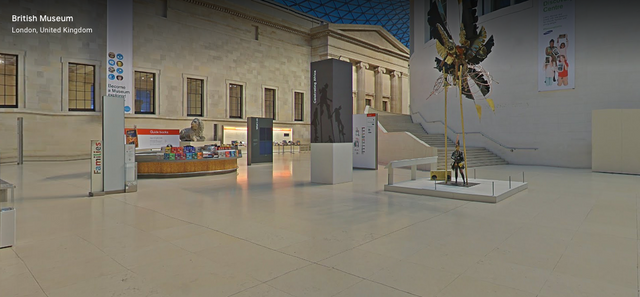
British Museum virtual gallery tour
Like numerous orchestras and opera companies, museums and galleries have taken to putting their work and contents online. The public response in many cases has been great. The British Museum’s online collection page “jumped from roughly 2000 daily visits to 175,000 early last week, and is now averaging 75,000 a day” (New Statesman). In mid-March, the Courtauld Gallery in London, an art museum that specializes in French Impressionist and Post-Impressionist paintings, experienced an increase of 723 percent from one week to the next in visitors taking its virtual tour. Visits to the Paris Louvre’s website have exploded, going from 40,000 to 400,000 visits per day. The website of the world-famous Hermitage Museum in Saint Petersburg, Russia, has been accessed 10 million times since the museum’s temporary closure.
No doubt, much of this is to be accounted for by the loss of access to other means of viewing art and museum collections generally, but not all. The disaster is producing a hunger for knowledge.
Hermitage Museum virtual tour
Meanwhile, at the other end of society, “Bored Rich People Are Shopping Online For $500,000 Bracelets,” Bloomberg recently commented.
To the “astonishment” of Catharine Becket of Sotheby’s, in charge of the auction house’s “magnificent jewels” sale, Bloomberg reported, “collectible jewelry sales started to do well—very well. Speaking to her wealthy clients, she discovered they were buying jewels as a sort of pick-me-up. ‘Clients are sequestering at home and, generally speaking, leading relatively dreary lives,’ she says. Some, Becket adds, told her ‘they’re wearing their big diamonds inside their homes because it brings joy.’
“Everyone, she says, ‘is waiting for this to be over, and I suppose knowing that a million-dollar piece of jewelry is waiting for you is a fulfillment of when things return to the new normal.’” This hardly requires a comment.
Sotheby's auction
What will the painters, writers and filmmakers make of the present painful and contradictory circumstances? The current disaster makes the position of the serious and honest artist even more untenable within bourgeois society. Official politics, from right to “left,” in every country can only increasingly generate disgust and horror. The illusions in politicians who, by their brutal “return to work” policies, are condemning hundreds of thousands to death, must largely fall away. Then what?
The pandemic has also exposed the bankruptcy of the politics of gender and race, which has dominated the art world in recent years. What does any of that, the selfish strivings by a handful for more privileges and positions, have to do with the needs of broad layers of the population, whose very lives are endangered by the continued existence of the profit system? In their great majority, those who are suffering and dying belong to the working class or the less privileged sections of the middle class. The class question has once again—in the most graphic and horrifying manner—revealed its overwhelming significance. The most sensitive artistic figures must begin to take note!
The objective situation demands, in our view, a turn by the artists to historical and social reality—the present levels of understanding are utterly inadequate—and a turn also to the working class and its fate. We will develop this theme in future articles.

Millions of Australian workers blocked from “JobKeeper” scheme

Martin Scott

More than a month after the federal government’s JobKeeper wage subsidy scheme was unveiled on March 30, millions of workers are still excluded from it or uncertain as to whether they will be paid under the scheme.
The measures will be in place for six months despite indications that many industries will be seriously impacted for many years to come. This includes the entertainment, tourism and hospitality sectors, which were among the first and most dramatically affected by the coronavirus shutdown.
A central purpose of the subsidy is to bail out big business while disguising the true level of mass unemployment, as workers receiving the JobKeeper payment are still counted as employed, even if their pay has been significantly reduced.
An April 19 report by the Grattan Institute estimated that the real jobless rate could reach 30.2 percent during the COVID-19 pandemic, two to three times what the official figures will show.
No reliable statistics exist on JobKeeper. The Department of Treasury estimated last week that around 3.3 million employees would receive the wage subsidy. This suggests that at best, only a little more than half of the promised $130 billion will end up in the hands of workers. Because the funds are provided to employers, not workers, the scheme has been designed to facilitate rorts, including the denial of payments to workers.
When the government announced the scheme, it claimed JobKeeper would save the jobs of six million workers. That was always a lie. As the WSWS warned: “Over the next six months, the government will pay much of the wages bills of big business, without any guarantee that any of the millions of jobs already wiped out will be restored.”
Many workers are completely ineligible. At least 2.5 million are not covered by the scheme, including international students, workers on temporary visas, and casual employees who have not worked for their current employer for at least 12 months. Also excluded are freelancers who are not sole traders, but who are employed on short-term contracts for different companies.
The JobKeeper legislation contained substantial changes to the so-called Fair Work Act, hammered out in a backroom deal between Industrial Relations Minister Christian Porter and union boss Sally McManus, the president of the Australian Council of Trade Unions (ACTU).
McManus hailed the package as a “historic win for working people,” and the Labor Party rushed it through parliament. Under the legislation, employers are free to slash workers’ hours, to reduce their pay to the level of the wage subsidy, change their duties and order them to work at a different location.
Employers also can force workers to take their annual leave at full pay, or, by written agreement with the employee, at half pay for double the length of time. In either scenario the employer would continue to receive the JobKeeper payment while reducing the balance of leave owed, effectively double-dipping.
There is no requirement that businesses retain all current employees or rehire those already let go since the onset of the pandemic.
The scheme dovetails with the government’s push for an imminent full return to work, with businesses incentivised to re-open and have their labour costs paid while earning up to 70 percent of pre-coronavirus revenue.
The scheme offers no protection for workers who refuse to go back to work under unsafe conditions, even with governments admitting that reduced lockdown measures will result in an increase in possibly fatal COVID-19 infections.
The JobKeeper payment is a flat rate of $1,500 per fortnight—less than 70 percent of median earnings—irrespective of what employees previously earned or how many hours they worked each week. This applies across the board, including for skilled full-time employees with decades of experience.
Workers’ needs and obligations are completely disregarded. A sole breadwinner with a mortgage and a family receives the same flat rate as an 18-year-old living rent-free with his parents. The effect of this is to pit sections of the working class against one another.
In some cases, full-time workers have actually been paid less than part-time and casual staff. Employers are responsible for withholding income tax from the JobKeeper payment, and this has led to some workers being paid as little as $945 per fortnight because their pre-coronavirus salary was in a high tax bracket.
Many JobKeeper registrants are sole traders who have been forced to navigate the scheme—the rules of which have changed frequently—without the help of a staff accountant. For at least the first two days that enrolment was open, it was not possible for sole traders with no employees to register correctly because of an error in the online form.
Aside from sole traders, many JobKeeper enrolments are from small businesses, for which the system presents even greater complications and challenges.
The wage subsidy will be paid to an employer a month in arrears, and businesses will receive the payment only if they can demonstrate that they have already paid all eligible workers. Further complicating matters, the Australian Tax Office does not confirm the eligibility of nominated workers until after they have been paid.
Small or family businesses facing an unprecedented sudden downturn in business and lacking the cash on hand to cover a month’s wages are therefore forced to take on significant debt, and risk not being fully reimbursed.
Contrary to its promotion as a measure to support the continued employment of workers, the JobKeeper scheme is in fact a new profit centre for the banks, as well as large employers.
Through the Coronavirus Small and Medium Enterprises Guarantee Scheme, the government will guarantee 50 percent of new unsecured loans to small businesses, with no restrictions on the interest rates or fees that banks can charge.
The government also temporarily suspended “responsible lending obligations,” allowing banks to extend credit to small businesses beyond what they could reasonably be expected to pay back.
Some employers, wary of taking on further debt, and with unanswered questions around superannuation obligations and workers’ eligibility, have opted not to register for the JobKeeper scheme and rehire workers.
Around 900,000 businesses initially expressed interest in JobKeeper, but just over half had actually signed up before the original deadline of April 30. The cut-off has since been extended to May 31, although businesses will only be able to receive the reimbursement for April if workers have been paid by May 8.
The workers themselves have no say in their employer’s decision to enrol in the JobKeeper scheme. More than six weeks after many businesses were shut down or severely restricted, many small business owners and millions of workers still do not know for sure whether they will receive the payment.

At least 1,245 Philippine health workers test positive for COVID-19

Owen Howell

The Philippine government’s health ministry revealed last week that at least 1,245 health workers across the country had tested positive for the coronavirus.
Department of Health Undersecretary Maria Rosario Vergeire said that among the infections were 471 nurses, 464 doctors, 69 nursing assistants, 41 medical technologists, 25 radiologic technologists, and 10 midwives. Already 21 doctors and six nurses have died from the virus.
Figures from the John Hopkins University and Medscape showed that Philippine healthcare professionals have the highest death rate from COVID-19 in the world.
According to a Reuters report last week, the World Health Organisation (WHO) had pointed to the country’s lack of adequate protective gear for medical personnel at an early stage of the crisis. Abdi Mahamud, the COVID-19 incident manager for the WHO Western Pacific Region, described the vulnerability of health workers to the virus as a “worrisome trend,” and an indicator of what lies ahead for the country’s healthcare system.
Mahamud concluded that the rate of infection among health workers, which is now 13 percent of all cases in the Philippines, is probably linked to the shortage of personal protective equipment (PPE) and high levels of exposure to the coronavirus among infected individuals.
Medical workers had sounded the alarm over an extreme shortage of equipment for several weeks before the government announced it would aim to produce 10,000 sets of PPE daily, news website Rappler reported. Government purchases of at least a million PPEs for health workers over the past month have proven inadequate to meet the demands of overwhelmed hospitals.
Frontline health workers have, in addition, been demanding regular staff testing and more trained employees in dealing with the outbreak for months. Protests have taken place at various locations across the archipelago nation, including the National Children’s Hospital in Manila in February.
More significant than the shortage of equipment, however, is the chronic lack of doctors and nurses. In a country renowned for medical professionals moving to advanced Western countries to escape low wages, there are six doctors and eight nurses for every 10,000 people, in a population of 109 million.
For decades, successive Philippine governments and private nursing schools have actively marketed the nursing profession as a stepping stone towards emigration. This has encouraged thousands of Filipino youth to invest in nursing degrees, only to find a shortage of permanent positions in hospitals after graduation.
Instead of bringing newly-qualified professionals into the depleted healthcare system, governments disbursed small funds to hire nursing graduates on three-month contracts with no promise of renewal, as Channel News Asia explained in a commentary last month. Labour officials waged a campaign in which unemployed medical graduates were urged to apply for other, more lucrative health-related industries in the private sector.
Consequently, hospitals and other health facilities are now being pushed to breaking point by the COVID-19 crisis. The Department of Health has called on workers to volunteer as hospital nurses, offering an allowance of $US10 per day, with no health insurance or benefits.
Quarantine capacity at airports is similarly unprepared for the scale of the pandemic. Overseas workers are currently unable to return home due to a temporary suspension of all commercial flights in and out of the country, which began yesterday. Over 24,000 Filipinos working abroad have so far placed immense pressure on quarantining, the Straits Times wrote, with an estimated 250,000 more expected to return in the coming weeks.
The decision has left hundreds of thousands of migrant workers, most of them jobless, marooned in other countries. Many are confused by the abrupt order, after ambiguous instructions were originally issued by government officials.
Roldan Abarentos, a seaman, expressed on a Facebook post the frustration of thousands of migrant workers: “As seafarers, we really want to go home. We’re stuck in the ship, and now again [the government] makes a decision without any further notice!”
As of yesterday, the Philippines had reached a total of 9,223 cases and 607 deaths. Due to the low rate of testing, and the speed of transmission from island to island, the real total is likely far higher.
Crematory workers have been inundated with dead bodies, most of which had never been tested and were, therefore, not counted in the official COVID-19 death toll. As they were suspected victims of the virus, the bodies are still wrapped in plastic and treated with caution.
Families of the victims are denied traditional death rites in favour of hurried, impersonal cremations. Virus restrictions often mean they are forbidden even a last look at their loved ones. People asking for the ashes of their relatives cannot be certain as to whose remains they are receiving, due to the hurried methods of cremation.
Romeo Uson, a 54-year-old worker at a Manila crematorium, told Agence France-Presse that his facility has been conducting six to seven cremations a day since March, double the usual number.
Viral hotspots tend to be underdeveloped and impoverished neighbourhoods in the major cities. Despite lockdown measures and a month-long quarantine of the island of Luzon through April, widespread community transmission continues throughout the poor districts of Metro Manila.
Prisons have been severely affected, with outbreaks of the virus infecting both inmates and staff. On Saturday the government ordered the release of nearly 10,000 inmates in a bid to ease congestion in the country’s most overcrowded jails in Metro Manila, as well as the Visayas and Mindanao regions.
Social distancing is all but impossible in the Philippine prison system, where cells are sometimes filled to five times their capacity due to totally inadequate infrastructure and a slow-moving and overburdened judicial system. Quezon City Jail is a facility so crowded that inmates take turns sleeping on staircases and open-air basketball courts.
Prison overcrowding is a direct result of President Rodrigo Duterte’s “war on drugs” launched in 2016, which has sent thousands to prison.
For the past four years, Duterte has repeatedly threatened to impose nationwide military rule over the Philippines, evoking the nation’s memory of the decade-long Marcos dictatorship. He is now seeking to utilise the social crisis caused by the pandemic to justify the further implementation of police state measures, as a means of suppressing any form of opposition to the government.
Police said they have arrested more than 100,000 people since the lockdown was first declared. Videos showing curfew violators being abused by police officers quickly went viral on social media.
Strict social distancing measures in Manila have meant that residents who are not essential workers are only permitted to leave home for food or healthcare. But large sections of the Philippine working class, with no current source of income, have no choice but to seek work.
In a televised address on April 16, Duterte addressed the public in the following manner: “I’m just asking for a little discipline. If not, if you do not believe me, then the military and police will take over. The military and police will enforce social distancing and curfew… It’s like martial law. You choose.”
Duterte went on: “My orders to the police and military… ‘If there is trouble and there’s an occasion that they fight back and your lives are in danger, shoot them dead…’ Is that understood? Dead. Instead of causing trouble, I will bury you.”
His comments came only hours after the arrests of around a dozen residents in a poor area of Manila for protesting about inadequate government food aid. The incident provoked mass outrage on social media, with the hashtag #OustDuterte trending on Twitter. On hearing about the popular anti-government sentiment, Duterte responded that only the military and the police could remove him from power.