7 May 2020

German government plans purchase of 138 fighter jets and prepares for nuclear war

Gregor Link & Johannes Stern

Germany’s government is preparing to purchase 93 Eurofighters and 45 US-made F-18 fighter jets for a total cost of almost €20 billion. The Eurofighter is produced by Airbus, while Boeing makes the F-18.
Among the latter type are 30 “Super Hornet” jets, whose purpose is to guarantee Germany’s involvement in atomic warfare and make possible the deployment of US nuclear weapons located on German territory in the event of a nuclear war. Tornado strike bombers have been used for the purpose, but they need to be removed from service by 2030 and replaced.
Der Spiegel reported last month that German Defence Minister Annegret Kramp-Karrenbauer (Christian Democrats, CDU) offered the deal to US Defence Secretary Mark Esper in an email. The extra-parliamentary move apparently took place with the approval of the CDU’s coalition partners, the Social Democrats. In a statement, the Defence Ministry noted that the SPD had been involved in the process for weeks. Der Spiegel also reported that secret agreements were struck with Foreign Minister Heiko Maas and Finance Minister Olaf Scholz (both SPD).
F/A-18F Super Hornet during a supersonic test flight in 2010. (Image Credit: U.S. Navy photo by Liz Goettee)
On Monday, government officials reiterated Germany’s commitment to the “nuclear participation” as part of NATO. It is “an important component of a credible deterrence strategy in the alliance,” stressed government spokesman Stefan Seibert in Berlin.
Foreign Minister Maas distanced himself from other SPD members, including SPD co-leader Norbert Walter-Borjans, who over previous days criticised Germany’s purchase of US-made planes and the close nuclear alliance with Washington. “One-sided steps that undermine the trust of our close partners and European neighbours weaken our alliances,” Maas declared.
On Sunday, SPD parliamentary group leader Rolf Mützenich told German daily Tagesspiegel, “the nuclear weapons on German territory do not heighten our security, on the contrary.” It is “high time for Germany to rule out future stationing. Other states have done this without calling NATO into question.” He then added, “As Germans, we should confidently demand to influence NATO’s nuclear strategy, even when no nuclear weapons are stored on our territory.”
The criticism of the government from sections of the SPD, who are being supported by the Left Party, has nothing to do with pacifism. Its goal is to develop a foreign and nuclear policy that is more independent of the United States and dominated by Germany and the EU. In the past, the SPD demanded that the Tornados be replaced exclusively with repurposed Eurofighters to “promote domestic production and prevent too great a reliance on the United States,” as a report from the news channel N-TV noted.
Regardless of which fighter jet model the German government ends up choosing, what is taking place is the largest rearmament of the German air force since the end of the Second World War, and, in the final analysis, the nuclear arming of Germany. According to the Defence Ministry, the government’s desire to purchase F-18 fighter jets is merely seen as a “temporary solution for nuclear participation and air-supported electronic combat.” The development of “[Future Combat Air System (FCAS)] should not be endangered.”
The FCAS is a European system composed of manned multi-purpose fighter jets, several unmanned aircraft (remote carriers), and new weapons and communications systems. The plan is for an integrated combat system incorporating drones, fighter jets, satellites, and command-and-control aircraft, potentially linked to an independent nuclear capability.
In a keynote foreign policy address in February, French President Emmanuel Macron appealed for a “strategic dialogue” on Europe’s nuclear deterrence. In the face of a nuclear arms race, Macron declared that the Europeans cannot restrict themselves “to the role of spectators.”
FCAS is part of the Franco-German led drive to transform the European Union into a military power capable of waging war independently of, and if necessary, in opposition to, the United States. Under conditions of mounting conflicts between the major powers, the development of the project is being pushed ahead aggressively. After Germany, France and Spain officially launched FCAS last June, there will “now be a shift to the technological development and demonstration over the next 18 months with a German investment of €78 million,” noted a report from the Defence Ministry on February 13.
In a press statement from April 22, Kramp-Karrenbauer also noted that the fighter jets were “a transition… to the future goal-oriented technology of FCAS.” The issue with the replacement of the Tornado fleet is to “equip the air force of the armed forces in the future in such a way that all of the capabilities of the Tornado, the capability of air combat, reconnaissance, electronic warfare, and also the capability for nuclear participation, can be covered in the future.” In this process, it is “important that we retain the industrial policy capabilities here in Germany and Europe. We need a solution that ensures that the major European air system of the future, namely FCAS, is not put at risk in the period after 2040.”
The sums of money set aside for the project are gigantic. With the cost for each F-18 standing at $93 million (€85 million) and each Eurofighter costing $170 million (€156 million), the total cost for 138 jets amounts to $20 billion or €18.5 billion, although the cost for new rearmament programmes generally turn out to cost many multiples of the original figure.
The cost of the European air system is substantially higher. In total, costs will rise above €100 billion. Handelsblatt reported last year that by mid-century, the system will gobble up “up to €500 billion.”
In the midst of the raging COVID-19 pandemic, the financing of this project is a social and political crime. As the International Campaign for the Abolition of Nuclear Weapons and the International Doctors for the Prevention of Nuclear War noted, the cost for the F-18 jets alone (€7.47 billion) would be sufficient to establish 100,000 intensive care beds, purchase 30,000 ventilators, and pay 60,000 nurses and 25,000 doctors for an entire year.
The purchase price for these weapons of mass destruction would suffice to finance the work of the World Health Organisation for four-and-a-half years.
The German government’s plans make clear that 75 years after the end of the Second World War, German imperialism and militarism is once again reviving its criminal traditions. The German ruling elite is responding to a nuclear arms buildup by the United States and the mounting tensions between the major powers by preparing their own plans for annihilation.
Influential think tanks, commentators, newspapers, and politicians have been demanding Germany’s own weapons of mass destruction for some time.
Recently, the president of the German Society for Foreign Policy (DGAP) and former head of Europe’s second large arms company EADS, Tom Enders, called, in a piece entitled, “We must talk about nuclear weapons” for collaboration with France or the creation of Germany’s own nuclear deterrent. “A responsible German security and foreign policy” must consider “the Federal Republic of Germany’s nuclear options soberly and with regard to reapolitik.” This discussion should “not exclude any option from the outset as taboo,” including “the seemingly unthinkable: does Germany need its own nuclear weapons?” The “building of a combat-ready European defence union is hard to imagine without nuclear backing.”
The only way to avert this arms race and the extermination of humanity in a third world war fought with nuclear weapons is by mobilising the working class against rearmament, war and its source—the capitalist profit system. Workers and young people must fight for the expropriation without compensation of the arms companies, the banks, and the super-rich oligarchy so that these vast resources can be deployed to combat the pandemic and meet the social needs of the vast majority. These demands are inseparable from the establishing of workers’ power and the socialist transformation of society.

Jobs massacre deepens in European aviation as four UK corporations announce 26,000 redundancies

Julia Callaghan

Aviation conglomerates across Europe are slashing jobs and tearing up contracts in order to maintain their profitability.
The airline industry has been hit hard by the coronavirus pandemic as global air travel has ground to a halt. Europe has suffered a 90 percent collapse in air traffic, with its largest airport, London Heathrow, reporting just 3 percent of normal passenger numbers. Lufthansa and Ryanair are currently operating 1 percent of their fleet.
In response to the unprecedented crisis, major companies sitting on billions in revenue are focused solely on continuing to extract profits at the expense of their workers. Corporations are demanding vast amounts of public money, pushing the cost of furloughed workers’ salaries onto the taxpayer and demanding massive additional government bailouts.
British Airways' Airbus A350-1000 (Image Credit: Oyoyoy/ Wiki Media)
At the same time, they are making tens of thousands redundant, rewriting contracts and forcing sweeping pay cuts. The crisis is providing a vast opportunity to accelerate the “streamlining” of operations, boosting short-term profits for a few individuals while destroying thousands of livelihoods.
In recent days, four companies based in Britain and Ireland—British Airways (BA), Virgin Atlantic, Rolls-Royce and Ryanair—have announced they will be laying off a combined total of 26,000 workers.
Despite its €9.5 billion cash reserves, BA will slash 12,000 jobs—or 30 percent of its workforce. It said the cuts were necessary to put the company “in a competitive and resilient position, not just to address the immediate COVID-19 pandemic, but also to withstand any longer-term reductions in customer demand, economic shocks or other events that could affect us”.
On May 1, just three days after announcing the redundancies, a leaked report revealed that BA planned to tear up the contracts of its entire remaining workforce and replace them with new “zero-hour” contracts. Deeply exploitative, but now the norm across the “gig economy” and beyond, zero-hour contracts leave workers entirely at the mercy of employers—denying them any security of work or income and removing basic rights and protections such as paid holidays, maternity leave and sickness pay.
This mass demolition of jobs, rights and conditions will decimate the lives of 42,000 BA workers, their families. The UK’s national flag carrier is making clear that secure, decent-paying jobs are fundamentally incompatible with boosting profits.
Also on May 1, British aero-engine maker Rolls-Royce announced its intention to lay off 8,000 workers and reduce the salaries of those remaining by at least 10 to 20 percent.
The drive for “greater efficiency” at the expense of workers is nothing new for Rolls-Royce, with the engineering giant relentlessly cutting jobs since 2013. This summer was due to mark the end of a two-year wave of 4,600 redundancies, which were intended to “deliver improved returns, higher margins and increased cash flow.” These were aimed at slashing £400 million in annual costs, in pursuit of Rolls-Royce’s “long-term ambition to be the world’s leading industrial technology company.”
Now, in the wake of the coronavirus pandemic and even while pushing through its most extreme cuts in 30 years to “increase our liquidity” and “strengthen our resilience,” Rolls-Royce has warned its remaining workers “we will need to take further action.”
Making clear that “we” refers to profit-hungry shareholders, not workers, Virgin Atlantic’s CEO Shai Weiss said, “If we are to safeguard our future and emerge from the crisis a sustainably profitable business, now is the time for further decisive action to reduce our costs and preserve cash.” This came after announcing the axing of 3,150 jobs and requesting a £500 million government bailout.
Richard Branson’s Virgin Group, which owns 51 percent of Virgin Atlantic, failed in its initial request for £7.5 billion of public money to be handed over to aviation firms—as the UK government feared a social backlash by the population against such largesse. Branson is the UK’s seventh richest person with an estimated worth of £4.7 billion and has lived tax-free on a private island in the British Virgin Islands for the past 14 years.
Ryanair announced plans to eliminate 3,000 jobs last Friday and had previously hinted it may eventually cut up to a third of its 19,000-strong workforce. The airline said, “These plans will be subject to consultation but will affect all Ryanair Airlines and may result in the loss of up to 3,000, mainly pilot and cabin crew jobs, unpaid leave, pay cuts of up to 20 percent and the closure of a number of aircraft bases across Europe until traffic recovers.”
Such attacks are being carried out throughout the European airline industry.
The Lufthansa Group and Air France-KLM are between them looking at €22 billion in government bailouts. The Lufthansa Group will cut 10,000 jobs and pilots’ pay by 45 percent. Air France-KLM Chief Executive Ben Smith insisted, “This financing will give us the opportunity to rebuild...we are going to have to rethink our model immediately.”
Ryanair’s CEO Michael O’Leary opposes his main rivals receiving vast state funds and further loans based on threatening his firm’s market position. “The weakest airlines going into the crisis—Lufthansa, Air France, KLM, Alitalia—who were going to in normal circumstances have to restructure and retrench are now going to be enormously enriched with this state aid doping. I think what we are facing now is that...they’ll be able to make life very difficult for the well-run airlines.”
Like every capitalist, for billionaire O’Leary “well-run” means most skilled at squeezing the maximum possible surplus value from workers. Ryanair is notorious for its treatment of staff, from its use of zero-hour contracts, to making pilots and cabin staff pay for their own uniforms, medicals, parking, food and drinks.
Scandinavian Airlines is eliminating 5,000 employees, while receiving a joint €410 million guarantee from Sweden, Denmark and Norway. Icelandair will lay off 2,000 employees after receiving almost €650,000 in public money.
In June, the Italian government will take control of failing Alitalia, injecting it with €600 million of public money while also reducing its fleet and 12,000-strong workforce.
As enormous as these cuts are, they are just a precursor. According to a study by the Institute for Social and Economic Research at the University of Essex, more than 6.5 million jobs could be lost due to the economic dislocation resulting from the pandemic. In the accommodation and food services sector, the study predicts that 1.3 million jobs could go. The wholesale, retail and repair of motor vehicles sectors could see a 47.6 percent loss in jobs. About 700,000 positions are threatened in the transport and storage sector.
Such seismic, industry-wide restructuring would not be possible without the collaboration of the trade unions, who are defending the interests of the corporations, in direct opposition to their members.
Throughout 2019, the British Airline Pilots Association (BALPA), Irish Air Line Pilots Association (IALPA), Unite and GMB played a central role in isolating and neutralising their members’ struggles—selling out strikes and facilitating numerous attacks on their pay and conditions.
Amidst the current job-loss bloodbath, the utterances of the unions are barely distinguishable from those of the corporations. BALPA sees its main role as lobbying for more public money to be poured into “our” private companies, as it calls “for the government to deliver its package of support to help our airlines though this crisis and protect the multitude of other industries that are indirectly reliant on aviation. … Without swift action, UK aviation will fall behind our global competitors.”
The attacks at BA are being imposed despite it receiving huge amounts of state funds in furlough payments. The Unite union has agreed to BA sending staff home, a 20 percent pay cut, and further exploitative clauses.
Referring to the BA jobs massacre, Unite General Secretary Len McCluskey shed crocodile tears over the “heartless decision” but was primarily upset not to have been consulted. He said, “we would have expected him [BA CEO Alex Cruz] to work with both us and the government. … Governments across Europe, in Spain, Germany and France are working with trade unions and airlines to rebuild back better.”
Another Ryanair-connected firm, Blue Handling, which provides services to Ryanair at Stansted airport, has cut 100 staff, sending them letters in March terminating their contracts and informing them they would not have their wages paid under the government’s furlough scheme.
The union representing Blue Handling workers has done nothing to fight the job losses, declaring, “Unite has been working with the company to find ways to minimise any potential costs. The union has made a number of proposals, but their employer … has decided not to do the right thing for their former employees.”

Over 40 percent of mothers with children ages 12 and under are now food insecure in the US

Kevin Reed

A blog post on the website of The Hamilton Project has revealed that hunger in the US has expanded to historically unprecedented proportions since the onset of the COVID-19 pandemic, especially among households with young children.
Reporting on evidence from two surveys, The Hamilton Project shows that by the end of April 2020, more than 20 percent of all US households and over 40 percent of mothers with children under the age of 13 were experiencing food insecurity. These figures are between two and five times greater than they were in 2018, when food insecurity data was last collected.
Households and children in the surveys are considered food insecure if a respondent “indicates the following statements were often or sometime true”:
  • The food we bought just didn’t last and we didn’t have enough money to get more.
  • The children in my household were not eating enough because we just couldn’t afford enough food.
Lauren Bauer, a fellow in Economic Studies at the Brookings Institution who specializes in social and safety net policies, wrote in her blog post on Wednesday, “Rates of food insecurity observed in April 2020 are also meaningfully higher than at any point for which there is comparable data” from 2001 to 2018.
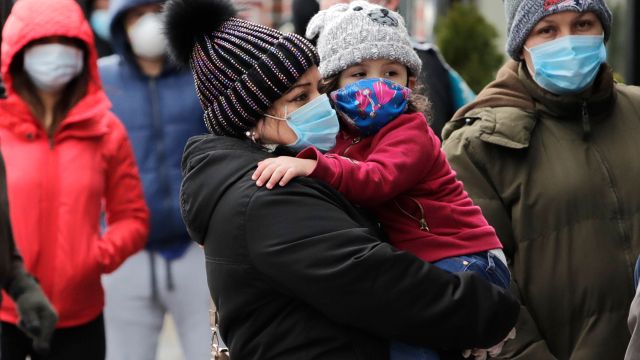
A woman clutches a child while waiting with hundreds of people line up for food donations, given to those impacted by the COVID-19 virus outbreak, in Chelsea, Mass., Tuesday, April 28, 2020. (AP Photo/Charles Krupa)
Further placing the present ability of families to put food on the table in historical context, Bauer writes, “Looking over time, particularly to the relatively small increase in child food insecurity during the Great Recession, it is clear that young children are experiencing food insecurity to an extent unprecedented in modern times.”
Bauer explains that the surveys conducted their own national sampling of mothers in late April by asking the same questions used by the US Department of Agriculture (USDA) in previous food insecurity studies.
Significantly, Bauer also explains that the USDA aggregates a battery of questions on access to food from the Current Population Survey in 2018. If the nearly two-to-one ratio between the percent of mothers with children under the age of 12 who had food insecure children in their household and the percent of families with children who were not eating enough because they couldn’t afford enough food were maintained today, the “17.4 percent [of] children not eating enough would translate into more than a third of children experiencing food insecurity.”
The Hamilton Project (THP) is a Democratic Party economic policy think-tank associated with the Brookings Institution. Launched in 2006, the THP featured then-Senator Barack Obama as a speaker at its founding event, who called the organization “the sort of breath of fresh air that I think this town needs.”
The publication of the US hunger data is part of an initiative by THP to push for increases in government spending on national food programs such as the Supplemental Nutrition Assistance Program (SNAP), formerly known as food stamps.
However, the Democratic Party proposal to increase food stamp benefits by 15 percent is being considered as a temporary measure “for the duration of the economic crisis,” according to the New York Times. In any case, the increase is still insufficient to provide the poor what they need to adequately feed their families, with the average monthly benefit of $239 going up by $36 to $274 under the Democrats’ proposal.
Meanwhile, with tens of millions who have lost their jobs during the pandemic unable to collect unemployment benefits due to delays and backlogs in government systems that are ill-equipped to handle the increase in applications, the same kind of bureaucratic mismanagement is certainly to be expected in the present wave of SNAP assistance applications.
Along with every social program over the past four decades, federal food stamp assistance has been attacked by Democratic and Republican administrations alike as “welfare” that is undeserved by those receiving it. Before the pandemic, President Trump boasted that he forced 7 million people off of food stamps since taking office and the Congressional Republicans were working on a plan to further reduce eligibility and expand work requirements to qualify for the benefit.
The return of mass hunger in America is an inevitable product of the response of the US government and ruling establishment to the pandemic, which has been a mixture of utter indifference to the suffering caused by the health crisis and outright cruelty toward the working class, poor and elderly who have been attacked by COVID-19 infection and death as well as the deprivation associated with the economic crisis.
Clearly, the staggering magnitude of the impact of the pandemic on families has been revealed by the findings of The Hamilton Project food insecurity study. As dire circumstances confronting millions of people persist and deepen, the crisis is pointing directly to social convulsions that have not been seen in the US since the Great Depression of the 1930s.

Italian statistics agency reveals real coronavirus death toll is higher by 12,000

Will Morrow

The Italian statistics bureau ISTAT reported on Monday that the real coronavirus death toll in the country is far higher than the official count of more than 29,000 people.
ISTAT’s report was produced together with the country’s National Health Institute, and based on an analysis of the total death rate across the Italian population, spanning the period from February 21, when the first coronavirus death was reported, through to the end of March.
There were 90,946 deaths reported from all causes over this period, compared to 65,592 in 2019. Of the difference, some 25,354 additional deaths, just over 54 percent were confirmed COVID-19 cases, and added to the authorities’ tally. But due to the government’s refusal to conduct large-scale testing for the disease, an unknown number of thousands more died without ever even being tested for the virus.
A patient in a biocontainment unit is carried on a stretcher from an ambulance arrived at the Columbus Covid 2 Hospital in Rome.(AP Photo/Alessandra Tarantino)
By breaking down the excess death toll by geographical region, the study indicates that the rise was overwhelmingly attributable to COVID-19. More than ninety percent of the “excess” deaths at the national level (comparing March 2019 to March 2020) were concentrated in the regions hardest hit by the pandemic: 37 northern provinces, plus Pesaro and Urbino.
Deaths in these areas more than doubled to 49,351 compared to 2019. Taking the years 2015-2019 as a base average, the study found that the death rate increased by the following amounts in the regions where the largest coronavirus cluster occurred: in Bergamo, 568 percent; in Cremona, 391 percent; in Lodi, 371 percent; in Brescia, 291 percent; in Piacenza, 264 percent; in Parma, 208 percent; in Lecco, 174 percent; in Pavia, 133 percent; in Mantua, 122 percent; in Pesaro and Urbino, 120 percent.
The report concludes that in addition to the 13,700 deaths reported up to March 30 from COVID-19, an additional 11,600 people died either directly from the virus or from the breakdown of the health system in the areas hardest hit. To this must be added the many thousands or tens of thousands more who have died in the period since March 31.
This is not the only report making clear that the official death toll is a vast underestimate. A mathematical study was published on April 20 by three scientists from the University of California-Berkeley, based on a statistical analysis of excess death rates (comparing 2020 to the period of 2015-2019) in Italy, broken down by population age group.
The authors concluded that for the population aged under 70, the official death count was a reasonable estimate of the total number of deaths, but that it significantly undercounts the 70-plus age group. They estimate that by April 20, the real number of deaths was 52,000 (with an uncertainty range of 2,000), more than double the official number of 24,114 that had been reported at that point.
The Conte government’s own figures are a deliberate cover-up. It has not implemented large-scale testing and does not want the full scale of the disaster to be known because it is implicated in the death toll.
The country entered the coronavirus pandemic with just 8.6 intensive care beds per 1,000 people in the population. Savage austerity led by the Democratic Party over more than a decade under the demands of the European Union slashed the budget of the health care system.
An April 26 report by AP documents the systematic refusal of authorities to take necessary actions to prevent the spread of the virus, including rejecting the recommendations of national health authorities. Their decisions were conditioned at every point by the overriding concern to prevent any impact on corporate profits.
By March 2, the National Health Institute had recommended the full lock-down of Alzano and Nembro. The lock-down was never implemented, and the disease was allowed to spread another week uninhibited until a full confinement was imposed on March 7 across Lombardy. Even then, however, non-essential production was kept open, which was only stopped due to the eruption of nationwide wildcat strikes by workers demanding the idling of non-essential plants, in defiance of the governments and the pro-corporate trade unions.
“The army was there, prepared to do a total closure, and if it had been done immediately maybe they could have stopped the contagion in the rest of Lombardy,” Dr. Guido Marinoni, head of the association of doctors in Bergamo province, told AP. “This wasn’t done, and they took softer measures in all of Lombardy, and this allowed for the spread.” The Lombardy region is a major economic center, responsible for more than a fifth of Italian GDP.
From the start, the response of the Italian ruling class, like its counterparts throughout Europe and America, has not been oriented to saving lives, but to guarding profits. It is responsible for the deaths of tens of thousands, and if allowed to continue with these policies, will oversee the deaths of an untold number more.
Even as the real scale of the coronavirus pandemic’s impact is being covered up, Italian authorities are moving to a full re-opening of the economy. While trillions of dollars have been used across America and Europe to prop up share markets and stock prices for the financial elite, the working class is being forced to return to work to continue producing profits.
This week, all non-essential production began to re-open across the country, with millions of workers pushed back to work. Restaurants and cafés are already operating take-out services. Beginning on May 18, the government has announced that all restaurants could fully open.
On Monday, a report was released by Imperial College of London, using data from Italy, which predicts that the end to the country’s 60-day nationwide lockdown will lead to tens of thousands of additional deaths of people who would otherwise have been saved.
The report provides a region-by-region analysis of movement of the population using Google location data, both before and after the beginning of lockdown measures. They model the transmission rate of the virus (the average number of people that every infected person infects) as a function of this overall population mobility.
The analysis concludes that even a 20 percent increase in total mobility in the population compared to lockdown would lead to an additional 3,000 to 5,000 more deaths than would otherwise have occurred if confinement had been maintained.
If mobility increases by 40 percent, the study estimates that the total number of deaths will increase by anywhere from 10,000 to 23,000.
These are, again, not the total number of deaths, but only the additional deaths that would otherwise have been avoided if confinement had been maintained. The capitalist class’s response to the pandemic is a policy of mass murder. As the World Socialist Web Site explained in its Perspective yesterday: “It is becoming increasingly clear that the fight against the pandemic is inseparable from a fight against the capitalist system. The conflict between the needs of society and the profit system is not just a theoretical question. It is demonstrated in practice every single day.”

Coronavirus pandemic ravages rural areas in US and internationally

Bryan Dyne

The spread of coronavirus cases and deaths into rural areas across the United States and internationally lays bare the lie that the response by the Trump administration and other governments is a “success story” and the “war” against the pandemic is being won.
There are more than 3.8 million confirmed coronavirus cases internationally and 264,000 deaths. So far, less than 1.3 million have recovered, meaning that more than 2.2 million lives across the planet still hang in the balance. Moreover, there has been a sharp increase in the number of new cases in Russia, Brazil and India, which are on their way to becoming new epicenters of COVID-19.
Even in countries where the official total of new cases has been decreasing in densely packed urban areas thanks to physical distancing measures, such as the United States, the case counts and death tolls in rural areas have begun to increase. In fact, if the cases in New York City are not counted, the number of new cases in the US overall is still increasing.
A family at the Galleria Dallas shopping mall in Dallas, Texas, May 4, 2020. (AP Photo/LM Otero)
It is well known that the official figures for both infections and deaths vastly underestimate the actual toll of the virus, in part because in most countries testing remains wholly inadequate.
The criminality of the policies being pursued in country after country was further exposed by a report published Tuesday on the preprint server bioRxiv, which documents a mutated strain of the coronavirus, one that started in Europe and is much more infectious than the original strain that emerged in Wuhan, China.
Not only are mutations potentially more infectious and/or deadly, the strain of the virus may be sufficiently different to require a different vaccine. This is why a new flu vaccine is developed each year, because new strains of the virus are always evolving.
Such a situation in the case of the coronavirus would be an order of magnitude more severe. Not only is there not a working vaccine or known therapeutic, there is no natural immunity to the disease among the world’s population, meaning that a second strain is a potential second infection. As such, the policy implicitly being put forward by sending workers back to offices and factories—that of “herd immunity”—becomes even more homicidal in its implications for the vast majority of the world’s people.
There is very little known about the virus from an epidemiological standpoint. The World Health Organization has warned that it is unclear if surviving the virus provides meaningful immunity in the first place. And a variety of medical reports have been produced showing that even those who do recover from the pandemic are often beset with lung, heart, liver or brain problems that can last decades. Age has proven to be no defense. Even infants have died from the coronavirus, and adults in their 30s are suffering strokes after being infected.
In recent weeks, a mysterious new COVID-related syndrome has emerged among children on Long Island, in New York City and in other hot spots around the US. According to the New York Times, at least 50 children on Long Island and in the city have been treated for the disease, which doctors are calling pediatric multisystem inflammatory syndrome. The illness involves inflammation of the blood vessels and has caused a number of its child victims to become critically ill and be placed into intensive care units.
According to the John Hopkins Coronavirus Resource Center, some of the areas now being hit the hardest in the US are among the most isolated in the country. One of the worst-hit areas is Hall County, Nebraska, with a population of 58,600. It has 1,284 cases and 28 deaths, giving it a per capita case count that rivals New York City. It also is one of the least prepared for a pandemic. According to StatNews, it has less than 30 critical staff within a 40-minute drive of residents and has less than 650 hospital beds for all medical care, not just coronavirus cases.
Nationally, 130 rural hospitals have shut down since 2010, and more than 450 are at risk of closing because of the pandemic. According to the Chartis Center for Rural Health, rural hospitals have lost between 50 and 80 percent of their income because outpatient services have largely been canceled in an effort to prevent hospitals from becoming transmission vectors for the disease.
Many of these outbreaks are centered around workplaces that are deemed “essential” for the US economy. Cass County, Indiana, which hosts a major Tyson meatpacking plant, has 1,406 coronavirus cases and an infection rate 10 times the national average. Ford County, Kansas has 869 coronavirus cases, many of which are connected to the Cargill and National Beef plants in the area.
These regions are accounting for an increasingly large fraction of the total US death toll, which has grown to nearly 75,000 in two months. They are facing only the beginnings of their outbreaks. Even the more optimistic models of the pandemic project that many rural areas will not hit their peak number of cases until late August. Yet most rural states have already begun opening up, underscoring the dangers of the back-to-work orders being imposed on their respective populations.
Similar situations exist in rural communities around the world. In Valderrobres, Spain, a town of only 2,400, half of the health care workers at the local nursing home and 50 out of 60 of its residents contracted the coronavirus. Twelve have so far died. The country as a whole has suffered 253,682 cases and 25,857 deaths.
India’s rural population has been particularly hard hit. An estimated 120 million people travel to cities on a regular basis for work, often dozens or hundreds of miles, to take care of their families and communities in the more remote areas of the country. Virtually all of them were stranded on March 24 when Prime Minister Narendra Modi ordered a hasty nationwide lockdown.
As a result, this section of the population began to travel home, most of whom simply started walking. Without any protection from the pandemic, many have succumbed to the disease and many more have become carriers, bringing the contagion to the nonurban parts of the country. The official case count stands at 52,987 with 1,785 deaths, and the country’s rate of new cases and deaths is one of the highest in the world, even as thousands of factories are being reopened.
The pandemic has reached even the most isolated parts of the world’s population. A fifteen-year-old Yanomami boy from the Amazonian village of Rehebe, in Brazil recently died. Rehebe is on the Uraricoera River, which snakes through the mountains and rainforests of southern Venezuela and northern Brazil. Venezuela has 367 cases and 10 deaths, while Brazil has 123,089 cases and 8,412 deaths. It currently has the third most new coronavirus cases and new deaths in the world.
These figures are only precursors to the death tolls that are to come. There is no evidence that the coronavirus pandemic has been contained, despite claims to that effect from virtually every government. Yet it is now being fueled by the world’s ruling elites in their frenzied drive to reopen the economy. They are aware that without a vaccine or a system of testing and contact tracing, they are condemning additional millions to suffer infection and possibly die.
In the midst of this human tragedy—including unemployment, poverty and hunger on a scale not seen since the Great Depression of the 1930s—stock markets around the world continue to rise, fueled by the trillions upon trillions of public funds being injected into the markets by governments and central banks on behalf of the corporate-financial oligarchy.
Masses of workers and oppressed people are becoming increasingly aware that their most fundamental interests, including life itself, are incompatible with the existing economic and political system, based on the accumulation of private profit. A global upheaval is coming. The struggle against the coronavirus pandemic is a struggle against the capitalism system. The most critical question is the construction of a new political leadership in the working class to imbue this movement with an understanding of its revolutionary and socialist tasks.

6 May 2020

GSMA Innovation Fund for Mobile Internet Adoption and Digital Inclusion 2020 for SMEs & Start-ups in Africa and Asia

Application Deadline: 22nd May 2020 at 11.59pm GMT.

Eligible Countries: Countries in Africa and Asia Pacific
  • Africa: Preference will be given to the following list of countries but high quality proposals will be considered from across Sub-Saharan Africa: Burkina Faso, Chad, Democratic Republic of Congo, Ethiopia, Ghana, Kenya, Liberia, Malawi, Mali, Mauritania, Mozambique, Niger, Nigeria, Rwanda, Senegal, Sierra Leone, Somalia, South Sudan, Sudan, Tanzania, Uganda, Zambia, Zimbabwe
  • Asia: Bangladesh, India, Indonesia, Myanmar, Nepal, Pakistan, Sri Lanka
  • Note: Additional due diligence checks may be required for some markets
About the Award: Are you a start-up or SME in Sub-Saharan Africa or Asia? Are you helping people get online for the first time using mobile internet?
You could be eligible to apply for an equity-free grant of between £100,000 and £250,000 to scale your innovation over a 15- to 18-month period. Find out more below.

Type: Entrepreneurship

Eligibility: To be eligible to apply, start-ups or SMEs must meet the following criteria:
  • Have active users and revenue in at least one eligible low- or middle-income market (see 3)
  • Use or be planning to use mobile technology strategically
  • Have the potential and appetite to form strategic partnerships with mobile operators
  • Have clear and measurable socio-economic impact, in particular: serving low-income citizens, rural populations, women and/or youth (see 3)
  • Demonstrate how they will advance the SDGs
  • Be registered and operating in the country of project implementation. The applicant must also be registered in the country where they will receive the grant money (if not the same as the implementation country).
  • Be fully compliant with relevant business licensing, taxation, employee and other relevant regulations in all countries of operation
  • Be compliant with all applicable laws including upholding/adhering to fundamental human rights, UK Modern Slavery Acts, Gender Equality Act, Child Protection Policies and all international labour standards
  • Have 50% matching funding for the total grant amount ‘in cash’ and/or ‘in kind (see 7)
During the selection process, we will also ensure start-ups have:
  • Adequate financial systems to report regularly to the Fund and, if required, undergo an external audit.
  • Adequate internal human resource capability to implement the proposed project within the planned timeframe.
  • Applicants may need to demonstrate how they are compliant with all applicable laws and regulations
We particular encourage the following start-ups to apply (see infographic):
  • Applicants must proactively demonstrate that they have taken steps to ensure their solution reaches women as well as men,
    in addition to people with disabilities and/or have solutions that disproportionately reach women (or have the potential to)
  • Female founders, and start-ups with good representation of women at all levels of the organisation.
  • Local founders supporting local talent.
Selection Criteria: Funded projects will focus on innovations that overcome a number of the barriers to mobile internet adoption including AccessibilityAffordabilityDigital Skills and Safety and Security, and will look to demonstrate commercially sustainable models that can be scaled and replicated in similar environments.

Number of Awards: Not specified

Value of Award: An equity-free grant of between £100,000 and £250,000 to scale your innovation over a 15- to 18-month period.

How to Apply: Apply Here
Please download the terms and conditions document which contains details on the eligibility criteria and application process.
You can find answers to Frequently Asked Questions here. If you have any additional questions about the GSMA Innovation Fund, please email GSMAIF@gsma.com.

Visit the Program Webpage for Details

IsDB-TWAS Postdoctoral Fellowship Programme 2020 for Early-career Researchers

Application Deadline: 8th June 2020

Eligible Countries: Afghanistan, Bangladesh, Benin, Burkina Faso, Chad, Comoros, Djibouti, Gambia, Guinea, GuineaBissau, Mali, Mauritania, Mozambique, Niger, Senegal, Sierra Leone, Somalia, Sudan, Togo, Uganda, Yemen

About the Award: The fellowships will support research related to the United Nations Sustainable Development Goals, providing recipients with high-level training in areas relevant to sustainability science.
IsDB-TWAS Postdoctoral Fellowships are tenable at centres of excellence in developing countries, i.e. research institutions with a well-established track record in research and a demonstrated competency in a field relevant to sustainability science.
A host centre should be identified by the candidate based on his/her particular area of research. In the latter case, TWAS and the scientific reviewers associated with the evaluation process for selecting the awards will make a decision on the suitability of the host institute proposed by the candidate. In all cases, the host centre must be located in a developing country. An example of a valid host centre is provided by the TWAS-CAS Centres of Excellence (https://twas.org/cas-twas-centres-excellence).

Research Areas: The Postdoctoral Fellowship programme provides support for research projects in the following fields (please refer to the guidelines for details):
  • Sustainable Agriculture
  • Education
  • Education for Sustainable Development 
  • Climate Change
  • Energy
  • Sustainable cities
  • Responsible growth
  • Waste management
  • Population growth
  • Green chemistry
  • Biodiversity
  • Plastic pollution and Micro-plastics
  • Water and hygiene
Type: Research, Fellowship

Eligibility: Applicants for IsDB-TWAS Postdoctoral Fellowships must meet the following criteria:
  • Hold a PhD degree in an area of science relevant to the research area of the Fellowship programme
  • Age up to 45 years
  • Has minimum 5 years of experience in the field of research after the PhD
  • Host Institute must be in a developing country
  • Provide an official acceptance letter from the Host Institute
  • Must be a national of and resident in an IsDB LDMC
  • Must be employed at an institution in his/her home country
Awarded scholars must:
  • Not take up other assignments during the period of her/his fellowship
  • Present a research plan agreed by her/his host supervisor
  • Be financially responsible for any accompanying family members
  • Be autonomous in regard to visa application, health insurance and housing in the host country
Number of Awards: Not specified

Value of Award:
  • They are awarded to young scientists from 21 IsDB Least Developed Member Countries (LDMCs) to enable them to undertake postdoctoral research in areas of science relevant to sustainability science (see list in guidelines below).
  • Through the Fellowships, the selected scientist will be provided with a monthly allowance on the basis of the cost of living in the host country to cover expenses such as accommodation, food and health insurance.
  • The fellowship award will offer an allowance for bench fee costs up to USD2,565 as a contribution towards laboratory expenses necessary for the awardee’s research.
  • The fellowship award will also cover the cost of a round-trip air ticket up to USD1,000. Any other travel needed, including airport transfers and local transportation, will be the awardee’s responsibility.
  • Information about living conditions, such as possibilities of accommodation, transportation, and any other issues related to the candidate’s stay in the host country must be obtained directly from the host institution. Neither TWAS nor IsDB can provide this information.
Duration of Award: IsDB -TWAS Postdoctoral Fellowships are tenable for a minimum period of three months to a maximum period of six months.

How to Apply:
  • Applications must be submitted only online via the link on the bottom of the webpage. Applications submitted by any other means will not be considered
  • No applications will be accepted after the deadline. Therefore, it is recommended to submit your electronic application, as early as possible
  • Incomplete applications will not be considered
  • Please note that a researcher may only submit one application at a time and for only one kind of grant or fellowship (i.e. either an IsDB-TWAS Fellowship, or a TWAS Research Grant or the OWSD Early Career Women Scientists (ECWS) Fellowship). 
  • For any queries please write to isdb@twas.org
  • It is important to go through all application requirements in the Award Webpage (see Link below) before applying.
Visit Award Webpage for Details

RUFORUM Post-Doctoral Fellowships 2020 for African Researchers

Application Deadline: 20th May 2020

Eligible Countries: African countries

About the Award: The 2 year post-doctoral fellowships builds on, and helps to scale up, the RUFORUM commitment to strengthen postgraduate training and academic mobility in Africa. Since 2012, RUFORUM with support from Carnegie Cooperation of New York and other agencies has facilitated, mentored and contributed to a growing number of doctoral graduates who upon successful completion of their studies return to their home countries and integrate back in teaching and research. Thus, the goal of this call is to increase and ensure high retention rate of these graduates in Africa to help strengthen African universities and research institutions to meet the growing demand for higher education and research for creating knowledge and prosperity in the continent. The emphasis is on facilitating recent PhD graduates in ways that will improve their teaching, research, leadership and mentoring skills. It is important that they are supported in ways that contribute to increasing the critical mass of dedicated scientists that are working together to transform higher education in Africa and contribute to the global knowledge commons.

Type: Fellowship(Academic), Post-doctoral

Eligibility: 
  • This call targets the former PhD beneficiary of Carnegie Cooperation of New York funded through RUFORUM who completed their studies. The Doctoral qualification should not be older than 3 years and women are specifically encouraged to apply
  • The applicant would need to be attached to a RUFORUM University faculty for the Post-Doctoral fellowship, where his/her main university mentor will be based. The hosting faculty should provide a support letter confirming willingness to host the Post-Doctoral fellow. The Fellow may also identify other mentors based in other institutions, such as the CGIARs, etc but need to be attached to a University.
  • As part of the Fellowship, the Post-Doc Fellow will be provided with research funds that will be linked to supporting research activity of at least one PhD and one or more Masters Students who do not have research funding such as students funded under the Intra African Academic Mobility Program. The research areas could be directly linked to the field of training of the Post-Doctoral Fellow but could also cover new areas to broaden the perspective of the Fellow and promote inter-disciplinarity.
  • The applicants should submit a research proposal, maximum 10 pages, 1.5 lines spacing, font 12 times new roman. The proposal should articulate the rationale for the Fellowship, provide an overview of the Post-Doctoral Fellowship Programme, the proposed research thrusts, methodology, feasible work plan and clear deliverables. Importantly, the proposal should clearly articulate how the fellow plans to integrate postgraduate students who will be part of the research team but at the same time will be required to use the opportunity to finalize their dissertations leading to award of a degrees. It should clearly also indicate how the Fellow will provide mentoring support to the research students and others and build his/her international linkages.
  • A detailed motivation letter will be required from the applicant, supported by a recommendation endorsement from their institution of employment and others where they require attachment.
Selection Criteria: The following key aspects will form criteria of awarding the applicants;
  • the intrinsic interest and substantive merit of the work proposed;
  • the likely effect the Fellowship will have on the university and the expected future contribution of the Fellow;
  • the contribution the research is likely to make to scholarship in the country, the region as well as internationally;
  • the commitment to establish a research team and strengthen supervision skills of Masters and PhD students, and the potential spill over to undergraduate students
  • the potential contribution of the Fellow to building a critical mass of young scientists in Africa with a strong network to reinforce sharing of knowledge and approaches; and
  • The feasibility of the work plan.
Number of Awards: Not specified

Value of Award: The Award for this call is a maximum of US$60, 000 per fellowship and is expected to cover:
  • Stipend: $26,400 – equating to $1,200 for 10 months in Year 1 and 12 Months in Year 2 . This stipend is paid in order to allow the Fellow to focus on the research, publications and supervision of their research team by releasing some of their teaching and other duties and to reduce the need for engagement in consultancies.
  • Research funds: $26,700 to support the research activities of the Post-Doctoral Team that will include PhD and Masters  Students to conduct research under the supervisor of the Fellow. In the post-doctoral arrangement, partial research support will be given to selected postgraduate students (at least one PhD student ($16,700), preferably a Graduate Teaching Assistant (GTA), and 1-2 MSc students ($10,000) to cover field research costs, research paper publication and dissemination of findings,
  • Special mentor support: : $4,400 to be retained by RUFORUM Secretariat to support the Mentorship Programme. The cost of the mentor covers bench fees, hosting fees, and cost of the mentor visiting
    some of the research facilities and participating in convening’s along with the Post-Doctoral Fellows.
  • University administrative cost of $2500.
Please note that the budget ceiling for post doc Fellowships is $ 60,000.

Duration of Program: 2 years

How to Apply: It is important to go through the Application Process here before applying.

Visit the Program Webpage for Details

PASET RSIF Scholarships 2020/2021 for PhD Students in sub-Saharan Africa

Application Deadline: 15th June 2020 at 5:00 pm (East Africa time; UTC+3)

Eligible Countries: sub-Saharan Africa

To be taken at (country): Sub-Saharan Africa

About the Award: Being a scholar of the Regional Scholarship and Innovation Fund (RSIF) is a bridge to becoming a part of an exciting new community of highly skilled African scientists and innovators in Applied Sciences, Engineering and Technology (ASET) fields. RSIF aims to provide the ecosystem necessary to nurture its scholars during their PhD program and continue to create the support system for them after graduation.

Type: PhD

Eligibility: 
  • Master’s degree holders in a relevant field of study
  • Citizens of a sub-Saharan African country willing to enroll full-time in a PhD program at an RSIF African Host University
  • Priority will be given to women and existing young academic faculty at African Universities
  • Demonstrate leadership potential, such as community service in areas related to PASET RSIF fields of study
  • Further information on the PhD program specific requirements and RSIF AHU admissions criteria can be found here: RSIF African Host Universities and available PhD programs.
Number of Awards: Not specified


Value of Program: The scholarships cover costs of the PhD Program, including travel, living expenses, medical insurance, university fees, and supervisor and research support.

Duration of Program: The PhD Scholarships are  available to support 3-4-year doctoral training in Applied Sciences, Engineering and Technology

How to Apply: Completed application forms and accompanying supporting documents must be received ONLINE through the following website

Download call for application below

English Version || French Version

Visit Program Webpage for details

TWAS-CAS Young Scientists Award for Frontier Science 2020 for Researchers from Developing Countries

Application Deadline: 15th May 2020

About the Award: This newly established award will recognize scientists not older than 45 who are living and working in a developing country. The first edition of the award will recognize achievements in the physical sciences, including physics and chemistry.

Eligible Field(s): In 2020 the award will recognize achievements in the physical sciences, including physics and chemistry.

Type: Award

Eligibility: Eligible candidates are young scientists (not older that 45), national of a developing country, who have been living and working in a developing country, for a minimum of two years immediately prior to their nomination.

Selection: Selection of the winner is made on scientific merit. A pre-screening of the nominees will be done at TWAS. The nomination dossiers of the qualified candidates will then be submitted to jury members for their evaluation. Based on this evaluation the winner will be selected.

Eligible Countries: Developing country

To be Taken at (Country): China

Number of Awards: Not specified

Value of Award: The recipient will receive USD10,000 sponsored by Lenovo, global leader in consumer, commercial, and enterprise technology that is the largest PC company in the world.

How to Apply: By Nomination

How to nominate a scientist
The nominations can only be submitted electronically through the on-line platform by clicking on the “NEW NOMINATION” button at the bottom of this page.
To resume working on saved nominations, click on the “RESUME” button at the bottom of this page.
The deadline for receiving nominations is 15 May 2020, however we strongly recommend that you do not wait until the deadline but submit the nomination as early as you can to enable us to process it as quickly as possible.
Before starting compiling the nomination, PLEASE PAY PARTICULAR ATTENTION TO THE 
MAXIMUM CHARACTERS ALLOWED.
A nomination is considered complete only if includes all of the following information/material:
  • Nominator contact details;
  • Nominee contact details (self nominations are not accepted) and general information on the nominee, including the country where he/she has been working and living in the past 2 years;
  • Authorization from the nominee (i.e. the candidate) to process his/her personal data for the purposes of his/her nomination, in conformity to Art. 13 of the Italian Legislative Decree 196/2003. This authorization can only be submitted through the online platform. The privacy authorization form is available for download in the section ‘nominee’s personal data’. The form must be filled in and signed by the candidate and then uploaded onto the on-line platform;
  • Suggested citation (15-20 words highlighting the nominee’s scientific achievements in physical sciences, including physics and chemistry);
  • Supporting statement regarding the nominee’s contribution in physical sciences. Supporting statements should explain in detail the work performed by the candidate and its significance in the relevant scientific context. Clear reference should be made to the scientific impact of the nominee’s work. Vague supporting statements will not be considered and will negatively affect the evaluation;
  • Clear and detailed account of any time spent abroad by the nominee in the past two years;
  • PhD: information on subject area, year and awarding institution;
  • Brief information on membership in academies and societies;
  • Brief information on awards and honours received;
  • List of 10 most significant publications listed in an internationally acceptable format;
  • The nominee’s brief CV and her/his complete list of publications are also to be uploaded, separately, onto the online platform.
PLEASE CHECK IF ENTERED DATA ARE VALID
In particular:
1) While filling in the form, pay attention to the requirements for each field (e.g. maximum number of characters, file type, date format, etc.)
2) Run a check using the button of the form menu to verify that mandatory fields have been filled in and the data you entered are accepted. This also saves your form.
Every time you run a check, you are taken to the last section of the form named “Submit”. Use the form menu to navigate to the previous sections.

3) After you run a check, fields with NOT ACCEPTED OR MISSING DATA will be highlighted in RED.
Please note that once you have duly modified the content of one or more fields, the red highlight will not disappear until you run again a check.

For quick tips, please click on: http://onlineforms.twas.org/documents/Applicants_tutorial.pdf
Click below to start a
new nomination
for the TWAS-CAS Young Scientists Award for Frontier Science

NEW NOMINATION

Click below to resume working on
saved nomination/s
for the TWAS-CAS Young Scientists Award for Frontier Science

RESUME

Visit Award Webpage for Details