11 May 2020

Governments globally reopen schools, ignoring scientists’ warnings of coronavirus impact on children

Will Morrow

While scientists insist the world is in the initial stages of the coronavirus pandemic, governments internationally are ending confinement policies and reopening their economies, pushing millions of workers back to their workplaces even as the virus spreads so the flow of corporate profits can resume. A central element of the back-to-work policy is reopening schools and pushing children and teachers back into classrooms.
Governments see reopening schools as essential not only as a symbol of a return to pre-pandemic conditions, but more importantly so that workers who could not otherwise mind their children may be herded back into their workplaces.
In France, the “president of the rich” Emmanuel Macron is opening schools today, beginning with the youngest school-age children—that is, those least able to obey social-distancing instructions, but most in need of child-minding if their parents are to go back to work. He is doing so in direct defiance of the recommendation of France’s Scientific Council, which recommended postponing school openings until September. Schools will shortly reopen or have already reopened in Germany, the United States, New Zealand, Australia, Canada and elsewhere.
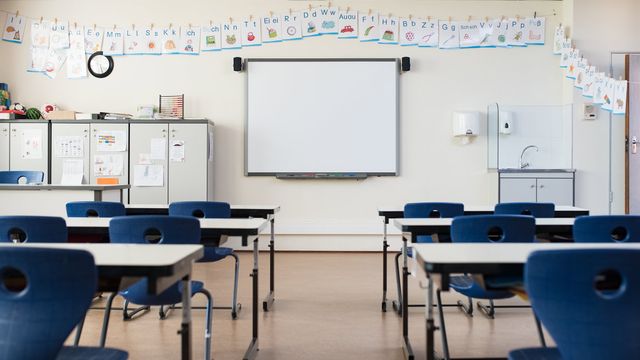
Empty classroom
This policy is accompanied by a propaganda campaign claiming that (1) the coronavirus poses no significant danger to children, and (2) that children do not catch or transmit the virus, even as asymptomatic carriers. This propaganda aims to deny that school re-openings constitute a major additional transmission mechanism of the virus.
There is no scientific validity to these claims. Governments are selectively citing isolated or incomplete studies as justification for their economic policy, often contradicting their own scientific advisors, and ignoring considerable evidence of the danger the virus poses to children and the role children play to transmit the virus to more vulnerable layers of the population.
One study, entitled, “Changes in contact patterns shape the dynamics of Covid-19 outbreak in China,” was published last week in the prestigious magazine Science on the outbreak in Wuhan. The study used contact behavior surveys of citizens in Wuhan and Shanghai, conducted both before and after the pandemic, to estimate the impact of non-pharmaceutical interventions, particularly school closures, on the spread of the virus. They sought in particular to determine how many people any given patient from various age brackets would infect.
They concluded that a child under 14 was less likely to catch or transmit the disease from any single interaction than someone aged over 65. However, this is counterbalanced by the fact that children at school have interactions with far larger numbers of people. As a result, researchers found that “where school contacts are removed, we estimate a reduction of 42 percent” in the overall spread of the virus. School closings, they conclude, “can achieve a noticeable decrease in infection attack rate and peak incidence, and a delay in the epidemic.”
A second study came from researchers in Germany led by virologist Christian Drosten, whose team at the Charité Hospital in Berlin had by then conducted almost 60,000 coronavirus tests. Drosten published the study’s results on his lab’s own website before it has been peer reviewed because of his belief in the urgency of the results, which contradict the German government’s school reopening policy.
The team analyzed the 3,712 samples from patients carrying the coronavirus, measuring the “viral load” of each sample, that is, the total amount of virus each patient’s sample contained. A higher viral load is thought to generally correspond to greater contagiousness of the patient. Their results showed that younger patients did not have smaller viral loads than older patients.
“Analysis of variance of viral loads in patients of different age categories found no significant difference between any pair of age categories including children,” they conclude. “In particular, these data indicate that viral loads in the very young do not differ significantly from those of adults. Based on these results, we have to caution against an unlimited re-opening of schools and kindergartens in the present situation. Children may be as infectious as adults.”
In addition, the team analyzed a group of samples from asymptomatic children. There too, there was no sign of a decreased viral load. “In this cloud of children, there are these few children that have a virus concentration that is sky-high,” Drosten told the New York Times .
Researchers at the Pasteur Institute in France also published the results of a study at a high school in the Oise region, a coronavirus cluster, at the end of April. Researchers tested 326 students, parents and teachers at the school, of whom 40.9 percent tested positive for the virus. These included 25.9 percent of all students.
Claims that children who catch the disease are not adversely affected have also been undermined by the discovery of a suspected link between coronavirus and an uptick in cases of a rare syndrome, Kawasaki Disease, among children and infants. At least three children, a five-year-old and seven-year-old in the US, and a 14-year-old in the UK, have died from the syndrome, which can cause severe heart complications including enlarged arteries. While the syndrome appears to be rare, its emergence only highlights the fact that the impact of the coronavirus on children is still not fully understood.
As governments push to re-open schools, they are doing so in defiance of these scientific warnings. Instead, while ignoring scientific results that conflict with their policy, governments pick and choose “scientific” evidence according to a predetermined political agenda, pointing only to studies that show less conclusive results or suggest a lower danger for children.
In Australia, the government of Prime Minister Scott Morrison has heavily promoted the incomplete results of a study that has yet to be finished, let alone peer-reviewed, into the transmission of the coronavirus in the state of New South Wales. The study, however, covered a period during which schools in the state had partially or fully closed, and when between a third and a quarter of students were not at school. The results of the study have also been cited internationally, including in Canada.
While scientists are still struggling to come to grips with the nature of this new disease, reopening the schools at this point flies in the face of powerful scientific warnings that this policy will increase the spread of the disease. What is driving capitalist governments around the world is not a rational and scientific struggle against the pandemic, but the drive of the corporate and financial elite to force a return to work. They are acting with contempt for the lives of hundreds of millions of people who will be affected by a school reopening policy.
As French health minister Olivier Véran admitted in an interview last week arguing for reopening schools across France: “There is the question of whether children are contagious or not.” He admitted that there were “arguments both for and against,” but then simply asserted that schools “must reopen.” This week the French Senate and National Assembly voted to provide enhance legal immunity to employers and government officials whose actions in enforcing the reopening of schools and businesses leads to deaths from the virus.
If the ruling elite feels the need to preemptively vote itself legal immunity as it ends lock-downs, this underscores that it is well aware that its policy is criminal.

Over 5 million live in families with hungry children since UK lockdown

Harvey Singh

A Food Foundation (FF) report has found that 5.1 million people in the UK are living in households with children who have experienced food insecurity since the lockdown began.
Up to 1.8 million of these experienced food insecurity due solely to a lack of food in shops. This means that 3.2 million people—or 11 percent of households—are suffering from food insecurity due to other issues such as loss of income or isolation.
These figures register a doubling of the level of food insecurity among households with children reported by the Food Standards Agency in 2018.
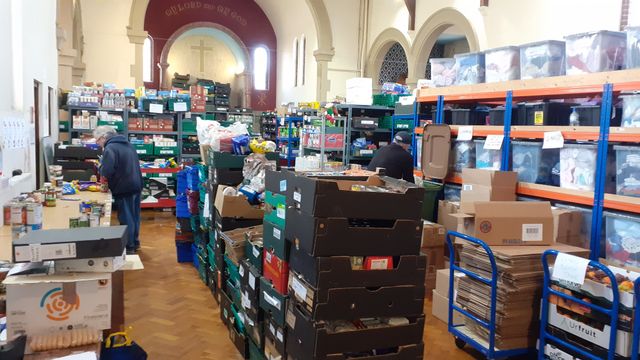
Footprints in the Community food bank in northern England receives recent donation (Image credit: Twitter/Footprints_UK)
The FF is a research body, and this latest is its third report based on surveys into how the population is struggling to secure enough food during the COVID-19 pandemic.
In April, as the lockdown began, the FF found that more than 3 million people in Britain (6 percent of surveyed adults) were going hungry because of the coronavirus crisis. Sixteen percent of respondents (equivalent to a total of 8.1 million people) had faced food insecurity of some kind as a result of the pandemic.
The FF’s recent study was informed by a survey conducted during April 24 to April 29—exactly one month after the March 23 national lockdown was put into effect—and focused exclusively on households with children.
The report found that children are at higher risk in families with members who are self-isolating, medically vulnerable, single parents, where a child has a disability, and in large households.
Significantly—in light of the hypocritical and nauseating praise routinely heaped onto workers in the National Health Service (NHS) by a government that has done everything possible to undermine the NHS for decades—the report found that households which included NHS workers and their children also had an “elevated risk.”
Before the lockdown, schools—especially in the most deprived areas of the country—provided the threads of a safety net for struggling families through free school meals and breakfast clubs. This provision has been shredded.
The FF found that almost a third of children entitled to free school meals (half a million children) are still not getting any substitute. Of the 621,000 children who were accessing free breakfast clubs before the crisis, only 136,000 are getting a substitute.
On March 19, as it closed schools and imposed lockdown restrictions, the government announced a free school meals voucher scheme. School headteachers using the scheme were told to order supermarket vouchers—worth £15 a week until schools reopened—for the 1.3 million eligible families using a portal created by the French corporate services group Edenred. The site was designed to generate a code that parents or teachers could redeem online for a supermarket gift card.
From the outset the scheme was beset with IT glitches and delays sometimes lasting weeks. There have been many instances of school staff having had to stay up late into the night to access the online system, while many parents have been unable to download the vouchers at all. Some schools unable to access the scheme have had to turn to charity instead.
In Bodmin, Cornwall, school catering manager Jo Wotton told BBC News that she had to pay for a family’s shopping after the mother’s voucher code failed at a supermarket till and she was left with only £3 in her purse.
The checkout worker told her the supermarket had seen several vouchers fail the same day.
Michael Tidd, headteacher of East Preston Academy junior school in West Sussex, told the Financial Times how he had input his first voucher requests on April 6 and the first redemptions only started arriving on April 20.
Tidd said: “One parent logged on last week and the website told her she was number 200 in the queue. She tried an hour later and was told she was number 137,000.” The Edenred site has since stopped disclosing an applicant’s queue position.
On April 30, the Department for Education admitted it did not know how many vouchers for free school meals had been delivered to parents over the past month.
A snap survey conducted by Channel 4 News and the National Association of Head Teachers sheds more light on the additional levels of frustration and anxiety experienced by schools and parents of school children. The survey found that of the 932 school leaders who responded, 96 percent said they had experienced problems with the government scheme; 86 percent said that parents had struggled to access the vouchers; 83 percent said they were concerned about the welfare of pupils who were yet to receive the vouchers; 58 percent said they had had to make other provisions for families due to problems with the system.
To give a sense of the difficulties faced by those administering the scheme and the indifference of the government, Channel 4 News interviewed a number of head teachers across the country. Each told a story of unrelenting frustration and anguish in the face of the real possibility that families of school children will go without food.
In a now familiar story replicated throughout much of the country, the programme heard how Stephen Donegan, the headteacher at Malmesbury Primary School in Morden, south London, and his staff input each of their allocated 170 vouchers, each with a 16-digit code to access the payment. All the codes failed. The website was frozen. There was no number to phone. And there was no response to repeated e-mails. Eventually, Donegan and the deputy head at the school had to use their own credit cards to buy food for the increasingly desperate families.
Emily Smith, a learning mentor who works with children with medical needs in South Yorkshire told the World Socialist Web Site: “This has been particularly distressing for parents whose children have life-threatening illnesses. Due to the circumstances, whole families are in isolation for 12 weeks as advised by the NHS. If they have children at different schools, this means sorting out with a number of schools where many don’t even have an answer machine.
“Many of the vouchers have been sent electronically but are no use to someone who is in isolation, as they can’t transfer them or get out of the house. It’s taken schools weeks to get the vouchers so they can send them out in paper form, and many have had to use school funds or drop food parcels. I know a number of schools business managers have been trying to gain access to the Edenred system at 2 a.m. in the morning to get in the queue for the vouchers.”
The FF report noted that almost half of the food-insecure households in the survey sample had lost income as a result of the crisis—affecting 5.3 million children.
The study featured the voiced recordings of several children affected by food insecurity talking briefly about their experiences. One is Felix, 15, who lives in rural Norfolk. He is the second eldest of a family of nine children. Felix often has to make a four-mile round trip on foot to get bread and milk. His father is working overtime to help make ends meet. Felix explains how he and the other older children also have to worry about trying to complete their school course work.
The Food Foundation findings appeared as the Trussell Trust charity reported an increase of 81 percent in the number of people needing support from food banks in the last two weeks of March compared with the same time last year. Demand for food bank services for children has increased by around 121 percent.
Indicating how already dire social conditions for many families have simply been compounded by the present crisis, the Trussell Trust’s food bank network provided 823,145 emergency food parcels (over 300,000 of these parcels were for children) to people deemed in crisis between April and September 2019, a 23 percent increase on the same period in 2018.

Automakers continue production restarts as US death toll tops 80,000

Marcus Day

The automakers are moving ahead with their reckless and life-threatening plans to restart North American production, with Ford, General Motors, and Fiat Chrysler Automotive (FCA) preparing to bring large portions of their operations online on May 18, a week away. In Michigan, the center of the US auto industry, manufacturing activity is allowed to resume beginning today, under a revised stay-at-home order from Democratic Governor Gretchen Whitmer.
The United Auto Workers has granted its blessing to the companies’ restart plans and Whitmer’s announcement, demonstrating once more that the UAW is in the pocket of the companies and fundamentally hostile to the basic needs of workers. The same phrases were recycled in UAW press releases throughout last week, with President Rory Gamble intoning that “we all knew this day would come.” He continued to lecture about the necessity of reporting symptoms or exposure to the infection, seeking to shift the blame for future outbreaks from the companies onto workers.
But the temperature checks and other screening measures lauded by the UAW and the companies are virtually worthless, with studies finding between 20 to 50 percent of those with the virus have no fever or other symptoms, yet still can transmit it to others. At a pork processing plant owned by Triumph Foods in Missouri, nearly 400 workers who tested positive for the coronavirus were asymptomatic, according to Business Insider.
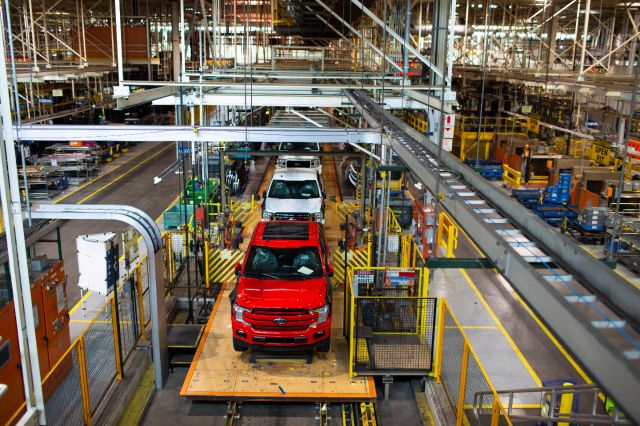
Ford assembly line. Source: Ford Motor Company
Meanwhile, the UAW reported Friday without fanfare that two more workers had died due to COVID-19, UAW members employed at Caterpillar’s Progress Rail subsidiary in LaGrange, Illinois, which has continued to operate during the state’s stay-at-home order. At least 27 FCA, Ford, GM and Hyundai workers have died in the US, with dozens of more auto parts workers dying in Mexico.
The companies are nonetheless rushing ahead to reopen with the support of the unions. FCA and Ford have already restarted production in Europe, and the Detroit Three companies and many of their suppliers have gradually recalled workers to prep production lines in the US in recent weeks. Ford’s parts distribution centers are returning to full operations today, according to a company press release. Some 12,000 white-collar workers in IT, facilities management, product development and other supposedly “location dependent” roles not eligible for remote work are also being brought back.
GM, for its part, is restarting production today at its transmission plant in St. Catharines, Ontario; its components plant in Lockport, New York; and its DMAX Duramax Diesel plant in Moraine, Ohio.
While thousands of workers are being forced into crowded plants and workplaces where the virus can run rampant, thousands of others will face the prospect of unemployment with no end in sight, as auto sales and demand have plummeted catastrophically. Ford has stated that plants which previously had three shifts will only resume with two, and a number of plants which had two will only begin with one. The number of shifts, automakers say, will depend on demand.
Some foreign-owned automakers, including Hyundai, Kia, BMW, and Daimler, have already restarted US operations, or are planning to do so beginning today, in the case of Honda and Toyota.
On Saturday, electric car maker Tesla Inc. filed a lawsuit in federal court in a bid to reopen its Bay Area assembly plant in Fremont, California. Although Democratic Governor Gavin Newsom allowed large segments of state businesses and manufacturing to begin reopening Friday, Alameda County health officials put a halt on Tesla’s plans to rush to restart production without adequate safety measures.
Throughout the pandemic, Tesla CEO and celebrity-billionaire Elon Musk (the 23rd richest person in the world, according to Forbes ) has used his Twitter account to spread conspiracy theories downplaying the danger of the virus and has denounced social distancing measures in increasingly unhinged and deranged terms.
On Saturday, Musk escalated his offensive against efforts to protect the population or his workforce from the pandemic, threatening to withdraw Tesla’s operations from California, tweeting: “Frankly, this is the final straw. Tesla will now move its HQ and future programs to Texas/Nevada immediately. If we even retain Fremont manufacturing activity at all, it will be dependent on how Tesla is treated in the future.”
The drive to reopen factories is proceeding at the behest of Wall Street and despite the rising toll from the COVID-19 pandemic, with deaths nearing 81,000 in the US at the time of this writing. The rollback of social distancing that this will entail defies all the warnings of infectious disease experts and threatens a massive increase in new cases and deaths.
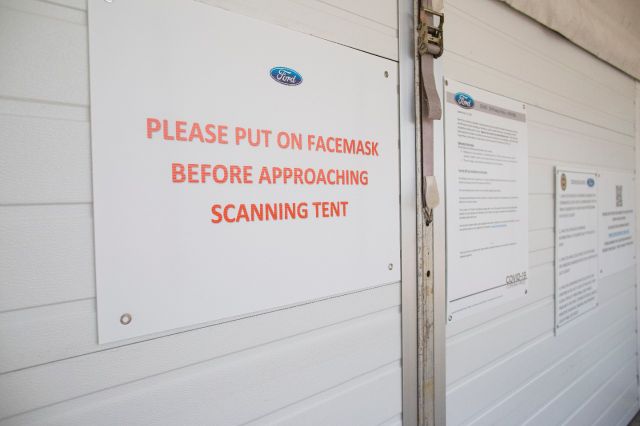
A sign warning workers to don masks before reaching the scanning tent. Source: Ford Motor Company
This ruthless disregard for human life is provoking deep-seated anger among workers, who see no reason to expose themselves and their families to the virus in order to boost the profits of the automakers.
“Nobody is happy about going back,” a worker at FCA’s Jefferson North Assembly Plant said. In March, workers at the plant rebelled against efforts to continue production as the virus spread, joining a wave of wildcat strikes and job actions in Michigan, Indiana, Ohio, and Ontario, compelling the auto companies to idle production.
“Nobody feels safe. We don’t see how they are going to keep us safe,” the worker continued. “I don’t see how we are going to do this social distancing. I don’t get it. I think we will have another wave of coronavirus starting up again.”
She said that many workers were under heavy financial pressure due to the almost universal difficulty in securing jobless benefits. “Some people haven’t got their unemployment, and they say they have to go back because they don’t have any money.”
Underlying the disorganized and ramshackle character of state unemployment systems lies a deliberate policy by the ruling class of using economic coercion to compel a return to work. State governments and businesses are now working together on plans to claw back unemployment benefits from workers who refuse to return to unsafe conditions, with Ohio, a major seat of manufacturing, launching a maliciously named “Covid-19 Employee Fraud” form for employers to report absenteeism.
“There have been people working in my sweatshop (Faurecia) since this has begun,” a worker at the auto parts supplier in Indiana said. “They’ve been calling people back for the last three weeks.
“What’s scaring me is our ventilation system. Last year they didn’t care if we even had clean air to breath. It was so smoldering hot you couldn’t even catch your breath. This year will be twice as bad wearing a mask with no outside air. We’re all going to suffocate.”
A worker at Fiat Chrysler’s Kokomo Transmission plant in Indiana expressed outrage at the return-to-work announcements, saying: “It’s inhumane! They still have people dying from COVID-19 that work for FCA. We all know they will not give us hot water, soap, gloves, masks, or sanitizer. If you work on a sub-line or assembly line, there is no such thing as six-foot distance. How will they be able to protect people when the front-line workers of the [response to] the COVID-19 pandemic don't even have enough personal protective equipment?”
Commenting on the senselessness of the return to work, she added: “Who is going to buy a new car right now? They have warehouses full of transmissions and the car lots are full, so what is the point? This will just expose people to death, then take it home to their families.”
The worker pointed to the interconnected dangers facing working class families, saying: “Some workers are married to employees who work at the meat factories such as Tyson. These people are exposed to the virus and are going to bring it right into the plant.”
Following the walkouts at auto plants in Europe and North America in March, opposition has continued to mount among workers across many different sectors around the world, including at meat processing plants, at Amazon and other logistics companies, and at grocery stores. Dozens of workers for auto parts manufacturer Lear Corporation protested outside one of the company’s facilities in Port Elizabeth, South Africa, last week, and a strike has shut down Nissan’s main assembly plant in Barcelona, Spain, since the middle of last week.
Workers all around the world confront a ruling class utterly opposed to taking any serious measure to address the pandemic. From company executives to the trade union officials to the capitalist politicians, all are indifferent to the mass death and suffering which the mad dash for profits is causing.
Workers cannot allow themselves to be led back to the slaughter! Rank-and-file factory safety committees must be organized in order to stop the premature return to work. The demands must be raised to halt all non-essential production, to immediately provide full income and benefits to those affected by shutdowns, and to reverse the multi-trillion-dollar bailout of Wall Street and the major corporations, which must be redirected toward life-saving needs.
The corporate owners have demonstrated that they are incapable of protecting workers’ health and safety and have thus forfeited their right to run the factories. The auto industry must be taken over by workers themselves, placed under their democratic control and operated in the interests of society, not the parasitic financial oligarchy, as part of the fight for socialism.

China, South Korea and Germany report new COVID-19 outbreaks

Bryan Dyne

China, Germany, and South Korea have all reported substantial new outbreaks of COVID-19 after they eased lockdowns, sparking warnings that efforts to lift lockdowns in Europe and the United States risk a major new resurgence of the disease.
There are now nearly 4.2 million reported infections of the SARS-CoV-2 coronavirus worldwide, and just under 284,000 deaths caused by the resulting disease. The number of daily new cases has risen from a two-week low on April 27 of about 66,000 to more than 80,000 yesterday, as the pandemic continues to spread from its current epicenters in Western Europe and the United States to Africa, South America, South Asia and countries of the former Soviet Union.
Two new clusters of coronavirus cases were reported in China over the weekend, as well as a single larger outbreak in Seoul, South Korea. Concurrently, the German government reported that outbreaks had begun to grow exponentially again.
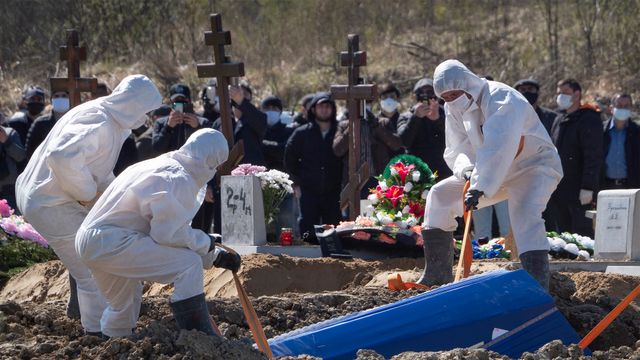
Grave diggers wearing protective suits bury a COVID-19 victim as relatives and friends stand at a safe distance outside St.Petersburg, Russia. (AP Photo/Dmitri Lovetsky)
These clusters of new infections include 14 new cases discovered in China on May 4, including one in Hubei province, the original epicenter of the pandemic. This is especially concerning given that the number of new cases in China had been in the single digits during previous weeks, a result of the country’s lockdown from January through March and strict policies of testing, quarantines, and contact tracing, as well as enforcement of the use of personal protective equipment for its civil servants, health care workers and citizens.
South Korea’s cluster emerged after a 29-year-old patient from the city Yongin had visited five nightclubs in the Itaewon area on May 1, and then visited the neighboring Gyeonggi and Gangwon provinces before testing positive for COVID-19. He came into contact with more than 1,300 people, of which at least 54 have now contracted the infection. This number is expected to rise as the South Korean government continues to trace the progress of the outbreak. In response, the country’s nightclubs and similar institutions have all been closed indefinitely.
While there has been no new major clusters reported in Germany, the Robert Kock Institute, which tracks the spread of the pandemic, noted that the reproduction rate for the virus in the country had risen to 1.1 in the past week, which means that the number of new cases is again increasing.
In all three countries, the new coronavirus cases come after lockdown measures in each country had been partially lifted. Germany first allowed museums, monuments, botanical gardens, parks and zoos, as well as religious services to resume on April 30, while Hubei and China as a whole began lifting its most stringent lockdown measures in mid-April. And while the cases in China and Germany have not yet been directly traced to the measures taken to reopen their respective economies, the new cases in South Korea have.
Iran was also forced to lock down Abadan county, which is in Khuzestan province, after a sharp spike in coronavirus cases. Gholamreza Shariati, the governor of the province, stated that, “The number of cases in the provinces has tripled, and the hospitalization of patients has risen by 60 percent.” Iran has been desperately attempting to reopen its economy in the face of crippling US-imposed sanctions.
The dangers of reopening too soon have been voiced repeatedly by the World Health Organization (WHO). At Friday’s press conference, Dr. Maria Van Kerkhove warned, “What we are learning from those countries who are slowly opening up their economies again—and we've talked about this before—is that once these measures are lifted, they need to be measured in a very slow and controlled way because it’s possible for the virus to take off again.”
Dr. Michael Ryan also spoke on this topic, noting that even as countries and regions around the world open up, they are still “avoiding the uncomfortable reality that we need to get back to public health surveillance. We need to go back where we should have been months ago; finding cases, tracking cases, testing cases, isolating people who are tested positive, doing quarantine for contacts.”
As more and more countries begin to reopen, the risks of not following through with these procedures spiral higher and higher. Throughout the world, capitalist governments are not focused on the preservation of human life, but on getting workers back to work to generate profits for the capitalist oligarchy.
For example, in Italy, the reopening which began on May 4 is focused primarily on manufacturing and construction. This was being driven largely by the auto giant Fiat Chrysler, which restarted its van plant in Atessa even before the official reopening and opened its other Italian plants last week. Luxury automaker Ferrari has also resumed production in the country.
Last Monday, Greek Prime Minister Kyriakos Mitsotakis also announced that travel within individual prefectures was no longer restricted as the precursor to recommencing tourism in his country. Currently, the country has 2,716 coronavirus cases and 151 confirmed deaths, relatively low compared to the rest of Europe, which led Tourism Minister Charis Theocharis to assert, “We expect tourists from Europe, and in this context, our country has an advantage, as out of all Mediterranean regions, we are the safest.”
Of course, this process finds its sharpest expression in the United States, where President Donald Trump has spearheaded the drive to get workers back into the factories, offices, and workplaces as quickly as possible. While the official guidelines state that a county or state can only proceed through the phases after a “downward trajectory of documented cases within a 14-day period,” itself open to interpretation, it also notes that state and local officials can “tailor” these requirements as they see fit. This allowed Georgia Governor Brian Kemp to essentially open the entire state while still having 31,763 active cases, more than most other countries.
The rush to reopen, despite the protestations of world leaders, is not an approach “based on up-to-date data” that “mitigates [the] risk of resurgence.” To again cite Dr. Ryan, “We’re at the very, very early stages of our understanding of how this virus affects the body, how disease progresses, what diseases this infection causes.”
Every day brings new medical revelations showing that the disease can cause blood clots in young children and strokes for those in their 30s, as well as a host of liver, heart, brain and even toe complications. Every bit of the science screams that, with the progress which has been made in containing the pandemic, even more strict measures should be put into place so that no one else has to suffer or die as therapeutics and vaccines are developed.
Instead, lives and livelihoods are sacrificed at the altar of the market. The chief concern of Trump, Merkel, Mitsotakis and their counterparts is to get workers back to generating profits, not to combat the disease and provide for the tens of millions who have been thrown into destitution, but to inflate the portfolios of the already superrich.

Does COVID-19 Enable the Acceleration of Negative Global Trends?

Yash Vardhan Singh


The uncertainty around the COVID-19 pandemic mimics the fog that engulfs any military conflict. As countries, leaders, and citizens work to deal with the crisis, what pre-existing trends are likely to gain traction? What characteristics of the pandemic could contribute to strengthening these trends? This article considers three trends: further fractures in geopolitical rivalries through conflicting narratives; rising authoritarianism; and attempts to normalise surveillance.

Geopolitical Conflict of NarrativesWith an eye on the post-COVID-19 world, major powers seem to be constructing competing narratives for geopolitical gain. The US-China perception war is the most obvious case-in-point. The US maintains that China is responsible for the crisis because of Beijing’s delayed information disclosure, and the virus’ origin in Wuhan. On the periphery of this accusation are fringe discourses on the likelihood of a bio leak, or potential bio warfare. US President Donald Trump’s terming of COVID-19 as a “Chinese virus” is part of this narrative-building.

As the death toll in the US rises, domestic political pressure could propel the country’s leadership to divert attention by redirecting focus on China’s culpability. China too has continued its propaganda, which includes accusing the US military of causing the COVID-19 spread via covert means. It continues to deny intentional information suppression, and has also been opaque about information on the early progression of the spread and its impact in terms of deaths and infections. Globally, it is working to mount a narrative of being an effective responder and responsible global power by exporting health equipment to the EU, South East Asia, and even the US.

There are also efforts to prioritise competition over coordinated responses to the pandemic. For example, the US halted funding for the World Health Organization (WHO), alleging ‘China-centrism’ and the WHO’s ineffective response to COVID-19. A lack of global consensus has also impeded the UN Security Council (UNSC) from providing leadership during this crisis. The UNSC remains in gridlock without a single resolution being adopted. The US was initially pressing for a UN resolution that would largely blame China for the pandemic, with the priority now shifting to a condemnation of the WHO—one that Beijing would undoubtedly veto.

The US has also engaged in diversion of scarce medical supplies being shipped to other countries via outbidding and other tactics. The latest victim in this regard is Germanywhich lost inbound n95 masks due to the US’s actions. China is also using its position of recovery for strengthening global influence via “mask diplomacy.” Under a veneer of aid, by exporting medical supplies, Beijing is seeking to expand geopolitical influence and extend its dominance in global medical supply chains.

AuthoritarianismThe pandemic, given its unprecedented nature, cross-cutting impact, and uncertain future, demands strong domestic responses from leaders. In several cases, responses to contain COVID-19’s repercussions have necessitated restrictions on individual rights and liberties. However, the same set of motivations have offered leaders an additional opportunity to consolidate power and expand state control at the risk of diluting democratic values in a post-pandemic world.

In Hungary, Prime Minister Viktor Orban managed to get parliamentary sanction to rule by decree, effectively circumventing democratic institutions with no end date. In Israel, Prime Minister Benjamin Netanyahu has used the pandemic to postpone his corruption trial and block parliament from functioning. The Philippine parliament passed legislation granting President Rodrigo Duterte extensive emergency powers. Monarchies like Jordan are clamping down on freedoms, particularly on press and movement.

As the crisis worsens, authoritarian leaders could view this as an opportunity to seize power with popular approval, and project pandemic containment as a justification for authoritarian leadership. If combined with powerful propaganda, this trend could pose serious long-term threats to democratic values globally.

Normalisation of SurveillanceExpansion of surveillance is another trend associated with growing state control in response to the pandemic. Several countries have increased surveillance to track disease cases and enforce lockdowns effectively. Widespread panic has oriented the primary focus to containing and managing the crisis, which could legitimise rampant government surveillance without checks and balances. Among other things, this could further complicate the existing ‘transparency vs security’ debate.

The access that expanded surveillance provides the state, and its wide-ranging implications, may be difficult to roll back. Governments tend to maintain expanded powers beyond an emergency. For example, the US’ ‘Global War on Terror’ led to extensive domestic surveillance in the form of the years long PRISM programme. Other countries are reportedly following suit. In Israel, Prime Minister Netanyahu has used the crisis to grant extraordinary domestic surveillance powers to the country’s domestic intelligence agency. In China, pre-existing surveillance activities such as CCTV-based facial recognition, GPS-based mobile phone location surveillance, tracking digital payment locations and other technologies integrated to national ID cards etc are being deployed as pandemic response.

The post-COVID-19 world might witness greater normalisation of surveillance. This could have several negative implications, transforming the relationship between governments and the governed.

ConclusionThe COVID-19 crisis has the potential to enable recent negative global trends to gain further momentum. Enveloped in the fog of this pandemic, geopolitical rivalries, authoritarianism, and surveillance appear to be on the rise worldwide. These trends are likely to have a lasting impact in a post-pandemic world.

9 May 2020

Cyber Crime: An Evil Spatula of the Virtual World

S N Surajbhan 

While the world is witnessing the wrath of the virus COVID-19, which has caused havoc across the globe and has questioned the mere intelligence of our species, some are involved in other nasty acts of intelligence. A recent case which has woken up the virtual space of the nation the “Bois Locker Room”, a chat group in a social media platform, where a group of teenagers has exchanged morphed images of teenage girls in their conversation have been taken to juvenile custody in Noida, after the release of those photos.
Cybercrime has taken a sudden leap during the continued period of lockdown and has spiked an eyebrow for the safety of women on the internet. The internet which has become a nasty need of the time, when the lockdown was announced to avoid the spread of the virus. There has been a rise of 87 percent increase in social media usage amid lockdown, which has also increased the concatenated cybercrime cases across India.
A time when people around are accepting the act of staying indoors, some women are mistakenly falling prey to the virtual world attackers.
Technology and Cyber Crime
We are living in the era of technology, where communication has reached its pinnacle. The social media platforms which powers the communication have completely transformed our perspective about it, which seemed quite impossible few years back. But steps of progress towards future, brings new obstacles to the present. Such is the case of cyber crime which has squeezed itself into the forefront of technology.
In India there are 351.4 million social media users, which is an astounding number to be graced with. It is good news for the nation that, the people are accepting the change but the trouble which it causes also cannot be neglected. There was about 131.2 million cyber crime cases registered in India in 2019, out of which 2030 cases of sexual harassment only. Such staggering numbers have shown that the women using internet are not at all safe in the virtual expanse.
And it is a shame that the education which the teenagers are getting on technology, they are using it in a wrong way to satisfy their momentary pleasures. And these small acts further nurture them to commit a larger crime, which then questions the presence of technology and the educational awareness that should come with it.
Legal aspect
Talking about the role of Govt. in this matter, the government says that social media has emerged as one of the major tools in the increase of cybercrimes. With people being more engaged with the internet, about 39 percent of the total social media users have already become the victim of cybercrime. Despite the fact that there is an increased number of cases, govt. have made provisions to help women surf the net with proper safety.
The IT Act, 2008 which not only facilitates the promotion of IT-industry and e-governance but also applies to prevent cybercrime in the nation. Govt. has also provided the centralized citizens portal through Crime and Criminal Tracking Networks and Systems (CCTNS), to register cybercrime complaints.
We have been provided with the policies which govern our safety on the internet, but the miscreants have always found a way in through a back door that is present in every policy. The major factor that gives access to them is the lack of awareness, which plays a major role in promoting cybercrime. The continued usage of the internet without any safety firewall and precautionary knowledge has groveled the victims towards their miscreants.
Where is it taking us?
The whole agenda of cybercrime can be brought into a halt if the people using the net be aware of the malware that roams free. By just clicking on unauthorized links we give them full access to every single bit of information about ourselves. The lack of adoption of safety precautions could be the spurt of promoting cybercrime, stated IT expert Pramod Satpathy.
The advent of technology has brought our lives into a stage where the vulnerability of losing your profile into the virtual world is very easy. But it is not the fault that improvement of technology brings numerous problems like cybercrime with itself, rather it should be noted that every step of progress brings two sides of it; one is the brighter side and the other being the darker side. And in this case, cybercrime is the darker side which can be curbed to zero if we take a stand against it. But by taking adequate precautions, can keep the cyber offenders at bay.

Why are thermal imaging cameras being deployed in US workplaces?

Kevin Reed

As state governments across the country are lifting restriction and restarting economic activity—despite warnings from public health officials that relaxing social distancing will result in a spike in COVID-19 cases and deaths—employers are moving forward aggressively with plans to resume production and business operations.
Well aware that government policy is being shifted to protect corporate interests, employers are moving rapidly to implement workplace procedures and technologies that would have been very difficult, if not impossible, to put into place prior to the coronavirus crisis.
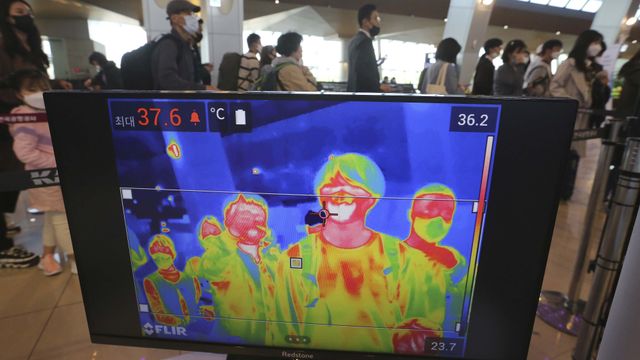
A thermal camera monitor shows the body temperature of passengers at the domestic flight terminal of Gimpo airport in Seoul, South Korea, April 29, 2020 [Credit: AP Photo/Ahn Young-joon]
The recent utilization of the Defense Production Act by the Trump administration, classifying meatpacking plants as essential infrastructure and forcing workers back to work in these dangerous facilities, demonstrates that the fundamental rights of the working class are under unprecedented attack.
Despite viral outbreaks among thousands of meatpacking workers—including at least 17 deaths—the US government is protecting the corporations from any liability for the sickness or death of workers. Meanwhile, states such Iowa are denying unemployment benefits to meatpacking workers who refuse to return to work because of the threat to their health.
For workplaces that have remained open throughout the pandemic—such as hospitals, major grocery stores and transportation systems—employers have been scanning workers with forehead thermometers as they arrive on the job to see if they have an elevated body temperature.
In the case of the Metropolitan Transportation Authority in New York City, a team of medically trained employees—the so-called Temperature Brigade—are scanning the temperatures of 3,500 employees at 70 roving locations around the city each day. Transit workers with a temperature of 100.4 degrees or more are being sent home and told to see a doctor before they can return to work.
Non-contact forehead thermometers are held between one and six inches away from the subject’s head and utilize active infrared light to illuminate the temporal artery and measure body temperature. Sometimes referred to as temperature guns, some of the devices can measure body temperature in as little as one second.
Since the use of handheld thermometers is time consuming and labor intensive, some of the largest US corporations have begun implementing automated thermal imaging systems in workplaces. For example, the Associated Press reported on April 18 that Amazon had begun using thermal cameras at its warehouses to accelerate the screening of workers as they enter the facilities.
The AP report notes, “Amazon set up the hardware for the thermal cameras in at least six warehouses outside Los Angeles and Seattle, where the company is based, according to employees and posts on social media.
“Thermal cameras will also replace thermometers at worker entrances to many of Amazon’s Whole Foods stores, according to a recent staff note seen by Reuters and previously reported by Business Insider.
“The company performs a second, forehead thermometer check on anyone flagged by the cameras to determine an exact temperature, one of the workers said. An international standard requires the extra check, though one camera system maker said the infrared (IR) scan is more accurate than a thermometer.”
According to another report, Amazon has spent $10 million on the thermal cameras to use in its warehouses to scan employees and in its store to scan customers.
The AP also reports that other firms such as Tyson Foods, Inc. are exploring the use of the systems which can cost between $5,000 and $20,000 per unit. In the case of Tyson, the company has installed walk-through IR scanners—similar to metal detectors—that allow for a mass temperature reading that is extremely accurate. CNBC also reported that Ford Motor Company had purchased the walkthrough devices.
Meanwhile, employees who have not been working due to the shutdown of their workplaces during state of emergency declarations have made it clear that they support continued isolation at home until the danger of the pandemic has passed. As one public poll after another across the US has shown, the working class is opposed—in some cases by more than 80 percent—to returning to work under conditions where they may become ill or die from COVID-19, even if it means further economic hardship.
But scanning everyone for the presence of a fever—a highly invasive practice with minimal ability to stop the spread of the coronavirus—is not what workers have been demanding. Frontline and essential workers have been demanding adequate personal protection equipment (PPE) and sufficient staffing along with rigorous sanitation and social distancing practices.
Based on the well-known fact that individuals with coronavirus infection often show no symptoms and can spread the contagion to those around them—according to one study, 50 percent of those with COVID-19 have no symptoms—it is clear that scanning employees for a fever is not going to stop the virus from entering workplaces.
So, what is really behind the drive to place thermal and infrared scanning devices in workplaces across the US? The answer to this question lies in the nature of these technologies and the way that they are being deployed within the context of the response of the ruling elite to the intensification of the class struggle that has been triggered by the coronavirus pandemic.
Thermal imaging cameras translate heat or thermal energy into visible light. Since living things and mechanical, electrical and digital equipment all put out heat, they can be “seen” with thermal devices, even in the dark. Thermal devices are able to detect small differences in heat radiation from objects and convert the different values of heat into colors on a digital display. The amount of heat emitted by an object is called its “heat signature” and the variation of heat measurements within an object constitutes its “heat map.”
Thermal imaging devices have differing levels of sensitivity to variations in temperature. Some devices are able to detect temperature differences of 1/100 of a degree. Thermal cameras have limitations in that they cannot see through windows because of the reflective properties of glass. While they cannot “see” through walls, thermal cameras can detect objects inside of a wall causing the surface temperature of the wall to go up or down in a particular location.
Thermal and IR devices use similar technology. Thermal cameras are passive—meaning they do not project any light—and measure long wavelengths of infrared radiation being emitted by objects. Dust, smoke and other sources of light do not interfere with the infrared energy being measured by thermal devices.
IR devices, on the other hand, project short infrared wavelengths onto the objects being measured and capture the light that is reflected back to the reader.
The first practical thermal and IR imaging systems were developed by the US military for battlefield, air force and naval purposes during World War II. Scanning systems were developed by military contractors such as Texas Instruments, Hughes Aircraft and Honeywell in the post-war era. The expensive systems were then extended for use by law enforcement for surveillance and fire departments for diagnosis purposes.
In recent decades, with the cost of equipment coming down dramatically along with the development of microprocessors, the Internet and wireless technologies, thermal devices are used at every level of police and military operations. The Department of Homeland Security has deployed the devices at US border crossings.
In the shadow of the coronavirus pandemic, the global market for thermal scanning devices is growing rapidly. FLIR Systems, a leading manufacturer of thermal cameras for military, commercial and consumer uses, has seen as rapid increase in its stock value in recent weeks after it was reported that Amazon was buying equipment from the firm. A market study by ReportLinker.com says that the thermal scanner market is expected to grow to $6.7 billion by 2025.
When companies manufacturing and selling surveillance equipment began promoting the use of thermal cameras for the purpose of combating the coronavirus, organizations such as the Electronic Frontier Foundation (EFF) raised concerns about the threat posed to basic rights.
On April 7, EFF wrote, “Thermal cameras are still surveillance cameras. Spending money to acquire and install infrastructure like so-called ‘fever detection’ cameras increases the likelihood that the hardware will long outlive its usefulness during this public health crisis. Surveillance cameras in public places can chill free expression, movement, and association; aid in the targeted harassment and over-policing of vulnerable populations; and open the door to face recognition at a time when cities and states are attempting to ban it.”
It is significant that the thermal imaging devices are first being implemented at workplaces where workers have walked off the job in protest over unsafe working conditions connected with the expanding coronavirus. Autoworkers and workers at both Amazon warehouses and Tyson meatpacking plants have engaged in strike action to demand protections from COVID-19 in their workplaces.
There is a powerful political and class logic behind the rush to place thermal imaging devices in workplaces across the US and around the world. In the same way that the ruling elite is utilizing the coronavirus pandemic as a means of enriching itself with trillions of dollars in government stimulus money and intensifying exploitation through mass layoffs, the apparatus of repression is being erected.
Every mechanism available for gathering information, including personal data like body temperature, overall health condition, location tracking and tracing and facial recognition profiles, will brought to bear—not for the purpose of prevention and treatment of coronavirus infection—but for authoritarian and repressive purposes in anticipation of a growing and explosive revolutionary conflict with the working class.

Peru extends quarantine as COVID-19 deaths continue to climb

Cesar Uco & Don Knowland

Peru’s right-wing president, Martin Vizcarra, announced on Friday an extension until May 24 of a state of emergency imposed in response to the coronavirus pandemic, as the number of infections and deaths continue to rise in the South American country.
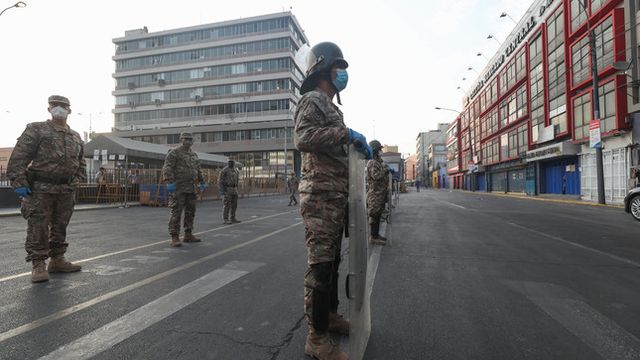
Peruvian troops on streets of Lima
The Peruvian population has been subjected to a quarantine since March 16. Nonetheless, the country has become a regional hot spot in the worldwide spread of the pandemic. As of Friday, the number of officially recorded infections had risen to roughly 62,000, and the number of recorded COVID-19 deaths to over 1,700. As everywhere, there is a major gap between the official numbers and the virus’s real toll.
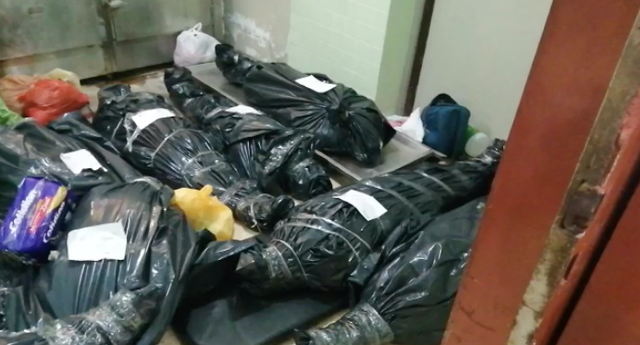
The real impact of the pandemic has been graphically exposed in a grisly videotape emerging from Iquitos, the capital of the department of Loreto in the Amazon basin, showing dozens of bodies wrapped in black garbage bags and piled on top of each other in the city’s morgue.
“The two hospitals in Iquitos are overflowing,” Luis Leonardo Runciman, dean of the Iquitos Regional Medical College of Peru told the BBC. “We have nowhere to treat any more patients and this means that people are going to die in their homes.”
Vizcarra’s announcement of the quarantine’s extension came just days after the convening of the Acuerdo Nacional (National Accord), a body bringing together the country’s major political parties—including the pseudo-left Frente Amplio—along with the employers’ and agricultural associations and government officials.
Vizcarra acknowledged at the meeting that, despite the weeks of quarantine, “the results have not been exactly what we expected.” He added that it “is not just a health crisis, a sanitary crisis; what we are living through is a social and economic crisis without precedent in Peru and the world.”
Among the body’s stated objectives is maintaining Peru’s “competitiveness” and fostering a “social market economy.” One of the main sessions was devoted to a report from Minister of the Economy María Antonieta Alva presenting the government’s proposal for reopening the Peruvian economy. As everywhere, the Peruvian bourgeoisie and the transnational corporations that exploit the country’s mineral wealth are determined to resume production and the extraction of profit, no matter what the cost in workers’ lives.
Bodies wrapped in garbage bags piled up in Iquitos morgue
Meanwhile, in a historic reversal, immigrants from the interior of Peru are making desperate efforts to return to their places of origin. For decades, people have come to the capital in search of work, turning it from a city of 1 million inhabitants in 1950 to more than 10 million in 2020, more than 30 percent of the national population.
There have been huge queues at bus stations and on the roads, with families with small children and babies waiting for days to find a way back to their villages. Others have set out on foot, forming long lines along the main roads with destinations thousands of kilometers away from Lima. Many people have already used up their savings and are living in makeshift tents because they cannot pay their rent.
By mid-April, an estimated 167,000 people in Lima from rural areas had registered with their regional governments asking for help with their return. However, the bureaucratic obstacles are enormous. As of April, of those 167,000, only 3,579 had been able to return by land or air.
With the return of hundreds of thousands, if not millions, of people to their home regions from Lima, where the majority of cases are concentrated, the coronavirus pandemic can only spread among even more vulnerable populations.
Driving this mass flight is not fear of contracting the virus in Lima, but rather the lack of employment, loss of housing and hunger resulting from the economic lockdown.
It is estimated that as much as one third of the population has become unemployed since the outbreak of the pandemic. The true figure may be much higher in a country where 70 percent of jobs are informal.
According to the Peruvian Institute of Economics (IPE), “more than 10 million Peruvians live on their daily income.” It adds that “89 percent of urban Peruvians live in vulnerable conditions and work in the informal sector. But that figure hides the reality of enormous social inequality. While in the wealthiest economic sectors, A and B, unemployment reaches 17 percent, at the other extreme, D and E—working class, poor youth and small business owners—the sum total reaches an alarming 59 percent; that is, six out of every 10 have lost their jobs.”
Moreover, most of those unemployed are receiving little, if nothing at all, out of the miserable bonuses the government is distributing as the “family basket.” Even a full bonus is insufficient for most families, providing less than half the minimum wage.
The pandemic has also spread among the country’s prison population, taking the lives of at least 15 inmates, with 500 confirmed infections in prisons in four Peruvian cities. The prisons are appallingly overcrowded—housing on the order of five times their capacity—and serve as a tinderbox for the virus’s spread. Moreover, those infected lack proper health care.
On April 28 at the Miguel Castro prison in Lima, which houses 5,500 inmates despite a capacity of only 1,140, dozens of inmates recently burned mattresses and put up signs demanding protection from the contagion. The riot left nine inmates dead, and 67 injured.
At Lurigancho prison in Lima province—the country’s largest, presently housing 10,000, four times its capacity—inmates protested demanding medical care before returning to their cells.
Recently in the Huancayo prison, located in the Andes 200 kilometers from Lima, inmates carried out a revolt, demanding that they be tested for coronavirus following virus deaths. The prison likewise packs in inmates, housing 2,100 inmates despite a capacity of just 680.
On April 18, two prisoners died in a riot triggered by the fear of coronavirus infection in a prison in the northern city of Chiclayo. A similar riot without deaths also occurred in the northern city of Piura.
The head of the National Penitentiary Institute (INPE), Gerson Villar, confirmed that two inmates died from COVID-19 in Lima’s prisons on Sunday. He said that inmates are demanding the pardons that have been talked about by the government, and that adequate care be given those who are infected.
The pandemic has laid bare the stark inequality and economic oppression that dominates Peruvian society, while creating the conditions for an eruption of class conflict.