18 May 2020

Spike in Kawasaki-like disease linked to coronavirus in France and Italy, one child dies

Will Morrow

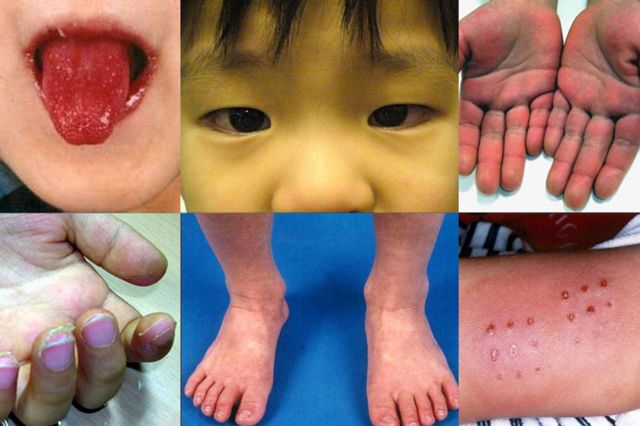
French media reported on Friday that a nine-year-old boy in the city of Marseille died a week ago of a multi-system inflammatory disease that medical researchers have recently linked to the coronavirus pandemic. The emerging condition produces symptoms similar to Kawasaki disease and affects children. It has seen a jump in incidence since the onset of the pandemic, and most or all of the children who have presented symptoms of the disorder are believed to have tested positive for the coronavirus.
The child was admitted to the North Marseille urgent pediatric ward on May 2 with a rash but was sent home after doctors diagnosed him with scarlet fever. Later that evening, his health deteriorated rapidly and he was transported back to the emergency care, where doctors identified his symptoms with the rare Kawasaki-like syndrome. On May 8, he died in the hospital after a heart attack.
According to the French national health service, the boy suffered a preexisting comorbidity in some form of neurodevelopmental condition, though it is unclear how this affected his response to the disease. He tested positive for the coronavirus though he had not displayed any symptoms of it. The child has become the fourth death from the condition. A five-year-old and seven-year-old have died in the US and a fourteen-year-old in the UK.
Kawasaki Disease
This is a damning indictment of capitalist governments internationally who are reopening schools and asserting that the virus does not harm children.
The precise nature of the connection between the condition and the coronavirus is yet to be determined. On Friday, the World Health Organization published an international call for researchers to study the connection between the coronavirus and the newly-named multisystem inflammatory disorder in children and adolescents.
Symptoms include a rash, hypotension or shock, vomiting or diarrhea and abnormalities in the heart. The report notes that: “reports from Europe and North America have described clusters of children and adolescents requiring admission to intensive care units with a multisystem inflammatory condition with some features similar to those of Kawasaki disease and toxic shock syndrome. Case reports and small series have described a presentation of acute illness accompanied by a hyper-inflammatory syndrome, leading to multi-organ failure and shock.
“It is essential to characterize this syndrome and its risk factors, to understand causality, and describe treatment interventions. It is not yet clear the full spectrum of disease, and whether the geographical distribution in Europe and North America reflects a true pattern, or if the condition has simply not been recognized elsewhere.”
Most of the children who have presented symptoms of the disorder have also tested positive for coronavirus, either from directly from nasal swabs or via antibody tests. There is believed to be a delay of four to six weeks from the point of infection with coronavirus and the onset of symptoms of the recently-discovered condition, including in cases of asymptomatic coronavirus patients.
On Tuesday, the French national health agency reported for the first time on the number of cases of the syndrome in the country, placing the number at 125. On Friday, the minister of health reported that the number had increased to 135. In Britain, according to the Guardian, there are between 75 and 100 children receiving treatment for the condition across the country.
A study was published on Friday in the Lancet by researchers in Italy who examined the incidence of the condition in Bergamo, an initial epicenter of the pandemic. They found a thirty-fold increase in the incidence of Kawasaki-like syndrome in the region compared to before the outbreak of the coronavirus pandemic. The researchers concluded: “The SARS-CoV-2 epidemic was associated with high incidence of a severe form of Kawasaki disease. A similar outbreak of Kawasaki-like disease is expected in countries involved in the SARS-CoV-2 epidemic.”
The ongoing studies on the danger of coronavirus for children make clear that scientists are still seeking to come to grips with the full impact of the coronavirus and particularly its danger for children.
Even as these studies take place, however, governments across Europe and internationally are reopening schools, declaring without evidence that the virus cannot harm children and that even when carrying the virus, children will not pass it on to others.
More than 1.5 million students have returned to school across France over the past week, according to government figures. Schools have also reopened in Belgium, the Netherlands, Finland, Norway, and in parts of Germany, while re-openings are underway elsewhere.
The driving force behind the school reopening policy is not a fight against the pandemic, but the placing of children in classrooms so that their parents may be forced back to work, and the flow of corporate profits for the corporate and financial elite may be resumed and continued. In France, the school re-openings are being carried out in defiance of the official recommendation of the national scientific council, which had recommended a delay until September.
Today, the re-openings are being expanded to include students in sixth and seventh grade. French Education Minister Michel Blanquer told Europe1 on Monday last week that school re-openings were necessary because children were “safer” in classrooms than in their own homes.
“In a general sense, we are now in a society where the virus is circulating,” he said. “That’s a fact … There are more risks in staying at home than going to school … If we take the contrary approach, we could all hide under our couch and wait for a vaccine. And the society would collapse from other reasons than COVID-19.”
Blanquer feigned concern over the plight of children unable to eat at home or suffering domestic violence, leaving out that the Macron government’s own austerity policies have exacerbated these conditions that it has refused to provide any significant support to the working class.
The end to lock-down measures is being accelerated even as signs emerge an uptick in new cases across France. On Saturday, while the number of total people hospitalized had fallen from 22,614 to 19,432 compared to the week before, the number of new admissions was almost 50 percent higher, with 350 new cases compared to 265 on May 9. Similarly, the number of newly admitted intensive care patients was 46 on Saturday, compared to 38 the week before.
Since the lifting of the confinement on May 11, 25 new clusters have been detected across France. The Regional Health Agency (ARS) of Centre-Val de Loire reported on Saturday that 34 workers at a slaughterhouse in Fleury-les-Aubrais had tested positive for the virus. On Sunday, the ARS in Bretagne reported that 69 cases had been detected among employees and their contacts at a slaughterhouse in Côtes-d’Amour.

Growing resistance in Germany to returning to schools as coronavirus pandemic continues

Andy Niklaus & Carola Kleinert

As part of their back to work policy, the federal and state governments in Germany are also aggressively pushing for the reopening of schools, endangering the health and lives of thousands of teachers, students and their families.
The approach is particularly ruthless in Saxony and North Rhine-Westphalia (NRW). In Saxony, the social distancing rules in school buildings are now being overridden, and in NRW teachers who were previously protected because they belonged to risk groups are being ordered back to schools.
“All teachers from the risk group, i.e., teachers with previous illnesses and teachers who have reached the age of 60,” are now “obliged to participate in procedures for taking oral examinations,” according to an instruction issued by the NRW Education Ministry on May 11. The same applies to “pregnant and nursing teachers.” The “use of these groups of people in the context of oral examinations” is “permissible.”
In the federal state of Saxony, with its Christian Democrat-Social Democrat-Green coalition government under Michael Kretschmer (CDU), the official requirement of maintaining at least 1.5 metres separation in classrooms will be eliminated. “From Monday, May 18, 2020, compulsory school attendance for grades 1 to 4 will apply again,” says a letter from the Saxony State Ministry of Culture to “all headmasters.” In primary and special schools, lessons could be implemented “continuously in the respective classroom and class group.” The “generally valid distance rule” was “thus not valid within the fixed class groups.”
Resistance is growing among teachers and pupils against this irresponsible policy, which threatens to turn schools into new hotspots of the coronavirus pandemic.
A protest letter from Leipzig’s Kurt Masur Elementary School, with more than 500 pupils, to the Saxony Education Minister Christian Piwarz (CDU), says the announcement of the start of school operations has triggered a “shock-induced paralysis.” It was “in no way understandable” that the “prescribed infection protection measures in private and public areas are [being] overridden” intentionally. Completely opening “one of the largest elementary schools” in Saxony means “accommodating 20 classes with up to 28 children per class in rooms of up to 58 square metres.”
Teachers who signed the letter asked indignantly what “the changed risk assessment” of the Saxony state government was based on and why “testing opportunities would not be offered until June.” They also point to the complete lack of protection so far. “Up to now, there are no medical face masks, glasses or the like available at our school. Why is this not provided for the self-protection of the staff if social distancing is not observed?”
They accuse the state government of deliberately accepting the spread of the COVID-19 pandemic and the catastrophic consequences that would follow. “If you so consciously calculate an increased risk of infection, why then [open] all primary schools in Saxony at the same time?” they ask angrily. And continue, “But how do you then ‘correct’ consequential health damages caused by COVID-19?”
The protest by the Leipzig teachers is part of growing opposition to the policy of opening schools all over Germany. Student, teacher, and parent associations have spoken out against the policies of the respective state governments. There are many voices expressing their anger, desperation and protest on social media.
As early as the beginning of May, student representatives of the Lise-Meitner Gymnasium in Leverkusen (NRW) condemned the opening of the school as a “premature relaxation” and declared, “This year’s Abitur [high school] examinations are not sustainable.” They emphasized, “People’s lives are at stake,” pointing out that “countless petitions, open letters, comments” from student councils, school principals and the Philologists’ Association oppose the policies of the Christian Democrat-Free Democrat state government under Armin Laschet (CDU).
This mood is also expressed on Twitter.
For example, the group “Gerechte Abschlüsse” (“Fair graduations”) posts, “We as students consider it irresponsible that teachers in the risk group should now attend the oral examinations. This is not the way it works! Mrs Gebauer had claimed she wanted to protect this group, but now they are to be compulsorily deployed so that we students have trusted teachers in the examinations. Health comes first for us; such an about-face is irresponsible.”
Yvonne Gebauer (FDP) is the minister of education in NRW and is particularly hated by pupils and teachers. In mid-April, at a special session of the Committee for Schools and Education in the NRW state parliament on the subject of “Resuming school operations” and the “resulting consequences,” she cynically stated, “There will, sad as it is, be school communities that have to mourn the deaths of teachers, school administrators or family members, which can sometimes have a lasting effect on school life and everyday school life.”
Suuyuki tweets angrily, “Since several children between the ages of 2 and 17 in the district of Bautzen have fallen ill with coronavirus, does it then make sense to send all primary and special needs pupils back to school without distancing rules?” She would support strikes by teachers, as “politics obviously takes no consideration” of their health.
Many see the irresponsible opening of schools as an experimental laboratory for the never officially declared, but de facto, pursued “herd immunity policy” of the federal government. For example, Hilde81 comments on the letter of the Leipzig teachers, “Finally, a letter that speaks from my heart.” And she makes clear, “Schools and daycare centres, with their families and employees, are not a testing laboratory!!!”
FamilyM condemns the Saxony school policy: “Contact restrictions remain. Another household can meet outdoors following distancing rules. But school openings are being pushed through hard. An experiment in herd immunity? Children and their families as test subjects?”
Luke agrees, “Contact restrictions until June 5th, but schools to be used for herd immunity? How can school openings be justified?”
Michaela W. draws a comparison to the slaughterhouses, where hundreds of Eastern European workers were infected because of the scandalous working and accommodation conditions. “Will schools soon resemble today’s slaughterhouses?”
M.R., a teacher in a Berlin secondary school for five years and now working abroad, expressed his anger in an interview with the WSWS. “In the current situation, the government is putting the lives of teachers at risk and is experimenting with our children here.” He strongly advised all parents to “absolutely leave their children at home” so as not to endanger them.
Stephanie, a secondary school pupil from Bavaria, told the WSWS, “The pupils have risk groups at home and some of them belong to this group themselves. Students are afraid of being the ones who bring the virus home and end up having to live with the guilty thought of having indirectly caused the death of a family member.”
She adds, “All these lives are being put in danger because Germany wants to present itself as something? As what? As inhuman and undemocratic? It cannot be that the government ignores us like this.”
But there is a brutal logic behind these premature school openings. It is part of the comprehensive “back to work” policy being pushed by all parties in the Bundestag (parliament) and by the trade unions to squeeze the gigantic sums that have gone to the financial elite in the coronavirus emergency packages out of the working class again. The ruling class is willing to walk over dead bodies for this. There is only one way out. To ensure that health and life are protected from the drive for profit, the working class and youth worldwide must organise themselves politically independently and turn to a socialist perspective .

COVID-19: Podemos, social-democrats prepare to send Spanish police against workers’ protests

Alejandro López

The misnamed “progressive” Socialist Party (PSOE)-Podemos government is preparing for mass repression as it takes Spain out of lock-down, imposing the unpopular back-to-work policy amid the COVID-19 pandemic. This was revealed in a confidential 22-page document, “Delta Papa Order 21/20: Civil Guard Action in the Framework of the Transition Plan towards a New Normality,” signed by Lieutenant General Fernando Santafé and leaked to El Periódico last Tuesday. Santafé is the Chief of Operations Command of the Civil Guard, Spain’s paramilitary police.
The document was drafted to reorganize security measures during the gradual lifting of confinement measures. Podemos and the PSOE are fully aware that these policies will provoke new outbreaks of COVID-19, needlessly putting millions at risk to keep extracting profits from the working class. The document warns of a “high probability” of growing social unrest in coming months, warning of “acts of sabotage against critical infrastructure or buildings with ties to political parties.”
The target of the repression is the working class. The document states that social unrest would come from the “most economically deprived” areas and the millions of “people affected by an ERTE [temporary layoff] or fired” and “production or services sectors that might consider themselves harmed by the ongoing restrictions and limitations.” It admits that “economic restrictions caused by the state of alarm have seriously affected the Spanish economy, which may result in an economic crisis affecting the most disadvantaged citizens, who could see their basic needs unmet.”
The economic situation is devastating. Lines at food pantries have been growing since the pandemic began. Unemployment rose by 7.9 percent in April, reaching 3.8 million workers. The true picture, however, is hidden by union-backed ERTEs, which let employers stop paying wages to temporarily unemployed workers, who instead receive state unemployment benefits amounting to a 30 percent wage cut. The de-facto state bailout of companies currently affects 3.5 million workers. Hundreds of thousands, if not millions, will likely lose their jobs when ERTEs phase out at the end of June.
Merging as usual the Spanish bourgeoisie’s traditional fears of working class opposition and of regional separatism, the document also refers to “politically-motivated or separatist acts aimed at disturbing the peace,” referring to Catalan and Basque separatists.
Terrified of mass working class opposition, the PSOE-Podemos government is feverishly making preparations. The document states the Civil Guard will increase “monitoring of social media for preventive identification of possible initiatives or movements that generate or may generate conflict or social alarm,” all in the name of struggling against “episodes of disinformation [fake news].” That is, the PSOE-Podemos government is carrying out mass online censorship.
This confirms the statement at a news conference in April, initially dismissed as a slip of the tongue, by Civil Guard General José Manuel Santiago, calling “to prevent social stress created by hoaxes, and to minimize the [online] environment opposing the government’s handling of the crisis.”
This monitoring aims to provide the PSOE-Podemos government real-time data on the “general acceptance of the restrictive measures of each phase” of de-confinement and to “identify possible areas, localities or social groups that are more likely to violate those rules.”
The document is a warning to the working class and youth. As in the 1930s, the capitalist ruling class in each country is feverishly building up its military and police-state apparatus amid a pandemic, while stoking extreme nationalism in preparation for mass repression internally and war abroad. Fascistic movements, still lacking a genuine mass base, rely on the sponsorship of sections of the existing parties and promotion by the mass media.
The Civil Guard, which overwhelmingly supported the fascist coup, led in 1936 by Francisco Franco that triggered the Spanish Civil War, has been the Spanish bourgeoisie’s main forces for repression of the working class throughout the 20th century. The fact that the “left populist” Podemos party is prepared to send it against the working class underscores the deep class gulf separating this party of the affluent middle class from the workers.
Internationally, “left populist” parties are all prepared to play a similar reactionary role. Mélenchon is offering his services to the French ruling class to “guarantee social cohesion” and stifle workers’ opposition, while accepting mass deaths caused by the end of the lock-down. In Germany, the Left Party has entered into an alliance with Germany’s right-wing Grand Coalition government against the workers, voting unanimously in favour of the German government’s multi-billion-euro bailout of the banks and big business. They are terrified of the growing radicalization of workers and youth.
This underscores the cynicism and hypocrisy of the anti-Marxist “populist” professors and activists of Podemos, like its general secretary, Deputy Prime Minister Pablo Iglesias.
For decades the ruling class built them up as “left,” as they denied the class struggle and opposed working class politics based on calls for “populism.” However, this denial was itself a defence of their class privileges and position. Now in power, they clearly recognize the existence of the class struggle, and are desperate to crush it as a threat to their rule.
Since the state of alarm, the PSOE-Podemos government have sent the Spanish police to suppress steelworkers’ strikes and protests by delivery riders from Glovo and UberEats. Just a few weeks ago Spain’s Constitutional Court outlawed May Day protests, arguing that public health must prevail over the right to protest. With unsurpassed cynicism, this ruling fell as the government was prematurely lifting confinement measures, placing millions in danger of getting COVID-19.
The highly-publicised right-wing protests of a few hundred in Madrid’s affluent Salamanca district have not faced the same repression. They have protested every day since Monday, without police authorization as required by law and in violation of the state of alarm. Police not only refused to disperse or fine them, but stood aside, allowing them to continue. Meanwhile, the working class neighbourhood of Vallecas in the same city has seen four times more fines for violating confinement rules than the average in Madrid.
The pandemic is exposing the entire political establishment. All have reached the same policy, defending the interests of finance capital at the expense of workers’ lives. The right-wing Popular Party leader Pablo Casado stated that “in the event of new outbreaks, we cannot go back to exceptional measures, we must live with the virus.” Similarly, a big business association in Valladolid bemoaned the decision to have a gradual de-confinement to save the elderly who are, they said, a “non-productive group from the economic point of view.”
The Podemos-backed mayor of Barcelona, Ada Colau, said: “We want de-confinement as soon as possible, but we want to do it well, we do not want to wait long.”
Five years ago, analysing the support of Podemos for the austerity policy of its Greek ally, the Syriza government, the WSWS warned: “Looking out at the population from the Moncloa Palace through multiple lines of riot police, a Prime Minister Iglesias would be as terrified of the workers as Tsipras or Spain’s current prime minister, Manuel Rajoy.” It defined Podemos “as guardians of order. The conclusion they drew from the Stalinist dissolution of the USSR in 1991 and the restoration of capitalism in Eastern Europe ... is that capitalism is the only game in town. They are politically and ideologically conditioned to serve as bribed tools of finance capital.”
This warning has been comprehensively vindicated.

The last resort of the EU fighting refugees in Greece—armed force and COVID-19

Katerina Selin

“The use of armed force is there as a last resort.” This statement was made in February 2016, half a year after the beginning of the European refugee crisis. Frauke Petry, then chairperson of the far-right Alternative for Deutschland (AfD), demanded that police “use firearms if necessary” to prevent refugees, men, women and children, from entering German territory.
At that time, politicians and the media hypocritically expressed their outrage. Four years later, the order to shoot at Europe’s borders has become a reality. Greek soldiers not only used tear gas, stun grenades and rubber bullets, but also live ammunition against refugees stranded in the no-man’s-land between the two neighbouring countries, Greece and Turkey.
The WSWS reported on the brutal war against the refugees in March. In a detailed background research from May 8, the German magazine Der Spiegel has substantiated allegations made against the Greek government.
The murder of Muhammed Gulzar
On March 4, the 42-year-old Pakistani Muhammed Gulzar was struck by a bullet on the border along the Evros River and died a few minutes later. Research teams from Forensic Architecture, Bellingcat and Lighthouse Reports and Der Spiegel have evaluated eyewitness reports, video material and an autopsy report and investigated the course of events.
After the Turkish government opened the border in early March, thousands of refugees traveled to the Evros to enter the European Union, including Gulzar and his wife Saba Khan, 38. Gulzar had lived continuously in Greece since 2007, where he learned the language and repaired fireplaces for a local company. Having fallen in love with Saba Khan, he flew to Pakistan to marry her in January and planned to return to Greece with his wife.
They spent the night in a meadow in the border region, together with other refugees. On the day of his murder, Gulzar tried his luck one more time and approached the border fence, where he spoke to soldiers in Greek. He was then hit by a fatal shot. The report shows in detail that the border guards regularly fire live ammunition. According to analyses and witnesses, at least two Syrian refugees had already been shot dead and dozens seriously injured while crossing the Evros border.
A Greek officer, a member of a special army unit on the border, told Der Spiegel, “We fired both blanks and live ammunition.” The Greek military leadership had given a green light for the use of ammunition, he says.
As expected, the government headed by the right-wing Nea Dimokratia (New Democracy, ND) denied the allegations and spoke of “fake news.” In an official statement the government defended Greece’s “right to protect its borders.” Its denial is a feeble attempt to preserve appearances for the EU. The soldiers who shoot down desperate refugees are not operating on their own authority, nor are the police officers who carry out illegal “pushbacks” and deport refugees back across the border at night.
There is a definite purpose behind the anti-refugee policy in Greece. It goes back to decisions taken not simply at Evros or in Athens, but rather in Brussels and Berlin. As acrid clouds of tear gas still hung over the border area, the president of the EU Commission, Ursula von der Leyen (CDU), rushed to the Aegean Sea and praised Greece as “Europe’s shield.” She gave Prime Minister Kyriakos Mitsotakis carte blanche to deter and repel refugees, promised up to 700 million euros in support and strengthened the EU border agency Frontex.
After the Der S piegel article, some members of the European Parliament, including politicians from the Greens, the SPD and the Left Party, felt compelled to request an investigation by the EU Commission, a well-known procedure used to cover up their crimes. “The fatal shot on Europe’s border,” as Der Spiegel titled its report, is the consequence of the war being waged by the EU against refugees, supported just as aggressively by the Social Democratic, Green and “left” parties as by the nominal right-wingers.
Following the EU’s deal with Turkey in 2015, backed in Greece by the pseudo-left Syriza (Coalition of the Radical Left), a regime of terror has been established in southern Europe aimed at deterring refugees. Millions of people face the alternative of drowning in the Mediterranean or vegetating in one of the overcrowded camps on the Aegean Islands.
The corona virus is our biggest concern
The situation is exacerbated by the prospect of COVID-19 infection when the coronavirus hits the camps. On Tuesday, the Greek health authority said that two newly arrived refugees had tested positive but had no symptoms. Health workers had checked nine randomly selected refugees, out of a total of 70 who arrived on the island of Lesbos last week and were quarantined in a facility as a precaution.
Instead of alleviating conditions in the coronavirus crisis the government has tightened up its policy against refugees. One week ago, the Greek parliament passed a new immigration law, which creates additional hurdles for asylum procedures and facilitates the detention and persecution of refugees. While the right of asylum in Greece has not been in effect for some time, it was officially suspended by Mitsotakis on March 1. Although this violates EU law, the move was approved in Brussels.
The ND currently has a majority in parliament and was able to enforce the law without the support of Syriza (whose deputies quit the chamber before the vote) and the other parties. Syriza’s toothless criticism of parts of the bill was a predictable manoeuvre aimed at disguising its anti-refugee agenda. When the army attacked people with tear gas on the Evros border, the leader of Syriza, Alexis Tsipras, backed Mitsotakis and bragged about the record of his own government in confronting refugees.
Given the growing risk of infection in the notorious Moria camp on Lesbos, where 20,000 people are crammed together, refugees have started to take their protection into their own hands. In mid-March they founded the group “Moria Corona Awareness Team.” Its spokesman is 30-year-old pharmacist Deen Mohammad Alizadah, who fled Afghanistan with his family in 2018 and has been living in Moria since November 2019.
“The coronavirus is our biggest concern,” he said in an interview with the German taz newspaper last Tuesday. “An outbreak would be very dangerous here and would infect many people in a short time. The most important precaution is physical distance, as is being tried all over the world. This is completely impossible here.”
They founded their team because “there was no official help to deal with the pandemic—not even information. We wanted at least to do what we could to protect ourselves.” The 40 team members, refugees from six different countries, are active in the camp three times a week to help and educate those incarcerated, despite the adverse conditions.
On May 10 the Corona Awareness Team sent a letter to the EU, the governments of EU countries and the public, the second letter within a few months. They are outraged at the inaction and silence of politicians so far.
“We ask: Are we not worth getting an answer while so many people talk about Moria and a German minister even called it ‘Europe’s shame’?” This refers to the German Development Minister Gerd Müller (CSU), who made the statement earlier this month merely to put in a nutshell what the desired result of EU policy is.
“It is more than two months now that this and other camps faced the Corona Crisis without any assistance. We were on ourselves and tried to help ourselves as good as we could.” Camp inmates still only have “three hours of water every day,” the letter continues. They are demanding aid in solving the “most burning issues,” such as water, trash, insulation, food supply, hygiene and disinfection, fire protection, security and education.
The situation is also worsening in other camps. In the overcrowded camp on the island of Samos, 7,000 people live in a former military facility designed for around 650 people. At the end of April huge fires broke out again and 500 refugees lost their homes and belongings.
The announcement that several EU countries would accept a few dozen or hundred refugee children can only be seen as mockery. At the beginning of April, the German government promised to accept 50 refugee children at special risk of infection from the virus. But even this ridiculous number was a bluff as it soon turned out. Of the 47 children and adolescents who arrived in Hanover on April 18, none was on a list of those with previous illnesses drawn up by aid organisations. Instead, almost half of them had relatives in Germany and therefore a legal right to family reunification.
The refugees’ demands must be urgently met and in particular all those with pre-existing health conditions, especially women and children, immediately evacuated from the camps. The experience of recent years, however, has shown that appeals to governments and the EU are useless and deceptive. For the ruling elites, the millions of refugees are merely an annoying by-product of their military policies—collateral damage that needs to be contained and, when necessary, eliminated. At best, the ruling class uses the refugees as a scapegoat, thus spreading the poison of nationalism and racism.
The appeal of the Moria refugees will fall on deaf ears in the political and corporate elite in Europe. The appeal must be directed to the international working class, which is being forced back to work as governments seek to open up economies at great risk to human lives. Workers in Europe, regardless of their origin, must urgently set up protection and action committees to advance their own perspective against the deadly “last resort” policy of the EU: the unification of refugees and workers across Europe and worldwide against the capitalist EU and for the creation of a United Socialist States of Europe.

Britain’s covert operations to overthrow Syrian government exposed

Jean Shaoul

The web-based Middle East Eye has revealed that the British government secretly funded an online movement—Sarkha—supposedly set up and run by Syria’s Alawite community and targeting the government of President Bashar al-Assad.
Commissioned by the UK to promote Britain’s strategic interests in Syria and the Middle East, its exposure is a pale reflection of the vast number of such fake news activities carried out by the intelligence arms of the US and European powers and their regional allies in Syria. They constitute, along with Britain’s military strikes, a blatant violation of Syria’s sovereignty, while breaching UK domestic law. The outcry, had Russia, China or Iran been found to be carrying out similar activities in Britain would be deafening.
While the initiatives began in 2012, they took off after August 2013 when the UK parliament decisively rejected Prime Minister David Cameron’s efforts to join the US in a military venture to overthrow the Assad regime.
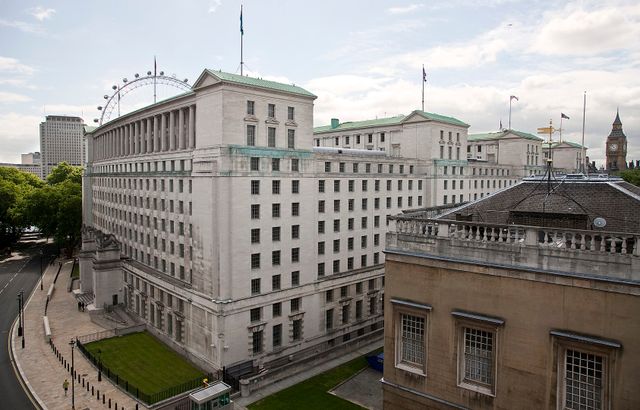
The MOD Main Building, Whitehall, London (Image Credit MOD Object Name: 011-073-014)
The revelations also expose the reactionary nature of all those unnamed “revolutionary” forces, whose economic and social programme was never explained, so beloved by the pseudo-left supporters of Western intervention in Syria.
Sarkha (The Cry) was part of a broader covert programme aimed at supporting Islamist forces as proxies to topple Assad in order to weaken Iran and prepare for a US-backed Israeli war against that country.
Claiming to be a grassroots movement from the same Alawite community as President Assad, Sarkha emerged in 2014 to protest against the high casualty rate of Alawite men serving in the Syrian army in the then three-year long war. It urged them to unite with other ethnic and religious communities in Syria, thereby undermining Assad’s support base.
According to official documents seen by Middle East Eye, Sarkha was created by an American company under contract to the UK’s Military Strategic Effects, a unit within the Ministry of Defence, later handed over to the cross-government agency, the Conflict, Stability and Security Fund (CSSF). According to the agency’s website, the CSSF is an important driver in the government’s Fusion Doctrine and “supports and delivers activity to tackle instability and to prevent conflicts that threaten UK interests.”
In February, Ian Cobain and Alice Ross, writing in the Middle East Eye, revealed how British contractors, with offices in Istanbul and Amman, recruited a network of Syrian citizen journalists to promote an anti-Assad agenda and build support for the armed opposition, while supposedly rejecting “the violent extremist networks” such as ISIS.
Most of the journalists were unaware that their media office was being run by a British company. Indeed, the government’s own documents acknowledged that the journalists’ lives would be in danger if the source of the funding became known. It also suggests why so many journalists have been targeted, imprisoned or killed as spies by the Syrian regime and by opposition militias.
One of the people involved in the project said if their work were known to be linked in any way with the British government it would have undermined its effectiveness.
Not only was their output circulated in Syria, through what purported to be the press offices of Syrian opposition groups, but their video clips of fighters from “moderate” opposition groups were also distributed to the mainstream international Arabic TV and media outlets.
These citizen journalists’ offices also served to “maintain an effective network of correspondents/stringers inside Syria to report on MAO [moderate armed opposition] activity,” enabling the British government to control the conversations between the UK media and those presenting themselves as representatives of the Syrian opposition. That is, the program sought to influence not only reporting within Syria but also in Britain.
Despite their best efforts to depict the Free Syrian Army (FSA) as heroes, these citizen journalists could not disguise the corruption and mismanagement of opposition forces that had Western backing in the early years of the wars.
The Cameron government viewed this and other related projects, costing around $540,000 a month, as a means of maintaining a British presence in Syria until it could participate in a military assault on the country, with its mission statement saying it should have “the capability to expand back into the strategic as and when the opportunity arises, to help build an effective opposition political-military interface.”
The British government backed another project which involved the funding and training of police forces (the Free Syria Police) and “civil defence teams” (militias) in rebel-held areas. The scheme, Access to the Justice and Community Security Scheme (Ajacs), was managed by British consultants Adam Smith International (ASI).
This “aid” ended up in the hands of jihadi forces in Syria. The police officers were handpicked by extremists linked to al-Qaeda and were cooperating with courts run by the al-Nusra Front, the al-Qaeda offshoot in Syria, which handed out extreme punishments including summary executions. In one case, police officers even closed the road near Sarmin in December 2014 so that the execution of two women by stoning could take place.
At one point, according to ASI’s own report, the police handed over cash, up to 20 percent of their funds at one point, to an extremist group, Nour al-Din al-Zinki, linked to human rights abuses and atrocities including the beheading of a young prisoner in 2016.
The funding for the project, ostensibly aimed at training a civilian police force in rebel-held Aleppo, Idlib and Daraa provinces, was only halted after a BBC Panorama investigation, “Jihadis you pay for , ” exposed how officers from the force worked with courts carrying out brutal sentences. Early in 2019, the Free Syria Police disbanded, following the takeover of Idlib province by Turkish-backed Islamists.
The British government, along with the US, also set up the White Helmets, ostensibly a civil defence group dedicated to rescuing civilians caught in the fighting in Syria. Created in 2013, the leading figure involved in setting up the outfit was the former British army officer and MI6 agent James Le Mesurier. He went on to work as a mercenary for Gulf oil monarchies in conjunction with a company linked to the infamous former US military contractor, Blackwater, and after training Syrians in Turkey, sent them back into Syria to function as a logistical support and propaganda arm of the Western-backed “rebels.”
Operating principally in zones controlled by the Al Nusra Front, the White Helmets filmed staged rescues in areas hit by bombs dropped by Syrian government and Russian warplanes, passing on the videos to the Western corporate media, which aired them with no questions asked. The White Helmets have been accused of fabricating both attacks and rescues, most infamously in the case of an alleged gas attack in the city of Douma in April 2018.
At the same time parliament was explicitly rejecting any military action against Syria, the government was secretly loaning British pilots to the US, French and Canadian air forces and the Royal Air Force (RAF) was participating in air strikes in Syria as part of the US-led anti-ISIS coalition in Iraq. This only became public knowledge after it had begun, and well before parliament voted in favour of air strikes in Syria in autumn 2015.
In December 2016, the government reported that RAF operations in Syria far outstripped the intensity of the UK’s operations in Iraq and Afghanistan. By September 2017, more than 1,000 UK personnel, as well as special operations forces, were involved in operations in Syria, with the RAF having conducted around 900 airstrikes, at a cost of £265 million.

Australian government heightens trade conflict with China

Mike Head

In recent weeks, the Australian government has placed the country at the forefront of the Trump administration’s confrontation with China by spearheading calls for an “international inquiry” into the origins of the COVID-19 pandemic. That demand, while couched in neutral terms, essentially accuses China of deliberately or recklessly setting the coronavirus on the world.
Despite concern in Canberra about the patently false White House allegations that the virus emerged from a Wuhan laboratory, the Liberal-National government, backed by the opposition Labor Party, has provocatively pushed ahead with the inquiry call, winning praise from the US administration.
Prime Minister Scott Morrison’s government is now claiming credit for helping instigate a draft resolution calling for an inquiry to go before the World Health Assembly this week. That resolution makes no mention of China or Wuhan by name, instead calling for an “impartial” evaluation of the “international health response to COVID-19,” but the government insists it “toughened up” the original version proposed by the European Union, dovetailing with US demands for a more explicit thrust against China.
At the same time, the Morrison government has contributed to the Trump administration’s ramped-up trade war with China, even as the US president has issued incendiary threats to punish and cut all relations with Beijing. Over the past week, Australian corporate media outlets and prominent government figures have accused China of retaliating against Australia’s inquiry stand by taking action against imports of beef and barley from Australia.
What has been revealed, however, is that successive Australian governments, including the Rudd-Gillard Labor governments of 2007–13, have been imposing tariffs and other restrictions on imports from China, particularly steel and aluminium products. This protectionist record came to light after China warned it would impose a 73.6 percent duty on Australian-grown barley and suspended imports from four of Australia’s biggest abattoirs.
Both disputes involve long-running trade conflicts. The warning on barley followed an 18-month Chinese investigation into claims that Australia dumped the crop into China, where it is used to make beer and to feed livestock. The barley exports were worth almost $600 million in 2019, after coming off multibillion-dollar highs in previous years.
China complained of a lack of co-operation from Australian barley growers, which reportedly received assistance from the Australian government’s $10 billion supposed rescue plan for the Murray-Darling river system, dating back to 2007. China gave Australia a May 19 deadline to respond.
China’s “essential facts” document accused large barley producers, CBH Grain, GrainCorp, Glencore, Cargill and ADM of not providing an “accurate and full report” on the production costs of barley. The document said four smaller producers provided no information.
The Chinese Commerce Ministry estimated that barley farmers received $165.5 million in subsidies via the Murray-Darling scheme and, as a result, the price of barley in China fell 26 percent in the three years to 2017.
In the beef dispute, Chinese authorities referred to errors relating to labelling and health certificates that date back more than a year. Chinese buyers purchased $2.6 billion, or 25 percent, of Australia’s beef exports last year.
China suspended imports from two JBS Australia-run abattoirs—Beef City in Toowoomba and Dinmore near Ipswich in Queensland—as well as the Chinese-owned Kilcoy meatworks and the Northern Co-operative Meat Company at Casino in New South Wales (NSW).
China’s Foreign Ministry said last Tuesday that the suspension was due to violations of customs and quarantine standards found in multiple batches of beef. A spokesman called on Australia to investigate the issue and “rectify the problem” to “safeguard the food security of Chinese consumers.”
Addressing a daily press briefing, a Foreign Ministry spokesman repeated China’s criticism of calls for an inquiry into the origins of coronavirus. “To politicise the epidemic will inhibit cooperation on epidemic control and prevention and it is not welcome,” he said. But he denied that Beijing had threatened economic coercion in response to the Morrison government’s move.
Even though one of the suspended abattoirs was Chinese-owned, the Australian media was immediately full of charges that the barley and beef moves represented an aggressive response to Australia’s COVID-19 inquiry call.
Reports then emerged of Australia’s treatment of Chinese steel and aluminium makers, who face import duties as high as 144 percent. Chinese authorities wrote to their Australian counterparts as far back as April 2014 warning that anti-dumping duties on Chinese products could affect the broader economic relationship.
Australia’s Productivity Commission has regularly criticised the federal government for imposing anti-dumping duties on Chinese steel and aluminium, saying again last month there was “no convincing justifications for these measures.” Its latest report said: “Australia is one of the most prolific users of anti-dumping measures in the world and continues to impose an array of anti-dumping measures.”
Prime Minister Morrison, who has repeatedly boasted of defending “Australia’s sovereignty” against China, brushed aside Beijing’s explanations for its barley complaint. He provocatively accused the Chinese government of retaliating against supposedly legitimate anti-dumping measures. “We have had anti-dumping inquiries in relation to Chinese products to Australia,” he said. “Not all those decisions were well received.”
Australia’s anti-dumping measures mushroomed during the Rudd-Gillard Labor government, with the trade unions agitating for such protectionism as a means of diverting growing workers’ anger over job destruction in reactionary nationalist directions. The unions blamed “foreign” governments and workers for closures and job losses driven by the profit calculations of transnational corporations.
Through an Anti-Dumping Commission, the Australian government currently has 81 protectionist measures in force against 22 countries and 27 types of imports. Two-thirds of the measures are aimed at steel and aluminium imports, notably from China.
Sections of the Australian ruling class, especially the billionaires whose fortunes are built on iron ore, coal and gas exports to China, are voicing fears of the fallout from Australia’s alignment with the US trade war against China. Nevertheless, the dominant layers of the corporate and financial elite are committed to the US-led conflict with China because of their dependence on the US for investment and military backup.
Over the past two decades, China’s economic growth has made it by far Australian capitalism’s biggest export market, but that same growth also has turned it into a direct threat to the post-World War II dominance of US imperialism. The escalating US diplomatic and economic attacks on China are threatening to descend into a nuclear-armed military conflict, with Australia’s population on the frontline.

As death toll mounts, White House steps up efforts to scapegoat China for pandemic

Peter Symonds

In a round of interviews on US television talk shows, the top Trump trade adviser and anti-China hawk, Peter Navarro, stepped up the White House attack on Beijing, suggesting that it had purposely started the global COVID-19 pandemic.
Making China the scapegoat for the outbreak not only serves to deflect attention from the Trump administration’s criminal responsibility for the horrific death toll in the United States but feeds directly into the anti-China trade war measures for which Navarro has aggressively advocated.
Speaking on the “This Week” program on ABC News, Navarro repeatedly referred to COVID-19 in xenophobic terms as the “China virus”—a patently unscientific term intended to blame Beijing for the pandemic. While declaring he did not say that China deliberately unleashed the virus on the world, he immediately made clear that was exactly what he was implying.
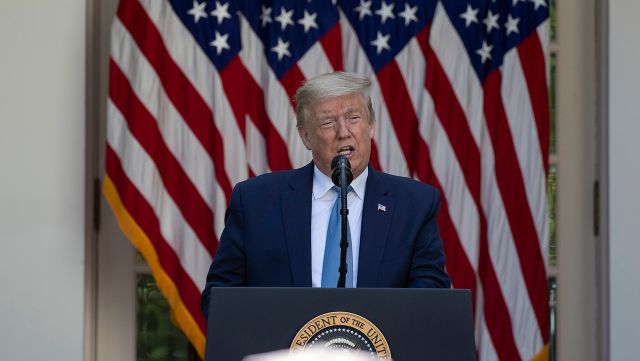
President Donald Trump speaks in the Rose Garden of the White House, Friday, May 15, 2020, in Washington. (AP Photo/Alex Brandon)
Claiming to present “the facts,” Navarro stated: “The virus was spawned in Wuhan province. Patient zero was in November. The Chinese, behind the shield of the World Health Organization, for two months hid the virus from the world, and then sent hundreds of thousands of Chinese on aircraft to Milan, New York, and around the world to seed that.”
In another demonstration that the entire US media and political establishment is on board the anti-China campaign, ABC presenter George Stephanopoulos did not dispute any of these so-called “facts.” In reality China was wrestling with the sudden emergence of a previously unknown disease: its causes, let alone the means for testing and treating it, had to be identified and developed.
Any objective examination of the record shows that Chinese authorities provided information as it became available to the World Health Organization (WHO) and other countries, including the Centres for Disease Control and Prevention (CDC) in the United States.
* The first identified case was diagnosed in Wuhan on November 17, 2019 followed by a second on December 1, 2019.
* On December 21, 2019 the Chinese Centre for Disease Control and Prevention published a report on a cluster of patients with a “pneumonia of unknown cause.”
* By January 3, Chinese scientists determined that the disease was caused by a novel coronavirus which the WHO confirmed on January 9.
* Less than a week later on January 13, Chinese virologists published the genome sequence for the virus.
* By January 21, a total of 291 cases were reported across major cities in China, the first deaths in China had occurred and cases were being reported outside China.
* On January 24, the Chinese leadership place, not only Wuhan but the entire Hubei province under lockdown.
To conclude on this basis that the Chinese regime “sent hundreds of thousands of Chinese on aircraft to Milan, New York, and around the world to seed that [virus],” is another of the big lies promoted by the Trump administration as part of its propaganda war against China. The very terms used are chosen to imply that Beijing deliberately “seeded” a catastrophic global pandemic.
Whatever the flaws in China’s response they pale into insignificance in comparison to the Trump administration’s dismissal of the dangers, its lack of preparation and failure to take action for weeks in the face of mounting scientific advice, and its promotion of snake oil cures.
Navarro, however, simply ignored the facts, repeating Trump’s line that “they could have kept it in Wuhan… So, that’s why I say the Chinese did that to Americans and they are responsible.” In reality, it is Trump, along with the protracted decay of the American health system, which is responsible for the horrendous US death toll that is now approaching 90,000 even as the White House is pressing for a return to work in unsafe conditions.
Navarro made clear that China-bashing is going to be integral to Trump’s bid for re-election, branding his leading Democrat candidate, Joe Biden, as a longstanding “friend of China” and referring to “the billion dollars that his son took from the Chinese”—a claim he was forced to withdraw. For his part, Biden and the Democrats are attacking Trump on an equally xenophobic basis as not being tough enough on China.
Navarro also lashed out at China for breaching its trade deal with the US signed on January 15, for allegedly hacking vaccine research in the United States. The FBI and Department of Homeland Security, which made the claims, have provided no evidence of Chinese electronic espionage. That did not stop Navarro from declaring that China was “stealing” vaccine research “to profiteer and hold the world hostage.”
Navarro directly linked his scapegoating of Beijing over the COVID-19 pandemic with trade war against China and his protectionist agenda. He absurdly declared: “I’m happy to report that this president, Donald J. Trump, in three-and-a-half years, built the most beautiful economy in modern history. And the Chinese did take that down in about 30 days.”
In fact, the COVID-19 pandemic revealed the inner rot and historic decline of American capitalism which only accelerated under the Trump administration. Trump simply epitomises the rise of the parasitic financial oligarchy at the expense of the gutting of the real economy and above all the working class.
The trade war measures championed by Navarro are a desperate attempt to maintain the global hegemony of American imperialism by undermining its rivals, above all China, by every means including economic and military warfare. Last week, Trump even threatened to cut off all economic ties with China, claiming this would save the $US500 billion in imports.
In response to the COVID-19 pandemic, the Trump administration is preparing punitive measures against China, some of which have already been enacted. These include the blocking of government pension funds in Chinese shares and tough new measures designed to prevent Chinese electronics giant Huawei accessing semi-conductors.
These measures are being accompanied by the continued US military build-up in the Indo-Pacific in preparation for conflict with China as well as naval provocations in the South China Sea adjacent to the Chinese mainland. As in the 1930s, the current massive crisis of global capitalism is leading to trade war and war. Navarro, as the author of the book The Coming China Wars, is well aware of the catastrophic potential consequences of his actions.

16 May 2020

Online Teaching in the Wake of the COVID-19 Pandemic: Some Concerns

Satvinderpal K

The Corona virus outbreak has presented unprecedented challenges to different areas of public life, especially the   education system. Due to the pervasiveness of a novel virus, the closure of educational institutions and rebooting of learning, educational institutions are accompanied by frantic efforts to accomplish  the  syllabi in some or the other way. In this desperate situation, online education has been adopted as a strategy to continue with teaching tasks   or basically transfer knowledge.  In response to the significant demand of digital technology, many online learning platforms are offering free access to their services. As the world has moved to digital spaces to make up for the loss of physical spaces during this pandemic, it is commonly seen how the use of technology has enabled us to carry on teaching– learning through online classes and to accomplish the syllabi through these means.
However, the present strategy has deepened the social and economic divide and made it worse for those who do not have access to these mediums. India is already driven by vast socio-cultural diversities, varied home environments and economic inequality. It is a well-known fact that the conditions have never been ideal to learn through the online mode.  Unfortunately, no one has thought how far the strategy of online teaching will help students  who are at the bottom rung of an unequal society. Online learning serves only a limited number of elite class students and is completely out of the reach of the children of the majority.  This section has already been left behind in the ownership of devices with advanced storage capacity. While institutes and enterprising teachers are trying to promote e-learning among their students, such underprivileged sections or those living in far-flung areas are finding it difficult to keep up with the syllabi.
As a teacher in education, I was keen to understand this phenomenon more deeply through discussions with parents and teachers. Many parents who might be lacking substantial levels of education, expressed anxiety about online learning because of insecurities related to the risks involved  in online exposure  to children.  Their worry lies in the child’s access to unwanted misleading ‘knowledge’ available on the Internet. Meanwhile teachers expressed that it is not a substitute but can be an appendage to classroom teaching and  to supplement other pedagogic practices. Teachers also viewed this mode of education as discriminatory, which may create a feeling of inferiority among the children of poor who are  from the other side of the digital divide and are deprived of technological gadgets and facilities to access online education. Online teaching can  have many negative effects on the students and will  further marginalise the already marginalised.
A critical understanding of the limitations of the online teaching mode is required before using it as an easy substitute of classroom teaching. It is to  believe that the online  teaching mode is against the meaning  and purpose of education.  Education does not mean curriculum communication, rather  it requires  social  and critical engagements  for explorations of the mind, which is not possible through online modes. The development of intellectual abilities to deconstruct and evaluate  the given knowledge is possible with direct human engagement, which depends not merely on teacher -student interaction but also with fellow students and peer group. It seems that this pandemic has utterly disrupted the Indian education system, which was already losing its relevance and role  amidst its failure to fulfil the minimum basic needs for holistic human  development through  its prime focus on rote learning and academic skills neglecting critical thinking and adaptabilities.
Some are wondering whether the adoption of online learning will continue to persist once we resume our life after this pandemic, and what would be the implications. It is hard to rule out that with this plea the decades-old agenda of the state to slowly withdraw its responsibility of education might become easier.  It has been taking place through reduction in funds in order to make education self- financed accompanied by the meagre role of a teacher. Educational theorists worldwide have already cautioned us about this phenomenon. In his book The Digital Diploma Mills, David Noble unveils the sordid face of corporate interests promoting online education with the collaboration of educational institutions. He writes that the primary motive  of such corporates is to bring the faculty under  disciplinary control and to deskill it and finally to dispense with it. A common plea one hears these days is that students love hi-tech instruction and it increases their learning outcomes. Indeed, the onset of pedagogic processes with digital technology  is increasingly being hailed as a symbol of progress and  modernization. While a major International study by  OECD evidently concluded that  digital education doesn’t improve  the academic score rather leads to  low learning outcomes. The  arbitrariness in the adoption of  new pedagogies requires to be seen  in broader context. The present situation is, of course, an unprecedented one. Yet, we have to be cautious of the education needs of the majority by adopting  more just and inclusive strategies .

Unemployment soars in New Zealand

Tom Peters

New Zealand’s ruling elite is responding to the economic crisis triggered by the COVID-19 pandemic with job cuts, wage reductions and other attacks on the working class.
Announcing the Labour Party-led government’s annual budget on Thursday, Prime Minister Jacinda Ardern declared: “New Zealand is about to enter a very tough winter” and “the coming months and years will be some of the most challenging our country has faced in a very, very long time.”
Internationally, a savage restructuring of class relations is underway. While failing to properly fund public health systems, governments have seized on the pandemic as a pretext to give trillions to the banks and corporations. At the same time, ordinary working people are being told they must sacrifice their living standards, or risk their health and lives by returning to work before it is safe.
In New Zealand, the number of people receiving the Jobseeker (unemployed) benefit increased from about 145,000 before the country went into a lockdown in mid-March, to 184,400 at the start of May. Forty-five percent of the new welfare applicants were young workers aged in their 20s.
The Treasury says unemployment, which was officially 4.2 percent in March, will likely reach 9.8 percent in September. This is undoubtedly an underestimate. Documents leaked from the Ministry of Social Development this month show it is preparing for 300,000 benefit applications by January 2021. This would mean an unemployment rate of 13 percent, a level not seen since the 1930s.
The scale of job losses will be even greater. Many people made redundant will be ineligible for the Jobseeker benefit if their partner is still employed. Others who suffer reduced hours or become discouraged from looking for work will not be counted as unemployed.
The tourism industry, which supports 400,000 jobs and accounts for 10 percent of gross domestic product, has virtually collapsed. A survey of 1,619 businesses by Tourism New Zealand confirmed that almost 300 were at “high risk” of closing down, 16 had already closed. Thirty-seven percent had cut staff already and another 21,381 layoffs are expected.
Tourism Minister Kelvin Davis told an industry webinar on May 15 that the government would not “pay people to exist” and any state support would be targeted to businesses that are deemed “strategic.”
Ngai Tahu Tourism, a major Maori tribal-owned business in the South Island, recently confirmed 309 of its 348 staff will lose their jobs. Skyline Enterprises, which runs businesses in Rotorua, Dunedin, Christchurch and Queenstown, sacked 500 people last month, more than half its workforce.
Aoraki/Mt Cook Alpine Village Limited, which has received $1.2 million in subsidies, has announced it is sacking 157 staff from its Hermitage Hotel.
Queenstown Airport Corporation (QAC) has cut contracted and temporary staff and slashed wages for remaining staff by 5 to 20 percent. This is despite QAC getting more than $400,000 in wage subsidies from the government. It is one of many companies that have attacked workers despite benefiting from the government’s multi-billion dollar wage subsidy scheme.
Almost 2.5 million airline passengers went through Queenstown in the year ending June 2019. This has completely dried up, with devastating consequences for the region.
On May 7, the Air Line Pilots Association (ALPA) agreed with Air New Zealand to slash the wages of 900 pilots by 30 percent and make another 300 pilots redundant. Union president Andrew Ridling presented this attack as a “fair” outcome, telling Stuff there was an agreement to bring back pilots once the industry restarts.
The national airline, which is 52 percent owned by the government and has received more than $70 million in wage subsidies plus a $900 million government loan, signaled in April that at least 3,750 staff will lose their jobs.
E Tu, which represents about 5,000 Air NZ workers, has accepted mass redundancies. On April 9 the union stated merely that the process was “too rushed.” At the same time, E Tu applauded the government’s appointment of former Council of Trade Unions president Ross Wilson as an “independent advisor” to Air NZ’s board, falsely claiming this would ensure “a worker’s voice” is heard.
Unions are assisting the government and big business by blocking any organised resistance to the most brutal attacks on the working class in decades. These organisations do not represent the interests of workers; they are an upper middle class bureaucracy, with close ties to the Labour Party and corporations, whose aim is to ensure their own privileged position within capitalism.
While tourism and travel are the worst-hit industries, workers in virtually every sector of the economy are being made to pay for the economic crisis.
SkyCity, a casino and convention centre operator, recently announced 700 more redundancies, on top of 200 confirmed last month, together representing almost a third of the company’s workforce in Auckland. Cleaners, hotel workers, gaming, bar and cafe staff are affected.
Unite union organiser Joe Carolan, who leads the pseudo-left group Socialist Aotearoa, told the New Zealand Herald on May 11 that the union had negotiated “a very good redundancy clause,” amounting to just four weeks’ pay for the first year and two weeks for every subsequent year of employment. He blamed the layoffs on a “drop in international business,” social distancing requirements and people having less money to spend.
SkyCity regularly posts annual profits in the hundreds of millions of dollars. Despite this, as of May 3 the company had claimed $21.7 million in subsidies from the government, while slashing wages by 20 percent during the COVID-19 lockdown.
Other job cuts include 230 at sports-betting company TAB, 30 percent of its workforce. Hardware chain Bunnings Warehouse has proposed seven store closures in regional or rural towns, with 145 redundancies. Online retailer Trade Me, with 600 staff, intends to cut 20 percent of its wage bill.
In the manufacturing sector, building products company Steel & Tube is considering up to 200 redundancies. NZ Steel expects to shed 60 jobs.
Local councils are also imposing austerity. Auckland Council, led by the Labour Party’s Phil Goff, has cut 450 temporary or contract staff since the onset of the pandemic, and slashed wages for others.
New Zealand was already experiencing a severe social crisis and economic downturn when the coronavirus pandemic began. In 2018 and 2019, New Zealand saw an upsurge in anti-austerity walkouts and protests, including nationwide strikes by teachers and health workers, which were strangled and sold out by the unions. The rapid destruction of tens of thousands of jobs and livelihoods, however, is paving the way for an even greater eruption of the class struggle.