19 May 2020

Suspension of Labour Laws: One more Neoliberal cruelty by BJP

Aqib Yousuf & Abass Rather

Suspension of labour laws means more exploitation of Workers and more power to the bosses. Workers earned these rights through a lot of toil and sacrifices and consistent struggle. The right to have ‘eight hour work day’ was not simply gifted to the working class. It was achieved by working class through sacrifices and organised struggles. The month of May has a long revolutionary significance for the Workers. It was during the month of May that Workers sacrificed their lives to jolt the estabalishment for the better future of the workers in 1886. And it is now during the month of May that Workers are pushed back to the wall by suspending their rights by the ruling class.
The decision to suspend labour laws mostly by the Bjp ruled states like UP, MP, Gujarat etc is to safeguard the corporate interests and more subjugation to the working class.
By suspending the existing labour laws, the interest of the corporate sector is being promoted and have been given them free hand and more power to hire and fire the workers without any reason and also gives them immunity in facing any disciplinary action from labour department and the resistance from the trade unions. The enaction of labour laws in the constitution are meant to safeguard the interests of labour class and to provide them adequate means to fight for their legitimate rights. These labour laws have international significance and it is to significantly noted that the suspension of such laws is a total violation of International Labour organisation (ILO) Conventions to which India is a signatory. The laws like industrial disputes act 1947, heath and working conditions of workers and setting trade unions, contract workers and migration workers are being suspended for three years through the ordinance by UP Government. This clearly means trade unions are barred to raise their voice on workers issues. The management will be at full liberty to hire new workers on lower wages. Majority of the workers were already facing the problems of proper ventilation, toilets, portable drinking water, hygienic accomodations etc and by abolishing the existing labour laws government has given free hand to corporate sector to put the lives of the workers at greater risk. Due to the suspension of labour laws, workers will hesitate to demand such facilities in fear of getting fired easily without any proper reason.
There are also some states which extended the working day from 8 hours to 12 hours. This is totally a gross violation of international Labour laws which clearly states that working hour in a single day should not extend from more than 8 hours. Before strucking down or making any amendments in labour laws, it is mandatory for the state or central government to take the labour bodies or trade unions in confidence as per the Tripartite consultation convention C144. It is imperative to mention that India is a signatory to Tripartite consultation international Labour standards convention 1976, which clearly states that states need to consult workers bodies before taking any policy decision
Indian Staffing Federation (ISF) President, Lohit Bhatia while appreciating the suspension of labour laws, asserted, “The various states including Gujrat, Madya Pradesh,Utter Pradesh and now Karnataka are now taking sharper chances with Labour laws to attract investment into their States.” He further remarked that such suspensions in labour laws will attract more investors and will be helpful in promoting the ease of doing business.
To refute the claims of ISF President, it is imperative to quote, Prabhat Patnaik, an Indian Marxist Economist and Political commentator, “The argument that Labour laws stand in the way of larger investment is completely fallacious. There is not a shred of empirical evidence to support it, infact, some years ago when neoliberalism was on the ascending some ‘scholars’ had begun ‘showing’ empriciallly that India’s industrial growth had been restricted by its labor laws, but there “ demonstrations” have been so convincingly refuted that no further ‘demonstrations’ of this sort have been advanced since”. He further stated, “ even before the abrogation of labour laws, after all, Indian labour was much cheaper than Chinese labour. Why didn’t foreign capital expressed preference for India over china and other Asian destination at that time?… What is true of foreign investment isp also true of Indian investment from other state.”
The economy of the country was in shambles before the emergence of covid -19 pandanmic and now it has reached an impasse due to the lockdown. This directly affected the livelihood of workers particularly the migrant workers. At the crucial juncture the need of the hour was to strengthen the labour laws but the BJP ruled States took it as a opportunity to strengthen the corporate sector and weaken the labour class by invalidating almost all labour laws. Corporate intellectuals penned down many articles in suppy of the abrogation of labour laws.
Amitabh Kant, CEO of NITI Aayog goes one step ahead and recommend further reforms in other sectors as well. He said, “it is one of the boldest and bravest initiatives since reforms in 1991… It is now or never, states are driving bold reforms. We wiitl never get this opportunity ; seize it .”
To counter this argument, it is significant to quote, K Hemlata, Centre of Indian trade union (CITU), President,
“These attacks on the hard won rights of the working class, it’s display of authoritarianism are part of the attacks on the basic and human rights of the toiling people by the desperate capital in crisis. These must be defeated and reversed through United struggles not only of the working class but by the entire toiling masses.”
The freezing of these labour laws will have serious economic consequences and this will be disastrous for working class.

Privatisation of coal and mineral mining and corporatization of farming

Prem Verma

The Central Government through its Finance Minister announced on 16th of May what it calls major structural changes which they claim will catapult India on the world stage and thanked Covid-19 for giving them this opportunity to make India a self-sufficient world economic power.
Firstly, commercial mining of coal and minerals will now be open to all private parties which have hitherto been in public sector domain. This we feel will result in two detrimental directions for the country. Excessive mining of our Mother Earth for satisfaction of our desire for unlimited wealth will tilt the precarious balance towards adverse climate change. Further, especially in Jharkhand, land wars will start between the weaker farmer and the financially strong industrialist over the acquisition of land for mining purpose. Large scale industrialization over fertile farming land in Jharkhand will make a mockery of CNT, SPT and PESA Acts and further damage the guarantees given to Gram Sabhas under the Constitution.
Secondly, in the name of free market it is proposed to do away with the mandi purchase system of main crops and allow private parties to purchase the farm crops directly from the farmers. On the face of it sounds very promising since it eliminates the middle man and allows the farmer to sell his products directly to the buyer. The problem however is that the financially weak farmer is not in a position of strength to negotiate with the large Corporation. The net result is the Corporatization of farming (contract farming) where the dictates of the large Corporation have to be followed. The aim that the farmer will get a price for his crops better than what he is getting at the mandi is belied. The example of Punjab  farmers growing potatoes for Pepsicola’s Lays Potato Chips is a case gone sour for the farmers who grew potatoes under contract for the multinational. Farmers with perishable goods on their farms will hardly be able to negotiate from a position of strength with the moneybags in the corporate sector.
As the great environmental scientist Dr. Vandana Shiva has written on this contract farming fiasco, “This was contract farming where the multinationationals in agroprocessing industry make one sided contracts with small farmers and the farmer is held liable for carrying out the entire production, paying wages, meeting fertilisers and pesticide costs etc. The contract stated that the company reserved the right to reject the crop in case quality standards are not met by the producer or when the harvested seed is damaged and becomes qualitatively unacceptable due to rains or disease. Even in these cases, the farmer was not allowed to sell the seed outside, he or she had to sell it to the company. The company specified that its decision regarding the seed quality ‘will be final and binding on the producer’ and in cases of doubt, farmer was left with no recourse to any other dispute settlement option. Contract farming for the agro-processing industry was a shift from food crops to cash crops. This weakened the food security even more. The crop and the variety to be planted were determined by the corporation with the sole aim of making profits and not feeding the hungry.”
Opening the mines and minerals sector to private capitalists and promoting contract farming by Corporates will endanger our food security for millions and the farmers will be fighting the land wars on a desperate and unequal basis.
Gram Sabhas fully activated can a play a very vital role in opposing such actions under the powers given to them under the Constitution. The Gram Sabha is the fulcrum of the Panchayati Raj and village development. People use the forum of the Gram Sabha to discuss local governance and development, and make need- based plans for the village. Gram Sabhas in Jharkhand must take up this challenge of opposing all land acquisitions for mining and contract farming and this is where the Pathalgadi movement can be effectively channelized.
Further Stan Swamy, a renowned social activist and a fighter for tribal rights has written very clearly on this issue of ‘ownership rights of sub-soil minerals’ :
“We also have the Supreme Court judgment* declaring that there is nothing in the law which declares that all mineral wealth sub-soil rights vest in the State, on the other hand, the ownership of sub-soil/mineral wealth should normally follow the ownership of the land, unless the owner of the land is deprived of the same by some valid process. The court further says the Mines and Minerals (Development and Regulation) Act, 1957 only regulates mining activity and not divesting any owner of a mine of his proprietary rights.”
Stan Swamy goes on to clarify : “The above position of the Indian Supreme Court is corroborated by so many national provisions. Let us mention some of them:
The PESA ACT 1996 makes it mandatory that the recommendations of the Gram  Sabhas must be sought before grant of prospective licences or auctioning of minor minerals.
Draft National Land Reforms Policy 2013 of the Union Govt which is the response of the central govt to the long persevering struggle of the landless dalits and Adivasis through Ekta Parishad, states in very clear terms that ‘mining should not be undertaken in the Scheduled Areas unless and until the proposal to do so emanates from Gram Sabha  or conglomerate of Gram Sabhas.
Samata judgment of the Supreme Court 1997 clearly states where the lands with mining area are situated either in the reserved forest or forest land or within the Scheduled Area, all the mining leases or renewals thereof are in violation of the Fifth Schedule and therefore, they are all void. If, on the other hand, if the State deems it to necessary to exploit a particular mineral in Scheduled Area, it would be open to the State Government to organise Co-operative Societies composed solely of the Scheduled Tribes to exploit mining operations within the Scheduled Area.”
In conclusion it is safe to assume that –
  1. No mining or contract farming can take place without the consent of the Gram Sabha
  2. Any land falling within the limits of Gram Sabha can be allotted for any purpose only with the approval of Gram Sabha
  3. Monetary benefits arising out of use of land must be shared with the Gram Sabha
Real development starts from below and not dictated from above and Gram Sabhas under the Constitution have been given this responsibility to steer India towards a democratic egalitarian social order.       

New Zealand Labour government promises billions for big business

John Braddock

New Zealand’s Labour Party-led government unveiled a budget on May 14 which promises $NZ50 billion over the next four years, primarily to prop up big business.
The COVID-19 “Response and Recovery Fund” portends decades of economic agony for the working class. According to the Treasury, the economy will contract by 4.6 percent in the year to June, driven by a quarterly decline in GDP exceeding 20 percent, with a devastating hike in unemployment reaching nearly 10 percent by September.
Deficits will average 9.3 percent of GDP between 2020 and 2022. Net core Crown debt is forecast to rise from its current 20 percent of GDP to 30.2 percent this financial year, and to reach 53.6 percent of GDP by the 2023 fiscal year.
Some $13.9 billion of the recovery package has already been spent dealing with the economic effects of the pandemic. Another $15.9 billion is earmarked for initiatives to “kickstart” the economy. A further $20 billion is being kept aside for future spending, possibly in the event of a “second wave” of COVID-19.
With an eye to the election coming up in September, Finance Minister Grant Robertson told parliament the budget was following the “great traditions of the First Labour Government who rebuilt New Zealand after the Great Depression.” He decried the “economic carnage of the 1980s and 1990s”—the pro-business restructuring begun by the 1984–1990 Labour government—which had been based, he said, on the false conception that “the market would save us, that if [the] government sat on the sidelines all would be well.”
In fact, Labour’s budget contains nothing remotely resembling the Keynesian social reforms implemented by capitalist governments around the world during the 1930s to stave off the threat of socialist revolution.
Rather, it is in line with the sharpening push internationally to starve public services, including health, and force people back to work in order to produce profits for the ruling elite. The looming mountain of debt requires a brutal assault on the living standards and social position of the working class. Robertson previously admitted that “generations” of workers will have to pay for the government’s business subsidies and tax cuts.
Announcing the easing of the government’s month-long COVID-19 lockdown on May 11, Prime Minister Jacinda Ardern declared that that the entire population—which she referred to as a “team of five million”—must now turn its attention to the economy. The budget, she announced, would be about “jobs, jobs, jobs.”
Behind the false talk of national unity, however, the ruling class is intensifying its policy of “quantitative easing,” i.e. pumping cheap money into the pockets of big business, on a far greater scale than anything which followed the 2008 global crash.
Reserve Bank governor Adrian Orr revealed last month that the central bank is lifting its purchase of government bonds from a previous target of $33 billion, to $60 billion. This will, Orr said, reduce the cost of borrowing “quickly and sharply” and be a “necessary ally to government action” to rescue the capitalist economy. The official cash rate is at a record low of 0.25 percent.
Labour’s bogus claims about its “jobs budget” centre on the Wage Subsidy scheme, which is not paid directly to workers, but to employers. The government has so far paid out $10.7 billion under the scheme, which will be extended until September 1 at a cost of $3.2 billion. It will be more tightly “targeted,” with businesses that experienced a drop in revenue of 50 percent able to apply, as opposed to the current 30 percent.
Ardern claims that the subsidy has preserved the jobs of over a million employees and sole traders, who constitute 41 percent of the country’s workforce. However, many businesses receiving the subsidy have cut wages by 20 percent or more. The payment equates to $585.80 per week for a full time worker—less than the legal minimum wage of $756 before tax.
The scheme has not stopped mass redundancies. On May 11, Auckland casino operator SkyCity laid off 700 staff, adding to 200 jobs axed in April. The new cuts came after the company forced workers onto 80 percent of their normal pay, falsely claiming this would help avoid sackings. SkyCity has meanwhile claimed nearly $22 million under the Wage Subsidy for 3,272 employees.
Other pro-business measures already in place include tax concessions, low and interest free loans, and changes to laws and regulations, including gutting the Resource Management Act governing new developments—a longstanding demand of big business.
COVID-19 has meanwhile exposed the dire conditions in the country’s health system after decades of austerity. A cash injection of $3.9 billion over four years for health, roughly a third of new spending, is only sufficient to catch up the backlog of delayed elective surgeries and other treatment. With all 20 District Health Boards in the red, the Association of Salaried Medical Specialists estimates another $1 billion would be needed immediately in operational funding, plus $2.5 billion to restore the value of funding just to the level of the 2009–10 financial year.
The government’s hollow promises, made following the 2017 election, to restore “capitalism’s human face” by tackling the housing crisis, inequality and poverty, have been jettisoned. New Zealand has hundreds of thousands of children living in poverty and one of the world’s most unaffordable housing and rental markets.
The Ministry of Social Development is preparing for an extra 300,000 benefit applications in response to the expected tidal wave of unemployment. Yet the budget provides zero increase to benefit levels and no change to the punitive welfare system. The Children’s Commissioner has appealed to the government to urgently spend the budget’s unallocated $20 billion to ward off a steep rise in child poverty.
An extra 8,000 state houses will be built over four years, but this is not enough to eliminate the current waiting lists of 16,309. The demand for public housing is increasing at double the rate of the government’s building plans. Previous promises to provide affordable housing through the so-called “KiwiBuild” program proved to be a sham.
The government is doing everything to appease the financial markets and the rich. There are no proposals for a wealth tax, capital gains tax, or even a moderate tax increase on high-income earners, to fund social programs.
Meanwhile, the police, armed forces and intelligence agencies continue to be strengthened in anticipation of a renewed upsurge of working class struggles against austerity. Significantly, the Government Communications Security Bureau, the national spy agency, will receive $221.3 million for the 2020–21 financial year, an increase of 23.8 percent on last year’s allocation.
To fund New Zealand’s growing integration into US preparations for imperialist war, aimed at China, the budget provides a massive boost to the Defence Force. An extra $676.5 million has been allocated for “readiness and frontline capability,” alongside $898 million towards replacing the Hercules fleet with new aircraft. This follows a record $4.3 billion in operating and capital funding allocated to the military across the past three budgets.

Australian secret interrogation powers to extend to “foreign interference”

Mike Head

There is widespread concern that Australia’s domestic spy agency will have the power to forcibly and secretly question teenagers as young as 14 under new laws introduced to parliament last week in the middle of the COVID-19 emergency.
The current age limit of 16 will be lowered by two years for anyone subjected to an Australian Security Intelligence Organisation (ASIO) investigation. The government claims this is necessary to combat “radicalisation” of young people.
This means that 14-year-olds can be interrogated for up to 24 hours at a time, without being charged with any criminal offence, in order to demand that they provide ASIO with “information.” A security-cleared lawyer can be present, as long as he or she does not “unduly disrupt” the questioning.
Equally chilling, however, is that the bill will extend ASIO’s compulsory questioning powers beyond alleged terrorism-related activity to supposed “foreign interference,” espionage and politically motivated violence.
Once again, police-state powers that were originally imposed under the cover of the post-2001 “war on terrorism” are being expanded to cover fields far beyond terrorism, particularly political activity that the government and ASIO deem “extremist” or coordinated with a “foreign” or international organisation.
ASIO’s powers first came into effect in 2002, overturning the fundamental principle of no detention without charge or trial. The legislation permitted the agency to readily obtain warrants to question a person for up to 24 hours to seek “information” about a potential terrorism offence, or to detain and question them for up to seven days. Those interrogated or detained could not tell anyone, except a vetted lawyer, what had happened to them.
These powers were due to expire last September, but were extended for a further 12 months, with the support of the opposition Labor Party, to give the Liberal-National government extra time to draw up the expanded powers.
Under the bill introduced by Home Affairs Minister Peter Dutton last week, ASIO’s detention power, which has never been used officially, will be removed, but the questioning power will become even more draconian and far-reaching.
Introducing the bill in parliament, Dutton indicated that, as long suspected, these powers have been used to coerce people into providing information or collaborating with ASIO, despite not being formally invoked many times. “[A]lthough they are rarely used, these powers have produced valuable intelligence that could not have been obtained through other methods,” he stated.
Although Dutton made no explicit reference to China, the extension of ASIO’s coercive powers to cover possible “foreign interference” activity is part of an escalating US-backed anti-China campaign. Beijing is being accused by the media and “intelligence sources” of all sorts of crimes, including cyber warfare and influence-peddling with the assistance of Australian business figures and academics.
Dutton alluded to this witch hunt, saying the ASIO director general had recently argued the threat to Australia from foreign interference and espionage was higher now than at the height of the Cold War.
As the World Socialist Web Site has documented and explained, the “foreign interference” laws do not only target China and its alleged local sympathisers. They can be used to outlaw political opposition, anti-war dissent and social unrest by alleging that it is connected to “foreign” or international campaigns.
For the first time, criminal offences, which carry up to 20 years’ imprisonment, now apply to simply undertaking political activity in partnership with an overseas organisation.
The expansion of ASIO’s interrogation power to include “politically motivated violence”—a much broader term than “terrorism”—is another warning of plans to crack down on any views regarded as a threat to the capitalist political and economic order.
Just three months ago, Dutton claimed that “left-wing lunatics” and “extreme left-wing ideologies” posed as much of a threat of violence as far-right and fascistic groups, whose growth had been admitted by ASIO chief Mike Burgess.
Dutton’s declaration underscored the fact that the real target of the government and the intelligence and police apparatus is left-wing and socialist organisations, not the revival of fascism.
The new bill will allow the government’s attorney-general to issue ASIO questioning warrants, rather than a judge, and to do so orally in an “emergency.” It also permits police to search people they are detaining for ASIO interrogation and to seize items, such as phone or other devices, that could be used to communicate the arrest or any items “relevant” to the warrant.
ASIO also will be able to place vaguely-defined “tracking devices” on cars or in people’s bags with only internal ASIO approval, rather than a warrant. According to Dutton, this will “bring ASIO in to line with law enforcement agencies, which are permitted to internally authorise non-intrusive tracking devices under the Surveillance Devices Act 2004.”
ASIO and its related agencies, such as the Australian Signals Directorate, operate as part of the global US-led “Five Eyes” mass surveillance network, which is increasingly focussed on Washington’s aggressive confrontation with China. These agencies systematically swap data, especially with their US counterparts.
The Labor Party has already given in-principle backing to the government’s bill, which will go to parliament’s intelligence and security committee for fine-tuning. Labor has either agreed to, or itself legislated, every barrage of so-called “national security” laws since 2001.
Labor’s home affairs spokesperson, Kristina Keneally, said the opposition would “always take the advice of our national security agencies.” She said ASIO’s powers were “ongoing matters which have been extensively considered since they were first created by John Howard,” the former Liberal-National prime minister whose government suffered a landslide election defeat in 2007.
Labor also has given full support to the government’s alignment behind the Trump administration’s escalation of the US trade war and military drive to prevent China from challenging Washington’s post-World War II global dominance.
As this bipartisan partnership indicates, the latest ASIO bill is another preparation by the corporate and parliamentary establishment as a whole to suppress political and social discontent. This planning is occurring amid the greatest economic crisis since the 1930s Great Depression, growing social inequality and the worsening danger of involvement in catastrophic US-led wars.

US retailer JCPenney to close nearly one-third of department stores, announces bankruptcy

Jessica Goldstein

American department retailer JCPenney announced Monday that it will permanently close nearly one-third, or 242, of its 846 existing retail stores across the US. The closures are part of the struggling Plano, Texas-based department store chain’s decision to file for Chapter 11 bankruptcy on Friday.
The stores are set to close between the current and next fiscal year, according to documents filed with the US Securities and Exchange Commission (SEC). This year 192 stores are slated for closure with the remaining 50 to close in 2021.
The SEC filing quoted the company as stating that the remaining 604 stores will “represent the highest sales-generating, most profitable, and most productive stores in the network.” A full list of the closing stores has yet to be released, but it can be expected that they will be located in some of the most economically depressed areas of the US which have been hardest hit by both the economic depression brought on by the COVID-19 pandemic and the 2008 recession before it.
JCPenney joins other major chains, including Neiman Marcus and J.Crew, in filing for bankruptcy amid the pandemic. Like its competitor and fellow struggling department store giant Sears, JCPenney filed for bankruptcy to avoid liquidation after years of parasitic financialization had cut the corporation’s assets to the bone. S&P Global Ratings currently ranks the retailer as “distressed” with a negative outlook and has assigned it a CCC, or junk bond, status.
The most recent announcement of JCPenney’s store closures comes on top of 27 permanent closings in 2019. That year saw an unprecedented wave of 9,700 retail store closures across the US and the liquidation of well-known chains such as Toys“R”Us, Payless ShoeSource, Charlotte Russe and Gymboree.
JCPenney was incorporated in 1913 and expanded rapidly from 1960–1979. At its height in 1973, the retailer operated 2,053 stores worldwide until it began to decline one year later as the 1974 recession took hold. The company began to close stores and departments or sell them off through mergers and acquisitions beginning in the late 1970s and continuing through the present day with closures especially accelerating after 2014.
In 2014, JCPenney closed 33 stores and laid off 2,000 employees and the following year closed 39 stores and laid off a further 2,250 employees. In 2017 it shuttered 140 stores and two distribution centers, offering buyouts to 6,000 employees who lost their jobs.
The US “retail apocalypse” of the last several years has thrust a growing number of workers into lower-paid and precarious contract work in the “gig” economy. Now with the unprecedented economic crisis in the US, thousands of retail workers who have been or will be laid off are facing destitution.
US retail sales fell by 5.7 percent in March over the same period in 2019, and by an astounding 21.6 percent in April according to data compiled by the US Census Bureau. The most recent drop in retail sales dwarfs the previous record decline of 3.9 percent in November 2008 at the outset of the last economic recession. The hardest-hit categories in April this year were furniture sales, falling by 59 percent; electronics and appliances, 60 percent; and clothing stores, 79 percent.
Department stores as a whole lost 29 percent of sales year-over-year on April. Only online retailers saw an increase in sales over the past month, up 8.4 percent, hardly enough to offset the overall plunge. Retail spending is a major driver of the US economy, with estimates putting total consumer spending at two-thirds of the national economic base and is often used as a benchmark for the country’s overall economic health.
To underscore the recklessness of the corporate ruling class, after declaring bankruptcy JCPenney has joined in the homicidal rush to “reopen” the US economy, already having reopened 41 of its stores and announcing the reopening of 115 more on Wednesday. All 846 of the company’s locations had been closed since March 18 due to concerns over the spread of COVID-19. These moves will sacrifice hundreds if not thousands more lives for the dying company’s futile drive for profit.
The decline of traditional “brick and mortar” retail is part of a protracted process which has spanned decades as corporate mergers and acquisitions have accelerated and as the industry has been challenged by competition from the advent of internet e-commerce, presently dominated by tech giant Amazon. The COVID-19 pandemic has only accelerated this ongoing seismic shift which was well underway.
Economists highlight the bloodbath of job cuts after US states went under lockdowns in March as a leading cause of the sharp drops in non-essential retail spending. With 36 million jobs lost over the past two months and official unemployment at 14.7 percent—the highest rate since the Great Depression of the 1930s—masses of workers in the US have no disposable income with the absence of any adequate government unemployment assistance programs.
Pointing out the futility of the US government’s efforts to prop up the failed capitalist system, economists warn that the $2.2 trillion CARES Act stimulus package handed to corporate America and the banks by Congress will do little to lighten the economic blows faced by US physical retailers, with some 65 percent of stores expected to close permanently if shut down for four months or more due to public health concerns, according to the Chicago Tribune .
This downward spiral will be exacerbated by the US government’s utter refusal to implement and maintain measures to effectively contain the virus, including widespread testing of all residents, quarantining and contact tracing programs. With tens of thousands of workers put out of work and the ongoing wave of closures coupled to completely inadequate social safety nets, more and more will find that they can barely cover basic necessities, much less find the money for discretionary spending.
Retail workers are among the lowest-paid and most heavily exploited in the US. The workers who will lose their jobs as a result of JCPenney’s and other stores’ closings will join the masses of manufacturing workers, health care workers, teachers, transportation, arts and entertainment workers and others who will be fighting against the corporations, big banks and state governments for their right to a livable income and guaranteed benefits while remaining safely at home to stop the spread of the coronavirus.

Brazilian police massacre 13 in brutal operation in Rio de Janeiro

Tomas Castanheira

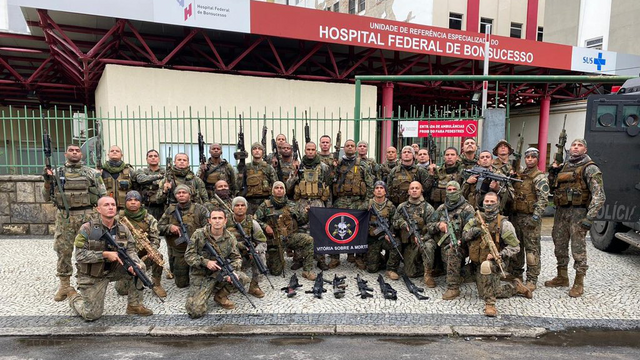
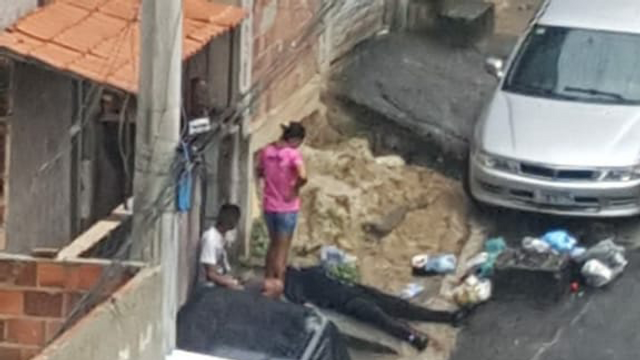
Last Friday, an operation by the Civil Police and Special Police Operations Battalion (BOPE) left 13 dead and a trail of destruction in the Alemão Complex, one of the largest groups of favelas in Rio de Janeiro.
Some of the dead were abandoned by the police in the streets and houses where they were killed, and their families and neighbors were forced to carry the bodies out of the community. One of the videos shared by residents shows a young man stabbed and left in agony, indicating a summary execution by the state agents.
Resident of the Alemão Complex looks at dead body at her door.
The violence and barbarity spread throughout the neighborhood, which is home to tens of thousands of impoverished workers. Conditions of poverty and oppression are even more critical situation in the midst of the coronavirus crisis.
Residents denounced police looting of small businesses, houses destroyed by gunfire and grenades and bullets penetrating rooms where families were sheltering in terror. Videos recorded by residents show their cars destroyed after being dragged by the “caveirão,” the armored vehicle of the military police, which crossed the narrow streets of the favela.
“Instead of sending doctors and nurses to protect the residents from COVID-19, the government sends police, armored vehicles and helicopters to kill us,” Bruno Itan, a photographer and resident of the Alemão Complex, told the Guardian.
In a Twitter post, with thousands of shares, another resident said: “You know those scenes of blunt violence that we see in countries of the African continent in civil war or under authoritarian and bloody government? But this one is from ‘democratic’ Brazil, where citizens carry five bodies of people killed by state agents in the light of day!”
The BOPE unit that invaded the Alemão Complex poses with guns they seized.
According to the police, the operation was aimed at finding a place where drug traffickers stored weapons, ammunition and drugs. The seizures they disclosed were no more than eight rifles, some ammunition and a small quantity of drugs. The police also stated that five of the dead were suspected of involvement with trafficking. They provided no explanation for the other eight they slaughtered.
This massacre is another episode of the astonishing growth of murders committed by Rio de Janeiro’s police since last year. In 2019, the year Wilson Witzel, an extreme-right politician from the Christian Social Party (PSC), assumed control of the government of the state of Rio de Janeiro, deaths in police operations grew by 92 percent. There were 387 deaths in 1,296 police operations in 2019, compared to 201 deaths in 711 operations in 2018.
Witzel ran for the governorship posing as a local representative of the fascistic Jair Bolsonaro, in a campaign fundamentally based on defending unleashing the police to kill “bandits.” Witzel became infamous for a phrase he used in one of his first interviews as governor-elect: “The police will do the right thing: they will aim right at the head and... fire! So there will be no mistake”.
Among the victims of the criminal executions encouraged by Witzel is Ágatha Félix, an eight-year-old girl brutally murdered by the police last September in the same Alemão Complex. Her assassination generated unrest and revolt among the population of the favela, who took to the streets in protest against police violence, demanding: “Stop killing us!”
The increase in police lethality in Rio de Janeiro in 2019 occurred in the context of a strong federal government campaign, headed by former minister Sérgio Moro, for the so-called anti-crime bill, which involved granting police officers immunity in the murderous violence they commit on duty. Bolsonaro remains obsessed with the approval of this measure, which ended up not being passed last year
The escalation of state violence by Bolsonaro and Witzel is not a new phenomenon, but the continuity of a process that has advanced over the past decade. A milestone in this development was the military occupation of the Alemão Complex in 2010, under the presidency of Luís Inácio “Lula” da Silva, of the Workers Party (PT).
Under the pretext of “pacification” of the favelas, in November 2010, the Complex was invaded by a total of 2,600 police officers and men from the Army, Navy and Air Force. The operation, strongly driven by the media and serving the interests of capitalist enterprises in Rio de Janeiro, left dozens dead and terrorized the population. There were reports of torture, constant abuses of workers and executions of innocent people.
At the time, Lula celebrated the action alongside the then governor of Rio de Janeiro, Sérgio Cabral of the Brazilian Democratic Movement Party (PMDB), now imprisoned for corruption. “I, who watched the occupation of the Alemão on television, was touched. I imagine you [governor Sérgio Cabral] how you felt when you saw, for the first time, the people watching the police entering as friends. The people saw the Armed Forces serving the Brazilian. Not to attack or beat the people, but to defend them from the real bandits of the country. One concrete fact is this: the Alemão Complex is no longer a bogeyman,” Lula said.
The following years witnessed a spiraling growth of violent occupation of the favelas by the Brazilian armed forces.
In 2014, Dilma Rousseff’s administration, also from the Workers Party, approved a military intervention in Rio de Janeiro, with the occupation of the Maré Complex, another large group of favelas, by 2,500 military personnel from the Army and Navy.
In 2018, the administration of Michel Temer, who took power after the impeachment of Rousseff, carried out a new military intervention in Rio de Janeiro. In command of this last operation was General Braga Netto, who today holds the highest position in the Bolsonaro government, as chief minister of the civil house. Commenting on the murderous operation he was leading, Braga Netto declared: “Rio de Janeiro is a laboratory for Brazil.”
This phrase takes on an especially alarming meaning today. As a spokesman for the Bolsonaro government, Braga Netto is committed to guaranteeing the conditions for a return to work, demanded by the bourgeoisie as a whole throughout the national territory. In the midst of the explosion of COVID-19 in Brazil, this will mean the deaths of thousands and thousands of people and will require a deepening of police-state control over the working class.
Once again, Rio de Janeiro serves as an important “laboratory” for the crimes of capitalism. The state has one of the most calamitous conditions, with 22,238 confirmed coronavirus cases and 2,715 confirmed deaths, 101 of them last Sunday alone. But figures showing an explosion of deaths linked to respiratory diseases indicate that there are almost twice as many COVID-19 deaths as those reported by the government.
The situation in the favelas is especially grave. The website Voz das Comunidades reported about a month ago that a survey made by local health professionals registered more than 1,000 suspected cases of COVID-19 in the Alemão Complex, while the government reported only four. The disease comes on top of persistent water shortages and growing hunger and misery among the residents.
The Brazilian bourgeois state is imposing a normalization of death for the entire working class—whether through hunger, infection by the new deadly coronavirus, or the brutal murder by its military agents.
However, the working class is not a passive agent in this process. The growing mobilization of Brazilian workers in wildcat strikes against unsafe conditions in the workplaces and the revolt of residents of the poor neighborhoods against state violence are merging with a global movement of the working class that faces the same attacks by the ruling classes of all countries.
These are highly revolutionary conditions that favor the development of an independent political movement of the global working class, which will increasingly assume a socialist and internationalist direction.

Turkish government steps up attack on Kurdish HDP amid COVID-19 pandemic

Barış Demir

President Recep Tayyip Erdoğan’s Justice and Development Party (AKP) government dismissed five more mayors from the Kurdish-nationalist People's Democratic Party (HDP) on Friday, arresting them and appointing trustees to replace them.
This is a blatant attack on democratic rights. In the 2019 local elections, the HDP won 65 municipalities. On Friday, the total number of municipalities where the election results have been annulled reached 45. Moreover, six elected mayors did not receive election certificates after the elections, and 21 mayors were also detained. As a result, the HDP governs only 14 of the 65 municipalities it won.
HDP Co-Chair Mithat Sancar condemned the government’s action, which it based on charges that the HDP and other opposition parties are complicit in preparations for a coup. Sancar said: “The government, trying to portray itself as a victim by spreading the rumours of a coup, appointed five more trustees to our municipalities and in fact staged a coup. The appointment of trustees is the hardest, clearest example of the hostility towards Kurds.”
The HDP has long been a target of police repression by the AKP government and state authorities. Many of its mayors, legislators and leaders have been jailed on terrorism charges.
These attacks have escalated ever since Turkey’s “peace process” with the Kurdistan Workers Party (PKK) ended in 2015. As the WSWS explained, “After Washington made the Kurdish People’s Protection Units (YPG)—an offshoot of the PKK—its main proxy army in Syria, Turkish President Recep Tayyip Erdoğan’s Justice and Development Party (AKP) government ended the process, fearing to lose its Kurdish region. It launched a bloody military assault in Kurdish towns.” Since then, thousands have been killed and more than 200,000 forced to flee their homes.
In 2016–17, during the state of emergency imposed after the failed 2016 NATO-backed coup against Erdoğan, the government removed more than 90 HDP-backed mayors elected in 2014 and launched attacks into Syria against US-backed Kurdish militias. Even today, former HDP leaders Selahattin Demirtaş and Figen Yüksekdağ and several HDP legislators are still political prisoners.
The government's latest attack on the HDP comes amid growing anger inside Turkey over the AKP’s handling of the COVID-19 pandemic, as well as escalating conflict between Turkish forces and US-backed Kurdish nationalist groups.
On May 14, there was an armed attack, allegedly by the PKK, on a vehicle carrying Social Support Group officials in the city of Van, in eastern Turkey. Two officials were killed. After the ceasefire in Syria’s Idlib province brokered by Turkey and Russia in early March, the Turkish army has escalated operations against Kurdish nationalist groups in Turkey and Iraq, and against the YPG in Syria.
The conflict with the Kurdish nationalists is bound up with broader conflicts between Turkey and its NATO imperialist allies in the region. After France, Greece, the United Arab Emirates, Egypt and Cyprus jointly condemned Turkish gas-drilling in the eastern Mediterranean, Turkish Foreign Minister Mevlüt Çavuşoğlu accused Paris of wanting “to help YPG elements carve out a terror state in northern Syria.”
At the same time, the AKP’s attack on the HDP is the product of explosive political tensions inside Turkey itself. According to recent polls, an alliance between the opposition Republican People’s Party (CHP), the far-right Good Party, and the HDP would defeat the AKP and its ally, the far-right Nationalist Movement Party (MHP) if elections were held today.
In its statements on the pandemic, the Erdoğan government has increasingly attacked the CHP and its allies, referring to the failed 2016 coup and making unsubstantiated accusations that the bourgeois opposition parties are preparing a coup. These attacks aim to divert growing social anger among workers against the AKP government over the pandemic.
CHP leader Kemal Kılıçdaroğlu is working to create a broad bourgeois opposition front against the AKP’s Public Alliance with the MHP. The CHP and other capitalist opposition parties are not, however, less bankrupt and reactionary than the AKP, nor do they have any serious objection to the pandemic response of the government, which imposed the diktat of the ruling class. Rather, the CHP aims to exploit rising social anger to install a new government more openly aligned with the NATO imperialist powers.
Kılıçdaroğlu said that if there were a “snap election” the CHP would help two AKP split-offs, the Future Party of former AKP Prime Minister Ahmet Davutoğlu and the Democracy and Progress Party of former AKP Foreign Minister Ali Babacan, form a group in parliament. This would help these parties participate and receive state aid in elections.
This disparate coalition cobbled together by Kılıçdaroğlu is reactionary and shot through with contradictions. Davutoğlu and Babacan both implemented the AKP’s anti-democratic and anti-worker policies while in office, but left the AKP amid growing conflicts between the Erdoğan government and the imperialist powers. Kılıçdaroğlu's attempts to introduce these former AKP politicians into the CHP-led Nation Alliance once again demonstrate the CHP's pro-imperialist orientation.
They also expose the HDP, who speaks for sections of the Kurdish bourgeoisie and petty bourgeoisie and worked closely with the CHP as it founded the Nation Alliance in 2018. Both the CHP and the HDP are, if anything, even more openly oriented to imperialism than the Erdoğan government.
The CHP is forming this alliance against the AKP, but it has always supported the Turkish army's operations in Syria and in Turkey, and it also voted for the AKP’s constitutional amendment removing the parliamentary immunity of HDP deputies. Nonetheless, the HDP unhesitatingly backed CHP candidates in last year’s local elections.
Moreover, the HDP clearly states that it is open again to an alliance not only with the CHP, but also its fascistic partner, the Good Party. Ahmet Türk, a senior HDP leader elected as mayor of Mardin last year but then dismissed, glorified the CHP-led alliance, declaring: “Turkey's democratization is important. Today, the main opposition party CHP is a party that should lead this. … Therefore, even if we criticize CHP from time to time, it is because it did not fulfil this task.”
He added, “Despite all injustice, if I see any hope I will shake the hand of [Good Party leader] Meral Akşener or an MHP leader.”
Türk’s statement comes after Akşener appealed to the AKP and MHP, to seek solutions to economic problems and called for “national unity.”
After weakly criticizing Akşener for not inviting the HDP to these talks, HDP Co-Chairman Mithat Sancar signalled that the HDP would join Akşener’s call for “national unity” if it were invited, stating: “Without the party which took at least 6 million votes, without the third largest party in the parliament in Turkey, how would you provide unity and solidarity?”
The attempts to form an alliance between the CHP, Good Party and the HDP, and split-offs from the AKP reflect their shared hostility to the working class. This is also an irrefutable indictment of the pseudo-left groups that have enthusiastically rallied behind the CHP and HDP, presenting them as an alternative to Erdoğan.

As Modi government eases lockdown, coronavirus cases surge in India

Wasantha Rupasinghe

India’s Narendra Modi-led Bharatiya Janata Party (BJP) government is further relaxing the nationwide anti-COVID-19 lockdown it first imposed for 21 days on March 25, even as cases of the highly contagious and potentially lethal virus surge.
According to a statement issued by the Ministry of Home Affairs on Sunday, during the “fourth stage” of the lockdown, which is slated to last until May 31, inter-State movement of passenger vehicles and buses will be allowed with the “mutual consent” of the states and Union Territories involved except in “containment zones,” where strict stay-at-home orders are in force.
State governments will also be allowed to decide the “delineation of Red (hotspots), Green and Orange zones.” Intracity rail and subway services, education institutions, hotels, restaurants (excluding “home delivery of food items”), cinemas, and shopping malls are to remain closed, says the ministry statement, and religious and political gatherings “shall continue to remain prohibited throughout the country.”
However, the Modi government, egged on by big business, is pushing for a quick resumption of manufacturing and other productive industries. In recent weeks, large sections of industry, especially in Special Economic Zones and those that are significant exporters, have been greenlighted to reopen.
Yesterday, India’s largest auto manufacturer, Maruti Suzuki, reopened its Gurgaon, Haryana car assembly plant with 4,000 workers or about a third of the normal workforce called in to work. On May 12, Maruti Suzuki already relaunched operations at its nearby Manesar assembly plant.
On the very day the Modi government announced the relaxation of the lockdown under its so-called phase four, the country surpassed China for total coronavirus cases. Indian authorities also reported that there had been a daily increase in new cases of more than 5,000 for the first time, with 5,242 new infections. Sunday also saw the highest number of new fatalities in a single day, with 154 new deaths announced.
As of yesterday, India’s total number of confirmed COVID-19 deaths stood at 95,679, with 3,023 deaths.
Since May 5, the total number of infections has more than doubled, rising from 46,711 to 96,169 yesterday. Only one month ago on April 18, India had recorded only 14,792 confirmed COVID-19 cases, less than a sixth of the current tally.
Maharashtra, India’s second most populous and most economically important state, continues to be the state worst affected by the pandemic, with 33,053 infections as of yesterday. At least 1,135 people have lost their lives in the state.
Gujarat has registered 11,380 cases, while Tamil Nadu has 11,224. With 1,794 deaths between them, Maharashtra and Gujarat (659 deaths) account for about 60 percent of India’s coronavirus death toll.
Three states—Maharashtra, Gujarat, Tamil Nadu—and the Delhi national region (9755 cases and148 deaths) currently account for three out of every four confirmed COVID-19 cases in India.
Other states deemed to be hotspots for the virus include Madhya Pradesh, with 4,977 cases and 248 deaths, and Rajasthan (5,202 cases and 128 deaths). Each of these states reported large numbers of new cases Sunday—Maharashtra 2,347, Gujarat 391, Tamil Nadu 639, Delhi 422, Rajasthan 242, Madhya Pradesh 187, and Uttar Pradesh 213.
In addition to these states, West Bengal, India's fourth most populous state with 91 million people, is experiencing one of the fastest growth rates of COVID-19 cases, with 10 districts having been declared hotspots. On Sunday, WB reported 101 new cases, increasing the overall total to 2,576 infections and 232 deaths.
In addition to these states, Andhra Pradesh, India’s tenth most populous state with 49.5 million inhabitants, has reported 2,355 cases and 49 deaths. At least five districts have been designated as hotspots in the state. Other States with COVID-19 hotspots include: Bihar (five); Karnataka (three), Punjab (three), Telangana (six), and Jammu and Kashmir (four).
Given the very limited number of tests carried out by India authorities and the lack of medical facilities especially in rural areas, the actual number of coronavirus cases is undoubtedly much higher.
India has performed just 1.81 tests per 1,000 people, less than one twentieth the inadequate US per capita testing rate, and far less even than Turkey and Iran.
Even prior to the coronavirus pandemic, India’s large urban centres were highly vulnerable to, and breeding grounds for, diseases such as tuberculosis. A process of social devastation impoverishing large sections of India’s population has occurred over recent decades, driven by the pro-market reforms enforced by successive governments.
The massive COVID-19 outbreak in Mumbai, the capital of Maharashtra and India’s second largest city with a population of 19.8 million, is revealing in this regard. On Sunday, the total number of cases in the city reached 20,150, with 734 deaths. The city’s overcrowded slums have provided ideal conditions for the virus to run rampant. According to the Times of India, 57 percent of families in Mumbai live in single-room houses. The number of cases in Dharavi, Asia's largest slum, has crossed the 1,200 mark, with 44 new cases reported on Sunday. Some 56 deaths have been reported from Dharavi, which has a population density of 270,000 per square kilometer.
Already, the hospital system in Mumbai is in the process of becoming overwhelmed. Last week the city municipal corporation, which runs Mumbai's public hospitals, announced that due to a lack of beds it was placing COVID-19 patients on a waiting list, while trying to find beds at private hospitals.
A shocking account of the disastrous situation at the state-run Lokmanya Tilak Municipal General Hospital, better known as Sion, was given by AFP on May 16. The 1,300-bed facility was overcrowded, with three patients sharing some beds. Morgues were packed with bodies.
AFP referred to a widely shared video showing corpses wrapped in black plastic covers lying on beds in a ward where other patients were being treated. Aditya Burje, a junior doctor working at Sion hospital, told AFP, “The emergency area gets full in a matter of hours,” and added that by the end of April, “we were seeing 50-100 patients a day, 80 percent of whom would turn out to be positive (for COVID-19) and many would need to be on oxygen.”
In Tamil Nadu, India's sixth largest state, with a population of 72 million, the cases are mainly concentrated in big cities. 2,600 cases were recently reported from the Koyambedu market, a wholesale market in the state capital, Chennai. This has emerged as India's biggest active cluster following the state government’s decision to keep the market open during the countrywide lockdown. About 12 districts in the state are currently designated as hot spots or Red Zones.
According to the 2011 Survey of India, 31 percent of Chennai’s population lived in slums, as did more than a fifth of the population in Salem and Trichy. Wikipedia notes that over a third of these slum dwellers had no latrines, resulting in the spread of diseases even in normal times, and that 67 percent of slum households were one-room dwellings.
An article in the Hindustan Times on March 23 noted, “India is home to about one-third of the global slum population with an average of one in six city residents living in slums where population densities vary between 277,136 person persons per square kilometer in Dharavi to 125,000 person per sq. km at the Rasolpoora slum in Hyderabad.”
These shocking revelations underline that the official COVID-19 case figures presented by the government only provide a pale reflection of the true scale of the disaster. Countless people infected by the virus are simply not being counted or are ignored. Millions more are at great risk to be infected by the coronavirus in a country where public health systems are virtually nonexistent in some areas.
It is under these conditions that Modi, speaking on behalf of India’s ruling elite, has, in the name of reopening the economy, effectively announced a policy of “herd immunity” that will allow COVID-19 to spread unchecked.
Brought to power by Indian capital to more aggressively pursue its predatory interests, the far-right Hindu supremacist BJP government is calculating that the deaths of hundreds of thousands, even of millions of people, is a price worth paying to secure India’s position as a leading destination for global investment and sweatshop labour.

Growing number of Bangladeshi garment workers infected with COVID-19

Wimal Perera

Bangladesh’s Directorate General of Health Services (DGHS) reported yesterday that a total 23,870 people nationally had been infected with COVID-19 and that the death toll had reached 349 since the highly contagious infection hit the country. Little more than 185,000 people have been tested in Bangladesh, which has a population of 160 million. Somewhere between 6,000 and 9,000 people are being tested each day, less than the 10,000 minimum recommended by medical experts.
The Bangladeshi media, citing a survey by the Bangladesh Center of Workers Solidarity, recently reported that 96 workers have been infected. This includes 26 workers from Narayanganj, 24 in Savar, 14 in Gazipur, 7 from Ashulia, 6 from Dhaka and the rest from other areas. Ten garment workers and one factory official are reported to have died from confirmed infections or after exhibiting coronavirus-like symptoms.
While the Bangladesh Garment Manufacturers and Exporters Association (BGMEA) rejected the survey figures, claiming that there were only 20 infections among factory employees, the New Age newspaper, citing Industrial Police of Bangladesh data, said 90 workers had tested positive—81 from garment factories and the remaining nine from other plants.
Many of these workers have been infected since the government allowed the reopening of garment facilities on April 26, even as the pandemic was escalating beyond the control of health authorities.
While thousands of low-paid workers responded to company announcements that the plants were reopening, the national lockdown of public and private office workplaces remains in place until May 30. Shopping malls are only allowed to be open for a few hours each day. One employee, Mohammad Moshiur told Reuters that he had to keep working, adding: “Do you think I would have gone to work today if I had money? Of course not.”
Factory owners claim that they have provided safe and improved working conditions but the media has cited comments from workers warning that they remain vulnerable to the virus. The Daily Observer reported workers complaining that “most factory owners are not providing enough masks and sanitiser and that workers have to buy them at their own cost.”
Three anonymous government inspectors told Reuters that the machine layouts in many plants made it difficult to keep workers apart. One worker told the news agency that her “factory was cleaner but was just as crowded as before the epidemic.” She said: “I’m scared. But sitting at home won’t feed my child or pay my rent. We are poor people.”
Prime Minister Sheikh Hasina has attempted to justify her government’s dangerous reopening of plants by invoking the approaching end of the Ramadan religious festival. “We can’t keep everything shut,” she declared.
The Hasina government’s decision to allow factories to reopen has nothing to do with Ramadan but is in response to the demands of Bangladesh garment bosses and other export industry chiefs. It corresponds with the brutal and medically unscientific “herd immunity” policies being imposed on workers by governments around the world.
In late March, Professor Dr Nasima Sultana, the Additional Director General of Health Services declared that the government agency wanted “to build immunity to the virus,” a policy that could result in tens of thousands of workers dying.
Amid rising working-class anger and concern about the lack of proper COVID-19 safety measures, BGMEA director Faisal Samad said the peak big-business group had established a crisis management team with hotline phone numbers. Team members, he claimed, would immediately respond to workers’ calls for safe conditions.
The Bangladeshi garment industry accounts for some 84 percent of the country’s $US40 billion annual export earnings. In order to maintain production and profits against global rivals, such as Vietnam, China and Cambodia, industry chiefs are prepared to sacrifice the jobs and lives of tens of thousands of workers. In an interview with the BBC, BGMEA president Rubana Huq warned that “more than two million garment factory workers [out of four million] might lose their jobs.”
Faced with job and pay cuts, withheld wages and religious festival bonuses, and the danger of COVID-19, thousands of garment workers have taken to the streets in daily protests.
On Saturday, around 1,500 workers from the Magpie Composite Textile and Magpie Sweater plants in Ashulia rallied and then blocked the Dhaka-Aricha highway to demand last month’s salaries and leave allowances. Police attacked the demonstrators with batons and tear gas, injuring five workers.
One worker told the Daily Star: “We were staging a sit-in programme inside the factory as authorities have yet to pay our salary for April, and last year’s yearly earning allowance.” Another worker said: “We were prepared to accept 60 percent of our salary for April but the factory owner has not yet paid that. We will starve if we don’t get paid.” The average monthly wage of Bangladeshi garment workers is about 8,000 takas ($US95).
On May 16, the government, company owners and union leaders met and agreed to the terms of a sell-out agreement. In violation of workers’ demands, the union bureaucrats backed a deal that would supposedly result in the payment of outstanding bonuses in two phases—50 percent of the basic wage before the religious festival and another 50 percent after the festival. The unions involved in this betrayal were the IndustriALL Bangladesh Council (IBC) and the National Garment Workers Federation.
Most of the garment workers’ strikes and protests have occurred in large non-union plants, including those of the Ha-Meem Group, Envoy Group and Islam Group, which is of concern to both the BGMEA and the corporatist trade unions. The Ha-Meem Group has about 50,000 workers, Envoy Group 21,000 and Islam Group 15,000.
In a direct appeal to employers, IBC Secretary General Salauddin Shapon pointed out the union’s usefulness in suppressing strikes. “Most of the factories that are facing unrest do not have trade unions,” he said. “If those owners allowed trade unions, we would be able to communicate with them,” he added, bewailing the fact that only 10 percent of Bangladeshi workers were affiliated with unions or labour federations.
Last week, a member of the government’s National Technical Advisory Committee on the coronavirus anonymously told the media: “We are in the dark about the government’s capability of providing medical treatment to COVID-19 patients.”
The comment came after health authorities revealed that three people had tested positive in Kutupalong, one of many camps in Cox’s Bazar, where about a million Rohingya asylum-seekers live—the world’s largest refugee settlement. These camps are overcrowded and lack adequate sanitary facilities. Dr Shamim Jahan, health director of Save the Children in Bangladesh, warned: “We are looking at the very real prospect that thousands of people could die from COVID-19.”