21 May 2020

Sri Lankan president demands legal immunity for the military

Pradeep Ramanayake

Addressing a victory celebration on Tuesday, Sri Lankan President Gotabhaya Rajapakse eulogised the military for its part in Colombo’s 30-year communal war and declared that he would continue to oppose all war crime indictments against the armed forces. The event was held at Battaramulla, in the Colombo suburbs, near a memorial to mark the 11th anniversary of the defeat of the separatist Liberation Tigers of Tamil Eelam (LTTE).
The war ended on May 19, 2009 in a bloody assault that lasted several weeks. The United Nations estimates that about 40,000 Tamil civilians were killed during the final weeks of the conflict. Hundreds of those who surrendered, including LTTE fighters, simply disappeared and some 300,000 civilians were incarcerated in military-controlled camps. About 11,000 young men and women were herded into so-called rehabilitation centres.
Others participating in Tuesday’s event included the president’s brother, Prime Minister Mahinda Rajapakse, and the commanders of Sri Lanka’s army, navy and air force. The Rajapakse’s directly oversaw the bloodbath, with Mahinda serving as president and Gotabhaya as his defence secretary. Along with the military leadership, they are implicated in the war crimes committed.
This year’s “celebration” was held amid the deepening COVID-19 crisis and rising class tensions in Sri Lanka and internationally. While Rajapakse has “reopened the economy” and is demanding people return to work, his government and big business backers are nervous about the growing working-class opposition to unsafe working conditions, massive job and wage cuts and attacks on other rights.
This is what lies behind the president’s boosting of the military on Tuesday. Under the banner of combating the coronavirus, he has initiated a “war time” deployment of forces in Colombo to “maintain social distancing.” Rajapakse and the Sri Lankan ruling elite are preparing for another war—this time against the working class.
“I will not allow any room for attempts to discredit and destroy the dignity of our war heroes. It is a national responsibility to defend their rights,” he declared on Tuesday. “Even the leaders of powerful countries have emphatically stated that they would not allow any action against their war heroes.”
“If any international body or organisation targets our country and our war heroes, using baseless allegations,” he said, Sri Lanka would withdraw from these organisations.
Rajapakse’s threats echo the thuggish methods used by the US and other imperialist powers. US President Donald Trump withdrew from the UN Human Rights Council (UNHRC) in June 2018 and declared immunity for the American military’s numerous war crimes over the last 40 years.
Rajapakse has rejected the UNHRC’s 2015 resolution calling for a war crimes investigation, as well as the previous Sirisena-Wickremesinghe government’s call for toothless “domestic investigations” into human right violations.
In a direct appeal to his Sinhala-Buddhist chauvinist base, President Rajapakse declared that Sri Lanka was “nourished by Buddhist philosophy… [and] possesses a form of administration that is an oasis for all religions and all nationalities.” He then falsely insisted that “Sinhala, Tamil, Muslim, Malay and Burgher have had equal rights” during the country’s history.
Rajapakse’s claims turn history upside down. Since formal independence from Britain in 1948, successive Colombo governments have systematically used anti-Tamil communalism to defend capitalism by dividing the working class along ethnic lines.
The Sri Lankan ruling class, which abolished the citizenship rights of Indian-origin plantation workers in 1948, has consistently responded to militant industrial and political action by the working class with communalist measures against the Tamil minority. This included making Sinhala the official national language and Buddhism the state religion.
The political betrayal of the working class by the Lanka Sama Samaja Party in 1964, when it joined a bourgeois coalition government with the Sri Lanka Freedom Party, strengthened the Sinhala elite’s communal assault and saw a nationalist reaction by the Tamil capitalist class in an attempt to protect its privileges. These developments led to the emergence of armed Tamil groups, including the separatist LTTE, and further anti-Tamil provocations that culminated in full-scale war in 1983.
The war, however, was not just to suppress the Tamil masses but was aimed at suppressing the democratic rights of the entire working class. It was a manifestation of the Sri Lankan elite’s inability to meet any of the social and democratic rights of working people.
Rajapakse also claimed on Tuesday that the end of the war in 2009 had produced “an environment where people could live without fear or anxiety and enjoy their human rights freely… [W]e built an atmosphere for free and fair elections” and “where people can travel freely without any restrictions.”
This is another canard. De facto military rule still exists in the North and the East, with a military occupation of over 100,000 soldiers, security camps at every strategic point and the masses under continuous surveillance and harassment.
While the war killed more than 100,000 people, mostly Tamils, in 1988–90, the Sri Lankan government unleashed its armed forces to quash rural unrest in the country’s south, killing an estimated 60,000 youth.
Thousands of poverty-stricken Tamils still live in substandard, makeshift homes that lack the most basic facilities, while some of the land seized by the armed forces during the war has not yet been returned to its previous owners. About 90,000 war widows struggle each day to maintain their families without any real income.
In the country’s south, the Sri Lankan military and police are being increasingly used to suppress social struggles by workers and the poor.
After becoming president last November, Gotabhaya Rajapakse rapidly moved to militarise his administration, inserting retired senior military officers into key position of the government. Retired Major General Kamal Gunaratne was made defence secretary and Army Commander Major General Shavendra Silva appointed to head country’s National Operation Centre for the Prevention of COVID-19. Large numbers of armed forces personnel have been stationed in Colombo schools.
Rajapakse also used Tuesday’s victory celebration to elevate 177 army officers into senior positions, including as major generals, brigadiers, lieutenant colonels and majors. Army Commander Silva revealed that more than 14,600 soldiers of lower ranks would become military officers.
Prime Minister Mahinda Rajapakse was even more explicit in his victory celebration statement. He denounced calls by opposition political parties for a distinction between military and civilian bodies as “artificial,” declaring: “When our government is in power former members of the security forces will inevitably occupy various positions within the government.”
Once again, the government and its Sinhala-chauvinist allies are stoking anti-Tamil and anti-Muslim communalism to derail mounting social opposition.
As Colombo was celebrating the war victory on Tuesday, the police and military banned commemorations in the North and East for the Tamils killed during the war.
The police obtained court orders forbidding mass gatherings under the pretext of stopping the spread of COVID-19 and the military declared that it would prevent people from commemorating “terrorists.”
Armed police and military were deployed to block Tamils from participating in any event. This included the dispersal of people attempting to participate in a commemoration at Mullivaikkal in Mullaithivu, where tens of thousands were killed in the final stages of the war.
The Tamil media reported that soldiers were armed with knives and sticks at roadblocks and that journalists and others were questioned and checked at many points. Tamil politicians, such as former Chief Minister of the Northern Province C.V Wigneswaran, were blocked at checkpoints and prevented from attending these events.
Workers and youth must to take President Rajapakse’s victory celebration speech as a warning, and another indication that he and his brother are preparing dictatorial forms of rule.


Australia: Twelve fast food outlets closed in Melbourne after coronavirus outbreak

Martin Scott

Twelve McDonald’s outlets in Melbourne, Victoria were shut down on Monday after a delivery driver tested positive for COVID-19. The driver was a close contact of a previously confirmed case at the Craigieburn McDonald’s, which was closed last Friday.
Twelve people have now tested positive for the coronavirus as a result of the cluster, which began at the fast food chain’s Fawkner location, in the city’s north. The first case at Fawkner was confirmed on May 5, but the Victorian Department of Health and Human Services (DHHS) did not call for the outlet to be closed until after a second worker tested positive on May 8.
As was the case with the Melbourne Cedar Meats abattoir outbreak, now linked to 103 confirmed cases, the slow response of the state health authorities was allegedly because the first worker to test positive was believed not to have been infectious while at work.
Victoria’s Chief Health Officer Brett Sutton said: “[It’s a] coincidence in the sense that the early individual hadn’t given it to the later individuals, but they’re probably all linked through some undetermined family and friends.”
The statement is reminiscent of an unfounded public allegation made by Sutton’s federal counterpart, Brendan Murphy, last month that a wave of infections in north-west Tasmania was the result of an “illegal dinner party” held by health workers in defiance of social distancing rules. Murphy was subsequently forced to retract the claim.
The purpose of these assertions is to downplay the severity of the pandemic in Australia, and the infectiousness of the coronavirus, as part of a bipartisan push to reopen the nation’s schools and workplaces. State and federal leaders have plainly stated that this will result in an increase in transmission of the coronavirus, but have said that it is necessary to “reopen the economy” in the interests of corporate profit-making.
The Fawkner McDonald’s was reopened on May 13, staffed by employees from other McDonald’s locations. Despite public assurances from the company and DHHS that the outlet was safe after deep cleaning, these workers have been told by head office that they can no longer accept shifts at their regular stores.
The Craigieburn McDonald’s was closed on May 15 and its 223 employees were forced to self-isolate after a worker tested positive. The Craigieburn staff member is a relative of one of the Fawkner workers.
About 200 workers who were possibly exposed at the twelve locations have now been told to self-isolate for 14 days and will only be allowed to return to work after presenting a negative COVID-19 test. In total, around 1,000 workers are employed at the affected outlets, meaning hundreds more will miss several days of work while the stores are closed for “deep cleaning.”
The company says full- and part-time staff will be paid for their rostered shifts while they are self-isolating, but 79.3 percent of McDonald’s workers are employed as casuals and will not be paid while they are unable to work.
While McDonald’s Australia claims it has put in place social distancing and hygiene practices, workers have taken to social media to report that cleaning products and hand sanitiser provided by the company are inadequate to prevent transmission of the coronavirus.
At the same time, the company is intensifying its attacks on workers’ wages and conditions.
The Fair Work Commission (FWC) ruled on Tuesday to allow a move by McDonald’s to modify the Fast Food Industry Award, enabling employers to reduce workers’ hours, and eliminating overtime penalties. The company’s application was developed in direct collaboration with the Shop Distributive and Allied Employees’ Association (SDA) and the Australian Council of Trade Unions.
Under the modified award, part-time workers are guaranteed only eight hours of work per week with no certainty as to when they will be rostered to work. This essentially reduces them to the status of casual workers, but at a lower hourly rate.
The SDA has for years worked hand-in-hand with McDonald’s management in maintaining some of the worst pay and conditions in the country. Prior to adopting the award in December 2019, workers at the company were covered by an enterprise agreement, negotiated by the union, that denied them penalty rates or casual loading.
The latest changes, which apply not just to McDonald’s employees, but to all 214,000 workers under the award, also allow employers to compel staff to take annual leave while business is slow.
Under the 2019 agreement, full-time “Level 3” employees with managerial responsibilities earn 9 percent less than two-thirds of median full-time earnings, the benchmark used by the Fair Work Commission to determine who is “low paid.”
Casual workers in the fast food industry earn between $26.76 and $29.16 per hour, while junior workers in the fast food industry earn as little as $8.56 per hour.
The wage levels consign workers to poverty and housing stress. After decades of union-enforced cuts to full-time jobs, up to half of all young people are compelled to work in such precarious, casual and low-paid employment.
The McDonald’s outbreak is one of several ongoing COVID-19 clusters in Victoria. In recent days positive tests have been returned in connection with Cedar Meats and Sunshine Hospital. Four aged care facilities in the state are on lockdown after residents tested positive for the coronavirus.
The Cedar Meats abattoir began to reopen on Monday with limited staff. According to Victorian Deputy Chief Health Officer Annaliese van Diemen, “the only workers going back are those who are clear of COVID-19 and we know are no longer susceptible.”
In fact, there is not yet broad scientific consensus that reinfection is impossible, and the World Health Organization has cautioned against this strategy.
Across the state border in New South Wales, a 93-year-old resident at Newmarch House died on Tuesday, marking 100 COVID-19 deaths in Australia. With 19 casualties, the western Sydney aged care facility outbreak is now the country’s second-most lethal, behind the Ruby Princess cruise ship.
The attacks on McDonald’s workers are part of a broader onslaught by the ruling elite. Major corporations are utilising the pandemic as the pretext for implementing longstanding plans to further casualise the workforce and remove any, minimal imposts on profits.
The federal court ruled on Monday that 20,000 Qantas workers will not be allowed to take sick leave because they have been stood down by the company and are not working. Instead they must rely on their annual leave, long-service leave, or the minimum-wage level JobKeeper payment.
Justice Geoffrey Flick was unmoved by the testimony of a long-standing Qantas worker battling cancer or a baggage handler waiting for a triple heart bypass after 35 years’ service for the company.
Flick said: “If there is no work available to be performed by the employee, there is no income and no protection against that which has not been lost.”
At least 60 Qantas Group workers have been infected with COVID-19 during the pandemic, including a cluster of 34 in Adelaide. The federal court ruling means the company does not have to pay the workers sick leave, despite the fact that most of them contracted the virus while they were on the job.

Almost no US prisoners have been released since the beginning of the pandemic

Sam Dalton

Under pressure from the popular disgust at unsanitary and crowded conditions that puts inmates at increased risk of infection and death from COVID-19, in March and April many governors signed executive orders that sanctioned the release of non-violent prisoners throughout the US. By May 14, at least 43 states and the Federal Bureau of Prisons (BoP) had released some prisoners.
However, new figures from the Vera Institute of Justice show that the US federal prison population dropped by a negligible 1.6 percent from December 31, 2019, to March 31, 2020, when the pandemic was already in full flight and 35 states had already issued lockdown orders. The population of state prisons only declined 1.8 percent in the same period. Further data from Prisonpolicy.org shows that there has been little increase in these figures for April and May.
According to The Marshall Project, as of May 13, there had been 373 publicly reported deaths among prisoners from COVID-19. Among prison staff, there have been at least 28 deaths. Given a lack of testing across the country and reports of massive undercounting, both of these figures are undoubtedly huge underestimations.
According to PrisonPolicy.org ’s 2020 study of the American prison system, of the state system’s 1.29 million inmates, 571,000 were non-violent criminals. The same study found that of the federal systems 226,000 prisoners, only 13,000 were incarcerated on violent criminal charges. Of the 631,000 in local jails, only 34,000 have been convicted for violent crimes, and the majority still await trial. All in all, nearly 65 percent of individuals held in the US’s sprawling incarceration system are non-violent or are not yet convicted.
The data emerging from individual states exposes the fraudulent nature of the orders put forward by the Trump administration as well as both Republican and Democratic governors.
On April 20, Asa Hutchinson, the Republican governor of Arkansas, issued a directive to grant early release to inmates in state prisons. Of the 18,000-strong state prison population only 300 have been released as of May 12. On April 23, lawmakers approved the Democratic governor of Virginia Ralph Northam’s bill to allow the state’s Department of Corrections to release “non-violent” criminals and those with less than a year on their sentences. As of May 7, only 130 of the 38,000 in Virginia’s state prisons have been released.
Other areas have sought to twist already paltry release statistics: for example, on May 5, Massachusetts Supreme Judicial Court stated that 1,000 people were released between April 3 and May 3. However, the vast majority of these were already scheduled for release before the pandemic began. In Illinois, the state’s Department of Corrections announced that 4,000 people had been released since March 1; however, more than 3,000 of these individuals had also been previously scheduled for release.
Where prisoners have been able to appeal before prison boards, the authorities have been reluctant to let them go. For example, in Louisiana, out of 249 people considered for release, only 53 have been approved. In New Jersey, 54 people have been released from prison following an executive order signed on April 10, which is just 3 percent of those who are eligible for release under the governor’s order.
Prisons in Ohio have been some of the worst hit, with at least 48 inmates dying in the state. Despite the sharp rise in deaths, the number of tests administered to inmates has been reduced to just 100 per day since May 1. The WSWS previously reported on horrific testimony that leaked from an inmate in the state on April 11. Despite the state’s lockdown beginning on March 23, Ohio prisons actually had more inmates on March 31, 2020, than on December 31, 2019. On April 16, Ohio Governor Mike DeWine approved the early release of just 105 of Ohio’s 49,000 state prison inmates.
On March, US Attorney General Bill Barr ordered the release of high-risk inmates in facilities run by the Bureau of Prisons (BoP), which runs the majority of federal prisons and is under the direct jurisdiction of the Justice Department. From its inception, this order was totally hollow, applying to only 1,027 individuals.
Barr subsequently extended the measure; however, even with this provision, as of April 23, the Bureau has only released 2.1 percent of its pre-COVID-19 prison population. It is unclear how many of these had releases scheduled before the crisis. A federal judge described the BoP’s release process as “Kafkaesque.”
Another PrisonPolicy.org report from May 1 concluded, “States are not even taking the simplest and least controversial steps, like refusing admissions for technical violations of probation and parole rules.” The maintenance of a steady influx of prisoners in the midst of the pandemic dovetails with the recent spate of violent police arrests for minor misdemeanors, including social distancing violations, in mostly working class neighborhoods across New York City.
Had the intention of these federal and state orders been to release vulnerable prisoners from jails and prisons to protect them from the virus and slow its spread, these orders still came far too late and well after action was taken by countries with much smaller prison populations.
On March 3, nearly 70,000 prisoners were released in Iran. On March 15, the World Health Organization published a report warning that “[prisoners] are likely to be more vulnerable to the coronavirus disease (COVID-19) outbreak than the general population because of the confined conditions in which they live together for prolonged periods of time.” The report also emphasized that prisons would most likely act as vectors, increasing the disease’s spread in the wider population. The ruling class has been aware of the threat posed to inmates and the wider community from acute outbreaks in the US prison system for months, yet little to no meaningful action has been taken.
While there has been a slightly more substantial reduction in the country’s jail population, there has still been reluctance to carry out the mass releases necessary to save inmates and workers. As of May 14, across all states, the median jail reduction was 18 percent.
Nearly three quarters of those held at jails are pretrial. This means thousands of legally innocent individuals face a potential death sentence, in many cases due to the inability to pay bail. Furthermore, the rapid movement of people in and out of jails that has continued throughout the pandemic has carried the virus back into poor and densely populated neighborhoods, contributing to the toll of the crisis on the working class.
Nick Turner, director of the Vera Institute, stated, “Without action, thousands of people living and working in corrections facilities, and in the communities surrounding them, will suffer debilitating disease and die avoidable deaths.” Vera estimates that without immediate action as many as 100,000 lives of those in prison or involved in the prison industry could die.
The bipartisan response to the COVID-19 pandemic in prisons has been, and will continue, to lead to preventable deaths both inside and outside the incarceration system. Nonetheless, the plight faced by millions of prisoners cannot be separated from the criminal nature of the US’s criminal justice system before the outbreak. The vast majority of these inmates should never have been incarcerated. The crimes that they have committed reflect the precarity of the social conditions endured by American working class, and the unlimited greed of the corporations who rely on prison labor to expand their profits. This labor pool is maintained through the police’s ongoing brutalization of the working class.
On the other hand, the treatment of incarcerated members and toadies of the capitalist elite in response to the crisis has been in stark contrast. Ex-Trump campaign manager Paul Manafort was released last week and allowed to reside at his family home. Trump’s former personal attorney Michael Cohen has also been granted early release. Michael Avenatti, a lawyer who rose to national attention for representing Stormy Daniels in a case against Donald Trump and who was incarcerated on extortion charges, was released to his friend’s luxury home in Venice, California.
Many of these criminals, multimillionaires themselves, have participated actively in or helped cover up some of the gravest crimes of the American ruling class in recent years. Meanwhile, working-class prisoners, most of whom are innocent victims of the war on drugs or police brutality or were driven to crime by their social conditions, are facing a potential death sentence.
The failure of the federal and state governments to release any significant number of inmates, protecting both prisoners and the wider population in the process, cannot be explained outside of the wider criminal response of the capitalist class to the pandemic.
Profit has been the driving force behind all aspects of the criminal COVID-19 response, and the prisons have been no exception. Prison labor is exploited heavily as corporations seek to maximize profit, even amidst the pandemic.
Corporations as varied as Amazon, Microsoft, Boeing, AT&T and Pfizer continue to use prison labor. These workers typically make between $0.14 and $1.50 an hour. Even state governments have been attracted by the cost-cutting potential of prison labor. In at least 20 states, inmates are making hand sanitizer, face masks and gowns. New York state’s hand sanitizer is produced by prisoners earning just $0.16 per hour. Meanwhile in March, inmates at Rikers island in New York, 88 percent of whom are on pre-trial detention, were offered a measly $6 an hour to dig mass graves for the city’s COVID-19 victims.

Deaths and illness among youth raise concerns as schools plan to reopen

Sam Wayne

While schools and universities discuss plans to reopen, new warnings have emerged concerning the effects of the COVID-19 virus on youth. Several recent deaths of young students demonstrate the basic fact that, despite efforts by the media and politicians to downplay the dangers, the virus can pose a deadly threat to young people.
On April 25, in Lancaster, Texas, 17-year-old Lancaster High School student Jameela Dirrean-Emoni Barber died from liver and blood clots after she tested positive for coronavirus. Barber, who would have been a senior this fall, suffered a sudden and tragic death. Reports indicate that she had no underlying health conditions.
Similar cases are emerging throughout the country. Another tragic example can be found at Wheeling High School in a northwestern suburb of Chicago. Sophomore Zach Leviton, who was just 16 years old, died after falling severely ill. After being put on a ventilator, Leviton died on April 13 at Advocate Lutheran General Hospital in Park Ridge, Illinois. State health officials are investigating Leviton’s death, which is believed to be linked to COVID-19. Leviton initially tested negative for the virus; however, doctors found his symptoms to be characteristic of an early-stage coronavirus infection.
Jameela Dirrean-Emoni Barber (Lancaster ISD)
COVID-19-related deaths have also been traced to college campuses and stem from university administrators’ lack of preparation for and communication regarding the virus, as well as the general state of severe under-funding for both public education and health care.
Located in the epicenter of the coronavirus outbreak in the United States, the City University of New York (CUNY) has identified four faculty, 10 staff, and three students who have died from the virus. Furthermore, students, faculty, and staff have complained that university officials have not been forthcoming with information on CUNY’s coronavirus cases. Students have also raised criticism over the delay in CUNY’s response to the pandemic as well as its lack of financial support for students who have lost campus jobs.
In the state of Michigan, one of the virus epicenters in the US, students and youth also face dire conditions.
A student at Western Michigan University (WMU), 25-year-old Bassey Offiong, tried multiple times to get tested for the virus after showing COVID-19 symptoms. He was denied at every attempt. This was at a time when test kits were largely unavailable in the country, meaning that many with the virus were not able to receive a diagnosis and corresponding treatment. When Offiong’s conditions worsened, he traveled to Beaumont Hospital in Royal Oak, which has been ranked among the best hospitals in the state. He died on March 29, spending the last week of his life on a ventilator. Offiong would have graduated from WMU and received his degree in chemical engineering just a month from the time of his passing. He appeared to not have any underlying health conditions.
Another youth from Kalamazoo, Cornelius Frederick, contracted the virus and died at just 16 years old while staying at the foster care group home Lakeside Academy. Lakeside Academy is a facility that treats youth in need of intensive behavioral and mental therapy. Frederick, who was suffering from post-traumatic stress disorder, had lost his mother when he was 10, and, after his stepfather was incarcerated, spent four years in the foster care system.
On April 30, Frederick was physically restrained by Lakeside Academy staff after he had thrown a sandwich. Frederick reportedly told staff, “I can’t breathe!” before passing out. He was transported to Bronson Methodist Hospital where he tested positive for COVID-19.
Zach Leviton, 16, of Wheeling, shown in a 2018 photo.(Pam Jelaca/HANDOUT)
Since May 4, nine staff members and 39 students also tested positive for the virus at Lakeside Academy.
Foster care systems have seen a surge of outbreaks in states across the country. These systems are notorious for being understaffed and under-resourced. Facilities are often crowded, making social distancing next to impossible.
Children and youth within these systems are often moved from one foster home to another. Such conditions often leave the mental and physical well-being of foster children and youth in neglect, making them particularly vulnerable during the pandemic.
Moreover, very few states have issued a moratorium on “aging out,” when a youth is no longer provided services, usually between the ages 18 and 21. More than 20 percent of youth who age out of the system will struggle with homelessness, meaning they will likely be forced to stay in crowded and unsanitary shelters, being placed at a much higher risk for COVID-19 infection.
While it is true that the virus is significantly more lethal to older people, the rate of infection among youth is significantly higher than what was originally anticipated. According to the Centers for Disease Control and Prevention, nearly 40 percent of American COVID-19 patients who were hospitalized were under 55—and 20 percent were between ages 20 and 44. And in rare cases, even children have died after falling ill with COVID-19.
In addition, recent reports have also revealed a dangerous condition, which doctors are calling multi-system inflammatory syndrome, that is thought to be related to COVID-19. The condition has shown up in children across the US—and internationally.
Reopening schools and universities in the summer and fall months without proper preparations will force students to decide between continuing their education and their own health and the health of their loved ones, both young and old.
For older students, the threat is increased. Two fatal cases at Wayne State University in Detroit have underscored the deadly conditions created on crowded campuses.
On April 3, Darrin Adams, a 51-year-old Wayne State student studying sociology, died. Adams was also a custodian at the university. Antoinette Bell was 50 years old when she passed on May 7. She was studying social work.
The drive to reopen schools is unfolding under conditions in which the virus has yet to be controlled. The United States, with barely 4 percent of the world’s population, has 32 percent of the world’s cases and 29 percent of the world’s deaths. Furthermore, the full effects of the virus are still largely unknown. Despite the almost daily claims by the Trump administration and the media that this or that vaccine or treatment has been discovered, no viable vaccine has been developed. There is no known cure.
Schools and universities are in the midst of unveiling plans and procedures for “safely reopening” in the fall. However, none of the plans include any serious measures to protect students and their loved ones from the virus. The coronavirus is extremely infectious, spread through aerosolization or on surfaces. There is no doubt that crowded schools, hosting people from all over the country and the world, have the potential to turn into COVID-19 hotspots very quickly, and with deadly consequences.

Brazil records 1,179 COVID-19 deaths in a single day amid spiraling political crisis

Miguel Andrade

Brazil broke another record in COVID-19 fatalities on Tuesday, recording 1,179 deaths over the previous 24 hours. The country has officially confirmed over 290,000 cases and 19,000 deaths, but the government admits it has lost control of the pandemic’s spread. With the second lowest testing rate in the Americas—less than one-twentieth of the tests in the US—it has adopted an effective policy of “herd immunity” with dire consequences for the country’s population.
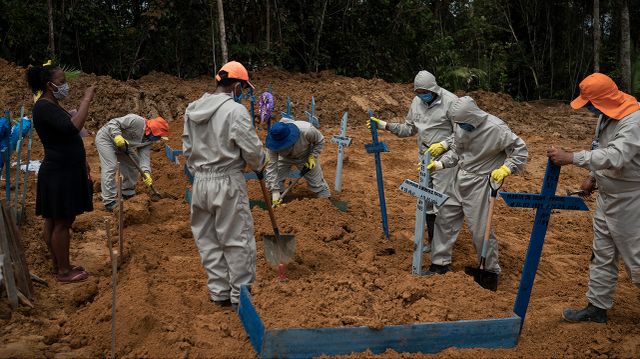
Imperial College London has estimated that Brazil had over 4.2 million cases last week, with an accelerating rate of 6.5 percent growth every day, putting it on course to be the global pandemic’s epicenter. Twelve Brazilian capitals have over 80 percent occupation of intensive care units, with many dumping bodies in mass graves. In the second wealthiest city in the country, Rio de Janeiro, doctors have already received medical protocols to choose whom to treat, as ICUs are fully occupied.
The government is consciously ignoring the public health catastrophe, fully engaged in a back-to-work campaign, declaring the whole of industry and construction as essential services that should be left out of partial quarantines imposed by local governments.
Cemetery workers place crosses over a common grave after burying five people at the Nossa Senhora Aparecida cemetery amid the new coronavirus pandemic (AP Photo-Felipe Dana)
An essential part of this drive has been the definition of hydroxychloroquine as a medicine to be freely used in treating COVID-19 cases, against widespread medical advice that it not only has no proven effectiveness against the disease but could lead to deadly side effects. The government’s promotion of the drug led to the resignation of Health Minister Nelson Teich, who declared he would not “stain his biography” in order to please the government and declare its safety against scientific evidence. Yesterday, the new interim minister, a military general, fulfilled Bolsonaro’s order and issued a new, wider, protocol for its use. For his part, Bolsonaro reacted to the record death toll joking about the freedom of “left-wingers” to take a soda drink instead of hydroxychloroquine, if they so desired.
Even as it closes ranks behind Bolsonaro’s back-to-work campaign, the Brazilian ruling class is conscious that it is bringing Brazil to the brink of a social explosion. The government has constantly cited the 2019 mass demonstrations in Chile as an example of the “social chaos” that will ensue in the case of prolonged quarantines leading to economic downturn. It has ominously warned that it will adopt dictatorial measures in case of social unrest. In the country’s COVID-19 epicenter, São Paulo, the city council has already raised the specter of imminent looting.
Under these conditions, Bolsonaro’s ignorance and criminal indifference to the mounting COVID-19 death toll are seen as a liability and have drawn growing criticism from within the ranks of the ruling elite itself. These sentiments were expressed by the vice president of the largest business lobby in the country, the São Paulo Industry Federation (FIESP), after Teich’s resignation. He said it was necessary to build public confidence for “families to get back to shops and factories,” but that the instability in the Health Ministry generated “uncertainty of what is happening in the country.”
These divisions have fueled daily editorials in the bourgeois press denouncing Bolsonaro, not only for his handling of the COVID-19 crisis, but also for his attempts to mobilize a far-right base against state institutions. The editorialists fear this will contribute to workers’ resistance by exposing the authoritarian drive that must accompany the preparation of the ruling class for inevitable social explosions.
O Estado de S. Paulo, one of Bolsonaro’s harshest media critics, editorialized on May 9 that the armed forces should denounce the “Brown Shirts” being mobilized by Bolsonaro against Congress and the Supreme Court with the stated goal of “Ukrainizing” Brazil, that is, preparing a fascist-led putsch.
On May 14, it opened its editorial pages to an opinion piece by Bolsonaro’s vice president, Gen. Hamilton Mourão, who invoked the “responsibilities” of the press, Congress, the governors and Supreme Court justices to consider their roles in “usurping the role of the Executive” and “hurting Brazil’s image abroad” by criticizing Bolsonaro. He warned once again of a coup, stating that if other powers and political forces did not close ranks behind the government, “this would bring demoralization and reaction and the deterioration of the tolerance and environment of coexistence that should prevail in a democracy.”
Against this backdrop, the bourgeois press and bourgeois political opposition forces are changing the focus of their criticism of the government from its catastrophic mishandling of the COVID-19 crisis to accusations against the president of using his extensive connections with the repressive apparatus to shield himself and his family from investigations of their involvement in criminal schemes. This includes possible ties to the death squad murder of the Rio de Janeiro City Councilor Marielle Franco of the Socialism and Liberty Party (PSOL) in March 2018, through a former parliamentary aide to the president’s son Flávio, Fabrício Queiroz.
Queiroz is under investigation for managing embezzlement schemes in Brazilian local parliaments through which aides funneled part of their salaries back to the office holder. In the case of Flávio’s aides, the police suspect the money was transferred to the Crime Office gang, whose presumptive leader, Adriano da Nóbrega—later murdered by the police—had relatives working under Flávio when he was a Rio state legislator. Rio’s militias are direct successors of the 1964-1985 death squads and are chiefly composed of retired and active duty policemen, controlling essential services as well as drugs and gambling in vast swathes of Rio’s impoverished, working-class northern and western sectors. They were praised by Bolsonaro as vigilantes “fighting crime” during his entire 30-year parliamentary career.
In late April, Bolsonaro’s Justice Minister Sérgio Moro resigned, charging the president with firing the head of the Brazilian Federal Police (PF), Maurício Valeixo, in order to gain access to investigations, including the probe into Flávio’s militia ties and Franco’s murder. This led to the opening of an investigation by the Attorney General’s Office and the demand that the government hand over to the Supreme Court (STF) the tape of a cabinet meeting in which Moro claims Bolsonaro made clear that the replacement of the police chief was motivated by his desire to defend his son against the investigations.
The tape has become an obsession of the press and members of Congress, with its possible disclosure by the STF seen as a “Watergate” moment for Bolsonaro, sealing his downfall.
The gravity of these accusations notwithstanding, they serve a definite political function amid the criminal handling of the COVID-19 pandemic, the murderous back-to-work campaign backed by all representatives of the ruling class and the growing fears of a social explosion fueled by the combined effects of the health and economic crises and popular hostility to the fascist moods being whipped up by the government.
Above all, they are providing a framework for the attempts by the ruling class—including the opposition parties led by the Workers Party (PT) and extending from the far-right theorist Miguel Reale to the pseudo-left PSOL (Socialism and Liberty Party) leader Guilherme Boulos—to find the “least costly” means to remove Bolsonaro.
Reale, the author of the trumped-up impeachment charges against PT President Dilma Rousseff in 2016, declared on March 16 that Bolsonaro should be declared “unfit for office” by a medical board, since impeachment would be “too painful a process.”
Two weeks later, a joint letter by all “progressive” candidates in the 2018 elections, including the Communist Party and PT representatives, as well as Boulos, declared Bolsonaro the “greatest obstacle” to dealing with the coronavirus crisis and called for unity after his resignation, endorsing the coup-monger General Mourão for the presidency.
House Speaker Rodrigo Maia has received 25 impeachment petitions over crimes ranging from an attack against public health by sabotaging state quarantines, to calling for fascist demonstrations against the legislature and judiciary. The leading financial daily Valor has reported that Maia fears an impeachment process would backfire, allowing Bolsonaro to cast himself as a victim, and instead prefers to wait for the STF to rule on Moro’s charges.
The starkest exposure of the crisis of the Brazilian ruling class has been the refusal of the largest and supposedly most vocal opposition party, the PT, to take any action. The PT’s leader, former president Luiz Inácio Lula da Silva, declared as late as April 30 that the party should not present its own impeachment charges in order not to derail the process.
The PT’s faithful “left” appendage, the PSOL, denounced its Morenoite House member Sâmia Bonfim’s presentation of an impeachment charge in late March as interfering in party democracy, i.e., its backdoor negotiations with the right wing on how to proceed as safely as possible.
All of these forces are just as terrified of a social explosion as the government itself. Their aim is to guarantee that if Bolsonaro is actually replaced by Mourão as a more suitable manager of the crisis, it is done in such a way as to channel mass opposition back behind the capitalist state.
Brazilian workers are being driven by the combined crises of the COVID-19 pandemic and the deepening economic depression into growing struggles against not only Bolsonaro’s fascist policies, but the whole of Brazilian capitalism, whose defenders include the PT, the PSOL and their pseudo-left satellites.

World Health Organisation warns pandemic could “turn the clock back” on other killer diseases in Africa

Stephan McCoy

Health experts are warning that deaths from preventable diseases could rise in Africa. The spread of the coronavirus pandemic could mean many are forced to forgo treatment or are unable to gain help for diseases such as malaria, tuberculosis (TB), HIV, measles and polio due to the disruption to health care and other essential services.
Africa has nearly 90,000 confirmed cases of COVID-19 and more than 2,800 deaths. This is likely to be a gross underestimate, as only a fraction of the number of tests compared to other regions have been carried out, at around 685 per million people.
Many African countries face difficulties in purchasing test kits, which are the subject of fierce international competition. Others, such as Nigeria, are unable to produce some of the key chemical reagents needed locally. Getting tests to where they are needed and setting up the labs to process samples is no small task for impoverished and under-resourced public health systems.
With Africa’s health care the least able to confront the deadly virus, the World Health Organisation (WHO) has predicted that some quarter of a billion Africans will become infected and as many as 190,000 will die within the first year of the pandemic.
It has warned that while it might not “spread as exponentially in Africa, as it has elsewhere in the world, it likely will smoulder in transmission hotpots” unless urgent action is taken to test, track and trace the disease, a forlorn hope.
The back-to-work drive by African governments that goes against the recommendations of the WHO and other medical and academic experts will only increase the number of infections and deaths.
The continent’s former colonial and oppressed countries also confront the problem that the pandemic is “stealing” already meagre resources away from other communicable diseases, further fueling its impact.
The virus is claiming the lives of health care workers and others directly. Meanwhile, the lack of access to health systems due to lockdowns, curfews and transport disruptions, along with the loss of infrastructure and preventive measures as the coronavirus spreads, means the number of deaths from other diseases could soar into the millions. This further highlights the terrible prevalence of diseases long ago eradicated in the advanced countries. Indeed, the indirect effects of the 2014 outbreak of Ebola virus in West Africa were more severe than the outbreak itself.
Malaria, Africa’s most prevalent infectious disease, kills a shocking three-quarters of a million people a year, 94 percent of whom are found in sub-Saharan Africa. It is estimated to kill a child every two minutes and at least 1,100 people every day.
The coronavirus has curtailed treatment efforts and stalled widespread prevention programmes such as insecticide bed net distribution and spraying. The WHO’s Africa director, Dr. Matshidiso Moeti, said, “While COVID-19 is a major health threat, it’s critical to maintain malaria prevention and treatment programmes.” He warned that without preserving the delivery of bed nets and access to antimalarial medicines, “The new modelling shows deaths could exceed 700,000 this year alone. We haven’t seen mortality levels like that in 20 years. We must not turn back the clock.”
The prevalence of malaria—405,000 deaths in 2018 or more than 1,000 a day—a disease that is both preventable and treatable, long after the WHO began its first eradication measures in the 1950s, is an indictment of both the imperialist powers that fund the WHO and Africa’s bourgeois nationalist governments.
There was a successful campaign in Europe, Australia and several other countries targeted during the 1950s by the WHO’s Global Malaria Eradication Programme (GMEP), with 37 of the 143 “malaria-endemic” countries seeing a complete eradication of the disease. However, slow progress was made in Africa as DDT became ineffective against the Anopheles mosquito and the disease developed plasmodium resistance to chloroquine.
In 1969, the WHO abandoned the GMEP, which together with recurring funding shortfalls in the 1970s and 1980s led to the elimination of much of the progress made in many countries. Decades were to pass before malaria in Africa became the focus of an international effort to tackle it. But even today, eradication remains a distant prospect. The cost of eradicating malaria by 2040 has been estimated between $90 billion and $120 billion—far less than the wealth of Amazon boss Jeff Bezos or Microsoft’s Bill Gates. But in 2016, the WHO said that the miserly annual funding of $6.4 billion per year would need to double by 2020 to reduce global malaria incidence and mortality by 40 percent.
Now, even the limited gains made over the last two decades are under threat as already meagre funding is diverted to fight COVID-19.
Richard Mihigo, co-ordinator of the WHO’s immunisation programmes in Africa, voiced his concerns about a range of health issues, including a drop in blood donations and disruptions in the supply of vital medicines due to flight cancellations and border restrictions, but particularly vaccination programmes. Five African countries have already halted measles campaigns covering 31 million children, and the prospect of declaring the continent free of polio this summer has dimmed.
Mihigo said, “The postponement and cancellation of planned activities is really putting at risk some of the vaccine-preventable diseases.” The London School of Hygiene and Tropical Medicine has warned that there could be 140 deaths from diseases such as measles due to stopping vaccination visits for every death caused by COVID-19 if the programmes continued.
Borry Jatta of the International Rescue Committee, speaking about the Democratic Republic of Congo, where at least 2,200 people died in the 2018-2019 Ebola outbreak, warned that the coronavirus was affecting a range of health care services. He said, “Critical vaccinations, maternal and child health and other life-saving activities are [being] reduced and in some cases stopped completely due to fear of the spread of COVID-19. The risk is that we will see an increase in other epidemic outbreaks.”
UNICEF has warned that 1.2 million children under the age of five could die in six months from acute malnutrition (wasting) and several other non-communicable diseases as the continent’s health systems are overwhelmed by the spread of the coronavirus and treatment for other diseases becomes impossible. These deaths would occur in addition to the 2.5 million children under the age of five who die from preventable diseases, particularly malaria.
According to a modelling study in The Lancet, reductions in vaccination coverage of between 9.8 percent and 18.5 percent and an increase of 10 percent in child wasting would lead to 253,000 additional deaths from malnutrition (18 to 23 percent of additional child deaths) and 12,200 maternal deaths. Other scenarios produced far more dire results.
A decrease in neo-natal care across three crucial areas—parenteral administration of uterotonics (used to induce labour and to reduce postpartum haemorrhage), antibiotics and anticonvulsants, and clean birth environments—will result in a month-on-month increase of 8.6 to 36.8 percent in maternal deaths. The study also concluded, “Additional child deaths and reduced coverage of antibiotics for pneumonia and neonatal sepsis and of oral rehydration solution for diarrhoea would together account for around 41 percent of additional child deaths.”
In Africa, the worst affected countries would be some of the largest: Democratic Republic of Congo, Ethiopia, Nigeria, Tanzania, and Uganda.
According to the UN population programme, pandemic-linked disruptions to health services in the world’s poorest countries will leave 47 million women without access to contraceptives and lead to an additional 7 million unintended pregnancies, with the largest share in Africa, further exacerbating poverty.

Coronavirus infections surging in German refugee shelters

Martin Kreickenbaum

At least 130 people have tested positive for COVID-19 in a refugee shelter in Sankt Augustin, near Bonn. Almost one in two COVID-19 tests was positive. The forced placement of refugees in large communal accommodation facilities exposes many people, whose health is weakened due to their history, to a deadly risk.
Last Thursday, a resident of the Sankt Augustin shelter, who suffered from fever and flu-like symptoms, tested positive for COVID-19. As there is no privacy whatsoever in the collective accommodation, with multiple occupants per room, communal kitchens and shared sanitary facilities, and it is impossible to keep a minimum distance, the health authority of the Rhein-Sieg district ordered all 489 refugees and their carers to be tested.
By Monday evening, the results of 330 people tested had been received. They show that mass housing enormously increases the probability of infection. Of the 250 refugees who were tested, 120 proved positive. Forty-seven caregivers were tested and six tests came back positive. Of 33 members of the security service who were tested, three proved positive. A further 100 refugees living in collective accommodation have not yet been tested because they were absent when the tests were carried out.
The refugee accommodation in Sankt Augustin is one of 29 Central Accommodation Units (ZUEs) in the state of North Rhine-Westphalia (NRW). The ZUEs serve as a kind of intermediate station in the refugee camp system. Although refugees housed there are subject to a so-called residence condition and are not allowed to leave the district or state, they are not locked up.
Refugees are referred to the ZUEs after they have spent one or two weeks in one of the five large initial reception centres (EAEs) in the country, where 500 to 1,000 people are crammed together in an exceedingly small space. They then remain in the ZUEs from several weeks to up to 18 months.
Responsible for the operation of the ZUEs, with almost 15,000 places nationwide, are the respective district administrations, which delegate the task to private operators. The camp in Sankt Augustin, which is in the former media headquarters of the Bundeswehr (Armed Forces), is operated by ORS Deutschland GmbH.
After the extent of the infections became known over the weekend, hectic quarantine measures began to be implemented. The refugees infected with COVID-19 are being isolated in a special part of the collective accommodation. Non-infected refugees are mostly brought to the ZUE Schleiden, near Aachen. These measures have sometimes met with resistance from those affected, as families are torn apart in the process.
“We have warned that these are breeding grounds for coronavirus,” Birgit Naujoks, the managing director of the Refugee Council NRW, told the Süddeutsche Zeitung on Monday. She said that the state of North Rhine-Westphalia was violating regulations that had been issued for the rest of the population to protect them from infection.
Various aid organizations are demanding that the refugee camps in Germany and all of Europe be dissolved. Helen Deffner of the Refugee Council of Saxony-Anhalt explained, “We are currently observing a deliberate threat to health, namely that a contagion is being accepted.”
In North Rhine-Westphalia, the internment of refugees since the beginning of the COVID-19 pandemic has been aggravated by the fact that no more refugees have been transferred from the ZUEs to decentralized shelters and apartments. This has made overcrowding in the refugee accommodation worse.
The mass infections in Sankt Augustin are part of a series of COVID-19 outbreaks in refugee shelters in North Rhine-Westphalia. Shortly before, 50 of the 271 residents of the initial reception centre in Bonn were diagnosed with COVID-19. In Euskirchen, 50 refugees were also infected; in Mettmann, 30.
In other federal states, mass infections previously occurred in collective centres in Ellwangen in Baden-Württemberg, Hennigsdorf in Brandenburg, and Bremen and Giessen in Hesse. In the so-called anchor centre in Geldersheim, Bavaria, a refugee died of COVID-19. The victim was a 60-year-old man with previous illnesses, placing him in the high-risk group. Nevertheless, he had been accommodated in a shared room.
According to the media service Integration, approximately 40,000 refugees whose asylum proceedings have not yet been completed are accommodated in collective camps throughout Germany with several hundred to over a thousand inhabitants. Another 180,000 refugees live in collective accommodation with more than 10 people.
It is impossible for the refugees in the large collective camps to observe minimum hygiene regulations or maintain a safe distance from fellow residents. In March, a refugee criticized the conditions in a Bavarian refugee camp, saying, “The hygiene rules are a joke here. We are squatting together here in a confined space. There is no soap or disinfectant in the bathrooms, toilet paper is scarce.”
Even the isolation of refugees as a quarantine measure is not feasible in the collective centres. So-called “chain quarantines” are ordered again and again, because there are always new infections in the cramped accommodation. In Henningsdorf, the quarantine was recently extended by 10 days, in Geldersheim it lasted for a total of five weeks.
The quarantine measures in refugee accommodation are repressively enforced by the police. In Hennigsdorf, residents who had gone through the quarantine were subsequently discriminated against by the accommodation operators by obliging them to wear a green bracelet in public.
The administrative courts in Dresden, Chemnitz, Leipzig and Münster had upheld complaints against the accommodation of refugees in collective centres during the pandemic, branding it as illegal.
The Administrative Court in Leipzig stated at the end of April that being housed in large collective accommodation facilities “ran counter to the meaning and purpose of the Saxony Corona Protection Ordinance.” It and other courts have referenced a paragraph of the Asylum Act according to which accommodation in refugee camps can be terminated “for reasons of public health.”
Nevertheless, the federal and state governments continue to adhere unwaveringly to the camp system for refugees, placing them at particular risk. Due to traumatising and debilitating experiences in their countries of origin and during weeks or months of flight, they are often much more susceptible to infectious diseases. They are also legally worse off as asylum seekers and receive only minimal health care.
Their disenfranchisement and accommodation in shelters, exposing them to a deadly risk, are part of the brutal anti-refugee policies of the German government and the European Union, aimed at deterring others from seeking asylum.

The Berries of Wrath: Prince Charles demands “hard graft” from furloughed workers

Robert Stevens

It is a measure of the arrogance and stupidity of the Johnson government that it chose Prince Charles to front its “Pick For Britain” campaign.
So far removed are the Conservatives from the sentiments of the UK population that they never stopped to consider the impact of a bone-idle multi-millionaire landowner urging workers furloughed during the COVID-19 pandemic, students and the unemployed to sign up as seasonal fruit pickers and farm labourers.
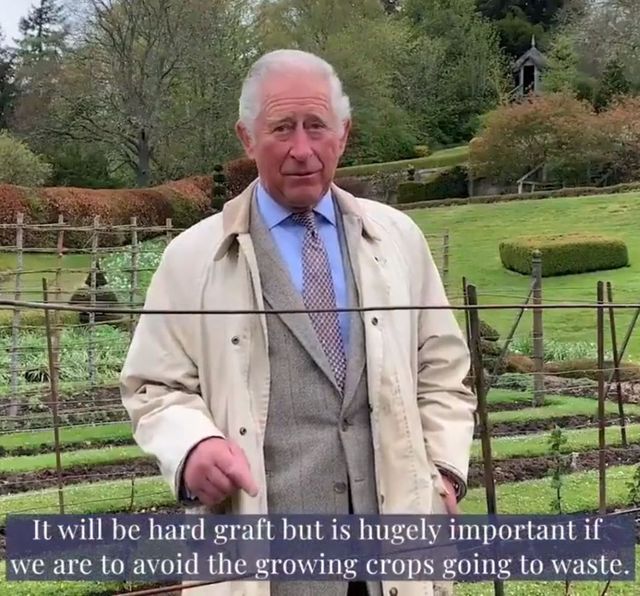
On Tuesday, Prince Charles was rolled out to make a video appeal. Speaking against the backdrop of the vegetable garden on his inherited 53,000-acre Scottish estate, Birkhall, Charles felt obliged to educate his “subjects” on the hitherto unknown fact that “Food does not happen by magic; it all begins with our remarkable farmers and growers.”
He moved swiftly on to invoking “that great movement of the Second World War—the Land Army,” supposedly “being rediscovered in the newly created Pick For Britain campaign.”
Prince Charles calls on others to do "hard graft"
He explained that “In the coming months, many thousands of people will be needed to bring in the crops. It will be hard graft but is hugely important if we are to avoid the growing crops going to waste.”
The only hard graft Charles is aware of is carried out by those employed on his vast Duchy of Cornwall private estate, established in the 14th century to provide an income for the heir apparent. The Duchy’s total area of 126,000 acres is spread over 23 counties. In 2016, it was valued at over £1 billion and last year Charles received £21.6million in proceeds from the estate.
The workshy prince’s cajoling provoked the inevitable backlash. Social media comments included:
  • “Prince Charles asking people to do “hard graft” with one hand in his pocket… #OutOfTouch #Covid_19 #PPEshortage”
  • “As far as I’m aware, Prince Charles isn’t an authority on ‘hard graft’”
  • “I never thought I’d see ‘Prince Charles’ and ‘hard graft’ in a sentence.”
  • “71 year old man who lives in a palace, has a servant to squeeze his toothpaste & has never actually had a job… gives us a lecture on Hard Graft.”
  • “What the f*** does this parasitical Prince know about hard graft, not done a day’s graft in his pampered life.”
  • “Robespierre is SO overdue a rehabilitation!”
  • “Pick for Britain? Seriously? This is the 21st century It’s not the 1940s Somebody’s seen Dig for Victory & thought it would be a hoot to come up with a cringe worthy smokescreen to disguise government policy on migrant workers It doesn’t.”
The latter comment points to the fact that Britain’s harvest could rot in the fields. For the best part of three decades, it has been gathered mainly by tens of thousands of eastern European migrants, who work for one or two seasons at a time—usually from May—before returning home. The low pay on offer is still substantially higher than in their impoverished native countries.
Due to the anti-immigration policies associated with Brexit, now compounded by the pandemic, much of this workforce is no longer available. The Tories have long desired to replace cheap migrant labour with a native workforce so reduced to penury that they too will do backbreaking work for a pittance. In 2016, then Environment Secretary Andrea Leadsom declared, “We could get British people doing those jobs… the concept of a career in food production is going to be much more appealing going forward.”
The pandemic was duly seized on to make this dream a reality. The declared aim of the Pick For Britain website, launched by Environment Secretary George Eustice who owns a fruit farm, is to “bring workers and employers together and ensures the UK can continue to deliver the best quality British fruit & veg for everyone to enjoy… Come help pick for Britain to feed the nation!” “We believe those who are furloughed may be getting to the point that they want to lend a hand, play their part,” said Eustice.
The campaign has met with only limited success. According to a Guardian report Tom Bradshaw, Vice President of the National Farmers’ Union, said the level of interest in Pick for Britain had been “overwhelming,” with over 100,000 hits from unique users. And he estimated that from April, thanks to the crisis, 25–30 percent of pickers on farms were already British when the figure is usually below 1 percent.
But with 20,000 to 40,000 more workers to find, experience shows that many of these online queries will not be pursued. Almost half of all applications, 50,000, were registered with the Alliance of Ethical Labour Providers—one of the main contract suppliers to farms. But of these, just 6,000 opted to complete the video interview for a role and 1,000 rejected the terms and conditions offered outright. Just 112 people agreed a contract.
Industry leaders fear that even if enough workers agree to take a job, and this is a “big if,” many will quit after a few days, or as soon as possible. Jack Ward, CEO of the British Growers Association, told the Guardian, “We’re OK or OK-ish,” but “there’s a nervousness about the rest of the season. As we progressively come out of lockdown, some people working on farms will return to their original roles.”
Little wonder. The Pick for Britain FAQ states that pay “varies depending on the specific job role, but hourly pay is underpinned by the national living wage or the national minimum wage [£6.45 for an 18–20 year old and £8.20 for a 21–24 year old] and many jobs have a productivity bonus too.” The majority will receive from “£9.00 to £11.00 per hour.” Only those experienced in the job can “earn up to up to £14 per hour” as the productivity required is only “achievable for some staff.”
For this pittance, workers are expected to work long hours with farms operating from “first thing in the morning until mid-late afternoon… Packing is often done in shifts and can carry on until later in the day”—which farmers have explained means until midnight.
Due to the early start times—often 5:30 a.m.—and the remote rural locations, workers usually stay in farm-supplied accommodation. Pick For Britain boasts that farms generally operate “permanent caravan-style accommodation sleeping three or four people per unit. The charge for the accommodation is set at a “maximum of £57.40 per week”—for someone likely earning less than £300.
In the middle of a pandemic, these living conditions are clearly dangerous. To the question, “How does social distancing work when living in a caravan?” the FAQ responds, “If one member of the group becomes ill with COVID-19 then the others in the group will have to self-isolate as well, just as any other household would do.”
This near-universal rejection of the scheme came despite a barrage of government propaganda comparing labouring in the field today with the Women’s Land Army. The analogy is a significant indication of the future direction of the class war offensive Johnson is readying. The “land girls” were initially taken on as a voluntary workforce during the war and then recruited as conscription labour as part of a vast army of 80,000 workers. Carrying out physically demanding work for long hours, they were often forced to live in barracks.
There are events that in hindsight indicate how ripe a society was for revolution. Marie Antoinette’s response to being told that the peasants had no bread, “Let them eat cake,” springs to mind. A freeloading Prince pontificating on behalf of a dysfunctional government on the necessity for the lower orders to engage in “hard graft” is another such event.