27 May 2020

Disease control: A post-COVID scenario in Kerala

K Rajasekharan Nayar, Bindhya Vijayan & Muhammed Shaffi

The  proactive strategies adopted by the Government of Kerala for controlling the COVID 19 pandemic have been appreciated world-wide. The strict enforcement of the age-old strategies and the almost near compliance by the people are exemplary. These may help in sailing through the pandemic to the next stage.  Unfortunately, the post-COVID time is coinciding with the monsoon season during which many other viral and bacterial infections can crop-up. Kerala has the long and painful history of a disease-ridden monsoon season. The health services try to implement several preventive measures during the pre-monsoon days. The important among them is the house to house survey and distribution of water disinfectants. Certainly, this is an important and routine activity which might control outbreak of some water-borne and water-related diseases and to some extend mosquito-borne diseases as well. Given the unusual monsoon activity, it may be possible to predict an unusual morbidity scenario as well. Therefore, what is required is a more evidence-based approach especially because of the extremely strained health system due to the pandemic.
The case of Chikungunya and Dengue
Kerala had reported outbreaks of Chikungunya and Dengue in many districts since 2006. Kerala state had the first outbreak of Chikungunya during June-July 2006 along the coastal areas of Alappuzha, Kollam, and Trivandrum districts and again during May-August 2007 in Pathanamthitta, Kottayam and Idukki districts. As on October 28 2006, of the 13,92,027 cases reported from several parts of India, 70,731 suspected cases were from Kerala. Entomological surveys in worst affected areas in Kerala have showed high Ae. aegypti  mosquito breeding in rubber plantations and in peri-domestic areas due to monsoon collection and fresh water logging.  In May 2007, another outbreak occurred nearly in  all the districts. During the survey it was found that, age seems to play a significant role in the manifestations of symptoms. Probably due to development of herd immunity, the Chikungunya outbreaks have reduced after the outbreaks but could surface again due to waning immunity profile.
Dengue Fever (DF) which means “bone-breaking fever” (origin from Swahili word) was recorded during the Jin Dynasty (265–420 AD) in China. The first epidemic was reported in Asia, Africa and North America in the 1780s, shortly after Benjamin Rush identified and named the disease in 1779. The same Ae. aegypti  mosquito is the vector for this fever as well. In India, it has been in existence since long and the first outbreak in epidemic form occurred in 1997 in  North India.  In Kerala, although periodic cases were reported since long,  the first major outbreak occurred in 2017 when several districts were affected with around 20000 cases which dropped to around 4000 in 2019.  The epidemic form of this viral infection occurred in this year in three states of India, ie. Kerala, Tamil Nadu and Punjab. In Kerala, this however, may surface again and could be a major threat during the ensuing monsoon season.
The outbreaks of Chikungunya and Dengue had inflicted considerable pain and misery. It also caused substantial and unexpected local, regional and national financial burden towards healthcare. Many hospitals were ill-equipped to handle the burden of the disease. The unexpected rush of people and the un-preparedness of the health care systems had given a space for the quacks and unregistered practitioners in rural areas to expand their hold in the affected areas. After the 2007 Chikungunya outbreak, the Kerala Development Report, 2008 reported that the limitations of the government health infrastructure forced the people to move to private health system which was also not able to handle the unusual disease burden in the rural areas. In other words, people were forced to shuttle between formal and informal systems of medical care which exacerbated their problems.
Human contacts with potential vectors especially animals and plants are changing and these could be also due to changing behaviour of human beings. The Nipah virus infection in Kerala with an extremely high fatality rate which is transmitted through fruit-eating bats, pigs and contaminated foods could be contained somehow although predicted as a future public health crisis. It is now a complex post-COVID scenario, with the threat of chikungunya, dengue fever, leptospirosis, H1N1, cholera and hepatitis looming large which the COVID-strained health infrastructure has to handle.
Another serious problem which may crop-up during post-COVID days is that of wastes. Already huge quantity of wastes are piling up in common places in addition to households. Already, the pre-monsoon heavy rains have given an indication that such piling up can lead to water logging and inundation in urban areas apart from serving as breeding sites.
We interviewed a few ASHA workers in three districts and found that the over-stressed system may find it difficult to handle this complexity. The workers think that their credibility has become extremely low.
“When we go for prevention and awareness-generation activities, people spit on us. They ask us who are you to interfere in their freedom. They think that we are low level staff and people view us with disdain and contempt. We do not get any minimum protection that the health workers get. On the top of it we get all the blame. Our life is in a balance. No dignity or respect. After all we are not professionals. High-level officials think that this kind of work is only our responsibility”.
The workers think that lack of coordination between different departments can reduce the effectiveness of their pre-monsoon activities.
“Sudden opening of dams happen because of such a problem and most of the rivers are choked with wastes. And these areas are also the den of drug mafia and we are not feeling safe to go to such areas. Now we are there to take all blame”.
Workers in a coastal district also think that the pre-monsoon activities are not efficiently carried out.
“There was an activity called ‘Aedes Vida’ which means to destroy the breeding sites of Aedes mosquitos. It is to be done along with health workers. But due to this Corona infection, this is not being carried out. We are all the time involved in monitoring quarantine of the suspected. Because of lack of any income, we do not get any support of other voluntary workers or members of the sanitation committee. When we go for ensuring quarantine, people abuse us. They ask us as if we are nobody to ask them to comply with regulations. Because of too much workload ward-wise, none of our work could be carried  out effectively and the motivation is also low because of low wages”.
Another worker from a hilly district also think that increase in workload has affected their efficiency.
“We are carrying out a program as a pre-monsoon activity. Now because of the pandemic, we are not able to carry this out effectively although some awareness generation activities have been carried out. The main problem is workload as everything is dumped on us and this reduces the effectiveness.  Earlier, the pre-monsoon activities were carried out jointly with other health workers and this is not possible now. Dengue can be expected because of road works and the resulting water logging. It can also increase due to the forest areas and especially bamboo forests where mosquito breeding is more”.
The post-COVID scenario is going to be challenging as COVID is here to stay like the other infections which also can crop up periodically and most probably even as epidemics. The constant monitoring and vigil are important. Primary health care activities have to be stepped up and the reporting system has to be strengthened. ASHA workers are voluntary workers and the current trend of dumping everything onto them may be counter productive unless the primary health care as visualised by the National Health Mission can be effectively carried out in letter and spirit. The current pandemic has affected the rhythm of primary health care activities but it is important to refocus on the pre-monsoon preventive activities to ease the challenge.

What the Pandemic Looks Like in North Korea

Sandip Kumar Mishra

At a time when even the most resourceful countries have failed to keep themselves safe from the COVID-19 pandemic, North Korea, despite its resource-scarcity, has reported no infections. Foreign nationals who work in the country have said that while there might be a few cases, it does not appear as widespread as in the rest of the world. Contrary to these claims of zero and limited infections, there is also speculation that the real number of infections could be much higher, but have not been registered or acknowledged by the regime. Between these contrarian positions and with little information, is it possible to have a sense of what the pandemic looks like in North Korea?
Any commentary on North Korea must begin with the acknowledgement that there is very limited information available in the mainstream media. However, some NGOs, websites, and North Korea watchers do provide some tentative information. Some claim to have access to informants in the country. Some also base their news on the accounts of defectors, who, despite living outside, have regular communication with families and friends in North Korea.
Although North Korea has not officially recorded any COVID-19 cases so far, it has taken some measures to deal with the pandemic. It started sealing its border with China even before the Chinese New Year Day, which was celebrated on 25 January 2020. In fact, a North Korean official announced the border closure a few days earlier, on 21-22 January. Pyongyang has also been concerned about its cities bordering China, such as Sinuiju and Chungjin. On 31 January, North Korea’s Disease Control Authority sent representatives to Ryanggyang Province to guide local doctors. Border restrictions were further intensified on 17 April 2020.
Inside North Korea, Rodong Sinmun, the daily newspaper, and TV channels are publicising information about measures to fend off the virus. Face masks while using public transport have been made compulsory. Several public places and malls in Pyongyang are closed, and social distancing norms are being implemented strictly. North Korea has reduced the number of national construction projects from 15 to five, reportedly concentrating on the earliest possible completion of the Pyongyang General Hospital project. While the numbers are a bone of contention, there is evidence to indicate that Pyongyang has implemented serious measures, much like other countries, to combat the virus and its spread domestically.
Now, moving on to speculation. Various sources have reported on COVID-19 cases, as well as deaths, in North Korea. As per Daily NK, the first death was reported on 27 January, and by end-February, there were around 20 deaths and over 7,000 people quarantined within the country. By March 2020, as a per military commissioned report obtained by Daily NK, 180 North Korean soldiers had died, and 3,700 soldiers had been quarantined. In April, it was reported that a fever-like disease had spread in Ryanggyang Province, and around 21 people had died because of it.
A fair assessment would tentatively conclude, from the verifiable data as well as unverified information, that even though official North Korean figures (or lack thereof) are misleading, the pandemic is still not very widespread in the country. This could be because of the regime’s reportedly quick and proactive response right from the beginning. The swift closure of borders and deployment of medical teams to help local health officials could have had a significant positive impact. Another contributing factor would be the country’s unparalleled physical isolation from the rest of the world. Most foreign visitors to North Korea are Chinese and Russian, and North Korea closed its borders with these countries quite early. The final and most important factor would be political, i.e. the totalitarian state. State control extends to every aspect of life, which, in this case, would aid the systematic implementation of policy measures on the ground.
Overall, the number of COVID-19 cases in North Korea—whether zero or a few—is disputed, and may be revised if better and more reliable information comes to light in the future. On the other hand, it is also clear that the state has, for its part, attempted several measures to stem the unmitigated flow of the pandemic within its borders. Their success however can only be determined if, and when, there is clarity on what the spread, or numbers, look like.

Early Adulthood: 22 Years of Nuclear India and Pakistan

Manpreet Sethi

This month saw the 22nd anniversary of the Indian and Pakistani nuclear tests. In May 1998, India chose to announce its nuclear weapons capability by conducting five tests on 11 and 13 May. Pakistan followed about two weeks later with six nuclear tests. As summer temperatures peaked, so did nuclear rhetoric on both sides.
Both countries have been operationalising their individual concepts of nuclear deterrence over the past two decades. India follows the dictum of credible minimum deterrence as enunciated in its nuclear doctrine—which was announced as a draft in 1999, and then as an official document in 2003. Pakistan began with the same concept but transitioned a few years ago to the idea of full spectrum deterrence. This new concept is meant to project deterrence at all levels of conflict—sub-conventional, conventional, and nuclear—with an arsenal that includes varied yields of warheads and a range of delivery systems.
Advances in the technological sophistication of Indian and Pakistani nuclear capabilities were only to be expected. Indeed, the types of delivery vehicles have grown, as has their range, accuracy, and reliability across launch platforms. Both countries have come a long way from the first-generation short-range ballistic missiles; Prithvi 1 in the case of India and Hatf 1 and 2 in the case of Pakistan. The numbers of nuclear warheads are estimated at 130-140 for India and 150-160 for Pakistan. Of course, neither officially corroborates or denies these figures. Some of the newer capabilities that are currently under development and testing include the ability of missiles to carry multiple independently targetable re-entry vehicles (MIRVs) in Pakistan, and rudimentary developments in hypersonic technologies in India.
Capability, however, is only one leg of the three-legged stool on which nuclear deterrence rests. The other two legs include the resolve to use this capability and the communication of both capability and resolve.
Resolve to use capability has a military and political dimension. Military resolve is to be found in the existence of requisite command and control structures, operational logistics, etc. These underpin the ability to handle deterrence breakdown by maintaining sufficient robustness for retaliation. Political resolve is more amorphous and may be gauged, among others, from the personality of the leadership and his/her ability to take hard, even unpopular decisions, across a diverse spectrum of issues.
India’s demonstration of resolve, traditionally seen as weak, is perceived to have become more evident over the last half a decade. Military responses to terrorist attacks supported by Pakistan since 2016, as well as a strong prime minister who has not shied away from decisions such as demonetisation or a nationwide lockdown to fight COVID-19, illustrate a strong political will.
Meanwhile, with a first use doctrine and a military-predominant system, Pakistani resolve is perceived in its projection of the use of ‘tactical nuclear weapons’ mounted on shoot and scoot systems to target the battlefield. The army is the prime driver of Pakistani nuclear decision-making, and the command chain signals integration of nuclear and conventional operations. This contrasts with the Indian system where the political leader is at the helm of nuclear command, and nuclear weapons are not integrated with conventional warfare. So, for India, demonstration of political resolve is perceived to be of greater consequence for deterrence, while for Pakistan, the military dimension is of greater significance.
The third leg of deterrence rests on communication or signalling. The experience in this domain is that Pakistan has chosen to maintain a far higher pitch regarding its nuclear dimension than India. This is not surprising since Pakistan uses its nuclear capability for purposes other than just deterring the adversary’s nuclear weapons. The objectives of its nuclear weapons also include deterring the possibility of an Indian conventional response to acts of terrorism that Rawalpindi sponsors; drawing international attention towards a possible regional nuclear conflagration and thus seeking constraints on an Indian response; and bargaining with the West for military and financial assistance.
Frequently drawing attention to nuclear weapons is, therefore, a significant hallmark of Pakistan’s nuclear strategy. Prime Minister Imran Khan demonstrated this well in the wake of the Pulwama terrorist attack on Indian paramilitary forces in February 2019. Before and after the Indian military response targeting terrorist infrastructure in Balakot, he consistently emphasised the presence of nuclear weapons in both countries, and the consequences of their use for the region and beyond.
In contrast to Pakistan maintaining the spotlight on nuclear weapons, statements from Indian officialdom drawing attention to India’s nuclear capability have traditionally been few. In fact, from 2003 to 2013, New Delhi hardly made any notable nuclear references. In April 2013, two years after the Pakistani announcement of tactical nuclear weapons, a speech was made by the then head of India’s National Security Advisory Board (NSAB) to reiterate India’s strategy of massive retaliation. There was another lull thereafter, punctuated only by a statement in November 2016 by then Defence Minister late Manohar Parrikar regarding no first use (NFU). The debate that followed is well-known. But, it was soon put to rest at the official level by clarifying that there was no change in India’s nuclear doctrine.
Some references to India’s nuclear weapons have been made more recently, one of them being by the prime minister himself during his election campaign. Another statement came along in August 2019 when the present Defence Minister Rajnath Singh made a reference to India’s nuclear doctrine. It is unclear whether such remarks are part of a considered government communication strategy or inadvertent statements made in a political context. In fact, one clear case of deliberate nuclear signalling that can be gleaned is the PM’s statement in October 2018 announcing INS Arihant’s first deterrent patrol.
Signalling is an important dimension of nuclear deterrence, and states must pick these  out from the hubris of rhetoric and political chatter. India and Pakistan do appear to have settled into some sort of a pattern of signalling, which creates a sense of predictability and allows a semblance of understanding. However, neither side should ever forget that nuclear weapons are not ordinary weapons, and must be treated with respect, restraint, and responsibility.
At the age of 22, and with the natural swagger of early adulthood, these two nuclear states—with the fate of over one and a half billion of humanity upon their shoulders—can ill-afford rash misadventures.

Tech giants discuss restructuring amid mass layoffs and pay cuts

Mike Ingram

IBM confirmed May 21 that it will lay off an unspecified number of workers across the United States. The company refused to confirm how many employees are impacted but the Wall Street Journal, among others, reported the layoffs will hit several thousand workers.
The announcement from IBM follows thousands of layoffs announced by Uber, Lyft, Airbnb, Trip Advisor and others, as well as almost 60,000 workers at more than 450 startups globally. At many other companies, workers endure cuts in wages and benefits in an attempt to avoid job losses.
Now a debate has emerged among the tech giants on the benefits of remote working for corporations. It began with a statement from Twitter CEO, Jack Dorsey, telling employees they can work from home “forever.” Dorsey said Twitter had been working toward more flexible working long before the pandemic. Jack Kelly, a senior contributor at Forbes promptly cautioned May 13, “Before you celebrate, there’s a catch.”
Though describing the policy as “well-intentioned,” Kelly noted, “Once people work from home, there will be an employment arbitrage occurring. Companies will quickly realize that they don’t have to draw upon job seekers from their immediate vicinity. They could hire people nationwide.”
Most technology workers today are employed at offices in some of the most expensive cities in the US, such as San Francisco, New York and Boston. Tech companies competing for skilled workers have up to now been forced to pay relatively high salaries with good benefits.
This is all about to change. Along with Twitter, Square, also run by Jack Dorsey, and Coinbase are among other San Francisco companies announcing permanent work policies. As companies are restructured as virtual offices, employers will be looking to purchase the skills they need at the lowest price possible, inevitably leading to the displacement of workers living in the more expensive areas.
Facebook CEO Mark Zuckerberg said he expects about half of Facebook’s 50,000 employees to work from home in five to 10 years.
In a video conference Thursday, May 21, Zuckerberg said the company will “aggressively” ramp up the hiring of remote workers. He added that those who choose to work where the cost of living is less should expect to be paid less.
“That means if you live in a location where the cost of living is dramatically lower, or the cost of labor is lower, then salaries do tend to be somewhat lower in those places,” Zuckerberg said.
A recent survey of San Francisco Bay Area tech workers found that two-thirds would consider moving out of the area if they could work remotely. A one-bedroom apartment in San Francisco costs on average of $3,550 a month. The average starting tech salary of $91,738 a year means workers are paying out a large percentage of their paycheck in rent alone.
Announcing the new remote work initiative, Zuckerberg said employees working remotely must notify Facebook if they move to a new area before January 1, 2021. “We’ll adjust salary to your location at that point,” he said, adding, “There’ll be severe ramifications for people who are not honest about this.”
Zuckerberg has a net worth of over $87.8 billion, increased by more than $30 billion since the COVID-19 shelter-in-place orders were issued. Forbes ranks Zuckerberg as the world’s fourth-richest person. Zuckerberg’s net worth is greater than the GDP of Jordan, Nicaragua and Barbados, combined. He lives in a 5,000-square-foot estate in Palo Alto which he purchased for $7 million in 2011. This is just one of the 10 homes he owns. This is the man who insists that workers moving to a less expensive location must expect a pay cut.
Why should a lower cost of living inevitably mean a lower salary for workers? Do workers produce less for Zuckerberg by being able to enjoy an improvement in their standard of living?
A typical worker in Facebook’s Menlo Park-based office can make as much as $228,651 per year. Facebook’s annual profit per employee is $634,694. Facebook makes more per employee than any other major tech company on the Fortune 500 list, according to a 2019 report from Post Beyond, which analyzed financial data to rank companies based on the highest profits per employee.
With the move towards permanent remote working, Facebook will not only save on employee salaries but also on massive real estate costs and office perks intended to keep workers in the office for as many hours as possible, such as free gourmet food and laundry services. But Zuckerberg insists that if workers relocate and pay less in rent, the difference must go towards Facebook’s profits and the enrichment of shareholders.
Zuckerberg is not acting here as an individual but as a representative of a financial elite that will seize every opportunity to increase corporate profit at the expense of workers.
For those jobs that can be done remotely, employers will seek the cheapest labor costs. For those that can’t, such as data center operations and maintaining the communications infrastructure, workers will be forced to continue to work in unsafe conditions.
Throughout 2019 there were reports of trade unions seeking to organize tech workers. In March this year it was reported that high-tech workers at Kickstarter in Brooklyn voted 47-36 to organize in the Office of Professional Employees International Union (OPEIU). The United Communications Workers of America (CWA) launched a campaign to organize in the video gaming and tech industry.
Tech workers should examine the history of these organizations that have a proven record of betraying workers’ struggles in the sectors they have traditionally organized. Most recently, the CWA shut down the six-day strike of 22,000 AT&T workers across nine southern states in August 2019.
The desire on the part of tech workers to organize is both healthy and necessary but the organizing attempts on the part of the corporatist unions are a trap. Remote workers will face increasing attacks and drives for further exploitation while those who can’t work remotely will be forced back into offices and their lives threatened.

Unemployment skyrockets among youth

Genevieve Leigh

More than 7.7 million workers younger than 30 are now unemployed in the US. Over 3 million dropped out of the labor force over the course of a single month, from mid-April to mid-May. The number of young people now unemployed amounts to nearly one in three young workers, the highest rate since the country started tracking unemployment by age in 1948.
These figures are paralleled in countries hit by the coronavirus pandemic all around the world. In Australia, the youth unemployment rate has jumped to 13.8 percent. Youth unemployment rates in Australia were already more than double the overall unemployment rate of the country and were almost three times higher than for those 25 and older.
A report from the Resolution Foundation think tank recently found that youth unemployment in the UK could rise by 640,000 this year, bringing the total above 1 million. In Spain, half of all those who have lost jobs since the start of the outbreak have been adults under the age of 35. In Canada, the youth unemployment rate jumped to 27.2 percent in April, from 16.8 percent in March. Student unemployment was even higher.
Young workers are vastly over-represented in the sectors hardest hit by the lockdown and social distancing measures. These sectors include hospitality, food services, retail, arts and recreation. Nearly 40 percent of the young workers who are unemployed in the US worked in the devastated retail and food service sectors alone. The Millennial generation, those aged between 26 and 40, make up a majority of bartenders and half of restaurant workers.
According to a new report by Data for Progress, over half of people under the age of 45 say that the $1,200 cash payment from the US federal government covered just a week or two of expenses, compared with a third of older adults.
The US Labor Department continues to report that the majority of laid-off workers expect their joblessness to be temporary. However, there is growing concern among economists that many jobs will never come back.
Nicholas Bloom, an economist at Stanford University, recently told the New York Times that the path to recovery “is going to take longer and look grimmer than we thought.” Bloom is the co-author of an analysis of the pandemic’s effects on the labor market titled “COVID-19 Is Also a Reallocation Shock.” In it, he and his co-thinkers estimate that 42 percent of recent layoffs will result in permanent job loss.
A large body of research, along with the fresh experience of the 2008 recession, shows that young people, especially those without a college degree, are particularly vulnerable during economic downturns and recessions.
An analysis by the McKinsey Global Institute estimates that up to 57 million US jobs are now vulnerable, including a growing number of white-collar positions. Furthermore, the report finds that 86 percent of jobs made vulnerable by the pandemic pay less than $40,000 a year. In other words, those workers who were already in precarious situations are not only getting hit the hardest, many will be forced out of their industry altogether.
For those workers in the Millennial generation (now aged 26 to 40) and older, this is the second major economic catastrophe in barely a decade. The researchers note in their report that “the generation that first entered the job market in the aftermath of the Great Recession is now going through its second ‘once-in-a-lifetime’ downturn.”
If the 2008 financial crash is any indication, we can expect that the current economic downturn will exact a devastating toll on all workers, the youth in particular.
In the aftermath of the 2008 financial crash, youth unemployment soared to more than 60 percent in some European regions. In many countries, the youth unemployment rate never fully recovered to pre-recession levels. In the US, half of recent graduates were unable to find work during the recession years. Millennials’ official unemployment rate ranged as high as 20 or 30 percent.
The recession was used as an opportunity to make more fundamental changes to the economy that would leave young workers hounded by high rates of underemployment, low wages and stagnant earnings trajectories for the following decade.
Full-time salaried positions were slashed with the introduction of “gig” economy work. Nearly 95 percent of the jobs created during the Obama administration, from 2009 to 2017, were part-time, contract, on-call or temporary. This piecemeal work, cynically sold to the younger generation as “flexible” work, often excludes health care, retirement benefits, sick days and other benefits, and is highly unreliable.
It has already become commonplace for workers to hold down two or three part-time jobs in order to make ends meet and provide for their families.
To get a sense of the scale of the economic crisis pre-pandemic, one should consider that in 2019 some 61 percent of US workers were reporting that they did not have enough savings to cover a $1,000 emergency room visit or car repair. One in five Millennials reported not being able to afford routine health care expenses, and nearly half had nothing saved. This situation is being dramatically worsened by the impact of the pandemic.
In 2018, taking note of the devastating toll the recession had taken on a whole generation of young workers, the Wall Street Journal noted that Millennials were at risk of becoming “America’s Lost Generation.” Similar warnings have already begun to circulate in regard to the emerging generation, known as Gen Z.
However, as the Journal itself nervously pointed out at the time, the Millennial generation in the US was also the first generation to favor socialism over capitalism. The dire conditions facing young people, which are more and more understood to be the consequence of decaying social order, have created the objective basis for a vast radicalization of young people and workers across the globe. The two years prior to the onset of the pandemic were marked by the reemergence of the class struggle internationally, in which young workers played leading roles.
Generation Z is now coming of age under conditions that far outstrip those which the Millennials confronted in the aftermath of 2008. The events of the day will not pass by this new generation, or the older generations, for that matter, without leaving a profound and revolutionary political impact.
The younger generation is coming of age in a world of immense contradictions, with enormous developments in technology and science occurring simultaneously with the deaths of hundreds of thousands of workers internationally as a result of the criminal response of the ruling class to the pandemic. Trillions of dollars are being poured into the coffers of the global corporate elites while young people’s schools are defunded and their jobs destroyed.
Instability and uncertainty are among the defining features of everyday life. Under such conditions, there is no doubt that the popularity of socialism among young people will continue to grow at a rapid pace. Far from becoming the “Lost Generation” as predicted by the Wall Street Journal, the emerging generation of young workers carries within it an enormous revolutionary force.

US state and local budget crisis looms

Jessica Goldstein

US local and state governments are reopening the economy as the pandemic continues to spread, although mass testing for COVID-19 and contact tracing programs are absent. At the same time, new state and local budget projections for the coming fiscal year paint an even grimmer picture than what was expected at the beginning of the month.
The Center on Budget Policy and Priorities (CBPP) has reported a 25 percent decline in revenues for some states in April alone. The CBPP now predicts that US state budget shortfalls will reach $765 billion over the next three years due to the economic impact of the COVID-19 pandemic. The report points out the strong relationship between unemployment rates and shortfalls in state budgets, which are critical for providing health care, housing, education, infrastructure and social welfare programs.
According to CBPP, several states have already predicted major reductions in revenue for 2020, including Massachusetts ($4.5 billion, or 15 percent of the state budget); Michigan ($3.2 billion, or 13 percent); and Utah ($1.4 billion, or 18 percent). For the next two years, some states are projecting even steeper drops, such as California ($32 billion in 2021, or 21 percent of its state budget); New York state ($12 billion in 2021 and $16 billion in 2022, or 14 and 17 percent of its annual budget); and Colorado ($3.2 billion in 2021 and $4 billion in 2022, 24 and 17 percent of its annual budgets, respectively).
Hawaii, whose economy will be devastated by the impact of the pandemic on the tourism industry, is expected to see revenues drop by up to $2 billion, or 25 percent, in 2021. New Mexico, with the second highest poverty rate in the US at 19.7 percent, is projected to see revenues drop by $2.4 billion, or 30 percent in 2021, and up to $2.5 billion, or 31 percent, in 2022. Its economy relies heavily on energy extraction and mining, two industries particularly hard hit worldwide by the current economic crisis.
According to the report, the Congressional Budget Office predicts that unemployment in the US will peak at 15.8 percent in the third quarter of this year and remain 8.6 percent through the end of 2021. Goldman Sachs predicts a peak of 25 percent unemployment in the third quarter of 2020, a level unseen since the depths of the Great Depression in the 1930s, with a drop to 8.2 percent at the end of 2021.
The cuts themselves will inevitably lead to more layoffs as state and local governments shed vital positions, including teachers, firefighters, health care workers, municipal utility and other workers. It is estimated that state and local governments employ one out of every eight workers in the US.
State and local governments barely recovered the jobs shed in the aftermath of the recession of 2007-2009, in which the Federal Reserve implemented the policy of quantitative easing to prop up the big banks and corporations responsible for the Wall Street crash, offloading the consequences of their crimes onto the working class in the US and worldwide.
Federal Reserve Chairman Jerome Powell expressed fears that cuts made at the state and local level today would take years to recoup, if ever, after the pandemic subsides. “We have the evidence of the global financial crisis and the years afterward where state and local government layoffs and lack of hiring did weigh on economic growth,” he told the Senate Banking Committee last week.
High unemployment rates mean that income taxes are falling fast and will continue to do so. Income and property tax collection has been delayed across many parts of the US as well. Funds from charges and fees like highway tolls, business licenses and court, recreation facility and library fees are also falling as incomes drop and travel is restricted.
The Center for American Progress (CAP), a Washington, DC-based public policy think tank, outlined the need for immediate federal assistance to local governments across the US in order to avoid mass furloughs and layoffs of workers, many of whom will be needed to fight the pandemic. It revealed that anywhere from 300,000 to 900,000 local government workers could face pay cuts or be furloughed or laid off in the coming year if federal aid continues to be withheld.
According to the report, 88 percent of US cities can expect revenue shortfalls this year, with that number increasing to 98 percent for cities with populations between 50,000 and 500,000. The impact on local governments is especially severe because they receive around 35 to 40 percent of revenue through intergovernmental transfers, meaning they rely heavily on funding from the state budgets, which are also seeking to make major cuts with vast budget shortfalls of their own.
Counties with populations over 500,000 could lose more than $70 billion combined in the 2020-2021 year, while counties with populations between 50,000 and 500,000 will lose more than $30 billion, and those with populations under 50,000 could lose around $10 billion while staring down an additional $10 billion in increased expenditures due to the pandemic.
Unlike the federal government, state governments are required to balance their budgets. Not a single prominent Democratic governor or mayor has so much as suggested increased taxes on corporations and the rich. Instead, state administrations run by both parties will impose massive cuts.
State and local governments will find themselves in a downward spiral, becoming even more cash-strapped, in the likely event that the pandemic enters a second wave in the coming weeks and months, after millions of people become exposed and contract the virus after having been forced back to work to produce more profits for the corporations and banks.
The CAP report also points to a disparity in the effects of budget shortfalls in higher-income versus lower-income, predominantly working class, areas, where property tax revenues make up a much lower portion of budget revenues. It predicts that state governments will attempt to make up revenue losses with increased fines, taxes and fees on residents who are already struggling to make ends meet after losing jobs, income and benefits in the course of the pandemic.
State education budgets are expected to suffer even more drastic cuts than in the decade after the 2008 financial crisis. Public schools in the US rely on state funding for nearly half of their budgets. With a 15 percent cut to state budgets for schools and education in the next year, the amount expected by the Learning Policy Institute, public schools across the US may see layoffs of 300,000 K-12 teachers, or 10 percent of the workforce. This number is more than double the 2008-2010 education jobs massacre.
The $2.2 trillion CARES Act passed by a bipartisan vote in Congress in March, to the great benefit of large corporations and banks, provided just $150 billion to state and local governments. Only $29 billion went to local governments, which was just 2 to 3 percent of their 2017 revenues.
Deepening the crisis, the CARES Act made this paltry sum available only to localities with populations over 500,000, meaning that cities and towns with smaller populations, where over 100 million US residents live and work, received no federal aid whatsoever.
This includes cities like Midland, Michigan, which furloughed or cut hours for 28 percent of city workers in the past month and is now experiencing the aftermath of a massive flood resulting from the collapse of two privately-owned dams. The flood forced 10,000 residents to evacuate in the midst of the pandemic.

Indonesia experiences major surge in confirmed COVID-19 cases

Owen Howell

Over the past week, there has been a dramatic spike in Indonesia’s confirmed coronavirus case figures. Every day since last Wednesday has witnessed over 500 new cases, with new daily records set on Thursday (973) and Saturday (949). The number of nationwide infections now stands at 23,165 with 1,418 deaths.
This surge has taken place amid a widespread mass exodus from the major cities to the countryside, drawn out over the past two months. This has resulted in formerly isolated rural areas now becoming COVID-19 hotspots.
Confronted with financial ruin and potential starvation in the cities, Indonesian workers have fled en masse, since partial lockdown measures were first adopted in April, to live with their relatives in the country, where subsistence agriculture still prevails. Another driving force has been Idul Fitri, a religious holiday marking the end of Ramadan. Traditionally, Idul Fitri is celebrated by the congregation of families across the country, resulting in an annual mass exodus, or mudik .
Even though tens of millions were expected to return home to the countryside, posing the risk of a catastrophic transmission of the virus, the Widodo administration refused for weeks to implement transport restrictions. When a “ mudik ban” was finally announced on April 21, it consisted of little more than a government recommendation to stay at home. By this time, hundreds of thousands in Java alone had already migrated from the cities, which had become centres of viral infection.
In only eight days in late March, for example, more than 14,000 passengers travelled on almost 900 buses from capital city Jakarta to Wonogiri regency in Central Java. Similar numbers journeyed to West Java over the same period.
Even as recently as mid-May, Soekarno-Hatta Airport in Jakarta was thronged with travellers desperate to catch a flight home, as public transportation was allowed to resume 50 percent of its capacity. Throughout the last two weeks, thousands have been passing daily through the port of Merak, the main gateway between Java and Sumatra islands.
The government’s mixed messages and sheer indifference to the danger of the virus have found their reflection in scenes emerging from the Indonesian press of overcrowded markets and shopping malls during Idul Fitri, which took place last weekend.
Markets and retail stores were permitted to remain open through the holiday season. The annual shopping rush is a huge source of revenue for businesses through the sale of clothes, gifts, and souvenirs. In early April, investment minister Luhut Pandjaitan admitted at a press conference that economic considerations had played a central role in the decision not to close non-essential businesses for the holiday, despite the enormous danger to public health.
More broadly, the government’s delayed, ineffective and negligent response to the coronavirus pandemic has been characterised by a persistent prioritisation of the security of the stock market and financial sector over the safety of the working and rural masses.
However, there is a deeper fear in ruling circles over the economic impact of the pandemic: mass opposition from the working class. Significantly, the government’s COVID-19 task force is dominated by ex-generals, most of whom served during the military dictatorship under Suharto (1967-98). Their primary concern has been that the economic crisis flowing from a full lockdown could trigger social unrest, in a country where social tensions had already been rising previously.
The frustration and astonishment felt by large sections of Indonesian workers towards the government’s incompetence was captured in the Twitter hashtag #IndonesiaTerserah (“Whatever, Indonesia”), which went viral on May 16. It served as a platform for discussion on the lack of physical distancing measures.
The government is trying to deflected attention from its own negligence by blaming the surge in case numbers onto ordinary workers and peasants. Commenting on the figures, National COVID-19 task force spokesman Achmad Yurianto: “This illustrates people’s discipline in obeying health protocols in fighting the outbreak.”
Local media outlets routinely condemn the population for not adhering to non-existent “health protocols,” while praising the Widodo administration’s supposed endeavours to ensure public safety. President Widodo’s decision to spend the holiday at his lavish Bogor Palace in West Java was absurdly portrayed by his spokesperson Angkie Yudistia as “part of the President’s commitment to physical distancing and reducing the potential for COVID-19 transmission.”
In fact, the government’s pandemic response acquired an openly criminal element two weeks ago when it urged all workers under the age of 45 to return to work, as part of its aim for a full reopening by late July.
The Sydney Morning Herald reported that the reopening plan, still under development, seeks to have shopping centres resume limited operations on June 8, followed by schools. Restaurants, bars, cafes, and gyms would be allowed to begin opening on July 6, before lifting restrictions on travel and public worship. The government has set up a team to gauge which cities should relax their meagre lockdown measures first.
Such reckless policies are being discussed every day in Widodo’s cabinet, in the midst of a worldwide abandonment by governments of any attempt to contain the virus, even as it sweeps through the population at a horrifying rate.
Epidemiologists and health experts suspect the number of coronavirus deaths is far higher than the official toll. A Reuters report noted that the March burial figure for Jakarta cemeteries was the highest since such data began being collected a decade ago. “I’m struggling to find another reason than unreported COVID-19 deaths,” said Jakarta Governor Anies Baswedan.
The grim increase in deaths throughout the country is putting immense strain on gravediggers to cope with the influx of corpses without being infected themselves. At least 2,107 people have been buried under COVID-19 safety protocols in the epicentre of Jakarta alone, nearly double the reported national toll. Other cities have also seen unusually high burial figures in recent months.
The country’s limited testing capabilities—around 220,000 tests for a population of over 273 million—have made it impossible to gauge the true rate of infection. What is known is that the virus has spread to all 34 of Indonesia’s provinces. Probable cases at hospitals stand at over 32,000 patients, and more than 250,000 people are under surveillance for suspected infection, according to the Jakarta Globe .
A premature reopening could push Indonesia’s underfunded and ill-prepared health care infrastructure over the edge. As of earlier this month, due to the inadequate supply of protective equipment at hospitals, at least 55 medical workers had died from the virus, including 38 doctors and 17 nurses.
Strikes by hospital workers are evidently occurring in many areas, but are rarely reported. Last week, the Jakarta Post wrote that as many as 109 medical workers at a hospital in South Sumatra were dismissed on Thursday for holding a five-day strike against unsafe working conditions. The workers lacked personal protective equipment (PPE) and were being paid just $US50 per month, without any of the promised government incentives.
The pandemic has had a devastating impact in the social position of the working class. The Indonesian Chamber of Commerce has estimated that more than six million workers have been laid off. A survey taken last month, according to the Economist, revealed that a quarter of the population could no longer fulfil their basic daily needs without borrowing money.
The government has allocated vast sums of money to prop up the corporate sector, but little or nothing for working people. Last week, Widodo conceded that only a quarter of urban workers whose livelihoods were damaged by the crisis have received belated and minuscule social aid.

East Africa: Millions face triple disasters of floods, locusts and COVID-19

Stephan McCoy

Millions face a terrible struggle to survive following the worst floods in East Africa for 40 years.
The torrential rains are also providing the ideal conditions for breeding a new generation of locust swarms as early as next month, threatening the region’s food supply, and exacerbating the difficulties in combating the spread of the coronavirus.
Mudslides and the bursting of riverbanks releasing thousands of litres of water have swept away homes, washed away bridges and roads and strained critical infrastructure, forcing many to take refuge in makeshift camps or schools. This increases the risk of COVID-19 spreading. The United Nations Office for the Co-ordination of Humanitarian Affairs has warned of a further increase in rainfall.
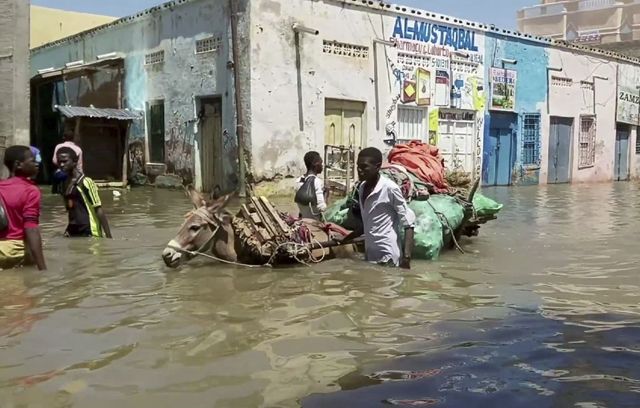
In this image made from video taken Sunday, May 17, 2020, people wade through a flooded street in Beledweyne, central Somalia. Flooding in central Somalia has affected nearly 1 million people, displacing about 400,000, the United Nations said Monday, May 18, 2020 warning of possible disease outbreaks because of crowding where the displaced are seeking temporary shelter. (AP Photo)
The floods have killed some 300 people—a number that could rise as water-borne diseases, such as cholera, diarrhoea, dysentery and typhoid take their toll. At least 1.3 million people have been affected and nearly 500,000 displaced, mostly in Somalia, Kenya, Ethiopia, Uganda and Rwanda, but also in Djibouti, Burundi and Tanzania. Even before the floods, East Africa had 10.8 million forcibly displaced people and 22.5 million severely food insecure people.
The recent heavy rains come on the back of an above-average “short rains” season at the end of last year, driven by the strongest positive Indian Ocean Dipole since 2016, which affected at least 3.4 million people across Eastern Africa and caused water bodies across the region to swell.
With water levels rising in multiple locations across the region, rivers have burst their banks and lakes have overflowed.
Some 40 million people living in major cities, including Kampala and Entebbe in Uganda and Kisumu in Kenya, are at a heightened risk of flooding and infrastructure damage as Lake Victoria received nearly double its usual rainfall to reach a record high of 13.42 metres, the highest in 120 years. The floods have already damaged Uganda’s power plant on Lake Victoria and could lead to a loss of more homes. As the great lake is also the source of the White Nile that flows through South Sudan, Sudan and Egypt, the increase in water levels could lead to flooding in these countries.
The floods bring the threat of another locust swarm that would strip the region’s food supplies—a swarm can consume 200 tonnes of vegetation in one day—under conditions where the rains have already affected crops and food prices, leaving up to 20 million people at risk of famine. Local markets, where subsistence farmers sold their produce, have been closed due to a breakdown of supply chains or as a precaution against the spread of the virus.
The World Bank estimates that this second swarm of locusts will cause around $8.5 billion worth of economic damage across East Africa, far more than the first wave—the largest in 70 years—that affected Somalia, Uganda, Kenya and Ethiopia in February, as the swarm multiplies and extends its reach during the harvest season.
All the countries affected by the floods and locusts are victims of more than a century of imperialist oppression and exploitation that continues to this day. They continue to suffer from US-led military interventions, economic sanctions or political intrigues that have had devastating social consequences. Such machinations in turn affect the limited grants and loans made available to the region. The World Bank is set to provide a paltry $160 million to Djibouti, Ethiopia, Kenya and Uganda, key US clients in the region, to offset this. War-torn Somalia gets nothing.
The twin disasters of floods and locusts, causing displacement and hunger, come as the coronavirus continues to spread in East Africa. Compiled before the onset of the pandemic, the United Nation’s World Food Programme report for 2020 warned that 73 million people in Africa, beset not only with poverty, but also with conflicts and the impact of natural disasters, economic crises and climate change, are at risk of a food crisis or worse by the end of the year. This, along with widespread poverty and ramshackle public health systems, makes the region especially vulnerable to pandemics like COVID-19. Without urgent action and funding, tens of millions of people face starvation and millions could die due to the pandemic.
Within the six countries of the East African Community (EAC) and Ethiopia, the areas most affected by the floods and locusts, there are nearly 4,000 confirmed cases of COVID-19 and close to 100 deaths, likely a vast underestimate. The absence of health care infrastructure means that huge numbers of cases are going undetected, and many are dying due to a lack of basic medical care.
The region’s governments moved swiftly to impose lockdowns and curfews in a bid to break the chain of transmission. Security forces used brutal means to force people off the streets, using tear gas on ferry commuters in Kenya and killing two people in Rwanda.
The floods have made any pretence of social distancing, always difficult in Kenya and Uganda’s teeming slums and refugee and displaced peoples’ camps, an impossibility. Speaking about the region’s floods, Julius Mucunguzi, spokesman for Uganda’s Prime Minister Ruhakana Rugunda, told Reuters, “What complicates the matter is that this is the era of COVID. People are expected to maintain social distance, but how do you maintain distance in such a situation?”
The lockdowns have had devastating economic consequences. Much of the region’s economy has collapsed, threatening millions with destitution. Kenya and Uganda’s flower export market has broken down. Tourism, which plays a key role in the region, has ground to a halt, affecting accommodation providers and guides as well as the informal traders who sell food and goods to visitors.
Most people work in the informal sector, leaving them without any social safety net. A recent report by the UN’s International Labour Organisation estimated that informal workers had lost 60 percent of their earnings. For most of them, stopping work or working from home is not an option. “To die from hunger or from the virus” has become the all-too-real dilemma.
It affects not just the street markets and vendors, but small craftsmen in the clothing, leather or carpentry sectors, transport workers and car mechanics, personal service workers and agriculture—which represent more than two-thirds of informal workers in sub-Saharan Africa—with millions of small peasants from rural or peri-urban areas producing for the urban market being unable to sell their produce.
For those whose lives already hang by a thread, the economic impact of the pandemic will push them over the edge. Already there have been reports of food hoarding and price gouging in several sub-Saharan African countries, making food both scarce and unaffordable for those most in need. None of the region’s governments have made any attempt to aid the millions of impoverished workers who have lost their jobs and incomes as the result of government anti-COVID-19 lockdowns.
The same governments that callously abandoned them are cynically exploiting the masses’ financial destitution and social distress to justify forcing them to return to work under unsafe conditions that will accelerate the spread of the virus. The World Health Organisation (WHO) warned that Africa still faces a growing threat from the COVID-19 pandemic, saying that it could face a “silent epidemic” if its leaders do not prioritise testing of coronavirus. Special envoy Samba Sow said, “My first point for Africa, my first concern, is that a lack of testing is leading to a silent epidemic in Africa.”
The social misery confronting the population underscores the incapacity of all factions of Africa’s reactionary and corrupt bourgeoisie to overcome the legacy of colonialism and imperialist oppression.

Protests by medical workers grow as hospitals overwhelmed across Mexico

Andrea Lobo

Mexico has seen a growing wave of strikes, roadblocks and other protests by medical workers during the last two weeks in response to COVID-19 outbreaks inside hospitals as they become overwhelmed with infected patients.
This follows an earlier wave of protests by medical workers in March, which involved actions across 12 states and Mexico City, to denounce the lack of any measures by the government of President Andrés Manuel López Obrador to contain the global pandemic and prepare hospitals with the necessary equipment.
At the time, hospital workers were already suffering major outbreaks. For instance, in the General Hospital in Monclova, Coahuila, management asked workers not to wear protective equipment in March to “not cause panic.” By the first week of April, 51 medical workers had been infected and three had died.
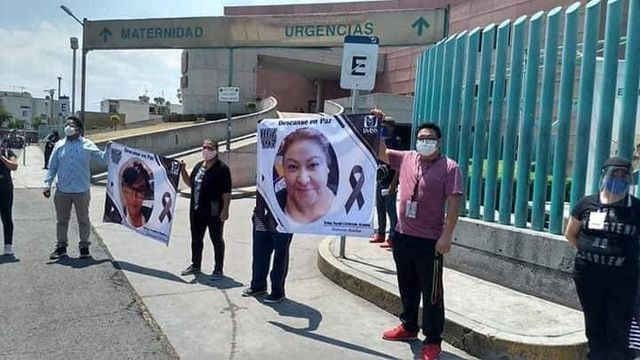
Workers at the Texcoco hospital protest the deaths of nurses on May 13 (Maria Zavala-Twitter)
A health emergency and lockdowns were not ordered until March 30, more than a month after the first confirmed cases in the country. But the measures taken have been criminally inadequate. Along with Brazil, Russia and India, Mexico continues to see an exponential increase in COVID-19 deaths, doubling every five days. As of this writing, Mexico had more than 74,560 confirmed cases and 8,134 deaths, with a large share of these among medical workers.
According to the latest available count on May 19, the confirmed cases among medical workers had seen a 33 percent increase in a week to 11,394, while 149 health workers have died. This constituted 21 percent of all cases in Mexico at the time, and most were concentrated in Mexico City, the neighboring State of Mexico and Baja California.
The resulting unrest among medical workers is an international phenomenon. As Latin America becomes the new epicenter of the virus, protests by medical workers have spread across Brazil, Peru, Colombia, Ecuador, Honduras in recent weeks, raising the same basic concerns, including the lack of adequate personal protective equipment (PPE), medicines, respirators, testing and personnel.
Yesterday, dozens of workers of the Tlalnepantla Hospital in Mexico City carried out a roadblock to demand proper PPE. Reports on news outlets and social media of such protests have inspired overwhelmingly positive comments from workers in hospitals and other sectors, with many calling for a joint struggle.
Carmen, a nurse in Naucalpan, State of Mexico, writes on Facebook: “Those working in the COVID areas have not received any hazard bonus even though it’s a risk to be in those areas. If the union does nothing for workers; I think it’s best to go on a general strike. I’m tired of so much corruption… I’m on the first line at the 194 IMSS Clinic and I have seen several of my coworkers die over a COVID infection.” Several posts from health workers are calling for a national demonstration on July 1.
On Monday, a group of 15 doctors and nurses carried out a protest at the Vicente Guerrero hospital in Acapulco, Guerrero to demand adequate PPE. That evening, dozens of doctors and nurses at the National Institute for Respiratory Diseases in Mexico City carried out a demonstration and roadblock to protest the lack of personnel and equipment. One protester held a sign: “We are all getting infected to save a few pesos.” Another said: “We want protection, not reutilization.”
On May 19, hundreds of medical workers of the General Hospital of Tula, Hidalgo, in central Mexico, blocked two highways to demand the sanitization of the facilities and security for patients and doctors. On top of the dire working conditions, medical personnel have been at the receiving end of many threats and violent attacks as anger, fear and desperation among patients, families and others find no progressive outlet.
The previous week, hospital workers at the Hospital La Raza in Mexico City blocked the key internal highway bypass to protest the lack of equipment after several coworkers died of the virus. In Texcoco, State of Mexico, about 50 workers at the General Hospital carried out a roadblock to protest the death of three nurses from coronavirus and to demand sanitization, proper PPE, personnel, timely tests and other urgent measures. National Guard troops and state police ended their protest.
The protests have also spread along the cities on the US border. For instance, in Matamoros, Tamaulipas, doctors and nurses shut down the area for treating COVID-19 patients in the Zone 13 Hospital after three medical workers died from COVID-19 and 40 others tested positive. In Ciudad Juárez, Chihuahua, which has seen overwhelmed hospitals for several weeks, workers at the Women’s Hospital carried out a demonstration to protest dangerous conditions and demand a 30 percent raise for hazard pay.
After decades neglecting public health, the federal and state authorities have been scrambling in recent weeks to buy respirators and personal protective equipment, while a handful of the unfinished buildings have been quickly retrofitted to accommodate COVID-19 patients. However, this is proving to be too little, too late.
Next to Turkey, Mexico has the lowest health care budget as a percentage of GDP in the OECD countries—5.5 percent—but enormous shares of the budget for certain departments are not even spent.
López Obrador’s supporters had denounced that his predecessors left 326 abandoned hospital construction sites, which would require $421 million to conclude. However, out of the $800 million budget for health care infrastructure and equipment approved by Congress in 2019, his administration left $510 million unused.
At the same time, the López Obrador administration increased the military budget 7.9 percent to $6.5 billion, more than the entire Health Ministry budget, according to the Stockholm International Peace Research Institute.
This has left the country entirely unprepared to deal with the pandemic. By May 19, Mexico City hospitals reported the highest occupancy rates in the country. In the entire metropolitan area, which includes part of the State of Mexico, 55 of the 60 hospitals for COVID-19 patients were full, representing an 80 percent total occupancy rate. Only 33 percent of beds for patients needing intubation were available.
This data, however, might not only be incomplete, but it could be misleading when considering the capacity to treat patients safely. Dr. Iván Juárez Ramírez, a pneumologist in Mexico City, explained on Twitter that, while 10 percent of patients who get pneumonia need a ventilator, “the number of ventilators is known to be scarce, and we don’t have the full data, but it’s important to have the data to prepare.” Moreover, specialized doctors and nurses with proper training, equipment and working spaces are also necessary, he explains “since a ventilator is a producer of aerosols and will contaminate everything around the patient.”
During the last week, major outbreaks in hospitals have been recorded in new localities as the virus hotspots become more widespread. In poorer and more remote states, respirators and equipment were transported to the larger cities where the initial outbreaks occurred, but now these regions are being overwhelmed with cases. This happened in Tapachula and Comitán in the southernmost and impoverished Chiapas state, where hospitals got full and began turning away COVID-19 patients this week.
Amid a general shortage of equipment, medicines, personnel and infrastructure, the government has dismissed warnings by the World Health Organization and local epidemiologists and opposed mass testing, systematic contact tracing and quarantines. In other words, medical staff are being forced to respond blindly to an avalanche of cases fueled by the gradual lifting of restrictions.
With the official reopening of the economy on June 1, the López Obrador government has made clear its willingness to sacrifice the lives of tens of thousands of workers in order to resume the capitalist extraction of profits from the working class and continue its austerity program to service interest payments and provide tax benefits to the financial oligarchy.